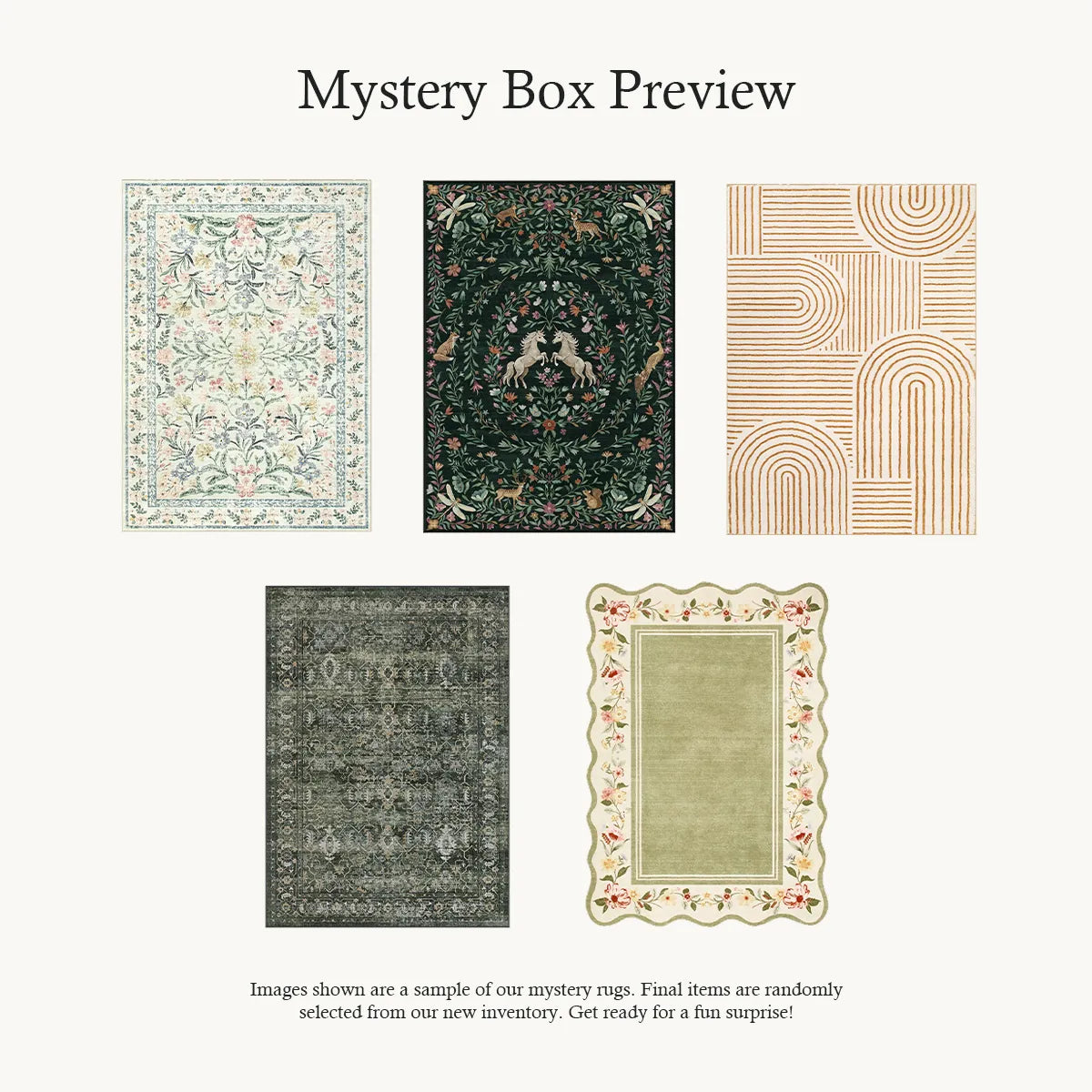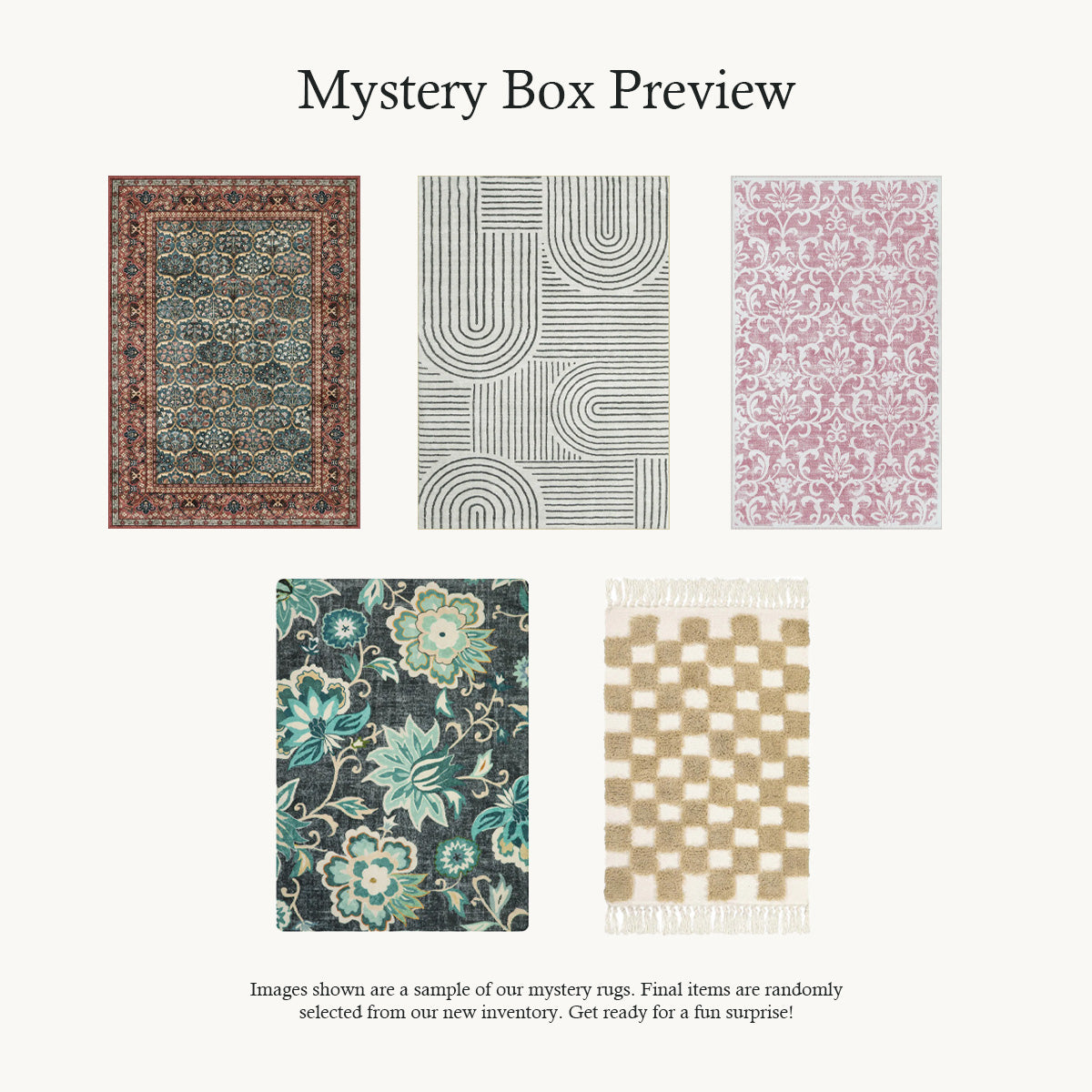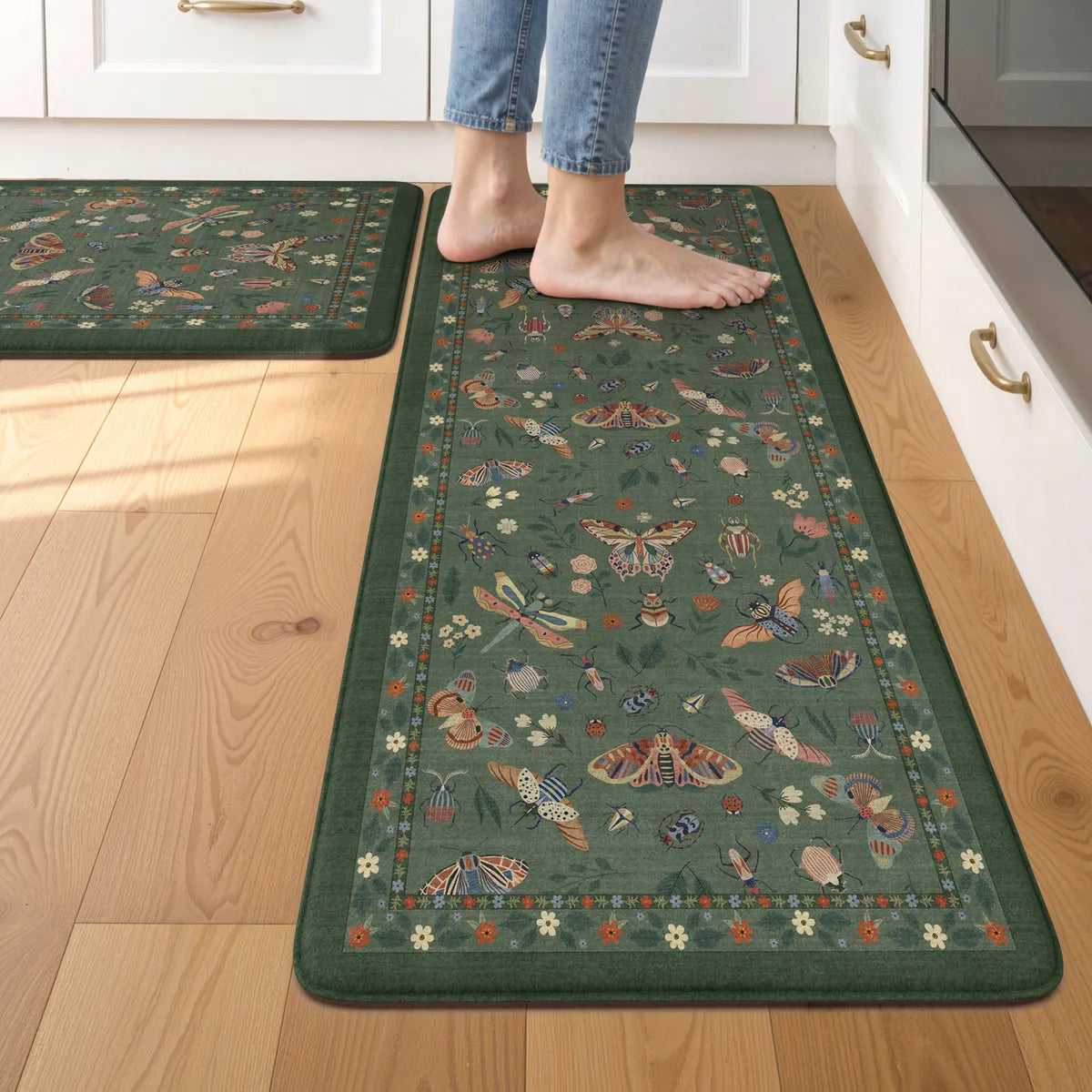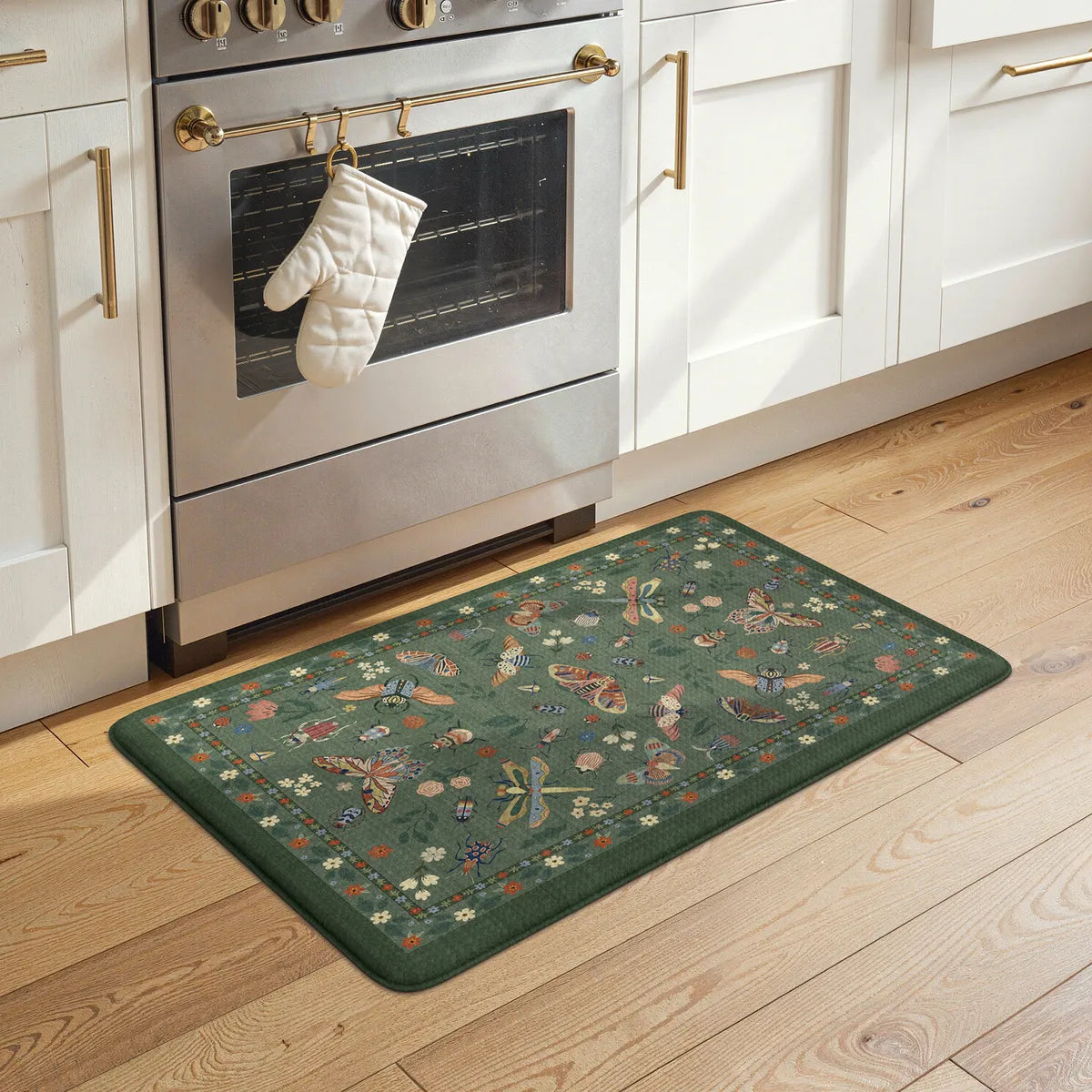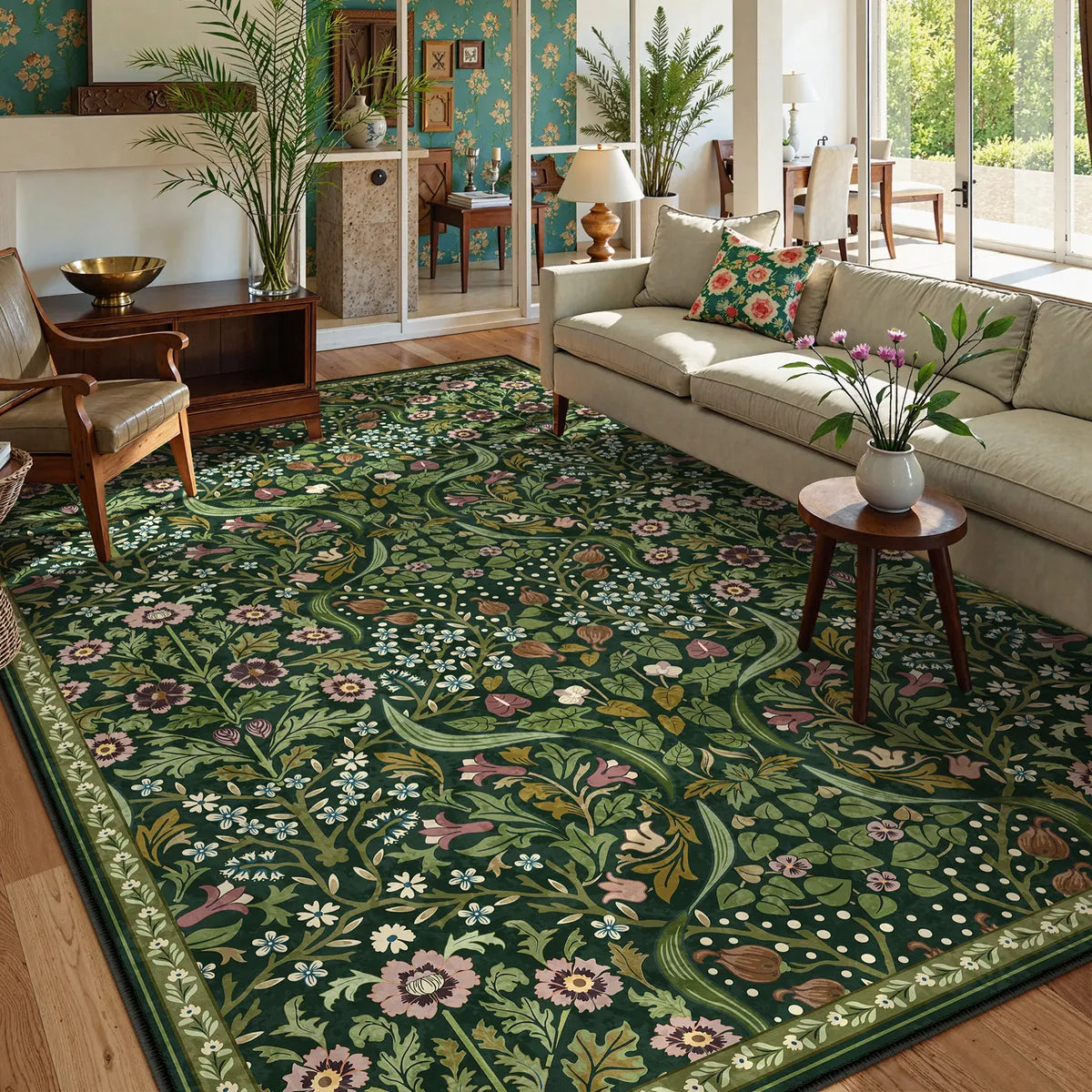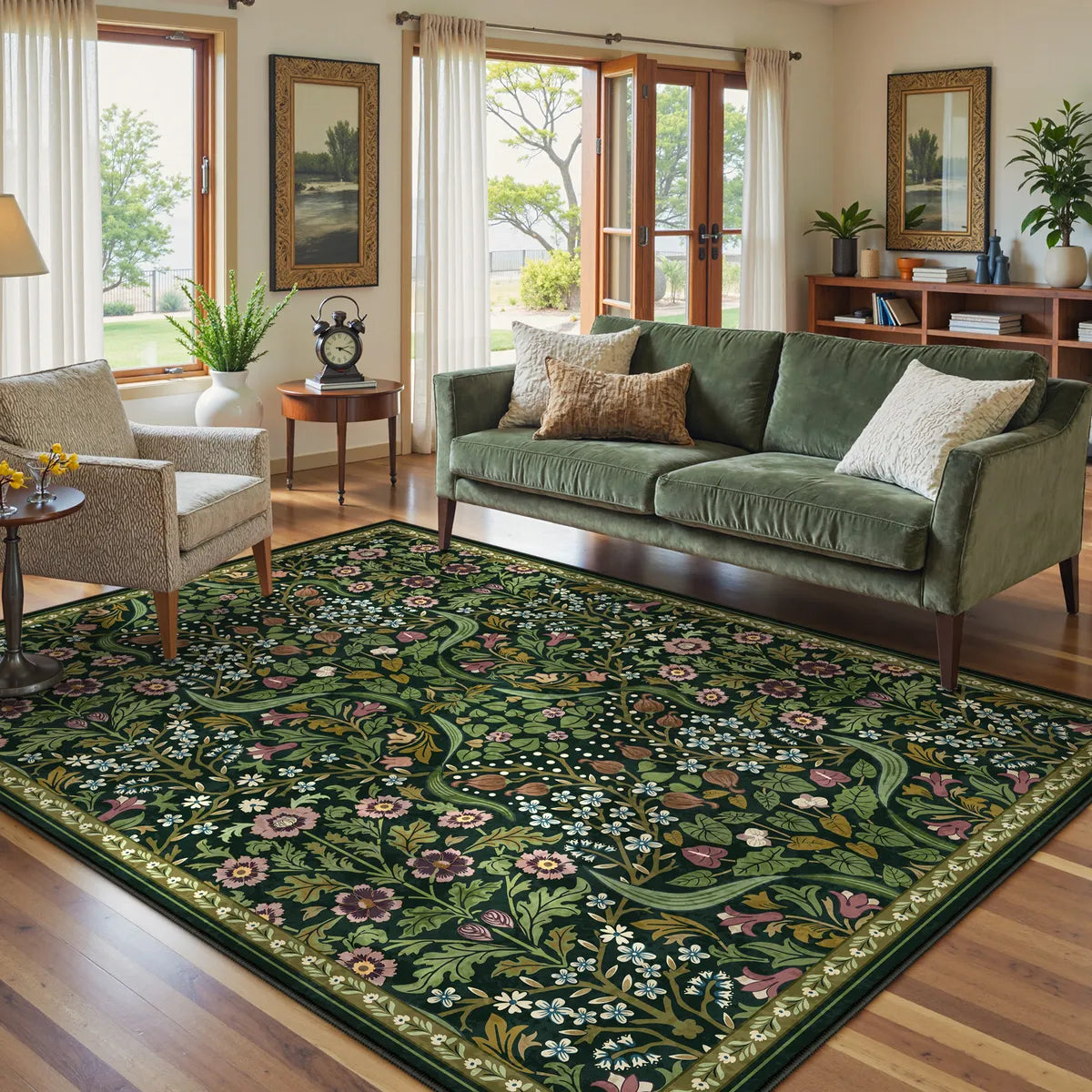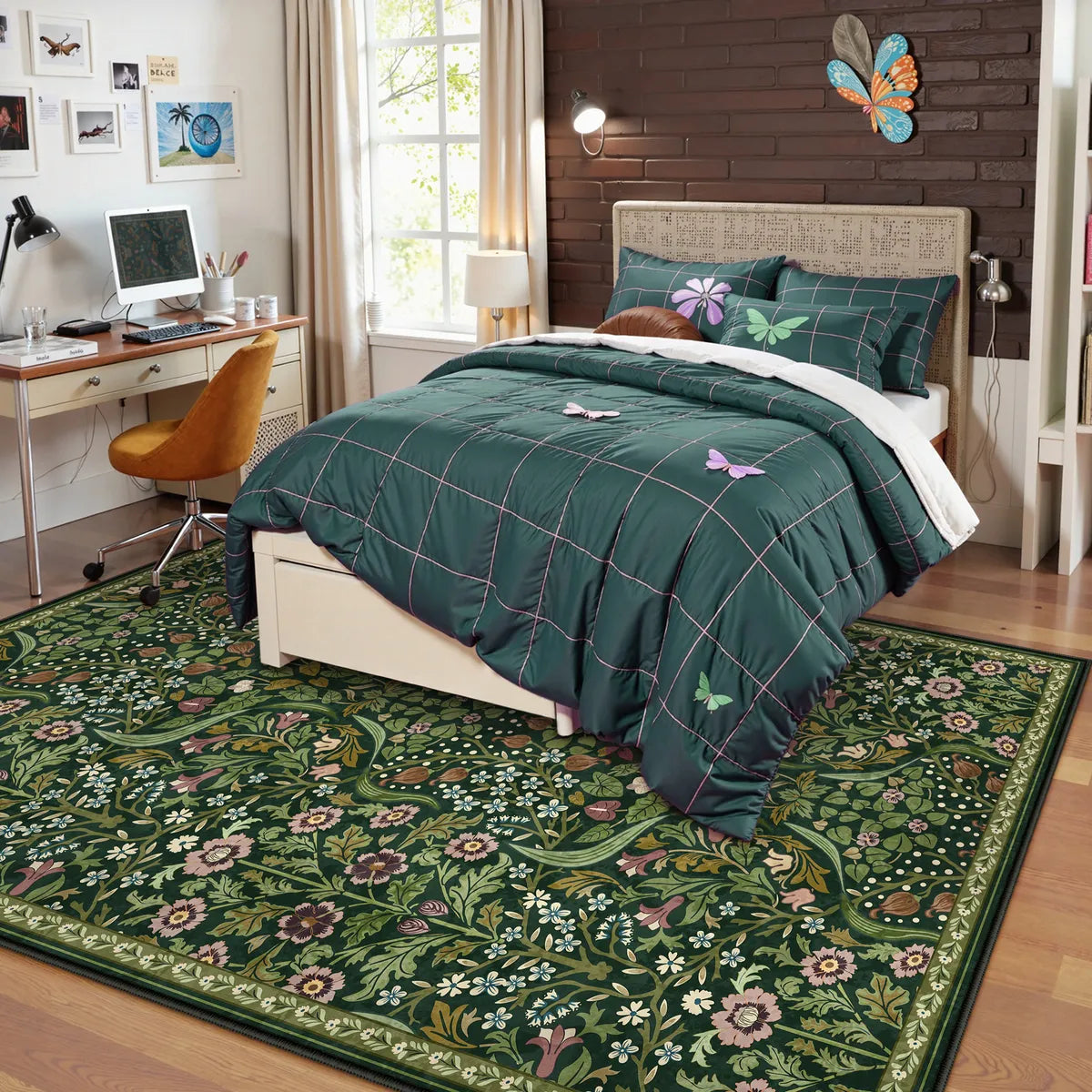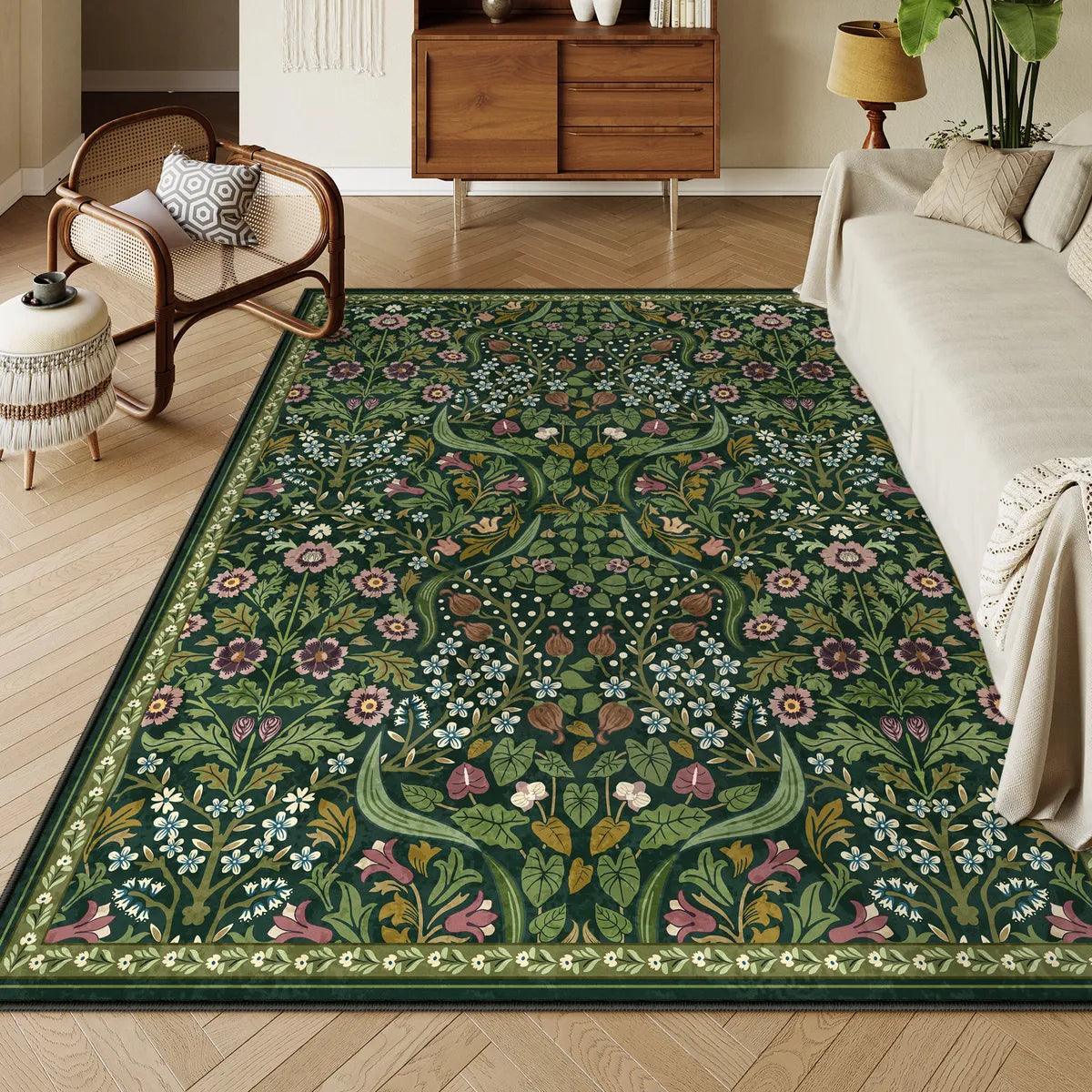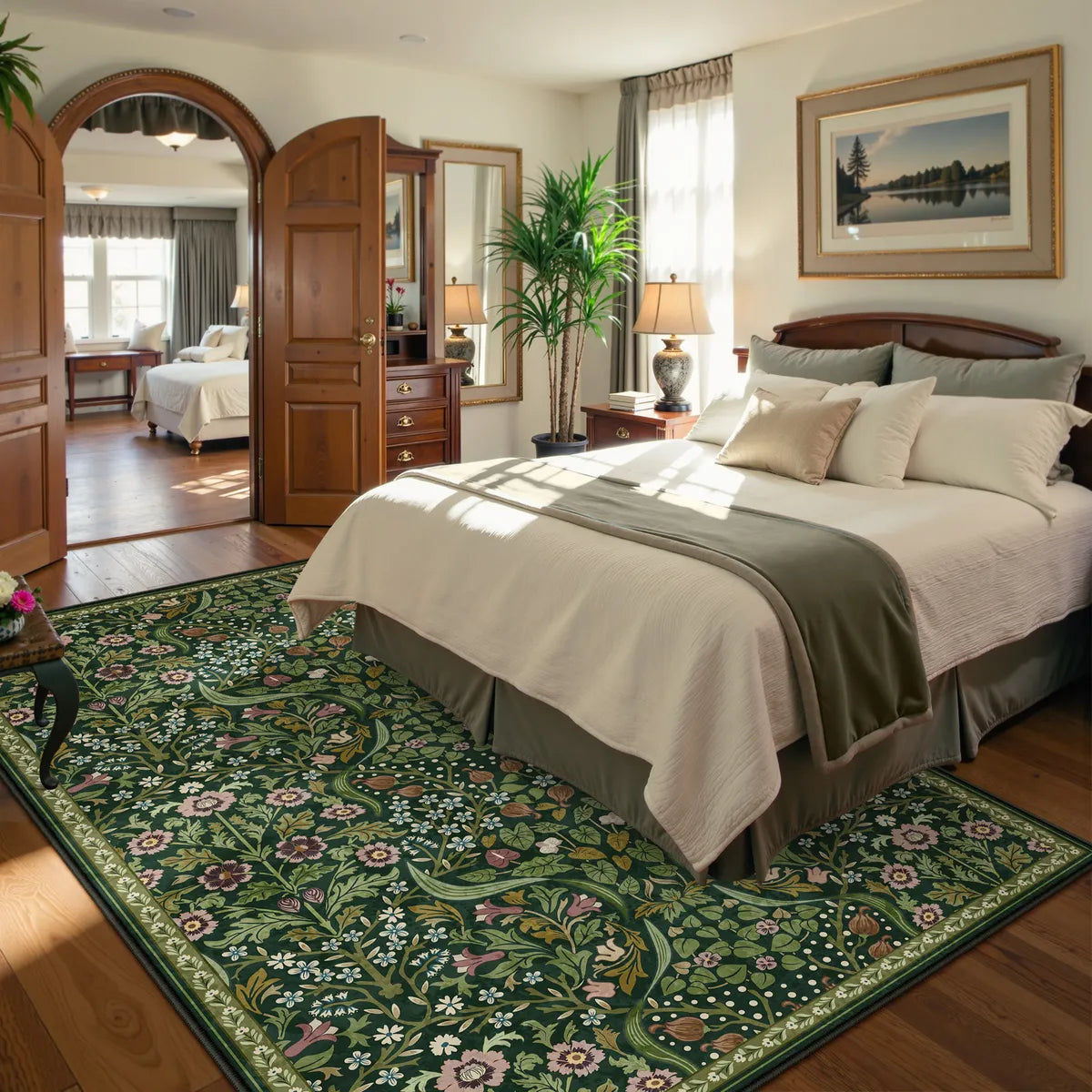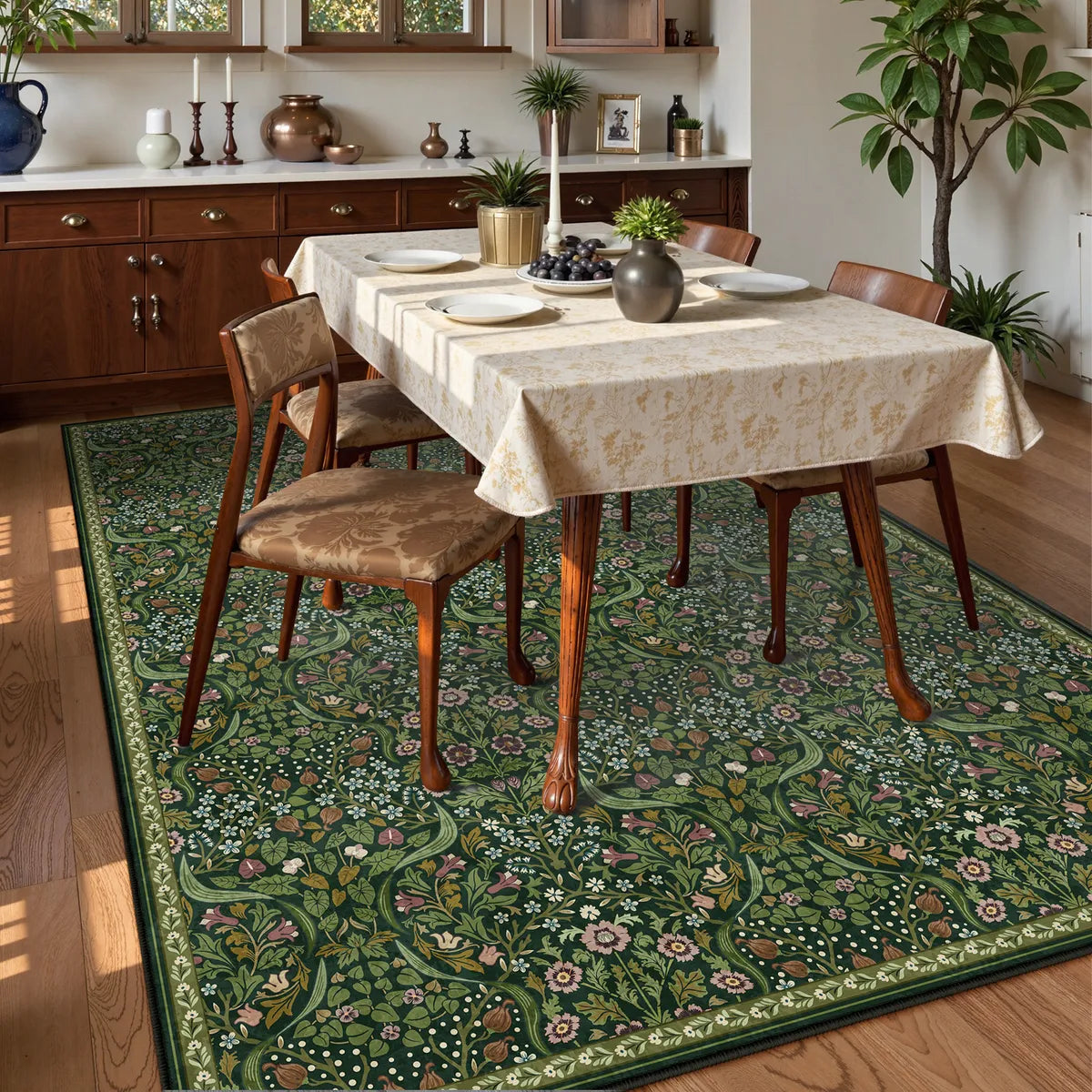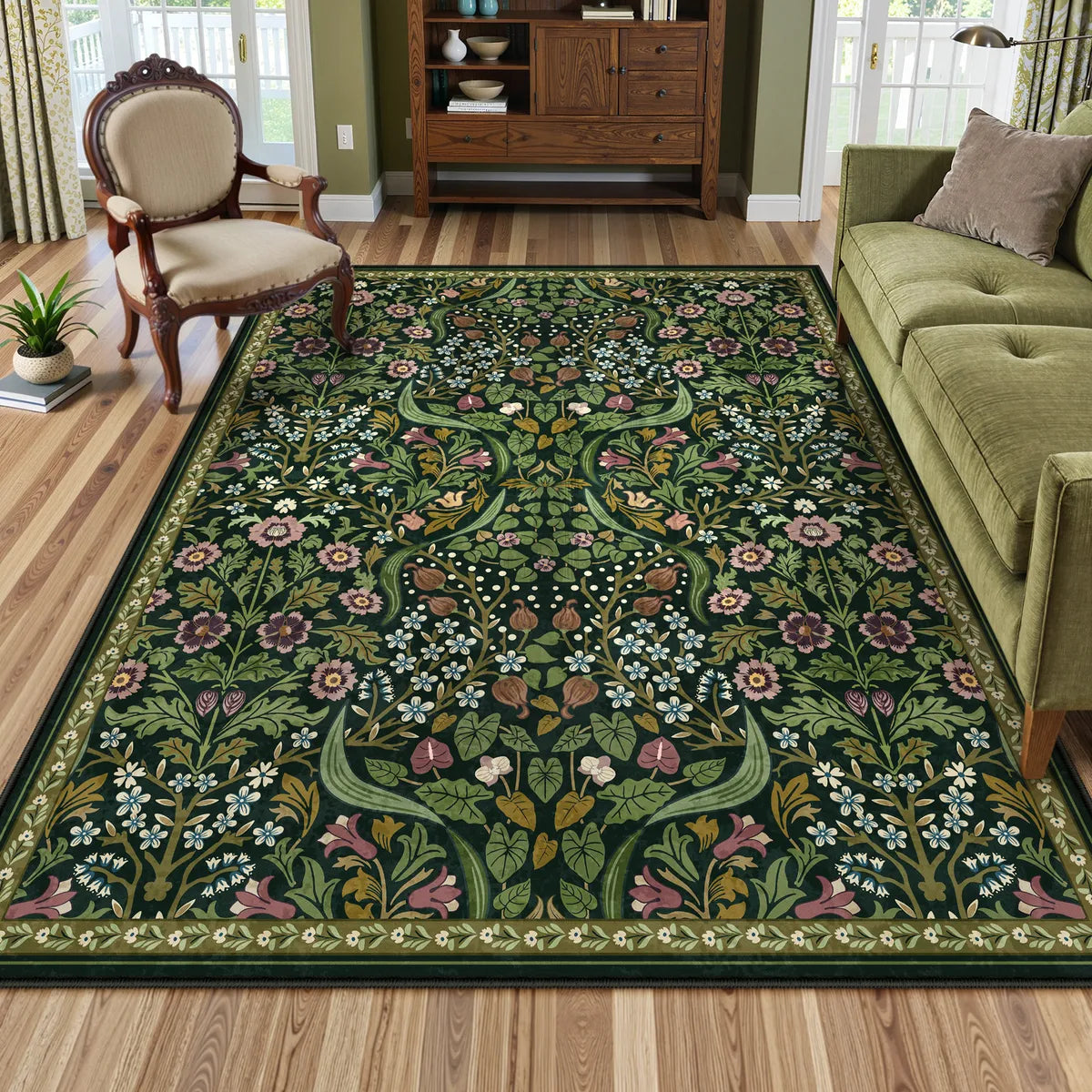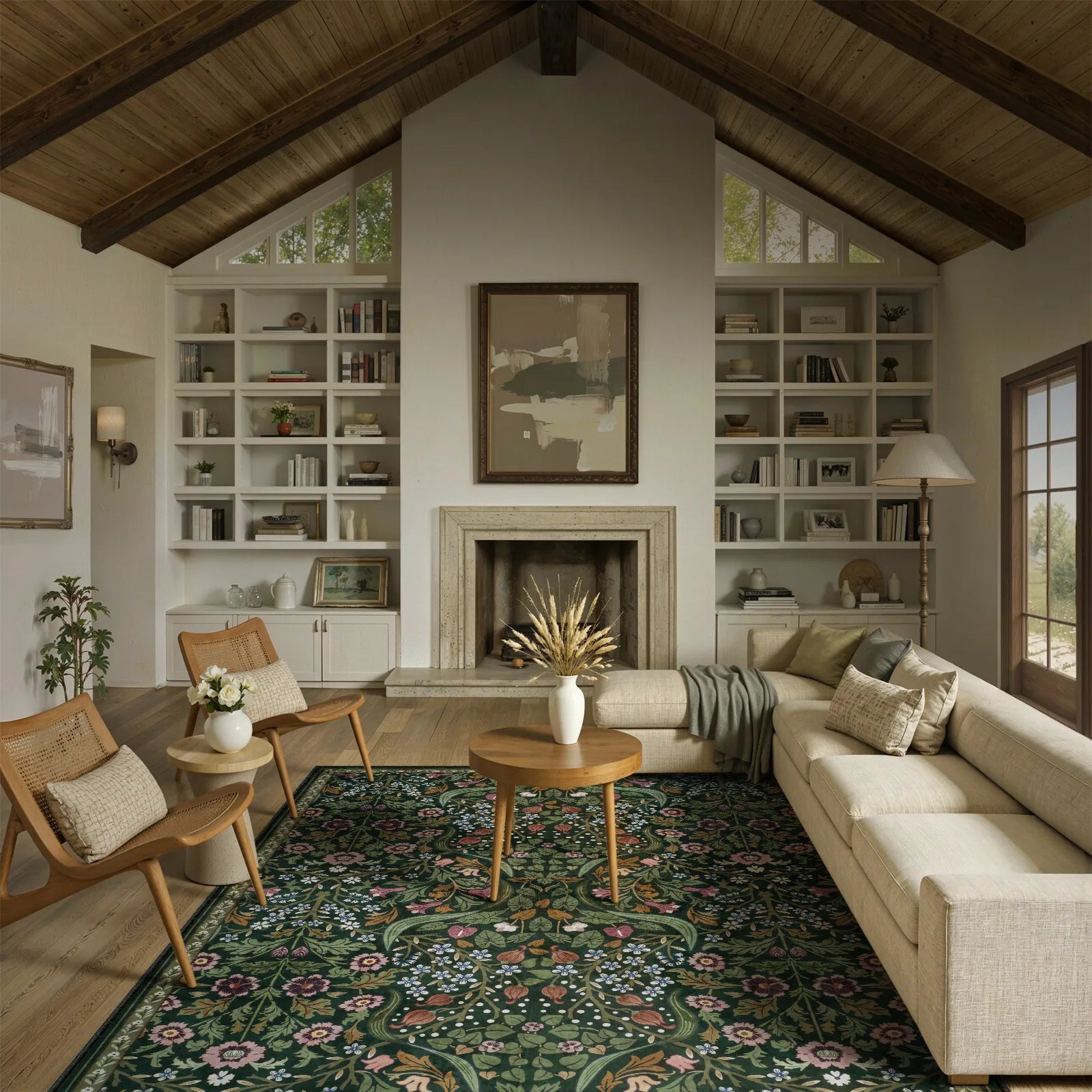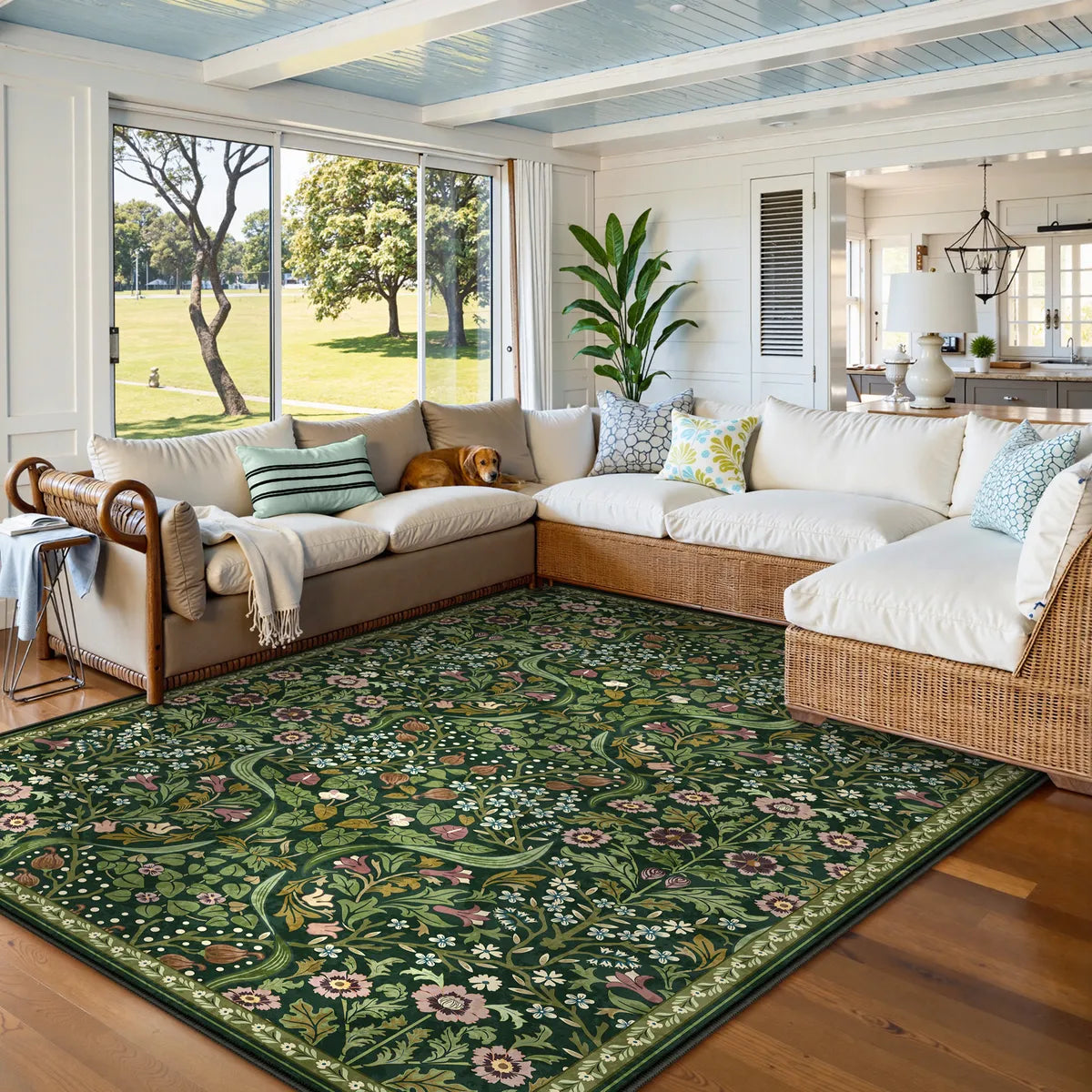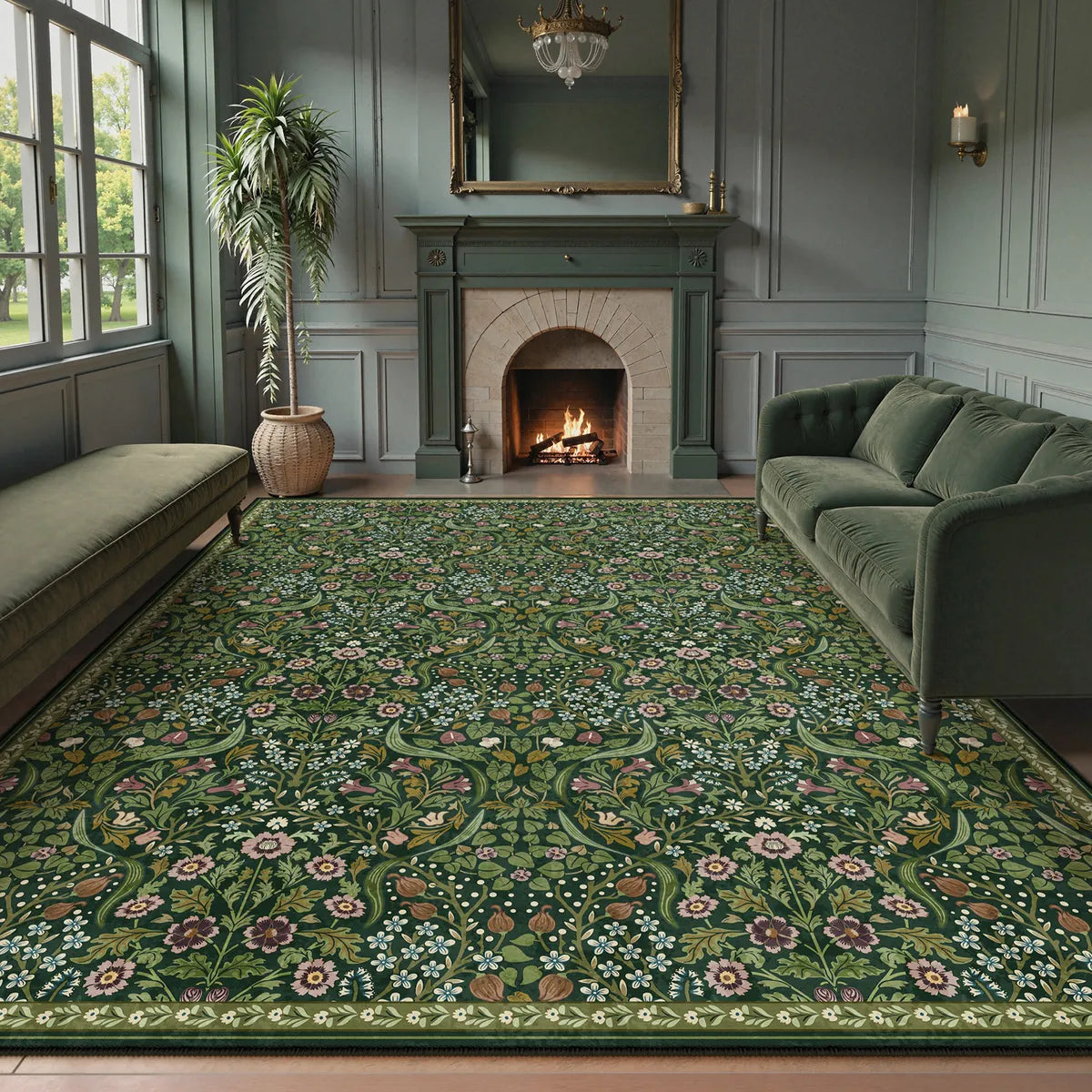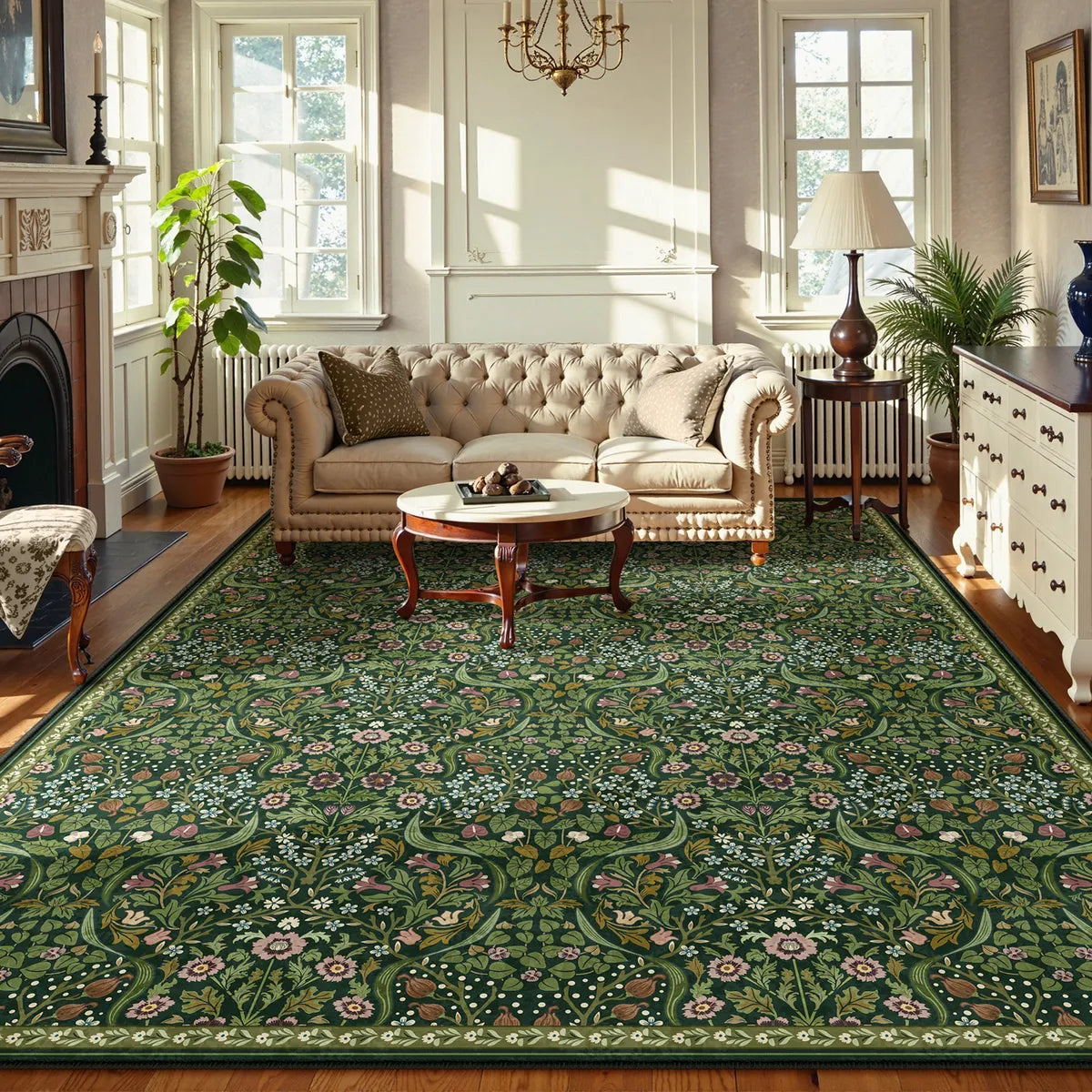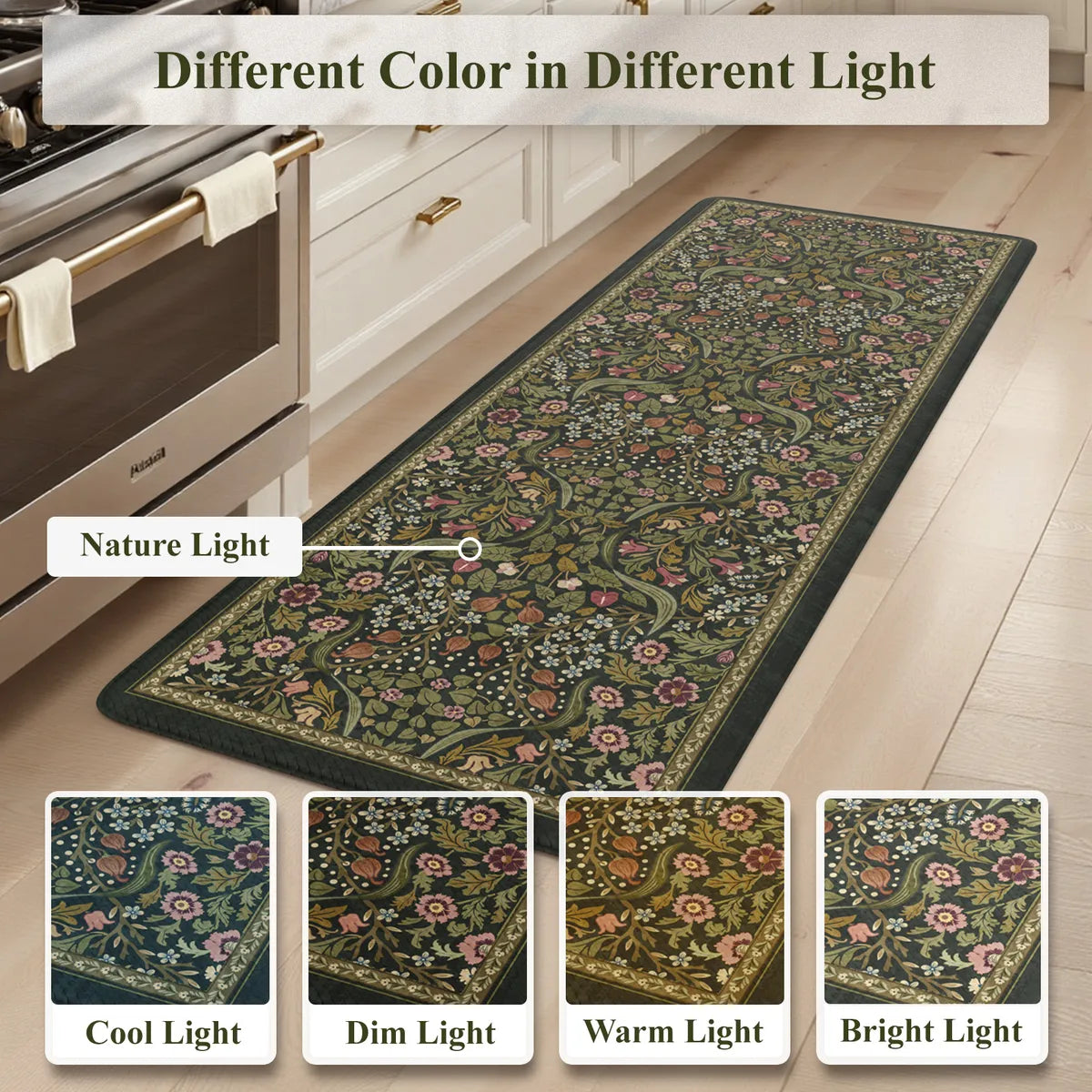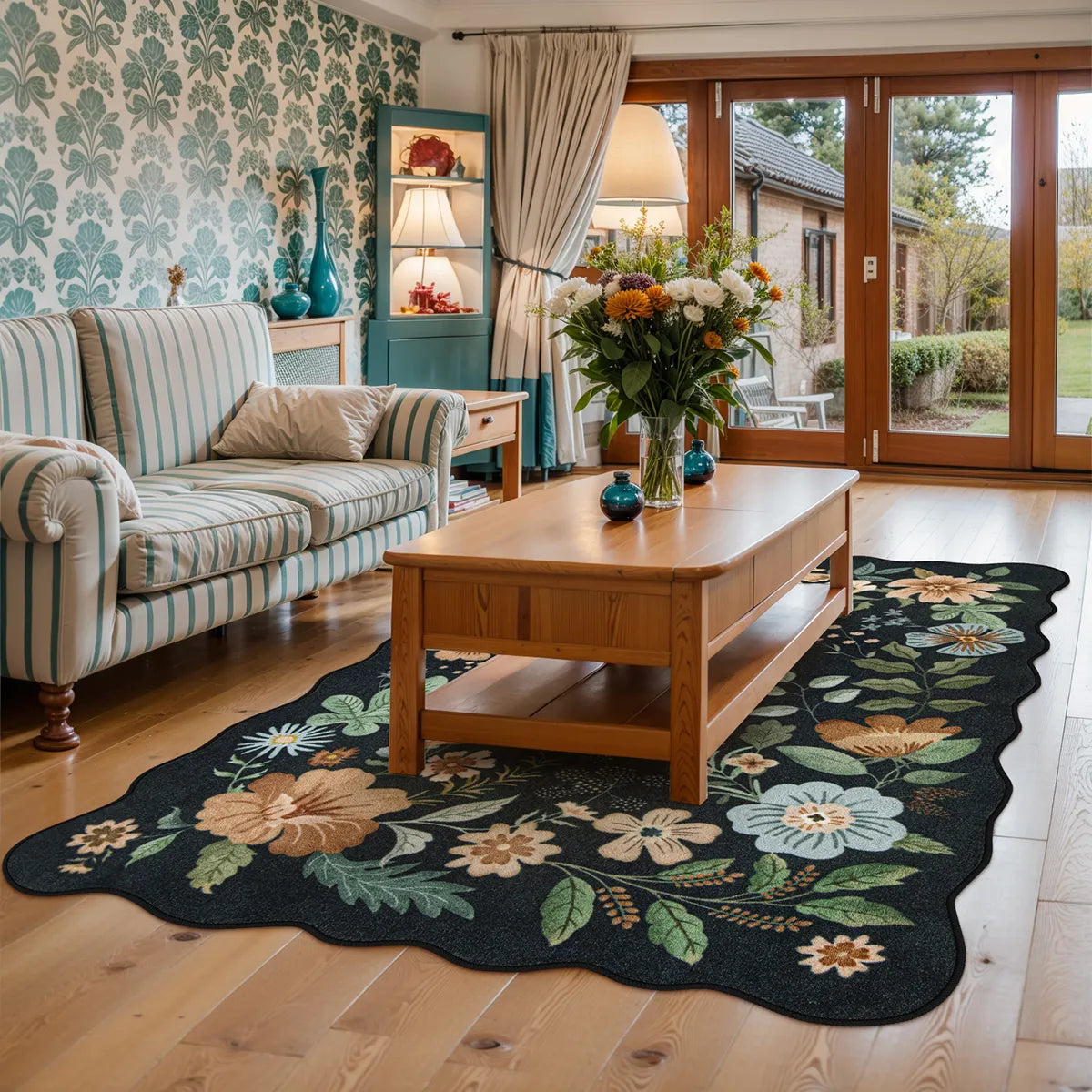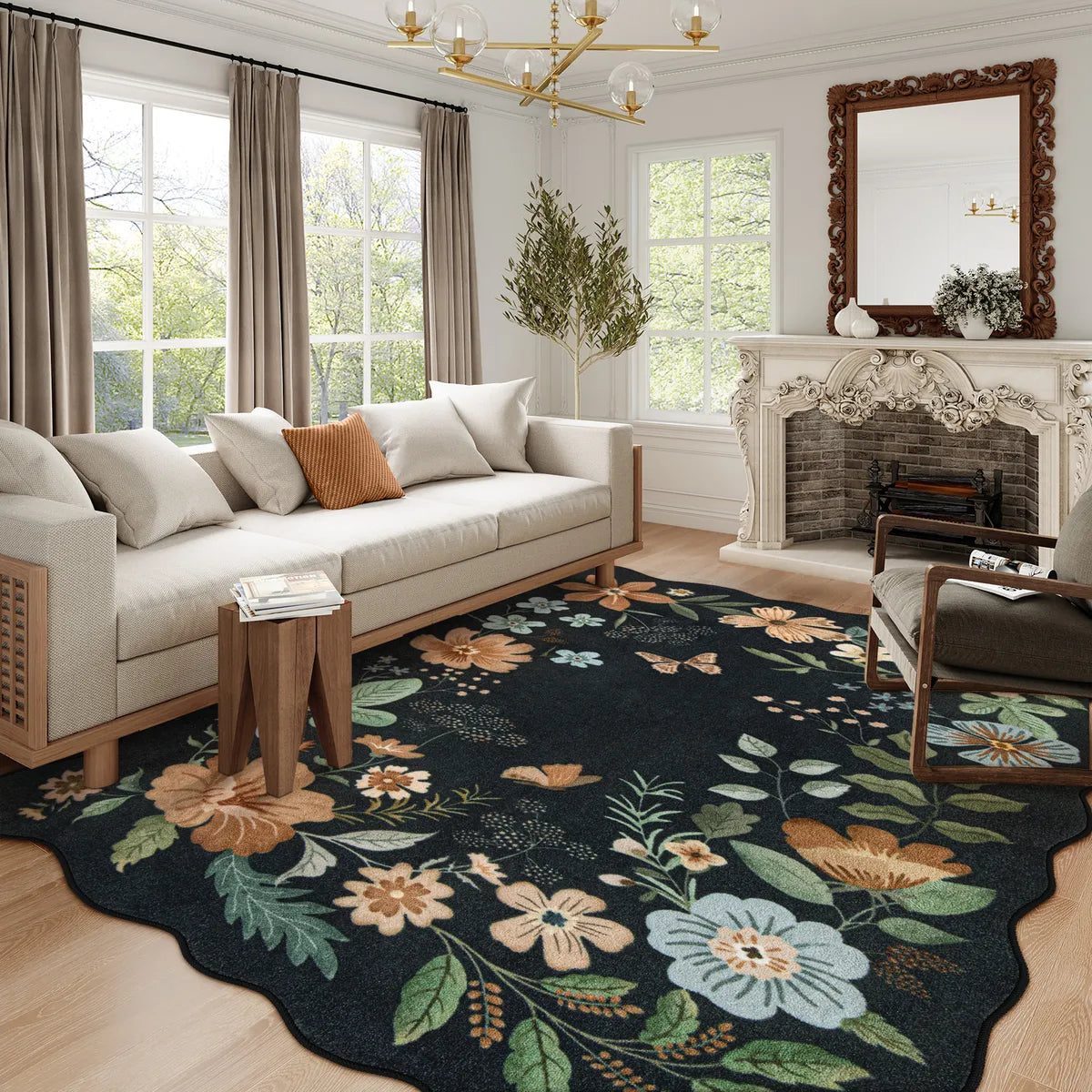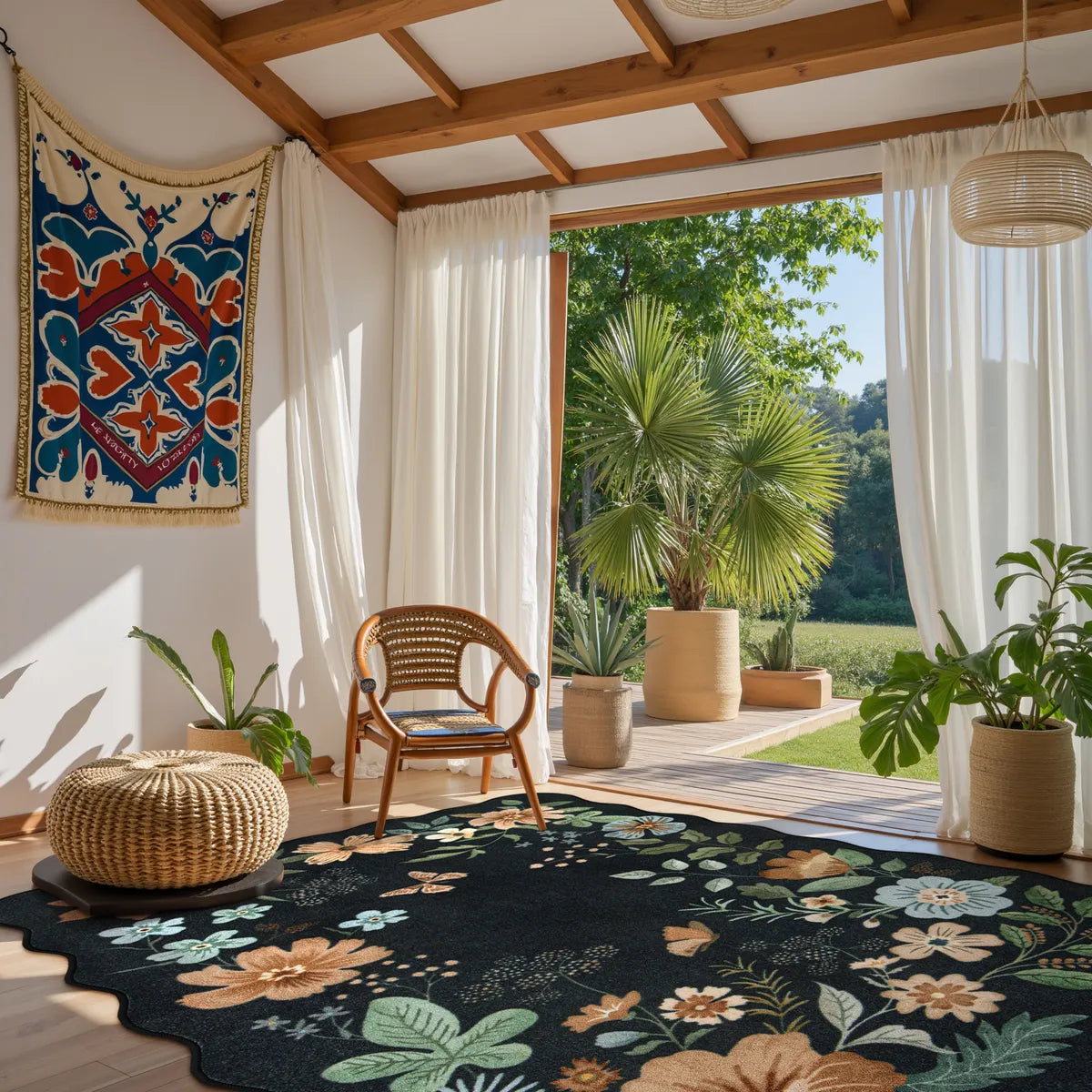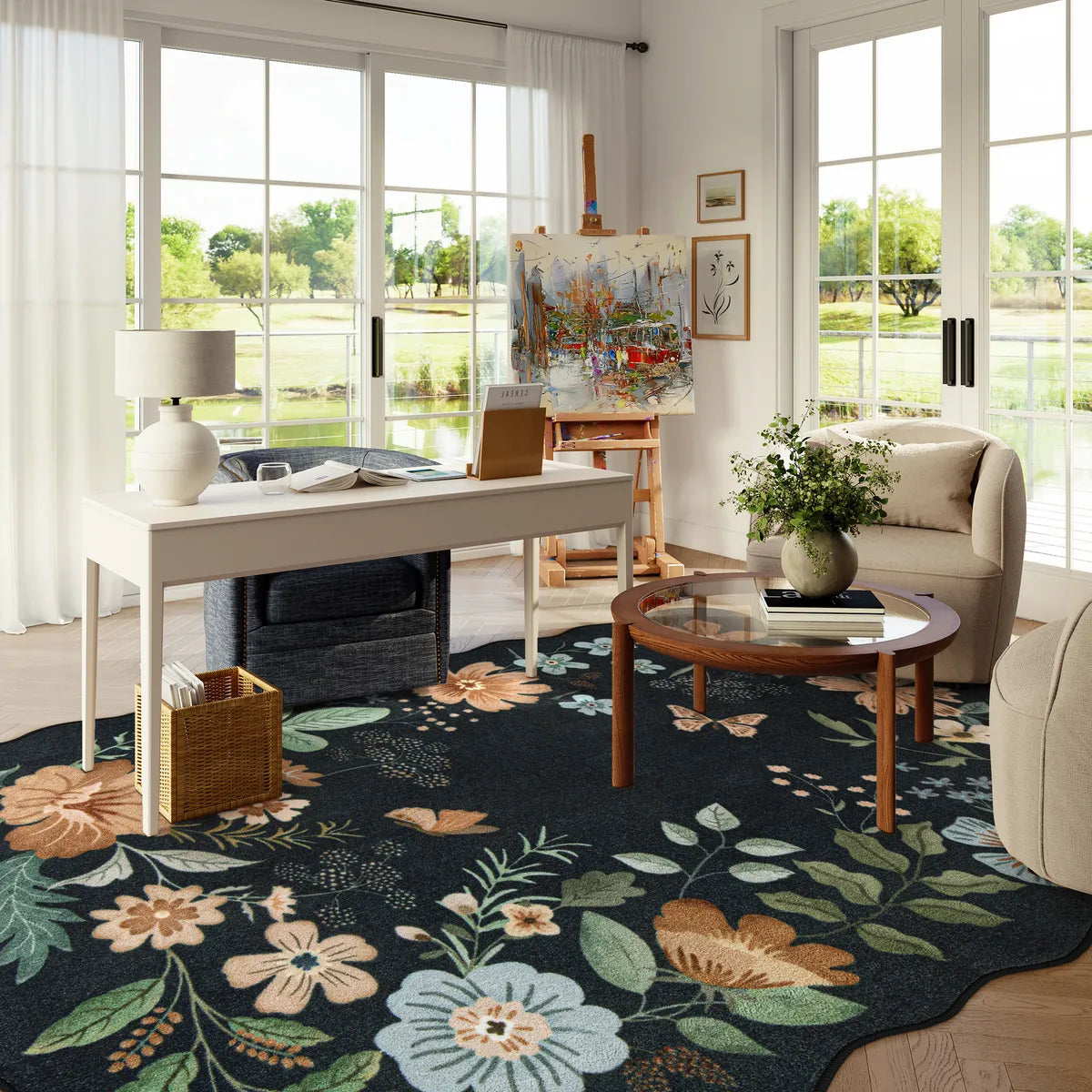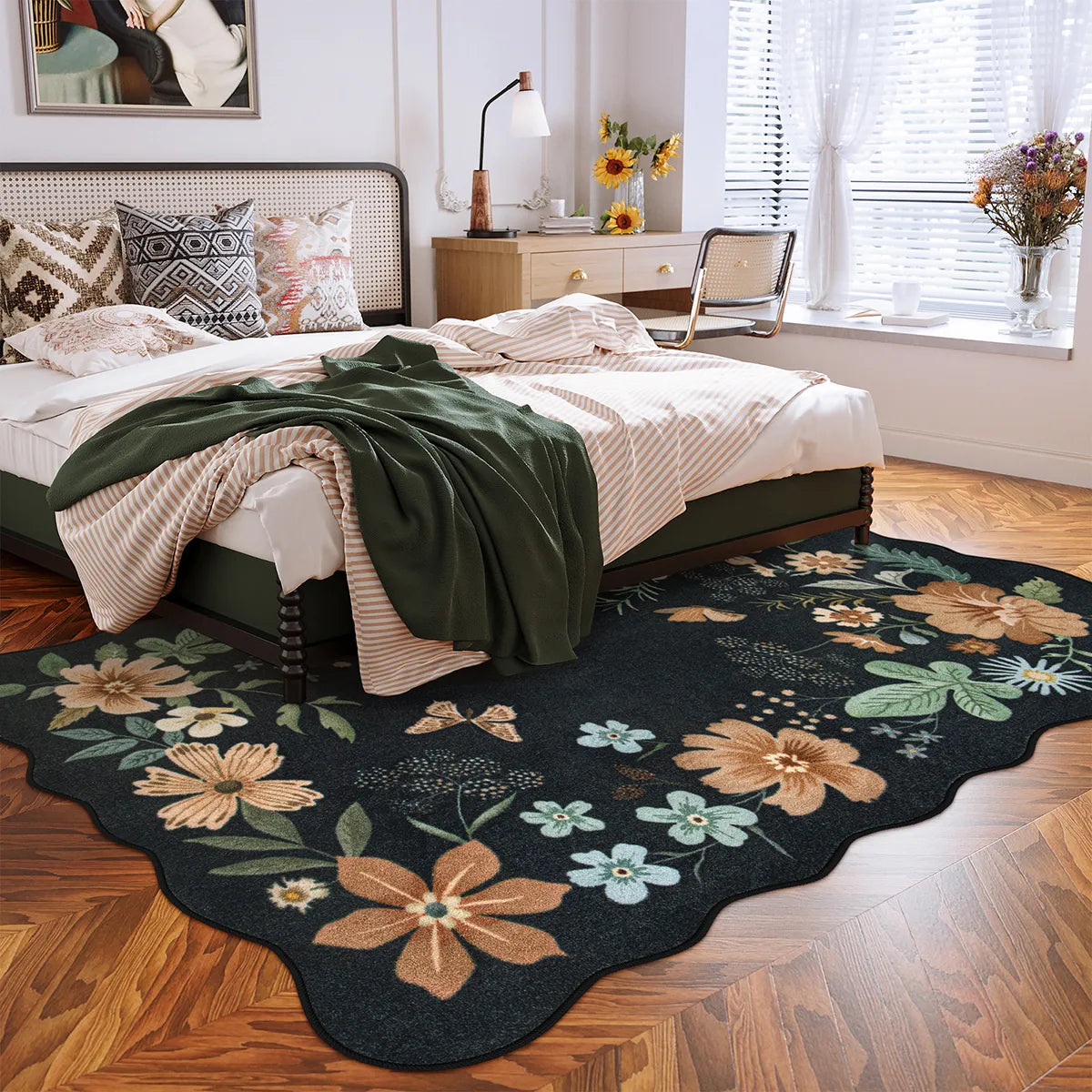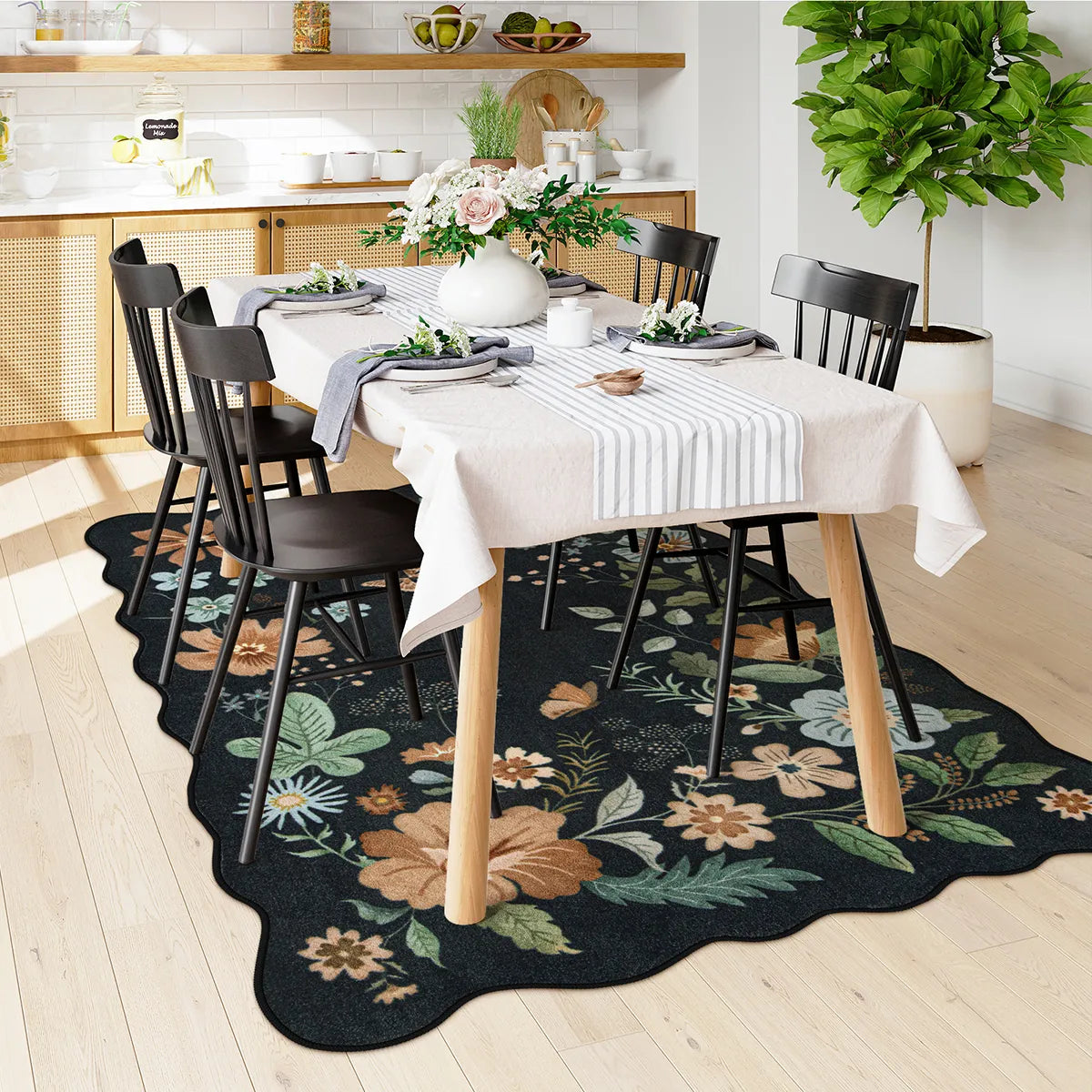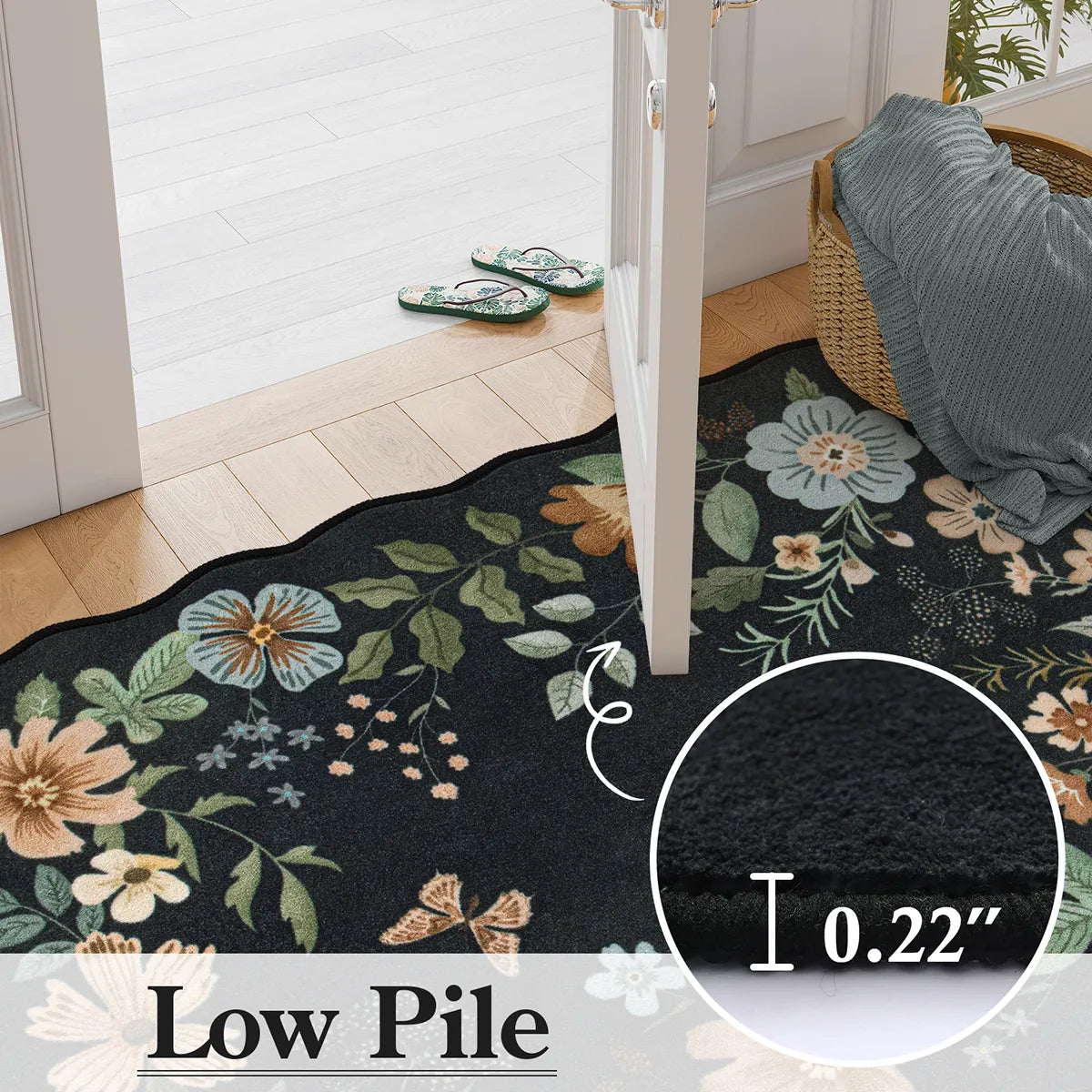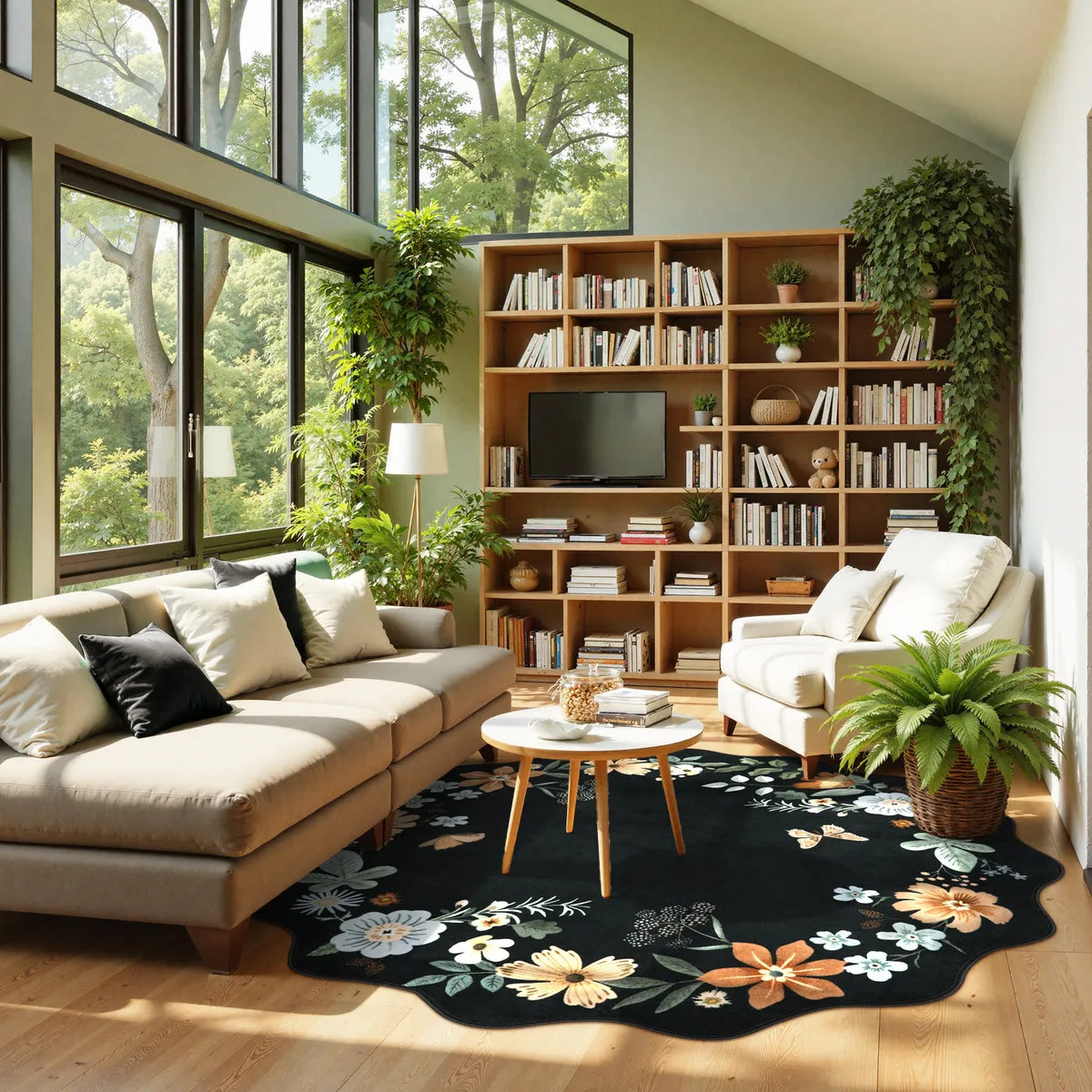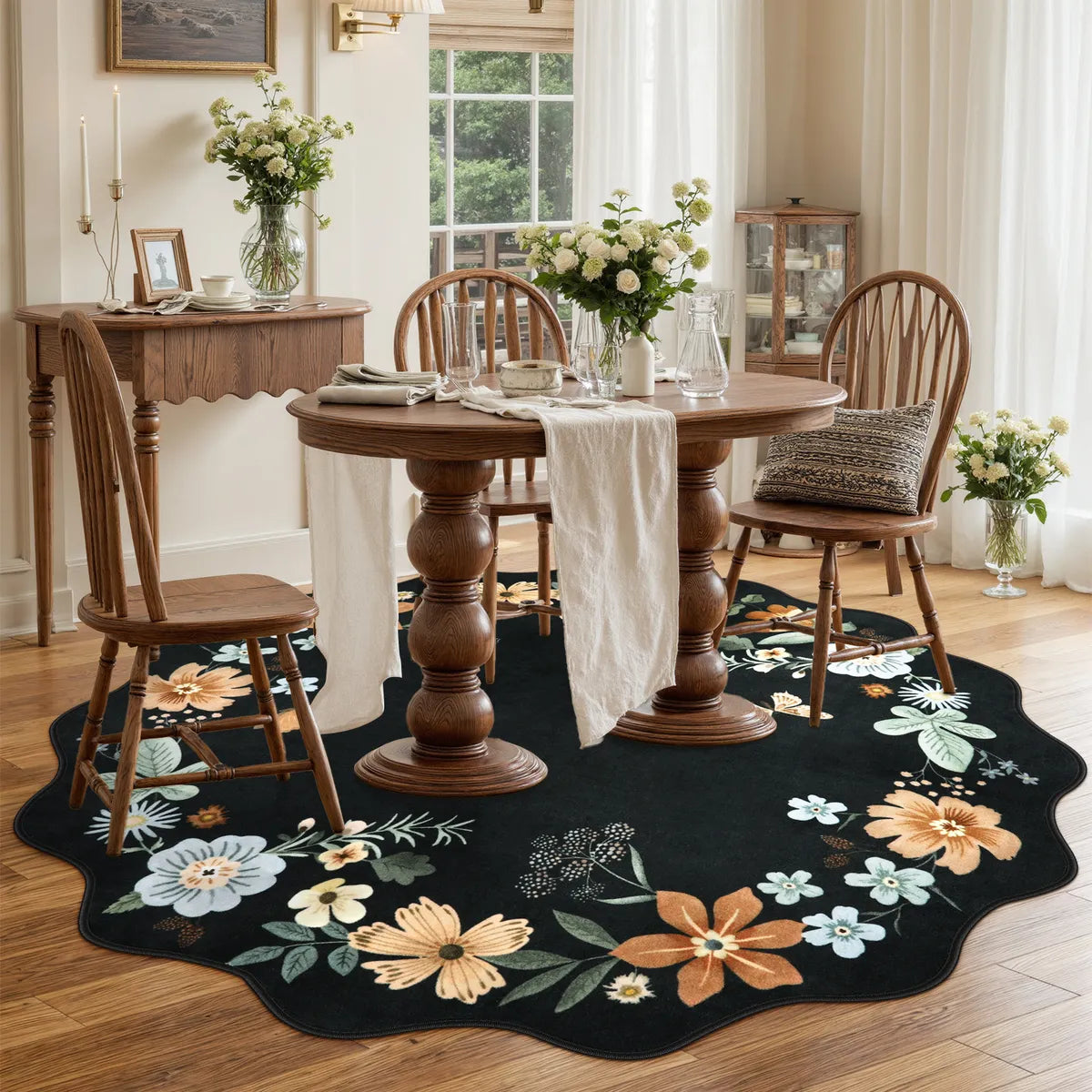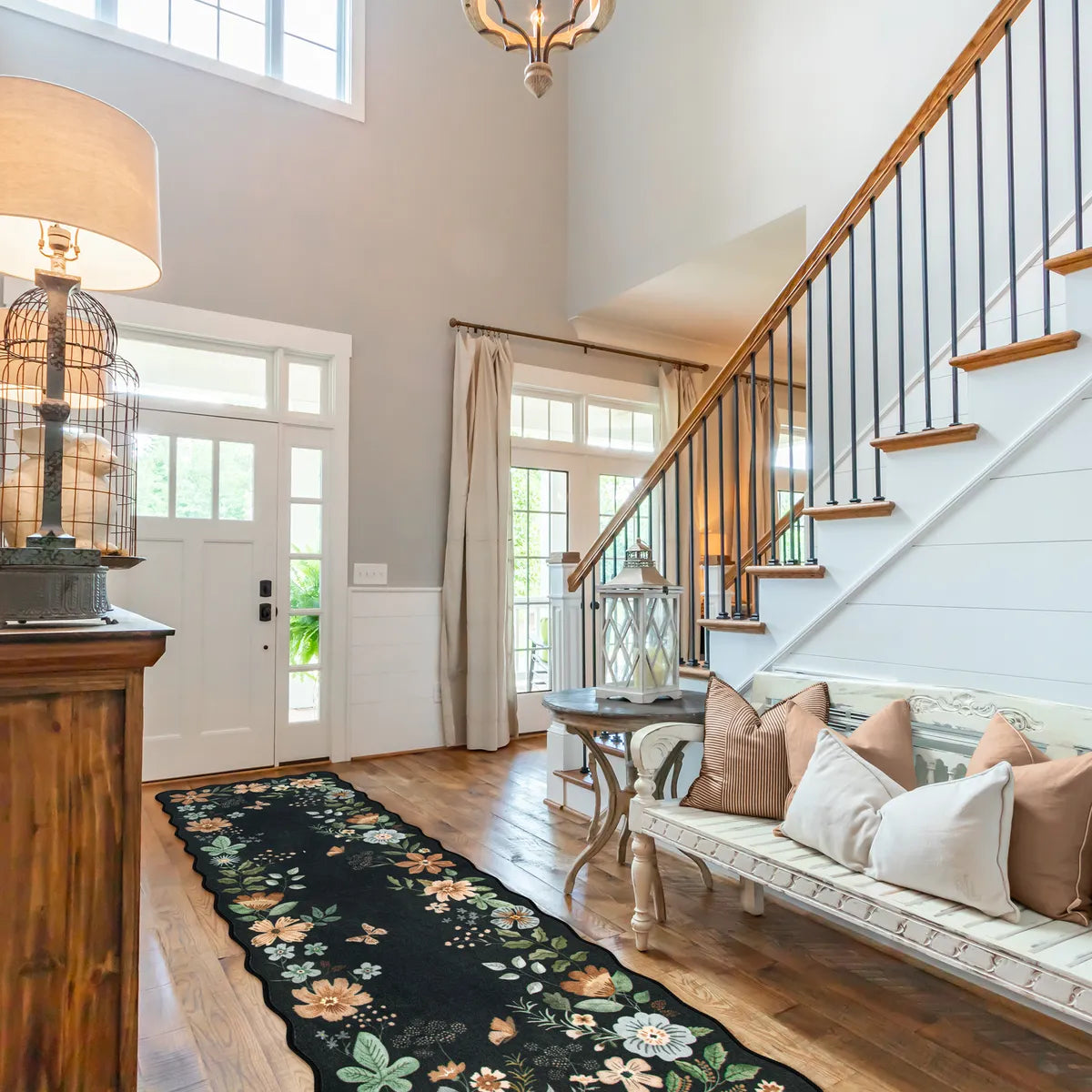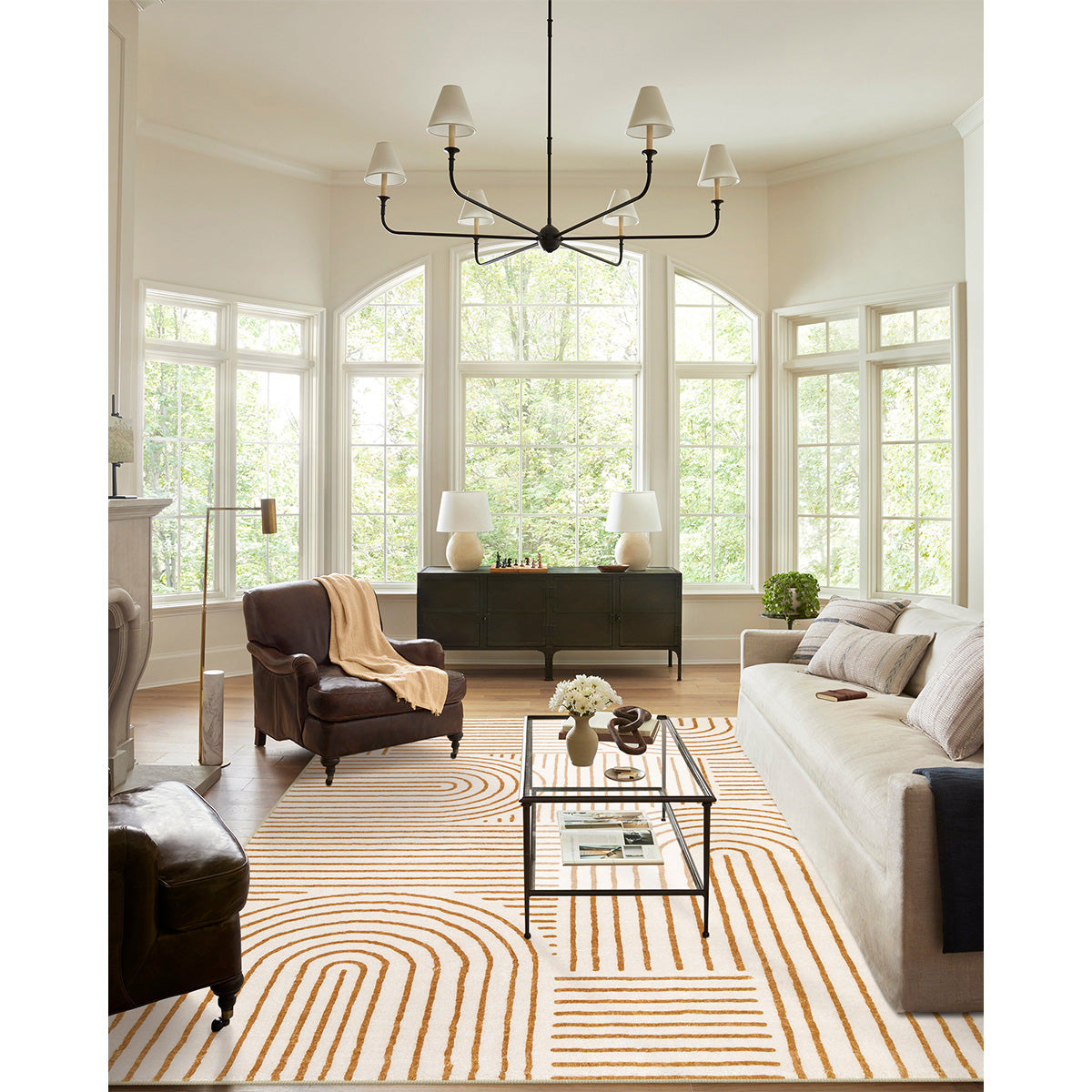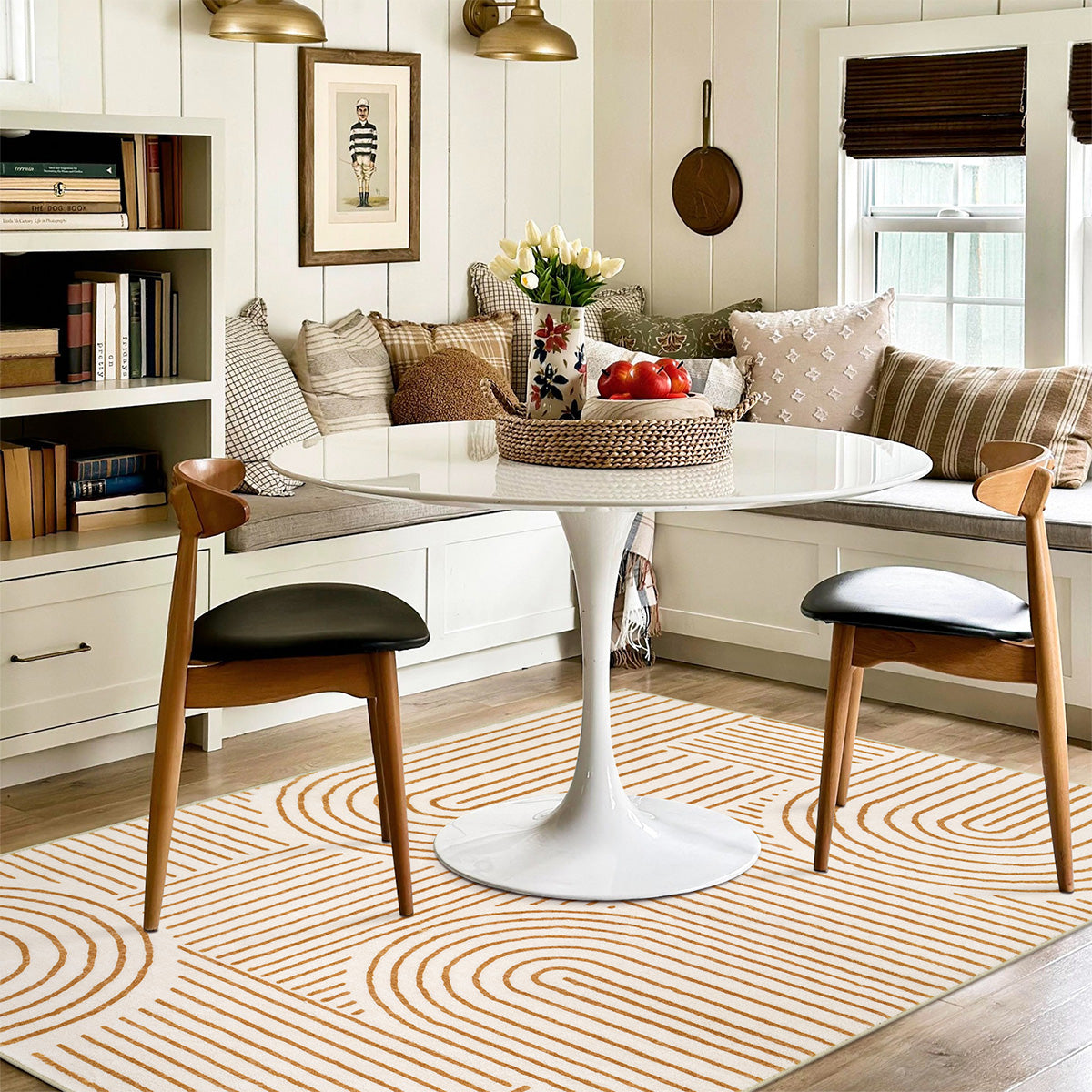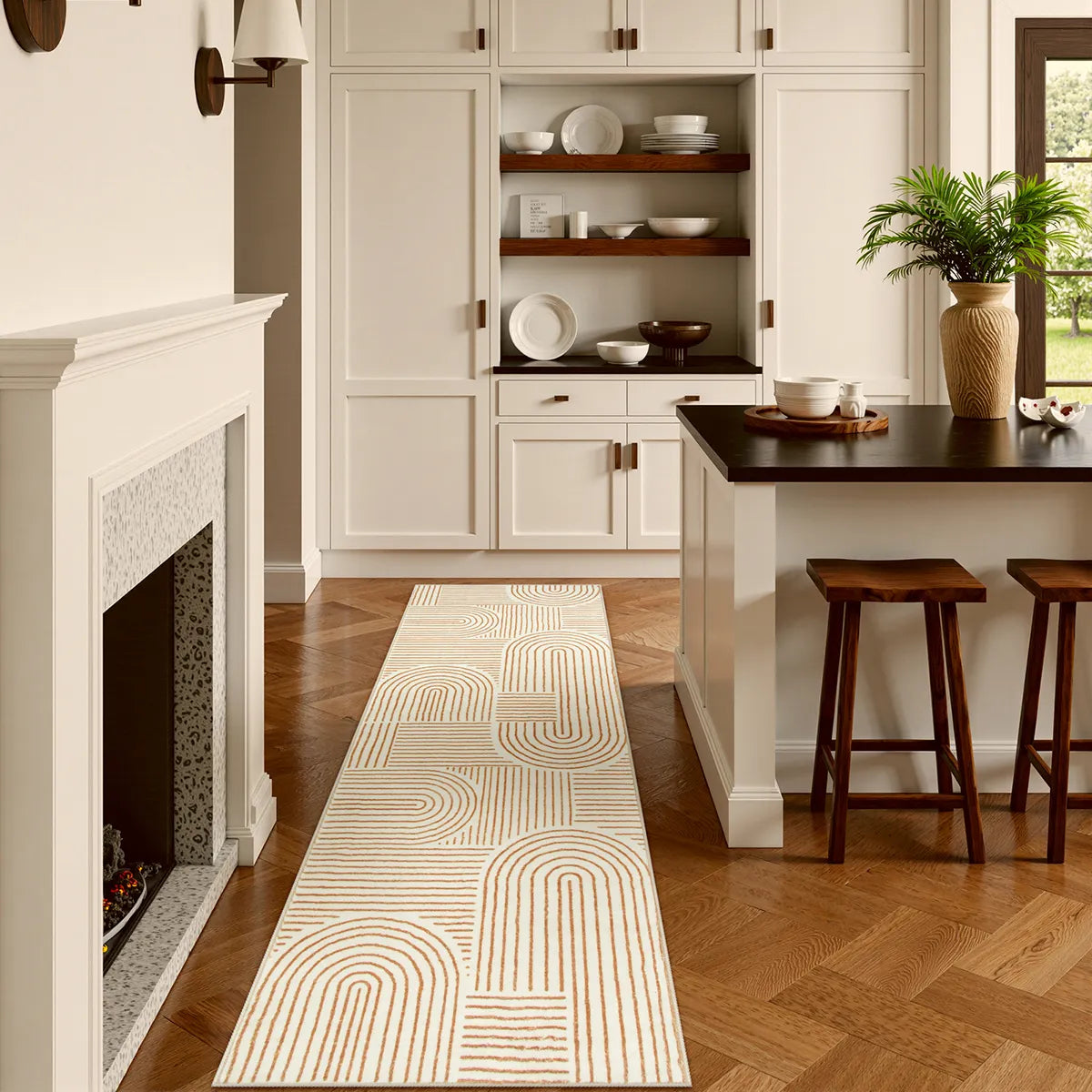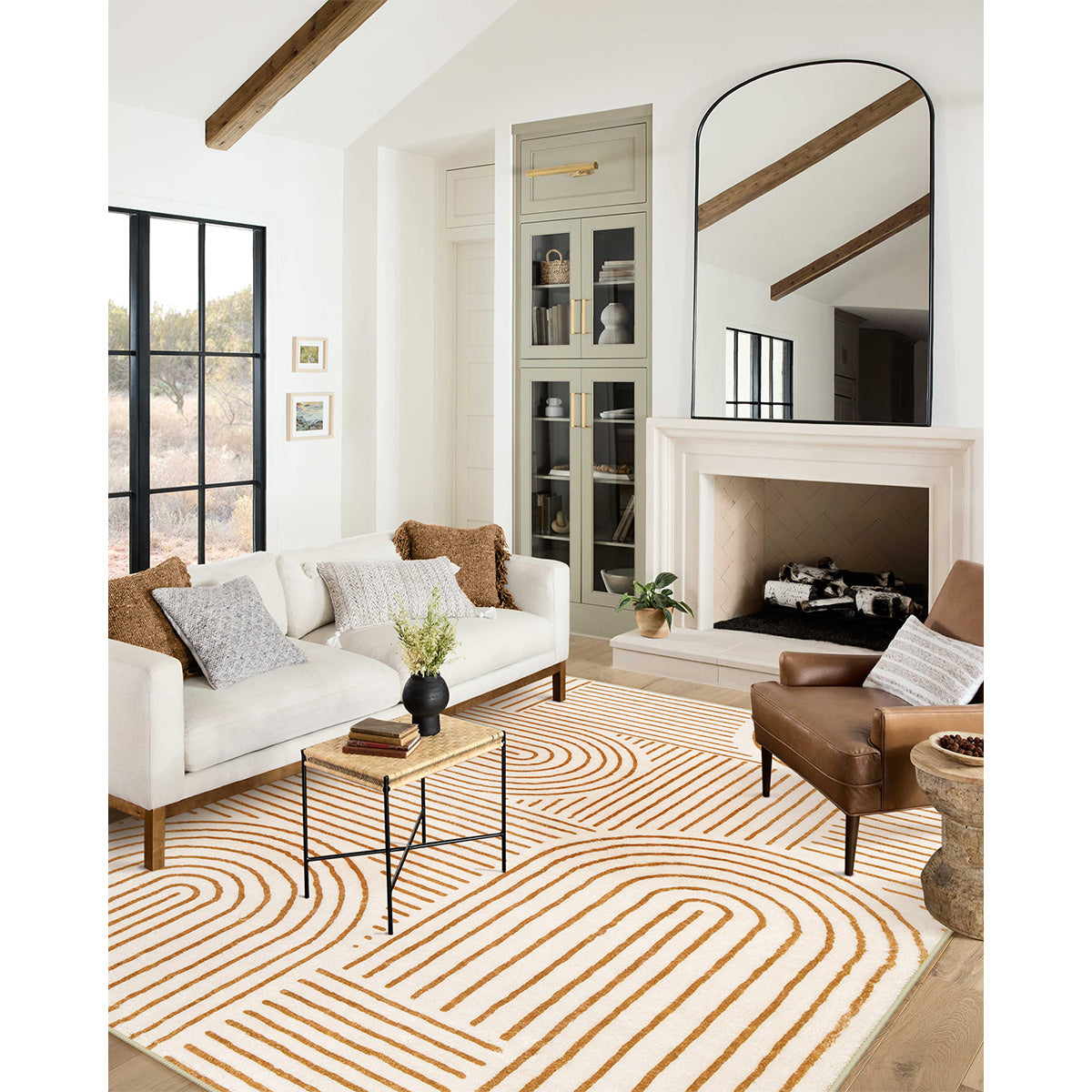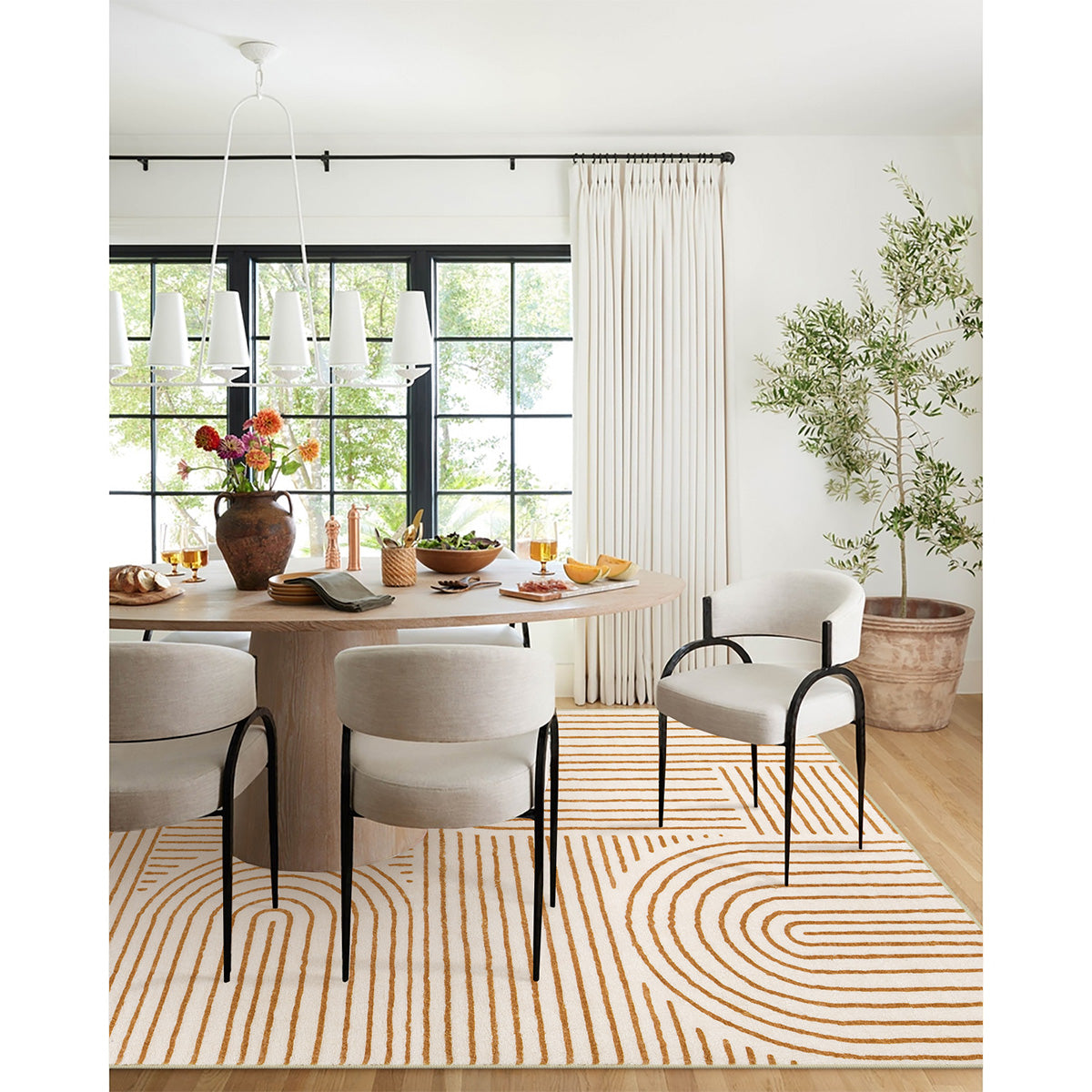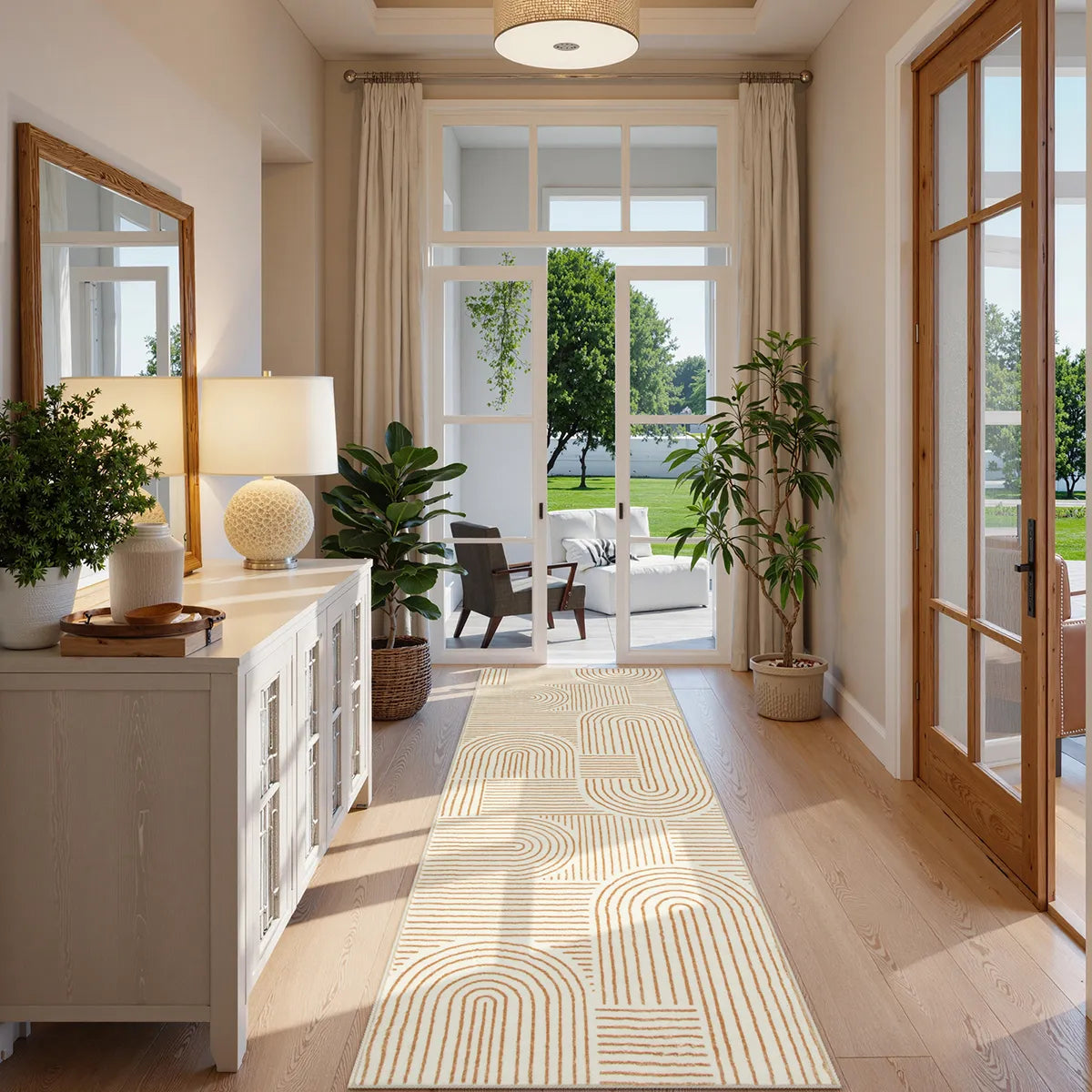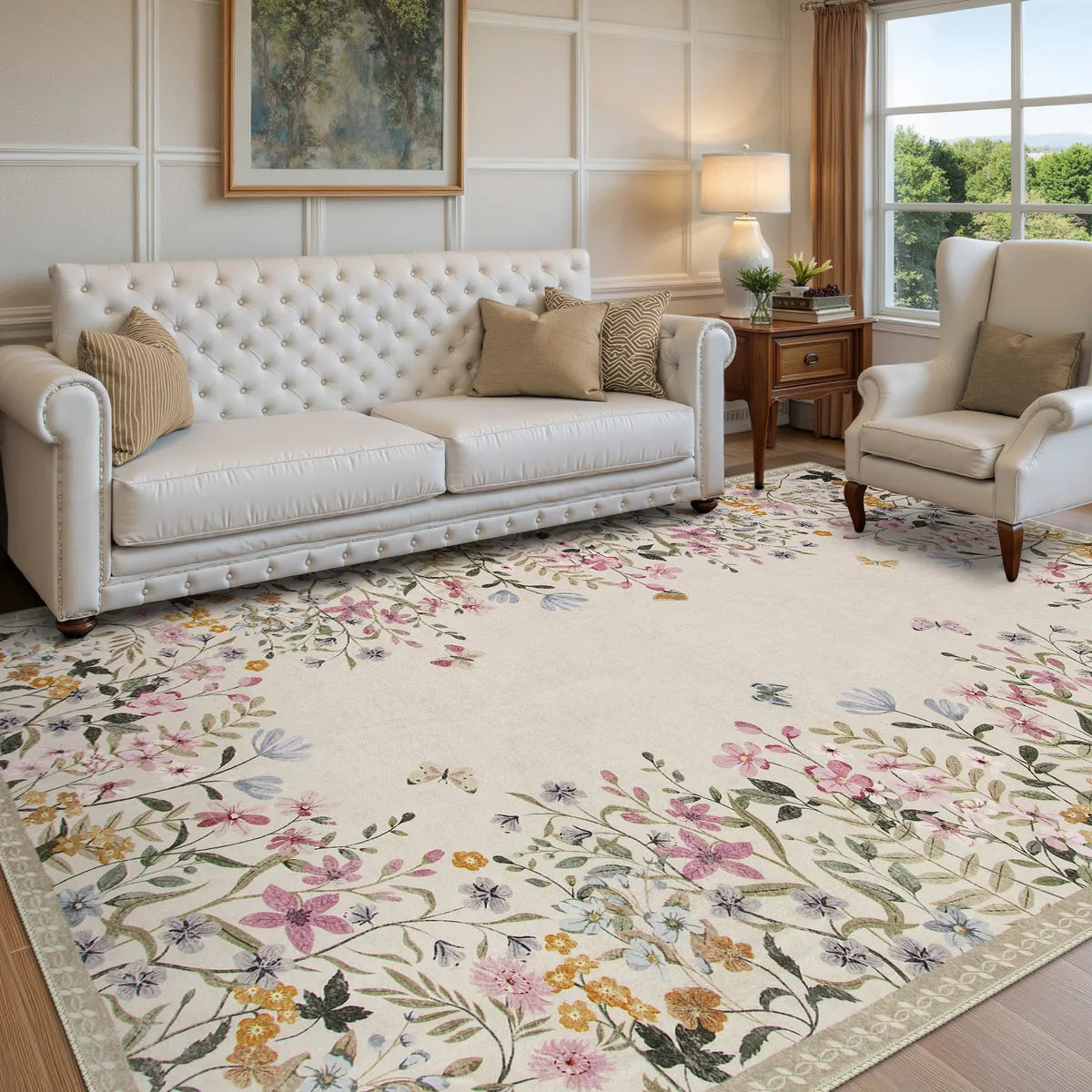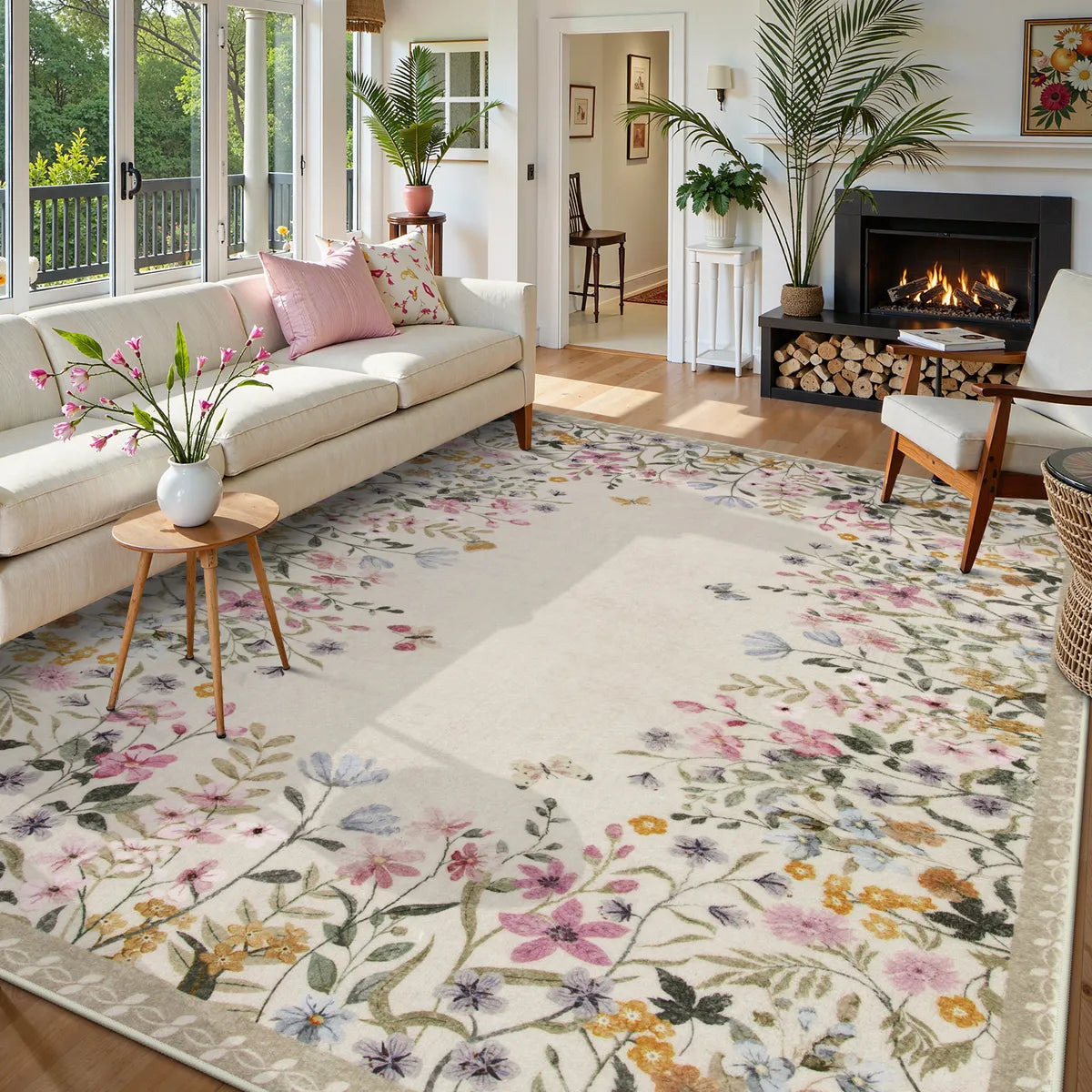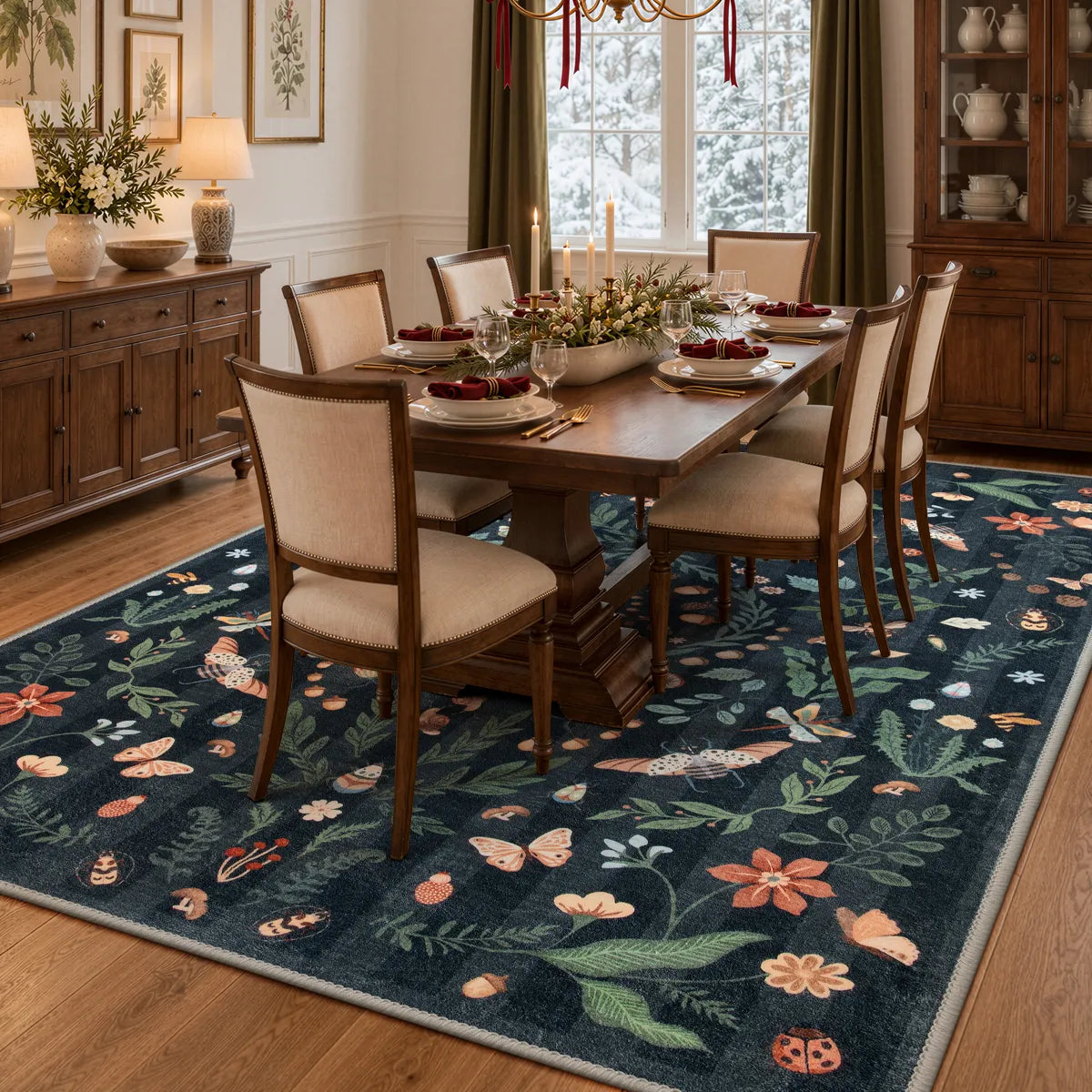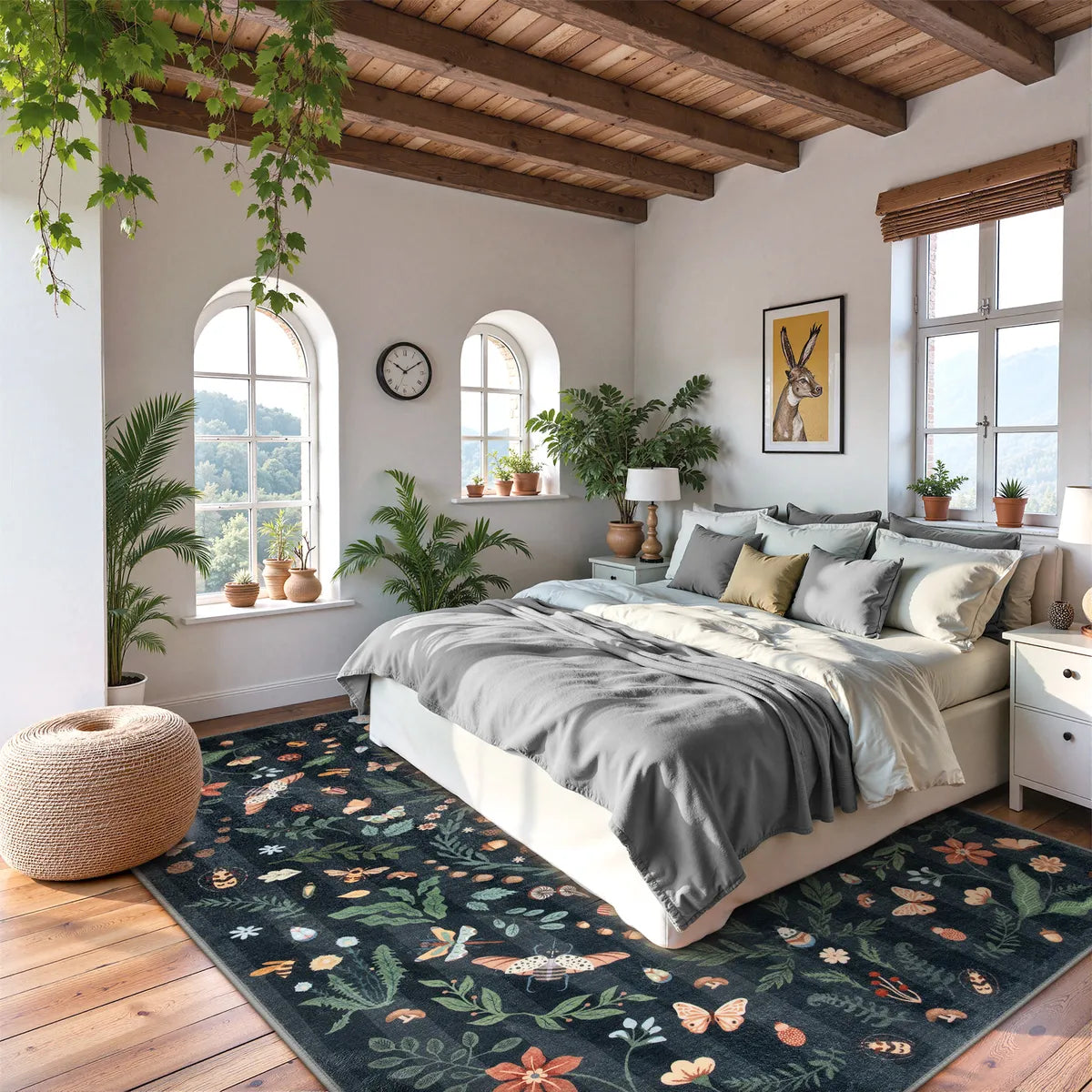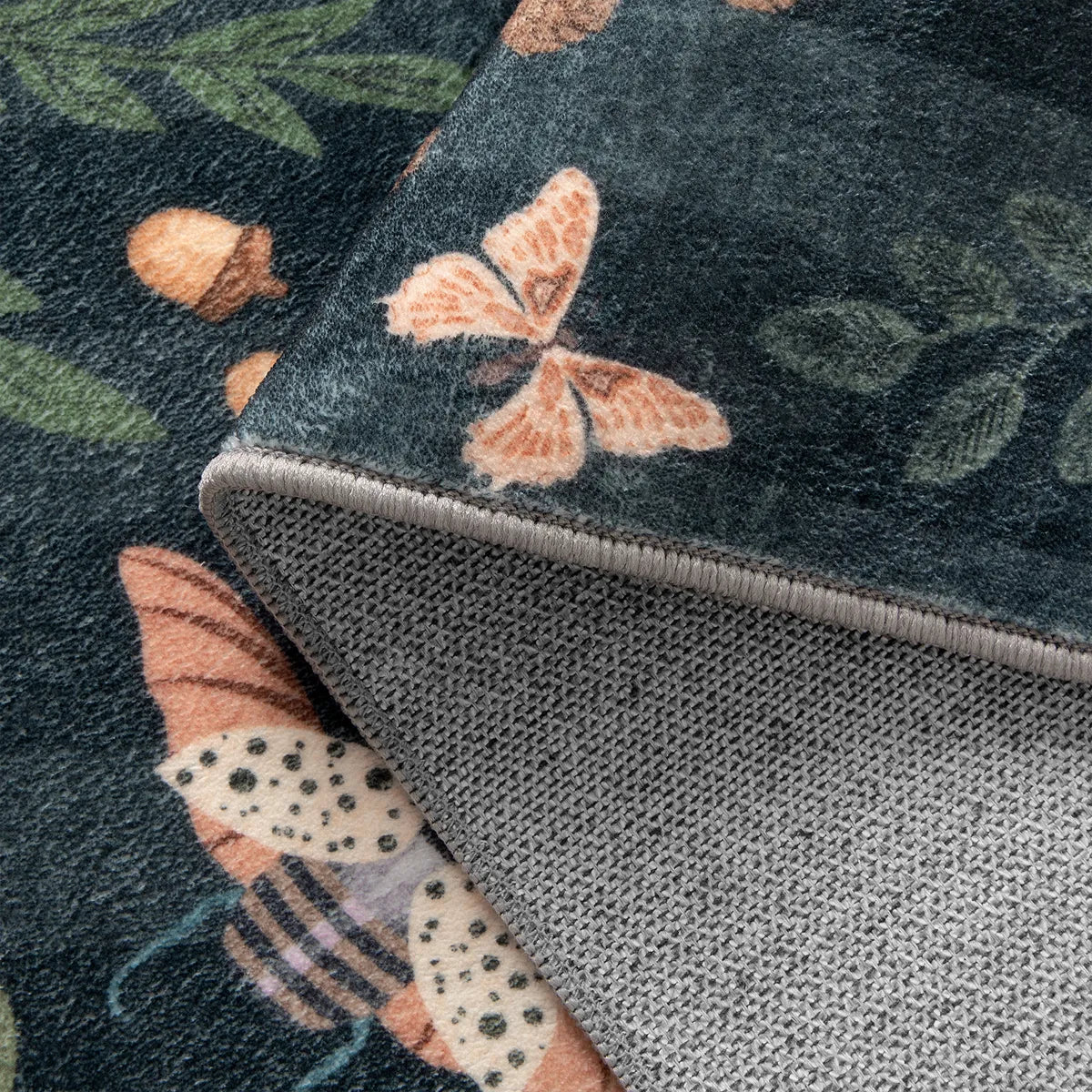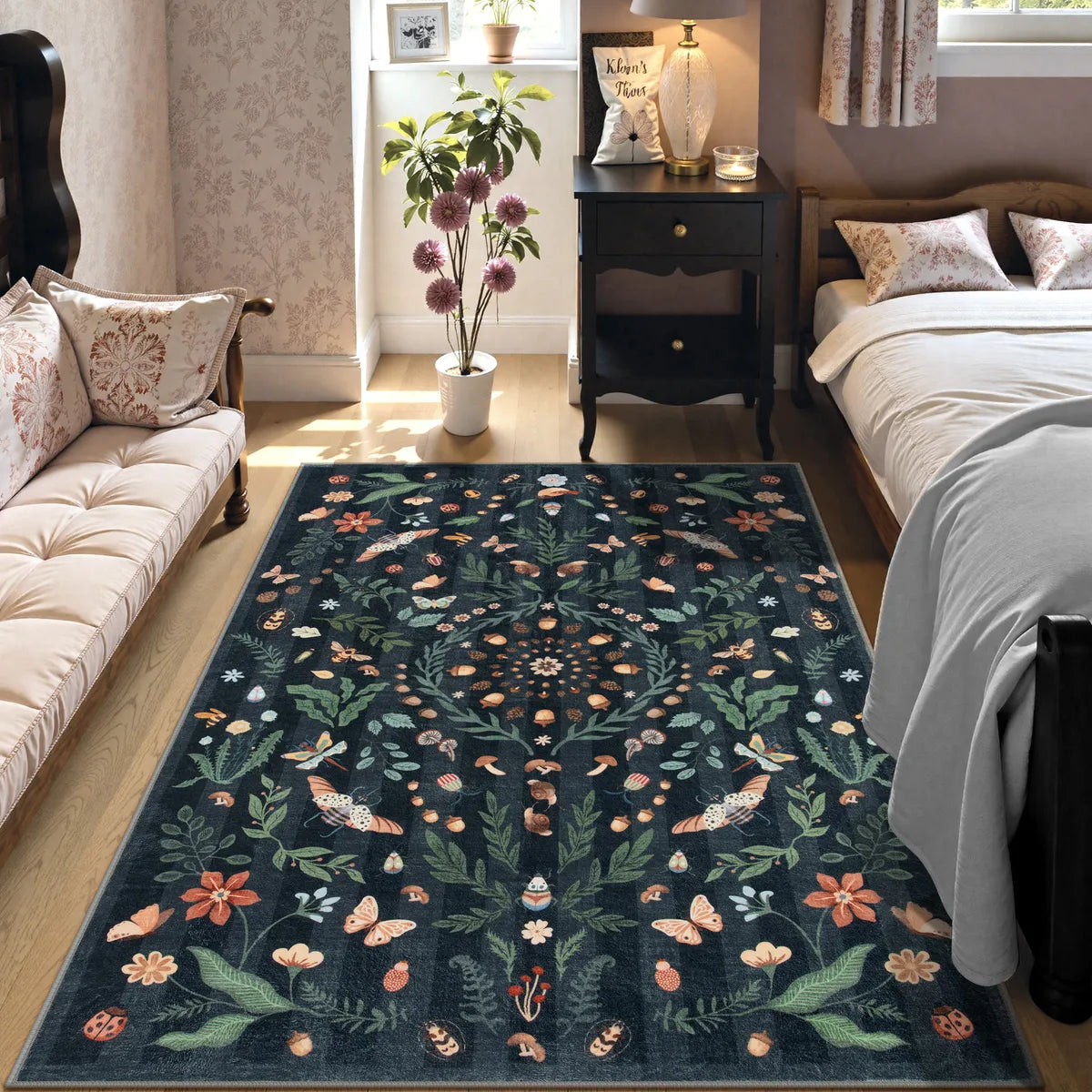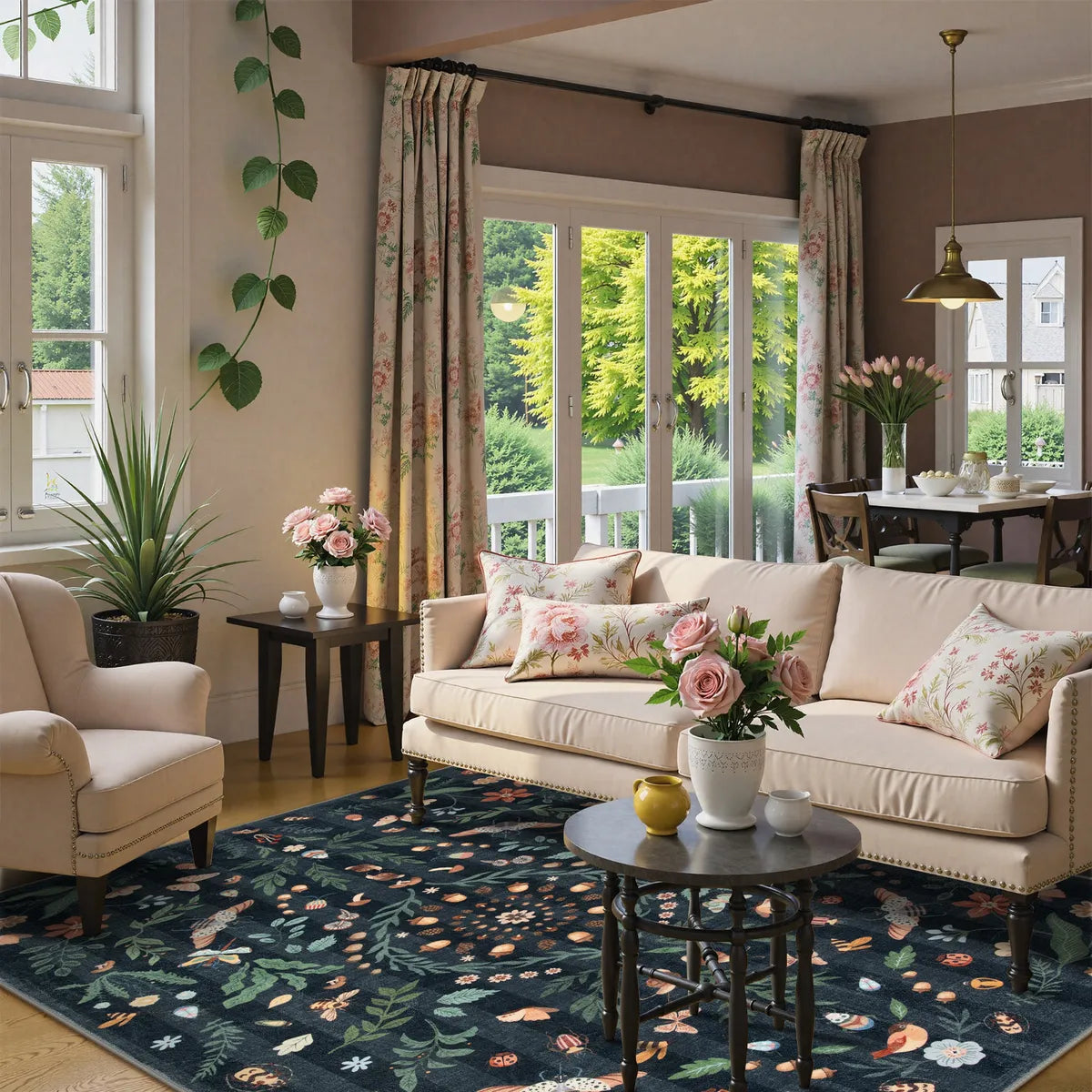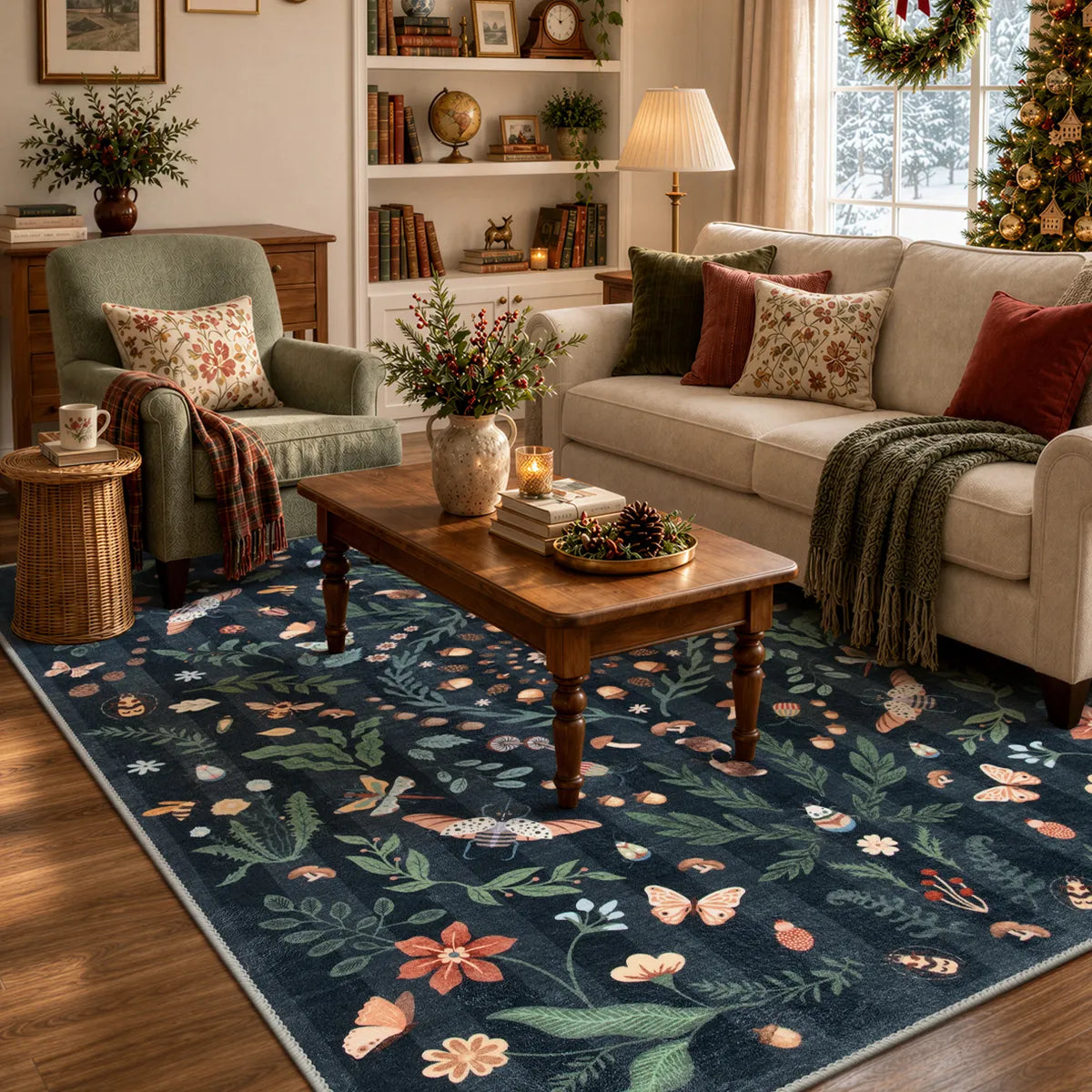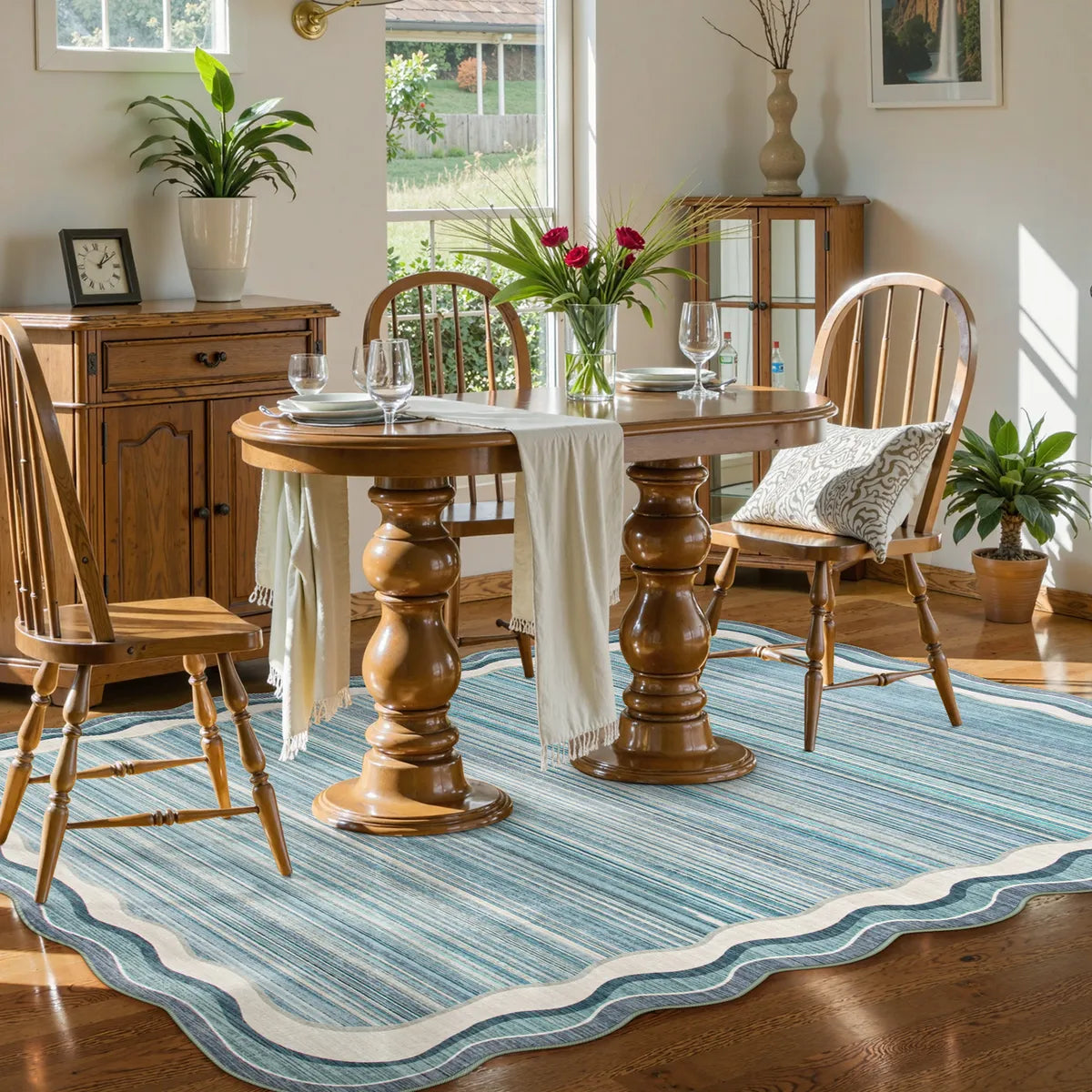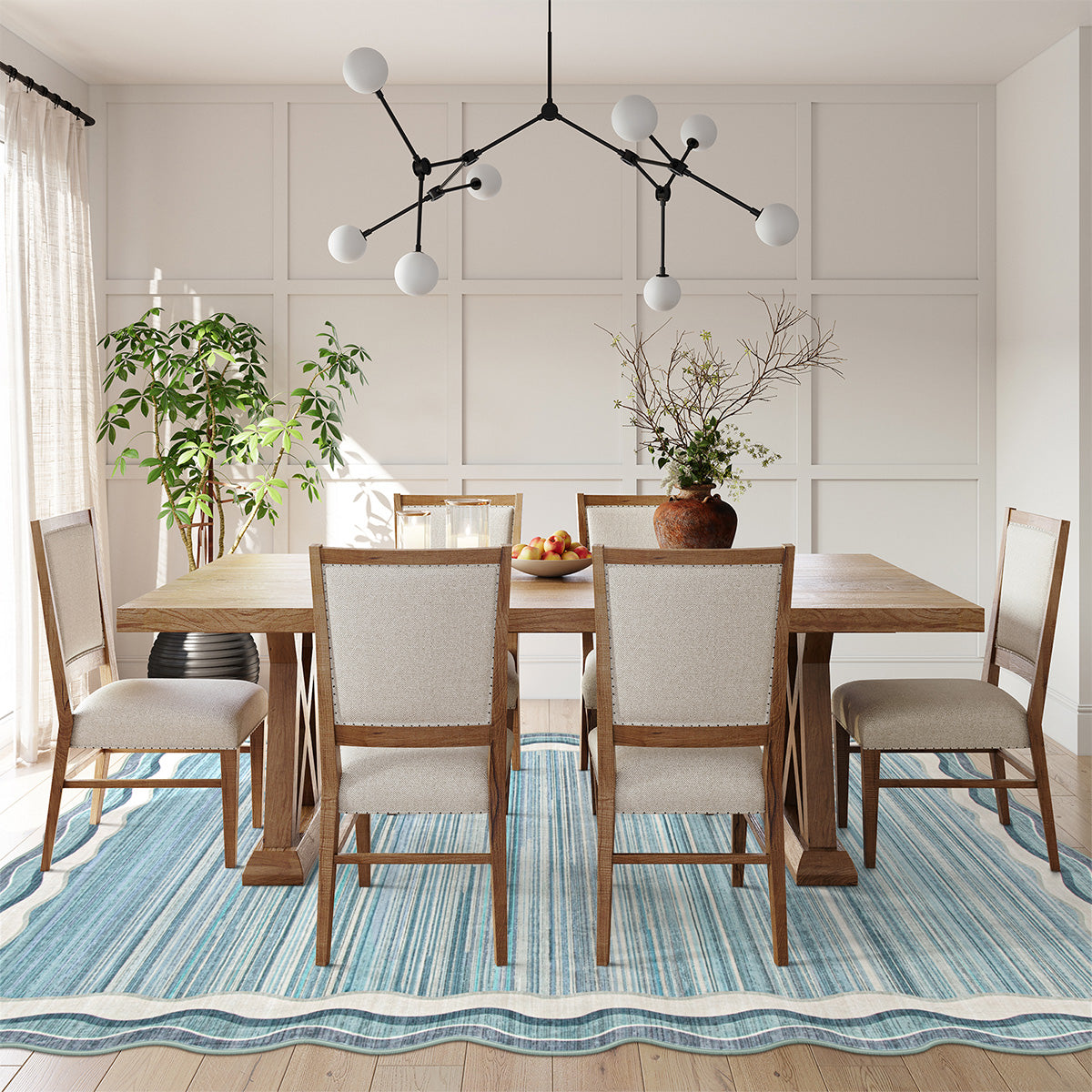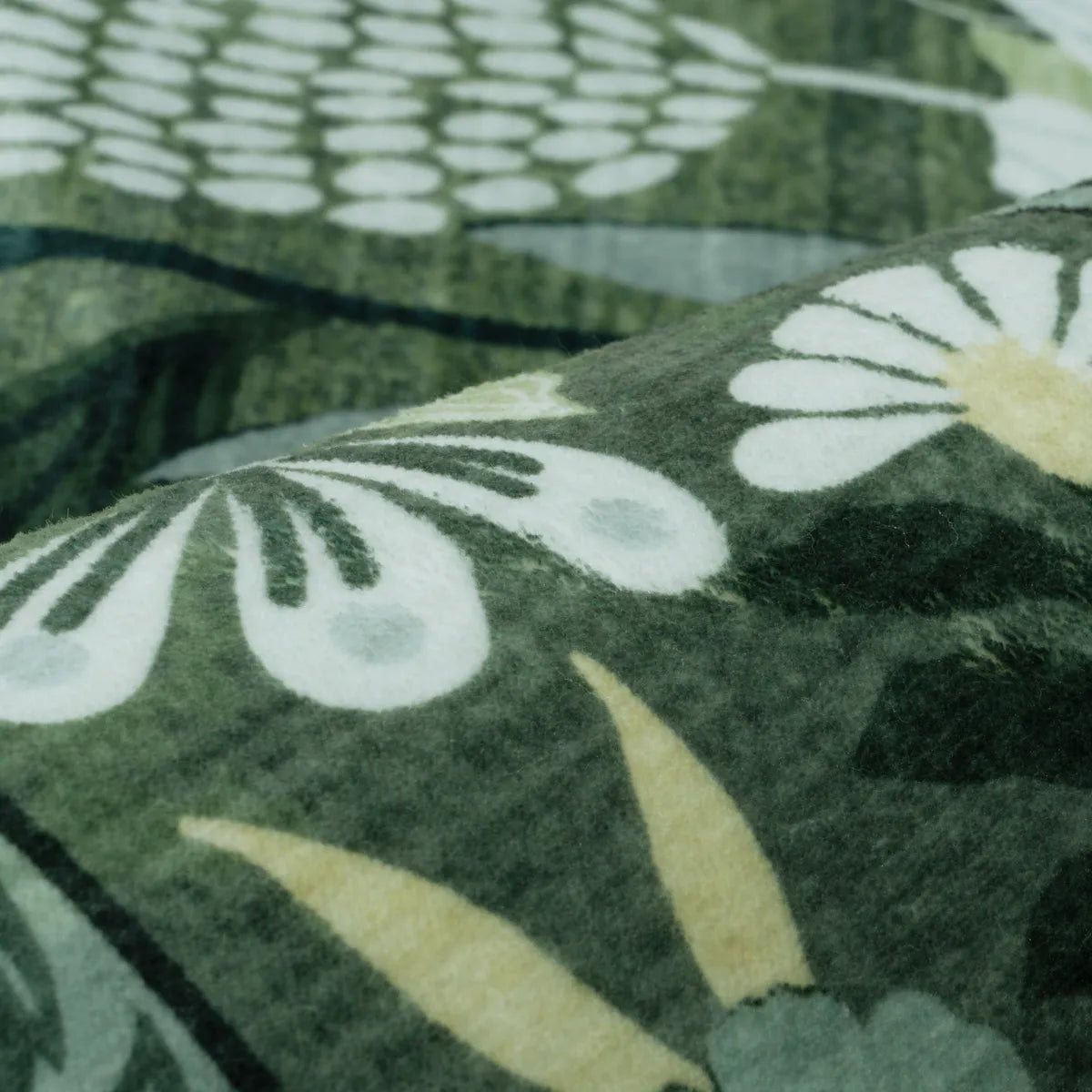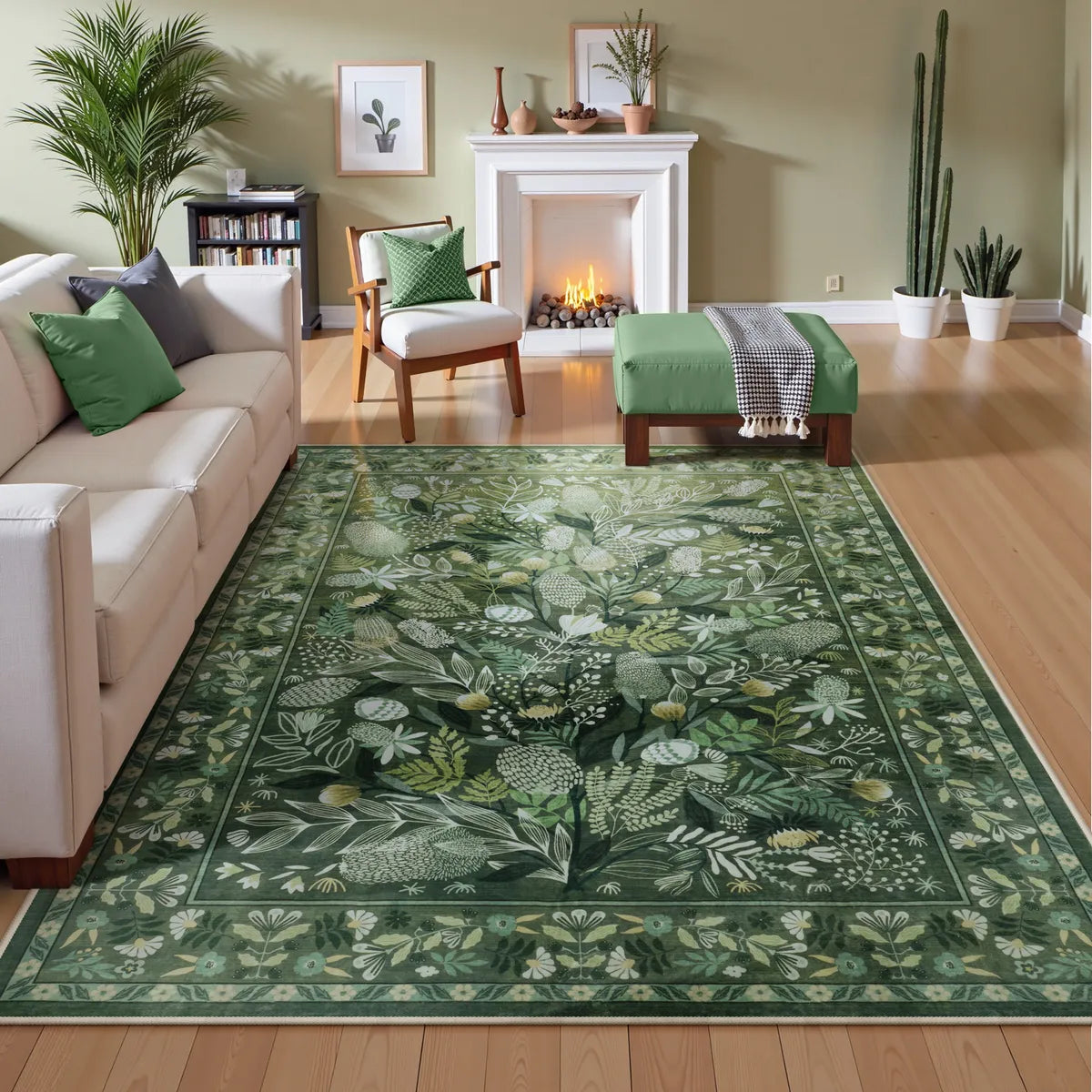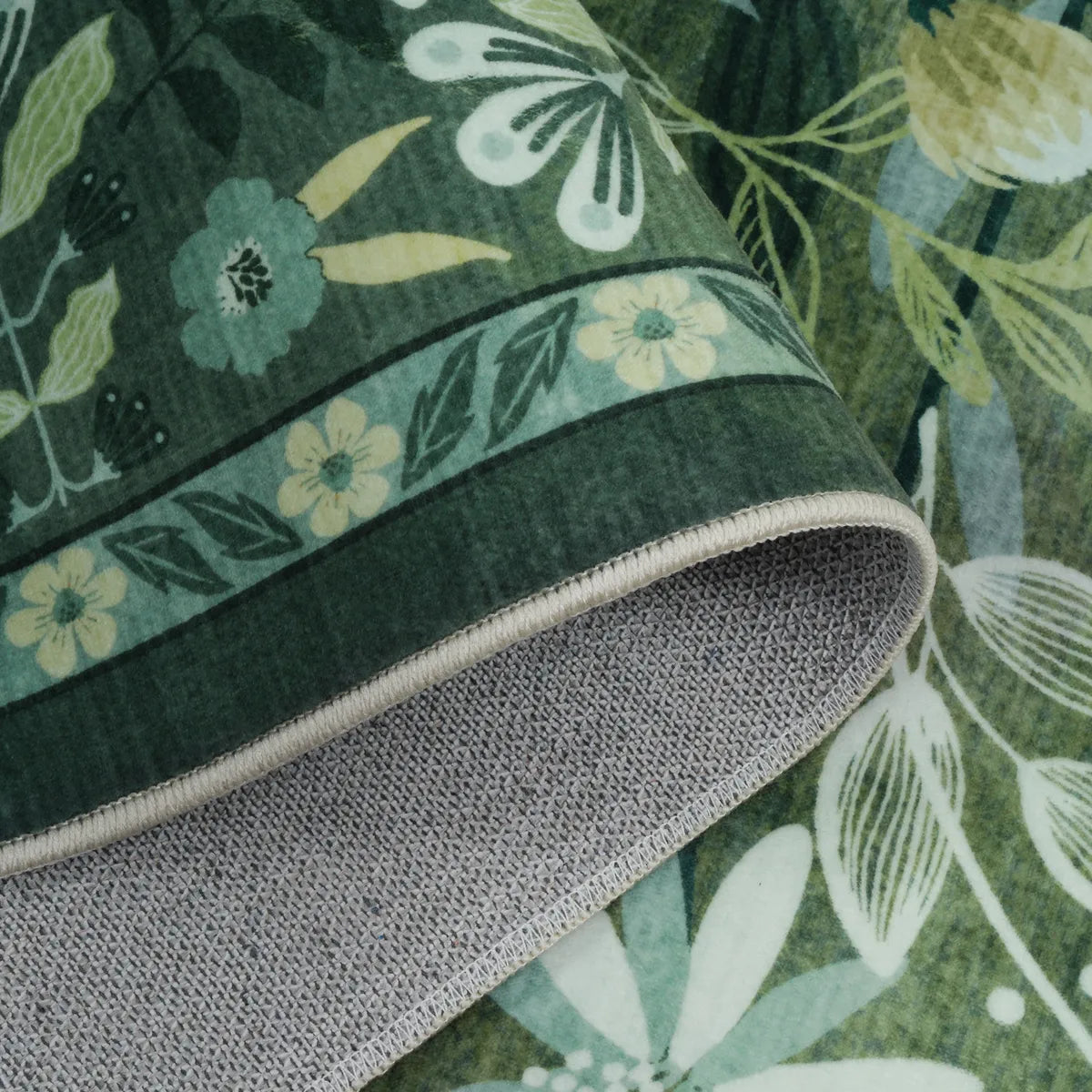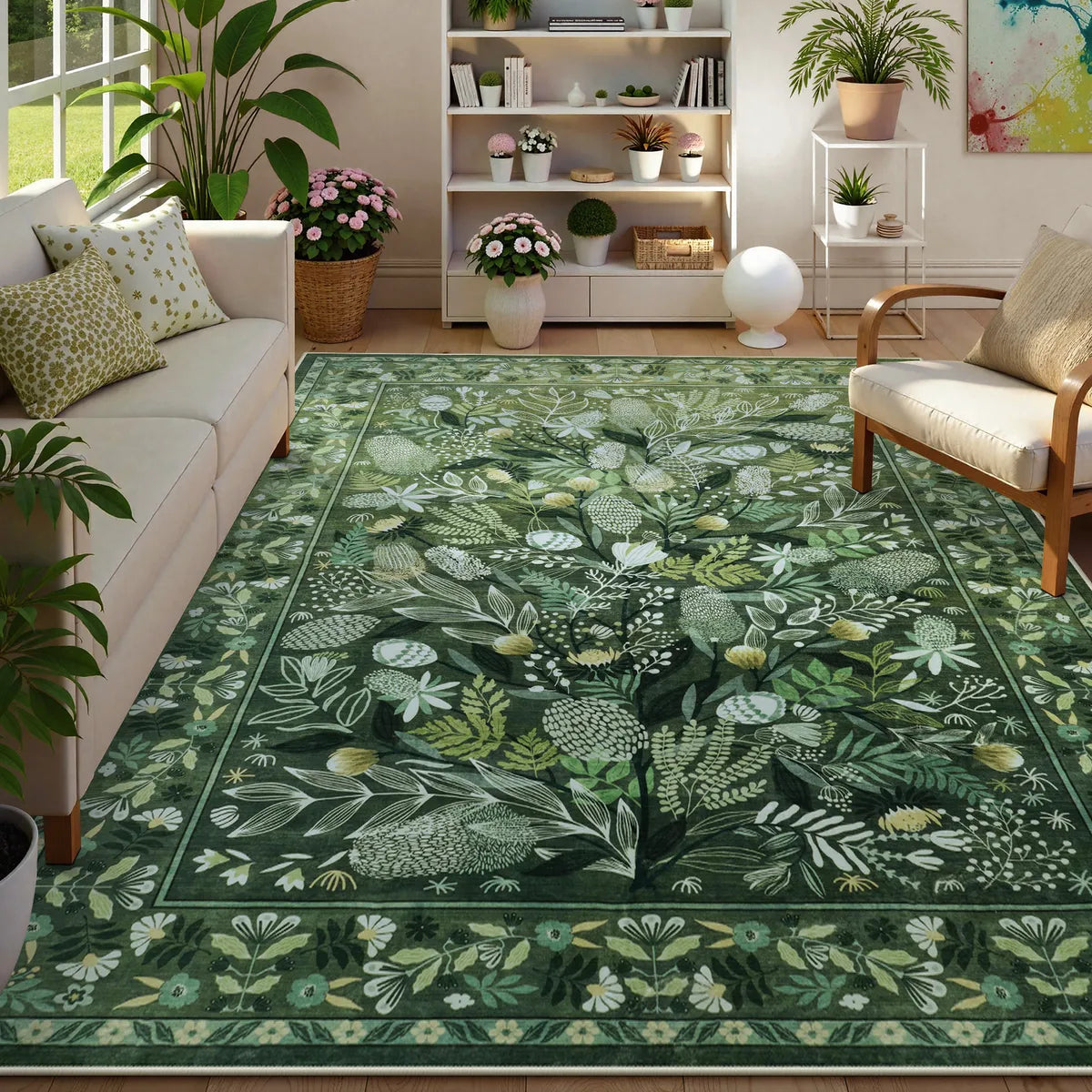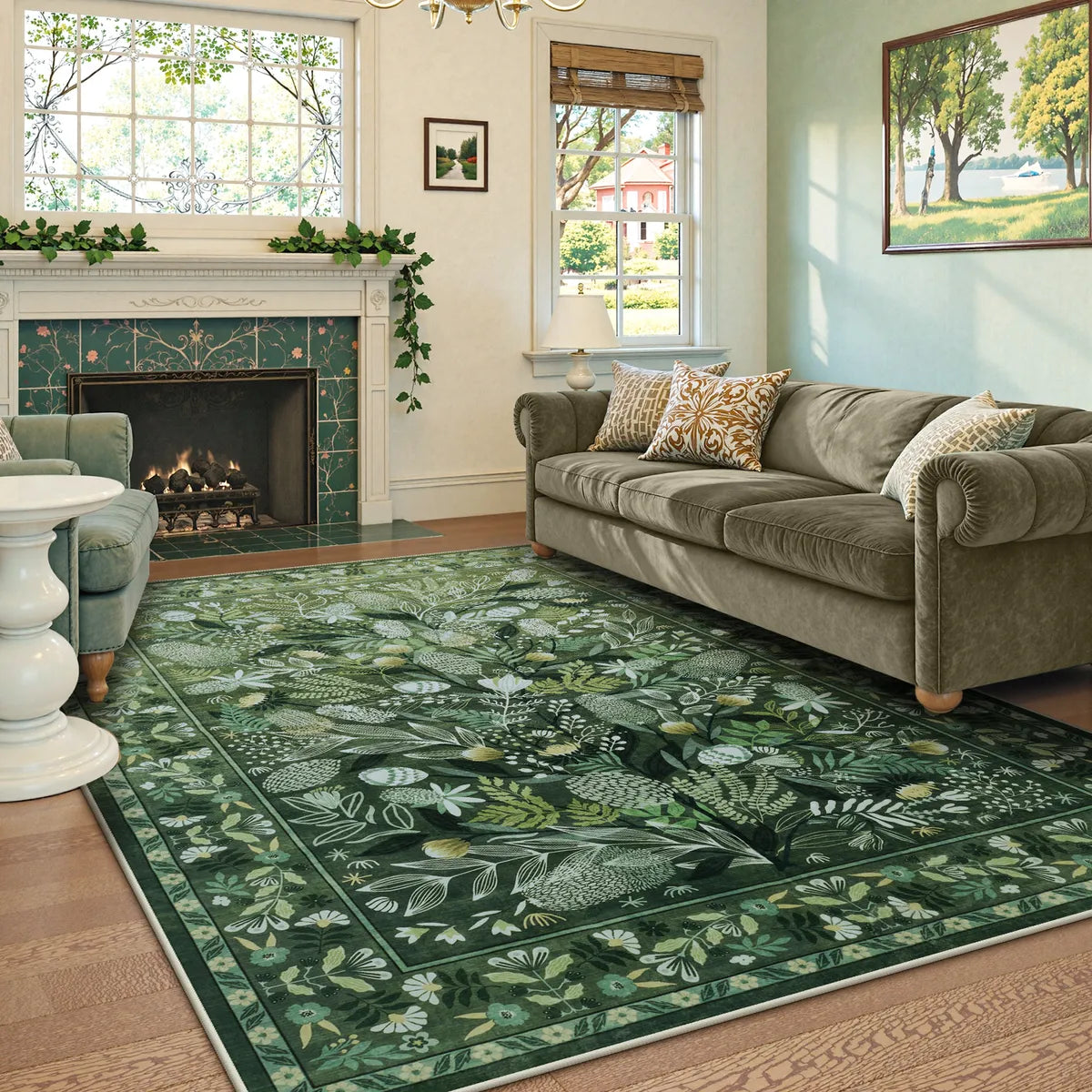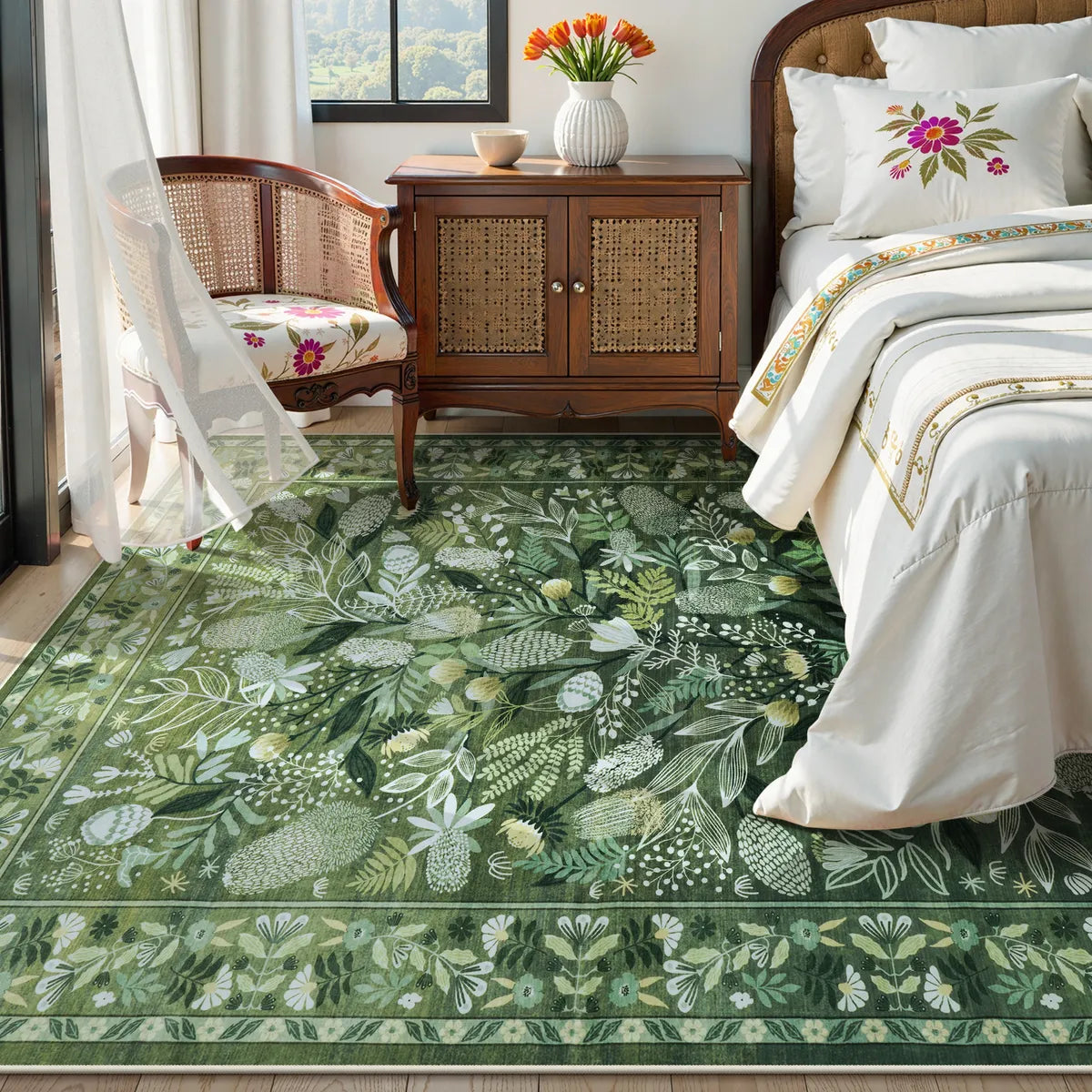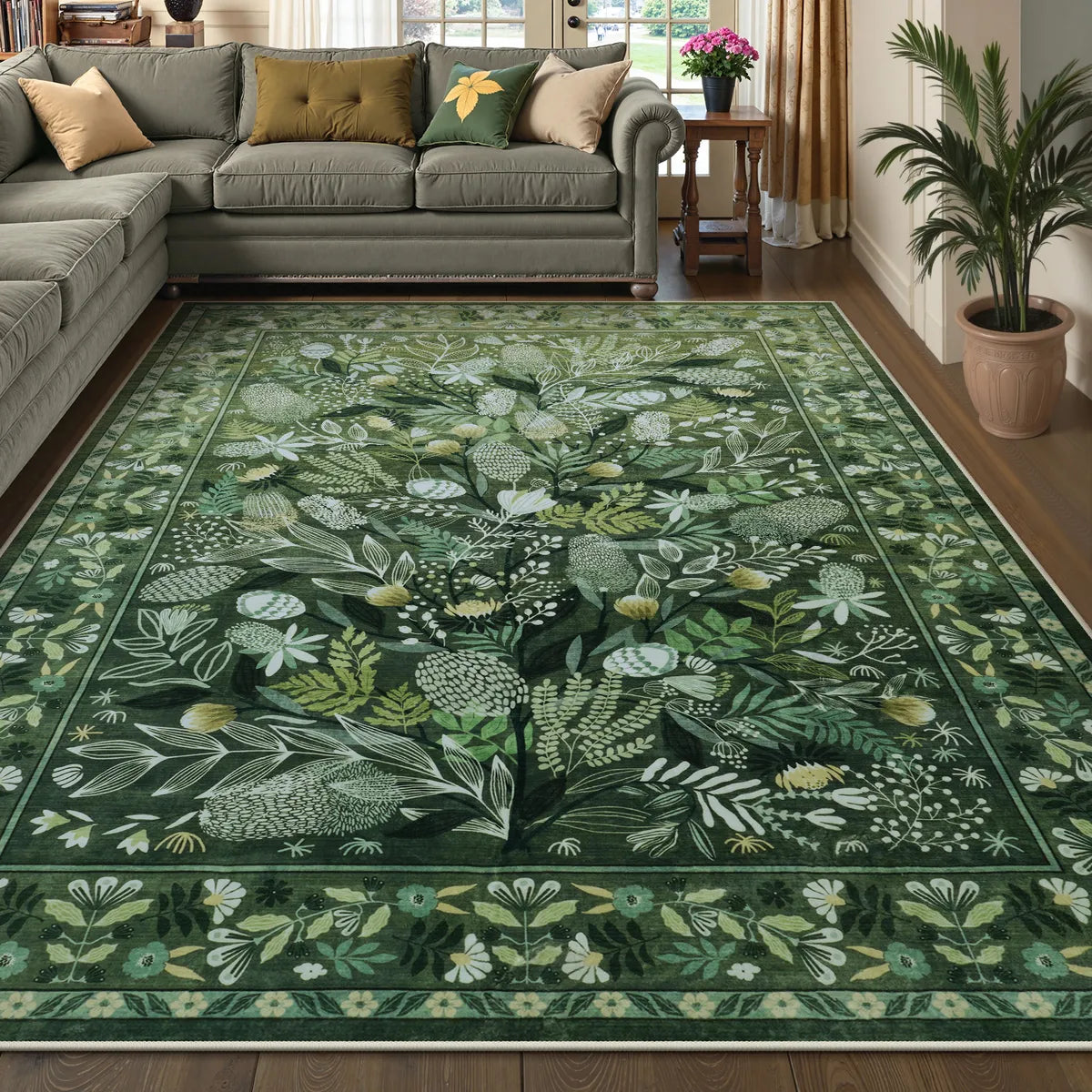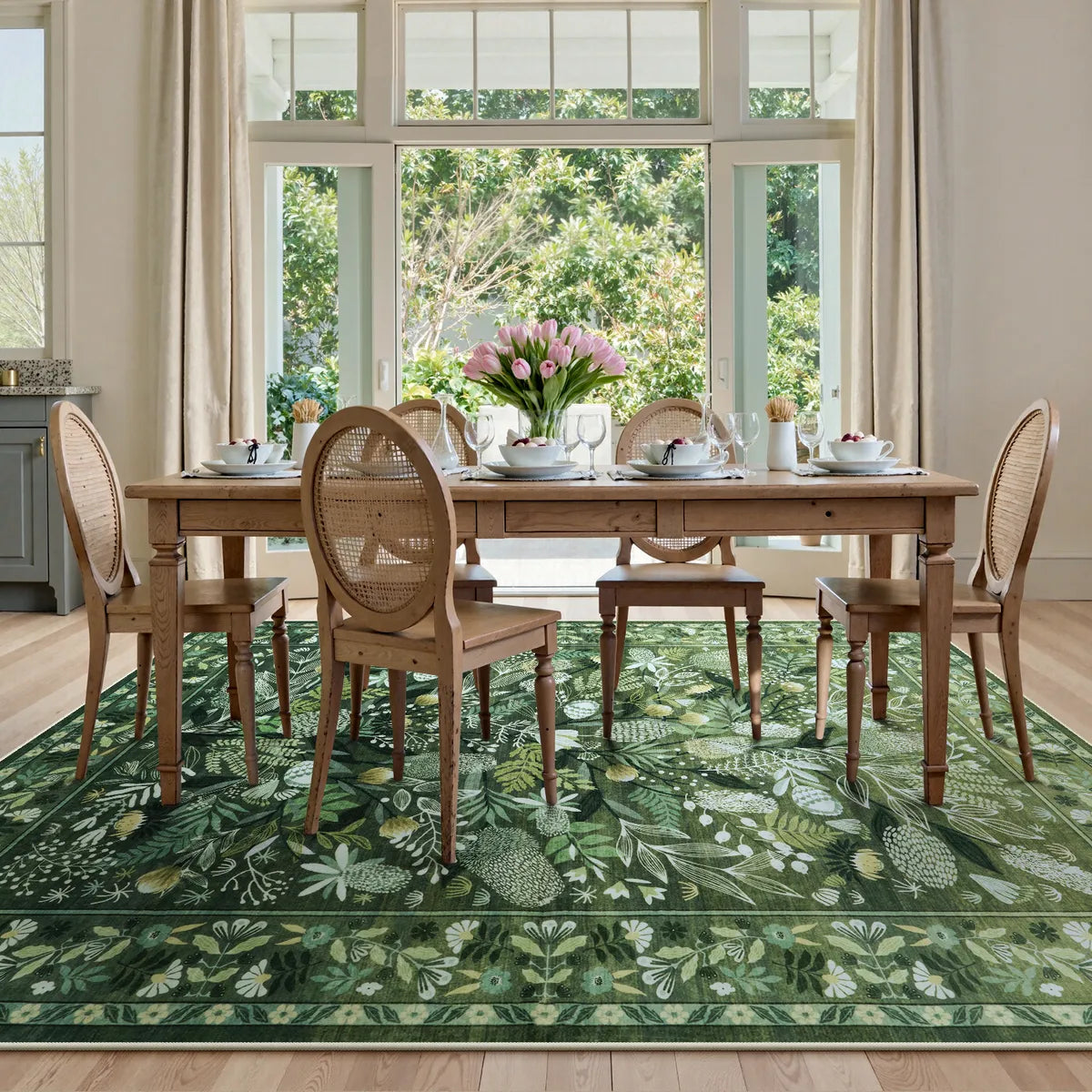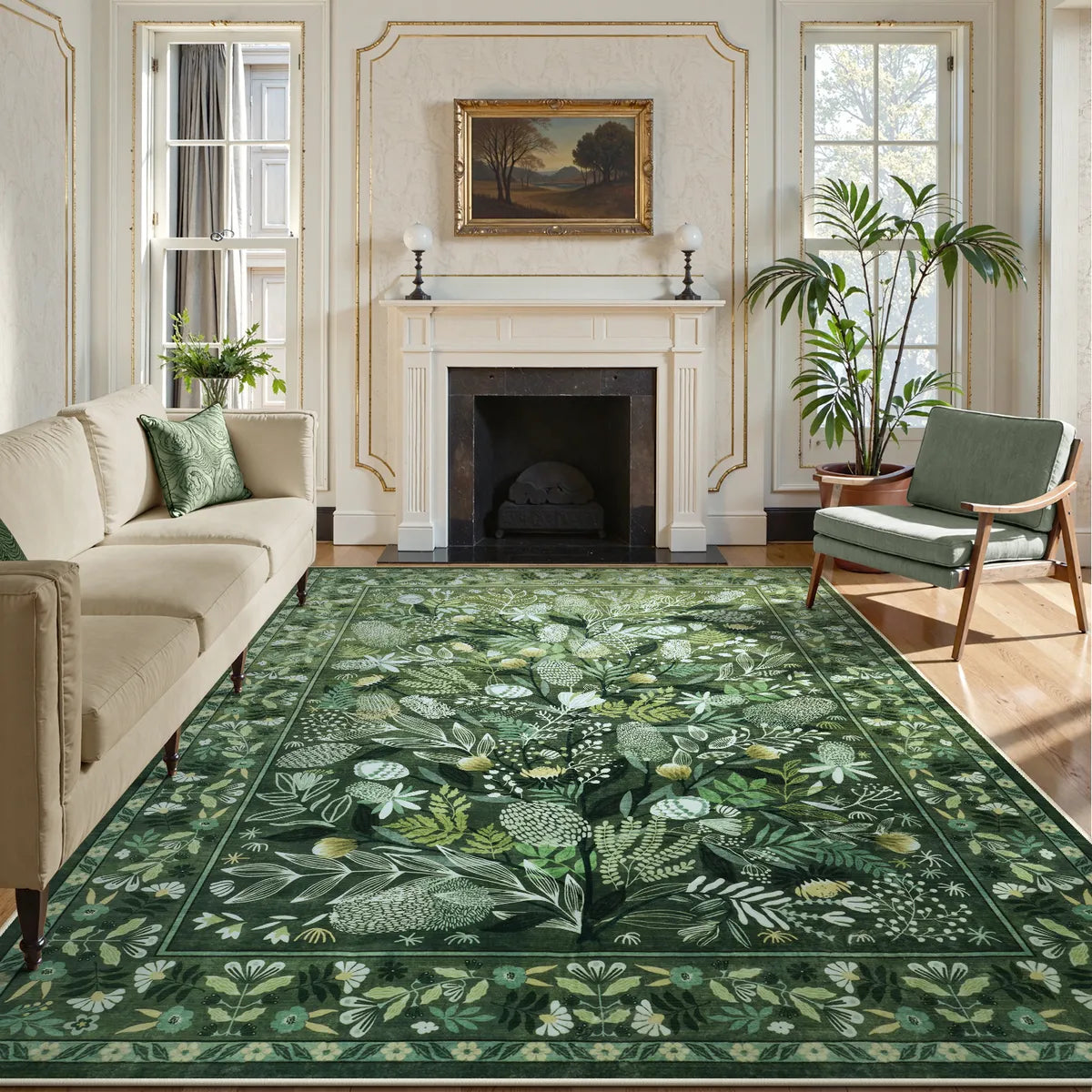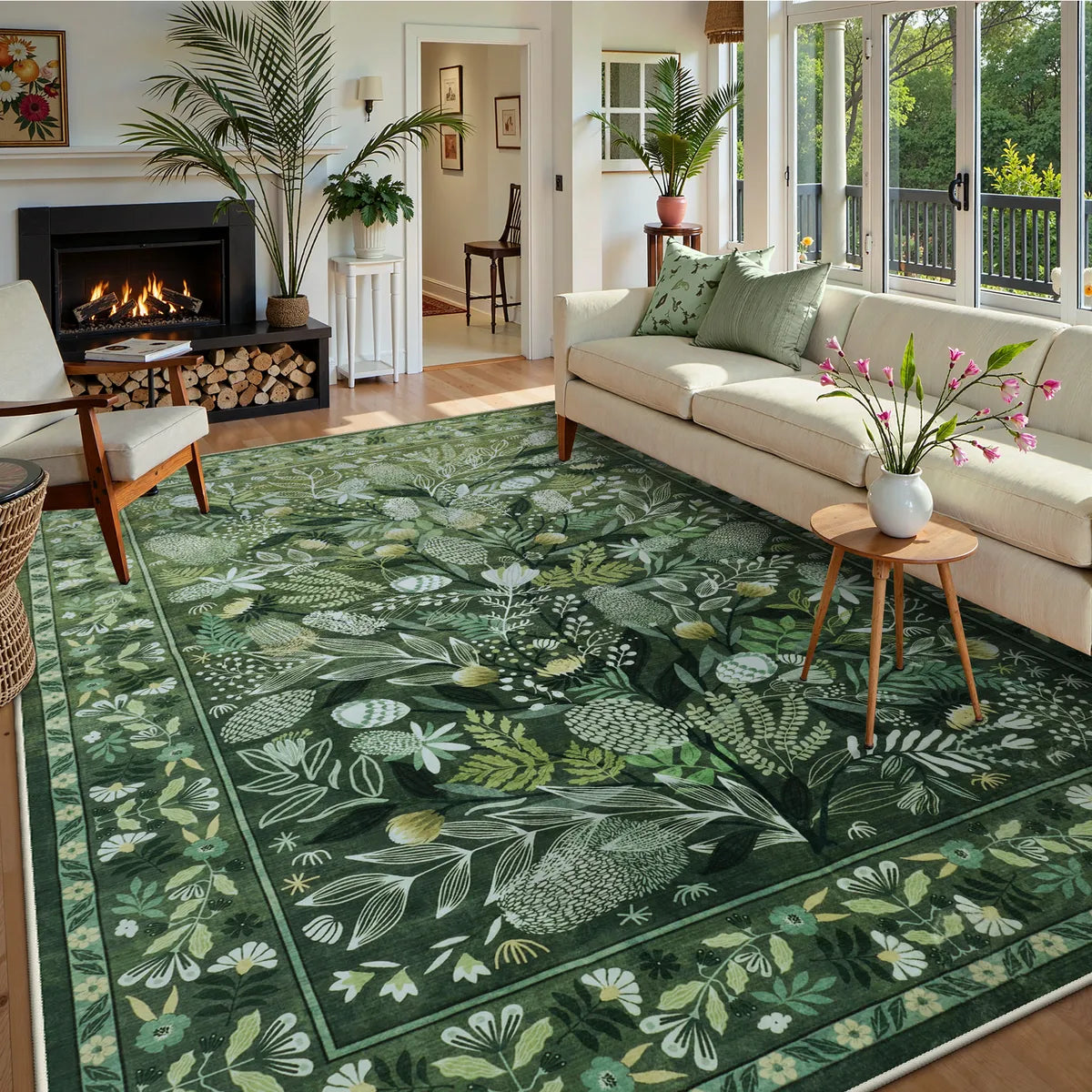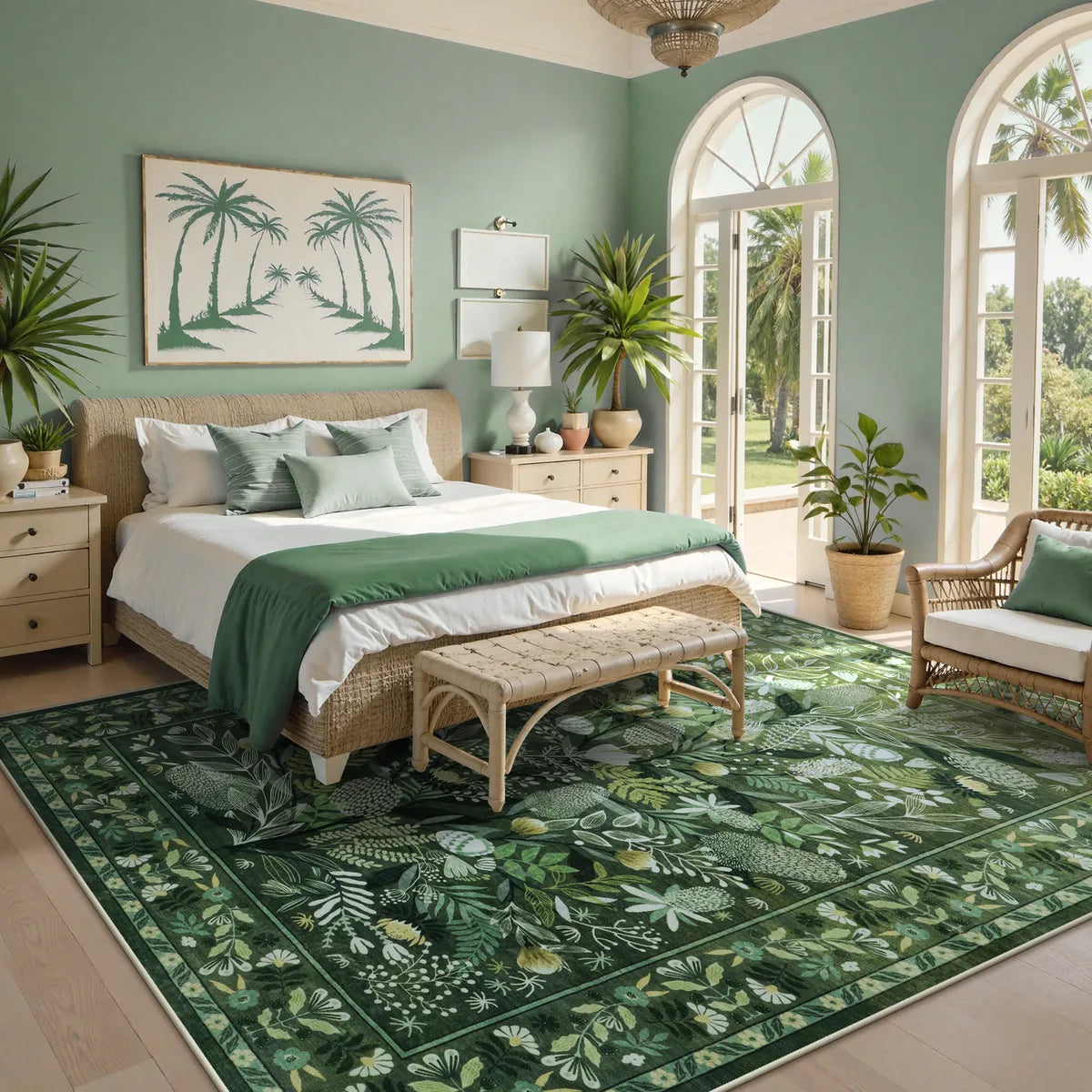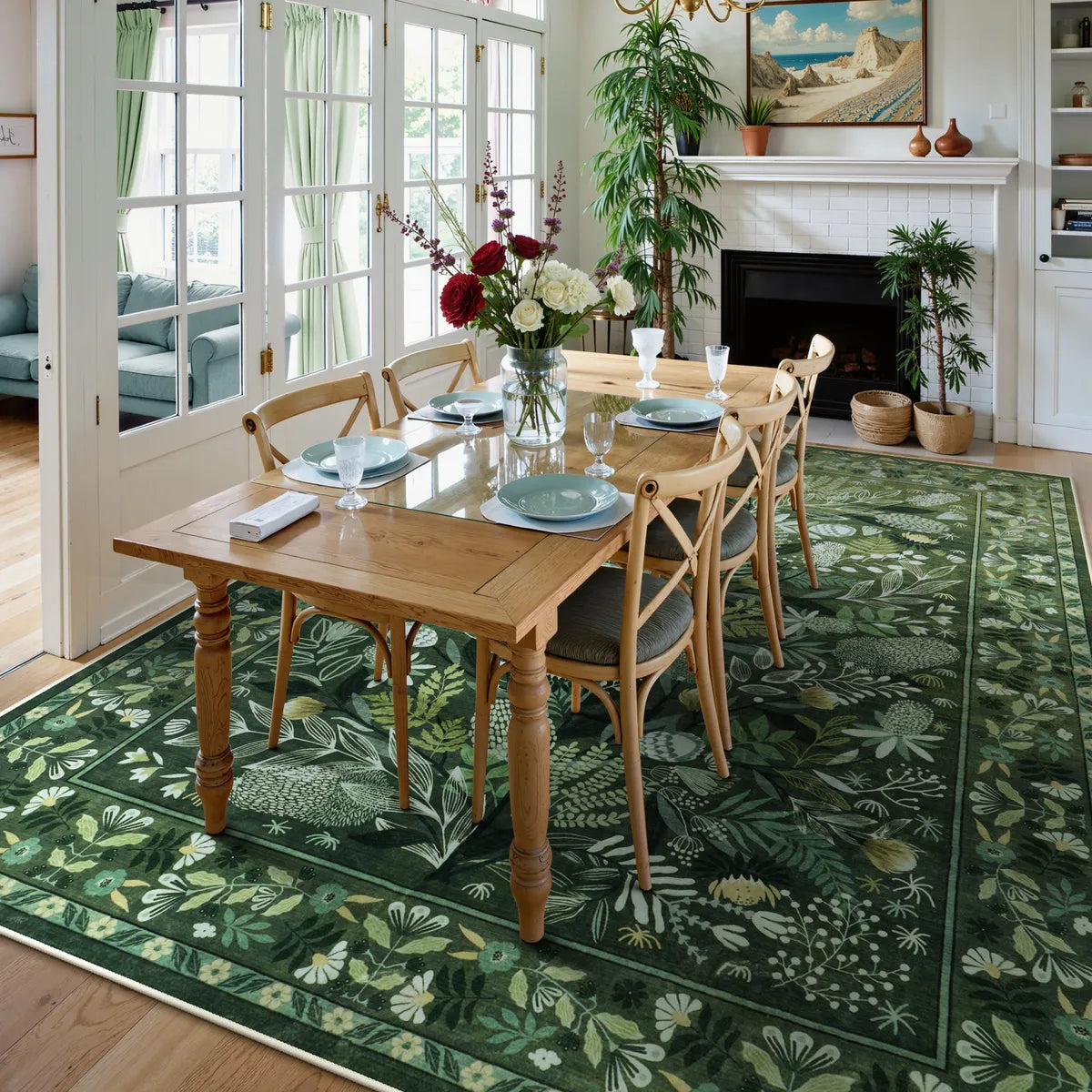


A sectional sofa changes the rules. Most rug placement advice assumes a standard sofa, but sectionals are wider, deeper, and more asymmetric. Choosing the right area rugs for living room sectional layouts means thinking about coverage, proportion, and how the rug interacts with each leg of the sofa. Get it right, and the entire room snaps into place.
Quick Takeaways
- Placing the front legs of the sectional on the rug is the most practical approach for most living rooms.
- L-shaped sectionals typically need an 8x10 or 9x12 rug to achieve proper visual balance.
- The coffee table should sit fully on the rug with clearance on all sides.
- Washable, large area rugs for living rooms handle the daily demands of a high-traffic sectional setup.
Front Legs On or All Legs On: Rug Placement for Sectional Sofas

The most fundamental sectional rug decision is also the one most people second-guess. Knowing both options clearly makes everything else easier.
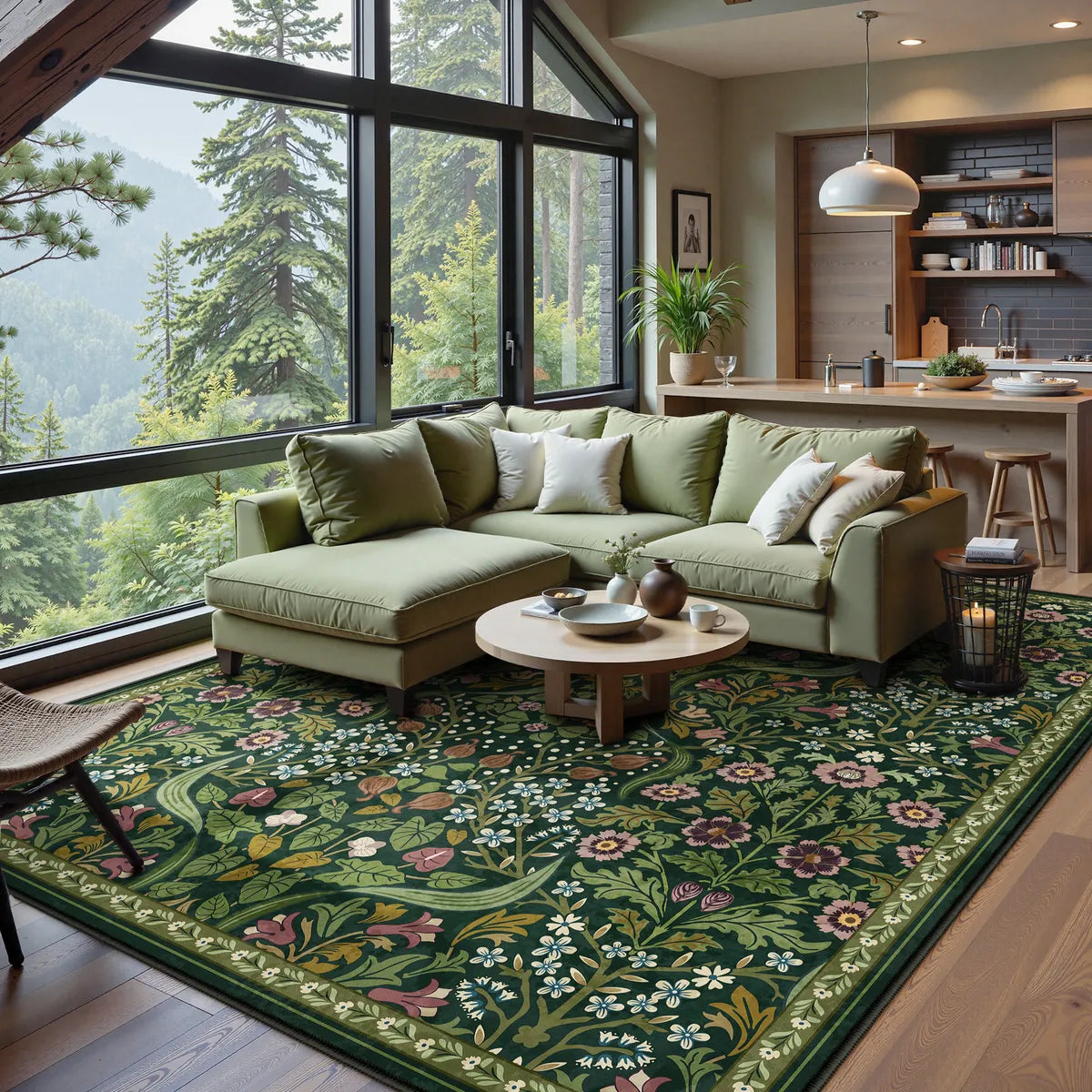
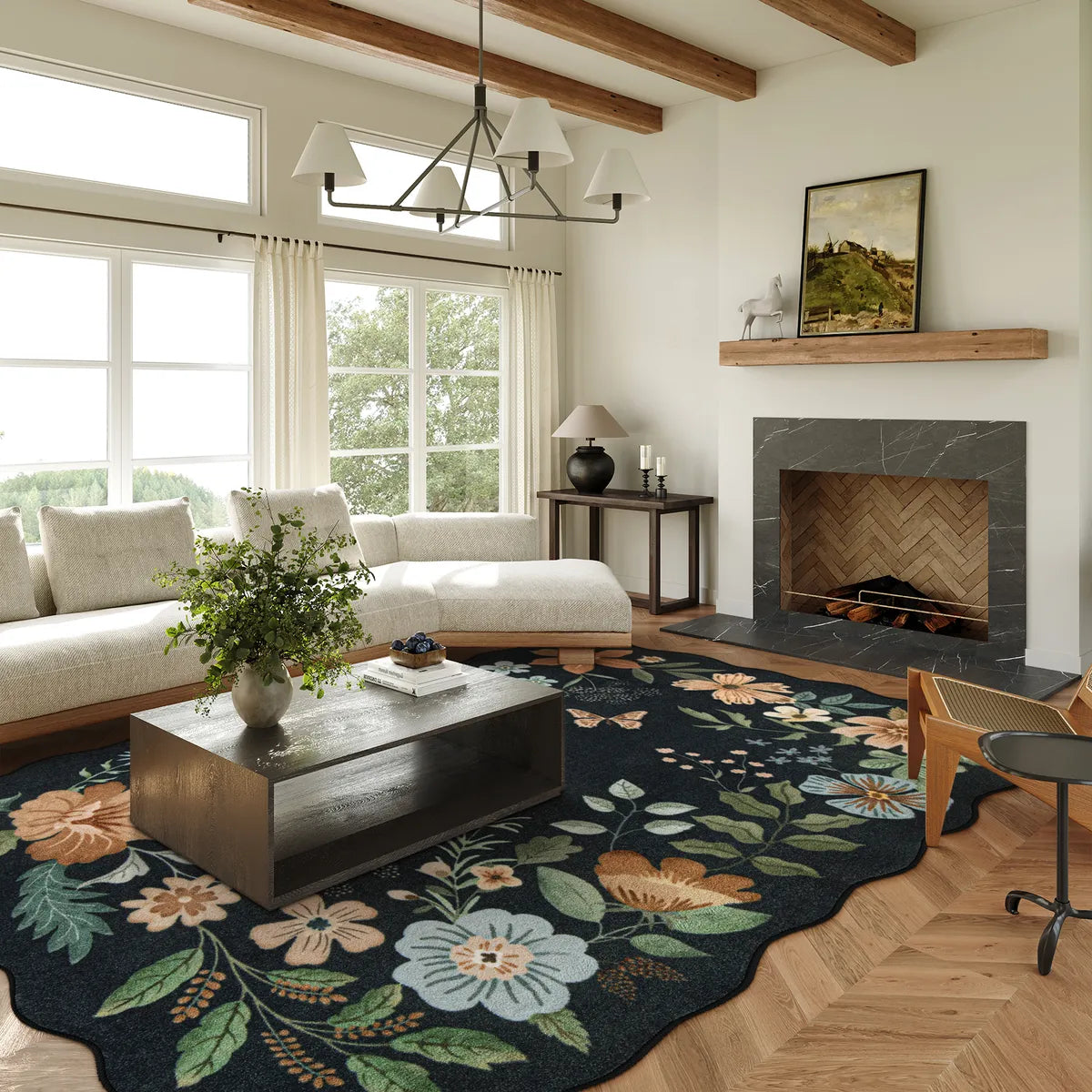
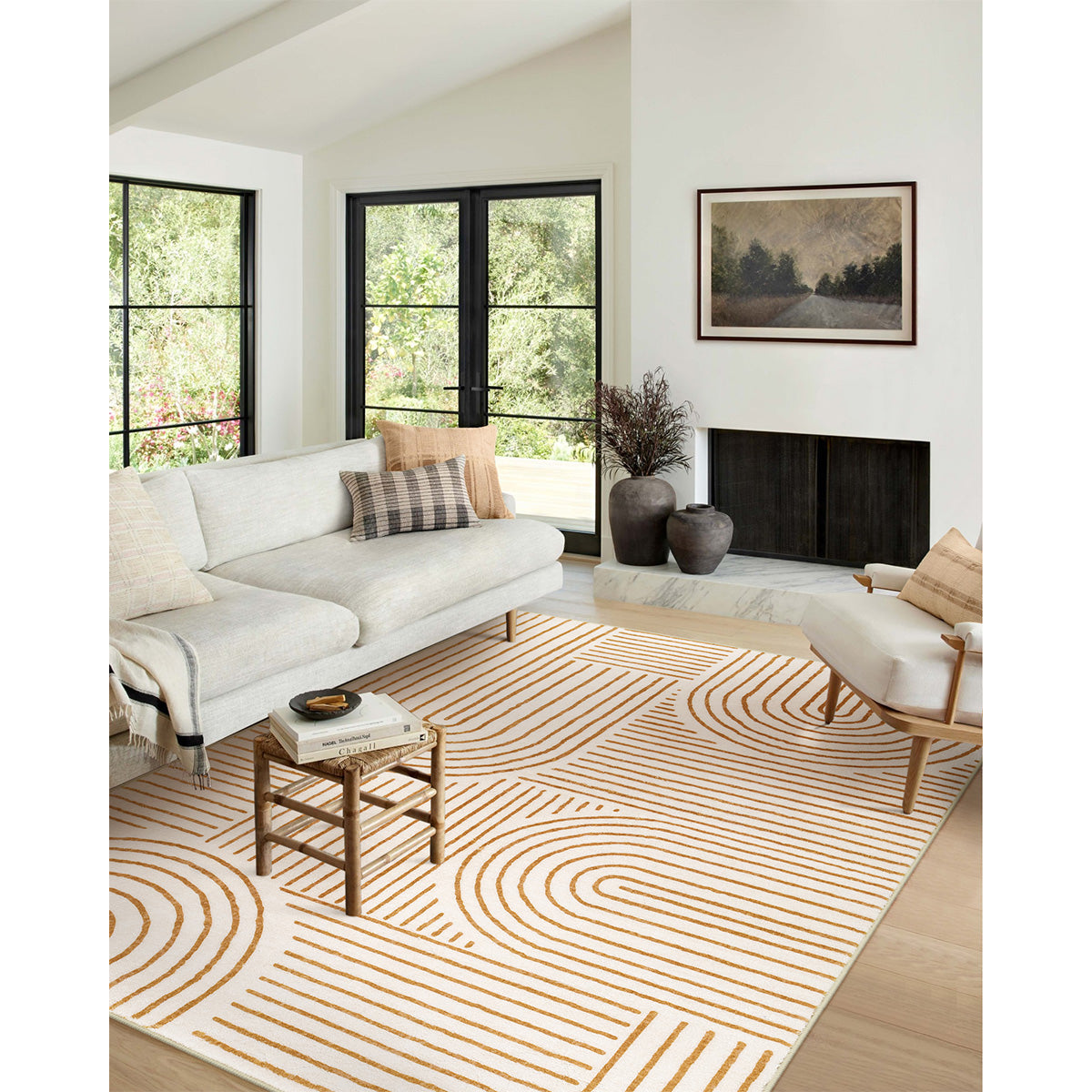
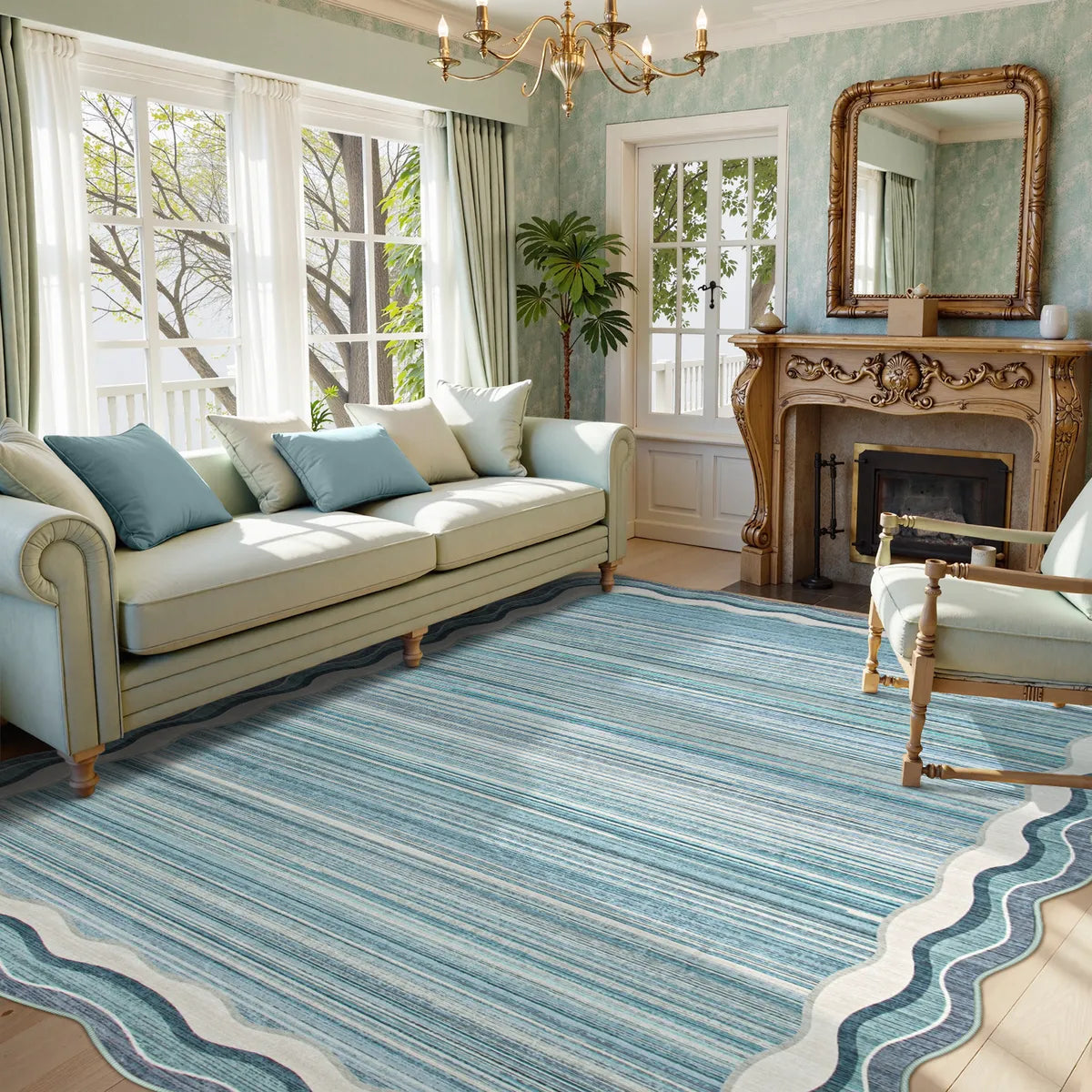
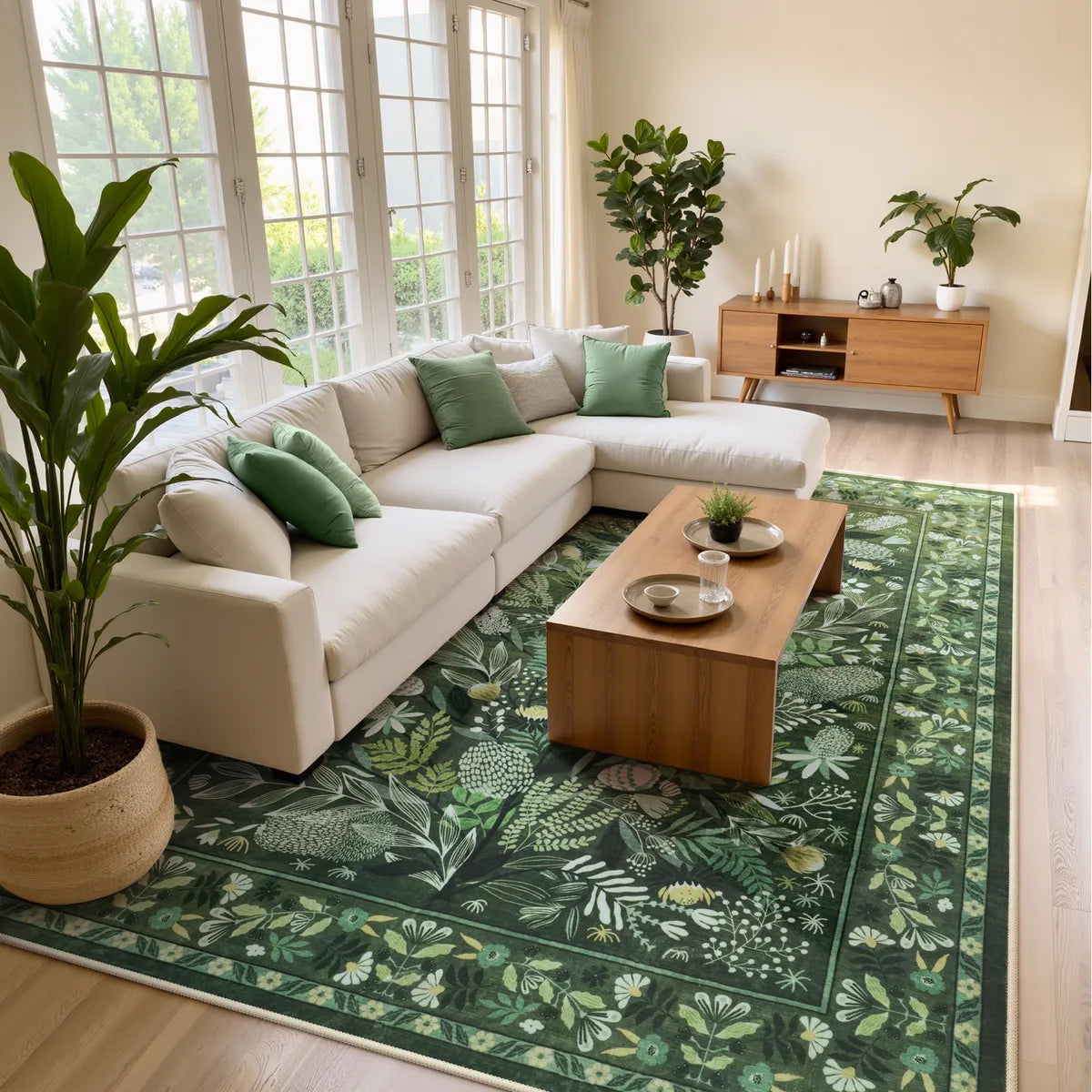
Front legs on the rug is the most widely used approach. It connects the sofa to the rug visually while leaving the back legs on the bare floor. This works well in medium-sized living rooms where a rug large enough to fit the entire sectional would crowd the space. The result is an anchored, cohesive arrangement that feels intentional without requiring an oversized rug.
All legs on the rug creates a more formal, fully unified look. It works best in larger rooms where a big rug for the living room can sit comfortably without pushing up against the walls. For this approach to work, the rug needs to extend at least 12 to 18 inches beyond the outer edge of every section of the sofa.
The middle ground, where only some sections of the sectional have their legs on the rug, tends to look unfinished. Consistency across the full sectional is what makes either approach work.
Rug Size Guide for L-Shaped Sectionals
An L-shaped sectional (a sofa configuration that turns a corner, with two perpendicular sections meeting at a right angle) presents a sizing challenge that a standard sofa does not. The angled layout means a rug that fits the long side will leave the short side looking unanchored.
The goal is a rug that serves both sections proportionally. The table below maps common L-shaped sectional sizes to the rug sizes that work best.
| Sectional Size | Recommended Rug Size | Placement Approach |
| Small L-shaped (under 100 inches per side) | 8x10 | Front legs of both sections on rug |
| Medium L-shaped (100 to 120 inches per side) | 9x12 | Front legs on rug with full coffee table coverage |
| Large L-shaped (over 120 inches per side) | 10x14 | Front or all legs on rug depending on room size |
When in doubt, size up. A 9x12 area rug that feels slightly generous reads better than one that looks too small under a large sectional. The most common sizing mistake is choosing an 8x10 for a layout that actually needs a 9x12.
Coffee Table Placement on a Living Room Rug

The coffee table (a low table placed within a seating arrangement, typically in front of or at the center of a sofa grouping) is the second anchor in most living room layouts. How it sits on the rug is just as important as how the sofa does.
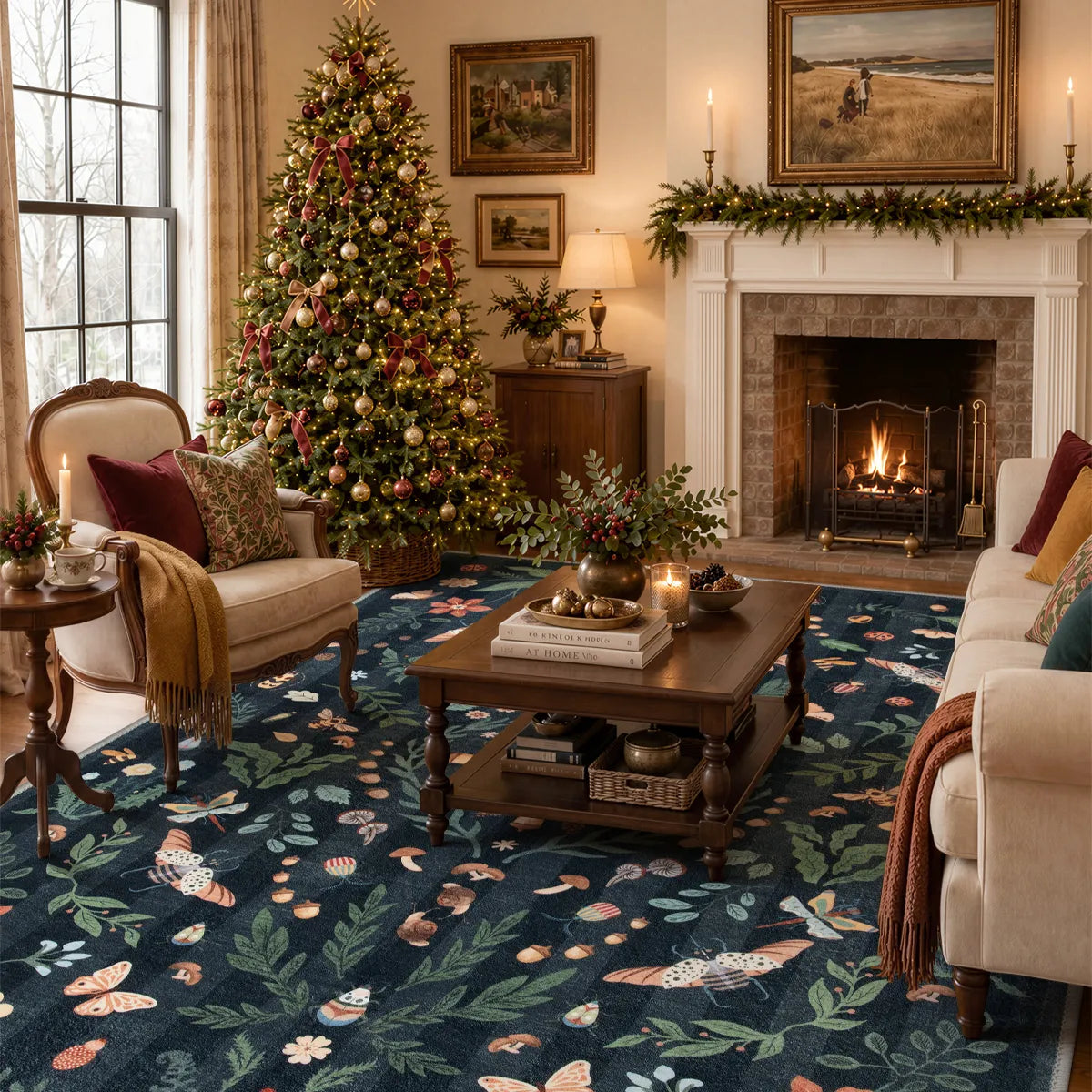
The standard rule is straightforward: all four legs of the coffee table should sit fully on the rug. This connects the table to the seating arrangement and keeps the overall zone feeling unified.
A few practical guidelines worth following:
- Leave 12 to 18 inches between the coffee table edge and the sofa to allow comfortable legroom for seated guests.
- The rug should extend at least 6 inches beyond the coffee table on all sides to avoid the table looking like it is teetering on the rug's edge.
- For L-shaped sectionals, position the coffee table in the inner corner of the L for the most natural and balanced arrangement.
Common Sectional Sofa Rug Placement Mistakes to Avoid
Even with the right rug size, a few placement habits consistently produce results that feel off. These are the most frequent ones:
- Rug too small: A rug that only fits under the coffee table and leaves all sofa legs on bare floor creates a disconnected, floating effect. The rug should always reach the sectional.
- Rug pushed against the wall: Leaving no margin between the rug edge and the wall removes the visual breathing room the room needs. Aim for at least 12 to 18 inches of bare floor on all exposed sides.
- Ignoring the sectional's corner: In L-shaped layouts, the inner corner is where the rug needs the most coverage. A rug that does not extend into that area creates an awkward visual gap.
- Inconsistent front-leg placement: If three sections of the sectional have their front legs on the rug but one does not, the arrangement looks accidental rather than deliberate.
Choosing a Living Room Rug That Handles Daily Use
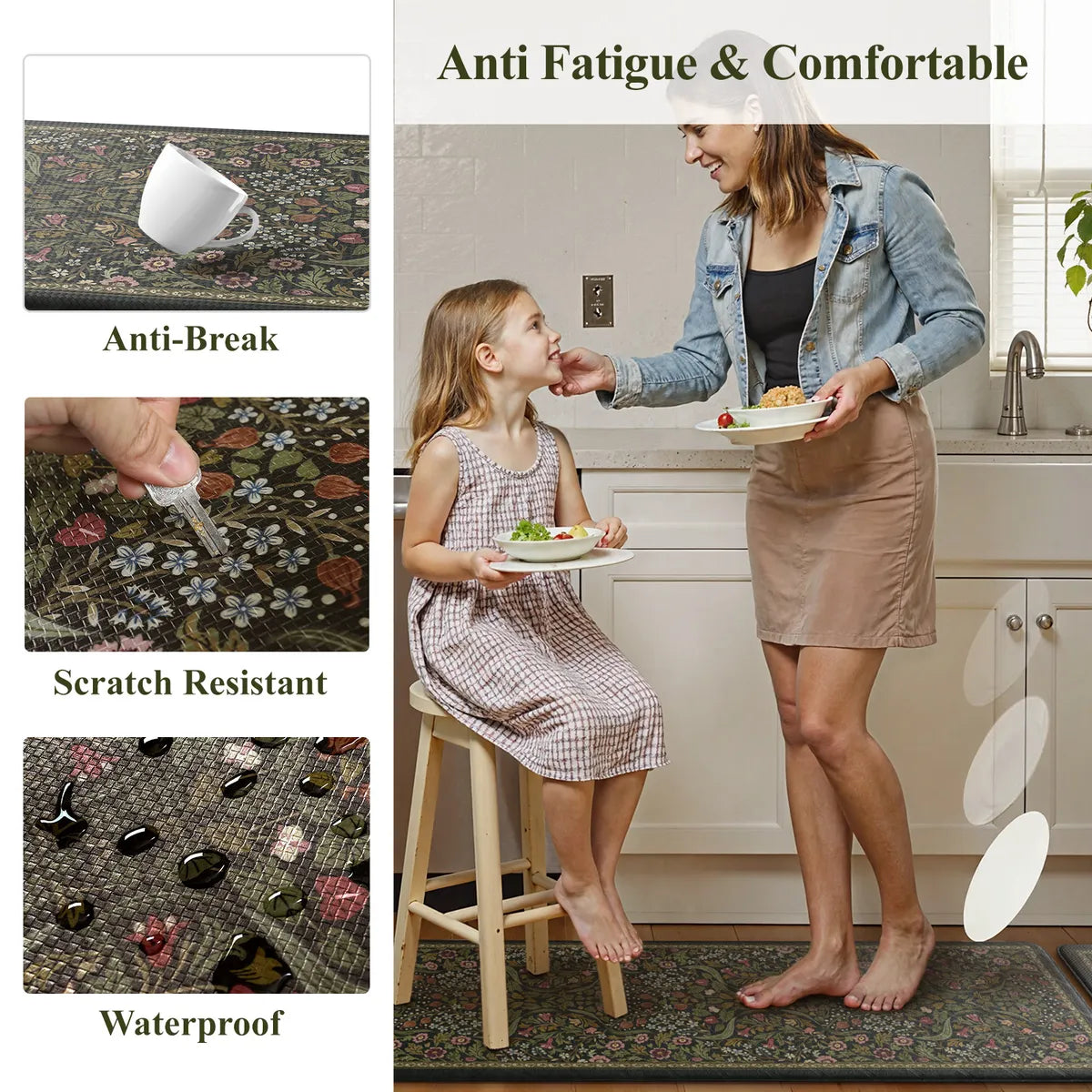
Living room rugs under sectional sofas face more wear than almost any other placement in the home. The combination of furniture weight, consistent foot traffic, pet activity, and everyday spills demands a rug built for real daily use. Large area rugs for living rooms in sectional setups should prioritize three things: size availability, construction quality, and washability.
- Size availability matters because sectional layouts typically need 8x10 rugs for living rooms at minimum, and many configurations require a 9x12 or larger.
- Construction quality means the rug holds its shape and pattern under the weight of a sectional and the friction of regular foot traffic.
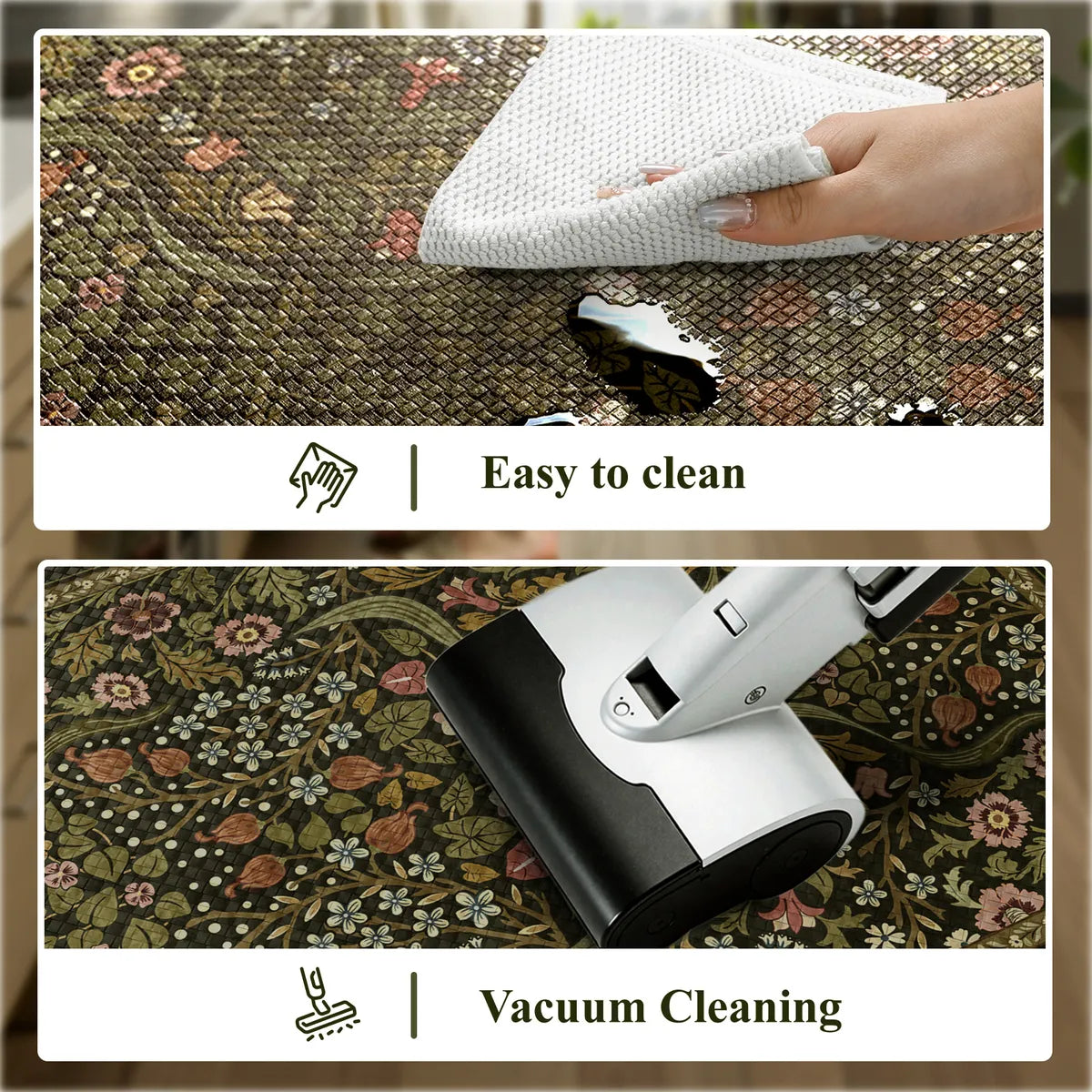
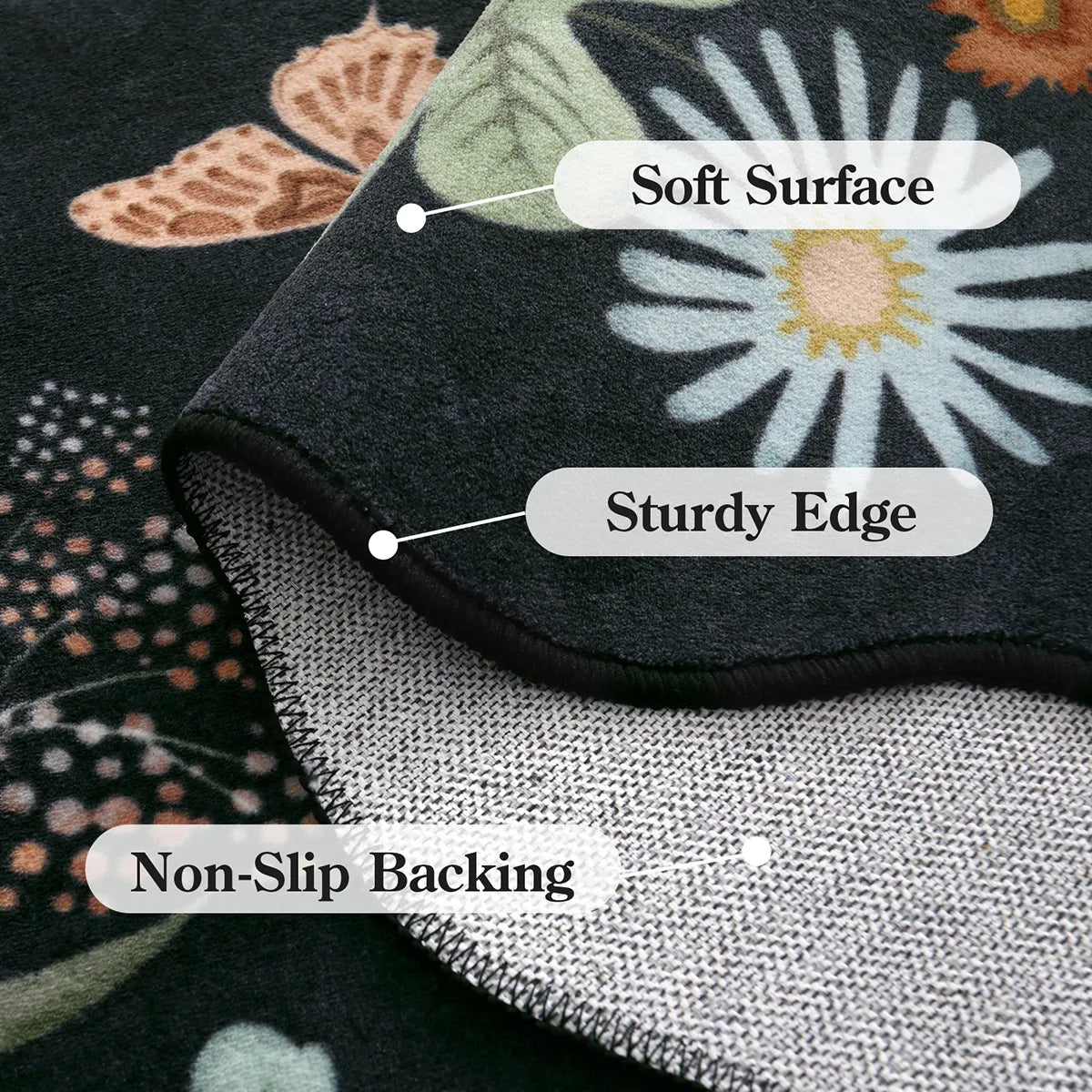
- Washability is what separates a rug that lasts from one that wears out quickly. A machine washable big rug for the living room can be thoroughly cleaned on a regular schedule, removing allergens, pet dander, and embedded debris that build up under a sectional over time. That ability to deep clean consistently is what keeps the rug and the room genuinely fresh long term.
Get the Foundation Right, and the Room Follows
Sectional placement is one of the most impactful decisions in any living room. The right area rug for the living room anchors the entire arrangement, defines the seating zone, and gives the space the visual structure that makes it feel complete. Start with your sectional's dimensions, choose the right size, keep the coffee table fully on the rug, and prioritize washable construction for the long run. The foundation of a well-designed living room starts at the floor.
FAQs
Q1. Can a Round Rug Work Under a Sectional Sofa?
Round rugs can work under a sectional, but the shape requires more careful placement than a rectangle. A round rug works best when the sectional is relatively compact and the shape is centered within the inner corner of the L. For larger sectionals, a rectangular rug in a 9x12 or 10x14 size almost always provides better coverage and more natural visual balance.
Q2. How Much of the Rug Should Be Visible Beyond the Sectional?
The rug should extend at least 12 to 18 inches beyond the outer edges of the sectional on the open sides of the arrangement. This visible margin creates the framed, intentional look that well-placed living room rugs produce. Too little visible rug makes the sectional look oversized for the space.
Q3. Does Rug Pattern Scale Matter Under a Large Sectional?
Pattern scale does have a practical impact in sectional layouts. A large-scale pattern carries well across the full surface of a big rug for the living room and reads clearly even when sections are partially covered by sofa legs. Medium to large-scale patterns tend to give the most satisfying visual result in these setups.
Q4. Can You Layer Two Rugs Under a Sectional?
Layering rugs under a sectional is possible with careful proportion management. The base rug should be large enough to anchor the full sectional, and the accent layer should sit within the seating zone, typically under the coffee table. Keeping both rugs in a coordinating color palette rather than an exact match produces the most natural layered result.