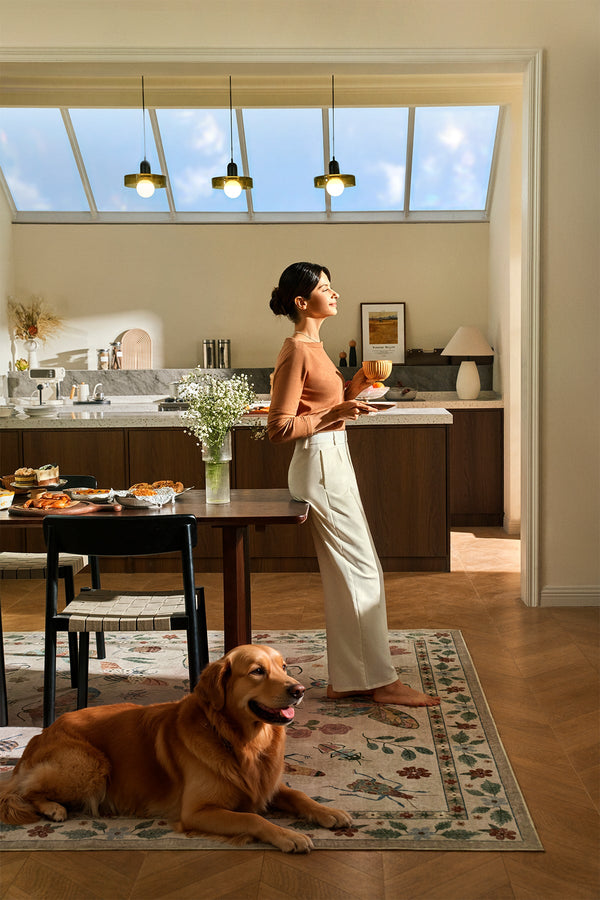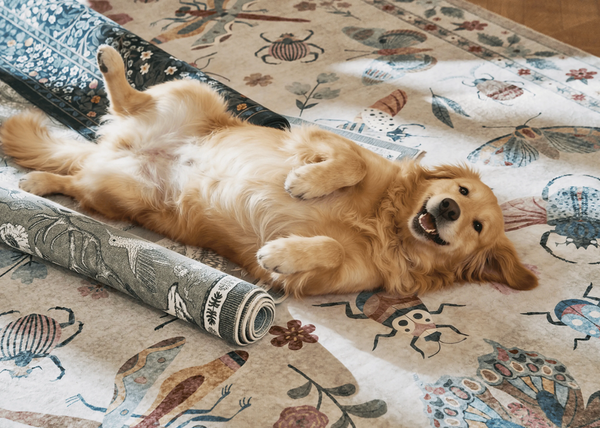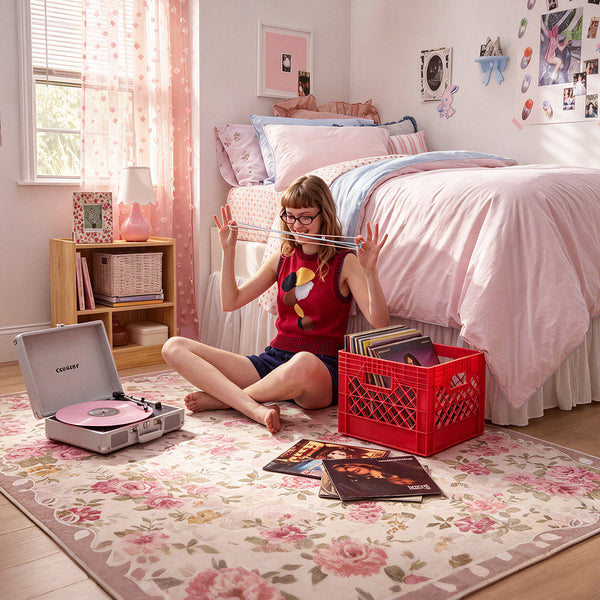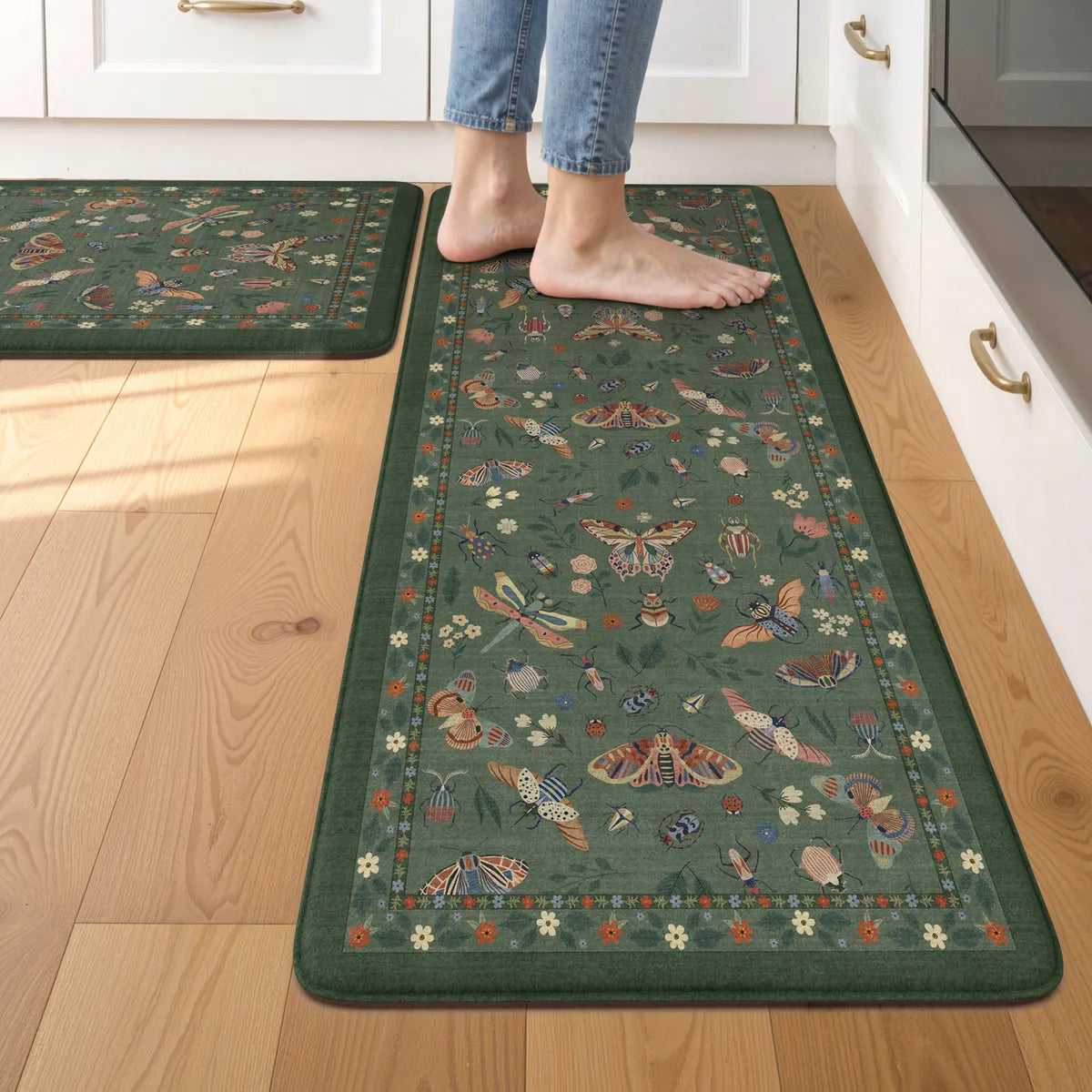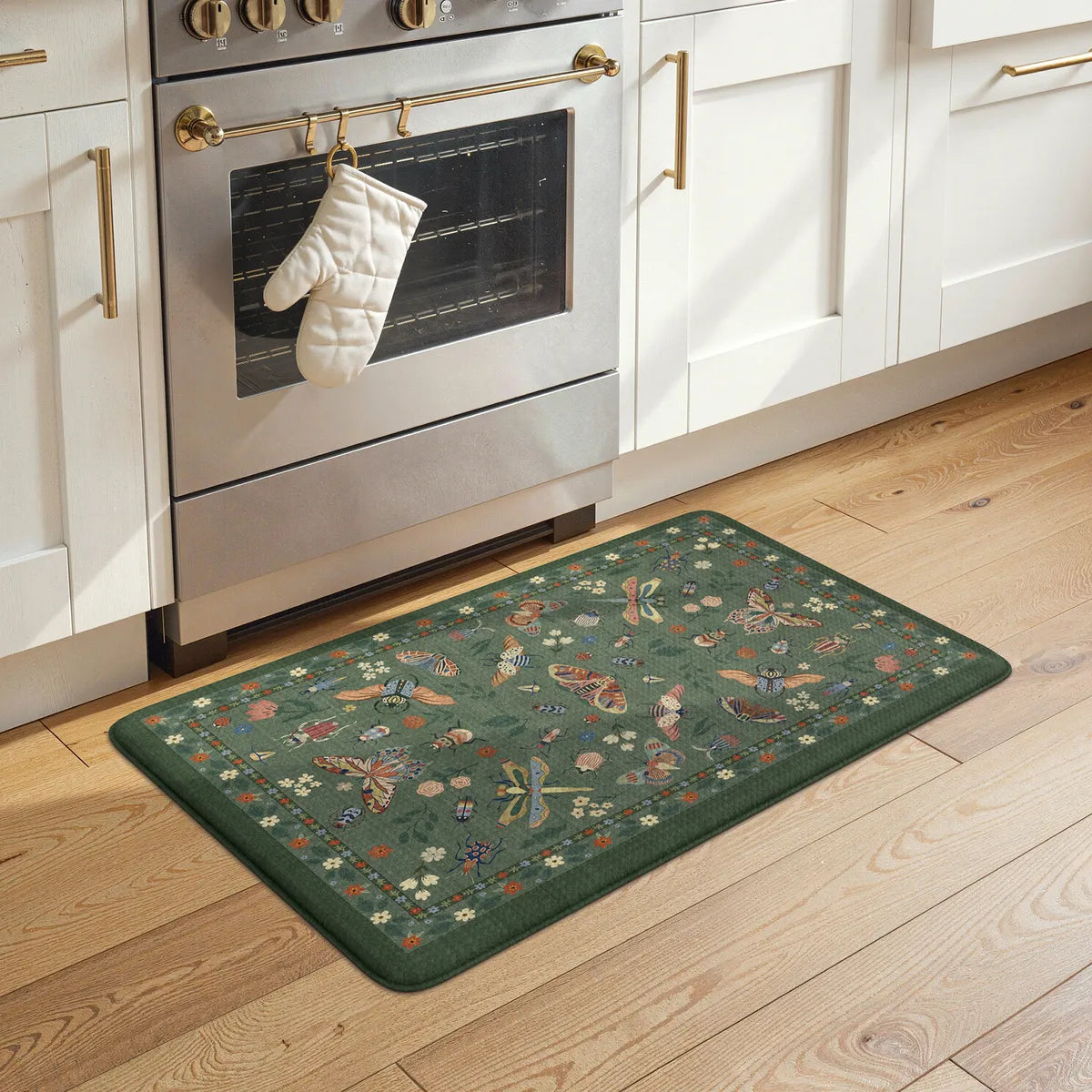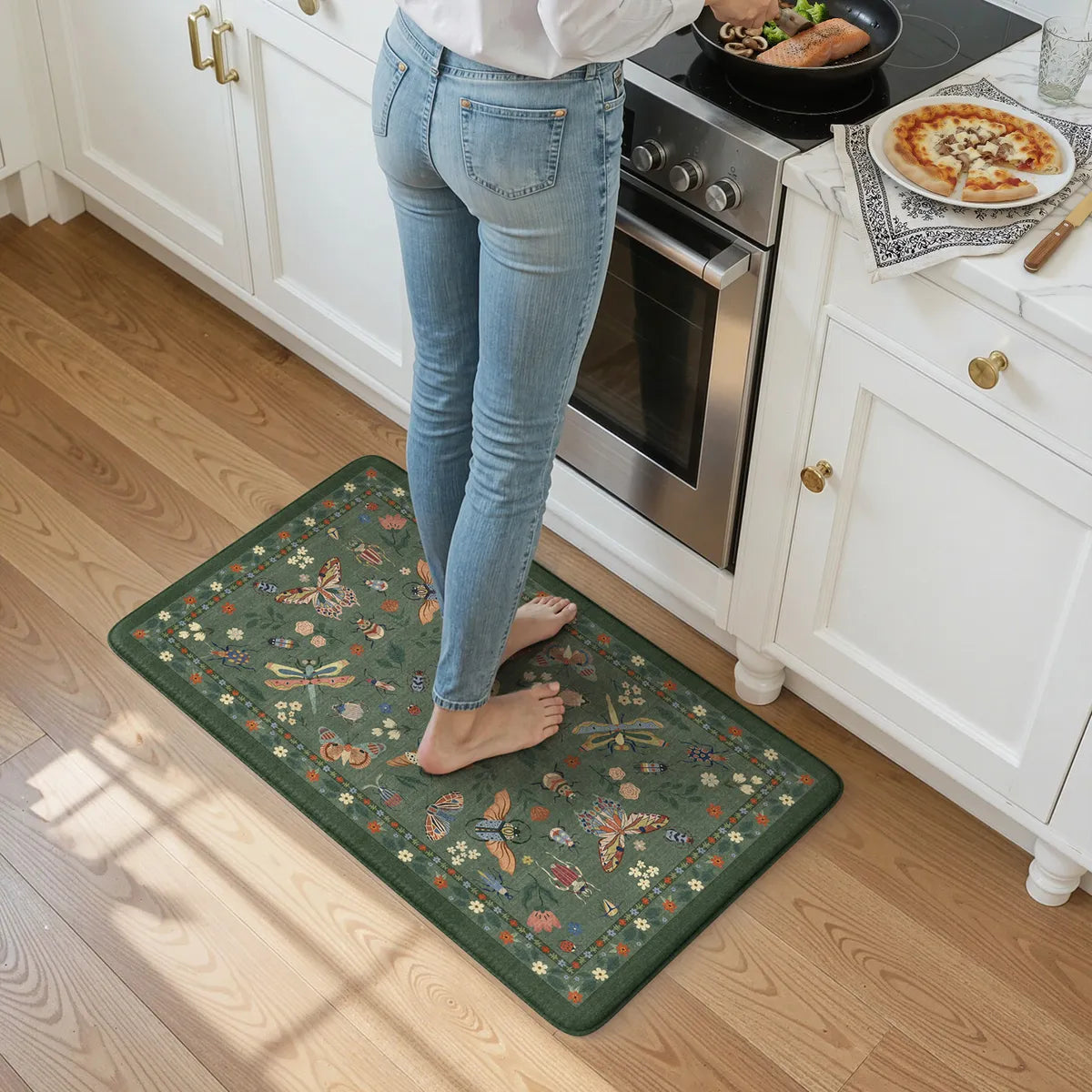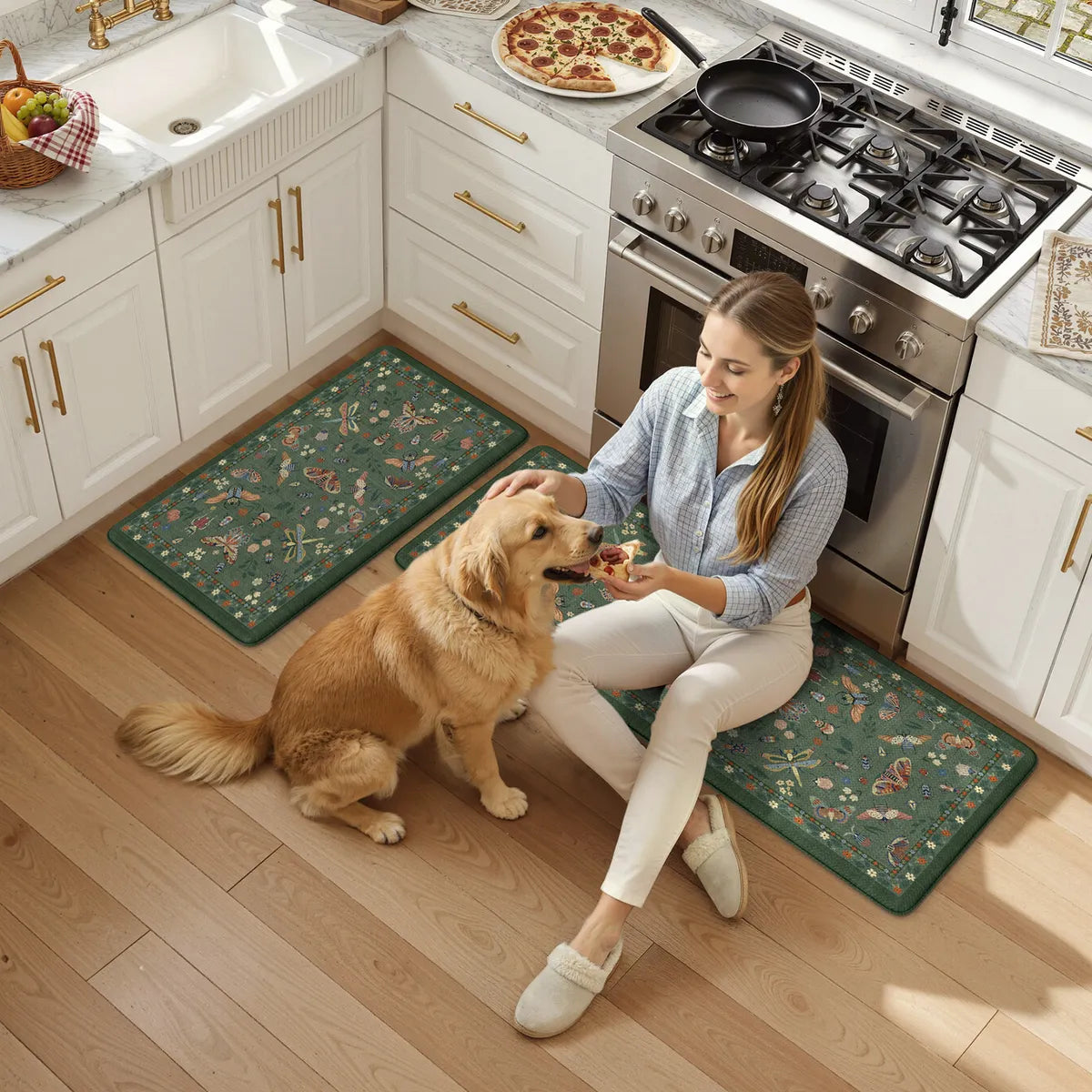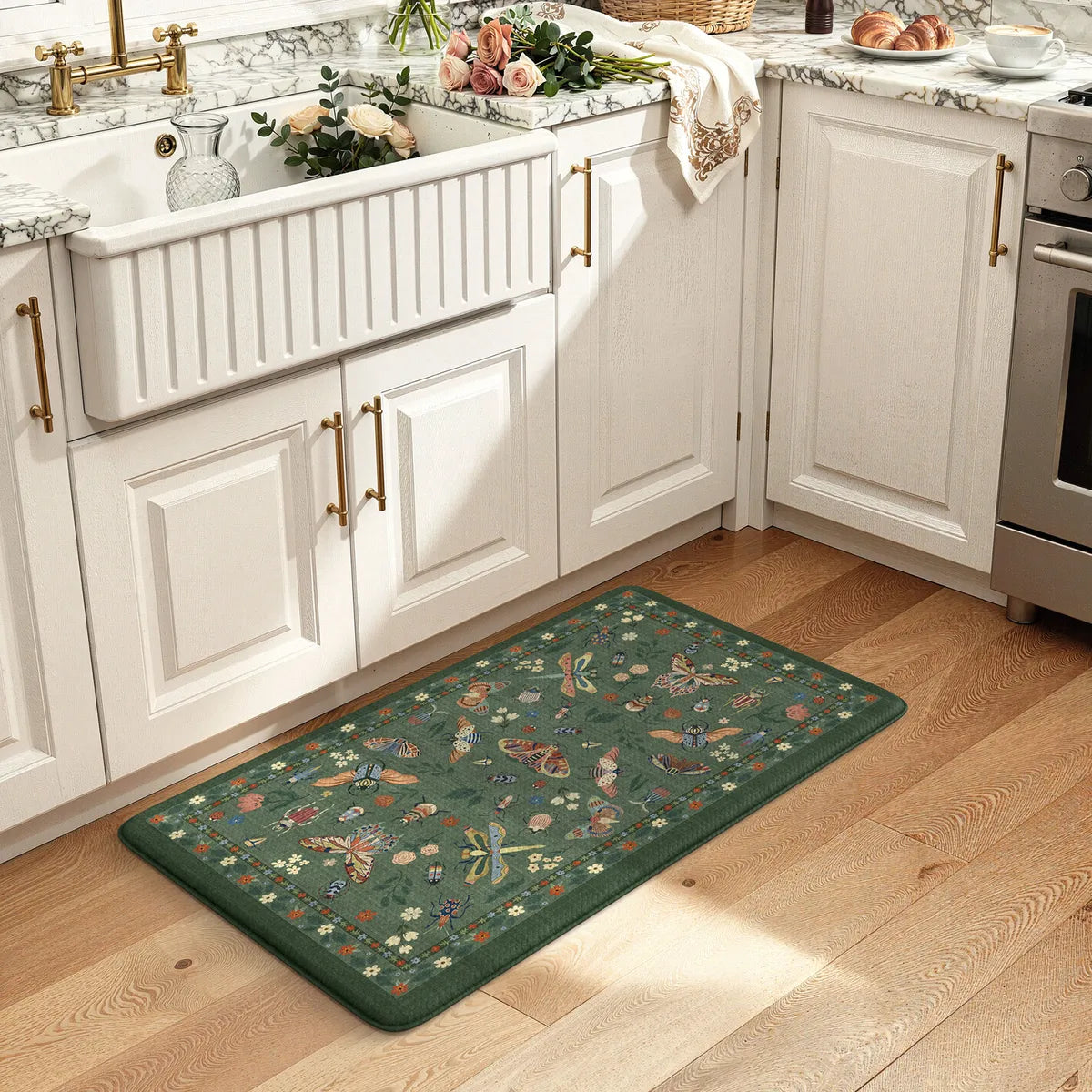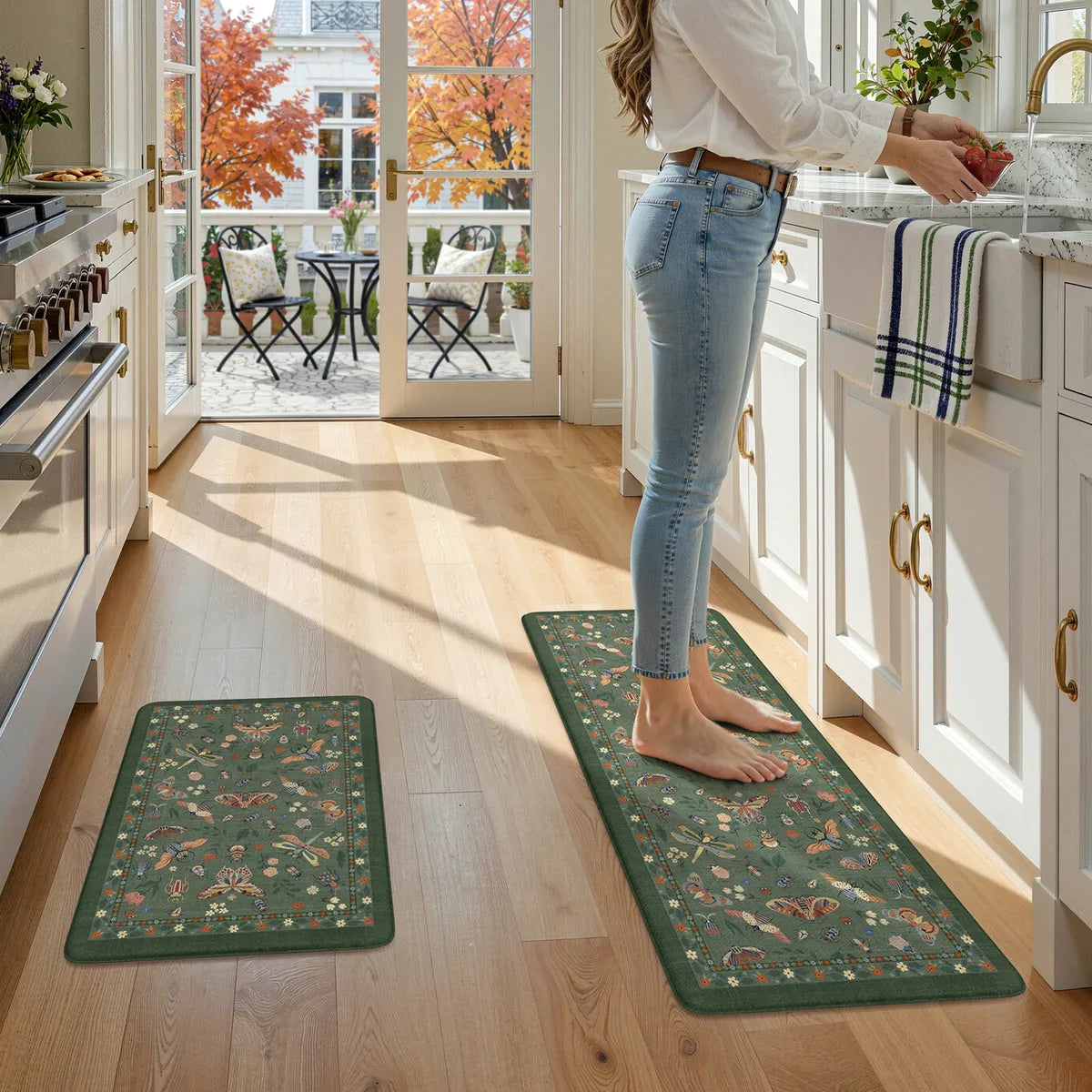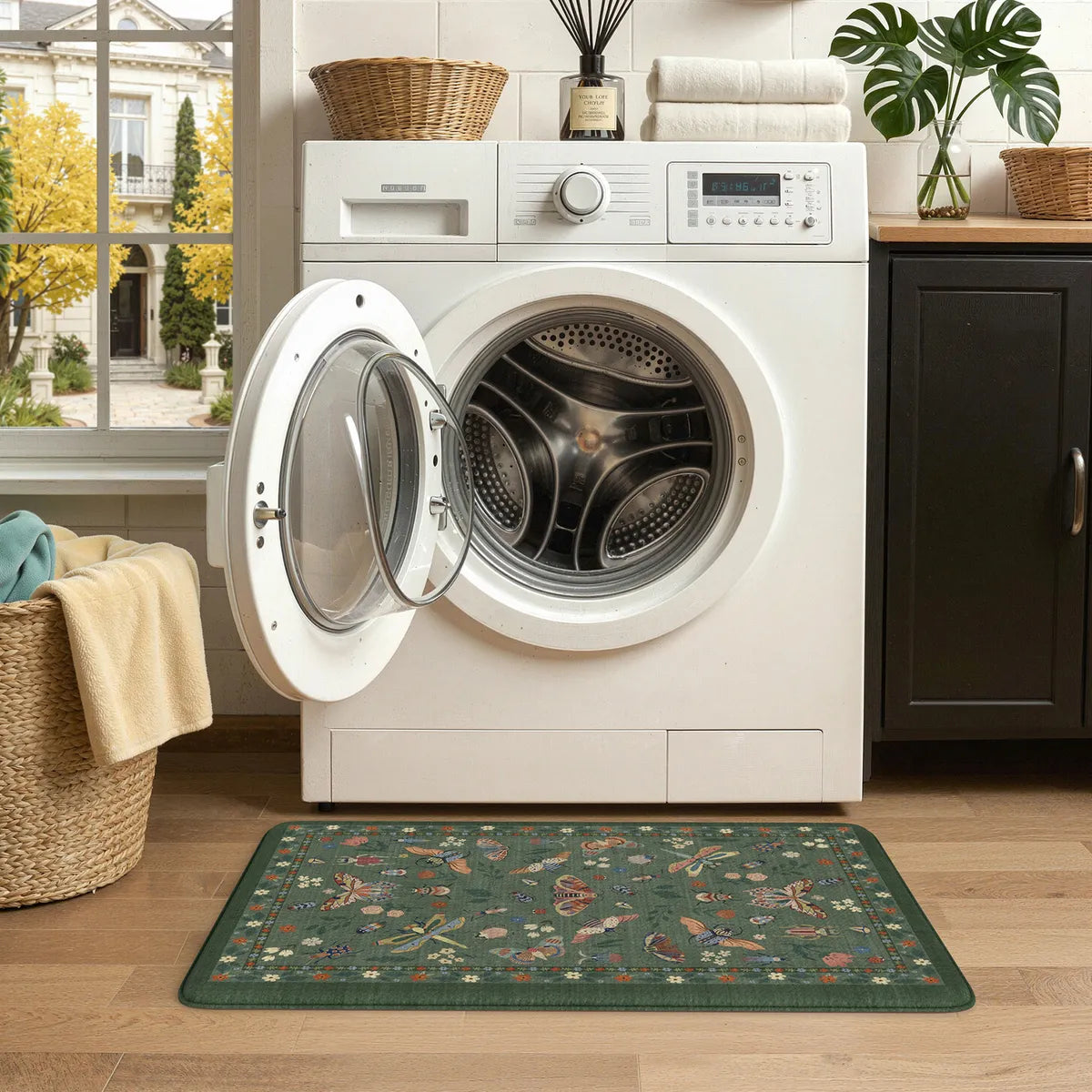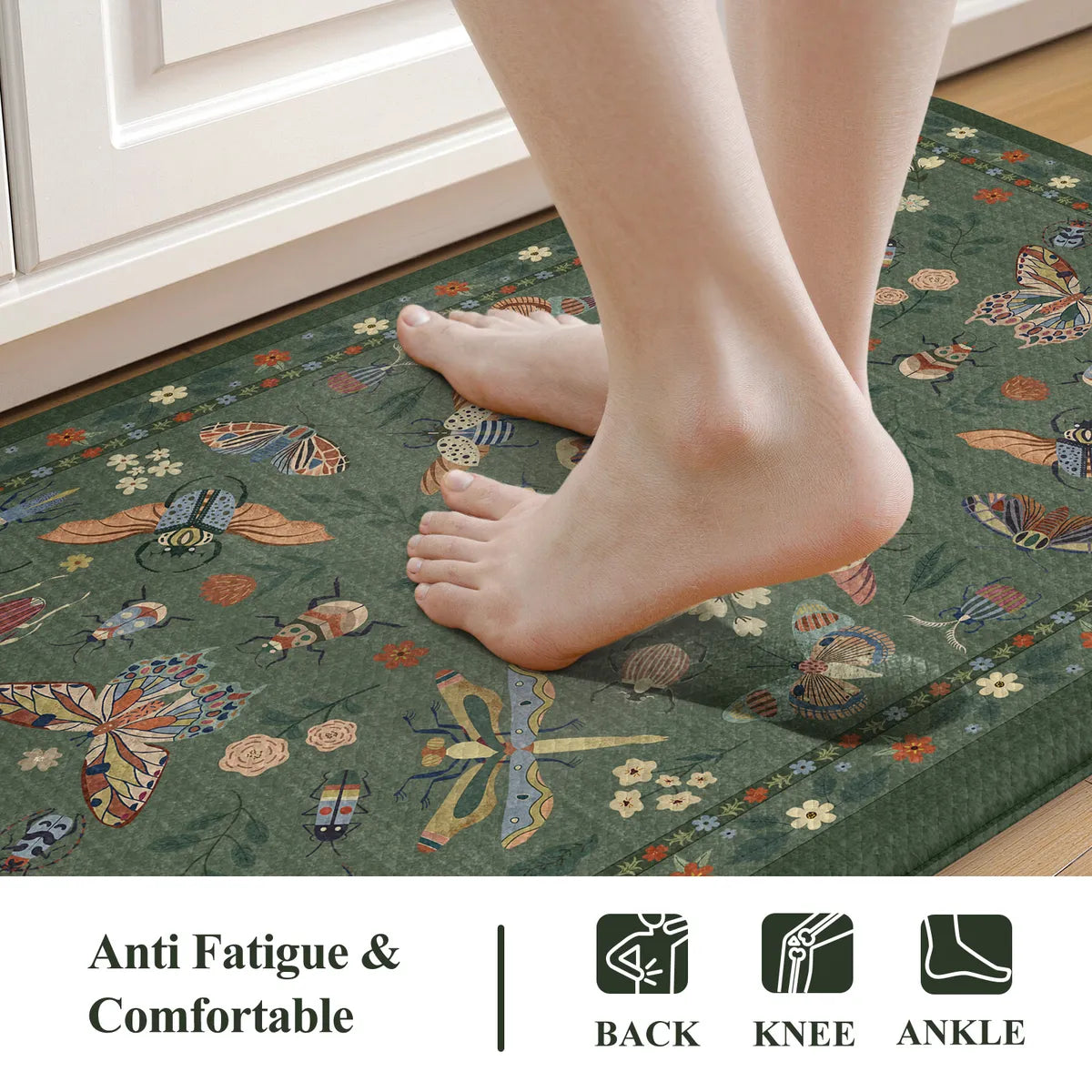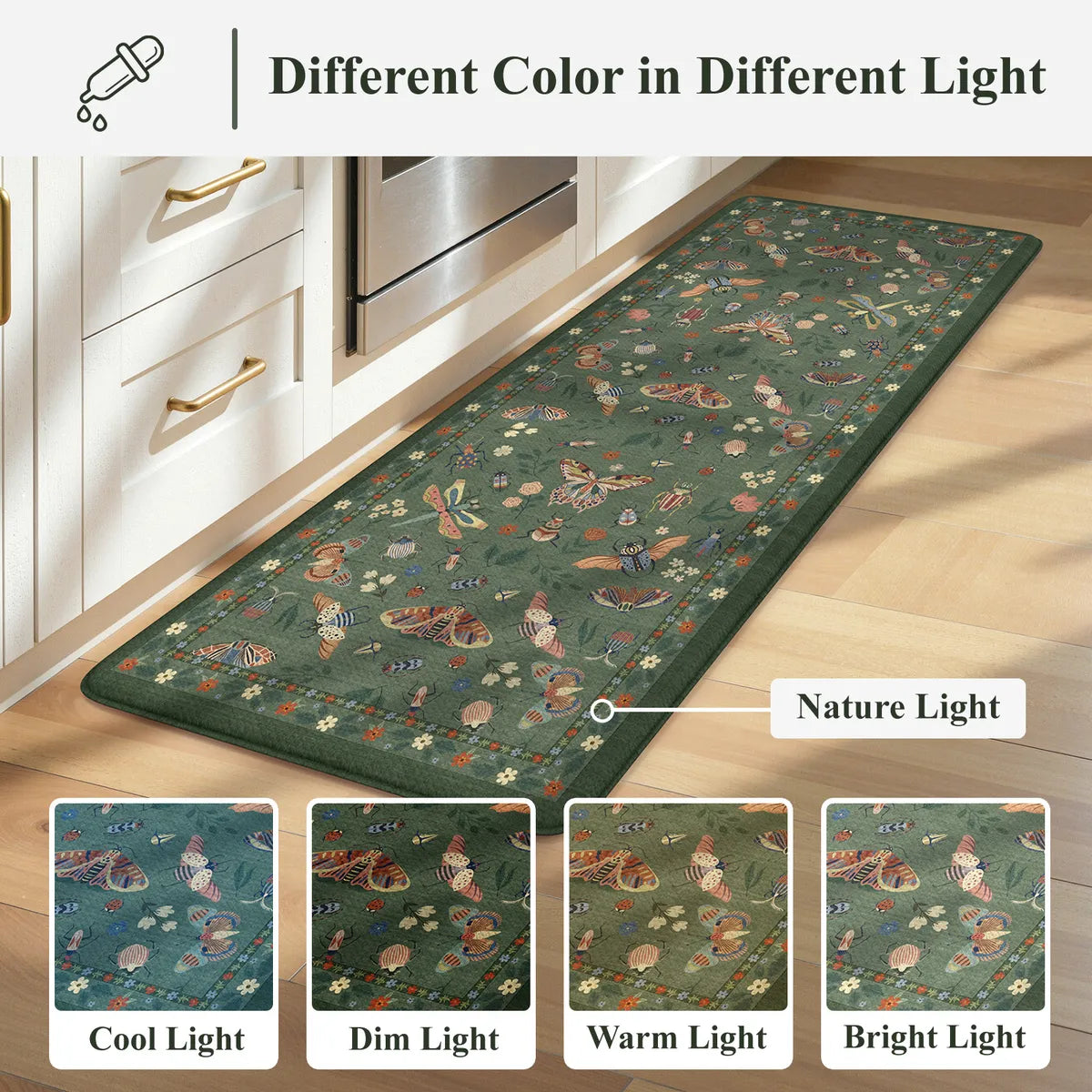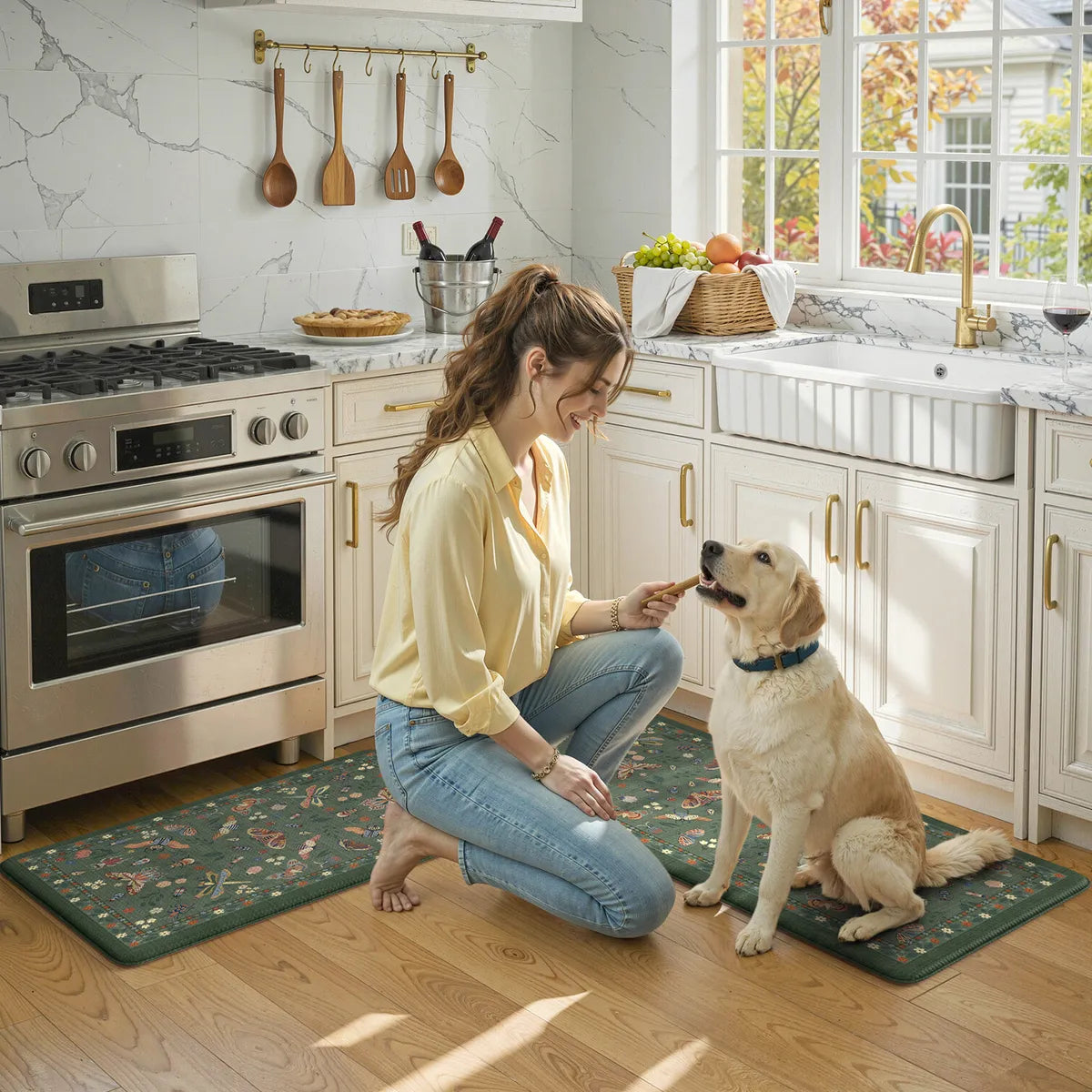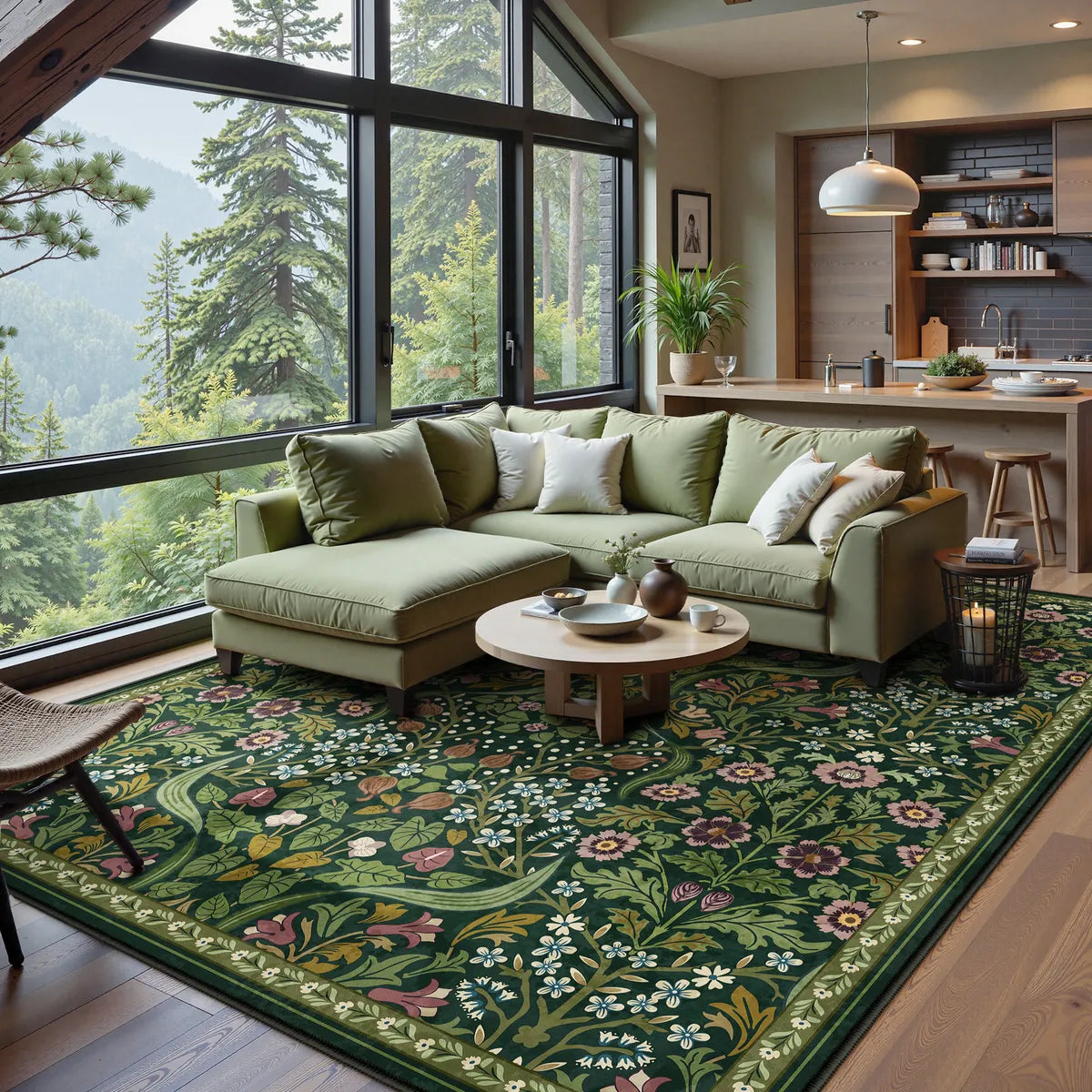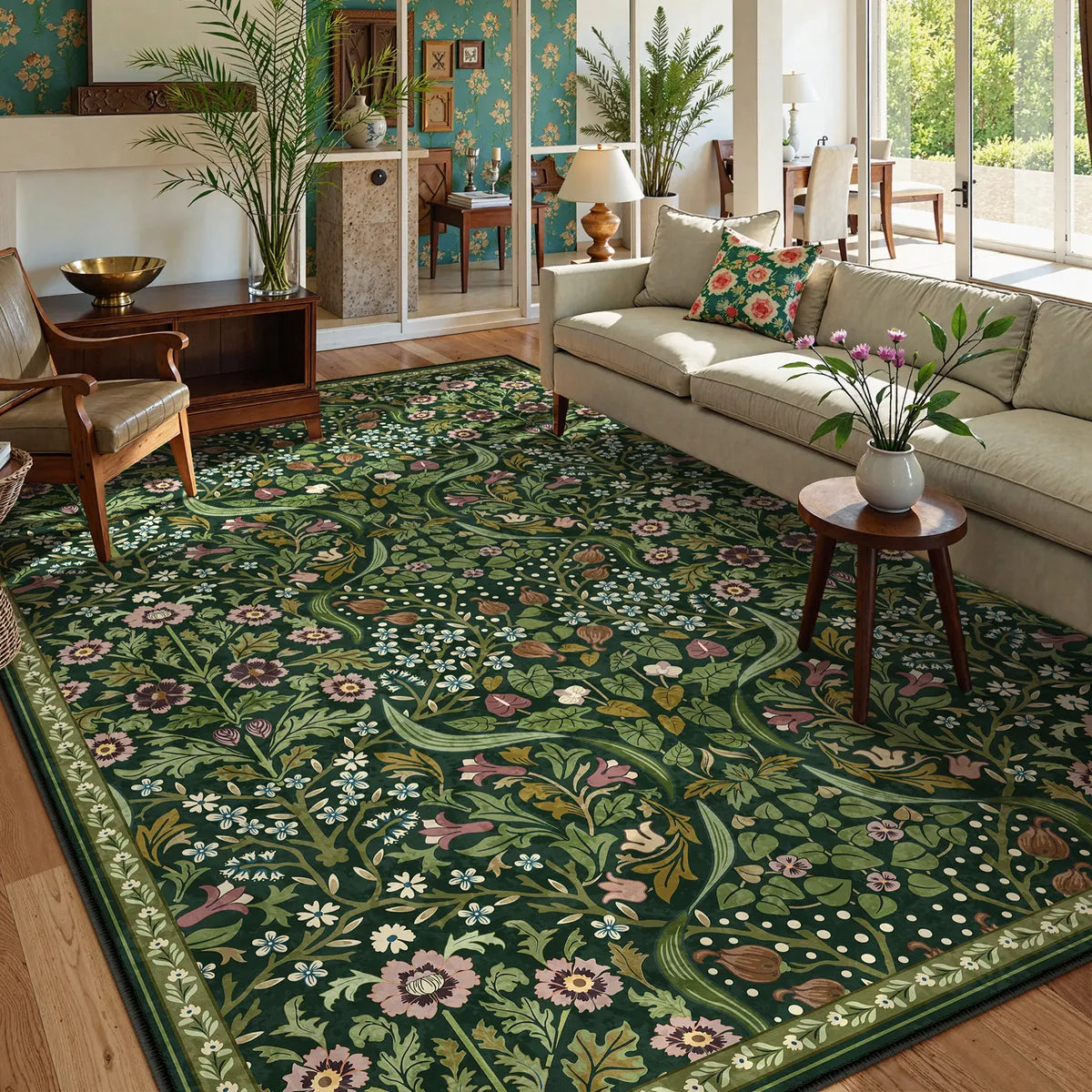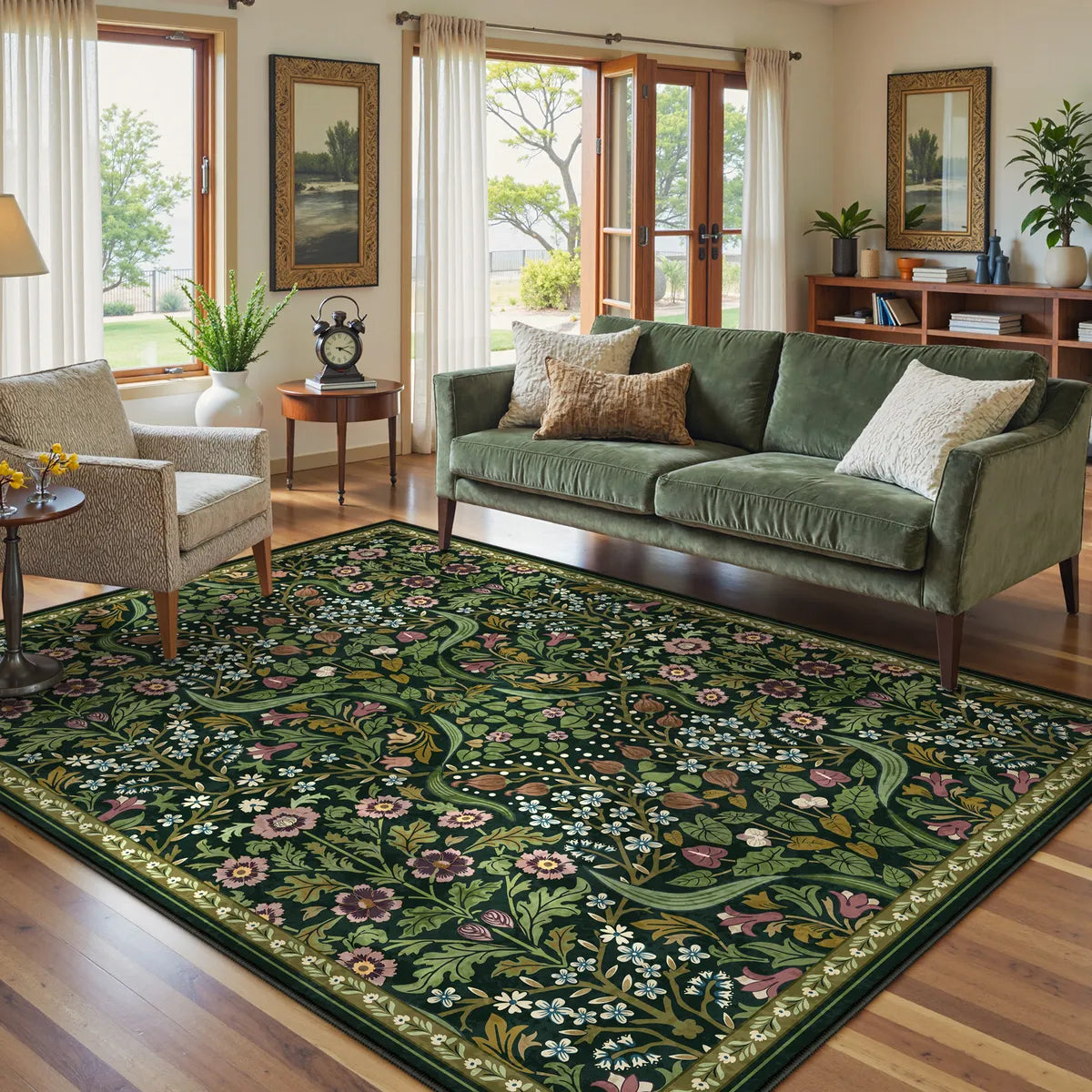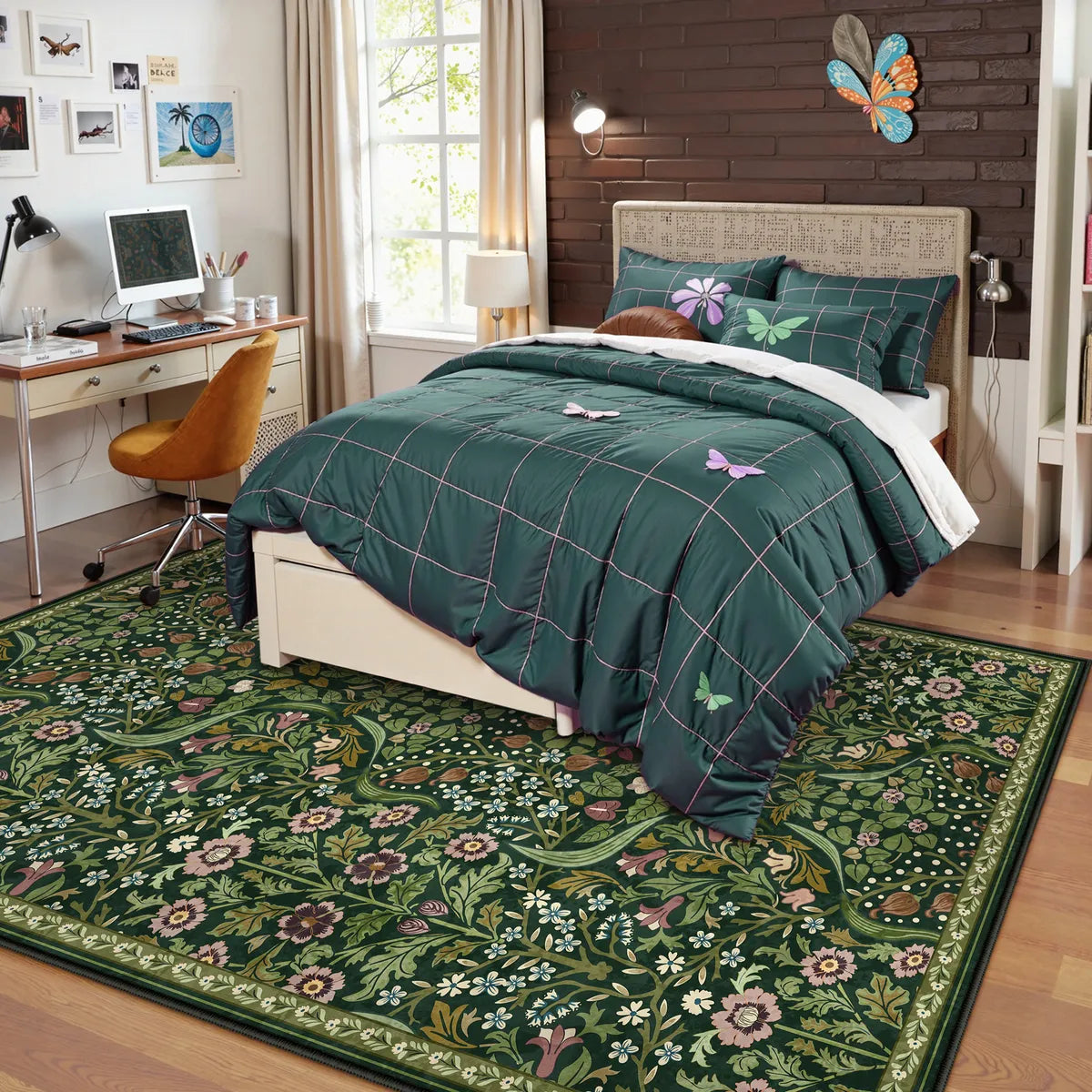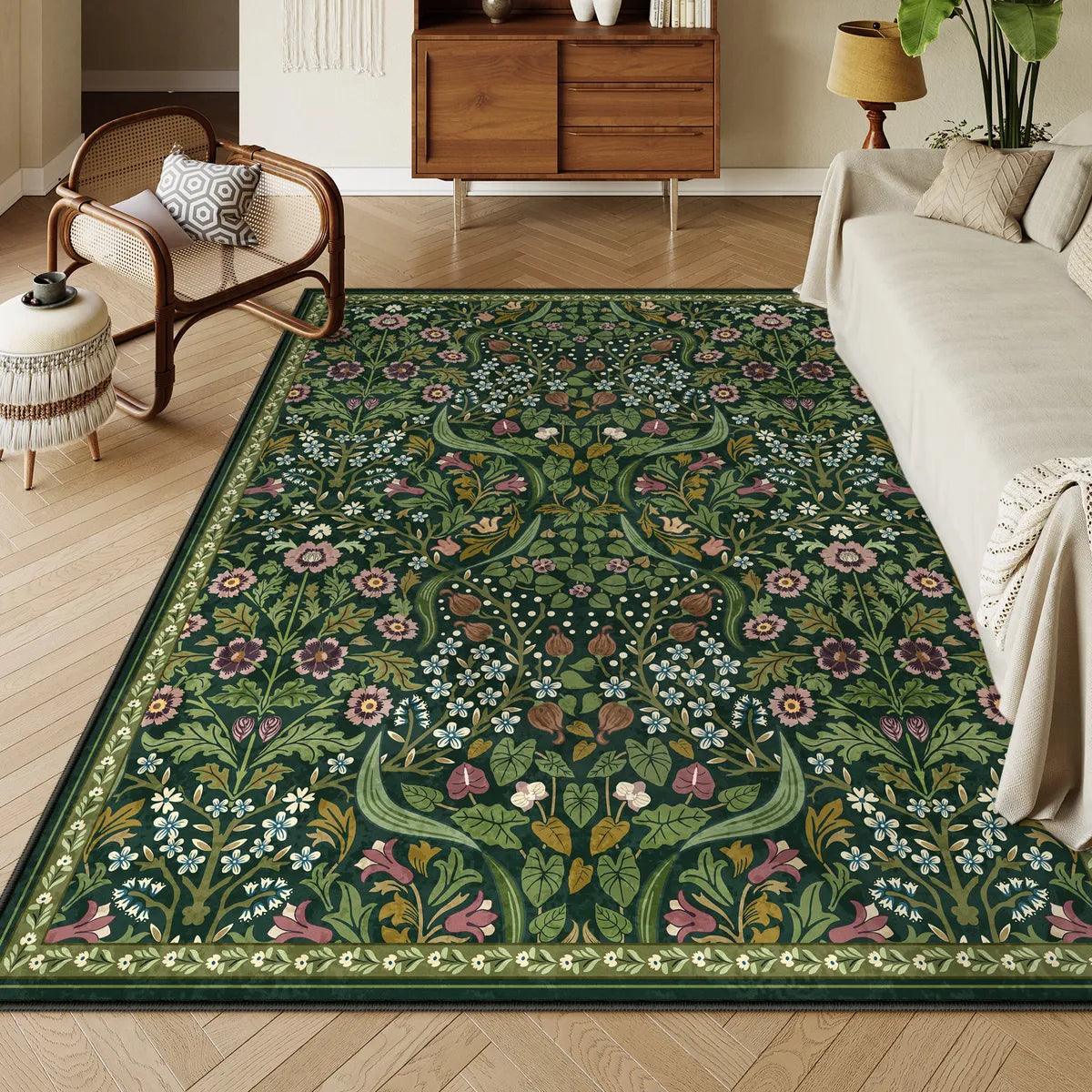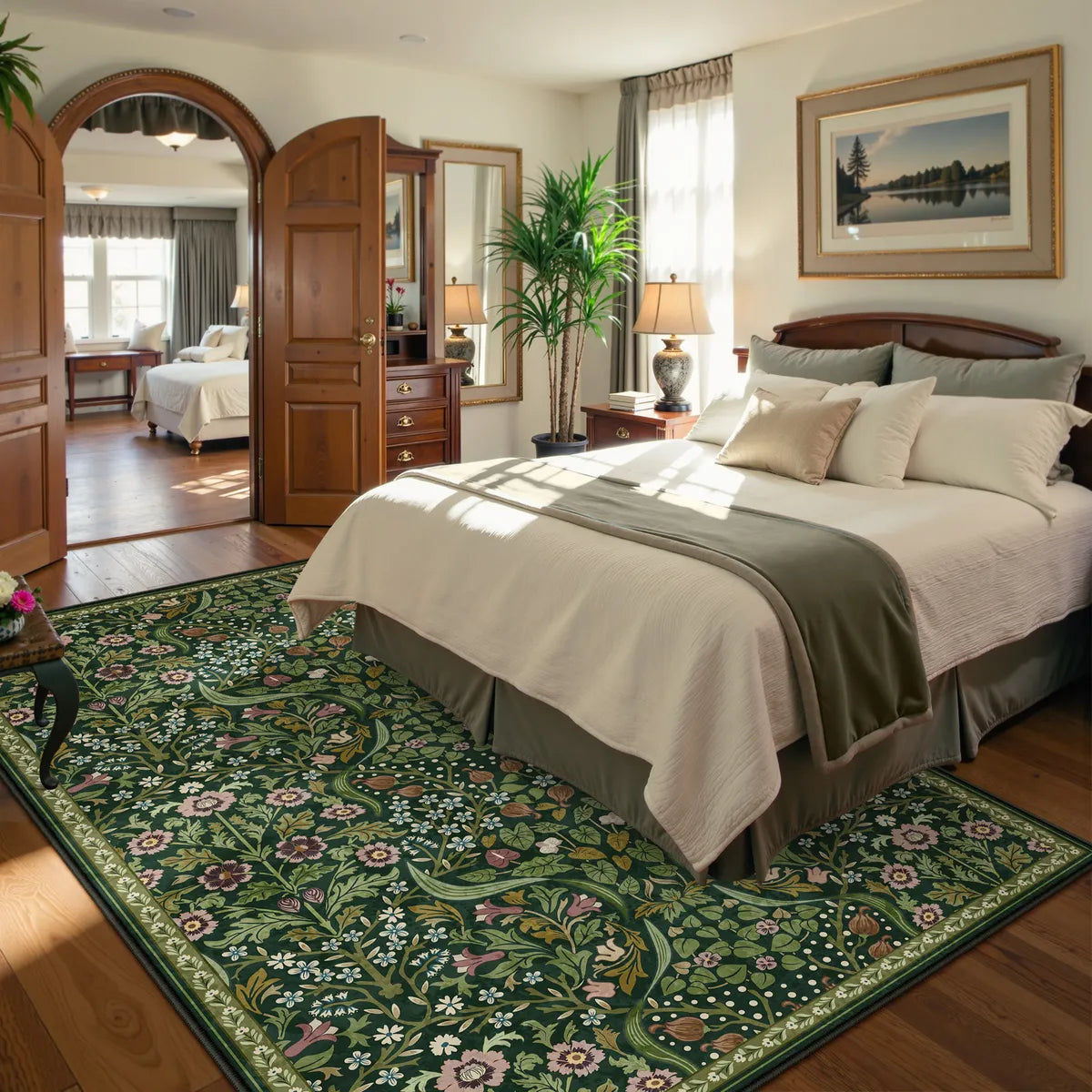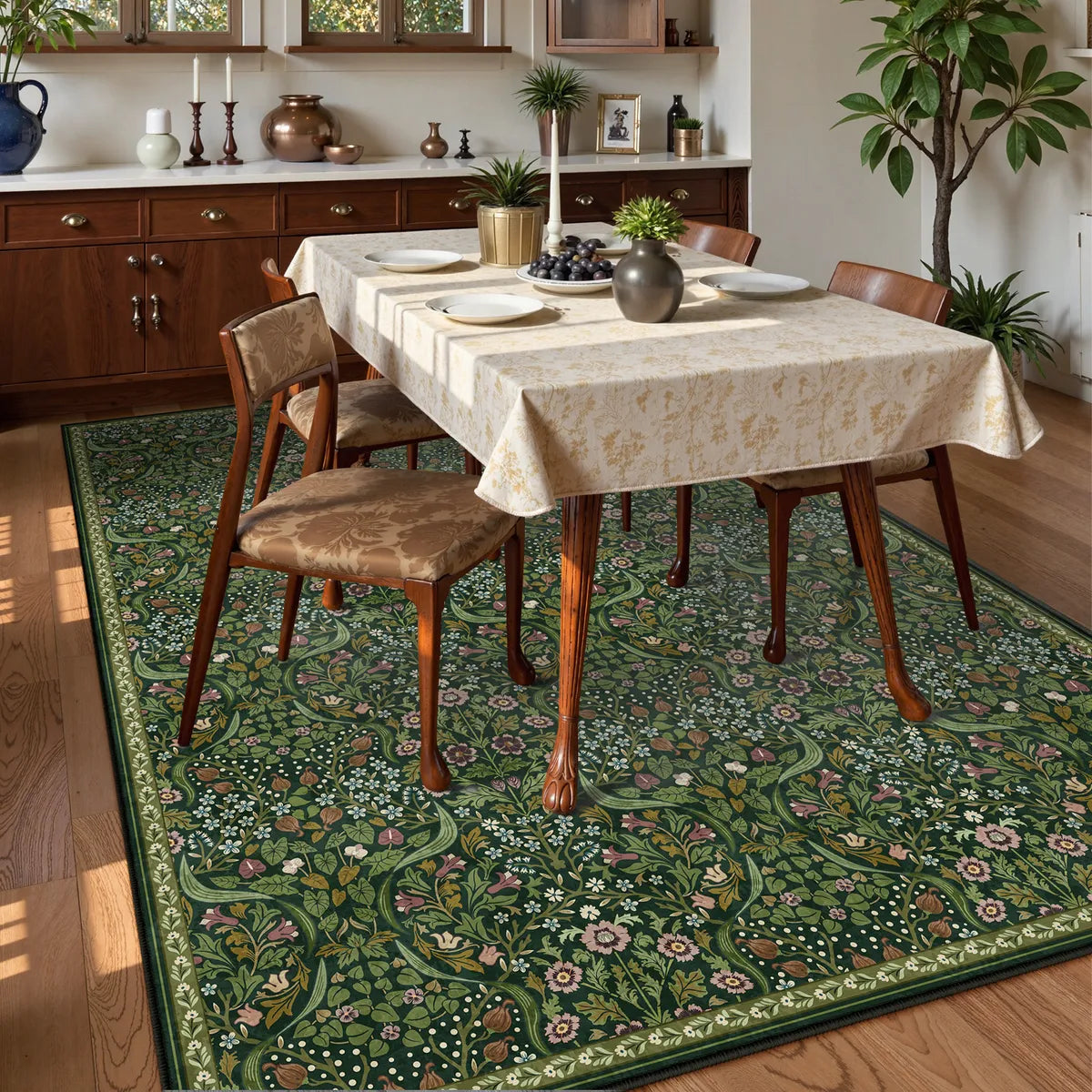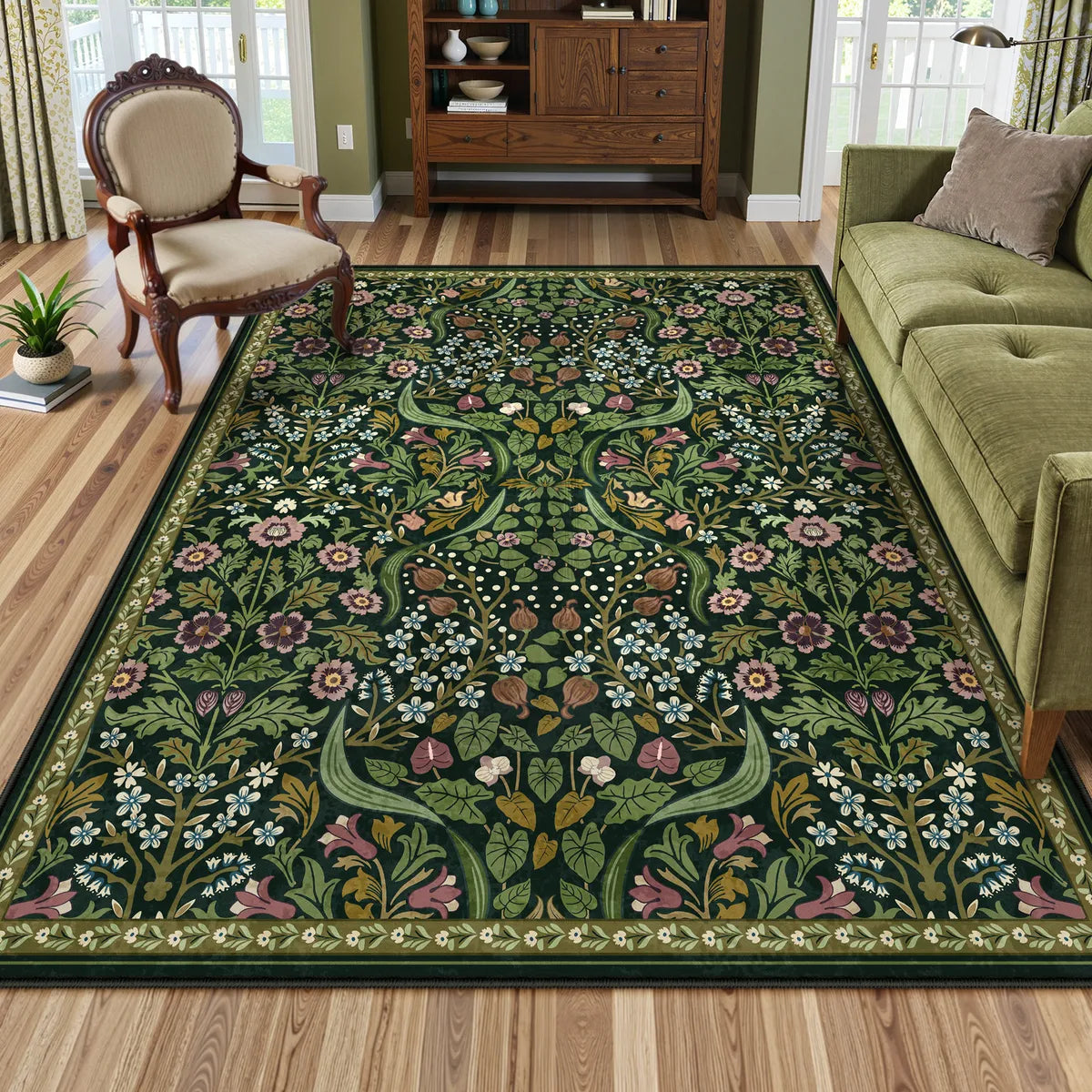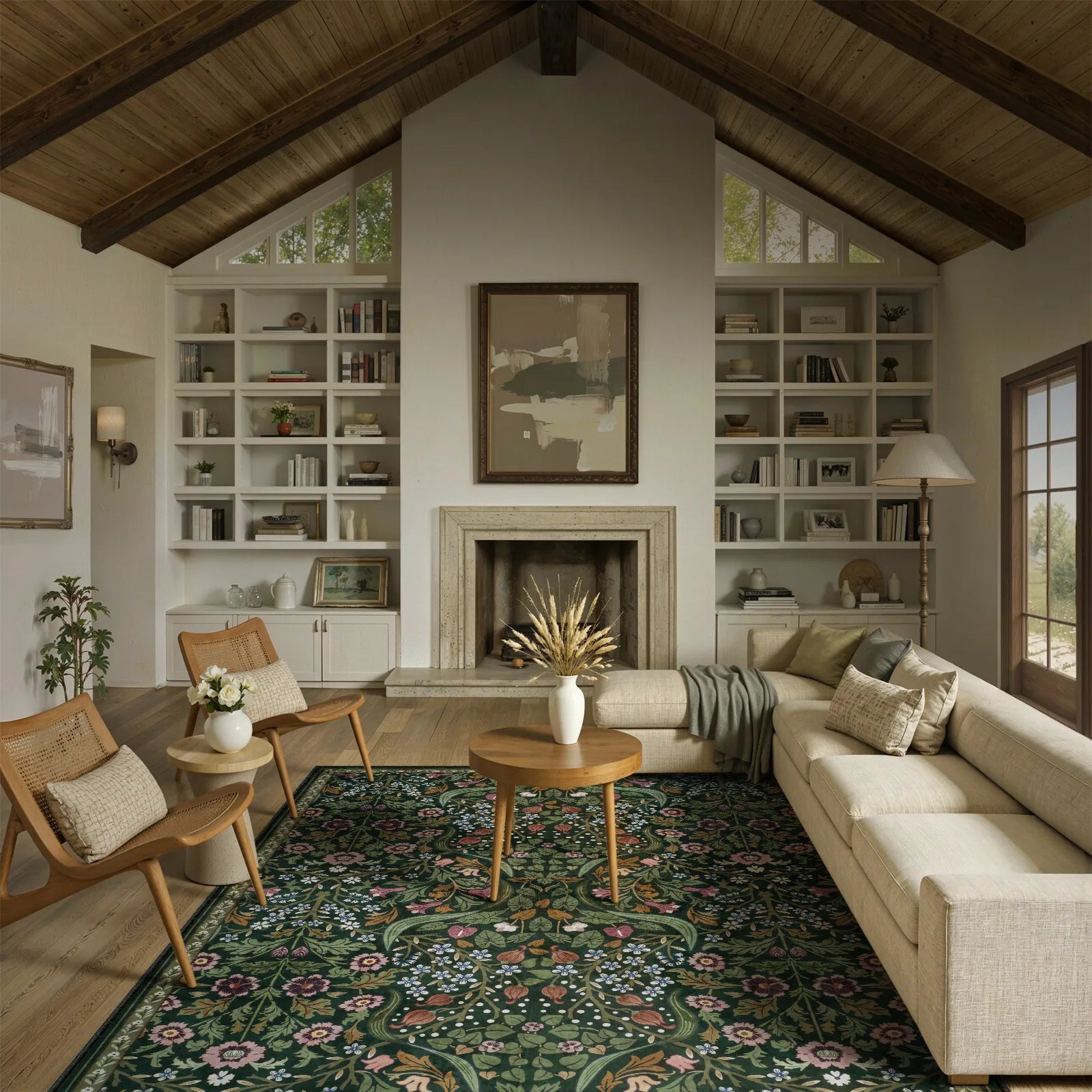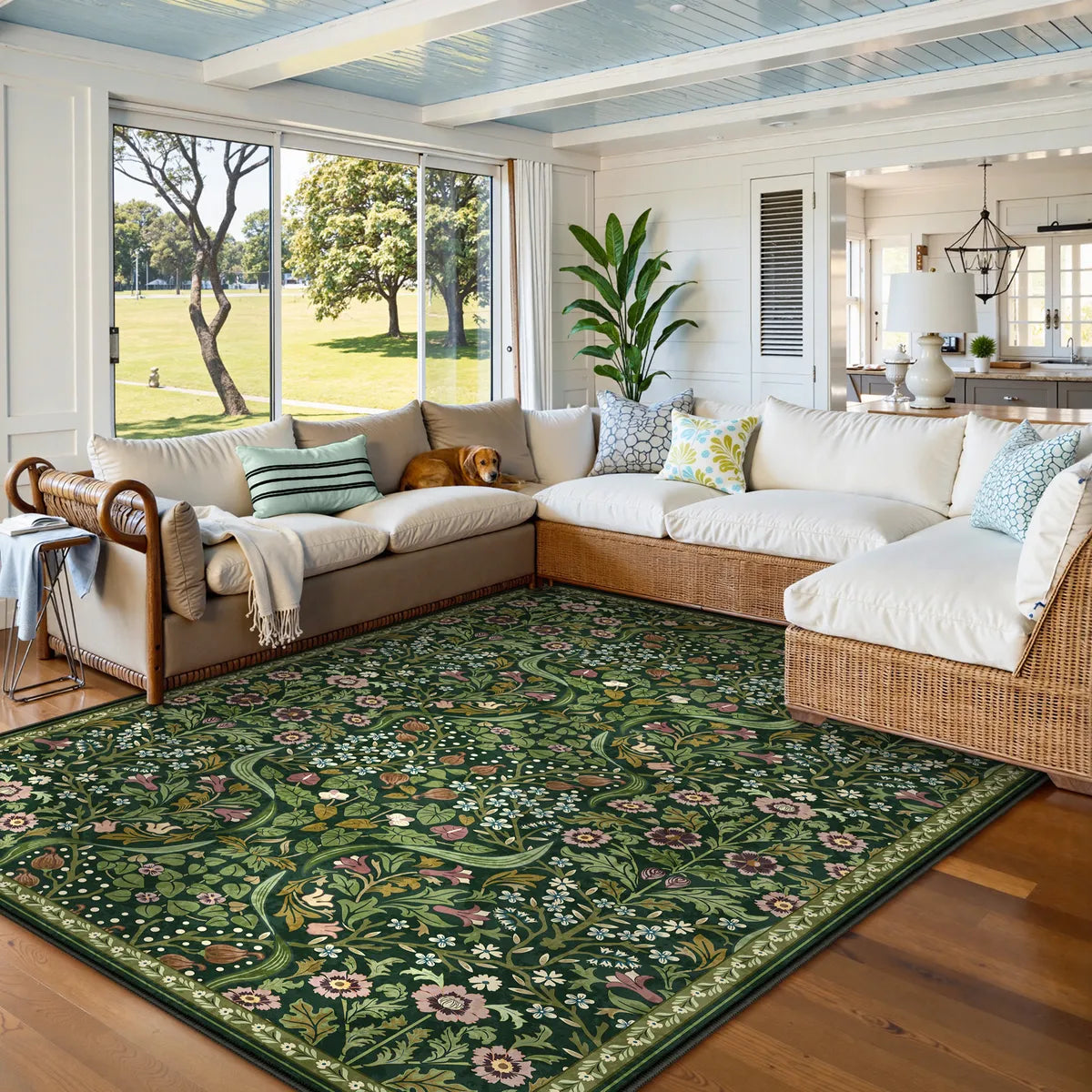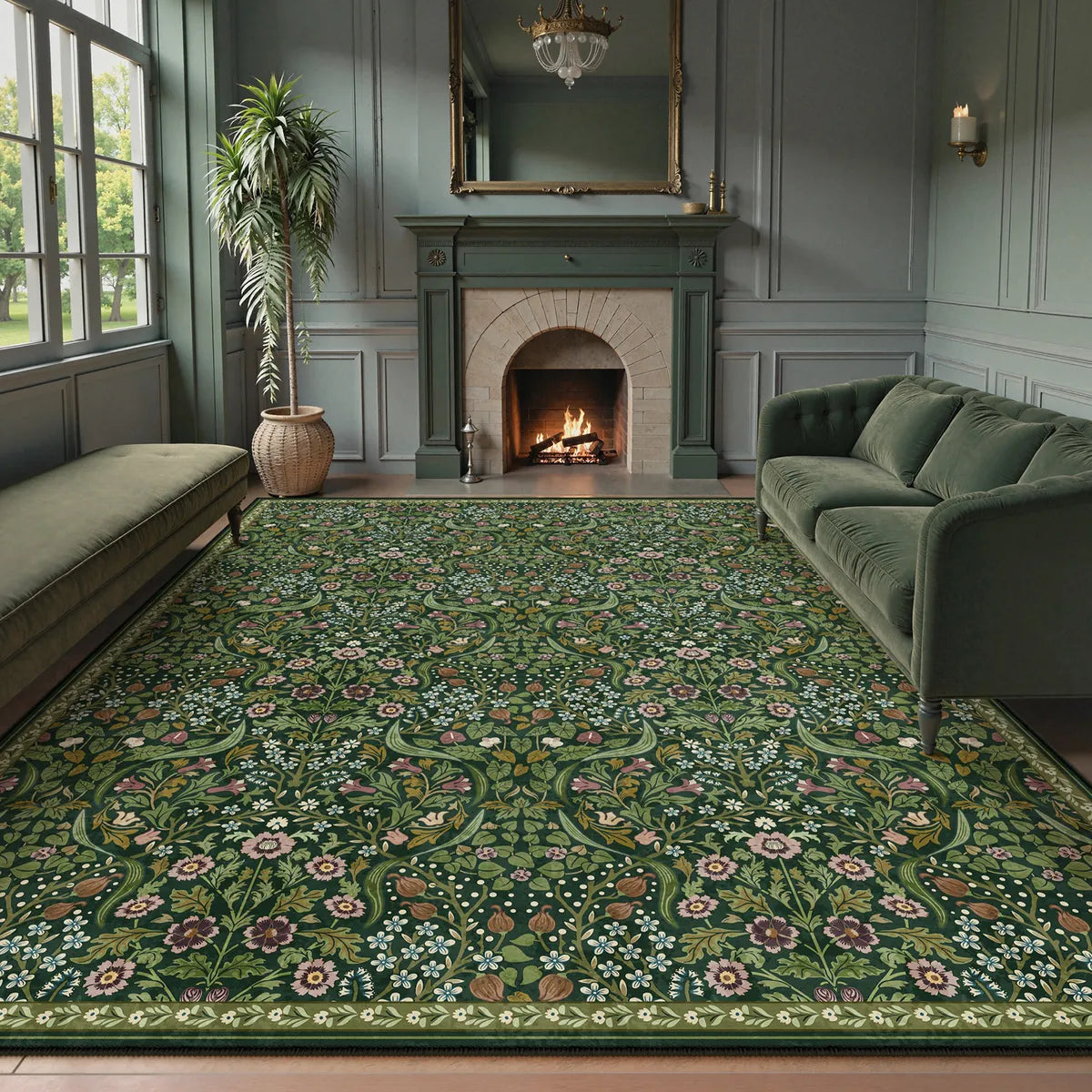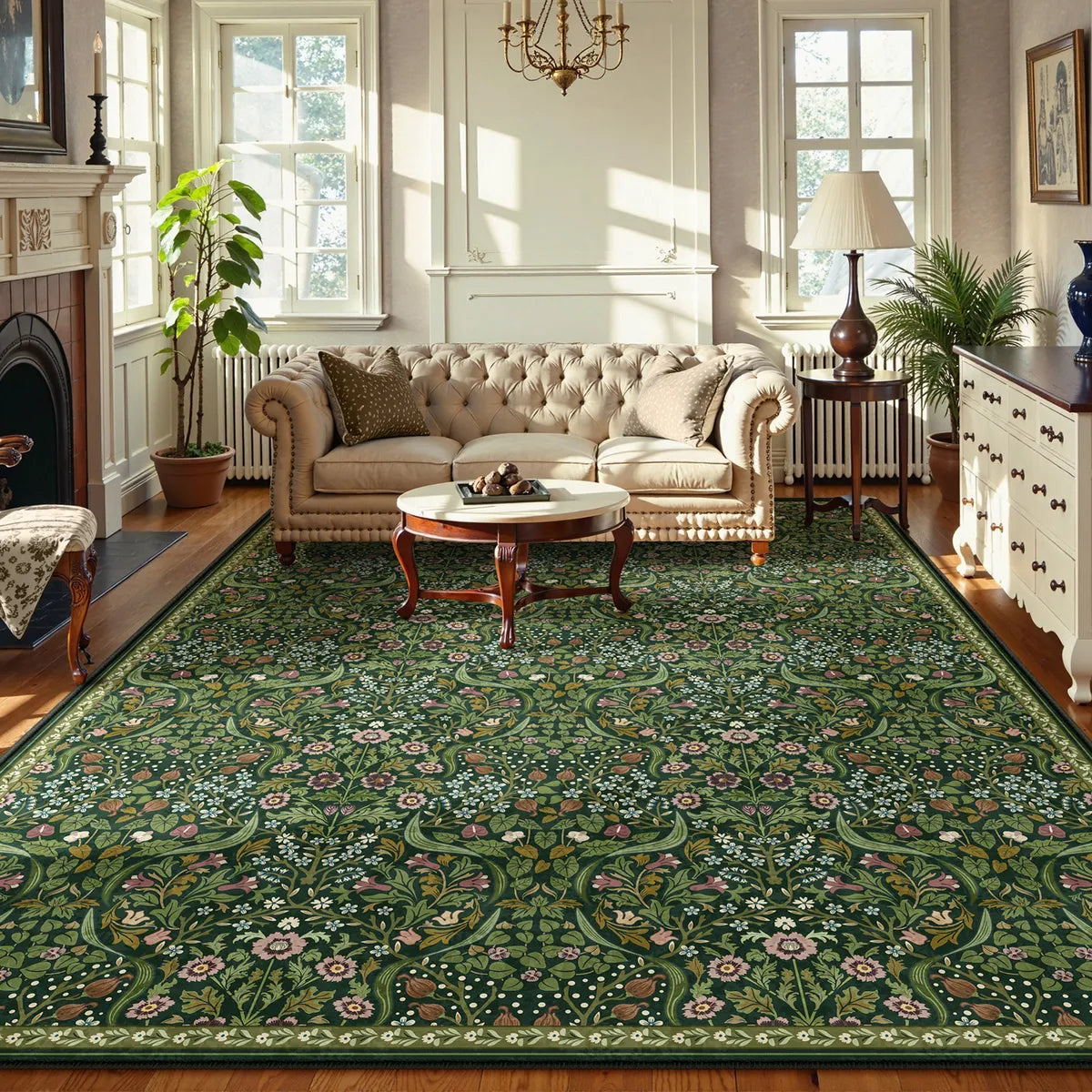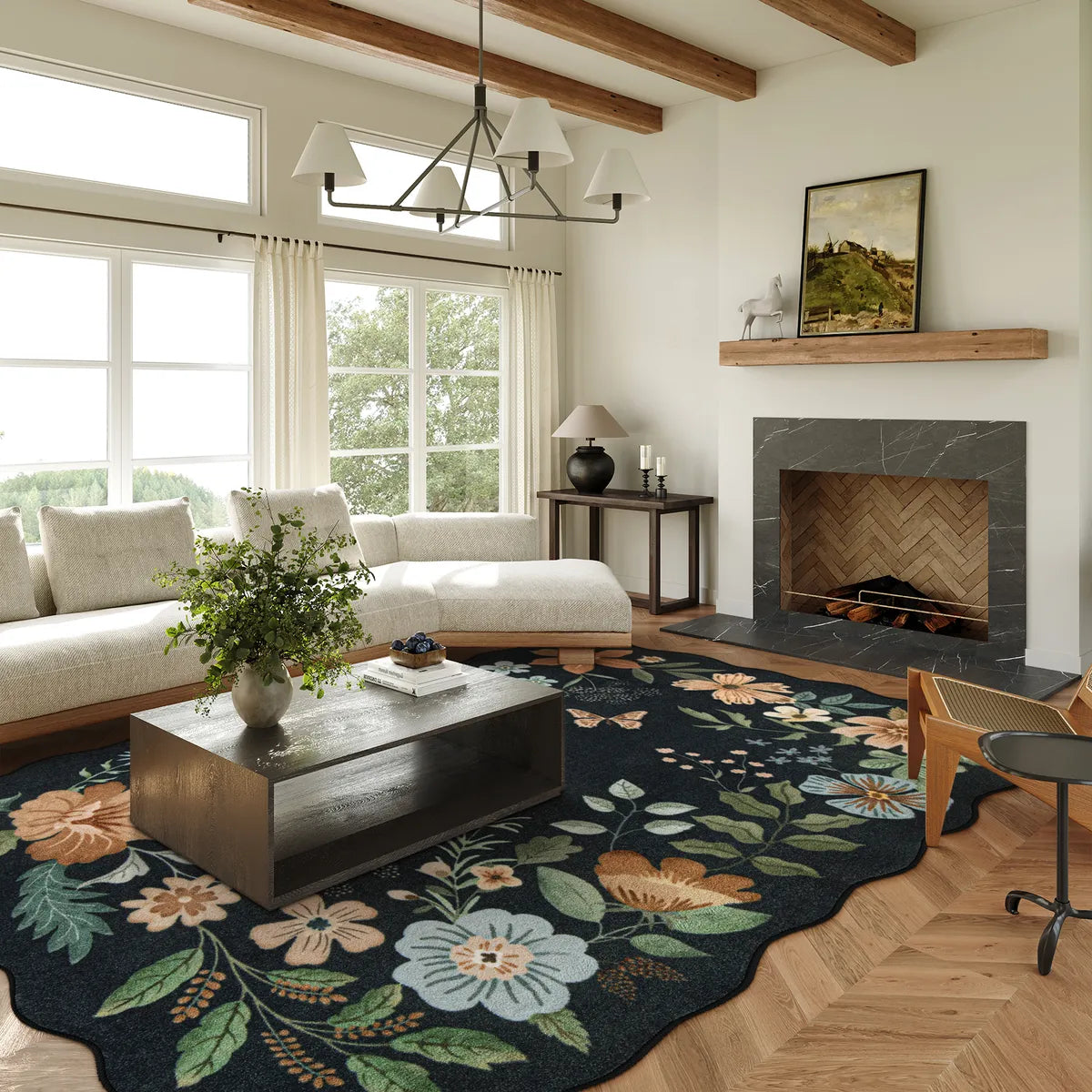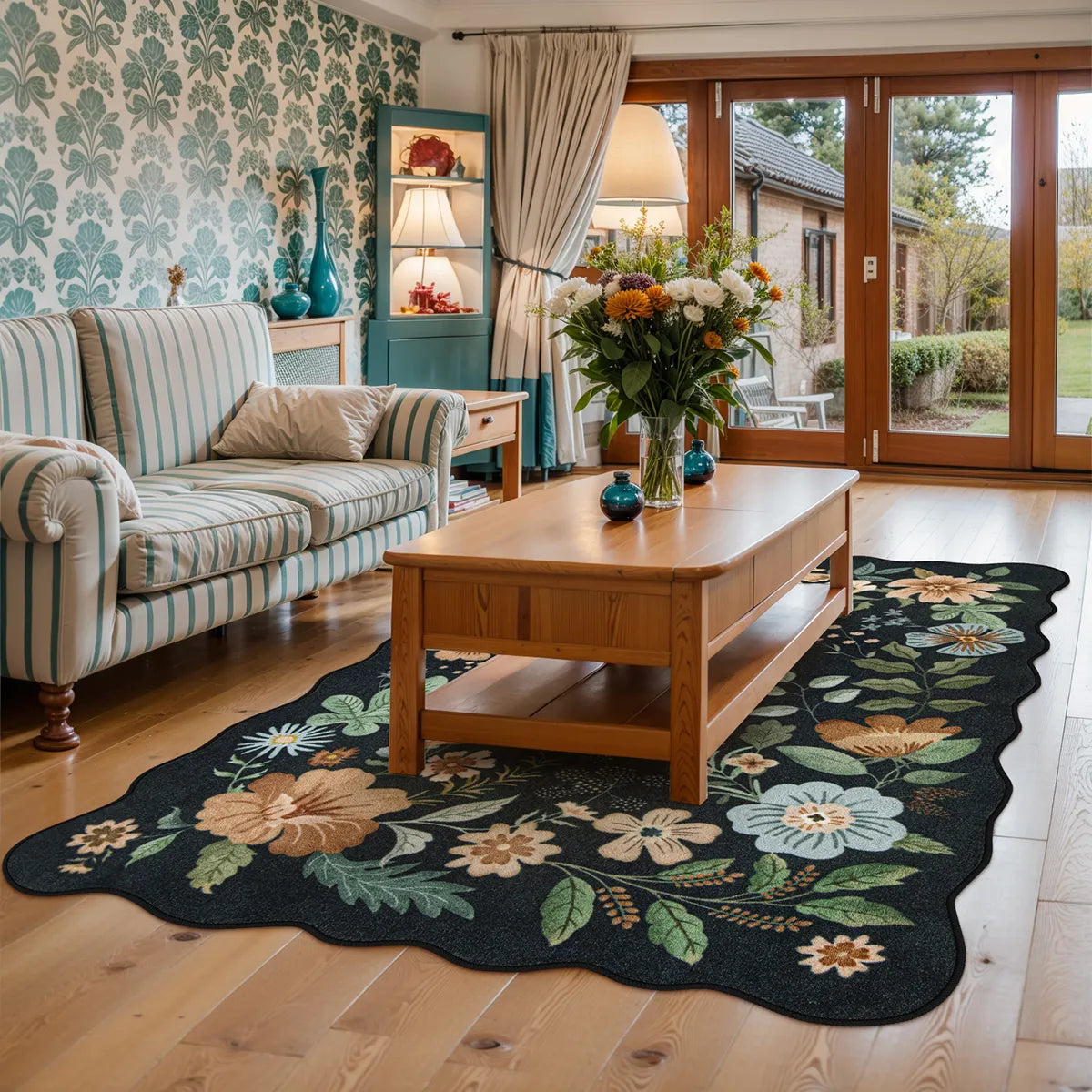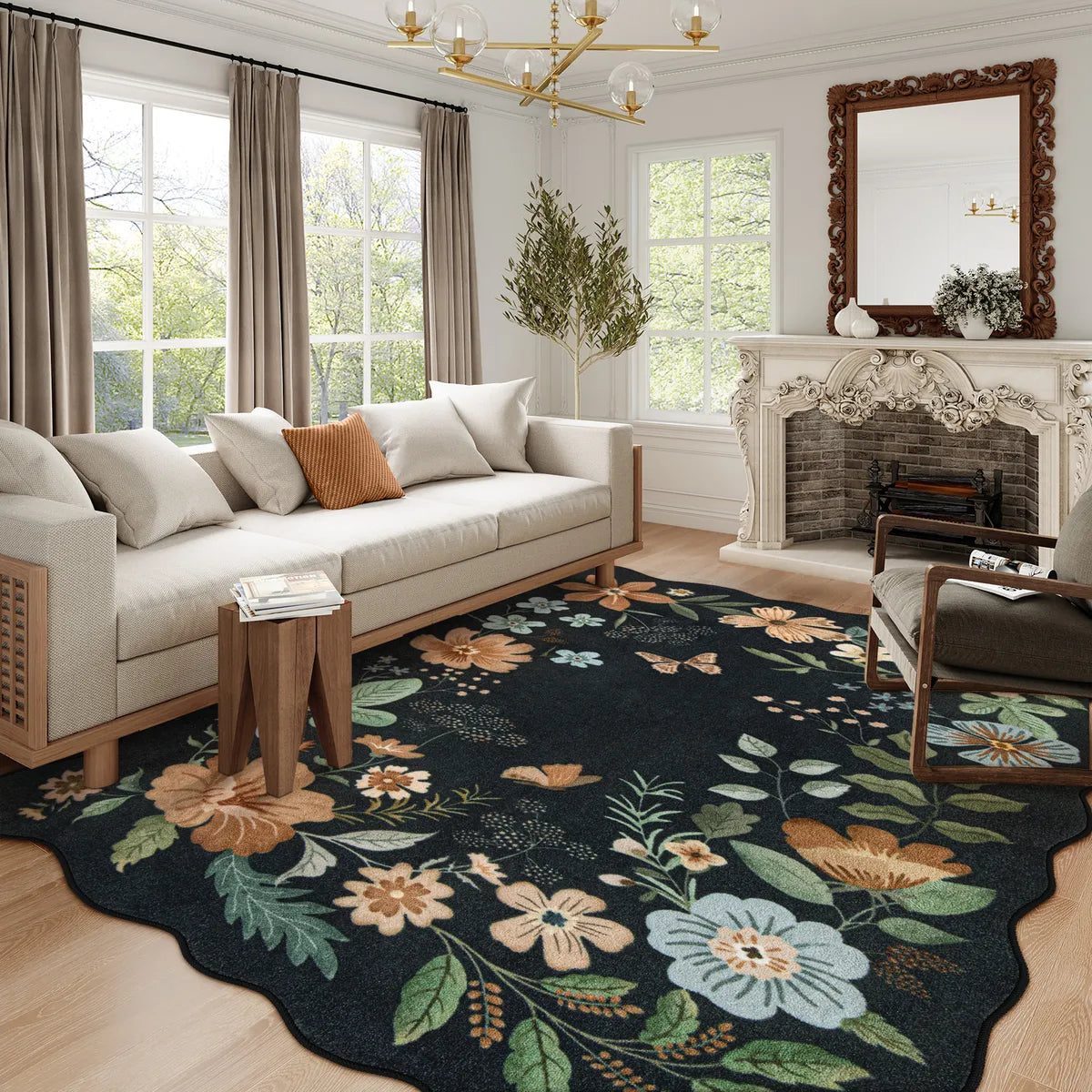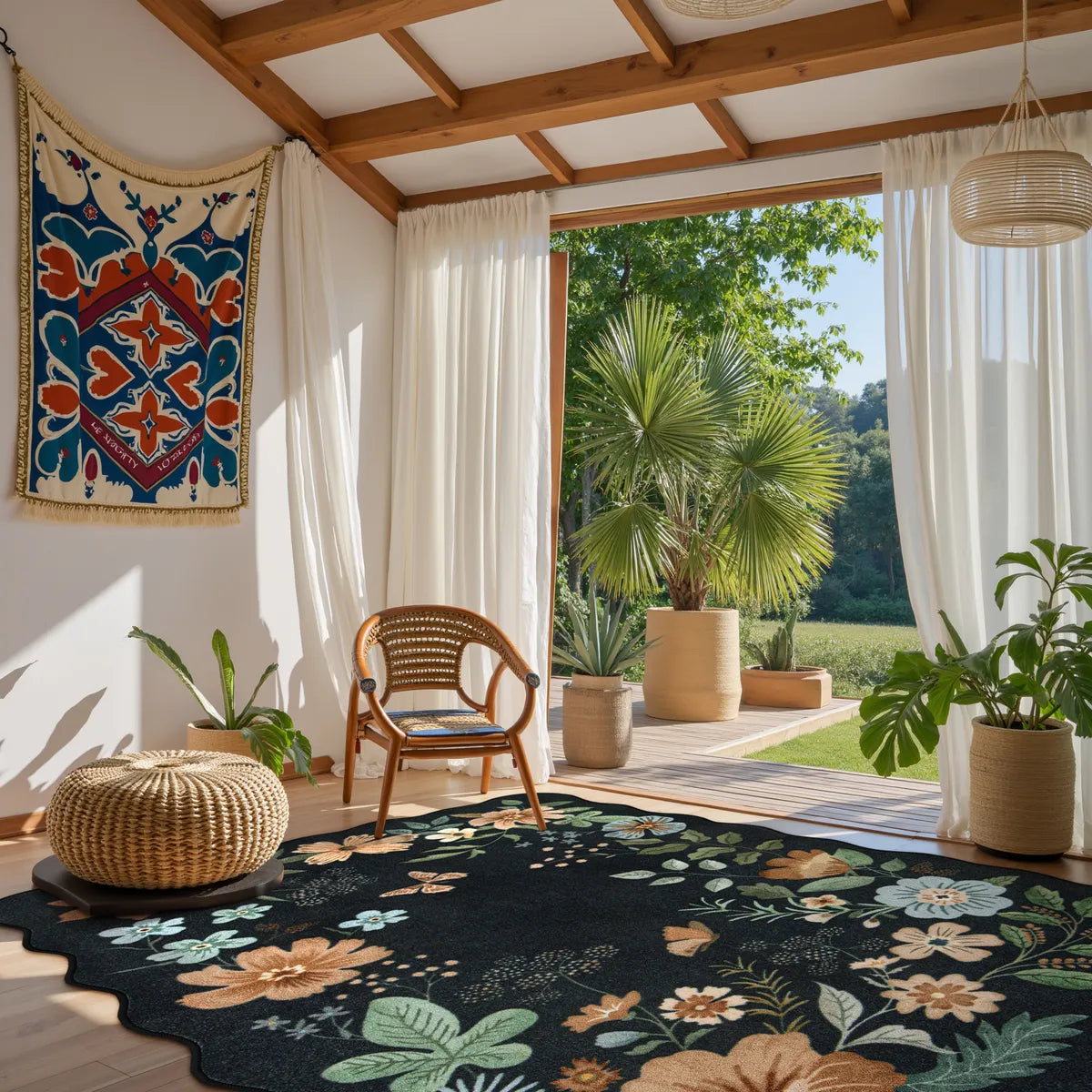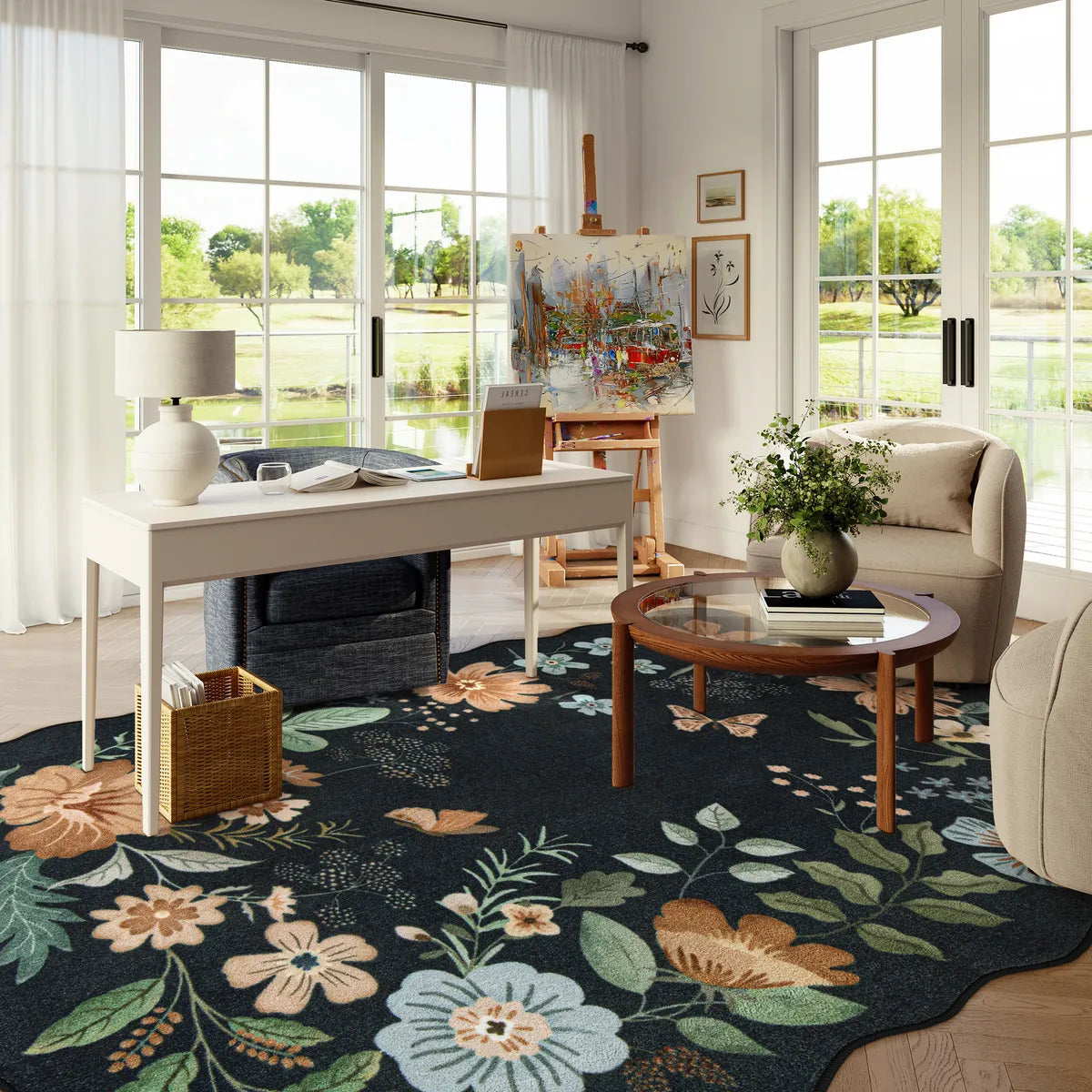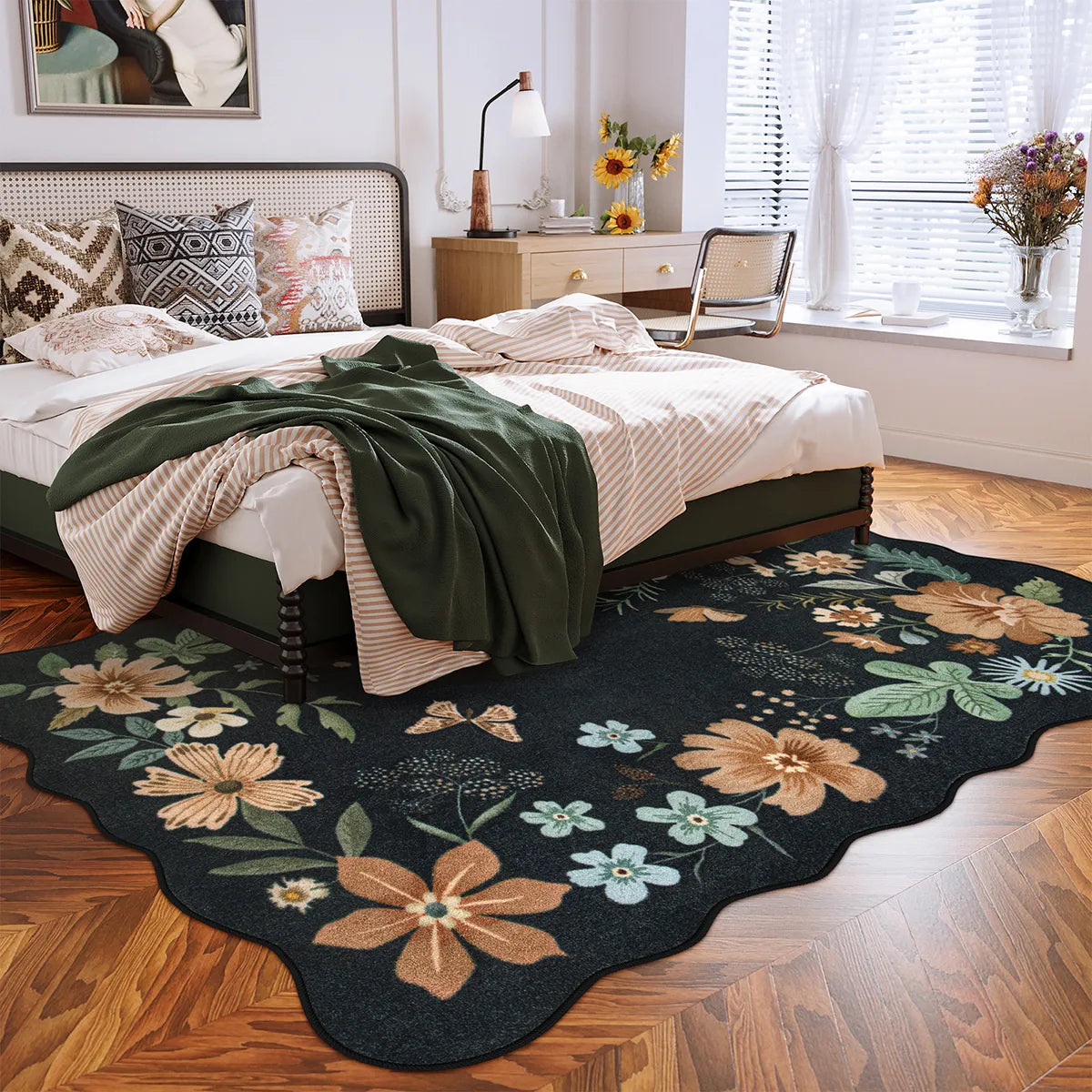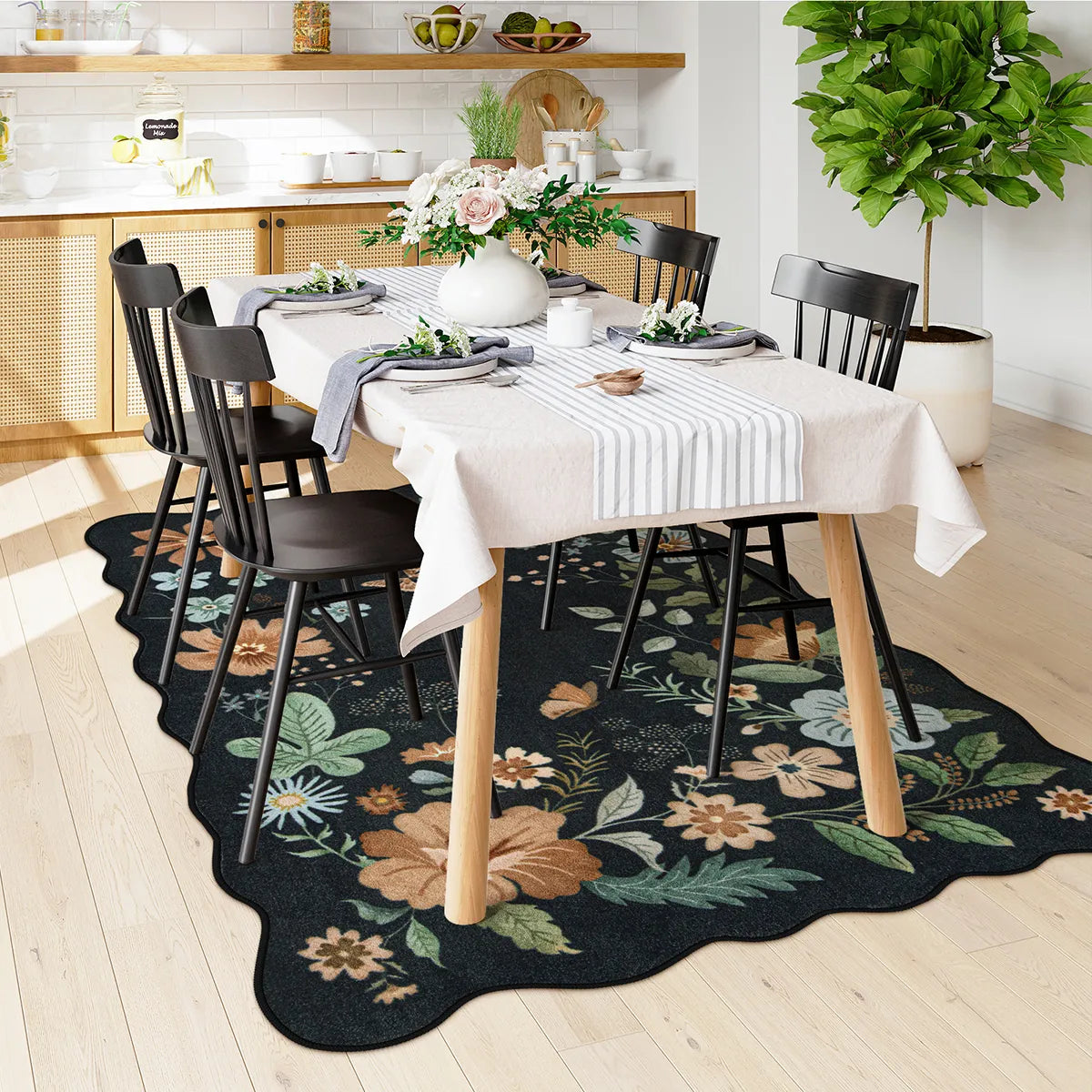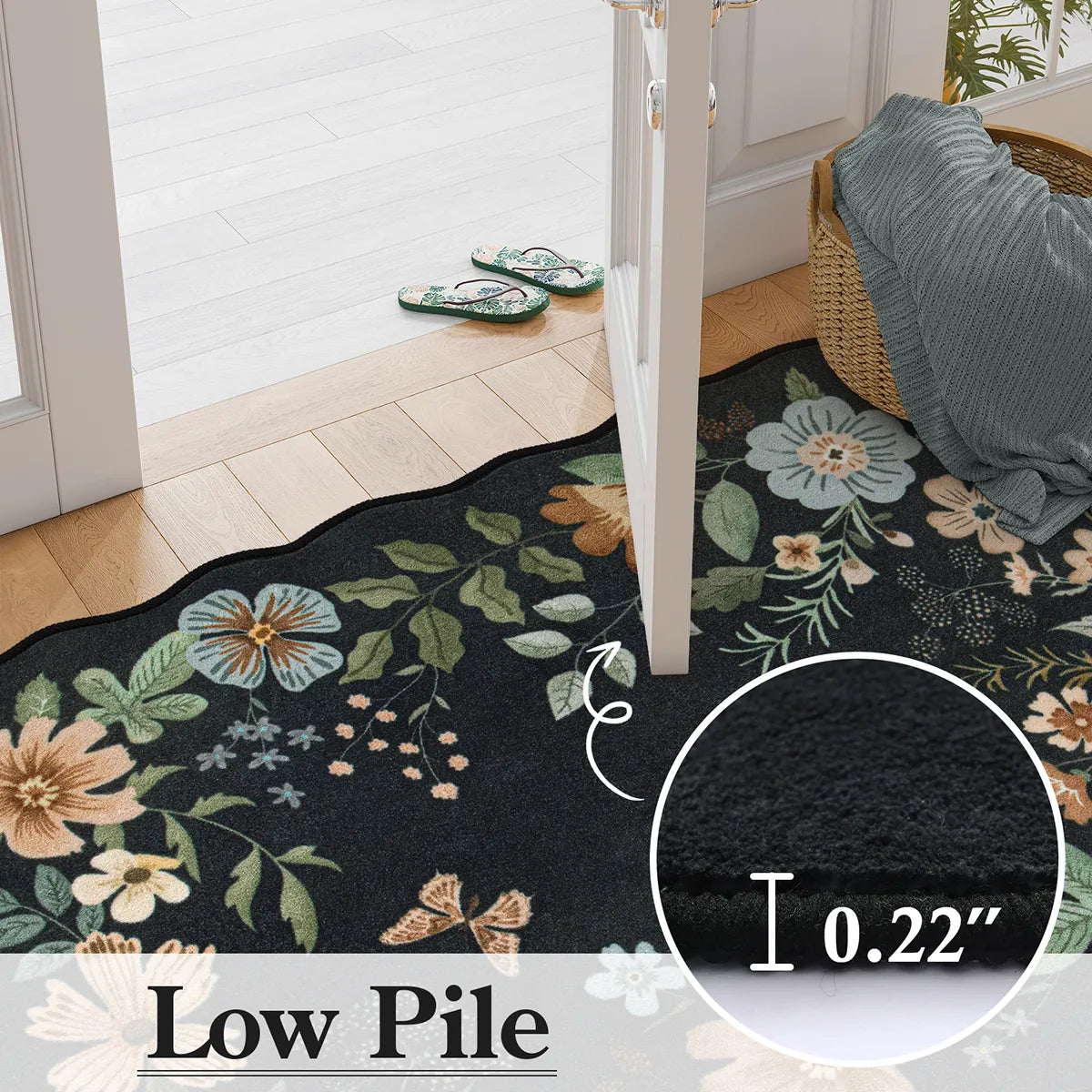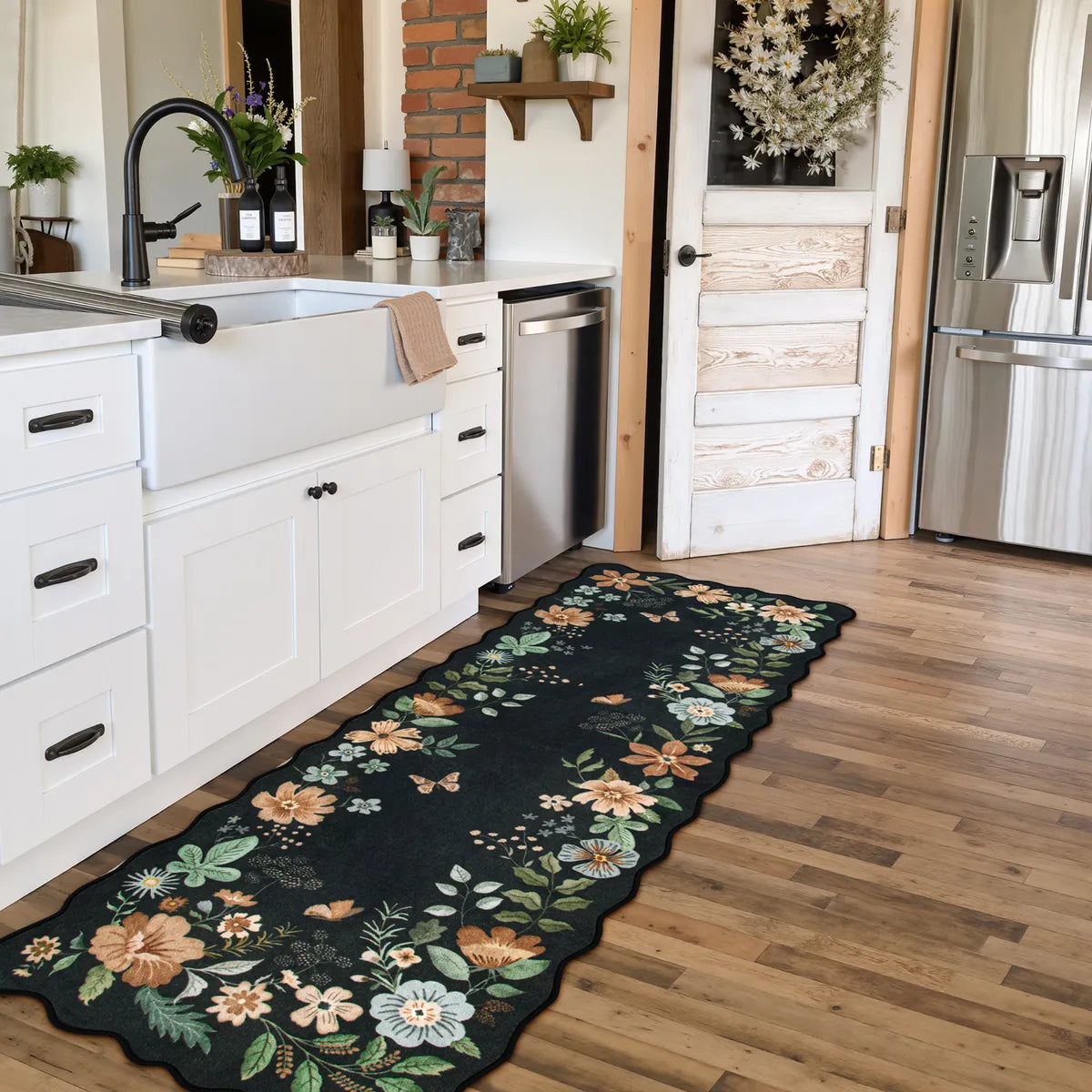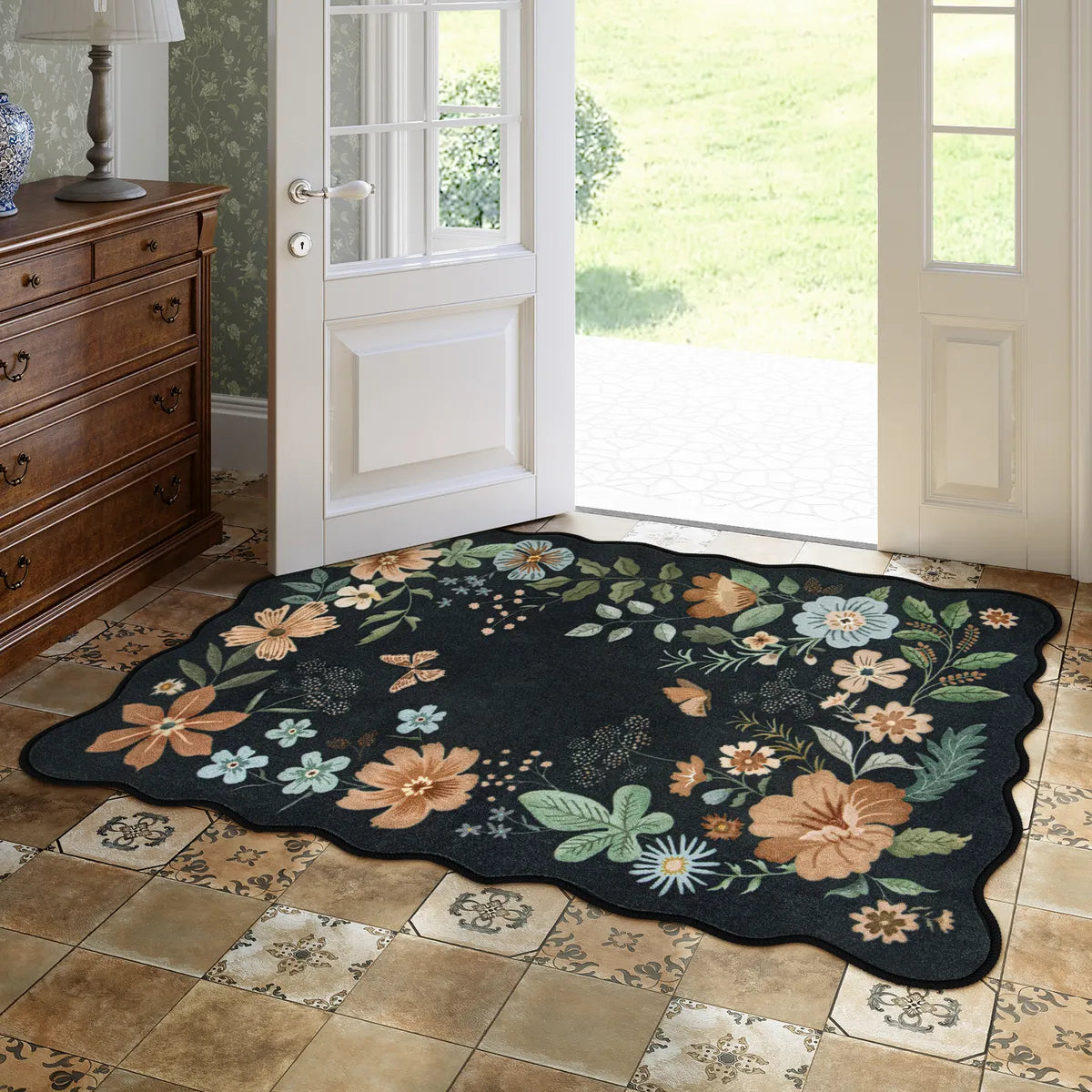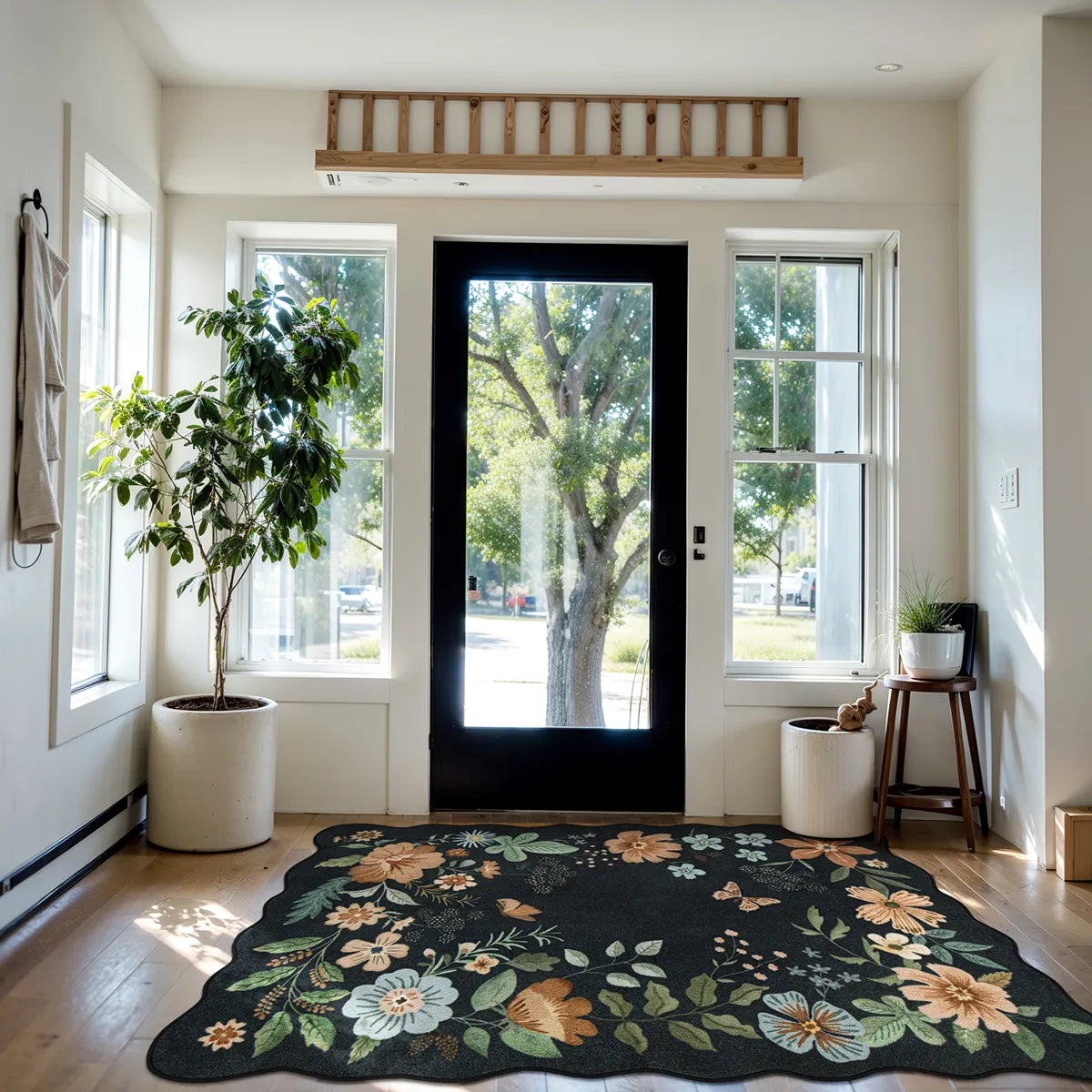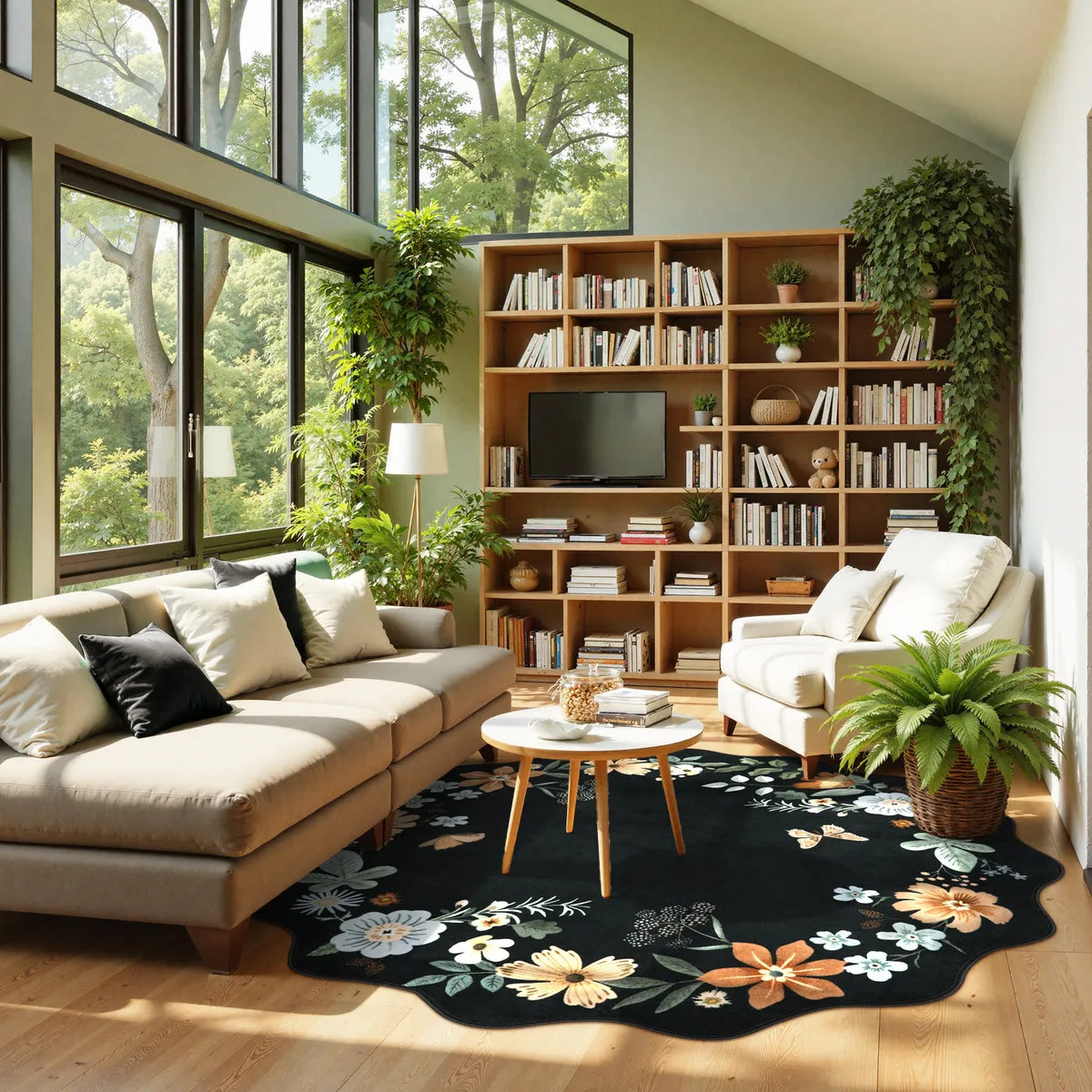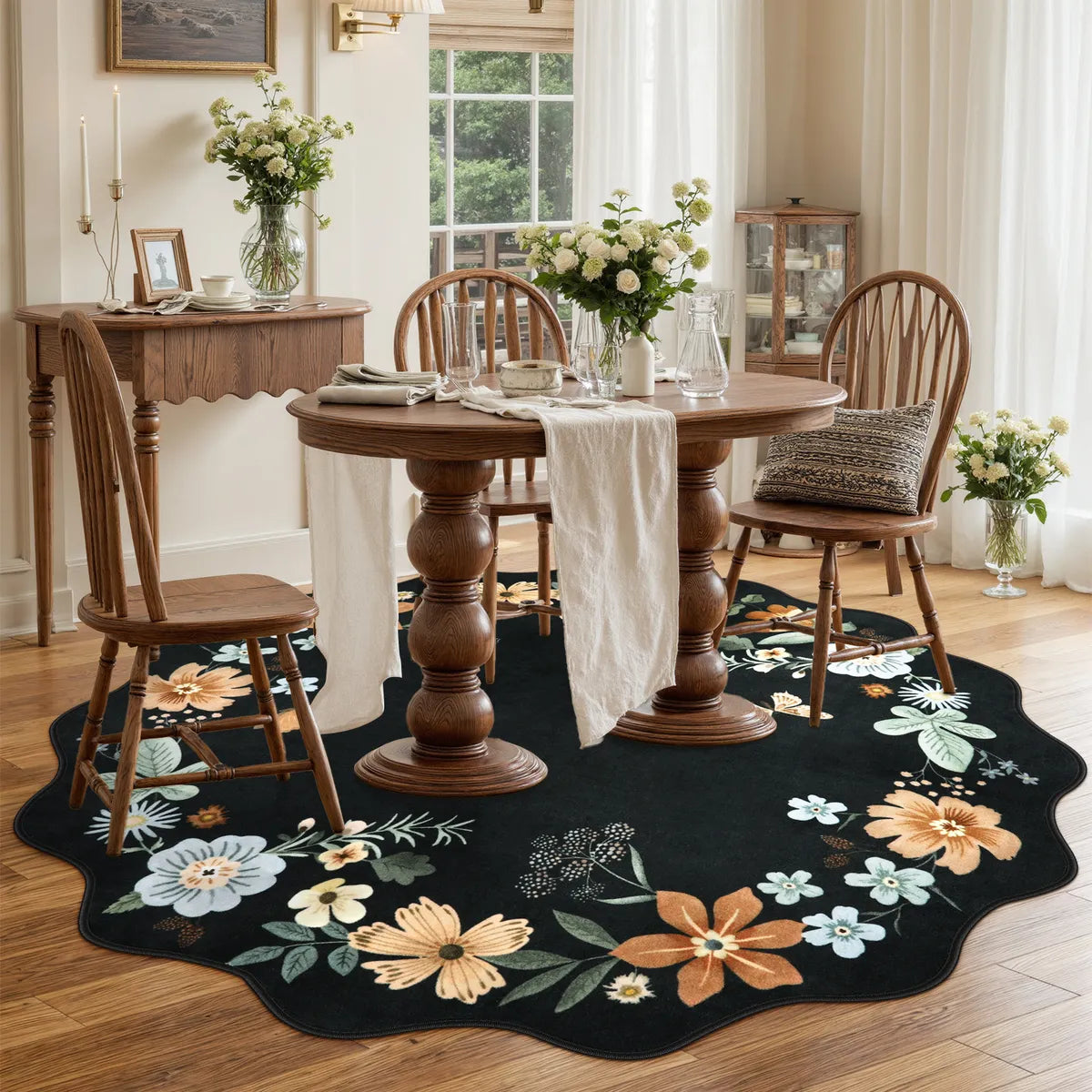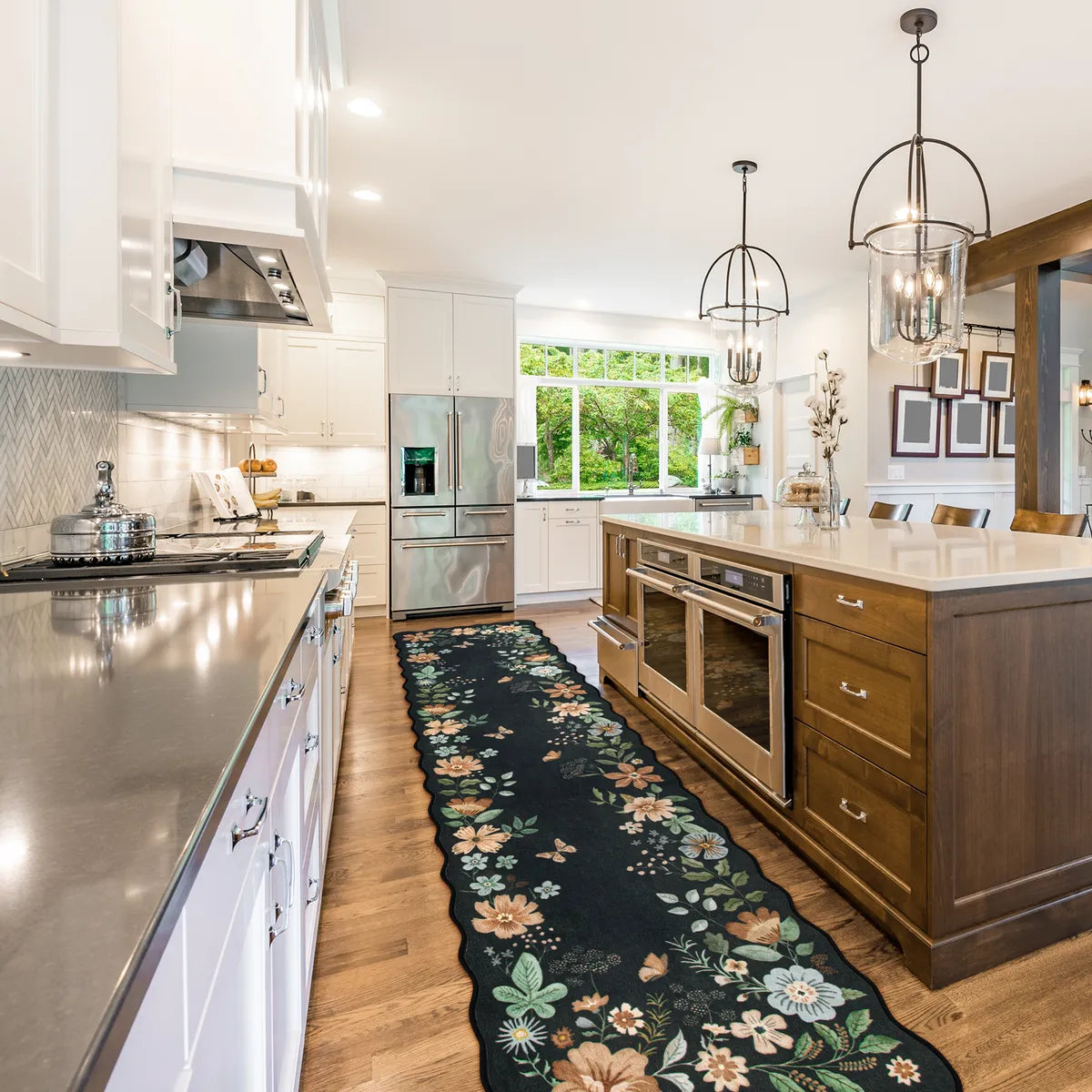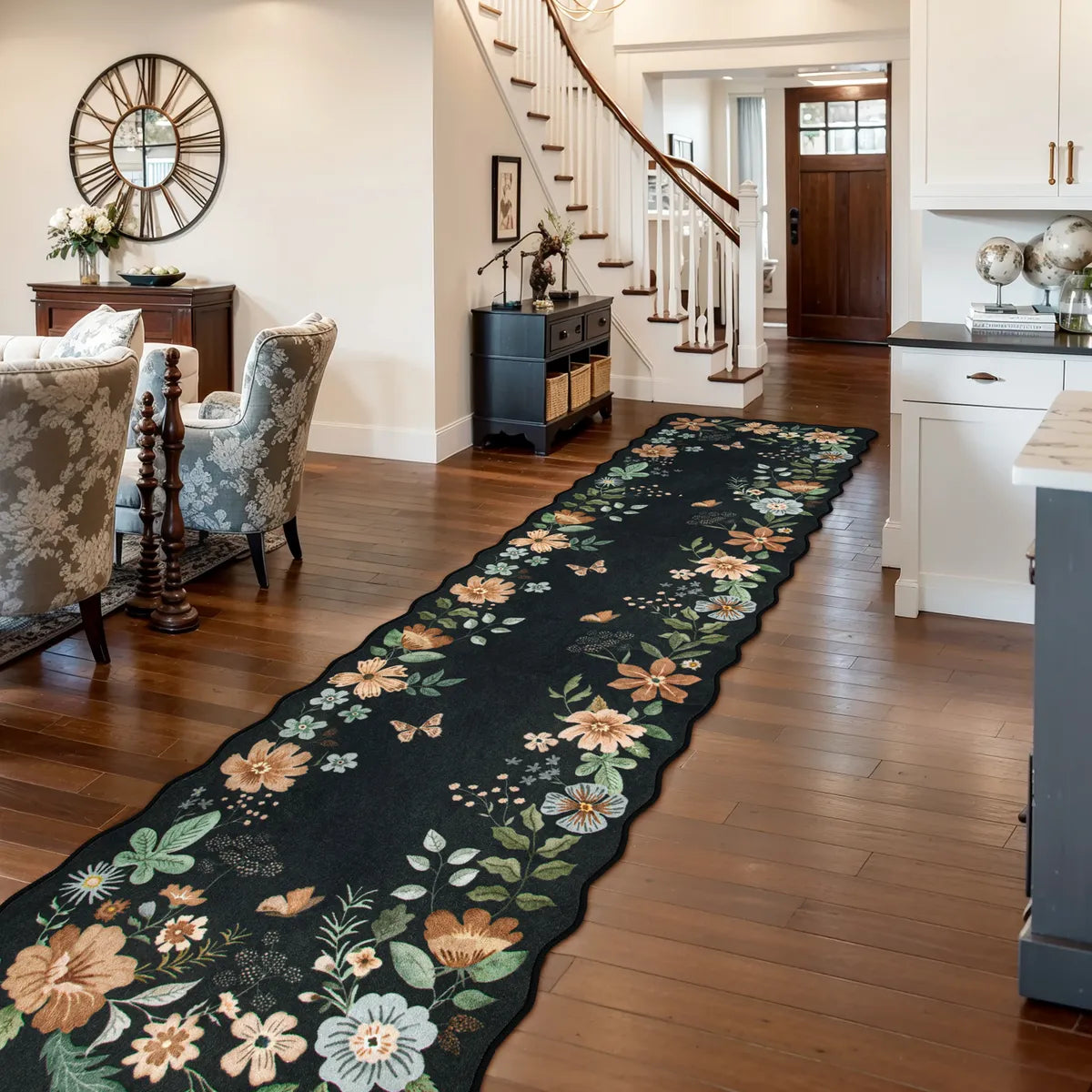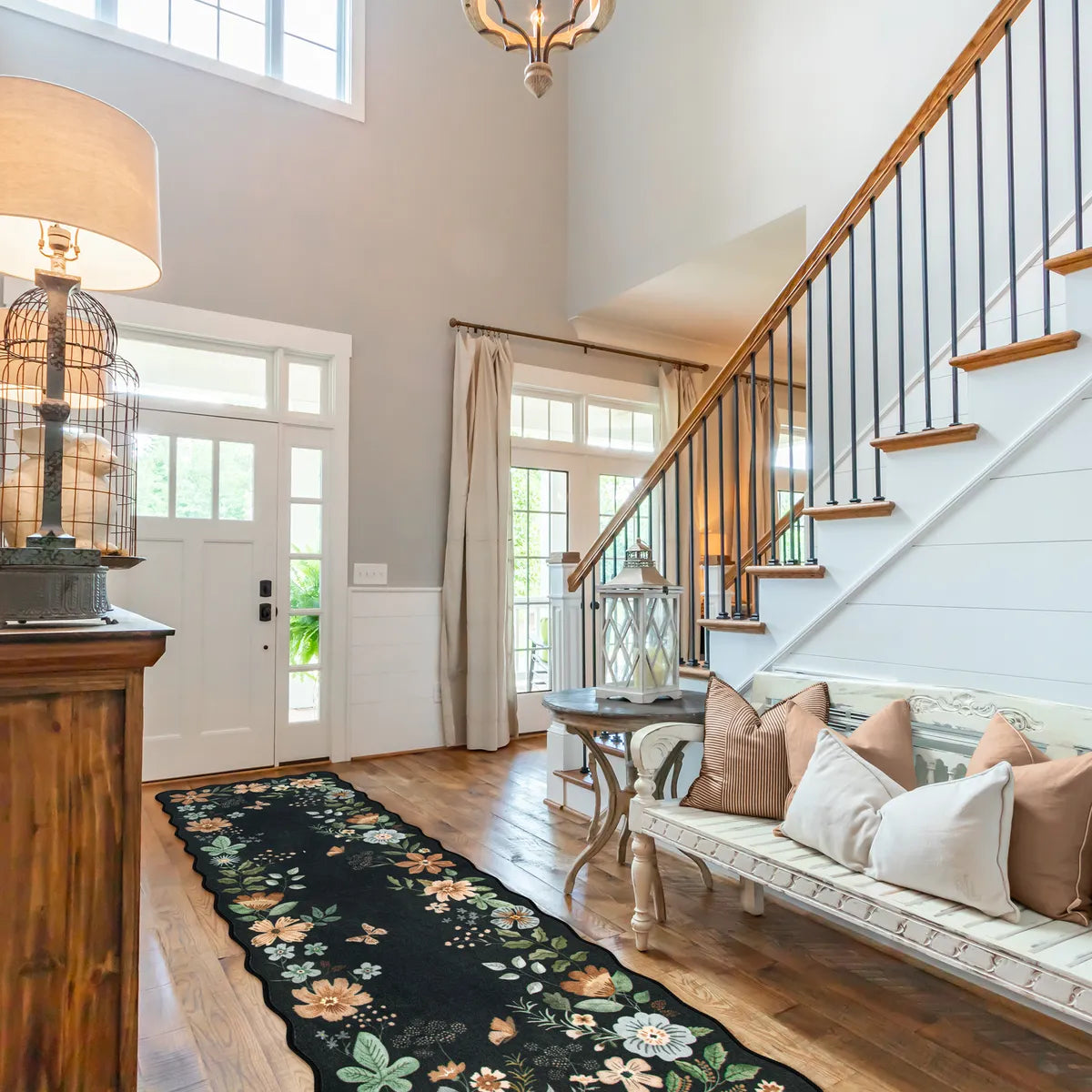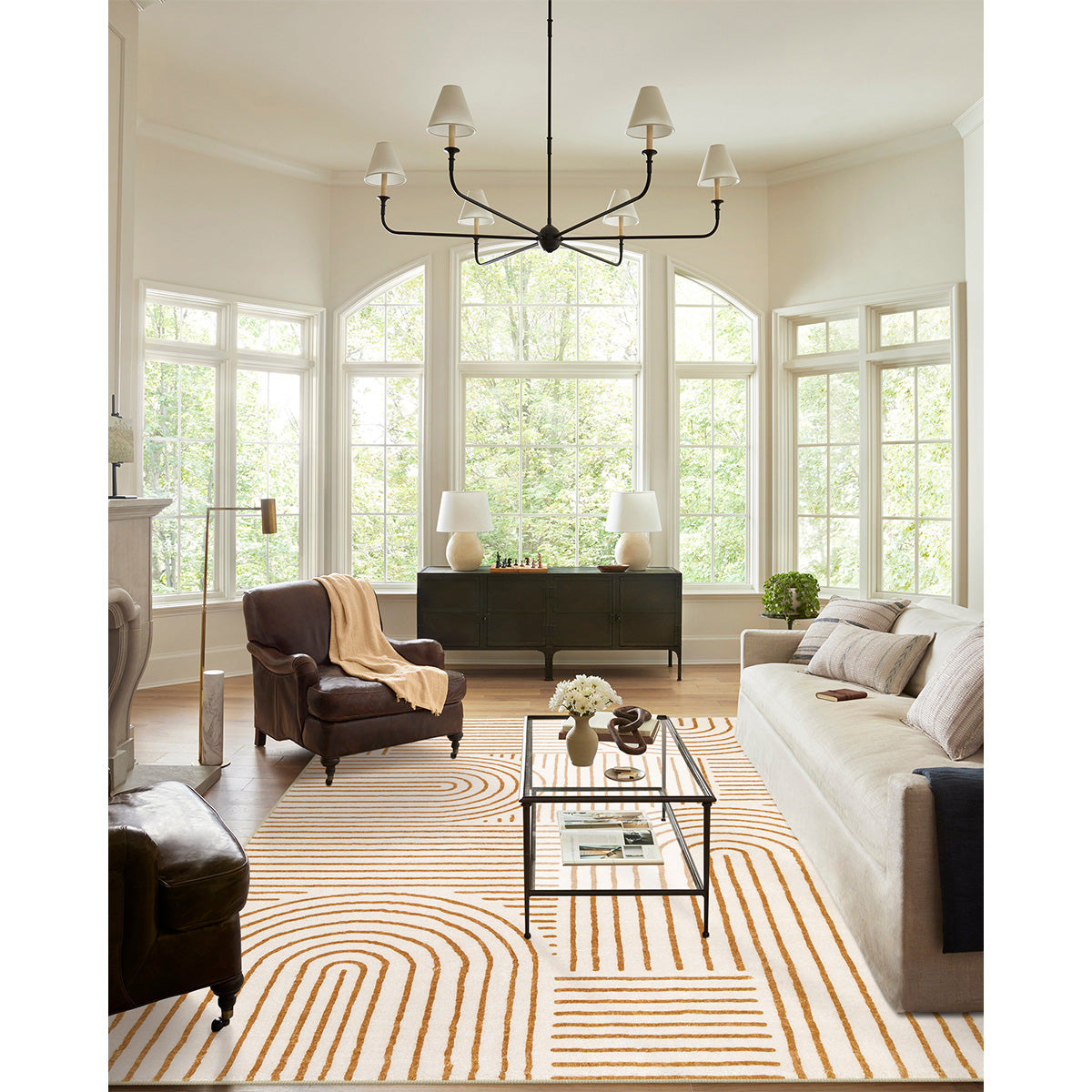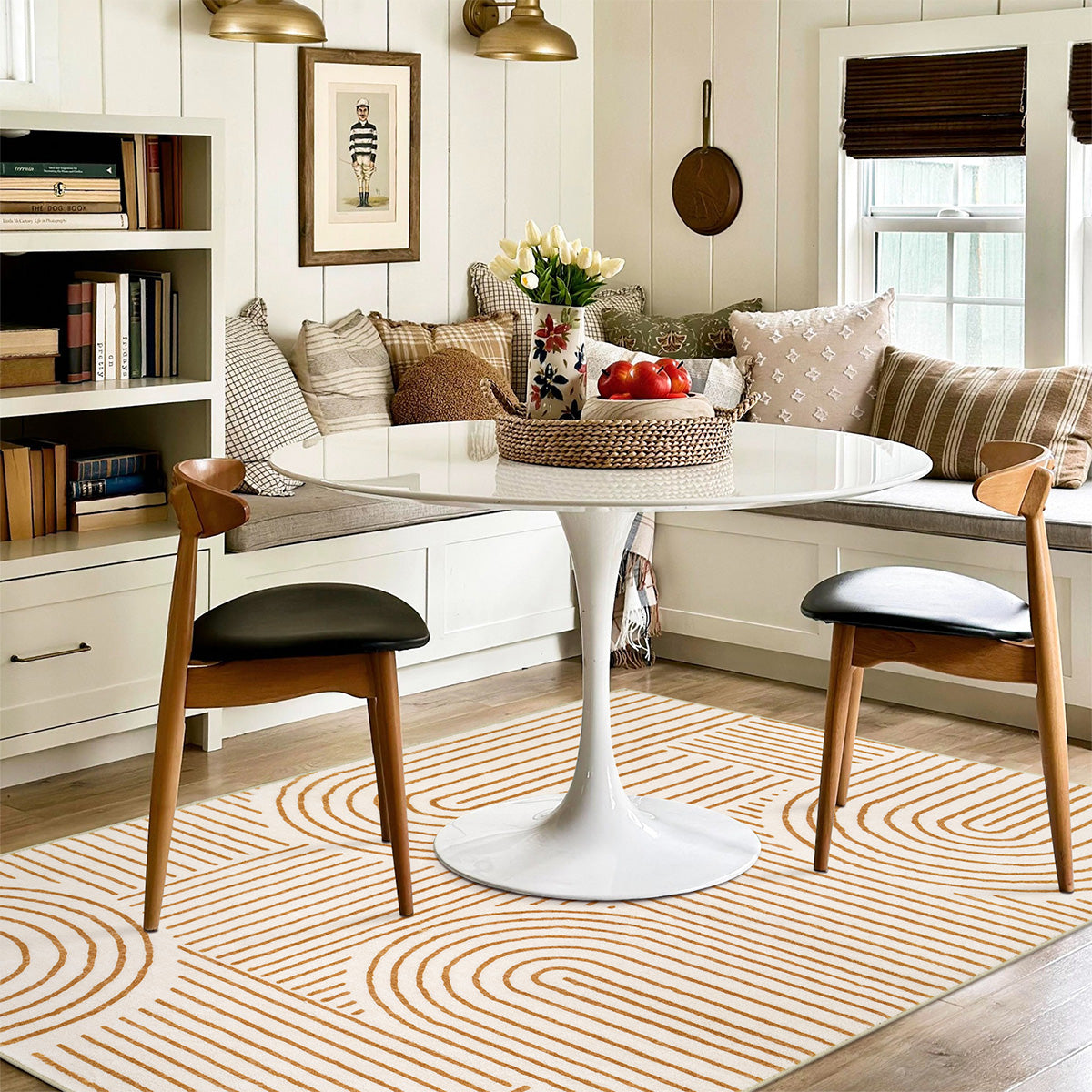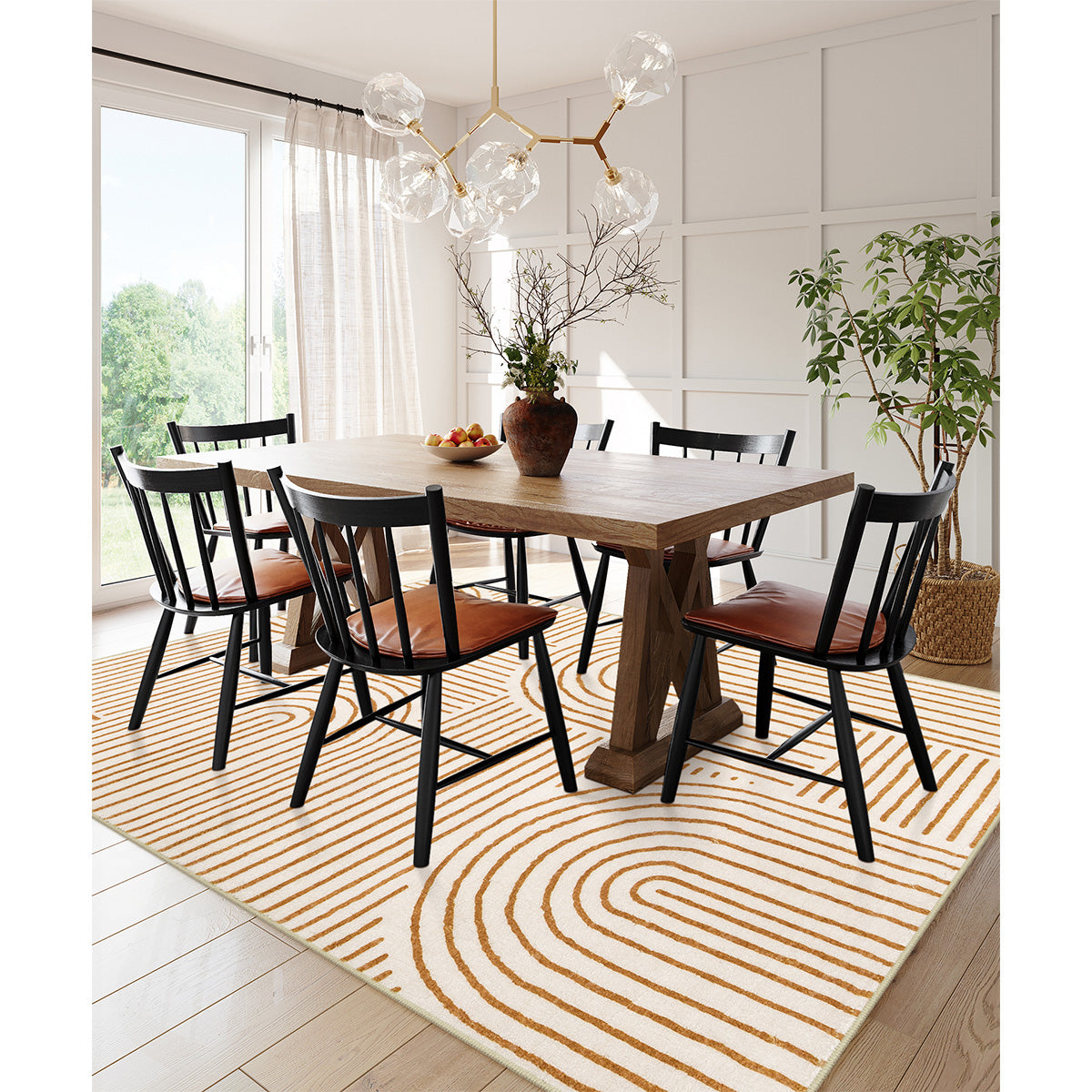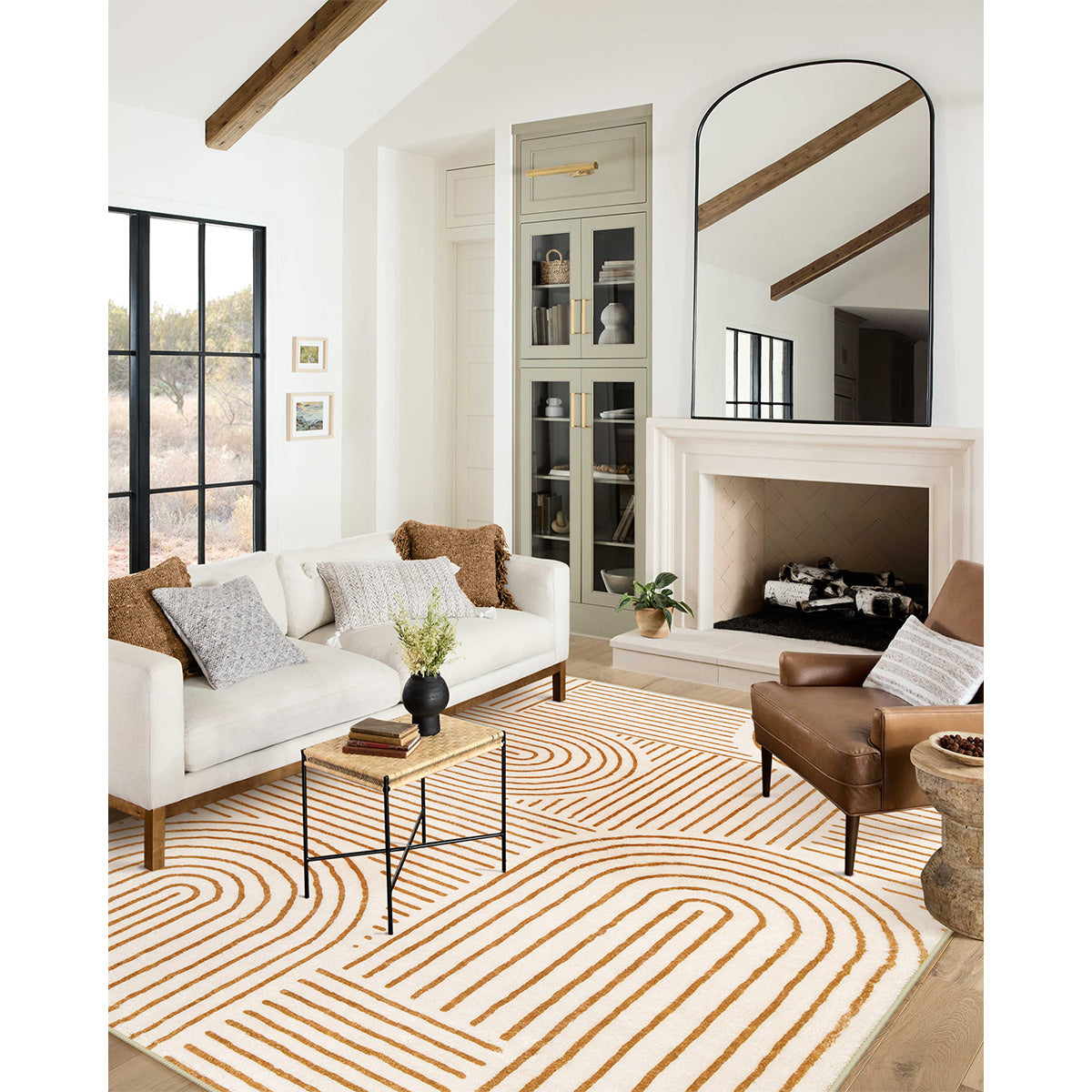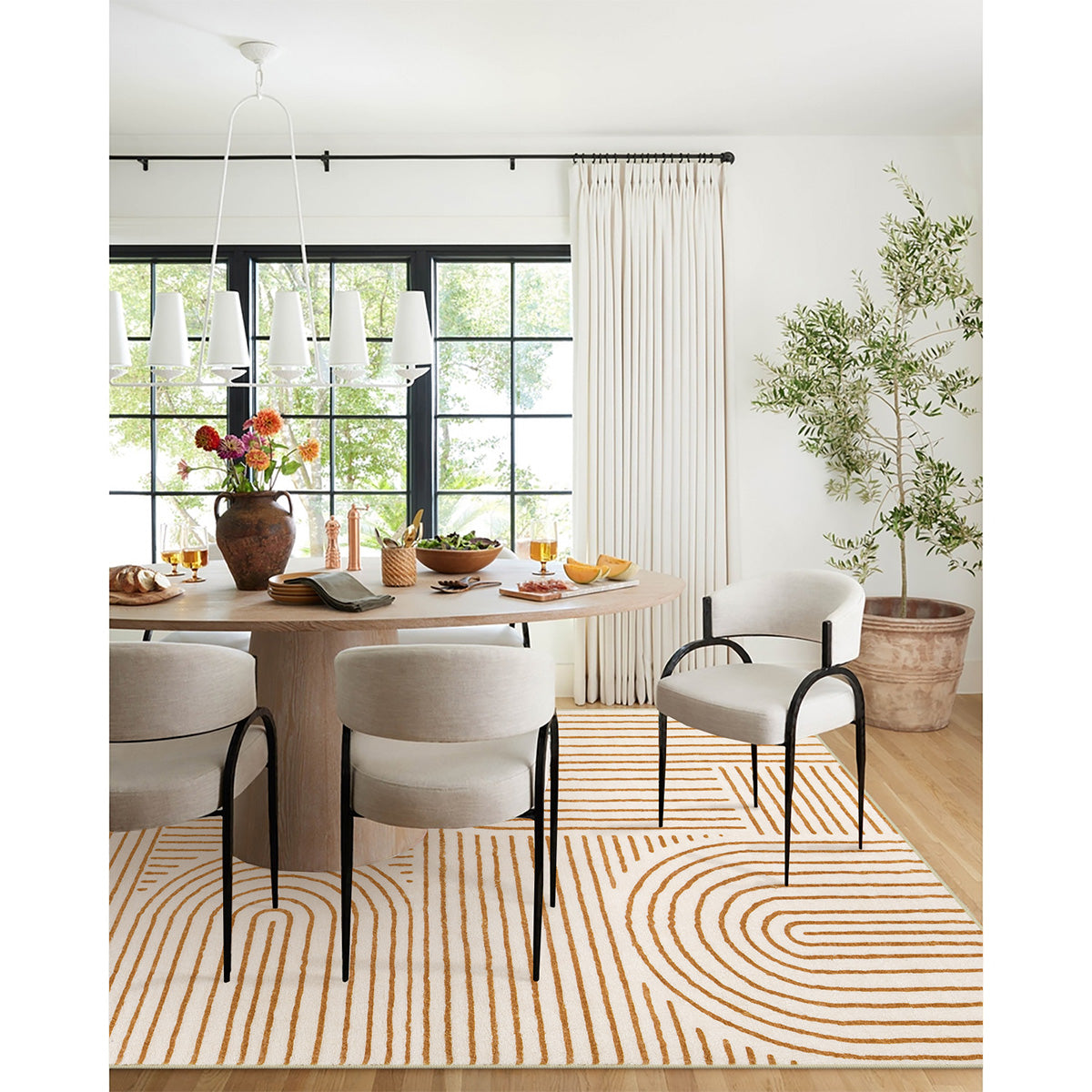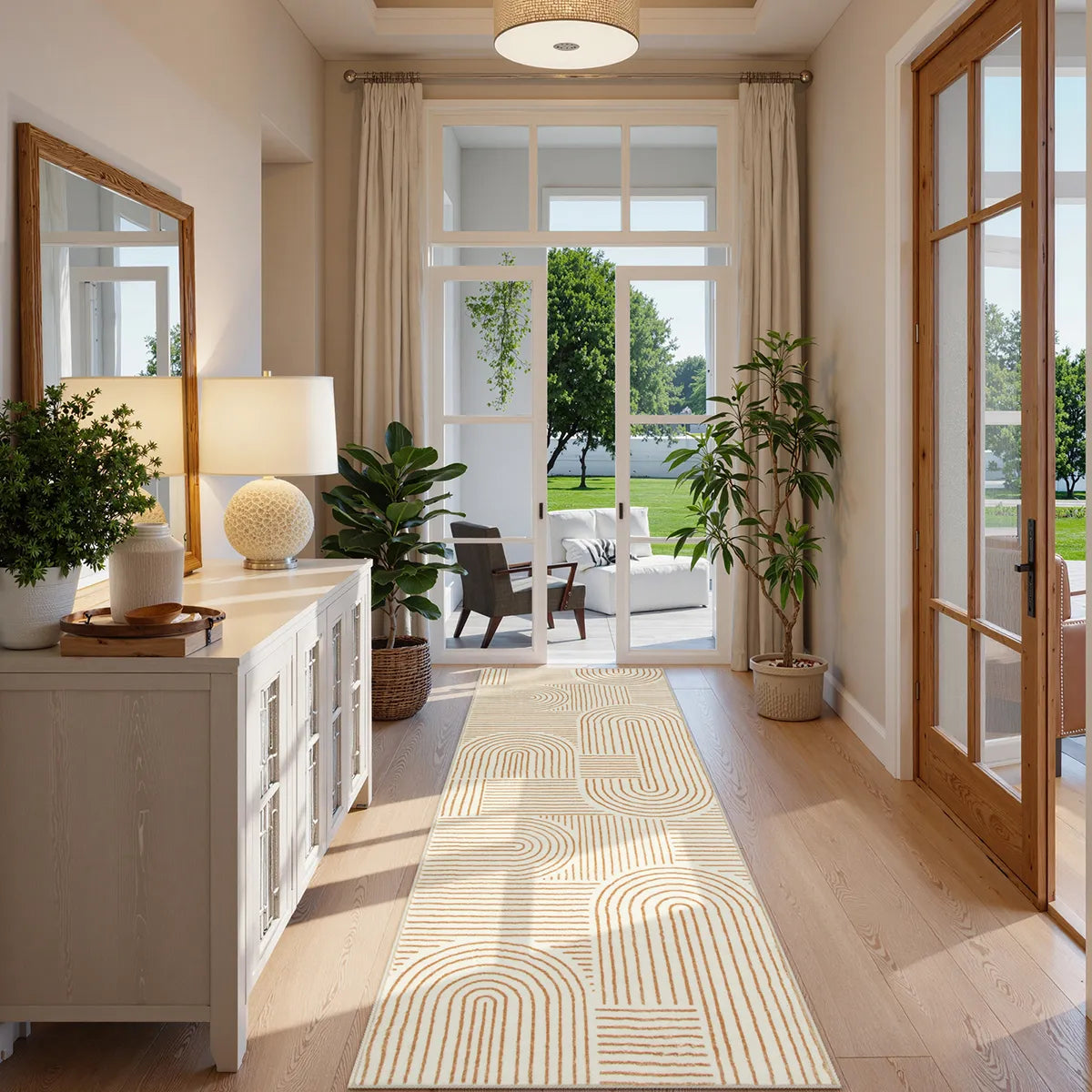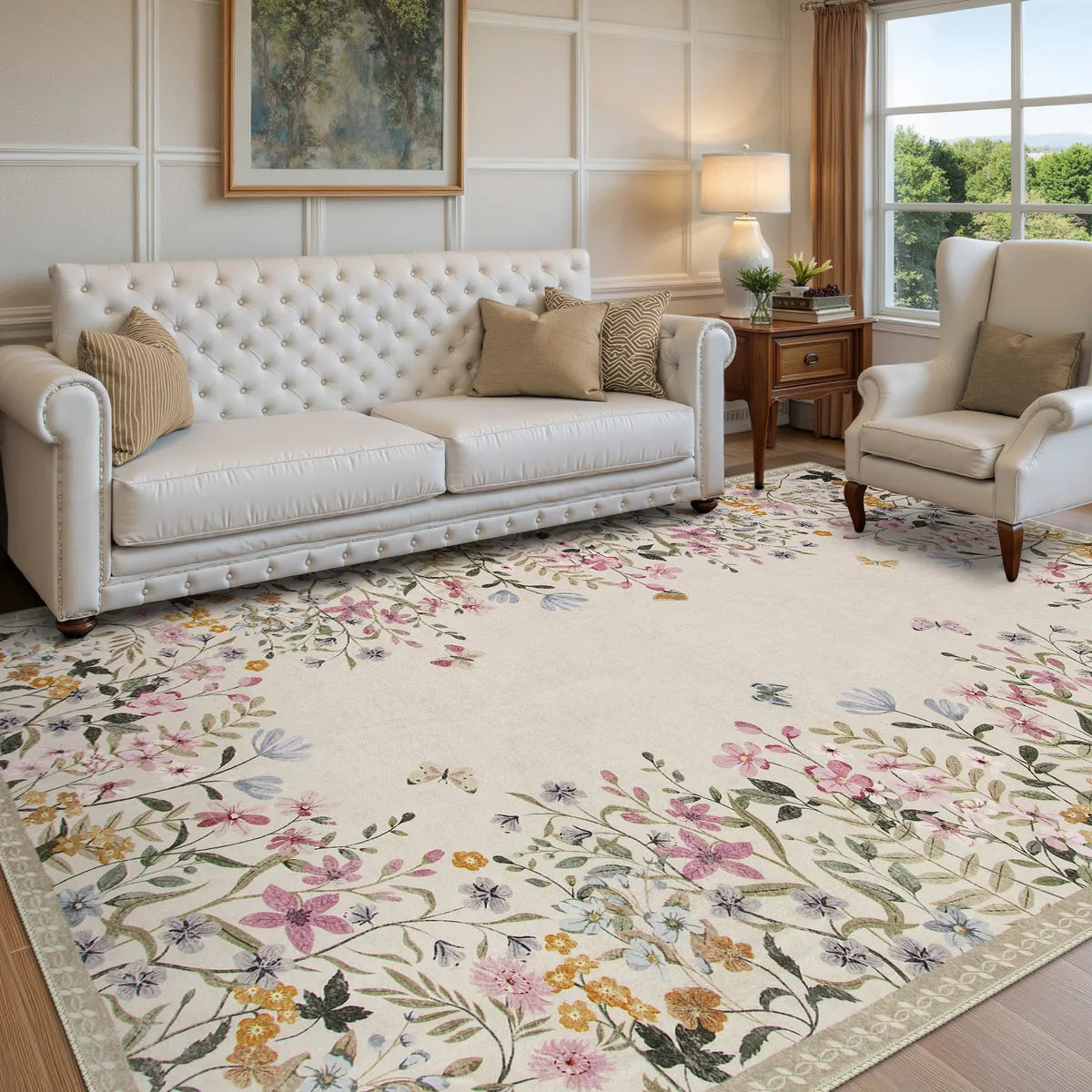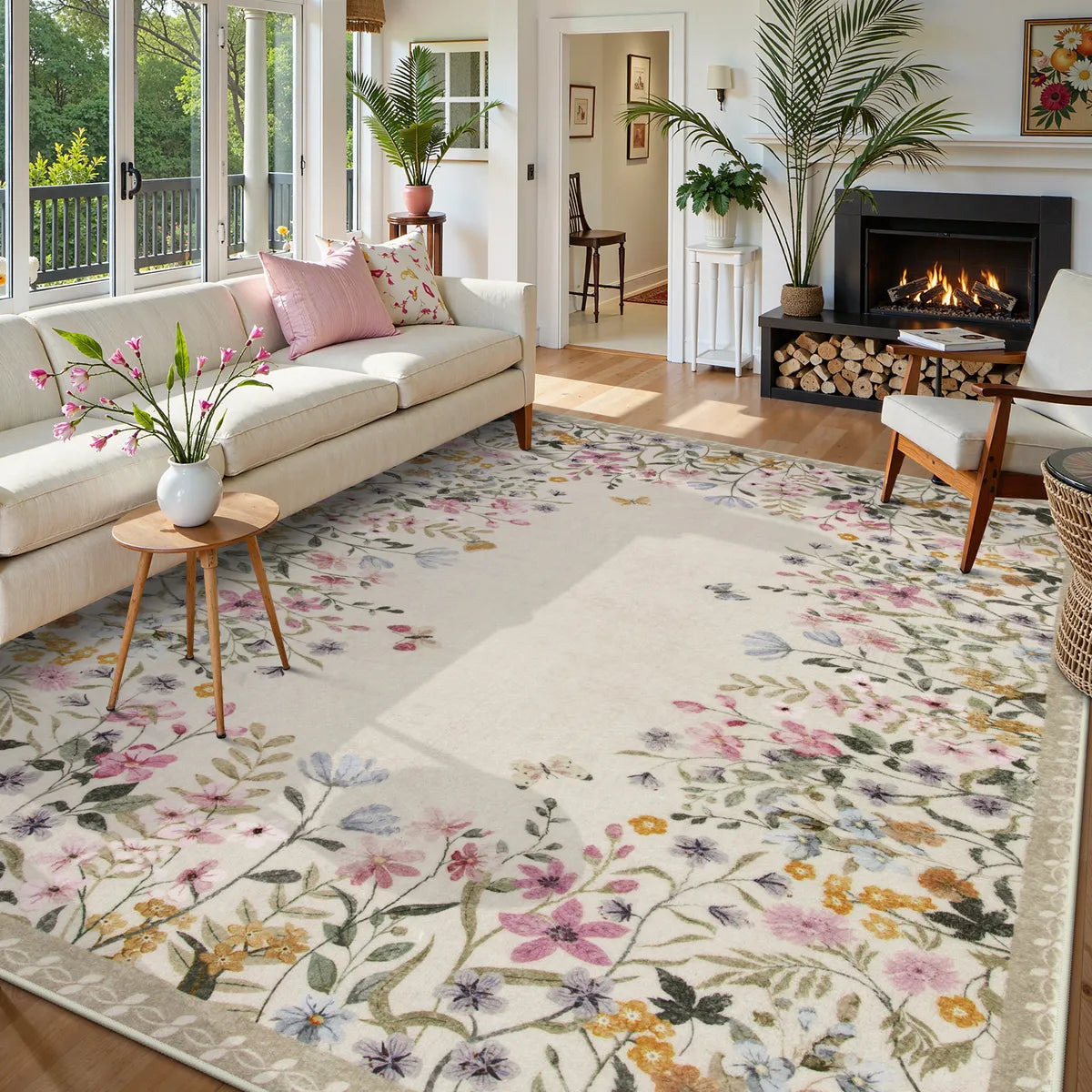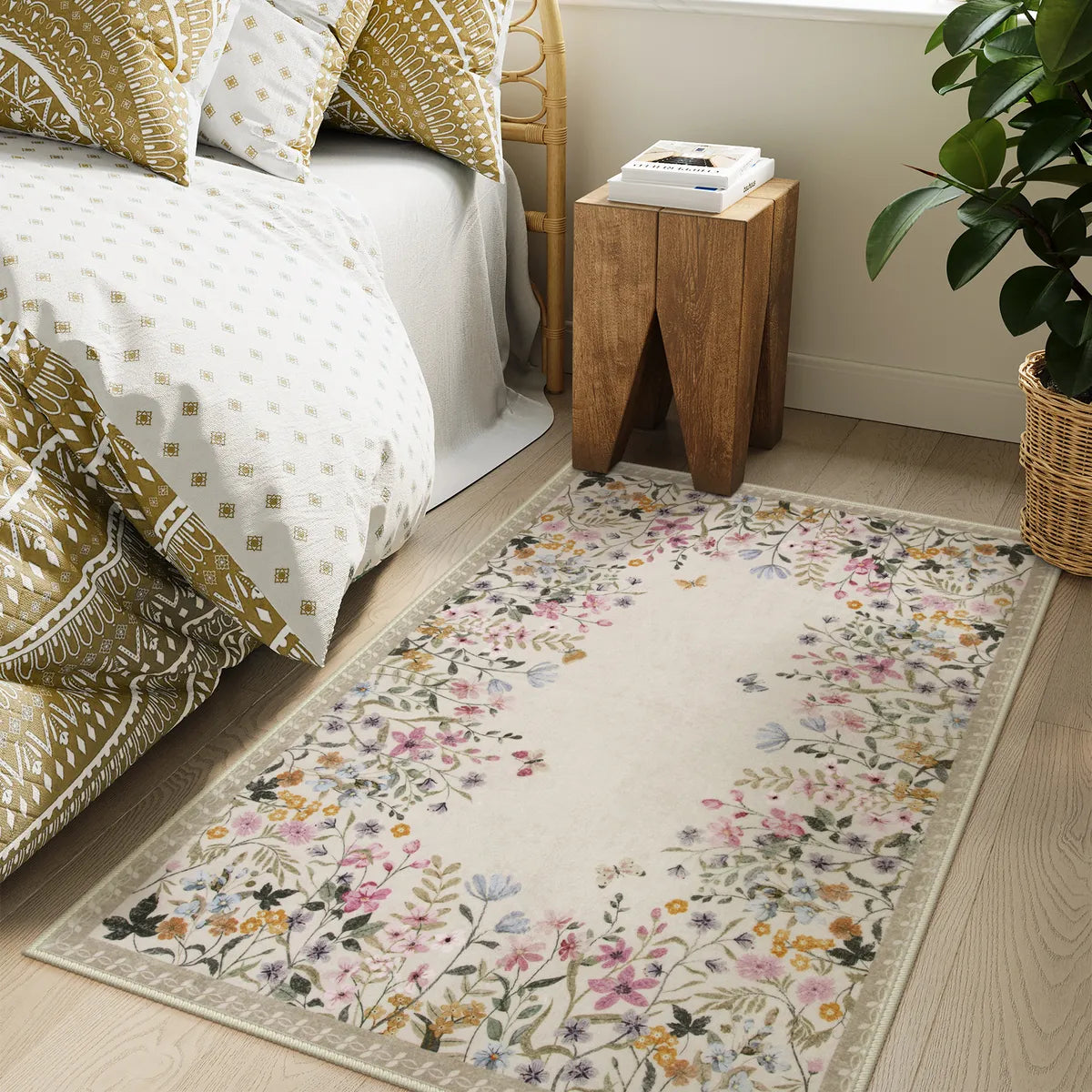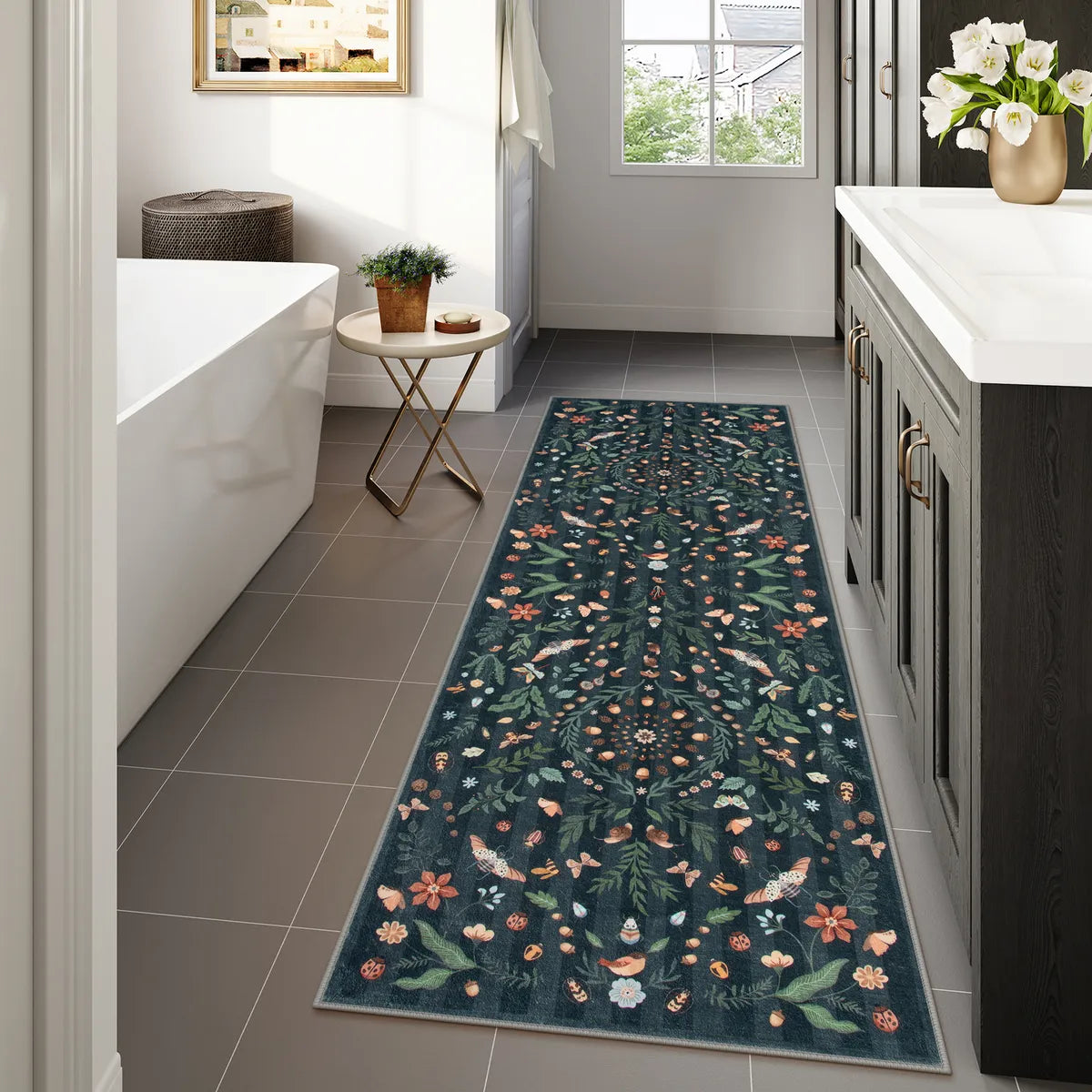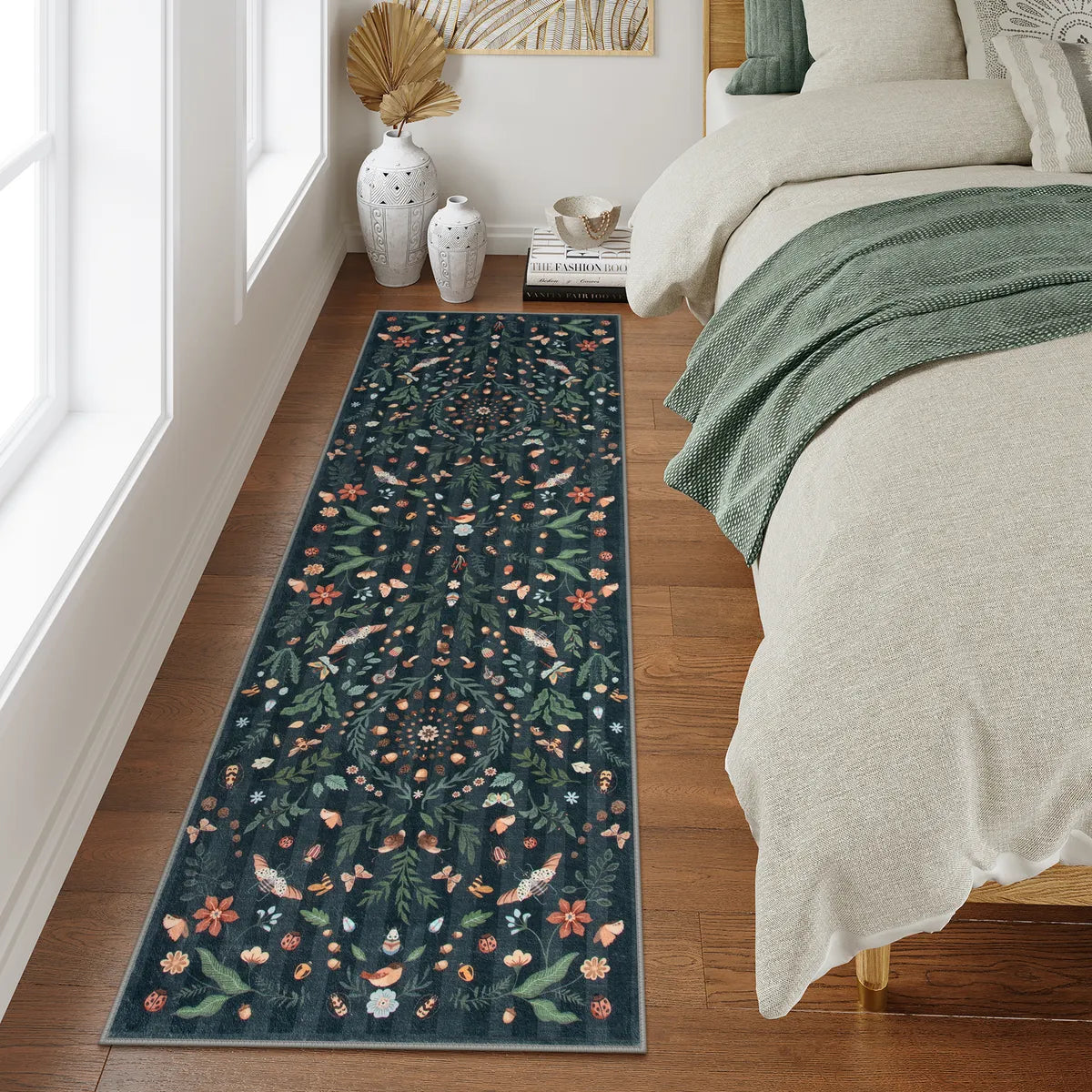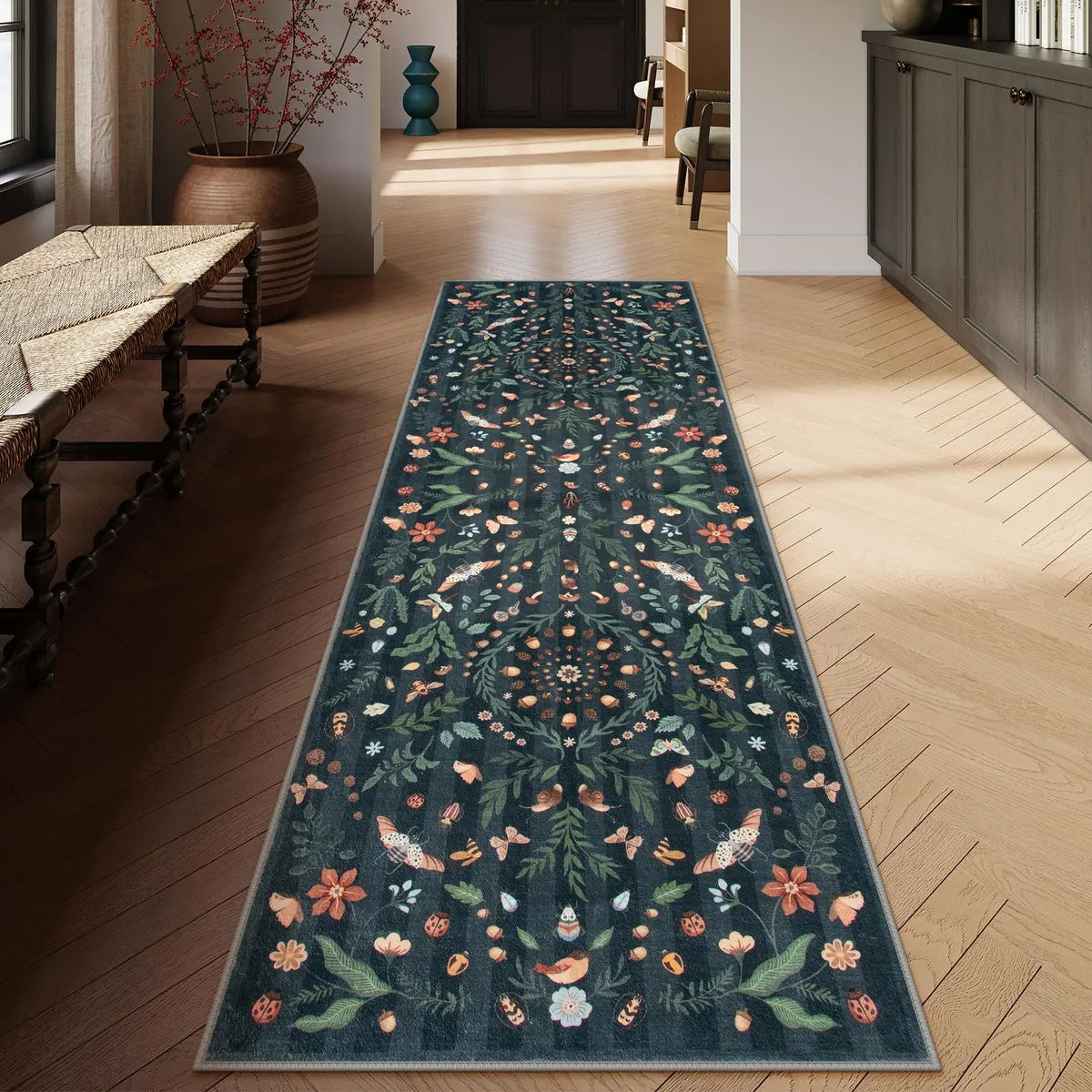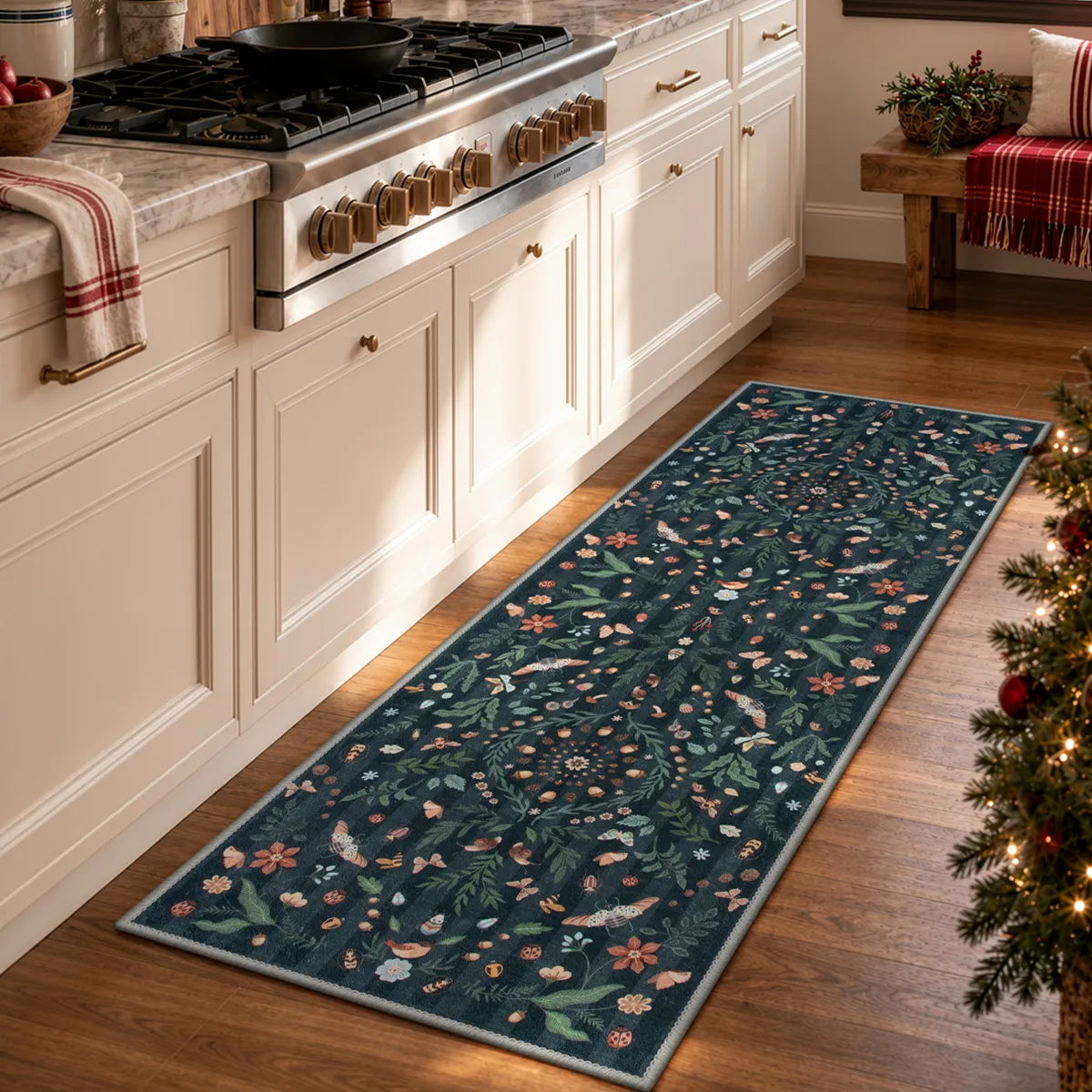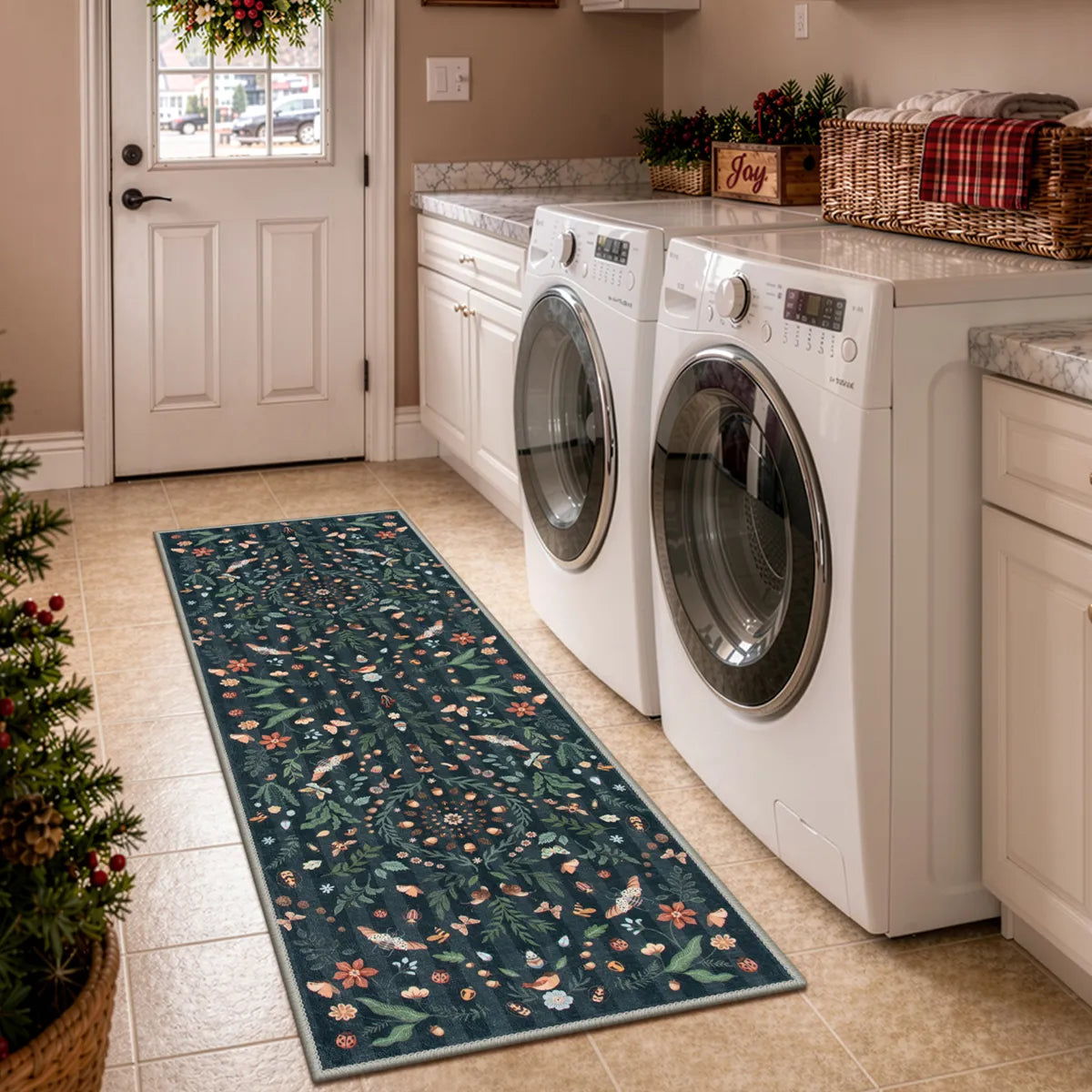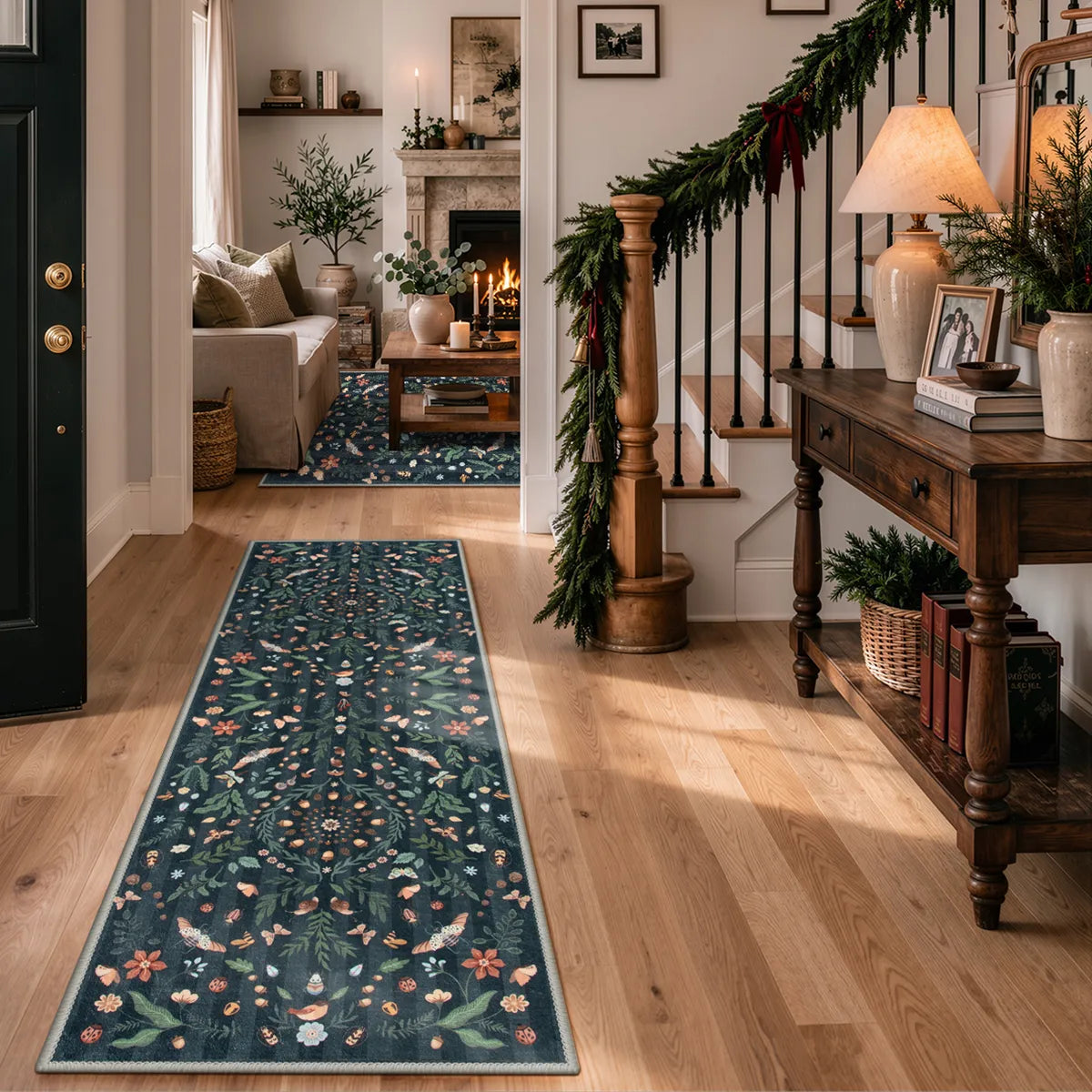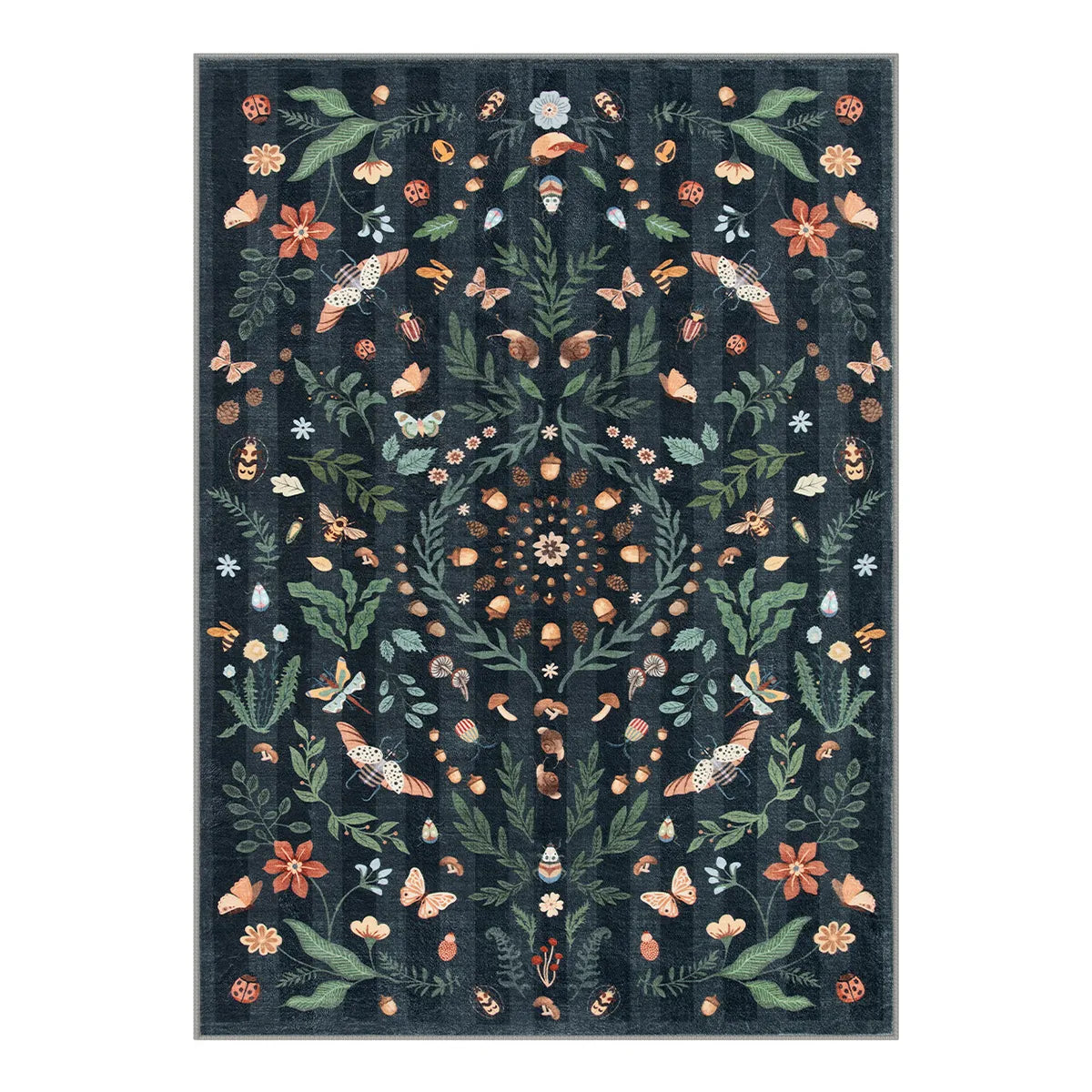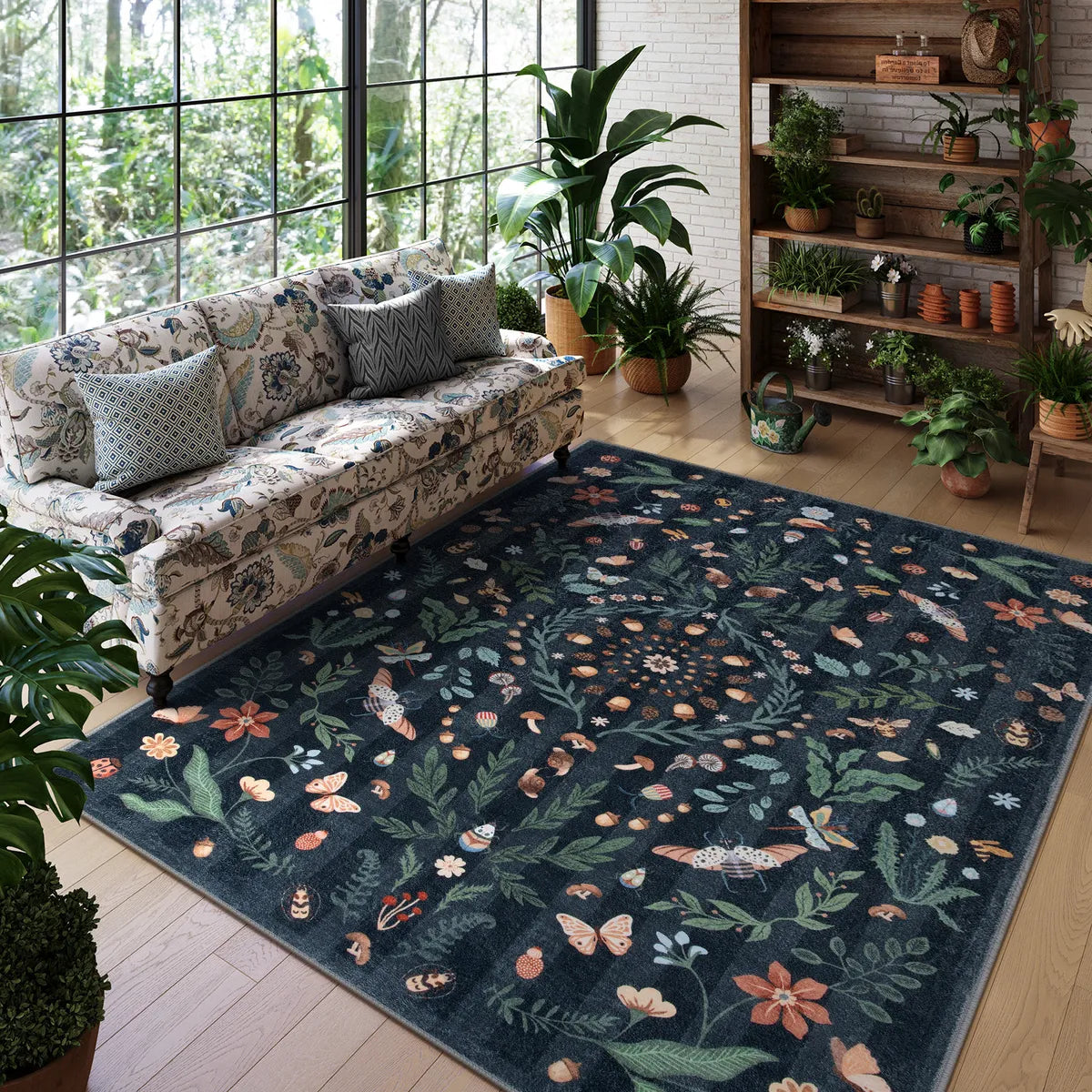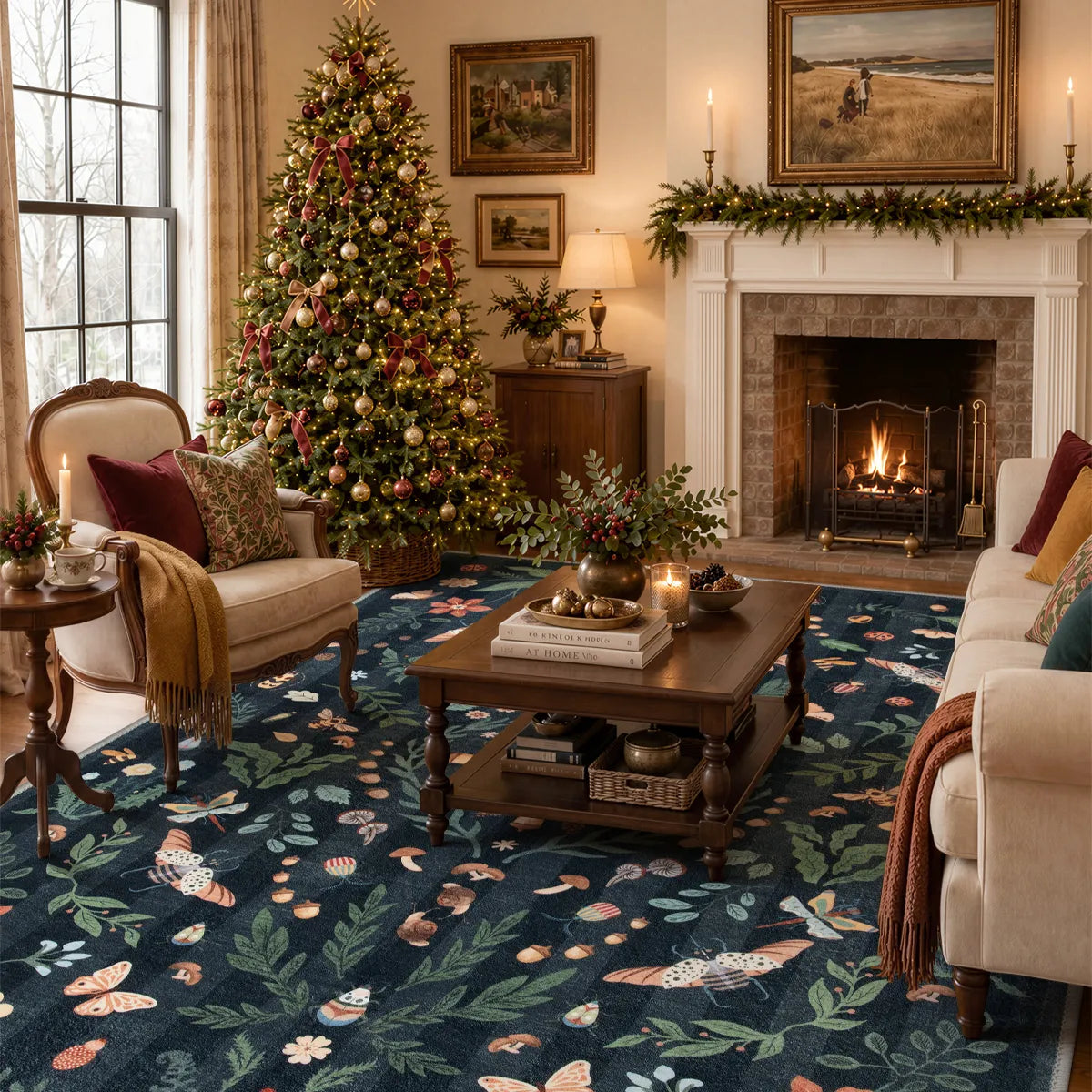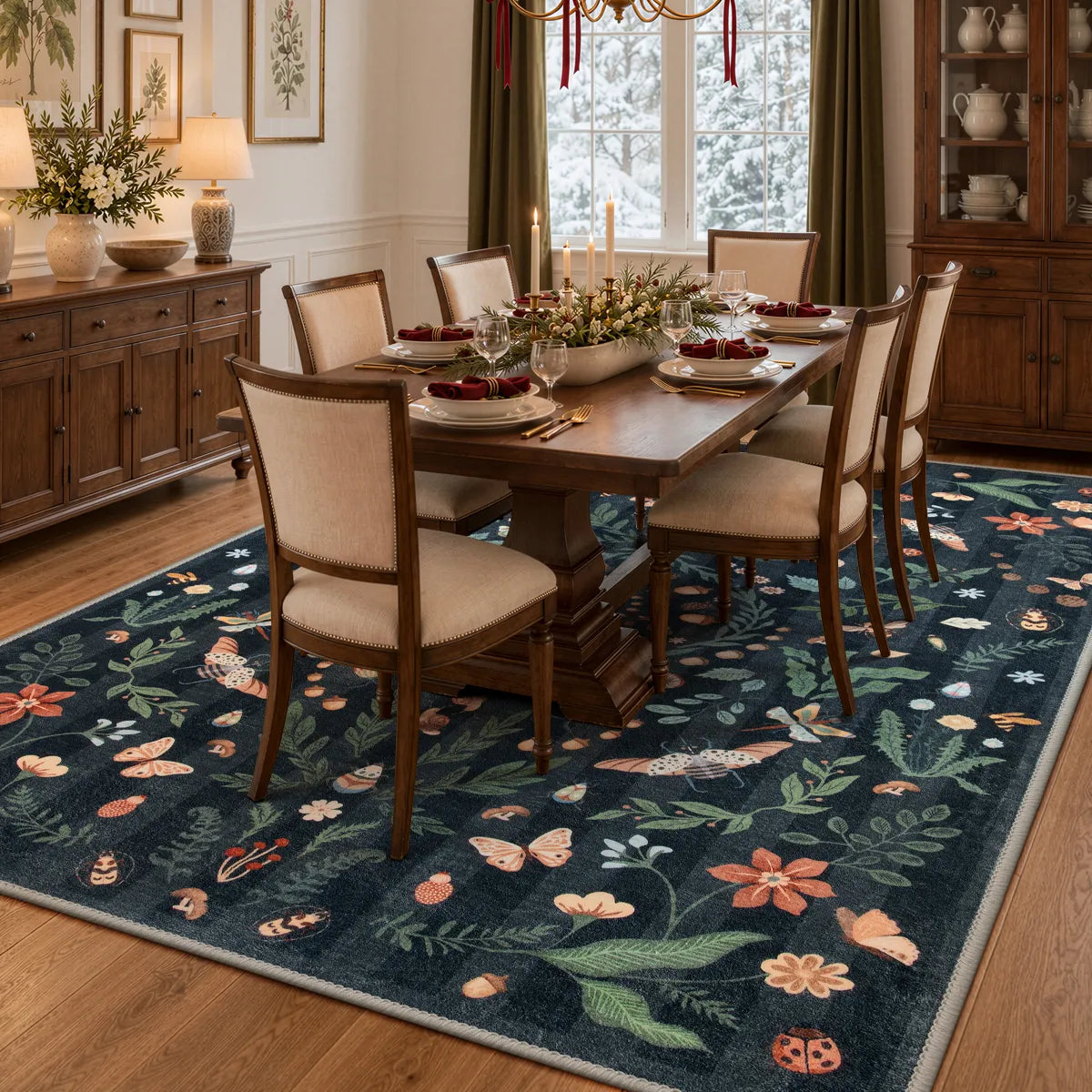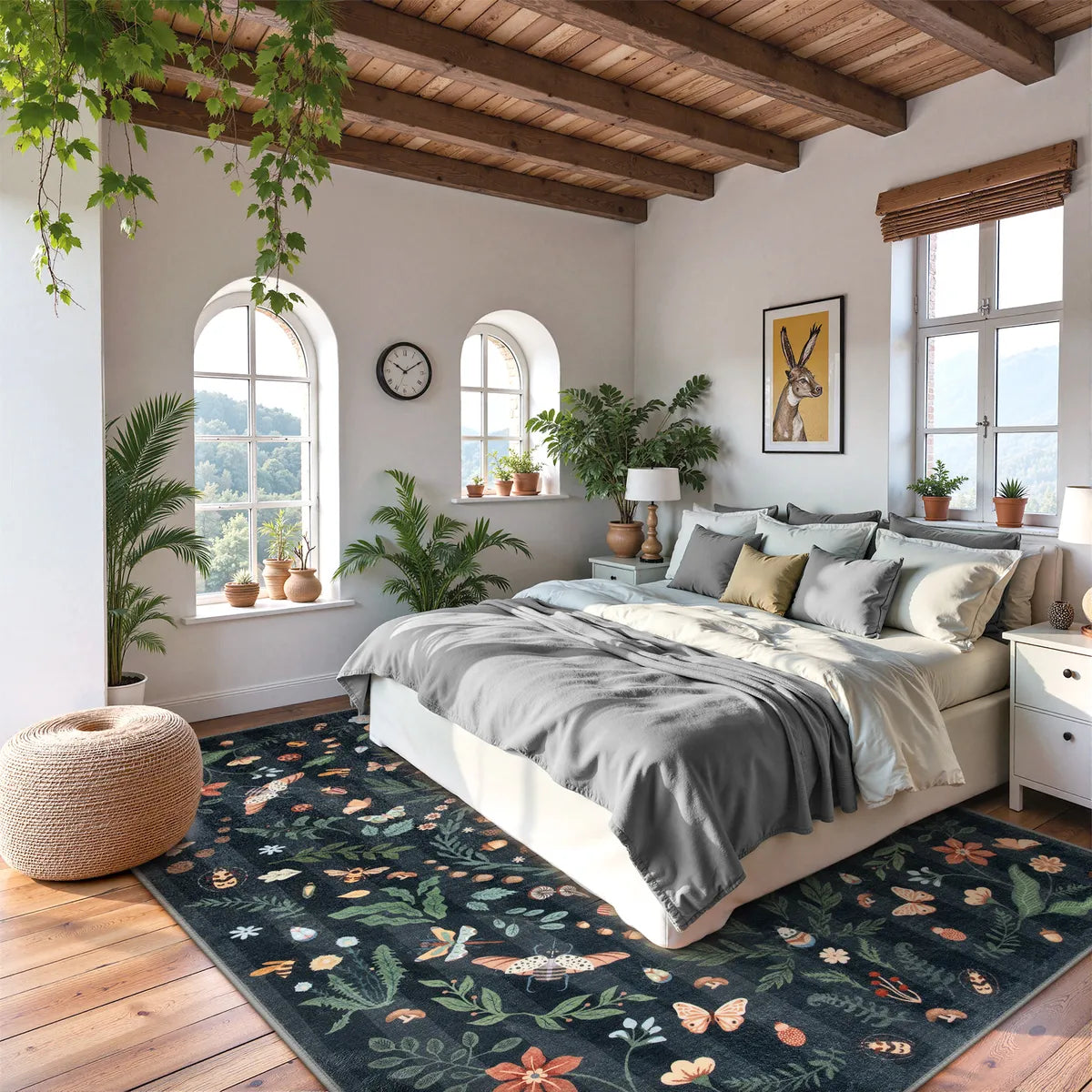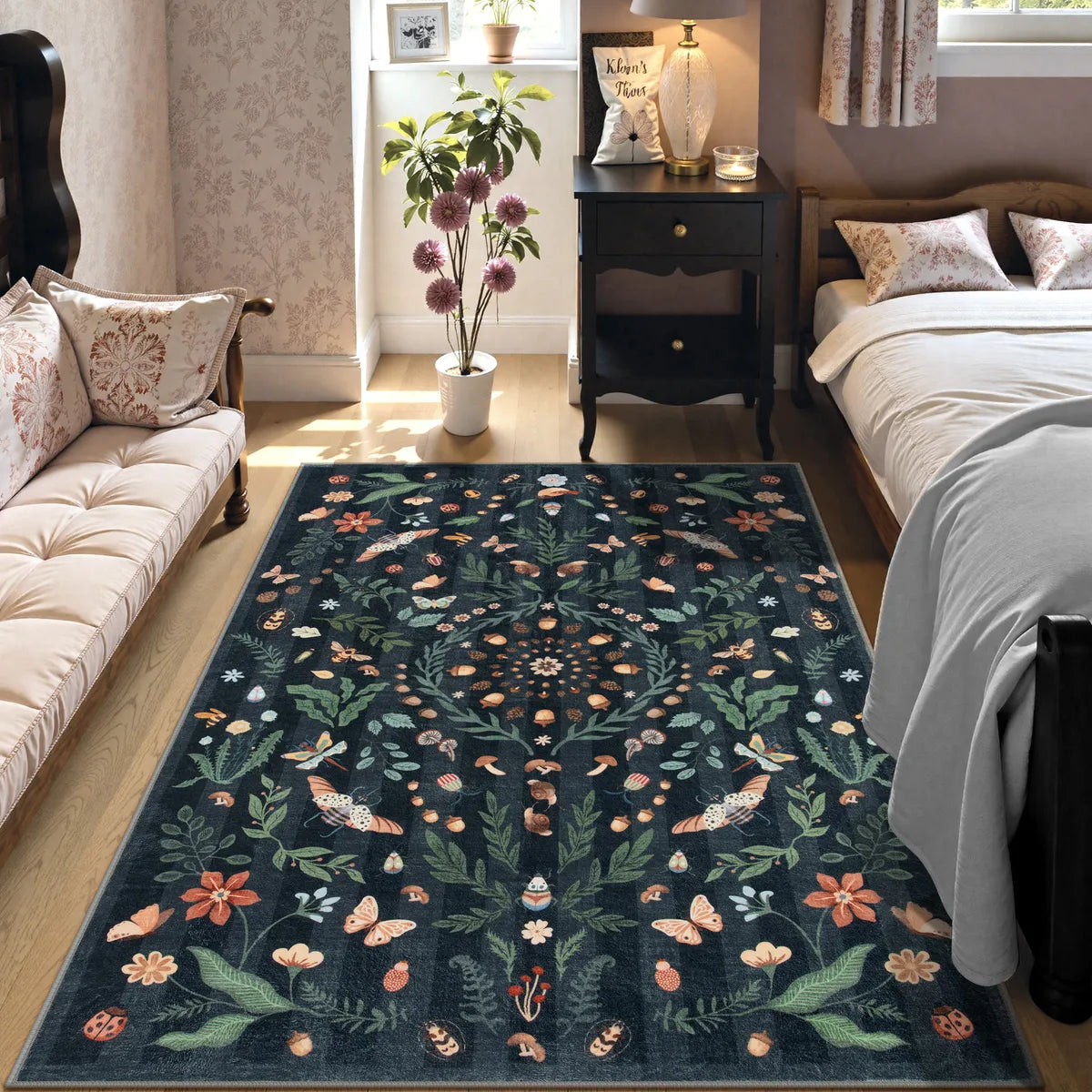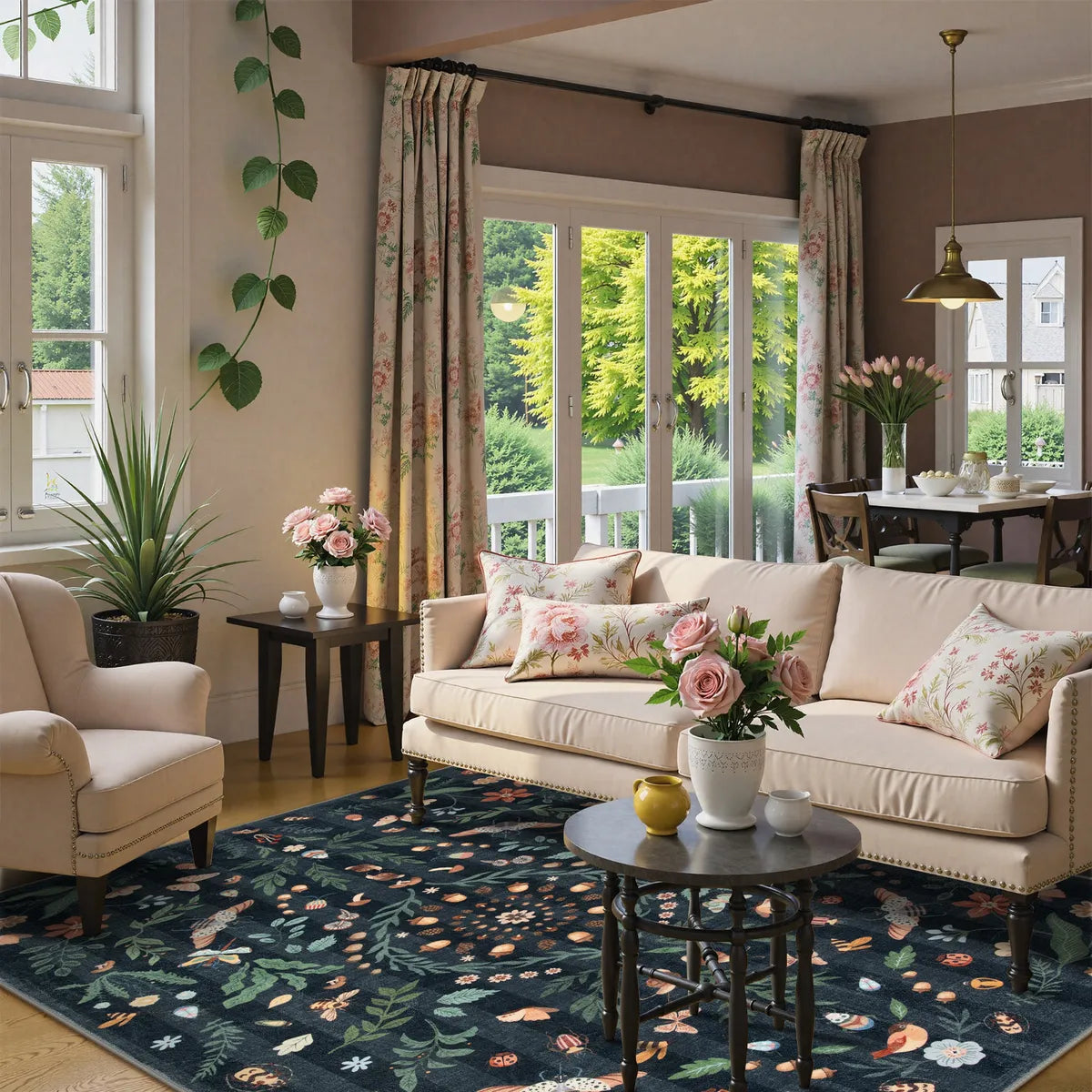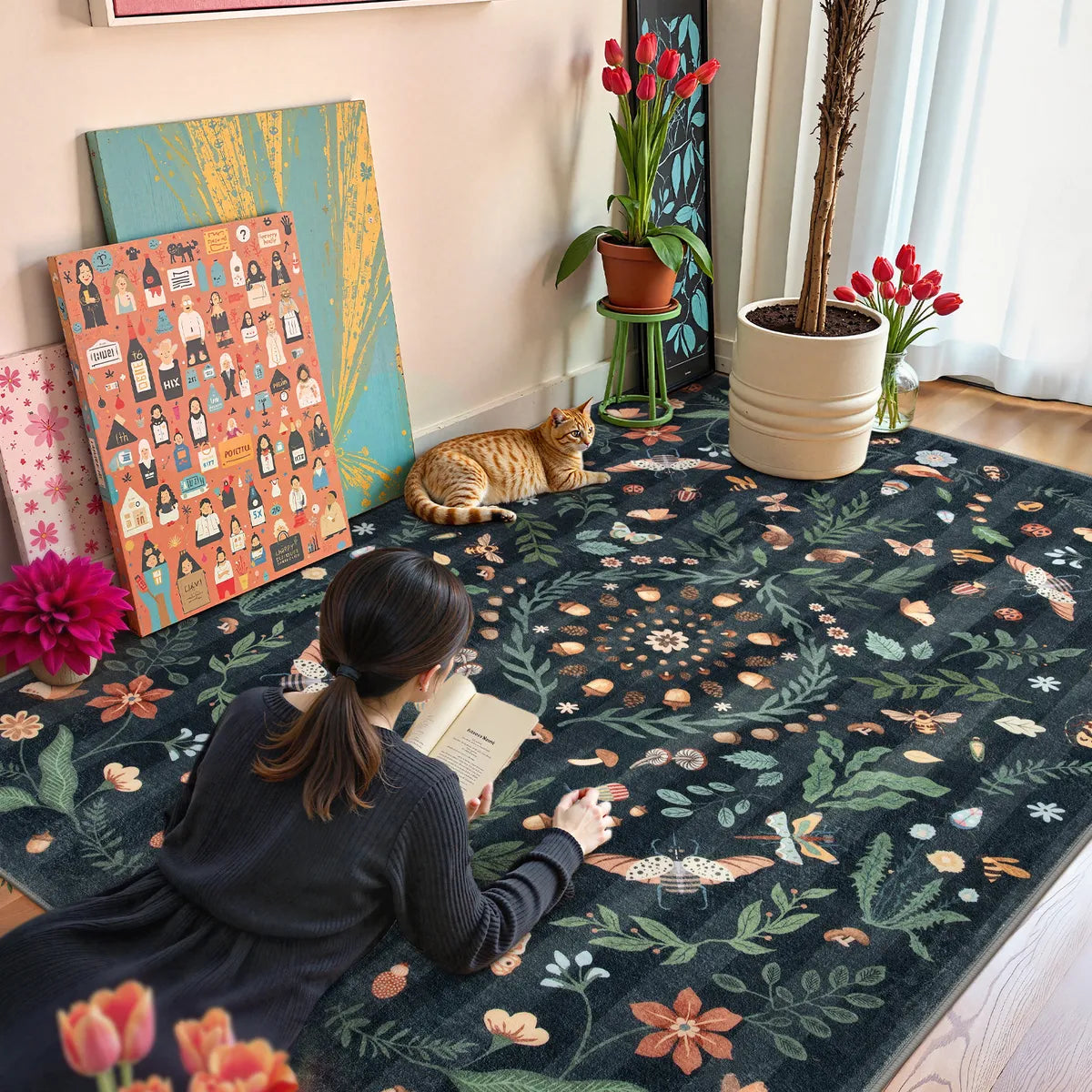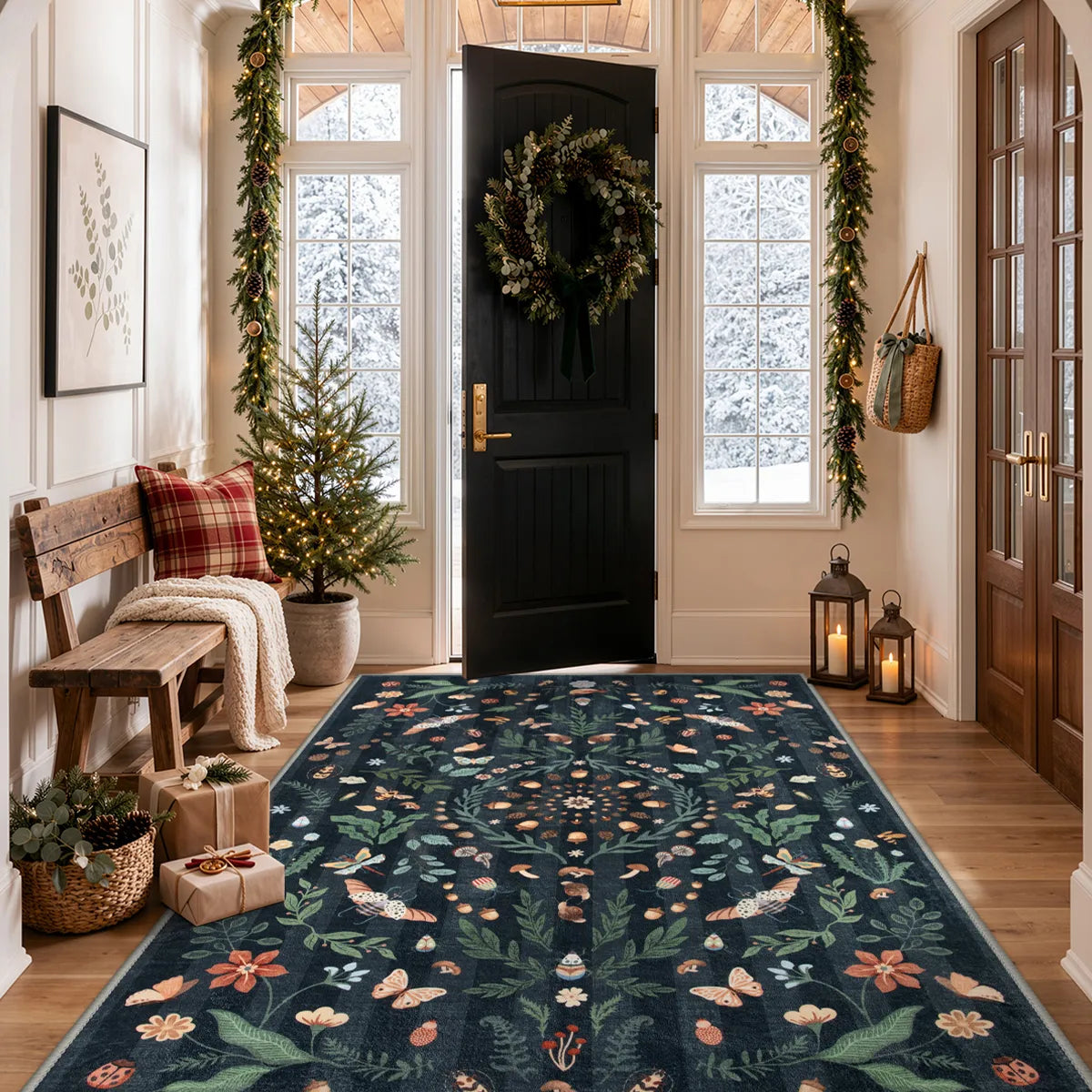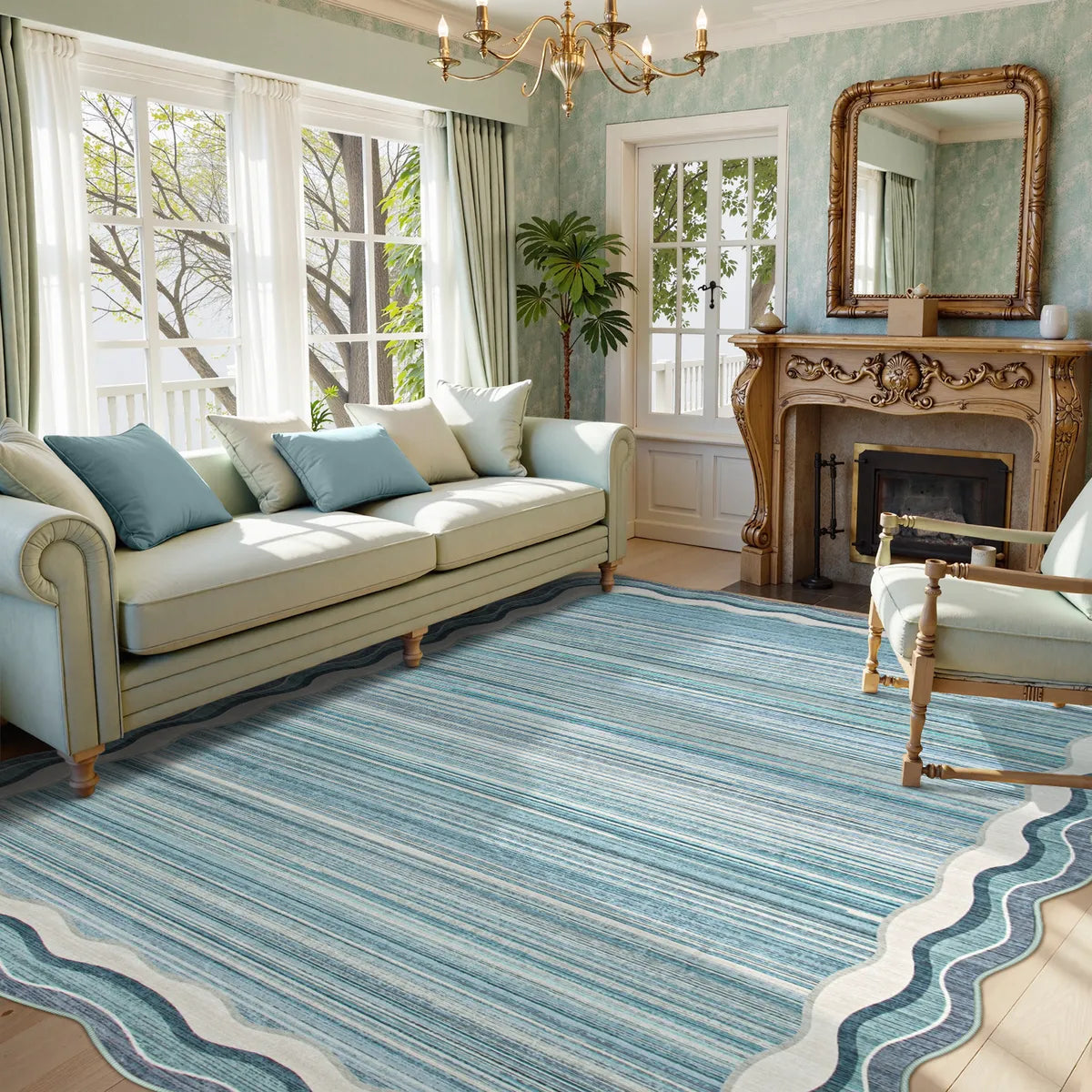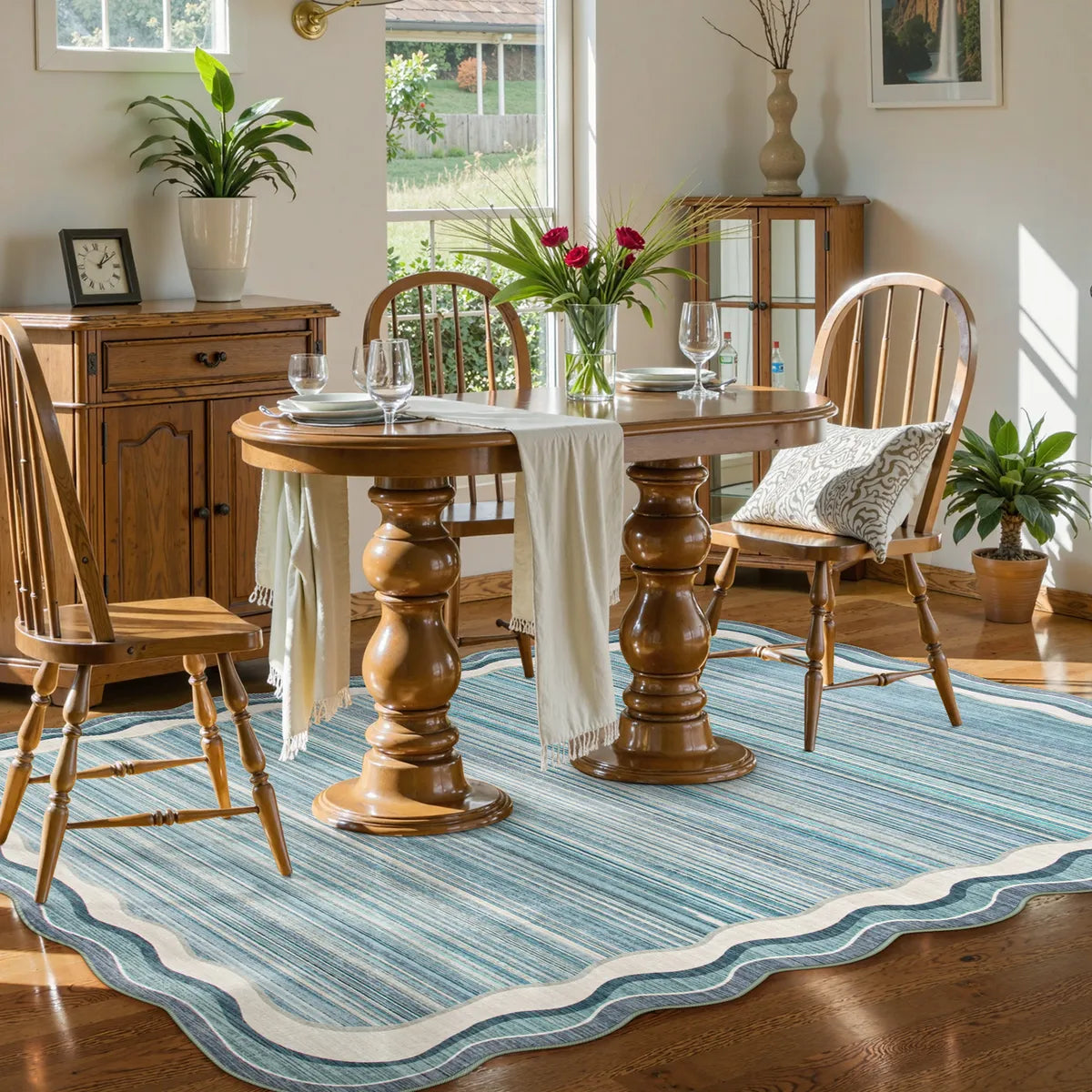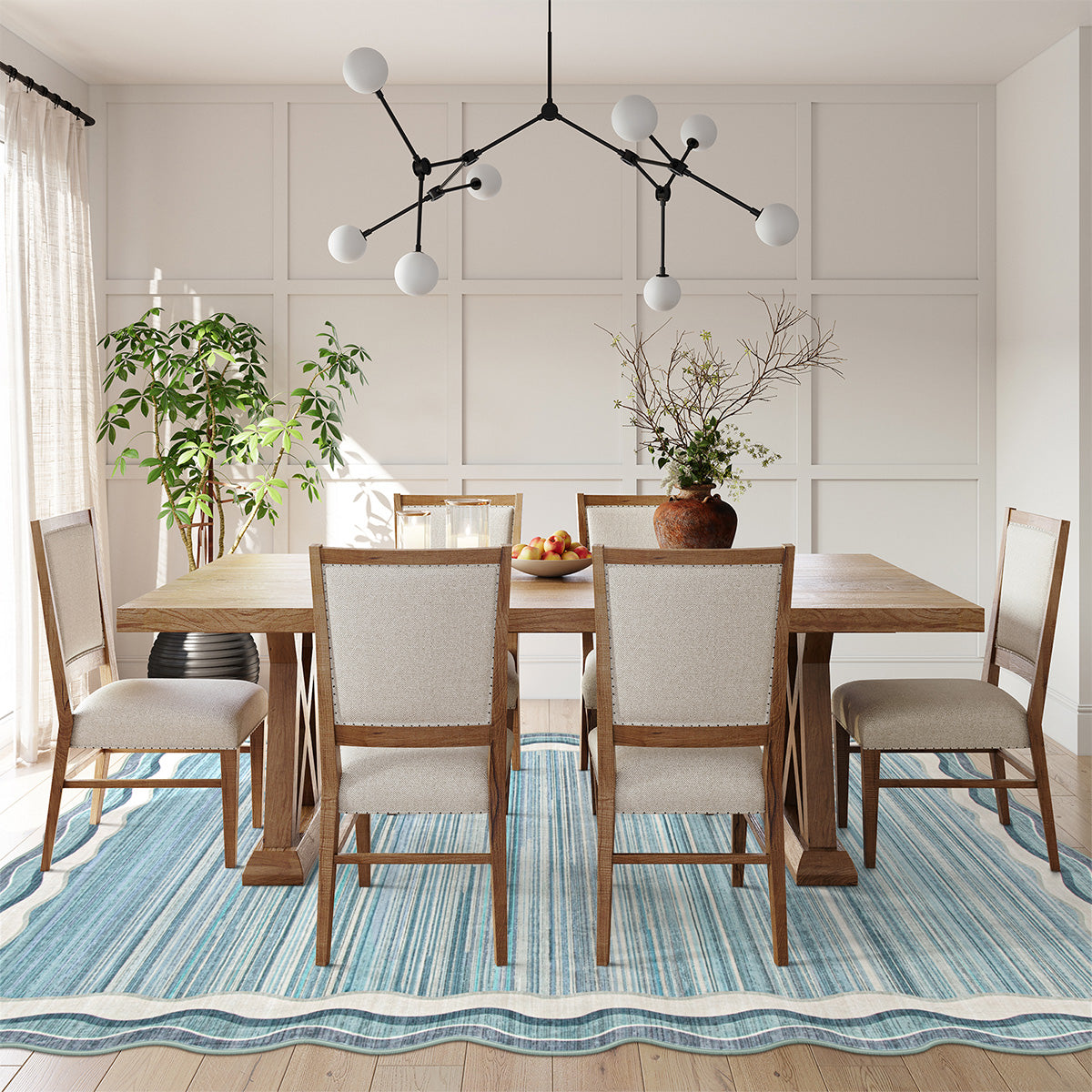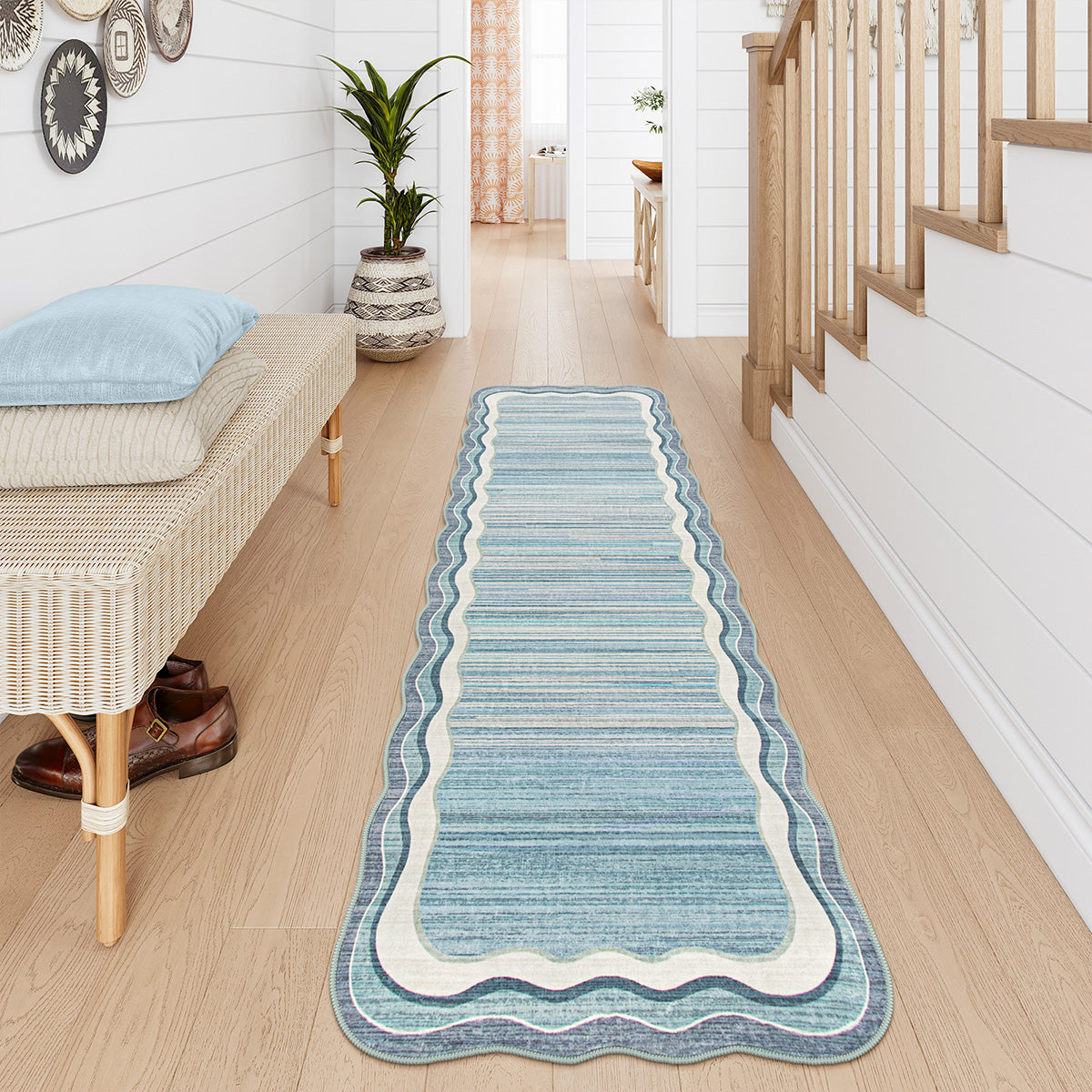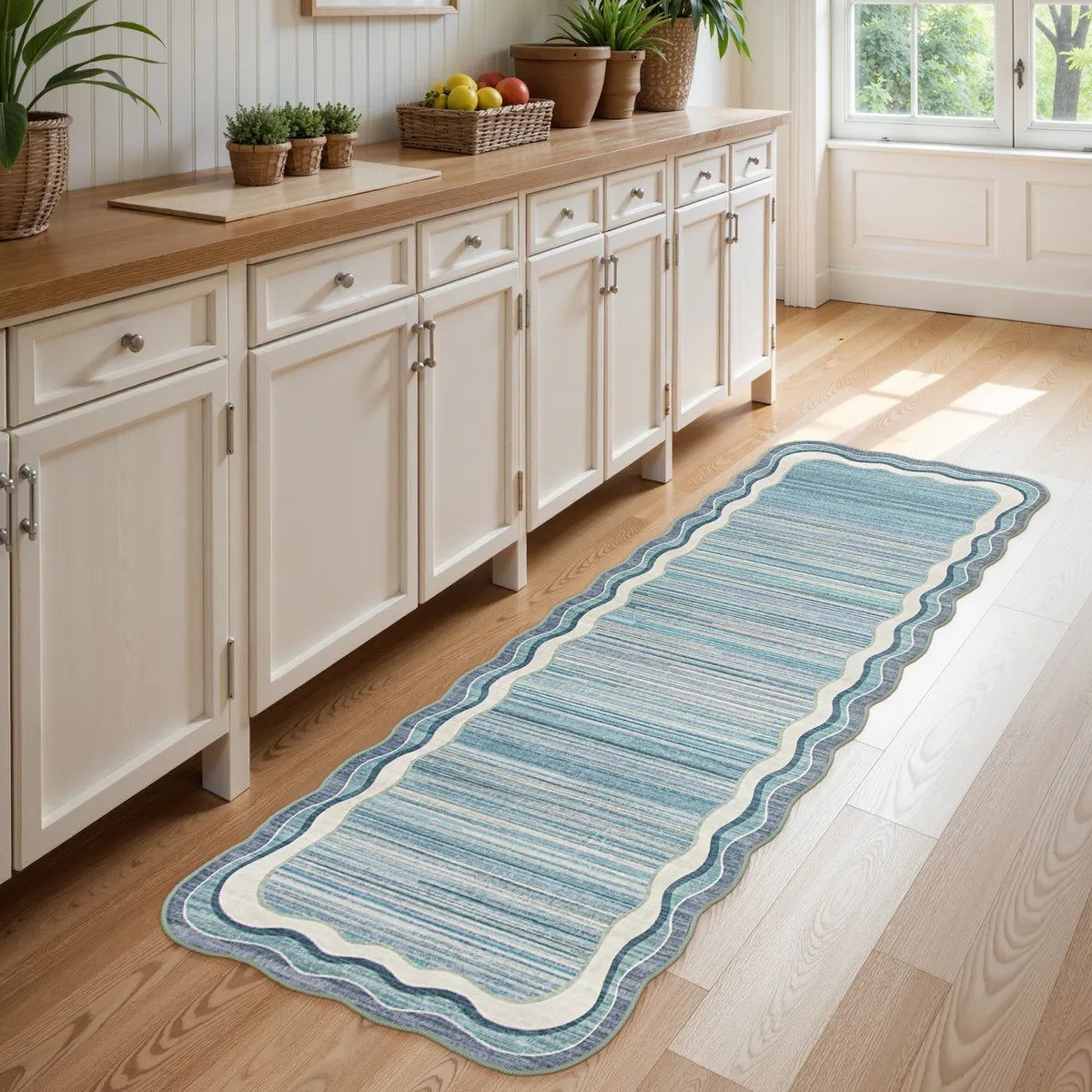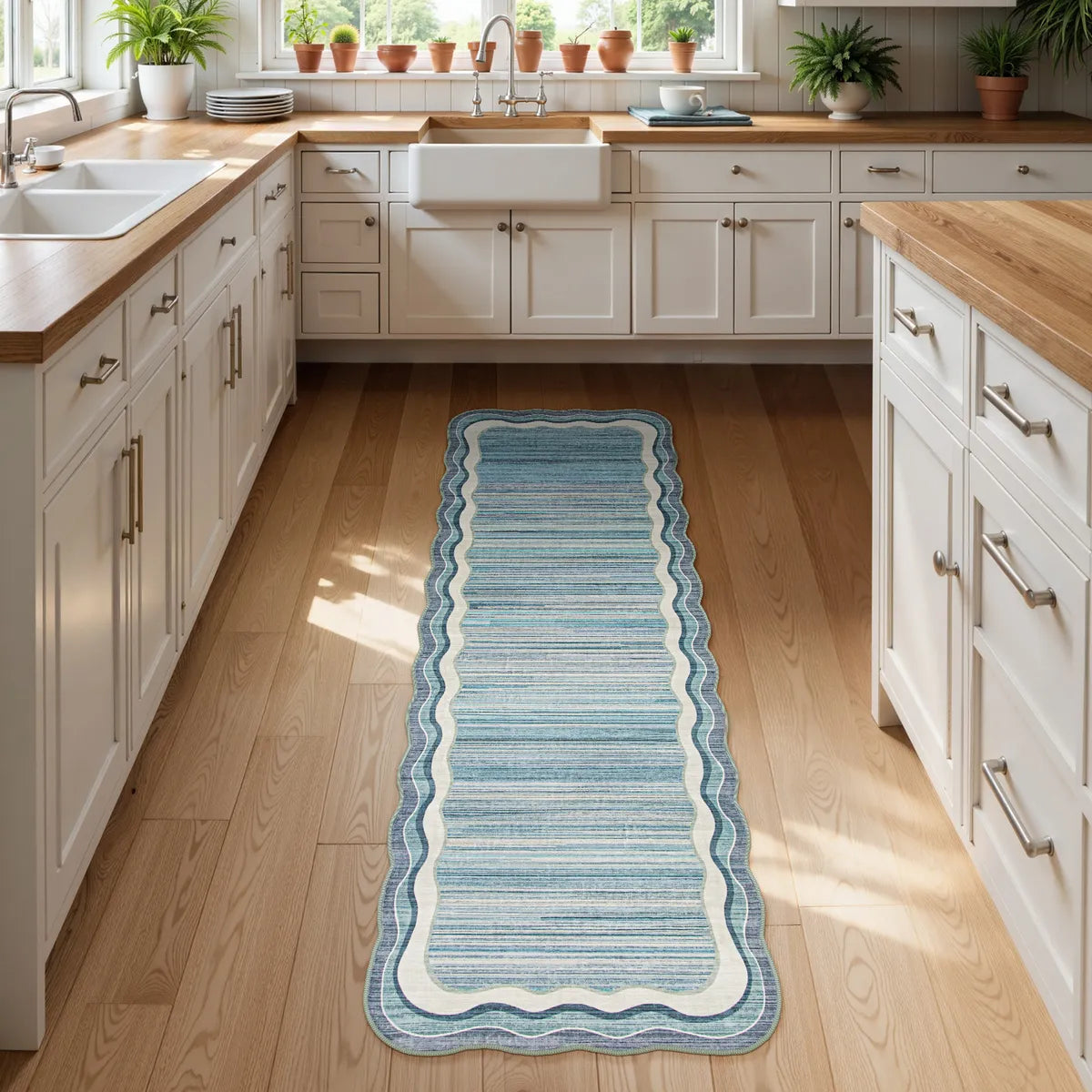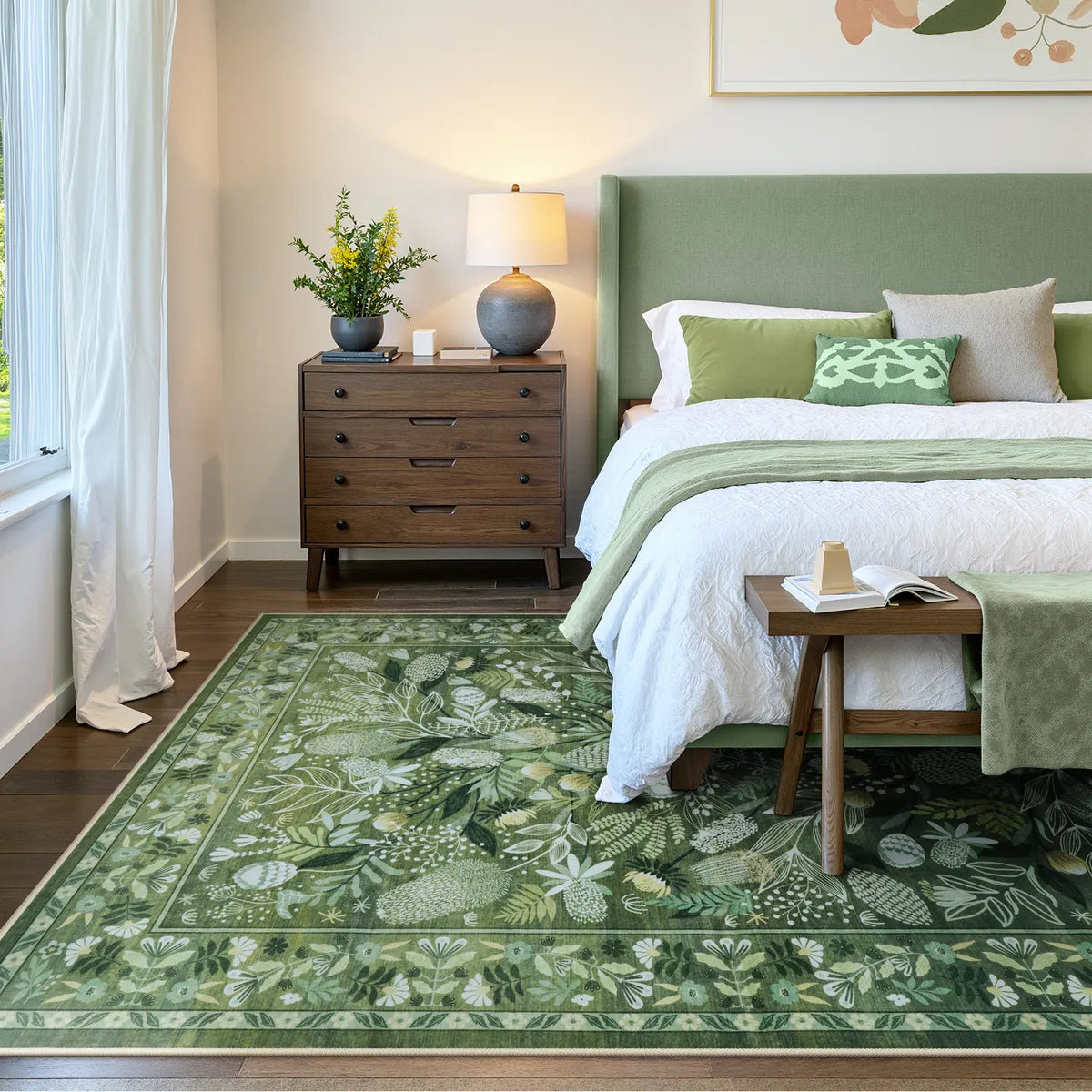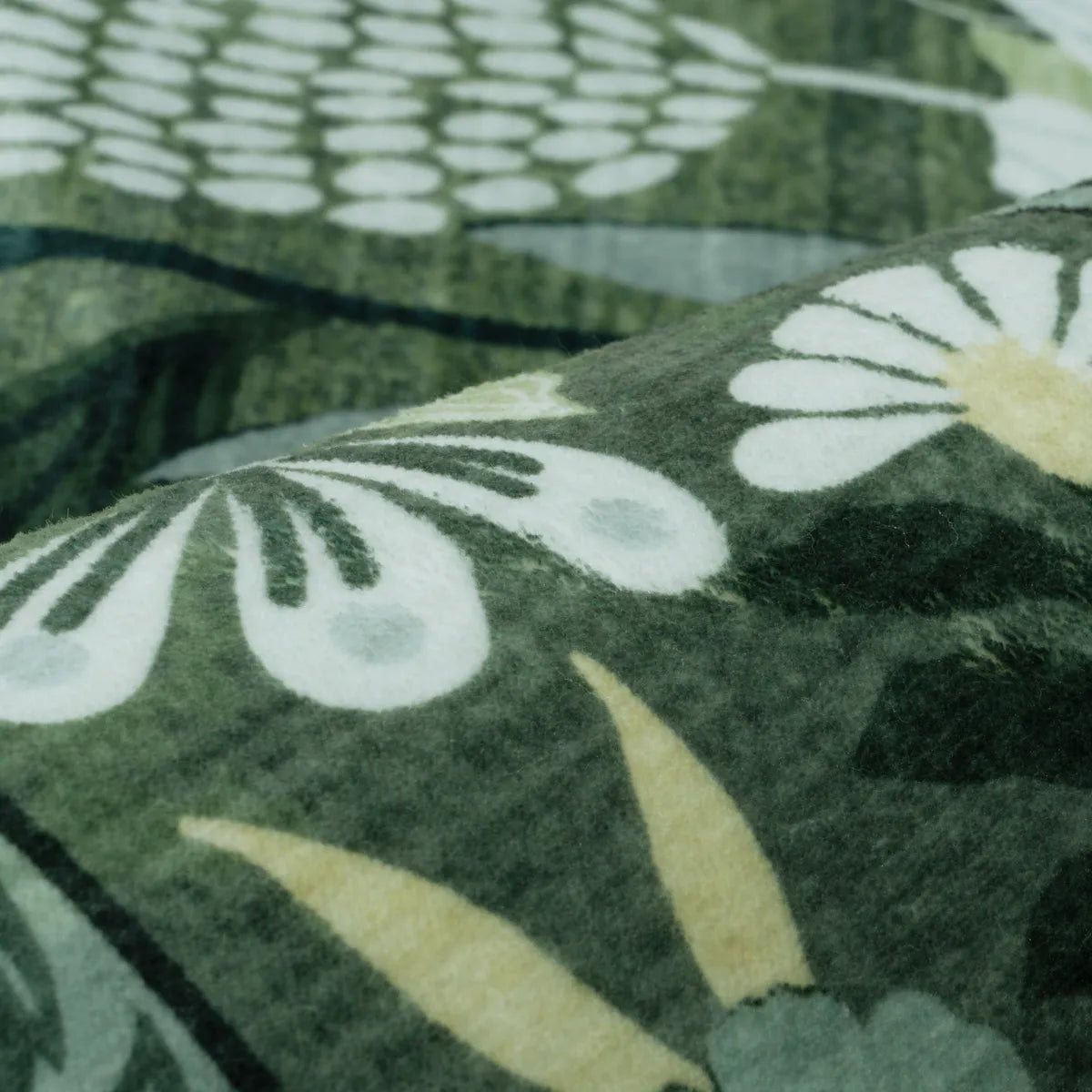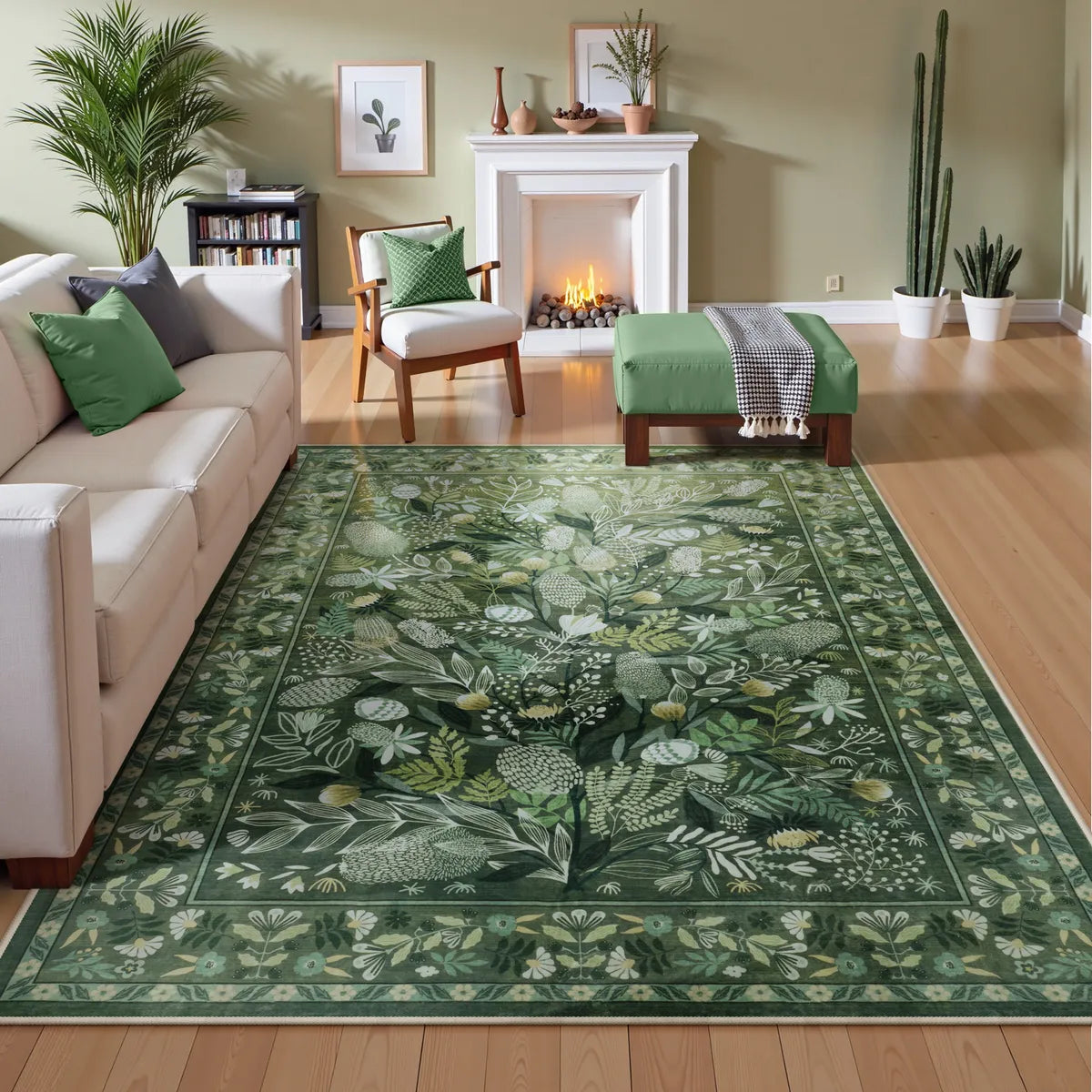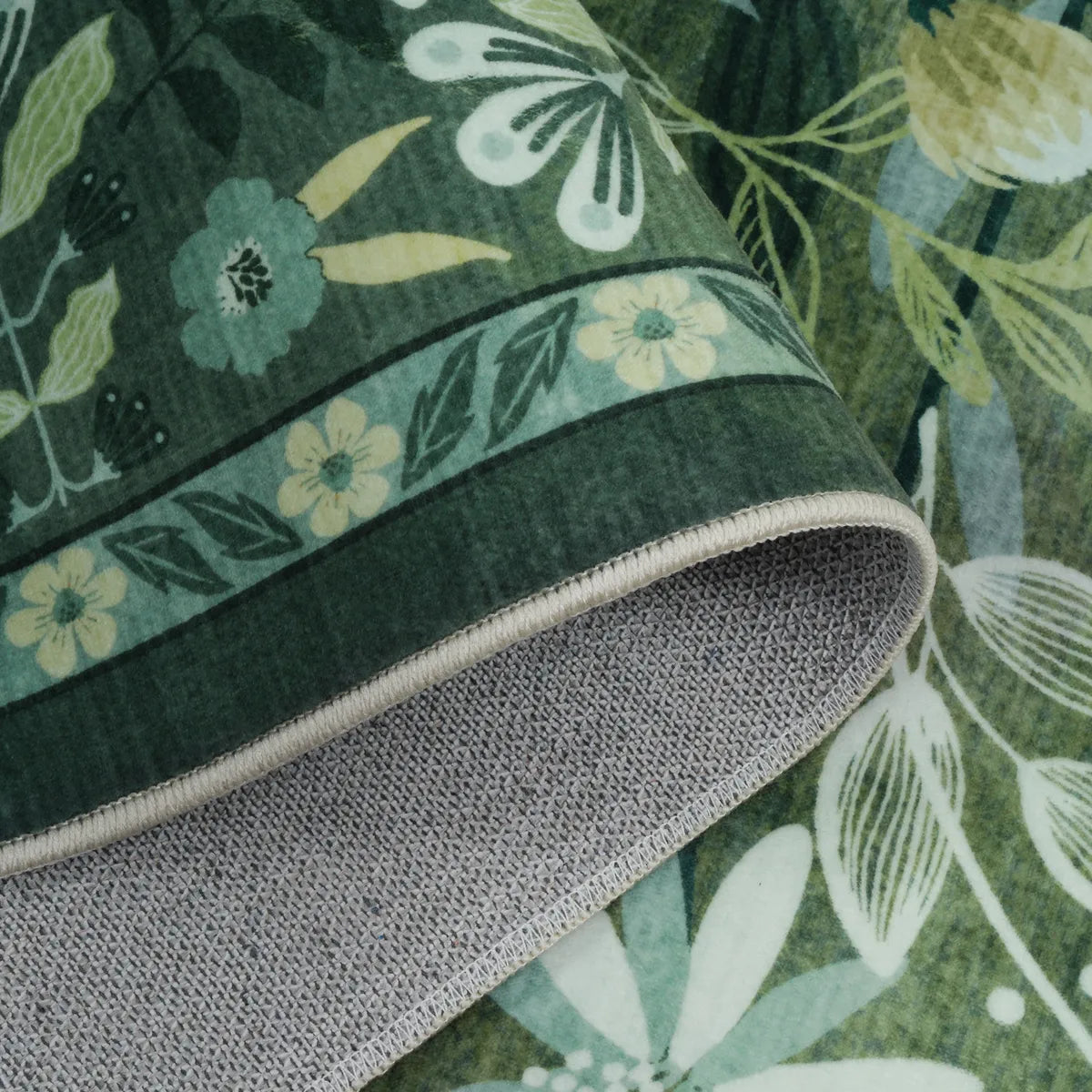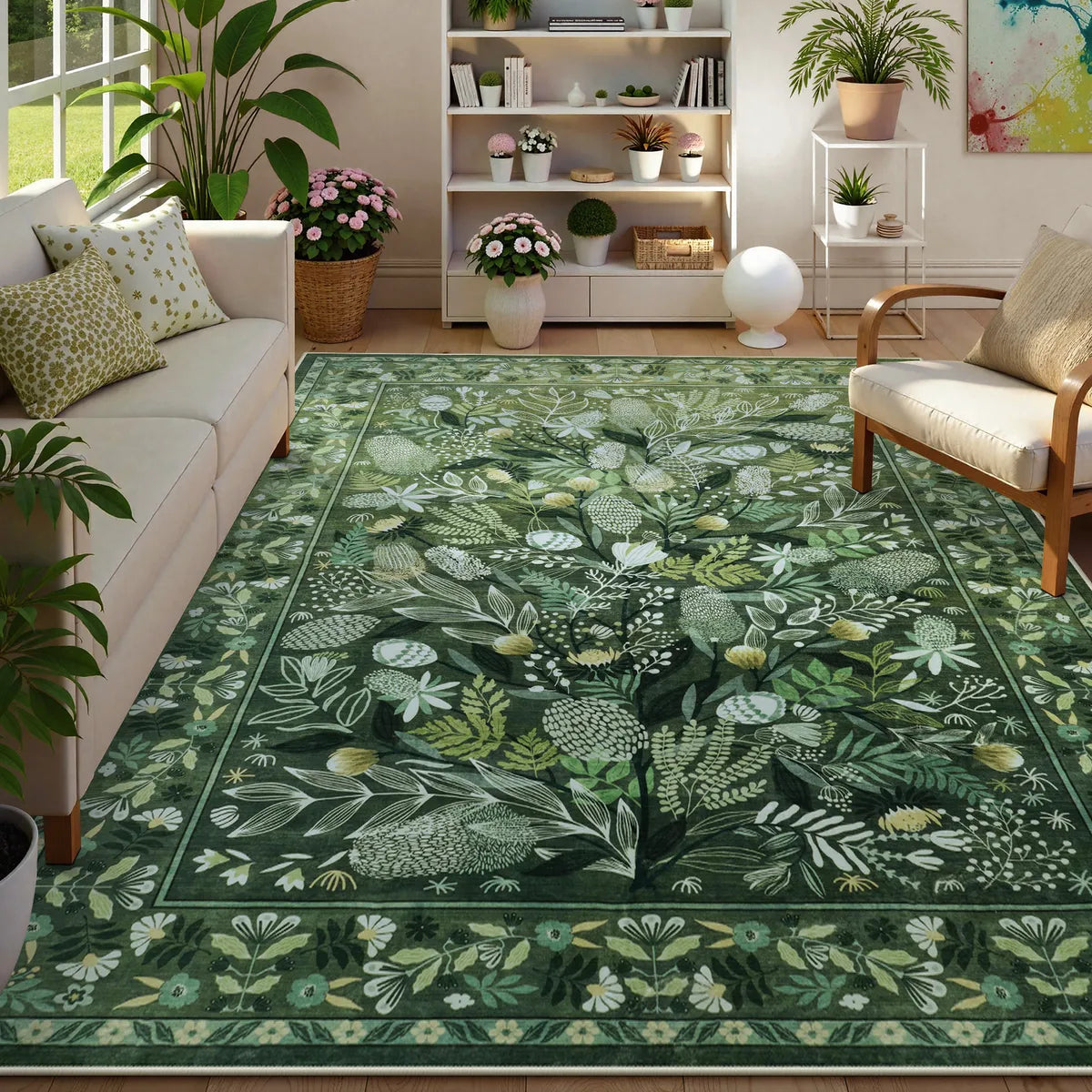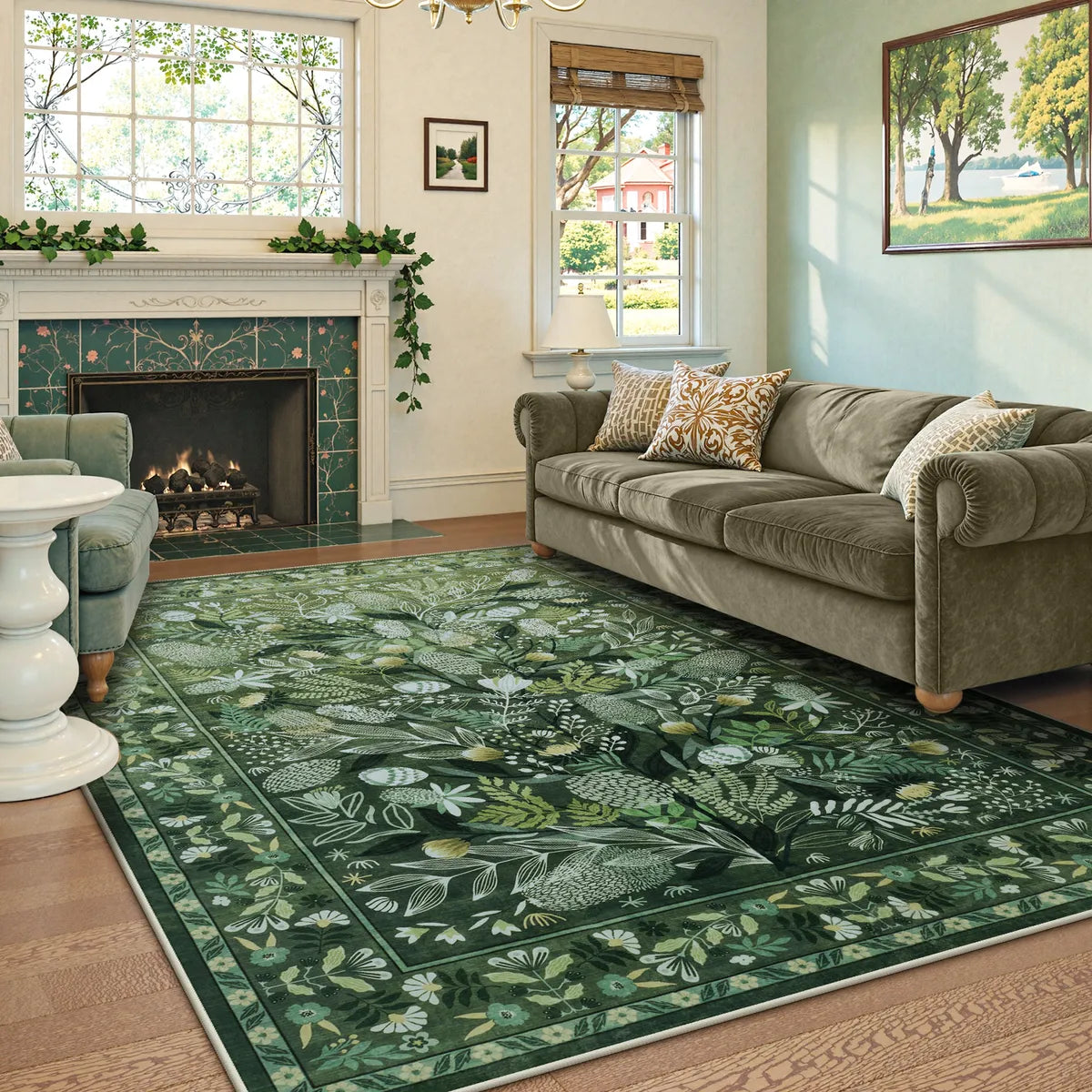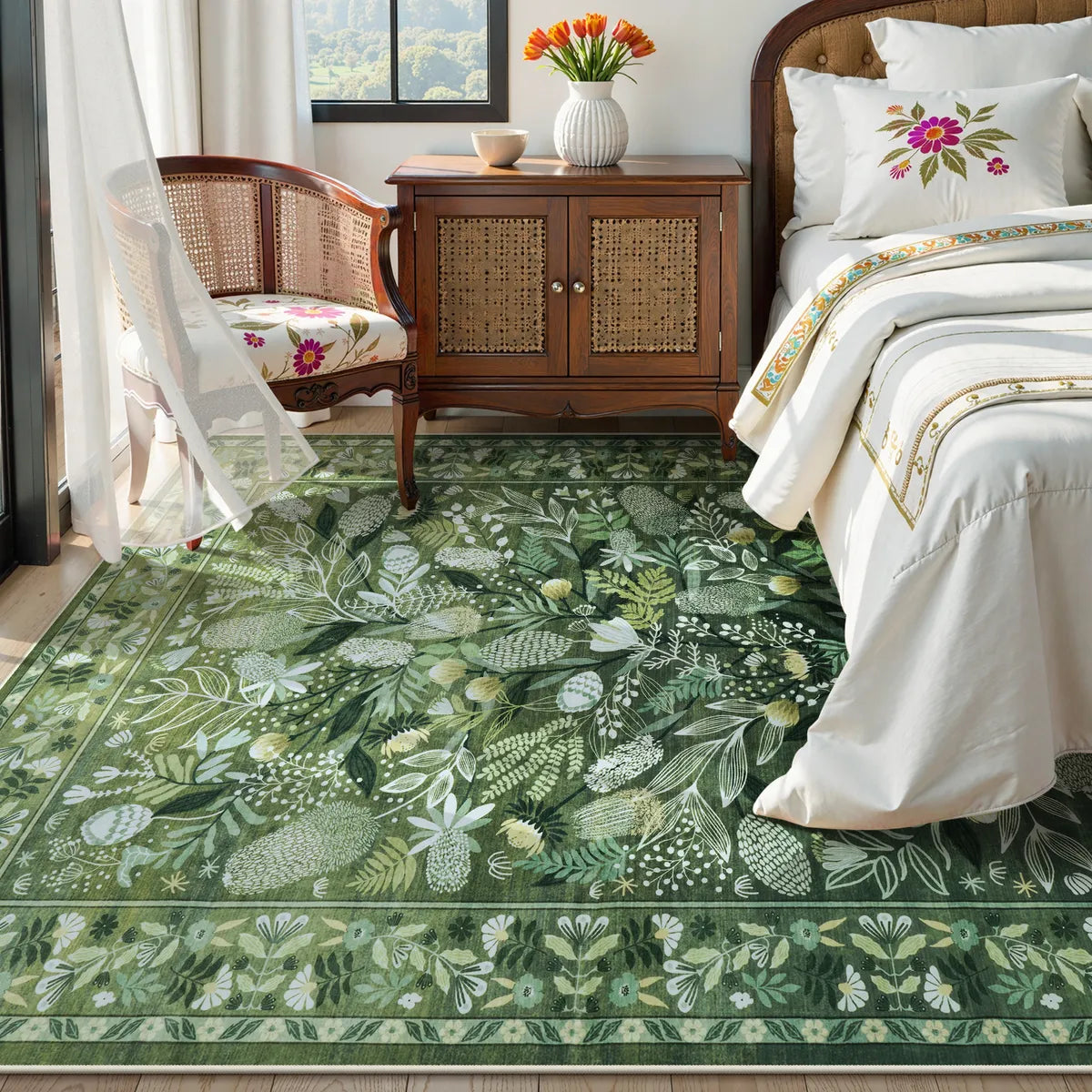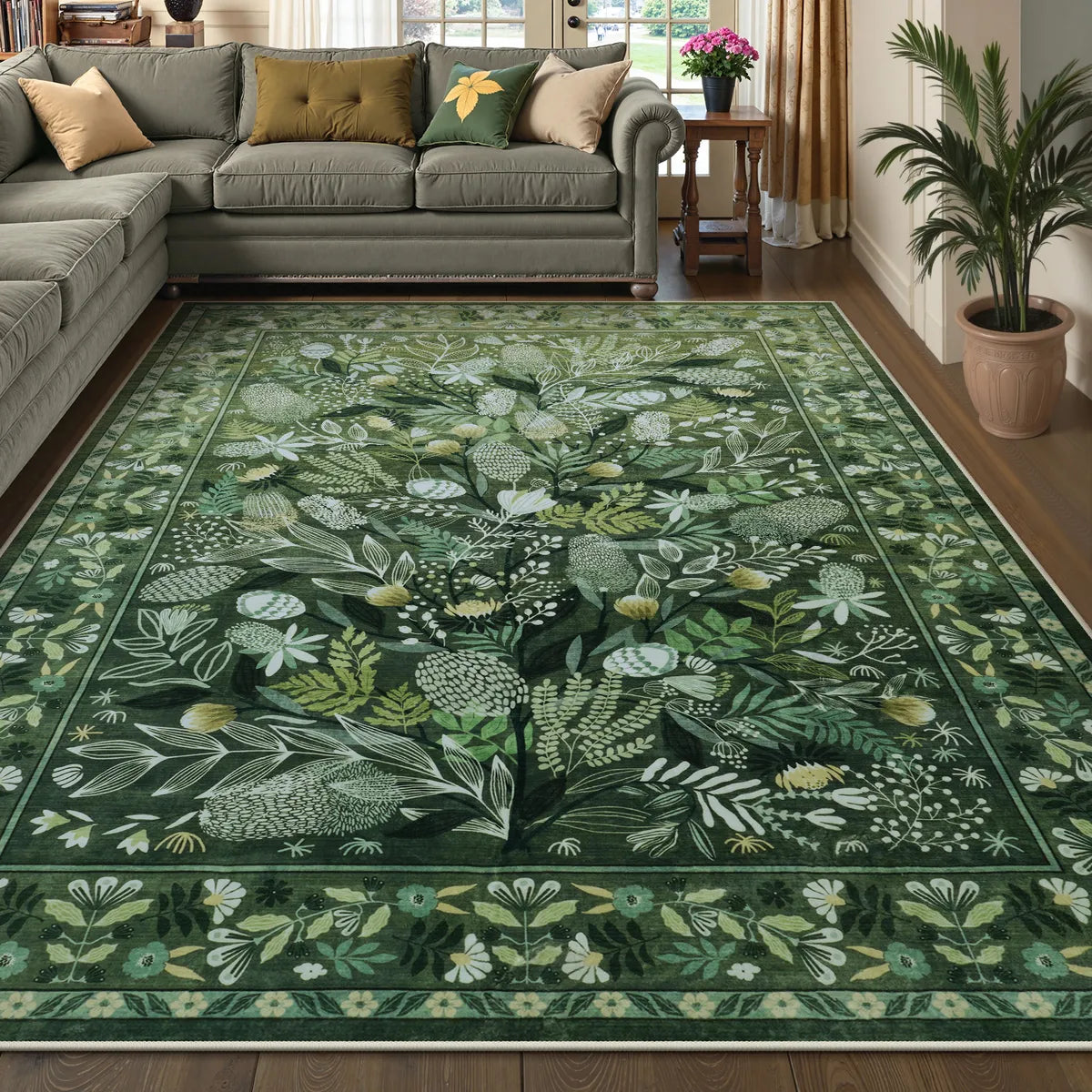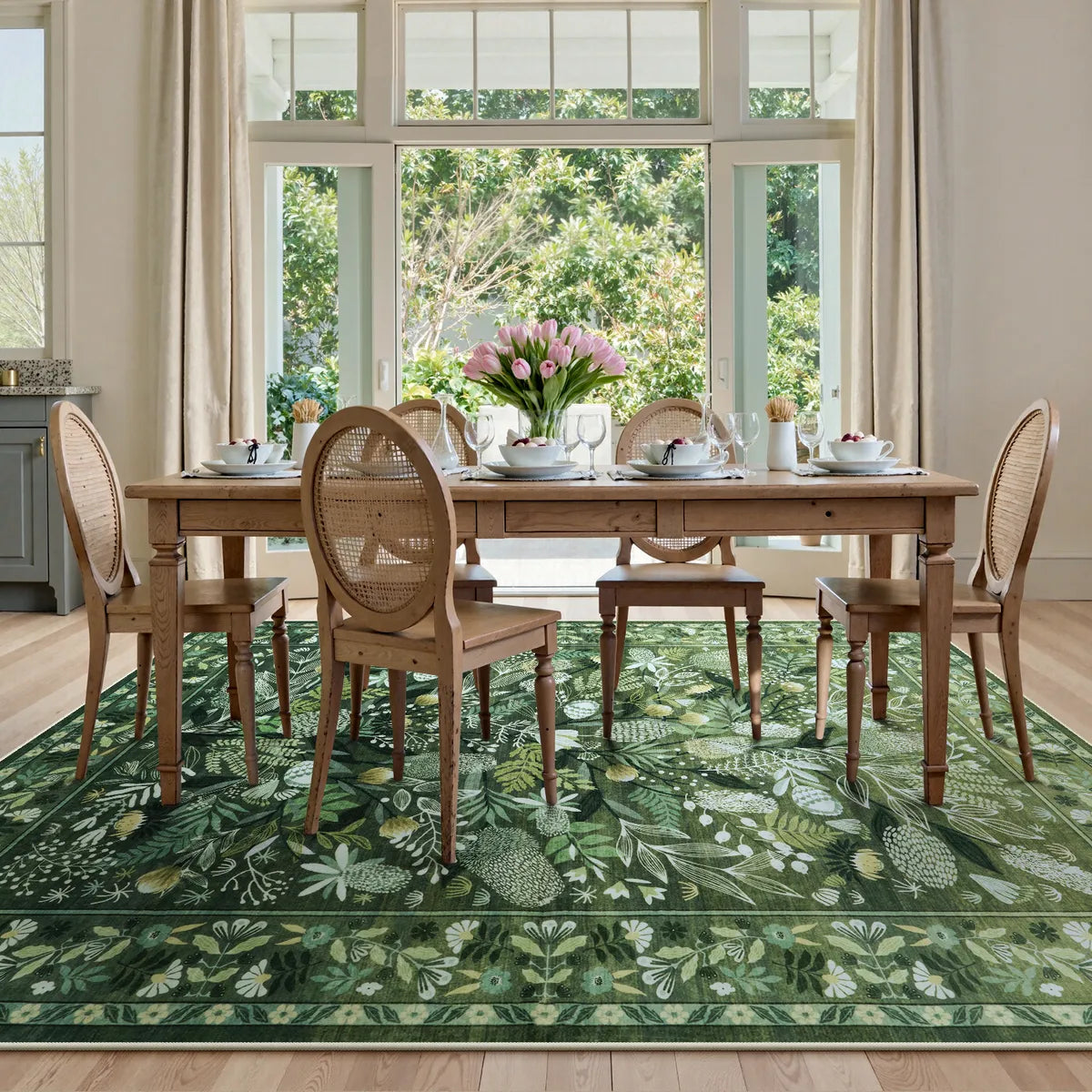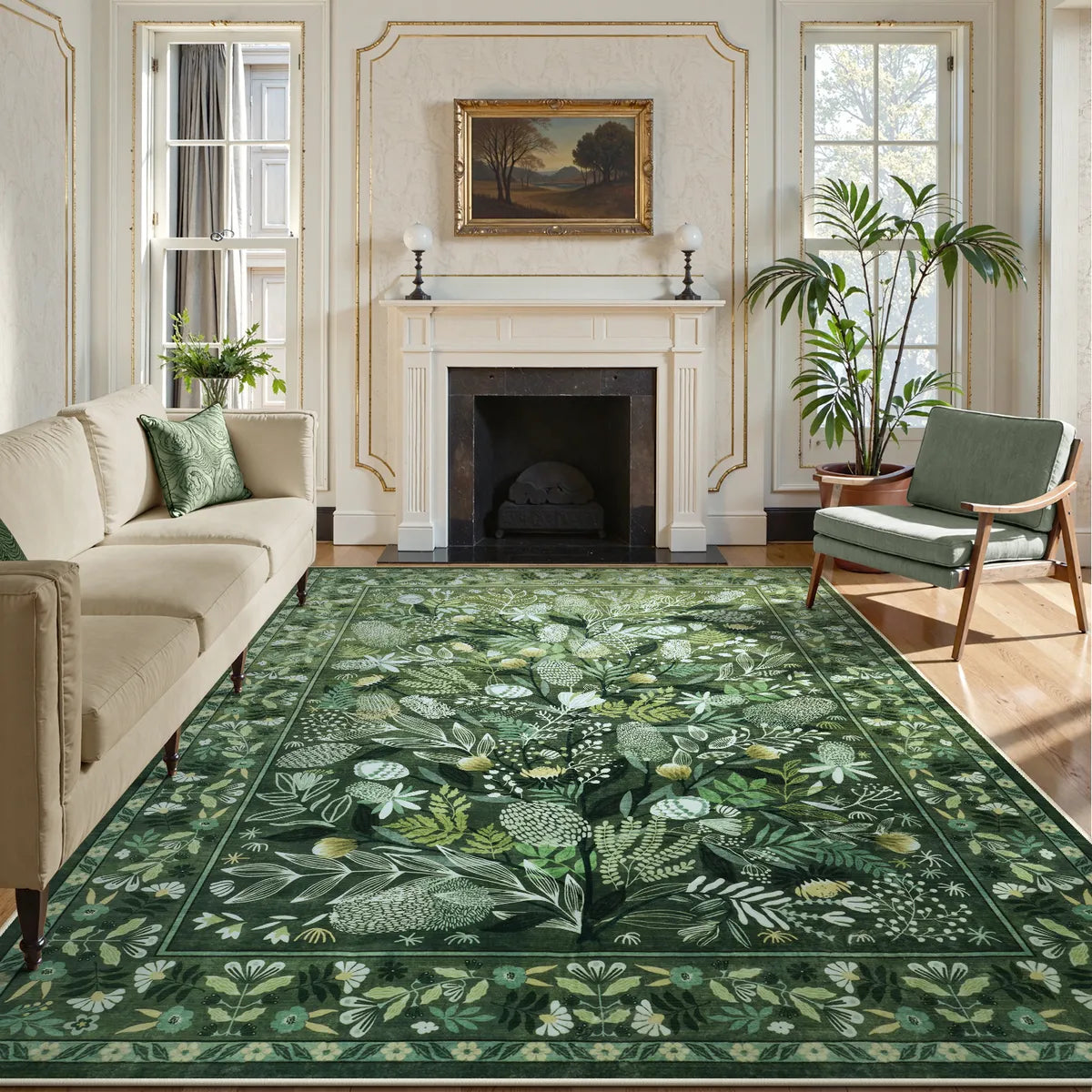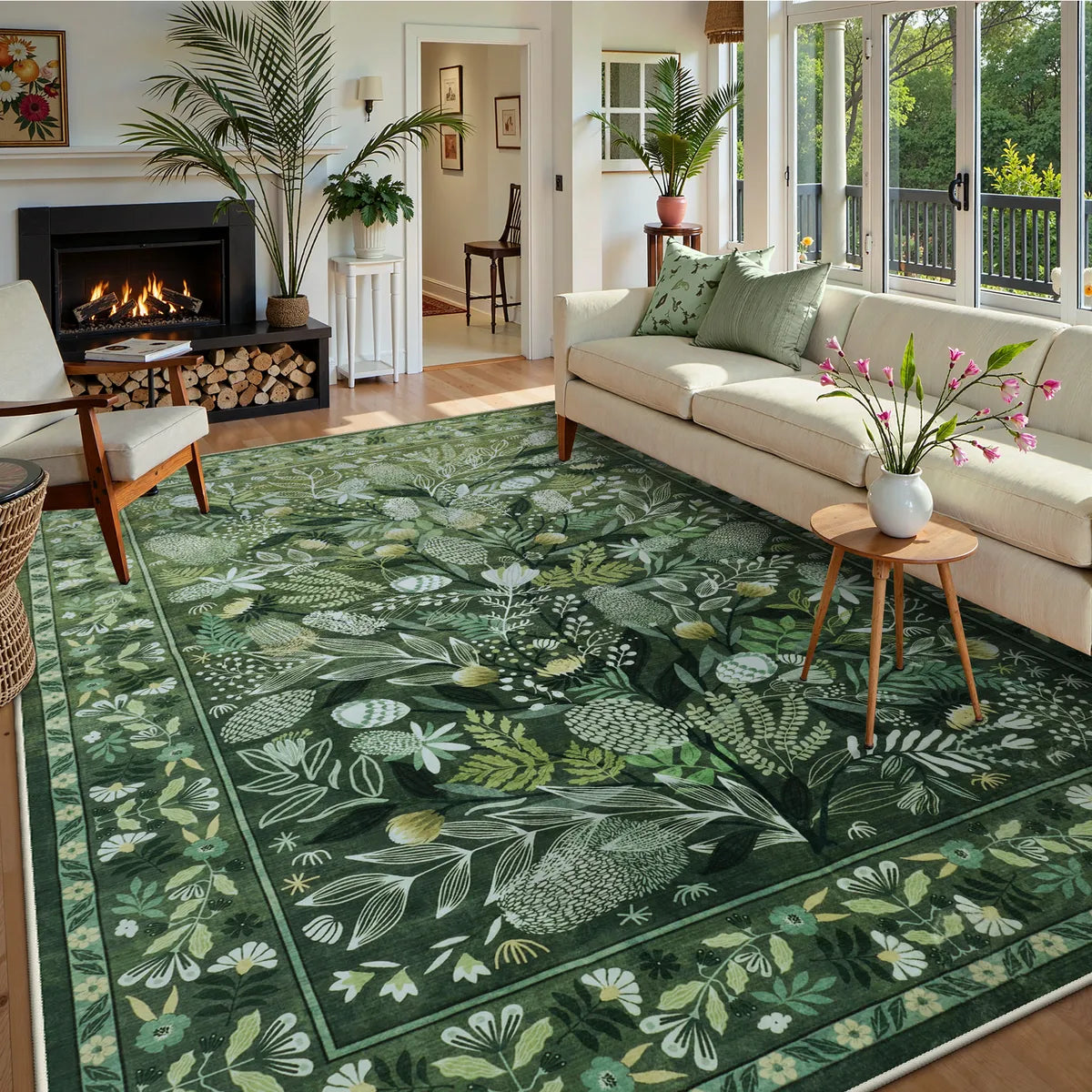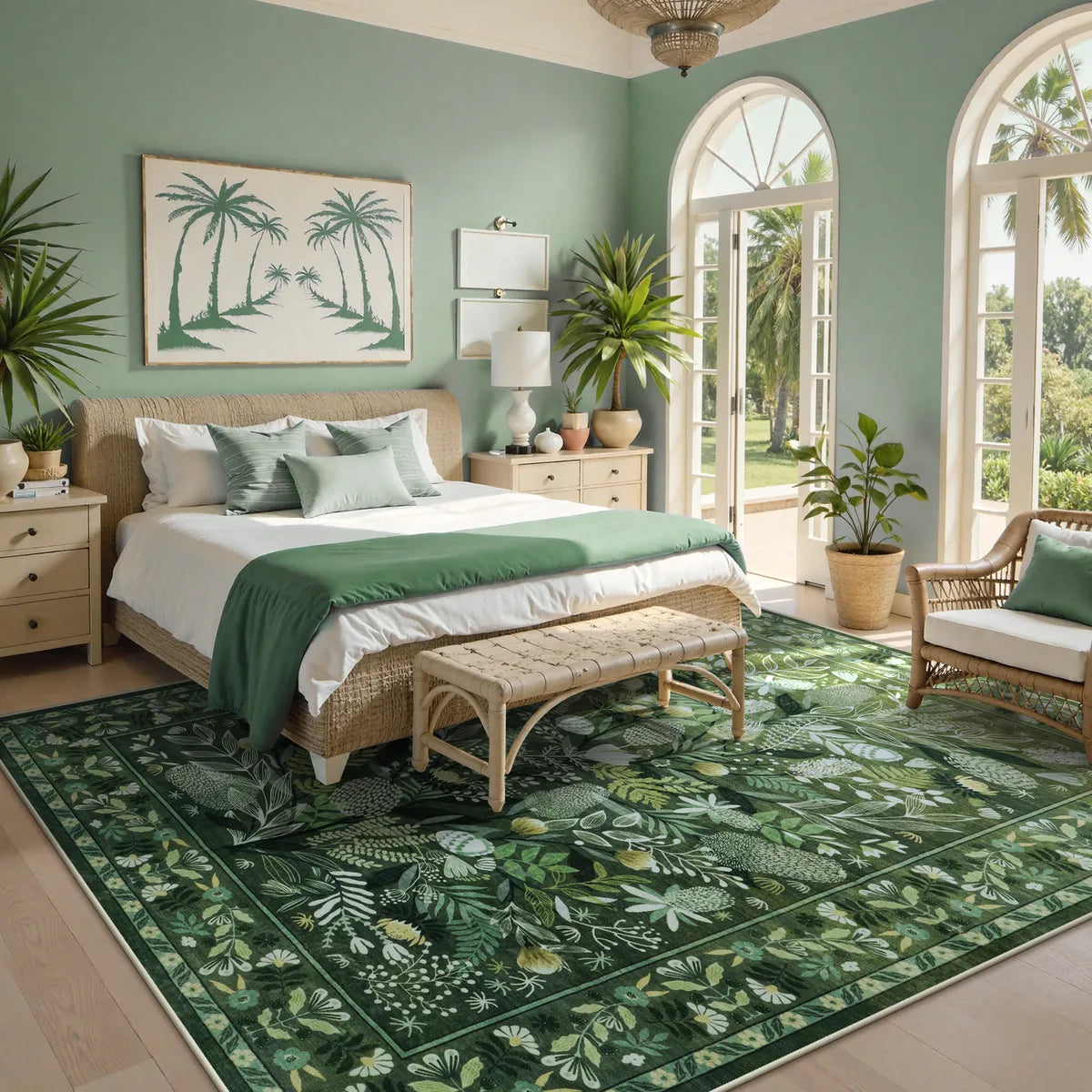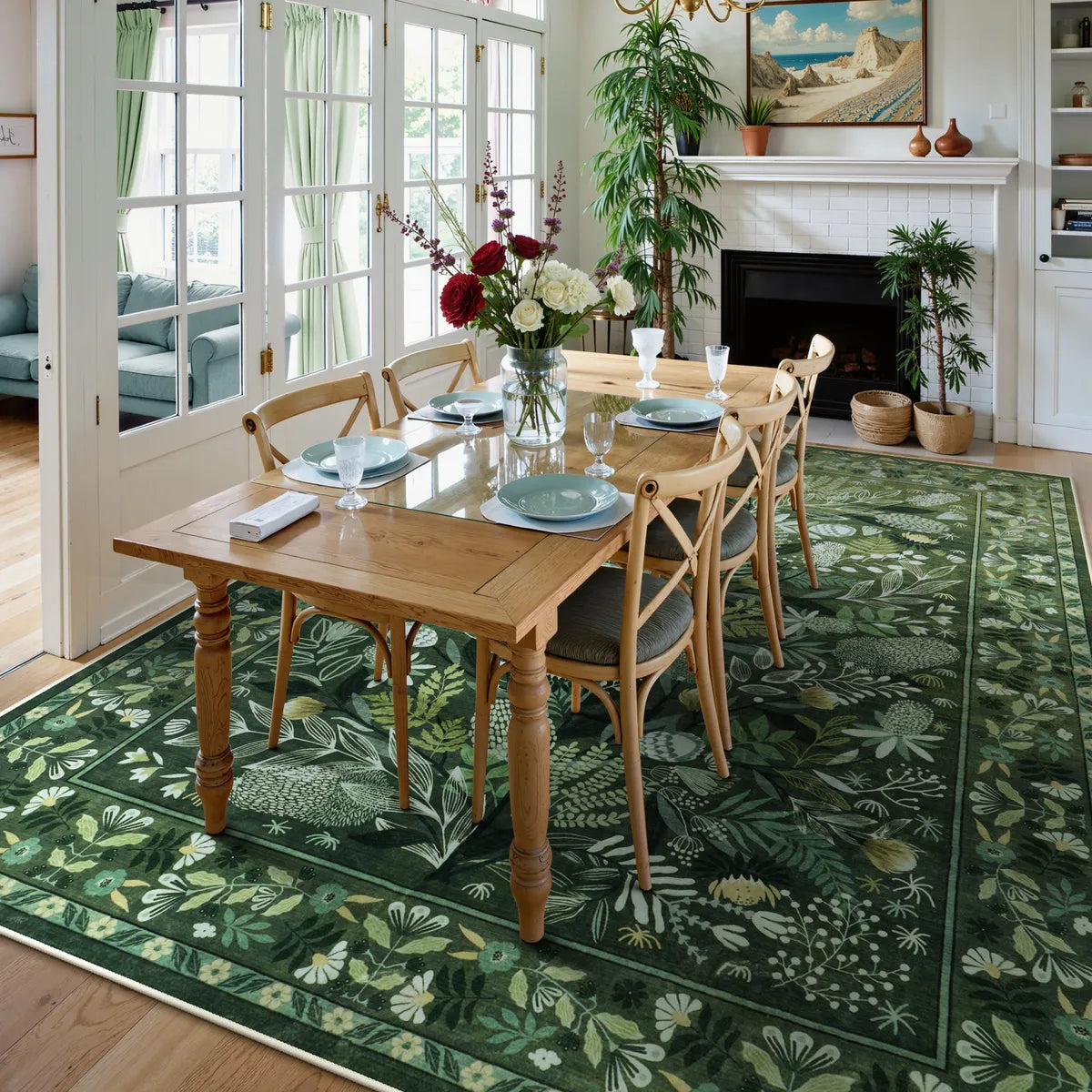


The living room takes more daily abuse than any other room in the house. Foot traffic, pet activity, spilled drinks, and everyday wear all land on one surface: the floor. Choosing the right living room rugs means thinking beyond color and pattern. The rugs that hold up best are the ones built for real life, not just for looks. Here is what to look for before you buy.
Quick Takeaways
- Living room rugs face more wear than rugs in any other room, making material and construction the most important factors.
- Spillproof surfaces, non-slip backing, and washable construction are the three features that matter most in high-traffic spaces.
- Rug size should be determined by your furniture layout, not just the room's dimensions.
- Colors and patterns with variation help conceal everyday dirt and wear between cleanings.
What Makes Living Room Rugs Different From Rugs in Other Rooms

Not all rugs face the same conditions. A bedroom rug sees light foot traffic and occasional use. A living room rug operates in an entirely different environment, one that demands more from the material, construction, and design every single day.
The living room is where household activity concentrates, from daily foot traffic and furniture contact to pet activity and spills. That combination means fiber construction, backing quality, and surface treatment matter far more here than in any other room. A rug that works well in a low-traffic space will not necessarily hold up in this one.
The Features That Matter Most in Rugs for Living Rooms

Knowing what to look for makes the selection process straightforward. Two functional features consistently separate rugs that last from those that do not in high-traffic living spaces.
Stain Resistance and Spillproof Surface Construction
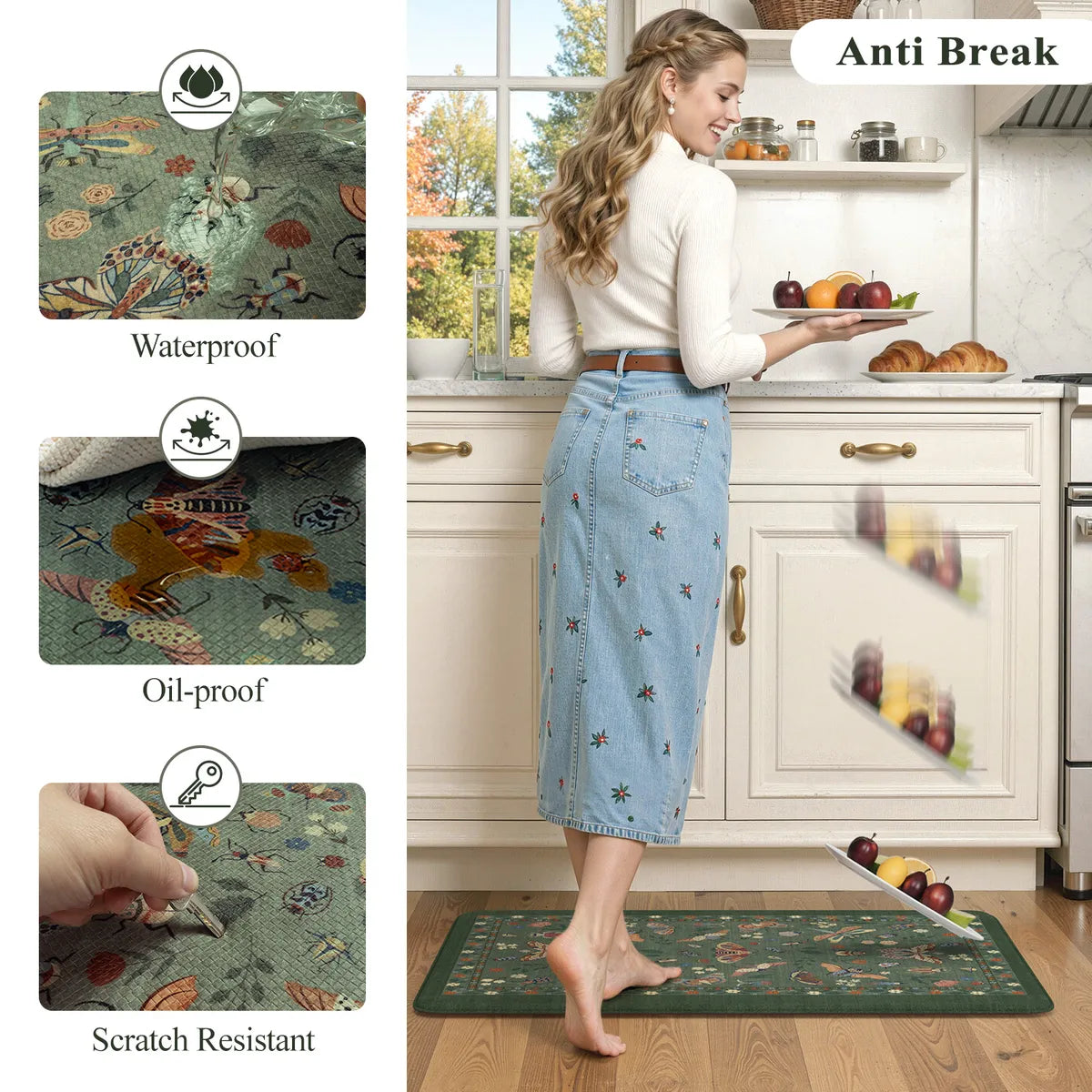
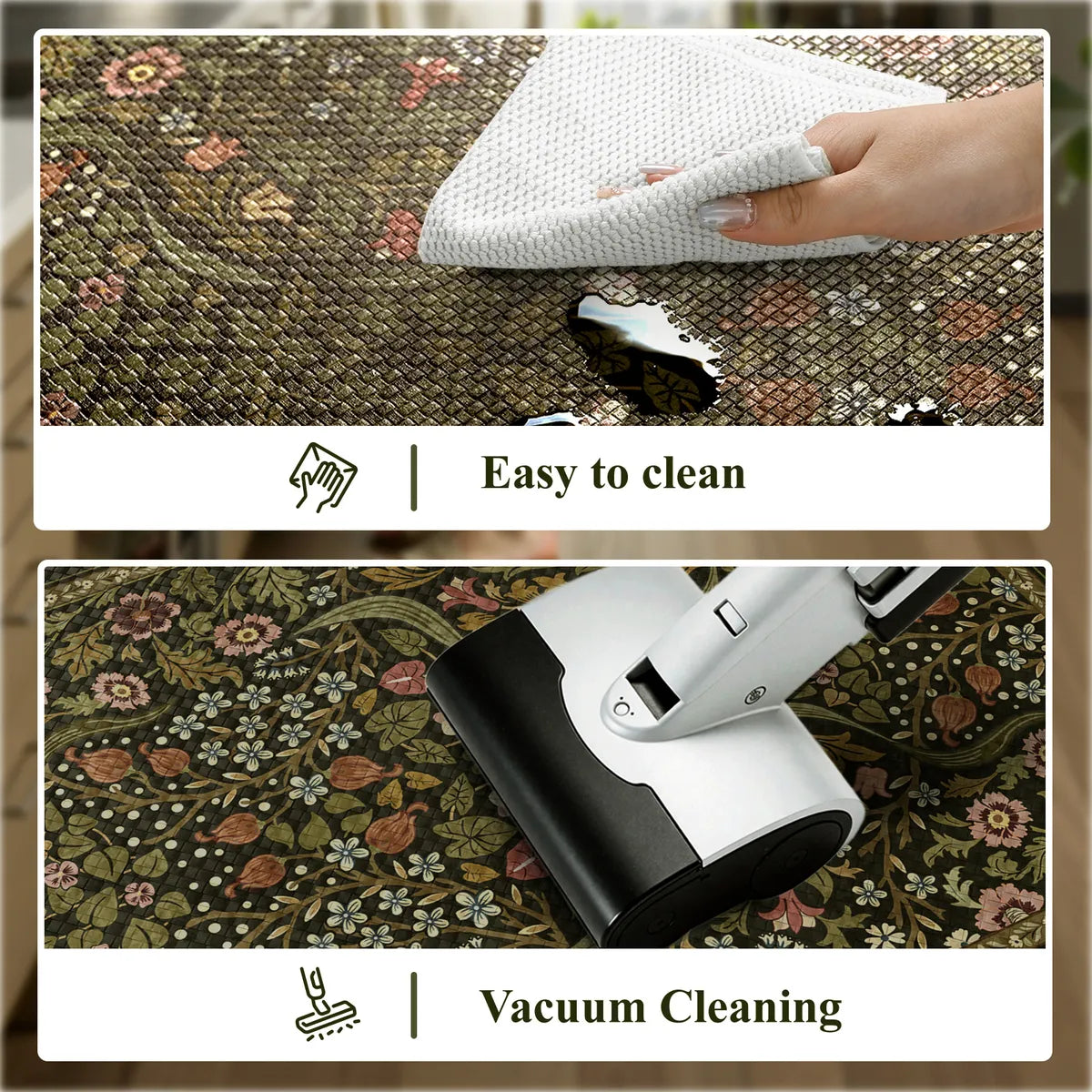
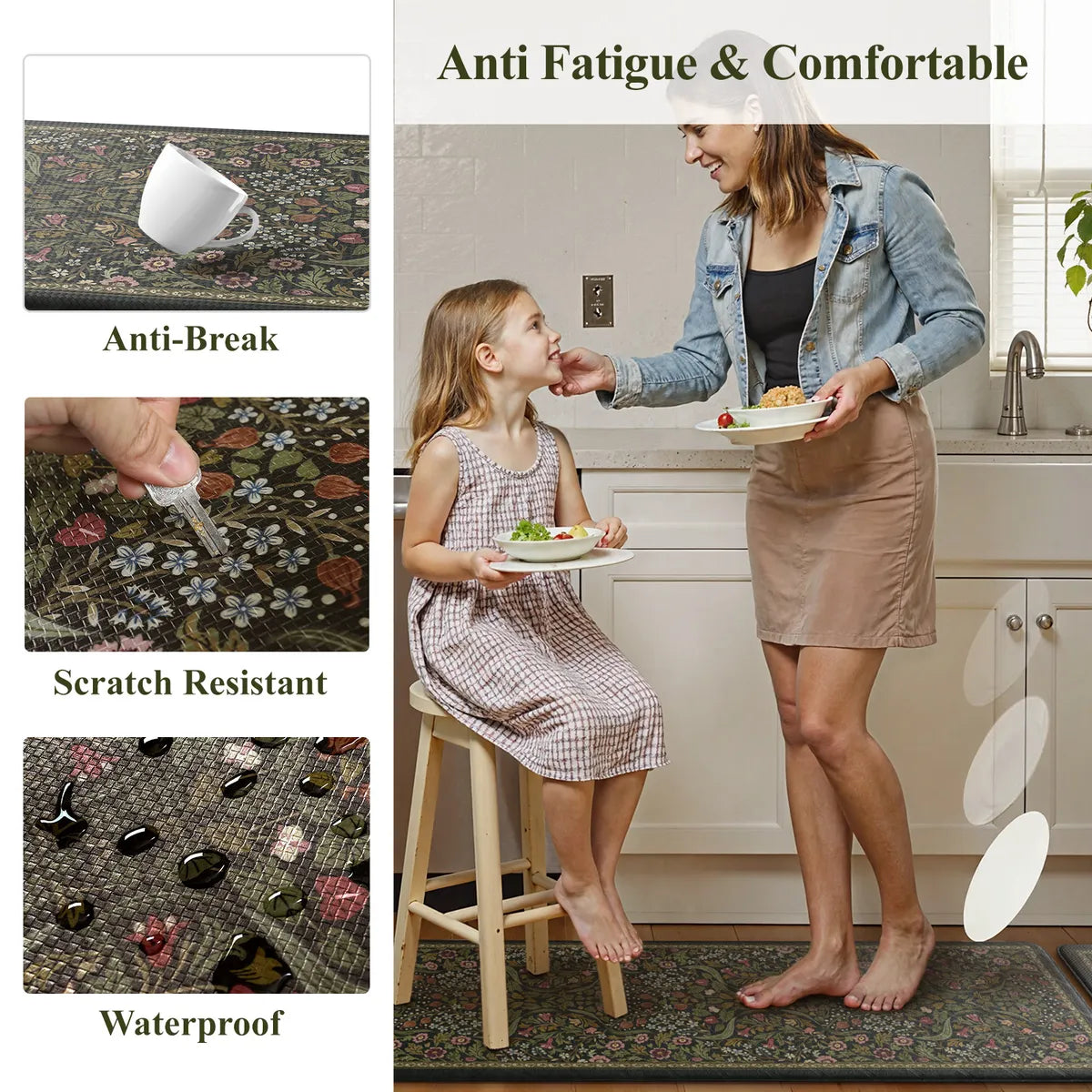
Spillproof construction, also called stain resistance, refers to a surface treatment or fiber engineering that prevents liquids from immediately penetrating the rug. When a spill lands on a spillproof surface, it sits on top of the fibers long enough to be wiped away cleanly before any absorption occurs.
For households with children or pets, this is not a luxury feature. It is one of the most practical things a rug can offer in a living room setting.
Non-Slip Backing and Durability Under Heavy Use
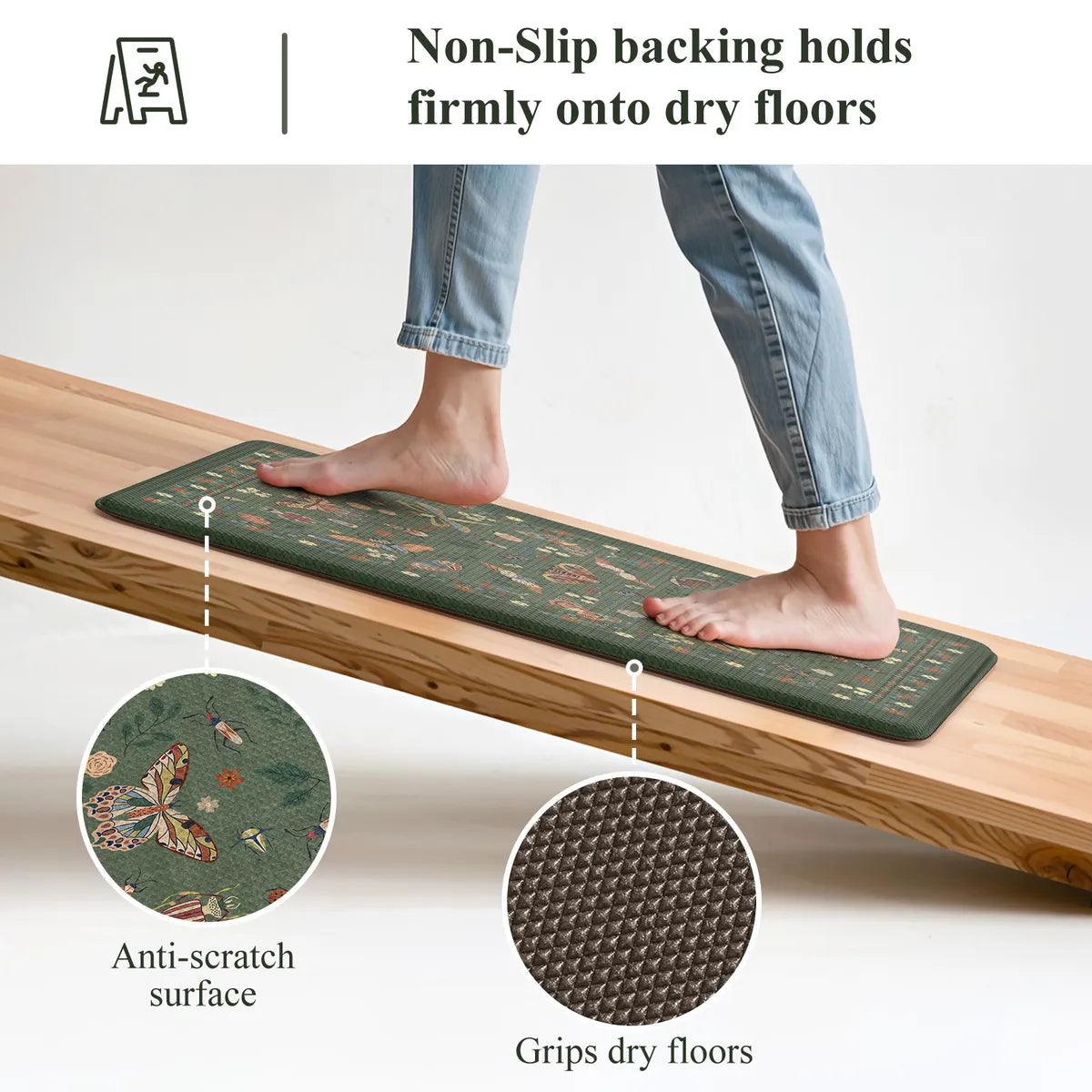
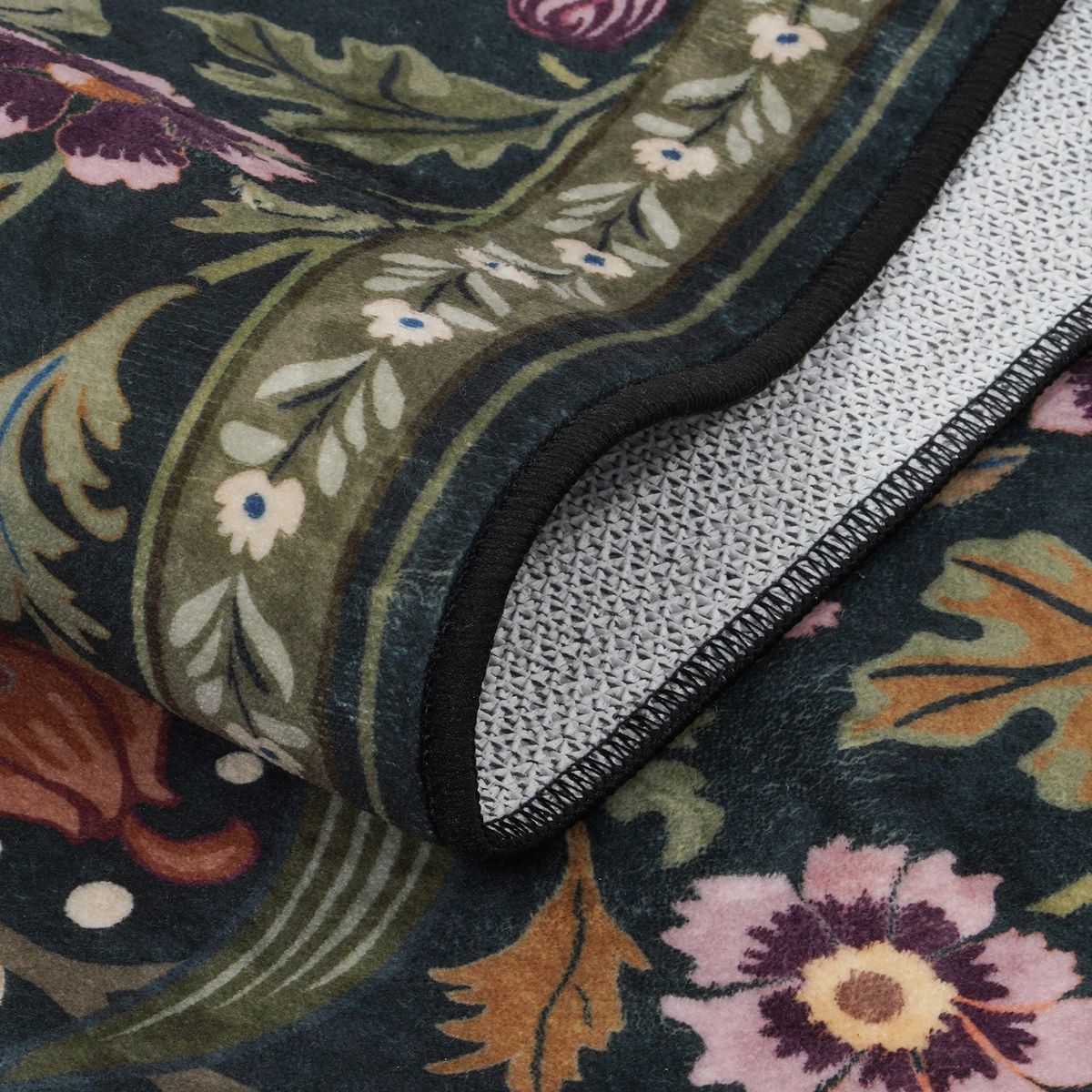
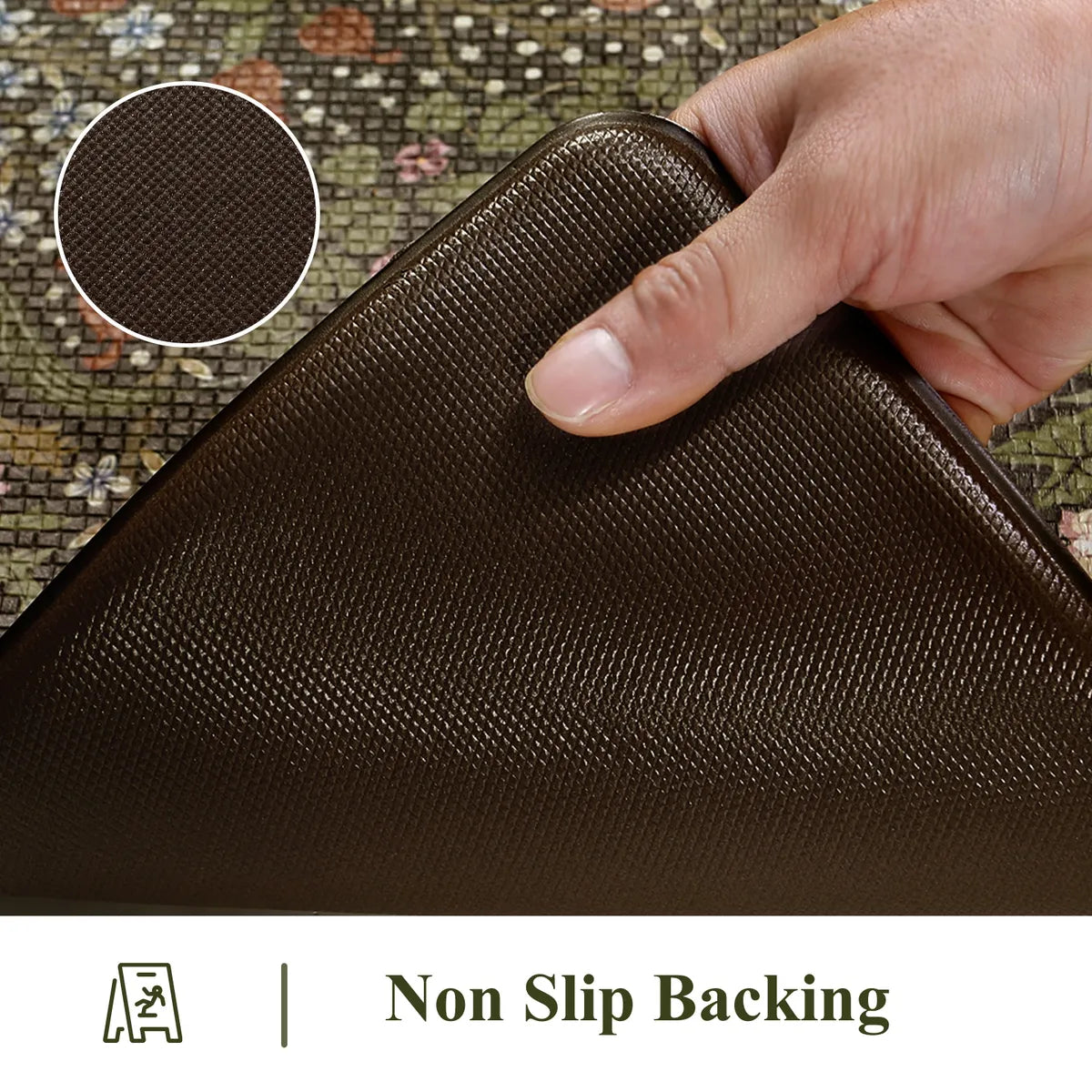
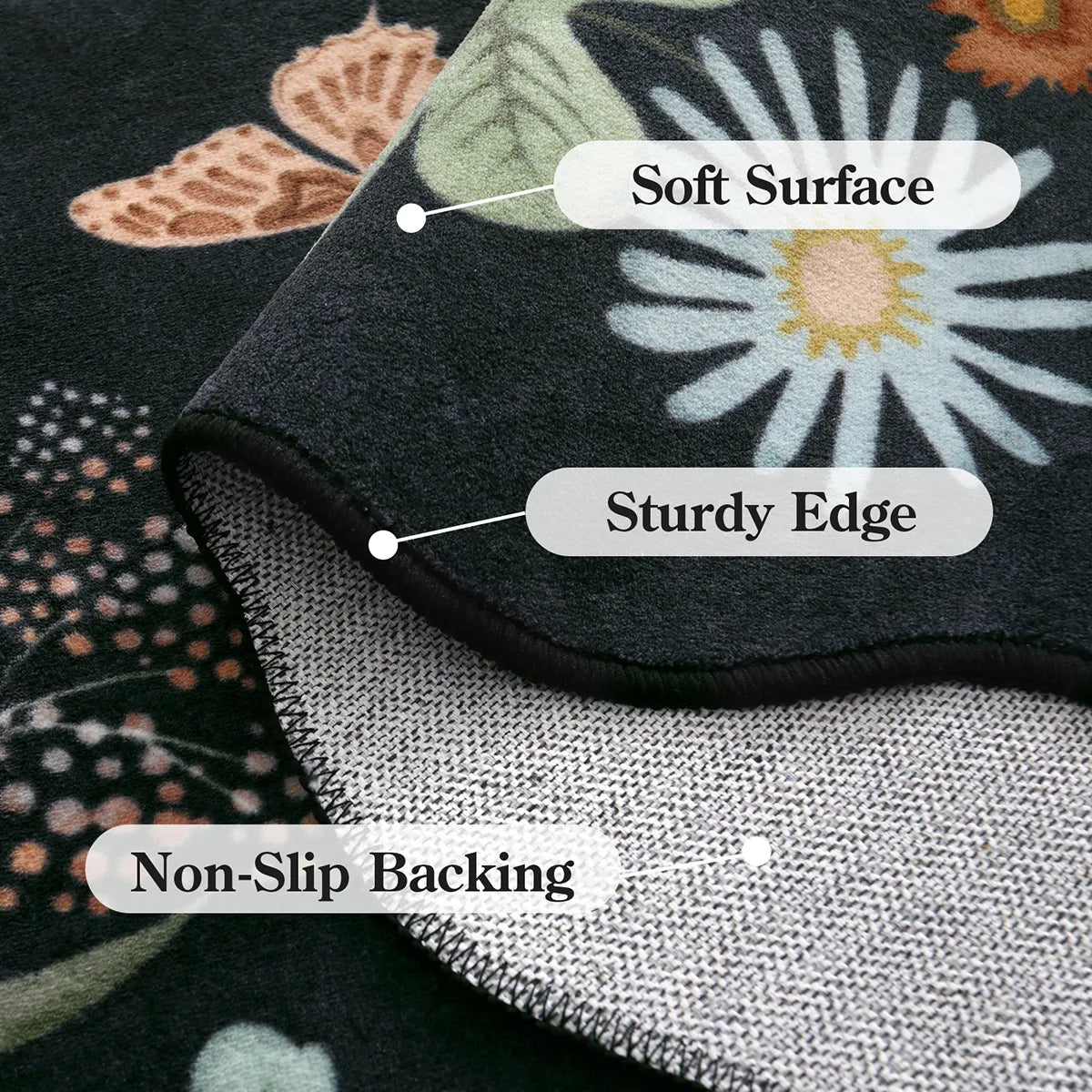
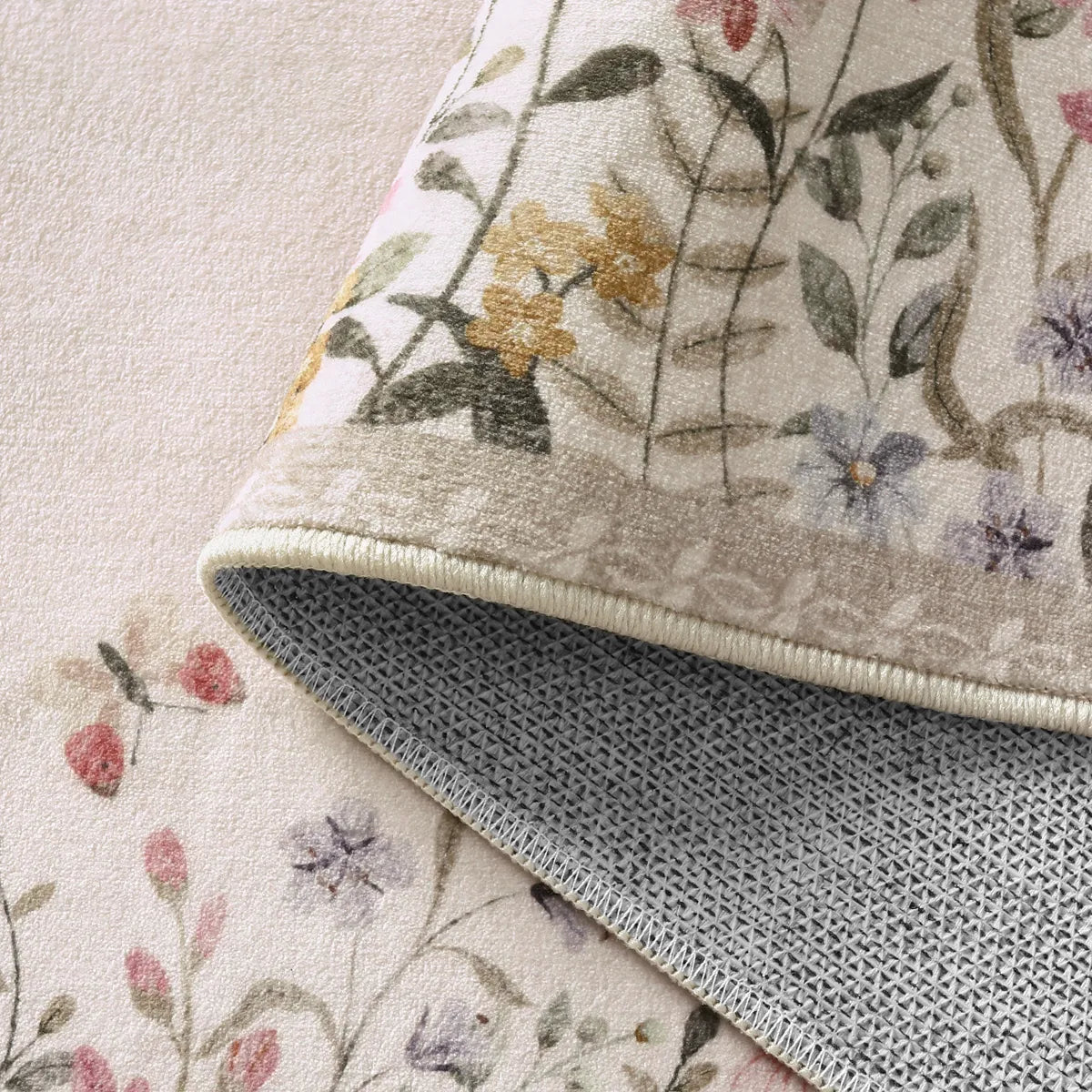
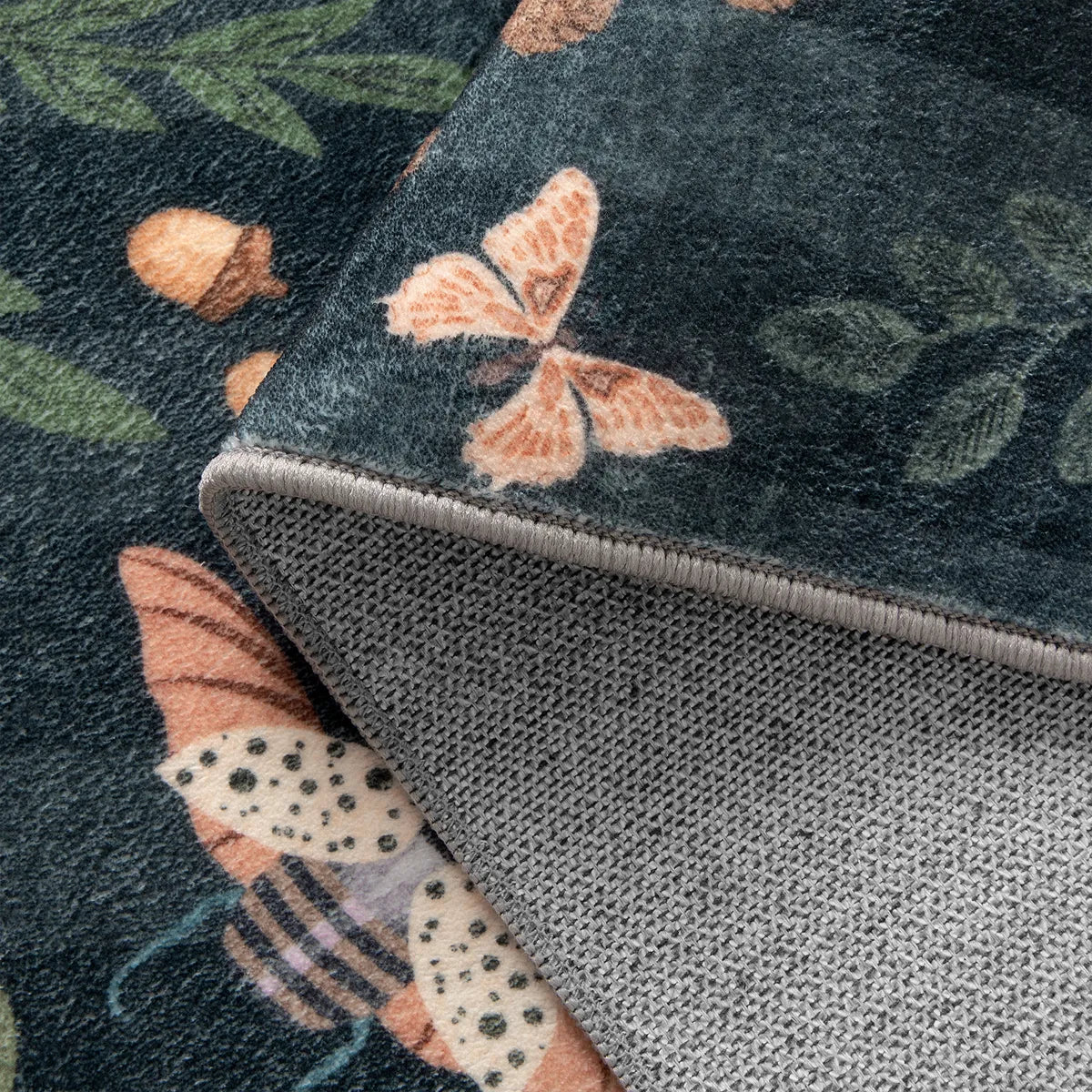
A rug that shifts underfoot in a busy living room creates both a safety issue and a maintenance problem. Non-slip backing, a grip-enhanced underside layer that anchors the rug against hard flooring, keeps the rug stable under consistent movement and rearranging.
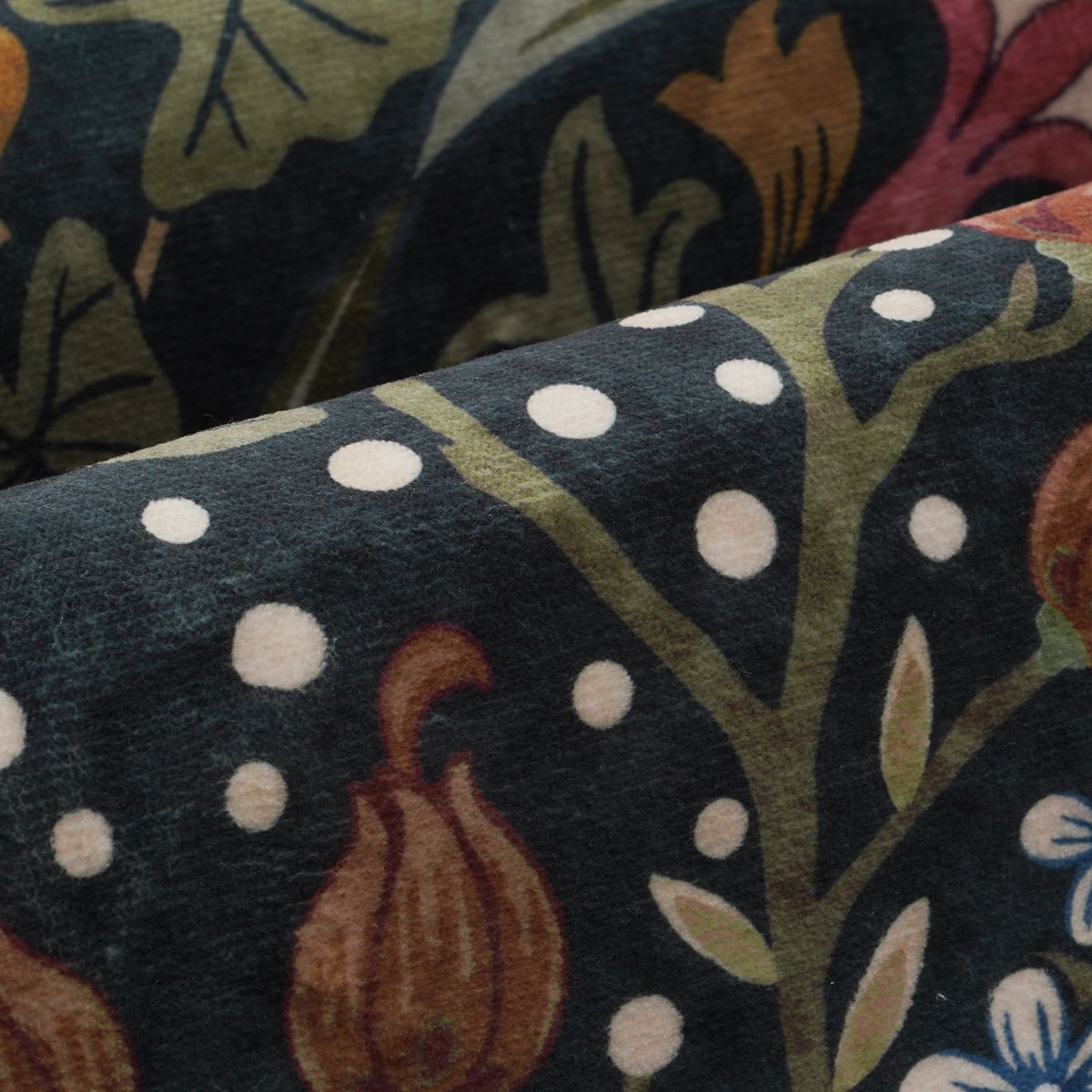
Durability also comes down to fiber density and weave tightness. Denser fibers maintain their structure under repeated compression from foot traffic and furniture weight. A tightly woven surface holds the design in place and resists shedding over time.
How to Choose Rug Size for a Living Room
Getting the size right is one of the most common challenges in living room rug selection. A rug that is too small makes the furniture feel disconnected from the room. A rug that is sized correctly anchors the entire seating arrangement and makes the space feel intentional and complete.
Standard Size Guidelines for Common Living Room Layouts
Knowing how to choose rug size for a living room starts with the furniture layout, not just the room's dimensions. The table below offers a quick reference for the most common configurations.
|
Living Room Layout |
Recommended Rug Size |
Notes |
|
Small living room |
5x7 or 4x6 |
Works well for a loveseat and one chair |
|
Medium living room |
8x10 |
Most common size for a sofa and coffee table setup |
|
Large or open-plan |
9x12 or 10x14 |
Needed to anchor a full sectional or multiple seating zones |
|
Studio or compact space |
4x6 or 5x7 |
Defines a seating zone within a larger open floor |
Starting with layout type narrows the size range quickly and avoids the most common sizing mistakes.
How Furniture Placement Determines the Right Rug Size
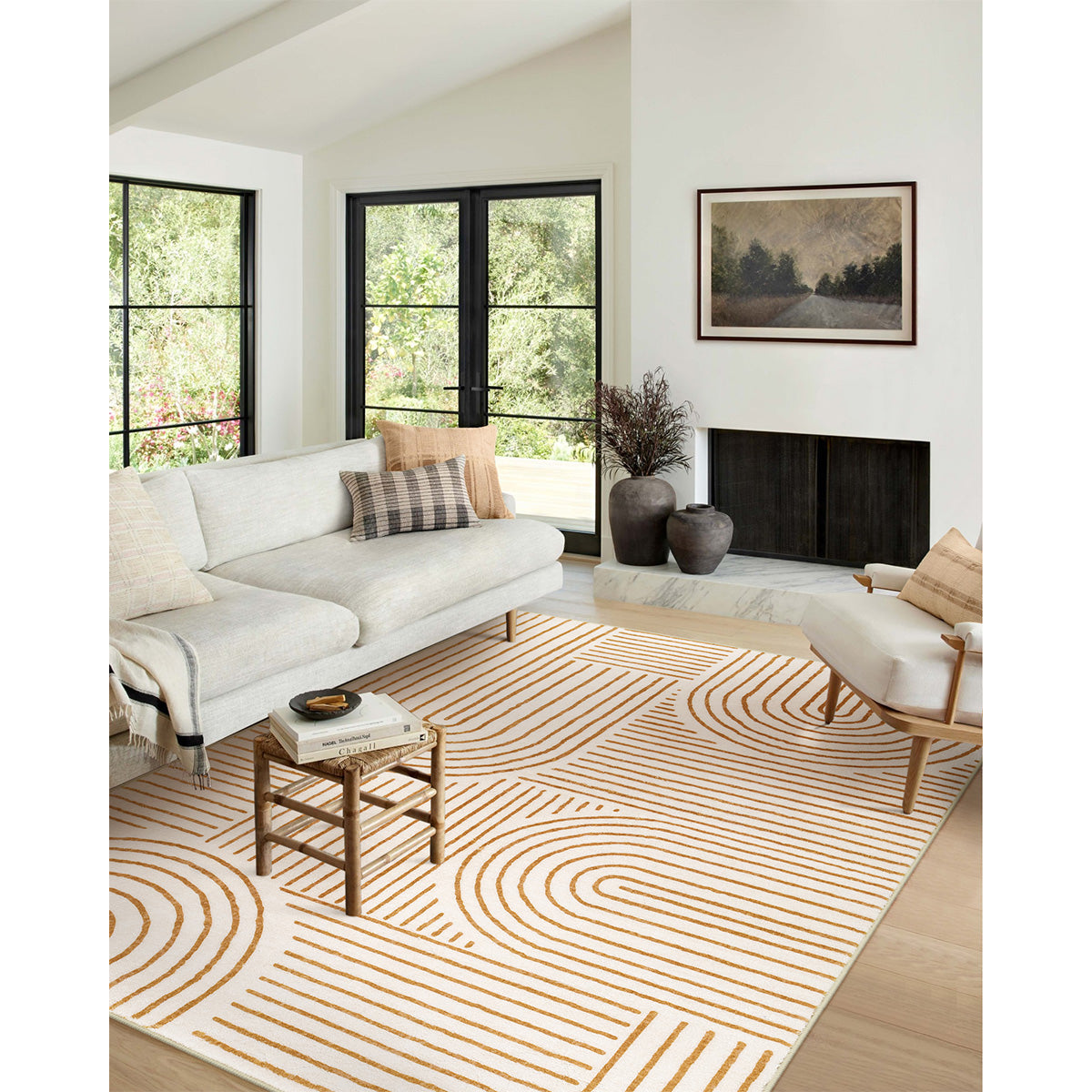
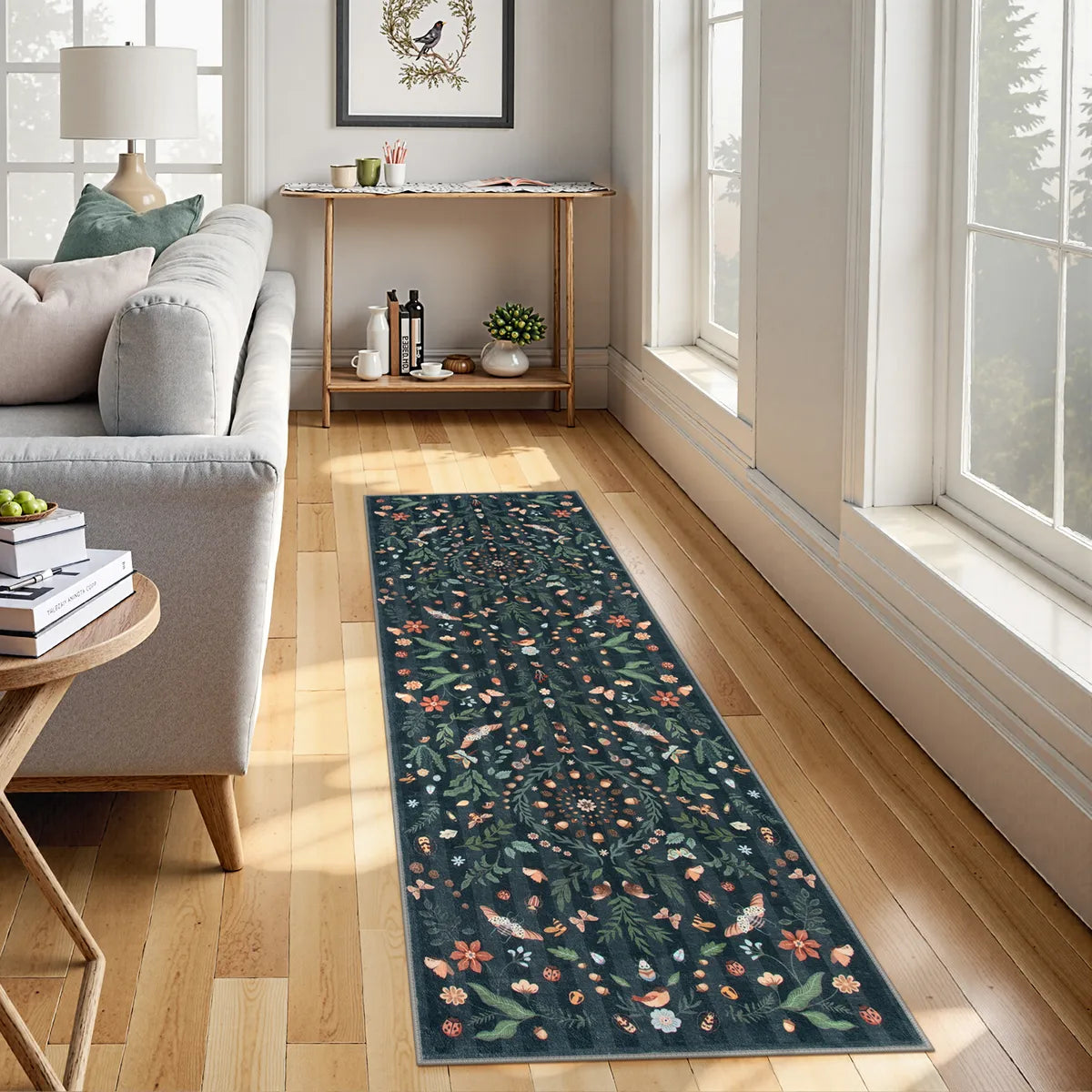
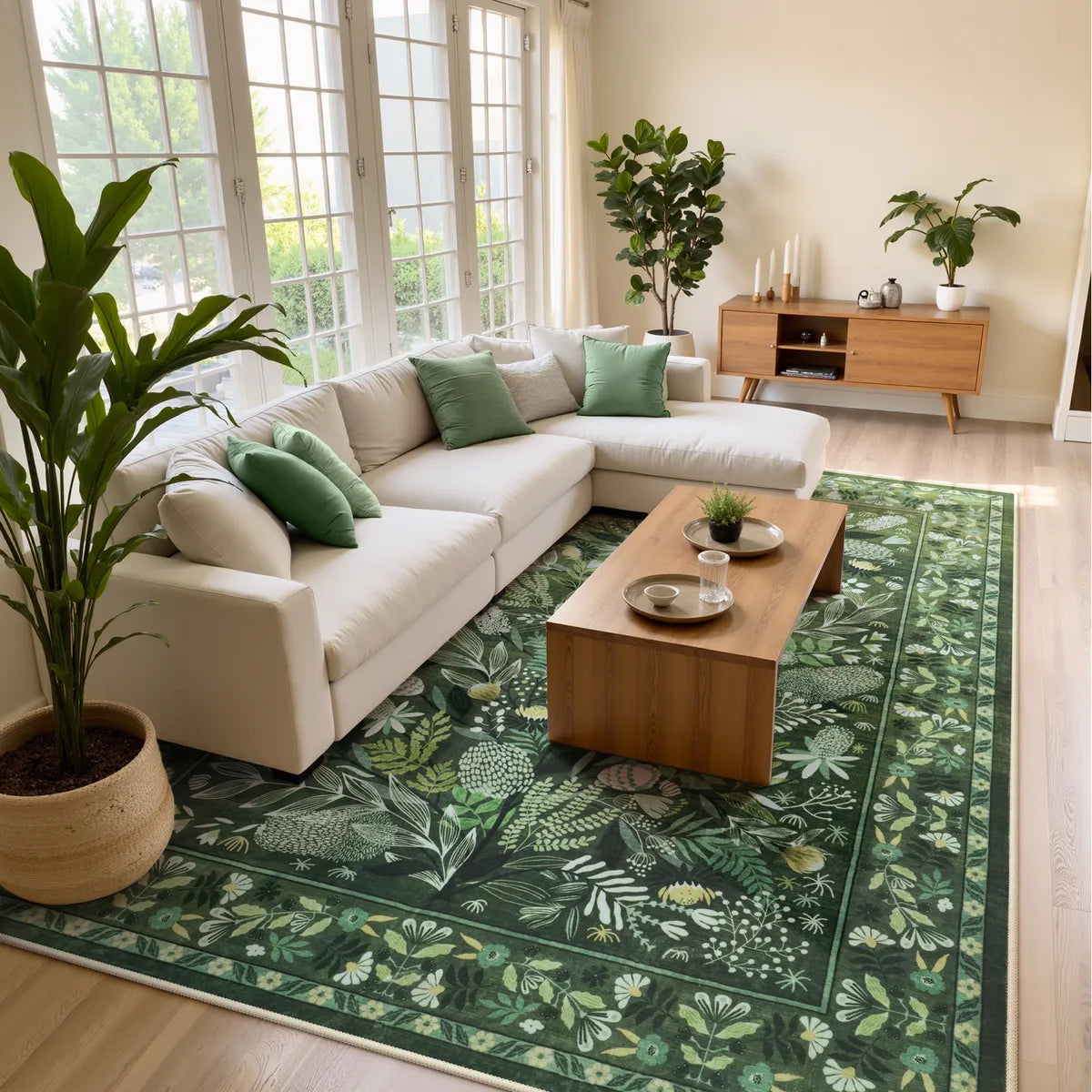
Beyond the room's dimensions, furniture placement is the deciding factor. The standard approach is to have at least the front legs of all main seating pieces resting on the rug. This connects the furniture to the rug visually and creates a unified, anchored zone.
A few placement principles that apply consistently:
- All four legs of a coffee table should sit fully on the rug.
- Front legs of sofas and accent chairs on the rug are the minimum for a cohesive look.
- Leave 12 to 18 inches of bare floor between the rug's edge and the wall to prevent a cramped appearance.
Color and Pattern Choices That Work Harder in Busy Living Rooms
Color and pattern do double duty in the living room. Beyond aesthetics, the right choices actively help the rug look cleaner for longer between washes.
A few pattern and color directions that consistently perform well in high-traffic living rooms:
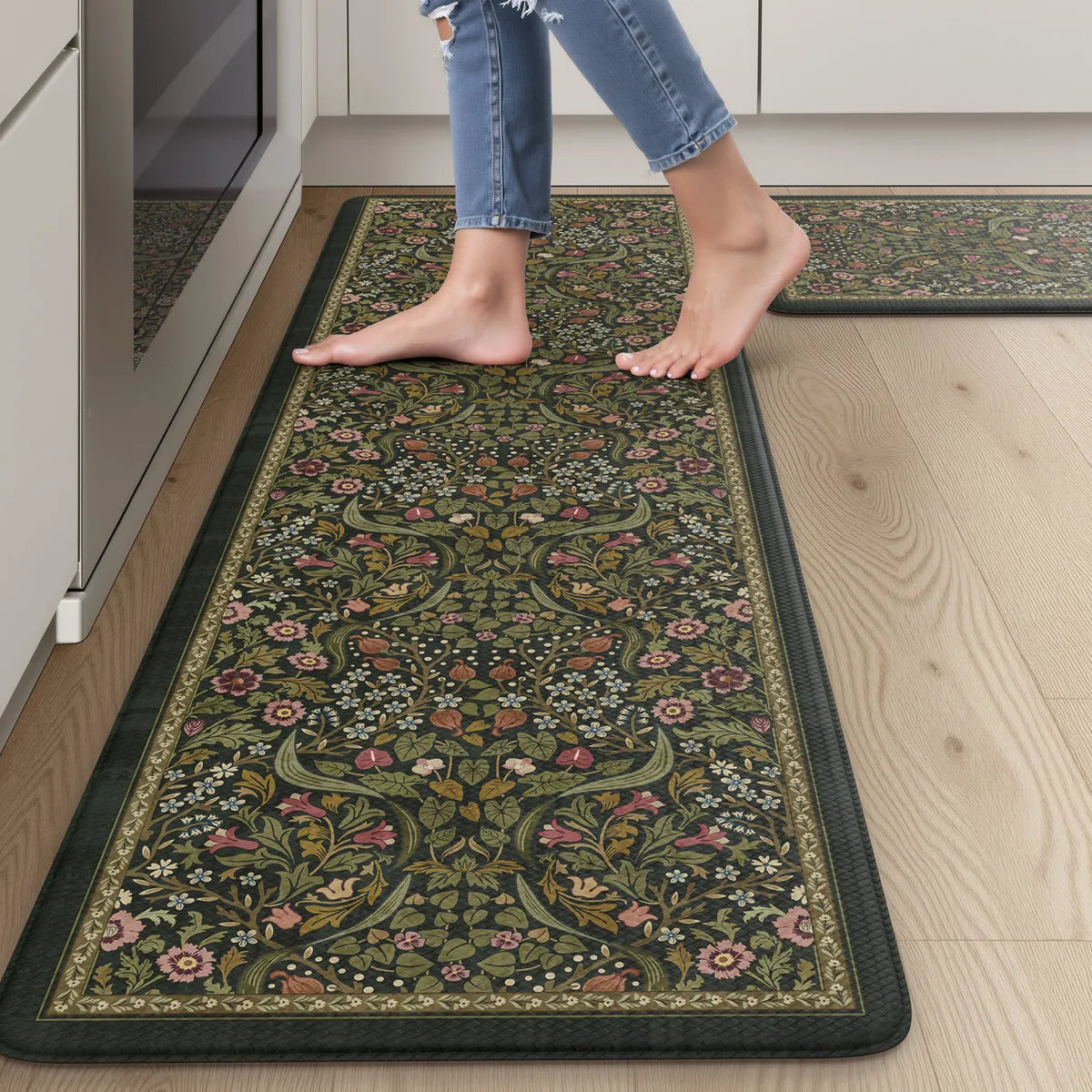
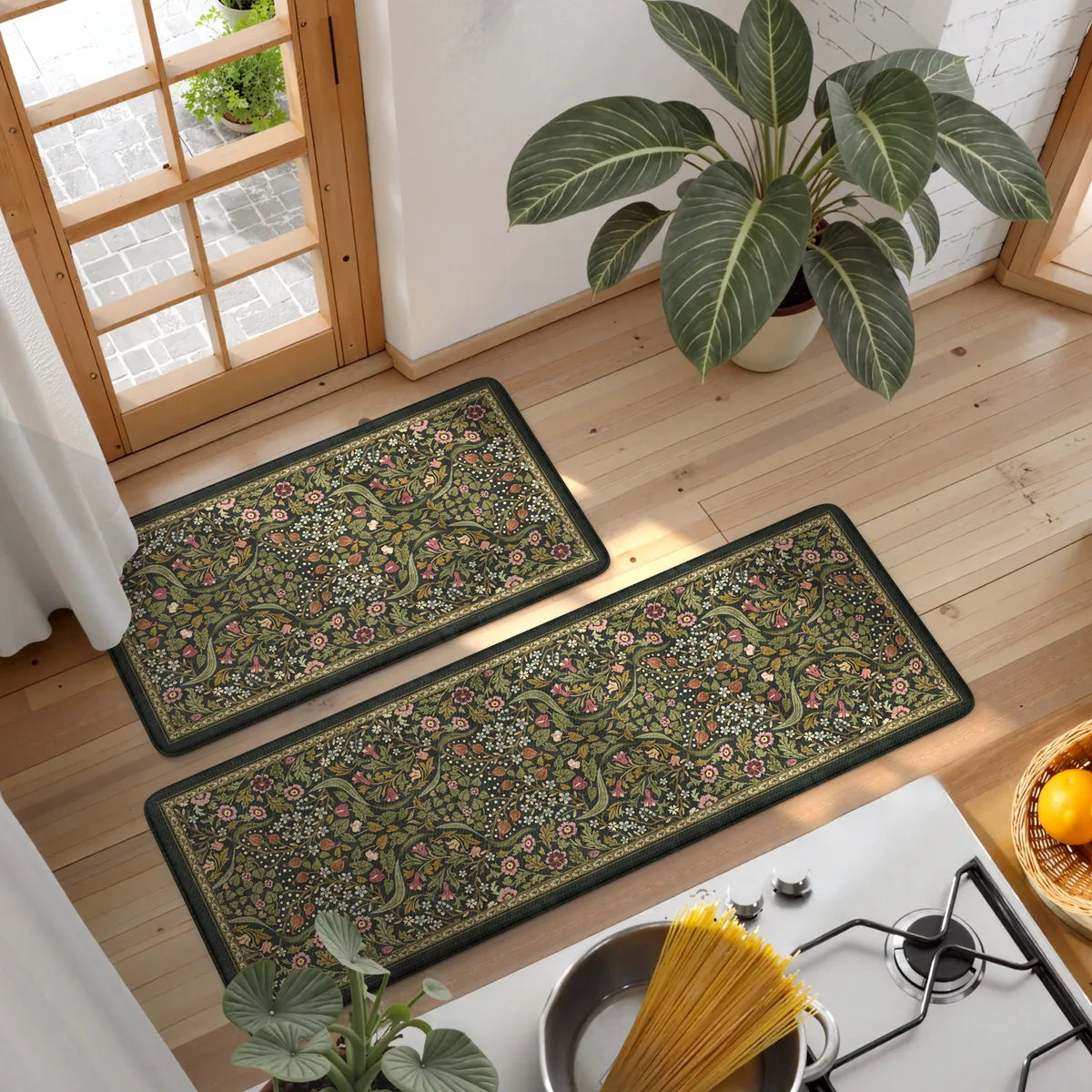
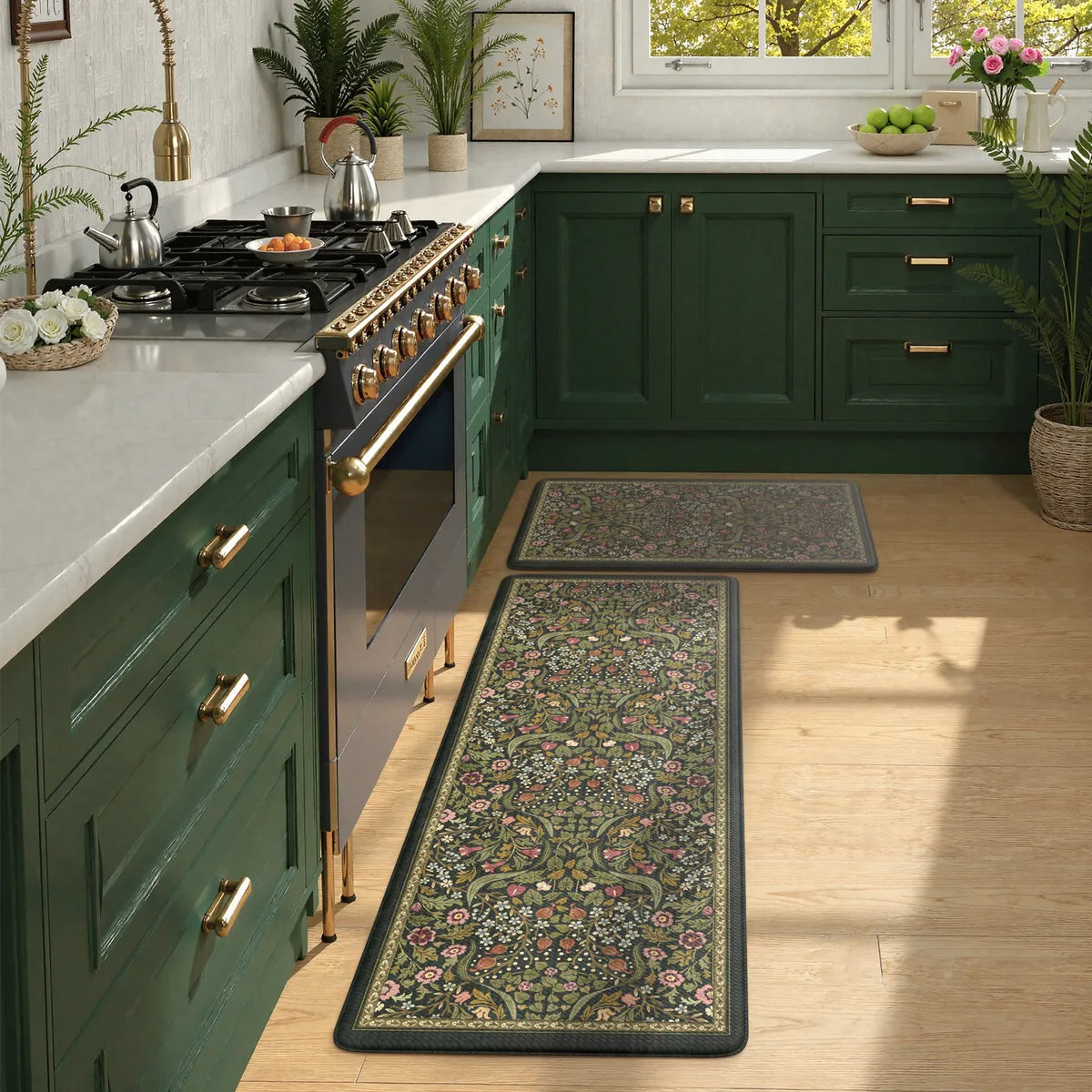
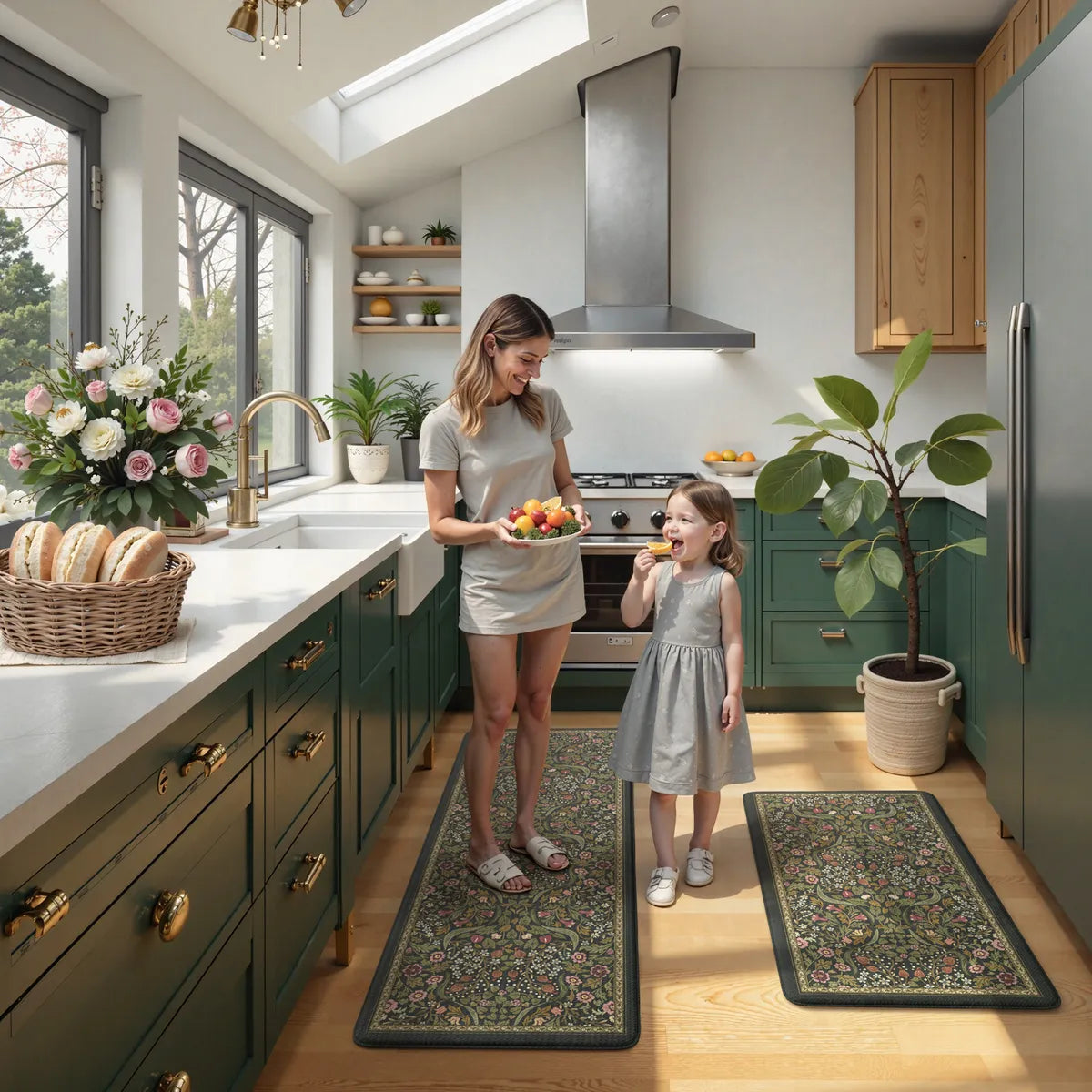
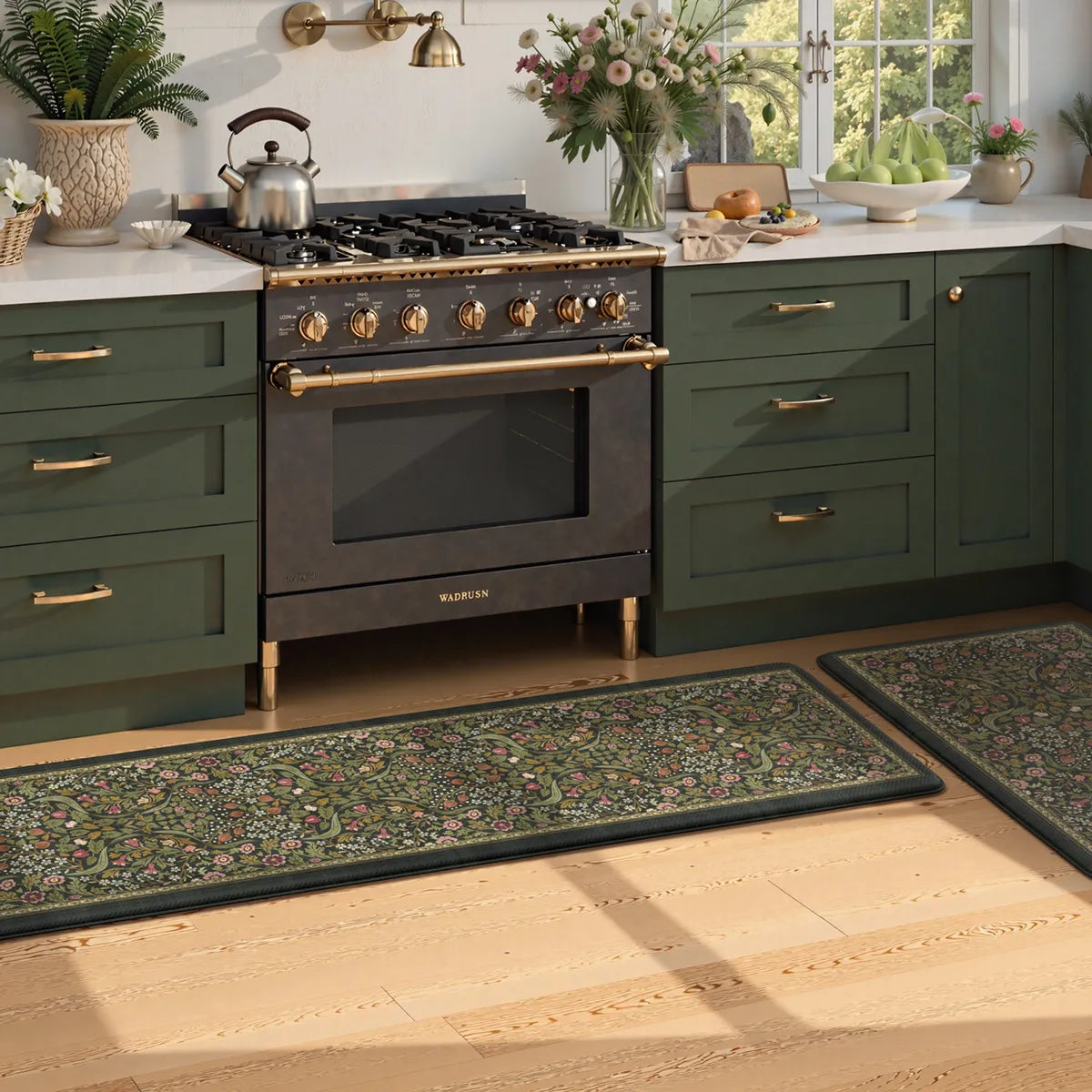
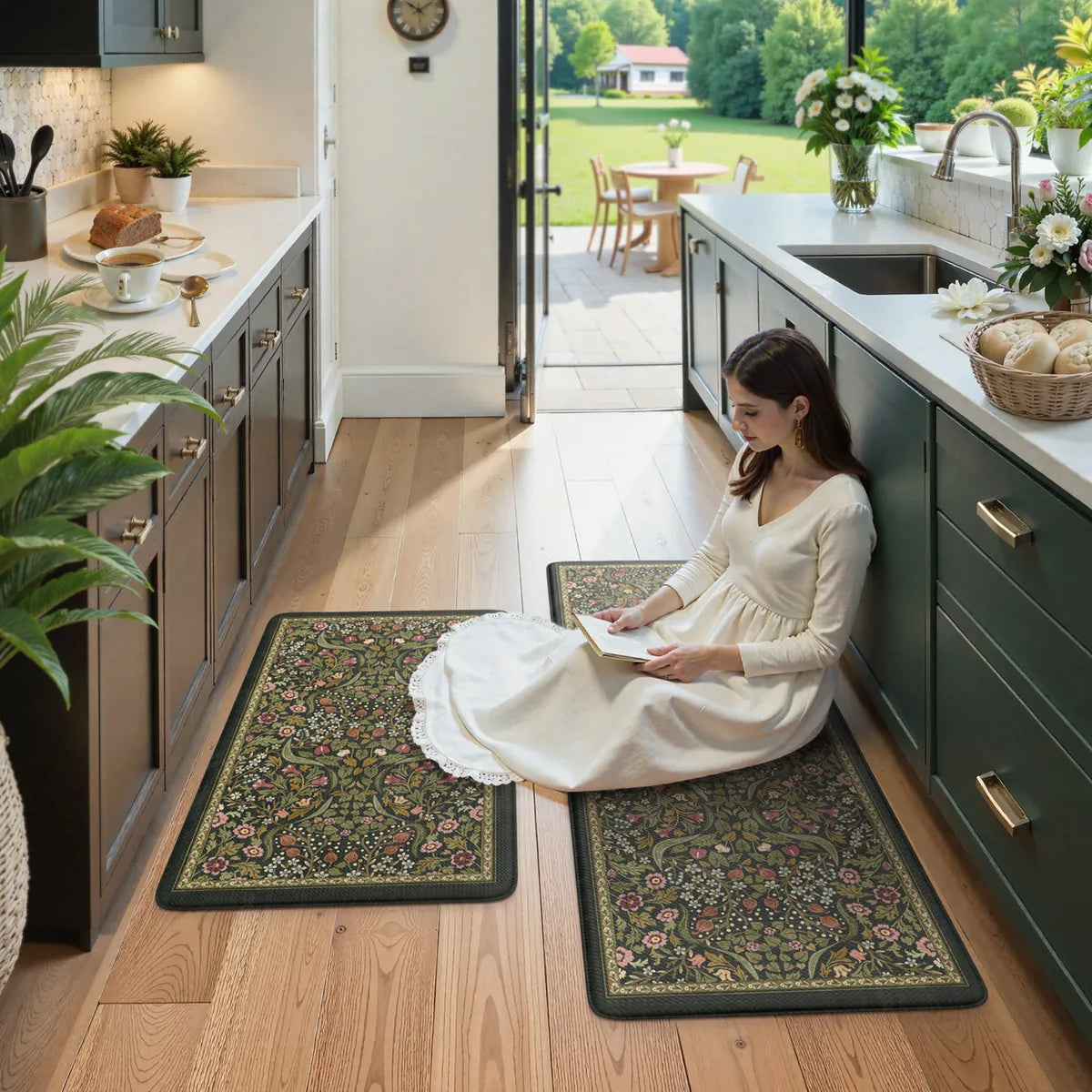
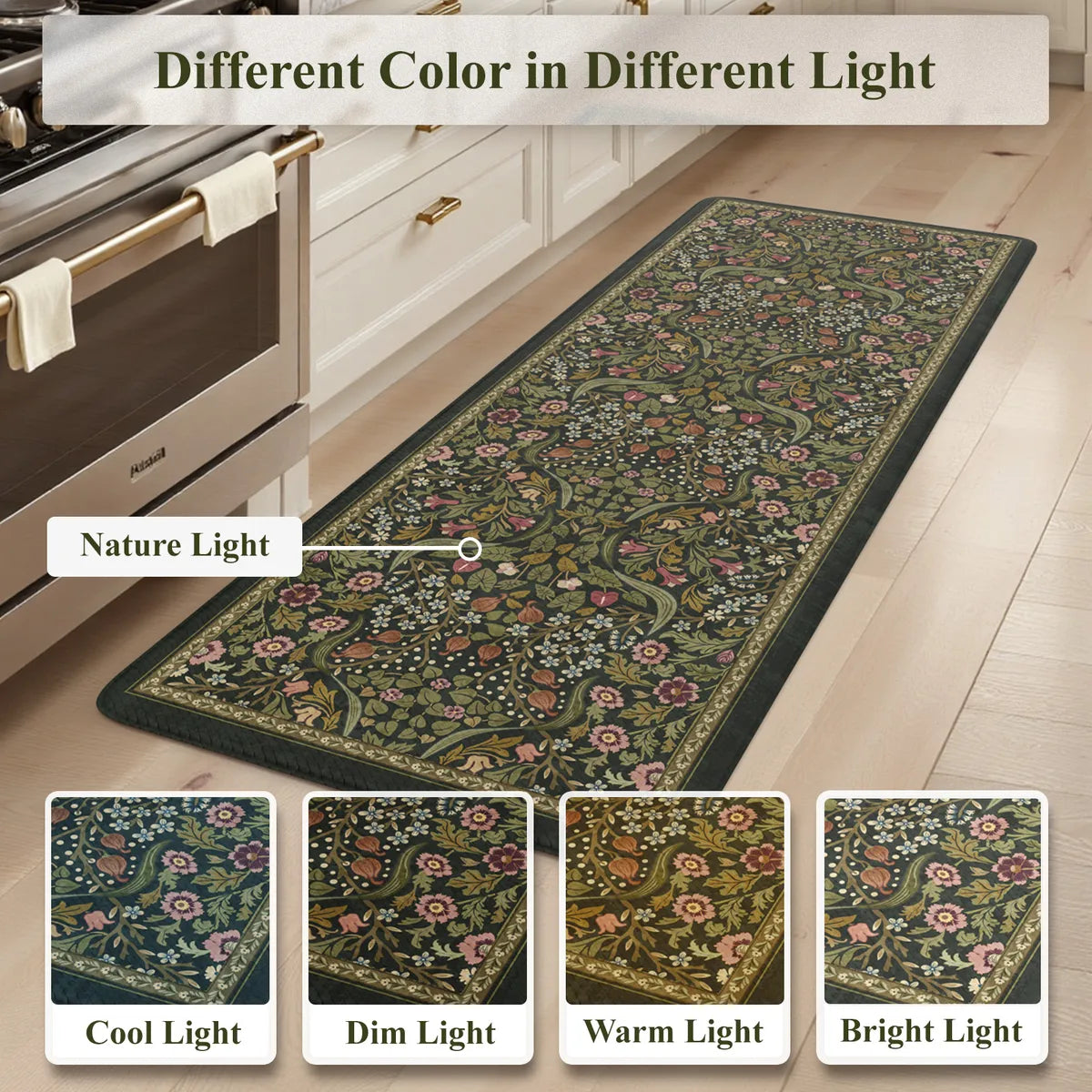
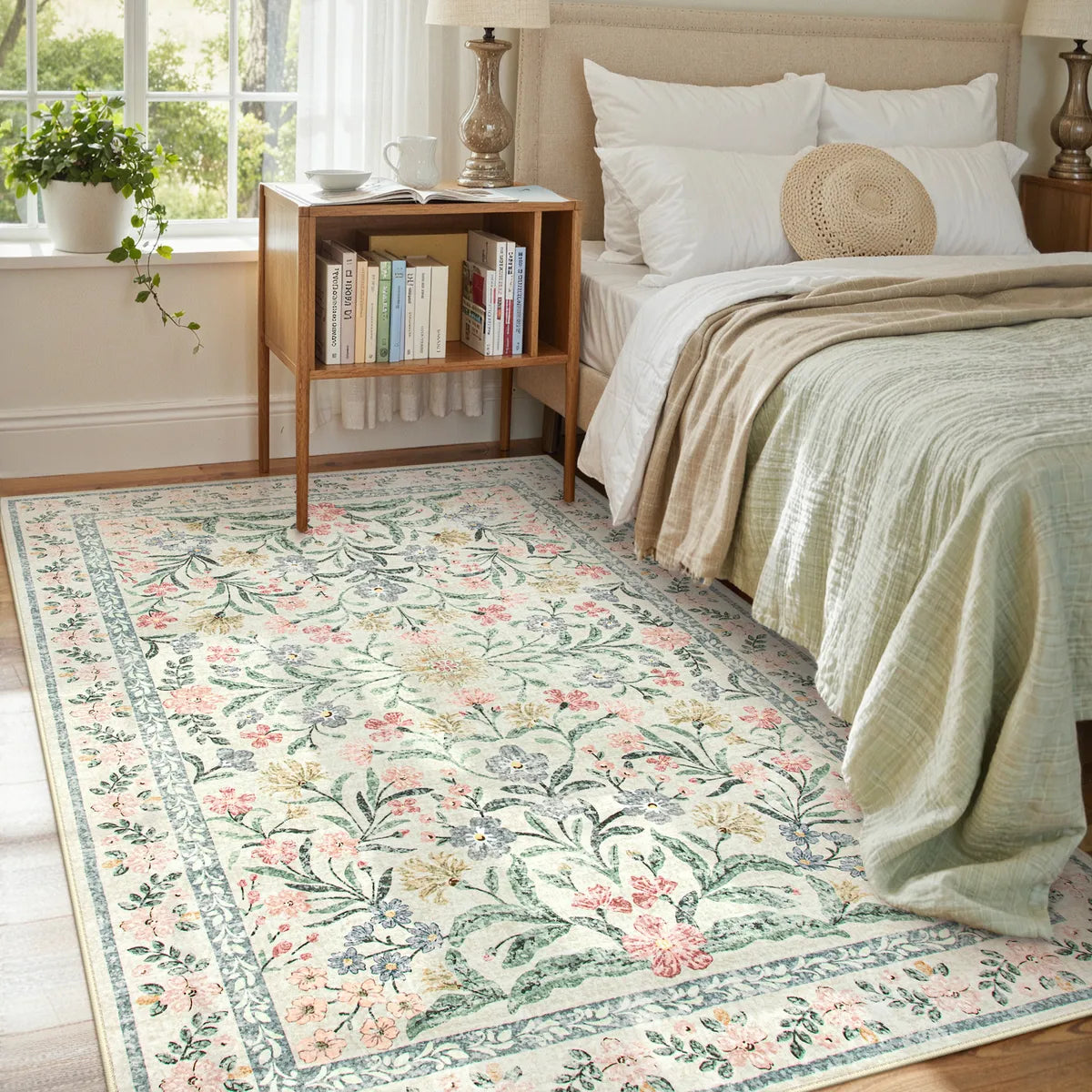
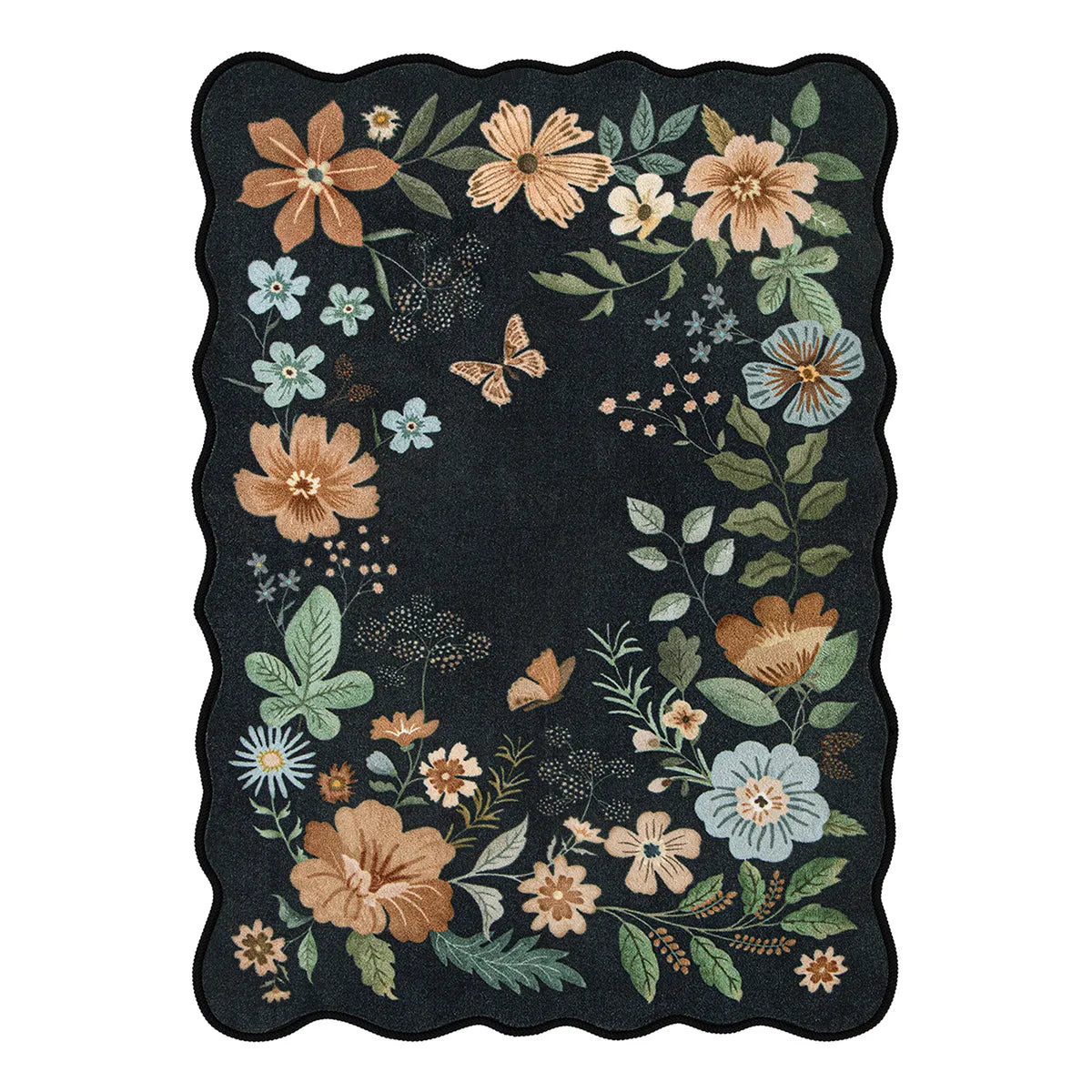
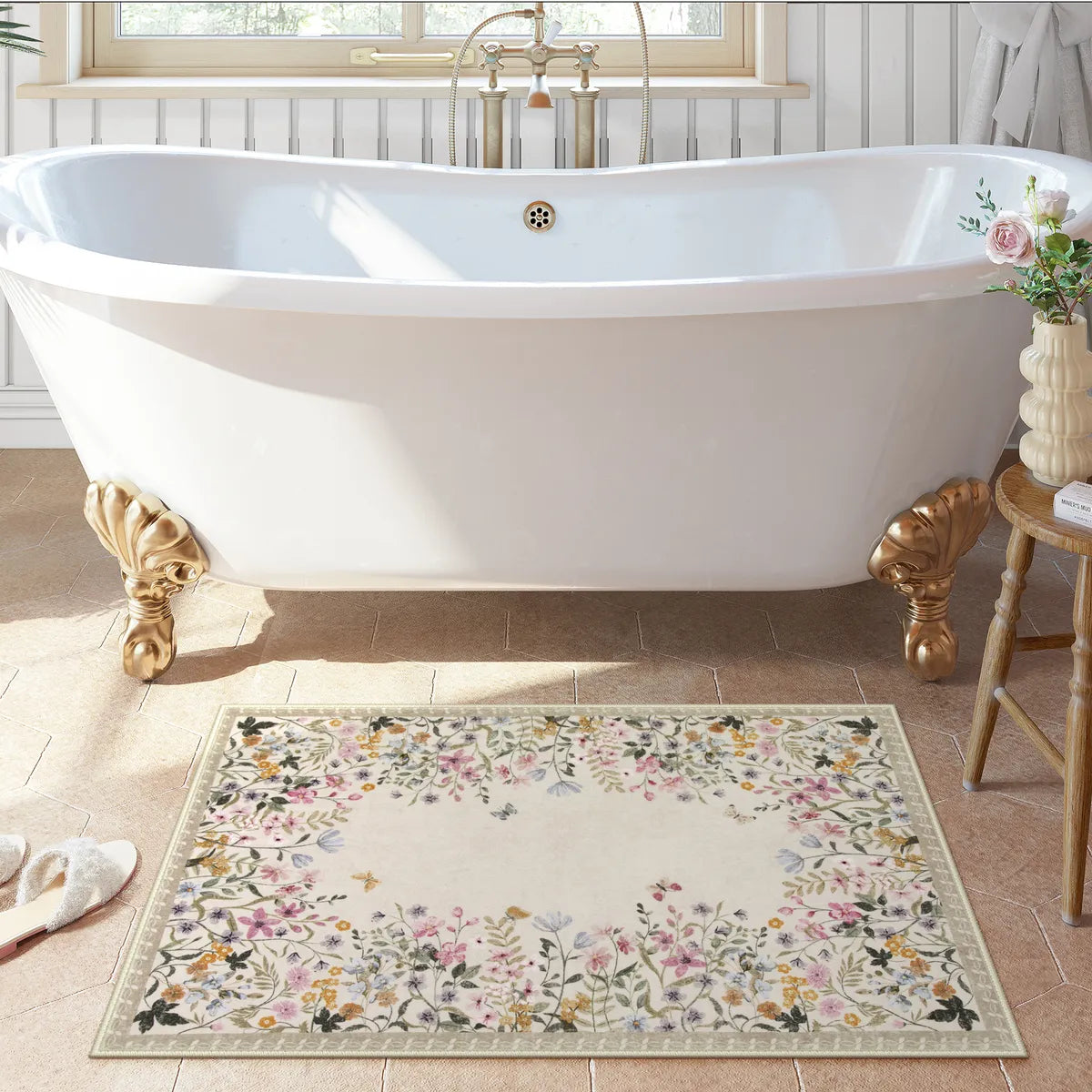
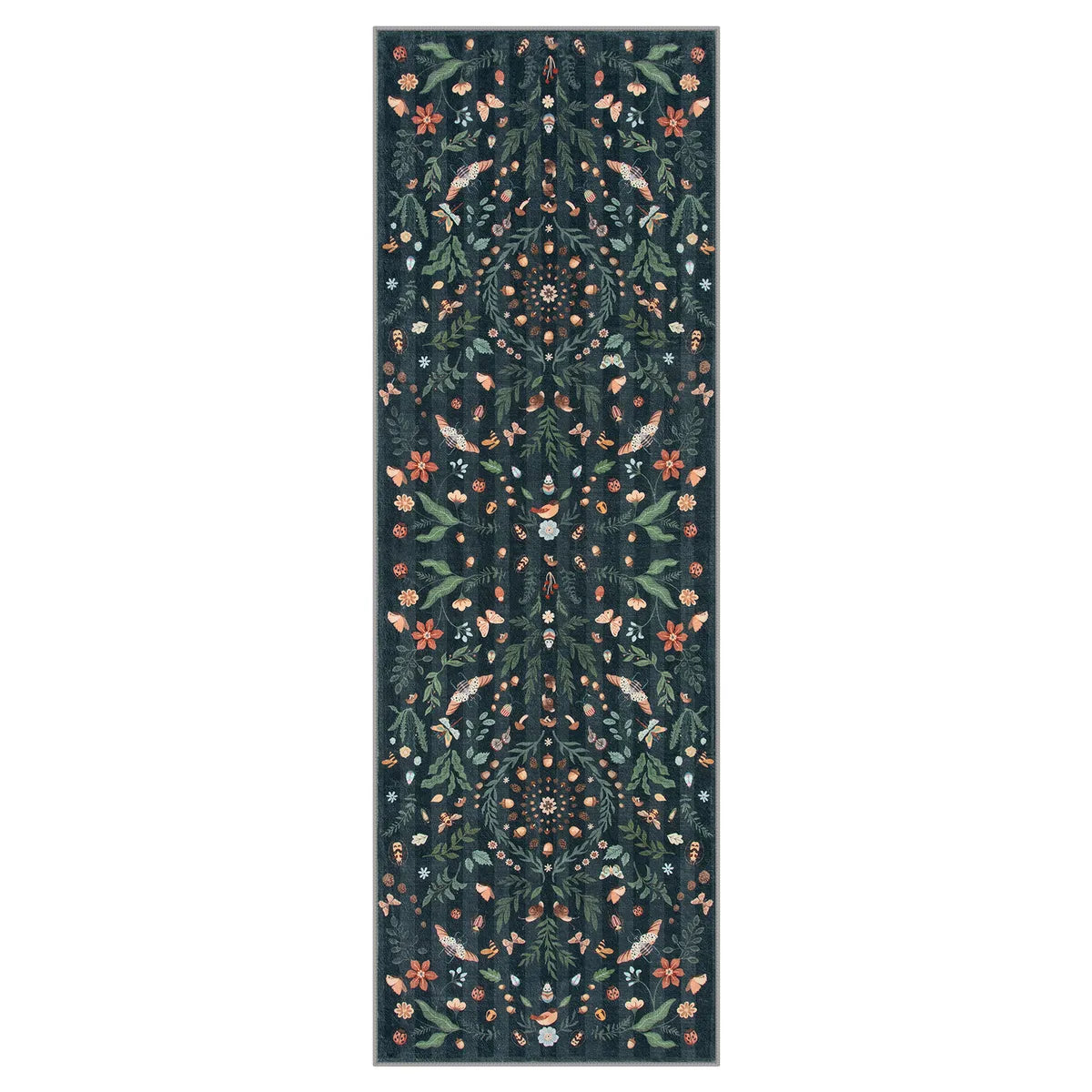
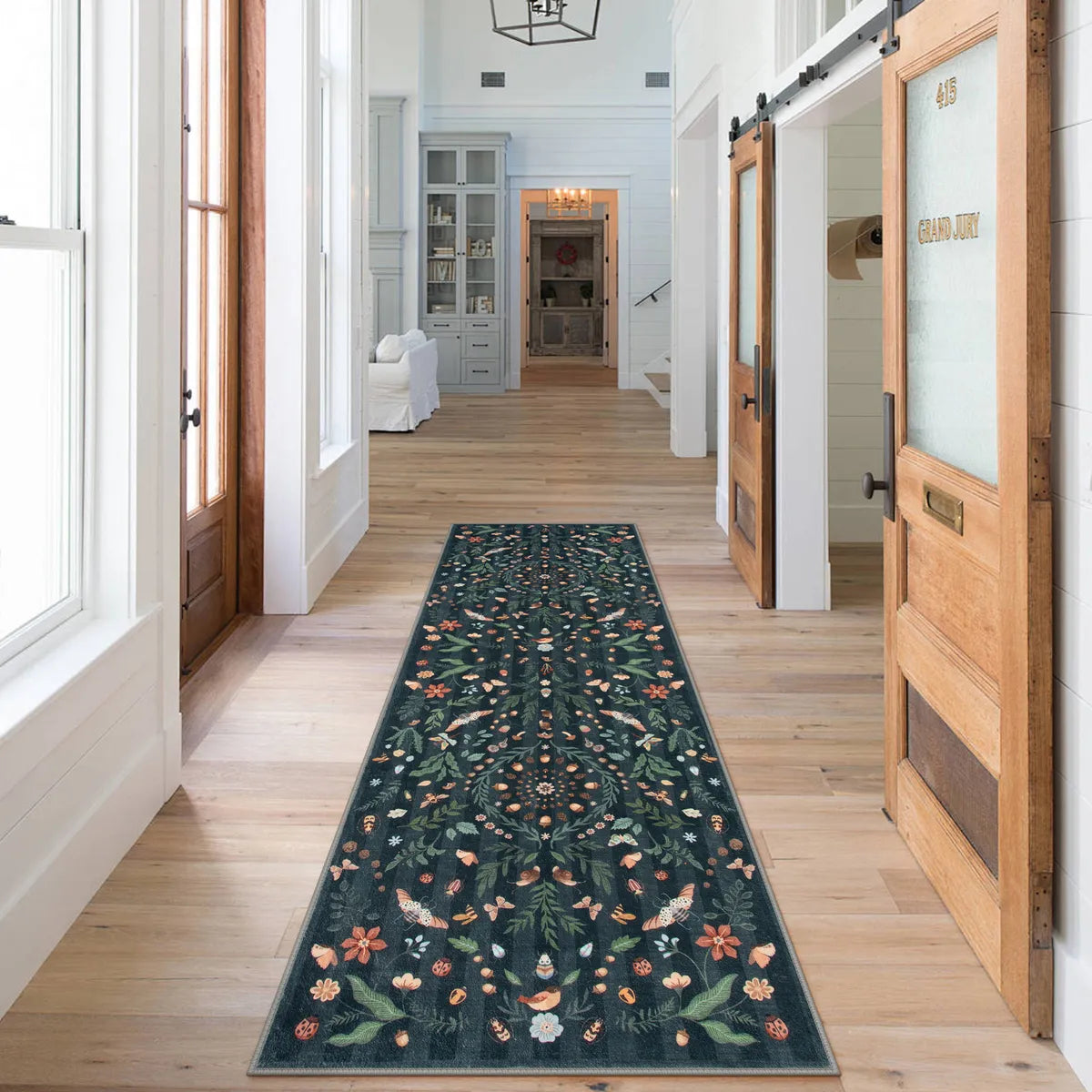
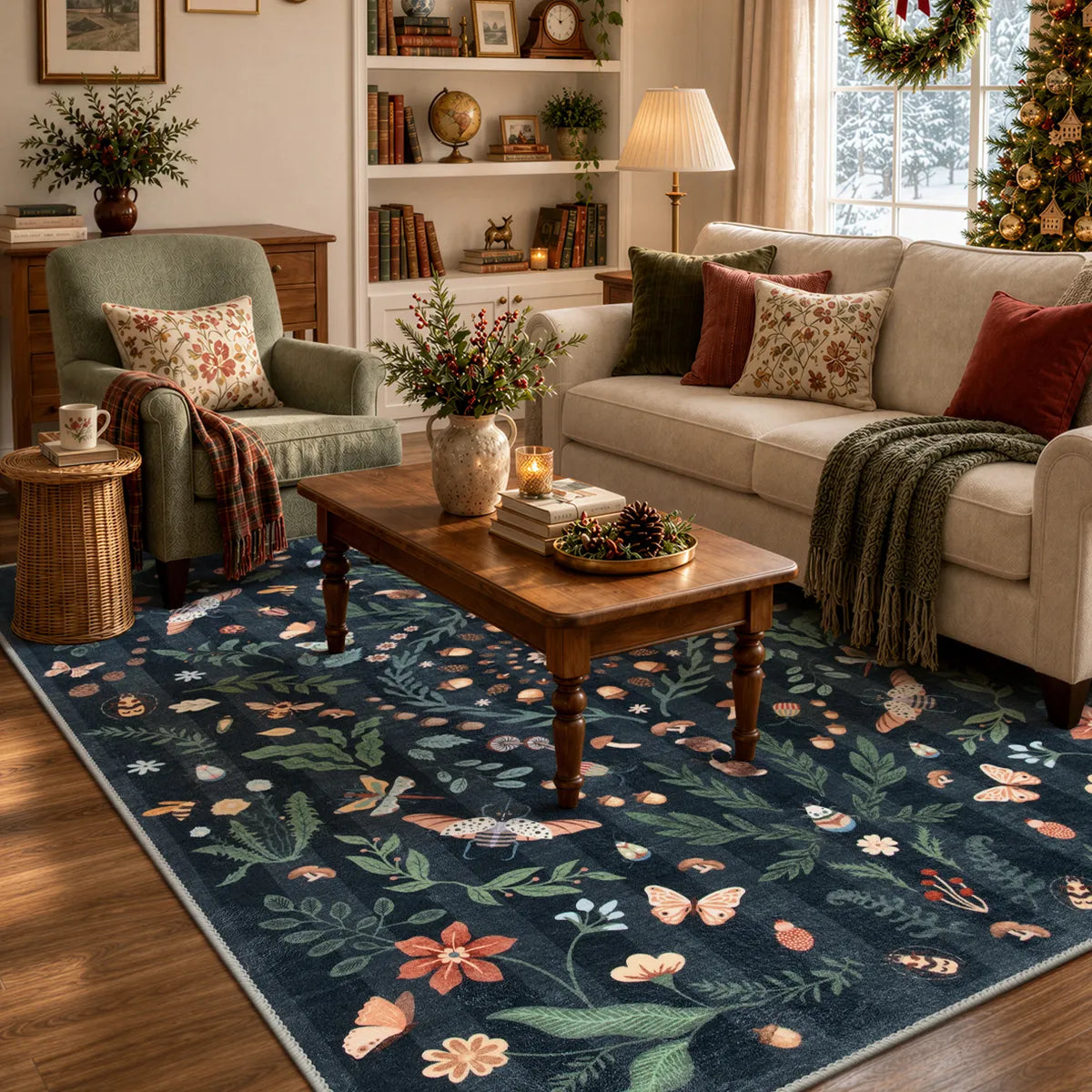
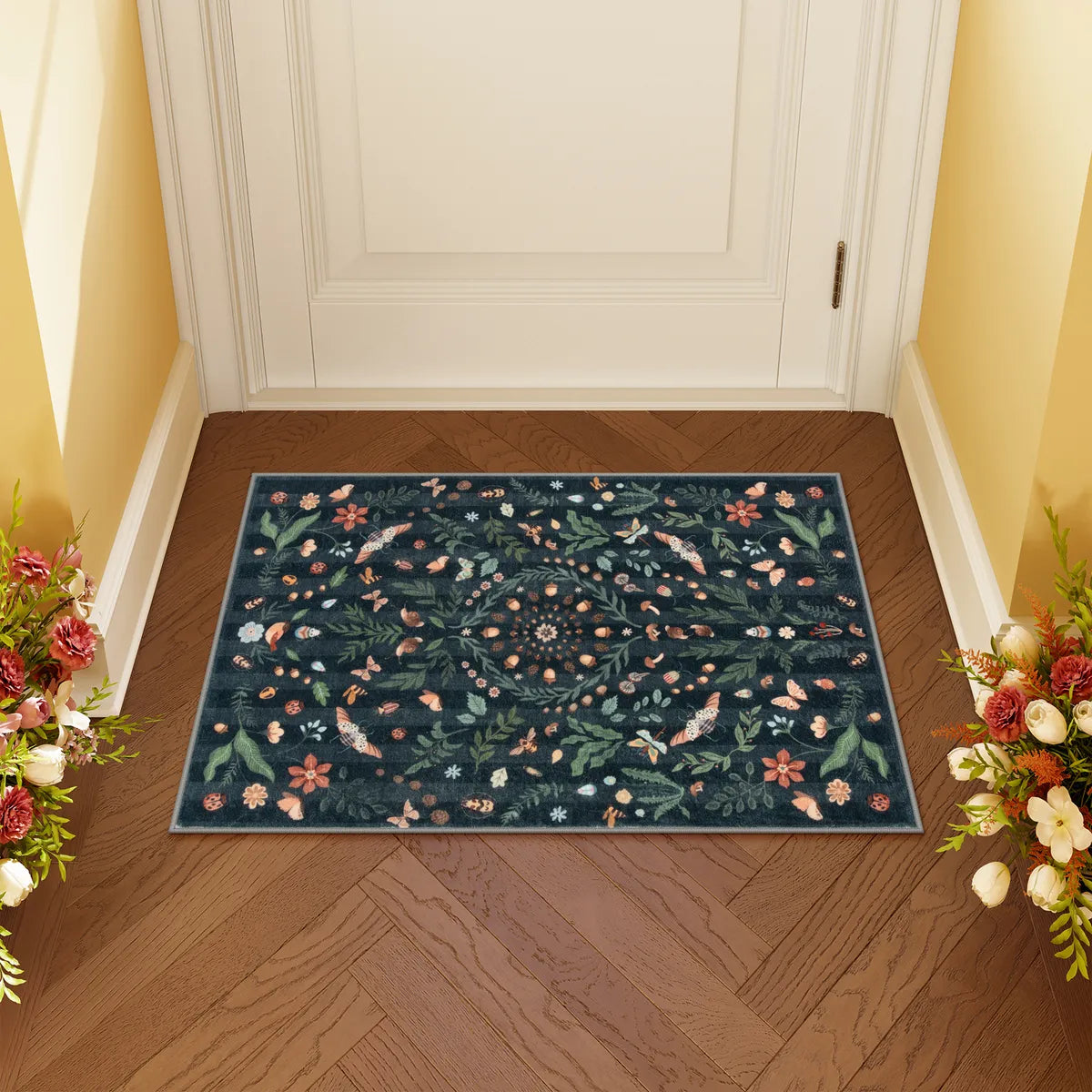
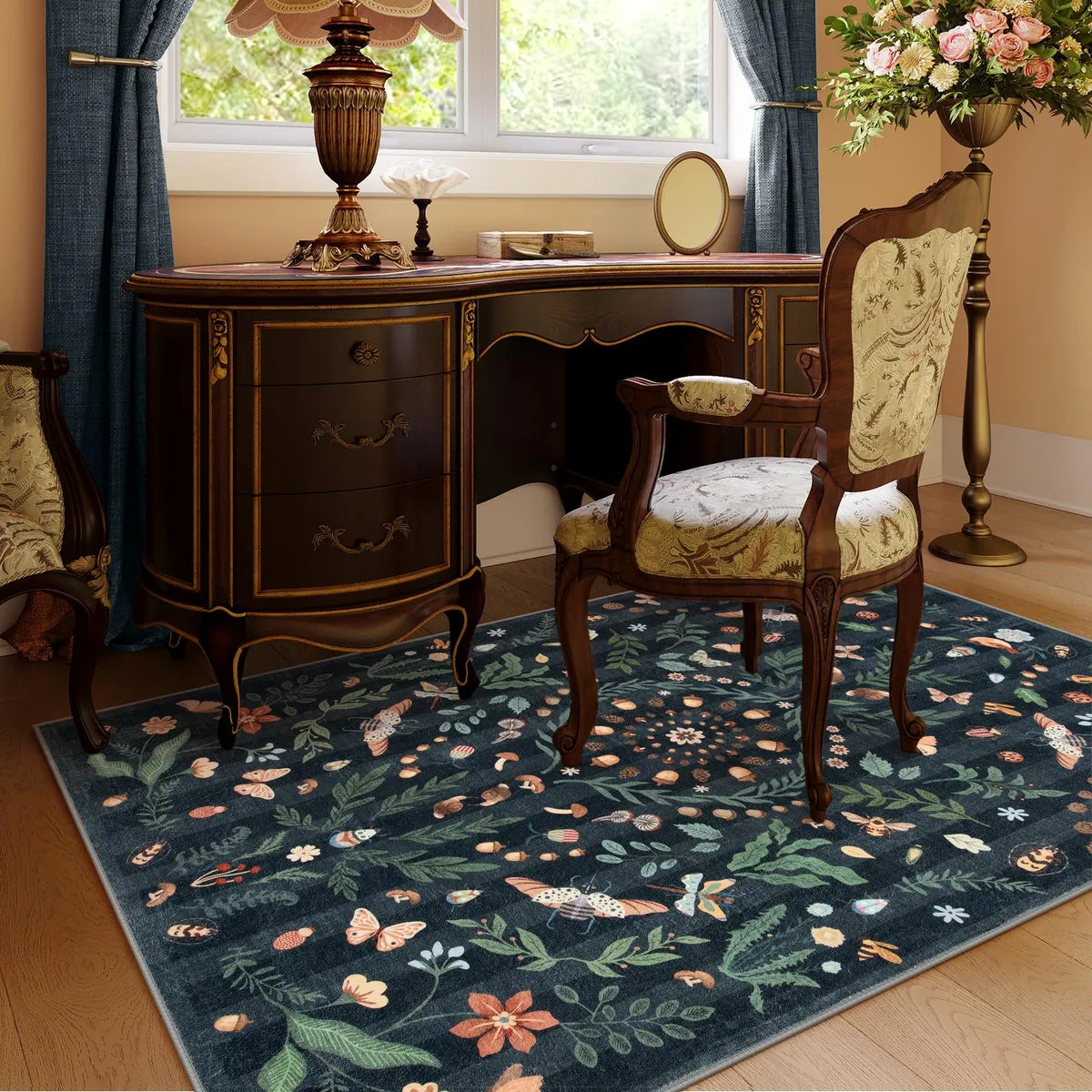
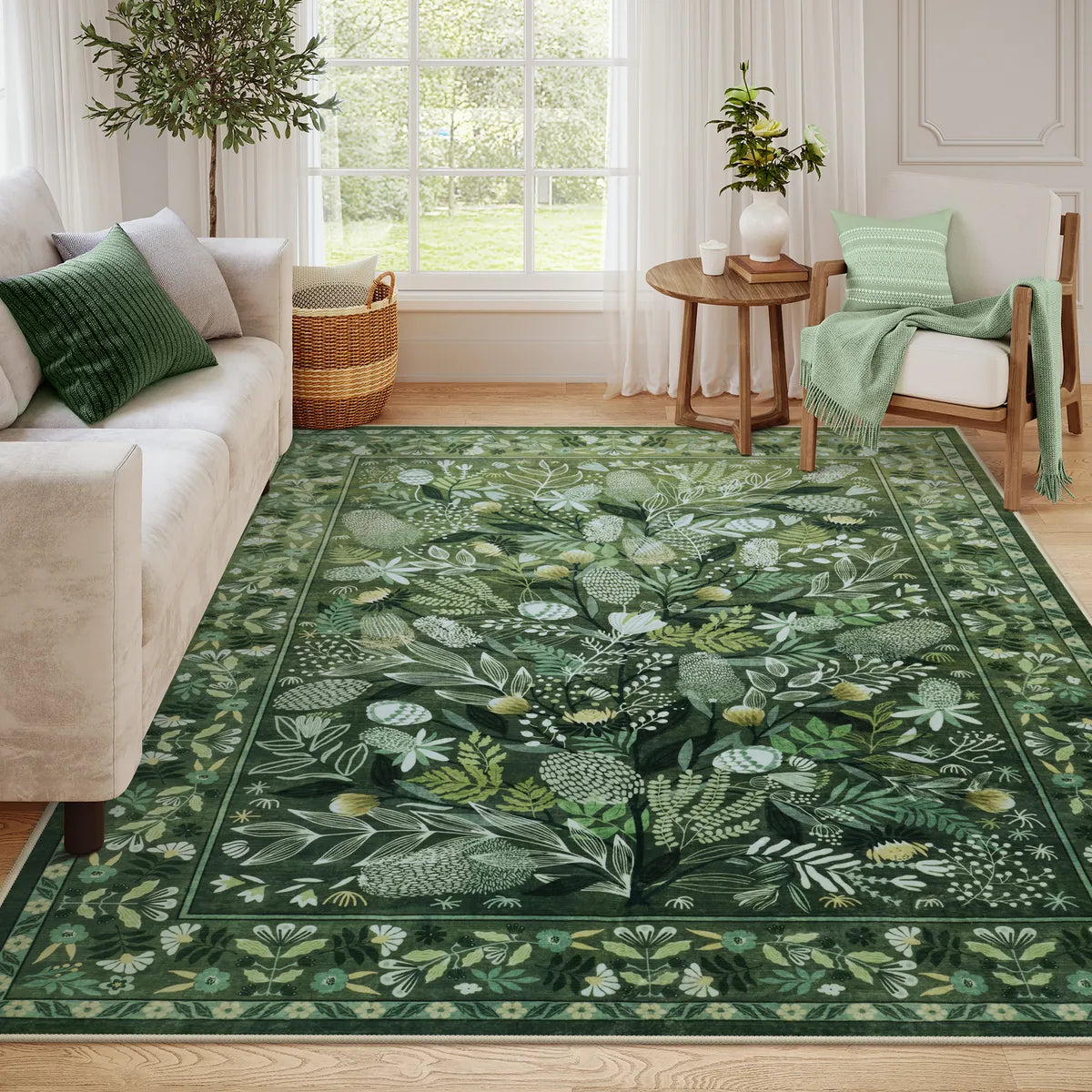
- Floral and botanical patterns use varied tones and organic shapes that absorb visual noise from daily activity, keeping the room looking fresh between cleans.
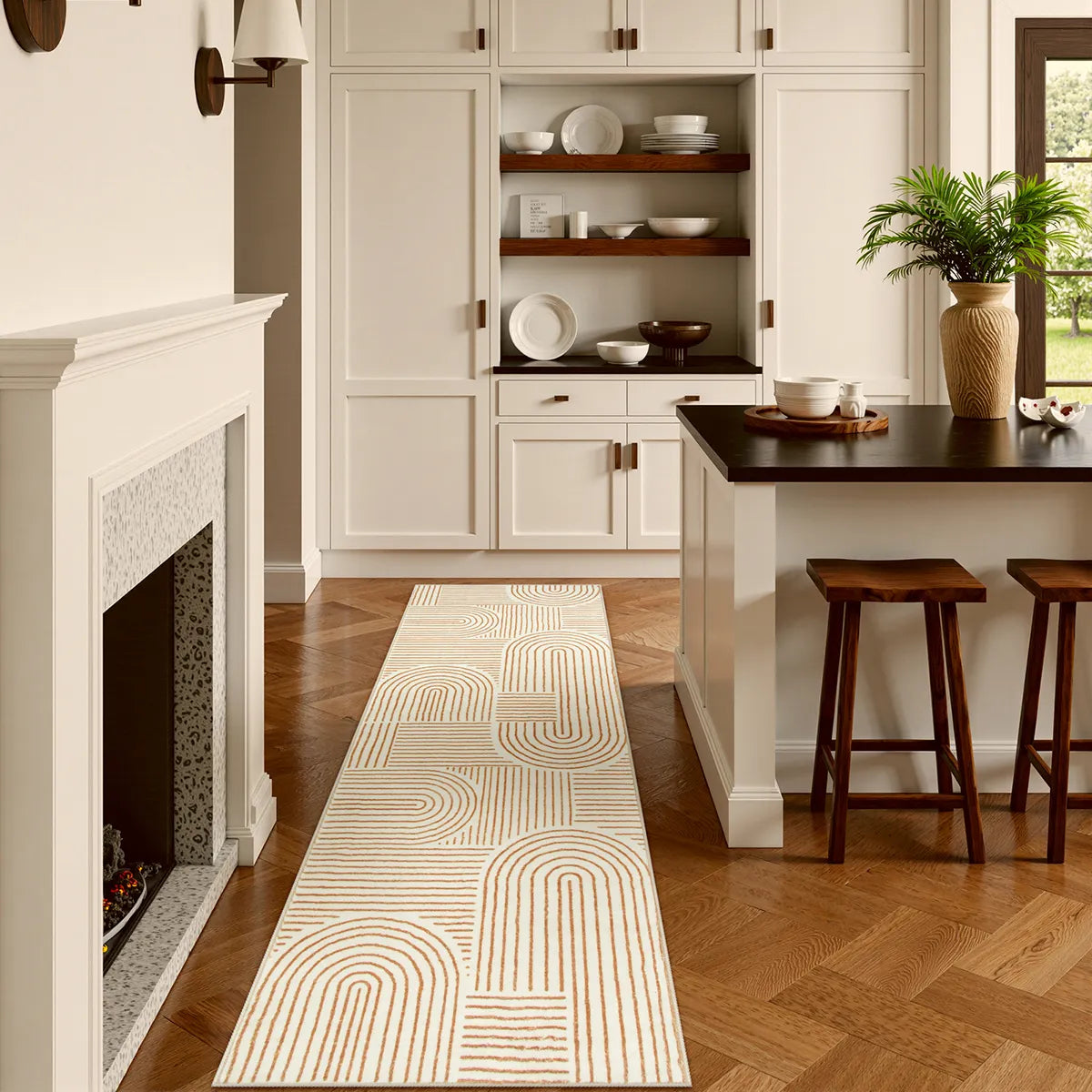
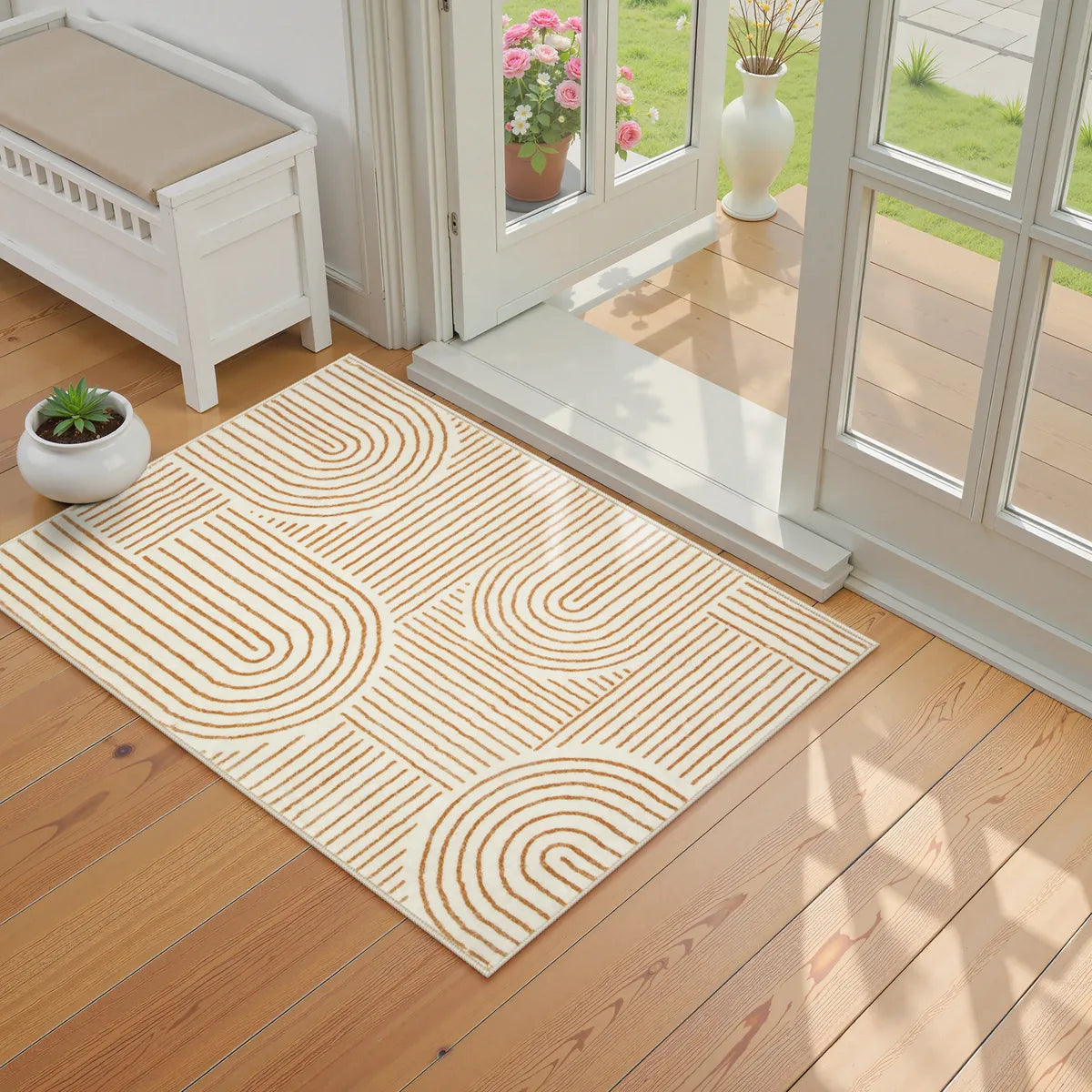
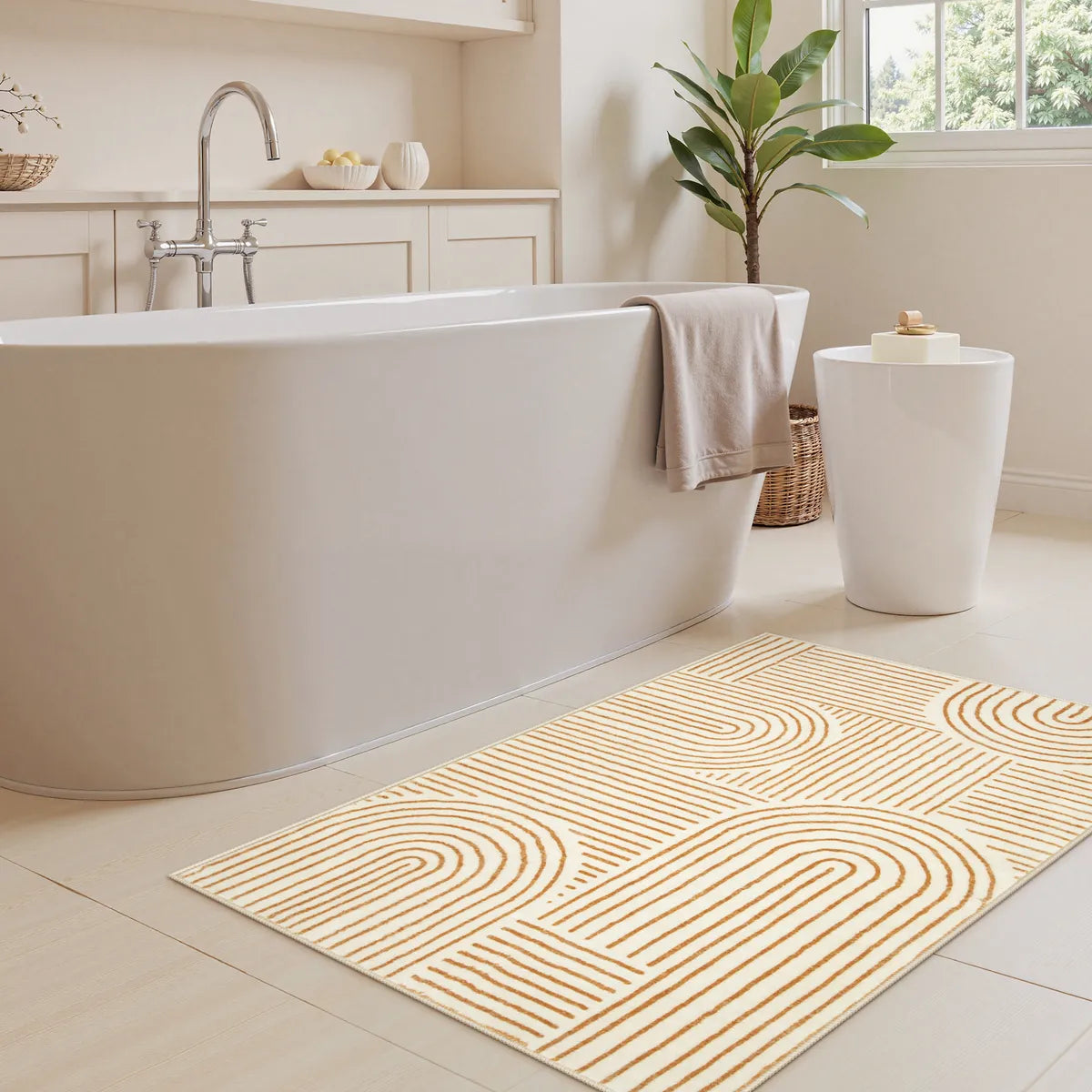
- Geometric patterns in neutral or two-tone colorways add structure and visual interest while naturally concealing light dirt and wear.
- Vintage and distressed-style designs work especially well in busy spaces because their intentionally irregular patterns make everyday wear blend right in.
- Bohemian and abstract patterns with multicolor palettes are forgiving of surface debris and pair well with a wide range of furniture tones.
For color, medium tones and warm neutrals such as beige, terracotta, olive, and warm gray offer the best balance between style and practicality. They work with a wide range of furniture colors and show significantly less daily wear than very light solid options.
The Practical Advantage of Washable Rugs for Living Rooms
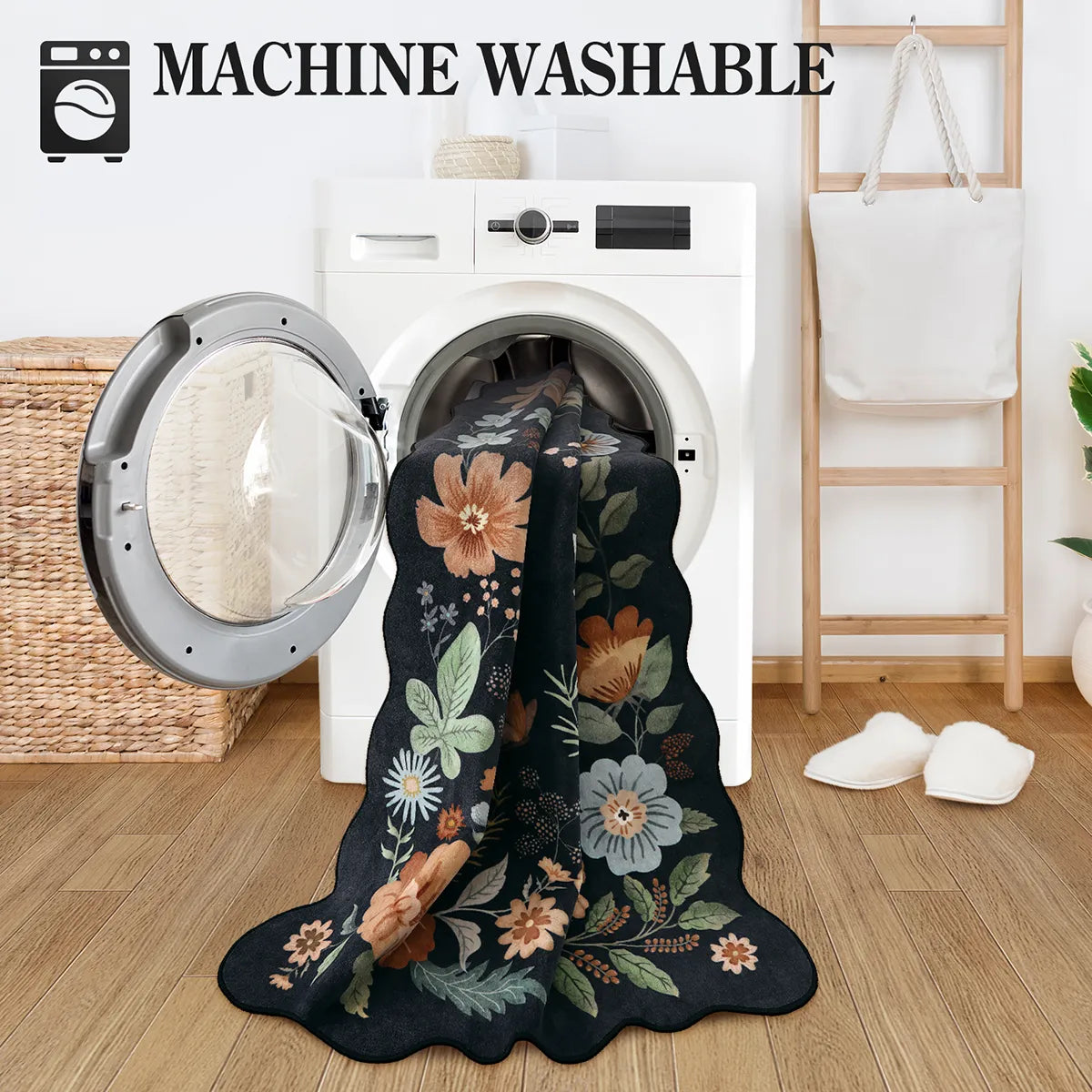
Washable rugs for living rooms are specifically constructed to go through a standard home washing machine without losing their shape, color, or structural integrity. That distinction matters enormously in a space that accumulates dust, pet dander, and the occasional spill on a weekly basis.
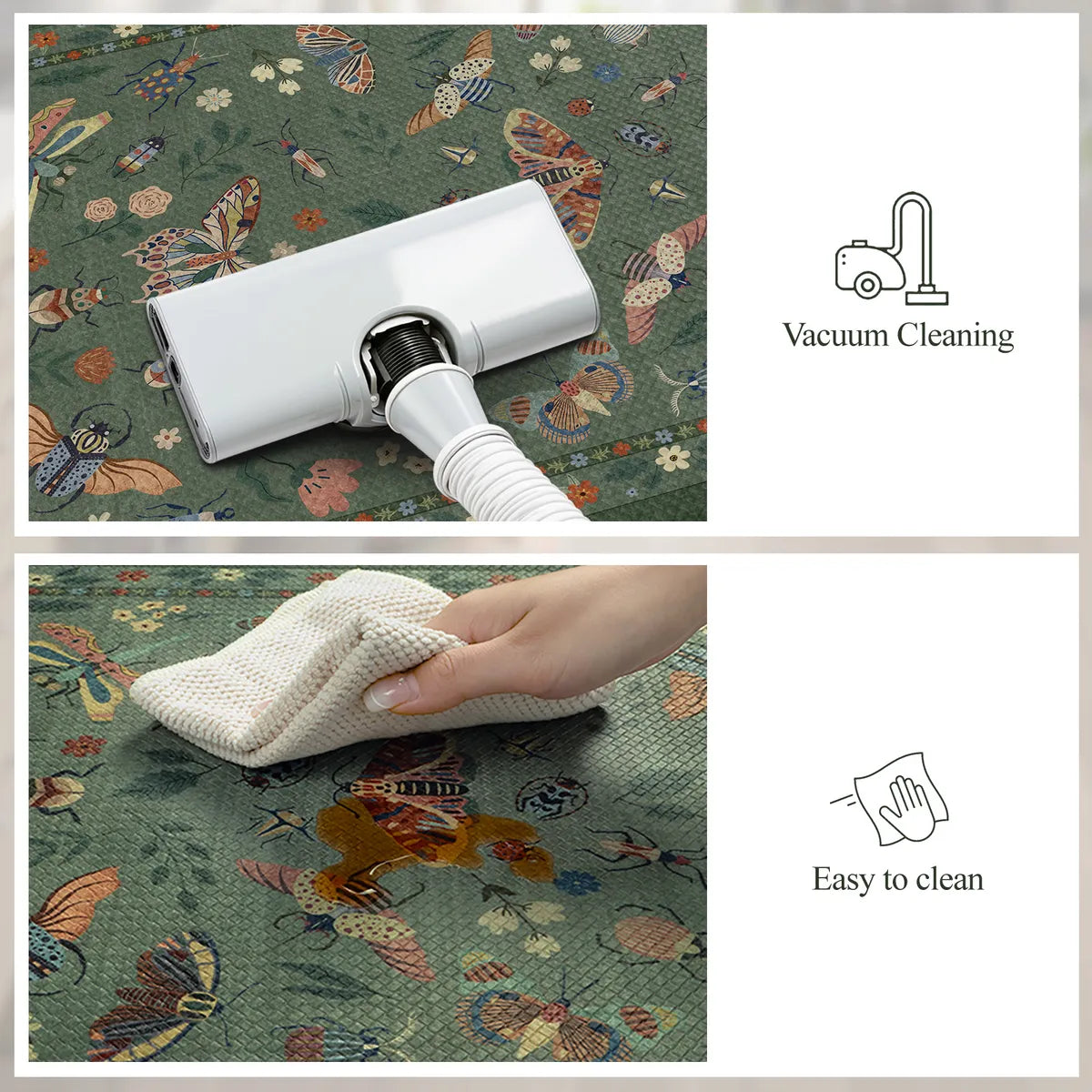
Regular washing removes buildup that vacuuming alone cannot reach. The practical advantages add up consistently across every household type:
- Machine washable fibers maintain their color and texture through regular cleaning cycles, keeping the rug looking newer for longer.
- Built-in non-slip backing keeps the rug stable on hard floors, which matters especially in high-traffic entry points and seating areas.
- Spillproof surface construction gives you a window of time to wipe up spills before they absorb, reducing the chance of permanent staining.
- Pet-friendly construction handles fur, dander, and the demands of animal activity without compromising on comfort or visual appeal.
For any living room that sees real daily use, washability is what turns a good-looking rug into a genuinely long-term investment.
Choose a Rug Built for the Life You Actually Live
The best living room rugs are not the ones that look good on day one. They are the ones that still look good a year in. Prioritize spillproof construction, non-slip backing, and washable materials. Get the size right for your furniture layout, choose colors and patterns that match your household's activity level, and the rug will hold up through everything your living room throws at it.
FAQs
Q1. How Often Should You Wash a Washable Rug in a Living Room?
For most households, washing a living room rug every one to three months is a reasonable schedule. Homes with pets or young children may benefit from more frequent washing, while lower-traffic households can stretch the interval further. Regular vacuuming between washes helps maintain the rug's appearance and reduces the buildup that makes washing necessary.
Q2. Can You Put a Large Rug Under a Sectional Sofa?
Yes, and a large rug under a sectional is often the best way to anchor an open-plan living space. For a full-sized sectional, a 9x12 or 10x14 rug typically provides enough coverage for the front legs of all sections to rest on the rug. Sizing up is almost always the better choice when working with a large sectional arrangement.
Q3. Are Washable Living Room Rugs as Durable as Non-Washable Ones?
Washable living room rugs are engineered specifically to maintain their structure through repeated machine washing, which means durability is built into the construction rather than compromised by it. The fibers, dyes, and backing are all selected to hold up through regular cleaning cycles. In a busy living room, the ability to clean the rug properly actually extends its lifespan rather than shortening it.
Q4. What Is the Difference Between Stain-Resistant and Spillproof Rugs?
Stain-resistant rugs are treated to slow the absorption of liquids, giving you time to clean up before a spill sets in. Spillproof rugs take this further with surface construction that prevents liquid from penetrating the fibers at all during the window of time before cleanup. Both features improve a rug's performance in busy living rooms, with spillproof construction offering a stronger level of protection overall.