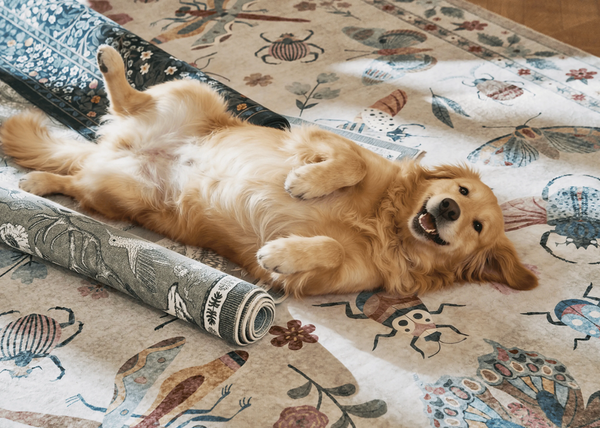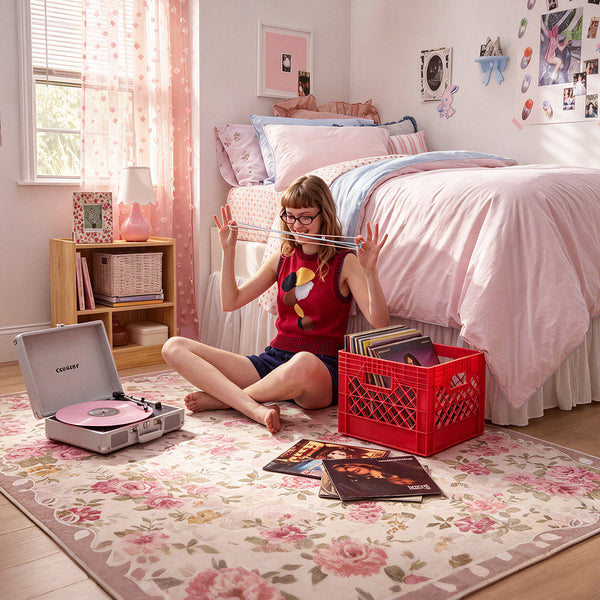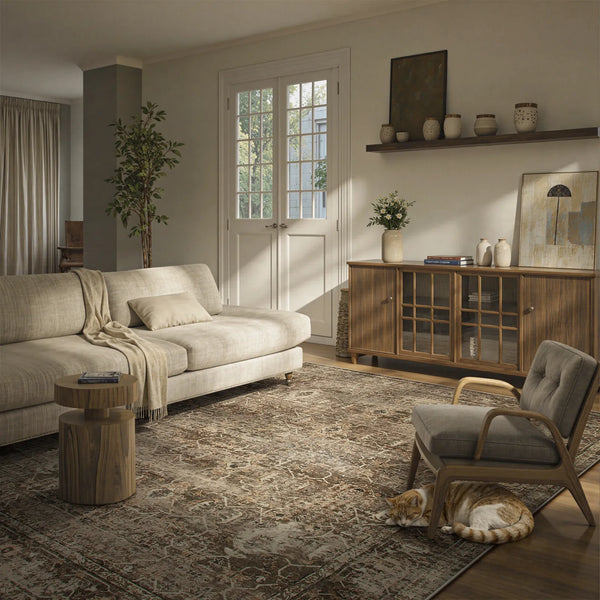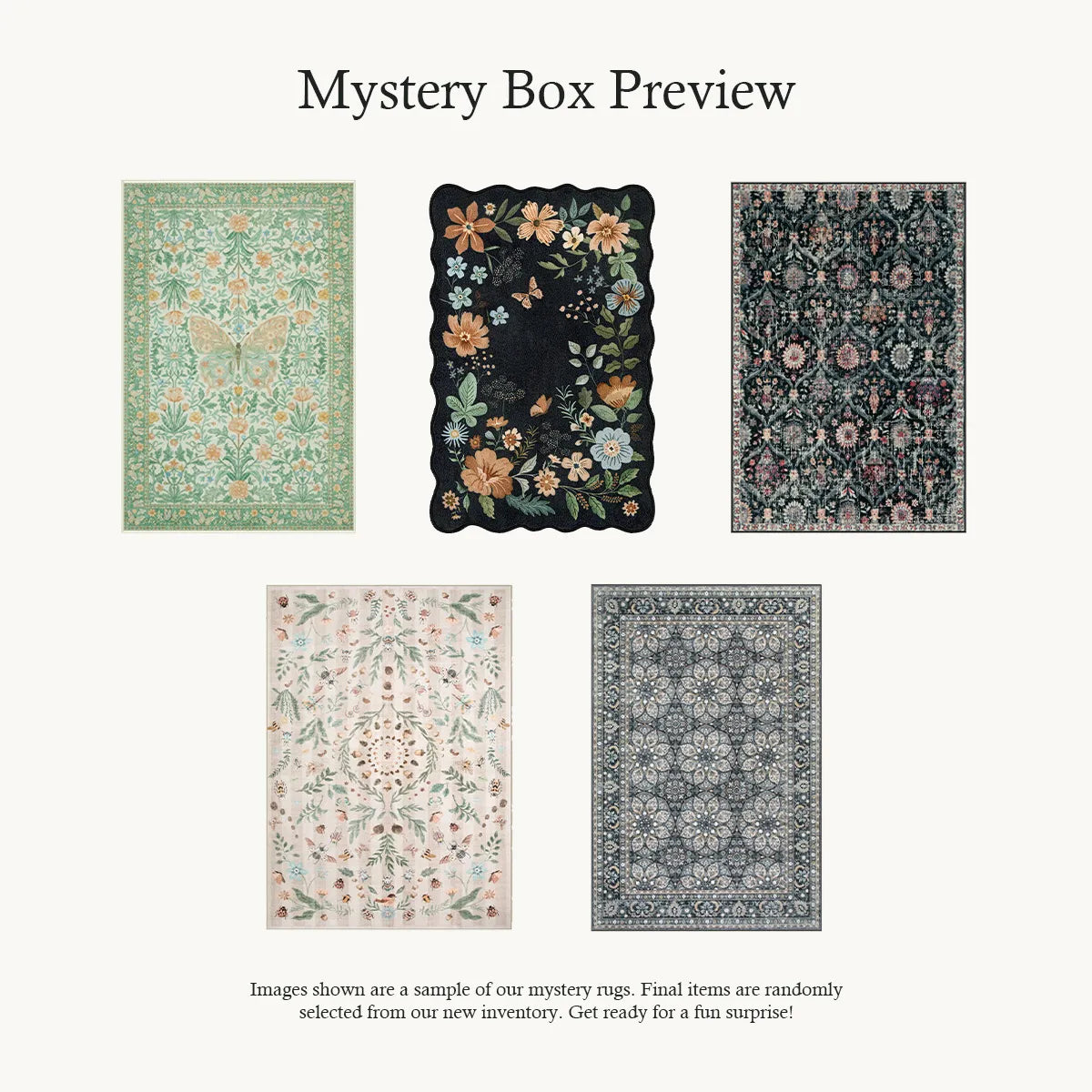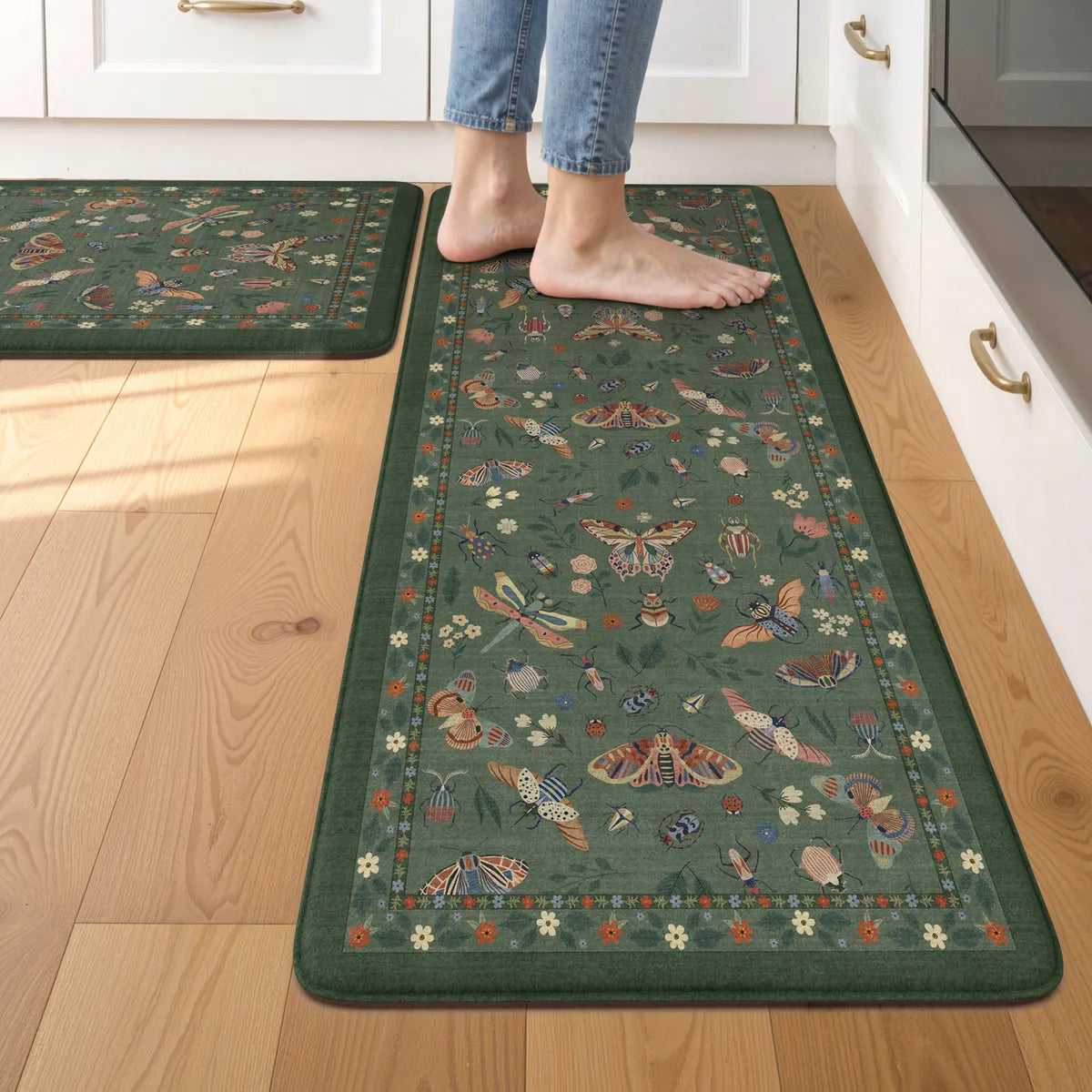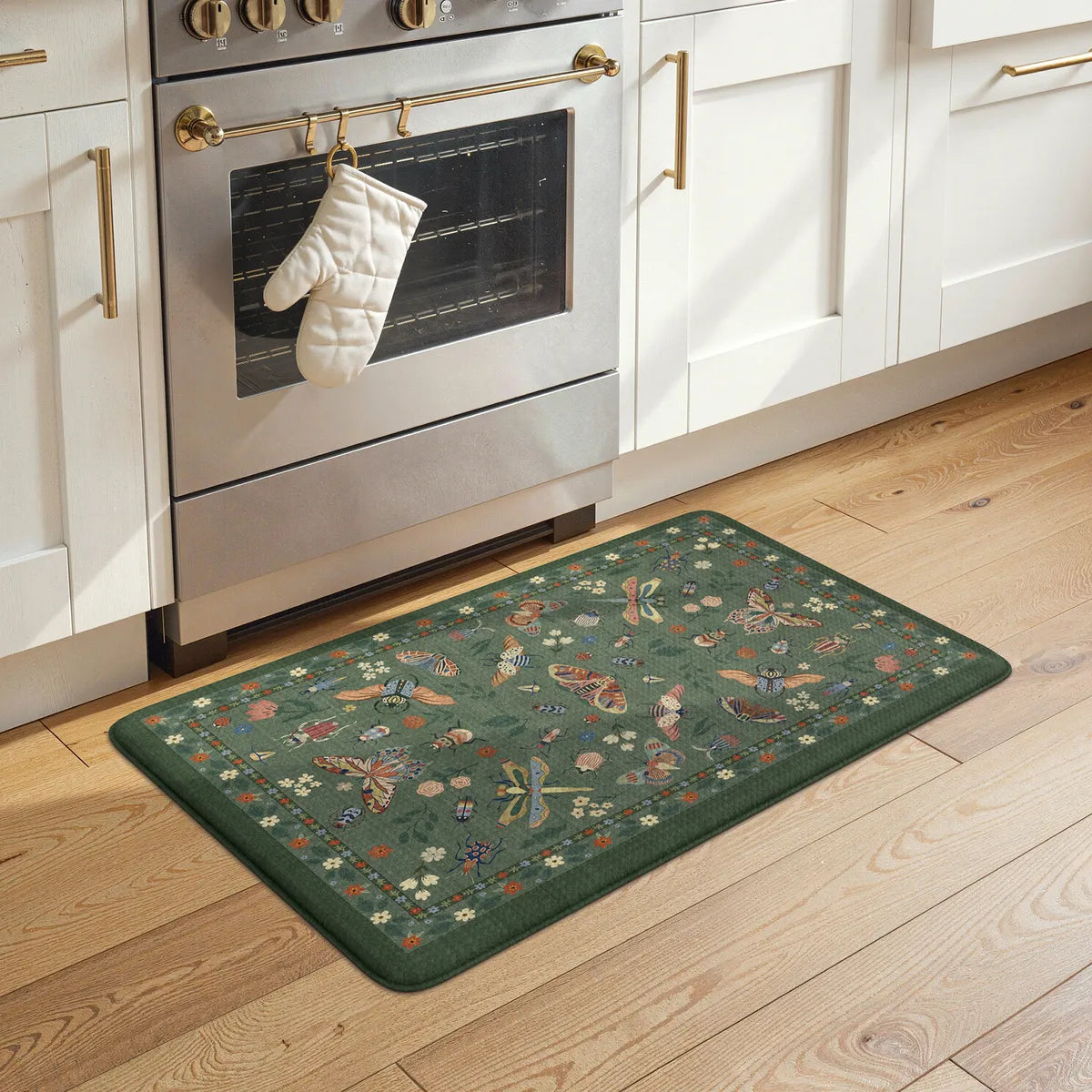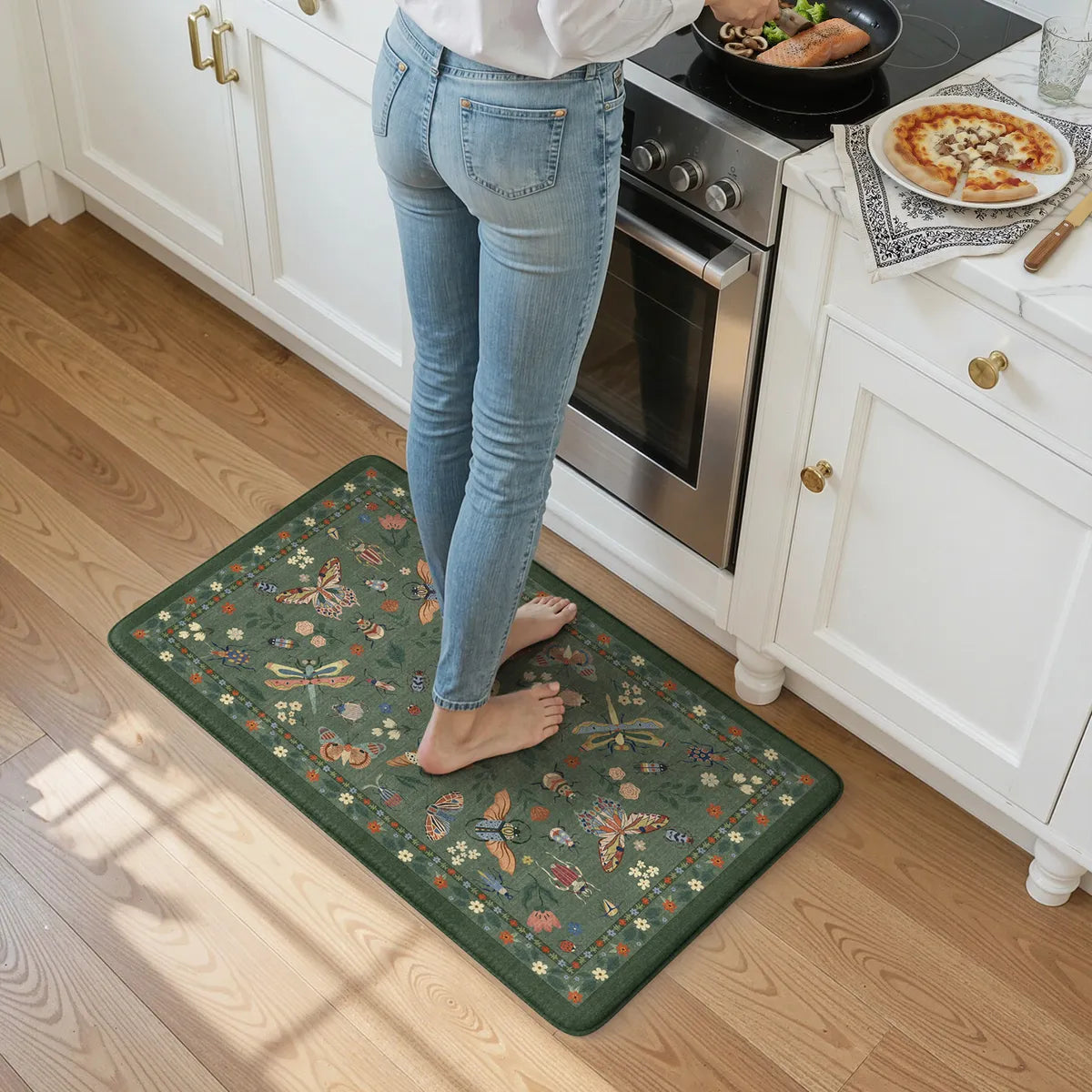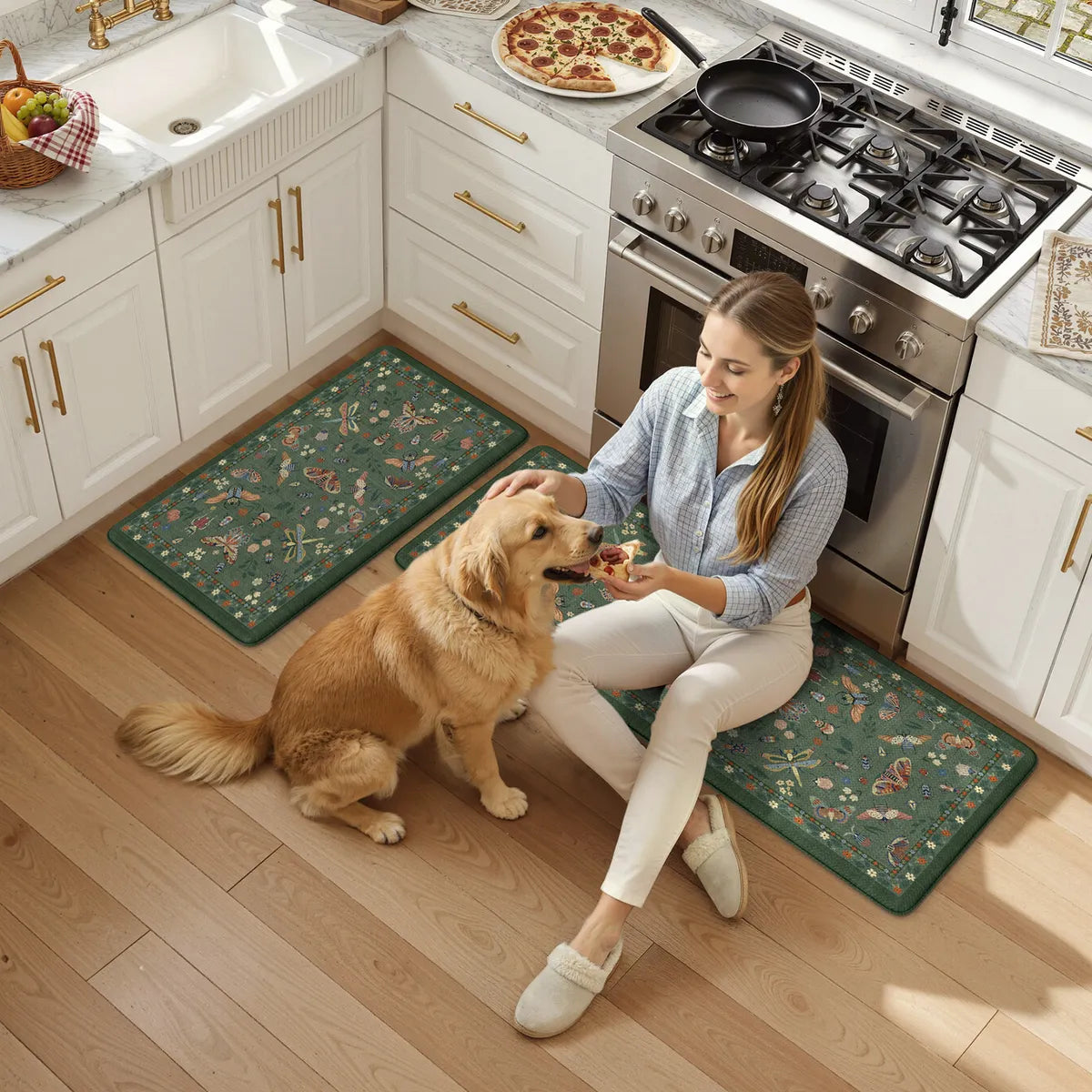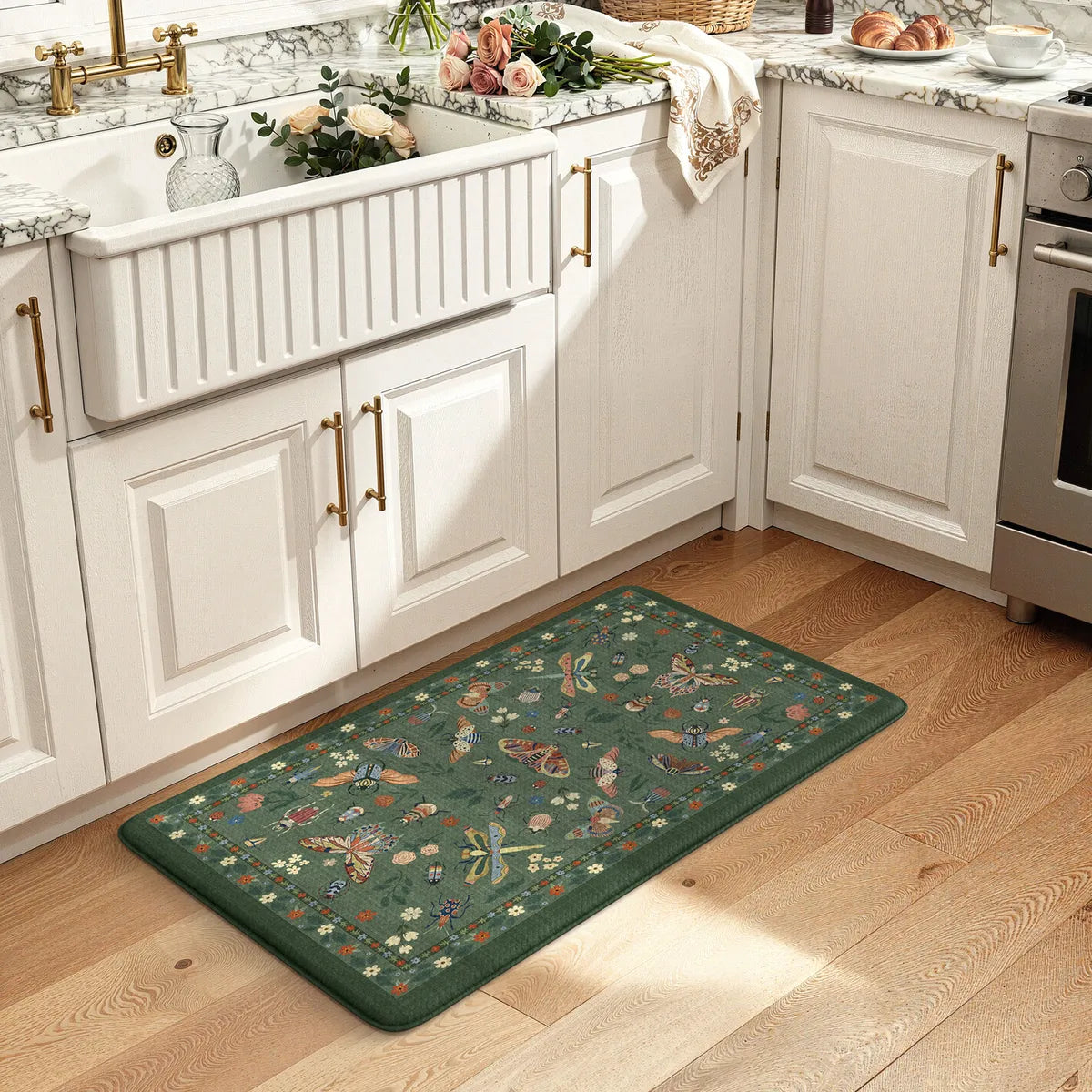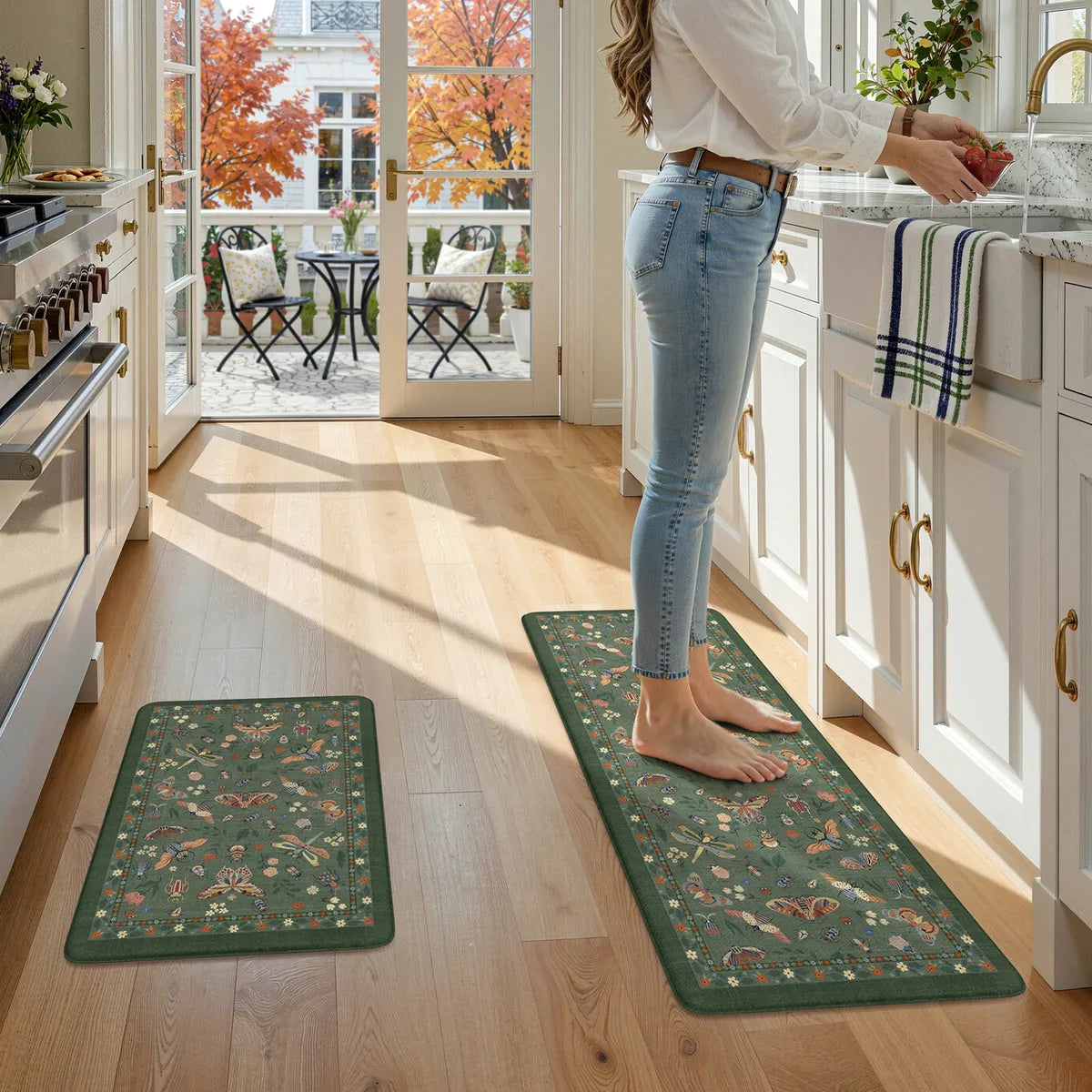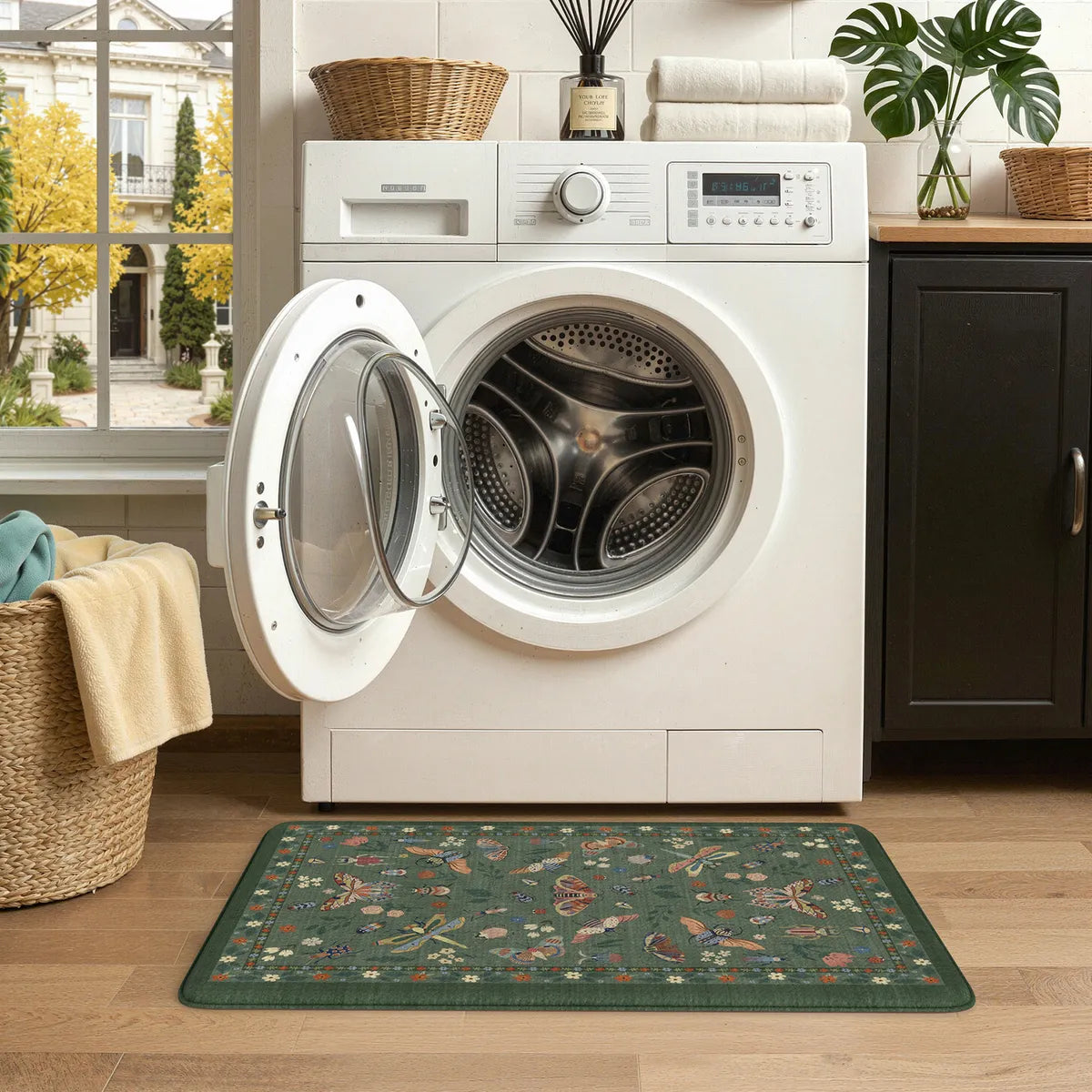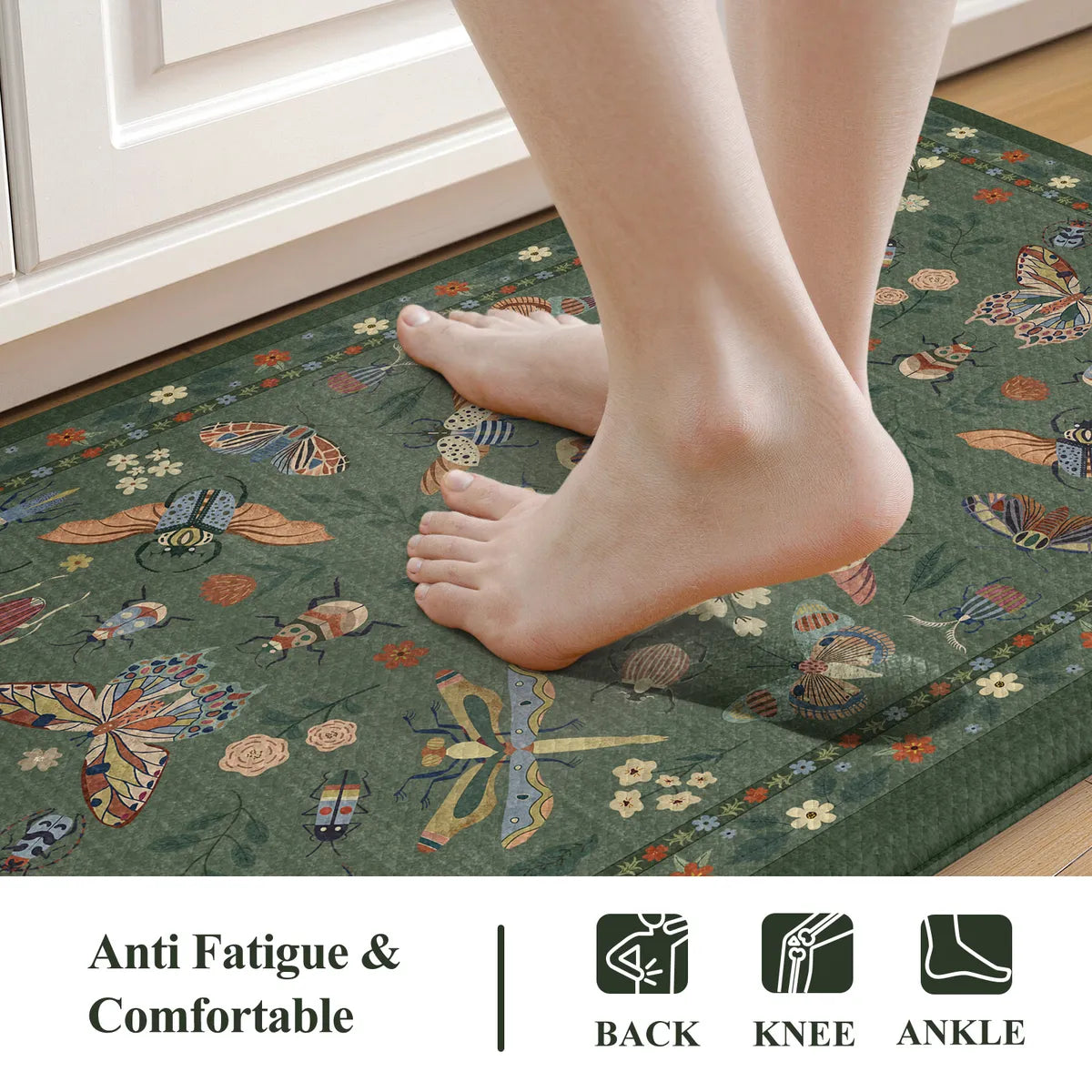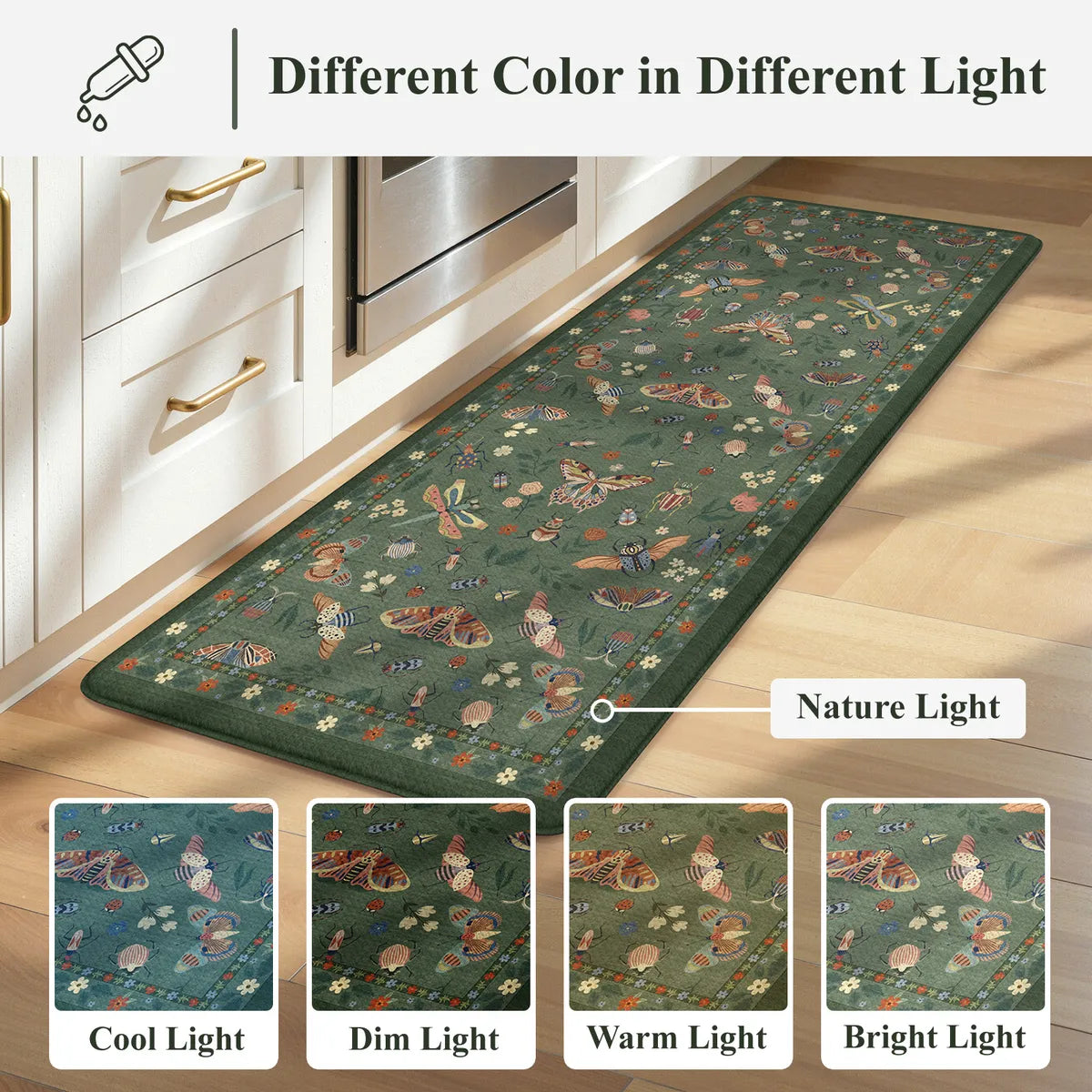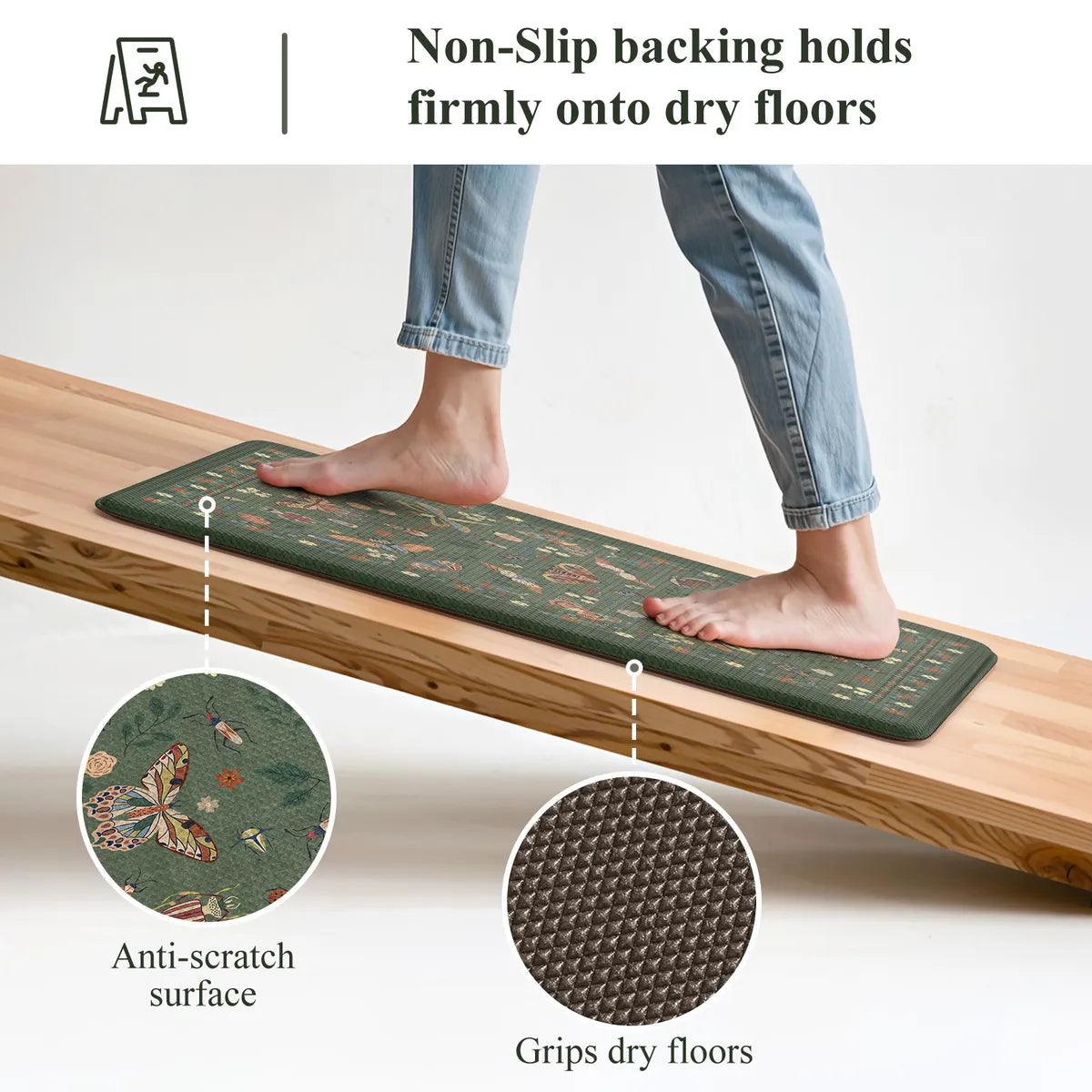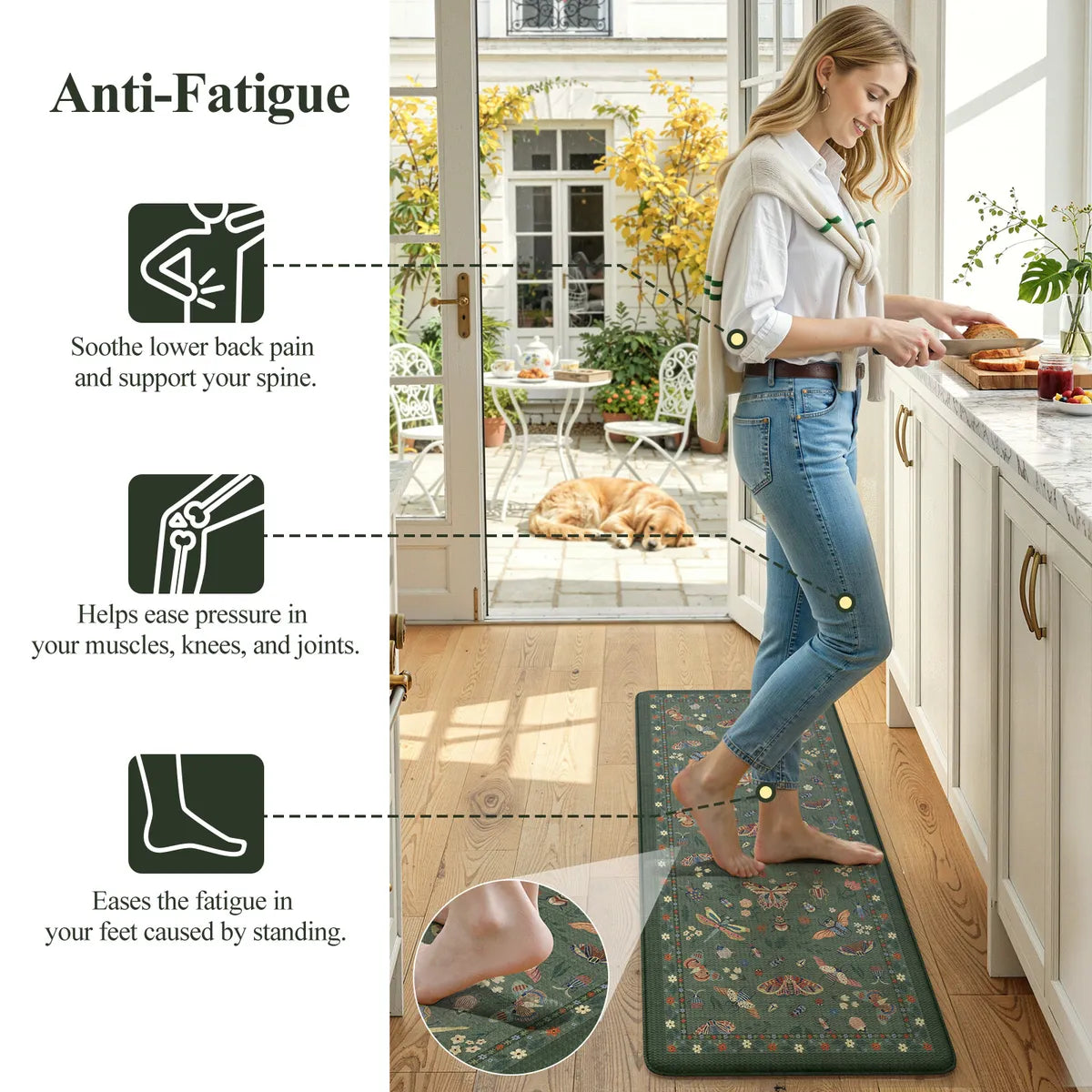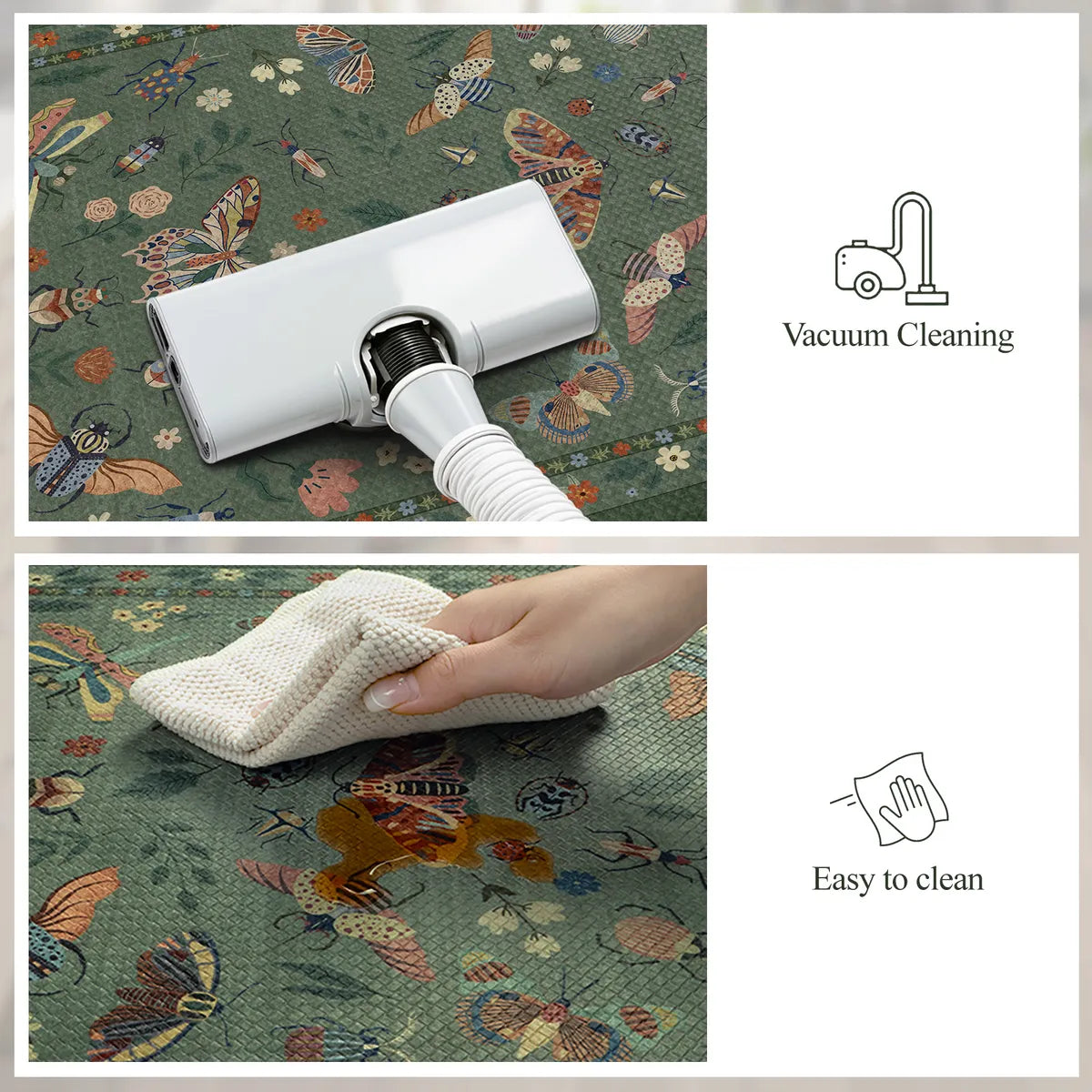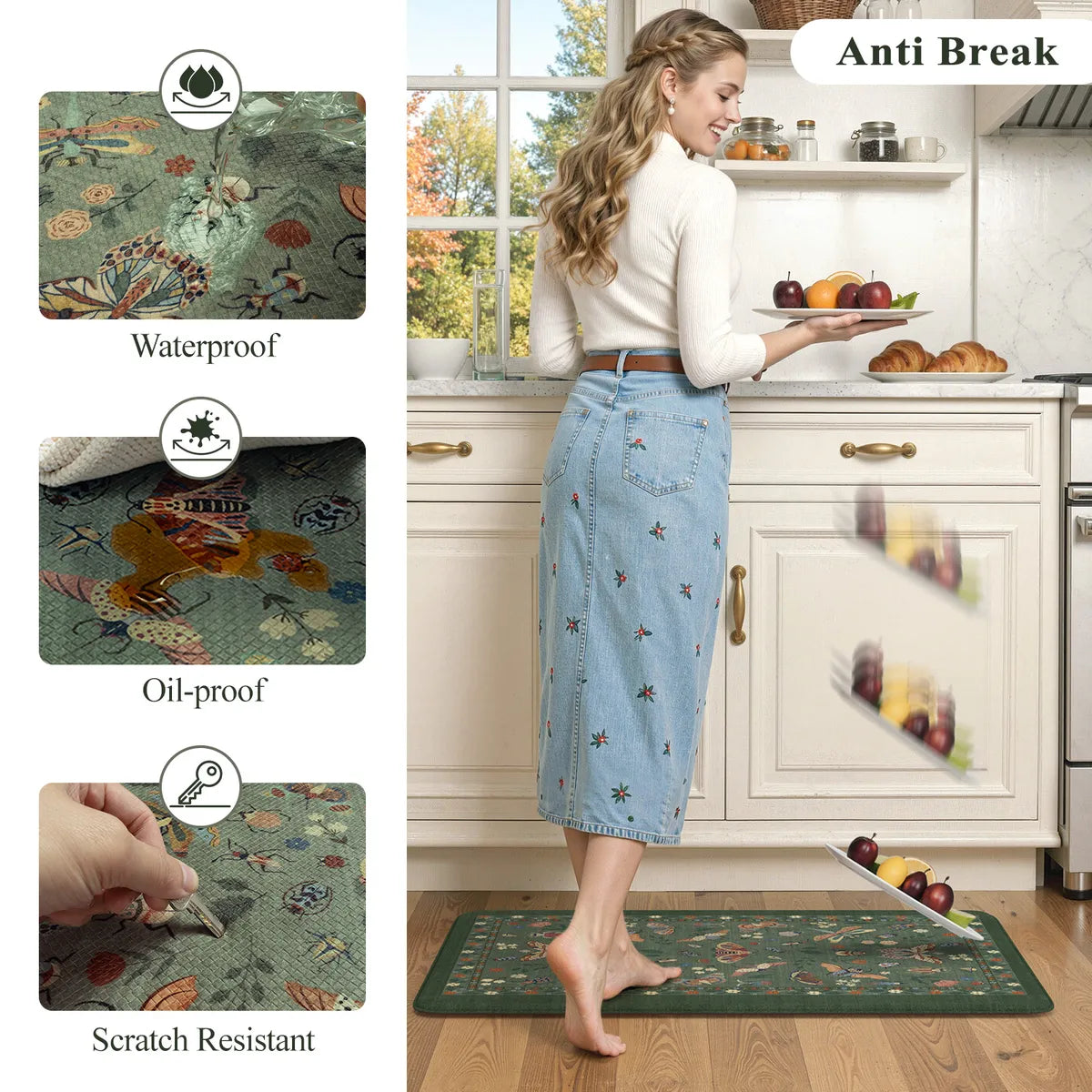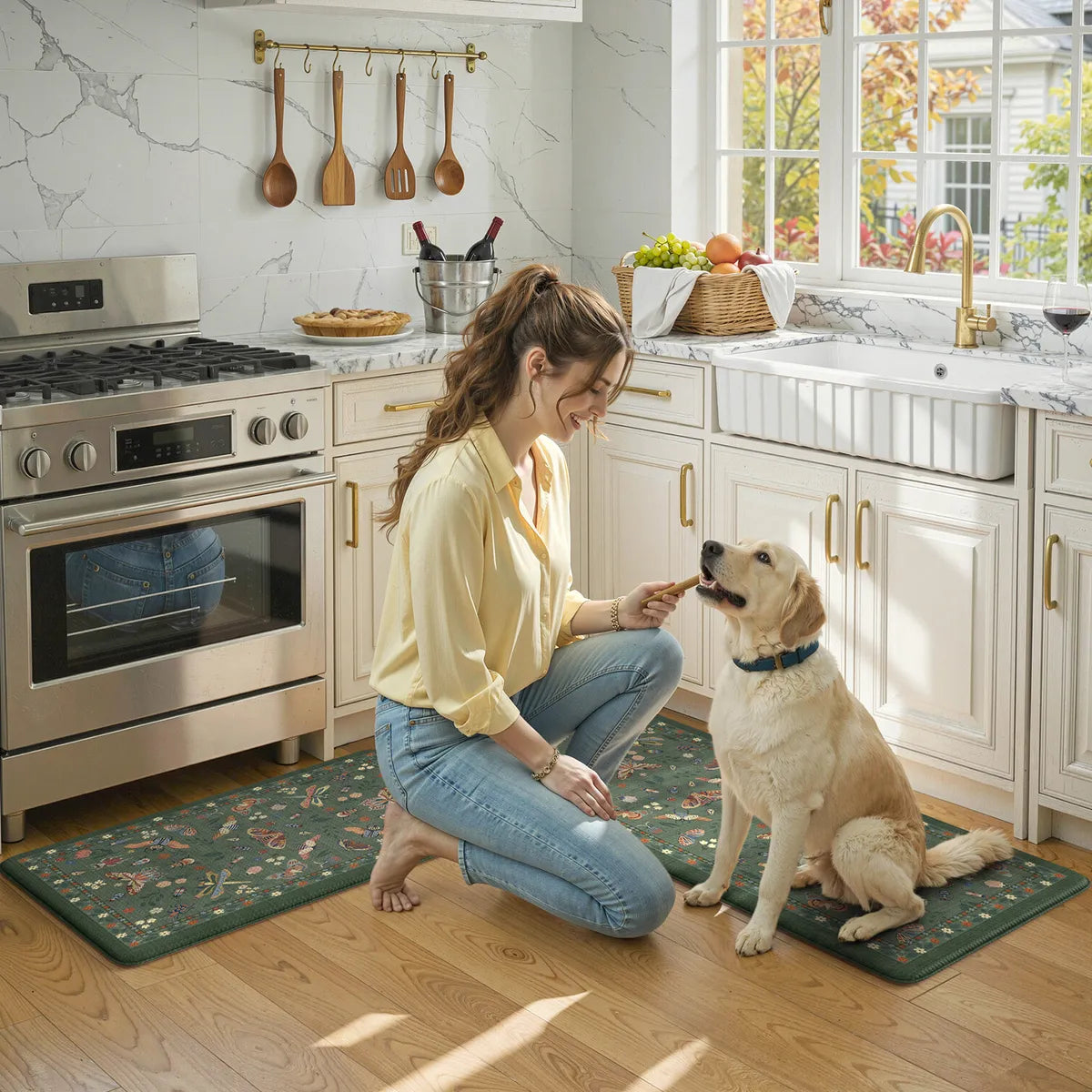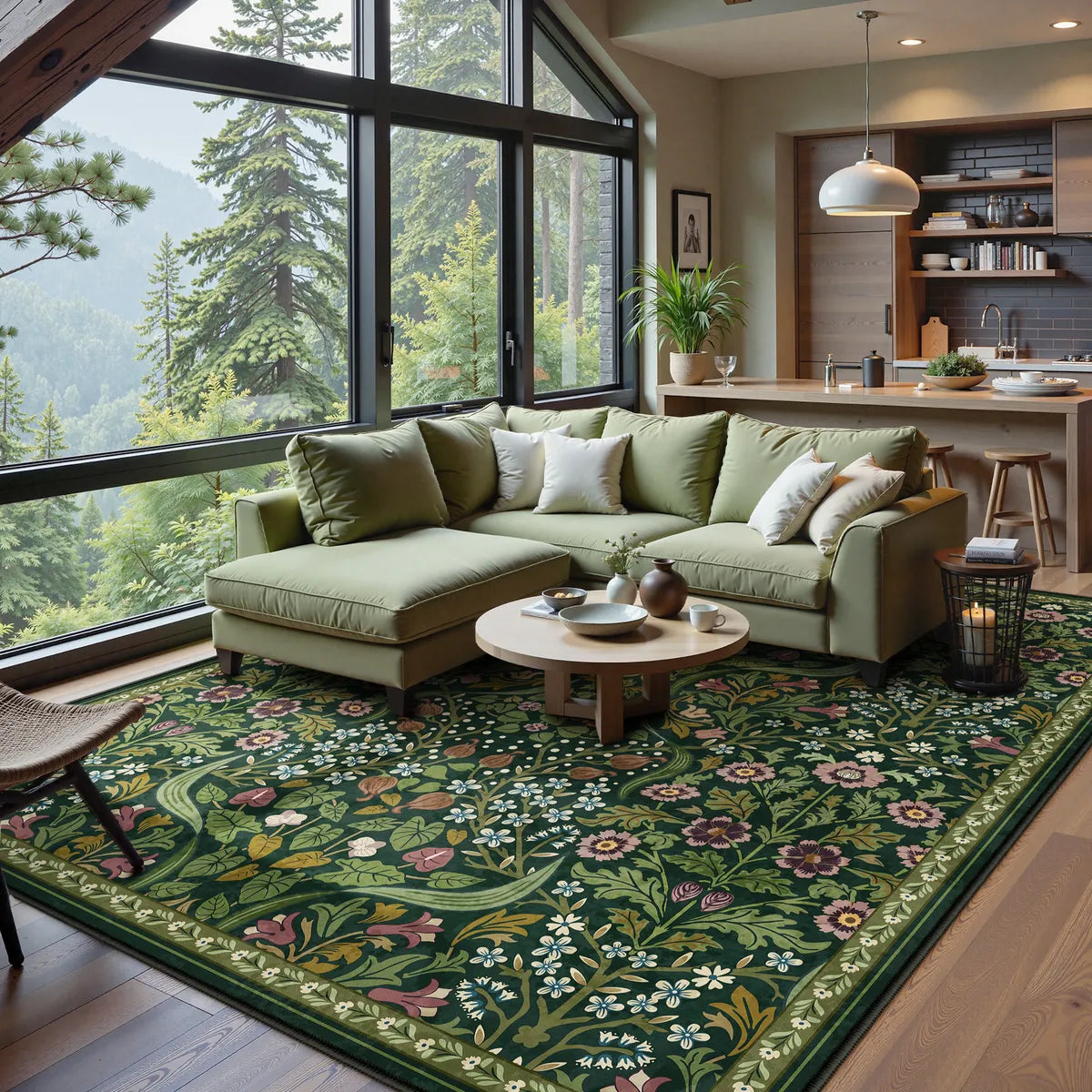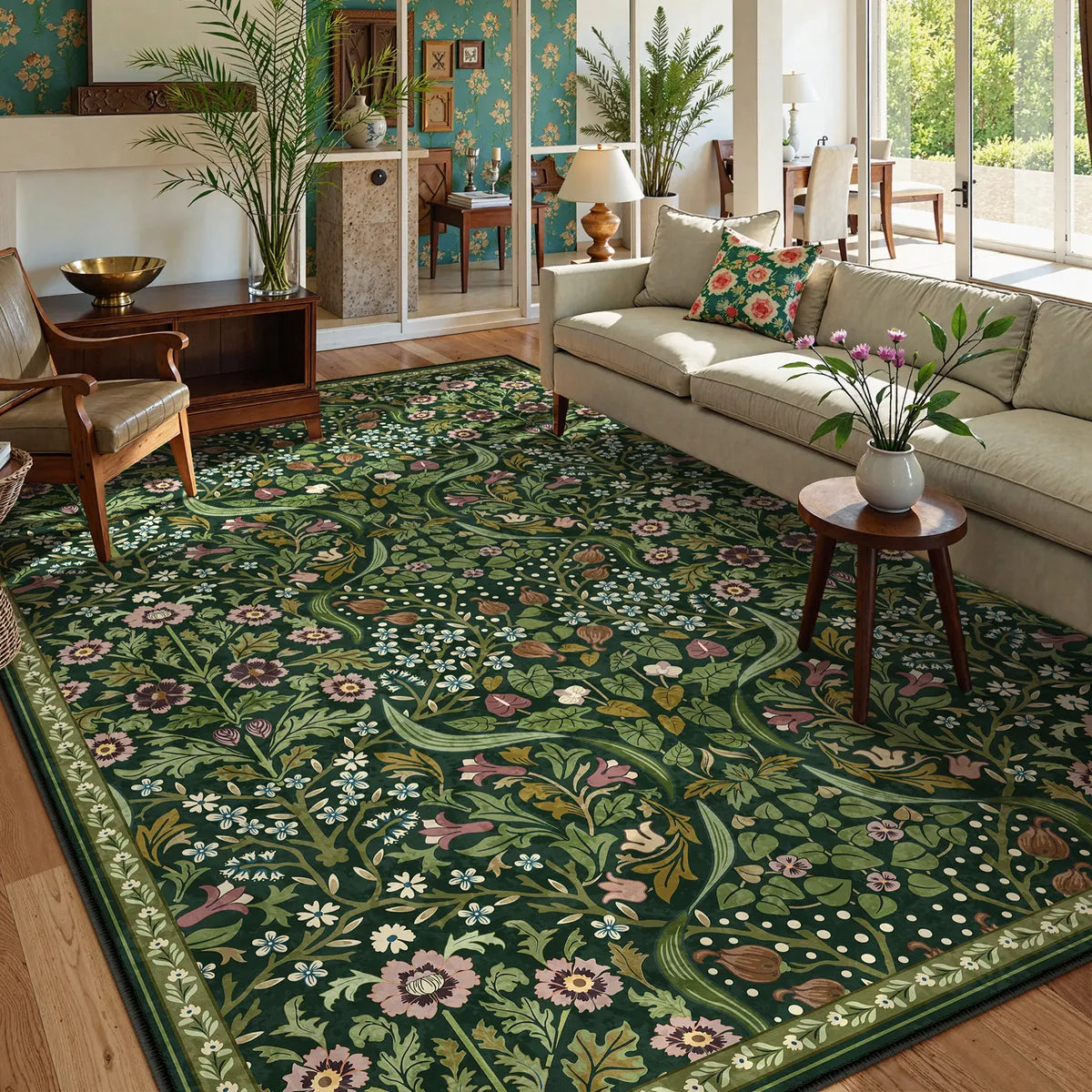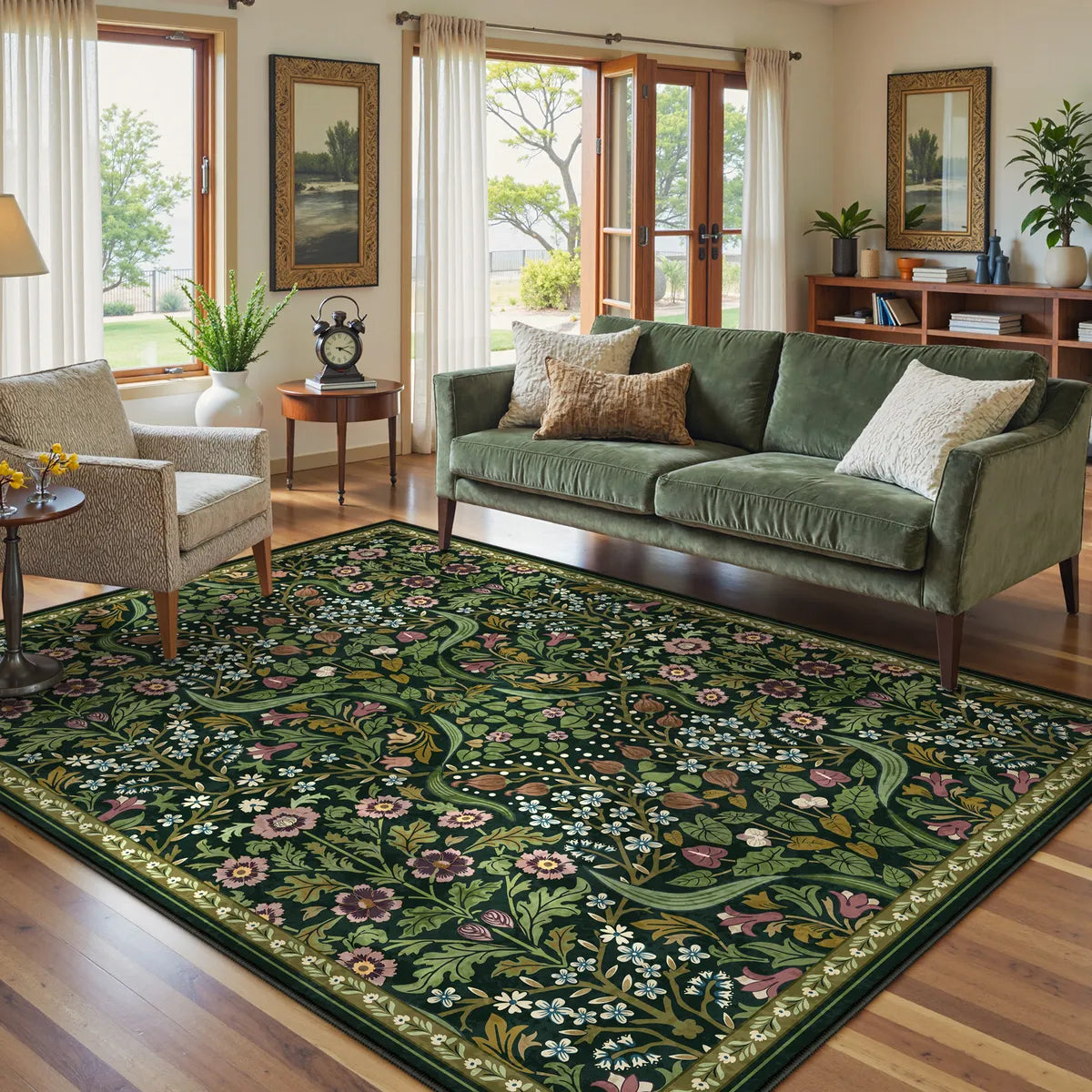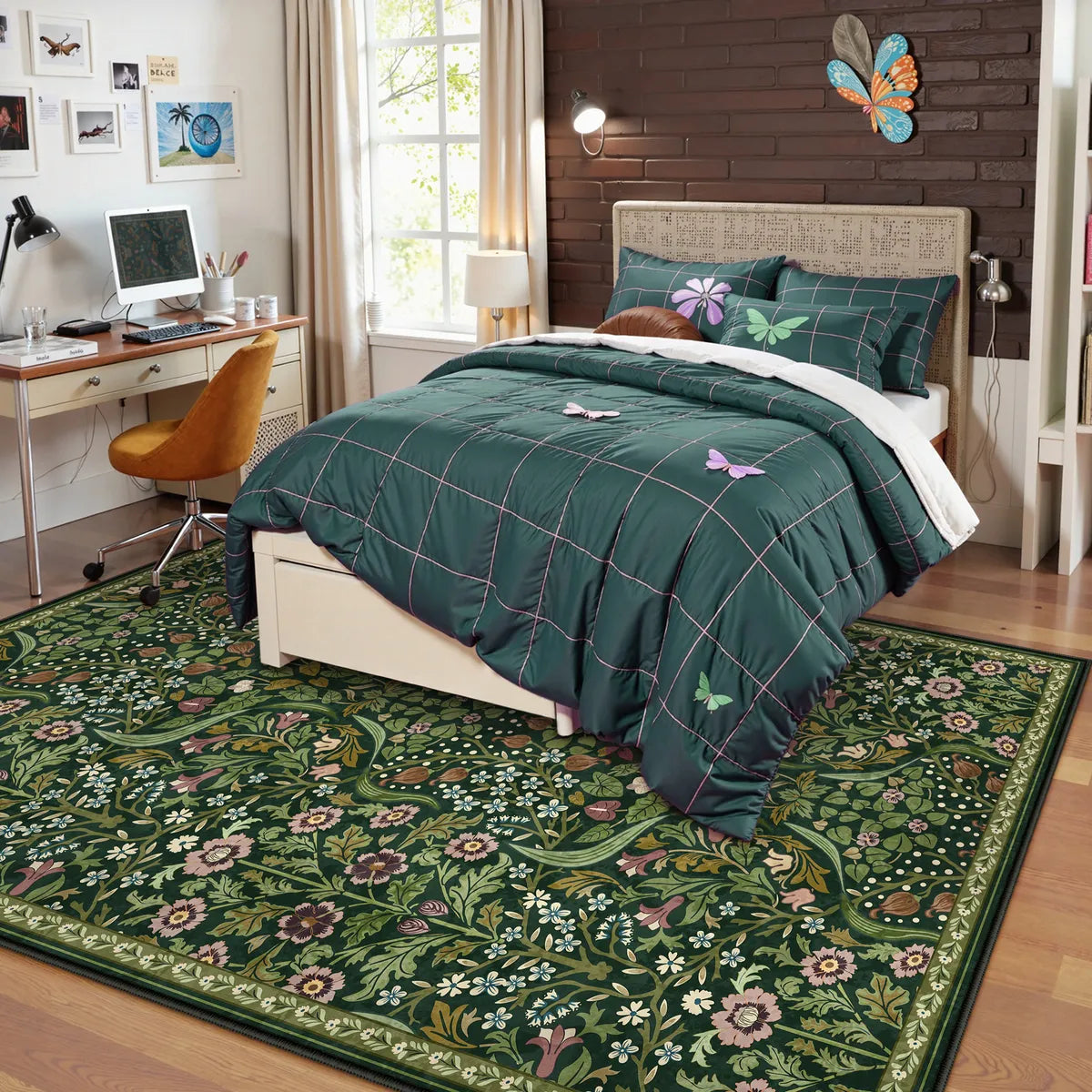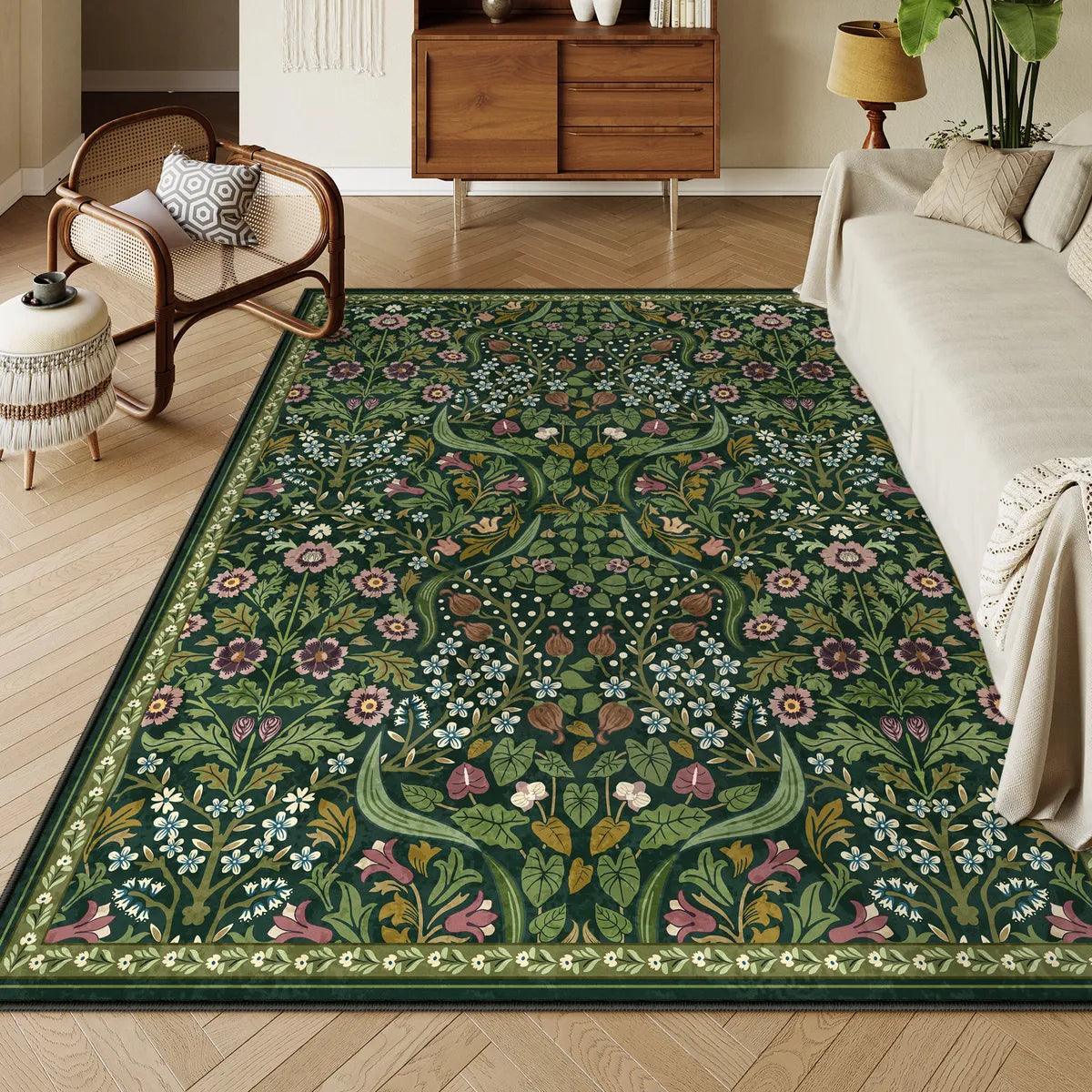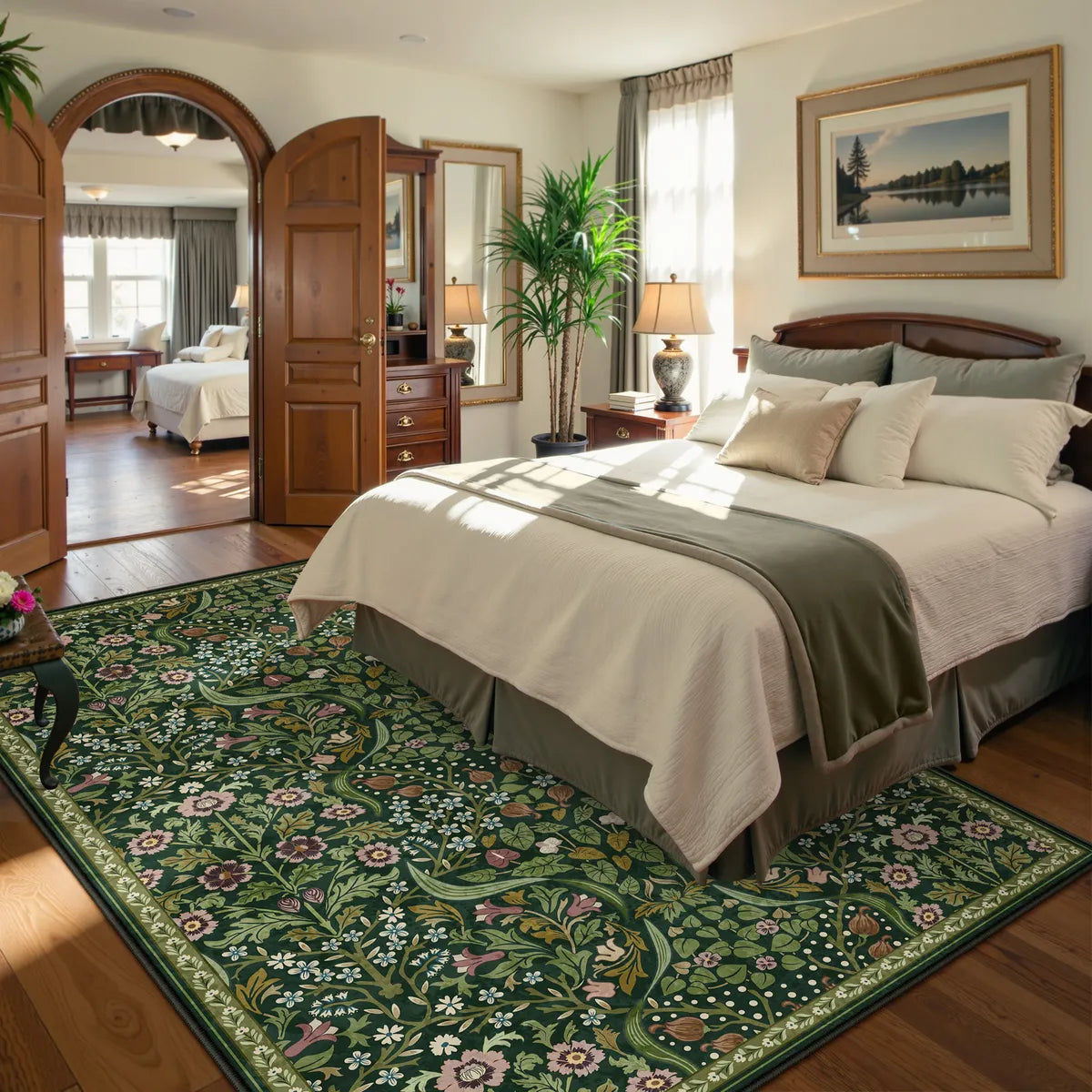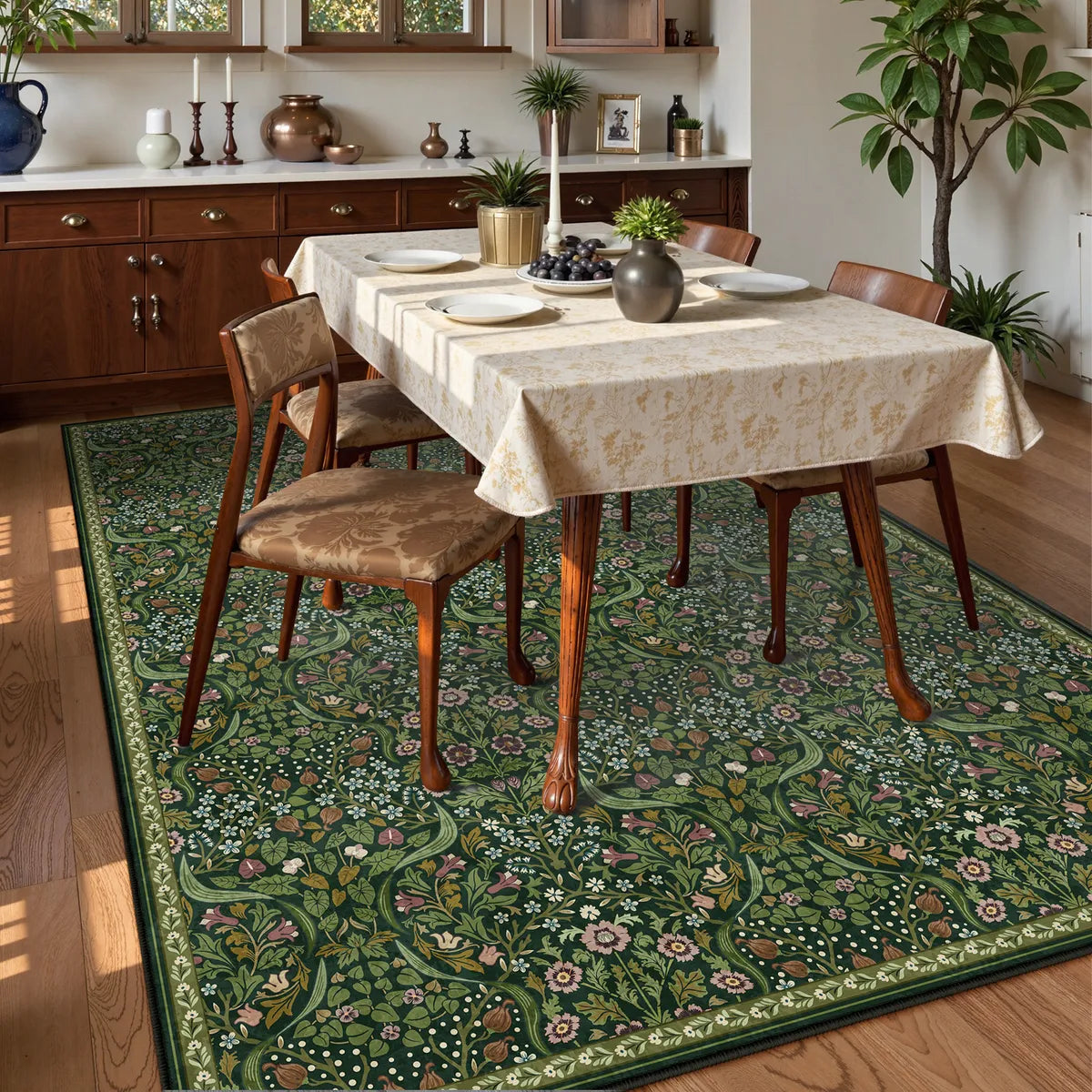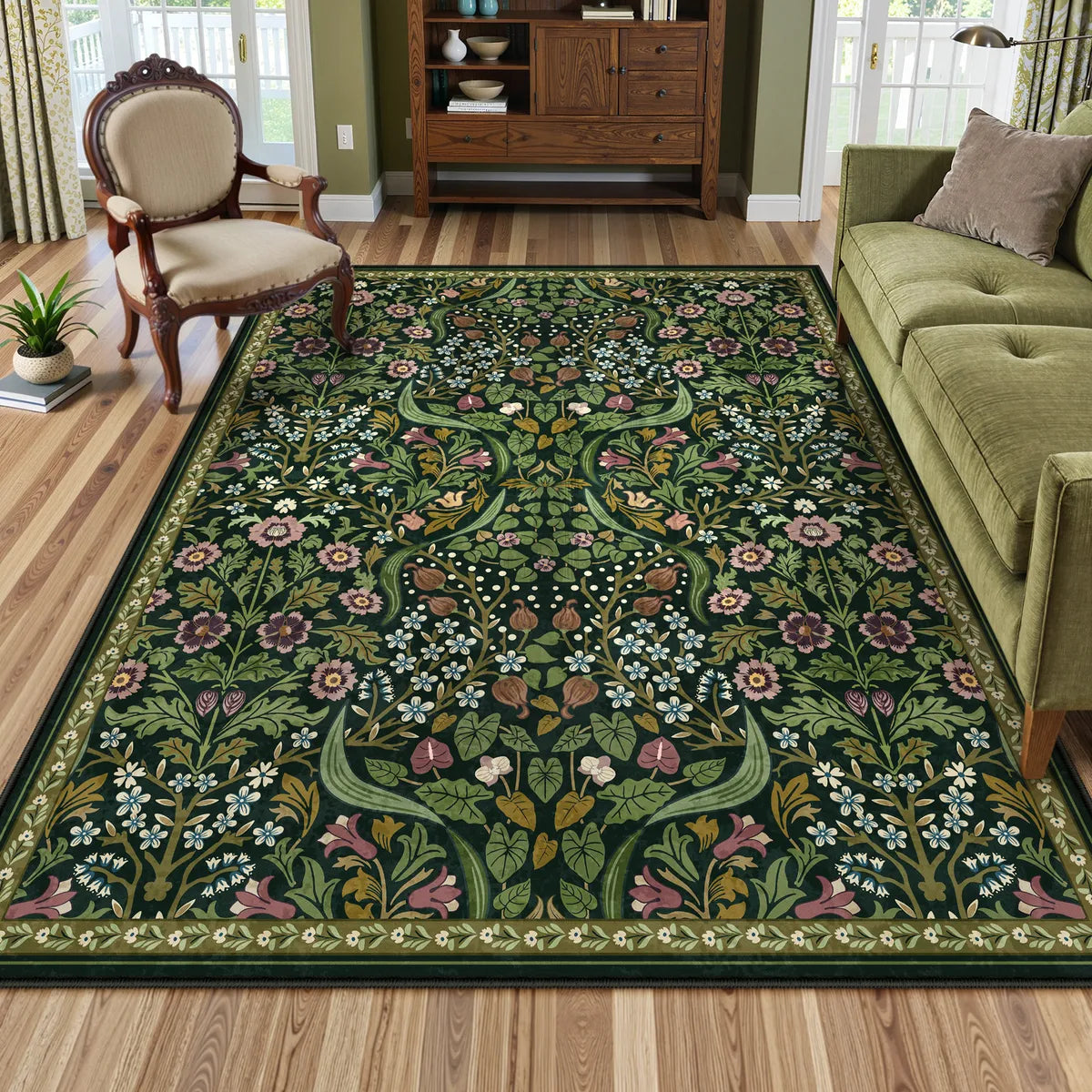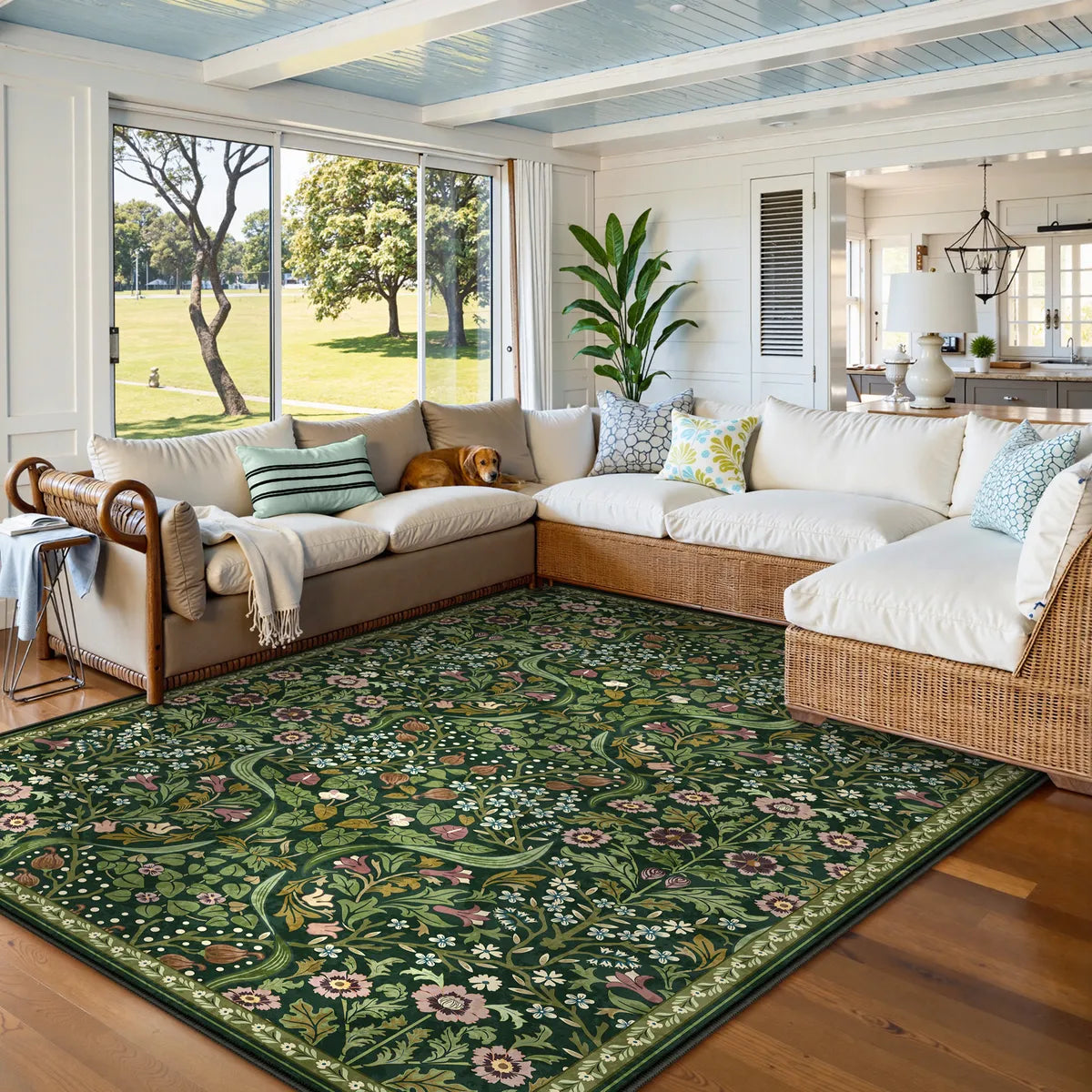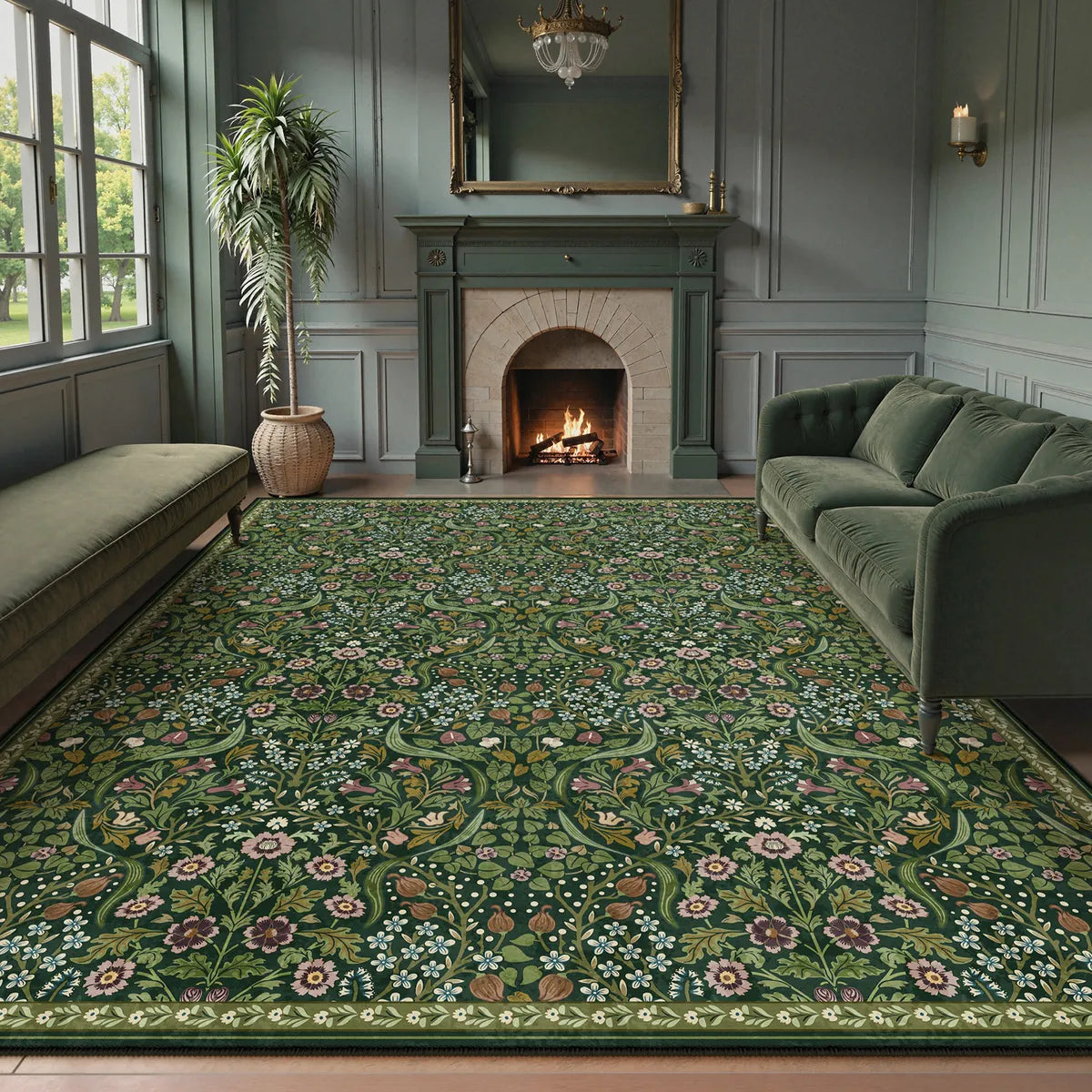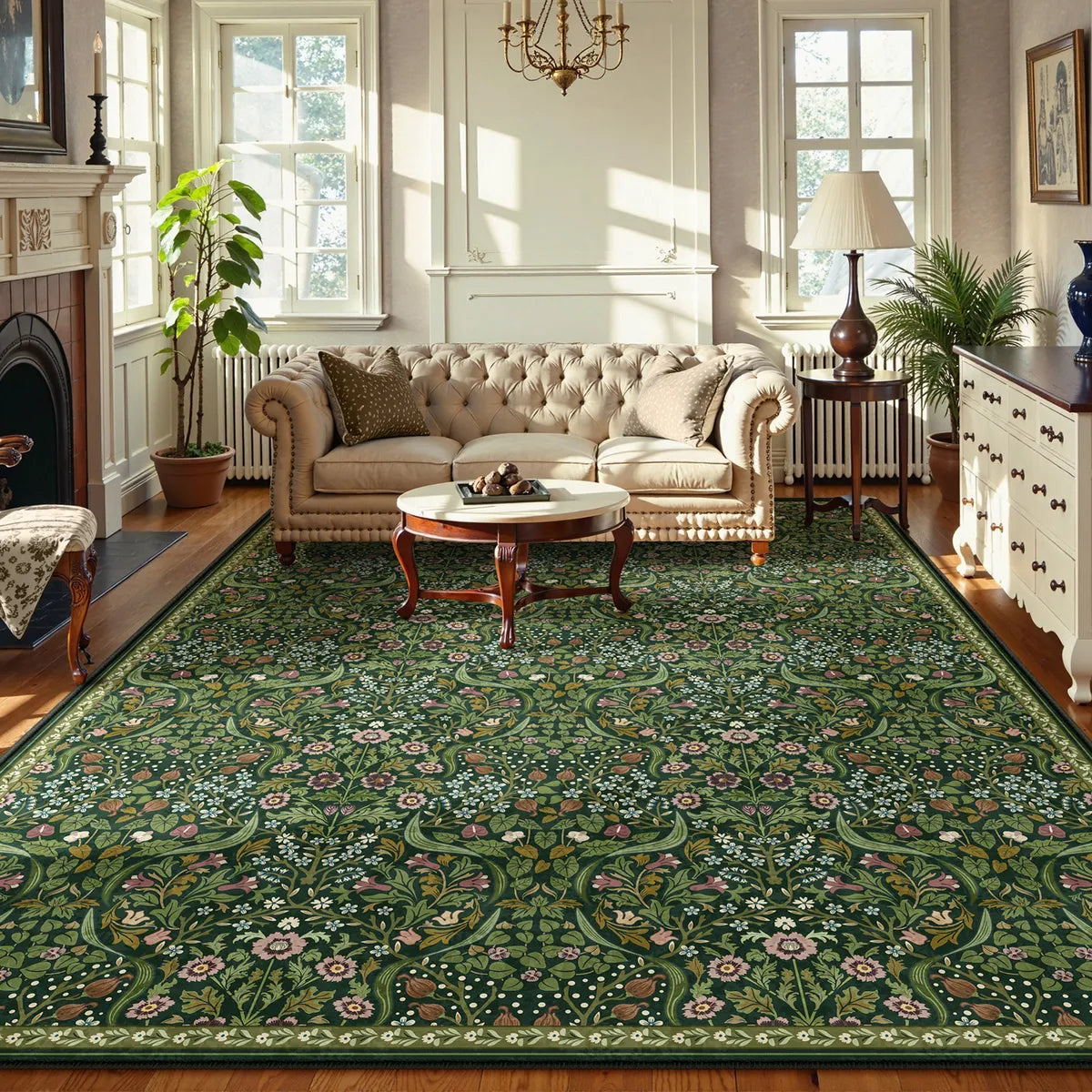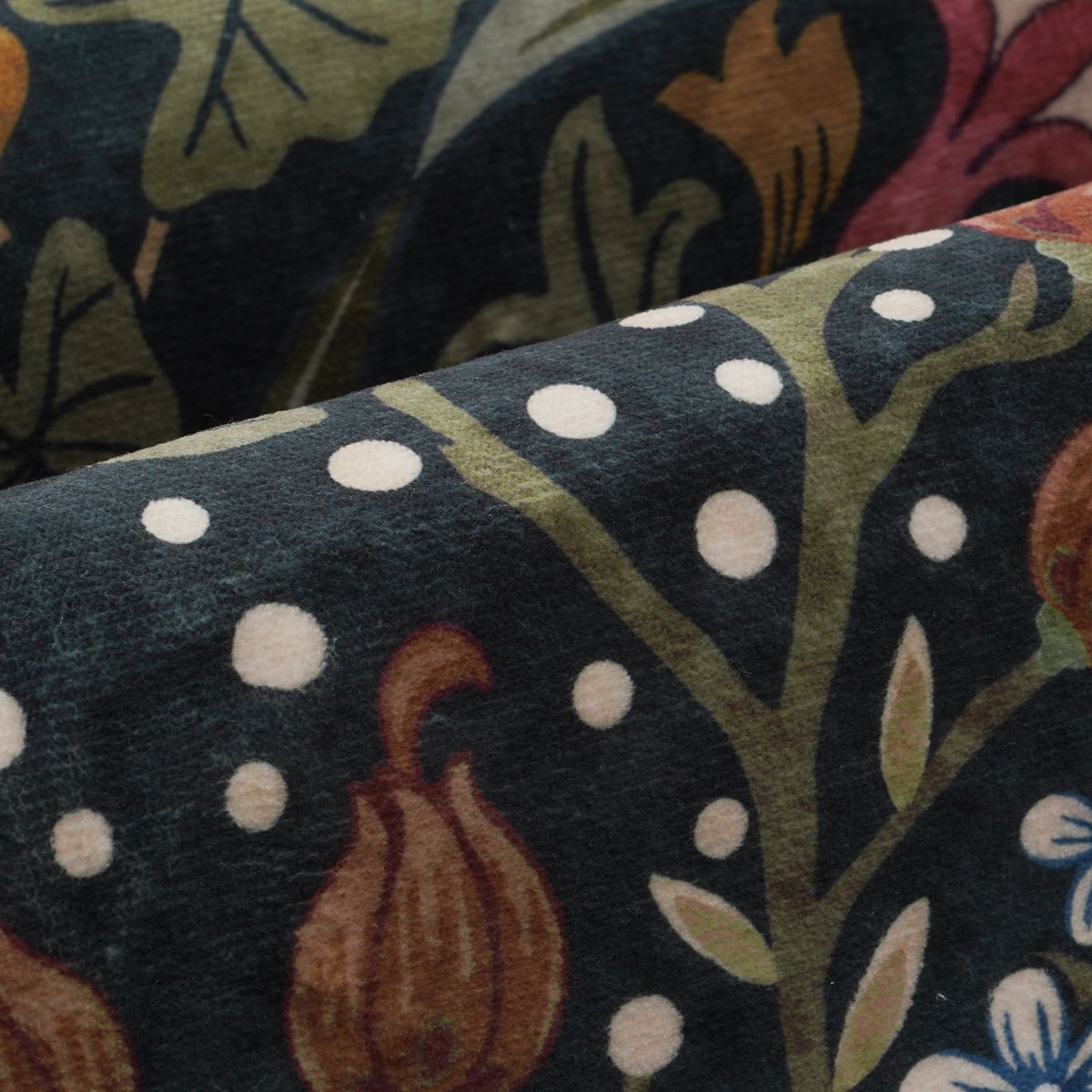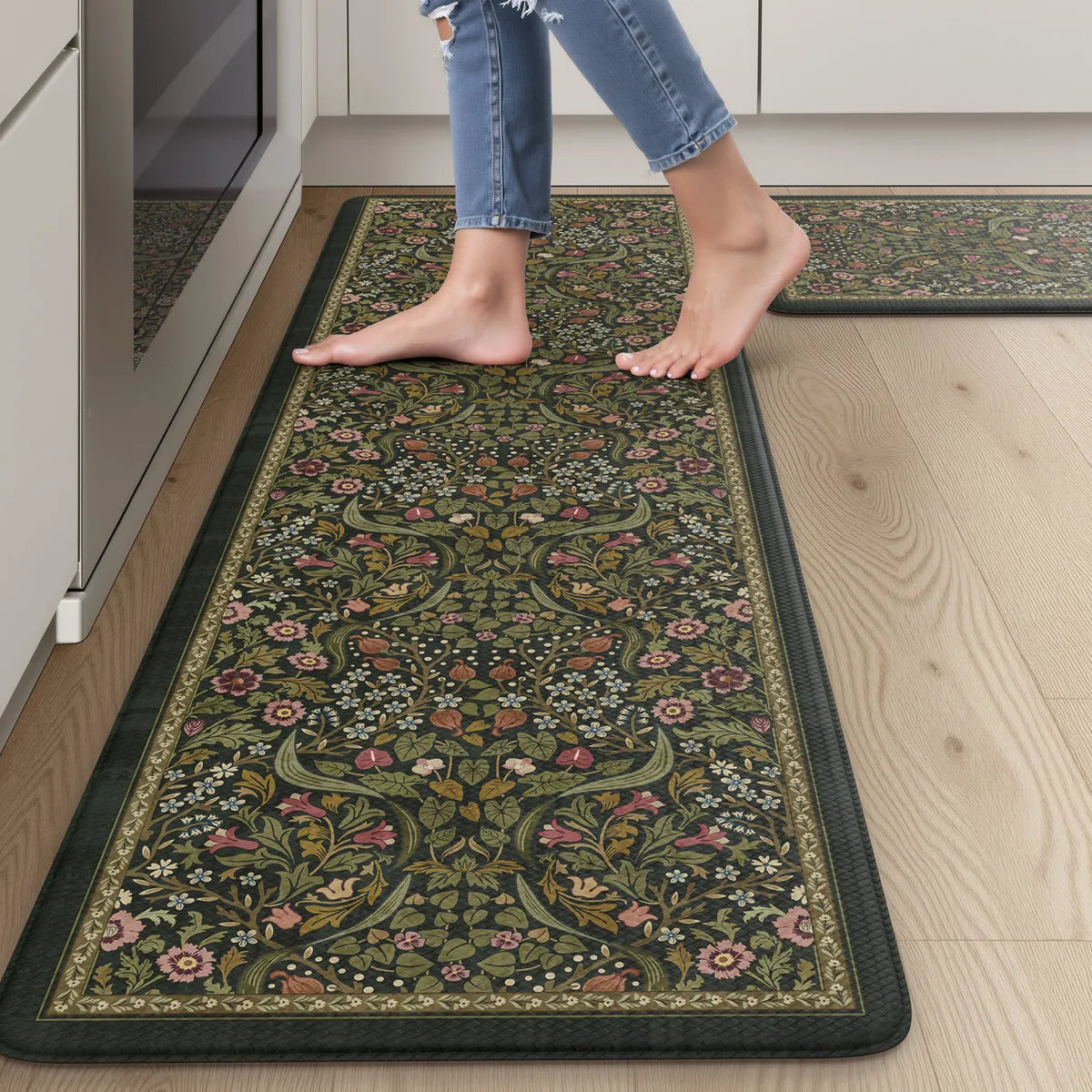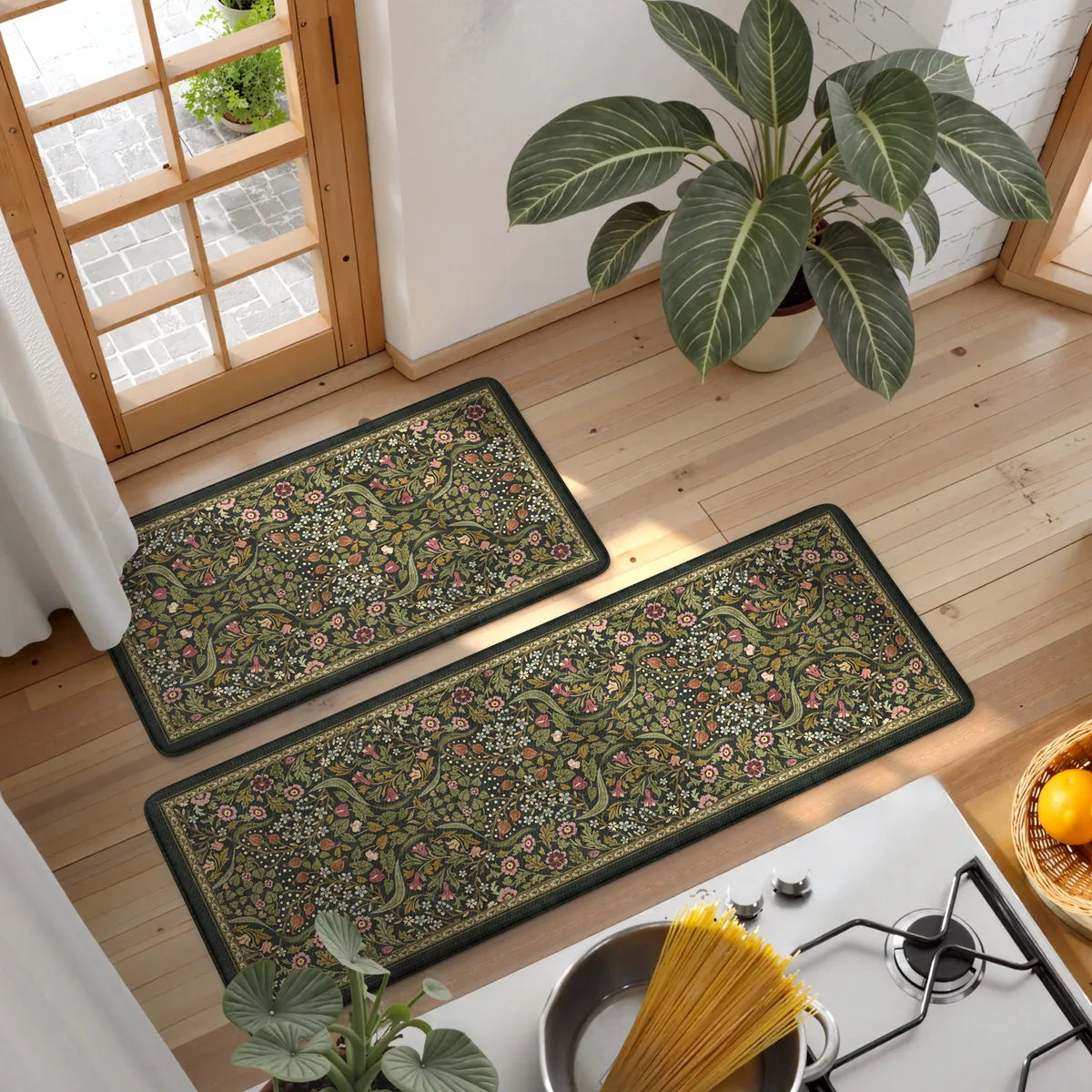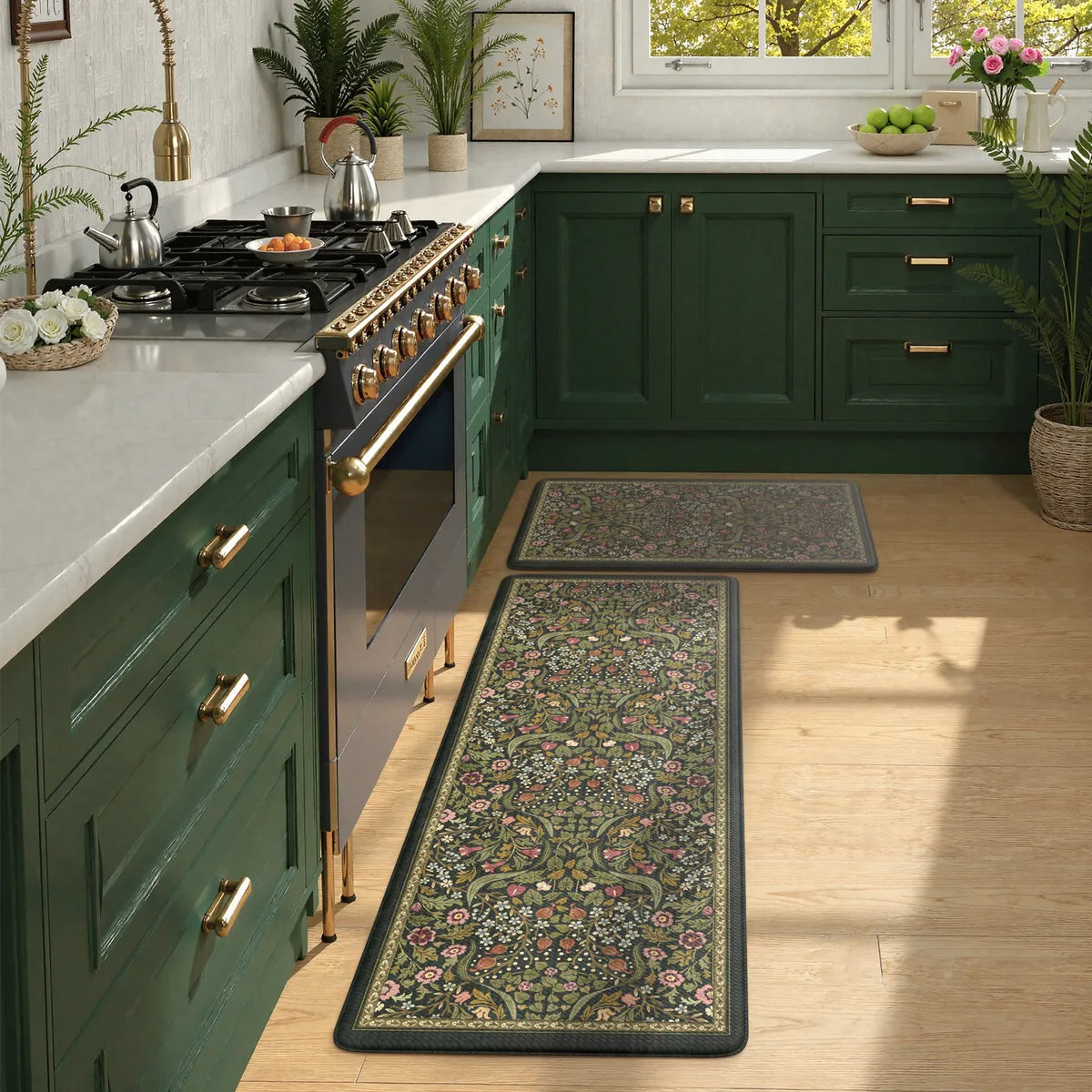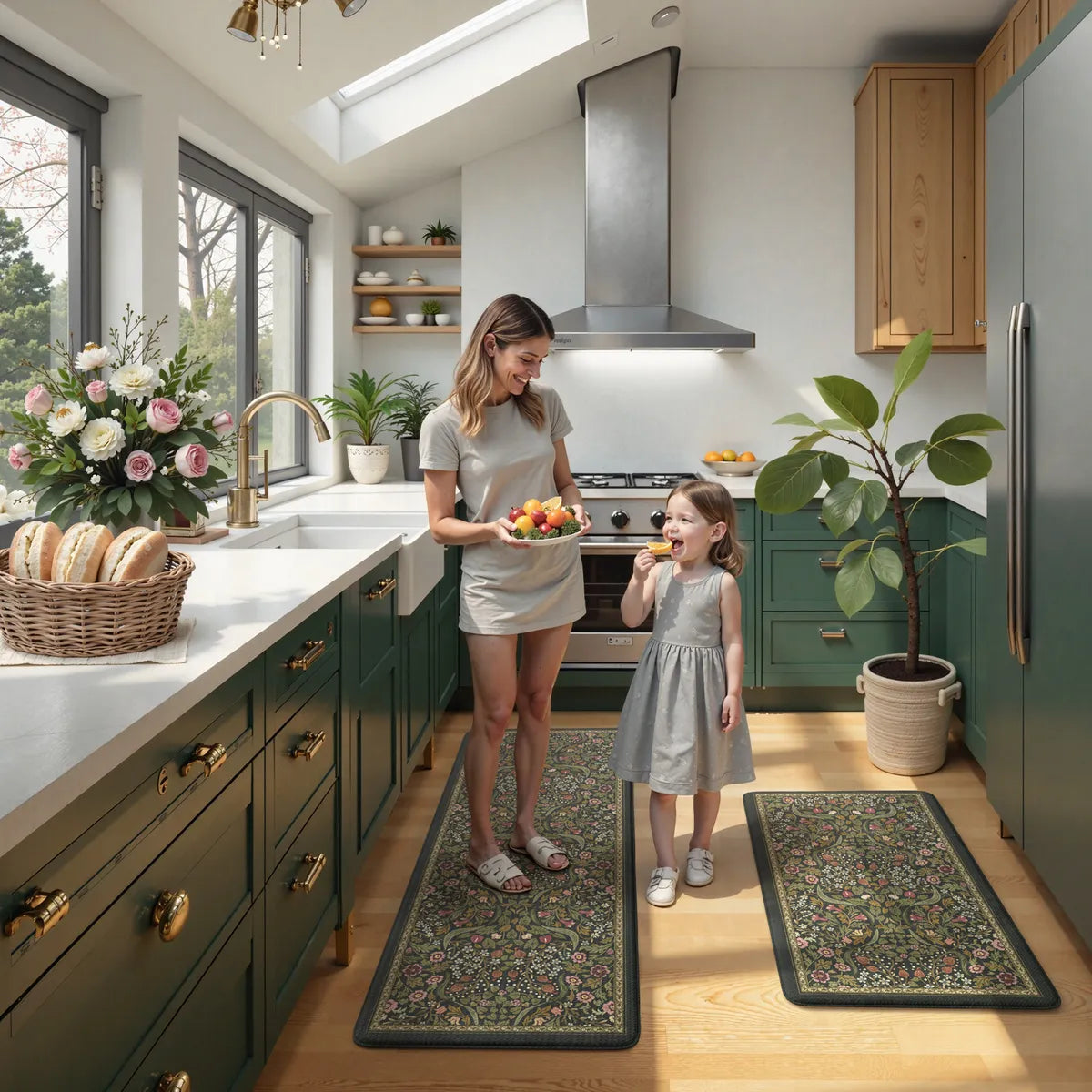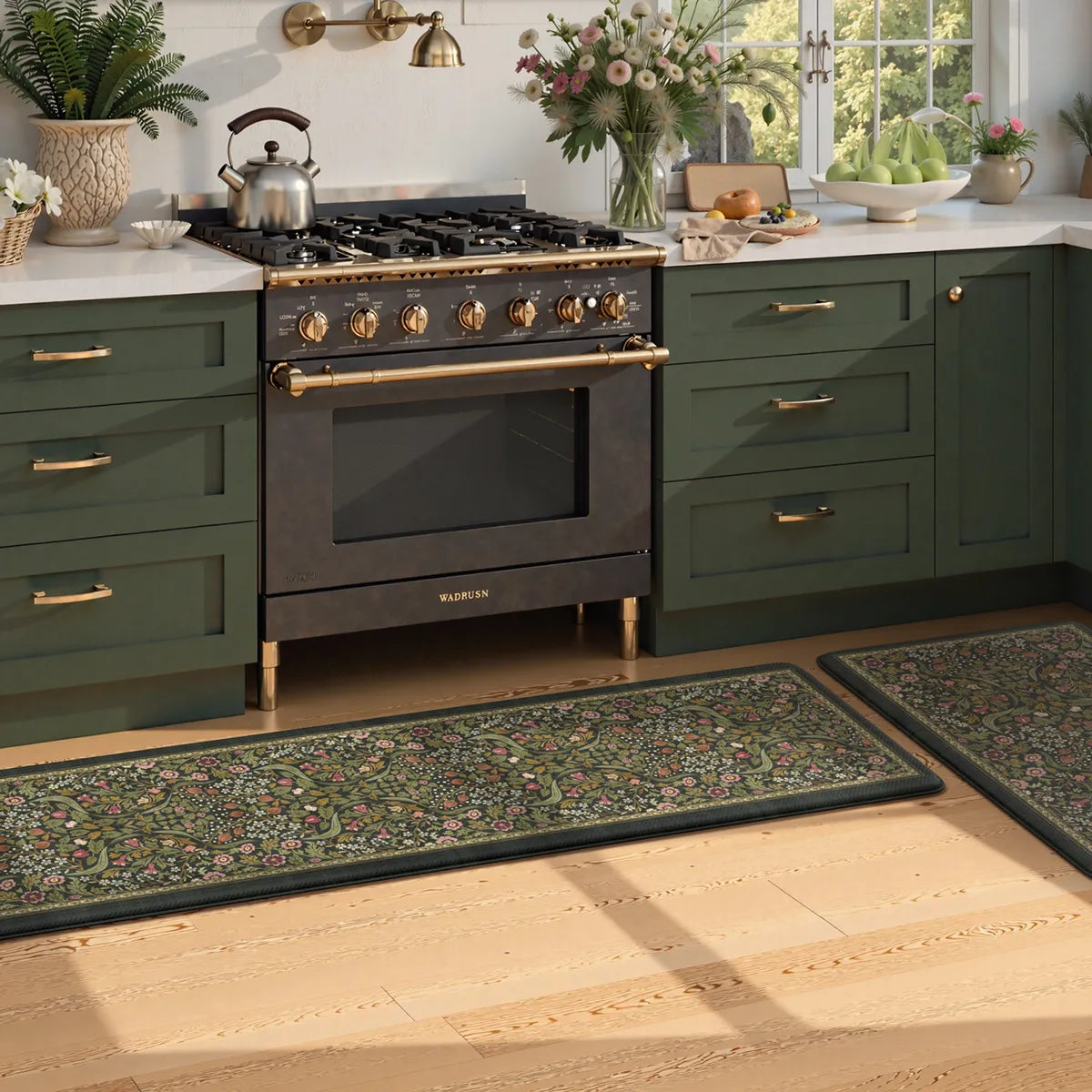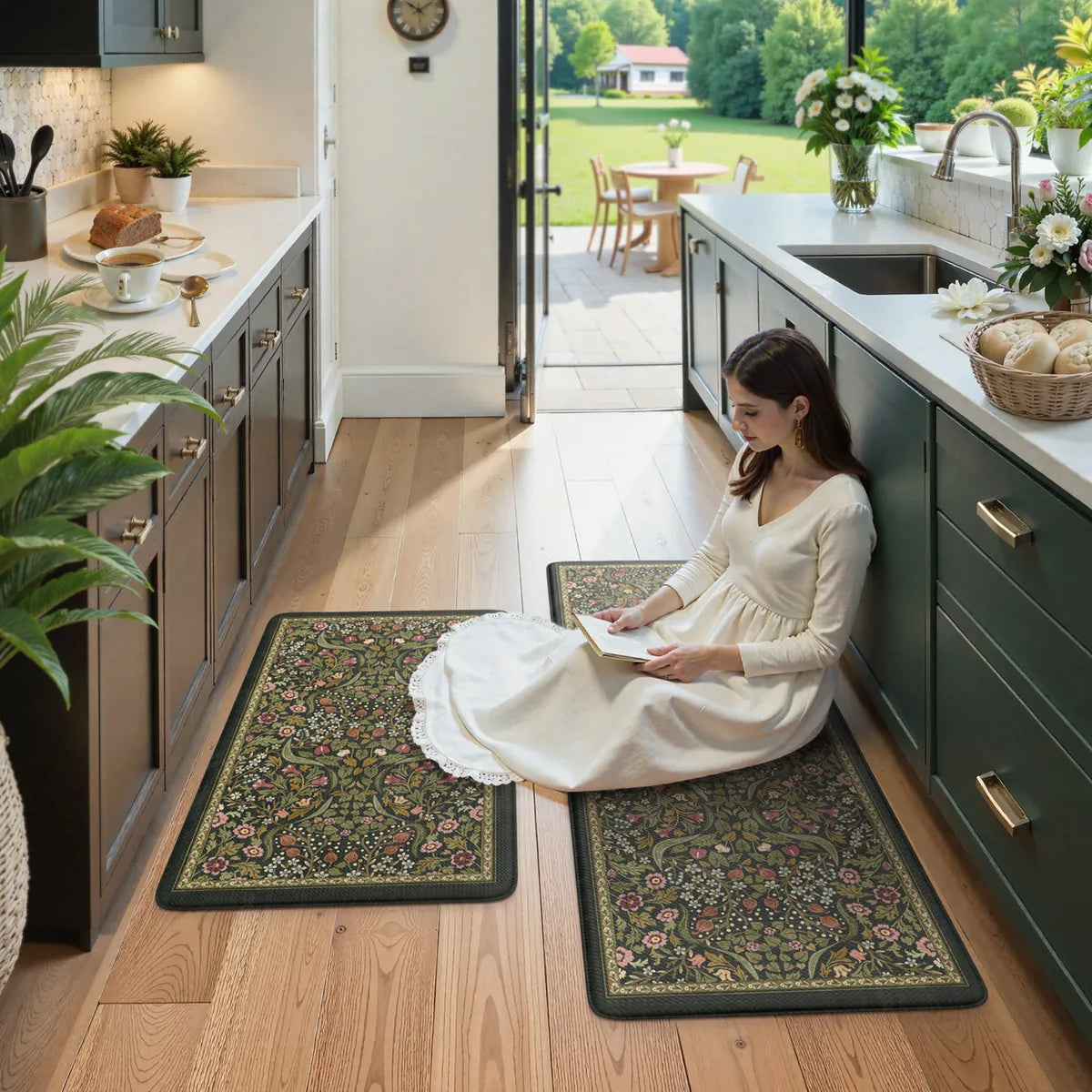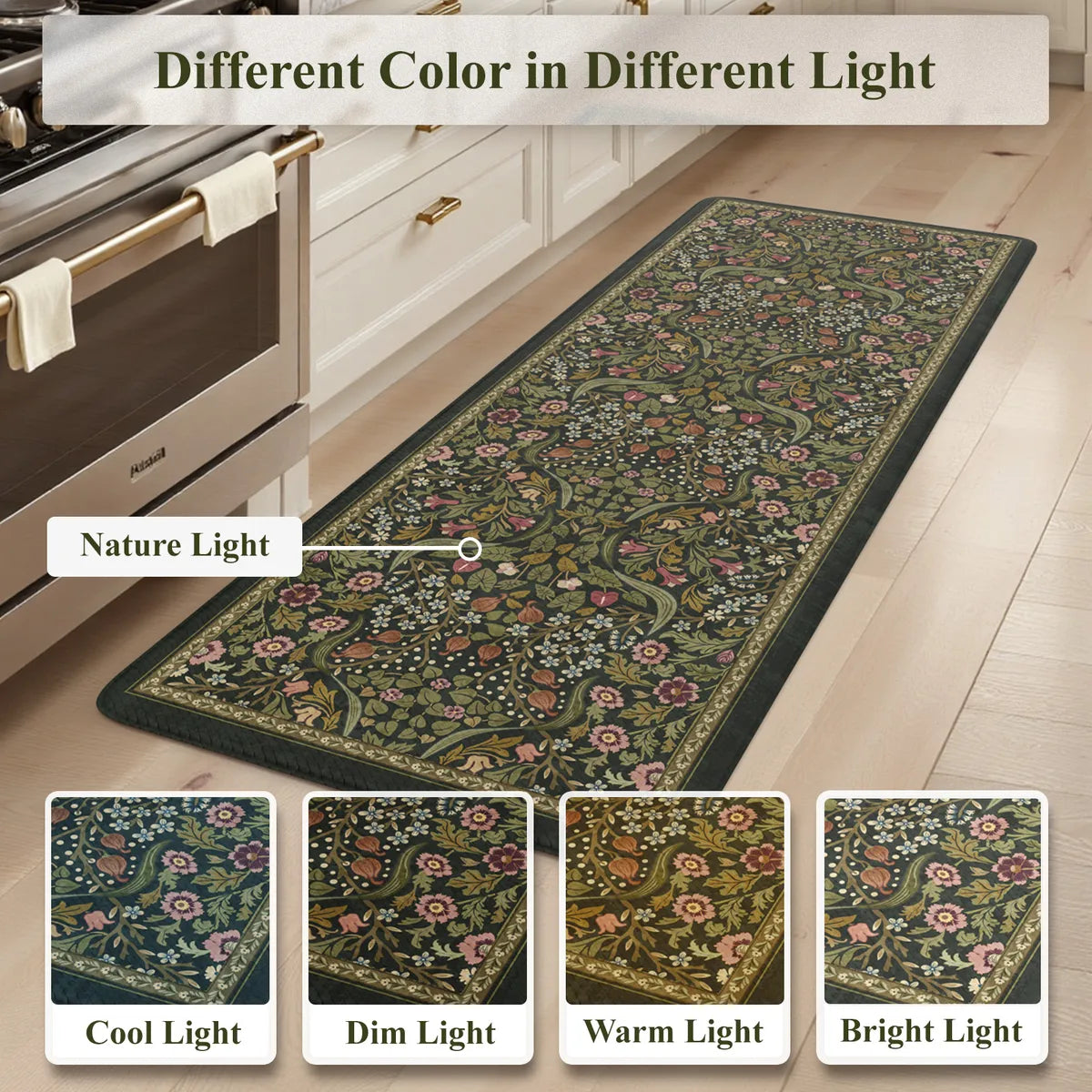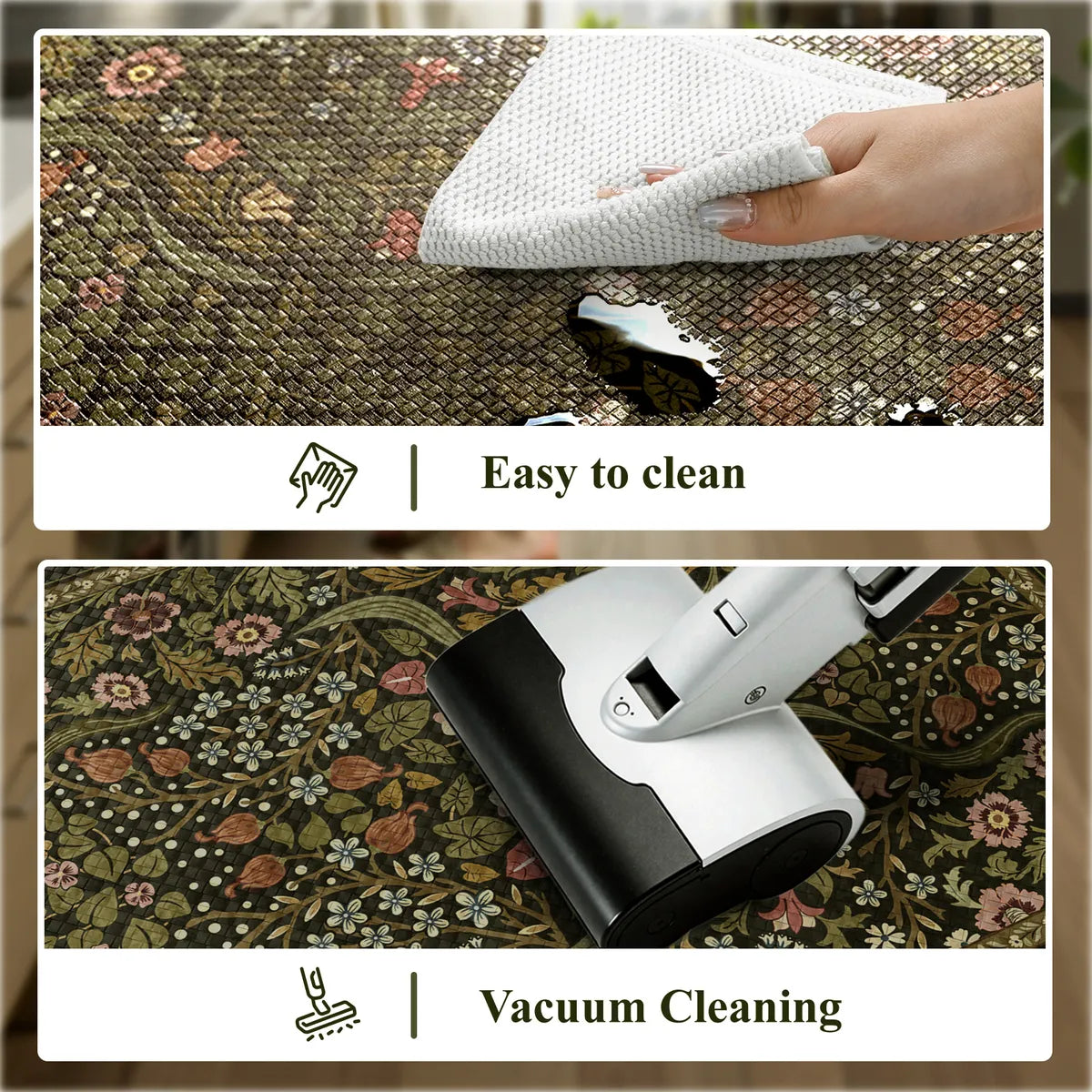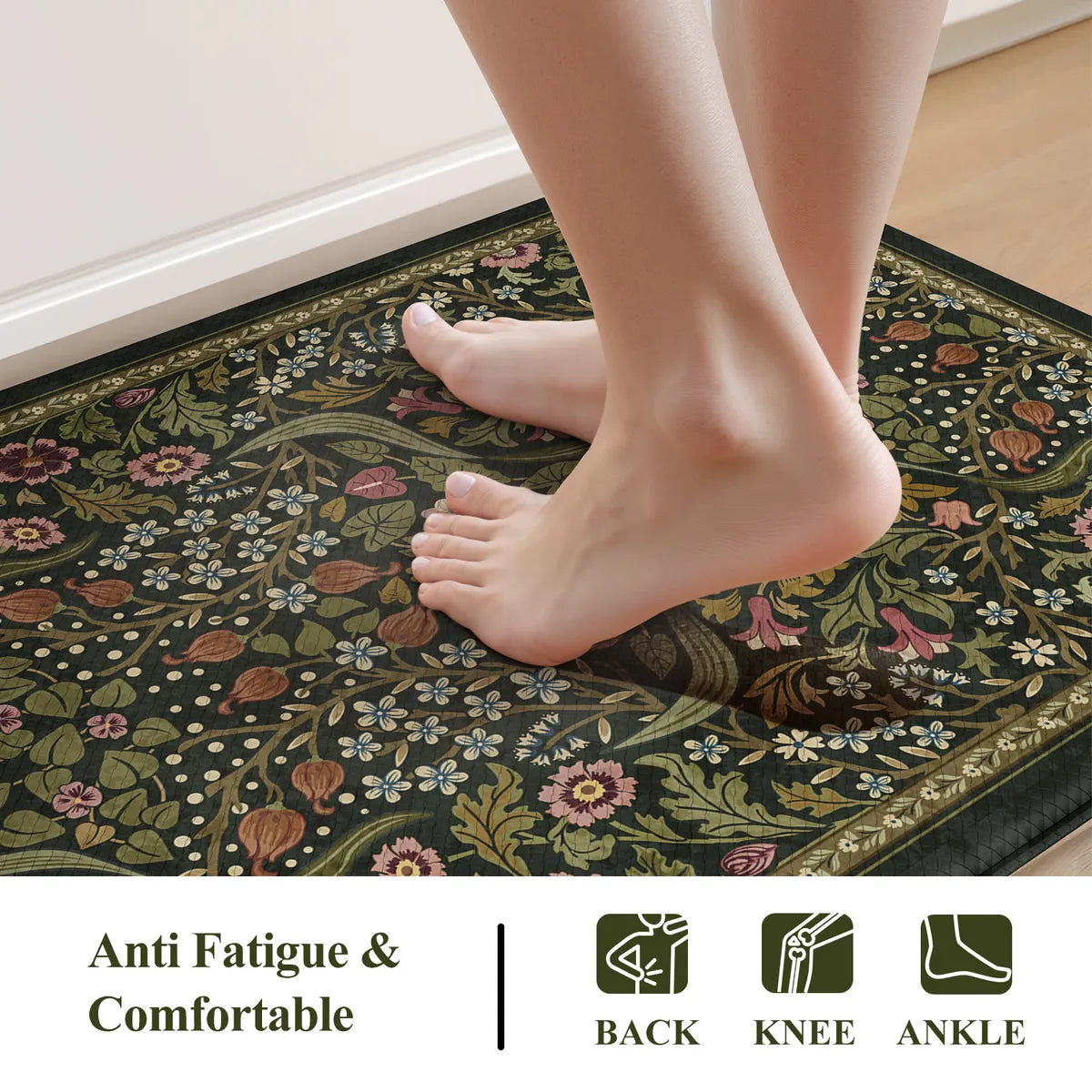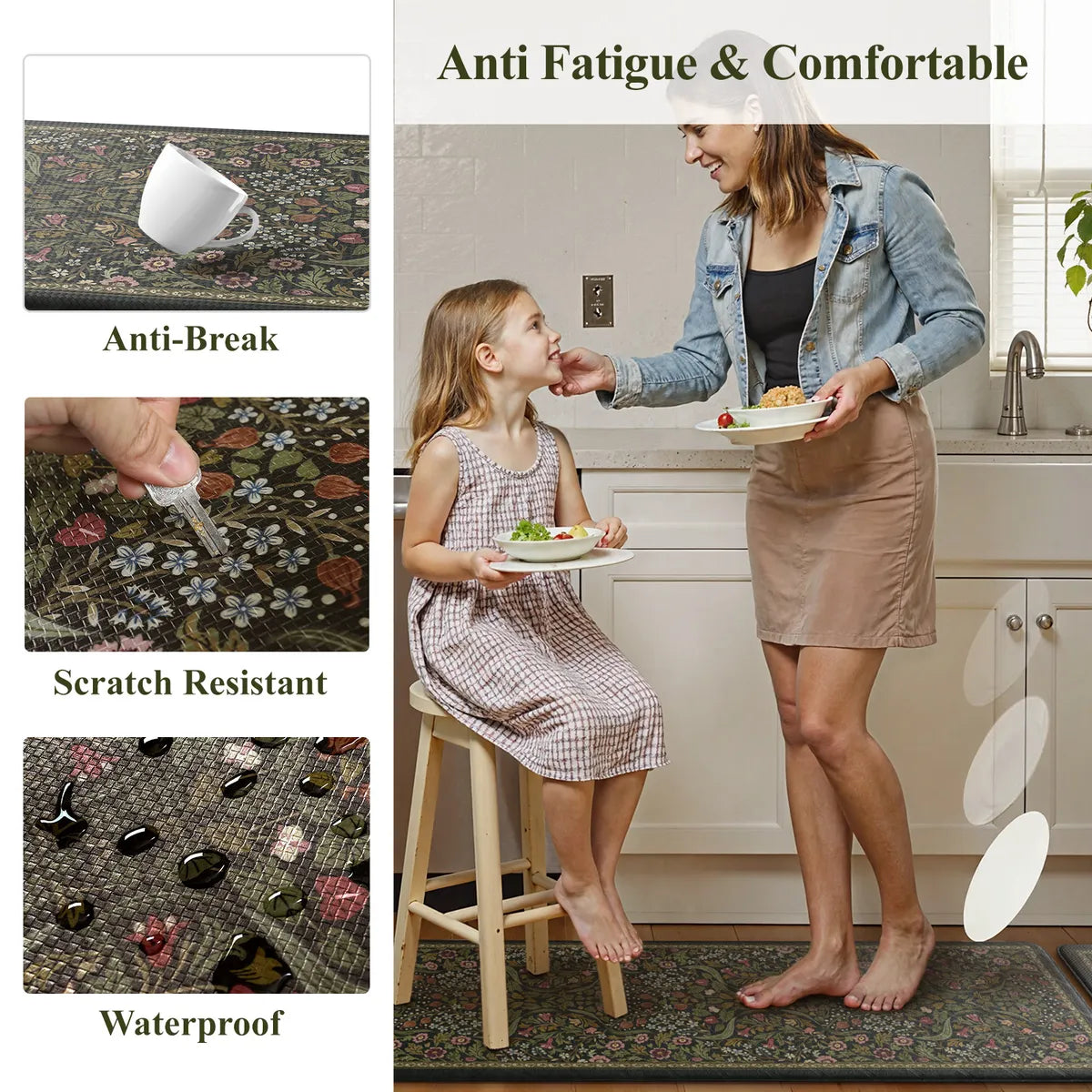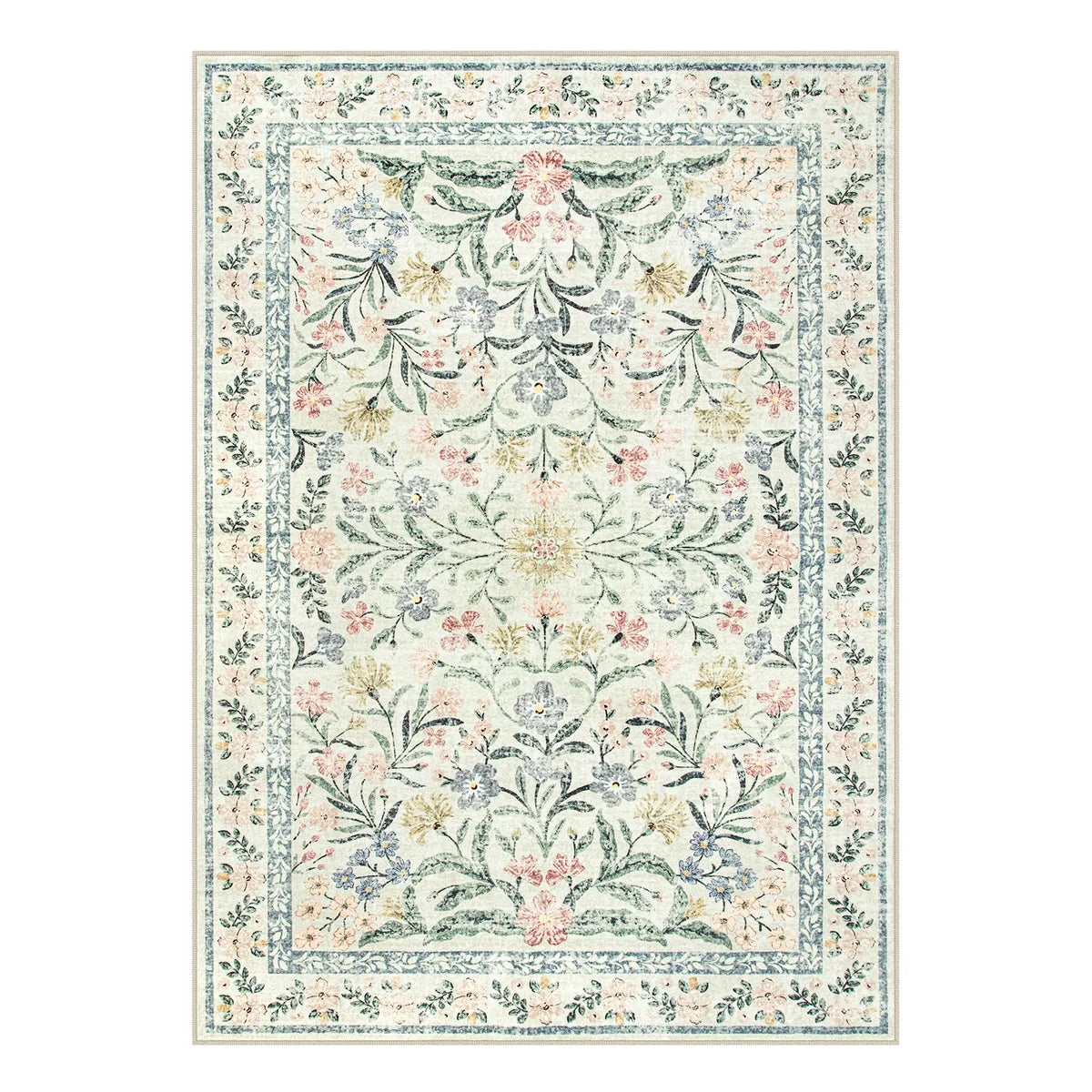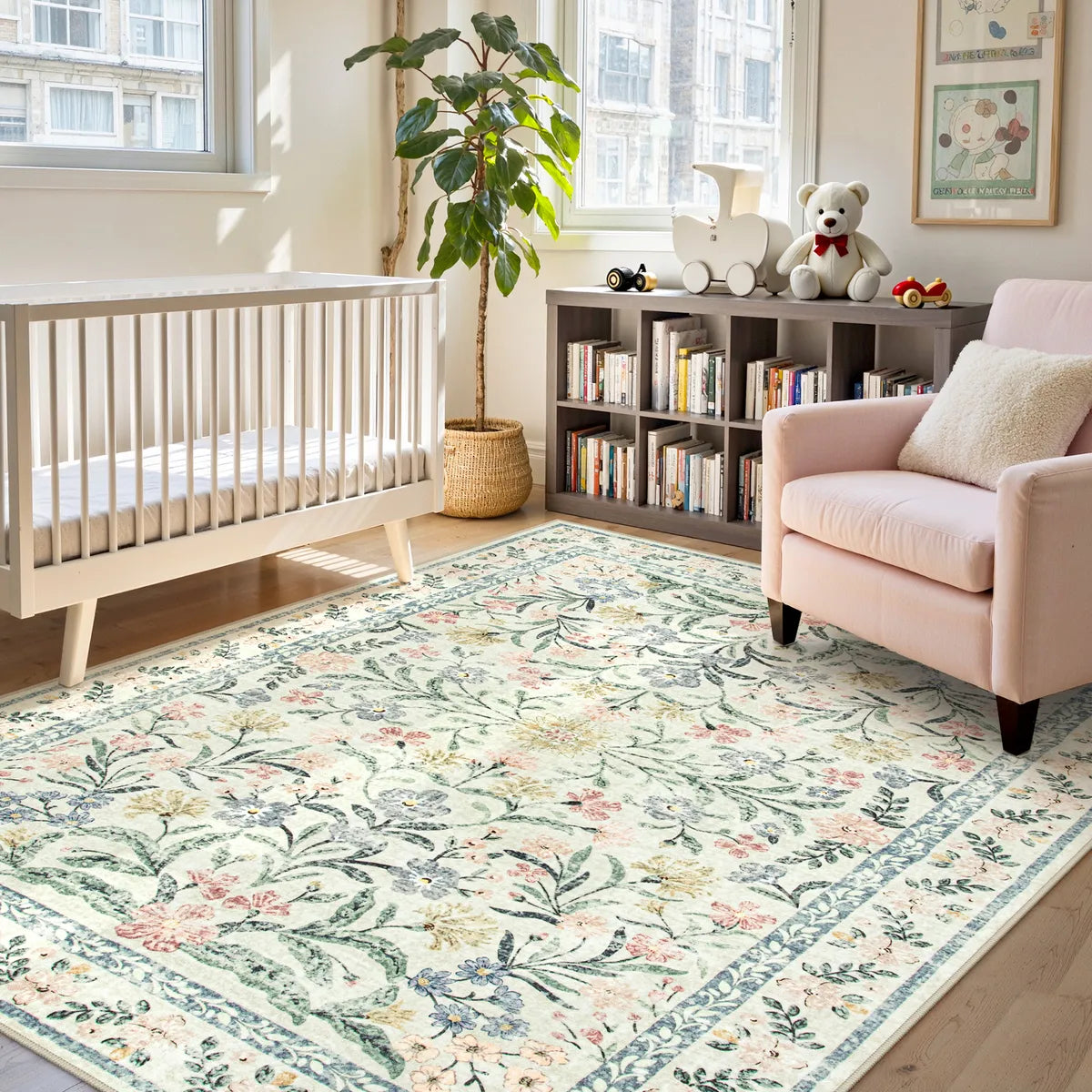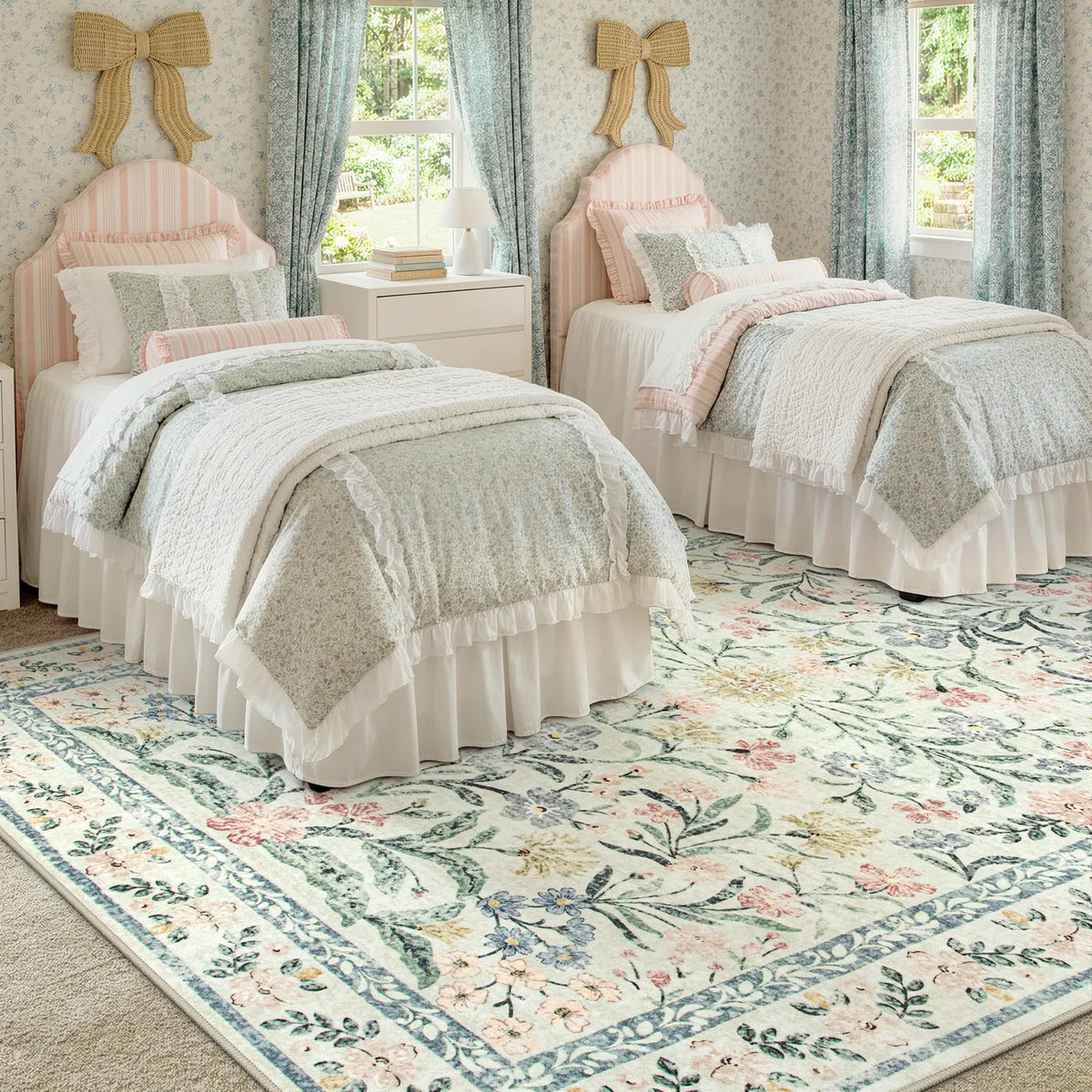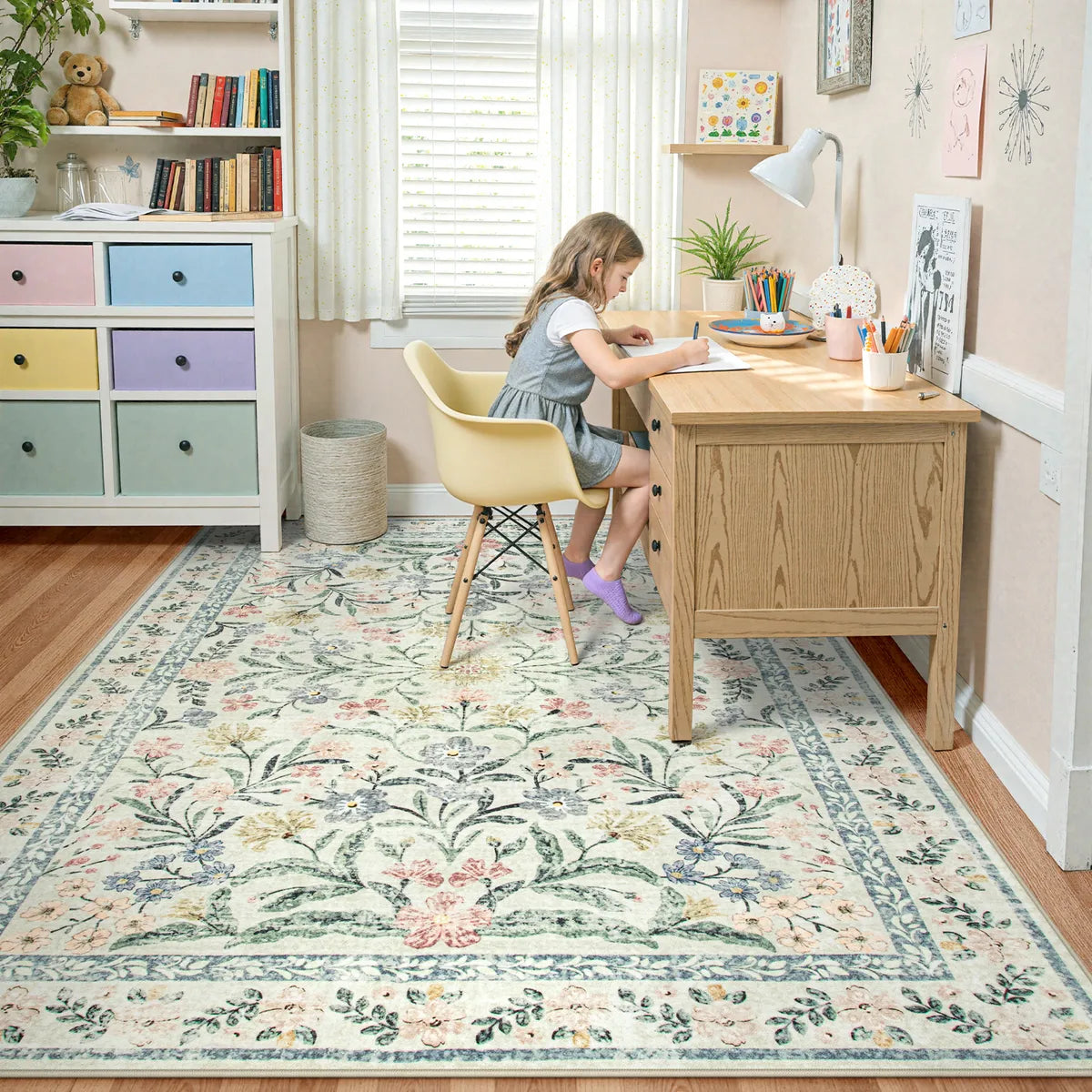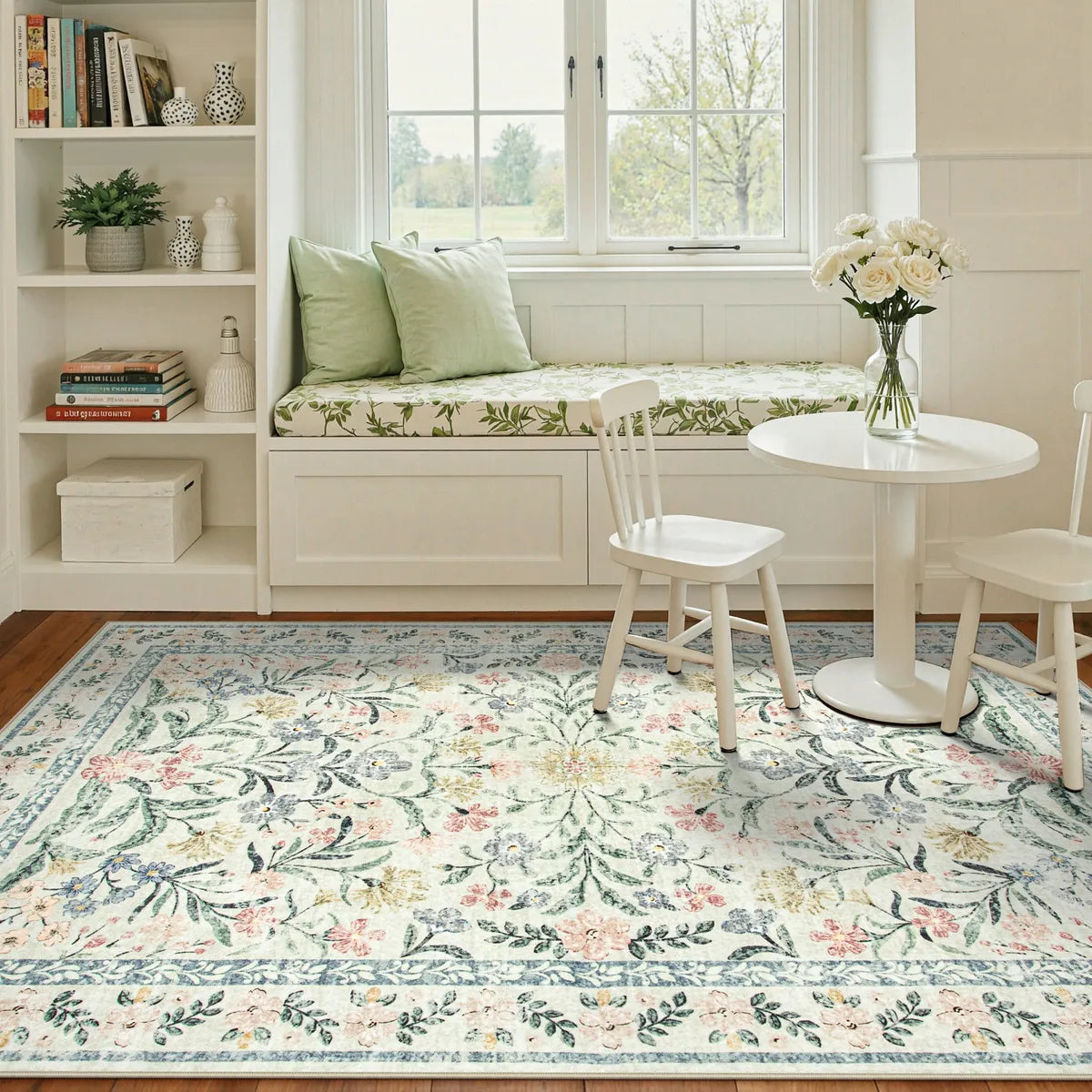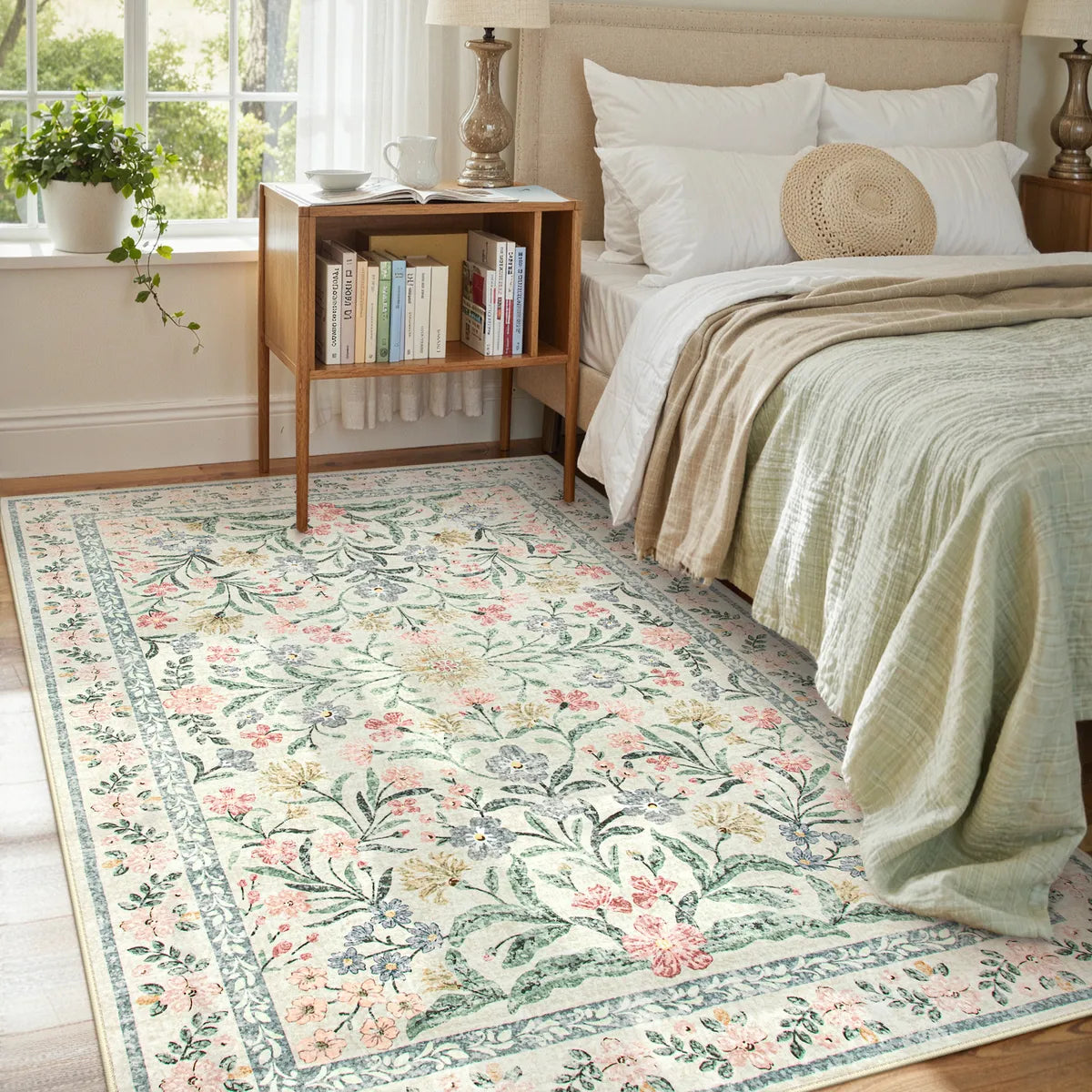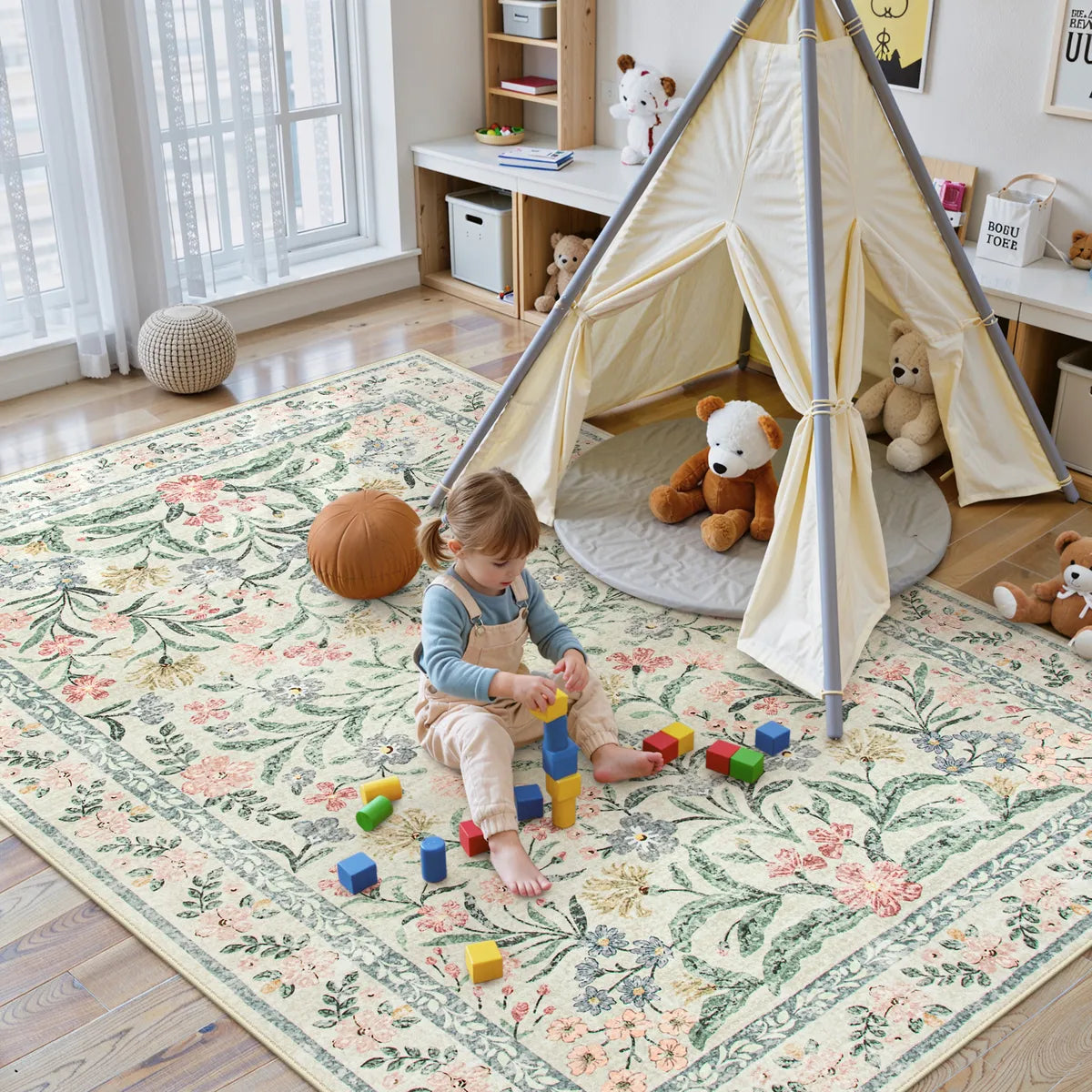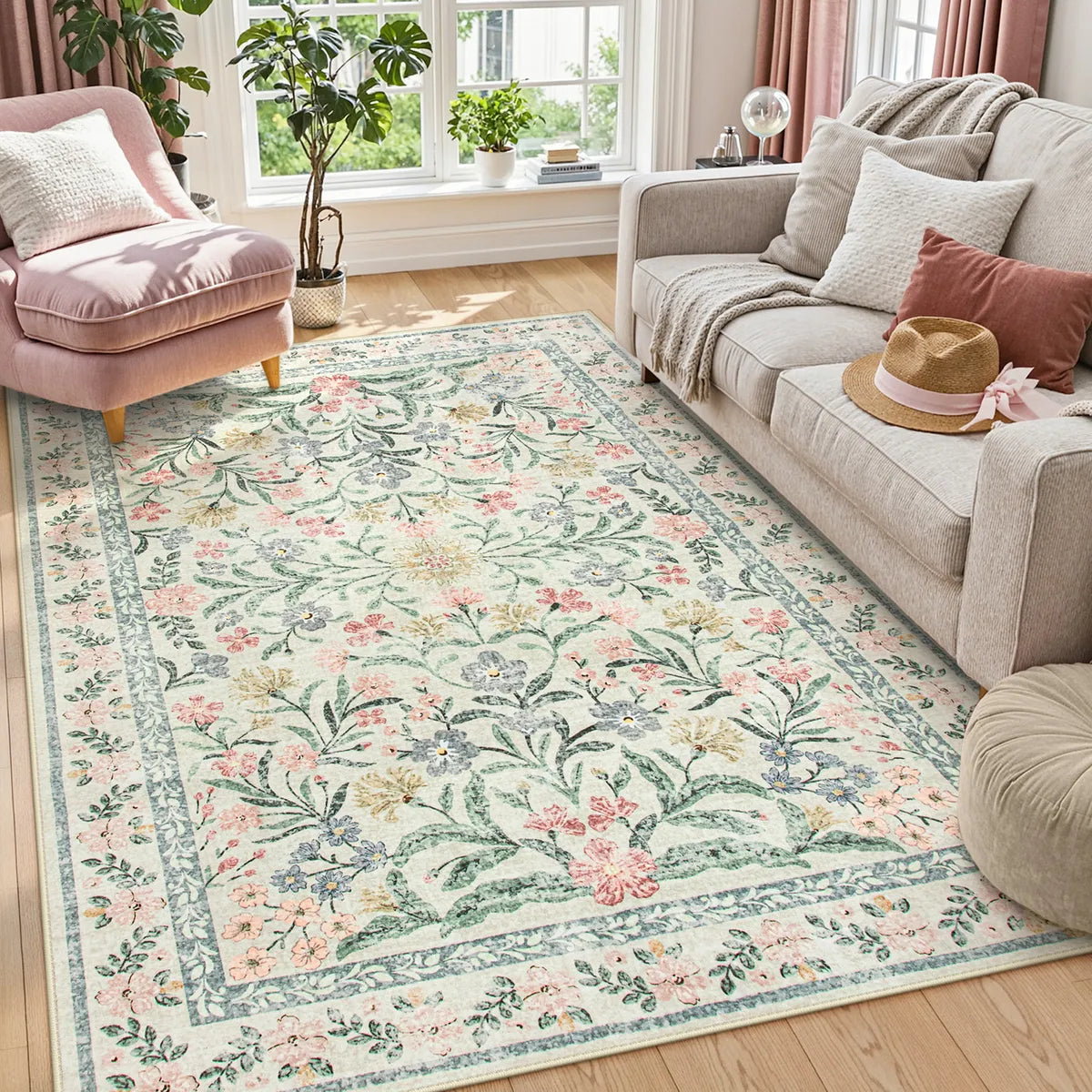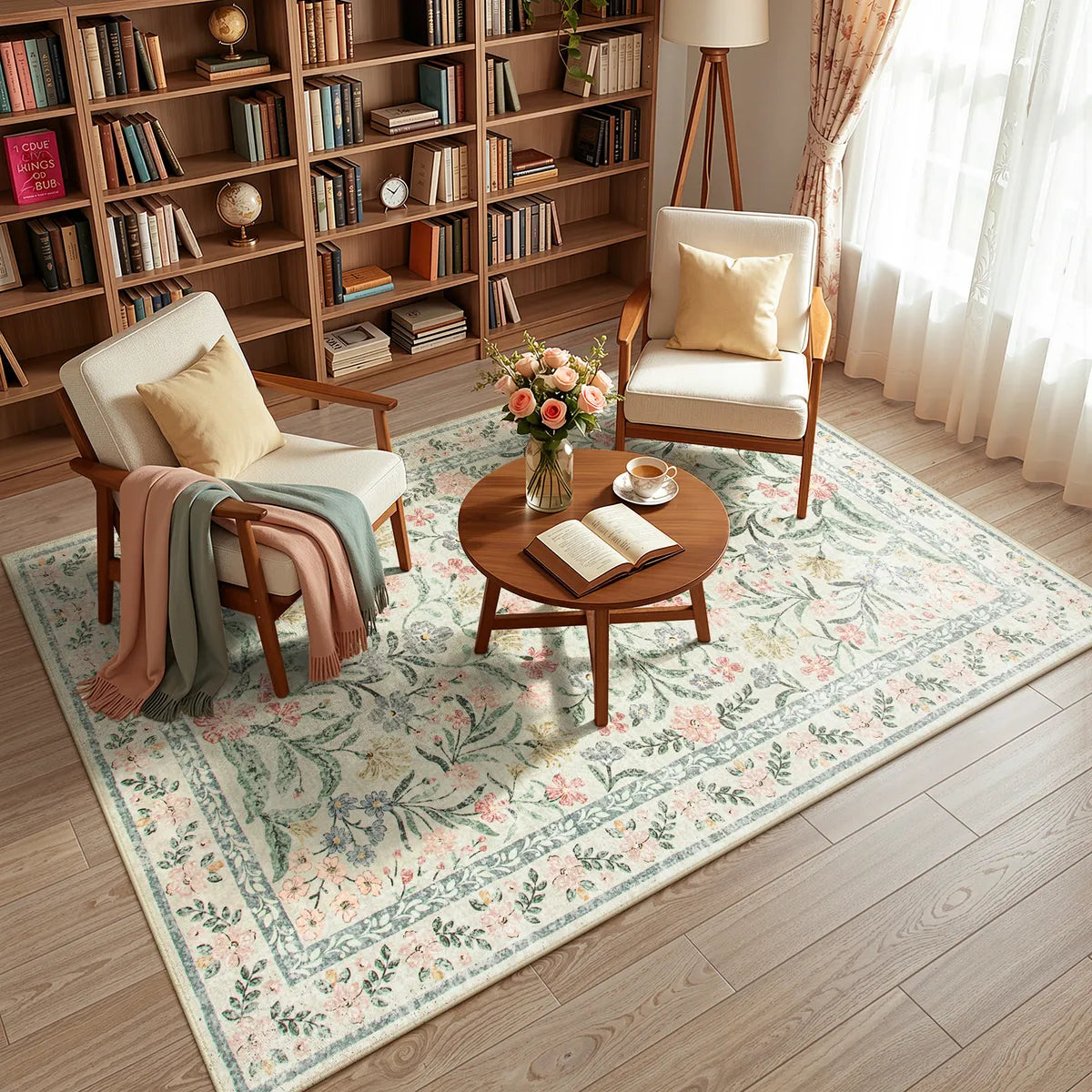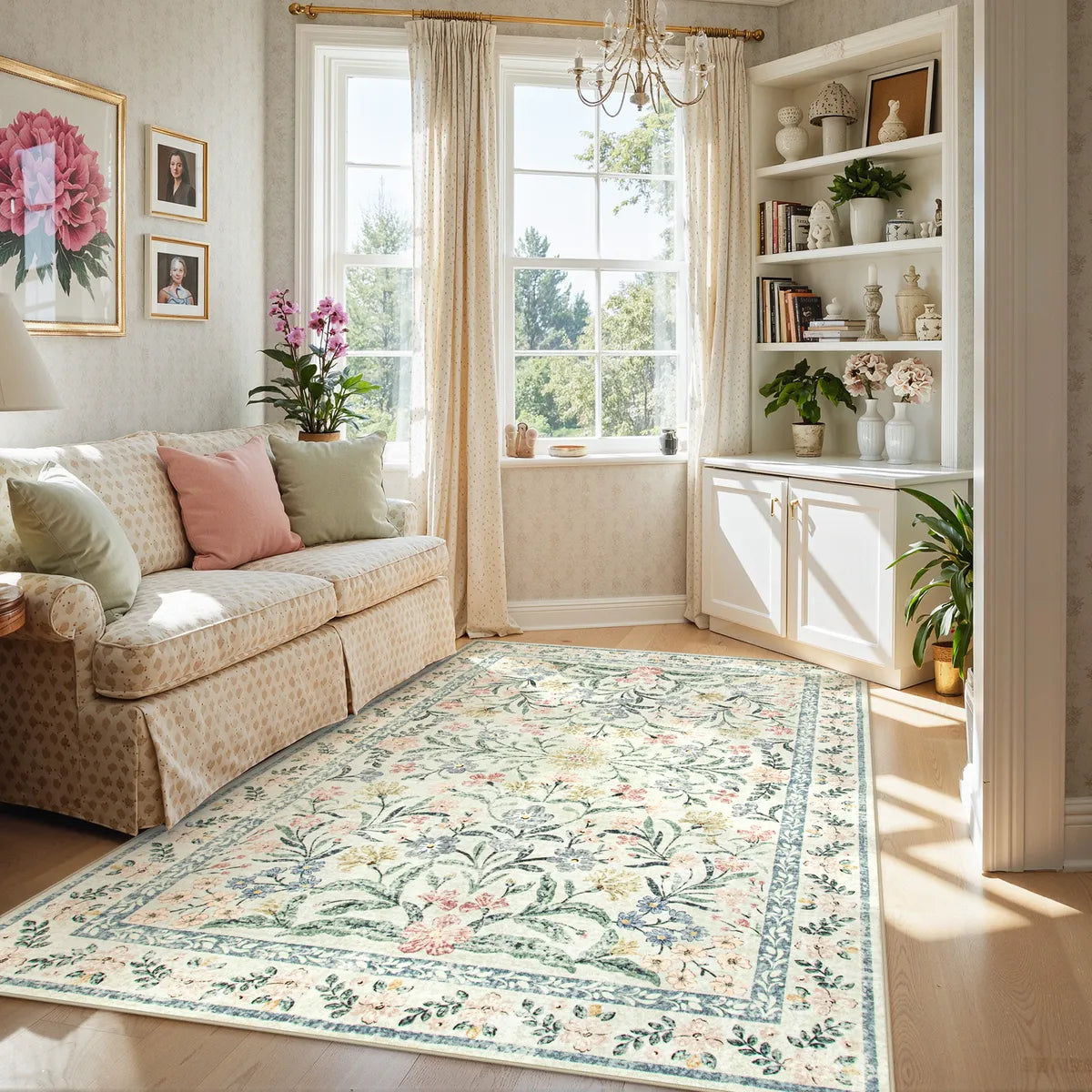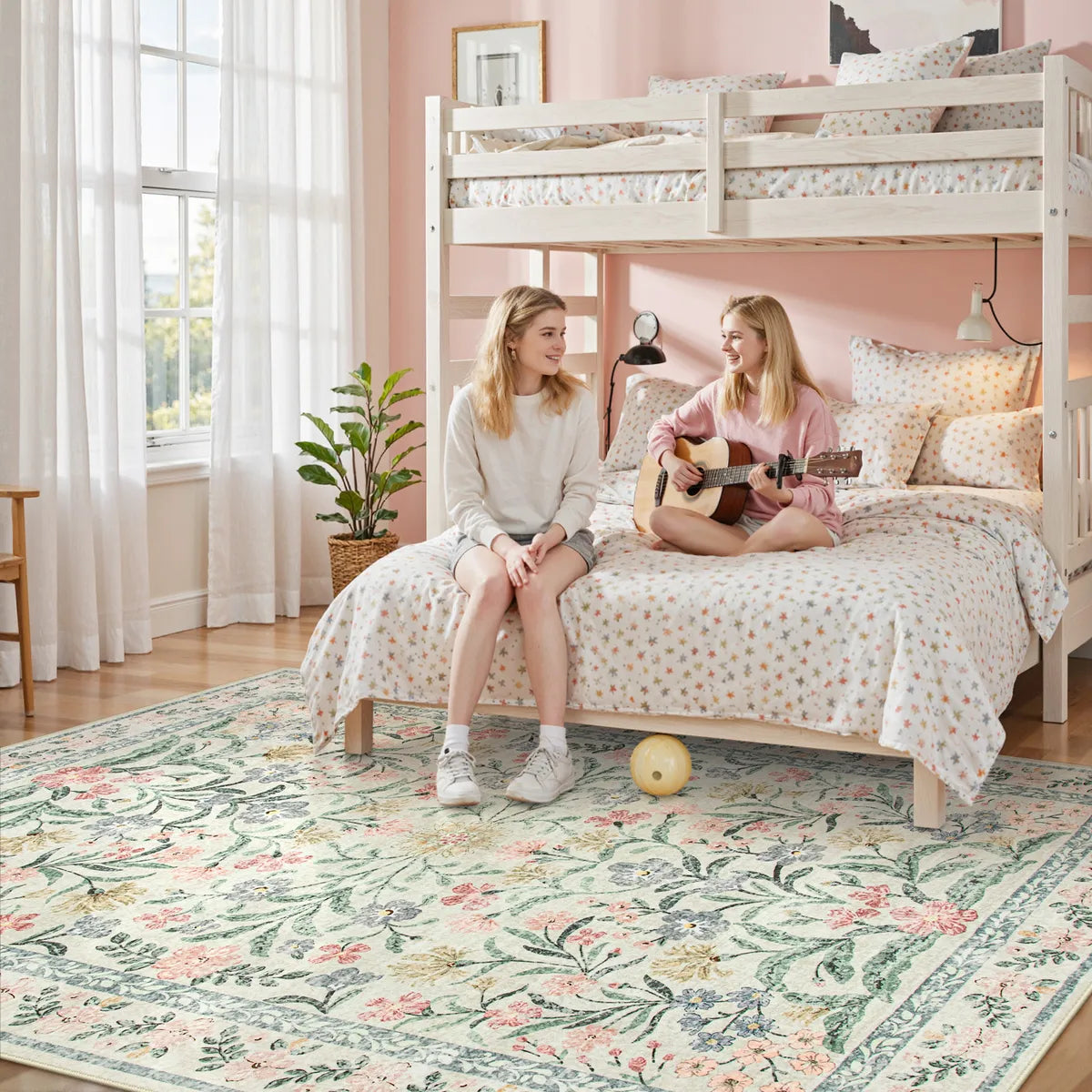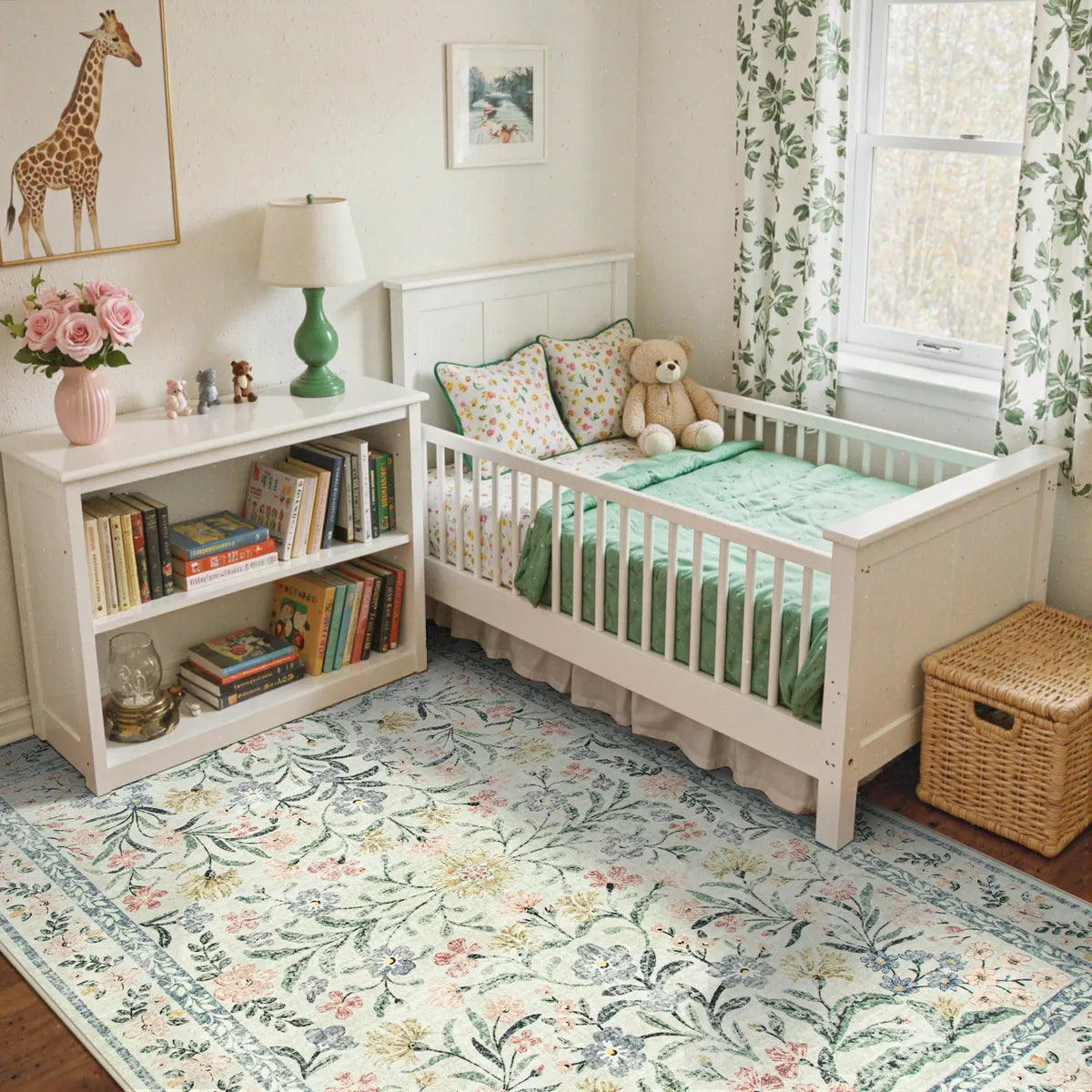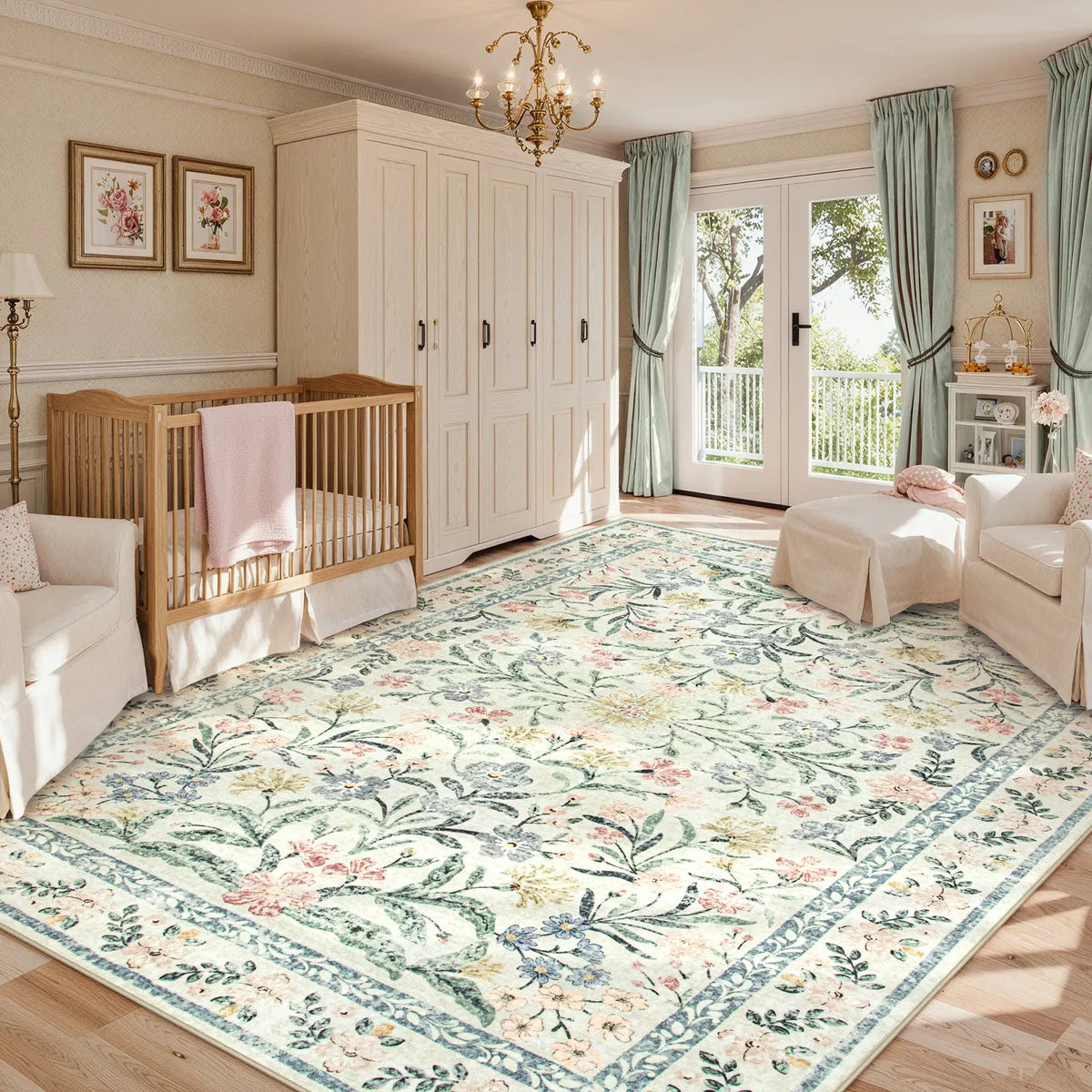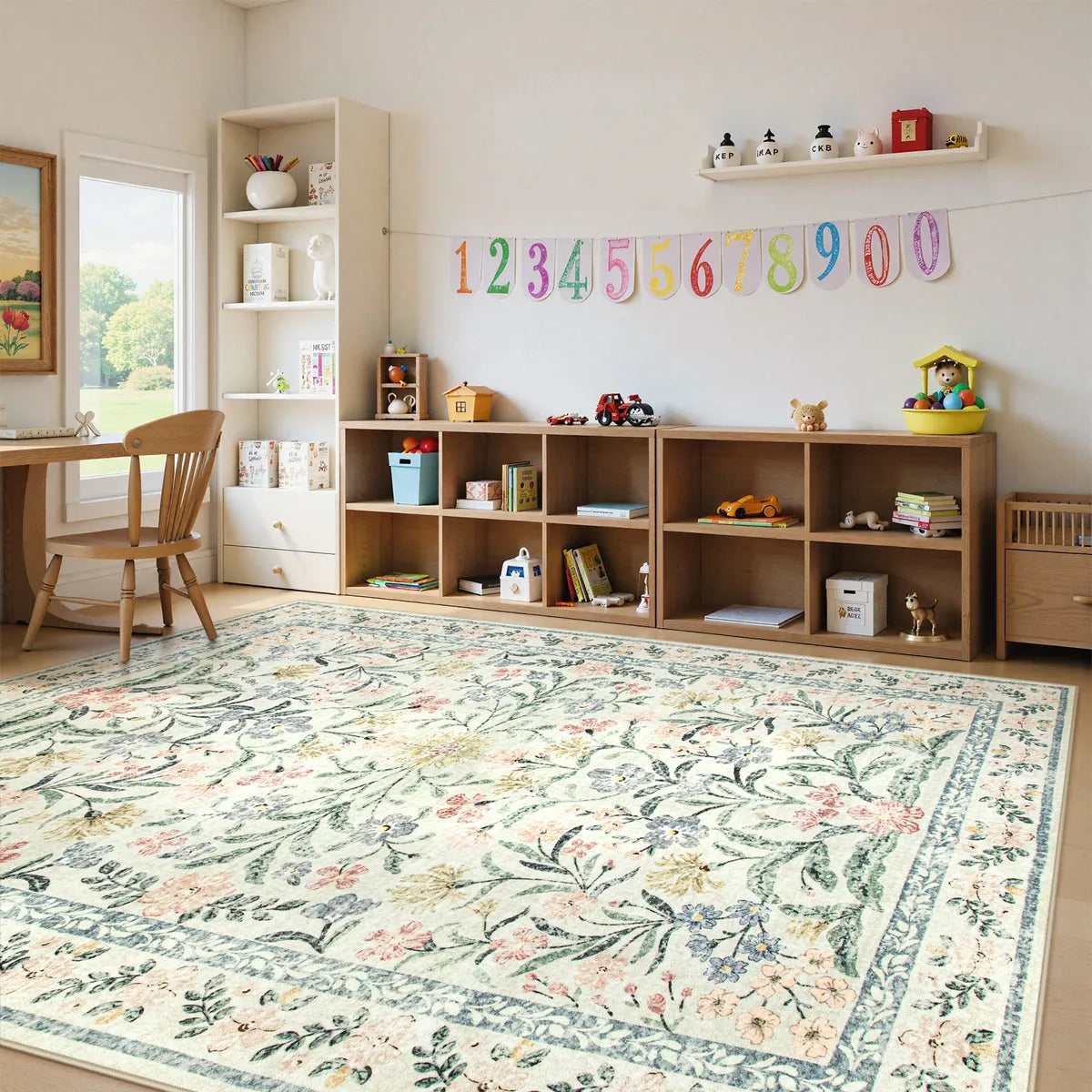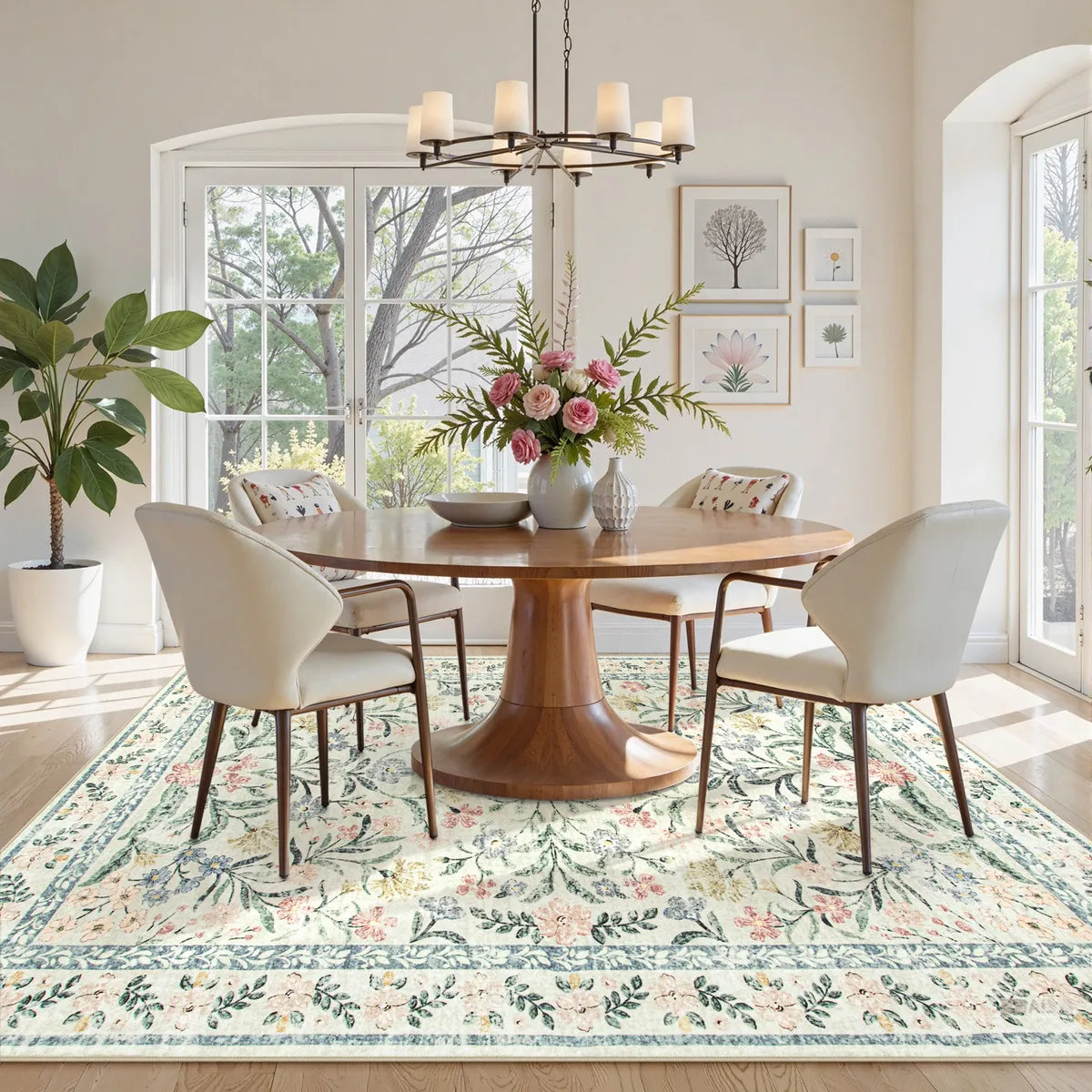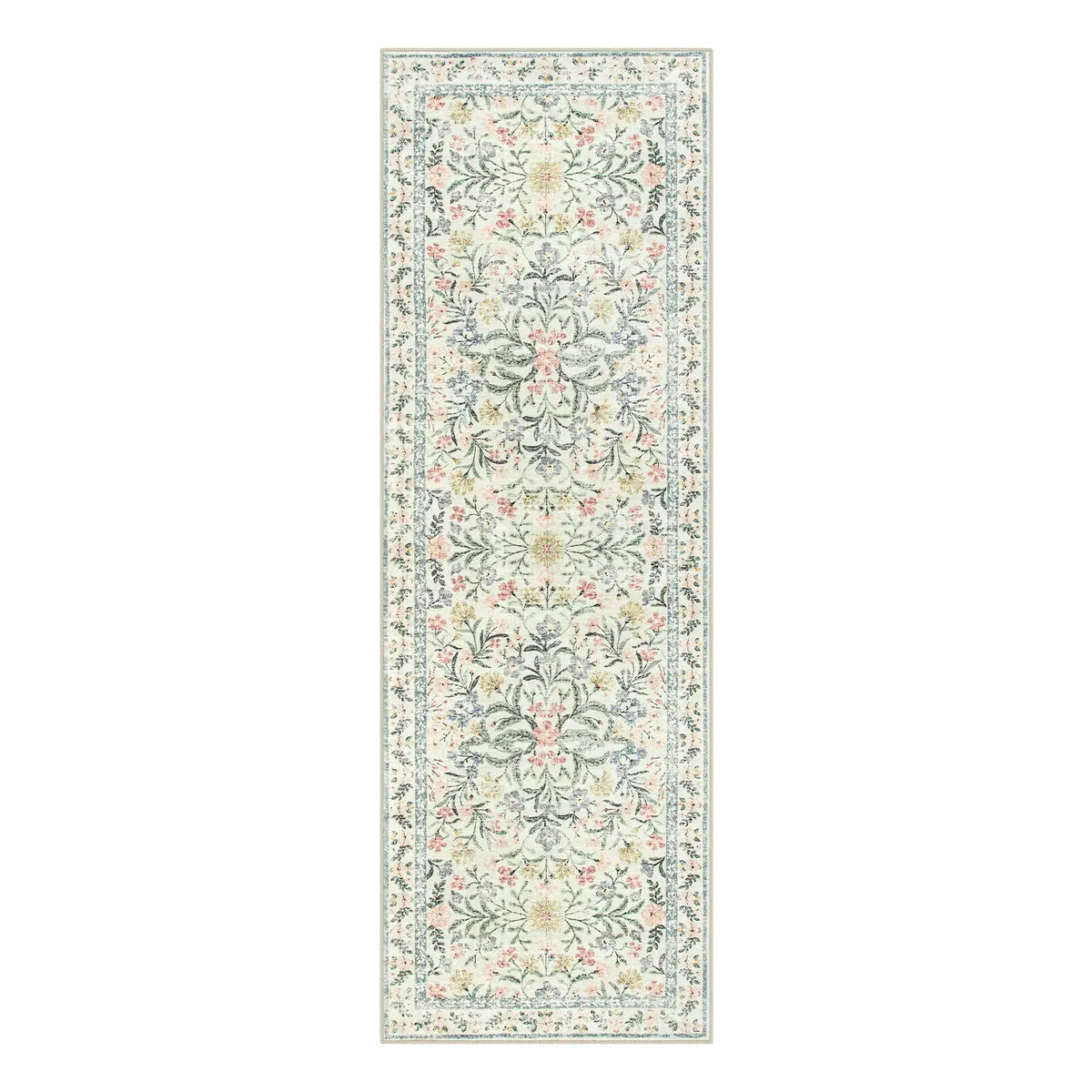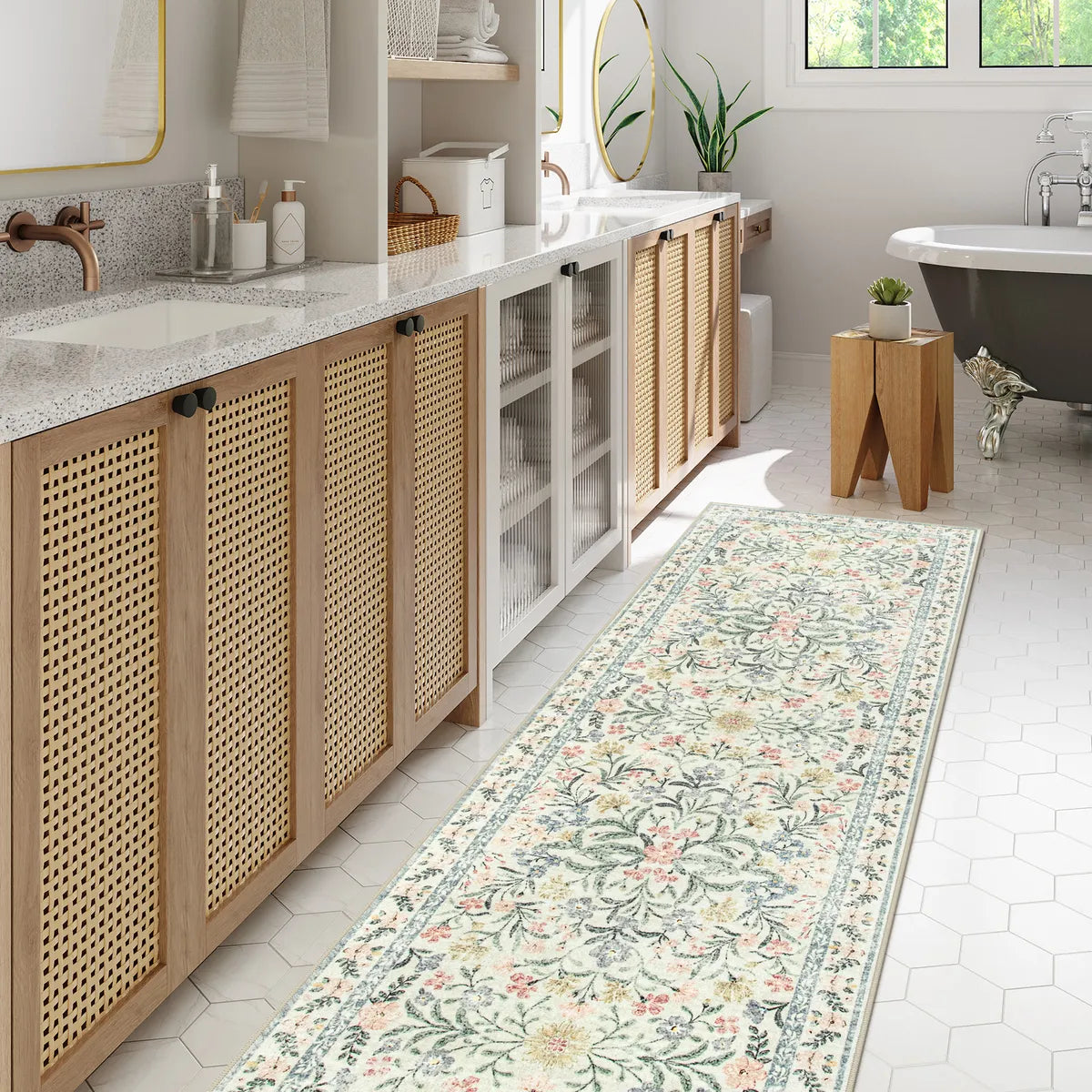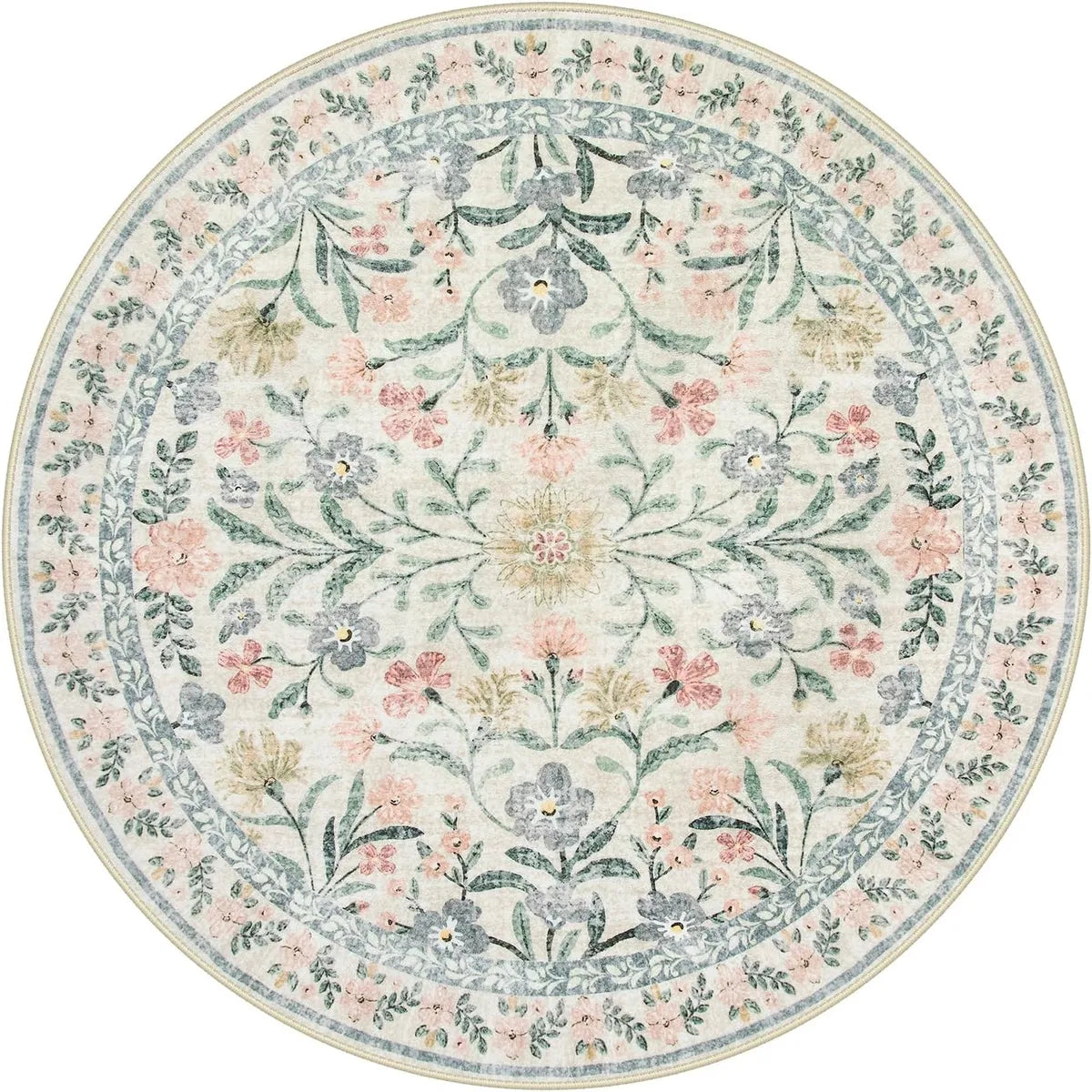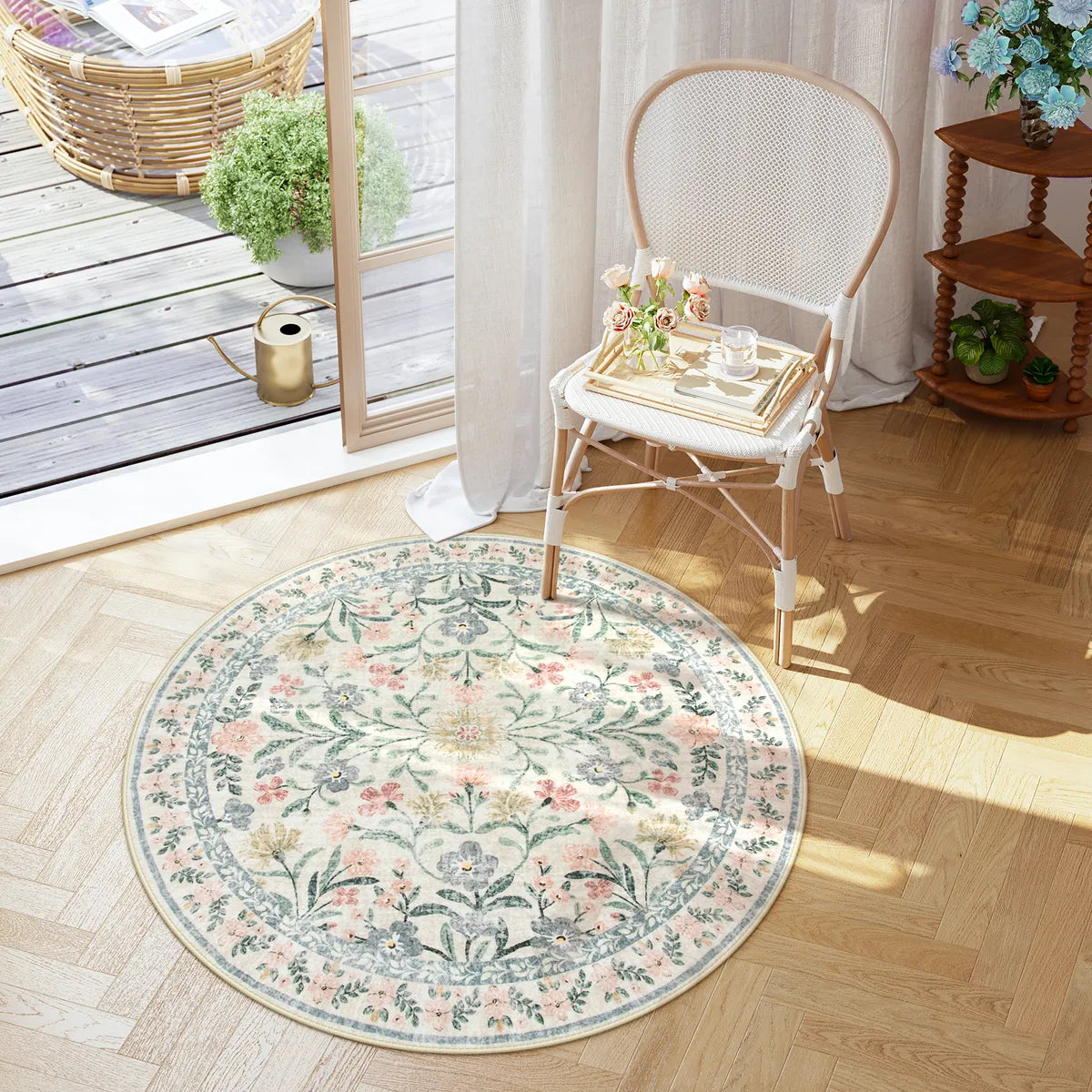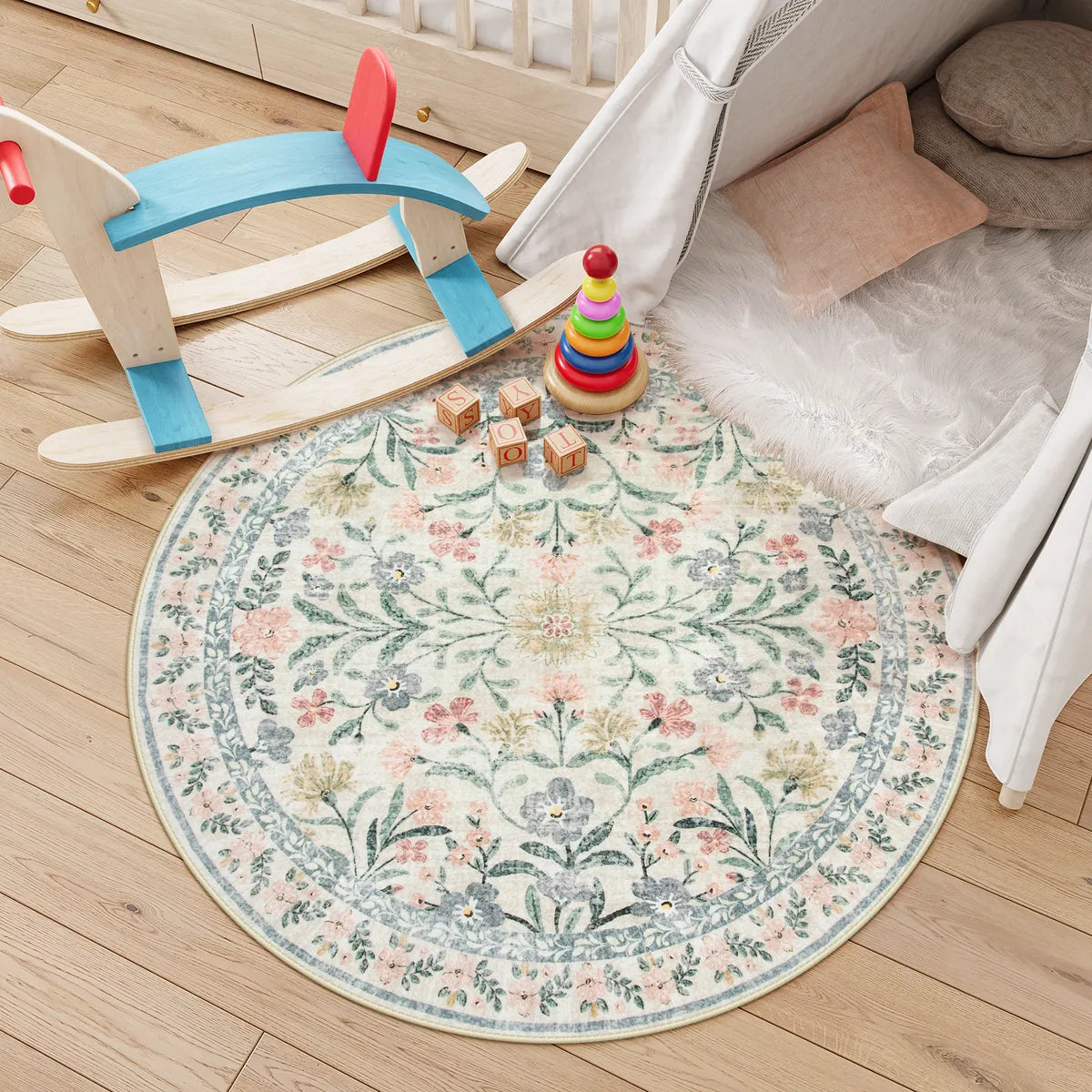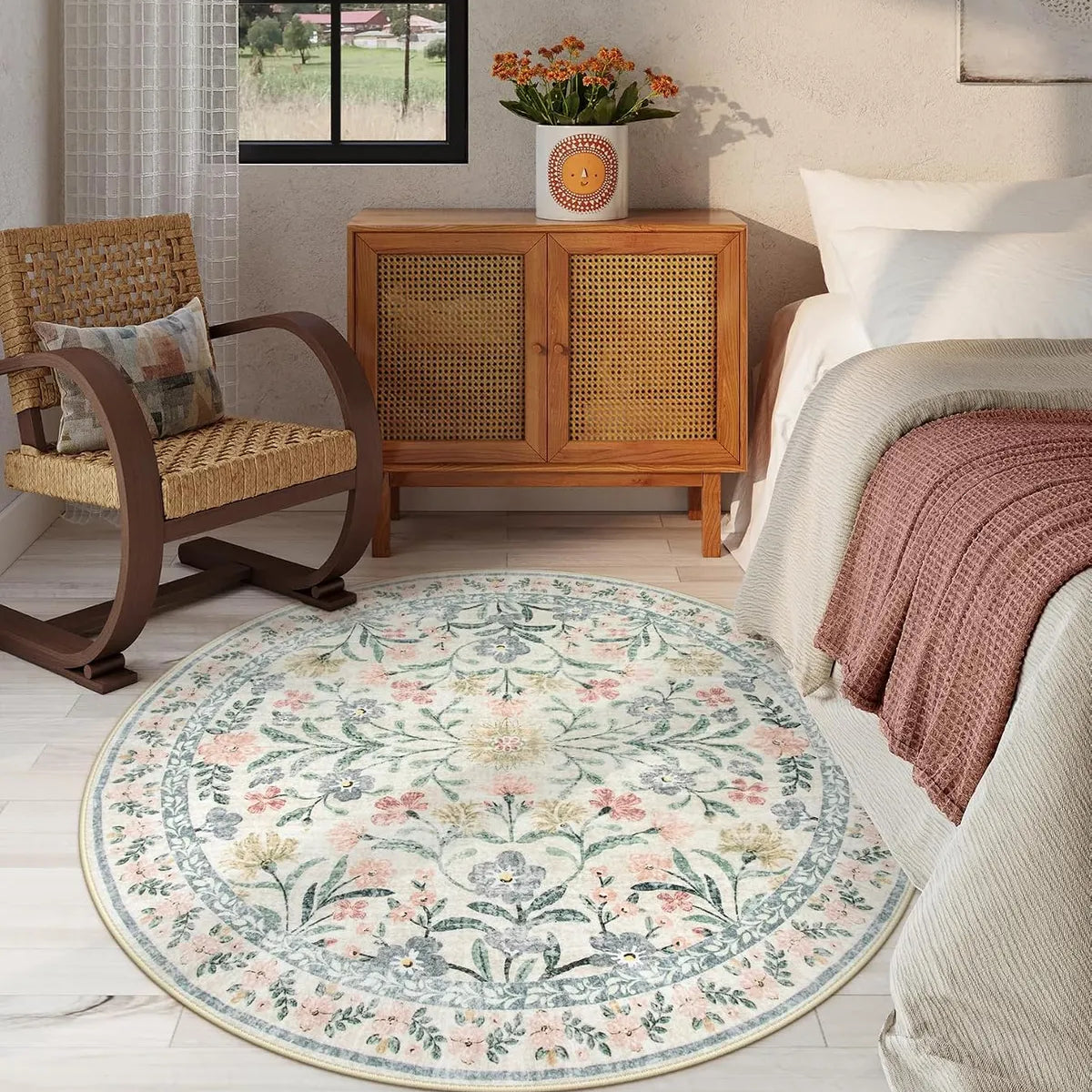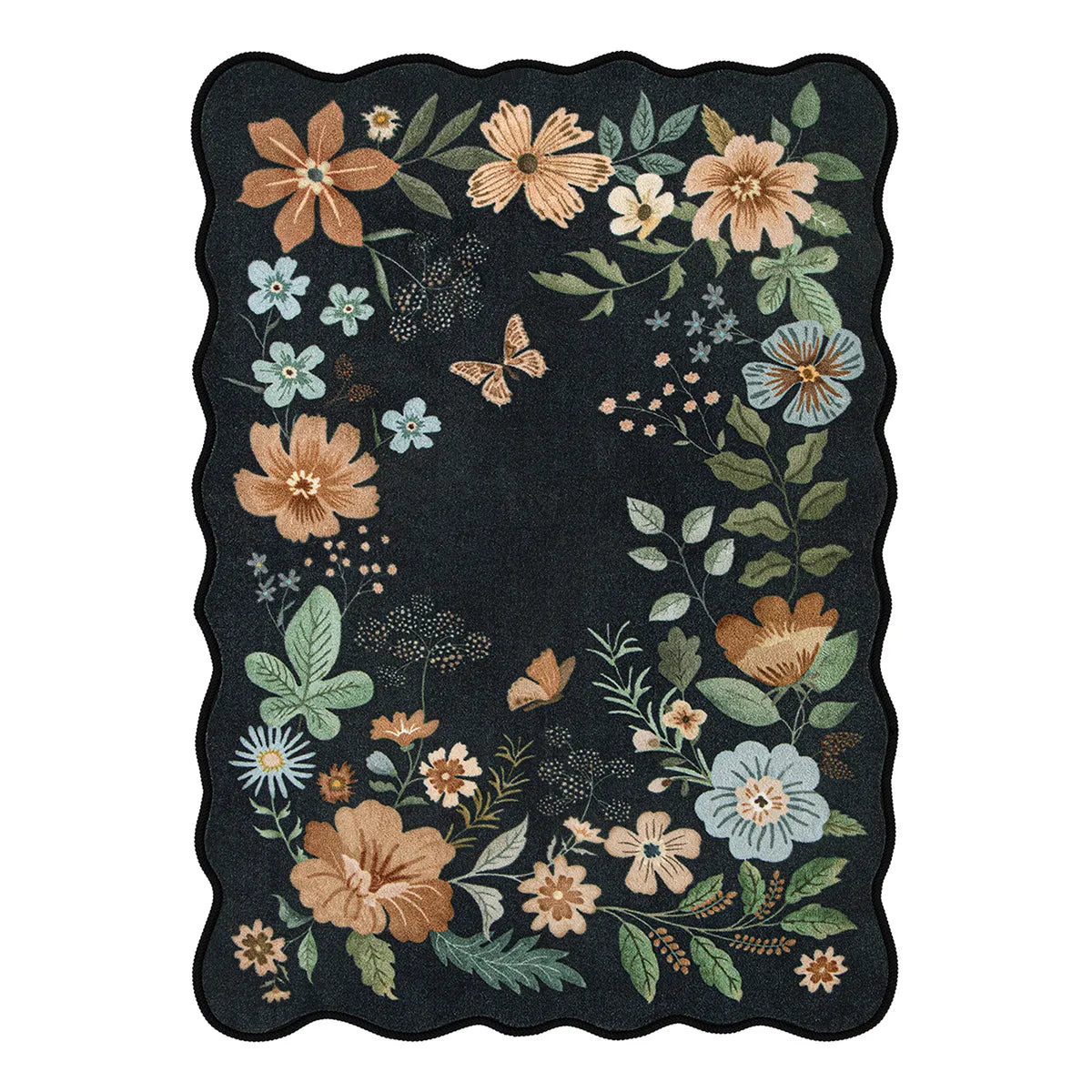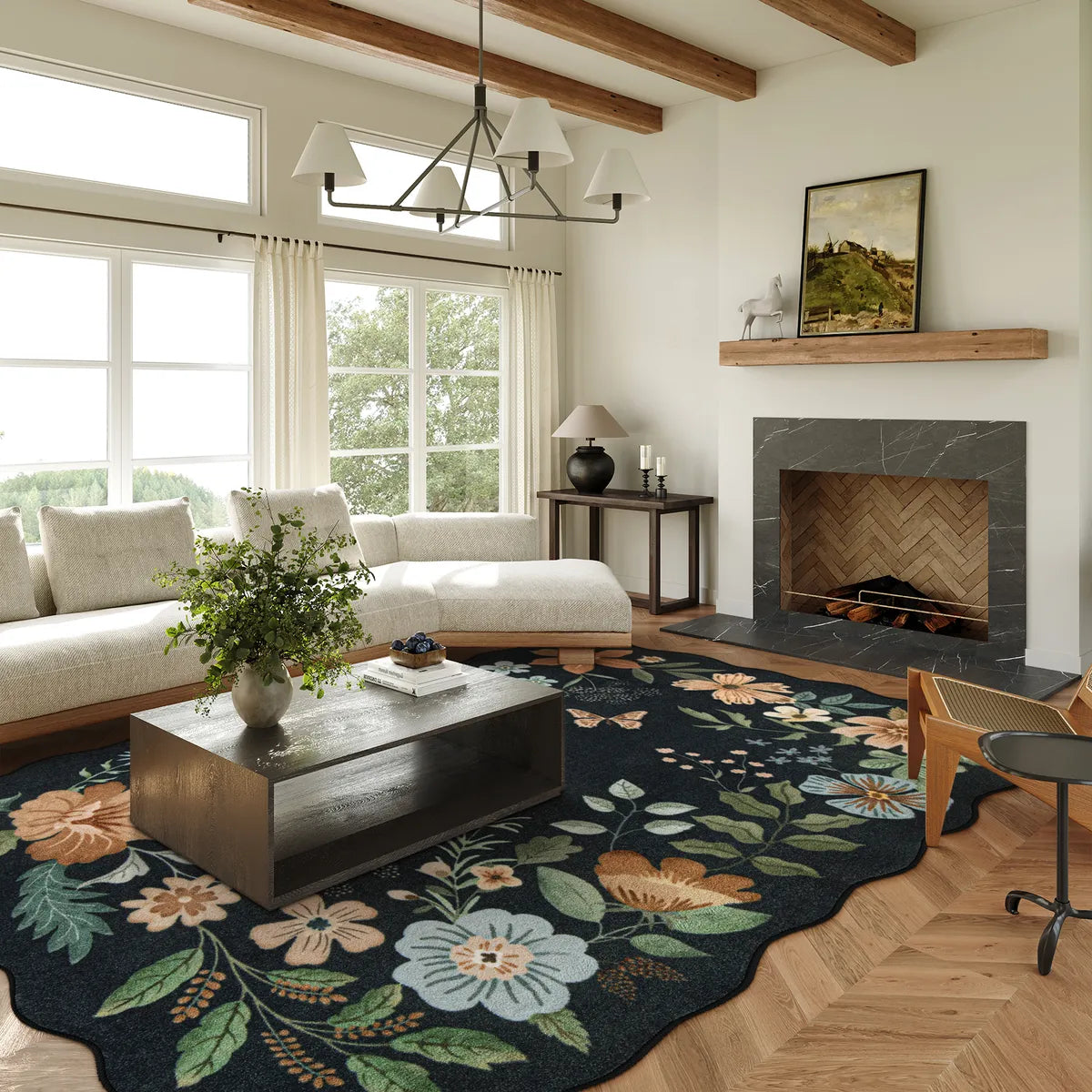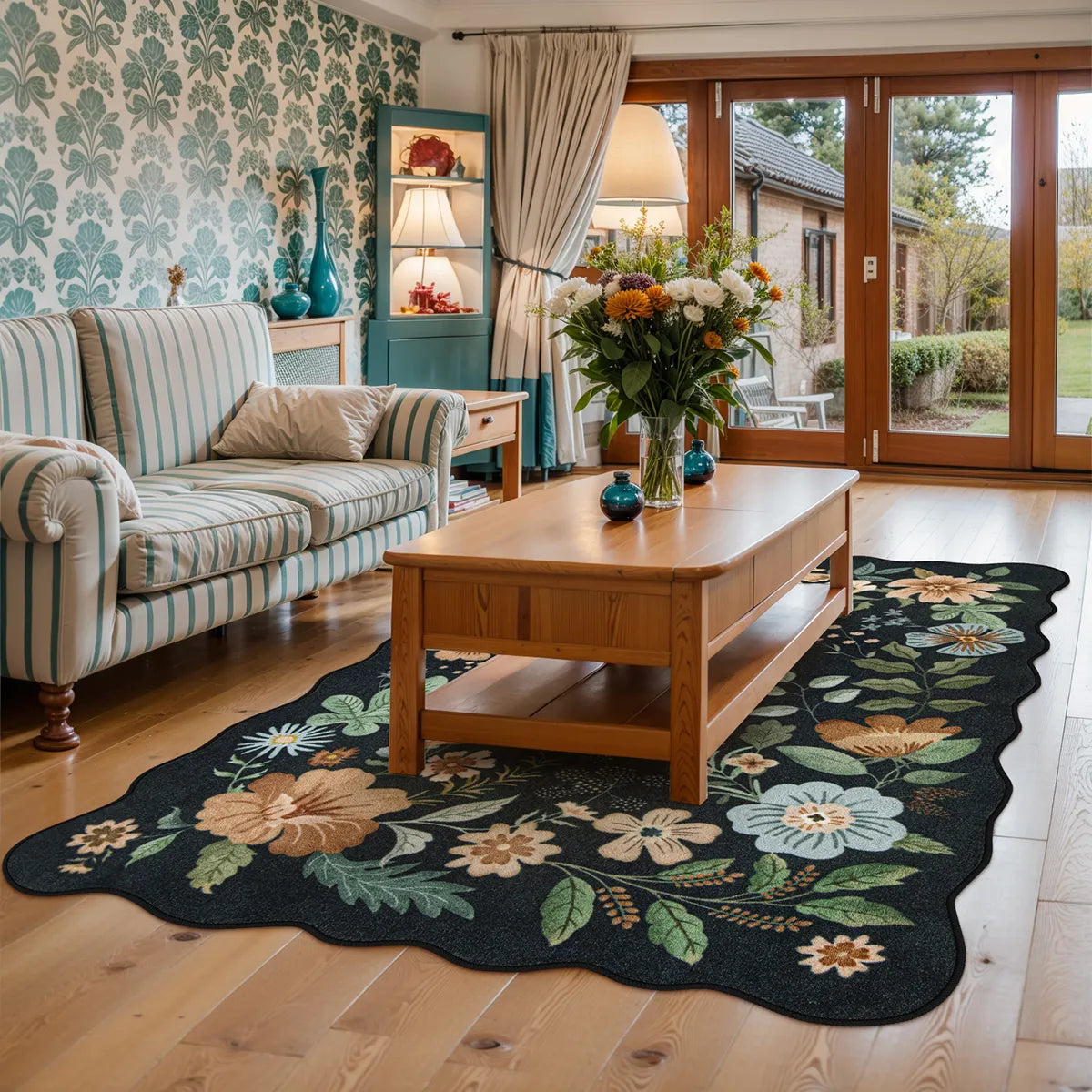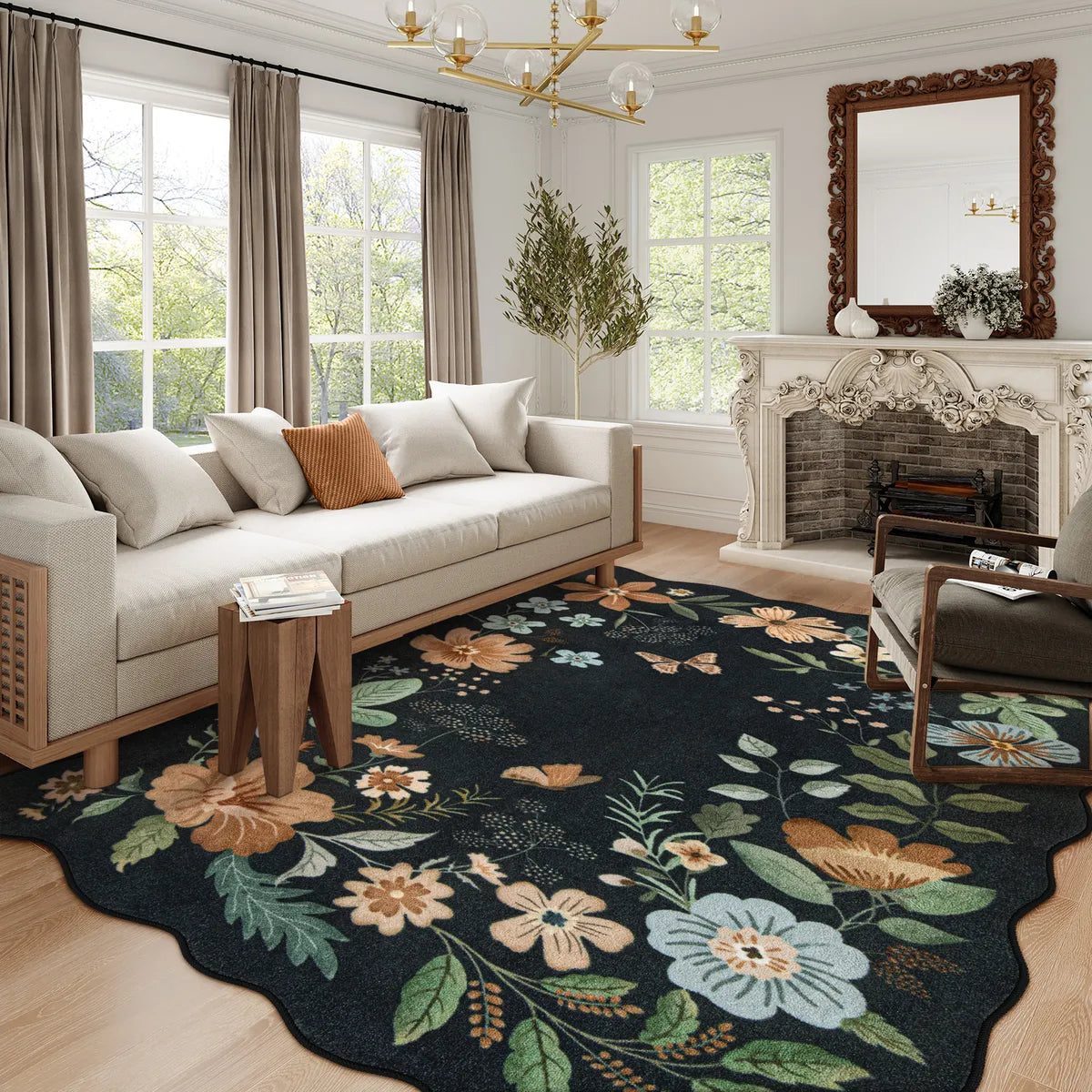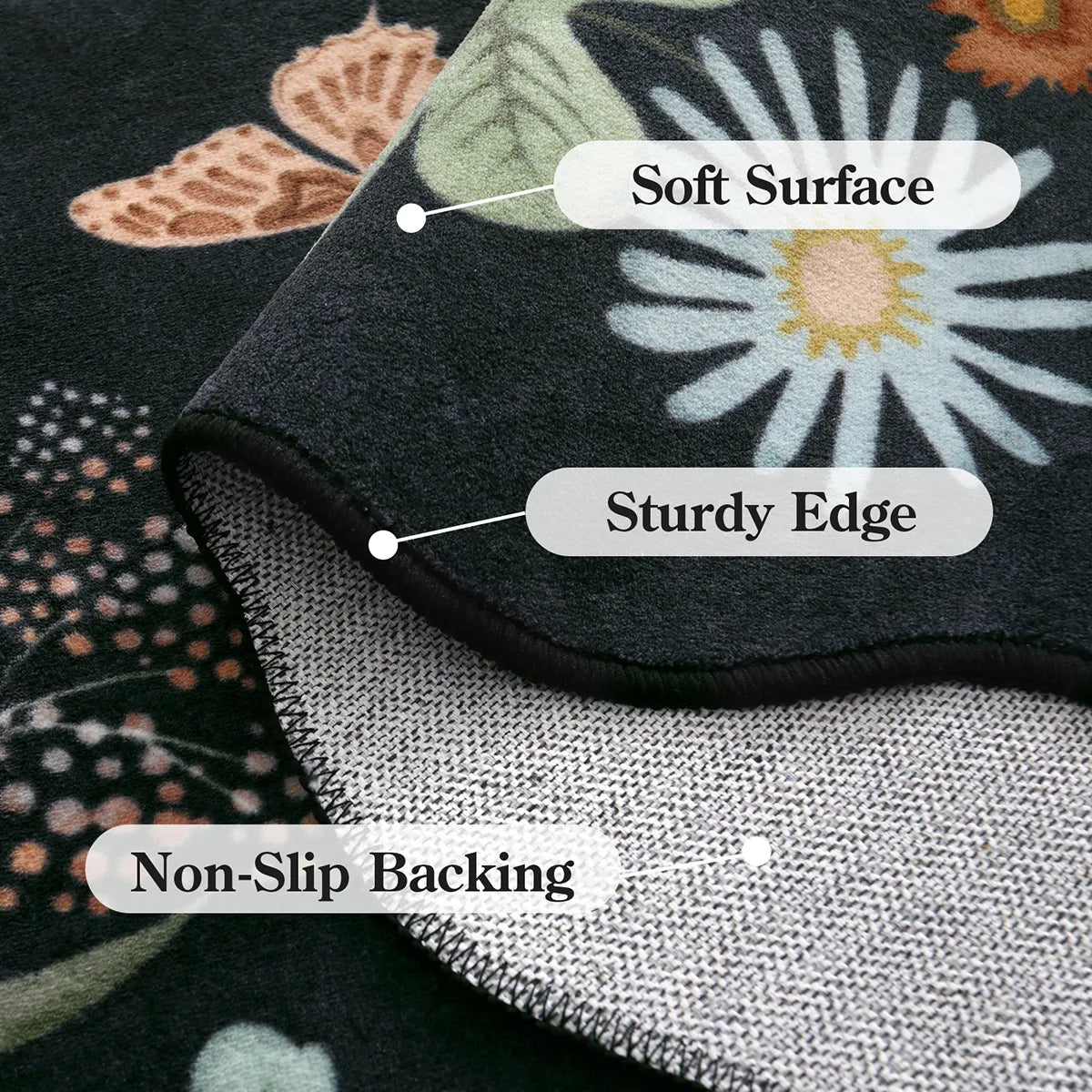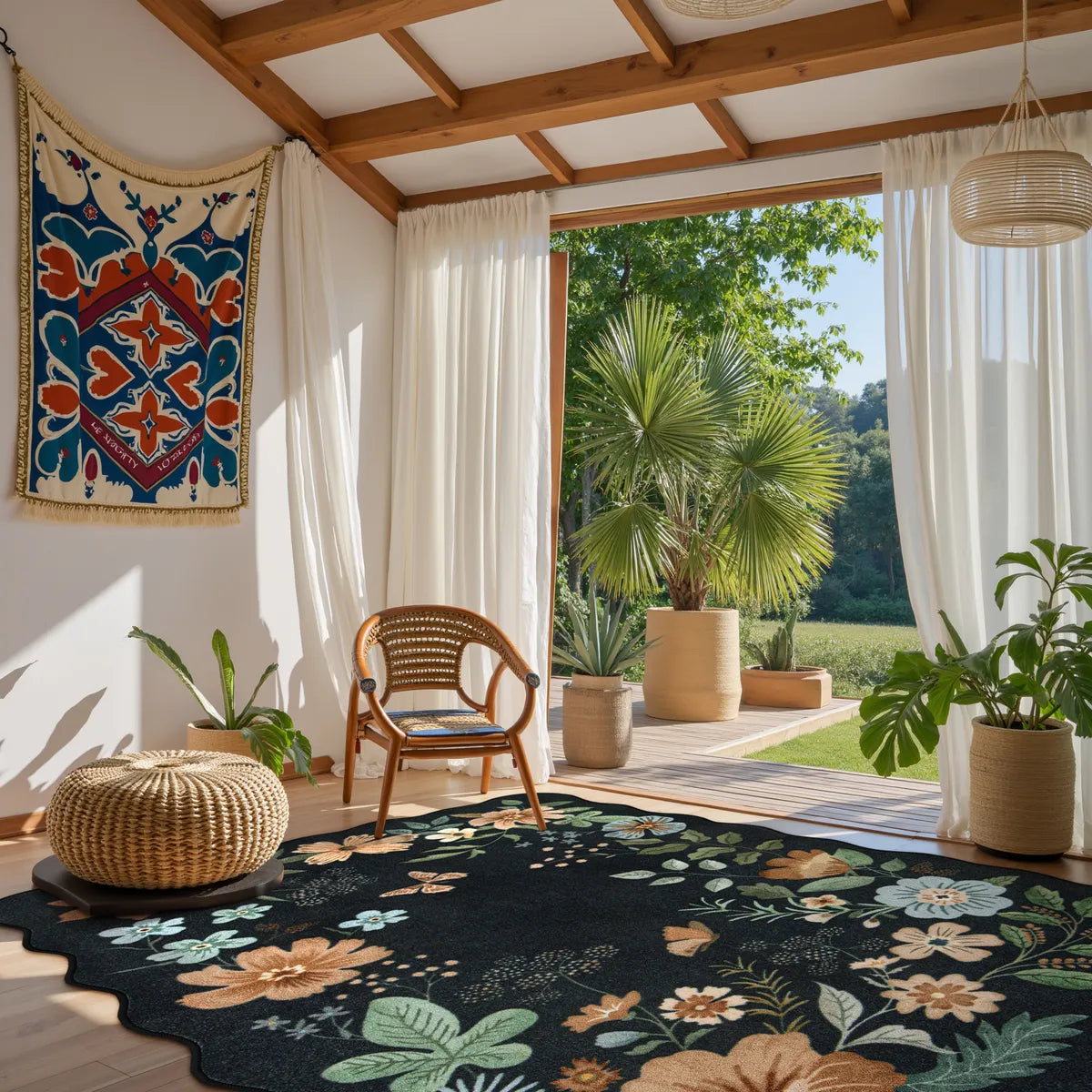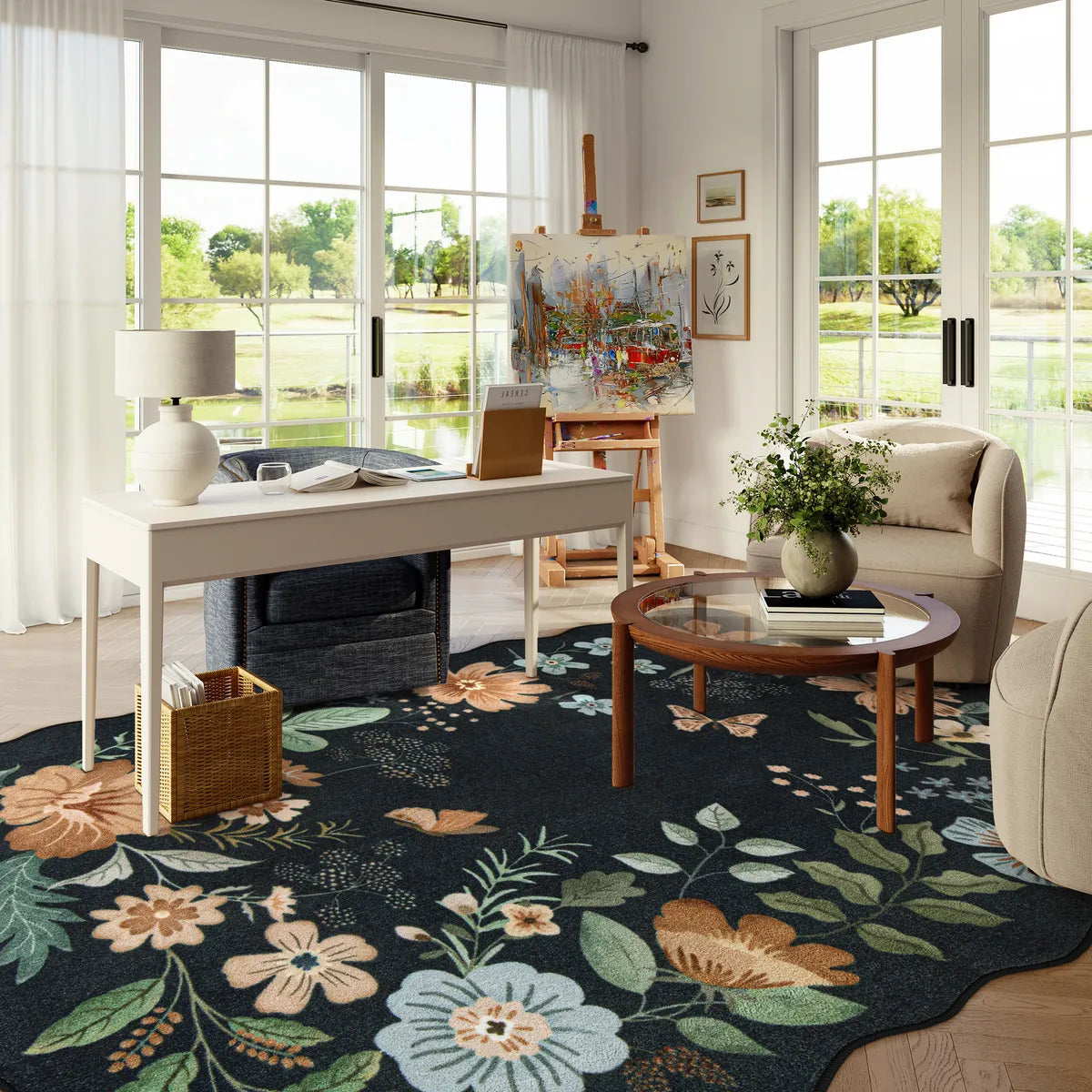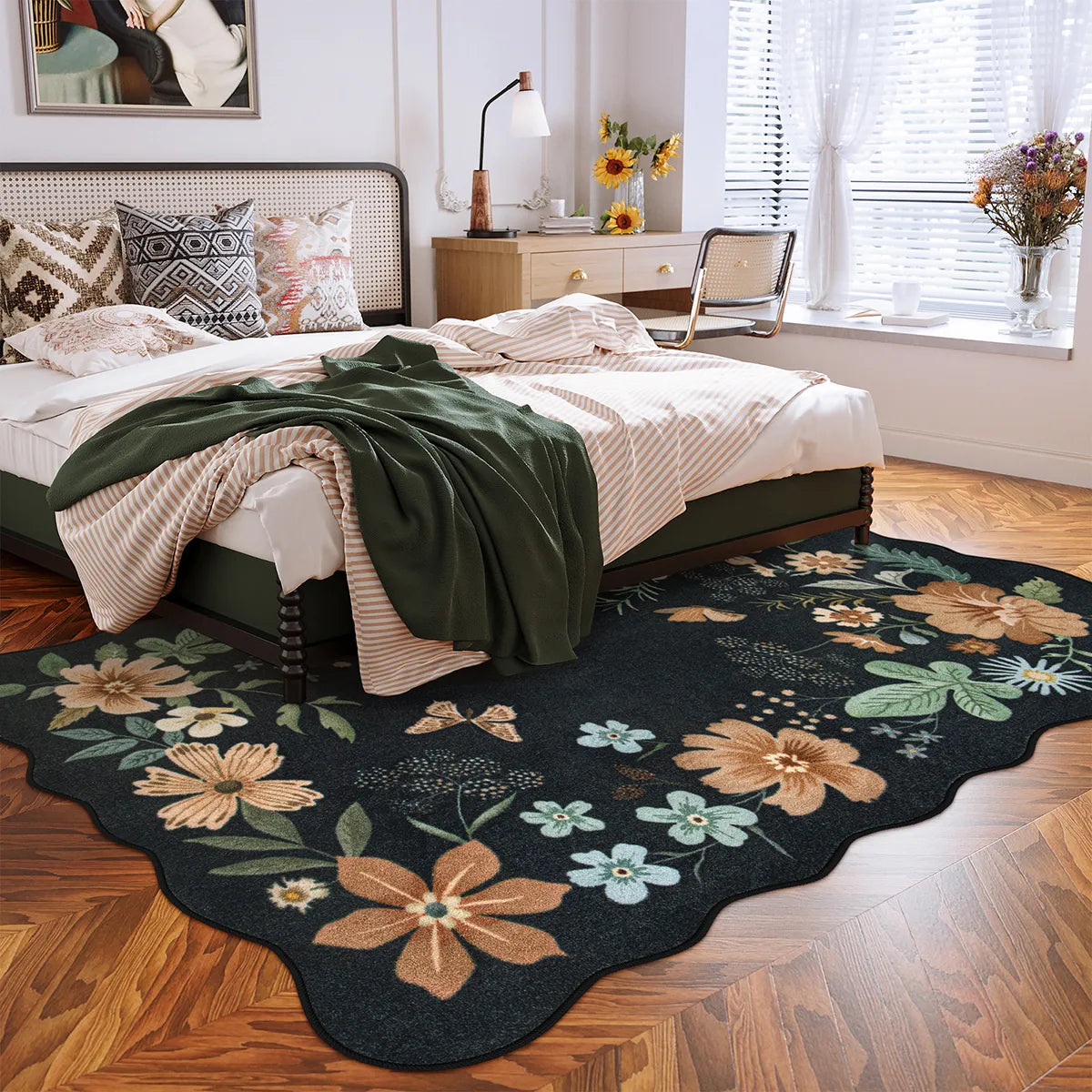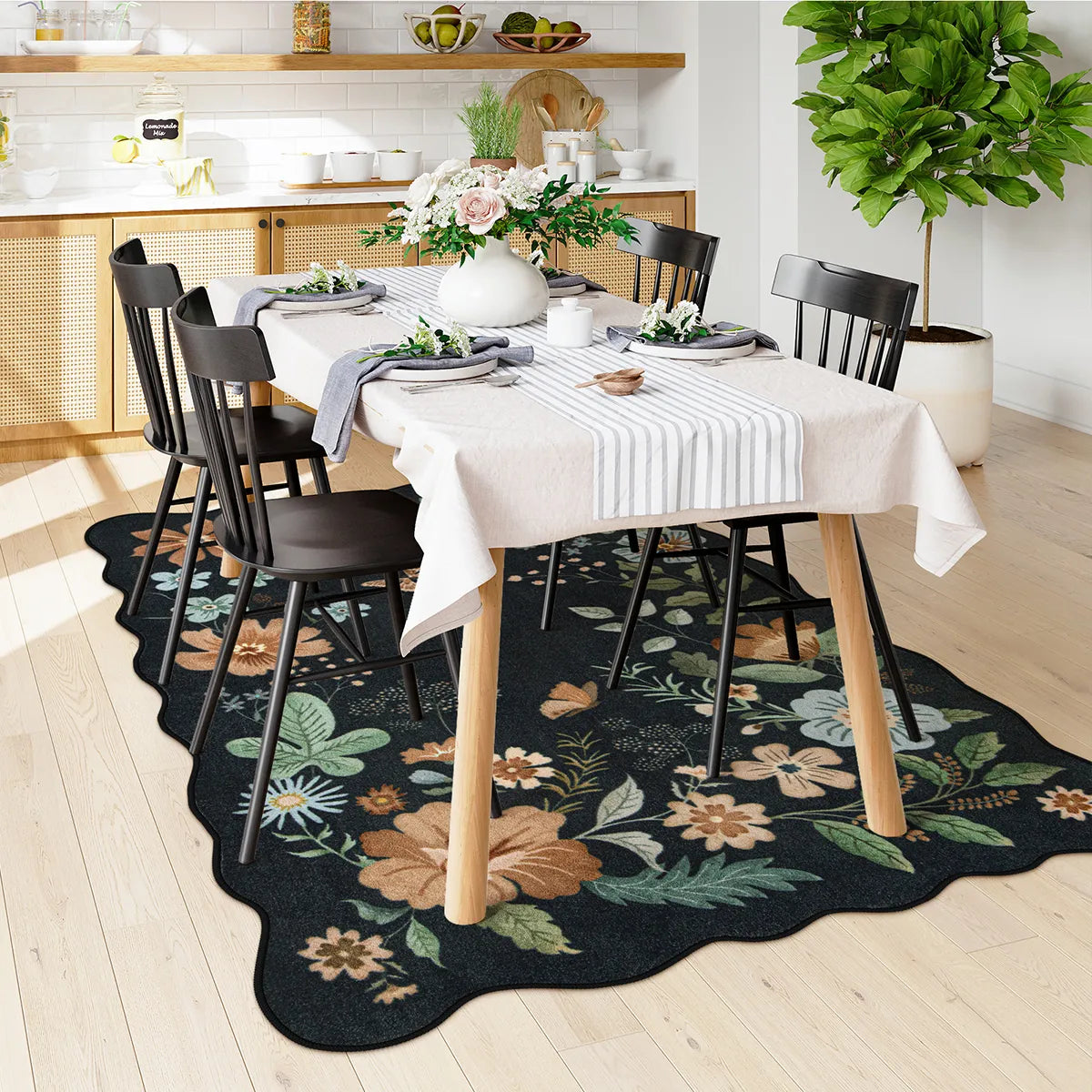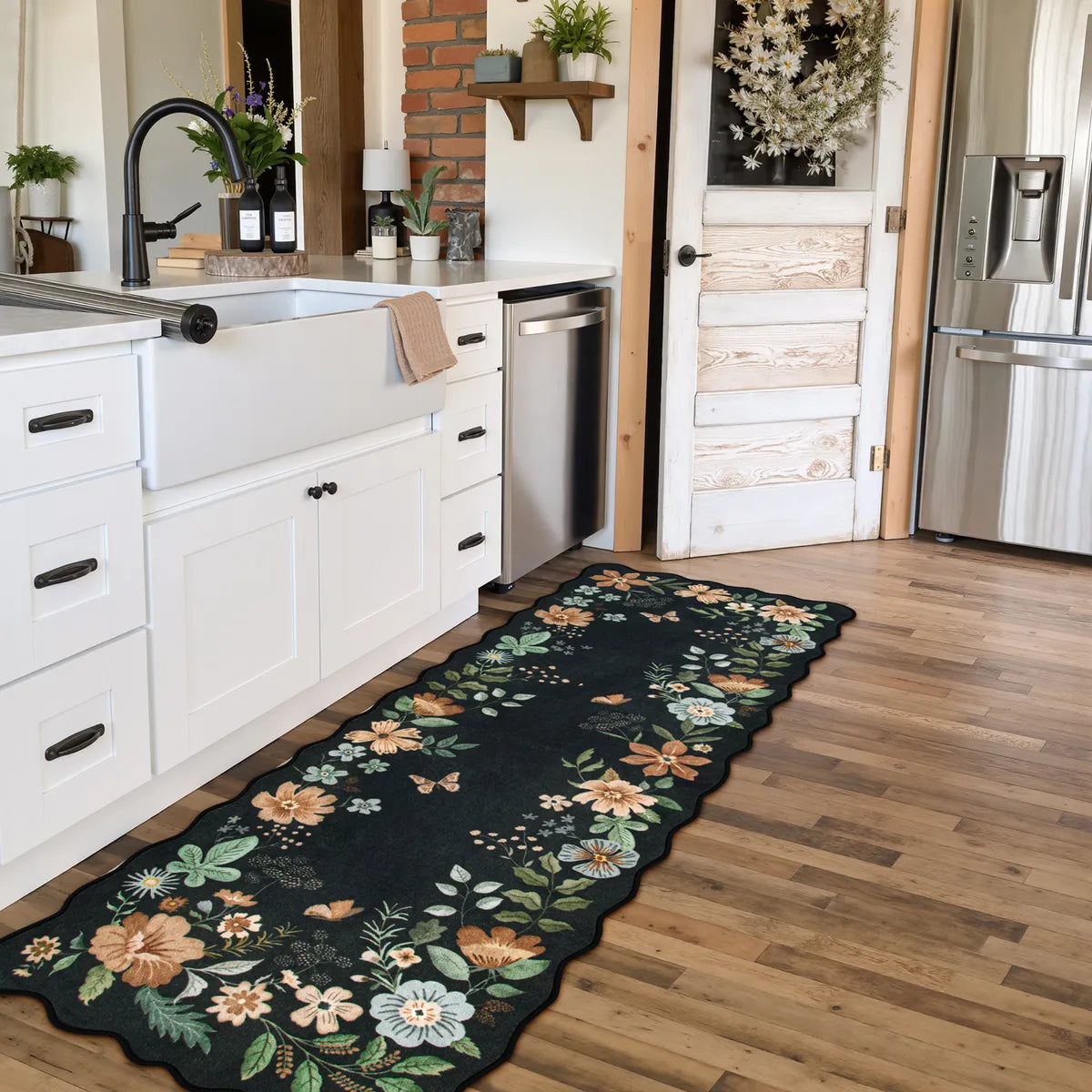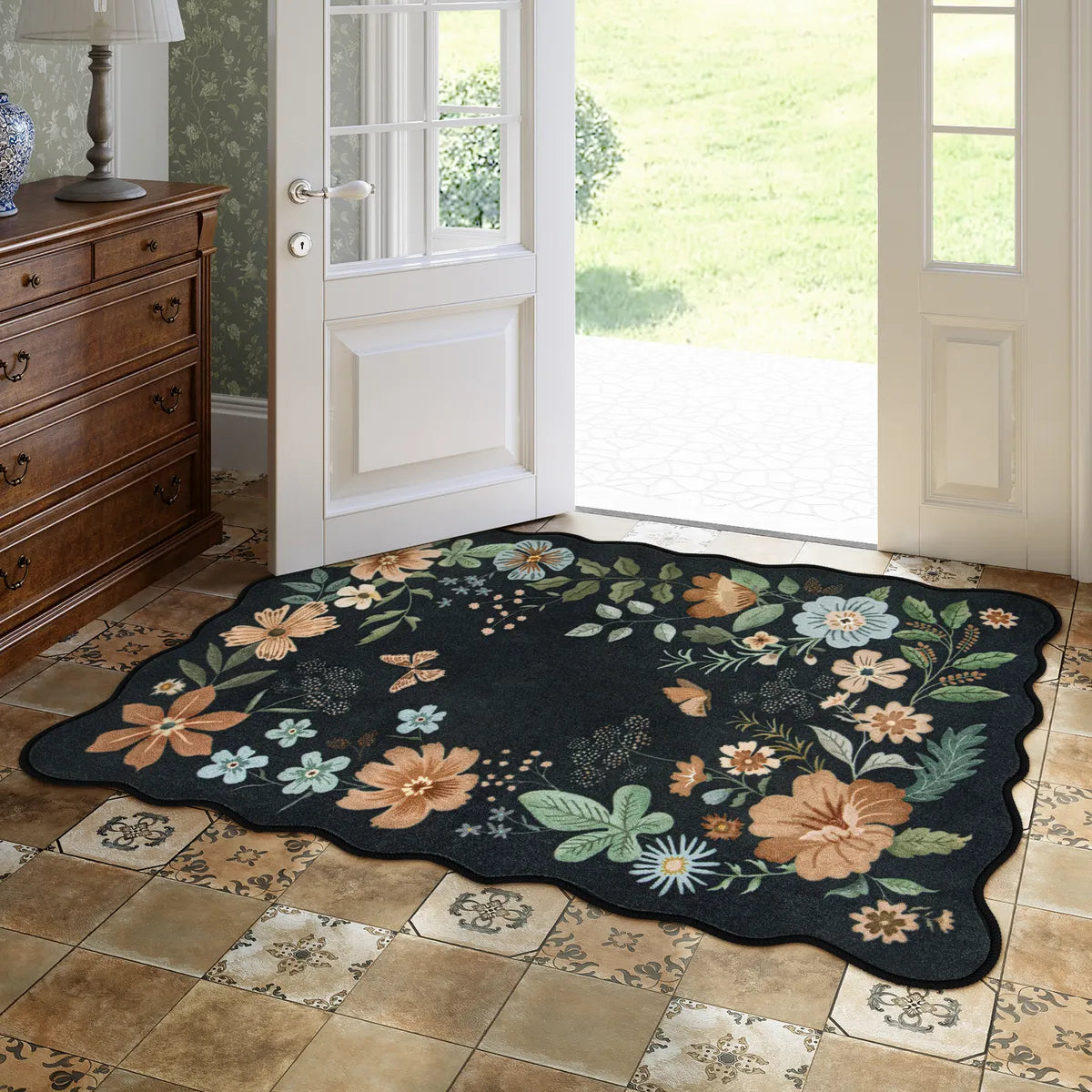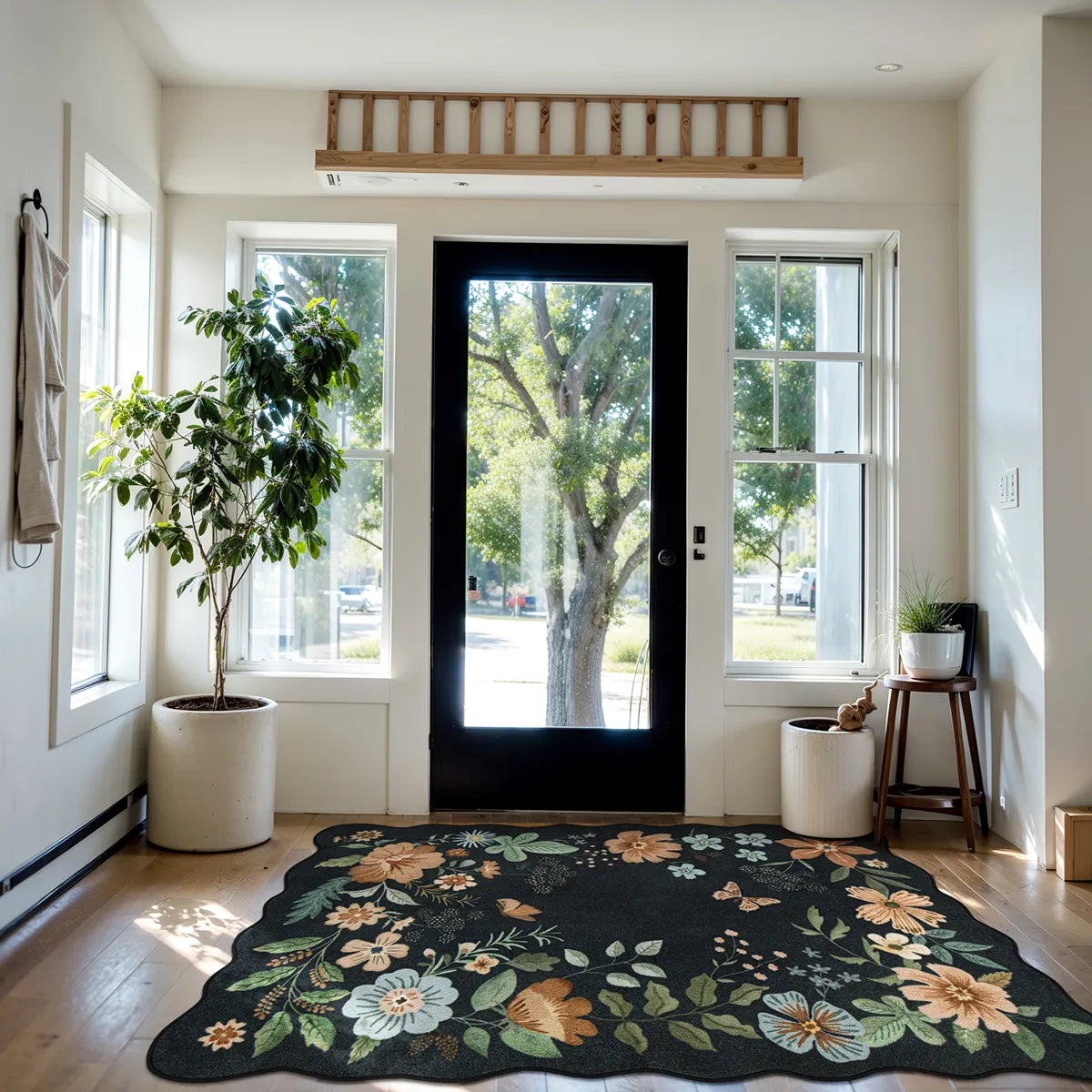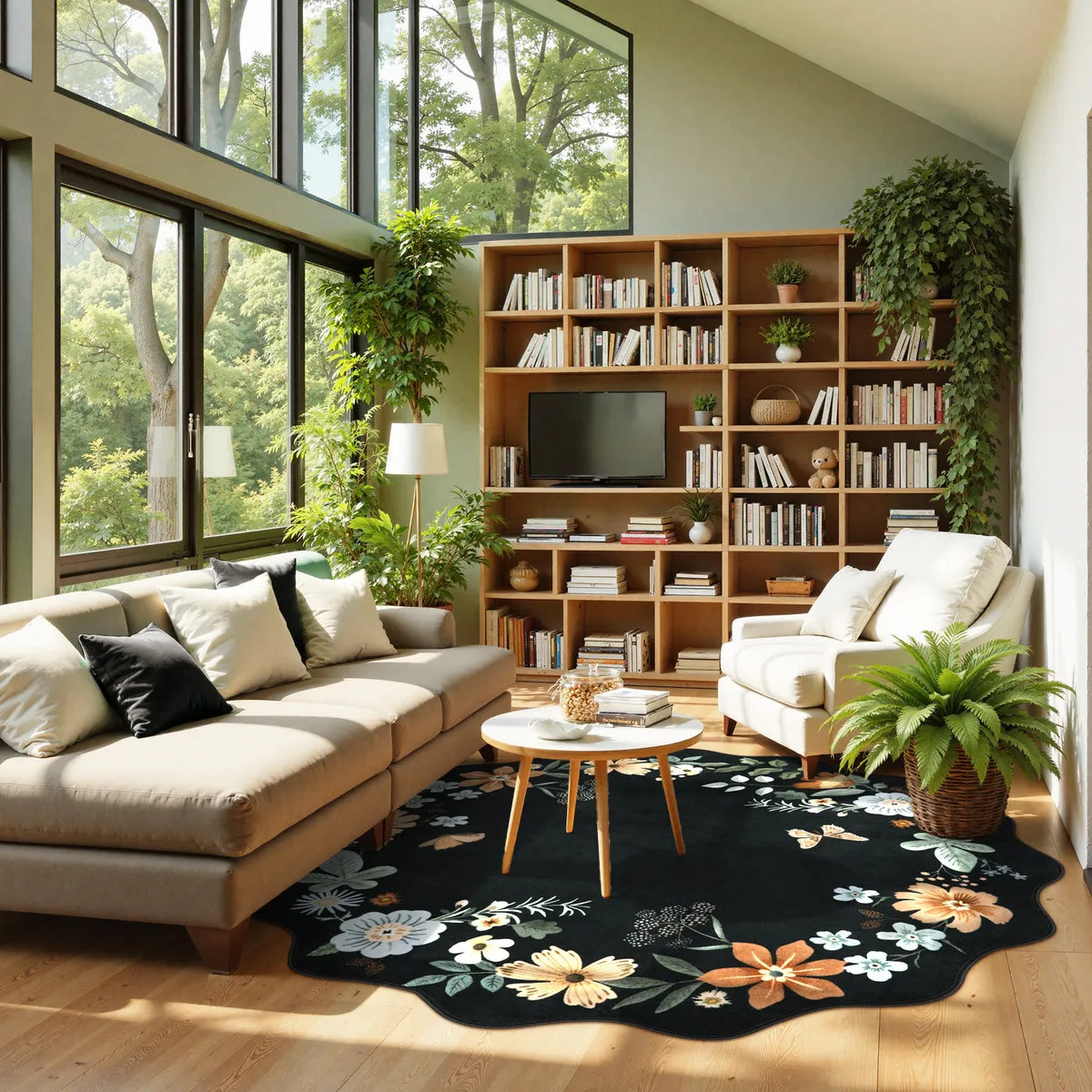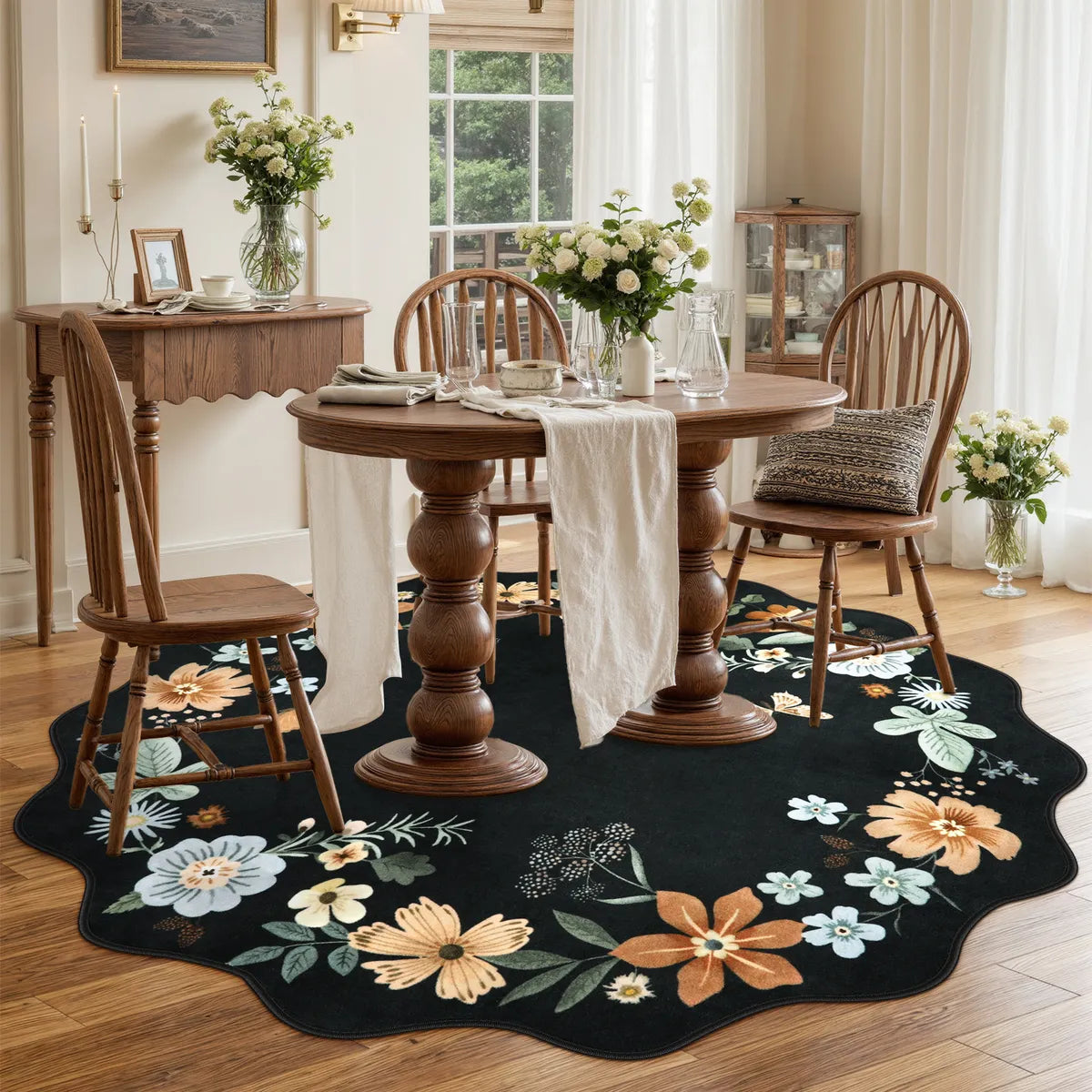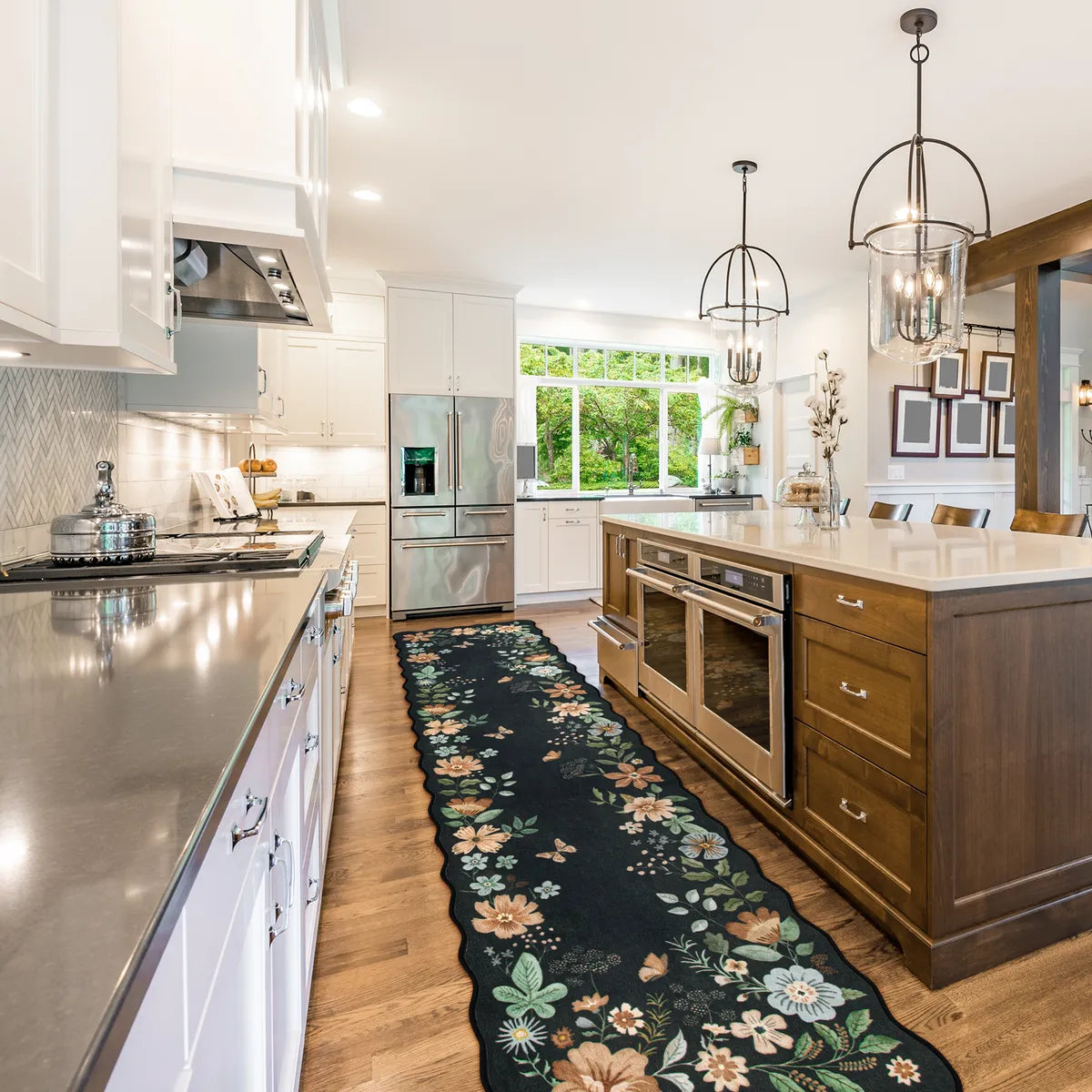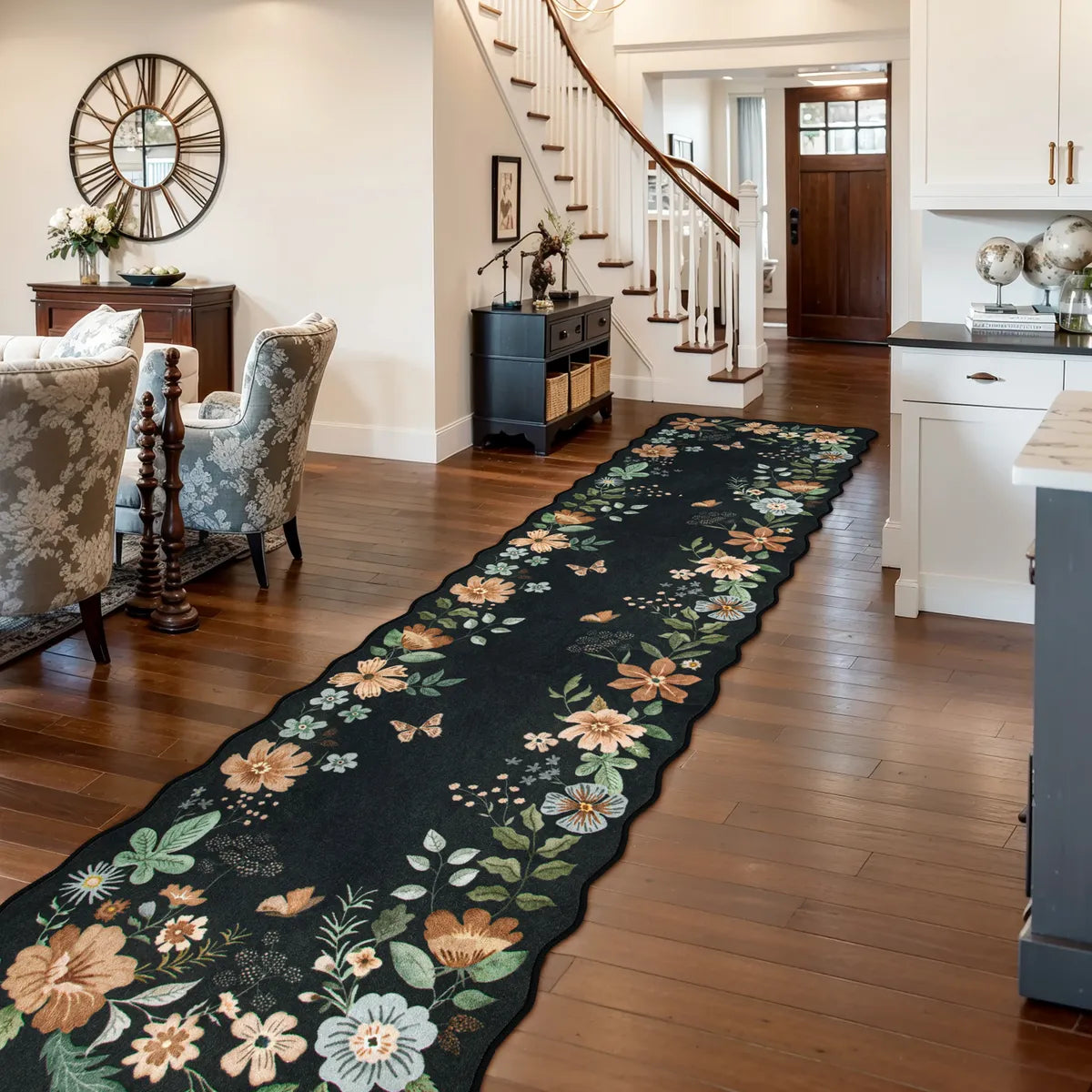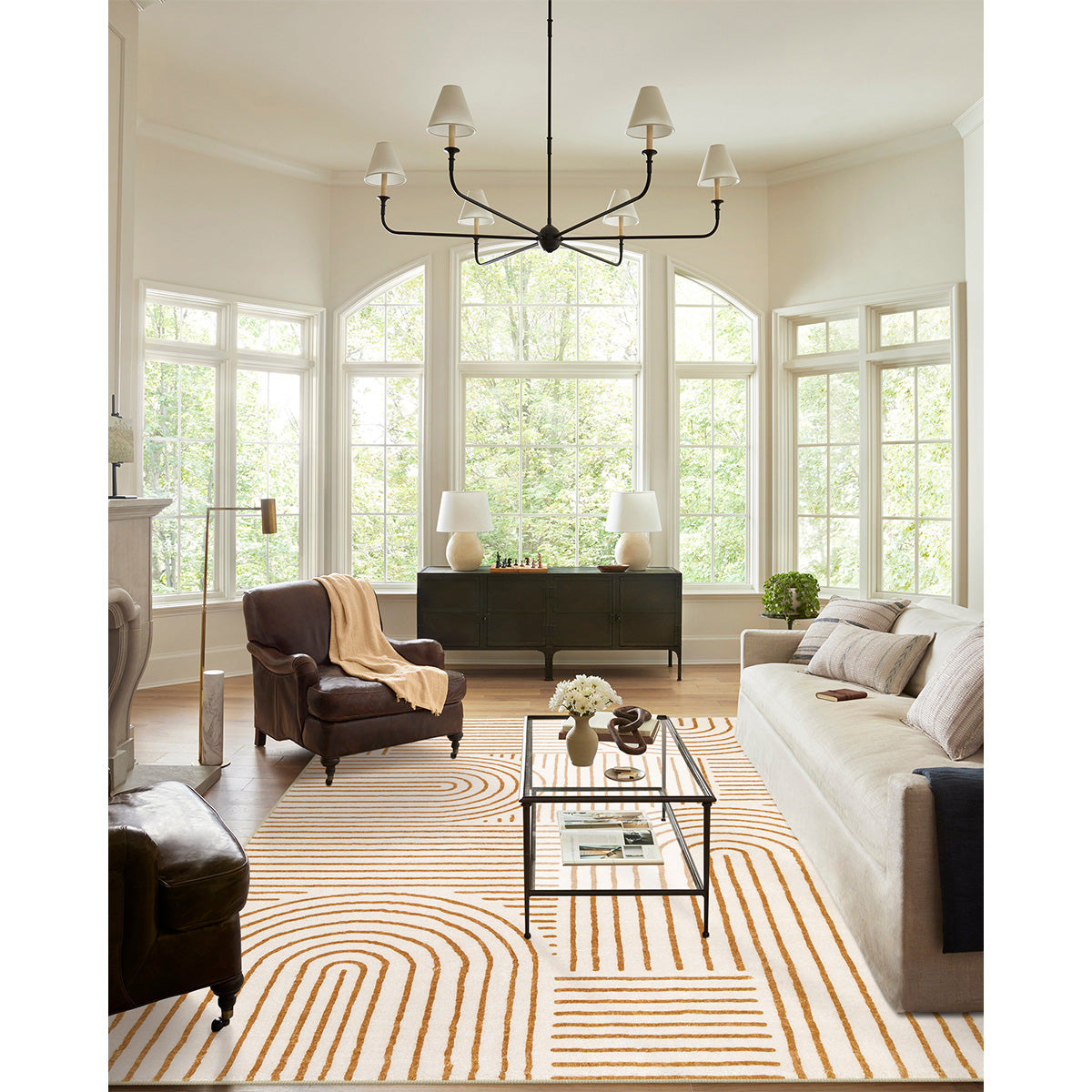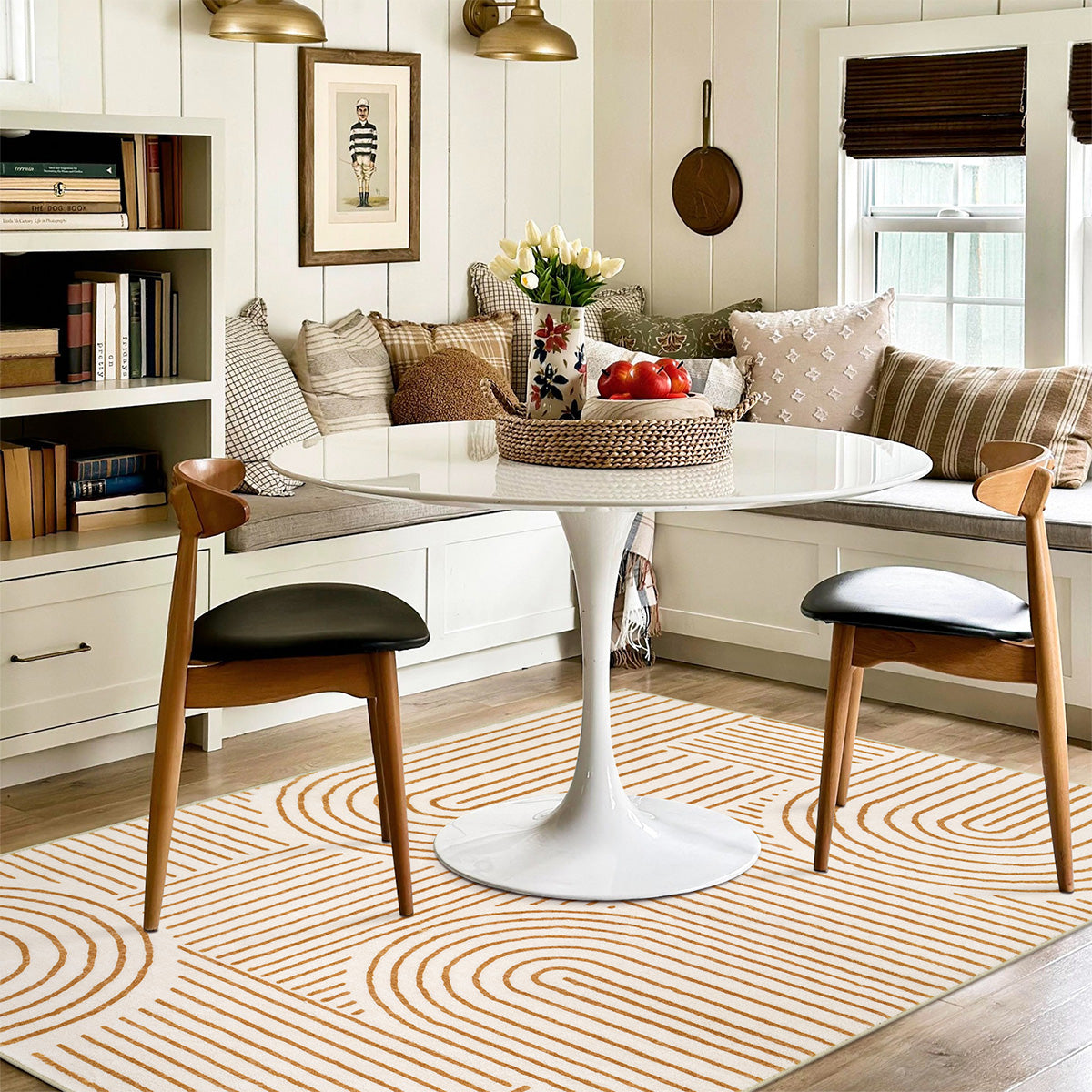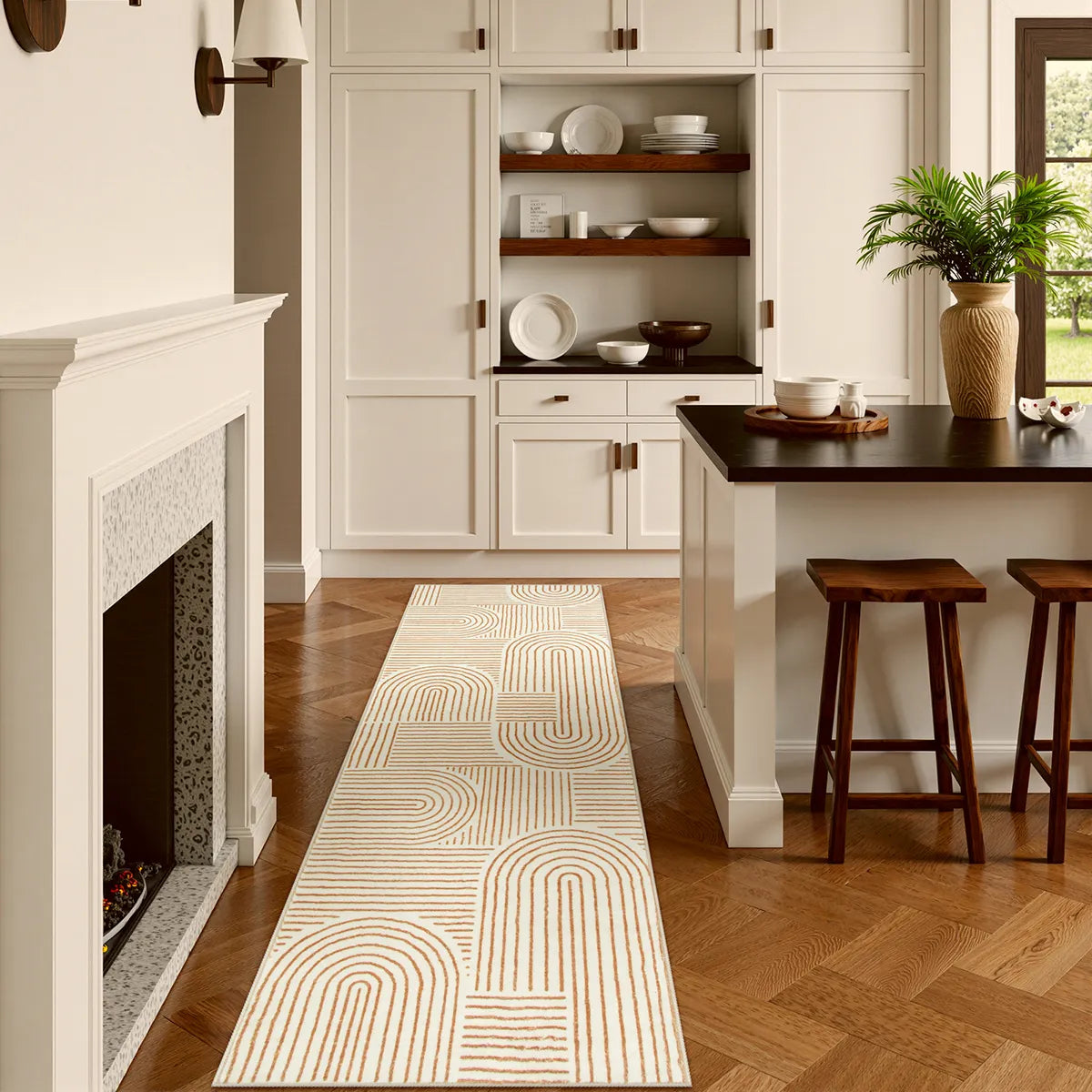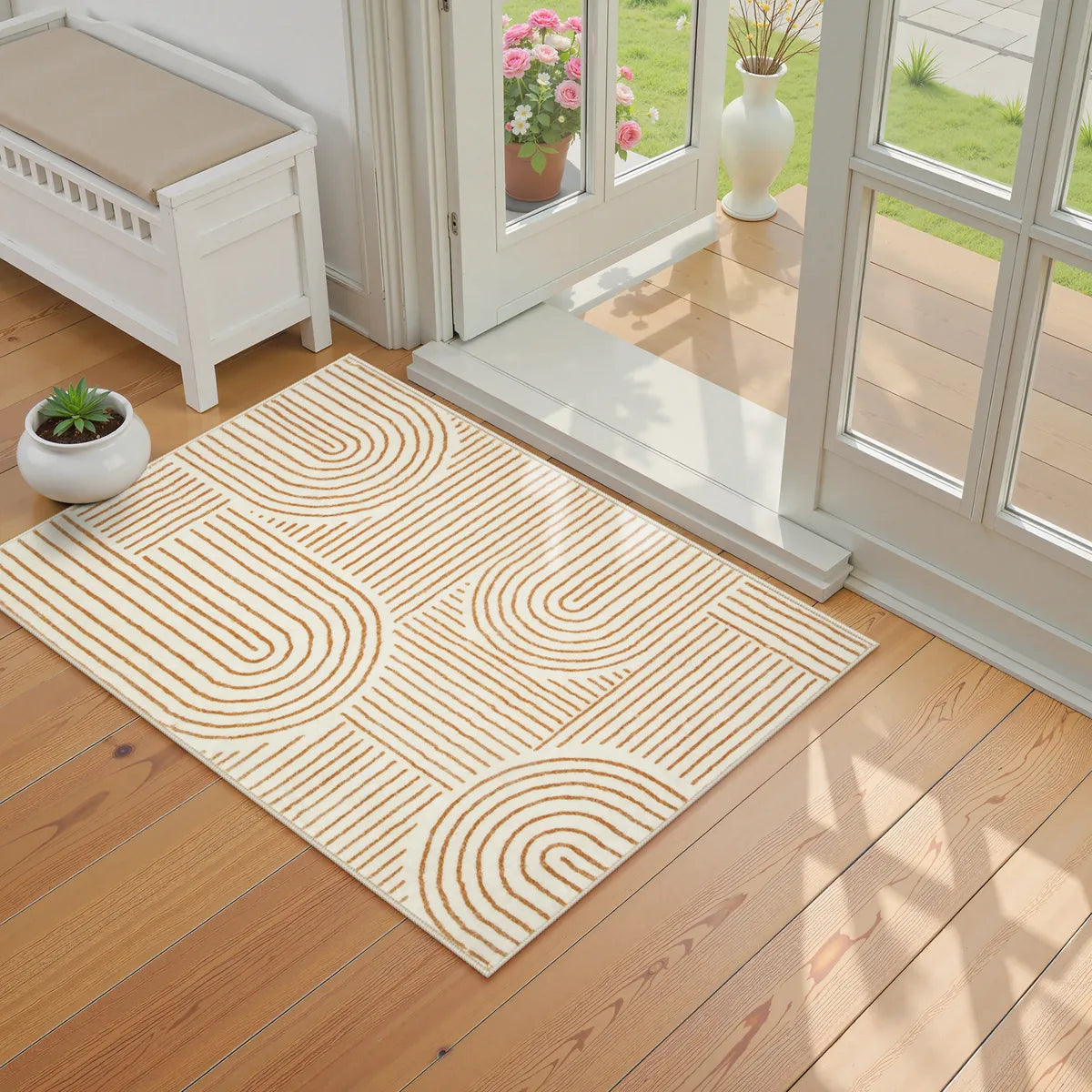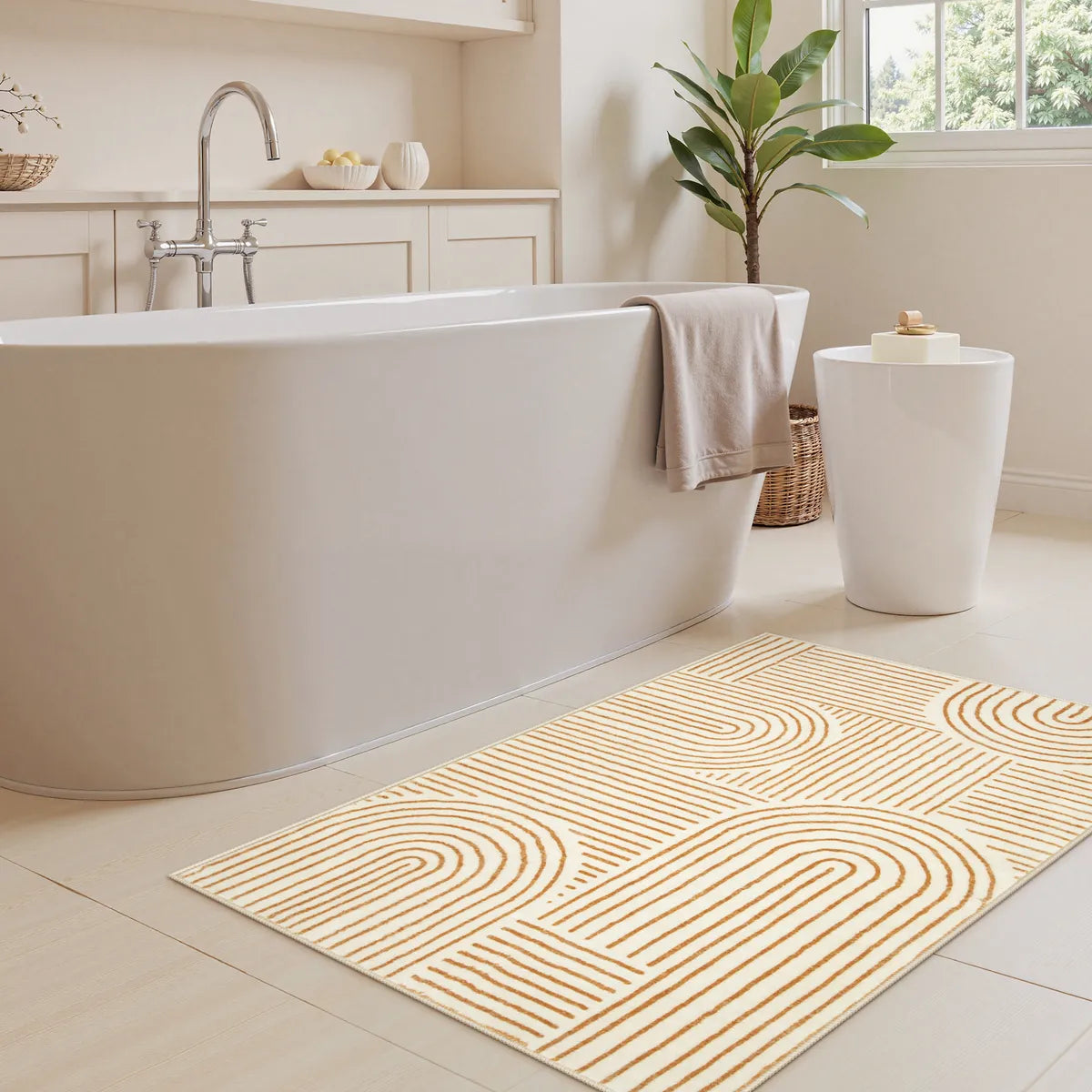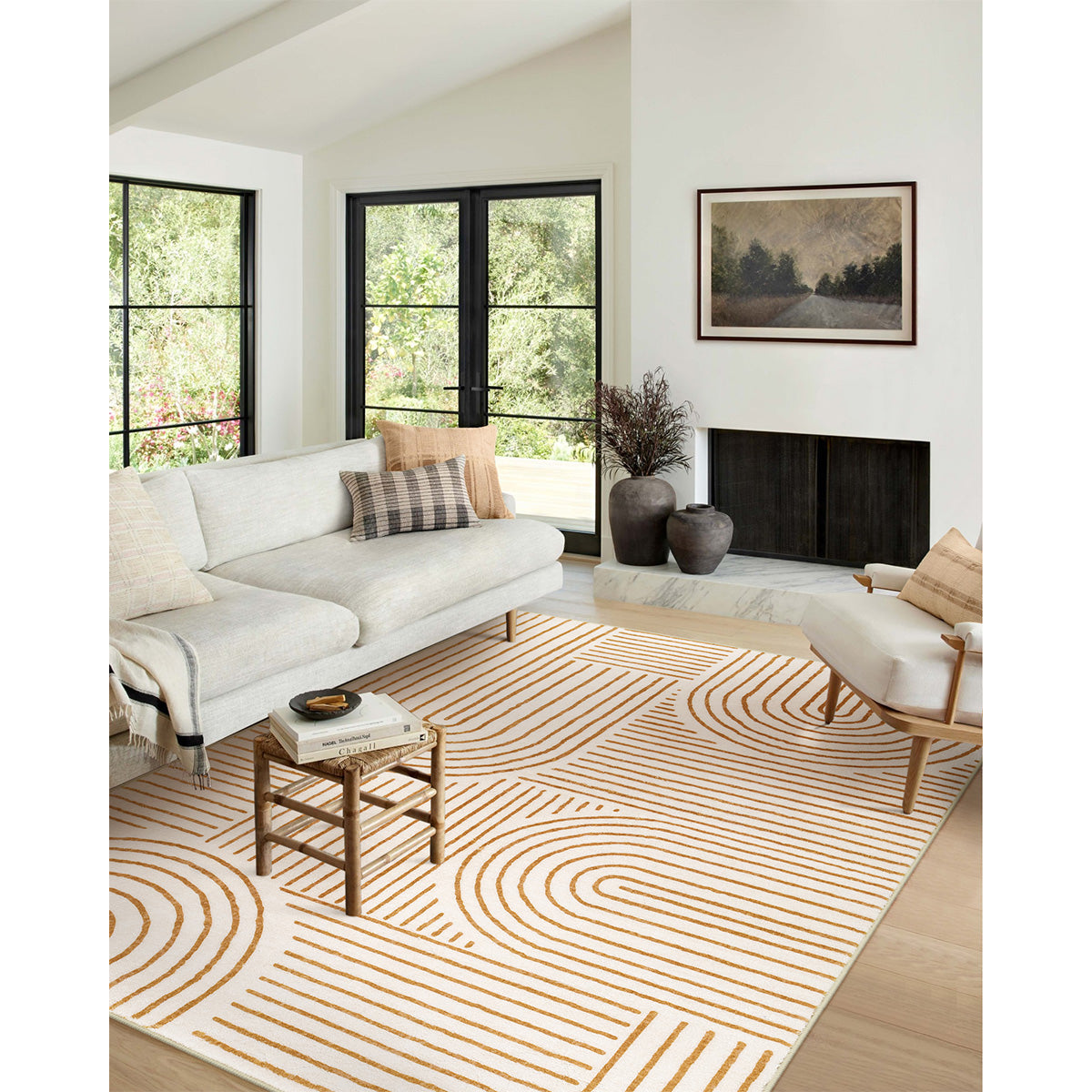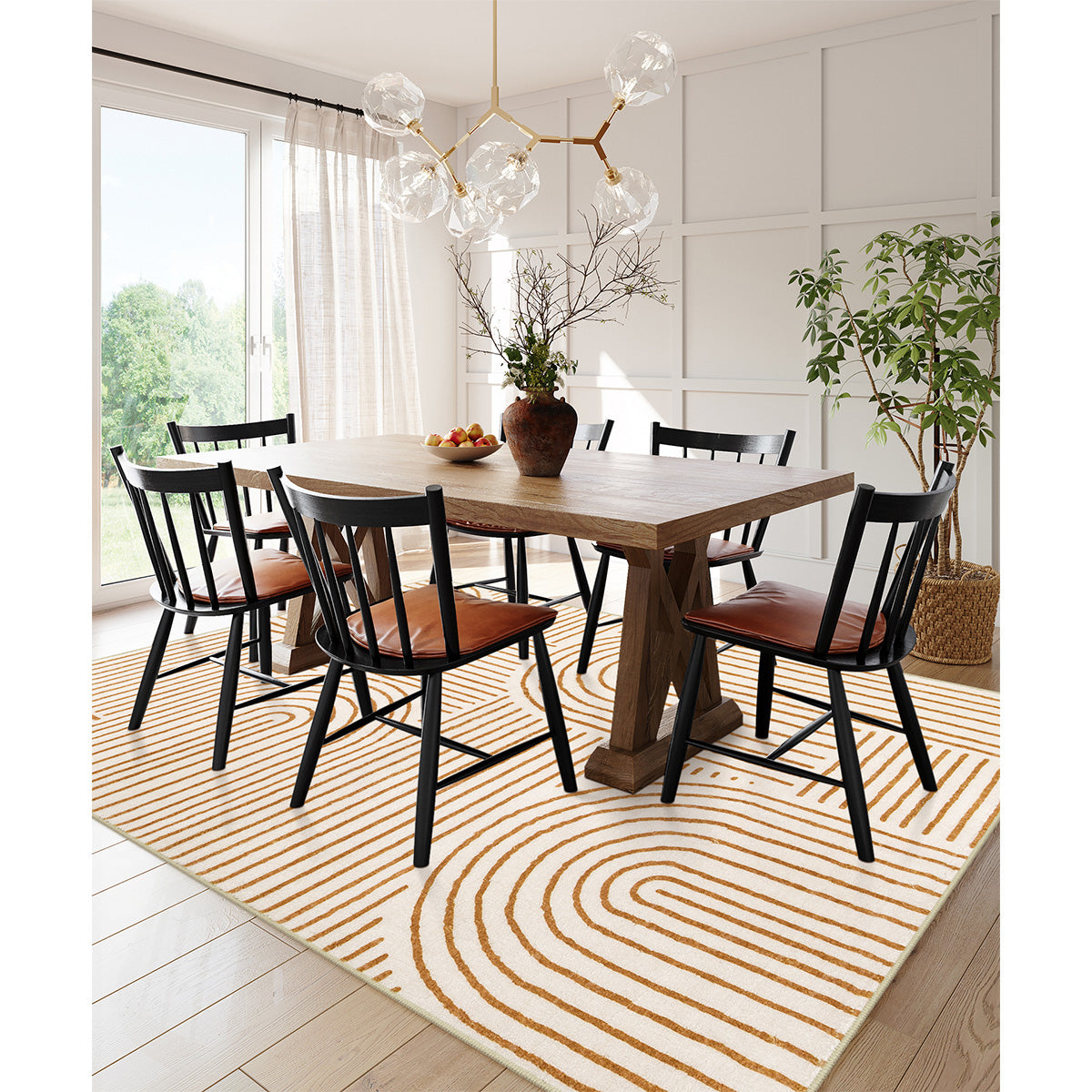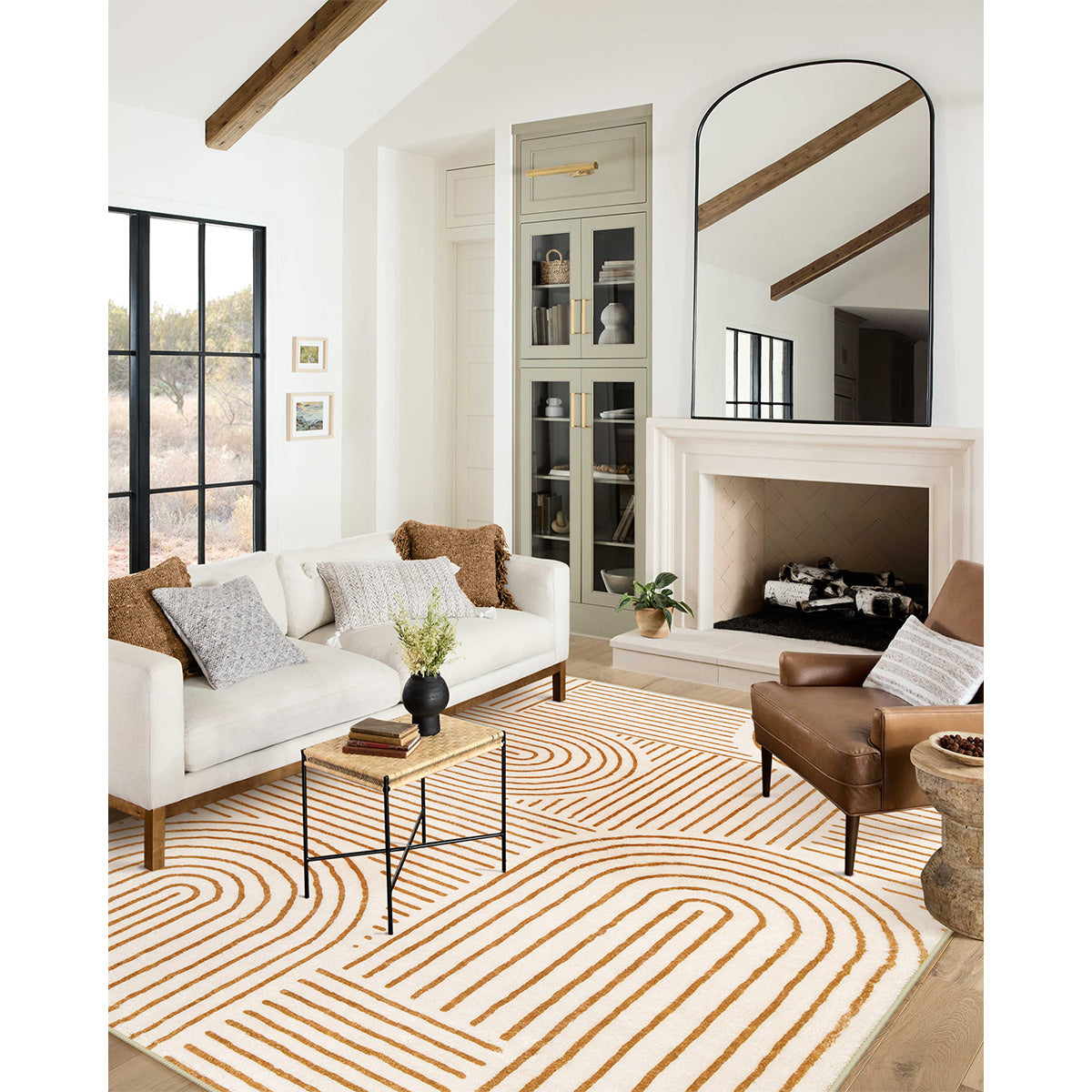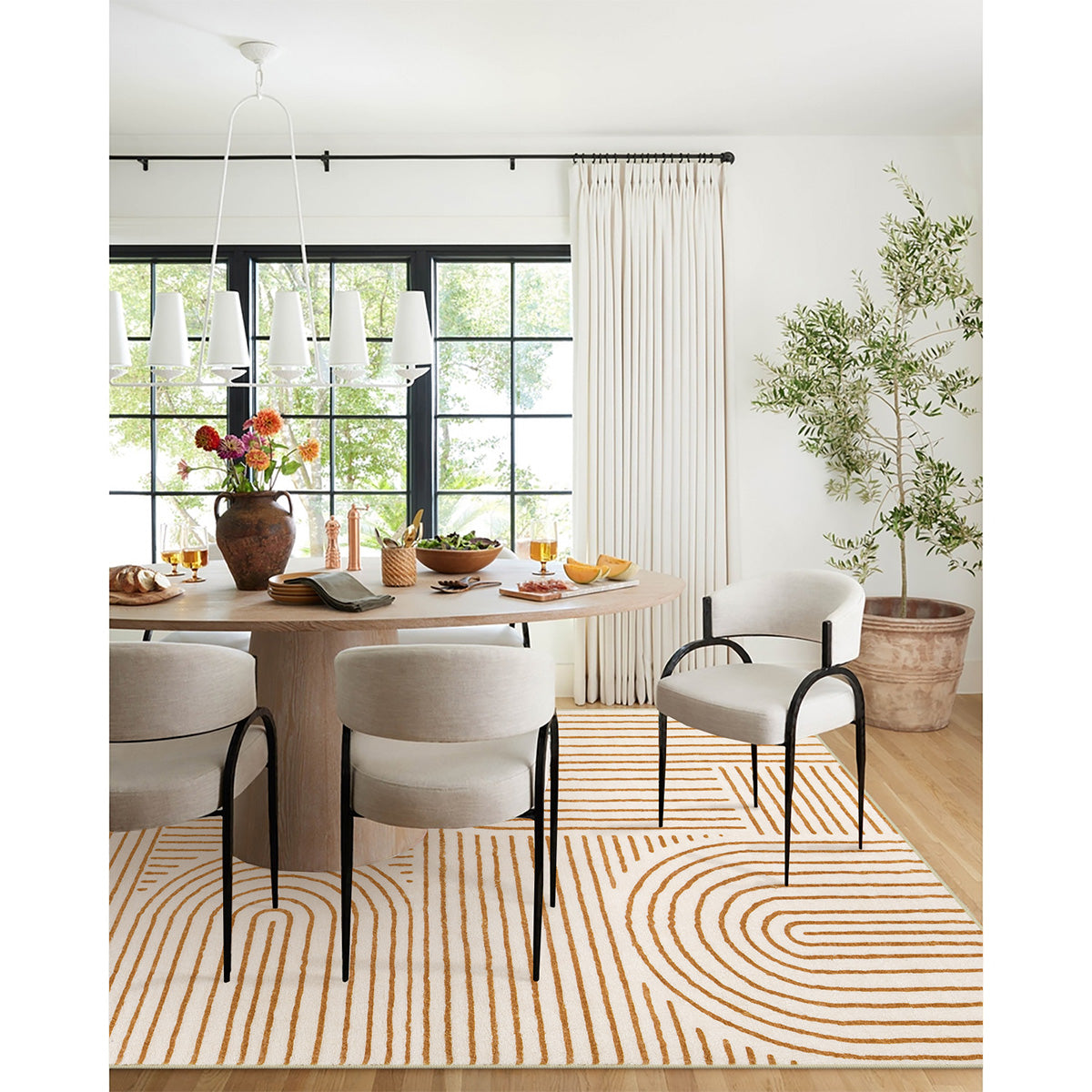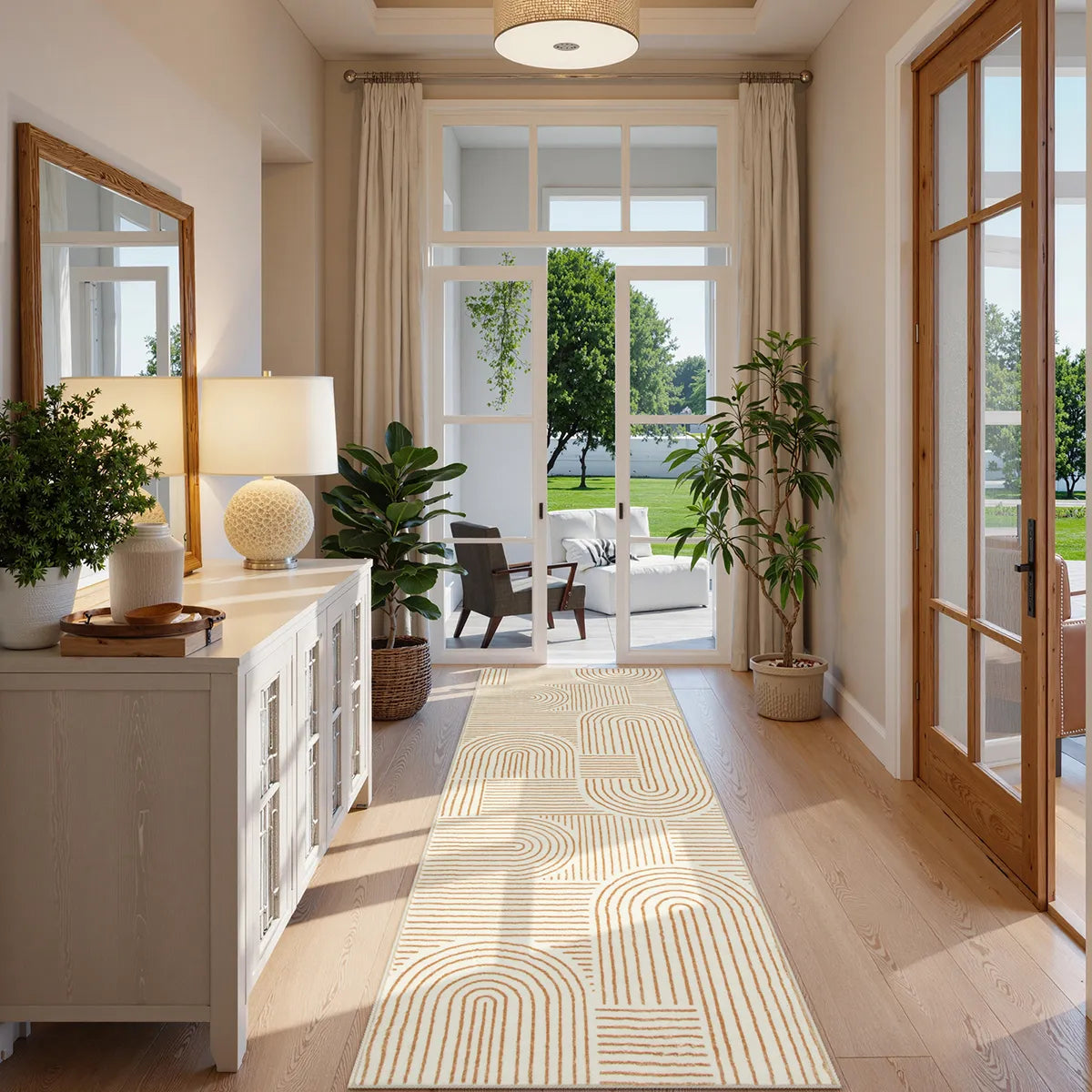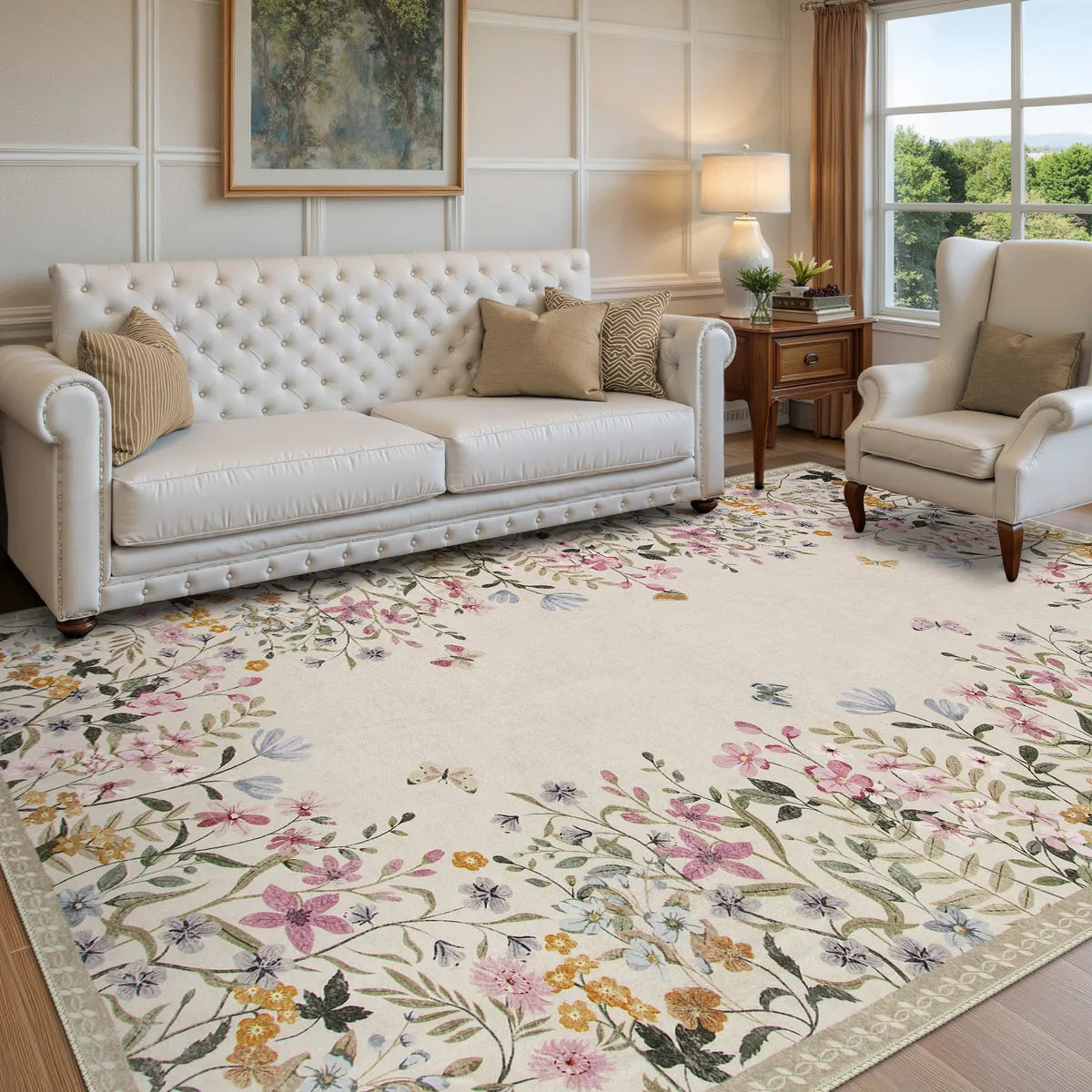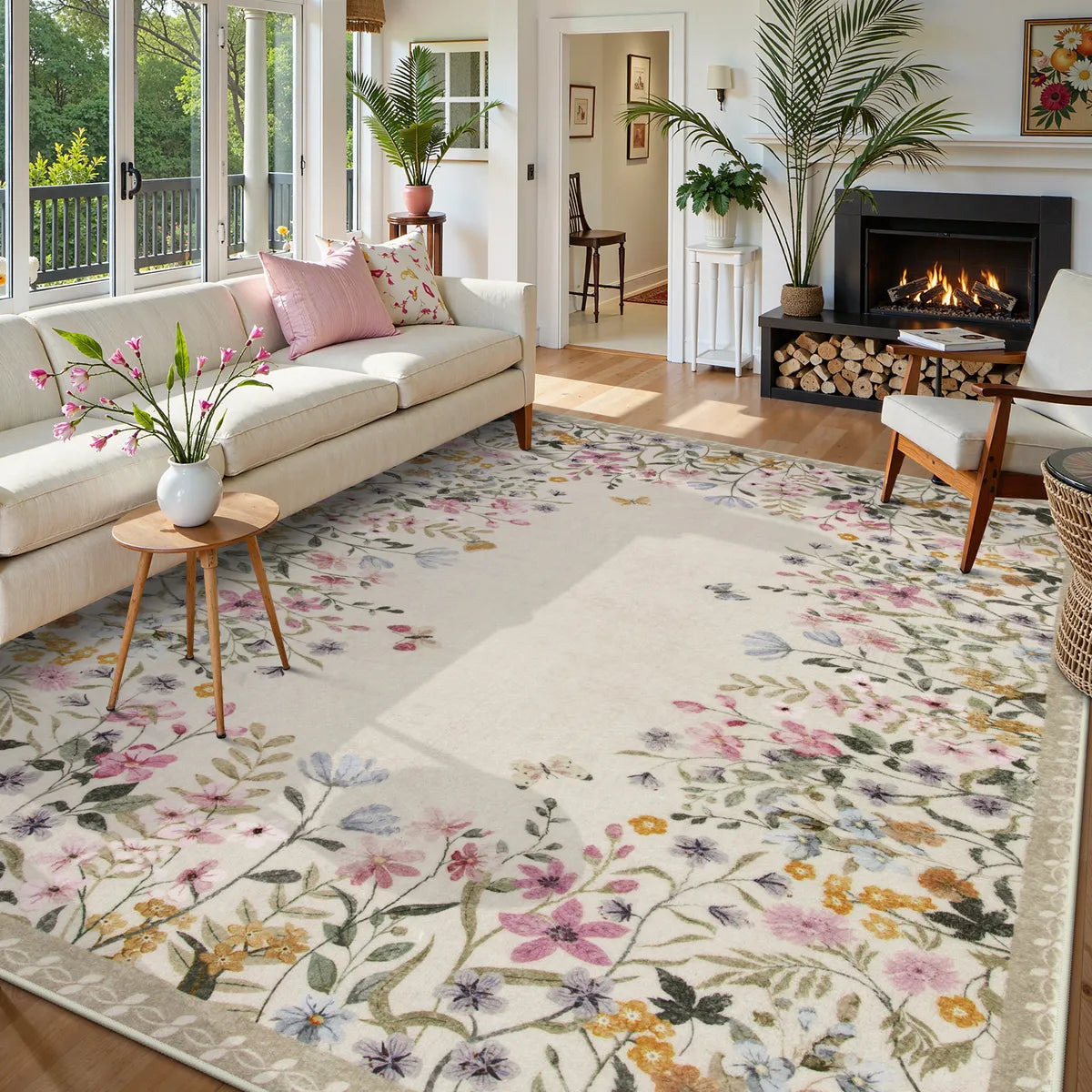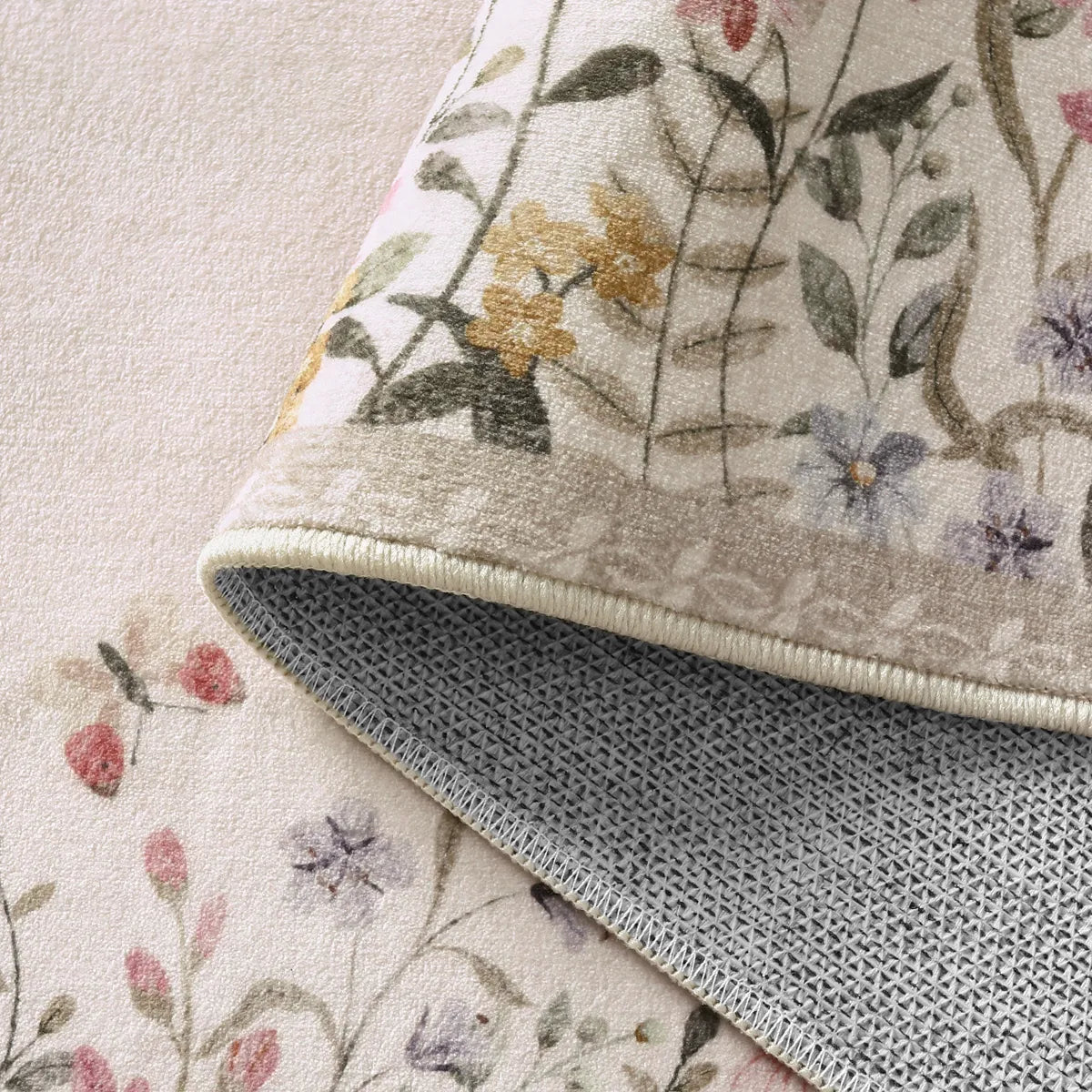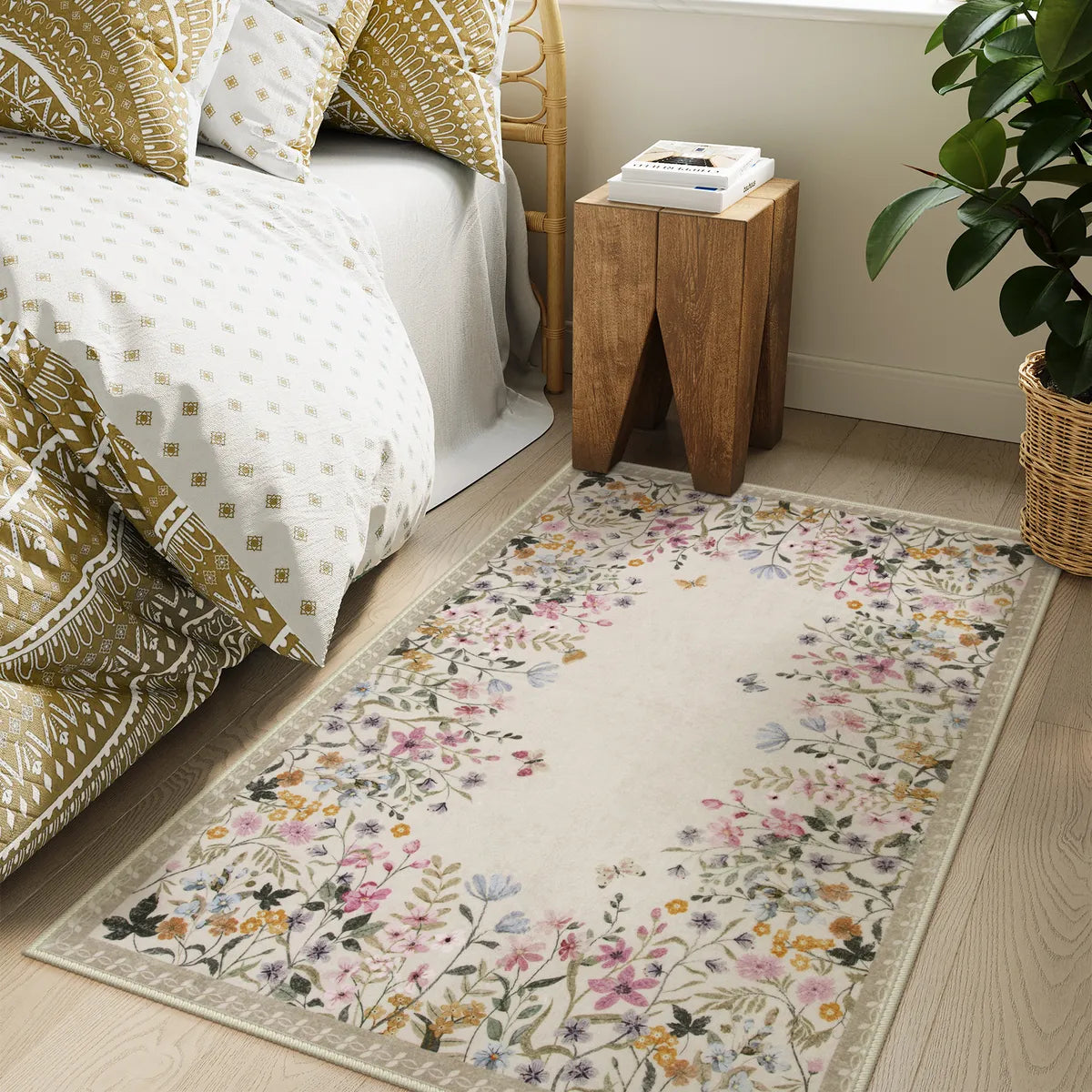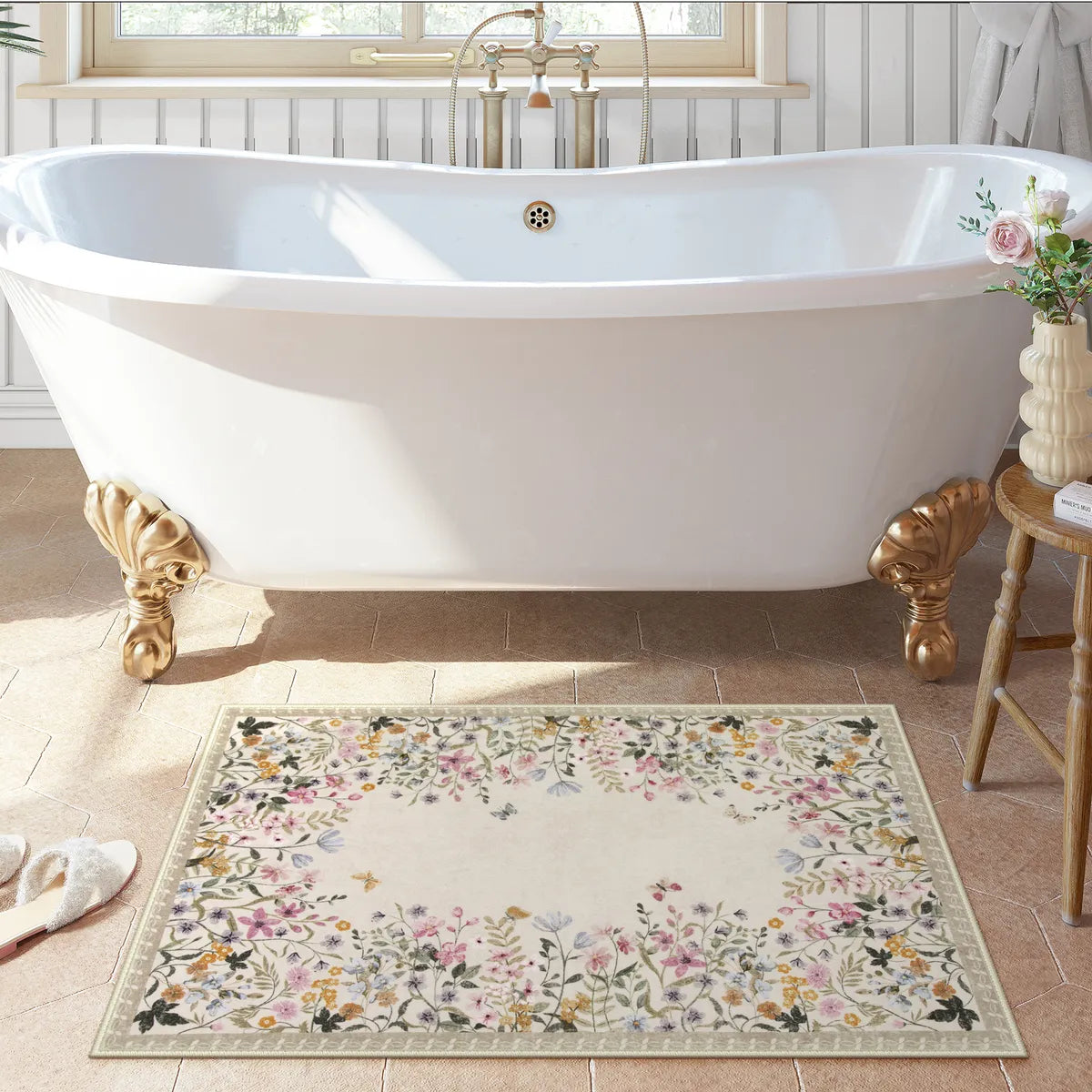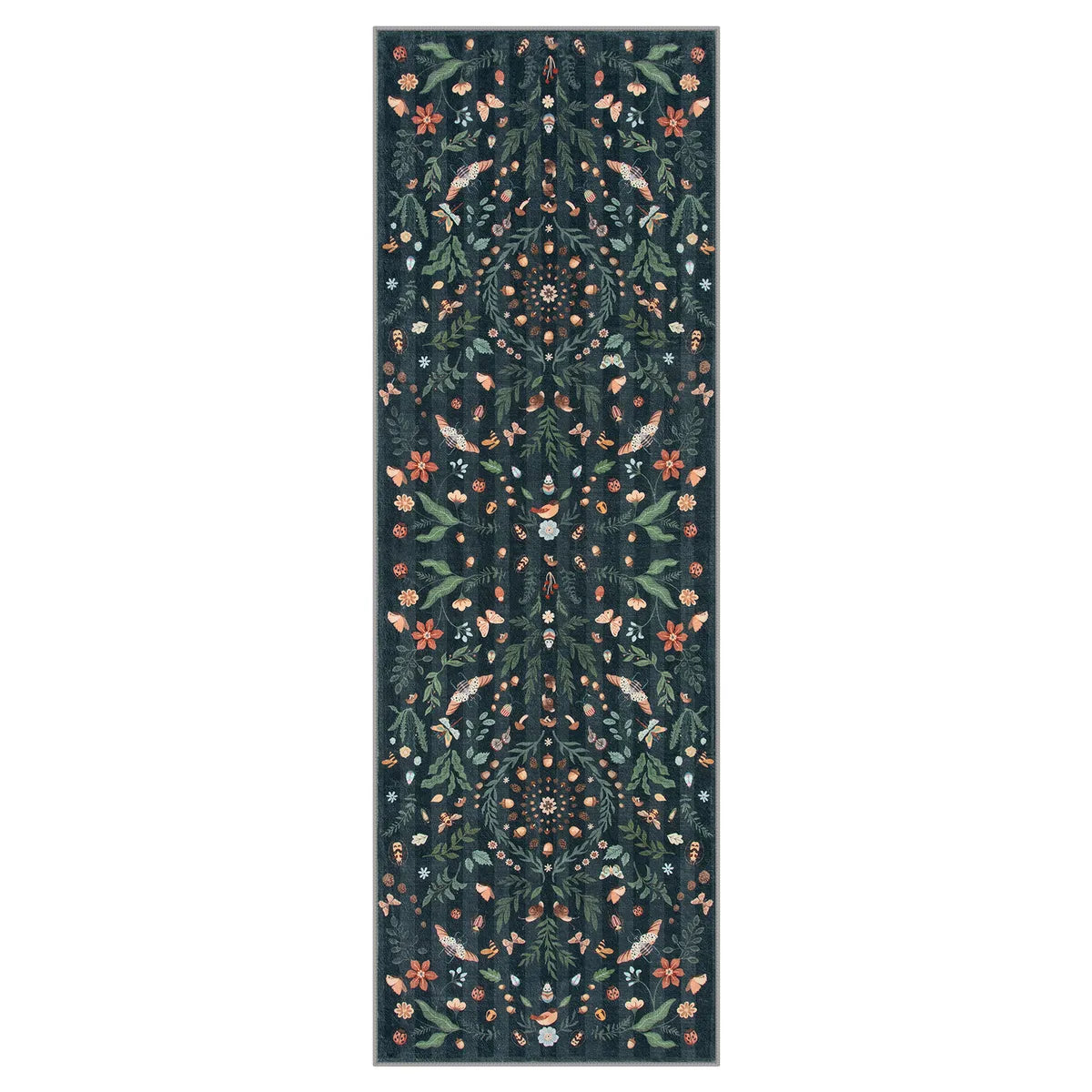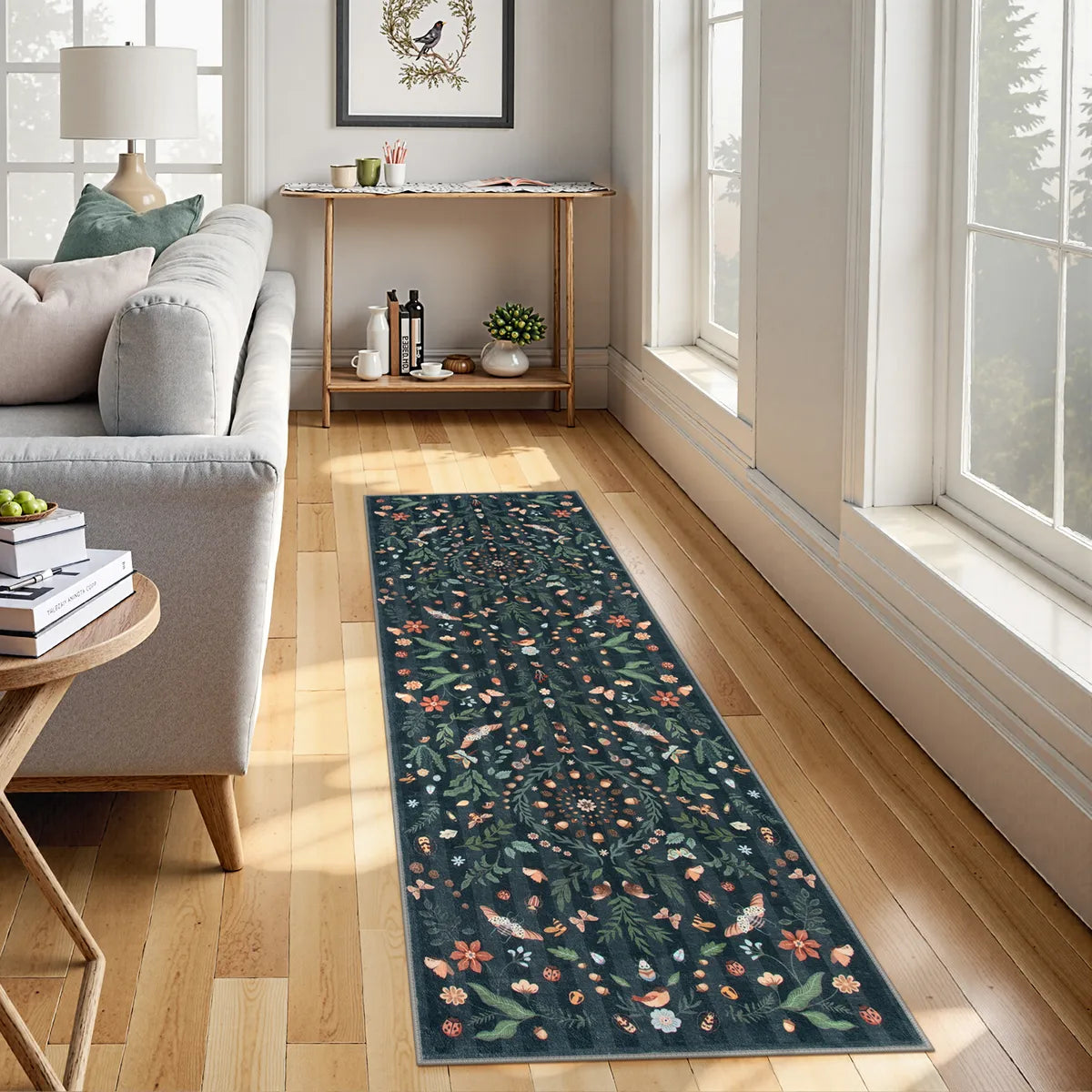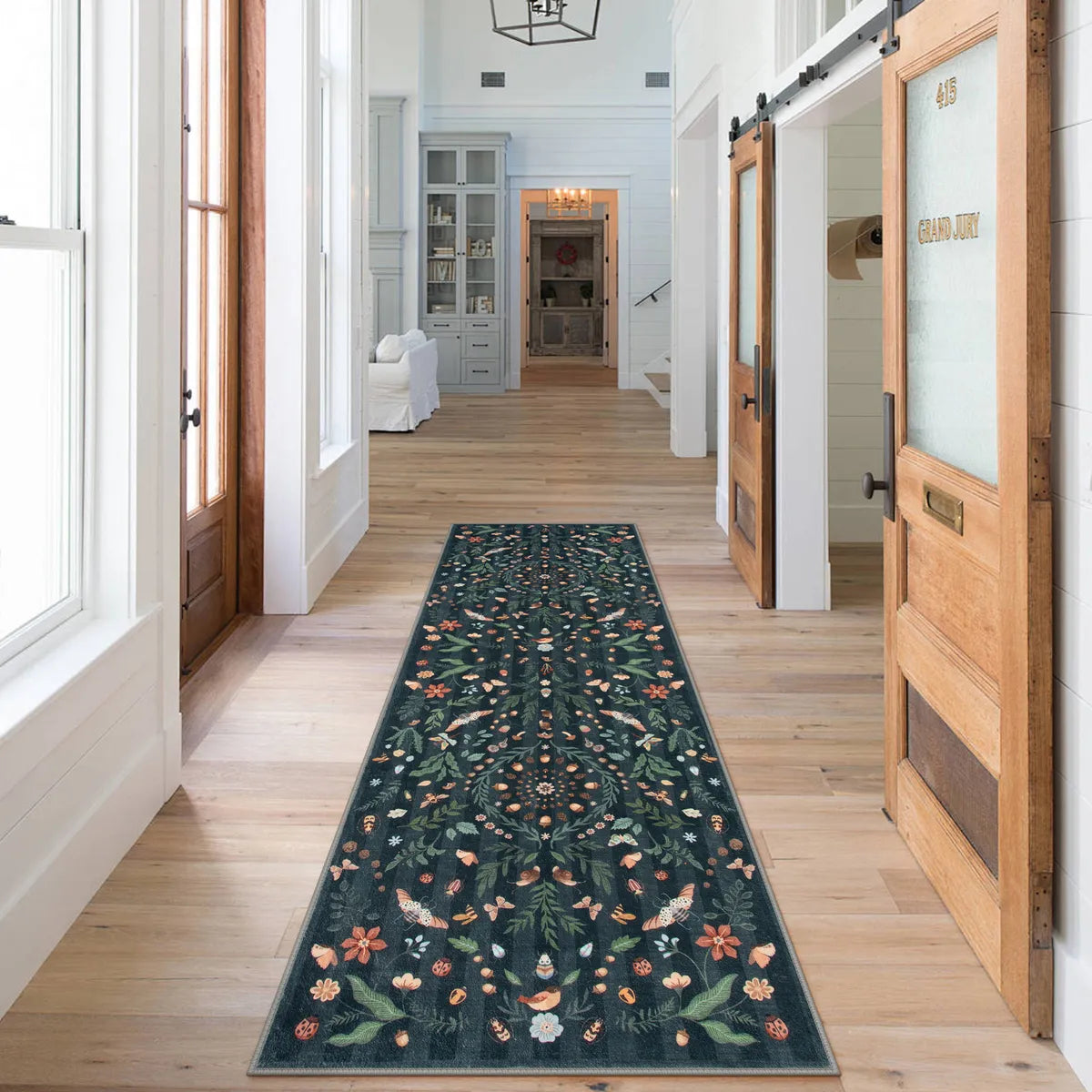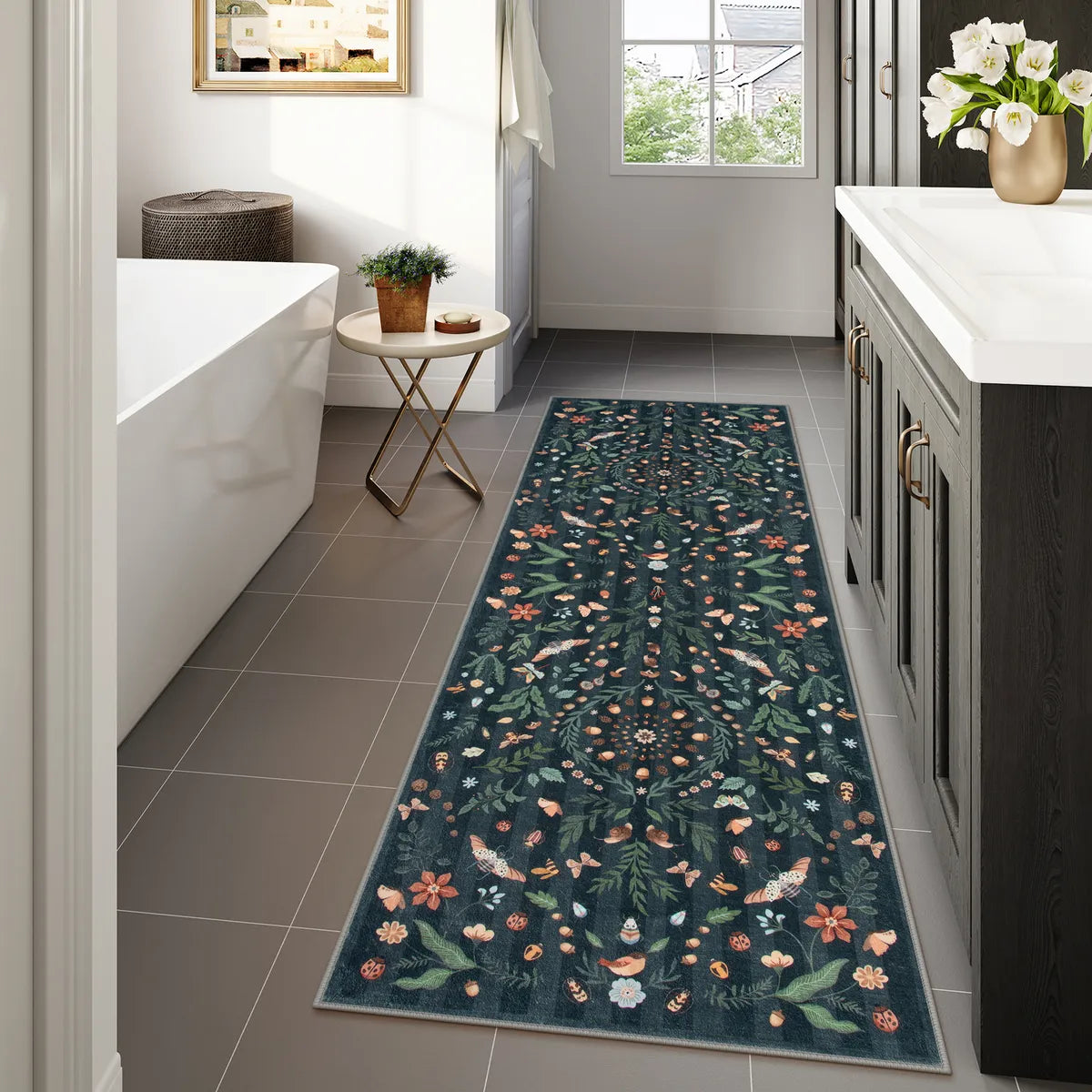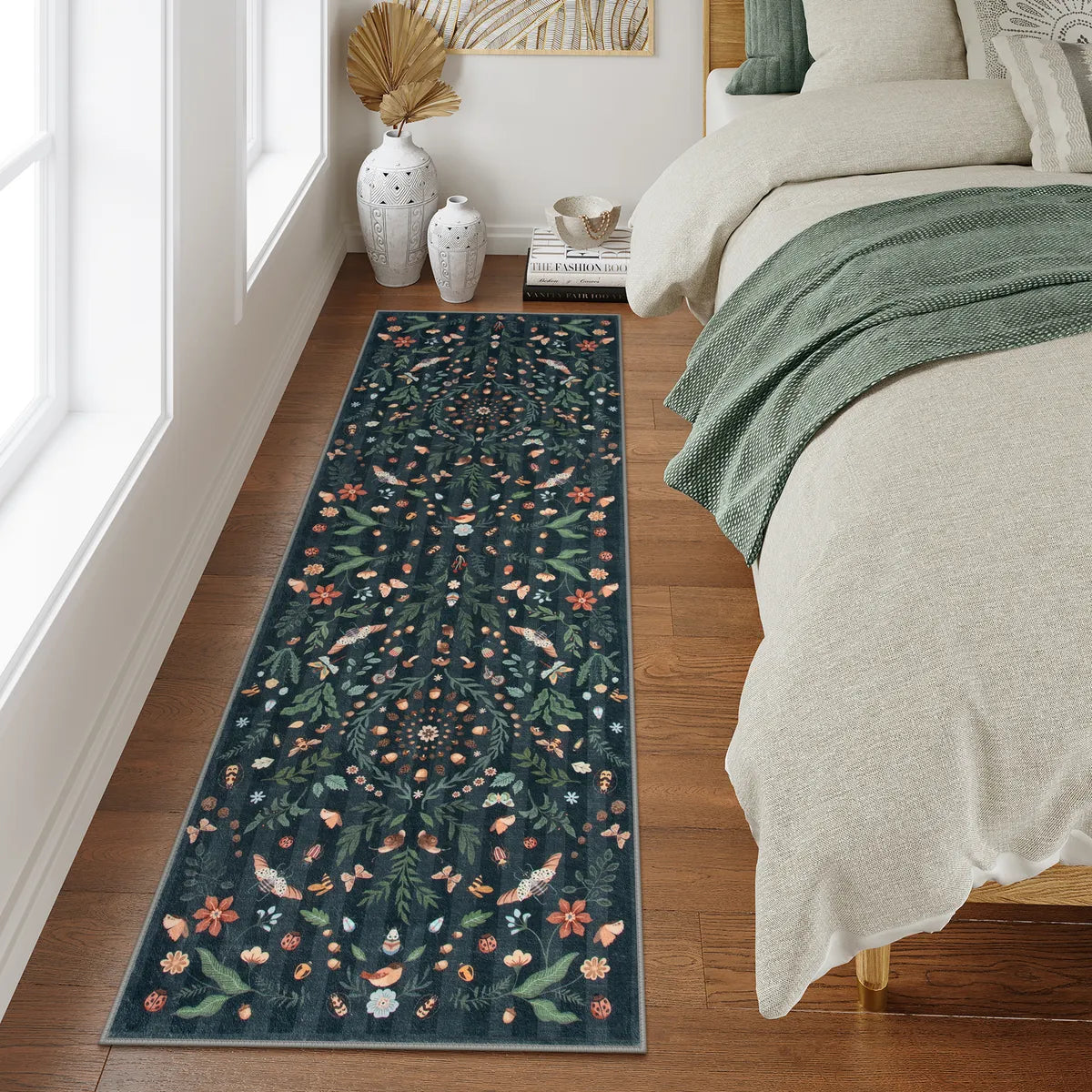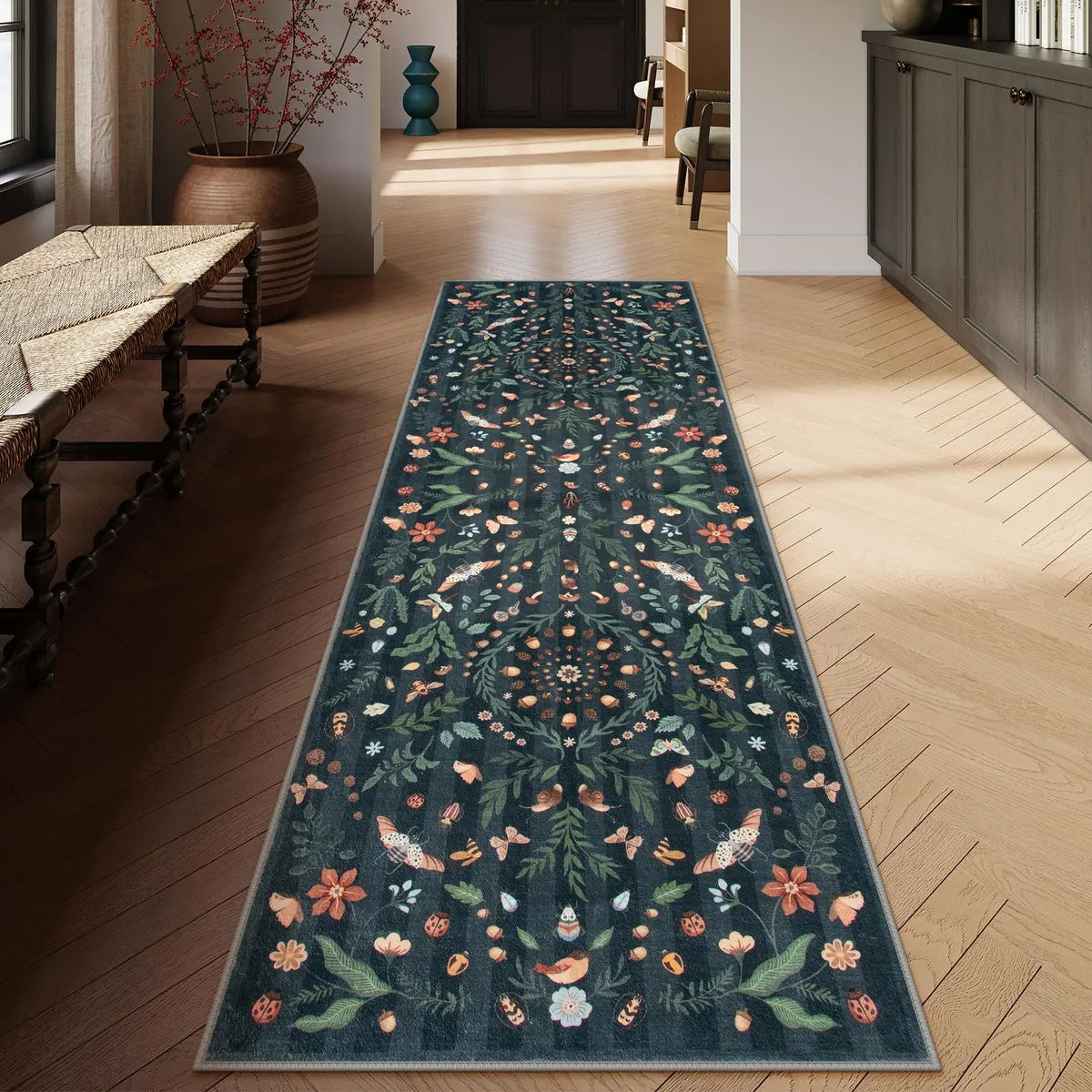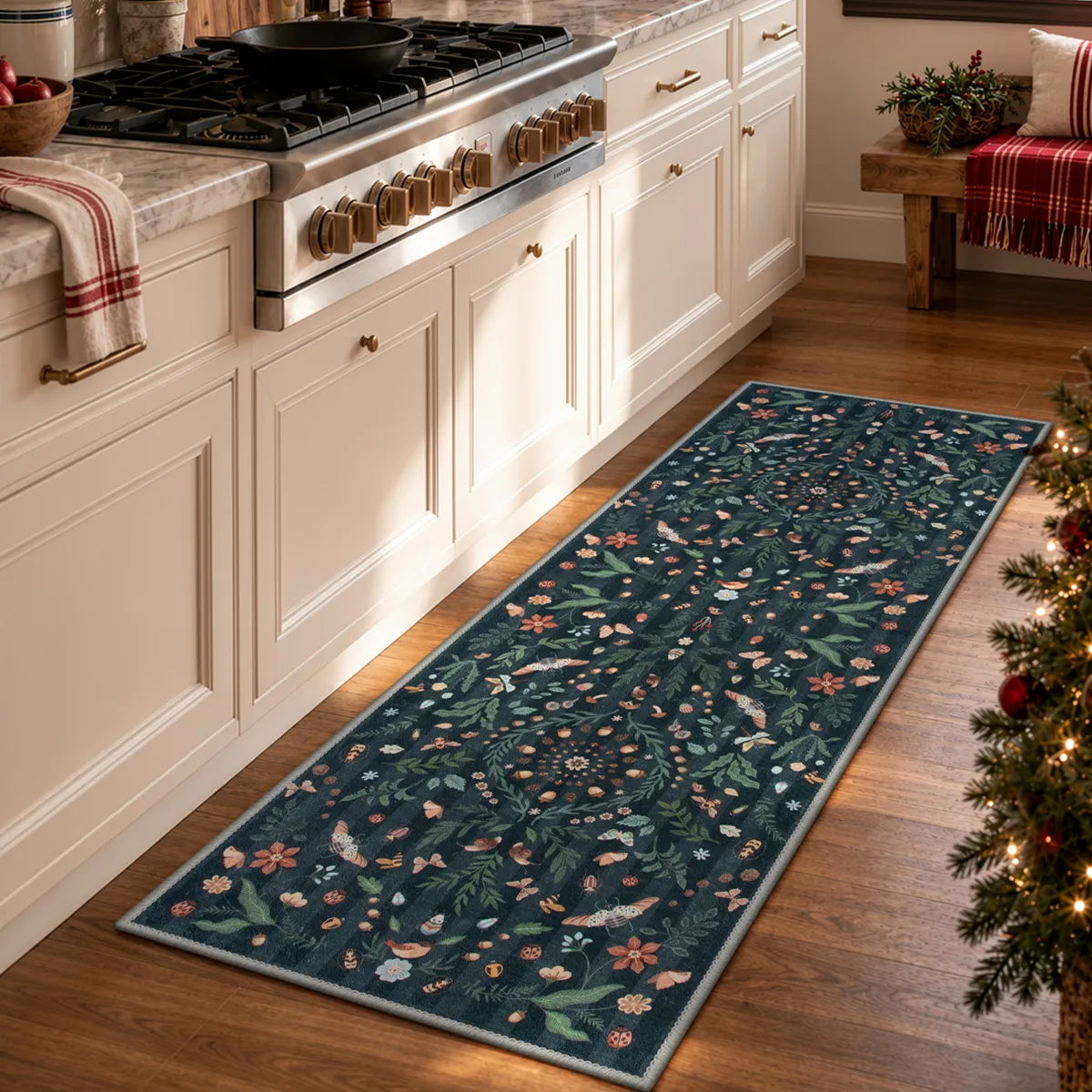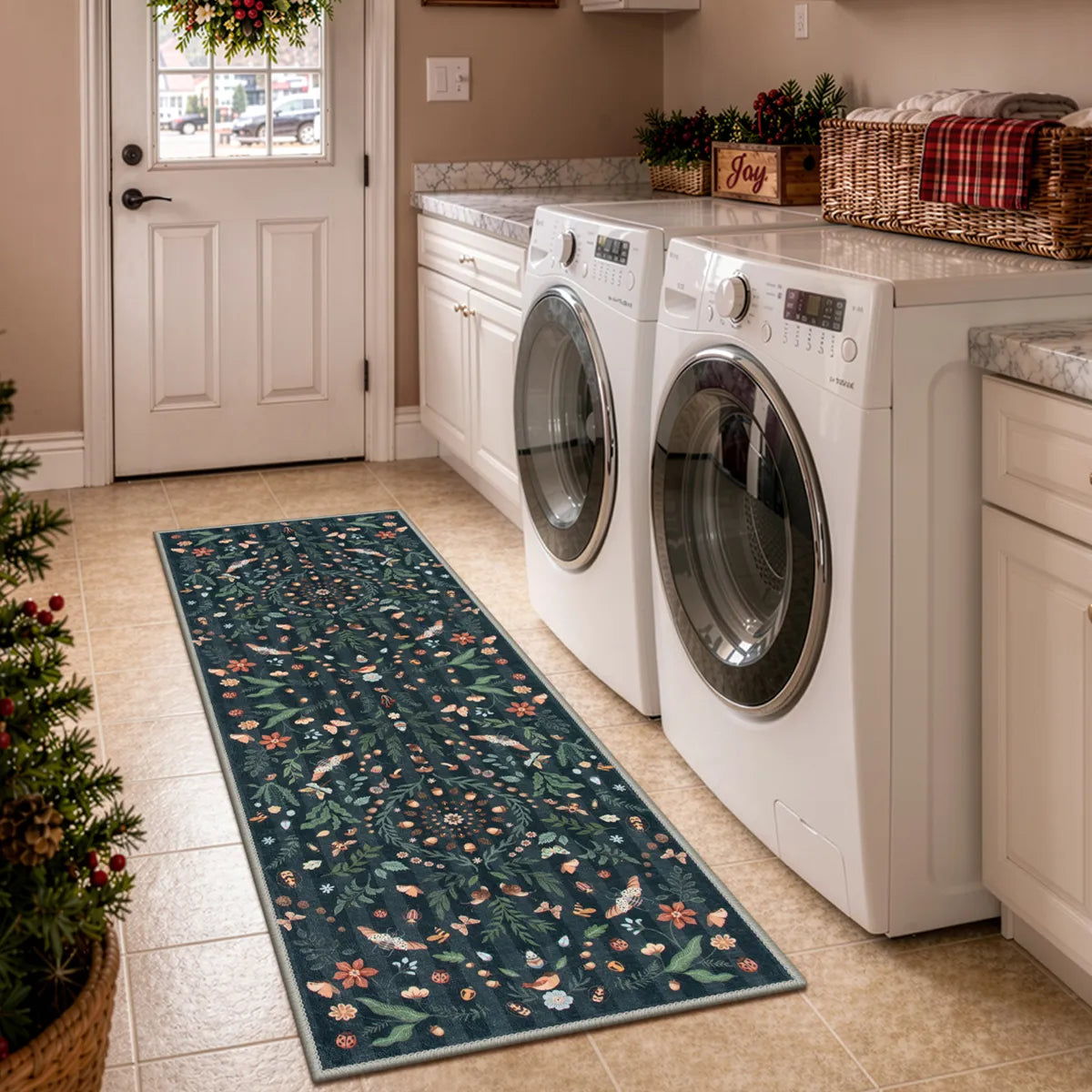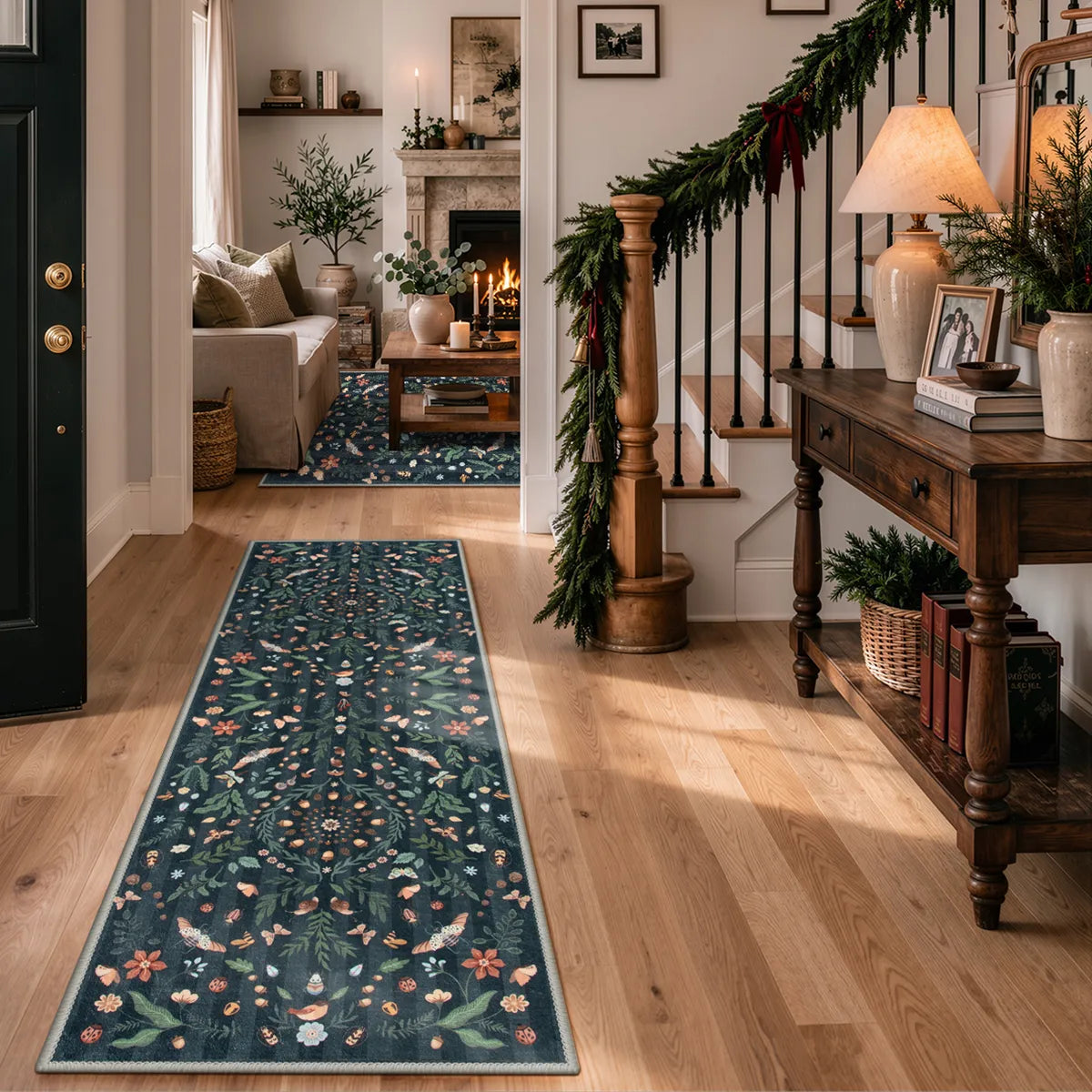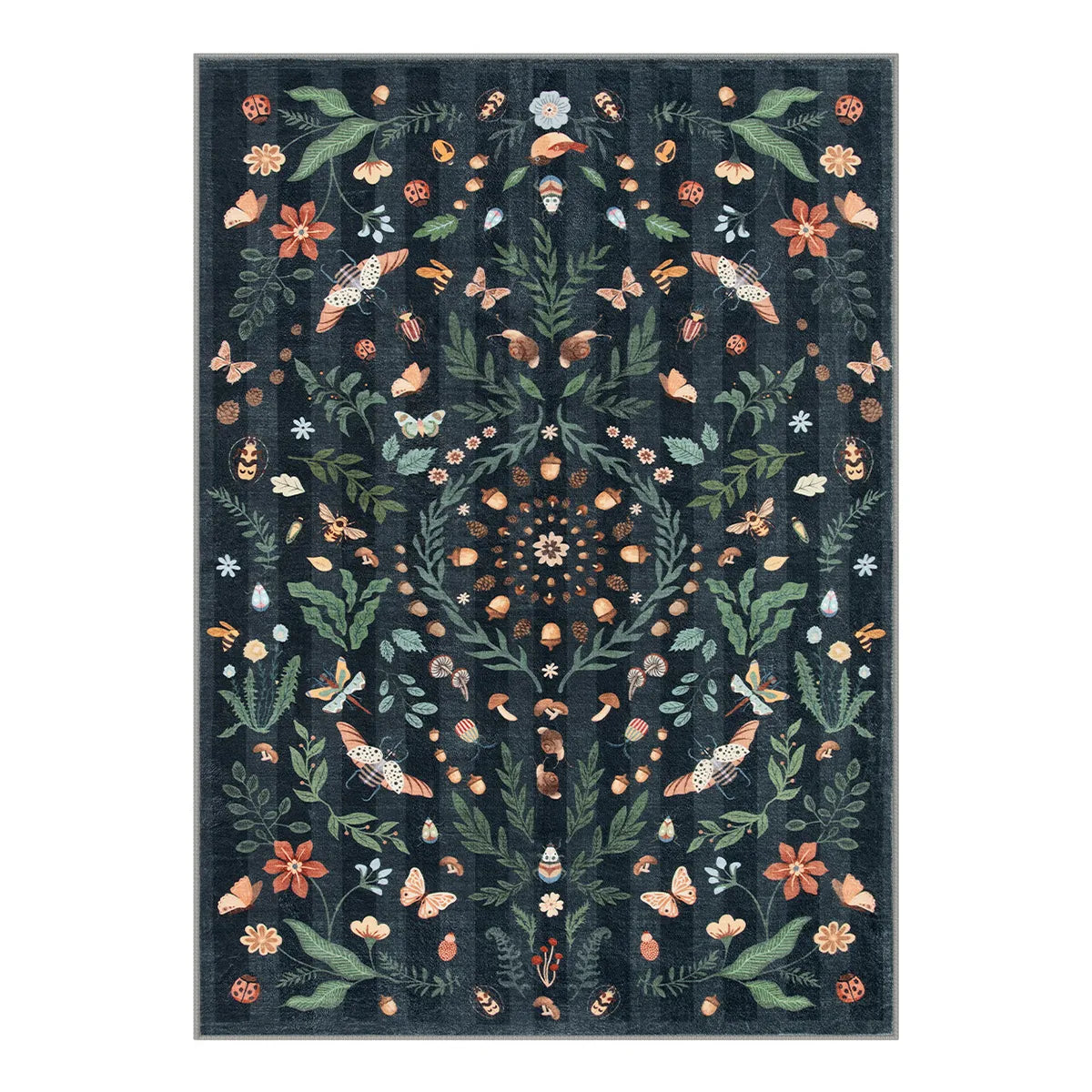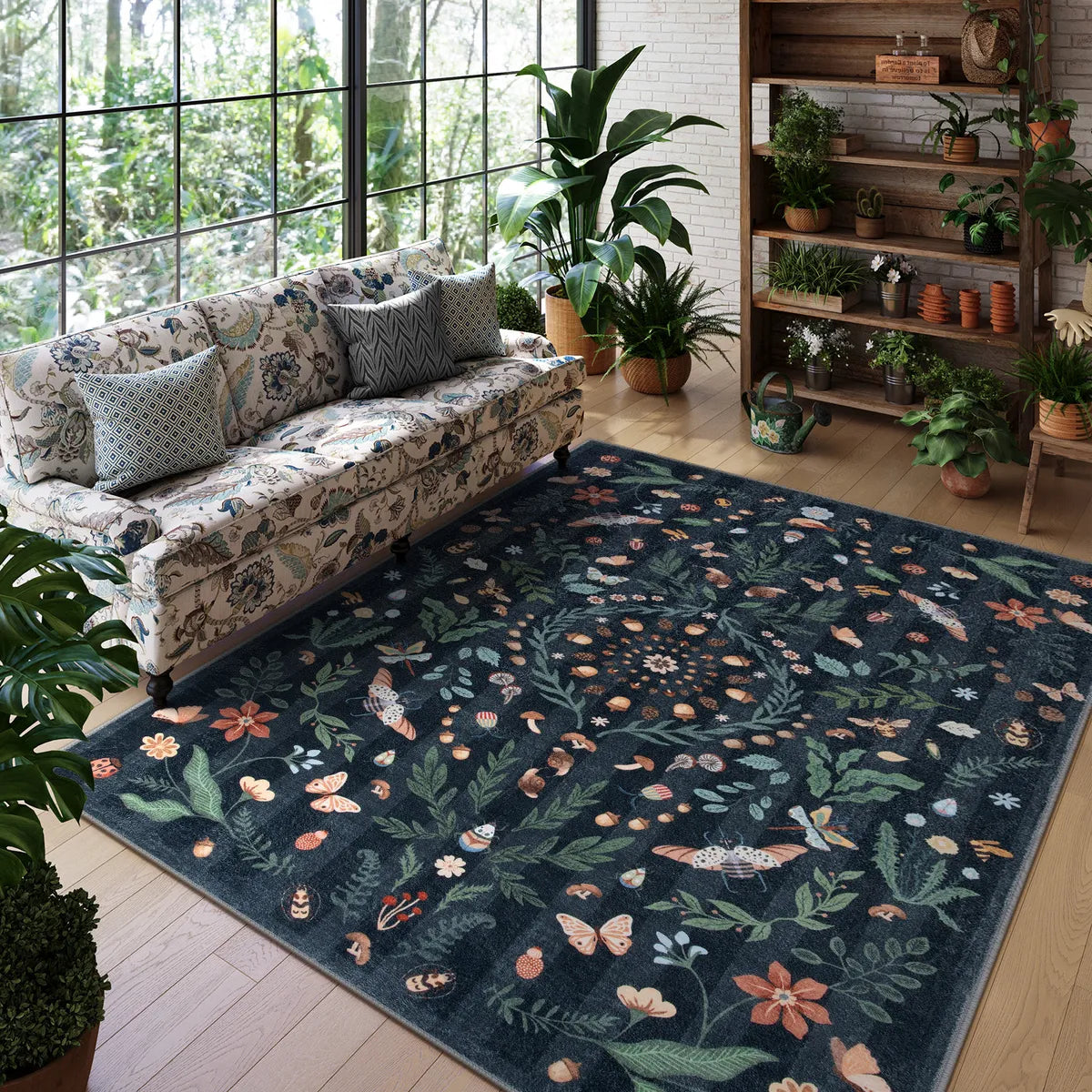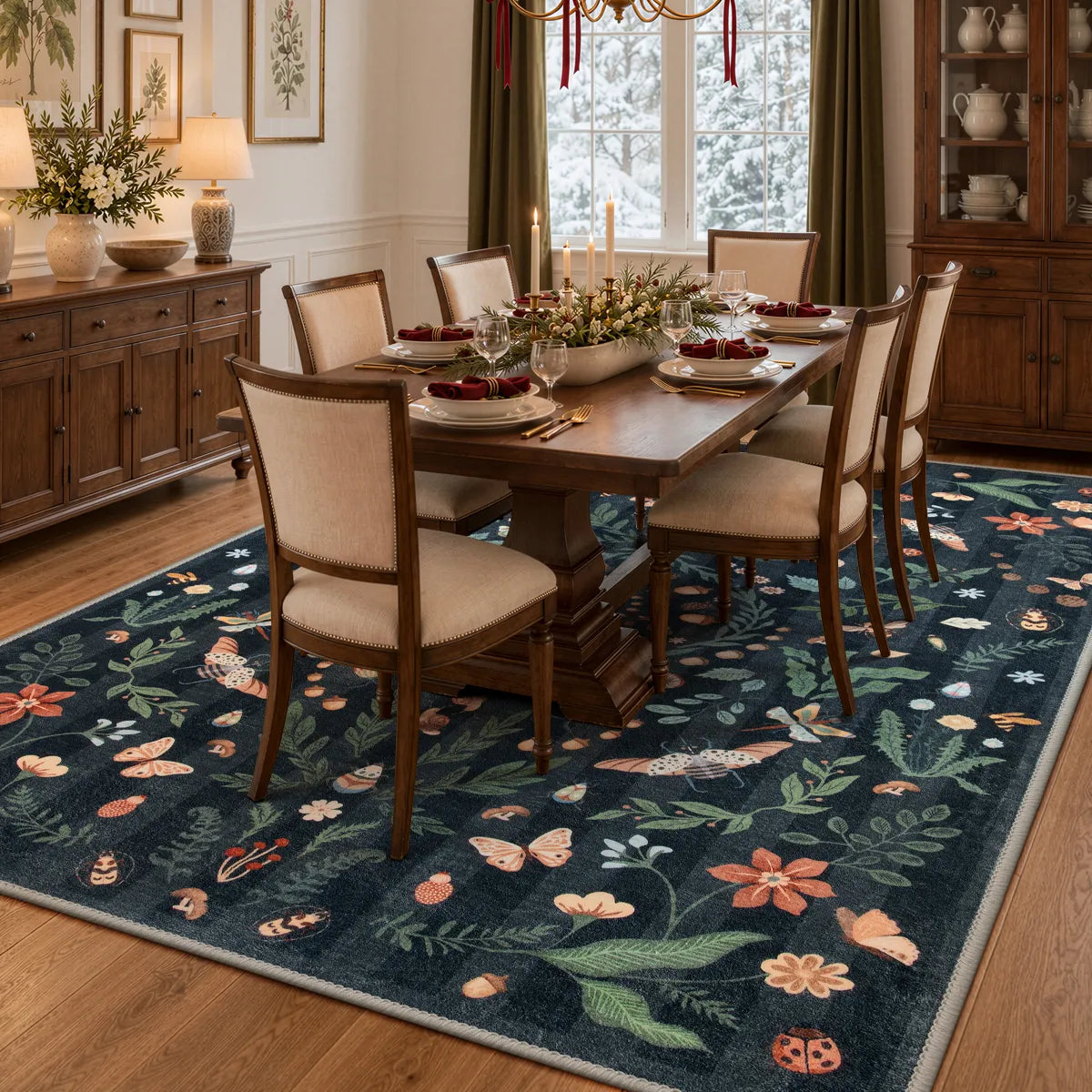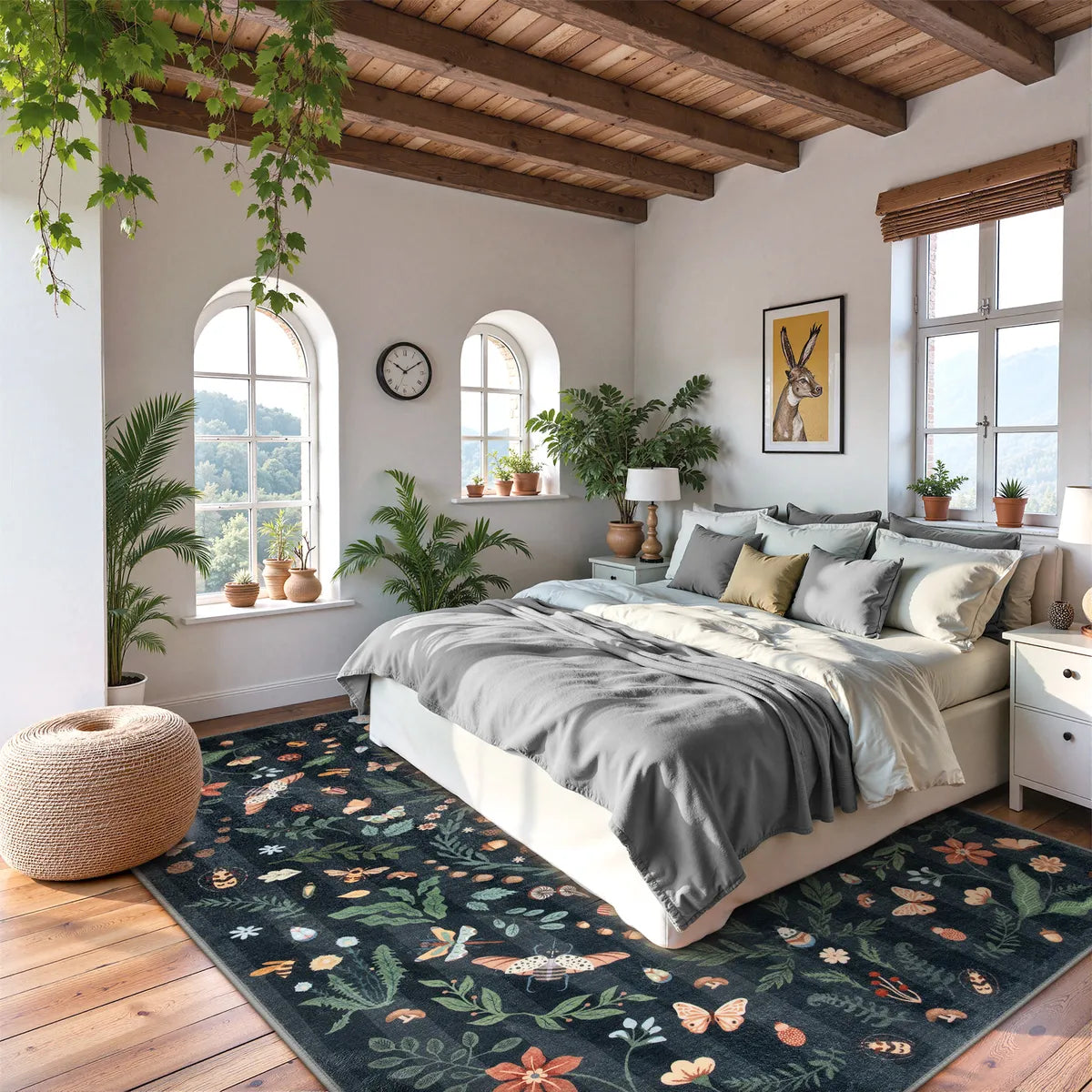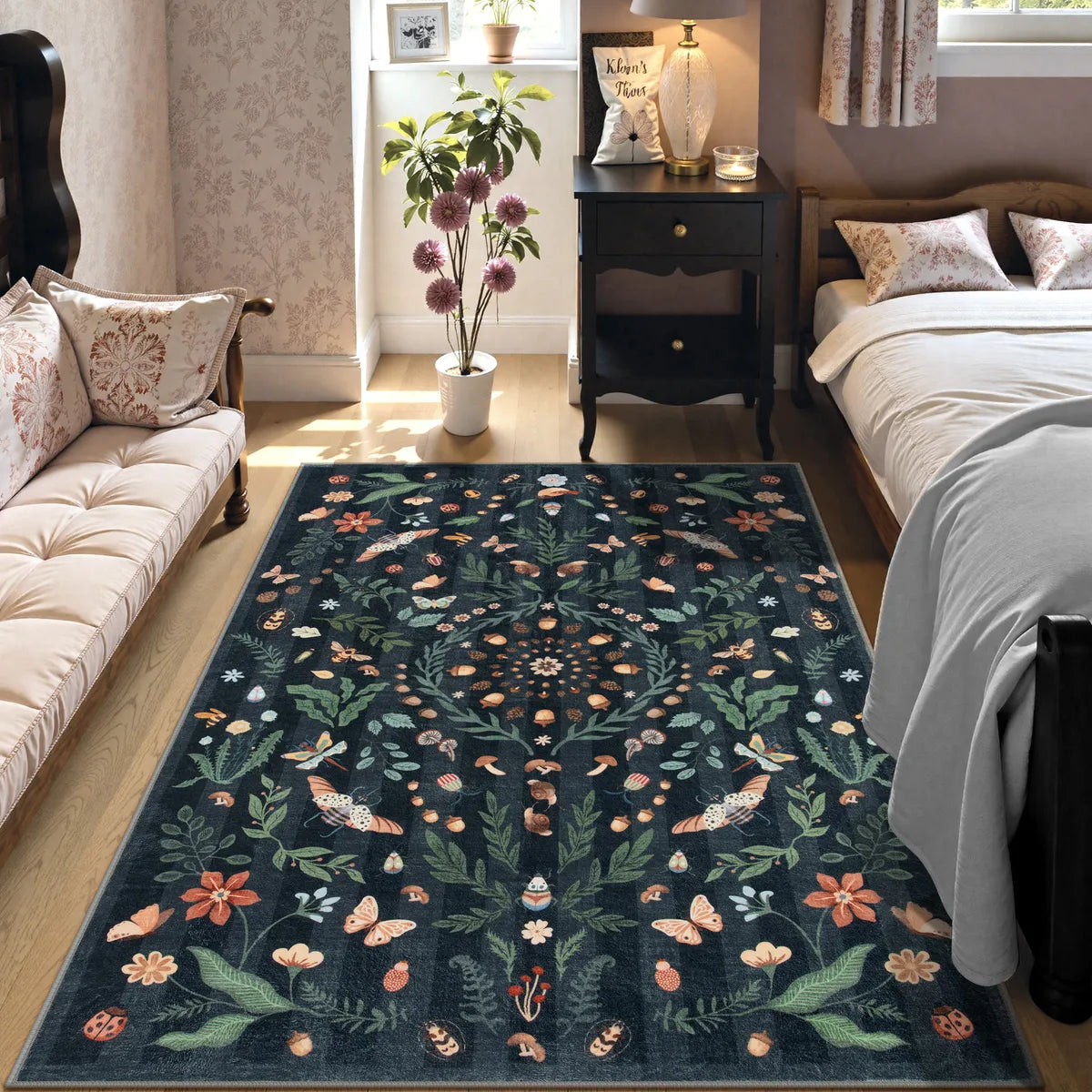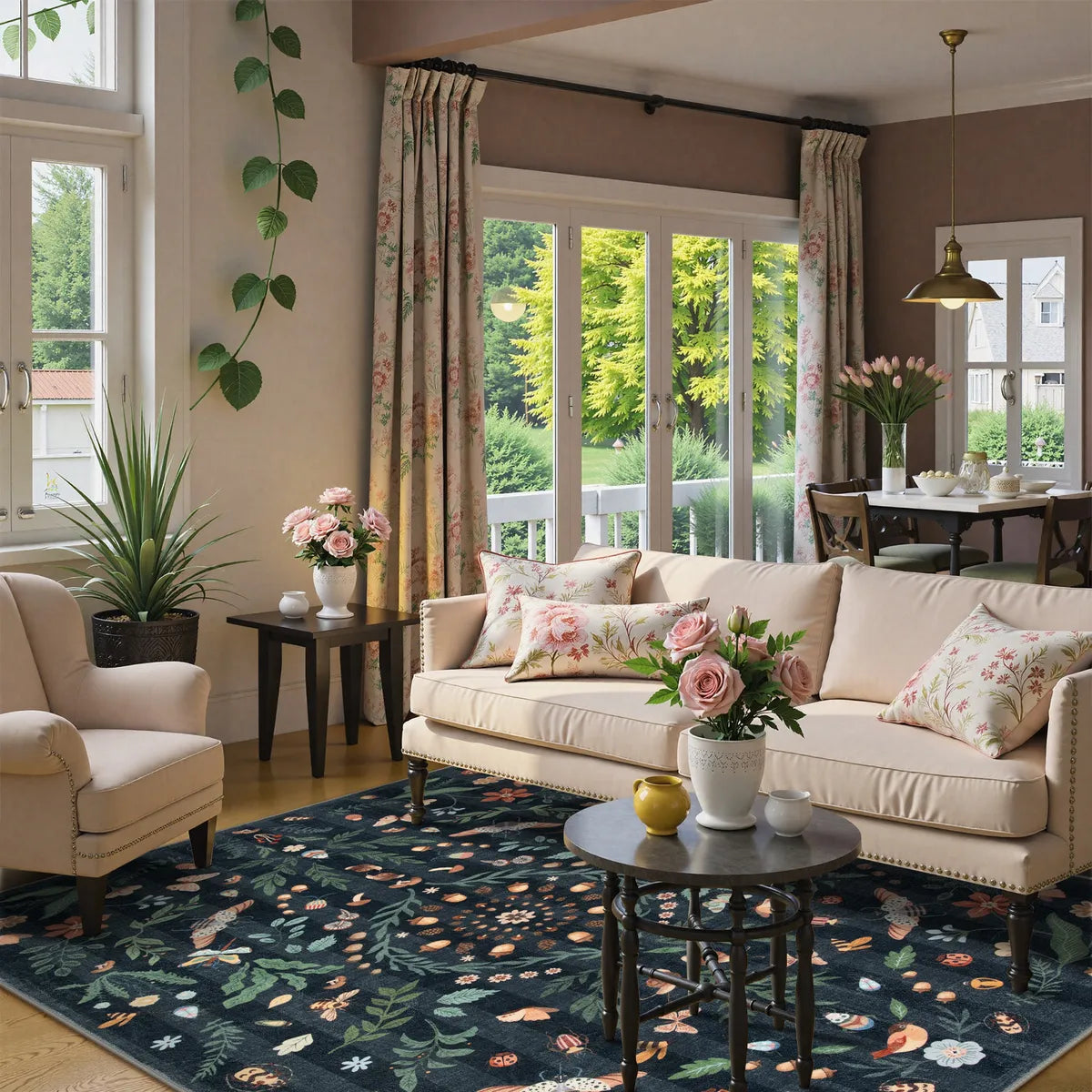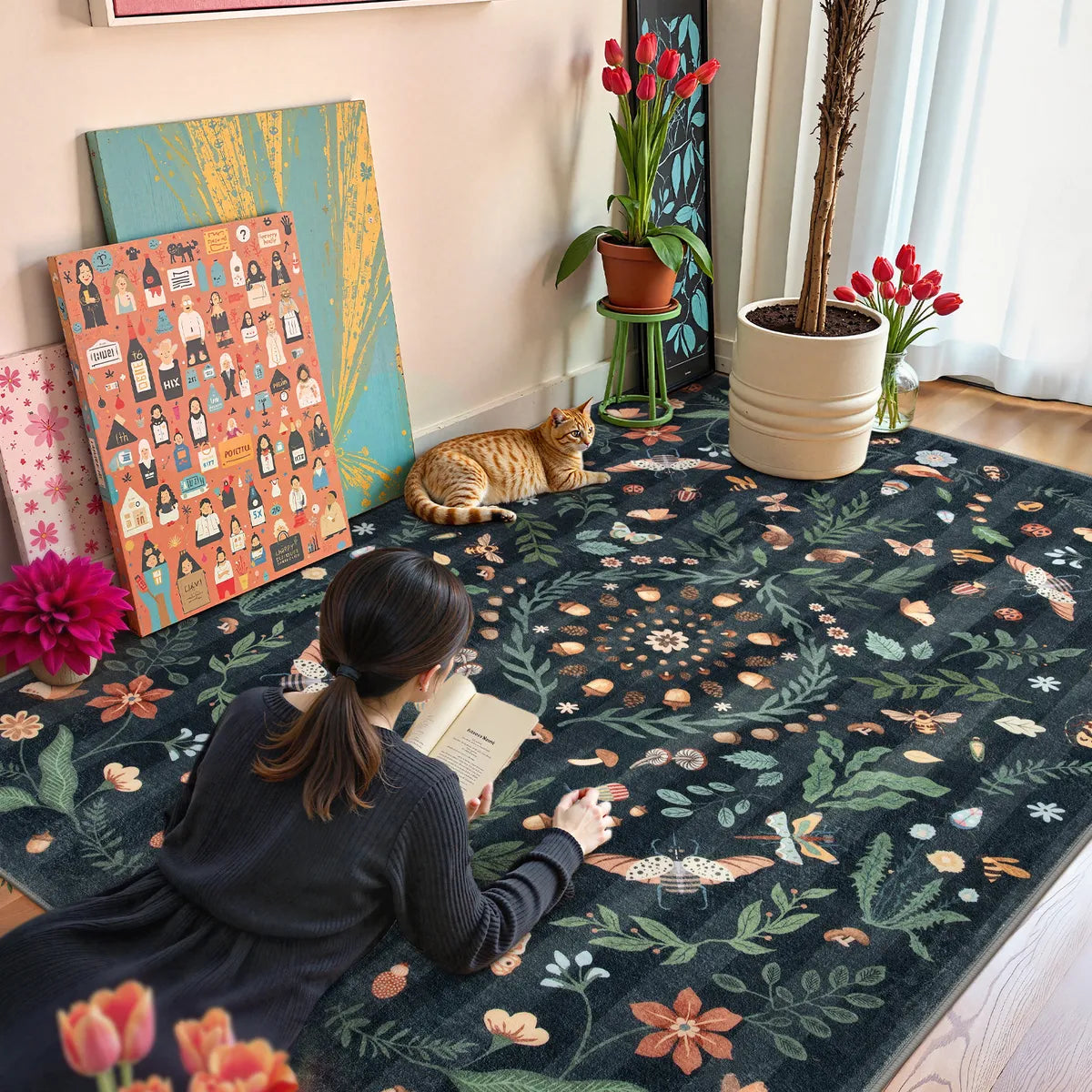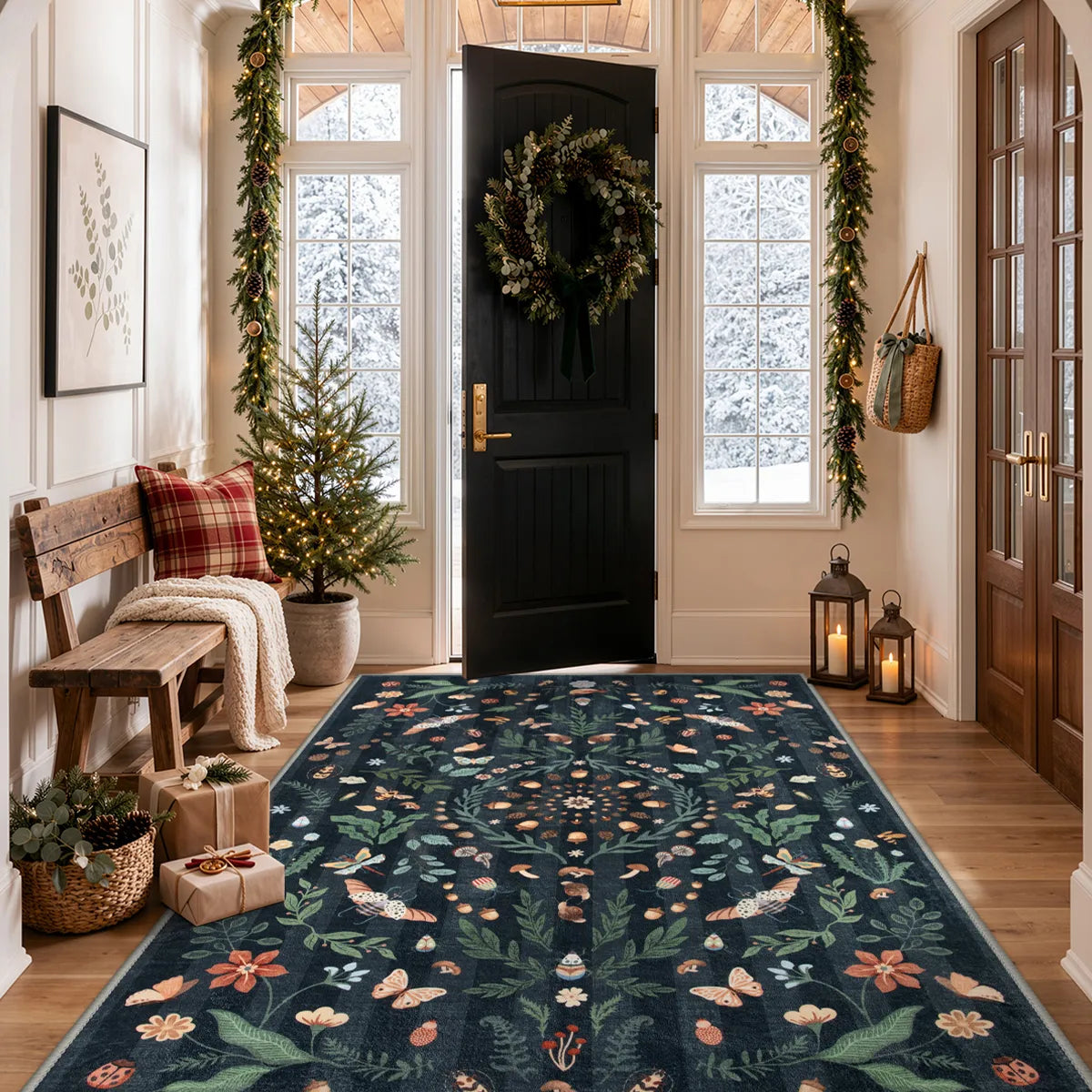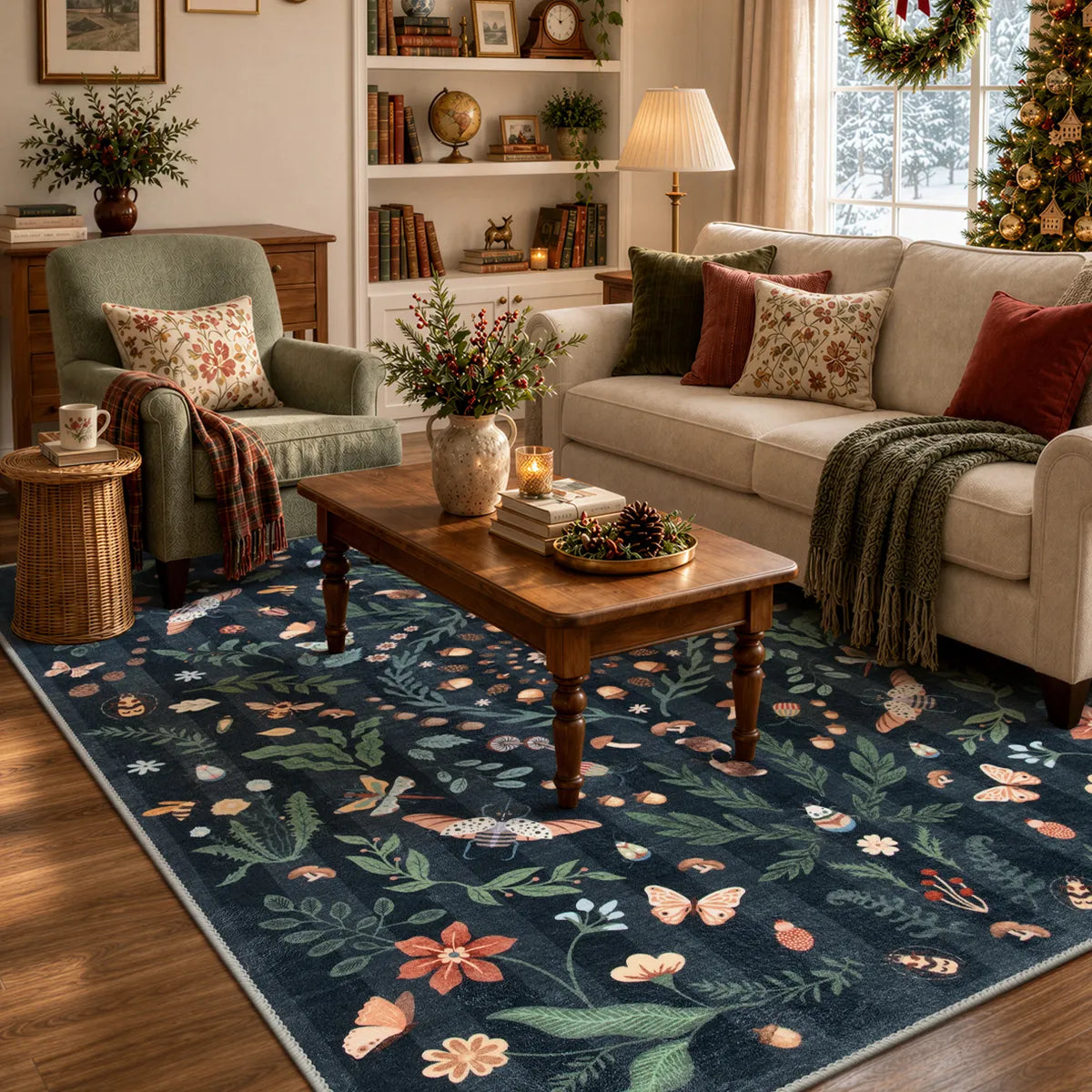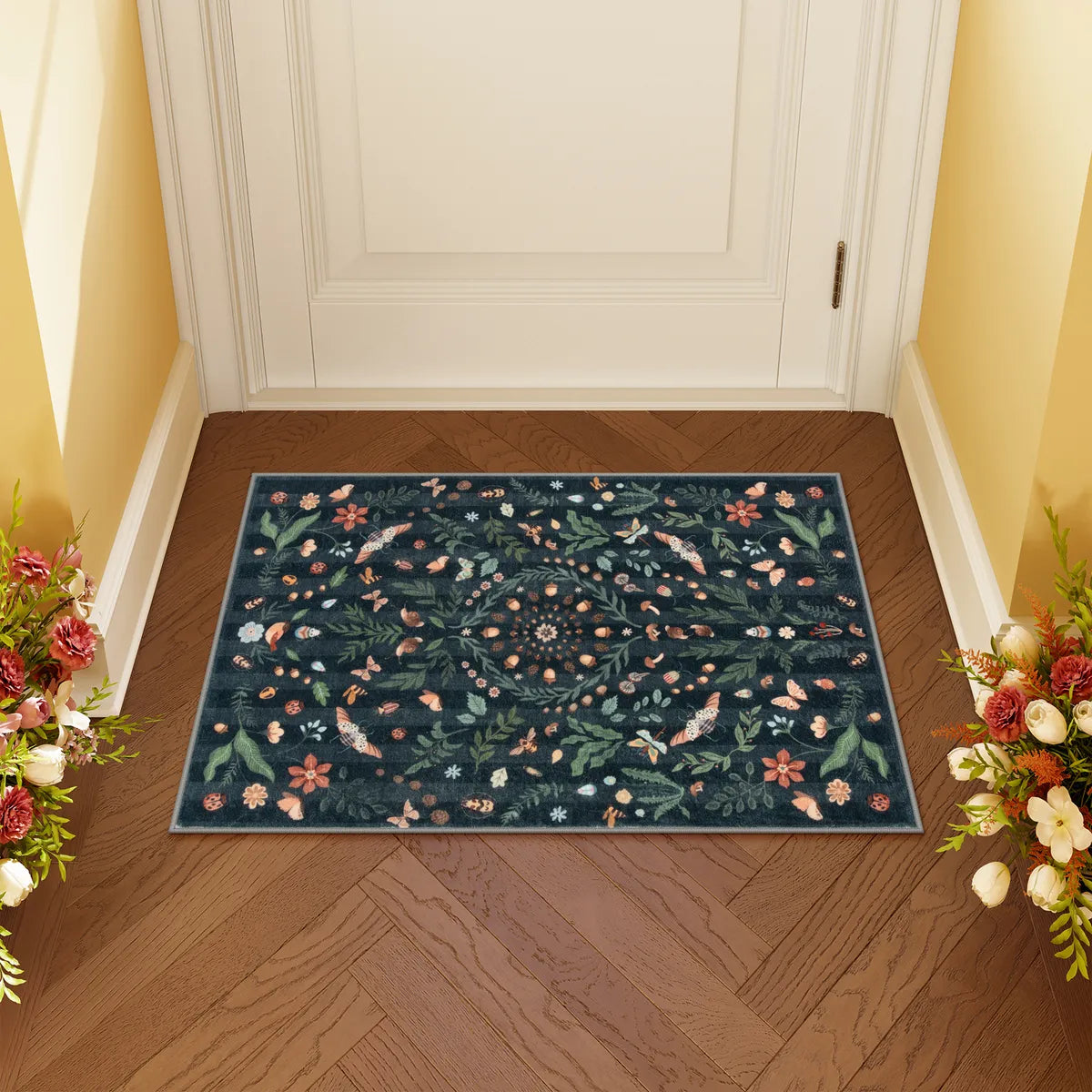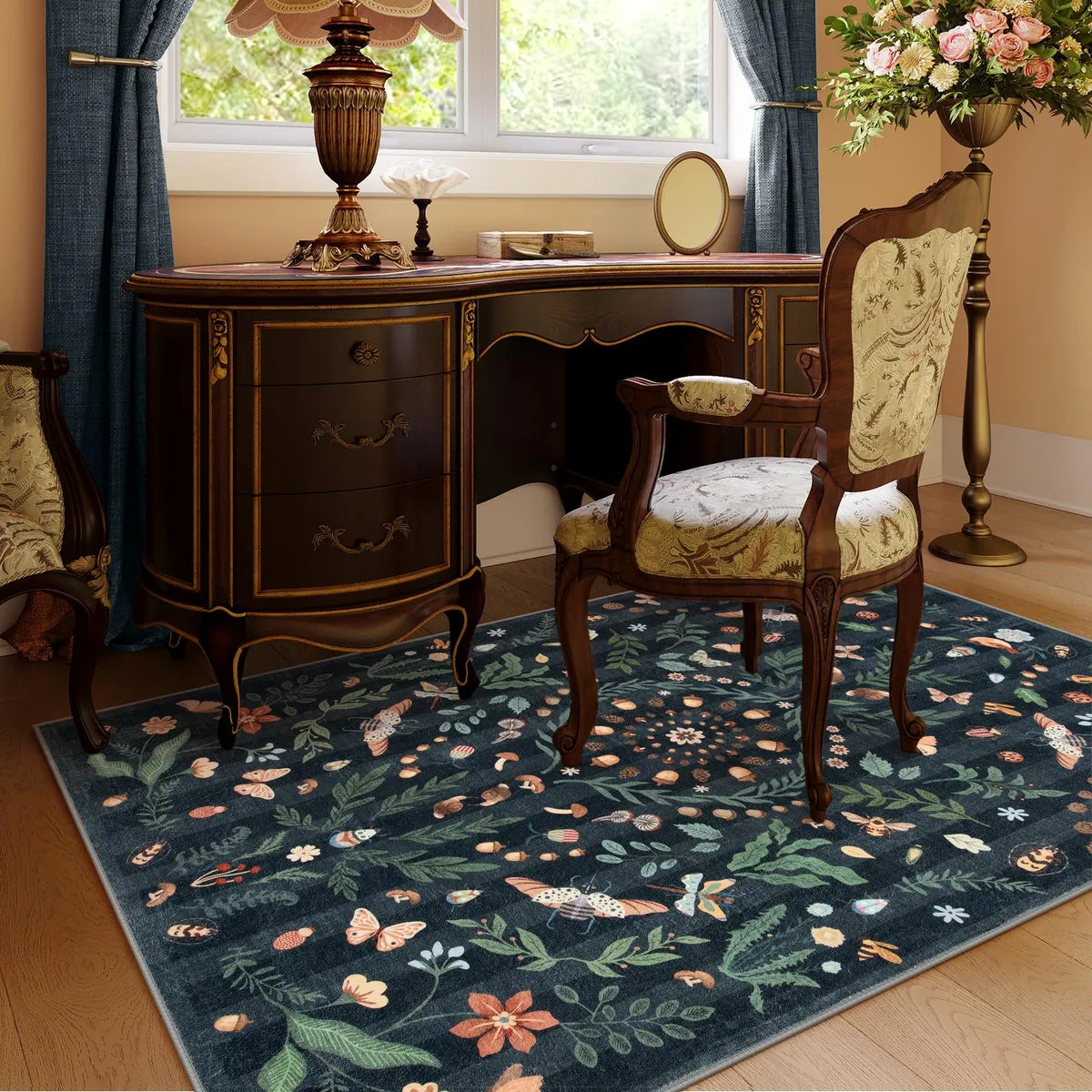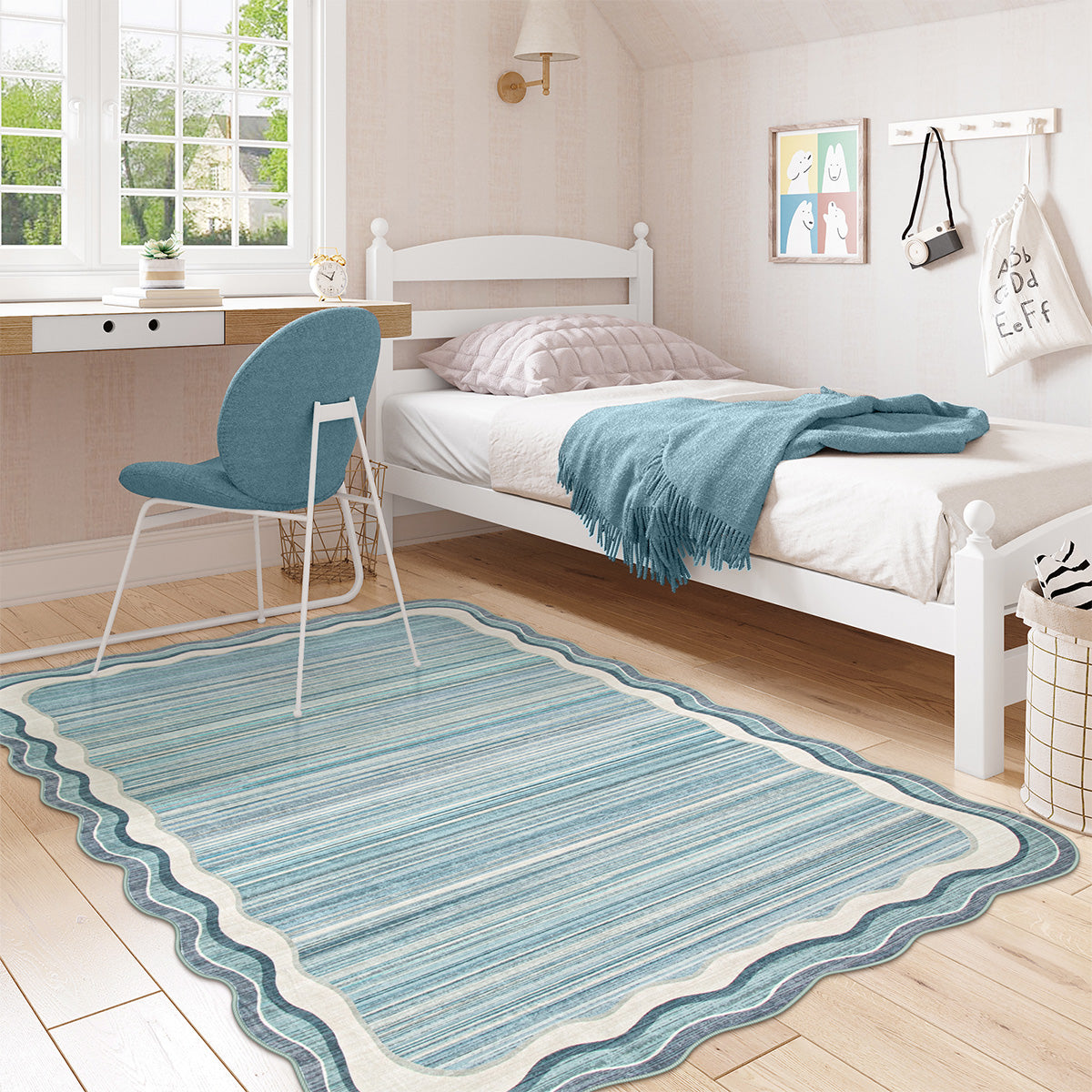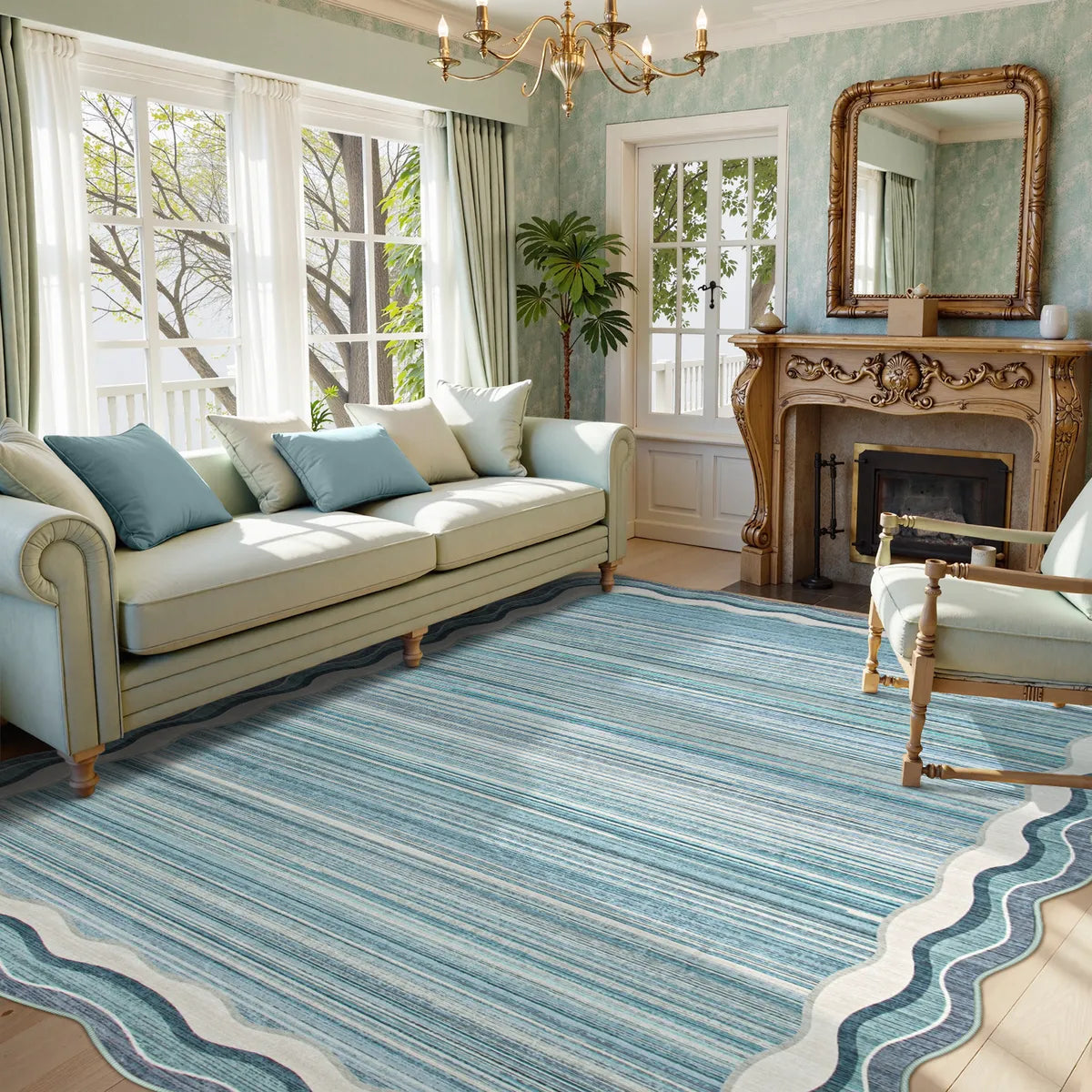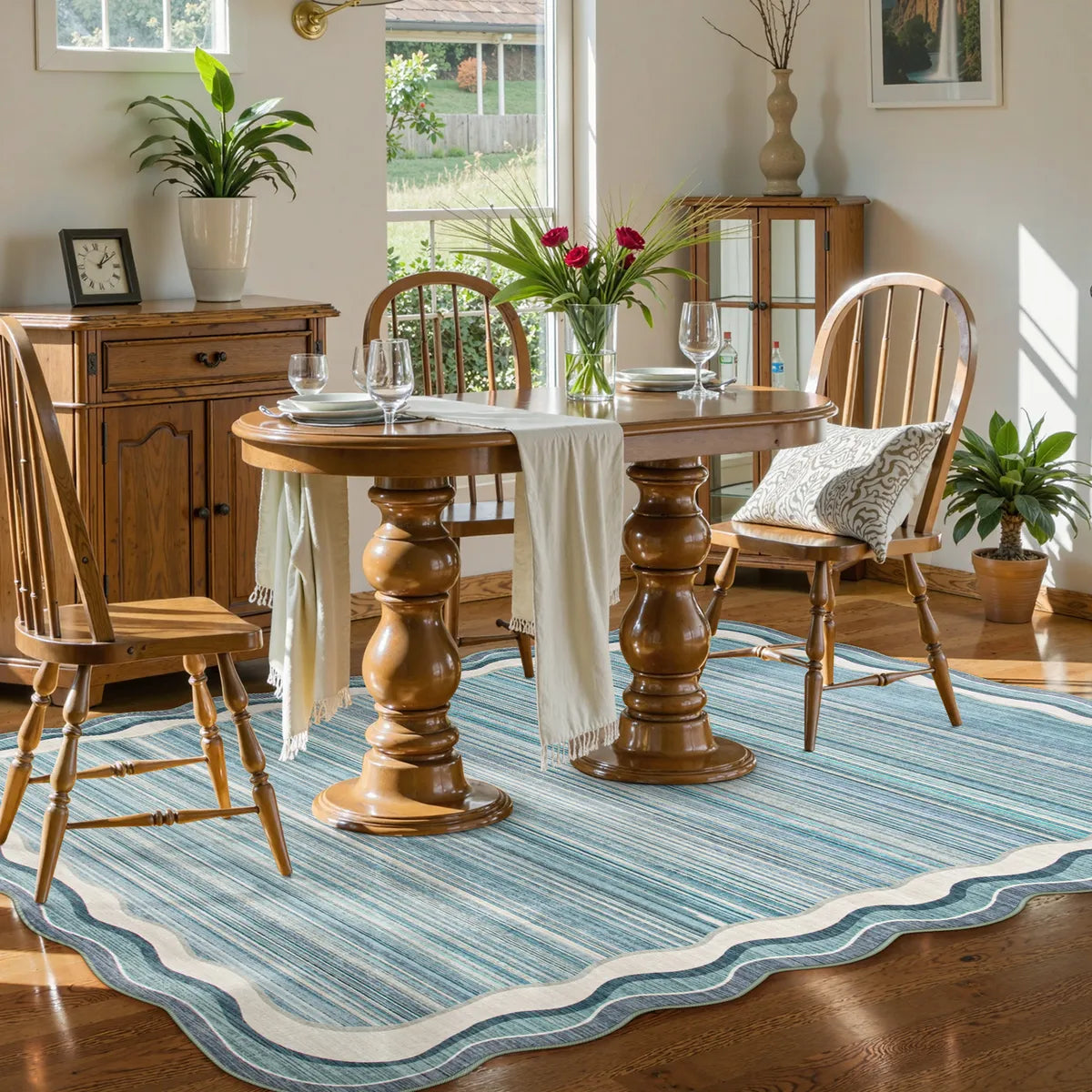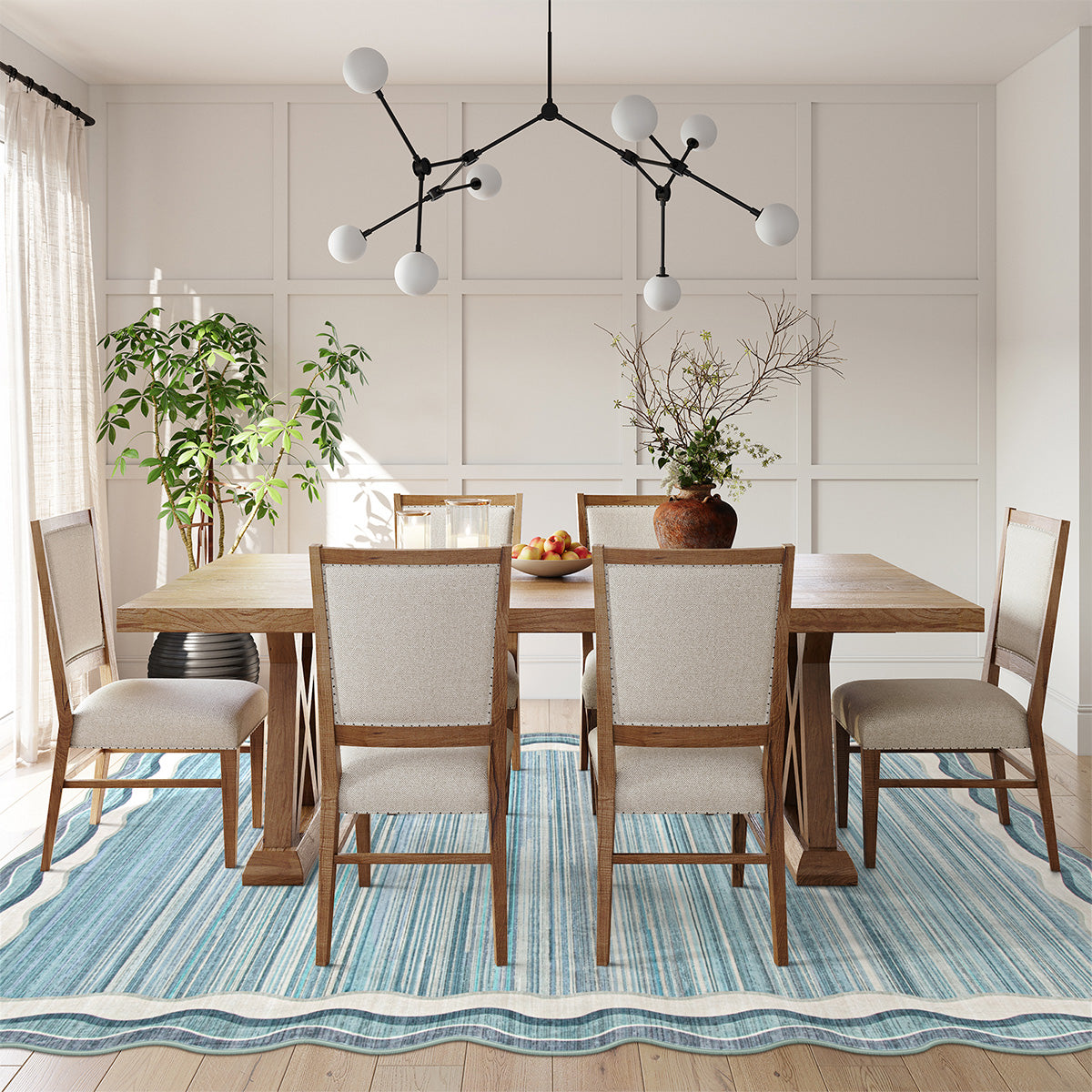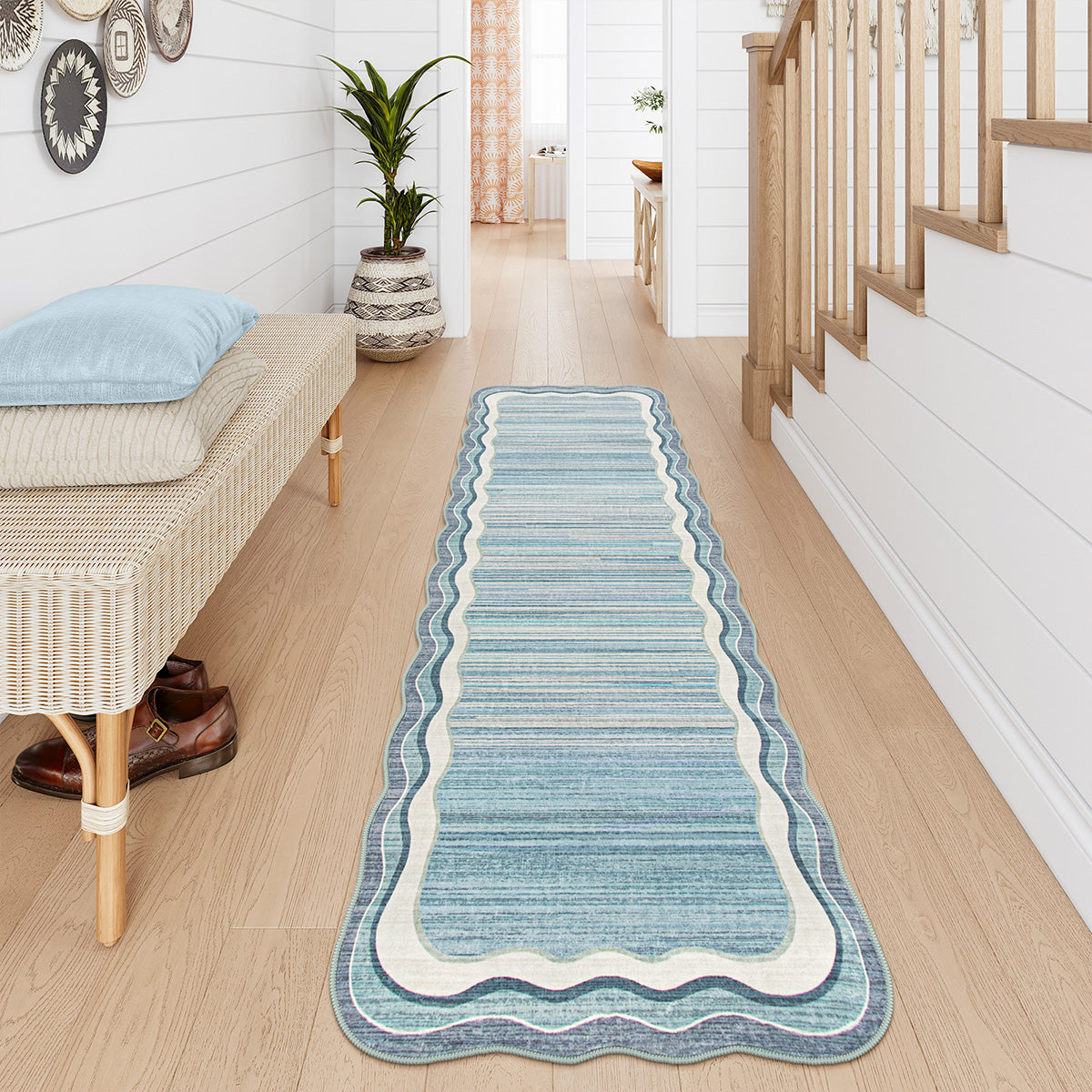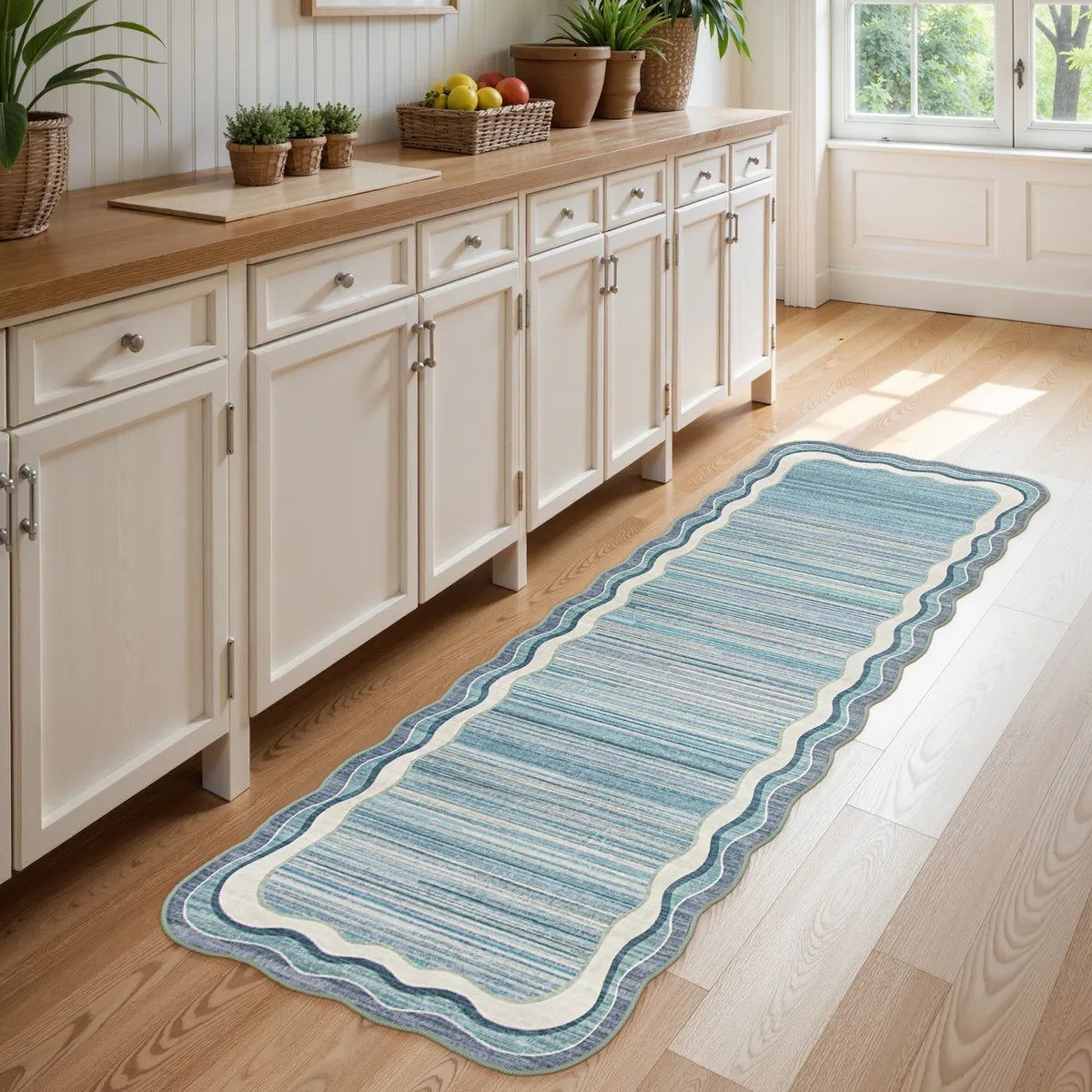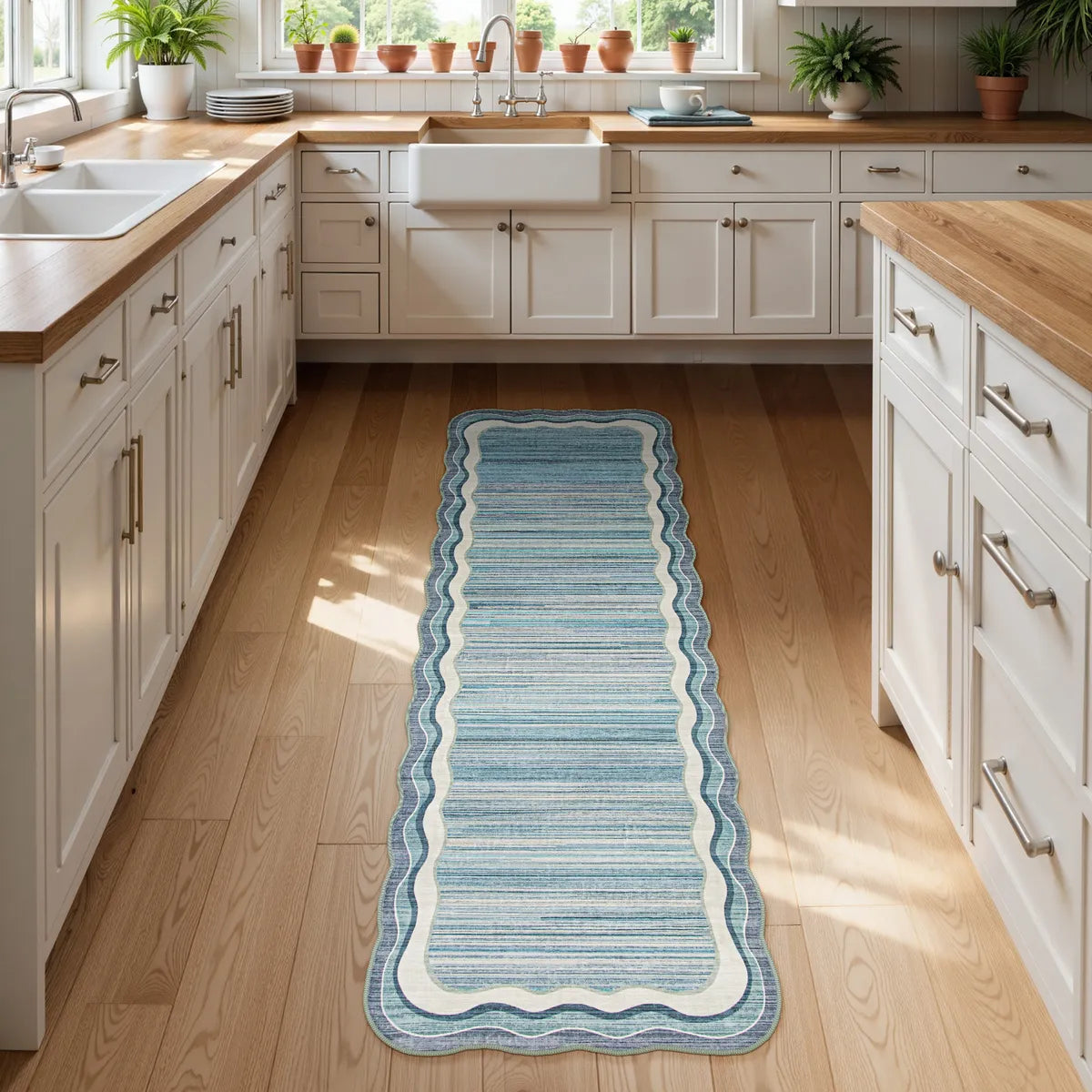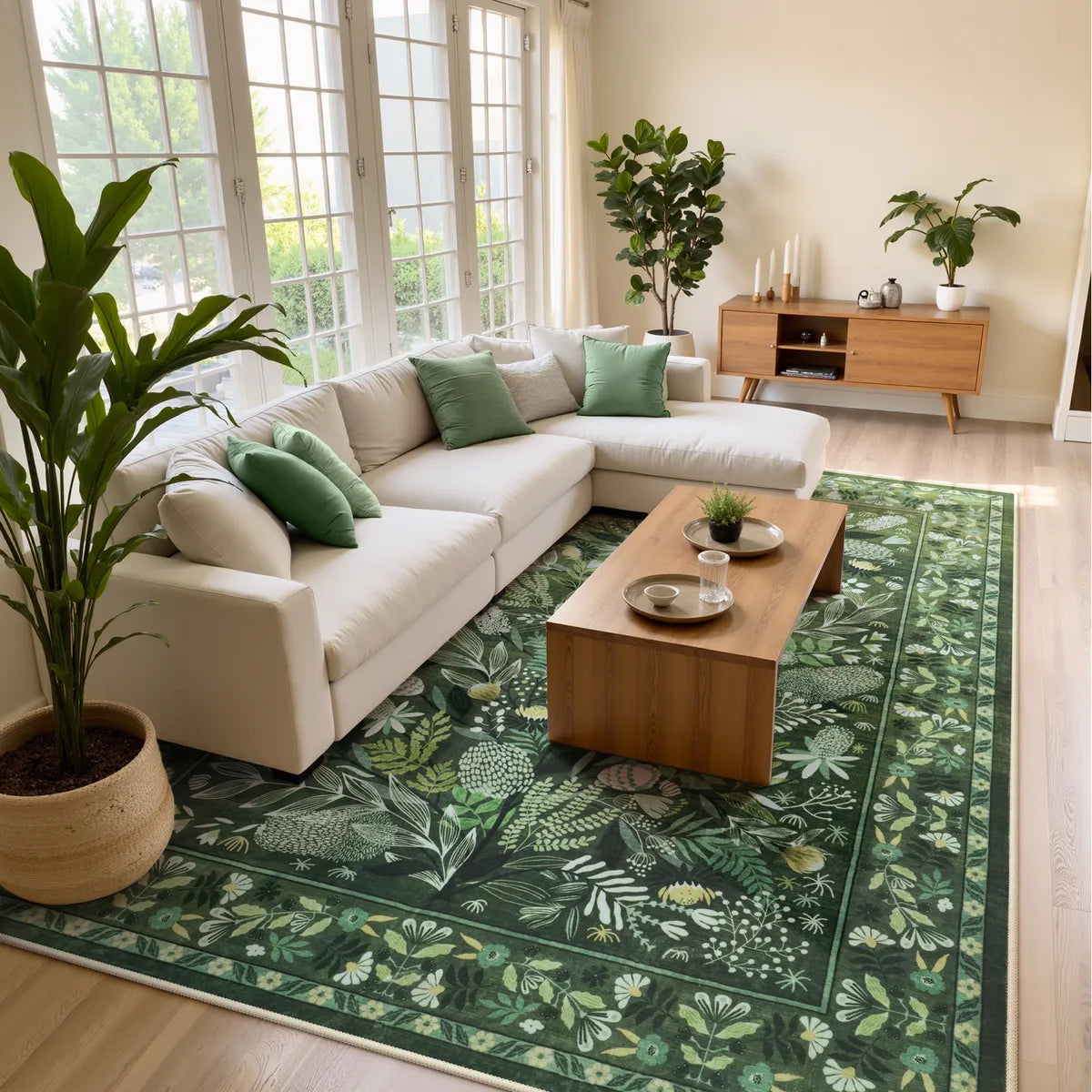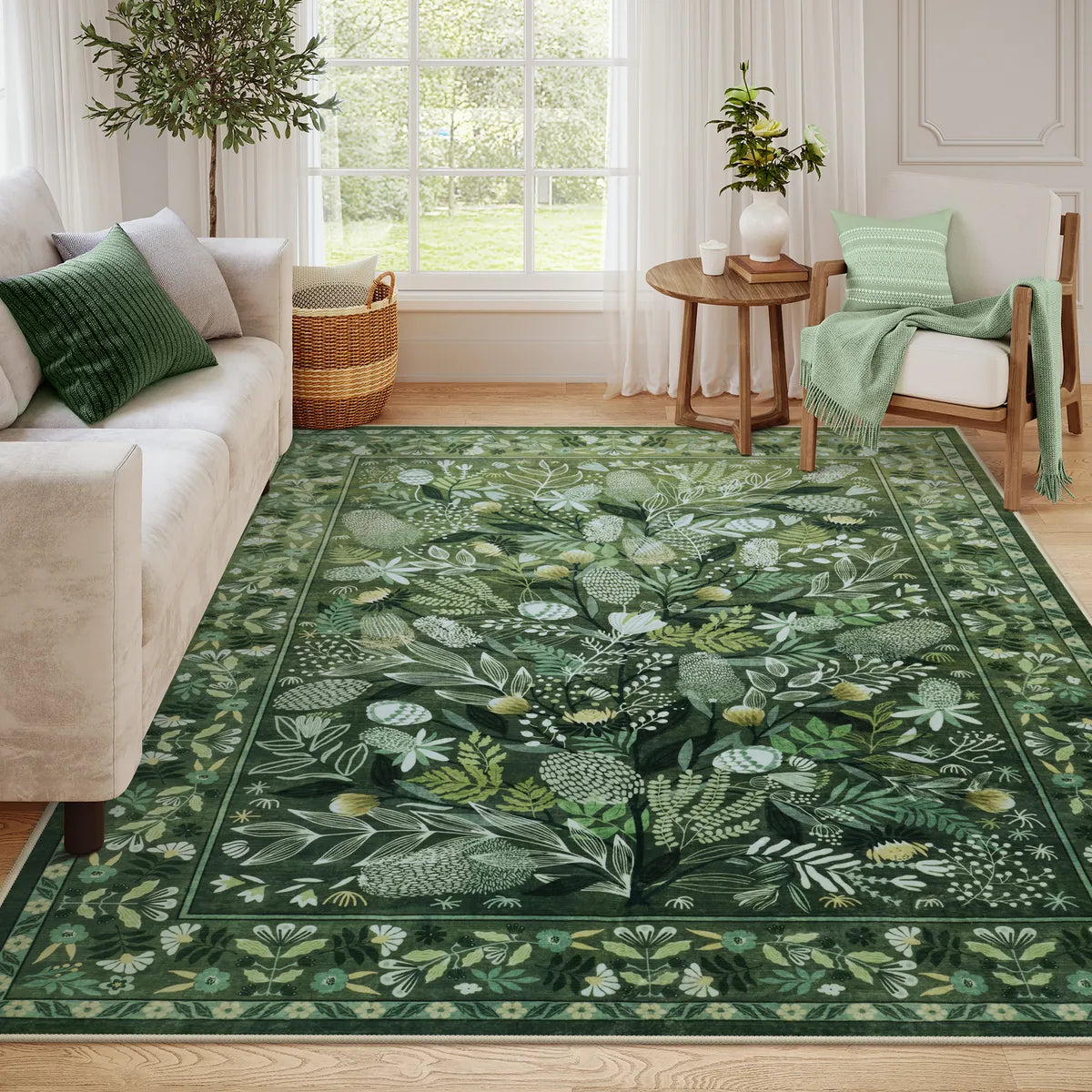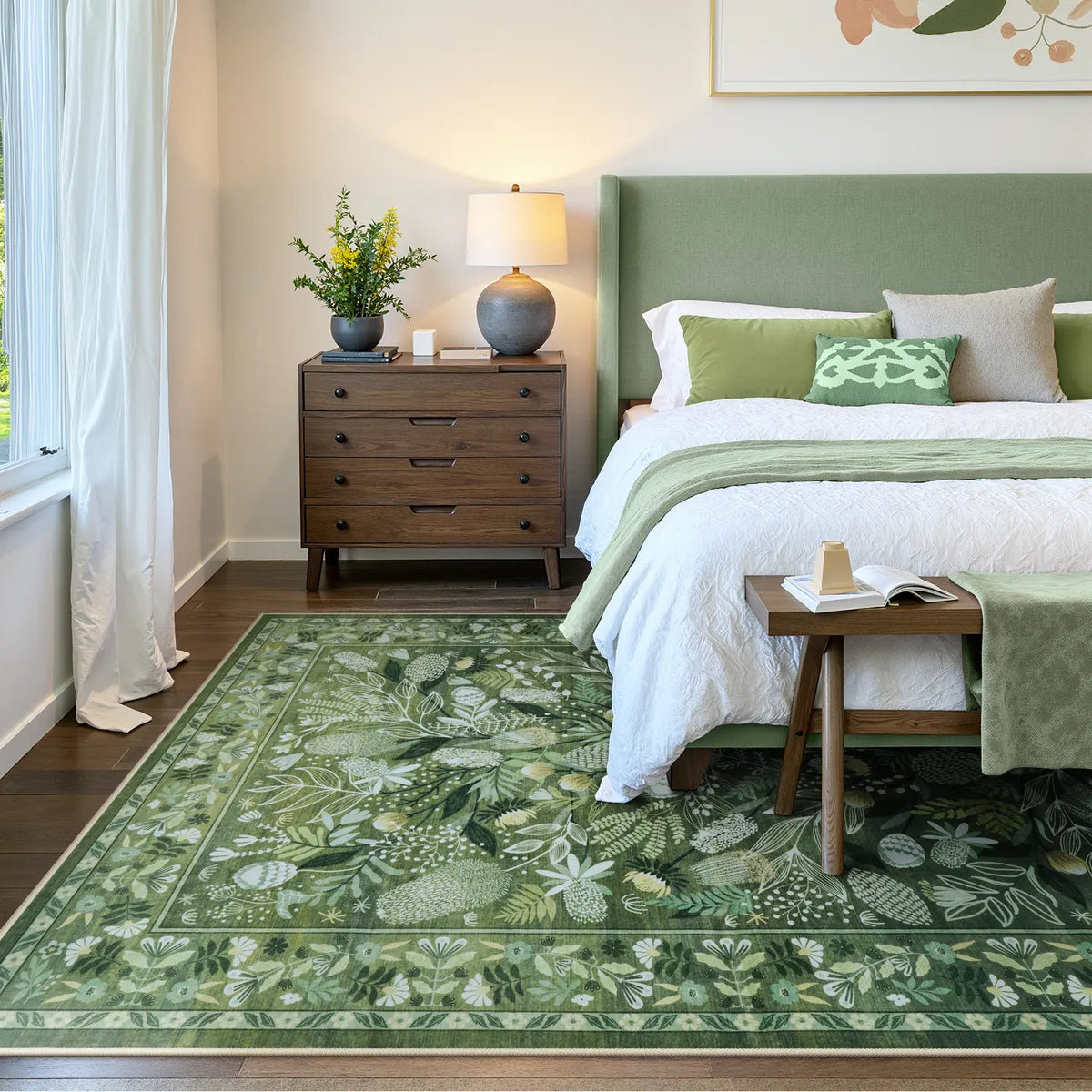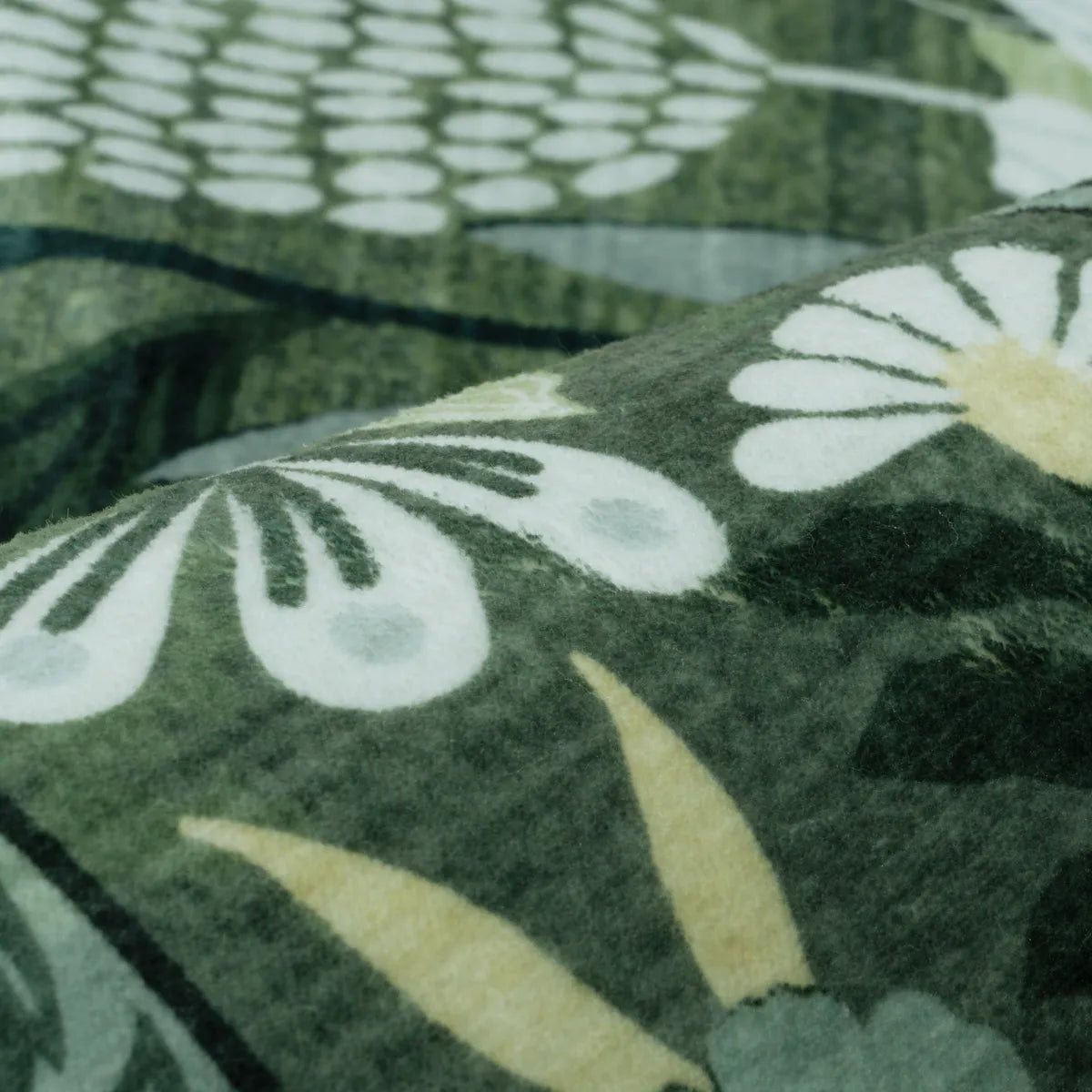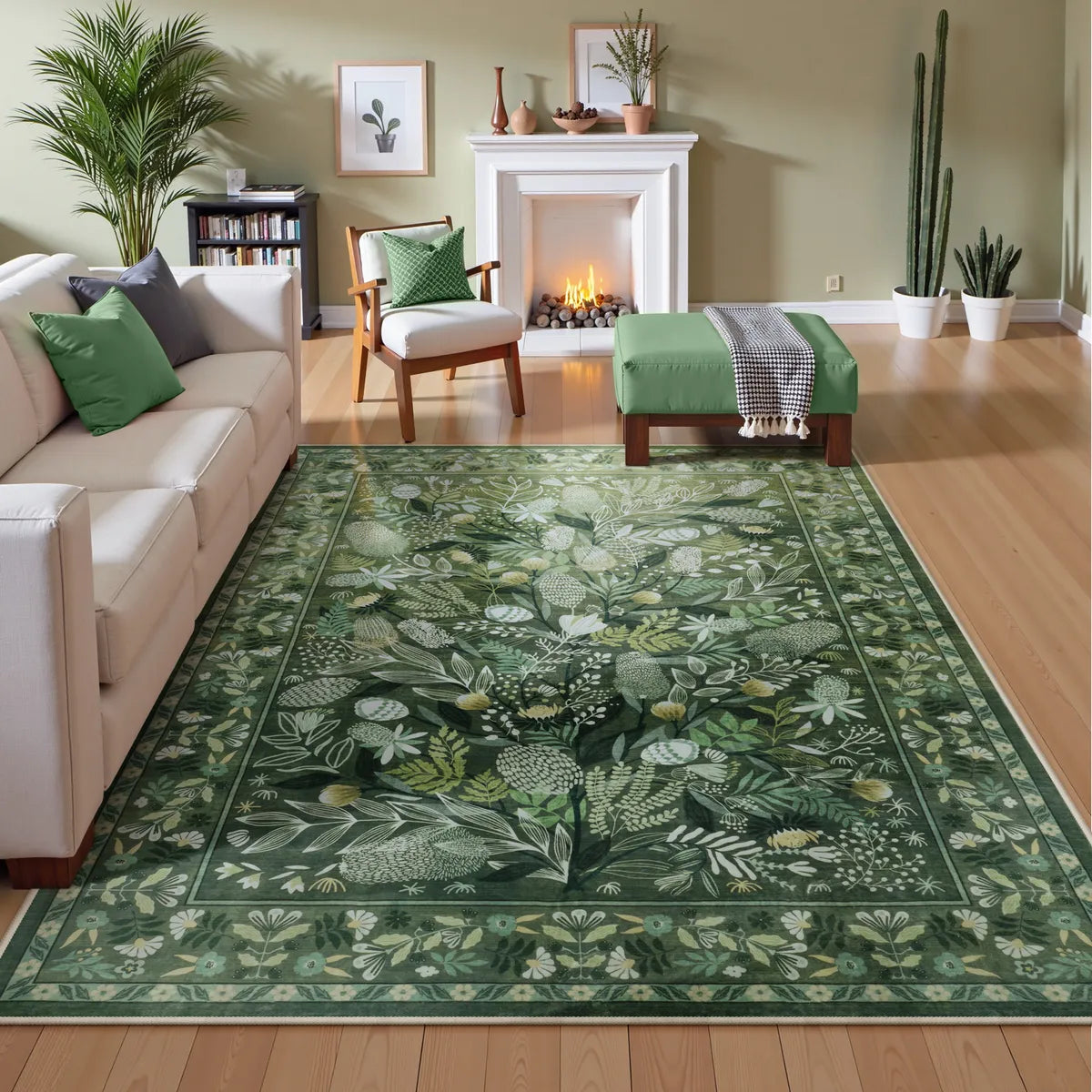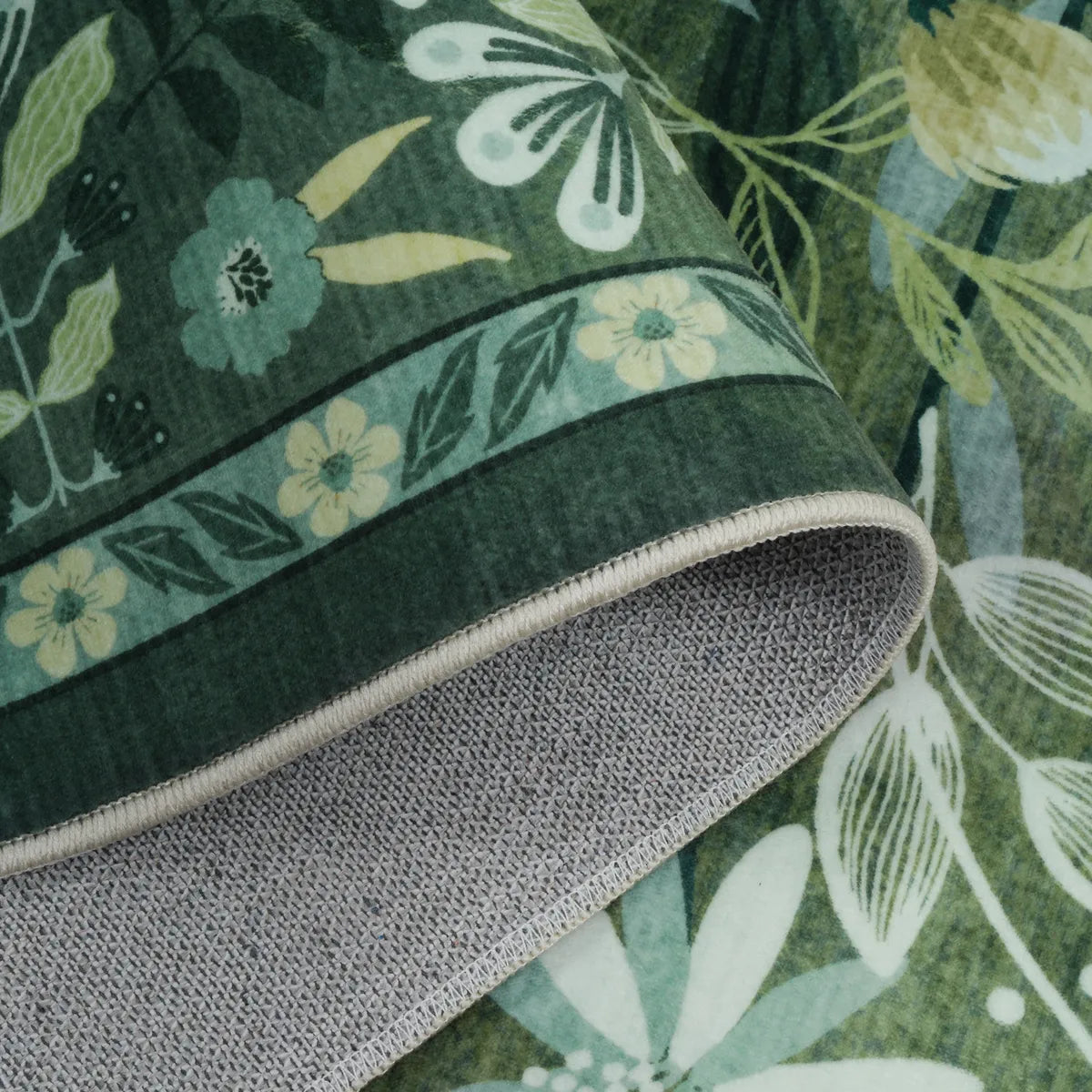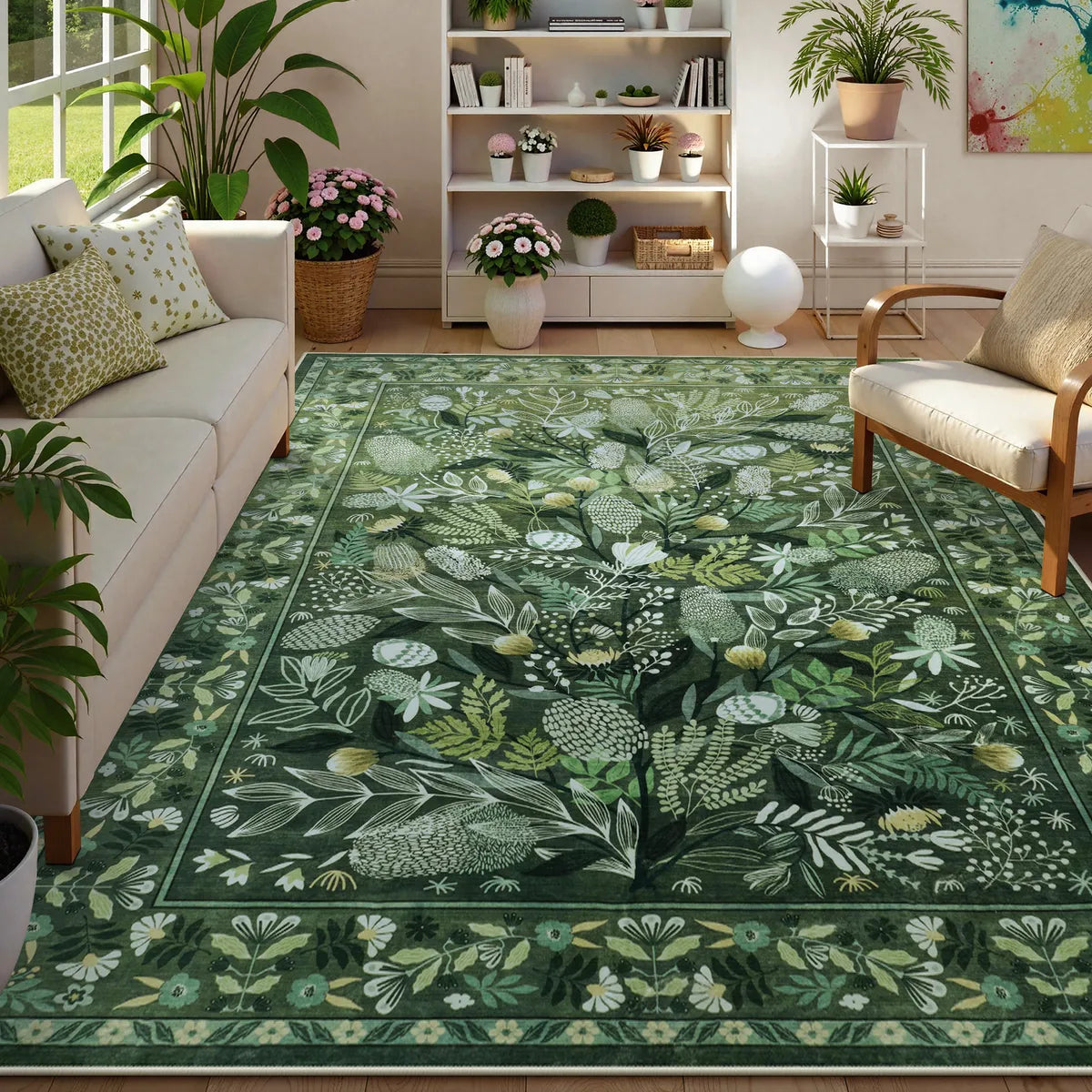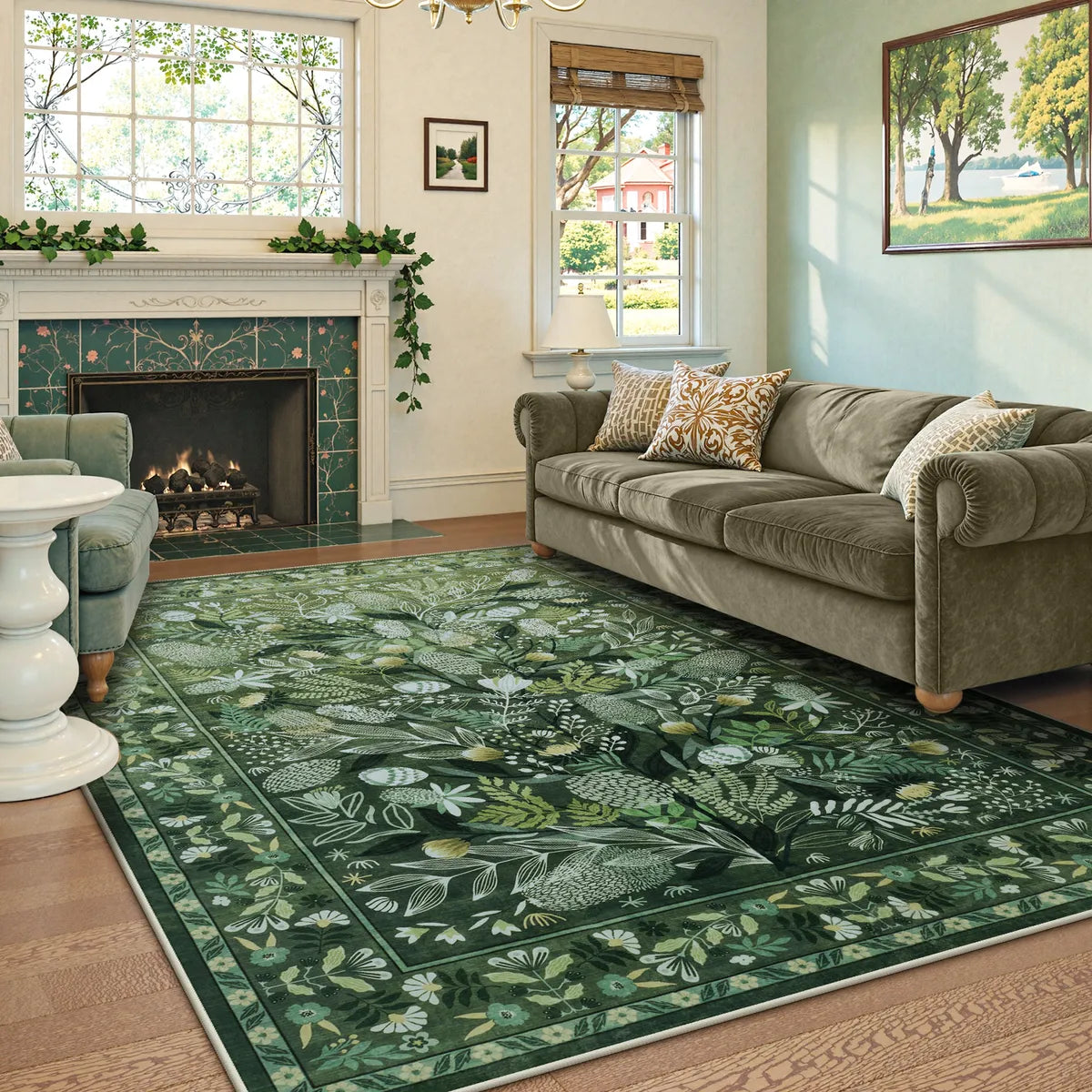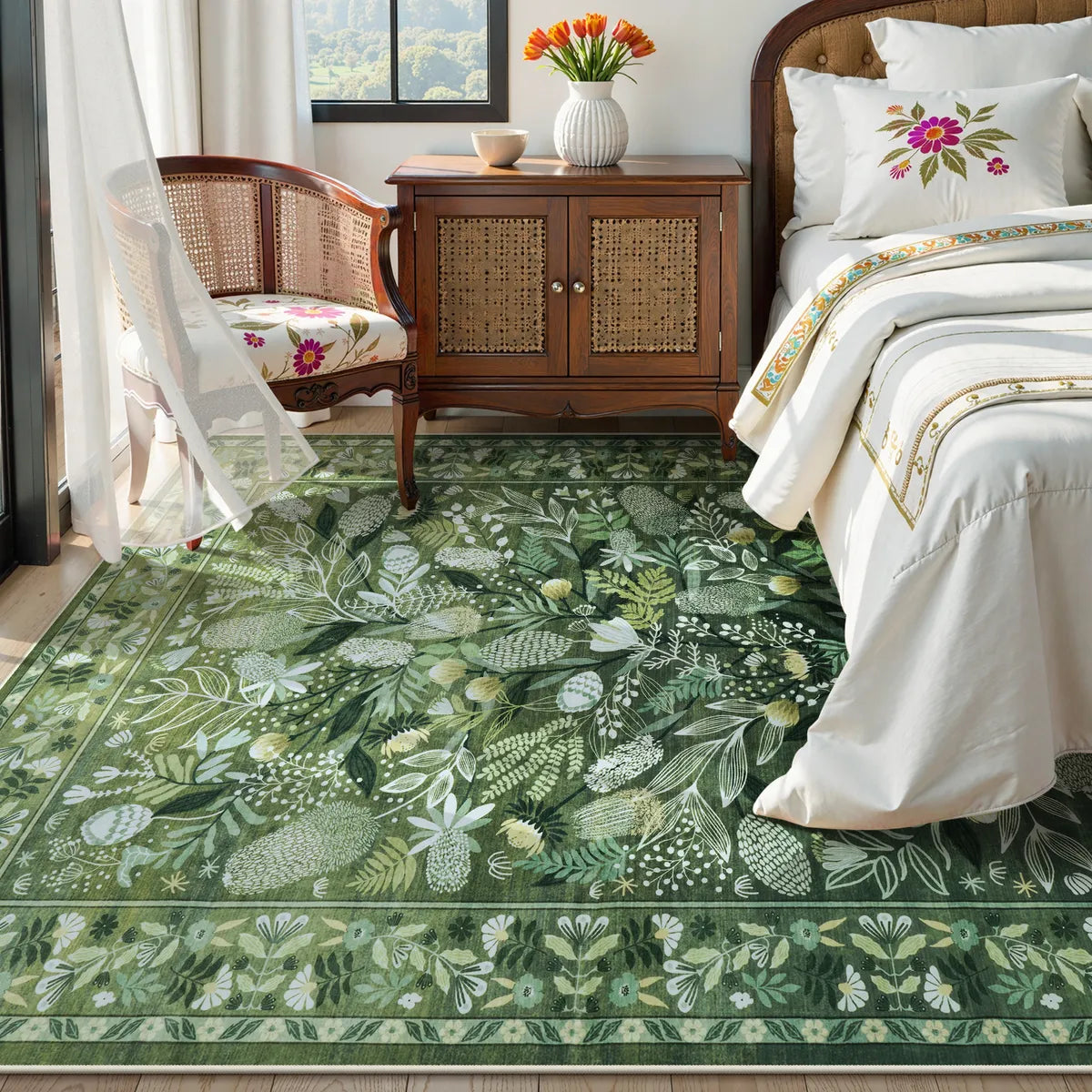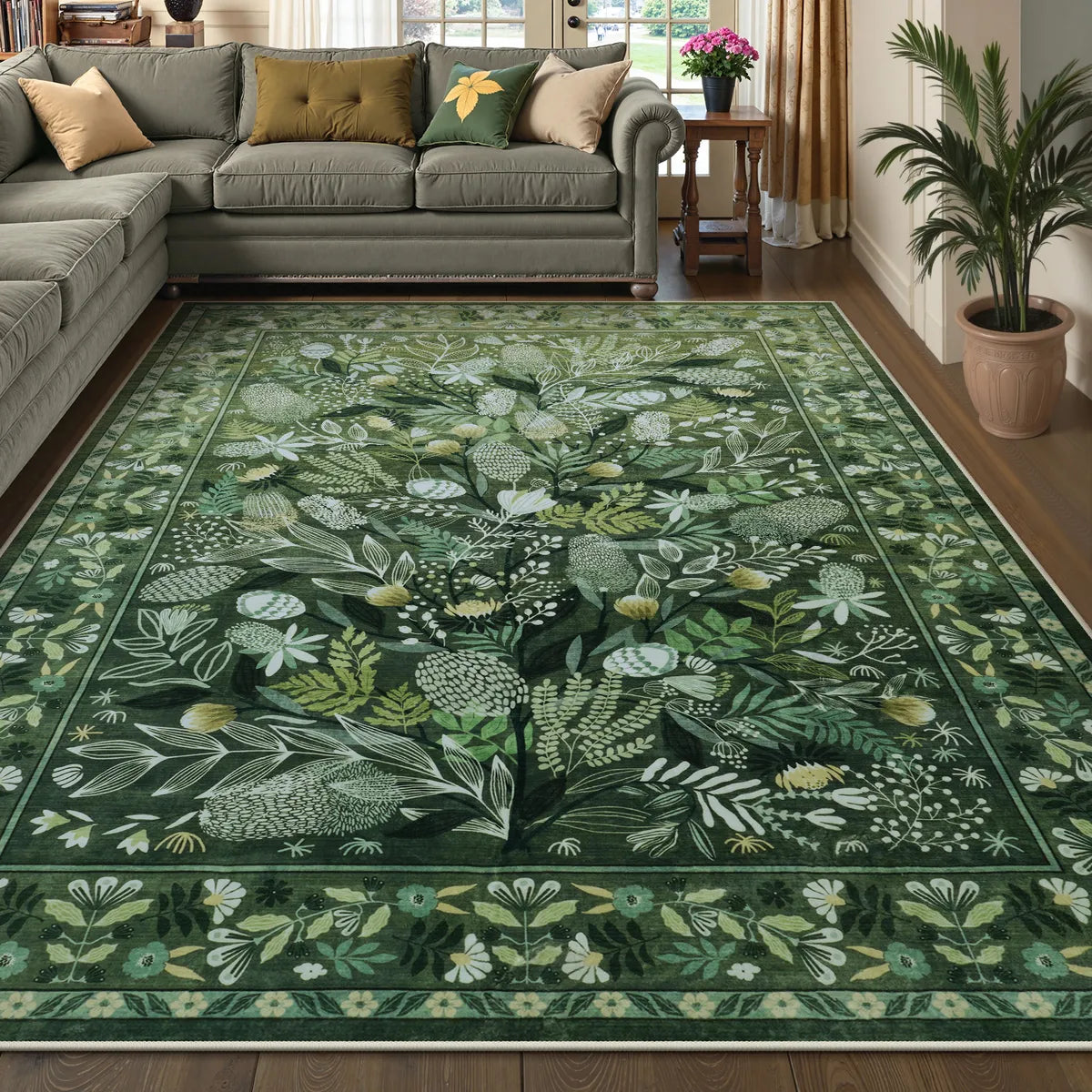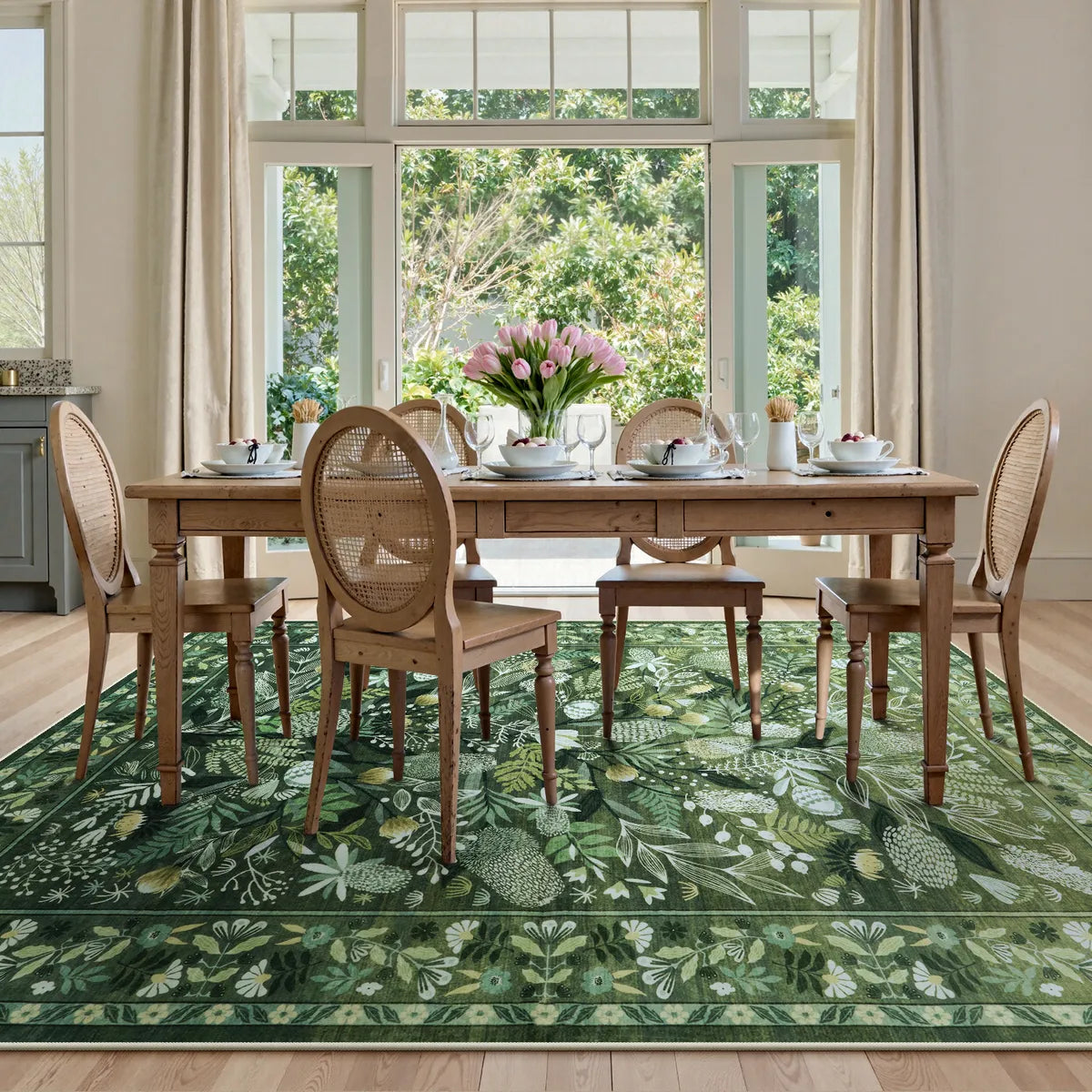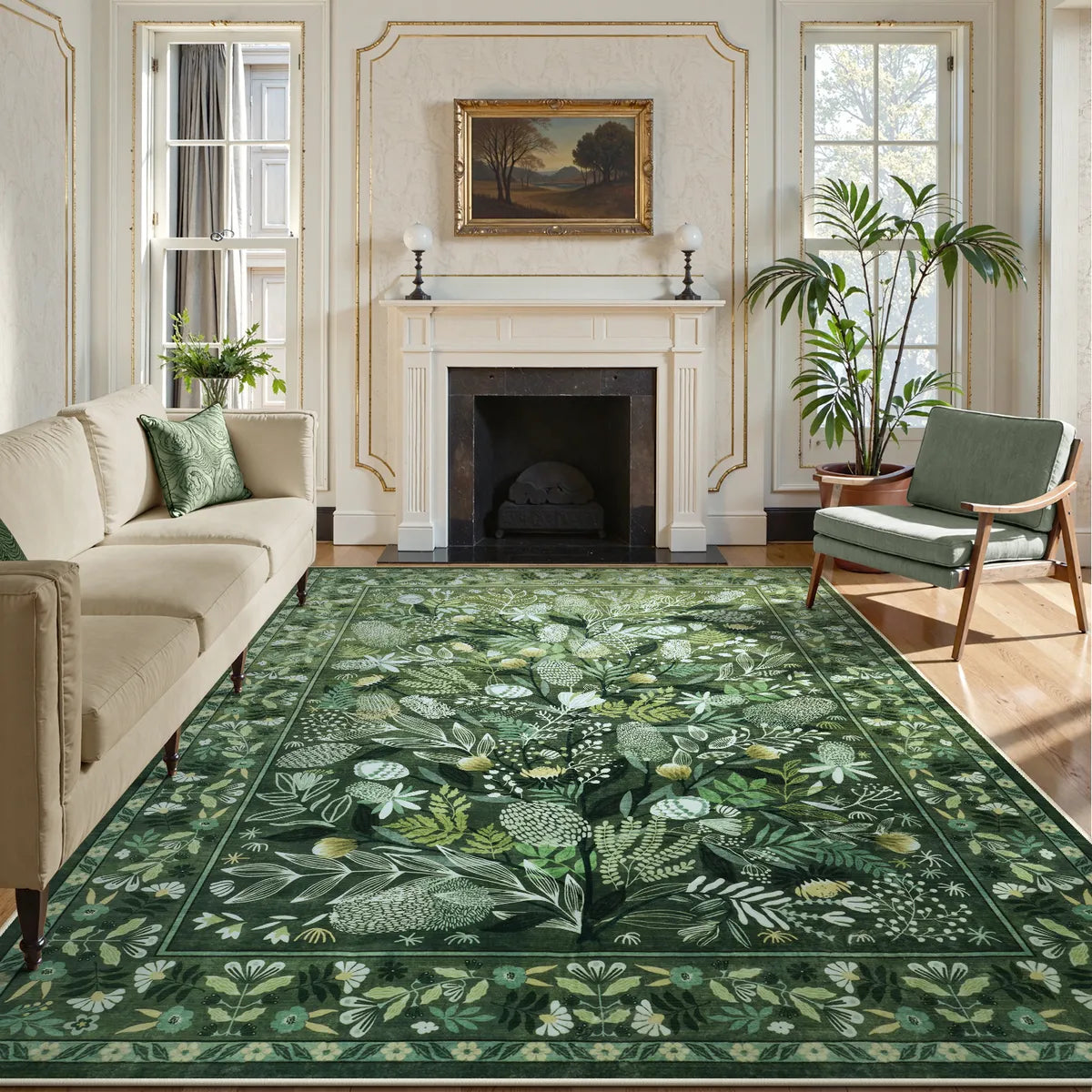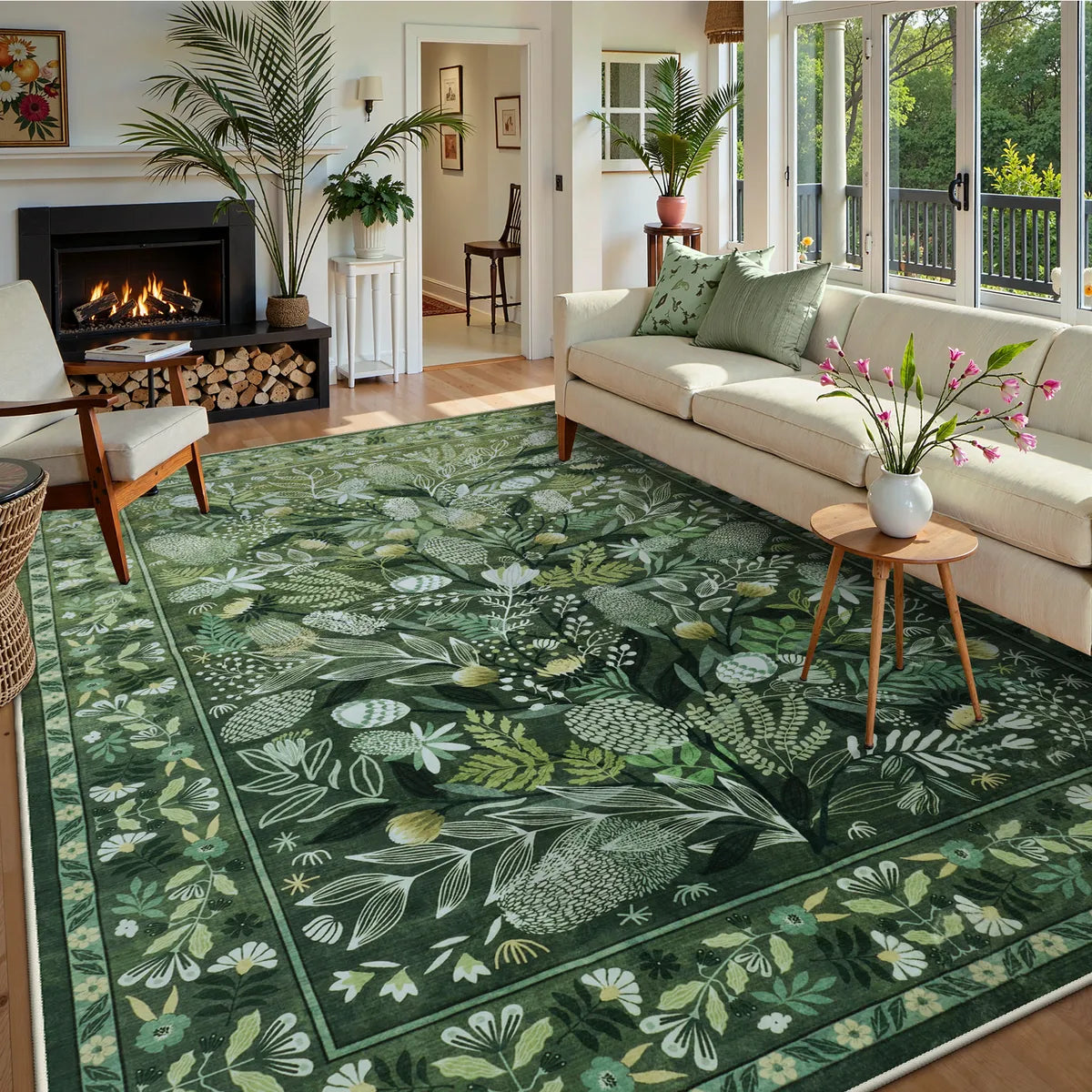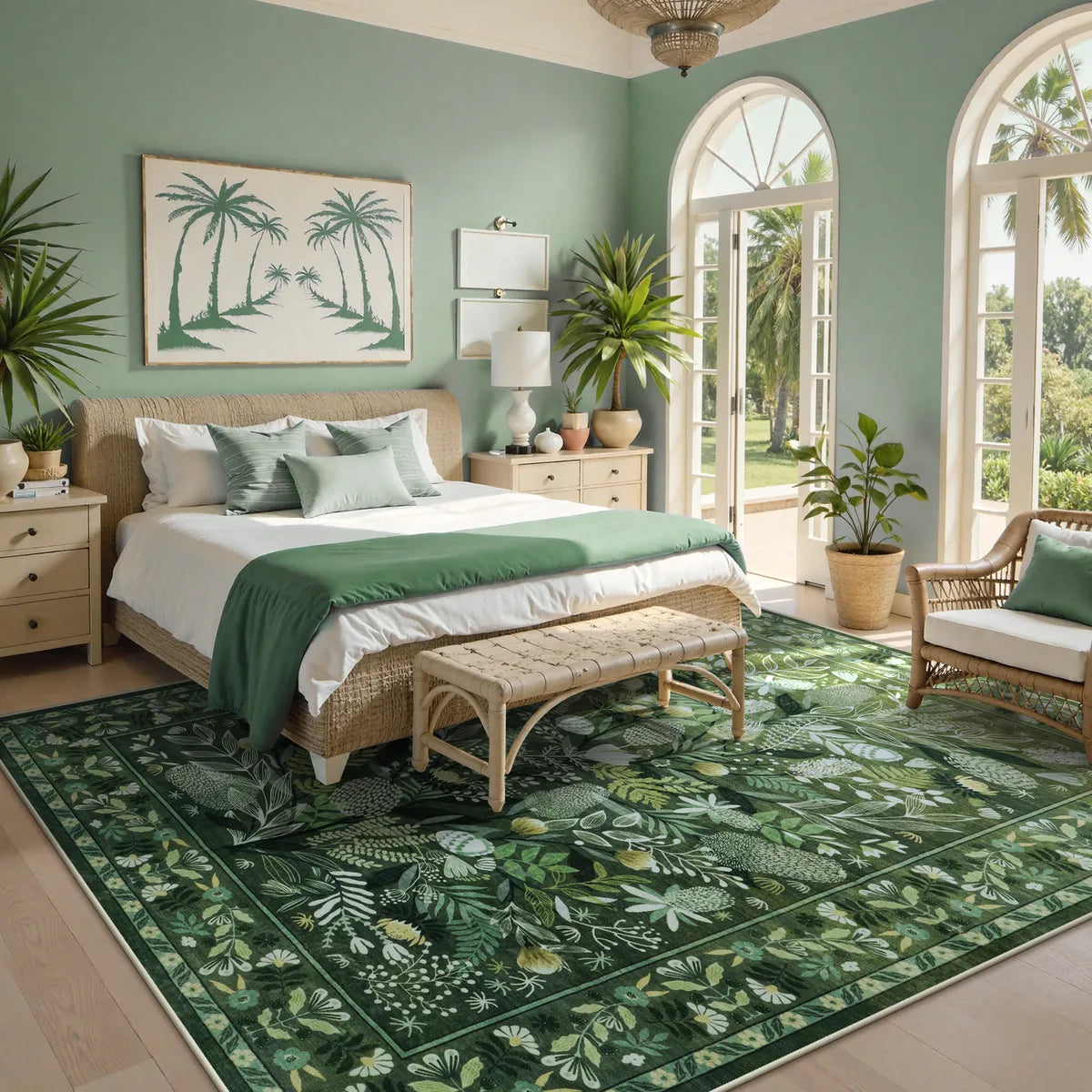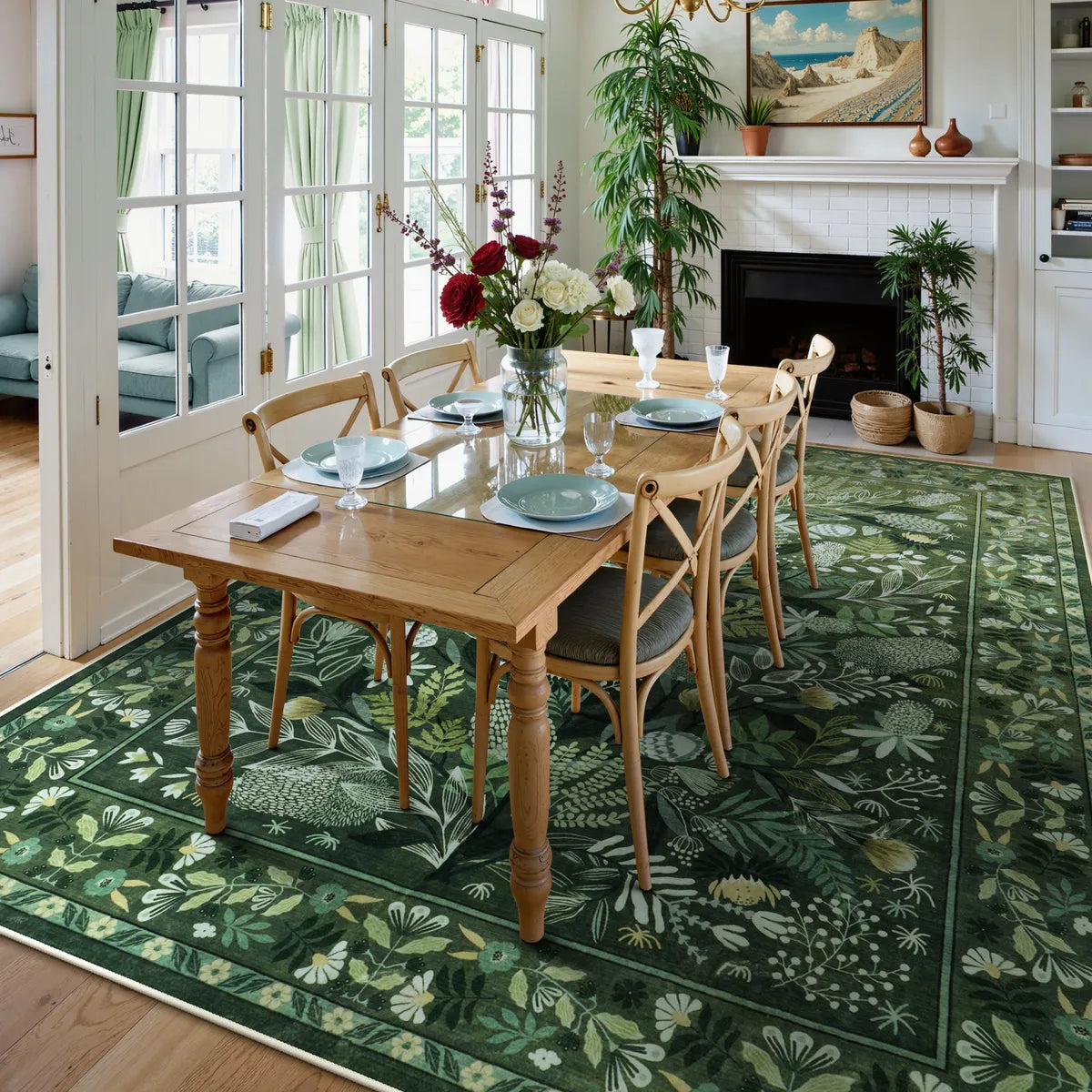


For a frequently used full bathroom, the best rug is usually a low-pile, washable, quick-drying design with a backing that reduces movement on a clean, dry floor. For a powder room with little splash exposure, you have more flexibility and may use a decorative area rug if the material and backing are suitable.
Best Bathroom Rug by Space Type
- Beside a tub or shower: Prioritize quick drying, washability, absorbency, and secure placement.
- In front of a vanity: Use a low-pile runner or small rug that clears doors and cabinet edges.
- Powder room: A decorative washable rug can work because moisture exposure is usually lower.
- Large shared bathroom: Consider separate smaller rugs rather than one oversized rug that stays damp.
Avoid jute, sisal, or other moisture-sensitive natural fibers in areas that regularly become wet. They are better suited to dry powder rooms than high-splash zones.
5 Features to Prioritize in a Bathroom Rug

The "best" bathroom rug isn't determined by style—it's determined by whether it can handle what bathrooms throw at it: wet floors, mold risk, daily foot traffic, and constant cleaning. Before you buy, make sure your rug checks these five essential boxes.
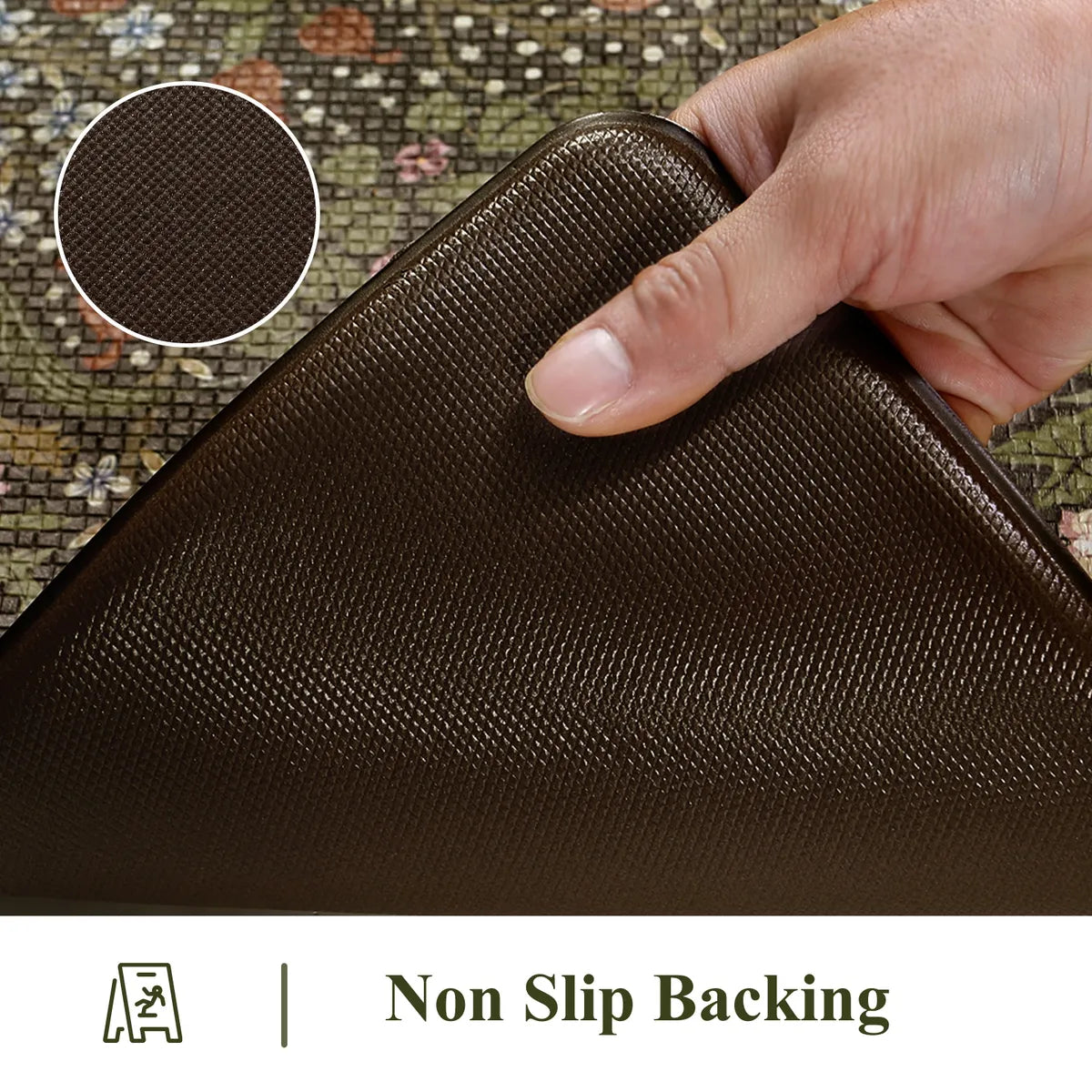
1. Non-Slip Backing
Wet bathroom floors are slippery—and dangerous. Without proper backing, a rug can slide right out from under you as you step out of the shower, leading to serious falls.
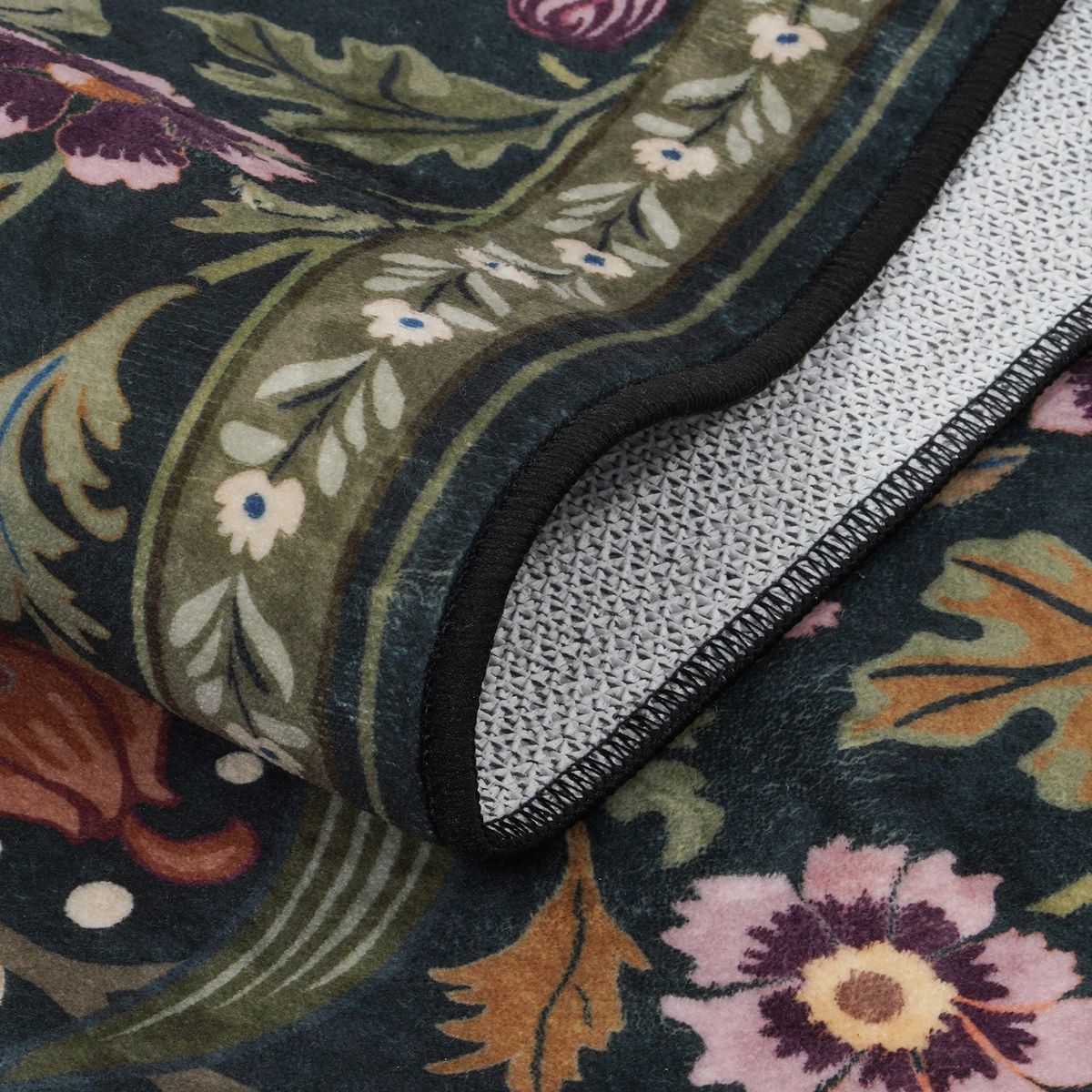
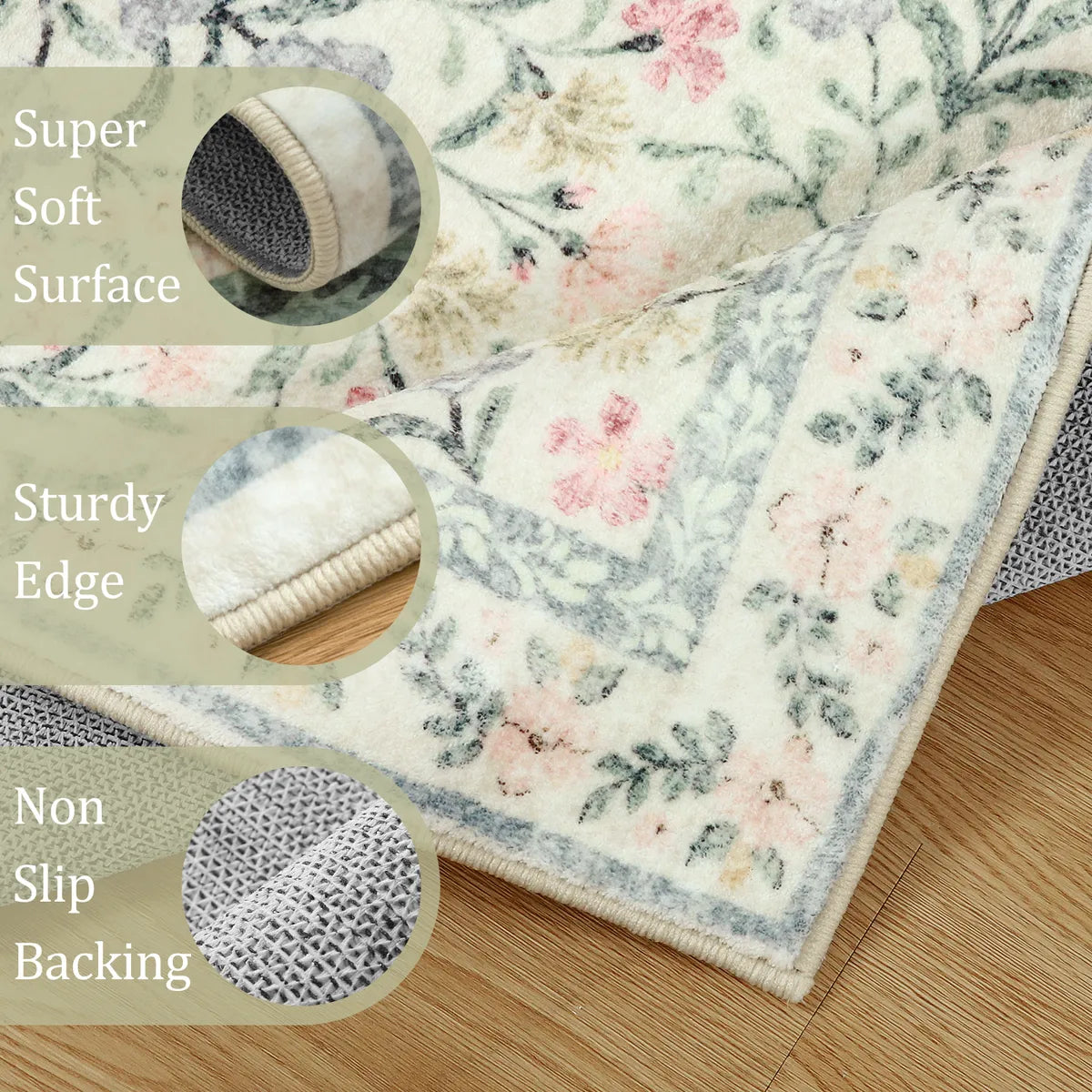
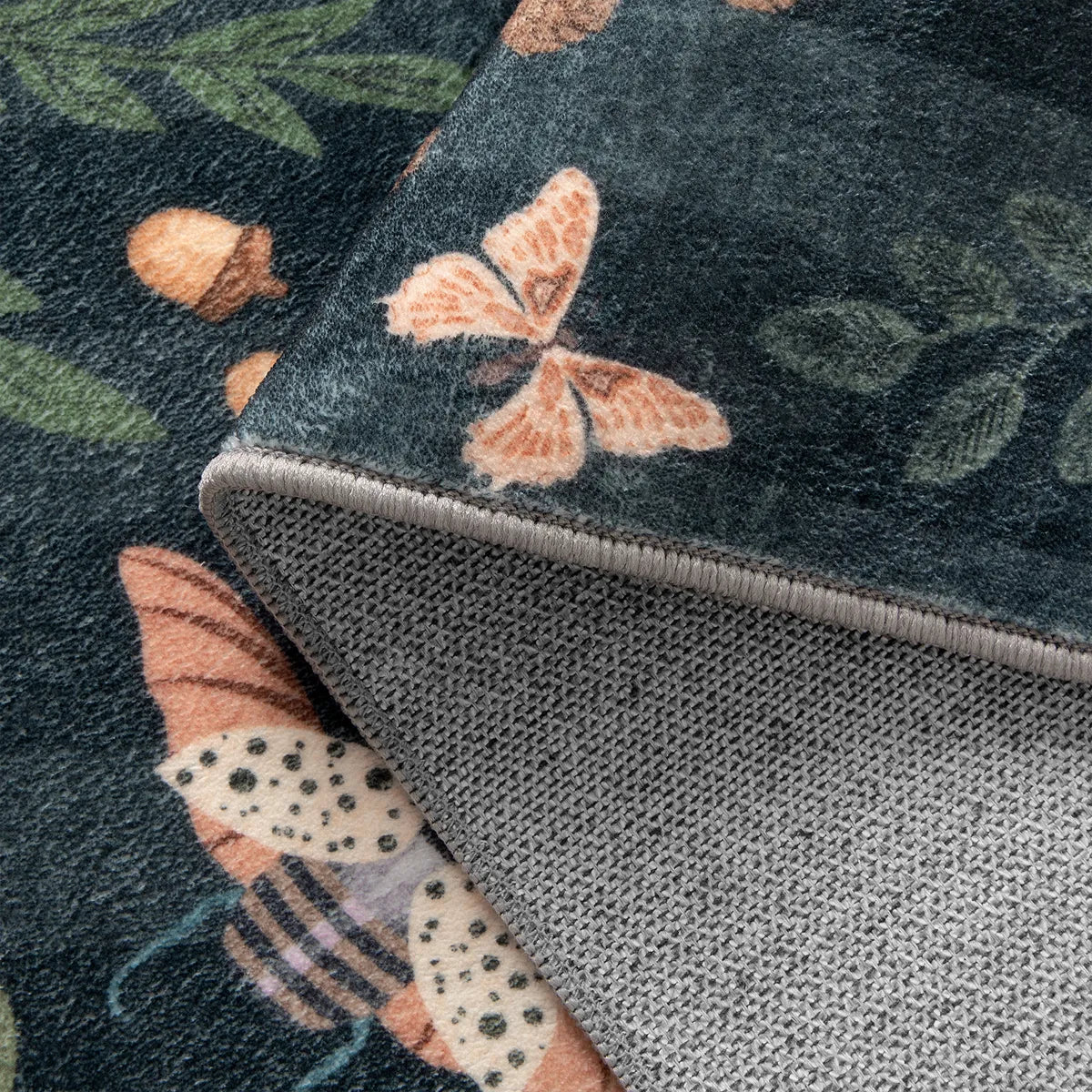
However, modern rug technology—like the design philosophy found at Lahome—integrates a specialized non-slip backing directly into the rug. This one-piece construction offers superior grip on slippery floors compared to separate pads, which can bunch up or lose traction over time.
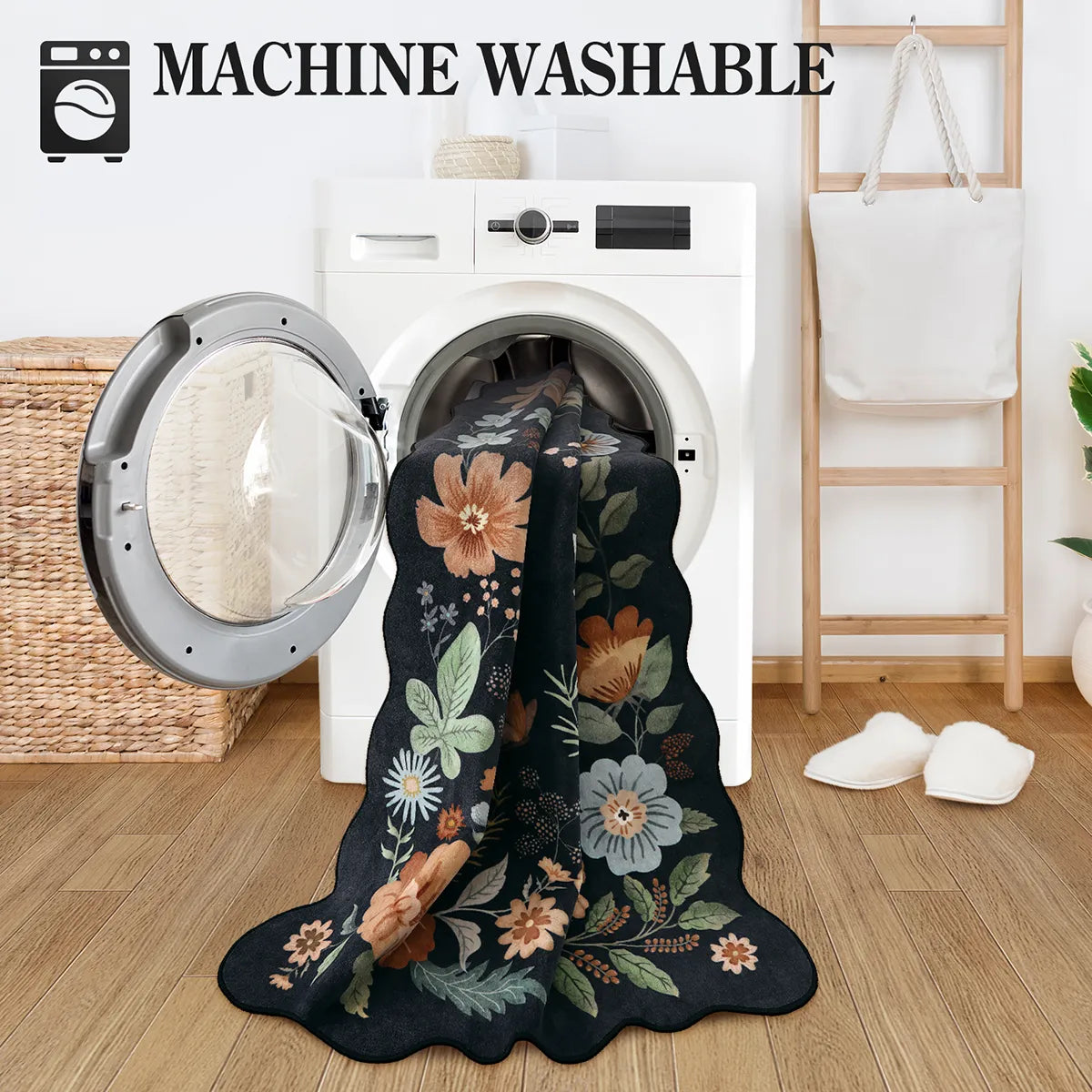
2. Machine Washable
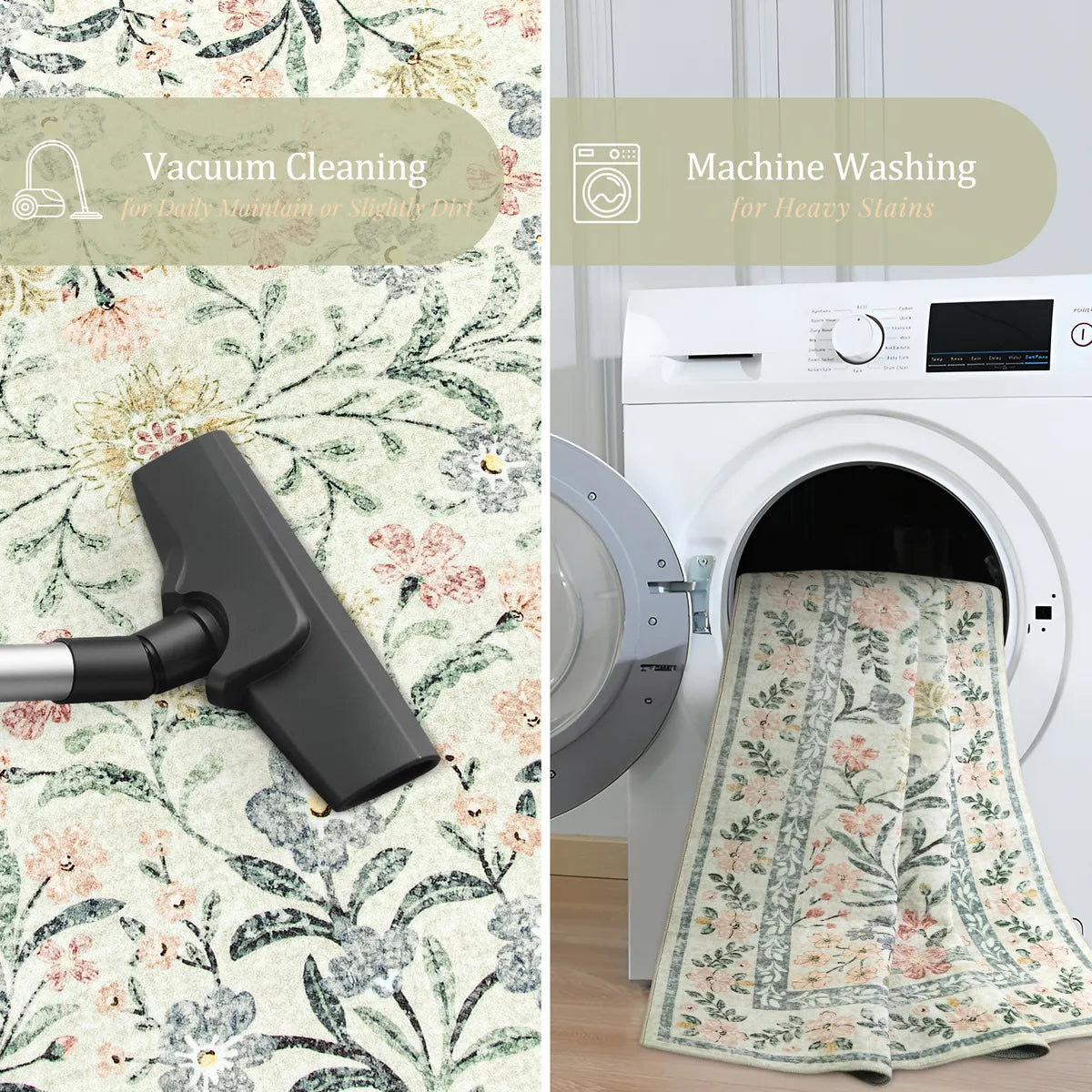
Bathrooms get messy fast—toothpaste, makeup, wet feet, you name it. Regular rugs need spot-cleaning or professional washing, but neither actually gets rid of all the bacteria hiding in the fibers.
A truly machine washable rug means you can stop mold before it starts, get rid of allergens, and avoid that musty smell just by throwing it in the wash. If the product says "spot clean only," skip it—that's not going to cut it in a bathroom.
3. Quick-Drying
A damp rug creates the perfect conditions for bacteria to thrive. The longer it stays wet, the more problematic it becomes. Quality bathroom rugs dry in 2-4 hours, which prevents mold, odors, and bacterial growth. Rugs that stay damp for 8-12 hours create ongoing hygiene issues.
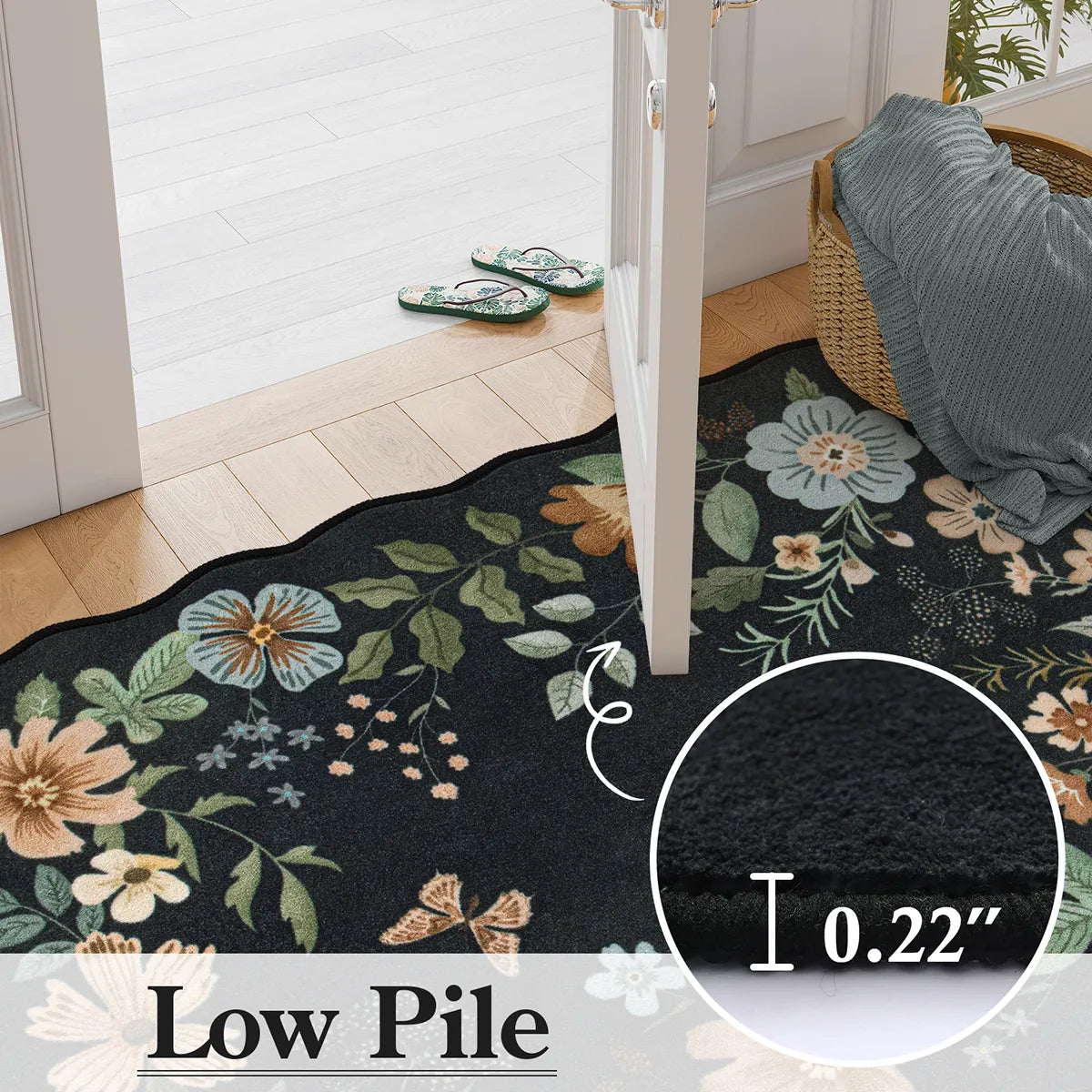
4. Low-Pile Construction
Those thick, fluffy rugs look cozy in pictures, but they're terrible for bathrooms. The dense pile traps moisture where it can't evaporate, leading to mold growth and unpleasant odors. Low-pile rugs (less than half an inch thick) dry faster, clean easier, and handle moisture better. They keep your bathroom feeling fresh instead of damp.
5. Durable Construction
Cheap bathroom rugs fall apart quickly. The colors fade from cleaning products, the edges fray after a few washes, and the backing starts peeling in the dryer. You'll be buying replacements every few months. A quality rug lasts 2-4 years because it has reinforced edges, fade-resistant colors, and backing designed for the dryer.
When choosing a bathroom rug, look for one with non-slip backing, machine washable construction, quick-drying material, low-pile design, and durable quality.
Choosing the Best Material for Your Bathroom

Material dictates how a rug feels underfoot, how fast it dries, and how long it lasts. While cotton has been a traditional choice for bath mats, it often lacks the structural integrity required for larger area rugs or runners.
Synthetic Fibers (Faux Wool / Polyester)
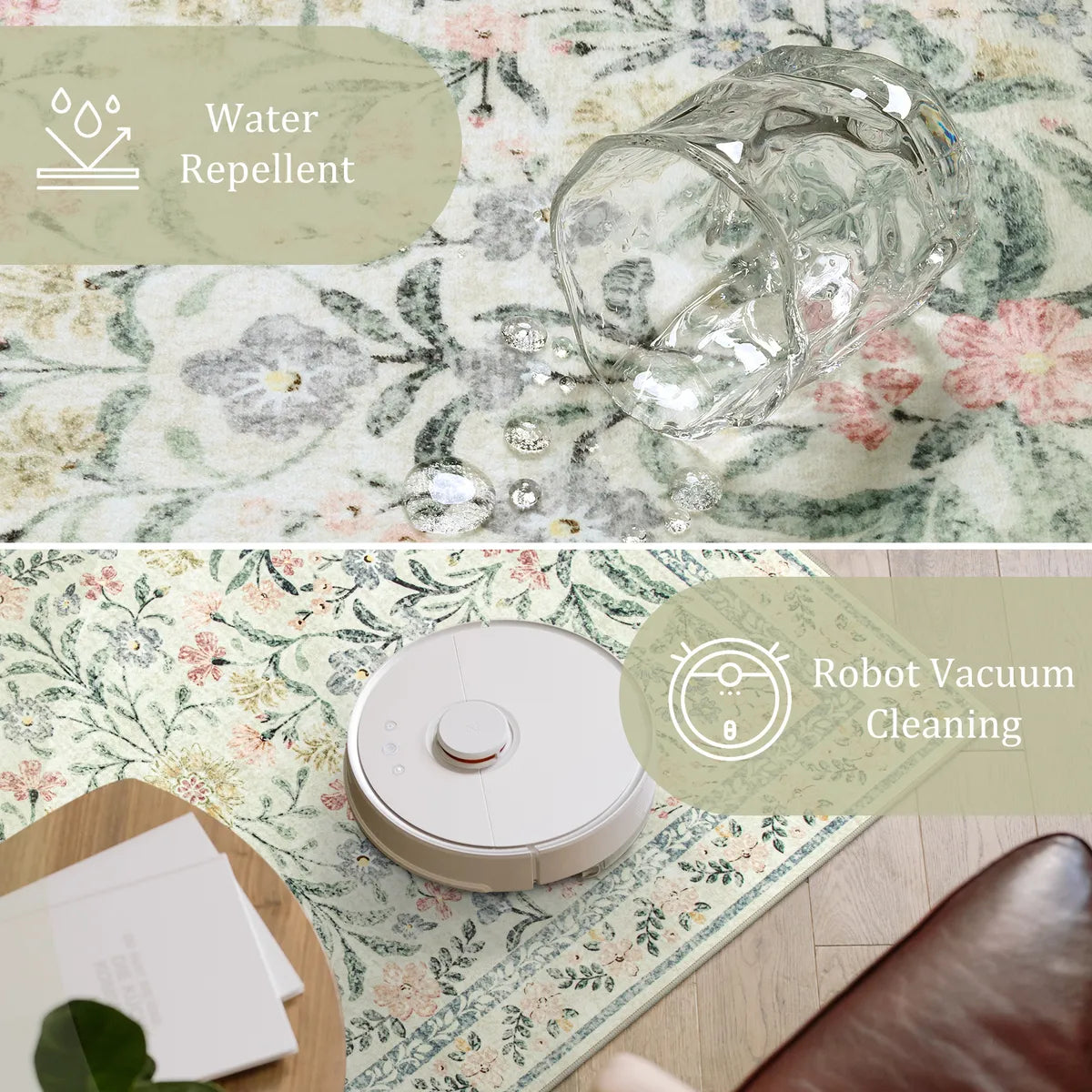
Polyester and other synthetic constructions are common in washable bathroom rugs because many are low pile and release moisture efficiently. Check the individual backing, wash instructions, and drying requirements rather than assuming every synthetic rug performs the same way.
Natural Fibers (Jute or Sisal)
Jute and sisal can add natural texture, but they absorb moisture and are generally a poor choice beside a frequently used shower or tub. If used at all, reserve them for a dry, well-ventilated powder room and follow the manufacturer’s care guidance.
Cotton
Cotton is absorbent and soft but tends to stay wet for a long time. Unless it is a small bath mat you hang to dry daily, a large cotton rug can become a breeding ground for mildew in a humid bathroom. For a balance of luxury, hygiene, and ease of care, a synthetic Faux Wool rug with a low pile is the optimal material choice for most bathrooms.
| Material | Drying Time | Water Resistance | Mold Risk | Durability | Best For |
| Polyester (Faux Wool) | 2-4 hours | Excellent (repels water) | Low | Excellent | All bathrooms—best overall choice ⭐ |
| Cotton | 8-12 hours | Poor (absorbs water) | High | Fair | Small mats only (must hang dry daily) |
| Microfiber | 3-6 hours | Good | Medium | Good | Low-traffic powder rooms |
| Synthetic Jute | 4-6 hours | Good | Medium | Good | Half-baths, powder rooms (no shower) |
| Natural Jute/Sisal | 10+ hours | Very Poor (absorbs and holds water) | Very High | Poor when wet | Avoid in bathrooms ❌ |
If you're looking for a rug that'll actually hold up in a bathroom, go with polyester or faux wool. It checks all the boxes—quick-drying, mold-resistant, durable, and soft—without the constant maintenance headaches that come with cotton or natural fibers.
How to Choose the Right Size and Shape for Your Bathroom Rug

While material and functionality are the most critical factors, selecting the appropriate size and shape ensures your bathroom rug performs optimally and looks intentional.
Find the Right Bathroom Rug Size
The right rug size depends on your bathroom's square footage and fixture placement. Here's a quick reference:
| Where You're Placing It | Recommended Size | What It Covers |
| Small powder room | 2'×3' | Entire floor in front of sink |
| Single sink vanity | 2'×3' or 2'×4' | Standing area while using sink |
| Double sink vanity | 2'×6' runner | Both sink areas without crowding |
| In front of bathtub | 2'×3' or 2'×4' | Catches water when stepping out |
| Shower exit area | 2'×3' | Landing spot for wet feet |
| Large open bathroom | 3'×5' or 4'×6' | Creates a central "zone" in the space |
Spacing Guidelines:
- Around the rug edges: Leave 6-12 inches of visible floor so it doesn't look crammed in
- Near shower doors: Keep at least 18 inches clearance so wet feet land on the rug, not slippery tile
- Door clearance: Make sure your bathroom door can swing open fully without catching on the rug
- Against cabinets/walls: Leave 2-3 inches of space—if the rug is pushed right up against everything, it's too big
Pick a Rug Shape That Works with Your Layout
The shape of your rug should complement your bathroom's layout and traffic flow:
- Rectangle Rugs — The go-to for most bathrooms. Work well with single vanities, bathtub areas, and galley layouts.
- Runner Rugs — Ideal for double vanities (60" or wider) and narrow bathrooms. Provide continuous coverage without crowding.
- Round Rugs — Soften angular spaces. Perfect for freestanding tubs, pedestal sinks, and small powder rooms.
| If Your Bathroom Has... | Shape to Consider |
| Double sink vanity | Runner |
| Single vanity (36-48") | Rectangle |
| Freestanding bathtub | Round |
| Narrow layout (<5 ft wide) | Runner |
| Large open floor | Rectangle |
| Pedestal sink | Round or Small Rectangle |
How to Style Your Bathroom with the Right Rug

Once you've covered the essentials—safety, washability, and material—you can focus on style. A rug is one of the easiest ways to add personality to your bathroom without doing a full renovation. Here's how to choose one that works with your space:
- Add contrast to neutral bathrooms. If your bathroom is mostly white, grey, or beige, choose a rug with a bold pattern or contrasting color to create a focal point and add energy to the space.
- Go for botanical prints for a spa feel. Floral or greenery-inspired designs make the bathroom feel fresh, airy, and connected to nature—perfect for a calming, spa-like vibe or cottagecore aesthetic.
- Use distressed patterns for vintage charm. A rug with a worn or faded pattern adds character and a touch of vintage sophistication without feeling too formal.
- Match the rug to your bathroom's mood. Modern bathrooms work well with geometric patterns, while traditional spaces look better with classic designs like damask or Persian-inspired prints.
The Final Verdict: Safety Meets Style
So, what type of rug is best for a bathroom? The answer is a rug that refuses to compromise. It should be a machine washable rug to ensure hygiene, a non-slip bathroom rug to guarantee safety, and made of durable synthetic fibers like faux wool to provide warmth and quick-drying capabilities. Your bathroom deserves the same design attention as your living room.
Frequently Asked Questions (FAQ)
Q1: Can I put a regular area rug in the bathroom?
Not really—it's not a good idea. Regular area rugs aren't made to handle moisture and usually don't have non-slip backing, which makes them dangerous on wet tile floors. Stick with rugs specifically designed for bathrooms—ones that are machine washable and have built-in non-slip backing.
Q2: How often should I wash my bathroom rug?
Every 1-2 weeks is a good rule of thumb. If your bathroom gets a lot of use or stays humid, wash it weekly. For a guest bathroom that doesn't get much traffic, every 2-3 weeks is fine.
Q3: What's the best material for a bathroom rug to prevent mold?
Synthetic materials like polyester or polypropylene. These dry quickly because they repel water instead of soaking it up like cotton does. The faster a rug dries, the less chance mold has to grow.
Q4: Do rubber-backed rugs ruin bathroom floors?
Not usually, but it depends on the quality. Cheap rubber backing can sometimes discolor vinyl or heated floors over time. High-quality TPR (Thermoplastic Rubber) or silicone backing—the kind you'll find on good bathroom rugs—is safe for tile, hardwood, and most other flooring types.