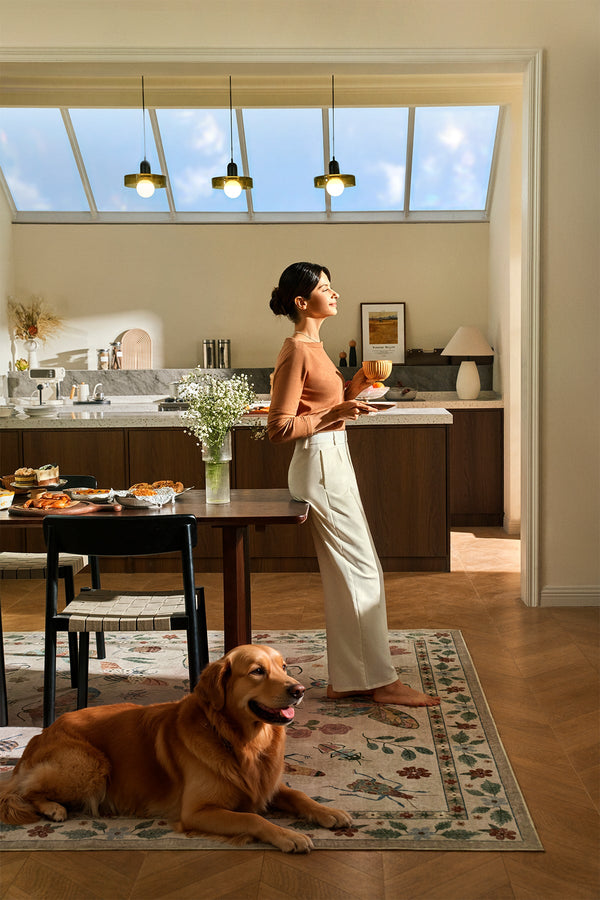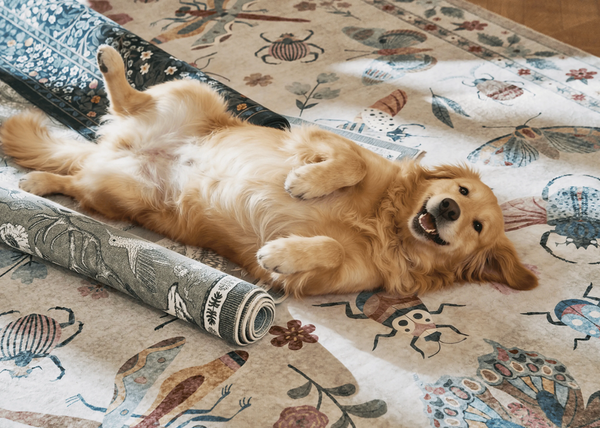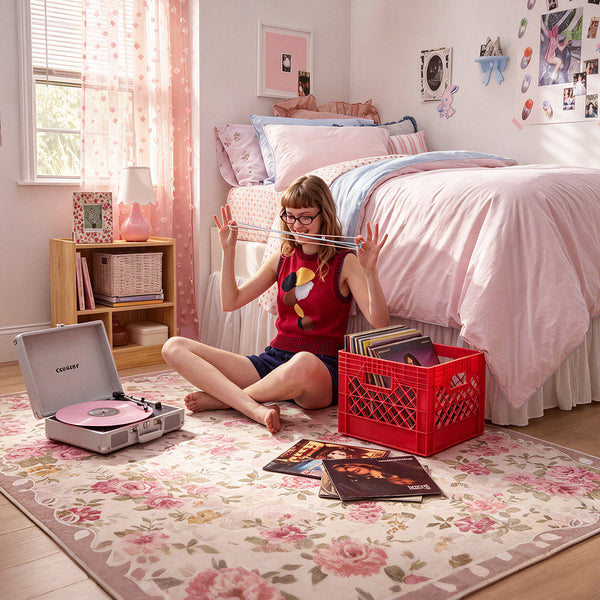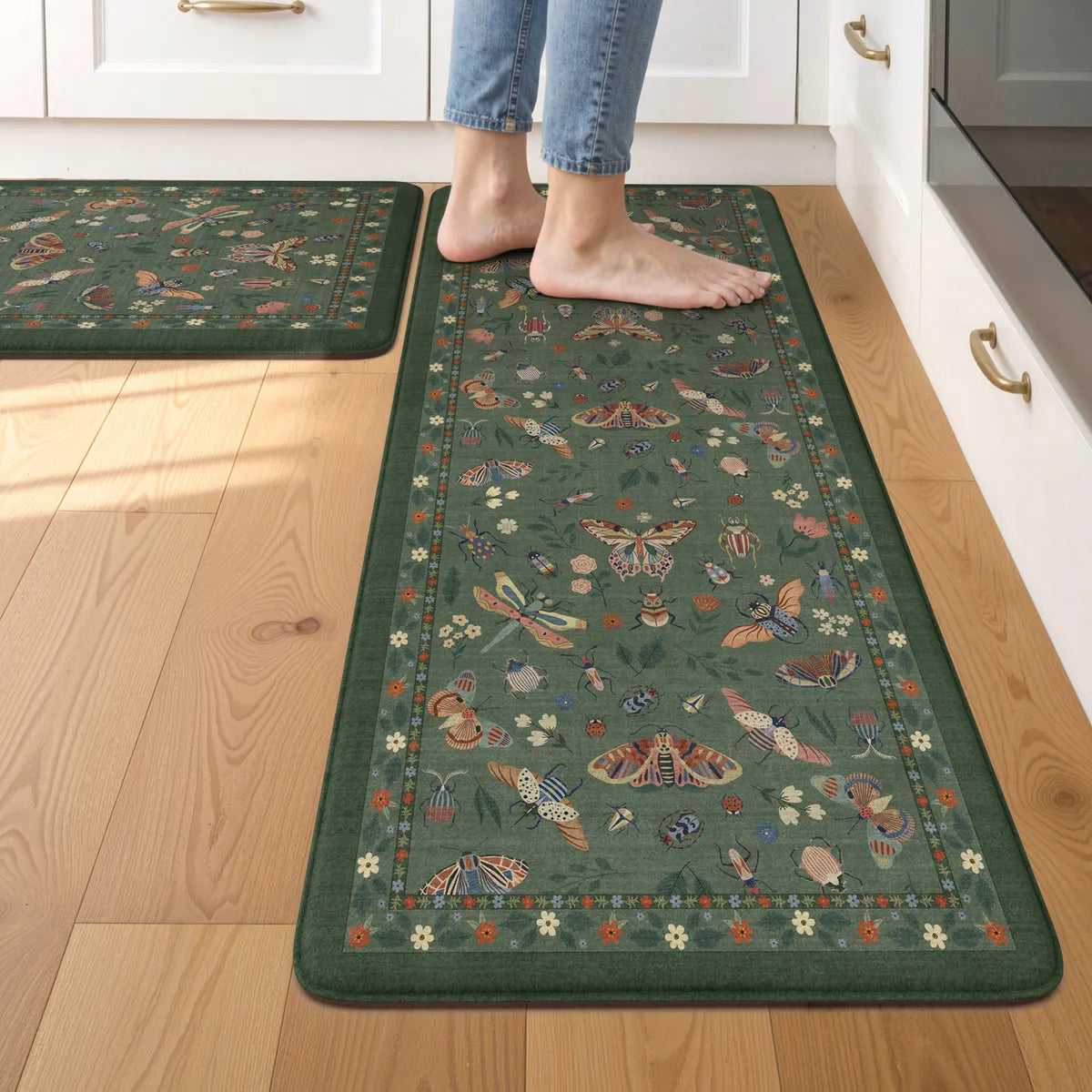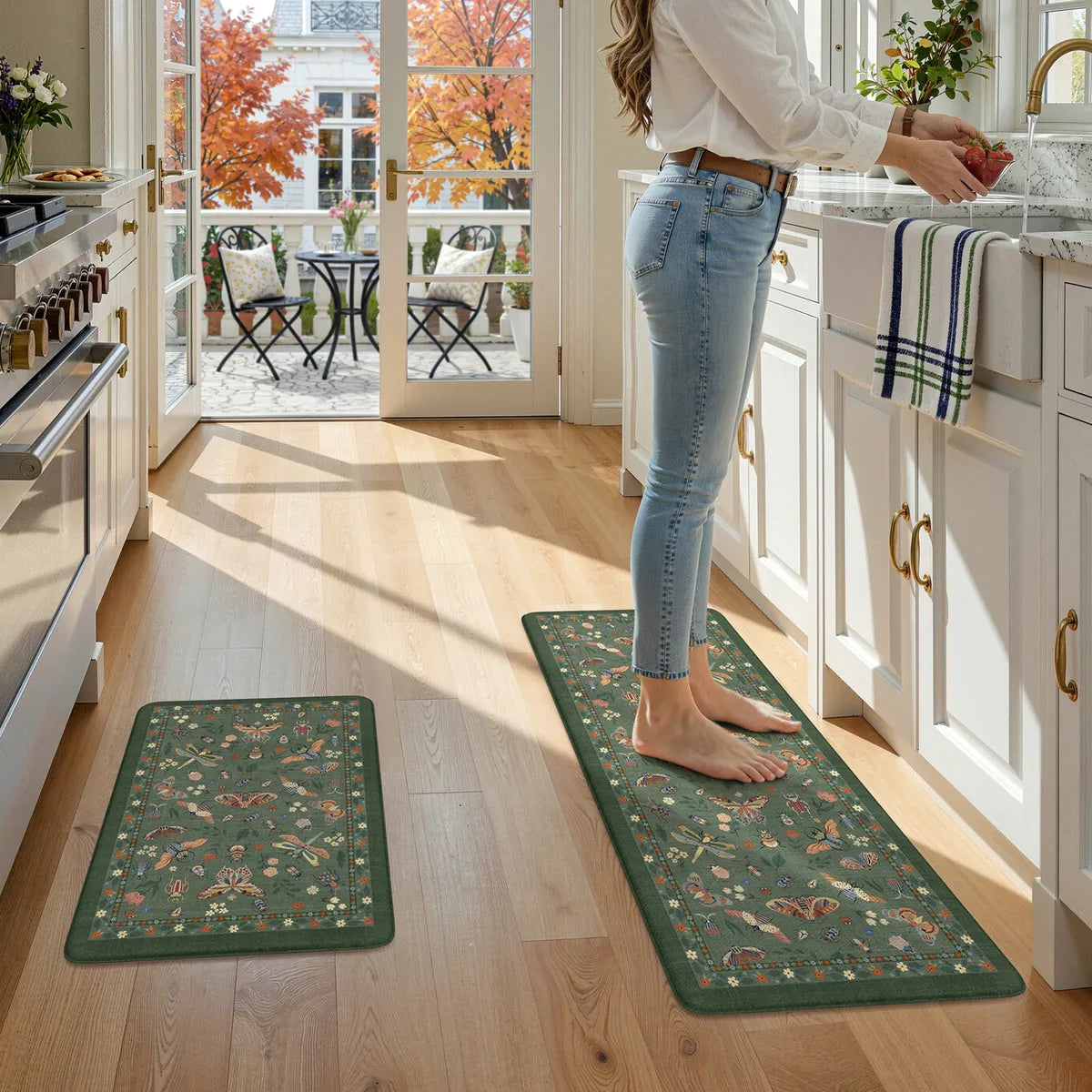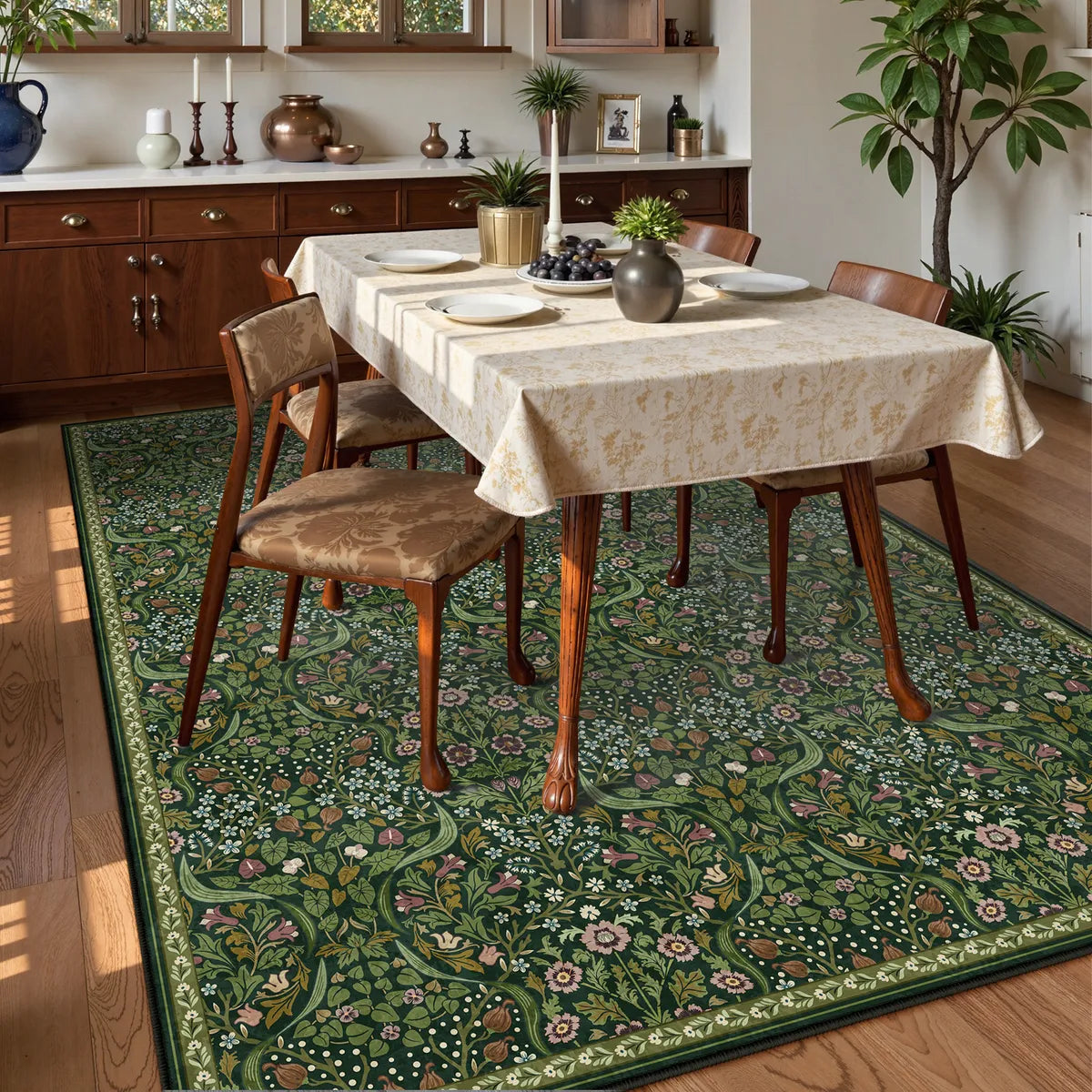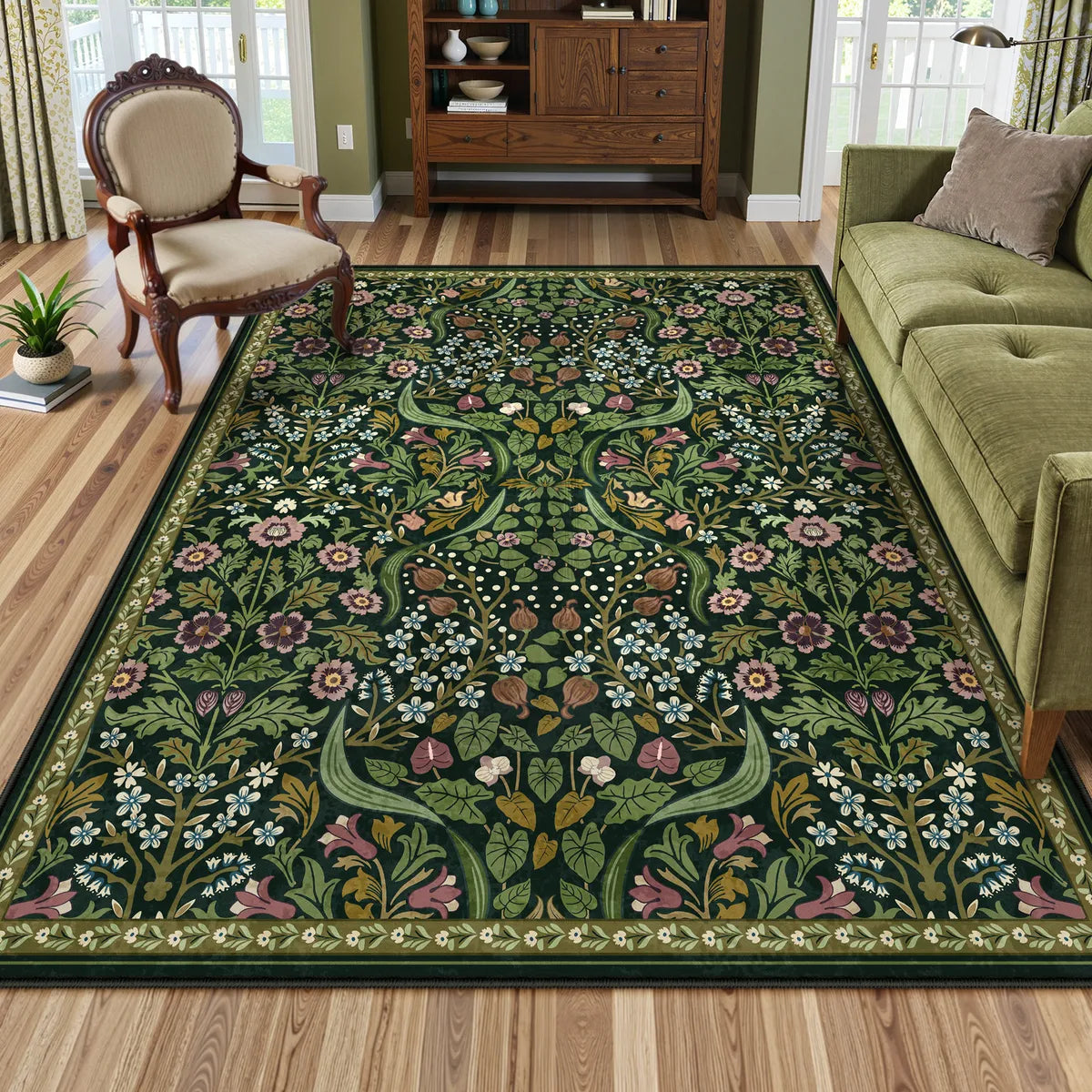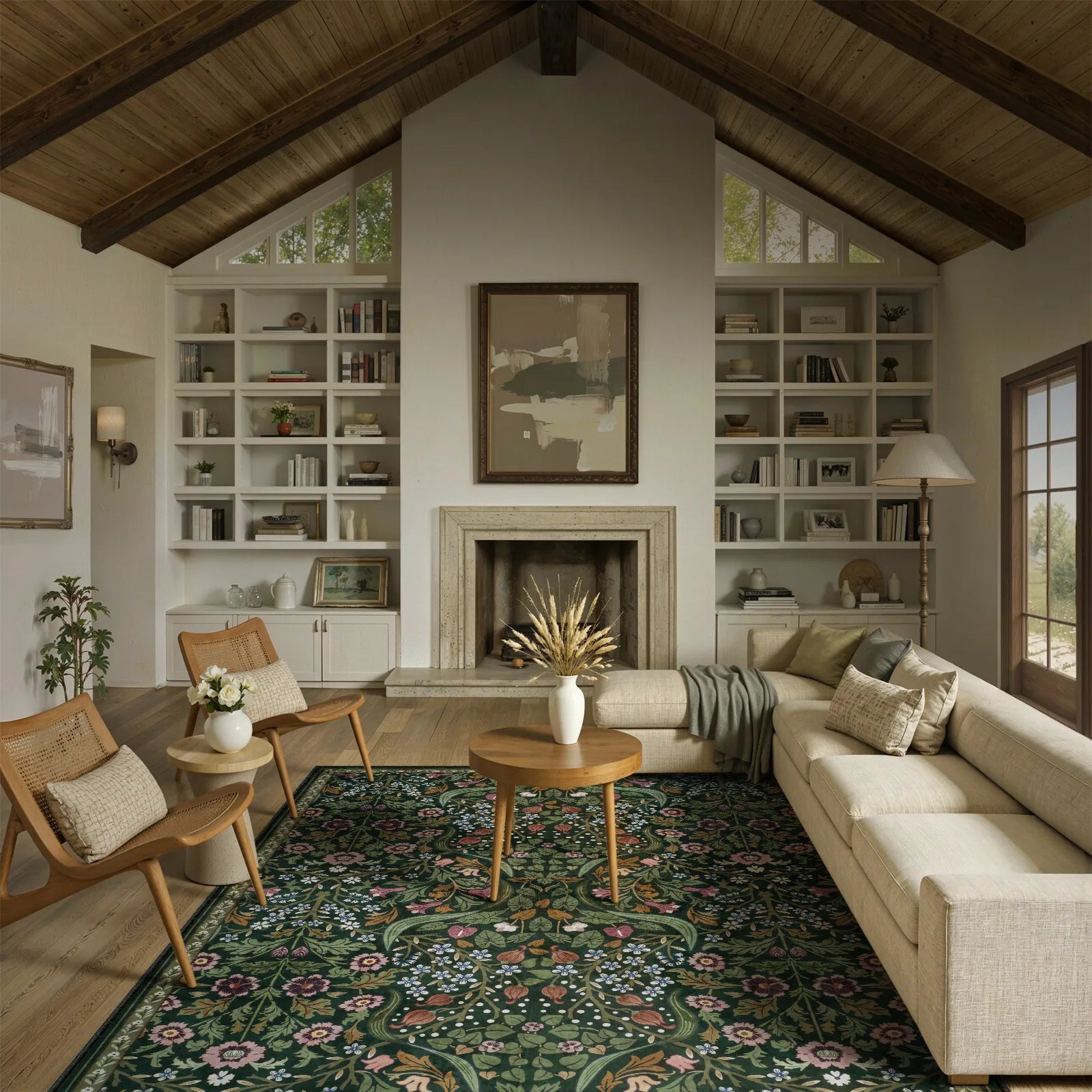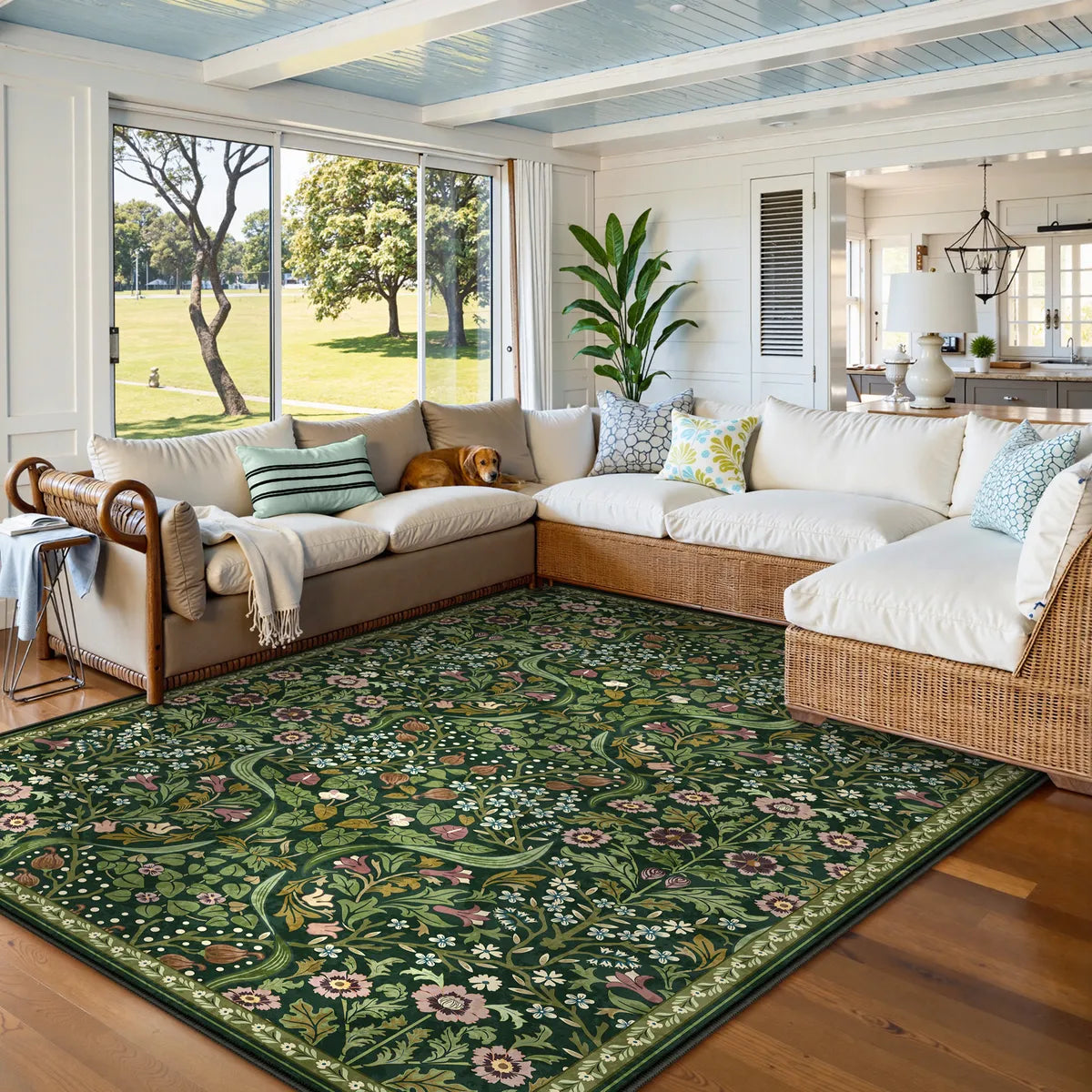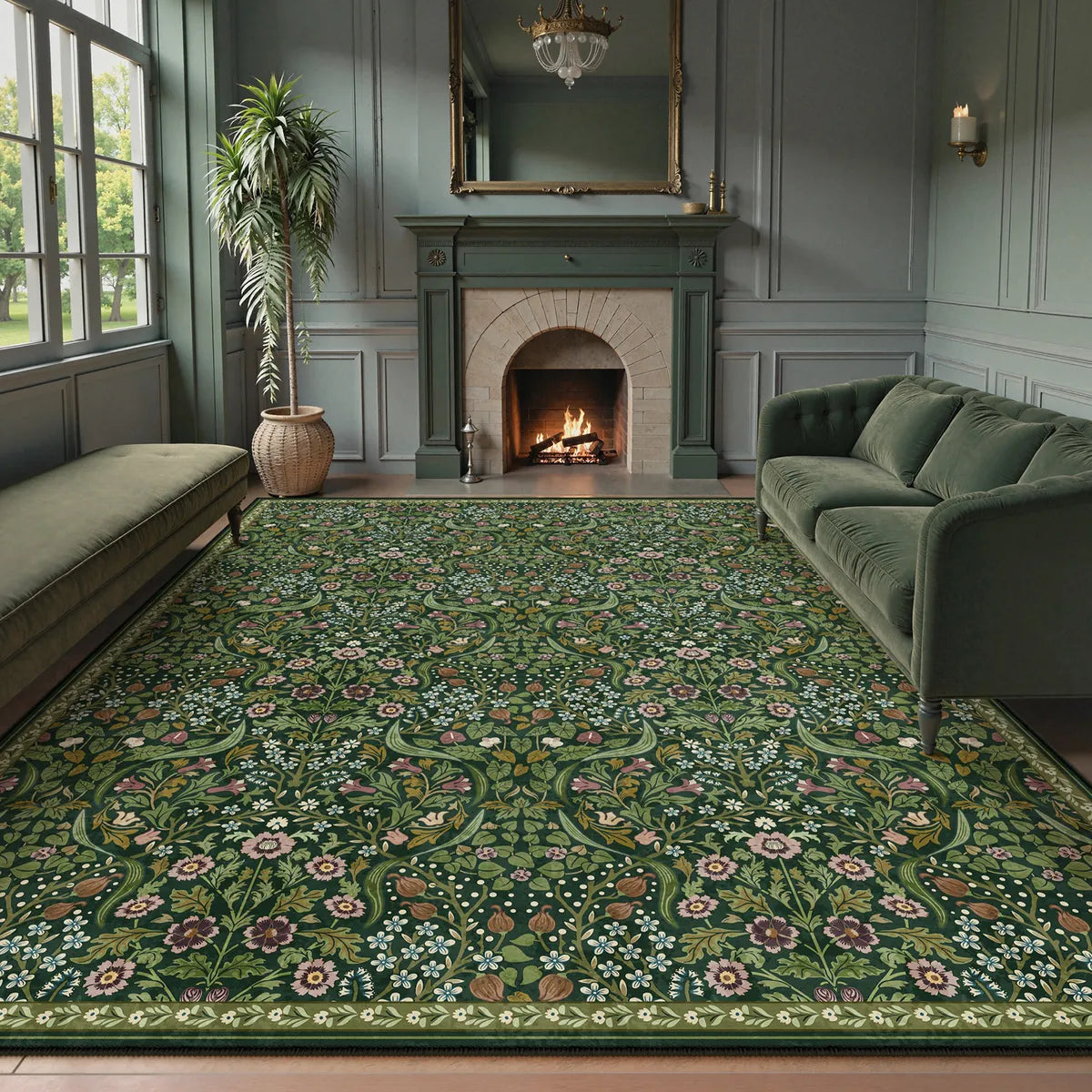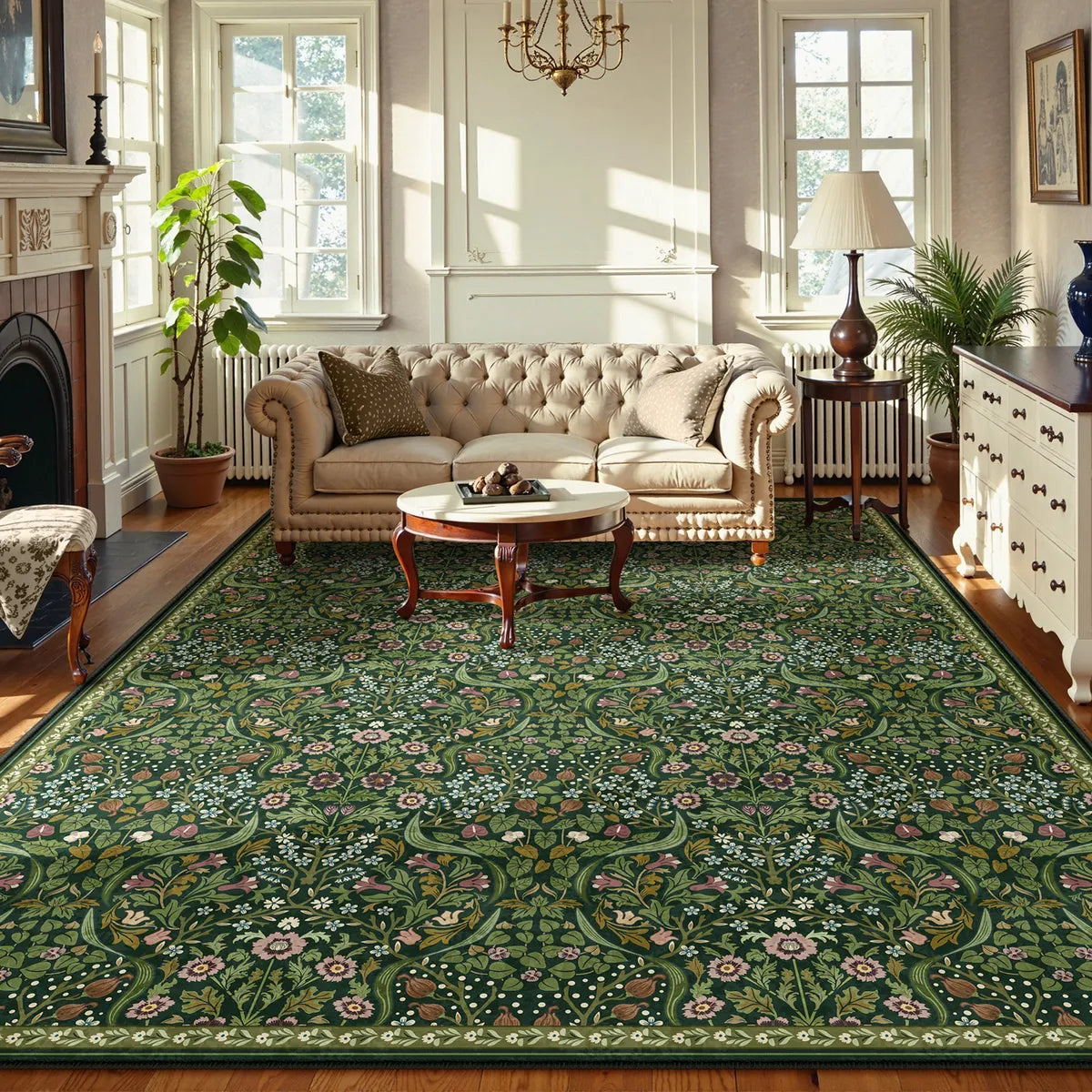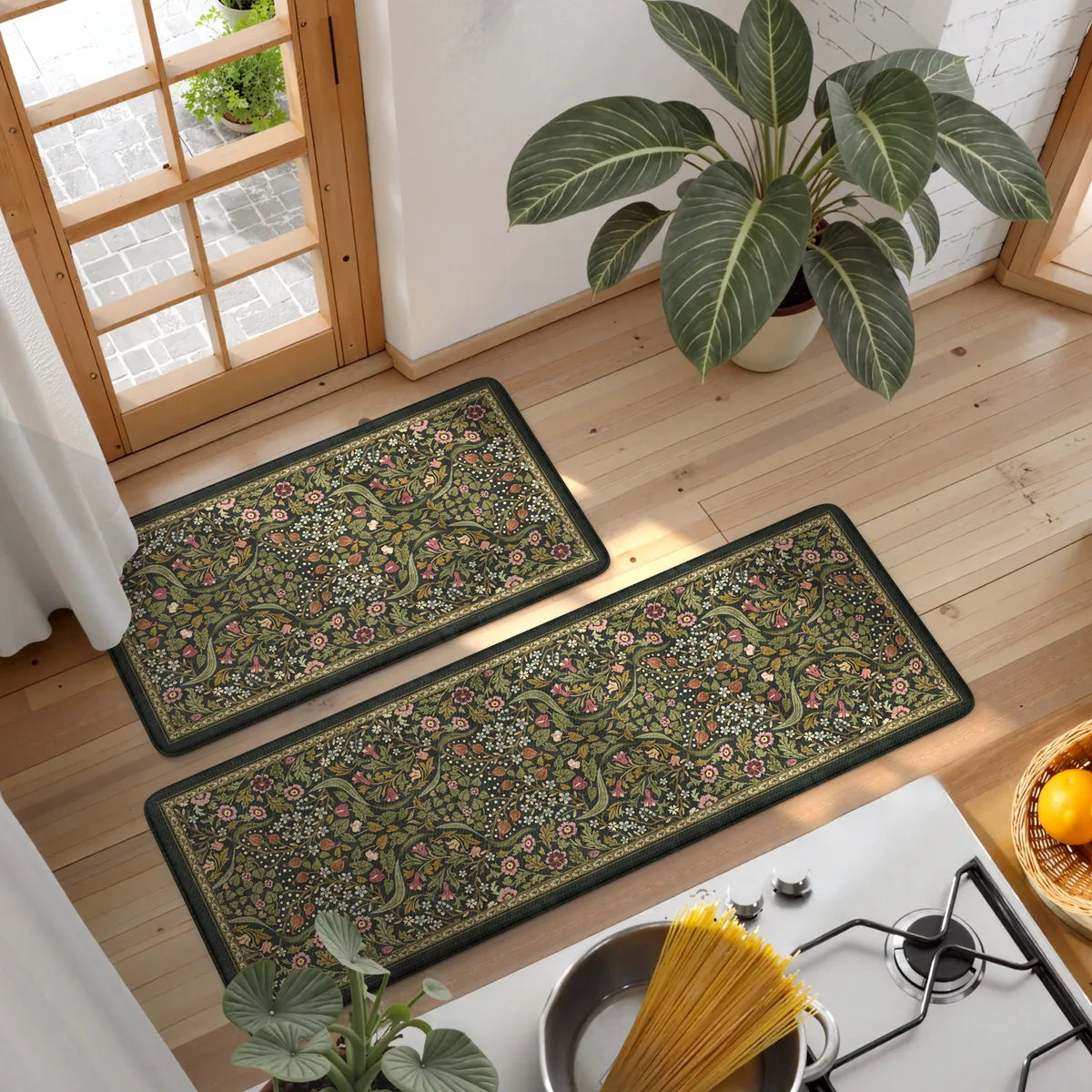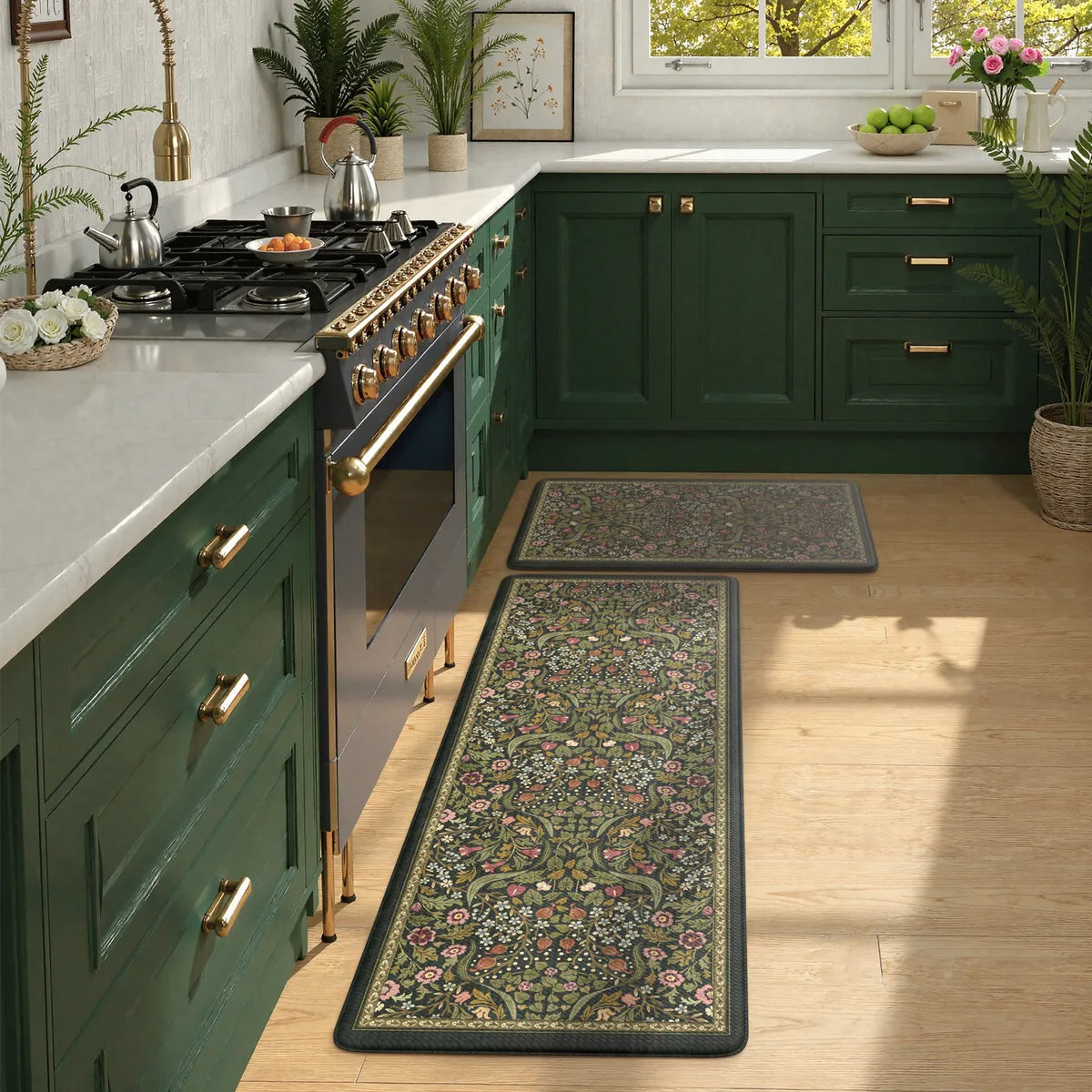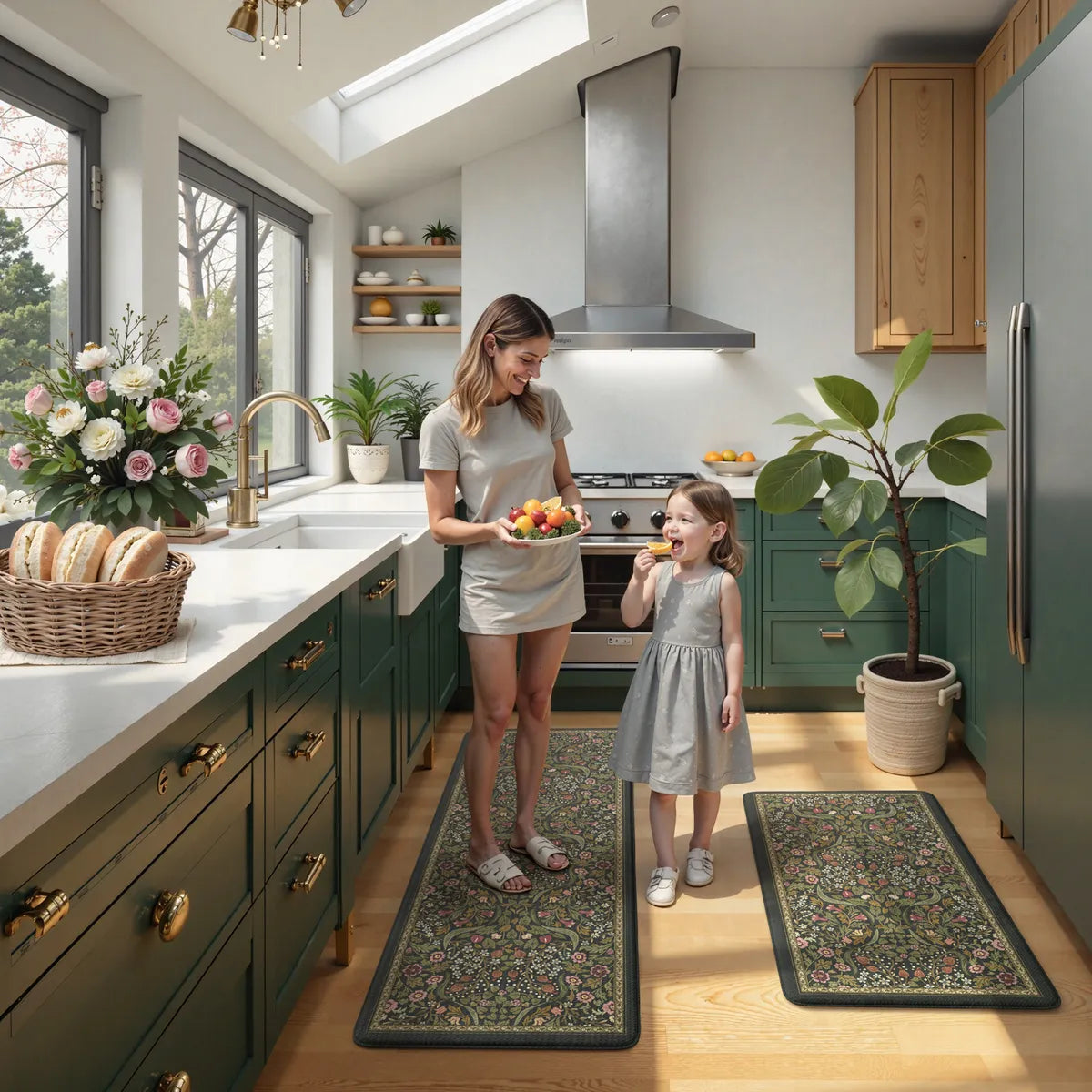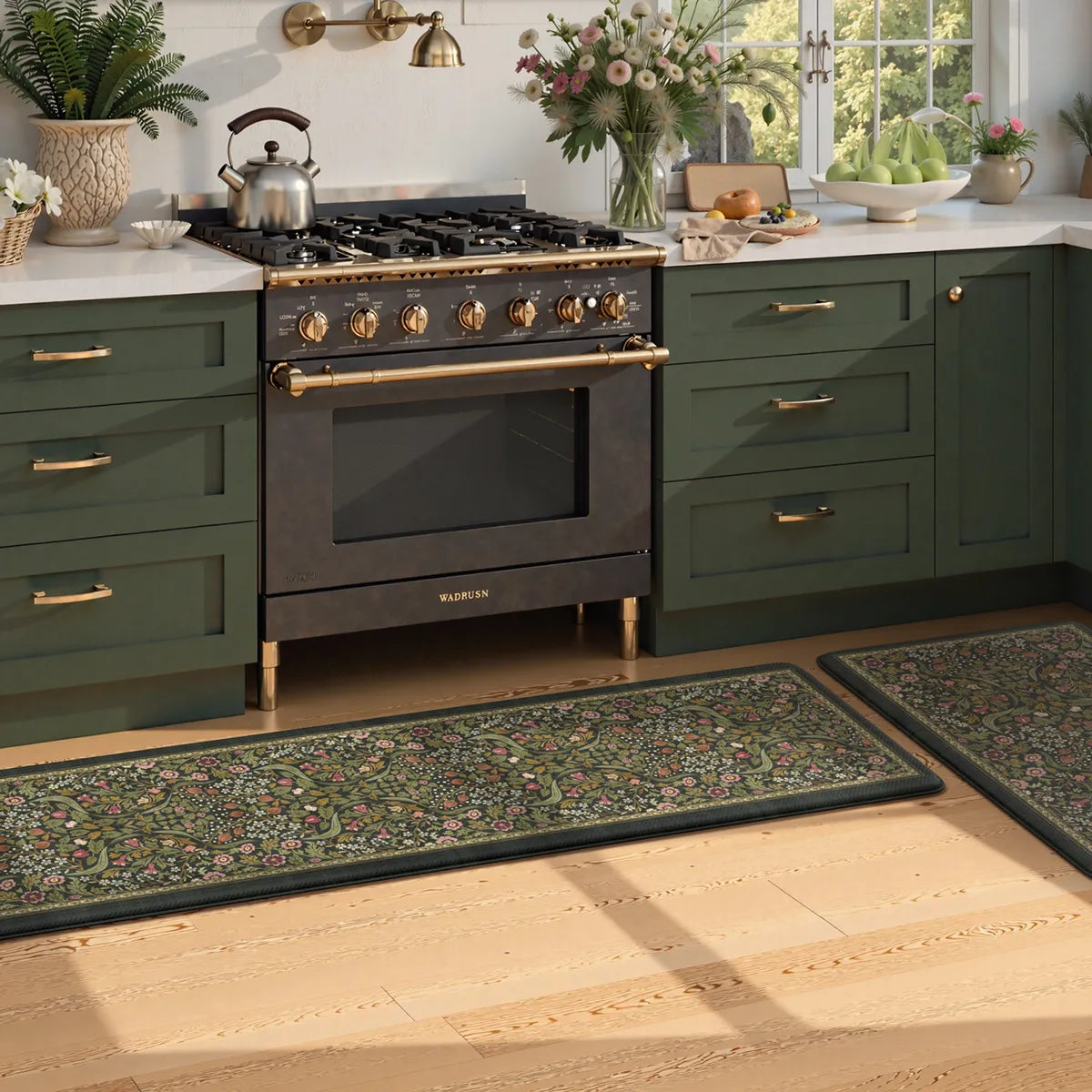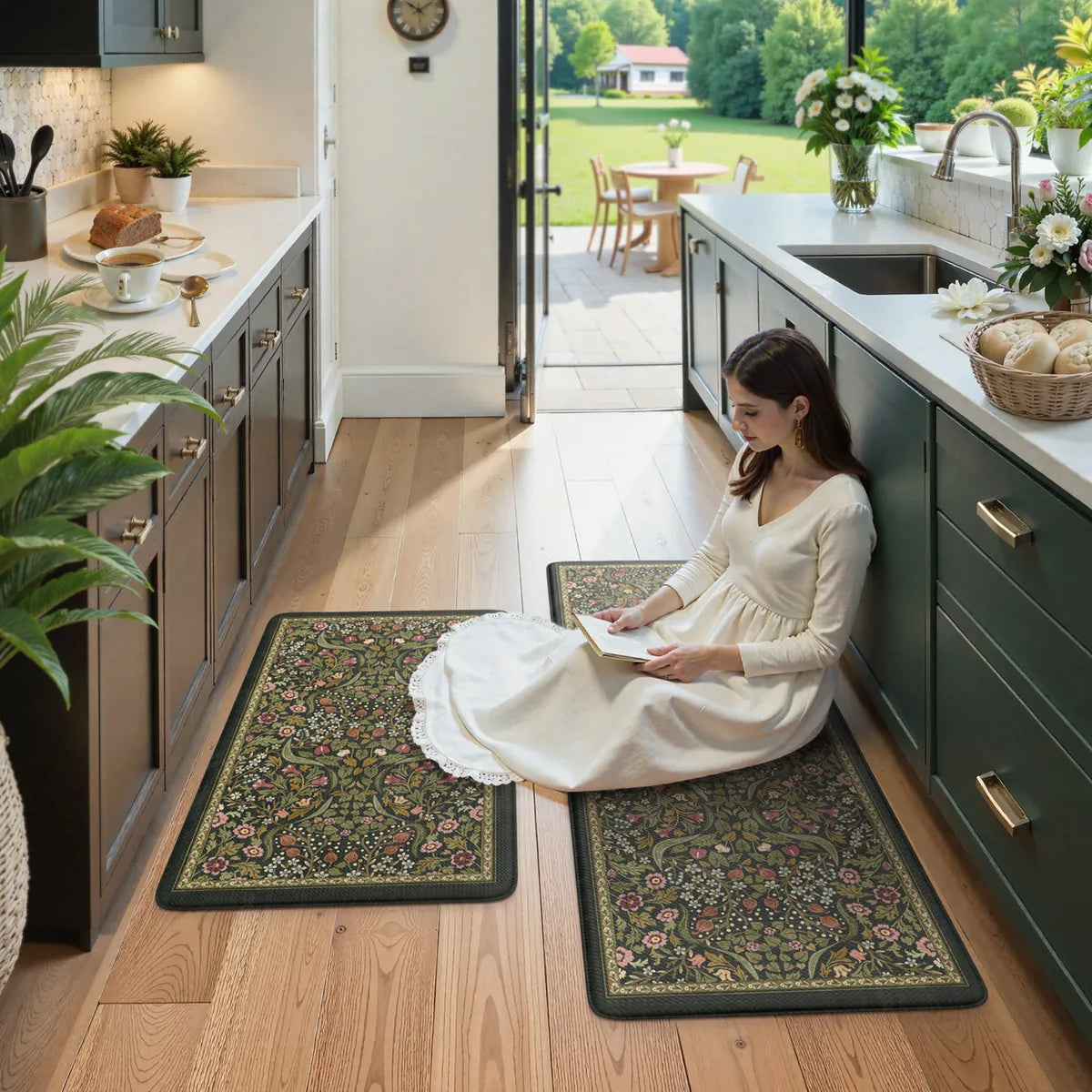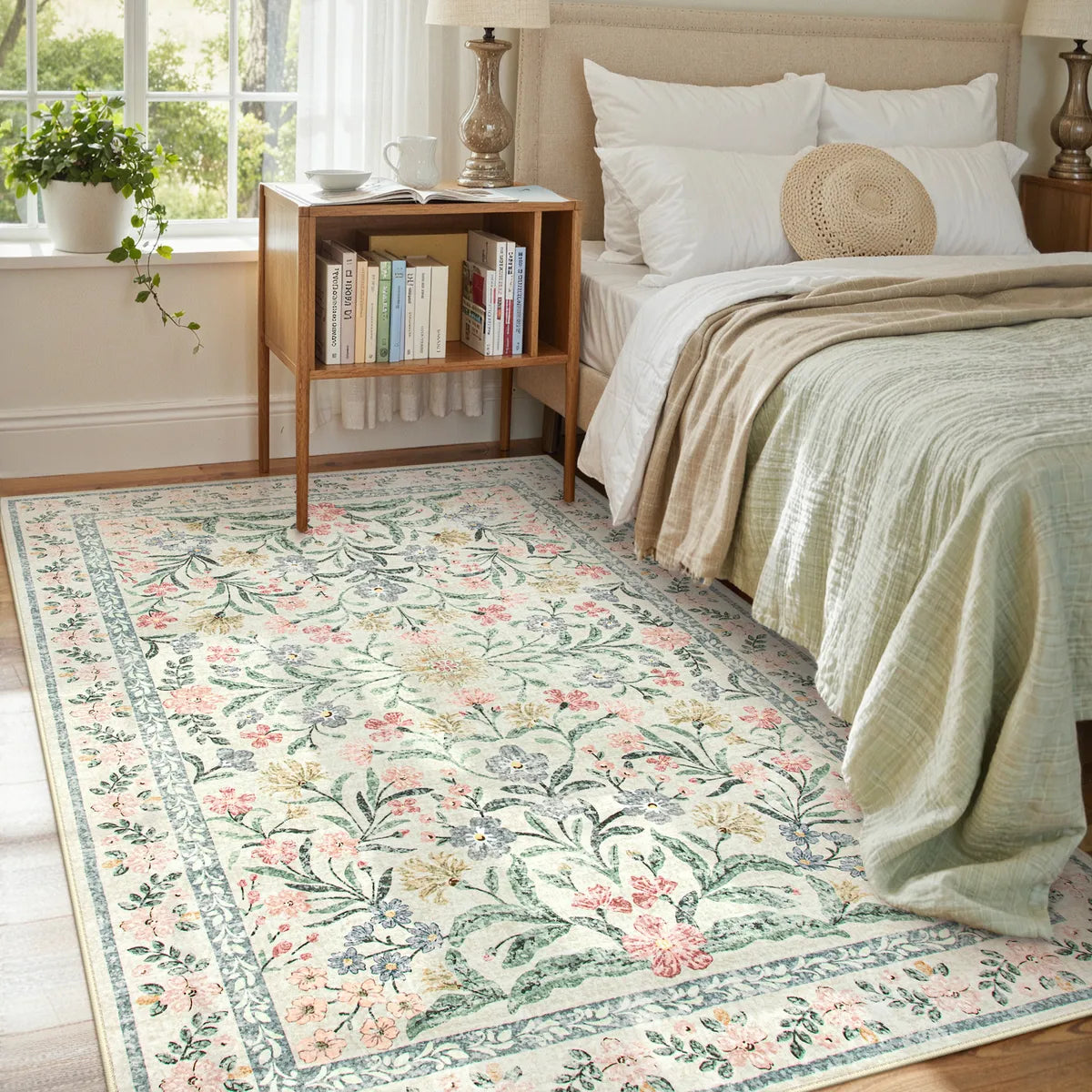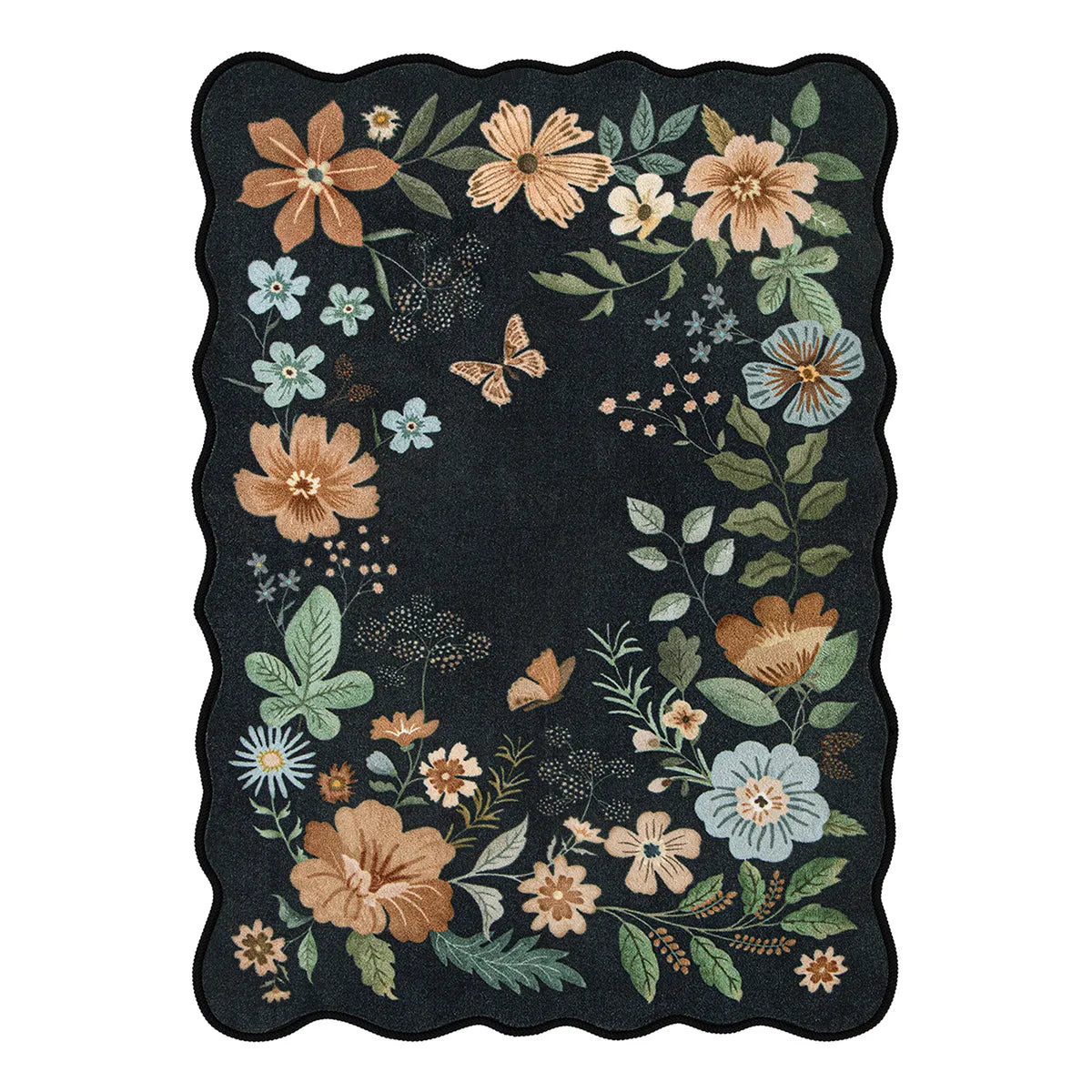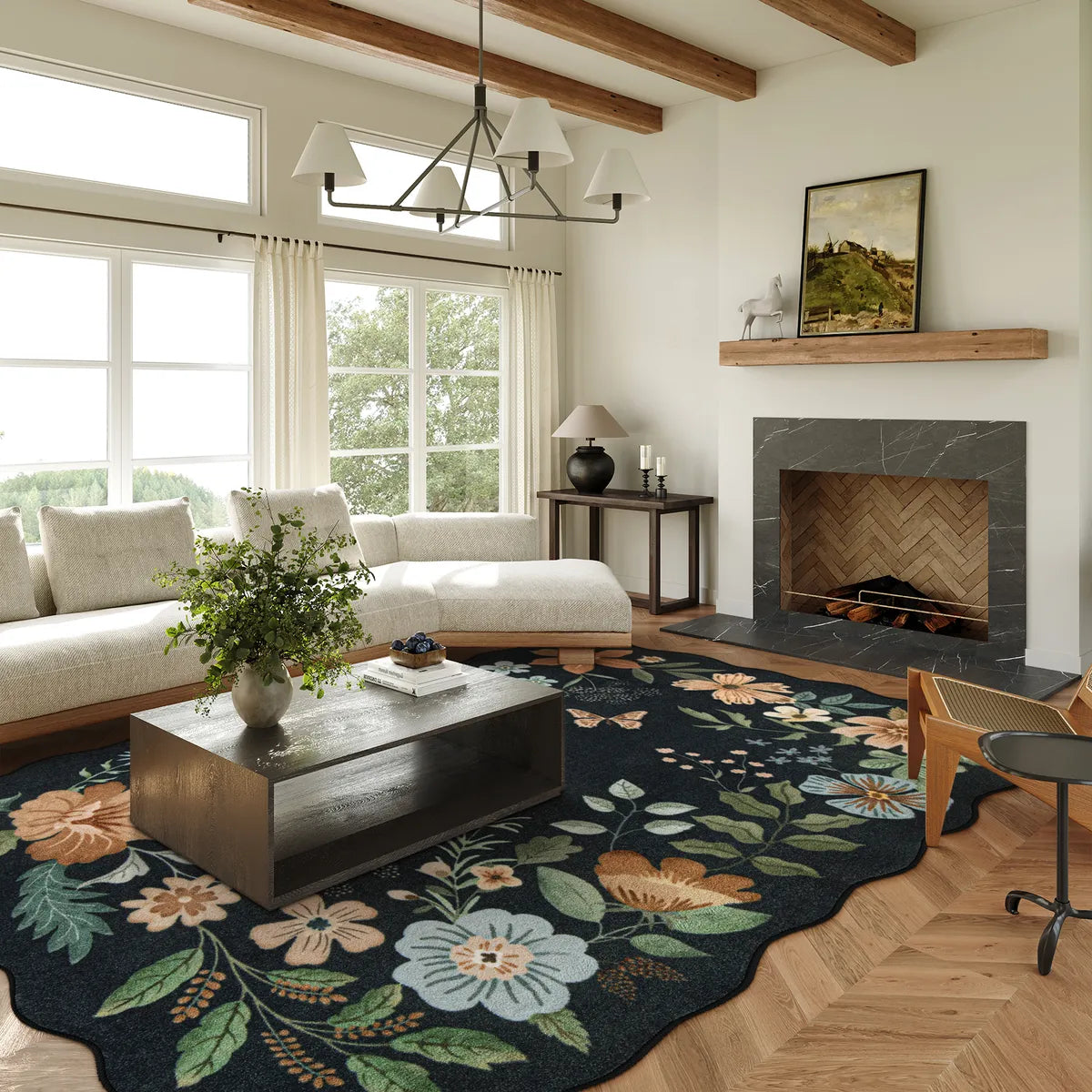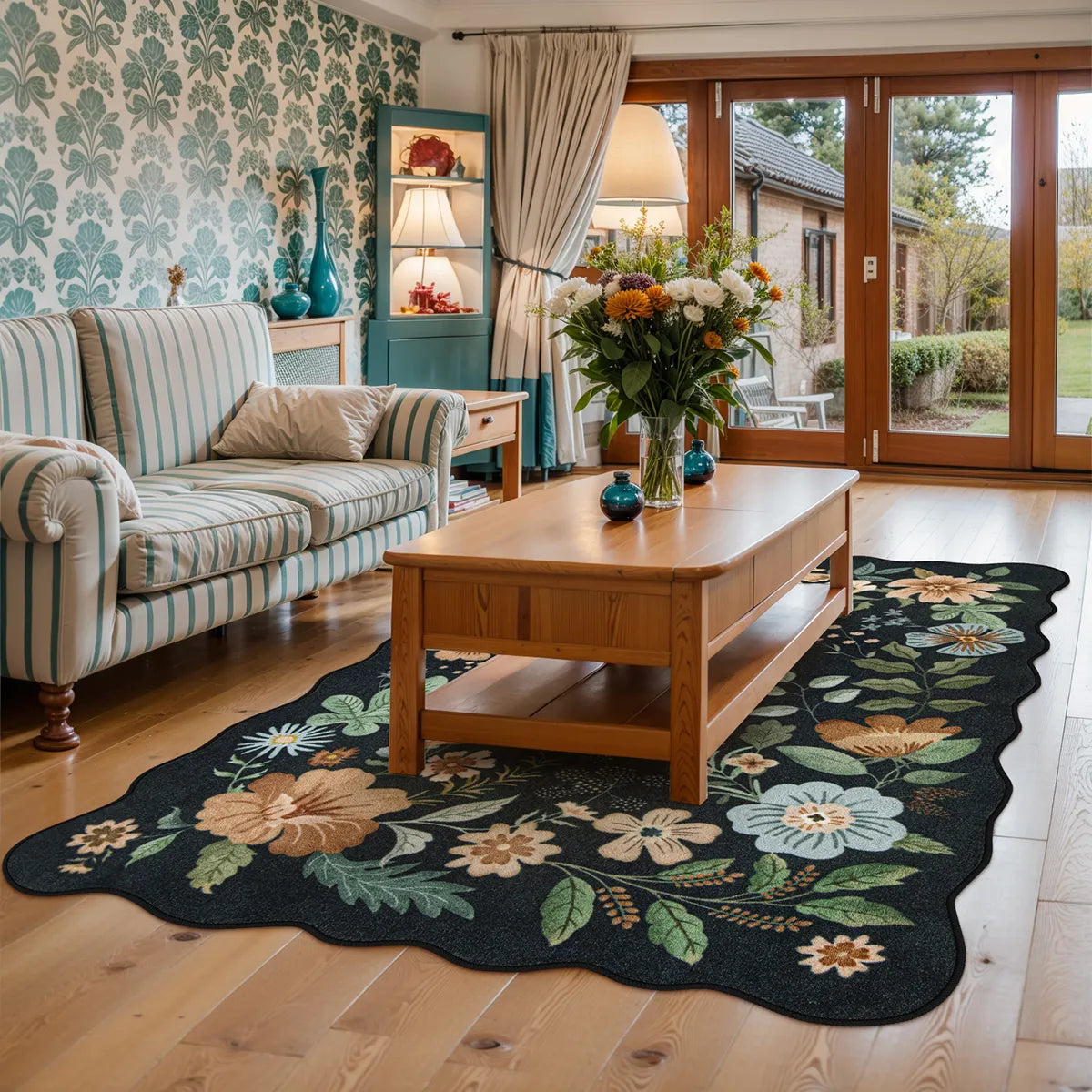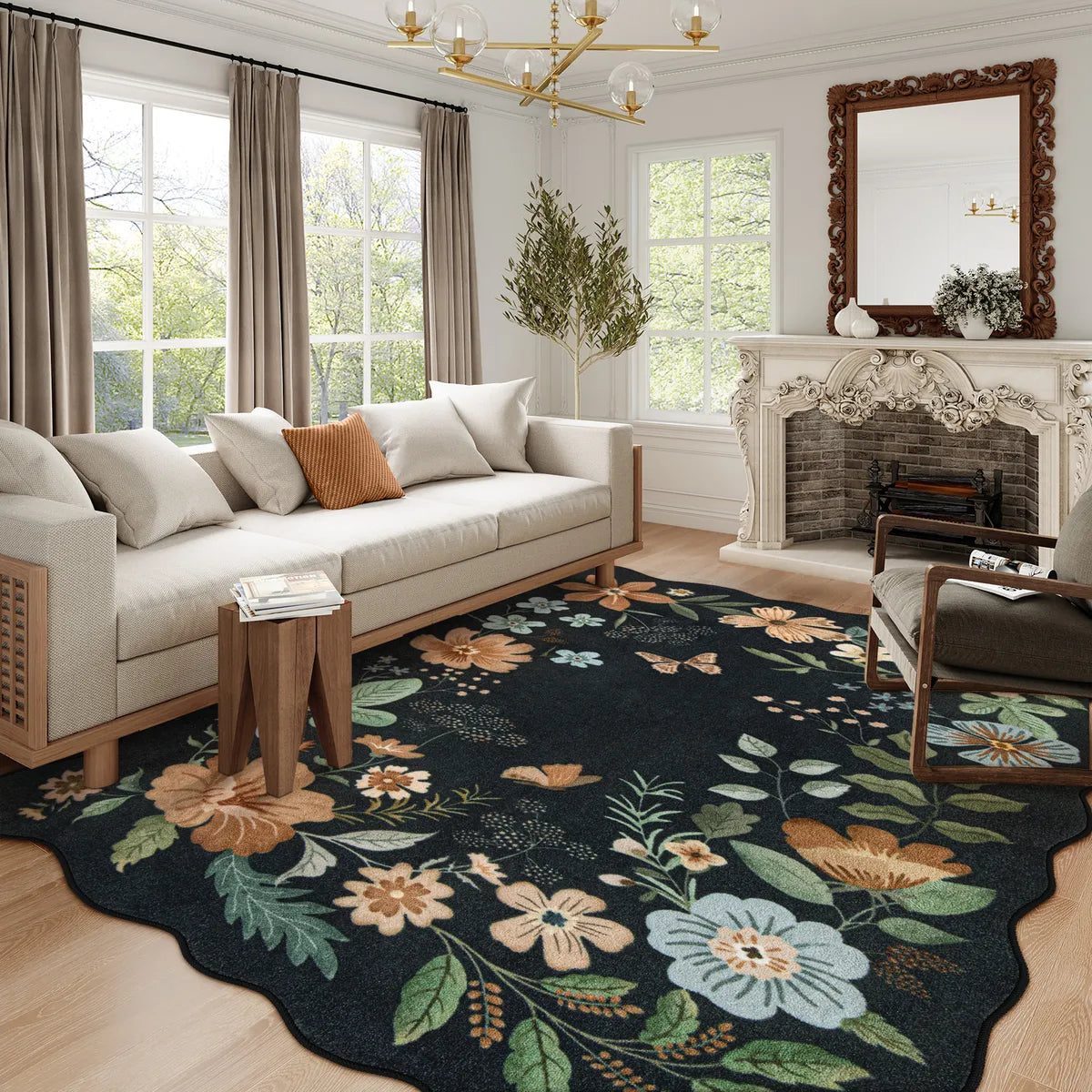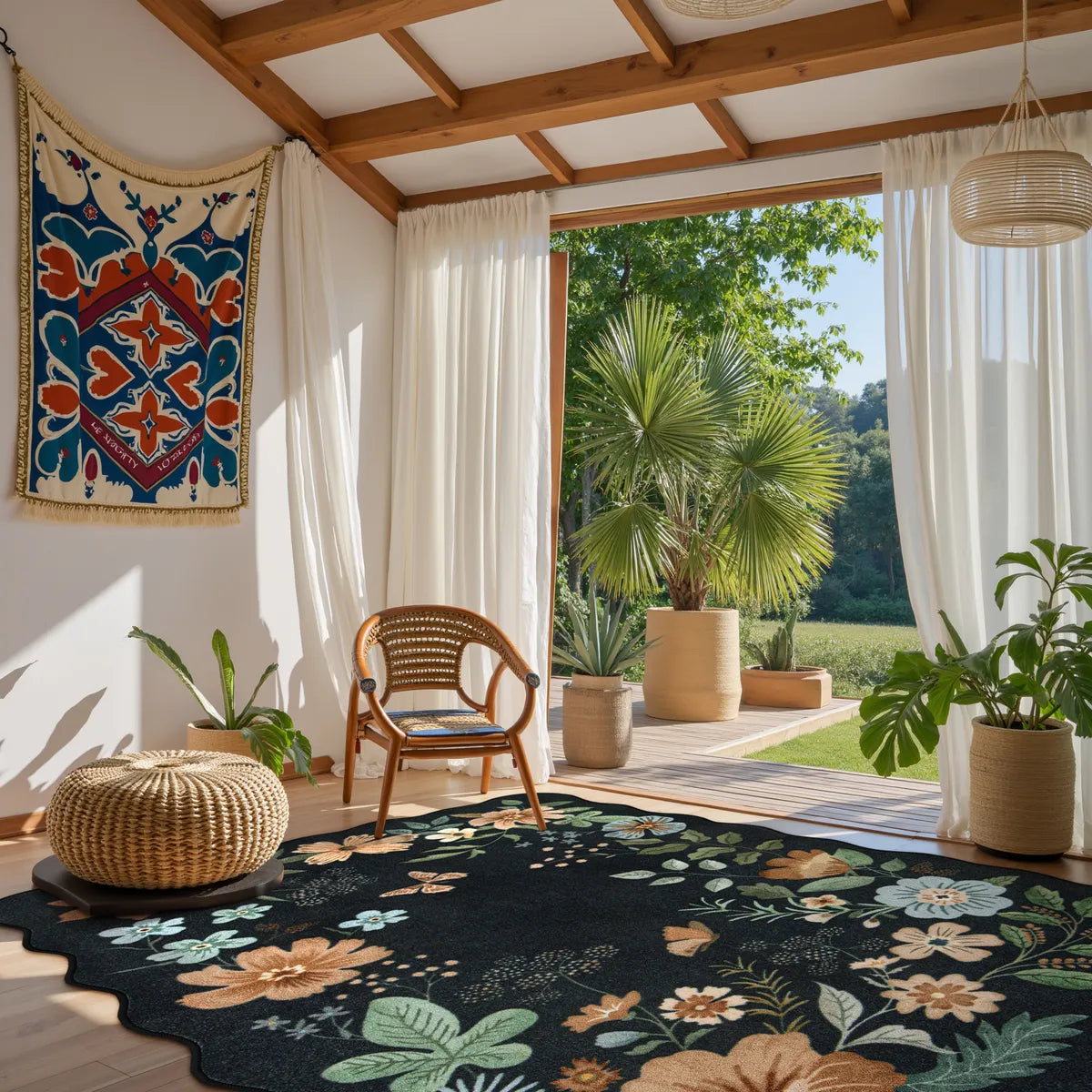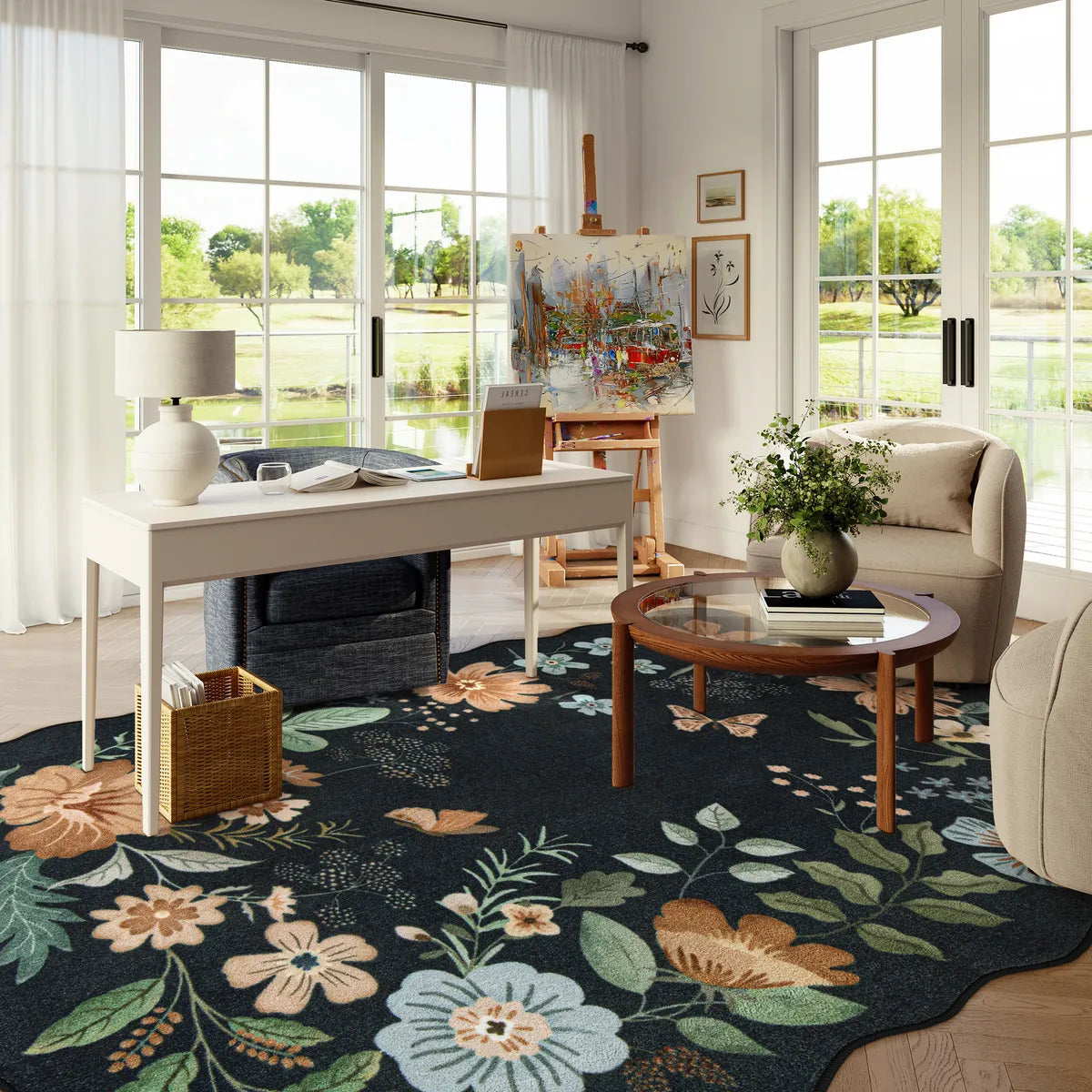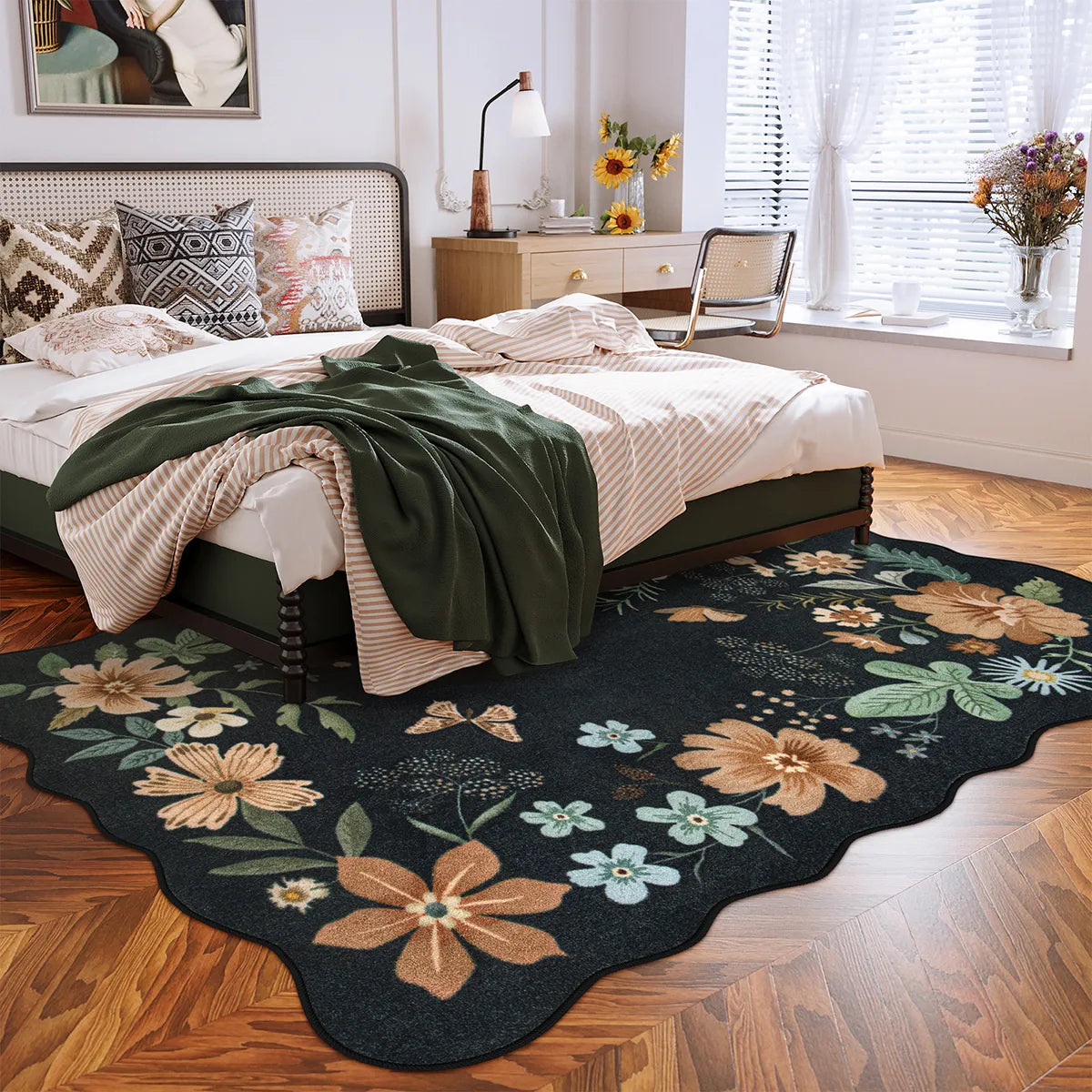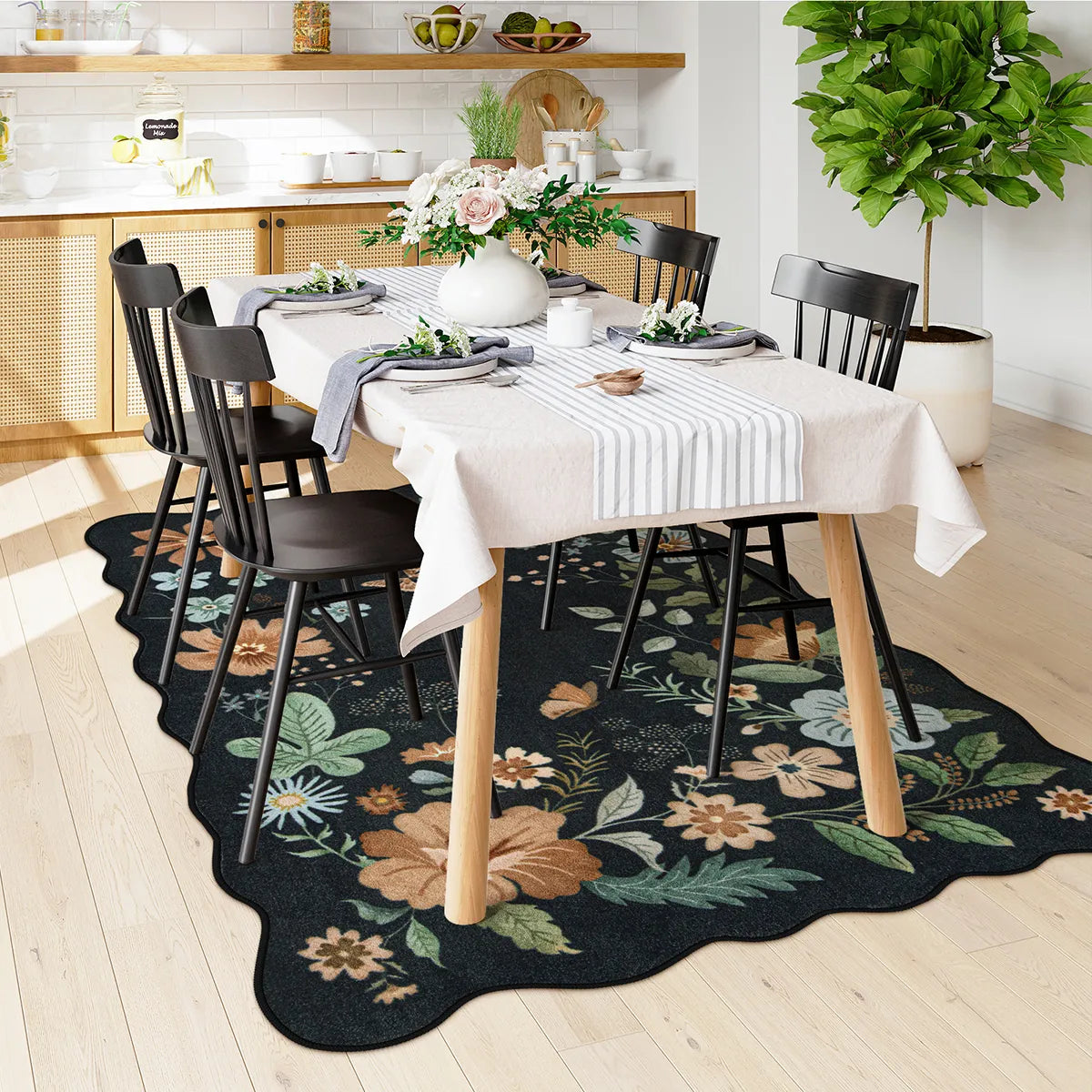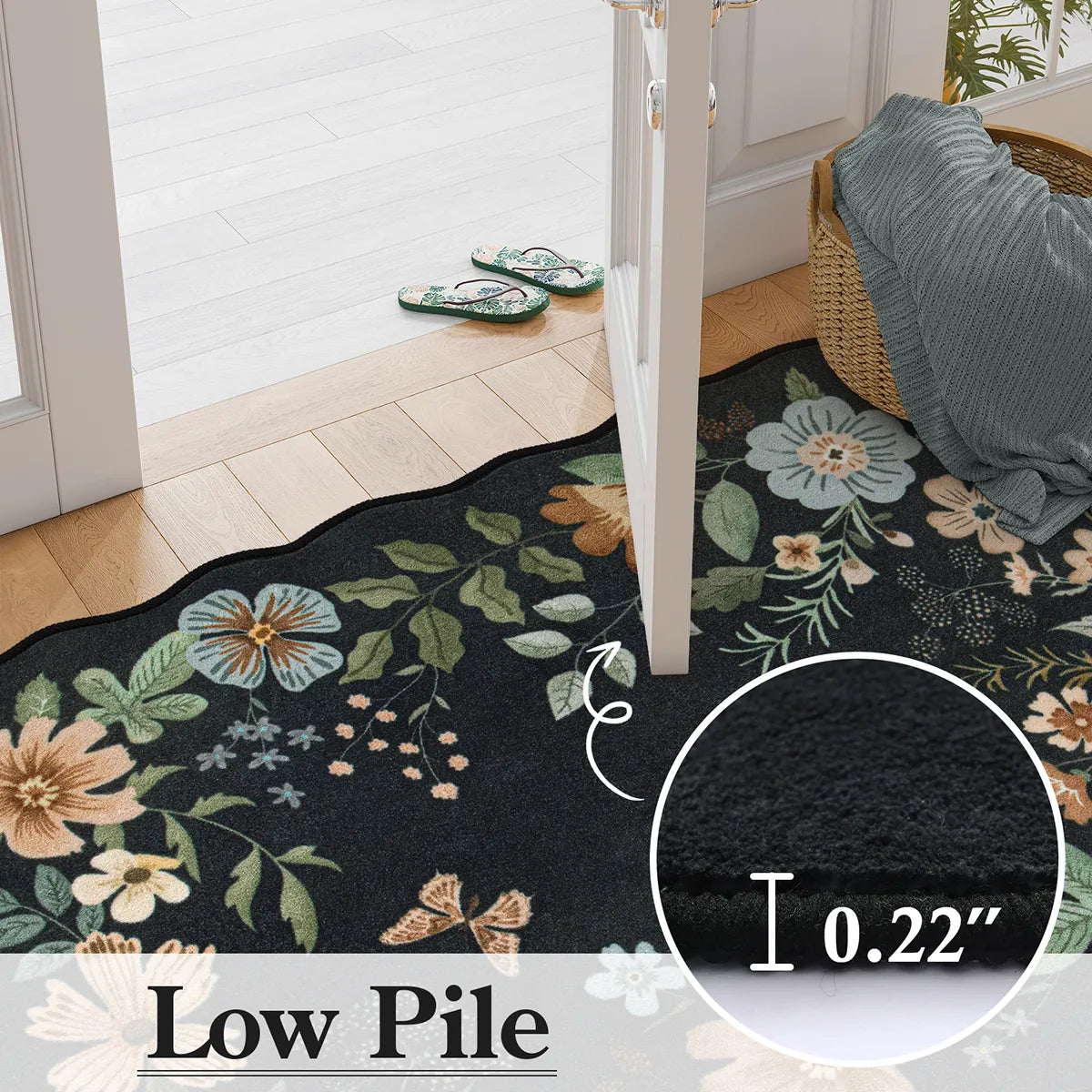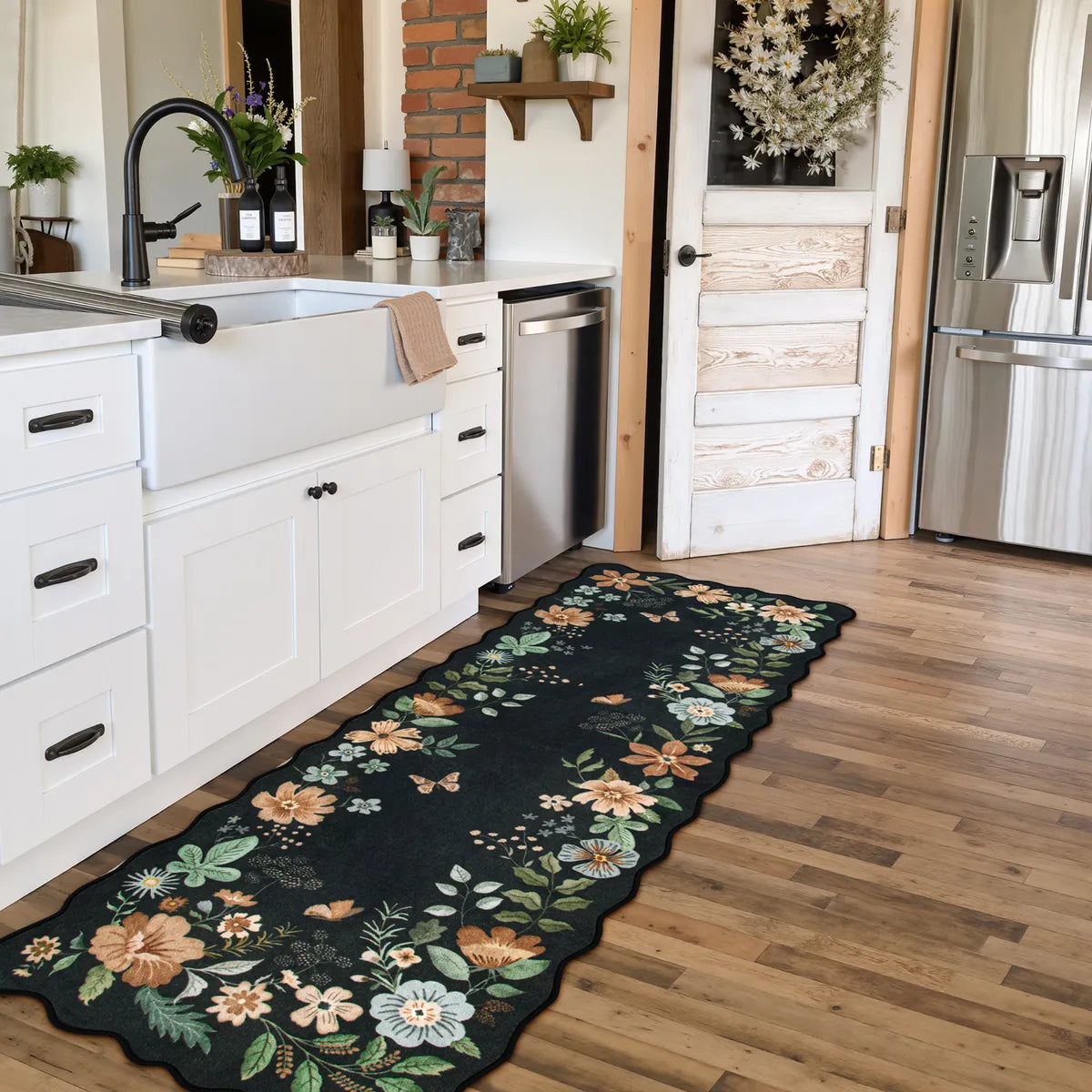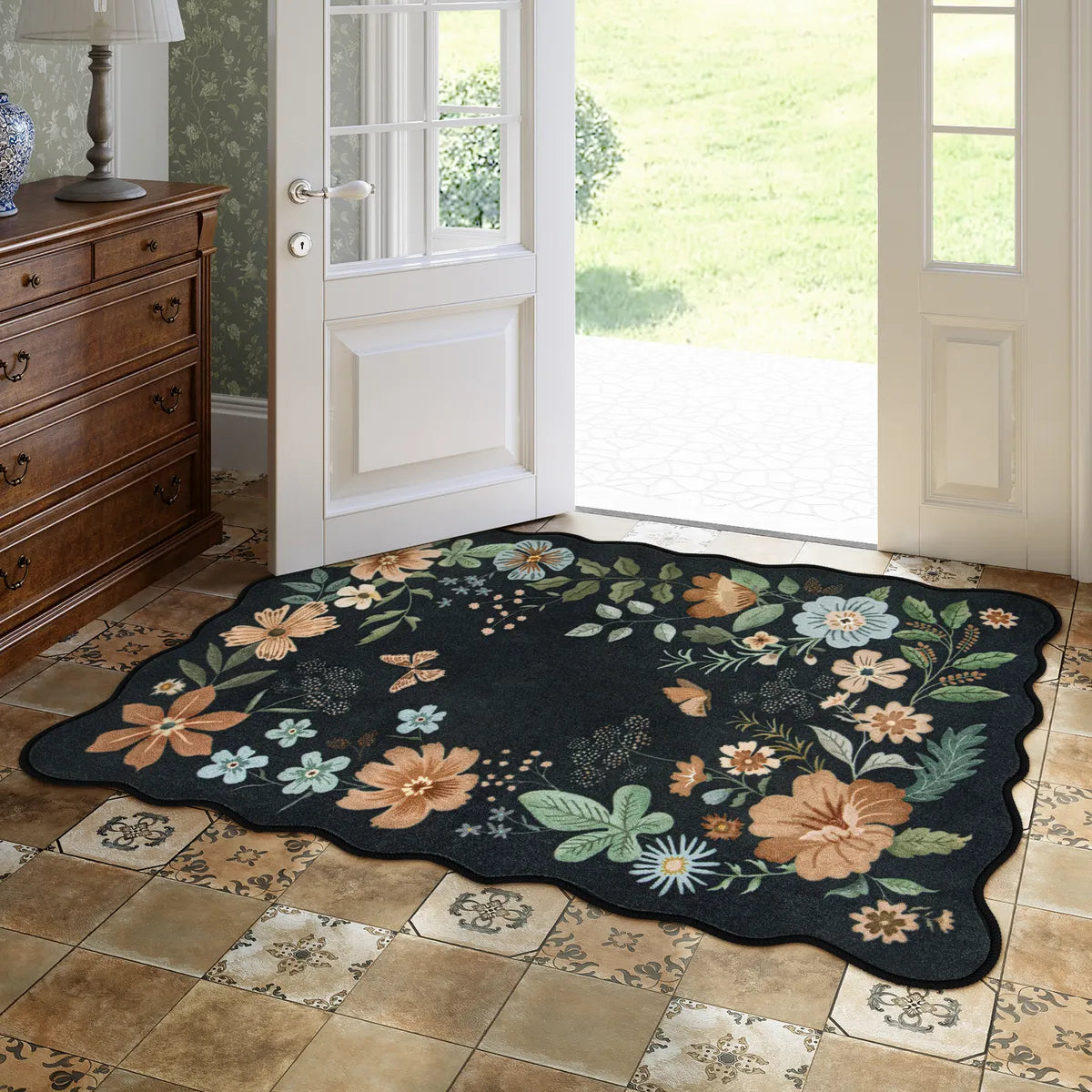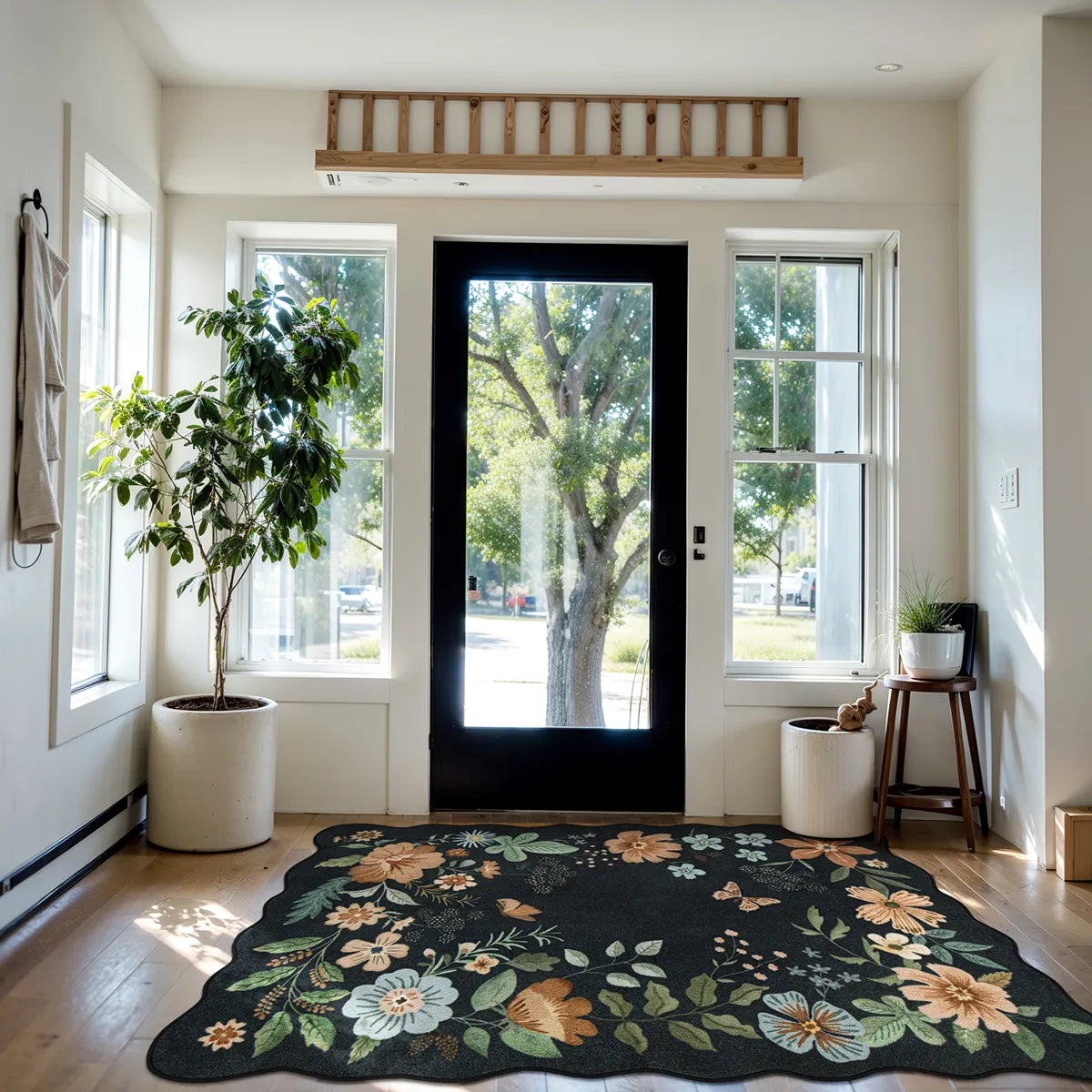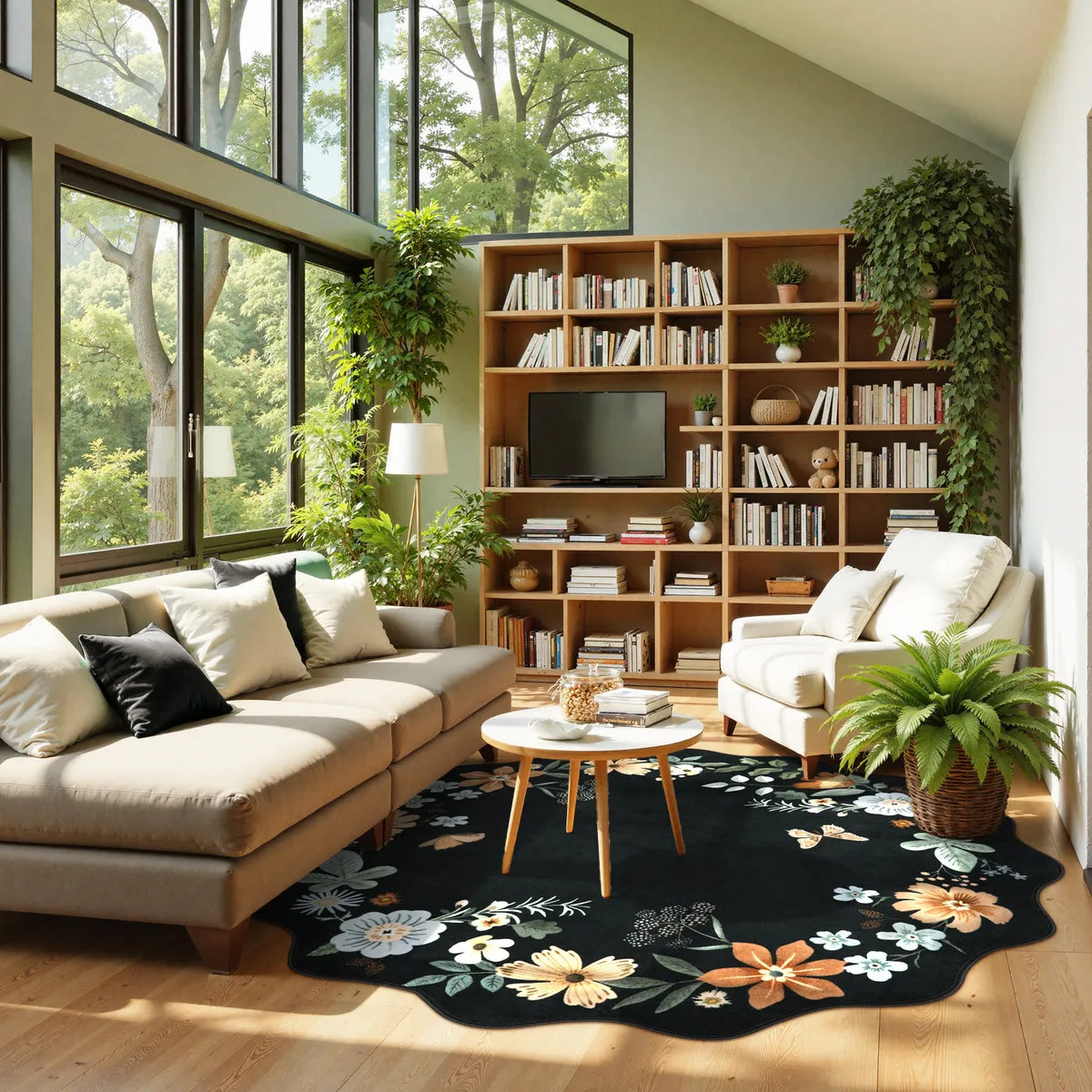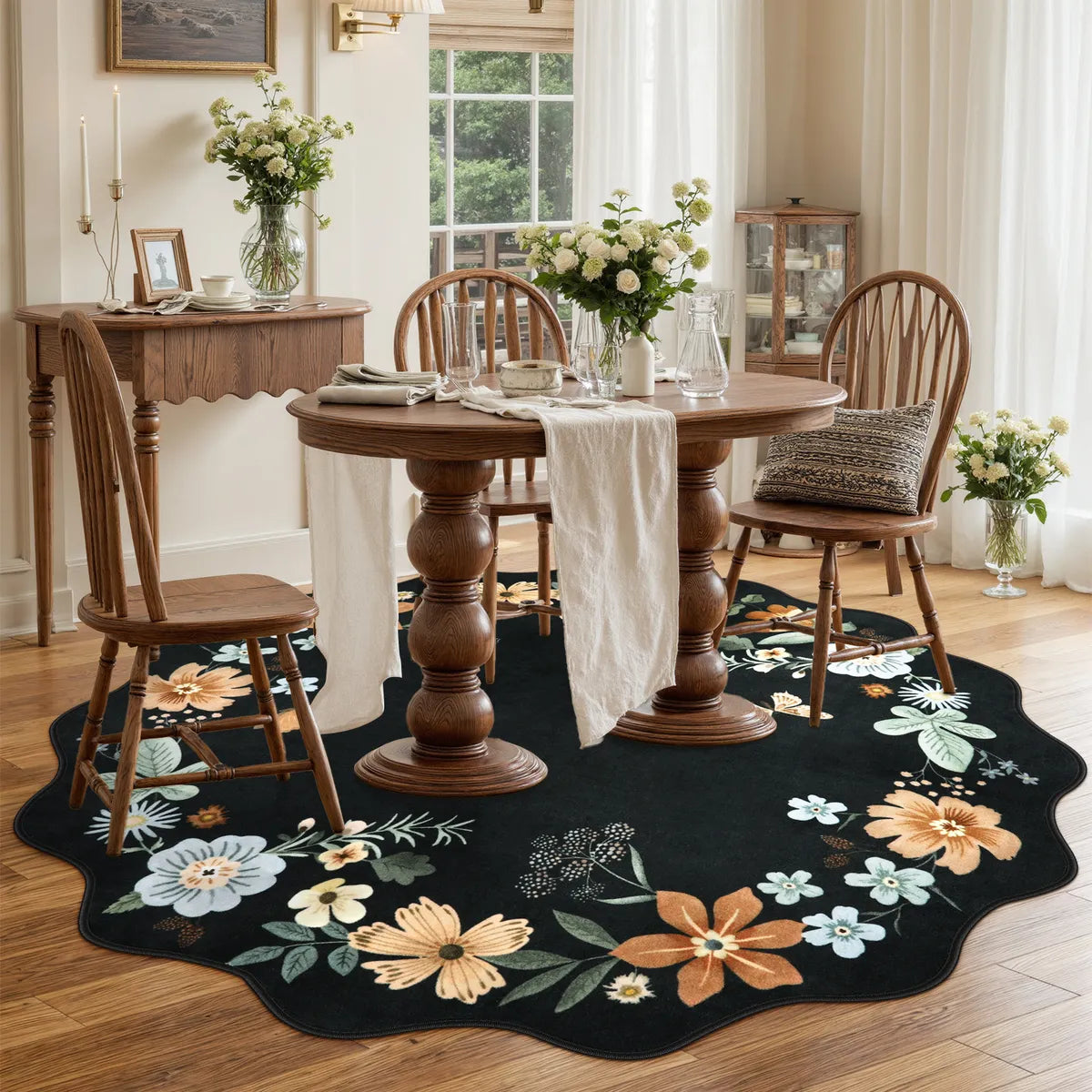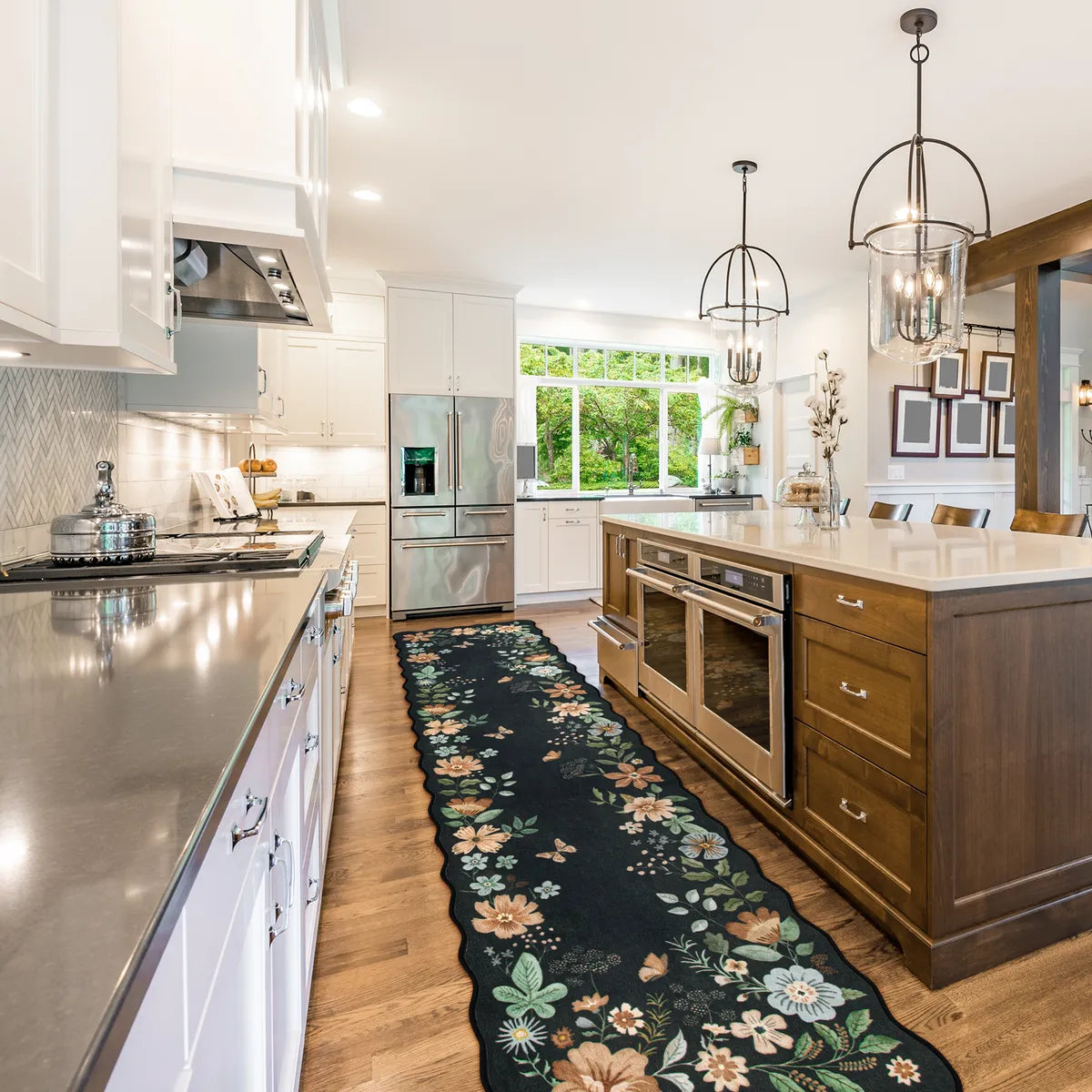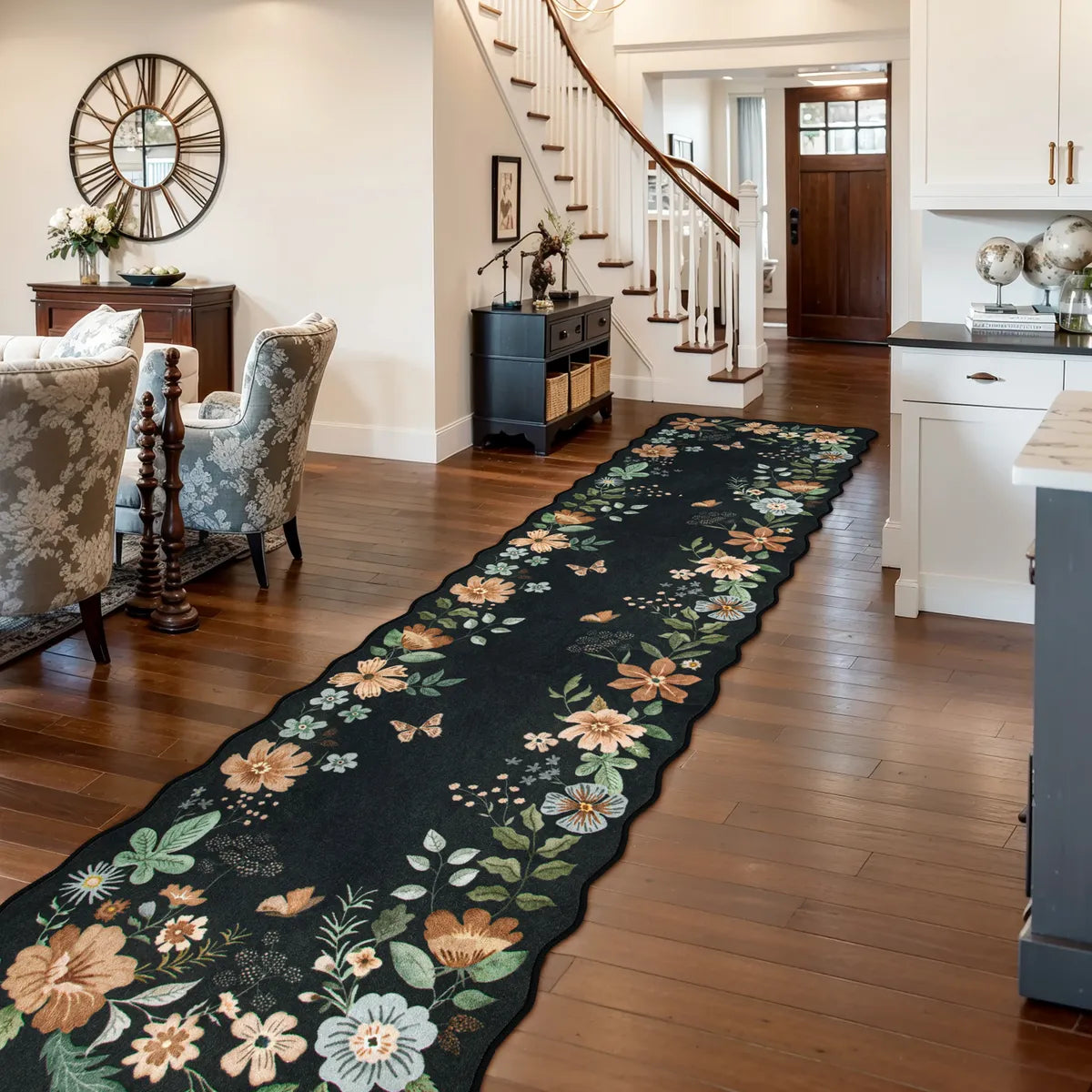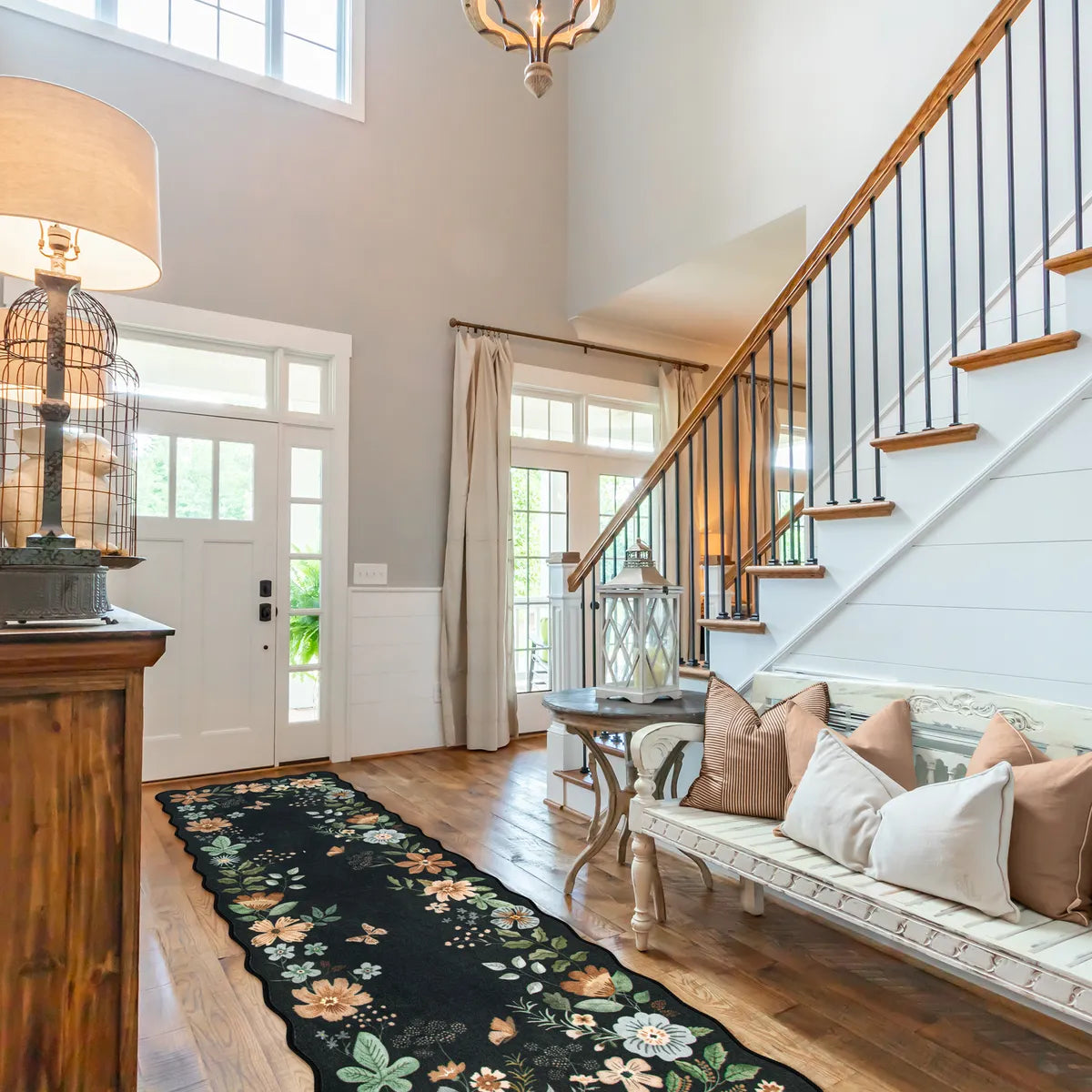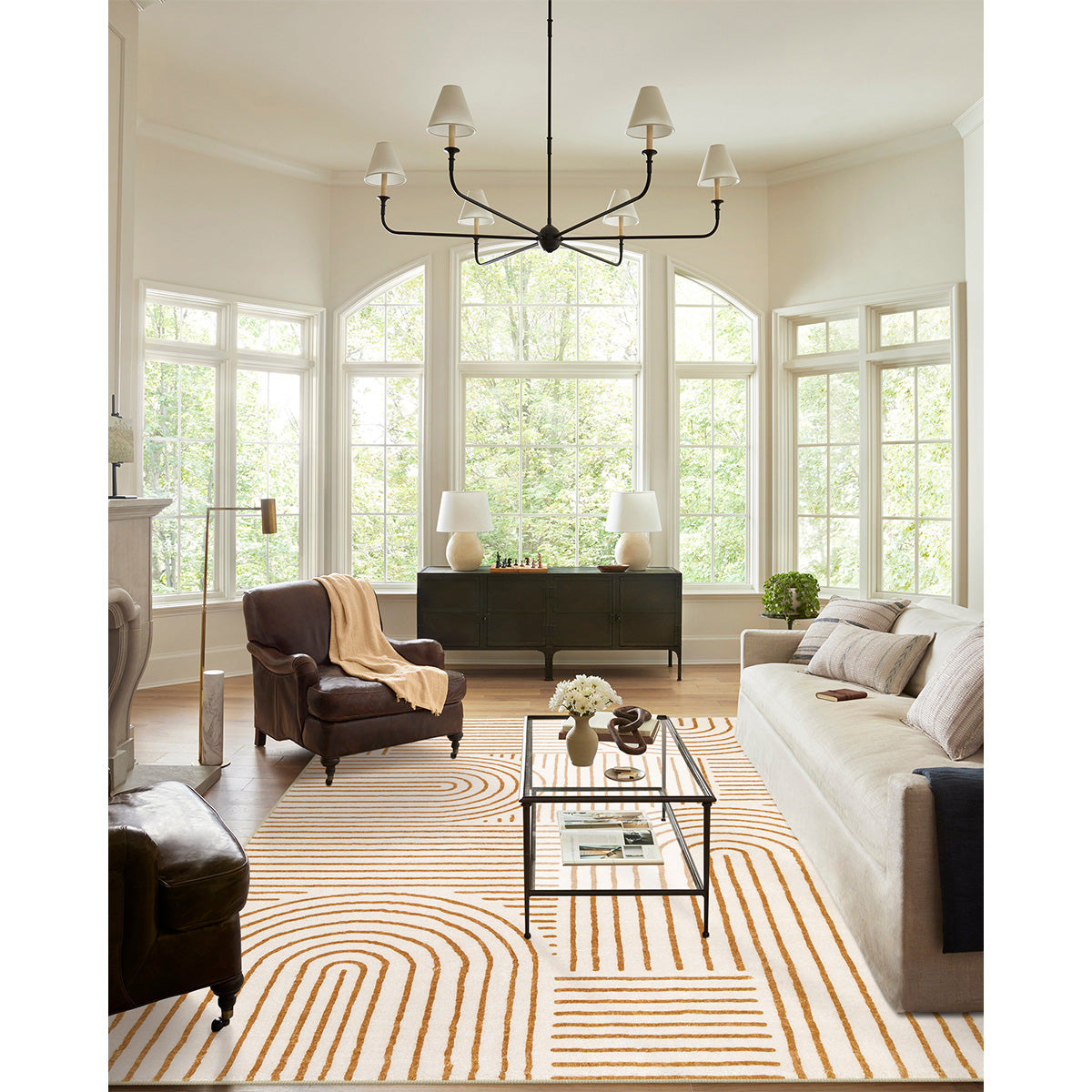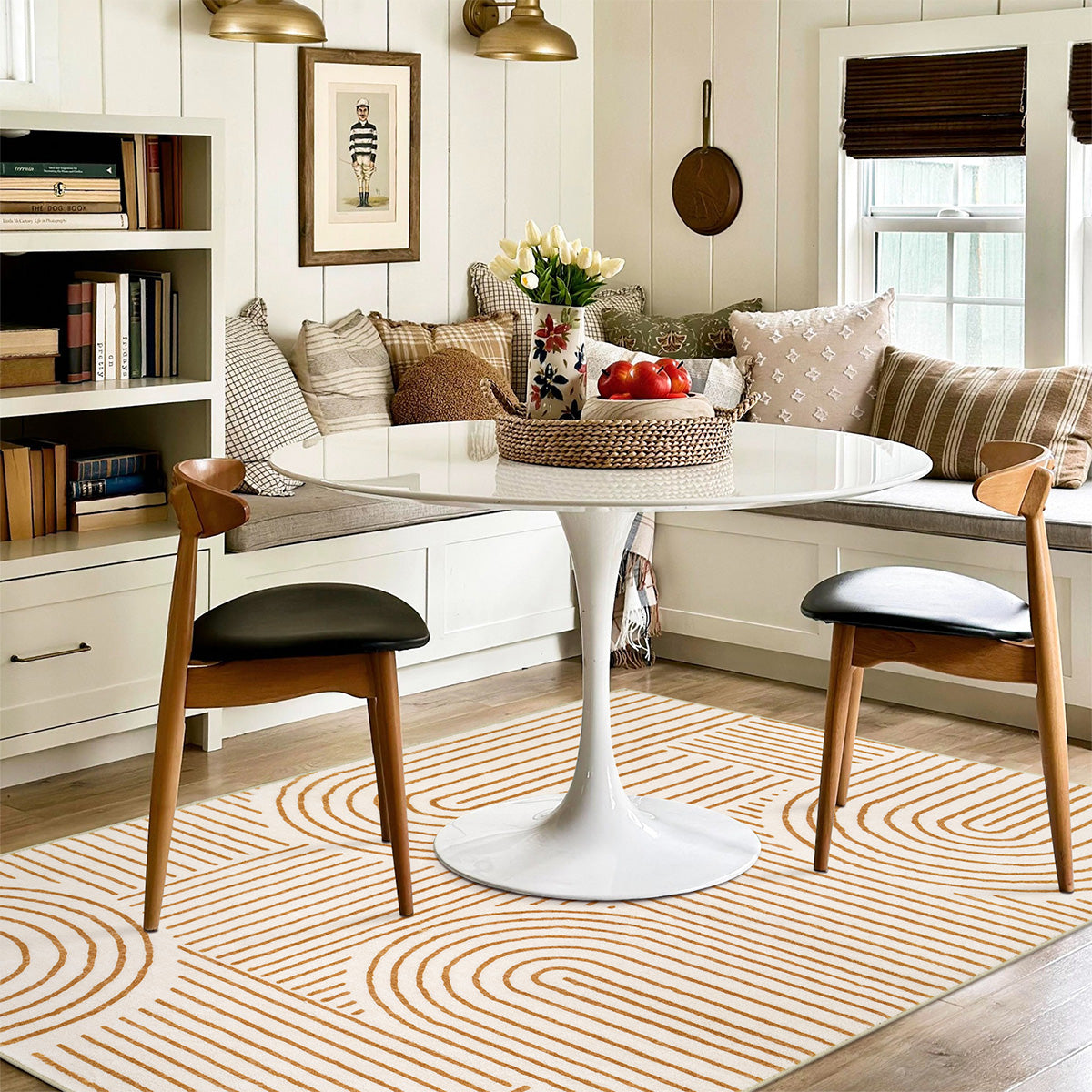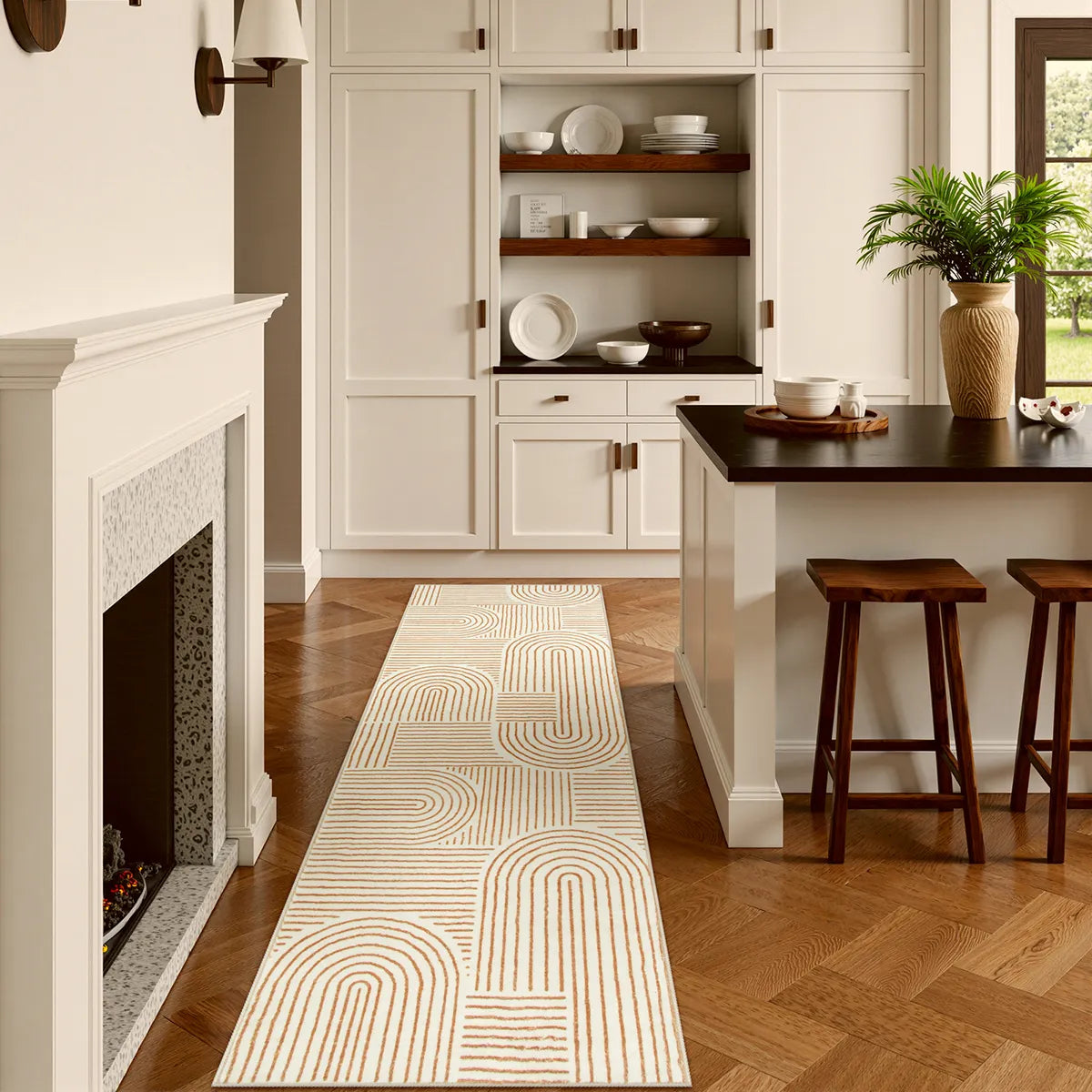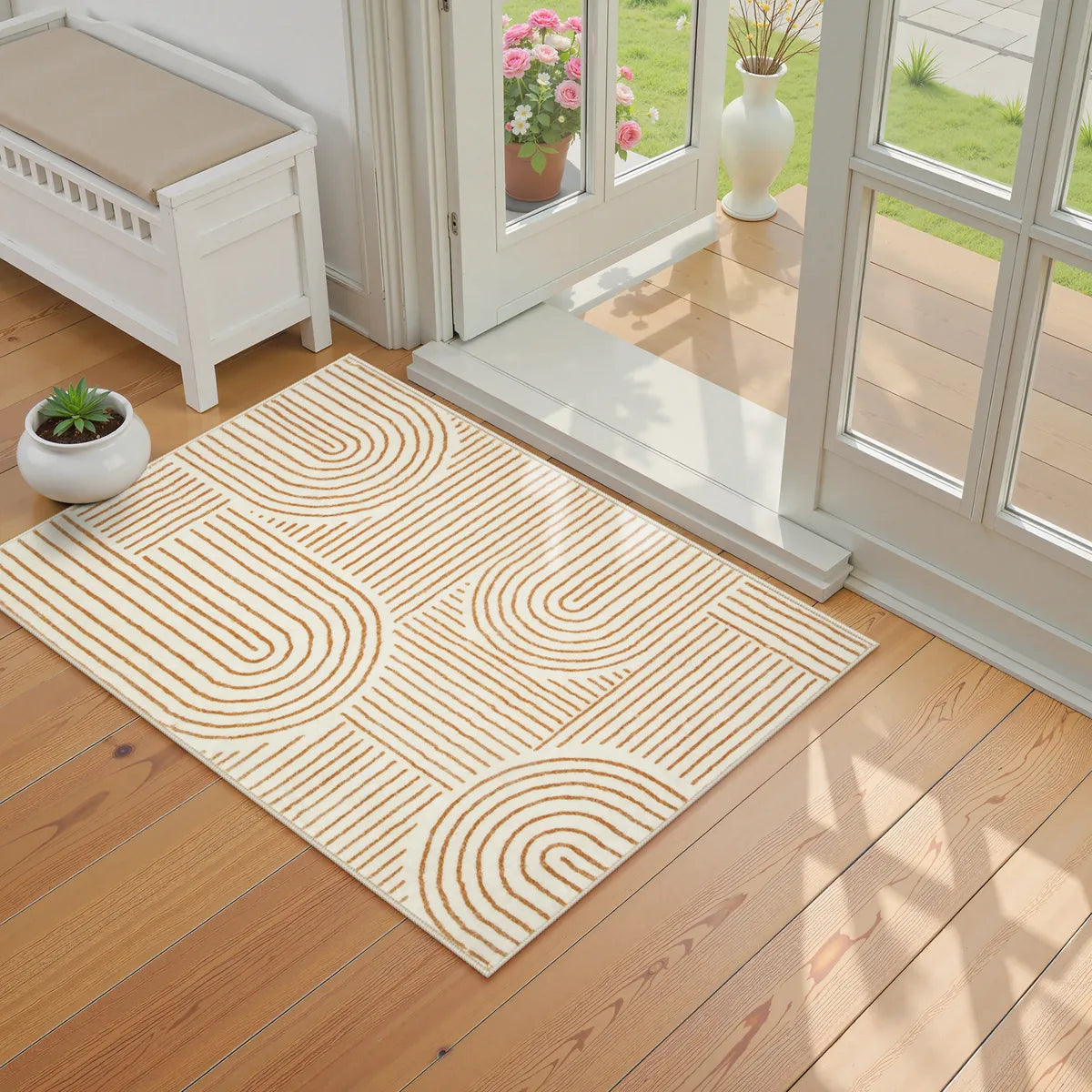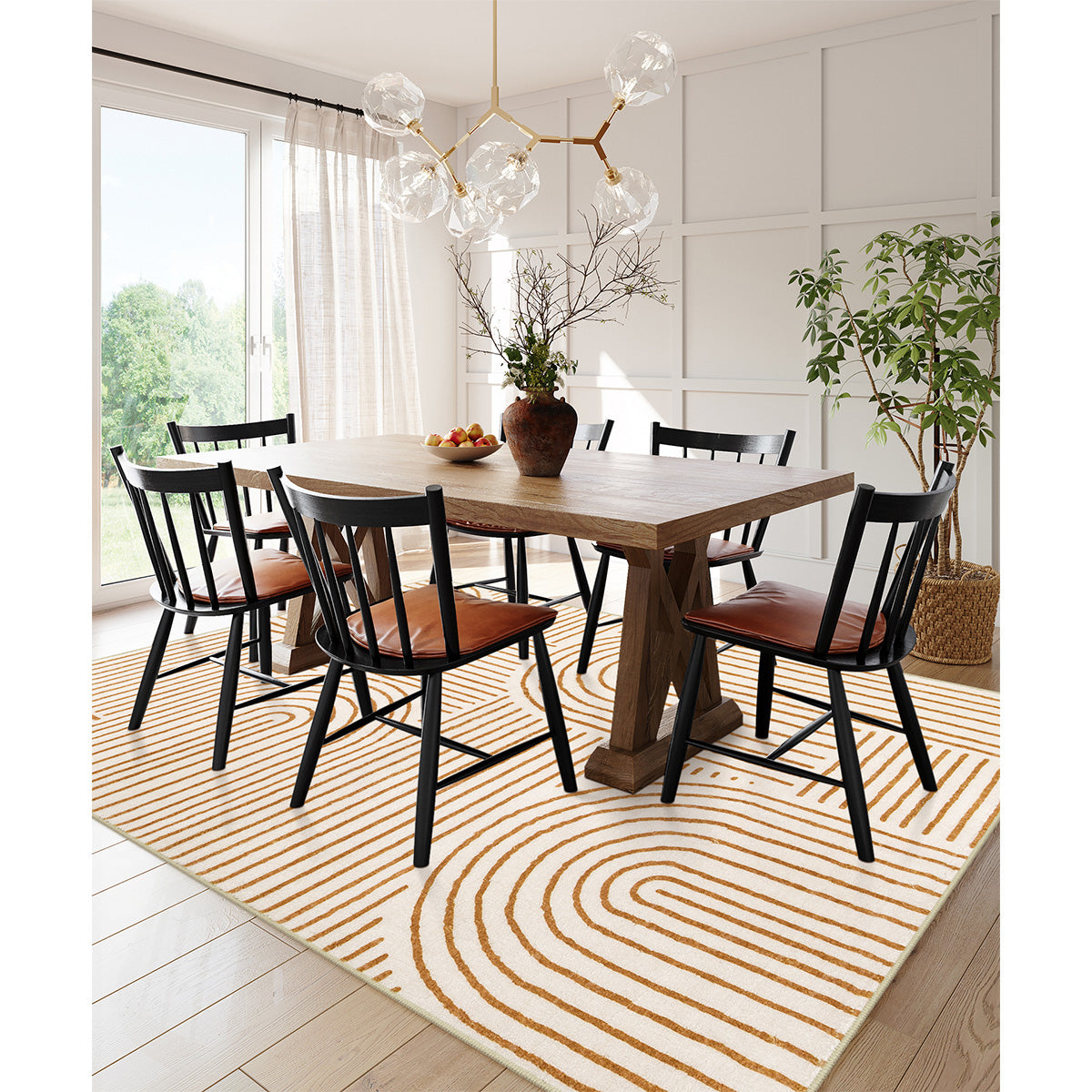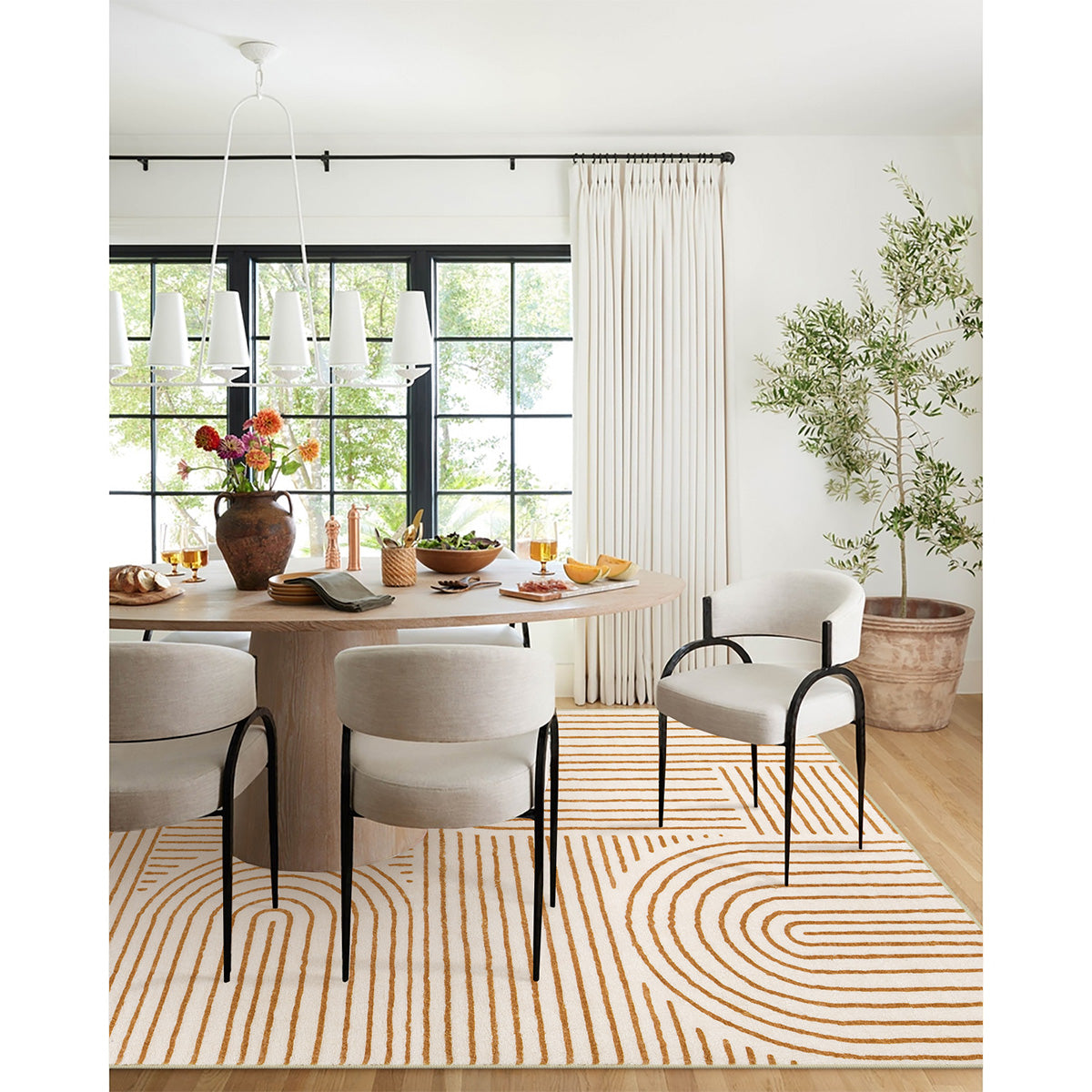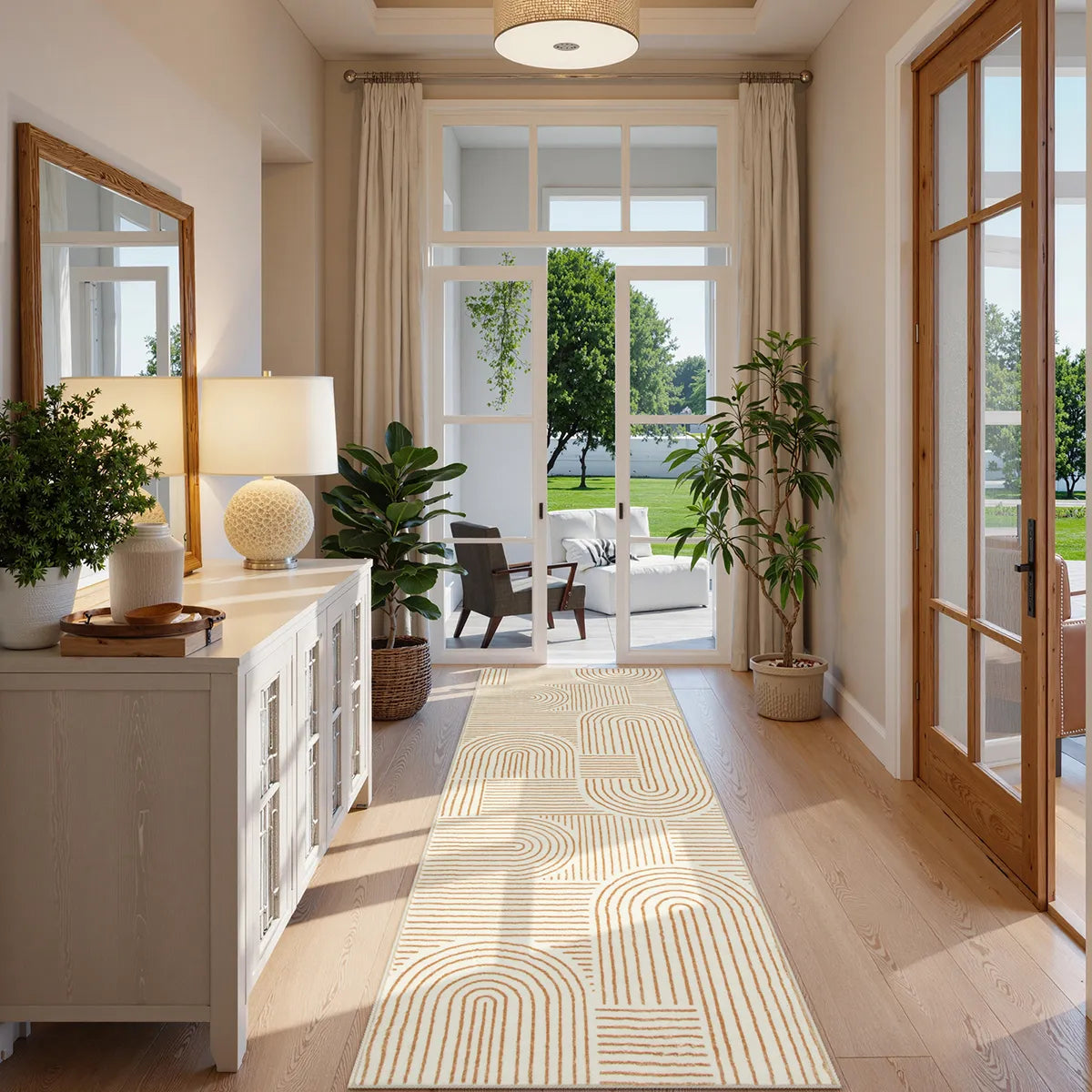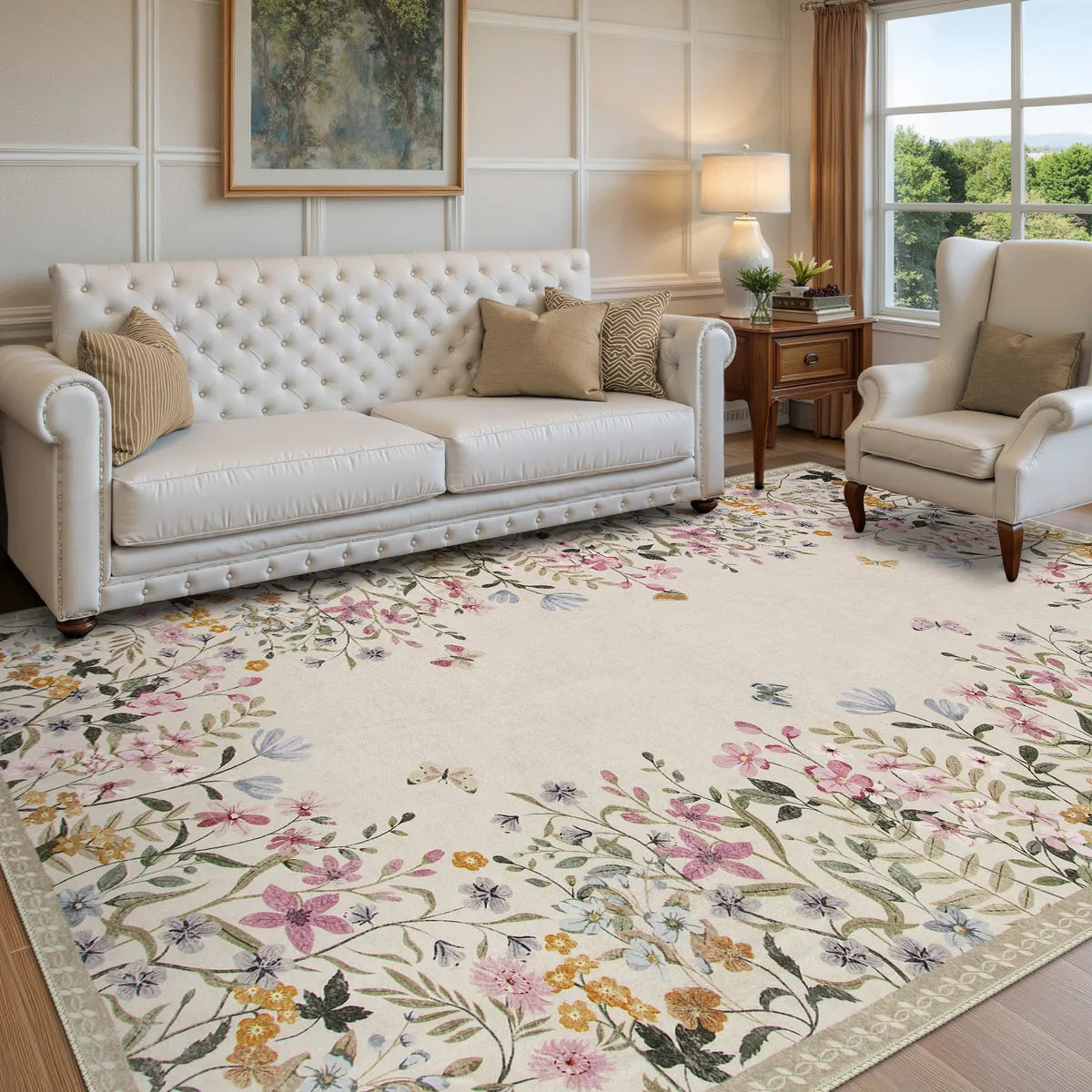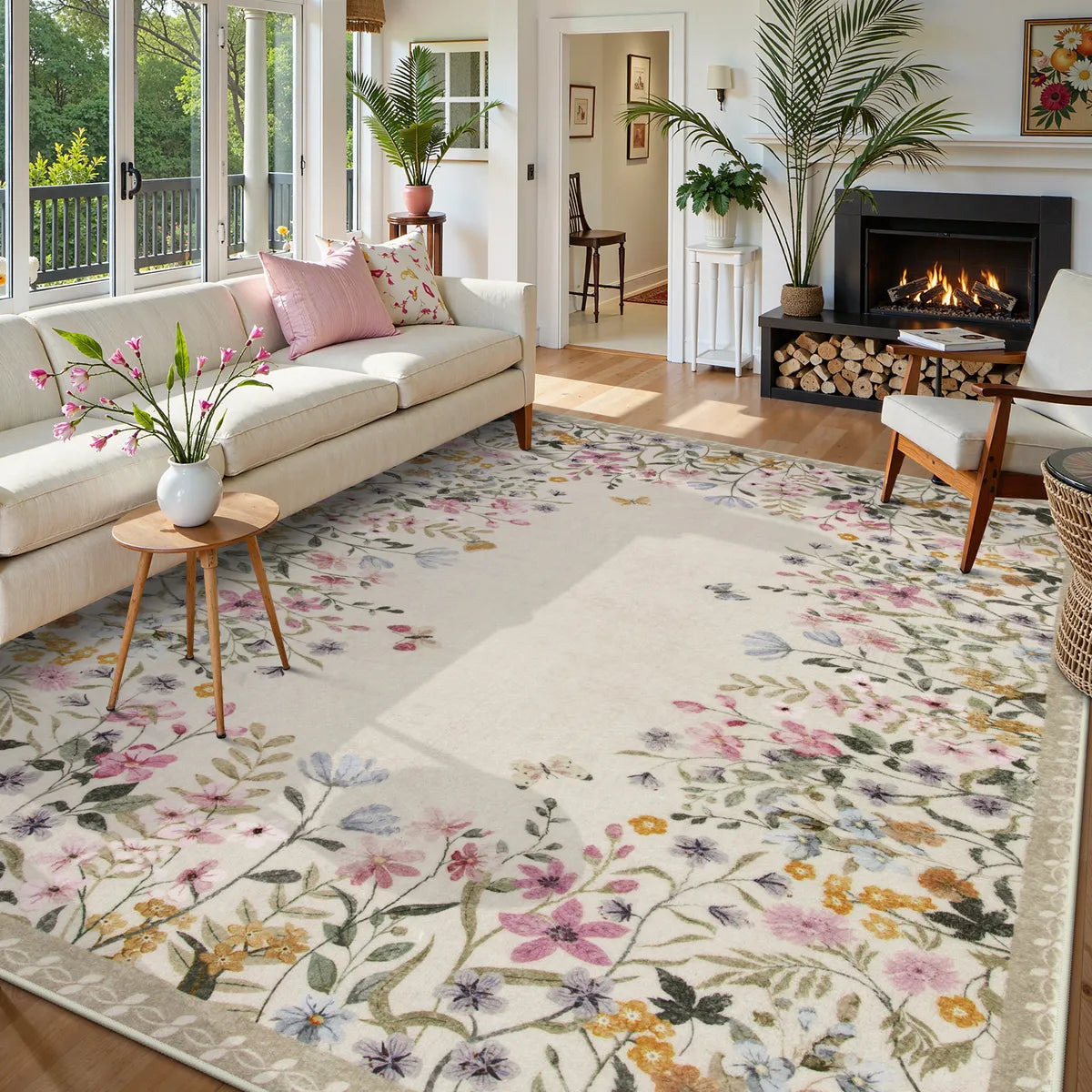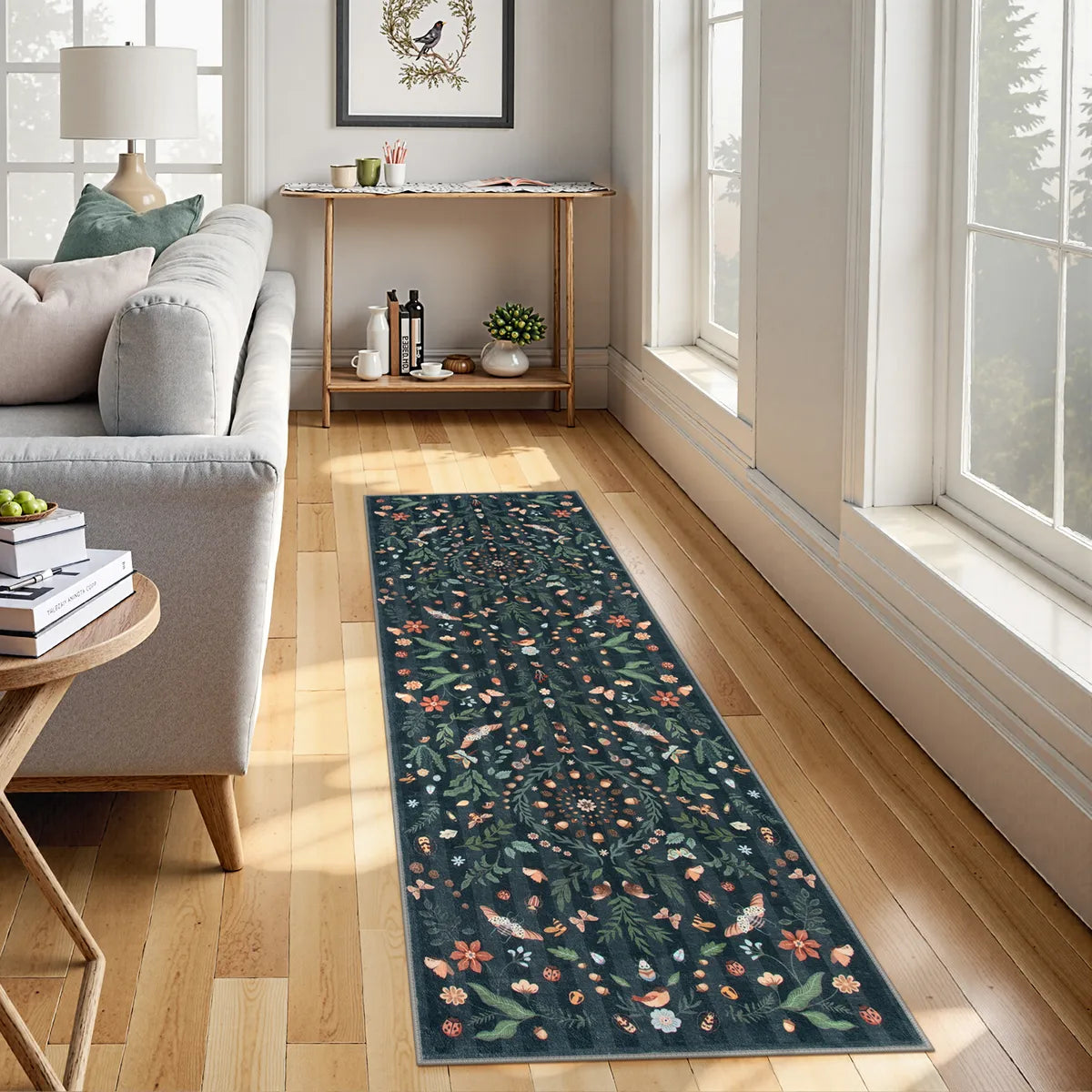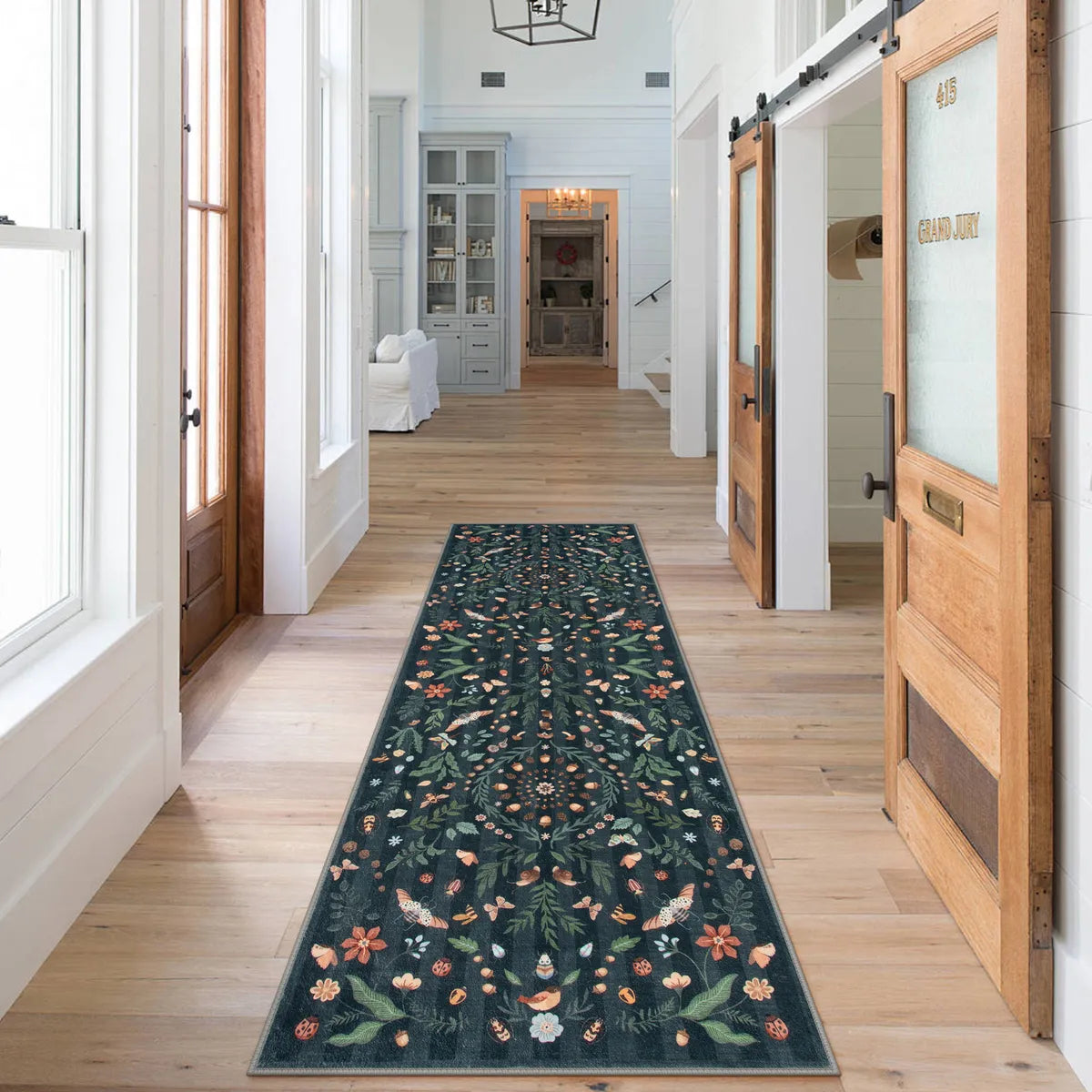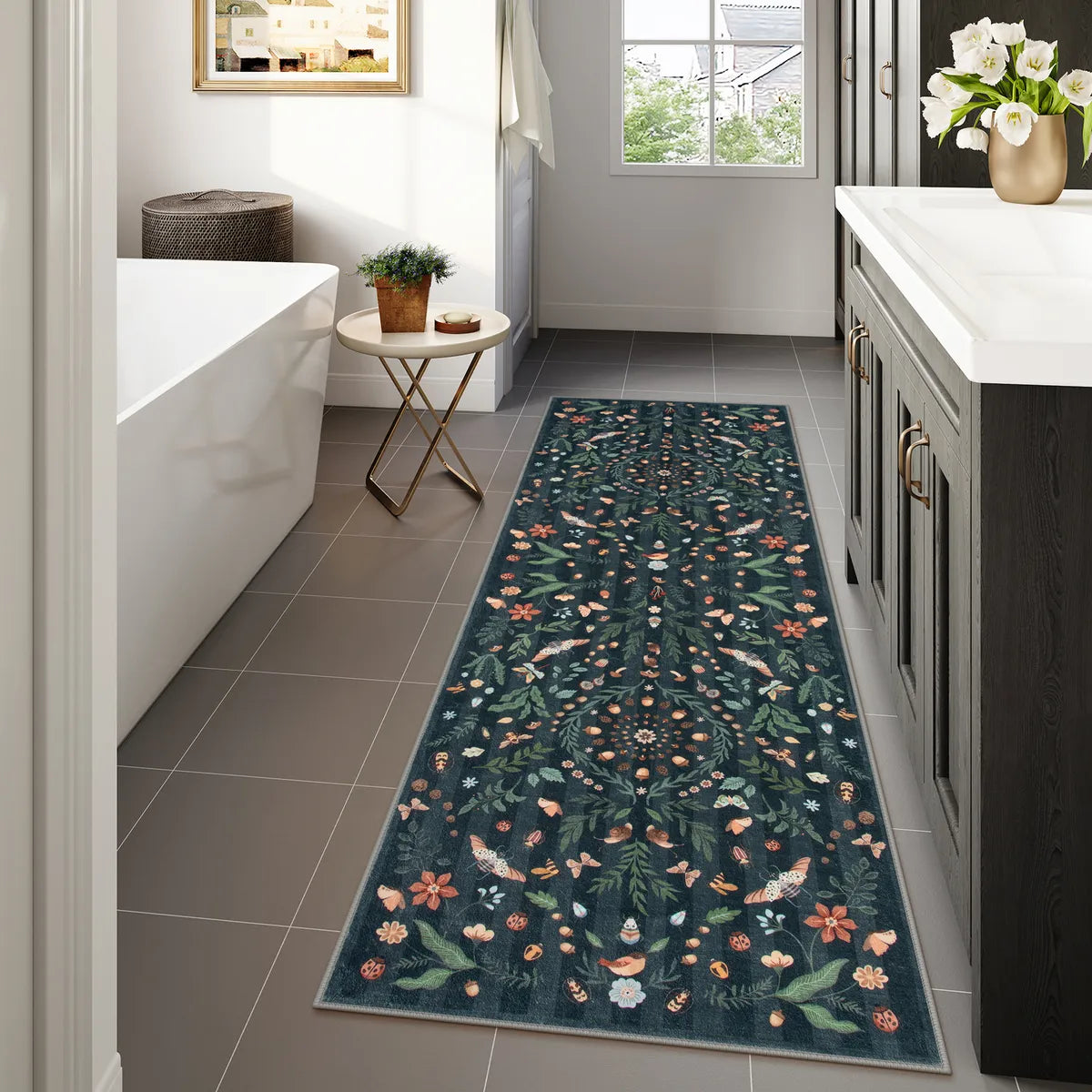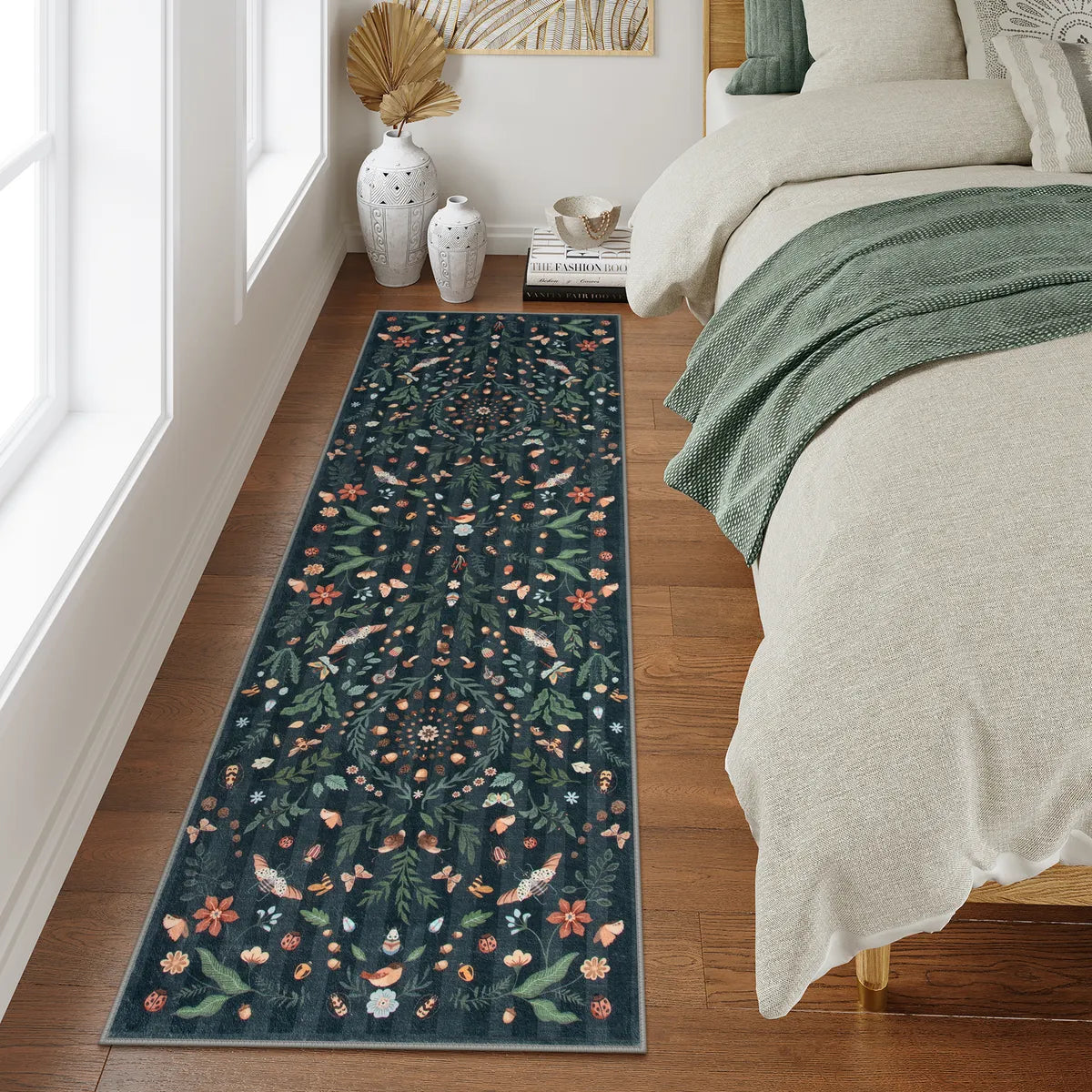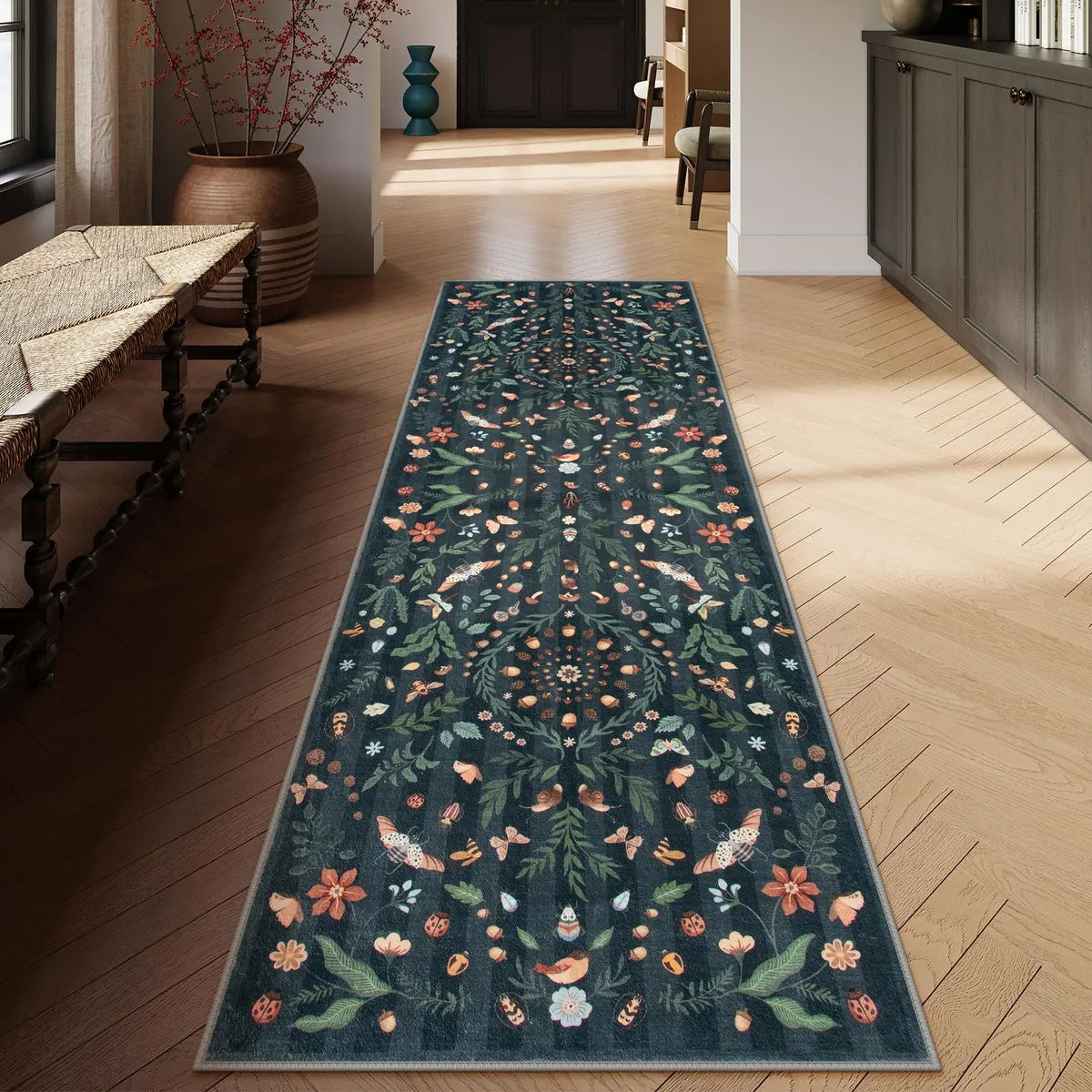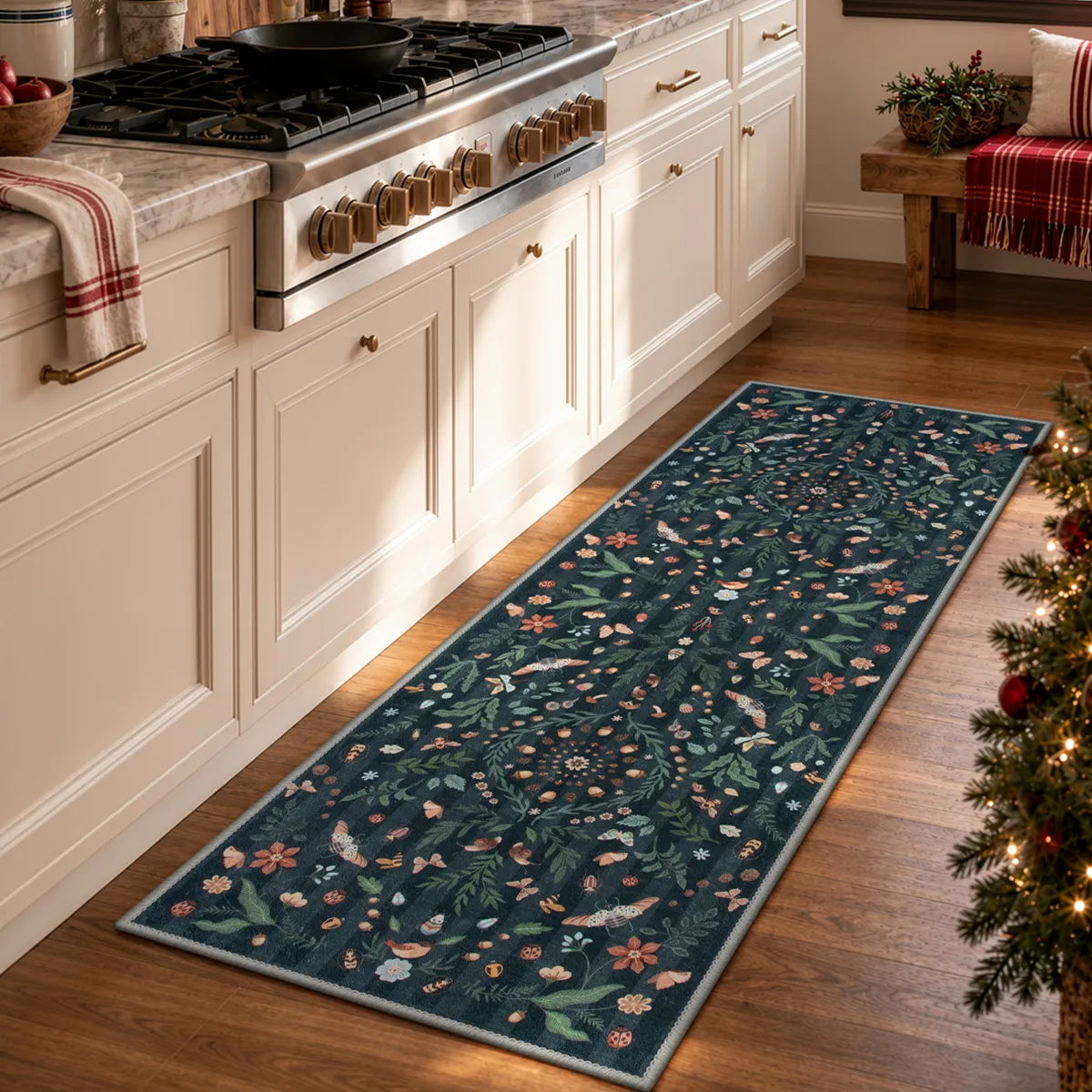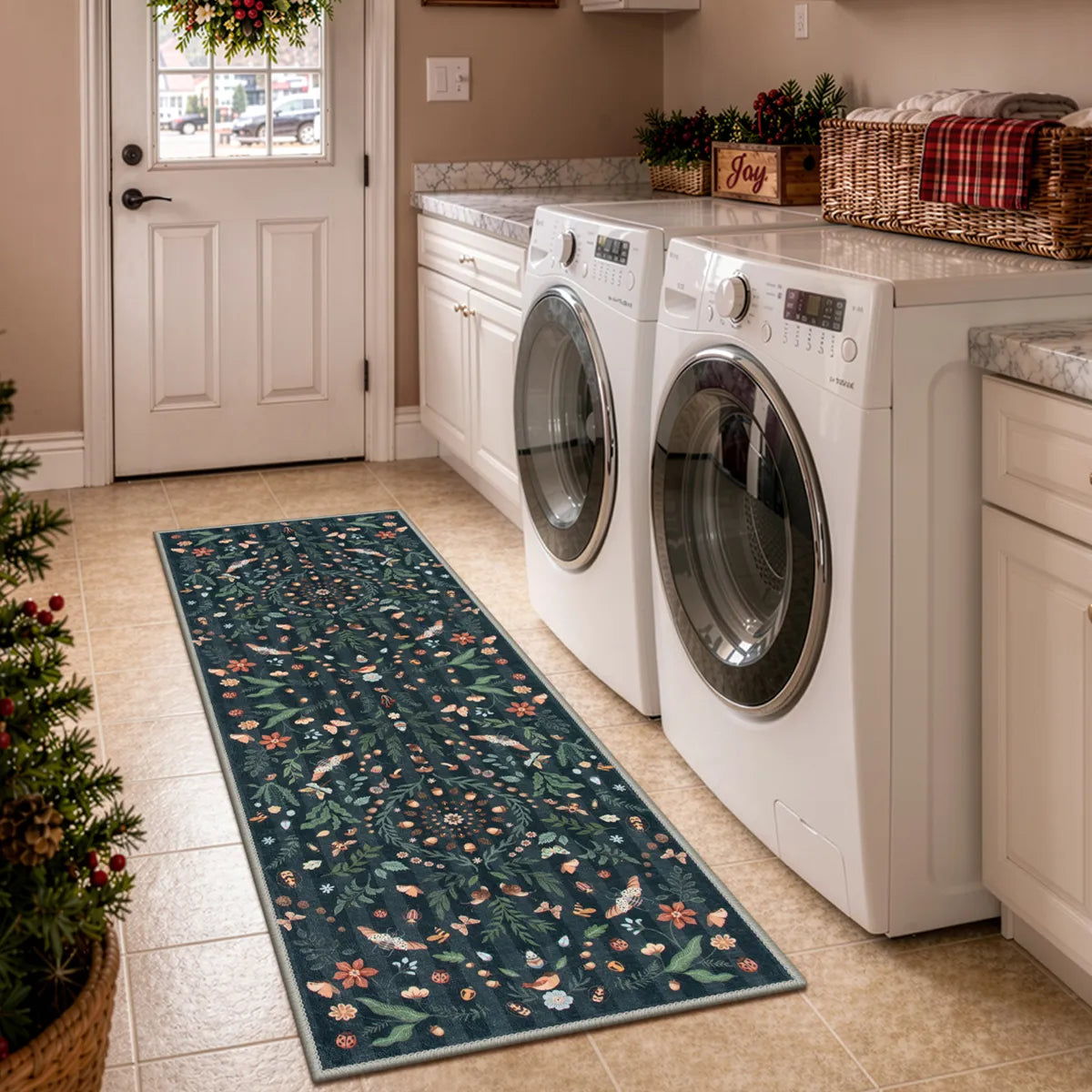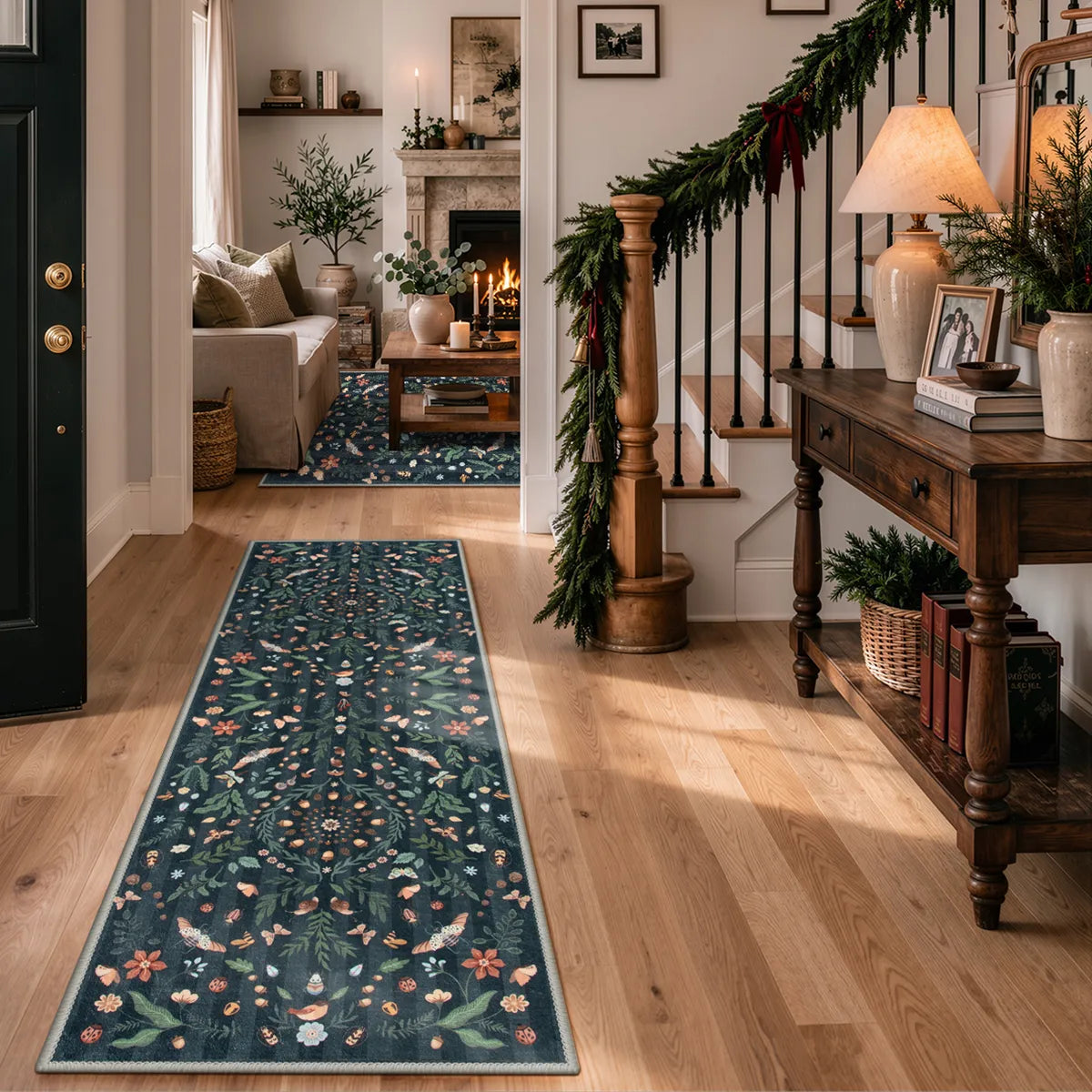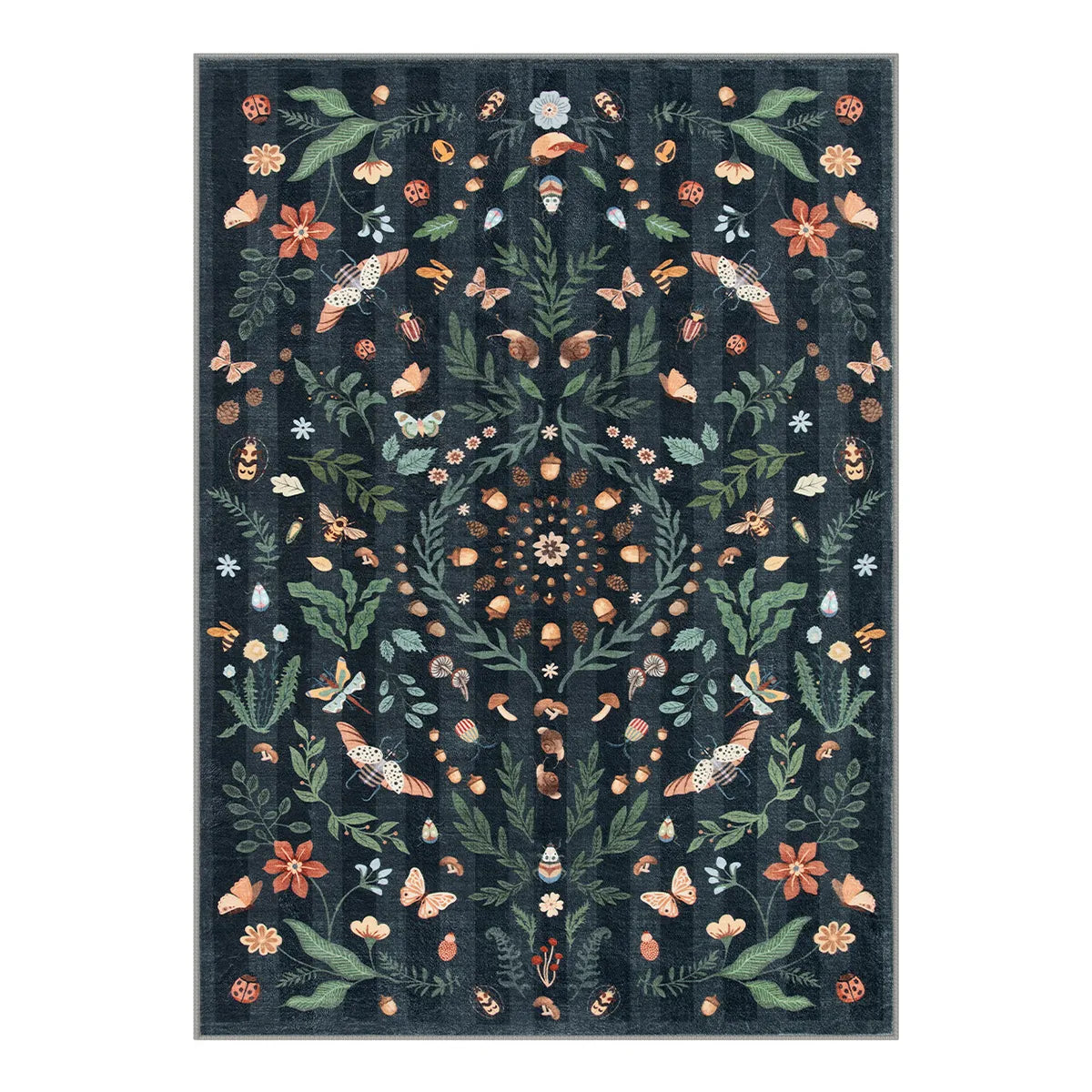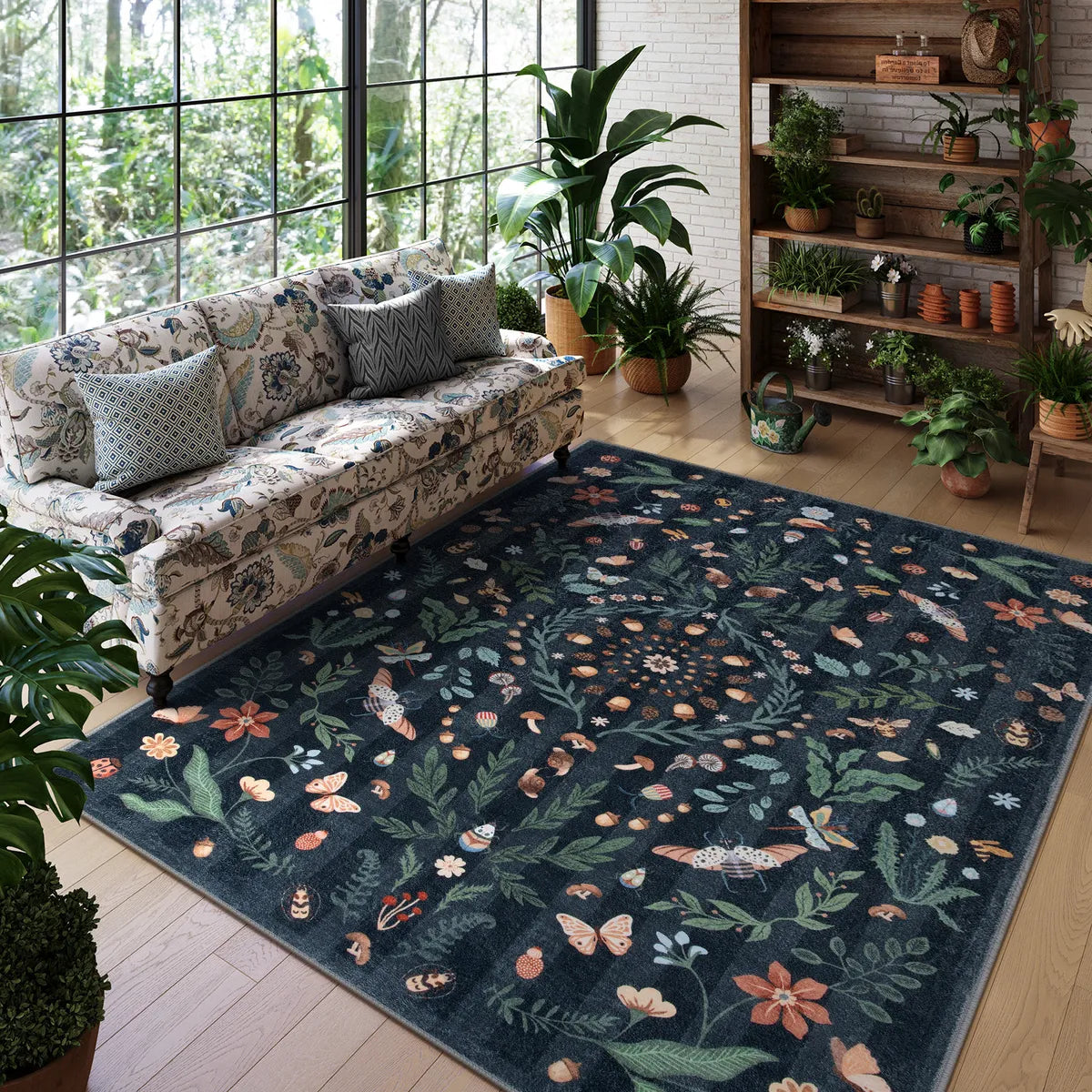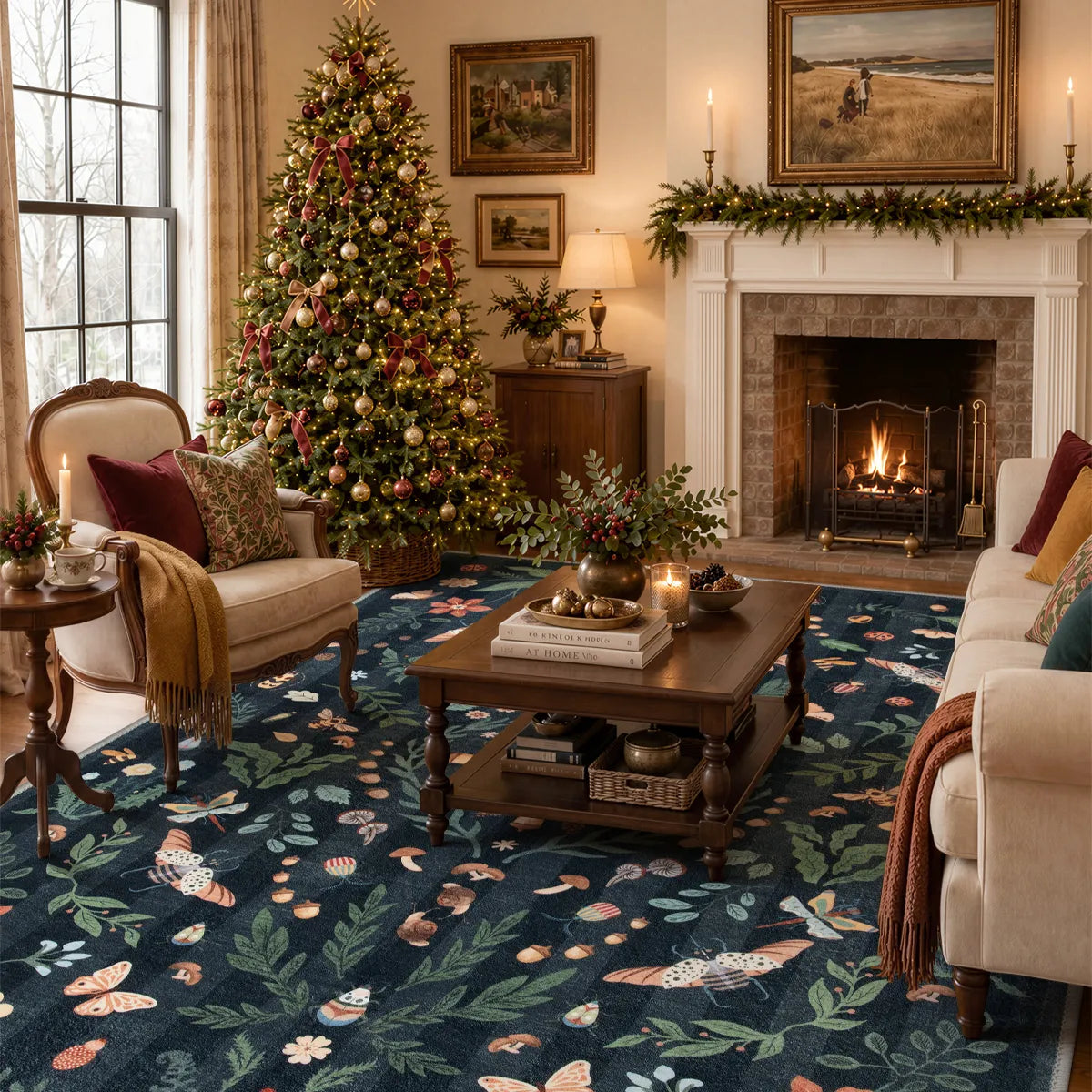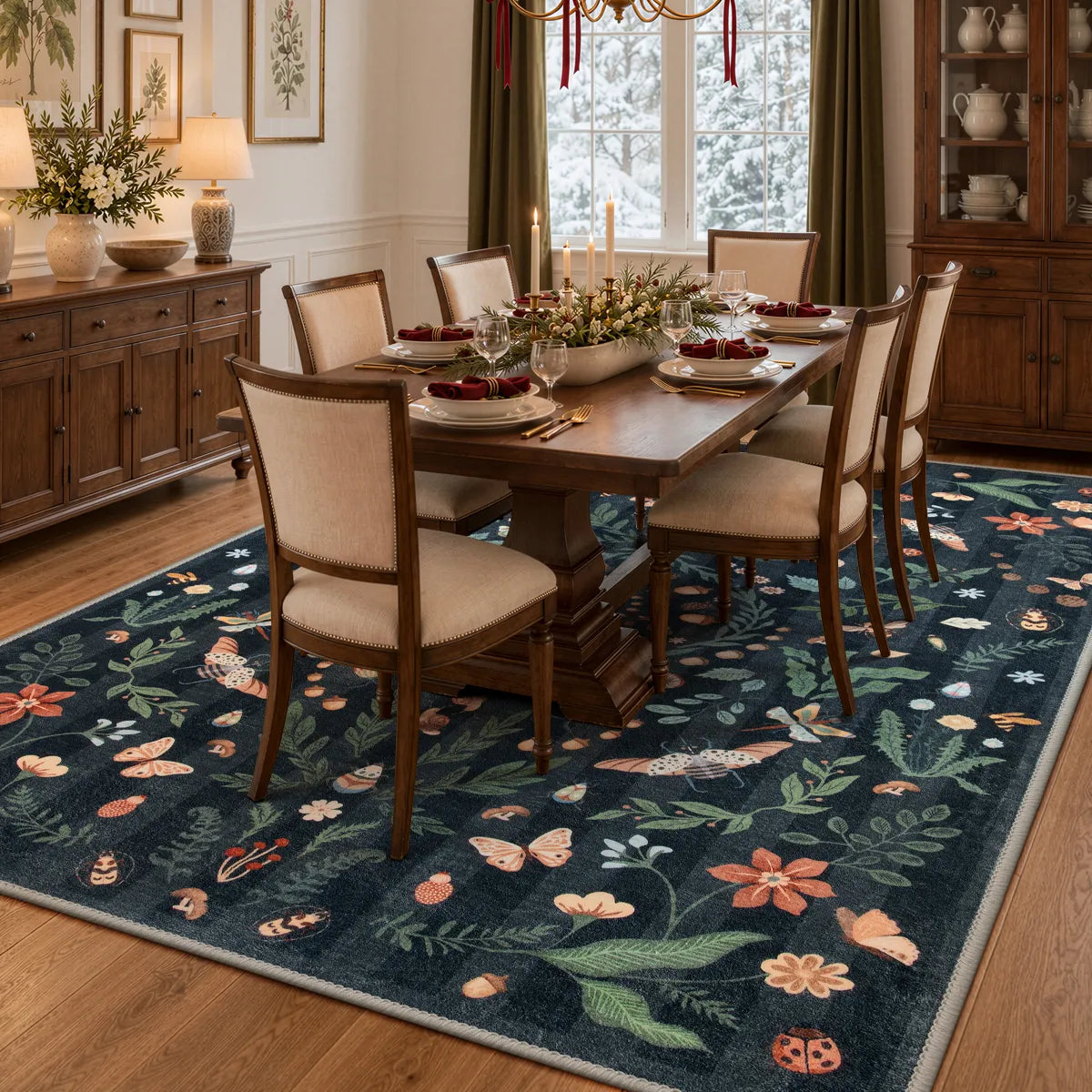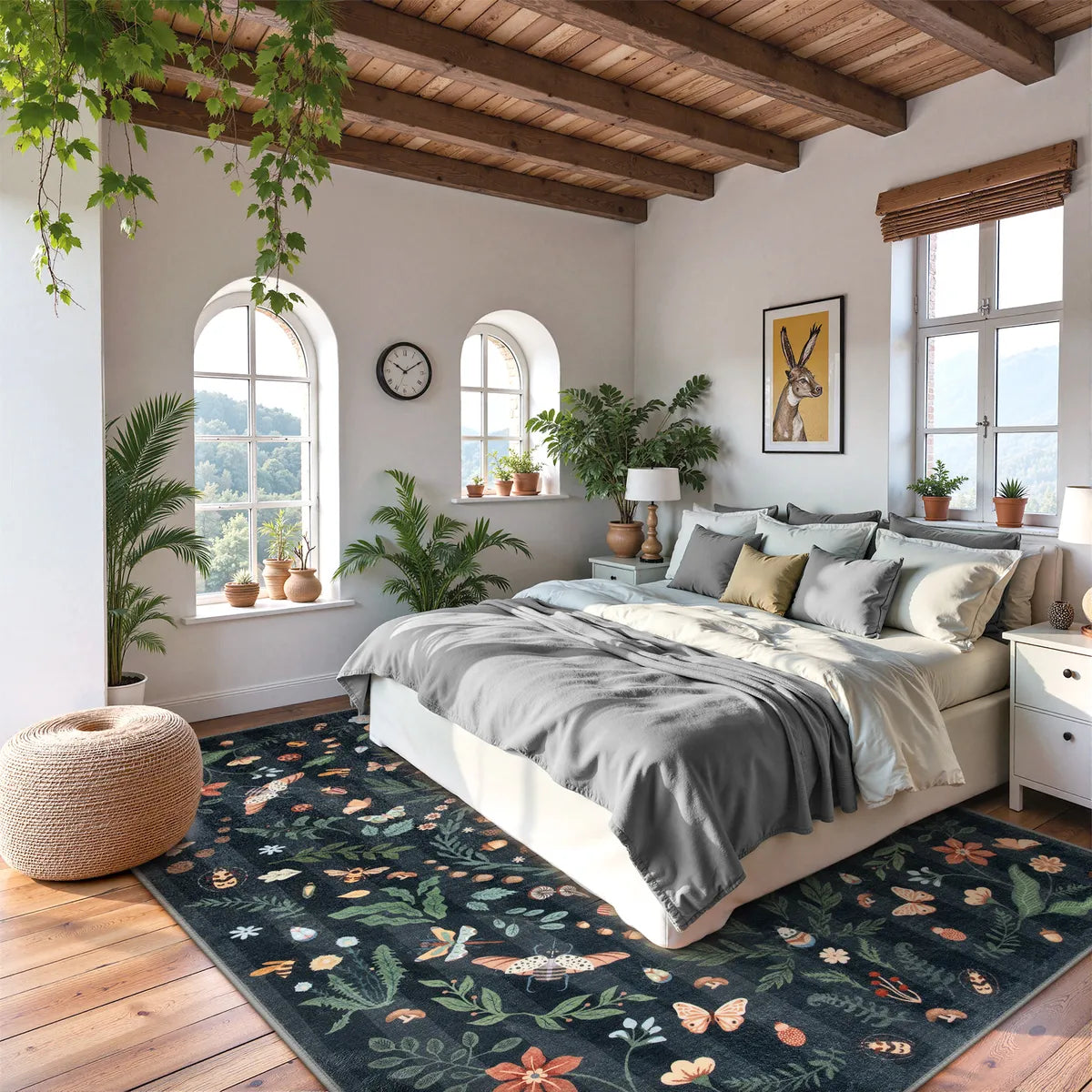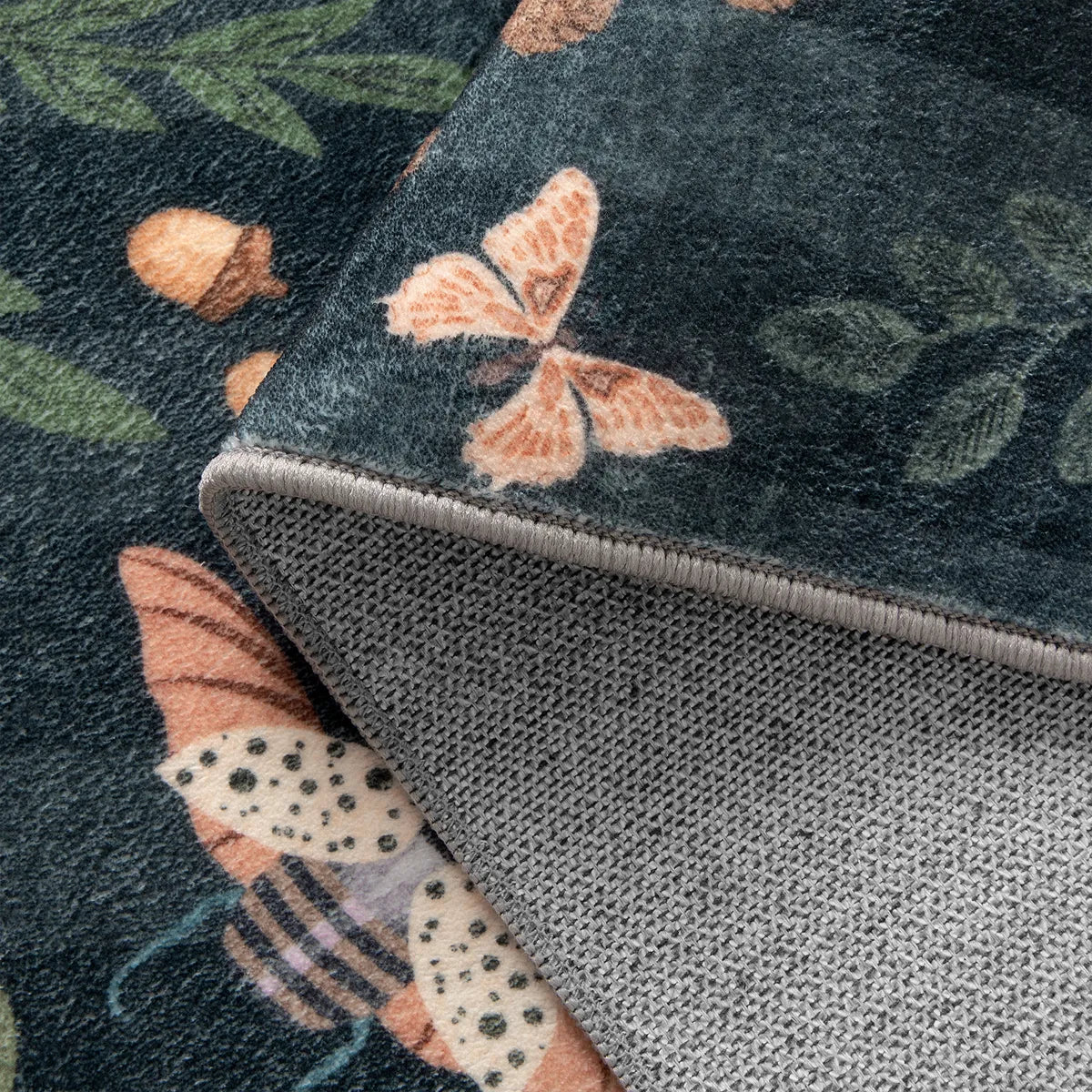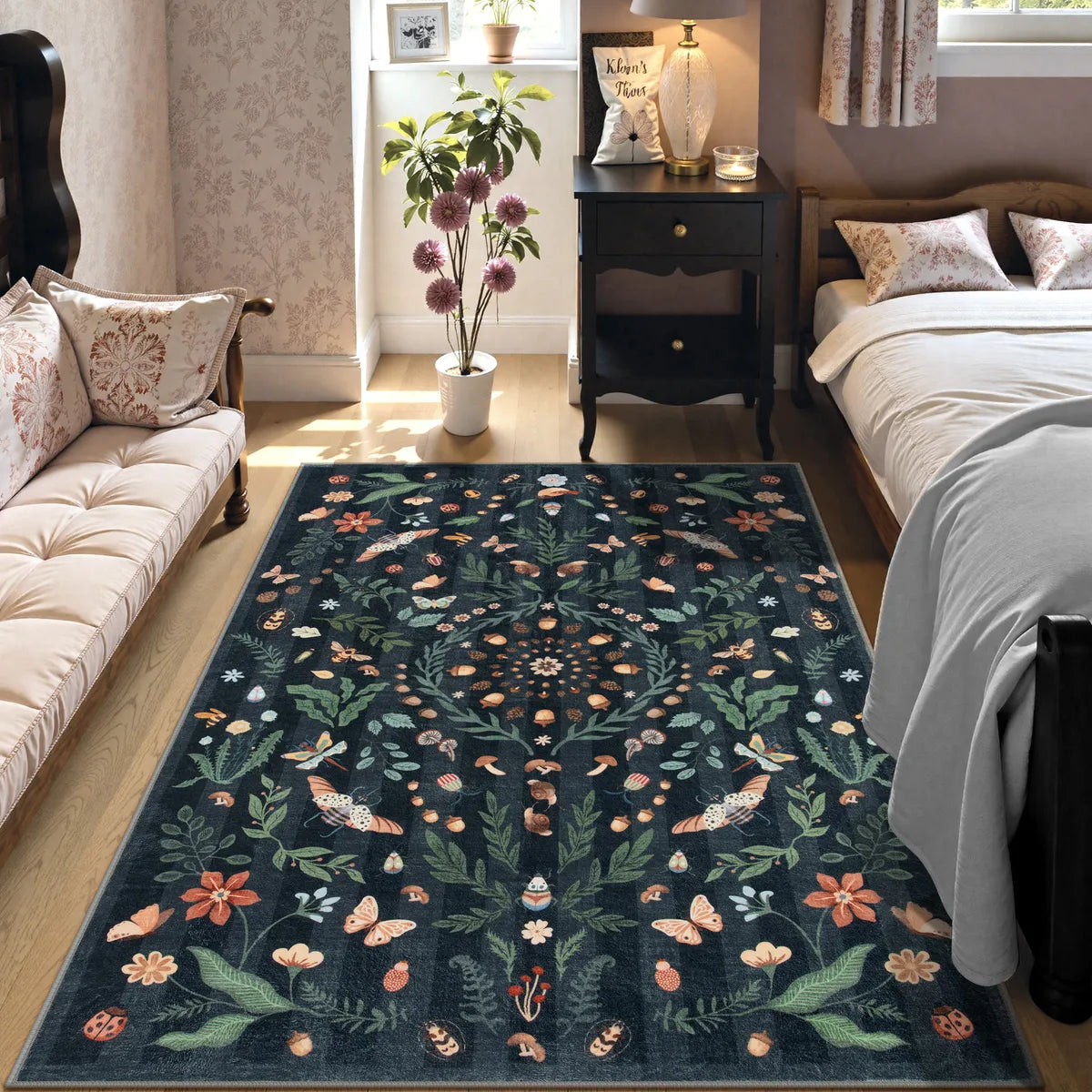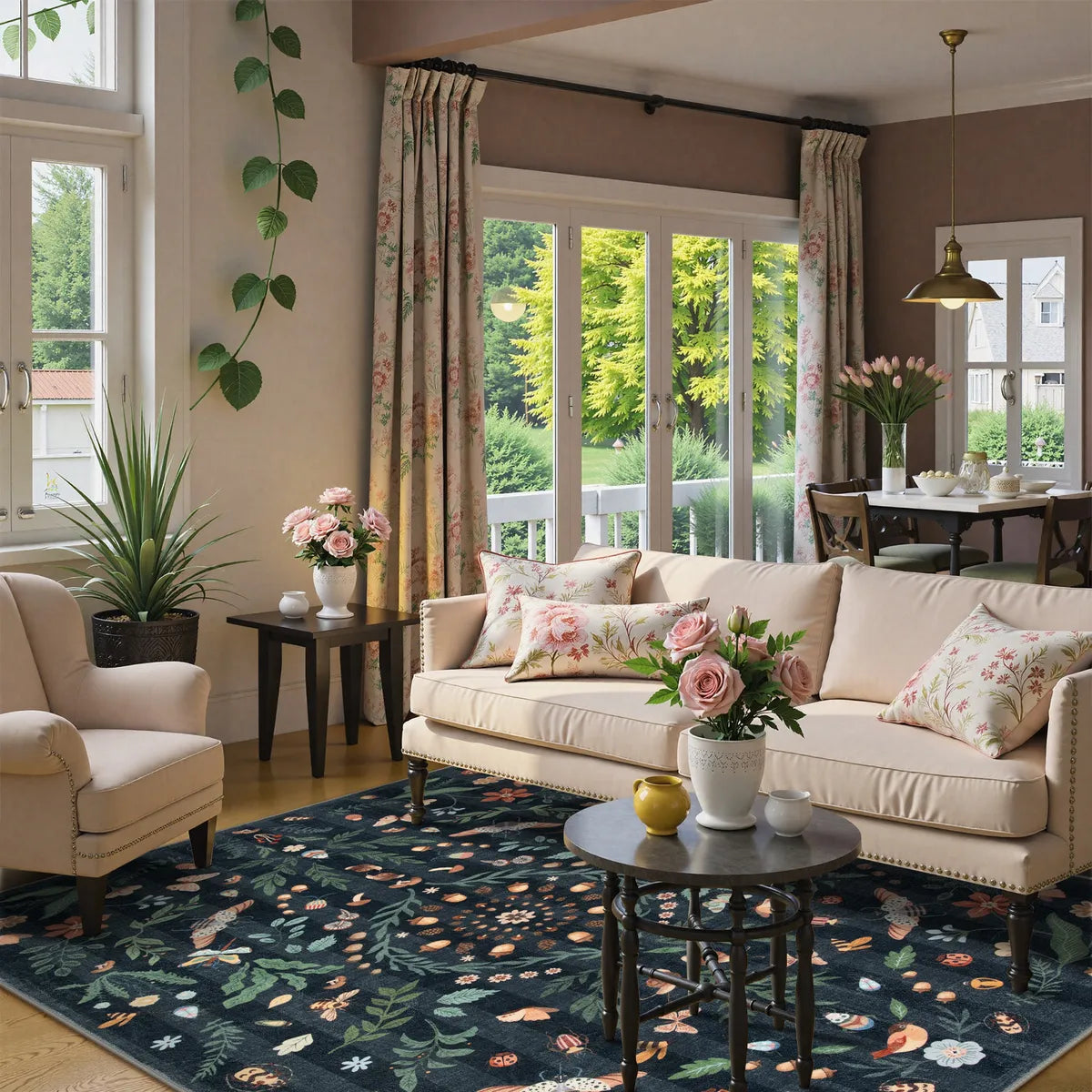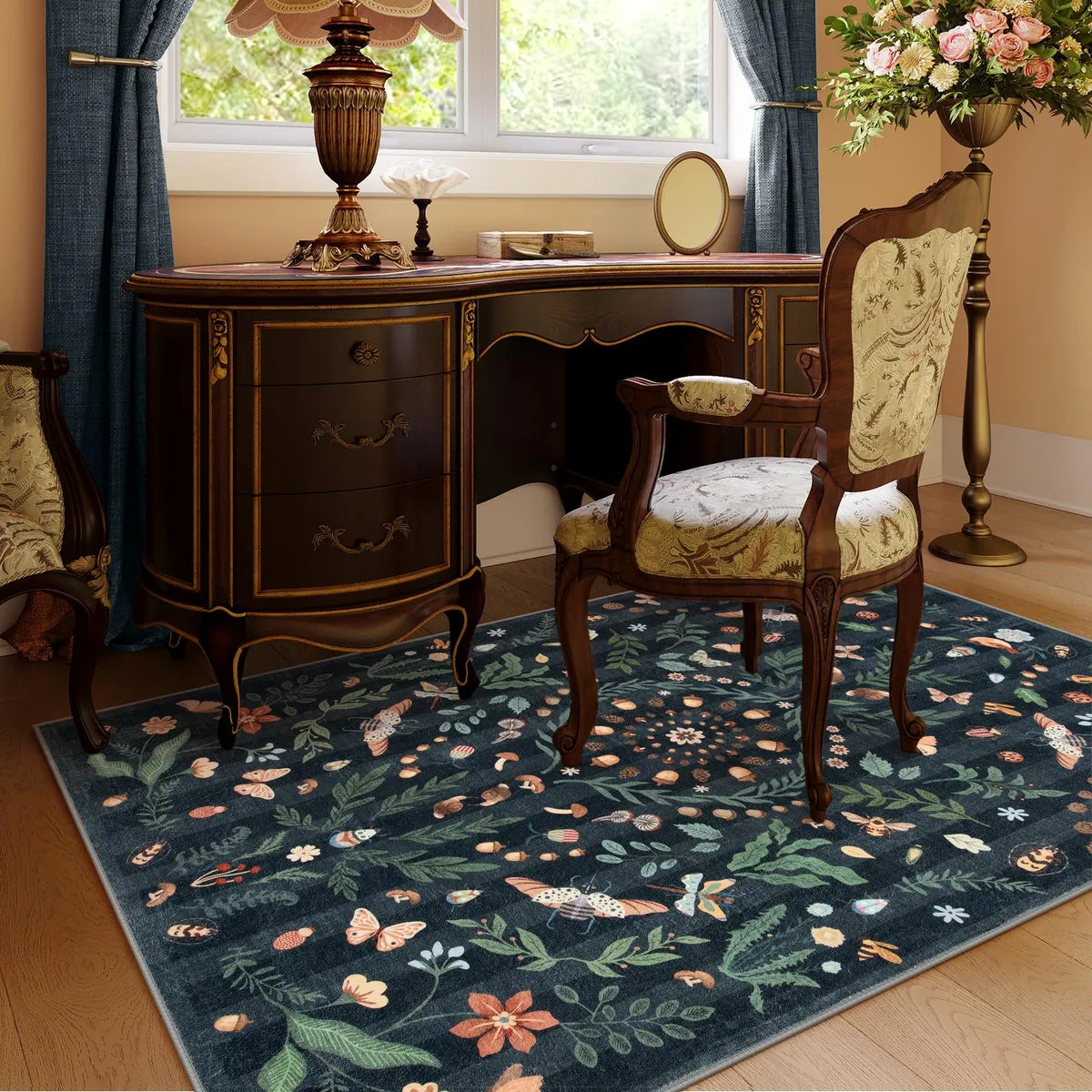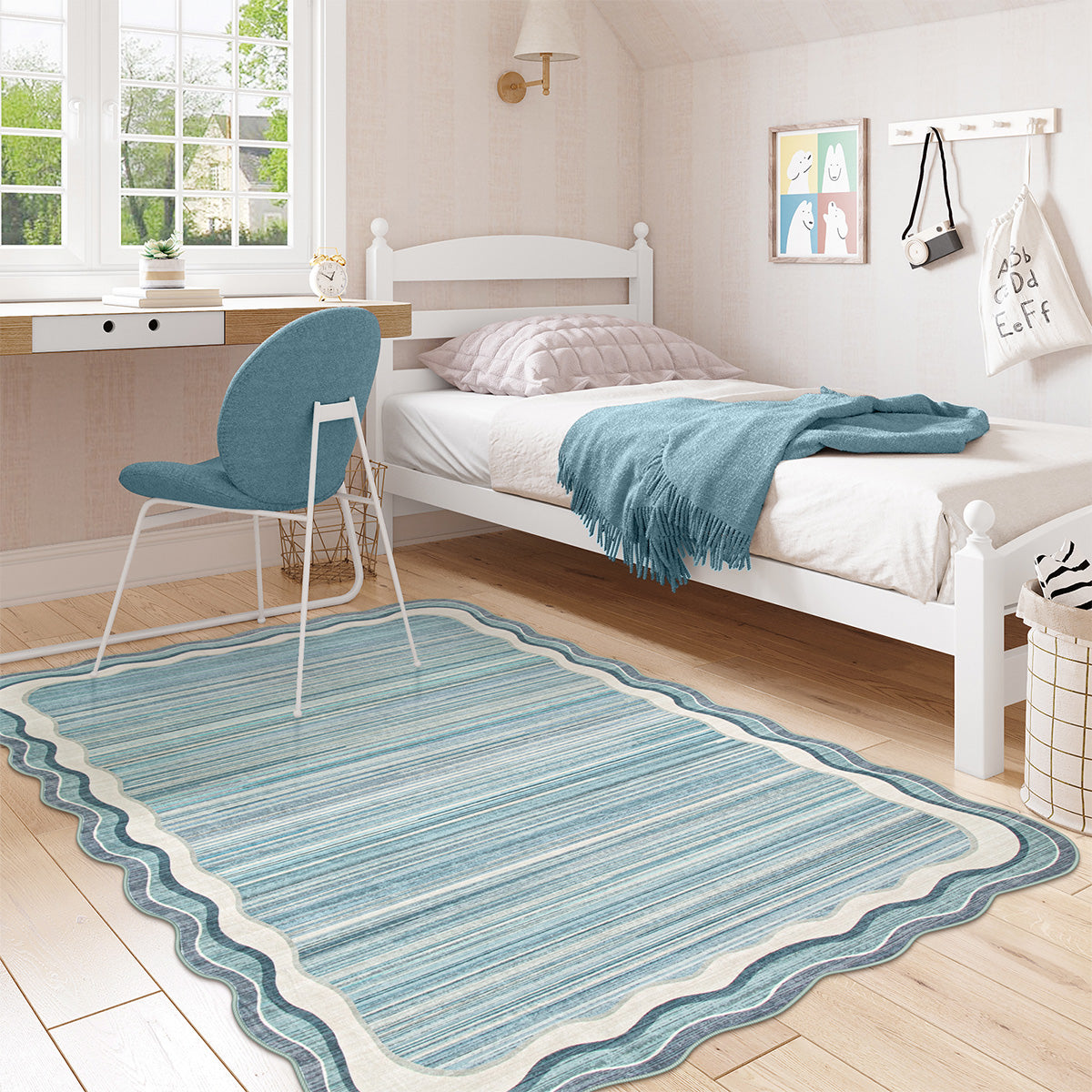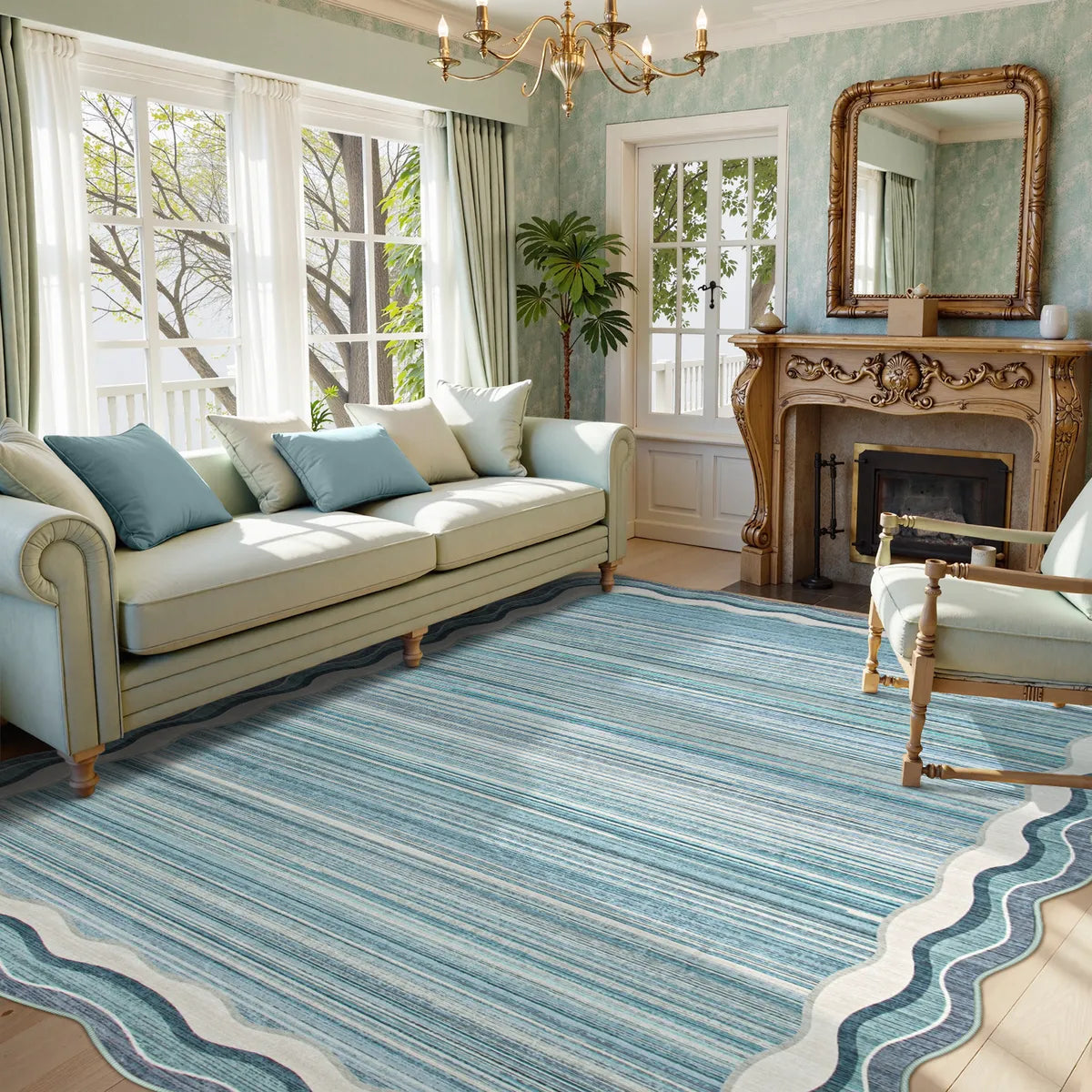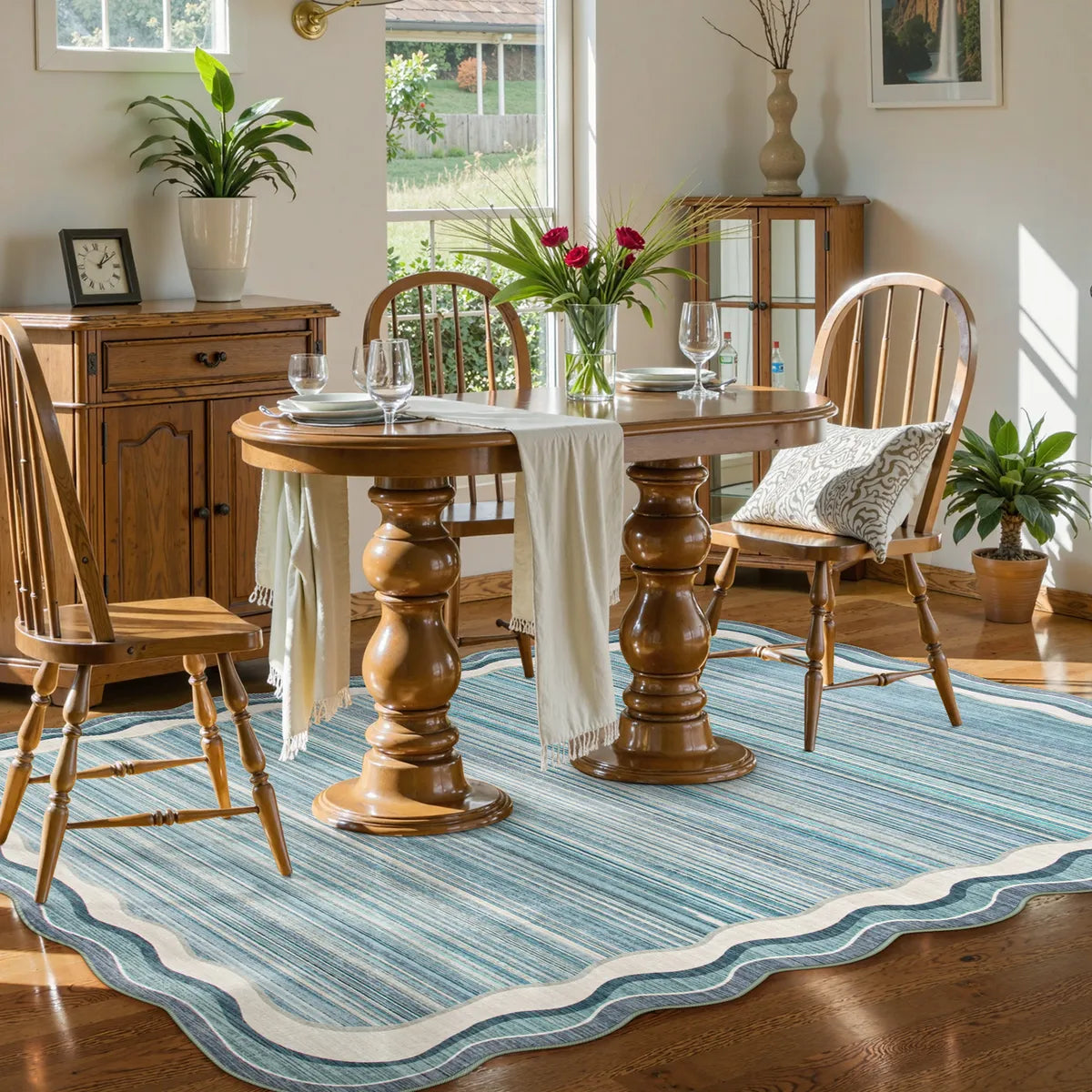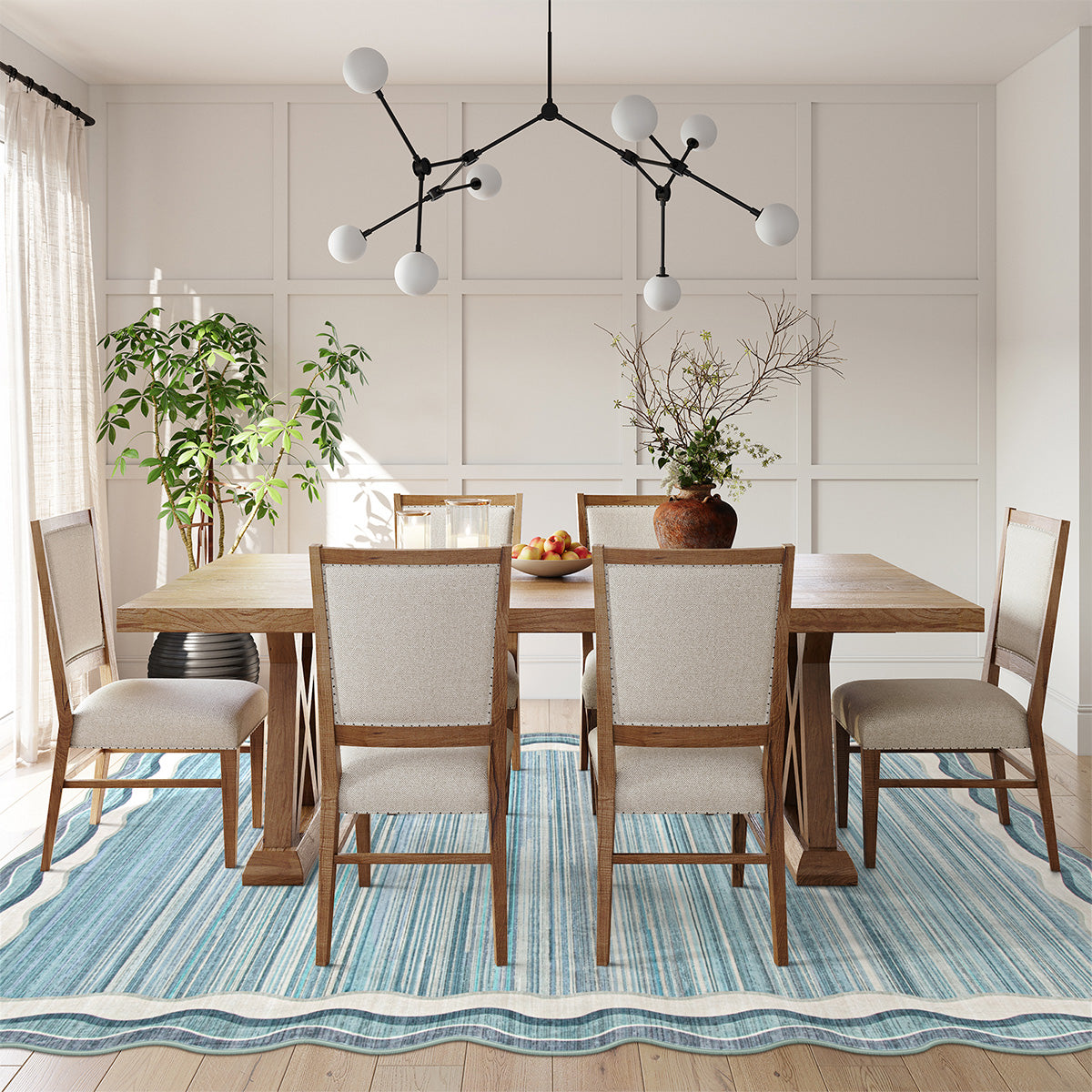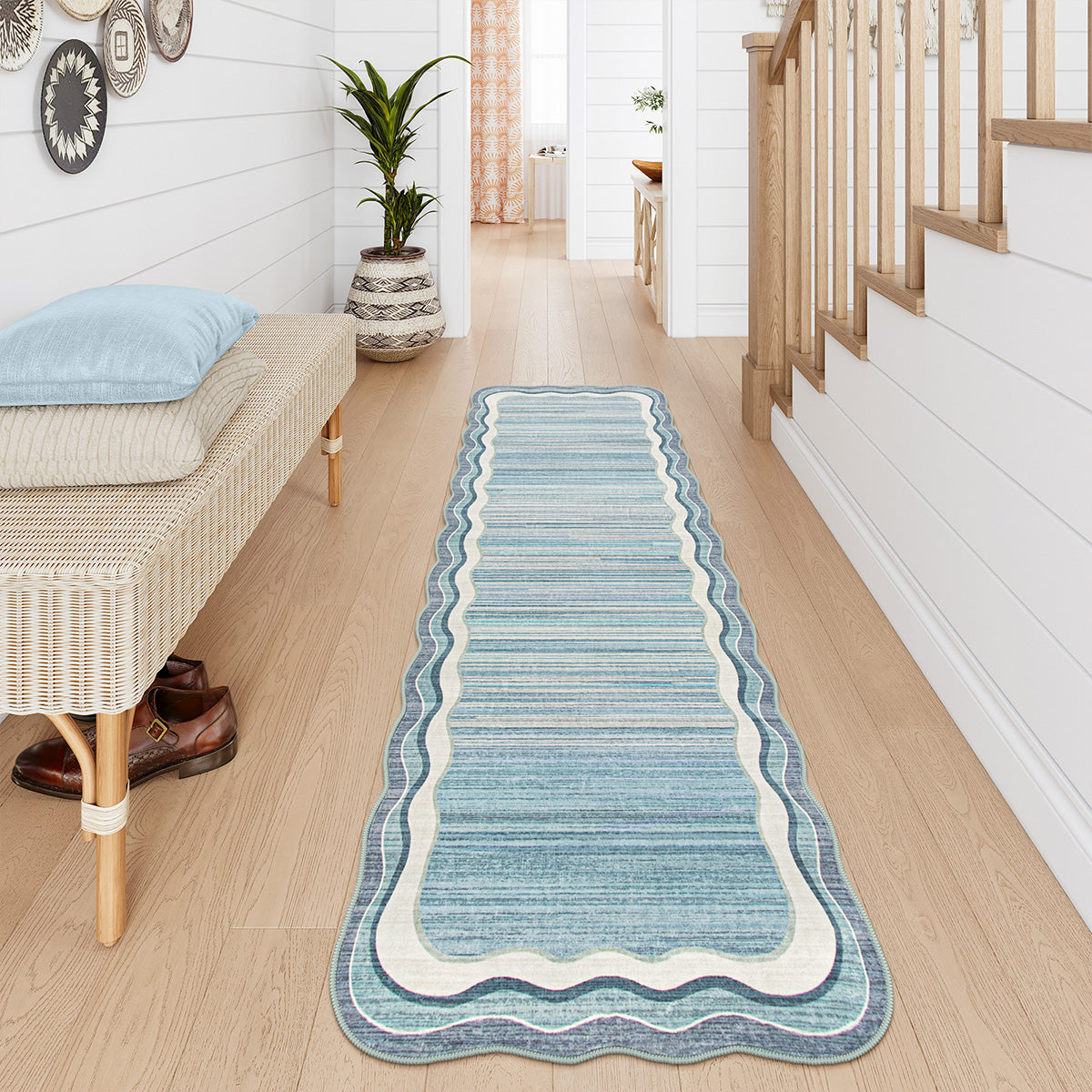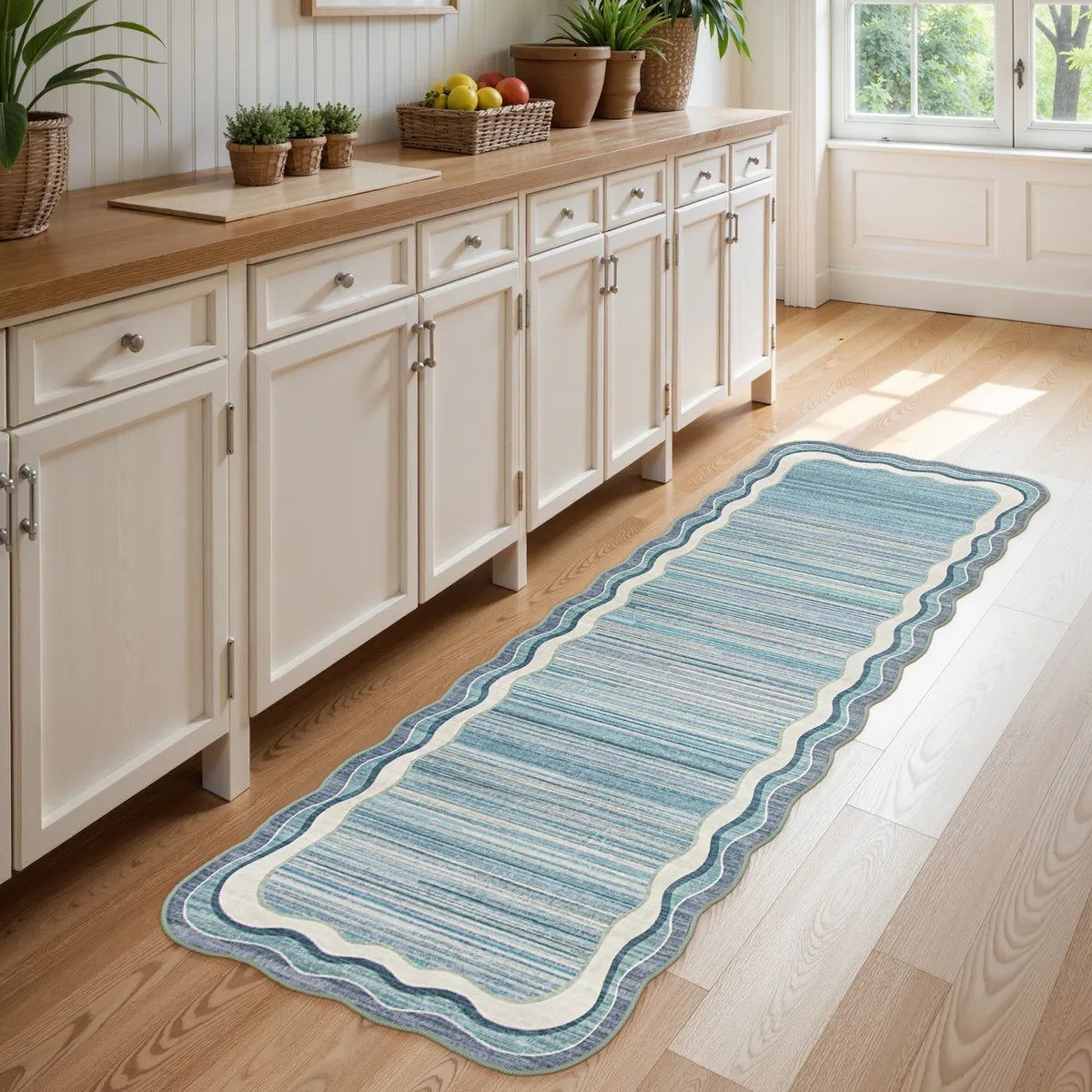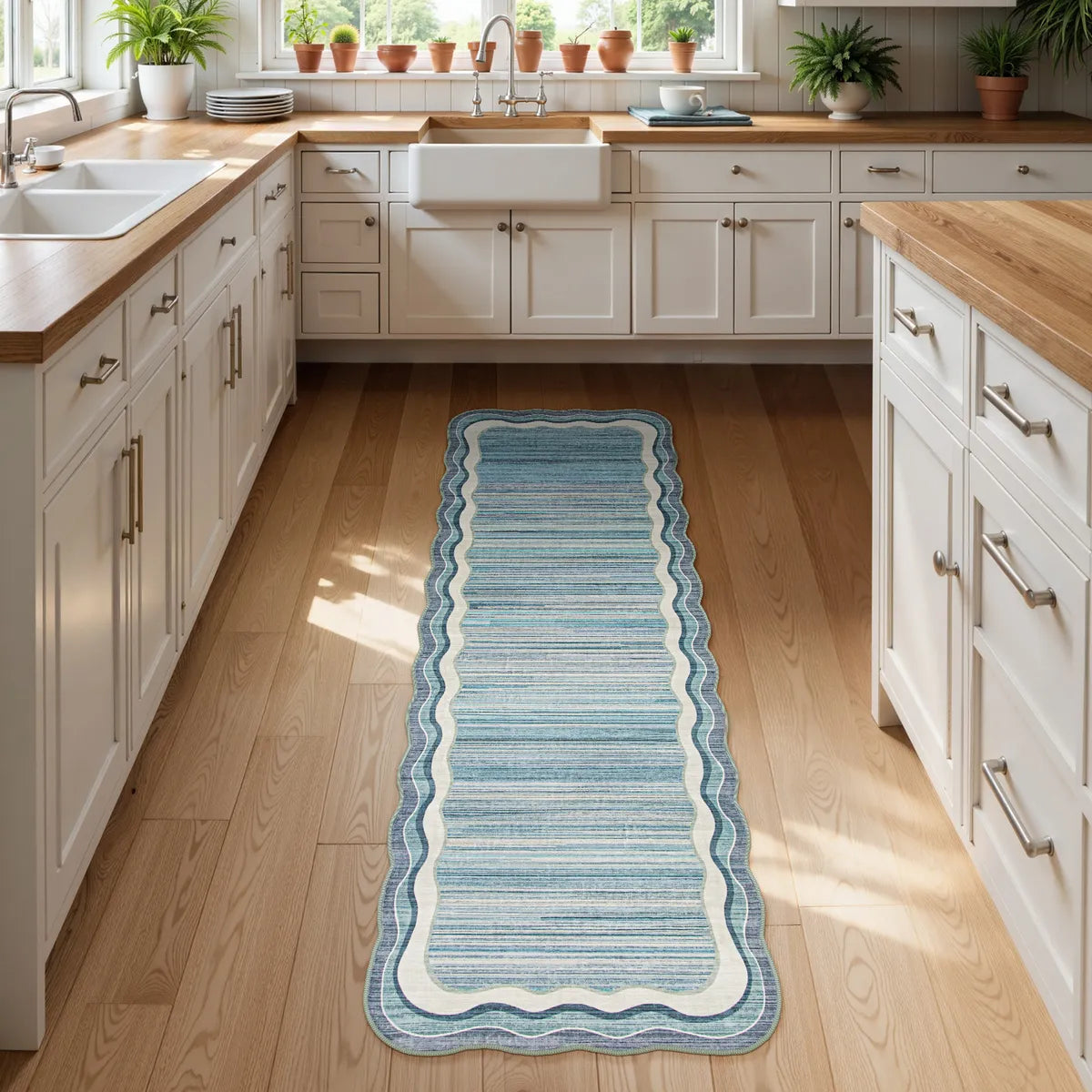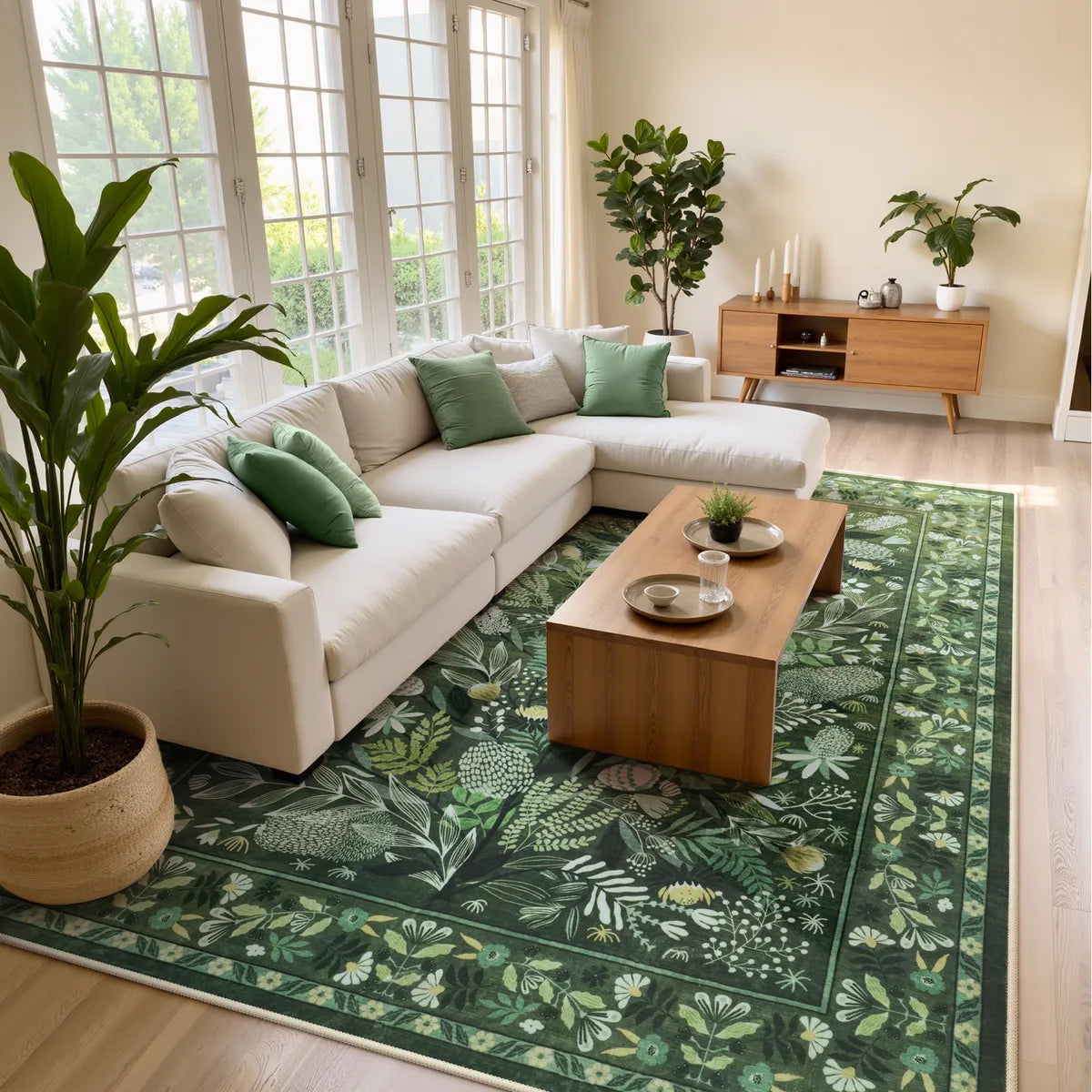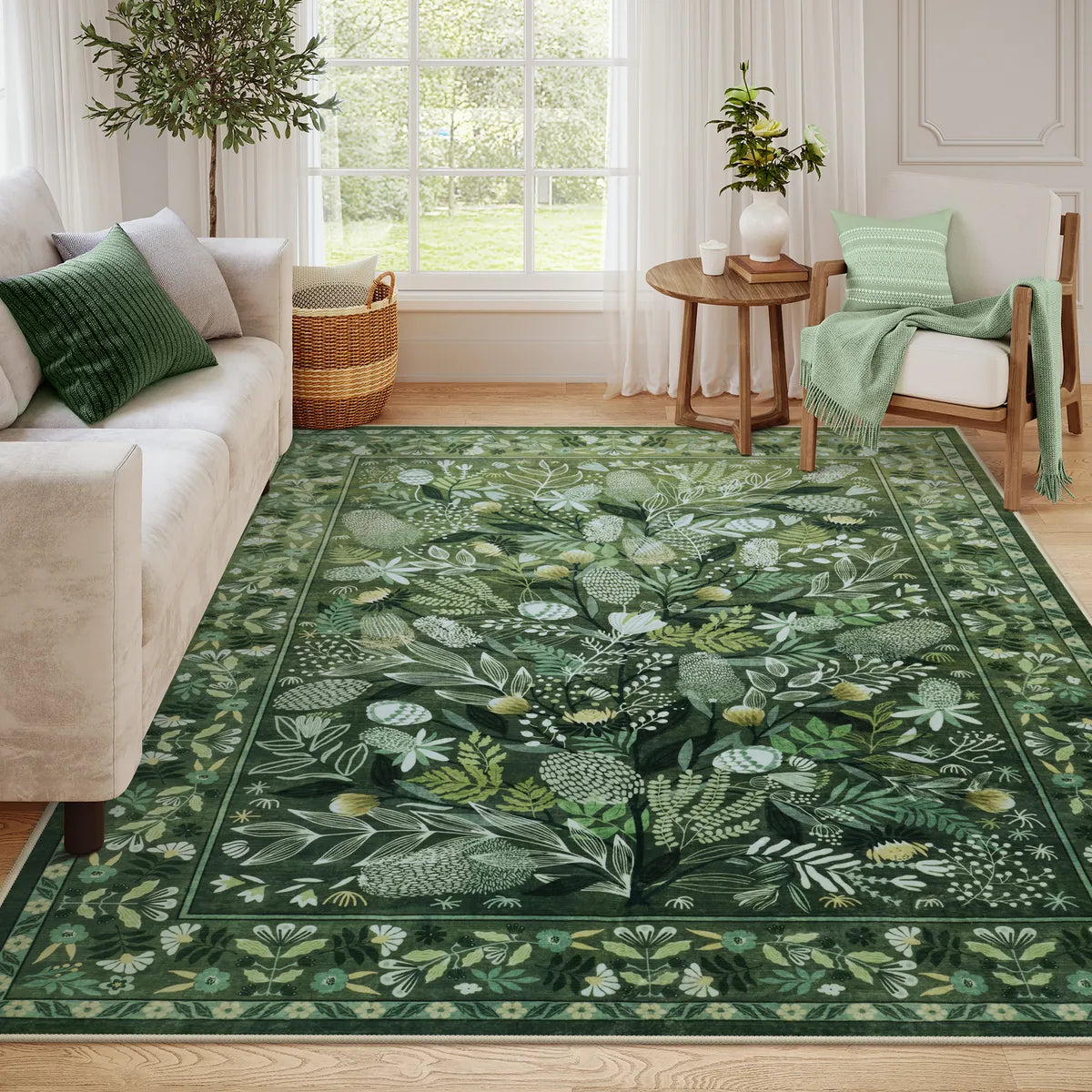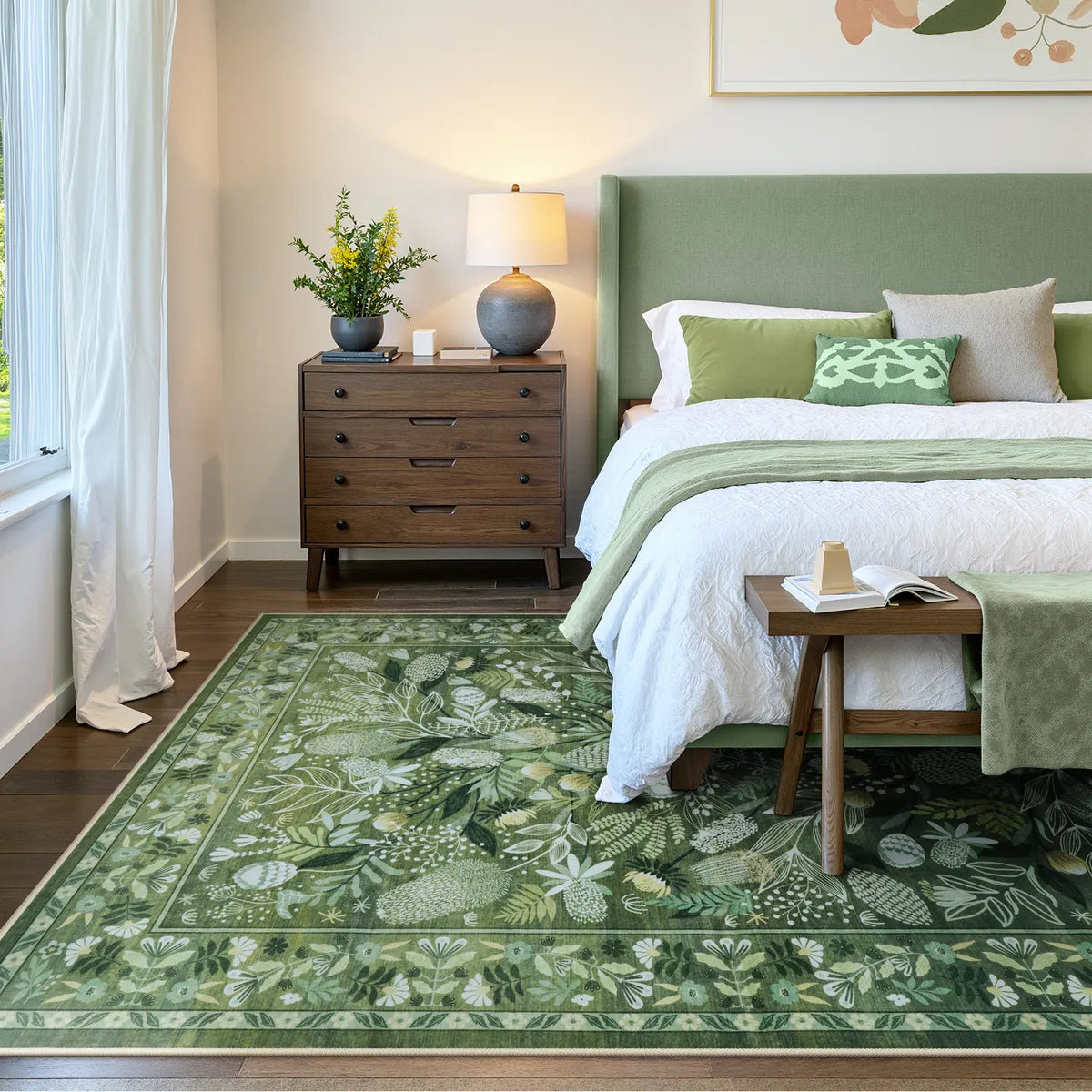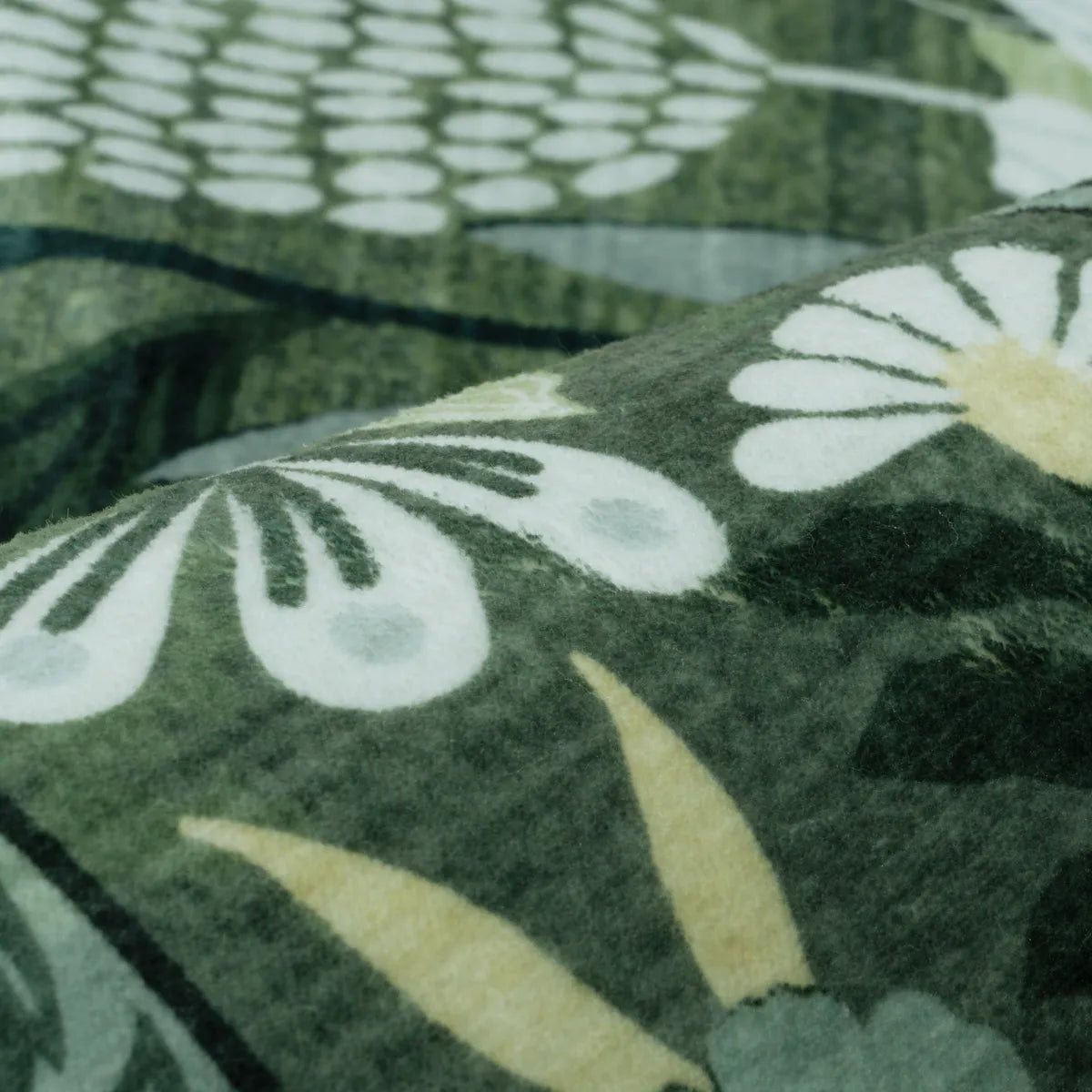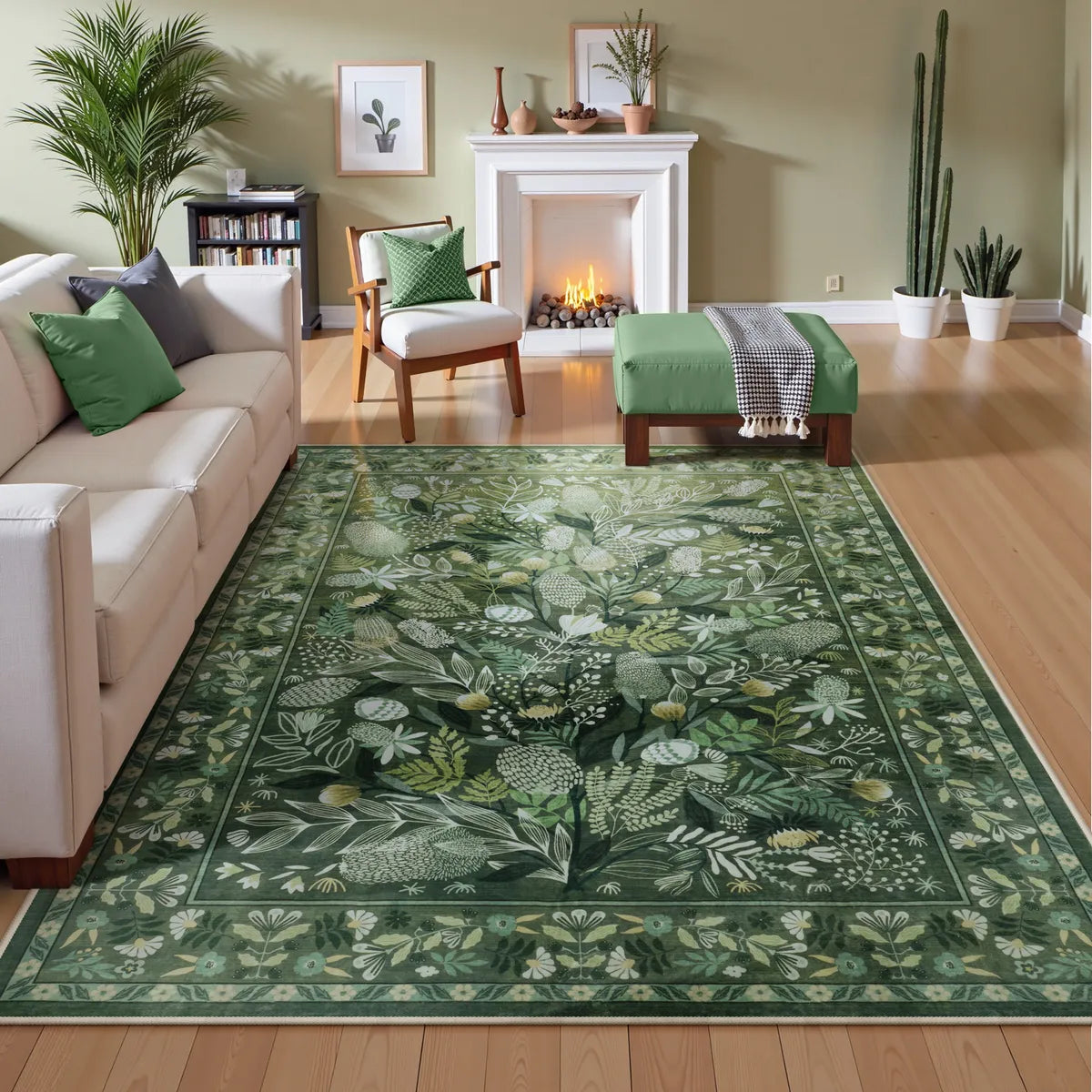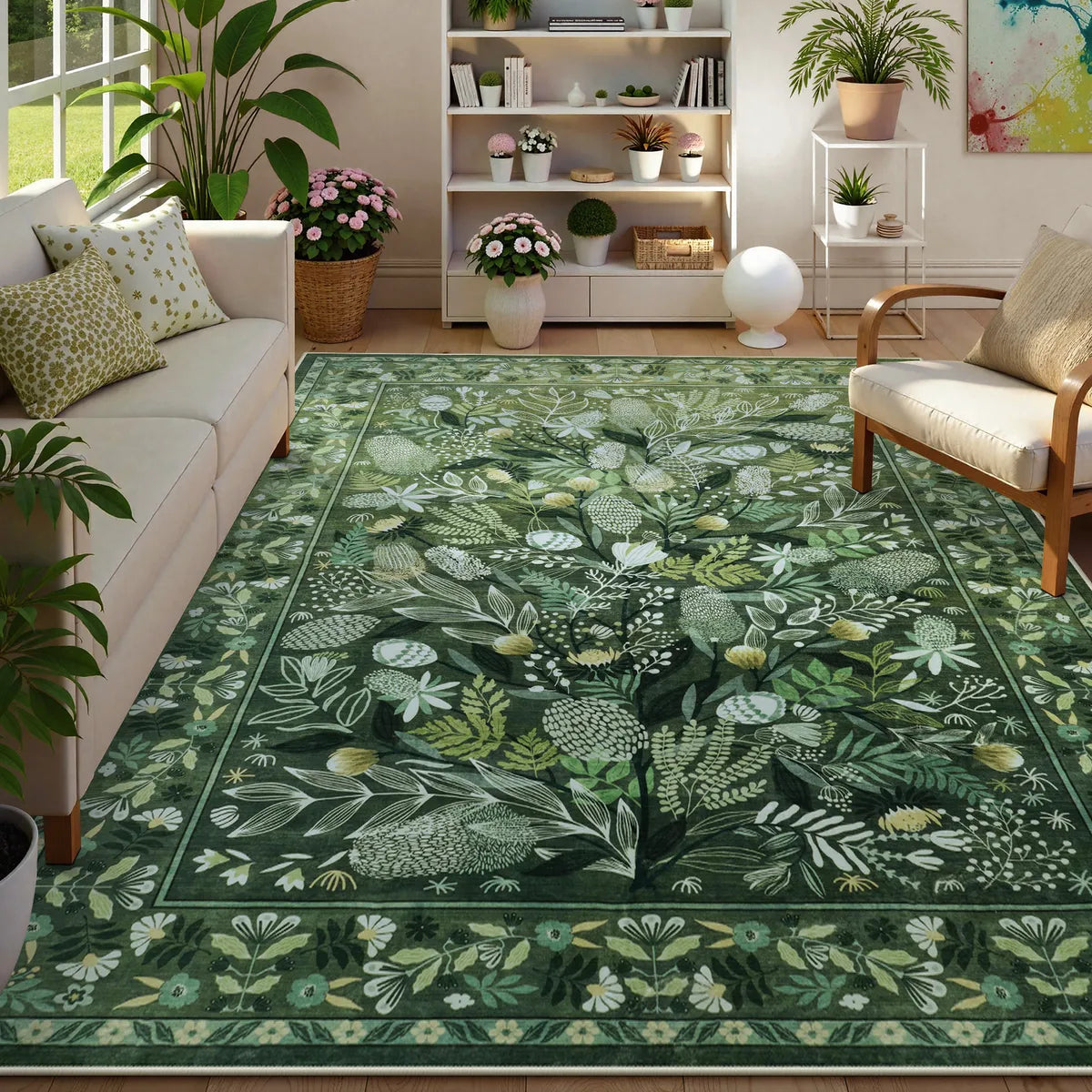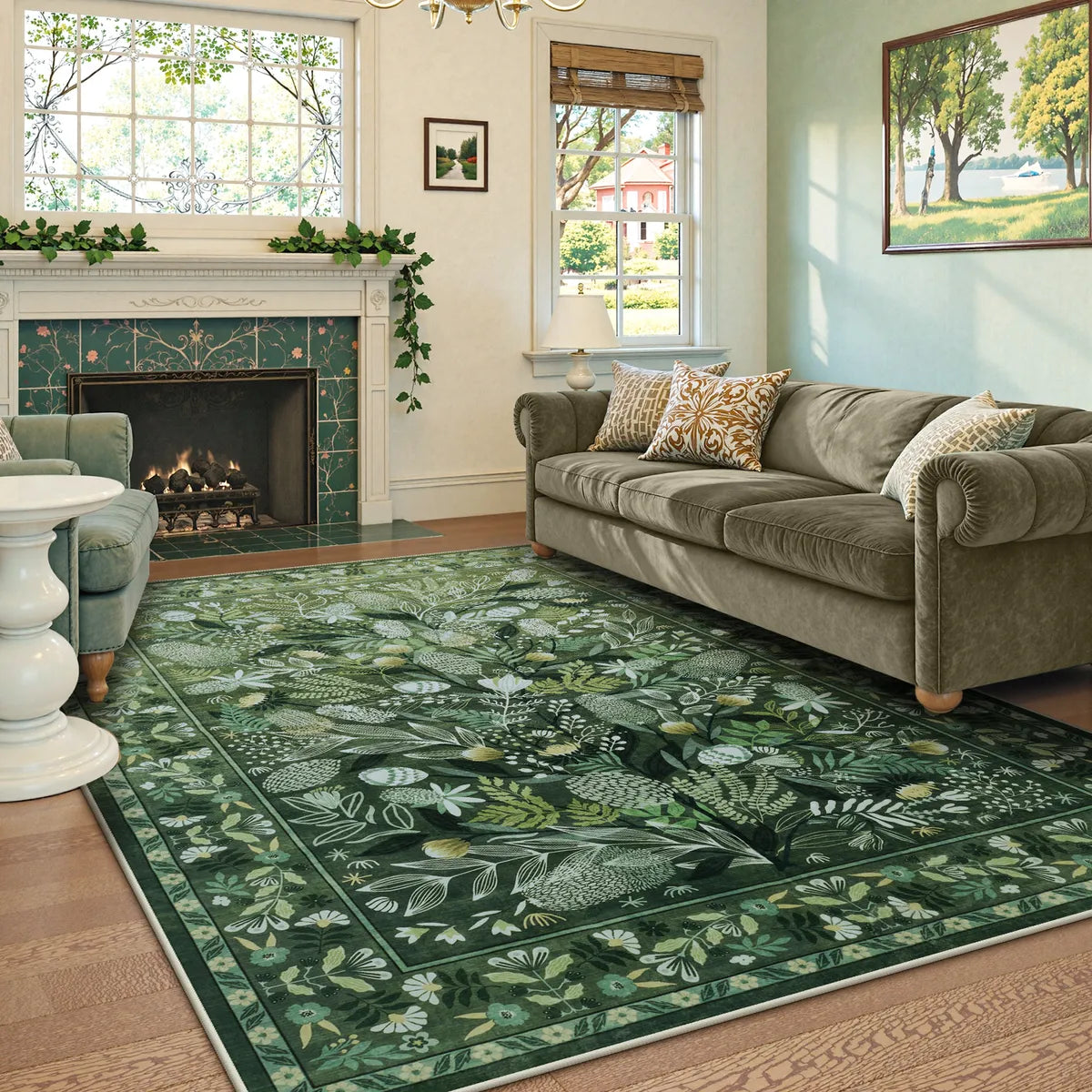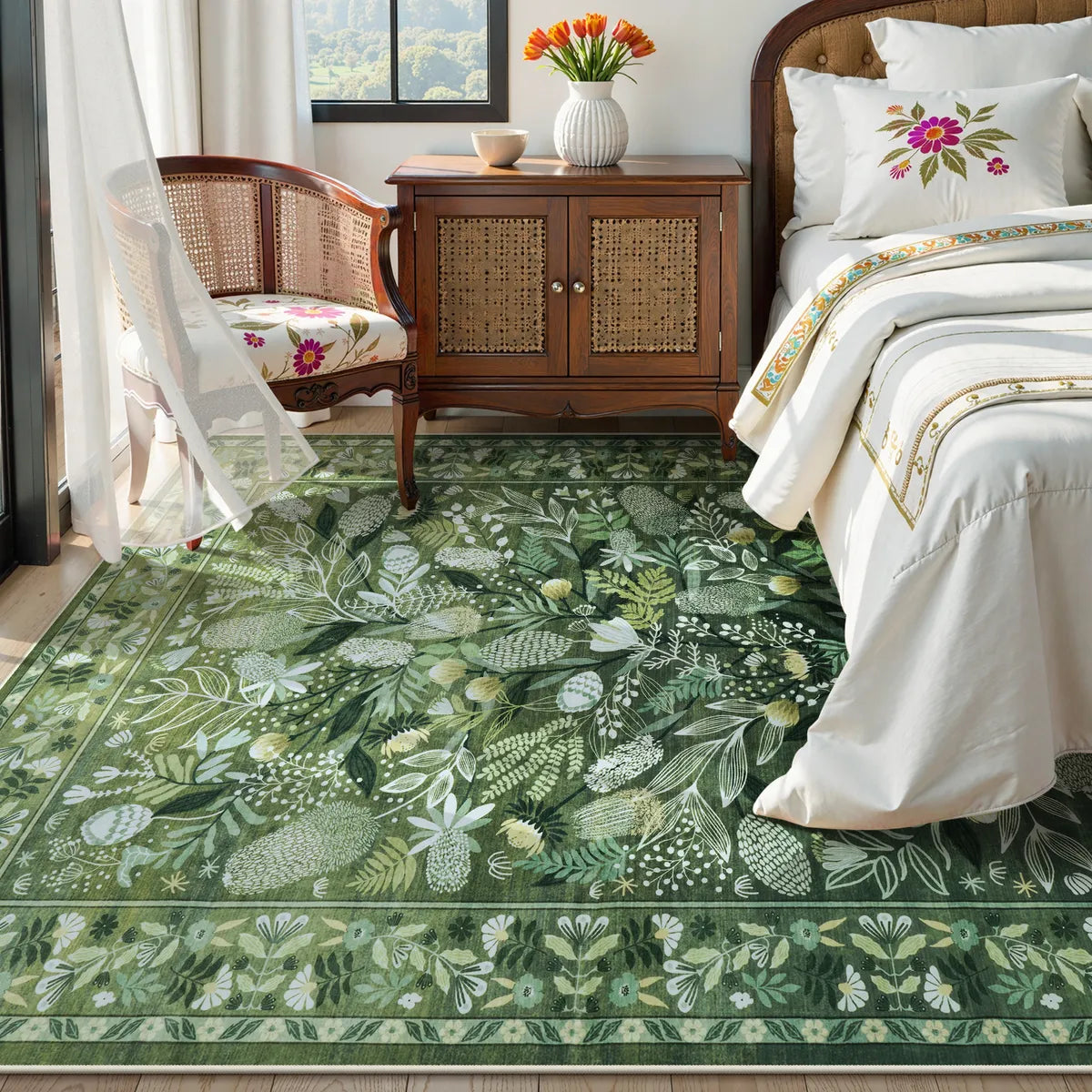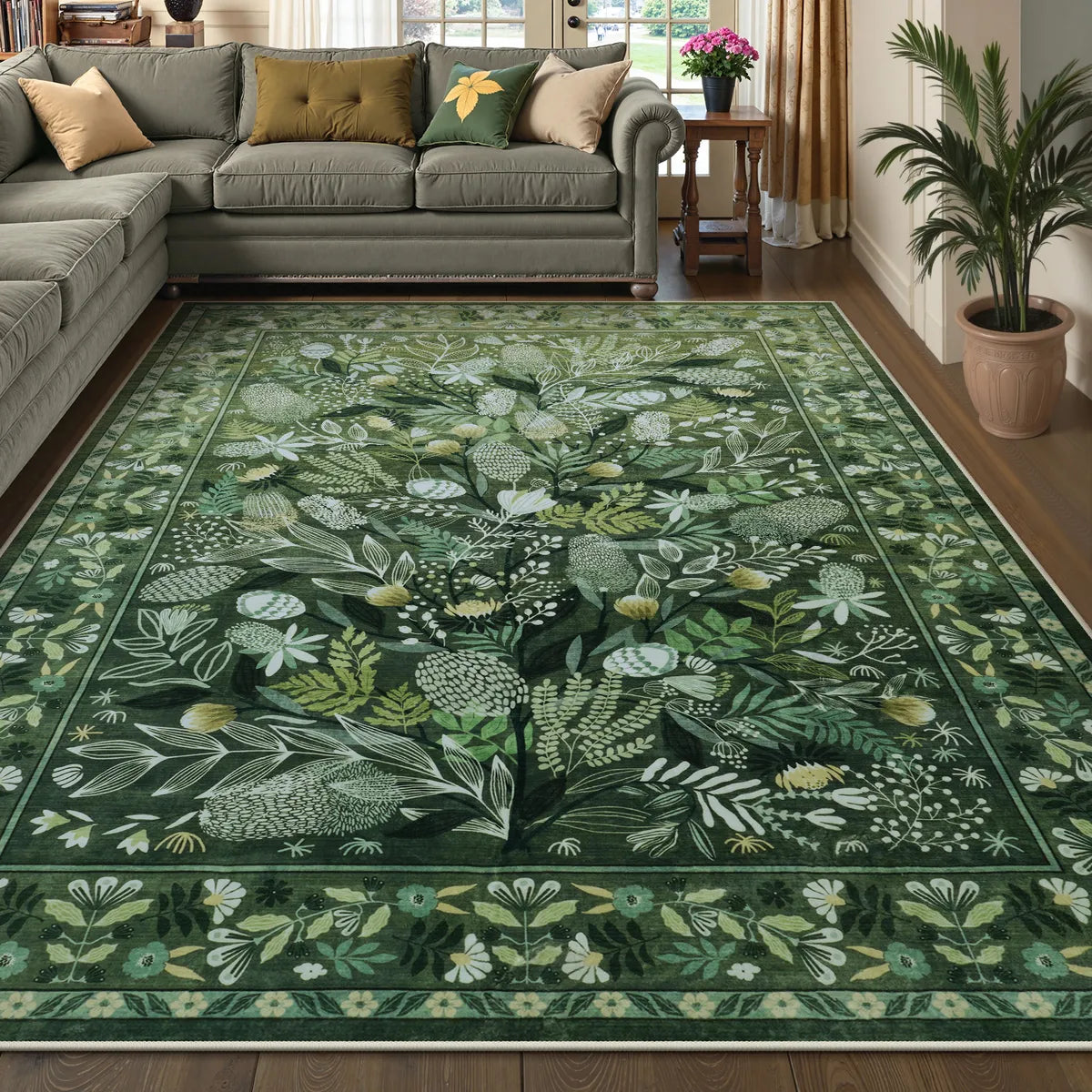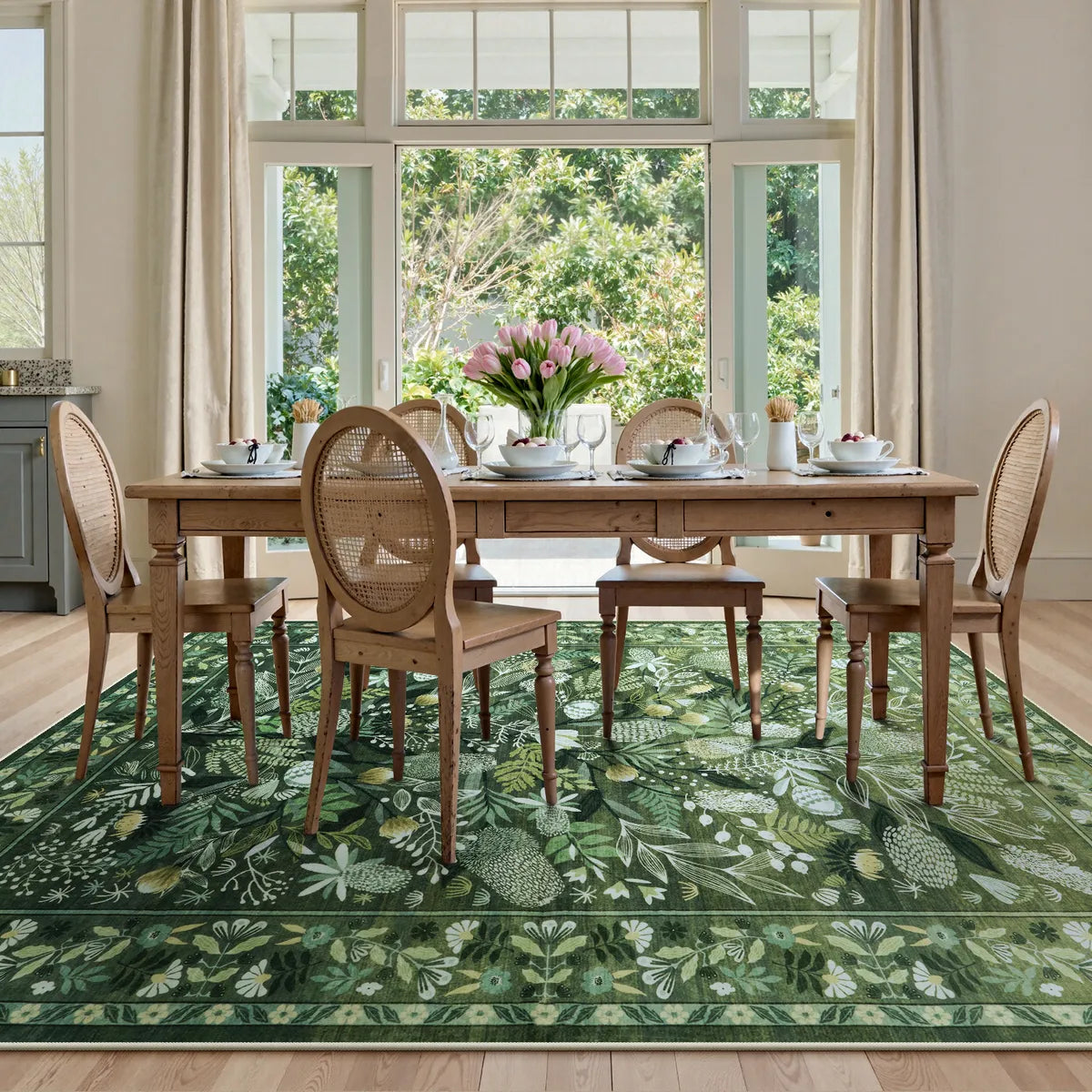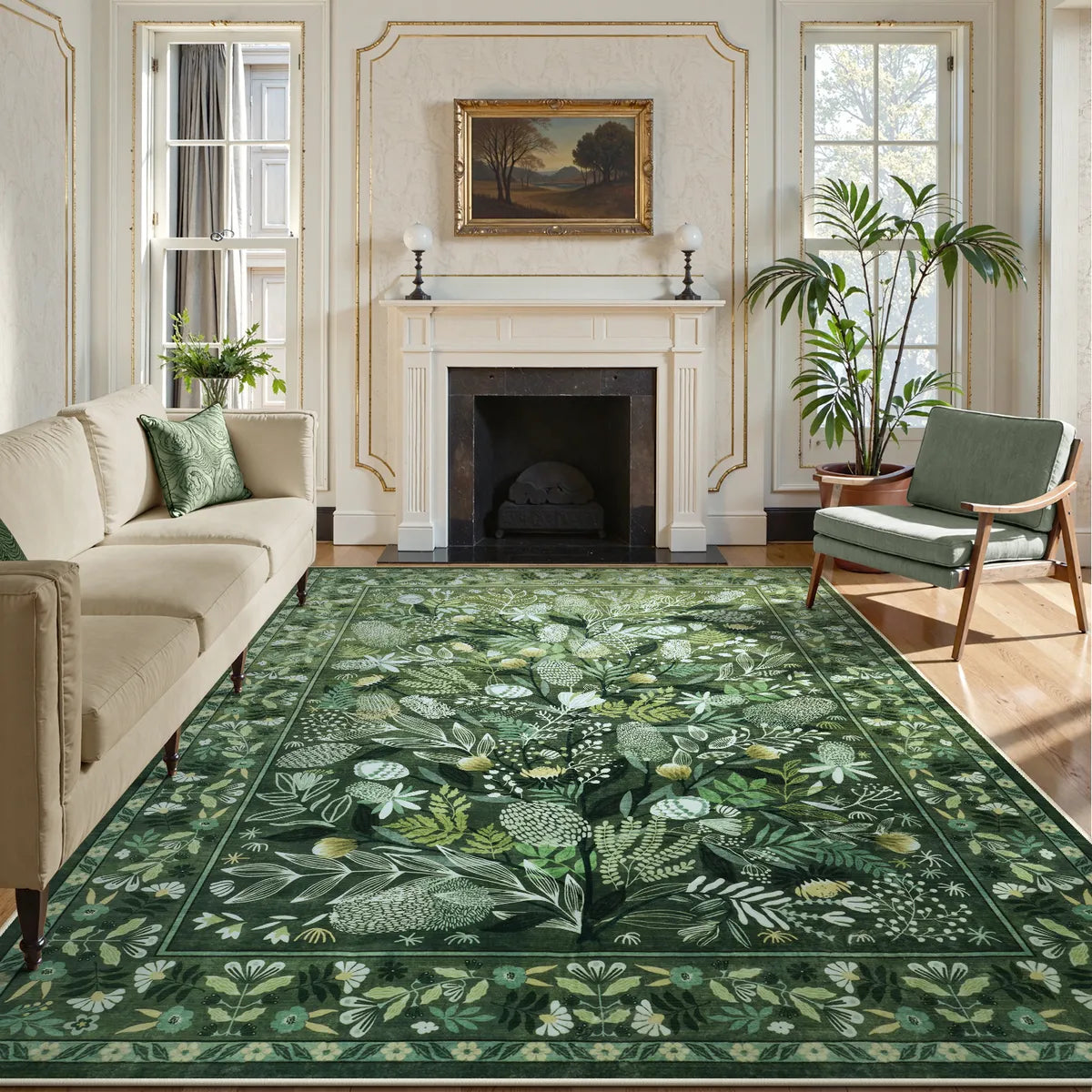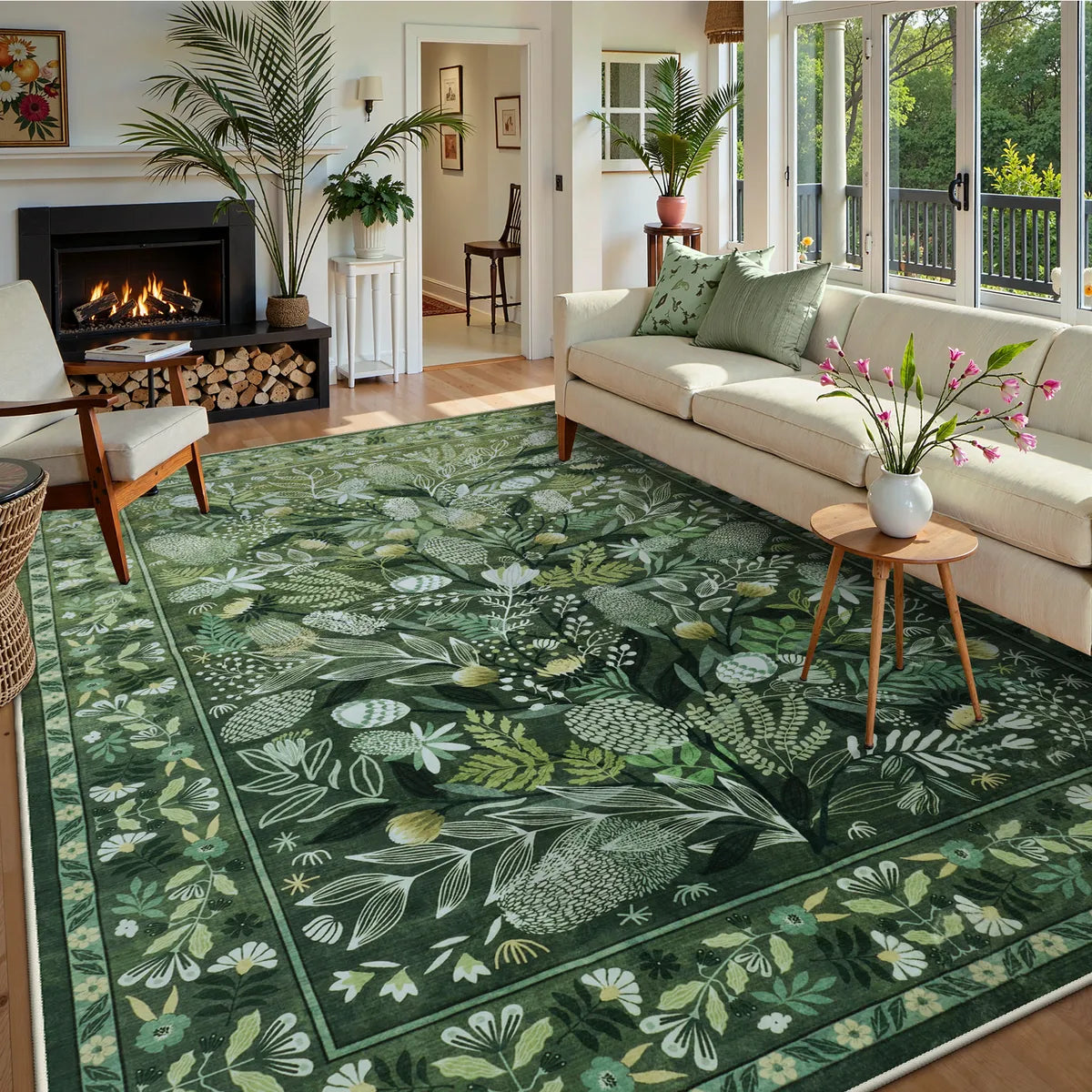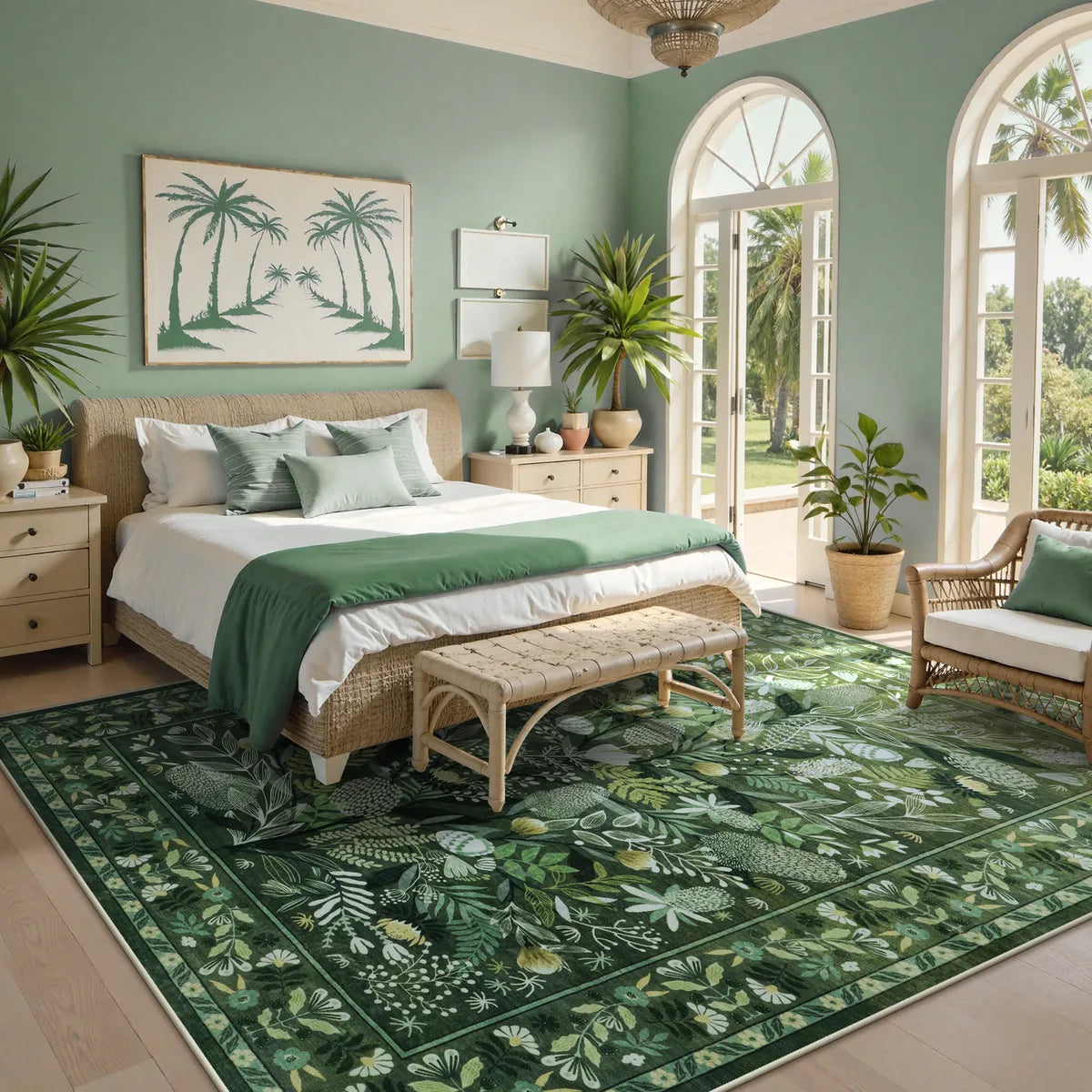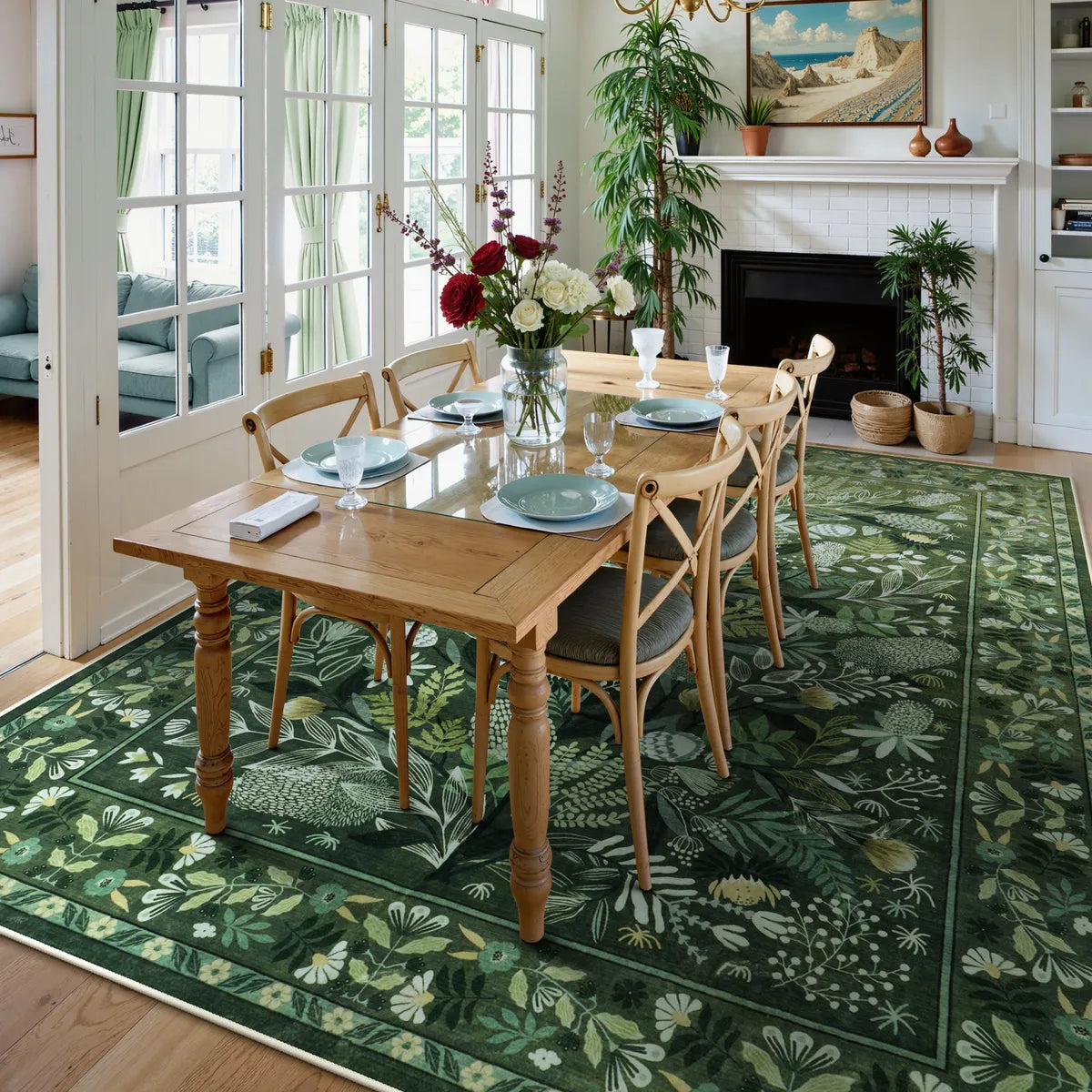


The best dining room rug is large enough for the table and every chair to remain on the rug—even when the chairs are pulled out. As a practical starting point, add 48–60 inches to both the length and width of the tabletop, which creates about 24–30 inches of rug beyond each side.
Dining Table and Rug Size Guide
| Dining table | Common minimum rug size | What to check |
|---|---|---|
| 4-seat rectangular table | 6x9 or 8x10 | Measure the table and pulled-out chair depth; compact rooms may still require 8x10. |
| 6-seat rectangular table | 8x10 | Use 9x12 when the table is long, chairs are deep, or the room has more space. |
| 8-seat rectangular table | 9x12 | Large or extendable tables may need 10x14. |
| 42–48 inch round table | 8-foot round or 8x8 | A round rug mirrors the table; a square rug can also work in a square room. |
| 54–60 inch round table | 9-foot round or larger | Confirm that chair legs stay on the rug when fully pulled out. |
These are starting points, not substitutes for measuring. Also leave visible flooring between the rug and the walls so the dining area does not feel wall-to-wall carpeted.
The 24–30 Inch Dining Rug Rule
The "24-inch rule" forms the foundation of a professional dining room rug size guide. This principle states that your rug should extend at least 24 inches beyond the table edge on all sides. When you pull out a chair to sit down, it typically slides back 18 to 24 inches from the table. If your rug doesn't extend far enough, chair legs often catch on the rug edge when someone sits or stands, creating an annoying daily hassle.

This table outlines ideal dimensions based on common seating ranges to help you find the correct rug size for dining room layouts.
| Seating Capacity | Typical Table Dimensions | Recommended Rug Size |
| 2 to 4 People | 36" to 42" Diameter / Width | 6' x 9' or 8' Round |
| 4 to 6 People | 36" x 60" to 40" x 72" | 8' x 10' |
| 6 to 8 People | 40" x 72" to 42" x 90" | 8' x 10' or 9' x 12' |
| 8 to 10 People | 42" x 90" to 48" x 100" | 9' x 12' or 10' x 14' |
| 12+ People | 48" x 110" and Larger | 12' x 15' Large Dining Room Rug |
Selecting a size slightly larger than the minimum requirement is always safer than going smaller. This buffer ensures that even an enthusiastic push of a chair keeps the furniture safely on the fiber surface.
Standard 8x10 and 9x12 Large Area Rugs
Most residential dining rooms fall into two main categories when it comes to standard rug sizes. Choosing between these common options depends primarily on your seating capacity and the overall footprint of the room.

An 8x10 rug for dining room setups is the most versatile choice for standard six-person sets. It provides ample coverage for tables around 6 feet long while leaving enough exposed floor around the perimeter to keep the room feeling airy.
For those with larger families or tables that seat eight people, a 9x12 rug for dining room placement is necessary. This larger scale accommodates the extra length of the table and ensures that the head chairs (chairs at the far ends) remain stable. Large area rugs like these are also excellent for defining the dining zone in open-concept homes where walls do not separate the eating area from the living room.
Table Proportions and Rug Under Dining Table Shapes

The shape of your table largely determines which rug under dining table configurations work best. Different table geometries create distinct spatial requirements.
- Rectangular tables are the most forgiving. A rectangular rug that follows the table's proportions looks natural and efficient. The longer dimension of the rug aligns with the table's length, creating clean parallel lines. For rectangular tables, maintain similar proportions between the table and rug rather than using drastically different shapes.
- Round tables present unique challenges. While you can place a round table on a square or rectangular rug, a round rug often creates the most cohesive look. Calculate the diameter needed by measuring across the table's widest point and adding 48 inches. A 48-inch round table needs at least a 96-inch (8-foot) round rug. Round rugs under round tables eliminate corner gaps and create a flowing, unified aesthetic.
- Square tables work best with square rugs, though rectangular rugs can substitute if square options aren't available. A 48-inch square table should sit on at least a 96-inch square rug. The symmetry of square-on-square arrangements creates visual harmony and ensures equal clearance on all sides.
When selecting a large dining room rug, consider the room shape too. A long, narrow dining room may benefit from a runner-style rectangular rug even under a square table, as it better fills the available floor space. The rug for dining room layouts should balance both table needs and overall room proportions.
Key Features for the Right Size Dining Room Rugs
While accurate dimensions are vital, the material and physical properties of the rug define its long-term success. You need a surface that handles heavy foot traffic and accidental spills without losing its appeal.
Maintenance for a Large Washable Dining Room Rug
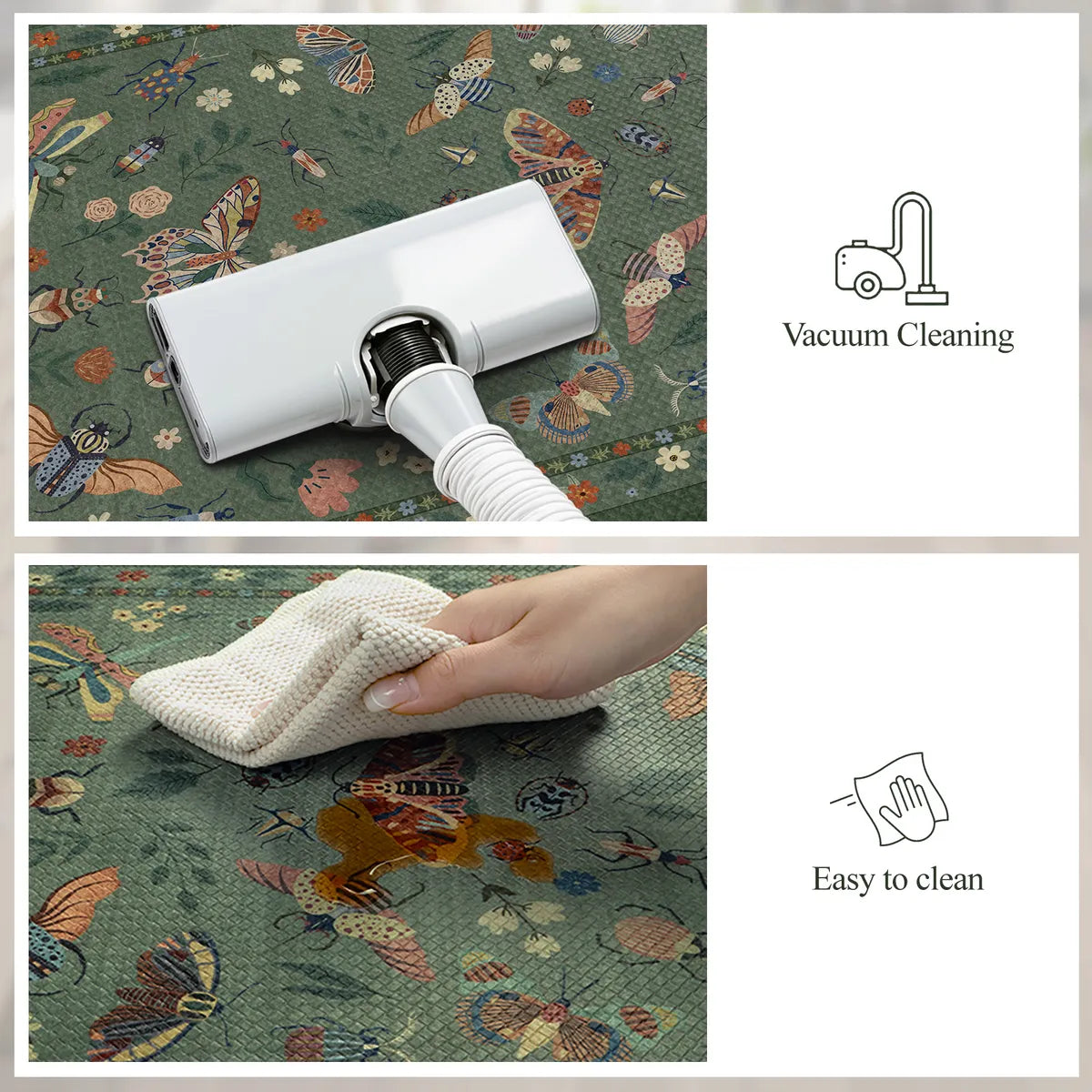
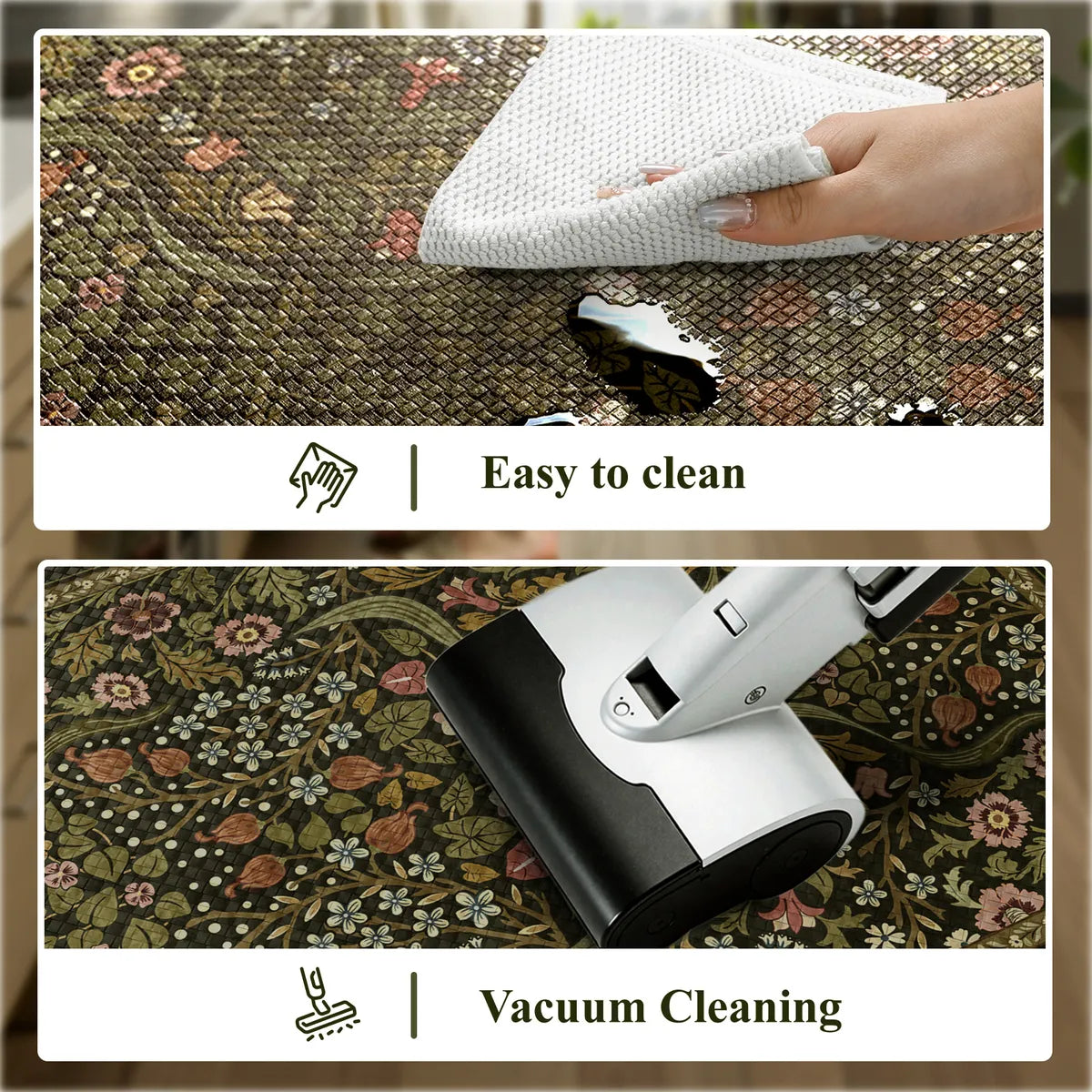
Large rugs often present cleaning challenges due to their weight and size. A washable dining room rug solves this issue by offering a lightweight design that compatible with home washers. This is why a washable dining room rug has become a top choice for modern households. Because the rug covers a large area where spills are inevitable, having a fabric that can be tossed into a high-capacity washing machine or easily scrubbed saves time and money.
Easy-Care and Stain-Resistant Dining Rug Features
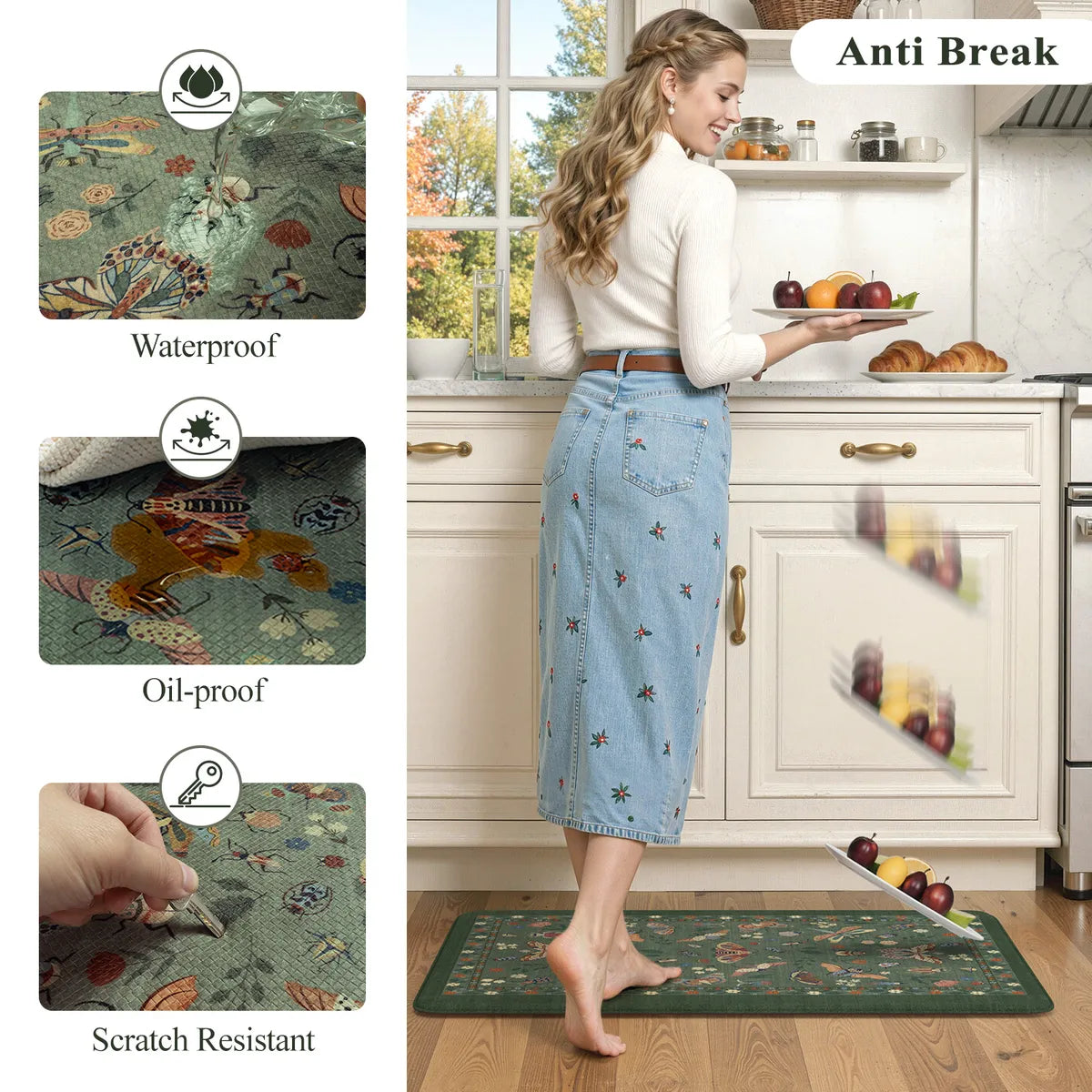
A stain-resistant dining room rug is treated with a protective barrier that prevents liquids from soaking into the fibers immediately. This feature is especially important for large area rugs that cannot be easily moved.
- Liquid Repellency: A spill-proof rug allows you to blot up wine or juice before it leaves a permanent mark.
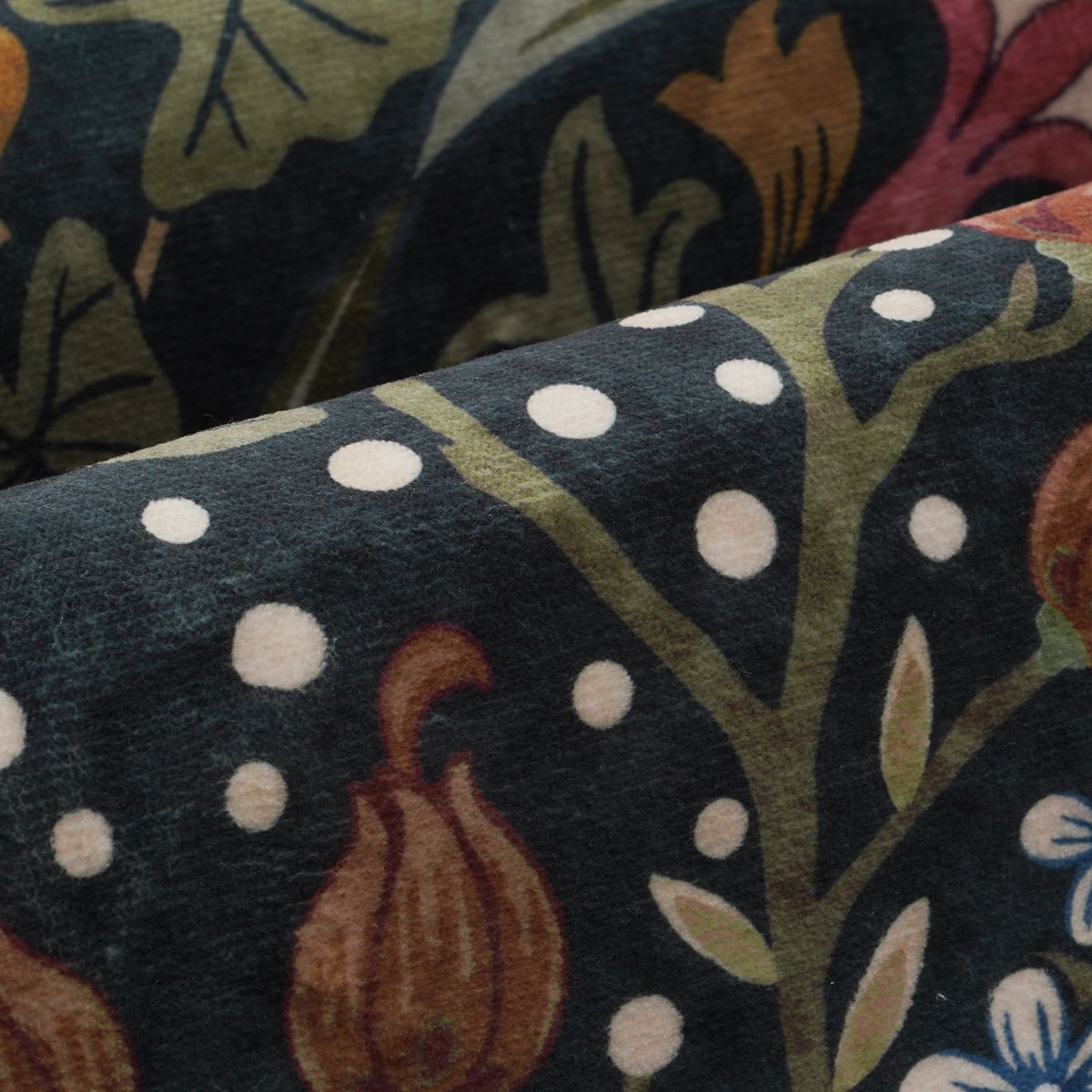
- Fiber Durability: Plush polyester fibers offer the best resistance to heavy use while providing a soft, warm texture underfoot.
- Longevity: Rugs with these treatments stay looking new even after years of family dinners.
Safety and Grip of a Non-Slip Dining Room Rug
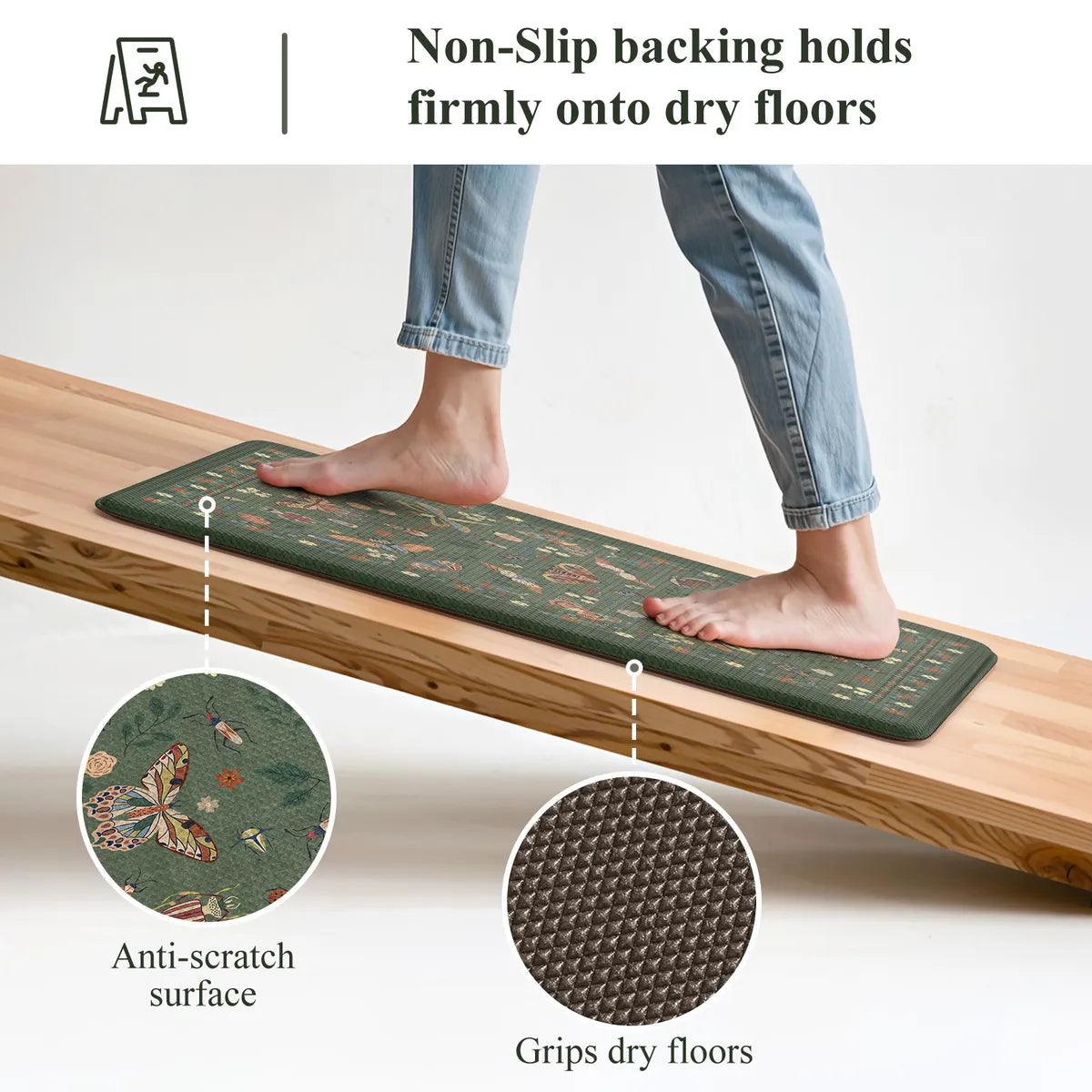
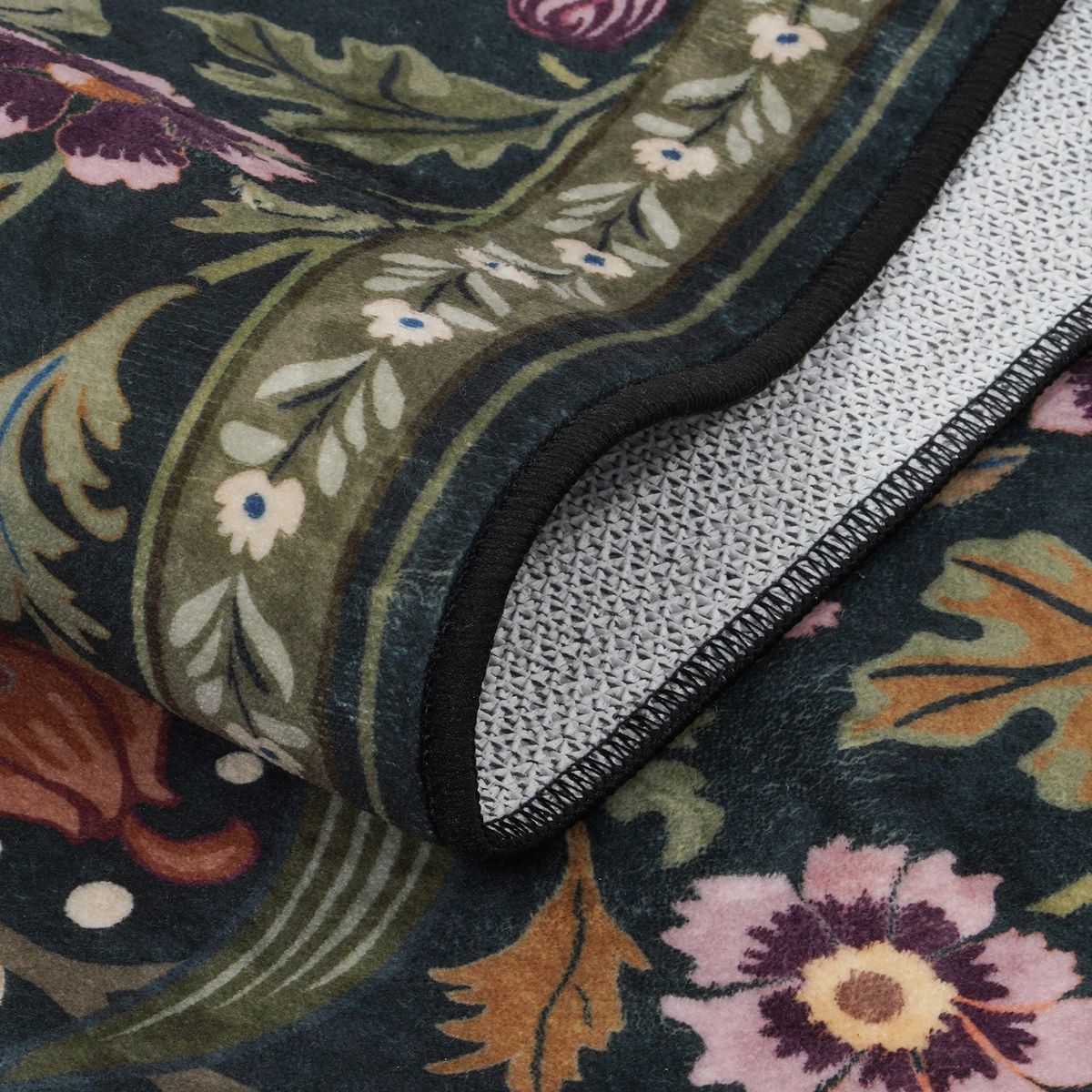
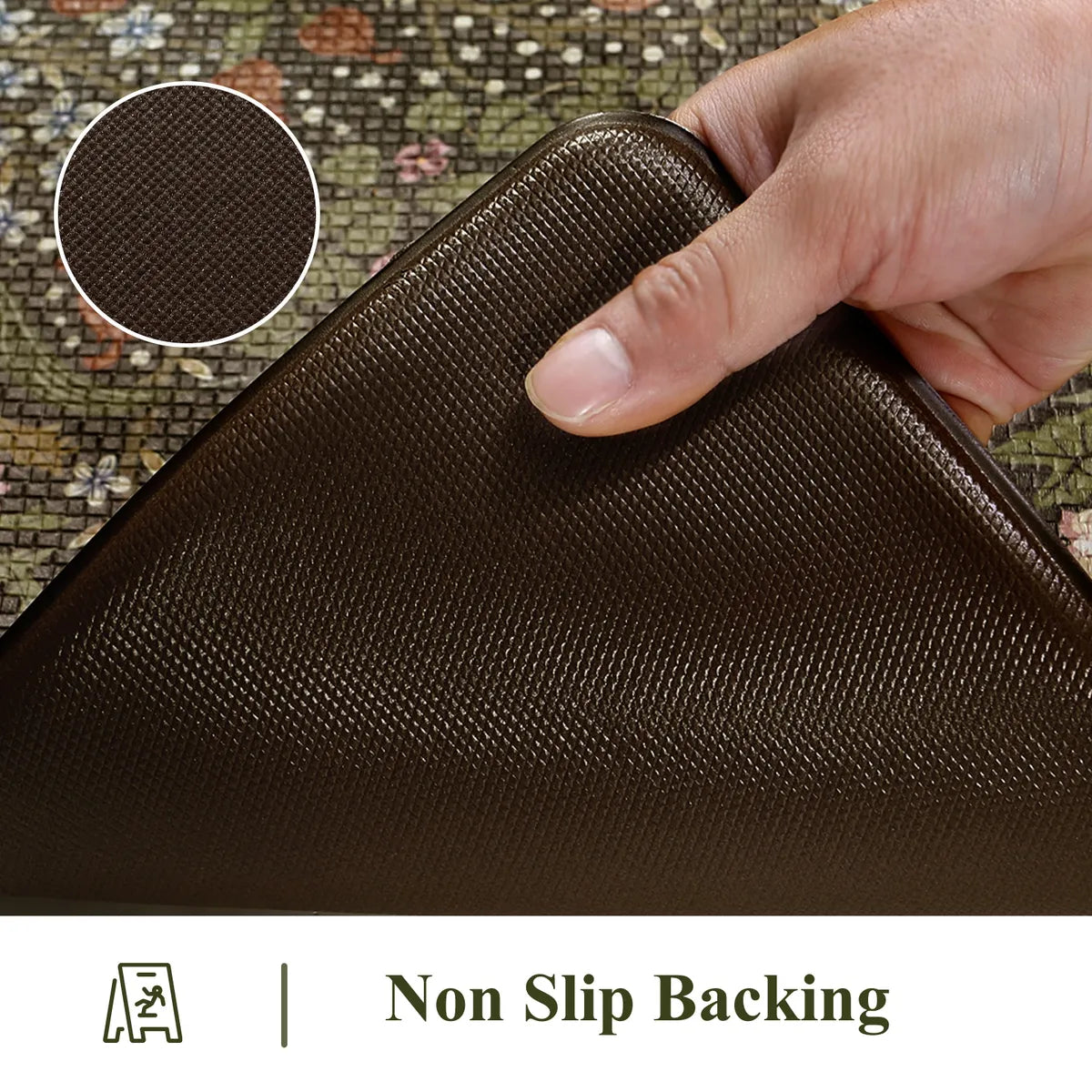
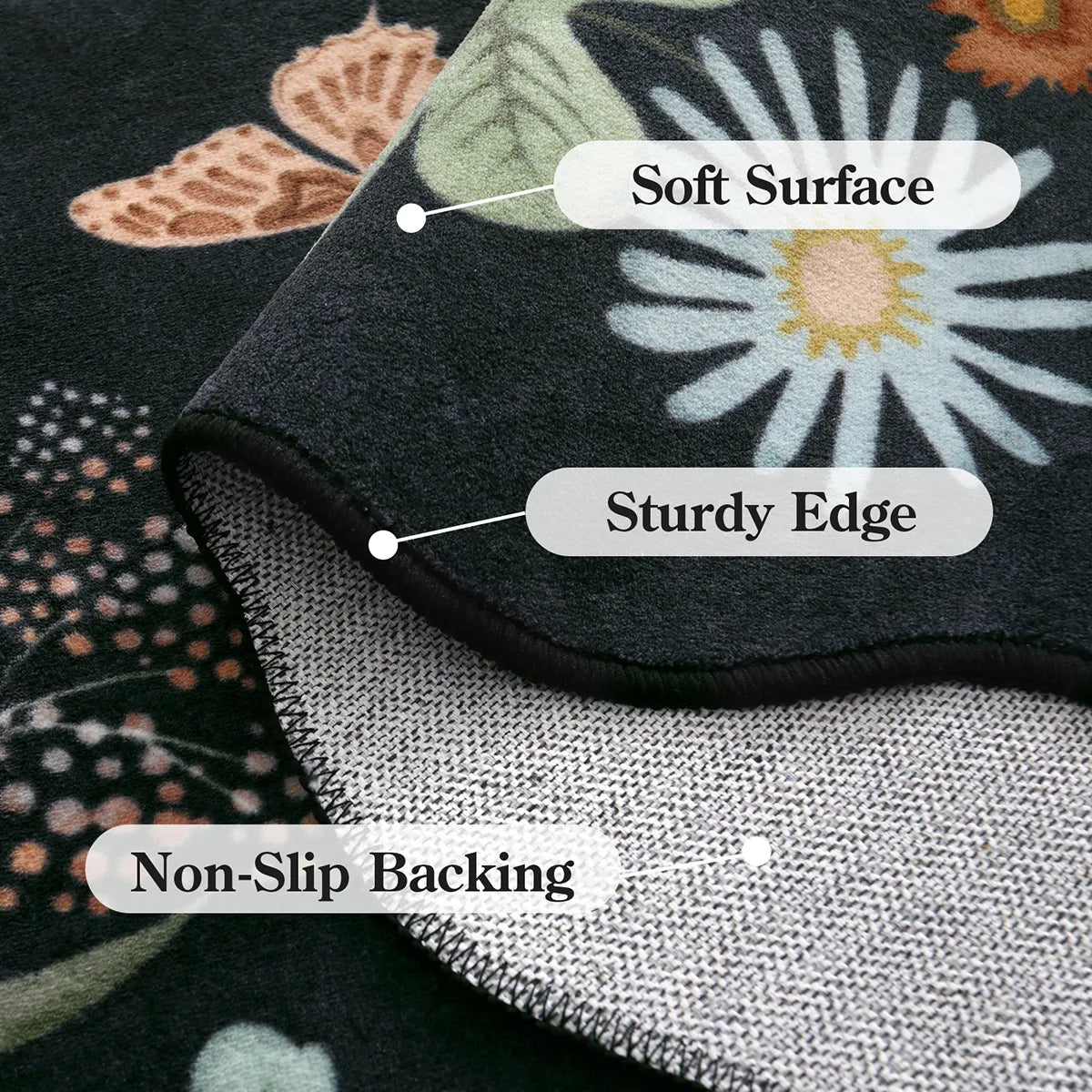
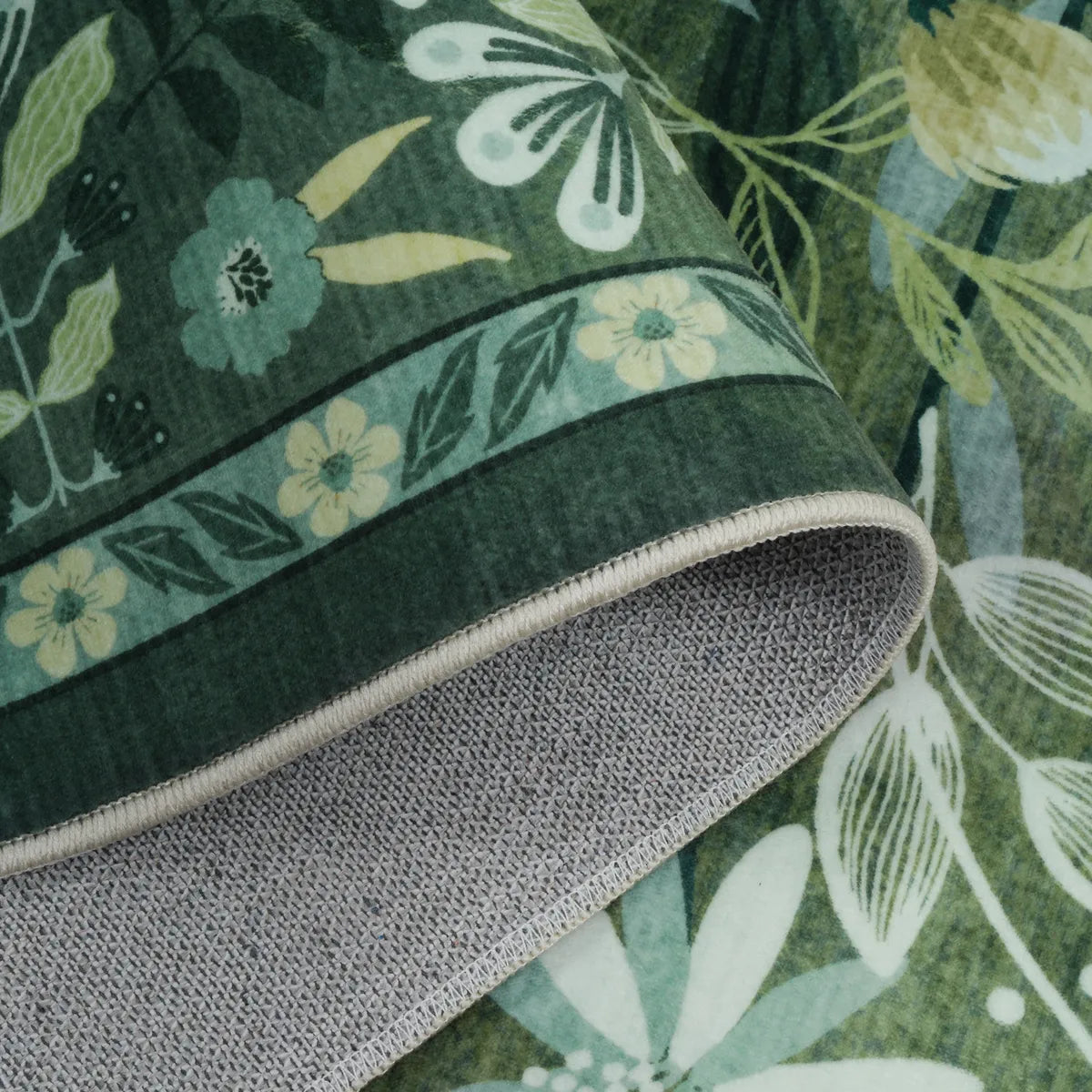
Stability is just as important as size. A non-slip dining room rug stays in place when people are pushing their chairs back, which prevents the edges from bunching up. If your chosen rug does not have a built-in rubber backing, you should always add a rug pad. A rug pad is a separate layer of cushioning placed between the floor and the rug to add grip and extra comfort.
Upgrade Your Dining Experience
To choose the best base for your meals, you need to do some simple math and pick the right materials. You may make a place that is both attractive and useful by following the 24-inch rule and using textiles that are easy to clean. Take measurements of your room, think about the design of your table, and choose a rug that can handle your lifestyle. Choosing a rug with these useful features can keep your dining room the heart of your home for years to come.
FAQs: Sizing, Placement, Material & Care Guide
Q1. How Much Space Should I Leave Between My Rug Edge and the Wall?
Leave at least 18 to 24 inches of bare floor between your rug edge and the walls or other furniture pieces. This border of exposed flooring frames the rug and prevents the room from feeling cramped. If your dining room is small and this spacing makes the rug too tiny for your table, prioritize table clearance over wall spacing.
Q2. What if My Rug Is Slightly Too Small for My Dining Table?
If your current carpeting doesn't give you enough room, you have a few choices. Put the rug down so that the front and sides of the table are covered well, and allow the back side, which is closer to the wall, sit closer to the edge. Instead, utilize the too-small rug in a separate room and get the right size for your dining room so that your chairs don't keep getting stuck.
Q3. Do I Need Different Rug Sizes for Formal Versus Casual Dining Rooms?
The guidelines for sizing are the same for both formal and informal dining areas. The size you require is the same, but how you use the room is different. More forgiving, washable fabrics might be better for casual dining spaces, whereas formal rooms can handle delicate fibers since they don't get used as often and have fewer spills.
Q4. Can I Layer a Smaller Rug Over a Larger One in My Dining Room?
Layering rugs in dining rooms creates tripping hazards and interferes with smooth chair movement. Unlike living rooms, where people walk gently, dining areas involve pulling chairs back repeatedly, which catches on the layered edges. Stick to a single appropriately sized rug that provides even surface coverage for all chair positions.