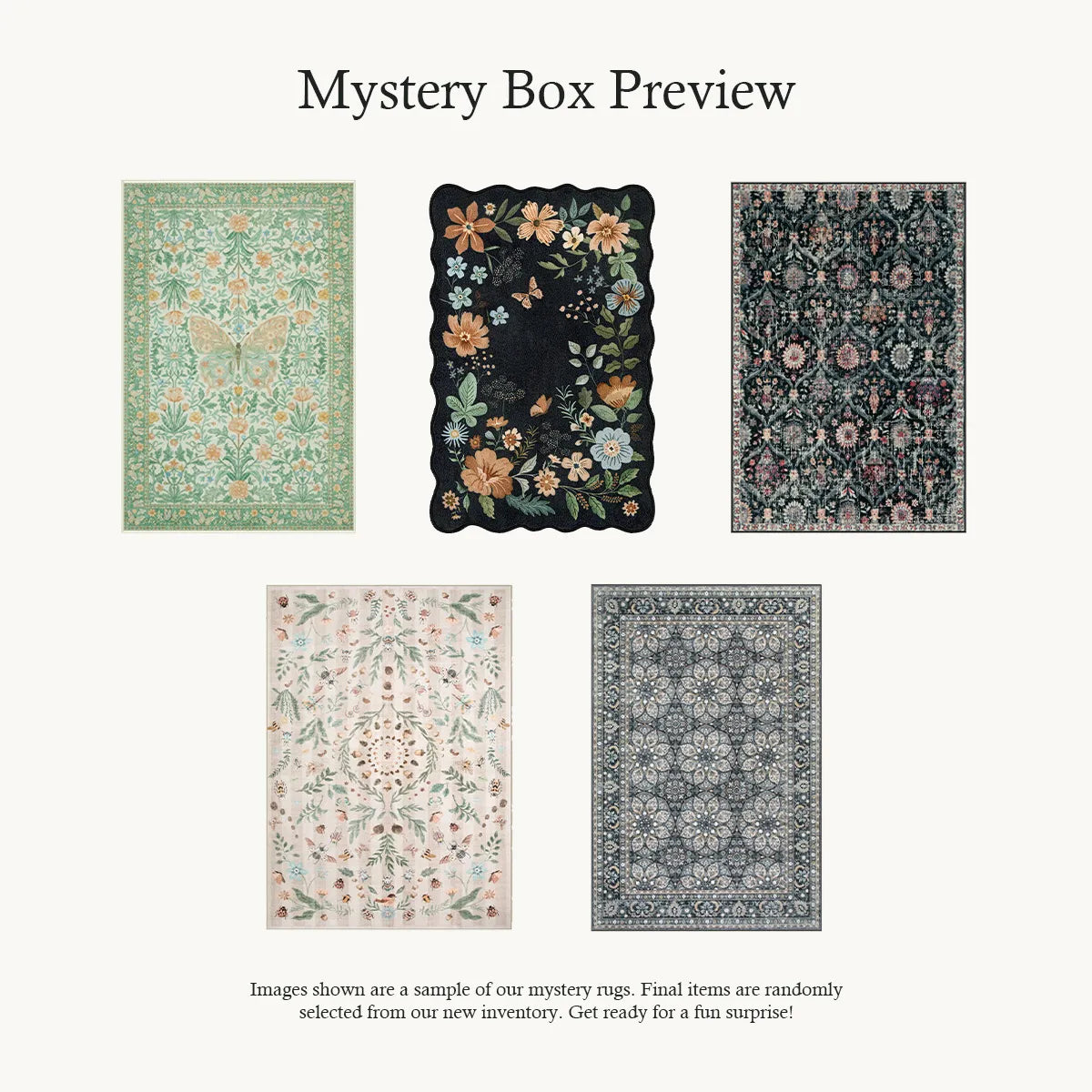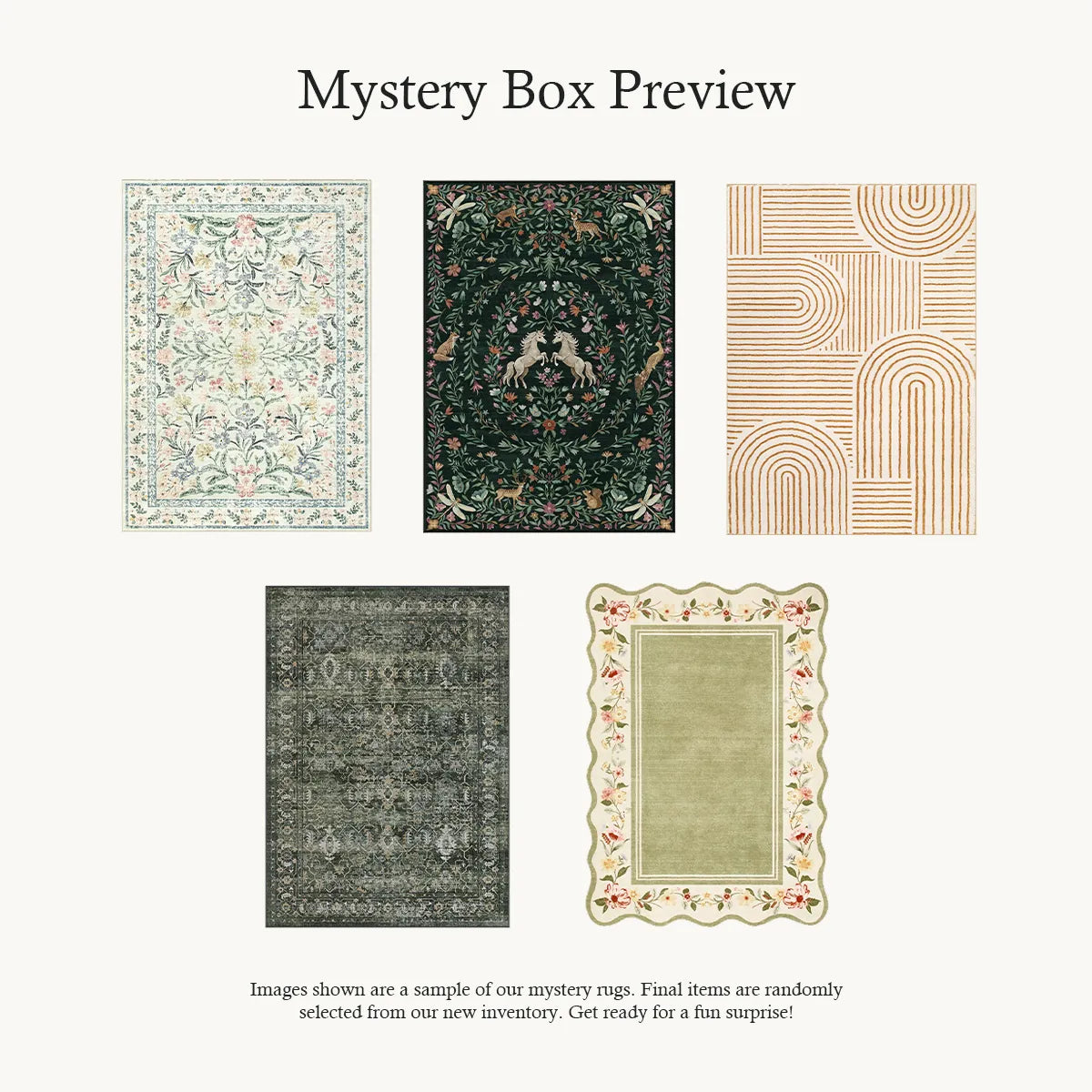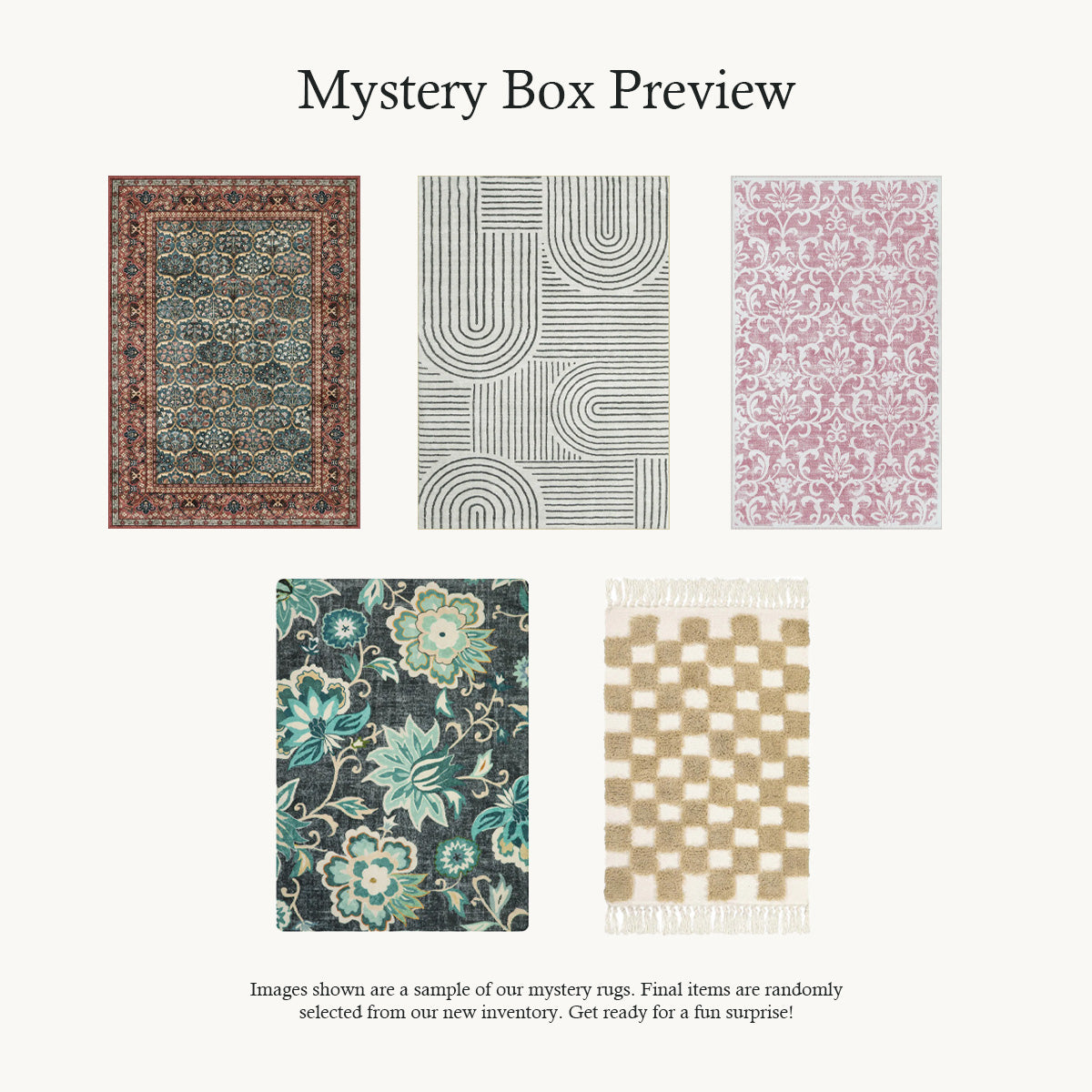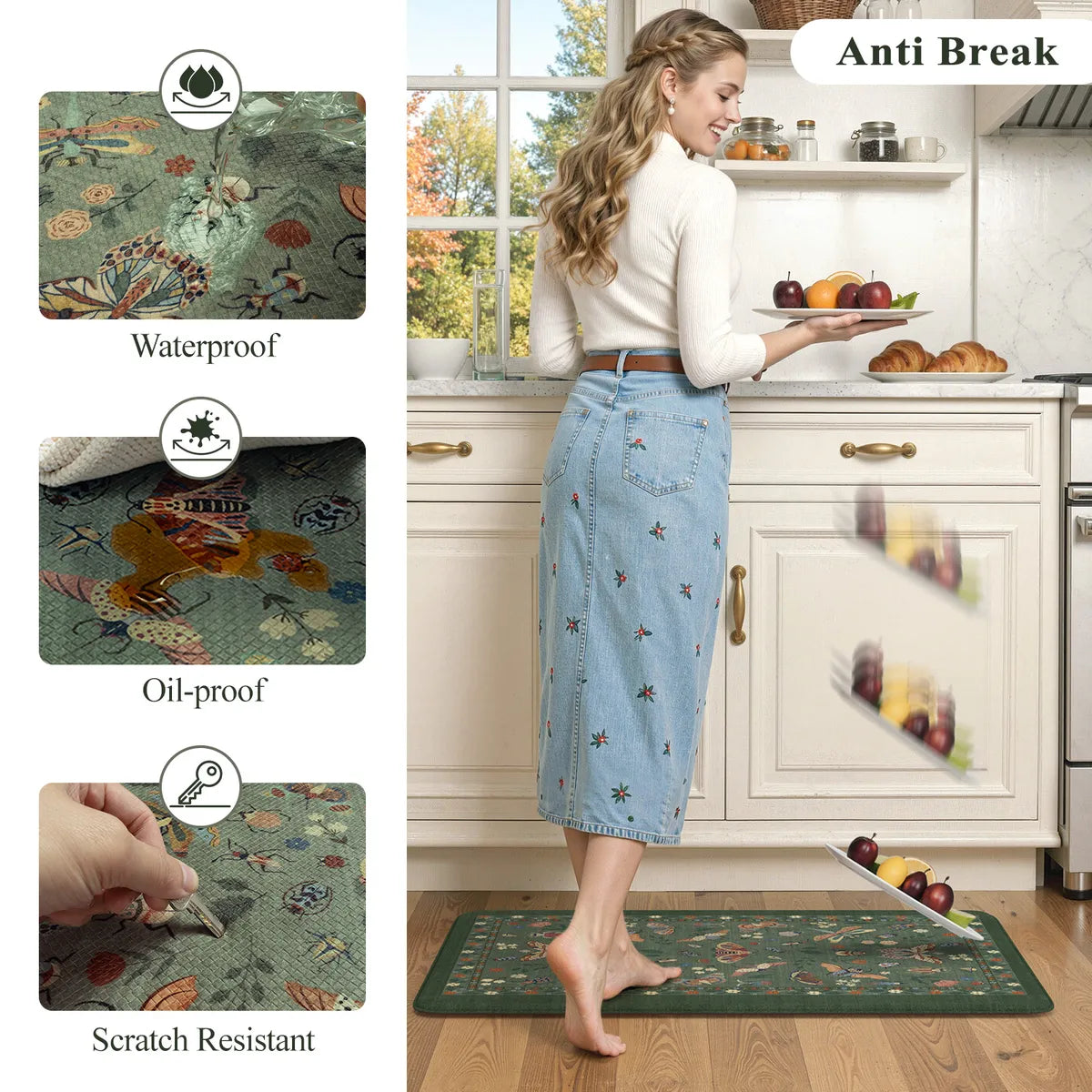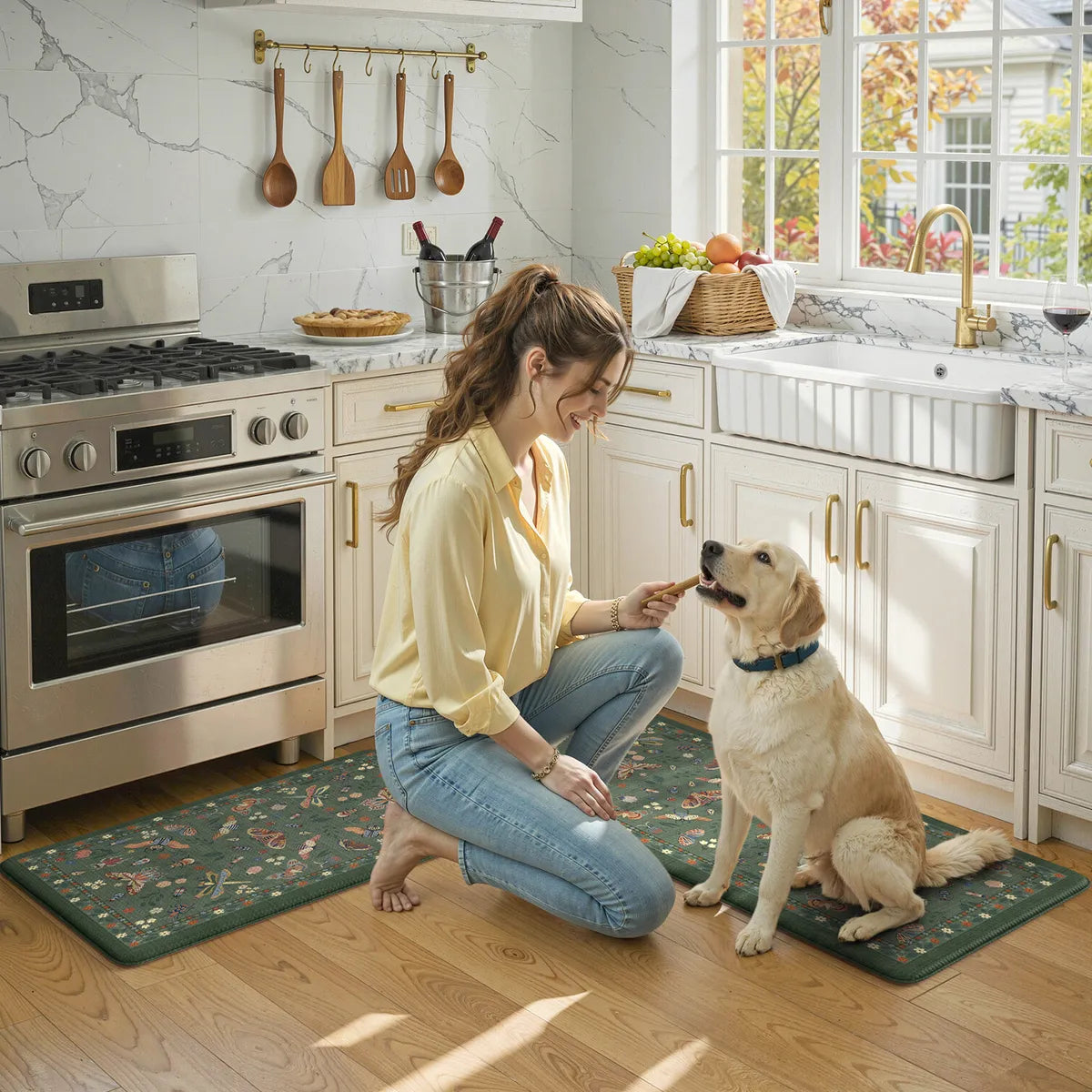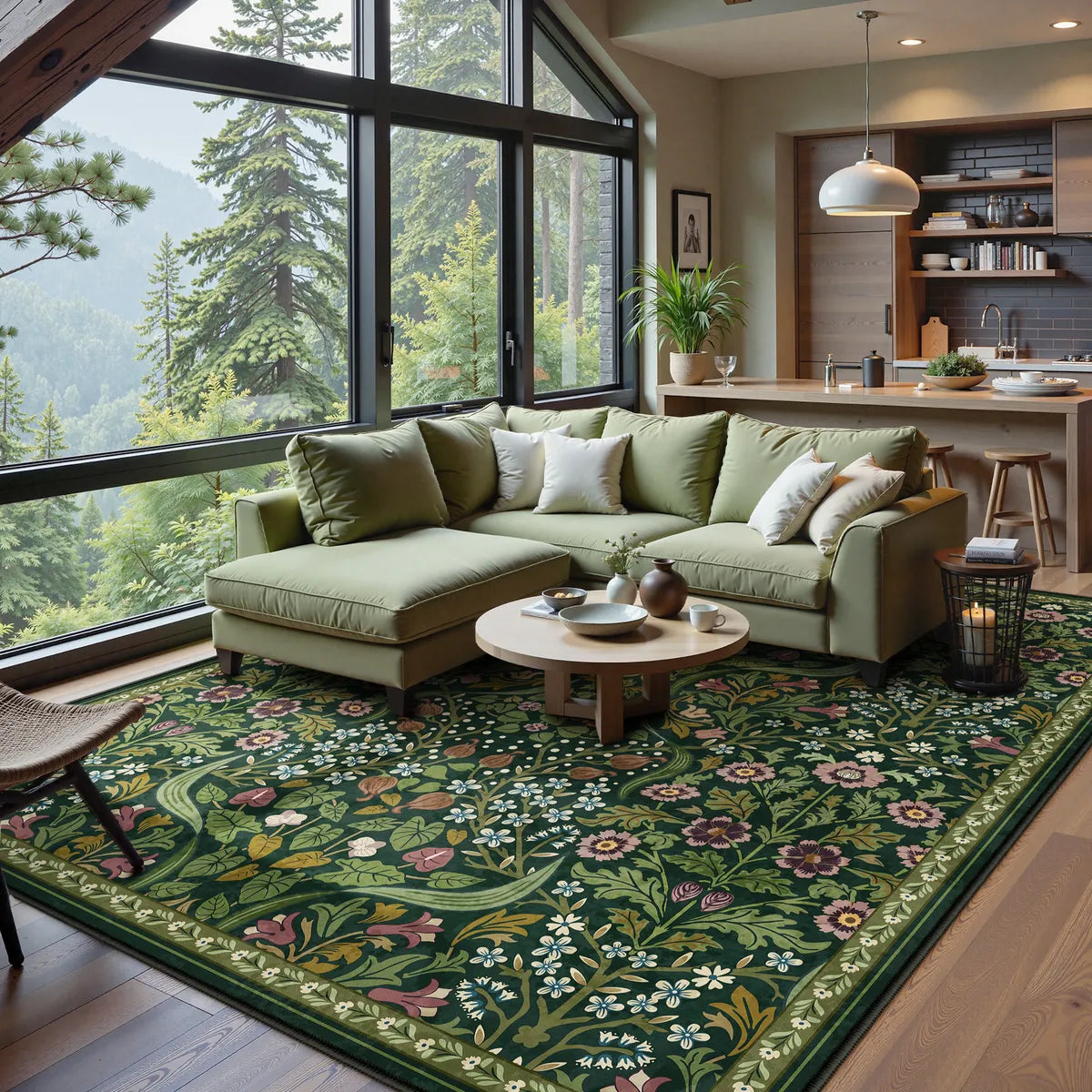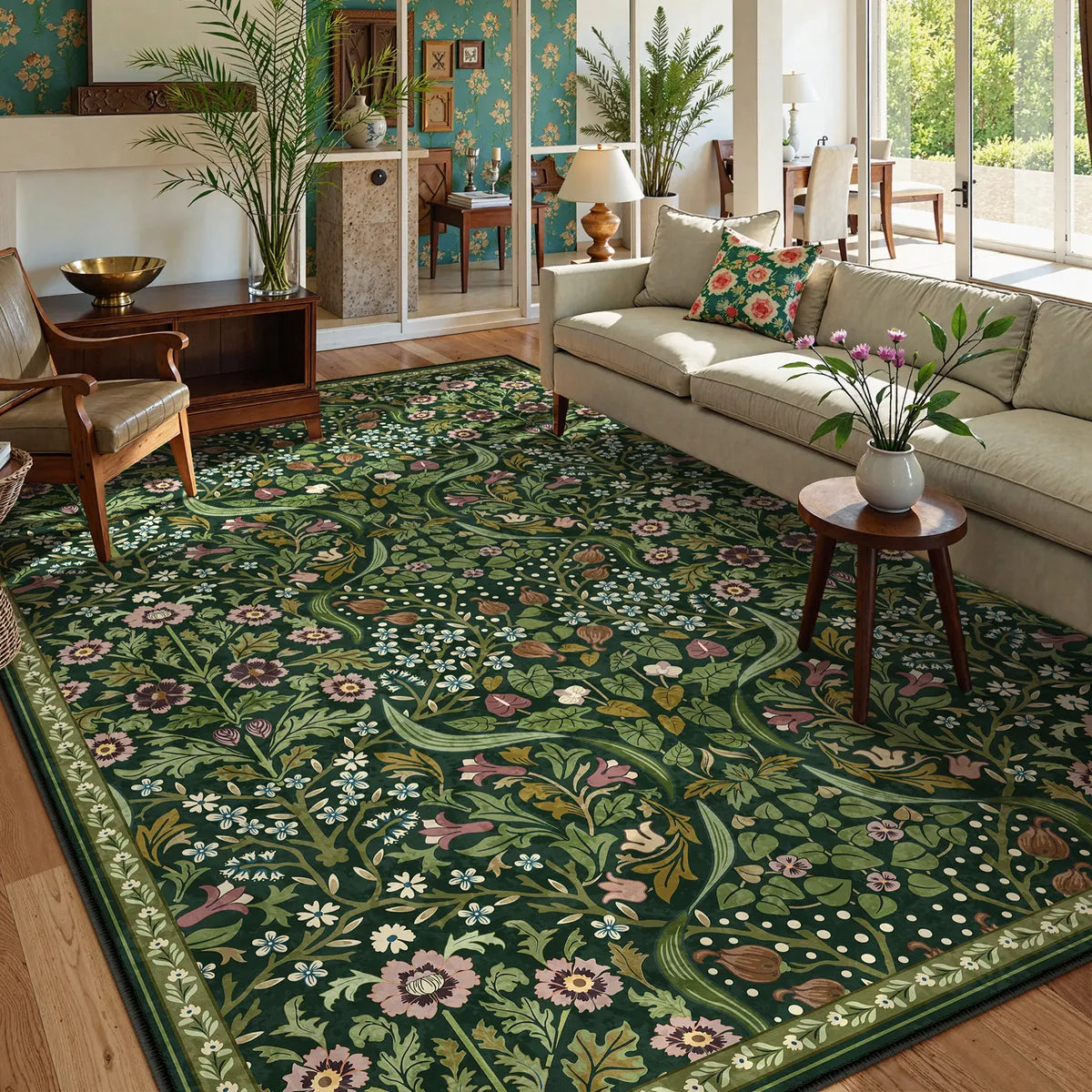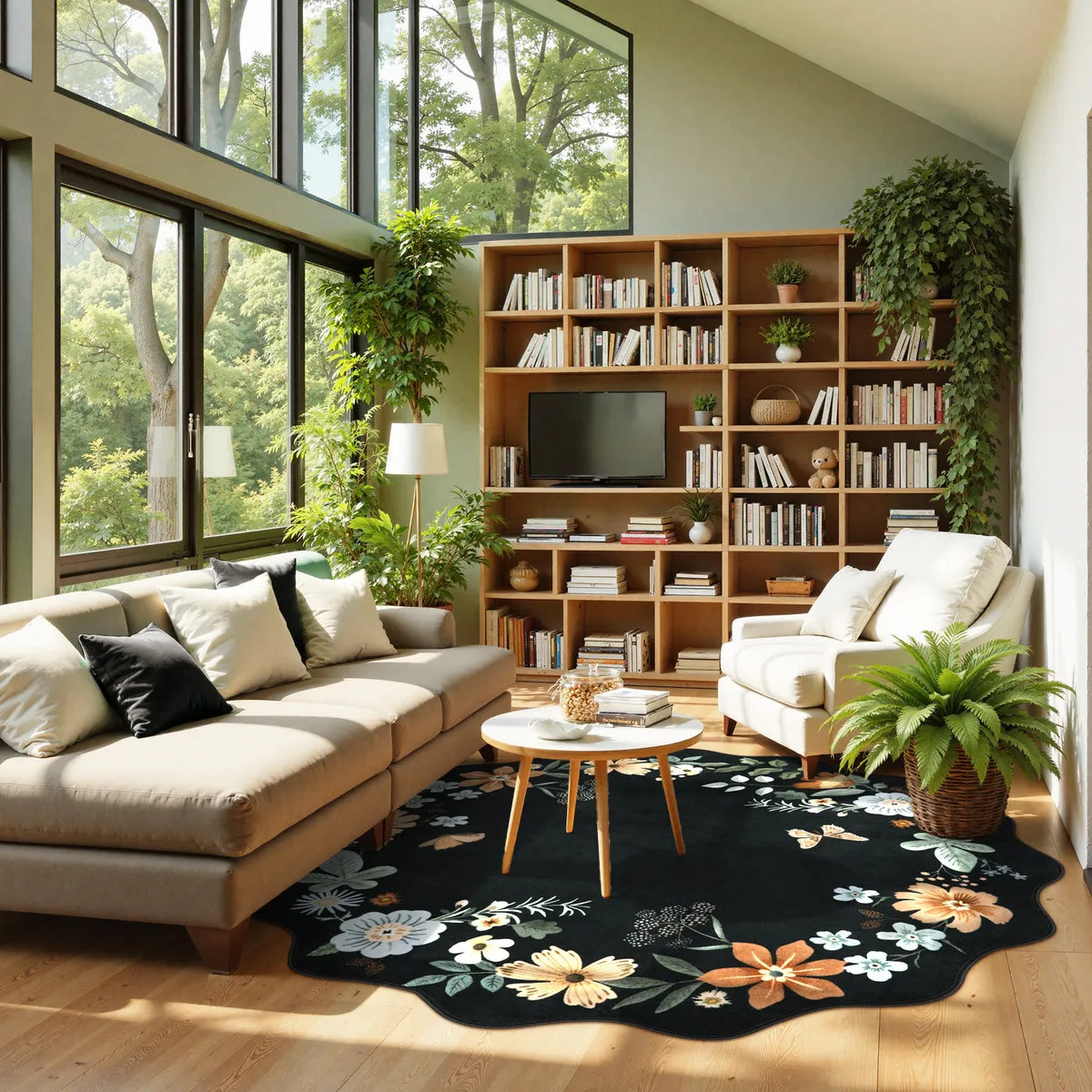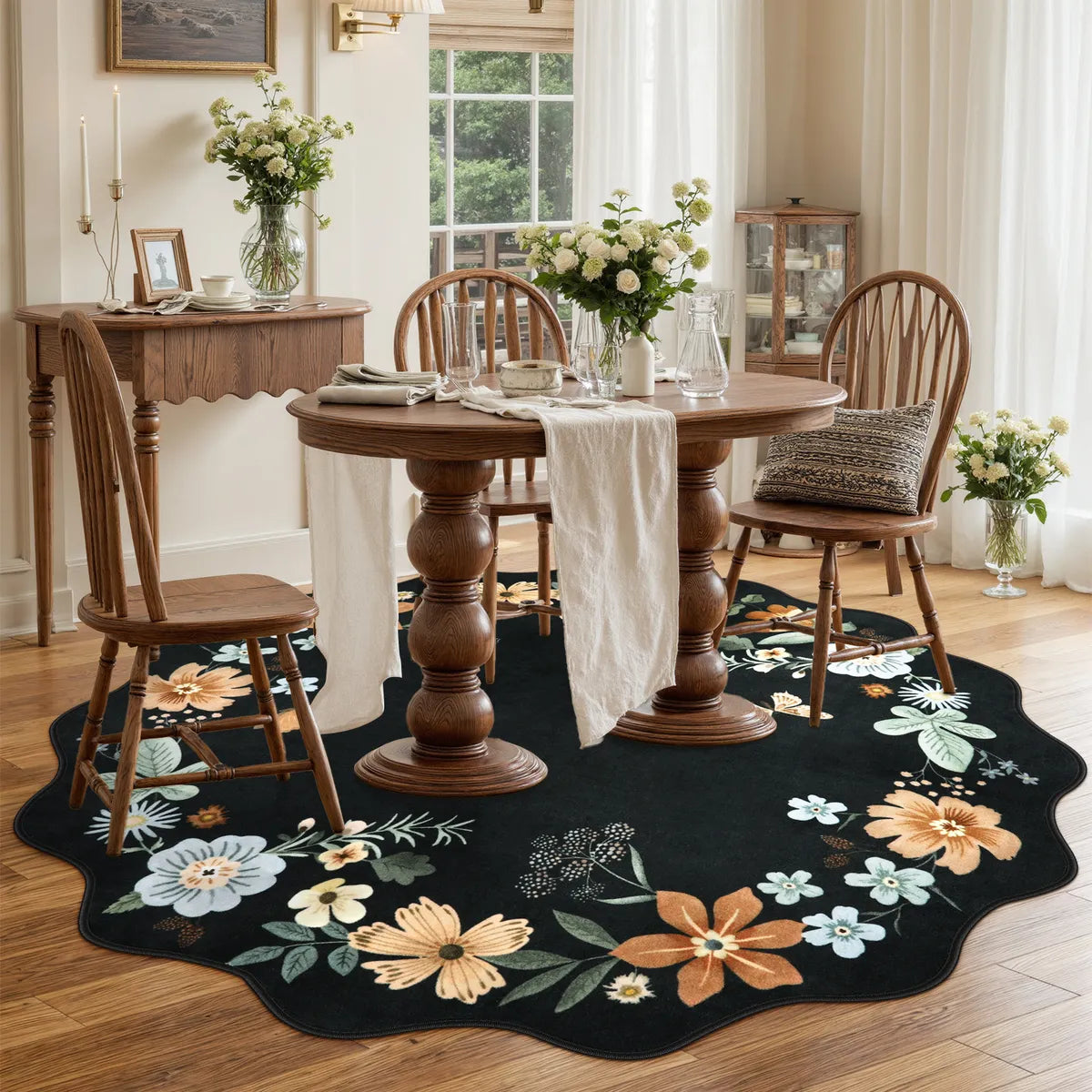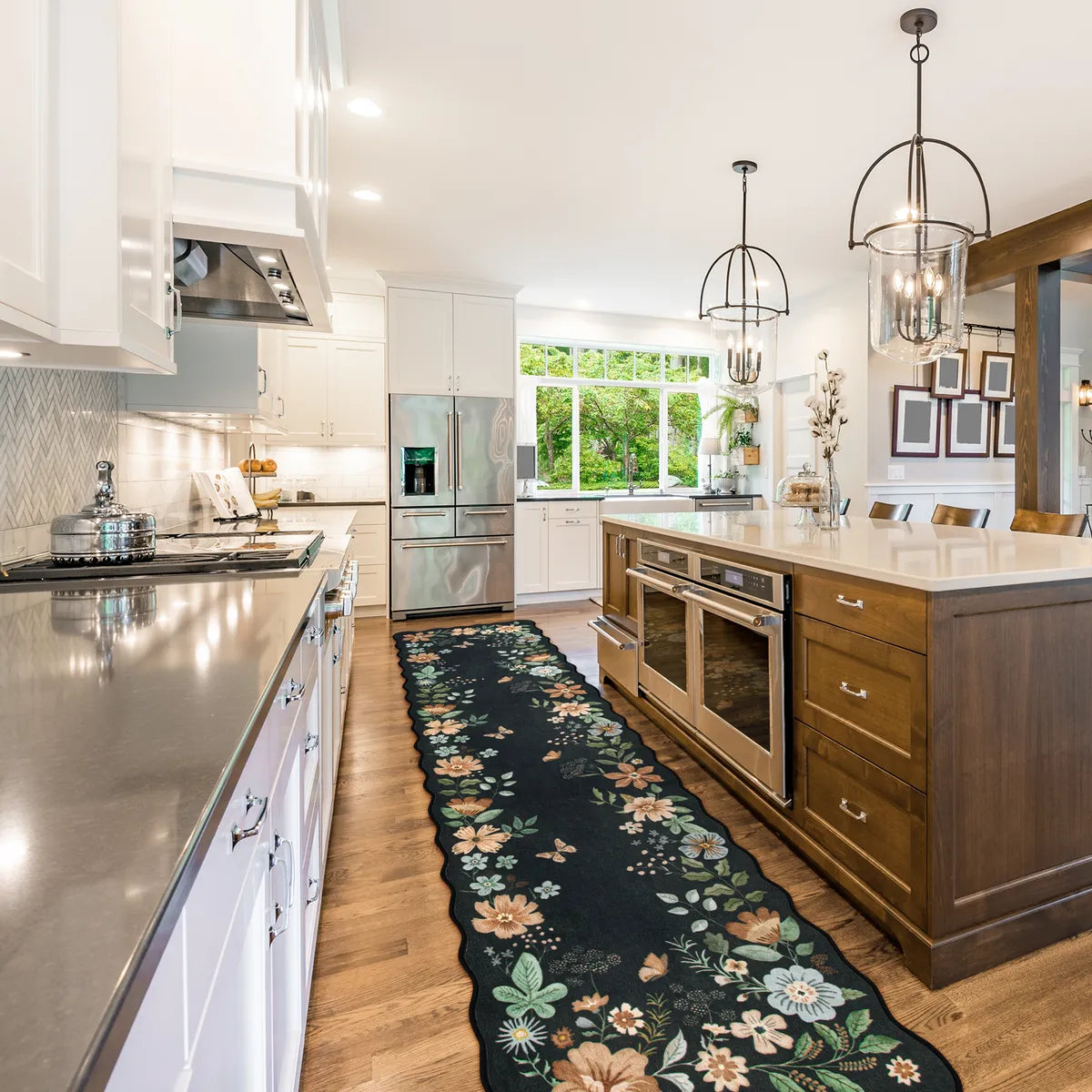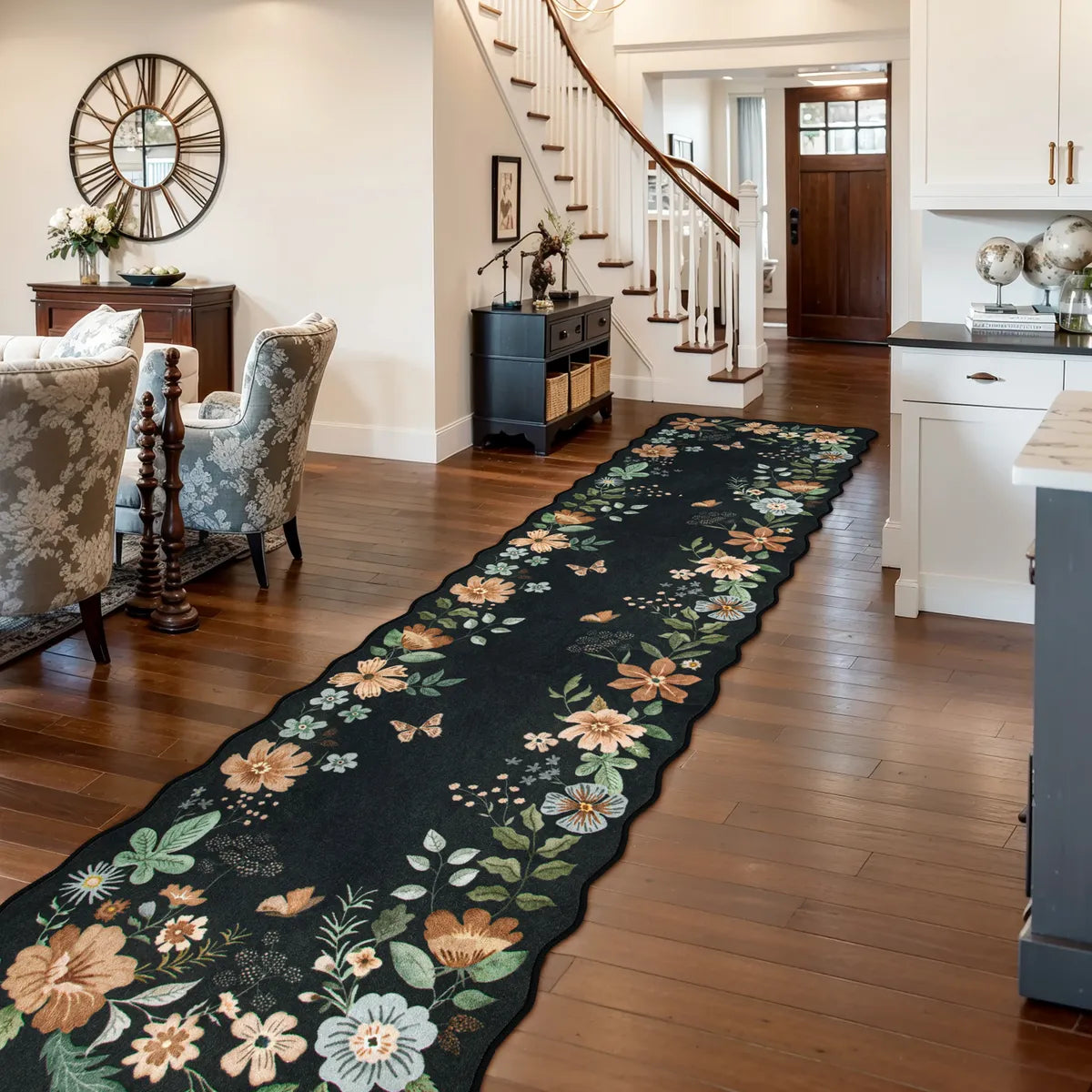


The rug you choose does more for a living room than any other single piece of décor. It sets the tone, ties the furniture together, and tells you what kind of space you are walking into. With so many living room rugs available across patterns, scales, and styles, knowing where to start makes all the difference. Here is what to consider before you decide.
Quick Takeaways
- Rug pattern scale directly affects how large or intimate a room feels.
- Geometric, floral, vintage, and abstract are the most versatile pattern types for living rooms.
- Patterned rugs offer a practical advantage by naturally concealing light wear between cleanings.
- Matching your rug pattern to your furniture style and wall color creates a cohesive, finished look.
Why Rug Patterns Matter in a Living Room

The living room is the most visible space in most homes, and the rug sits at the center of it. Pattern is one of the most powerful tools in interior design, and on a rug, it works on multiple levels at once.
How Pattern Scale Affects the Feel of a Room
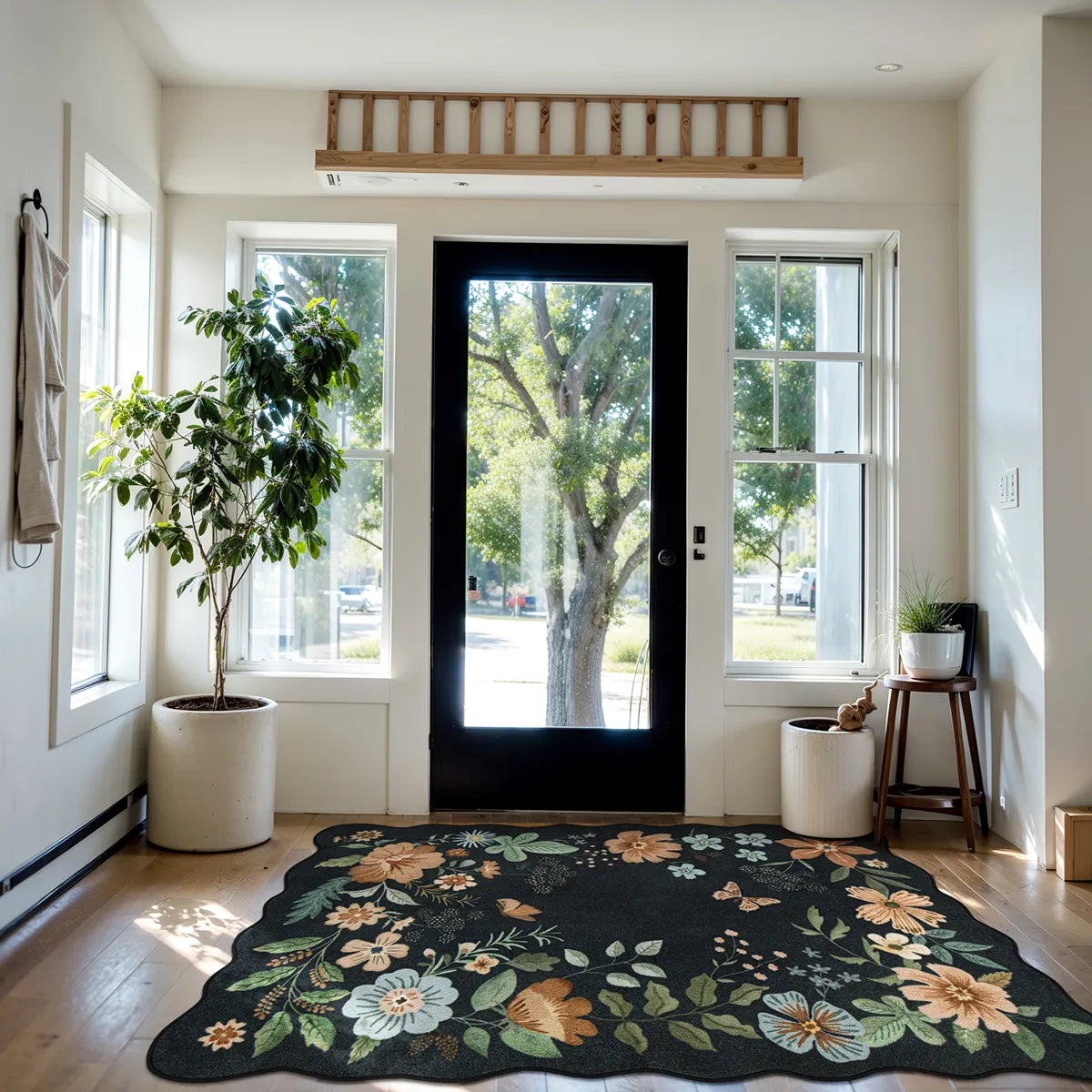
Pattern scale refers to the size of the repeating design elements on a rug. A large-scale pattern, such as oversized florals or bold geometric shapes, draws the eye across a wider surface area, which makes a room feel more expansive. A small-scale pattern creates a denser, more textured visual effect that adds depth without demanding attention.
In a compact living room, a medium to large-scale rug pattern tends to open the space up. In a larger room, either scale works depending on whether you want the rug to serve as a focal point or a quieter supporting element.
The Connection Between Rug Pattern and Room Mood
Different rug patterns communicate different moods. Organic shapes like florals and botanical prints bring warmth and a relaxed, natural energy. Geometric patterns create structure and a sense of order, which suits modern or minimalist spaces. Vintage and traditional patterns add richness and depth. Abstract patterns feel contemporary and expressive without committing to a single design language.
Choosing a rug pattern is, in many ways, choosing the emotional tone of the room.
The Most Common Rug Patterns for Living Rooms, Explained

Not all patterns serve the same purpose in a living room. Knowing what each style does visually makes it much easier to choose the right one for your space.
Geometric and Abstract Rug Patterns
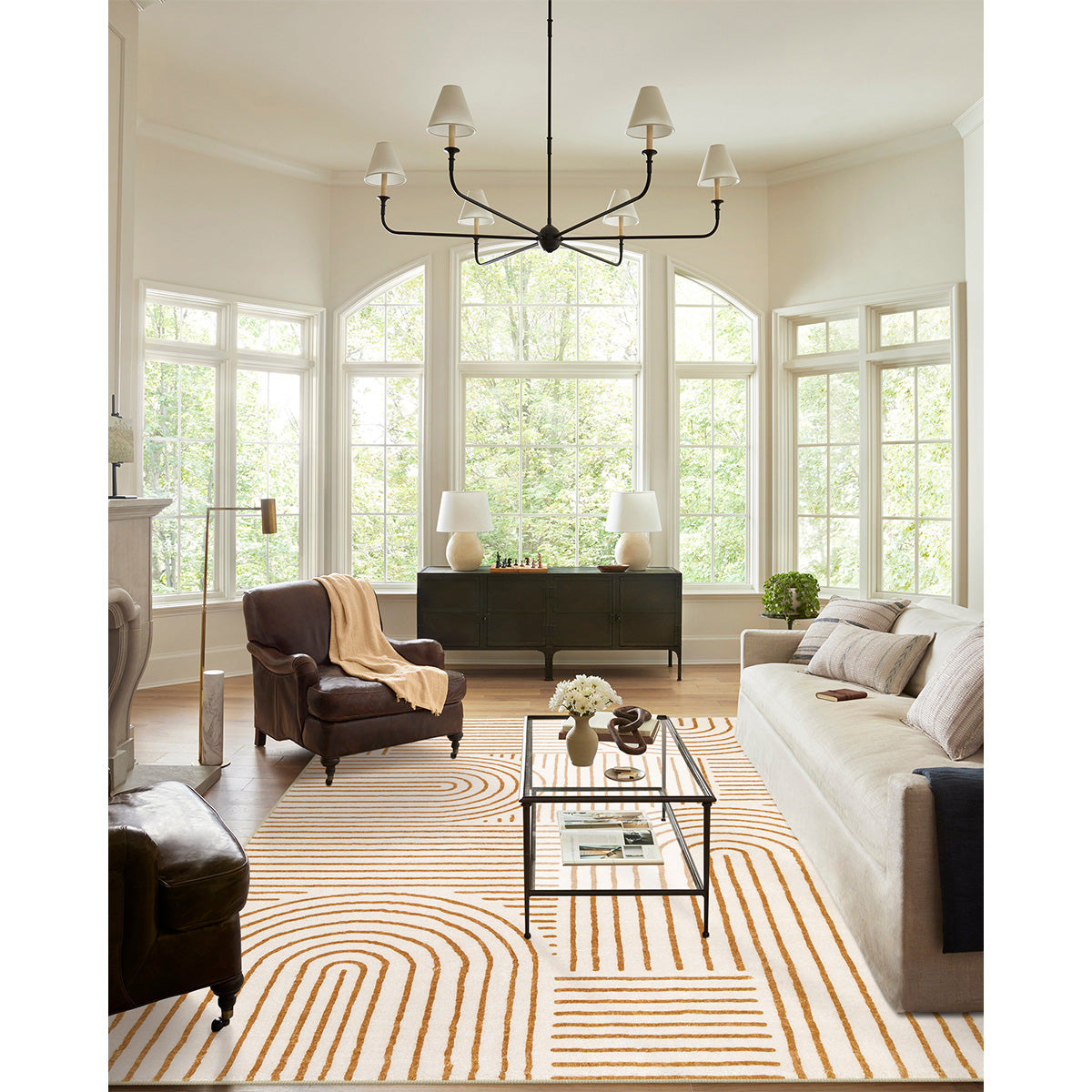
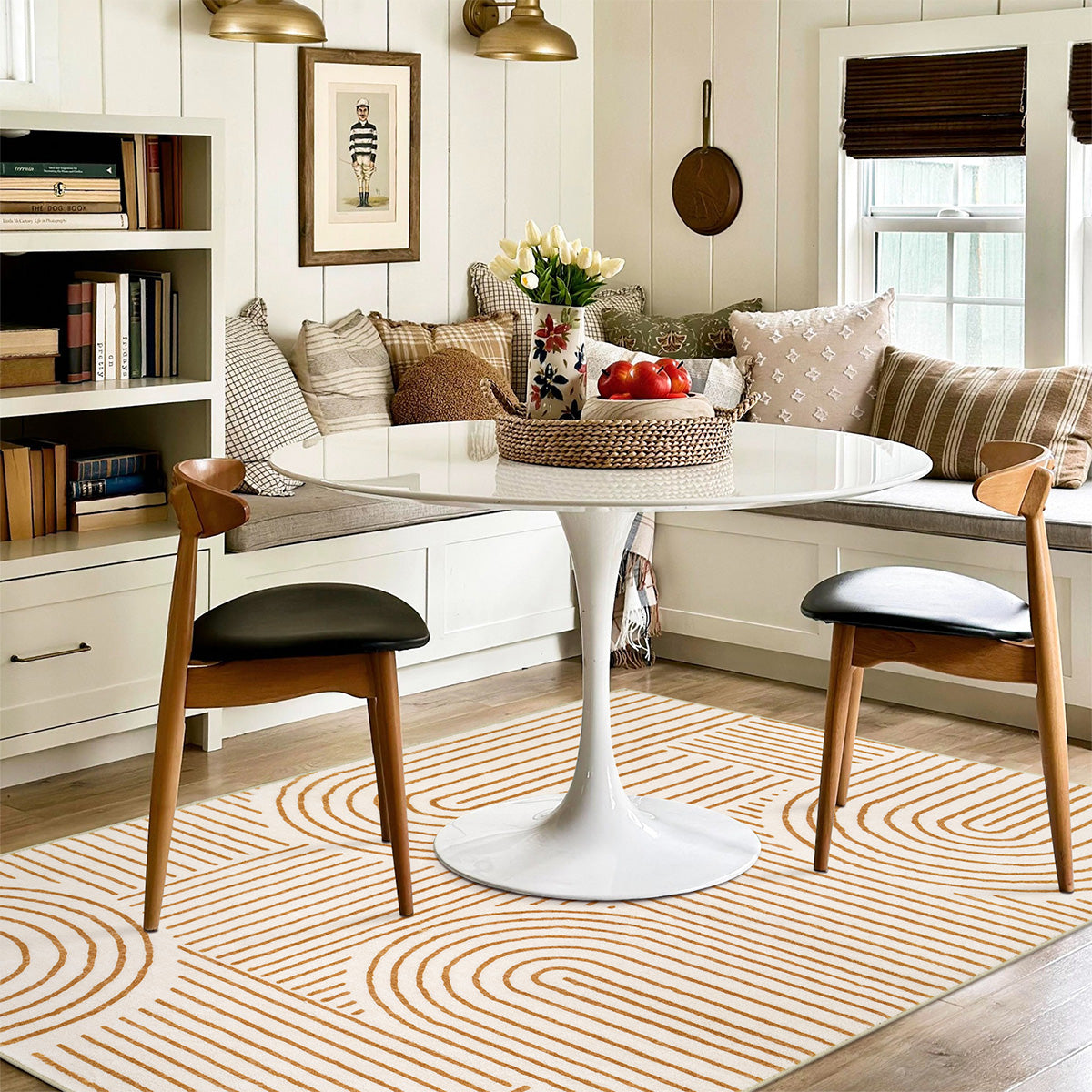
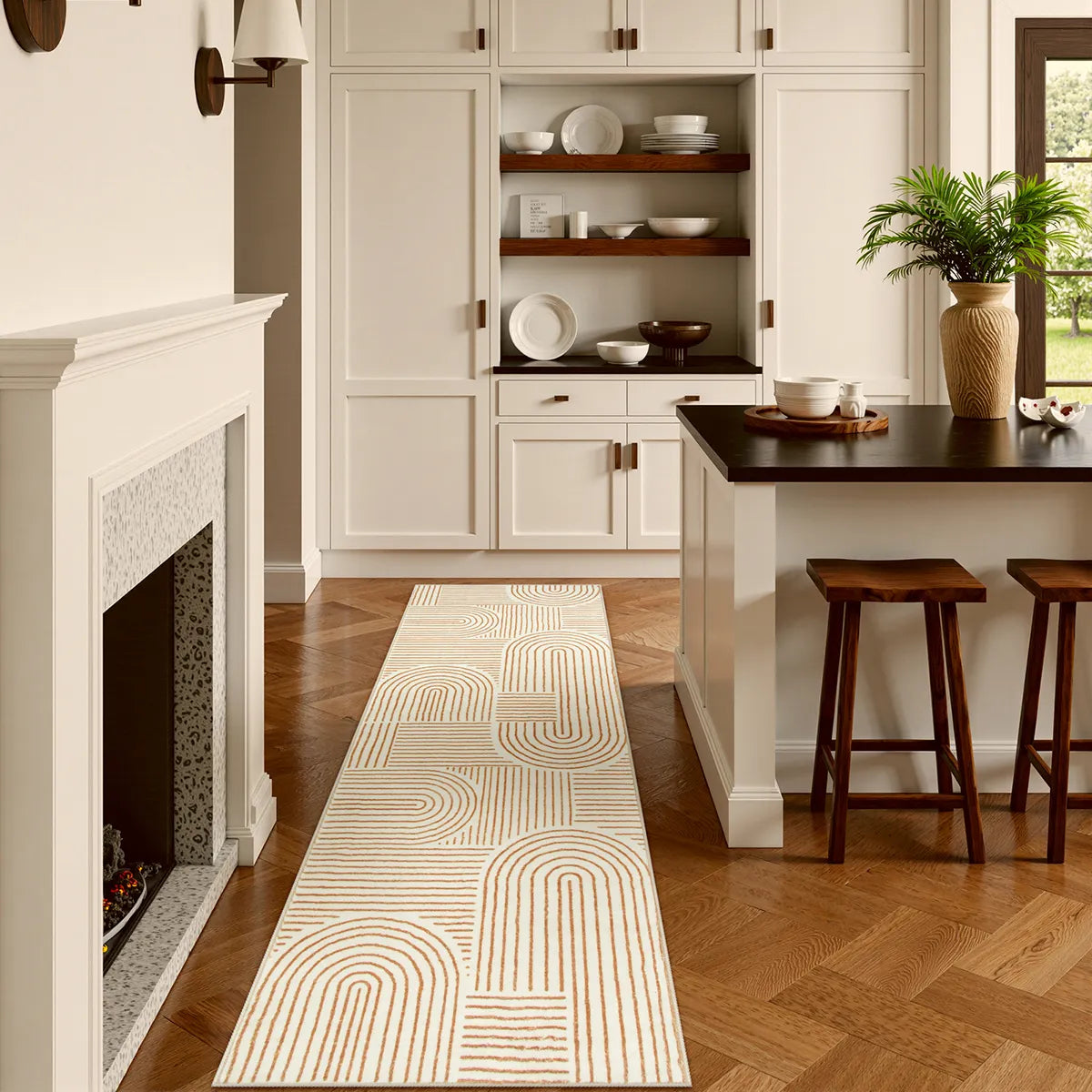
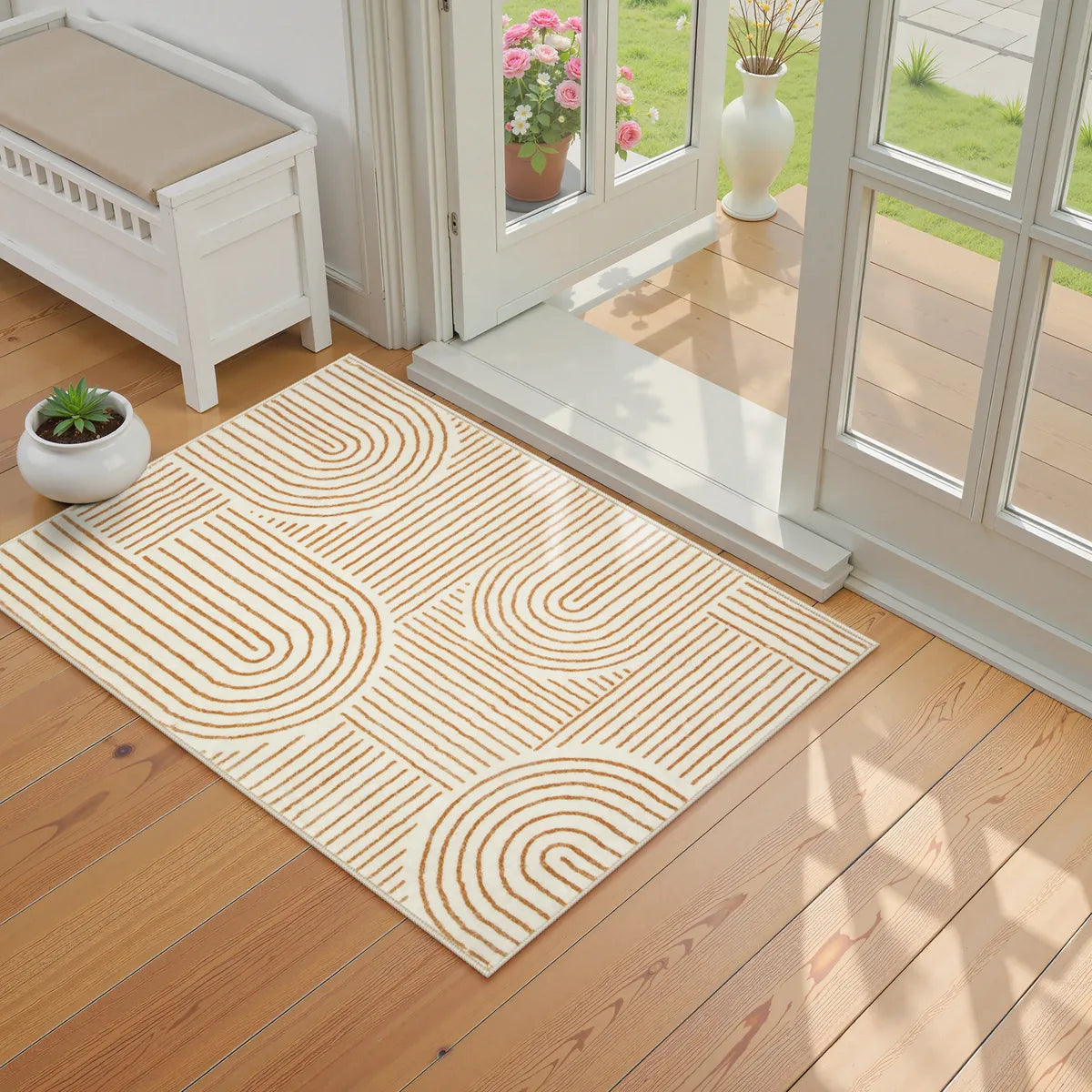
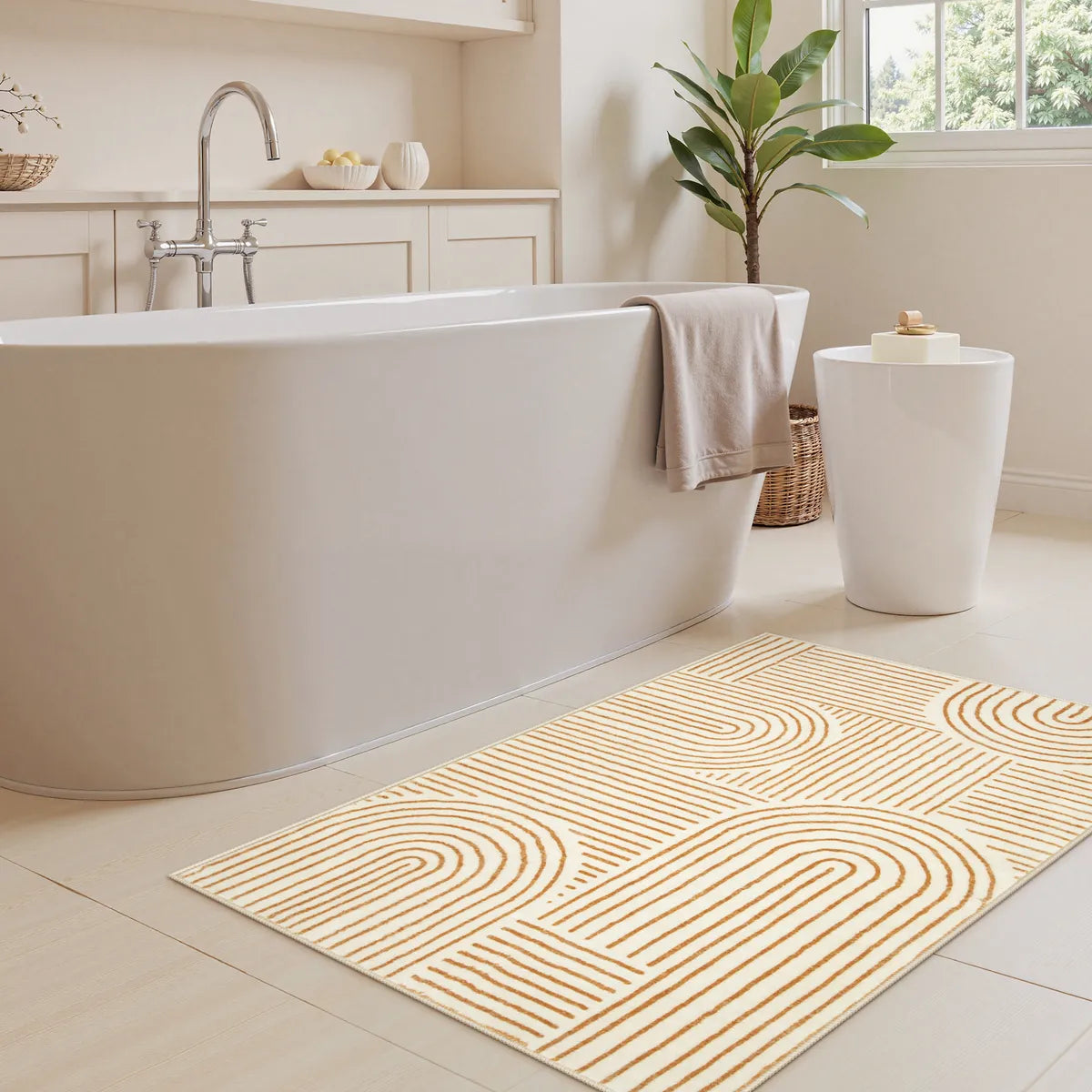
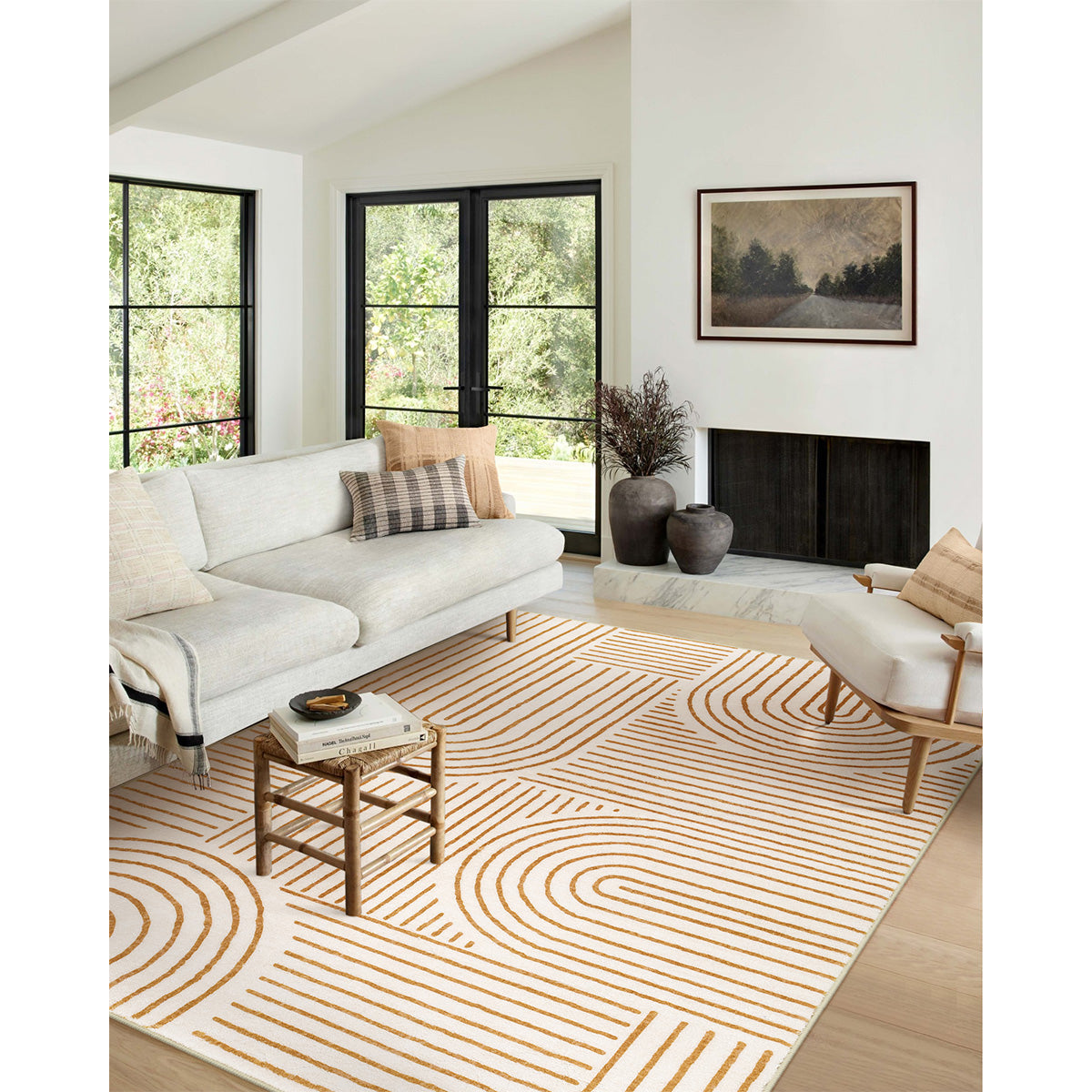
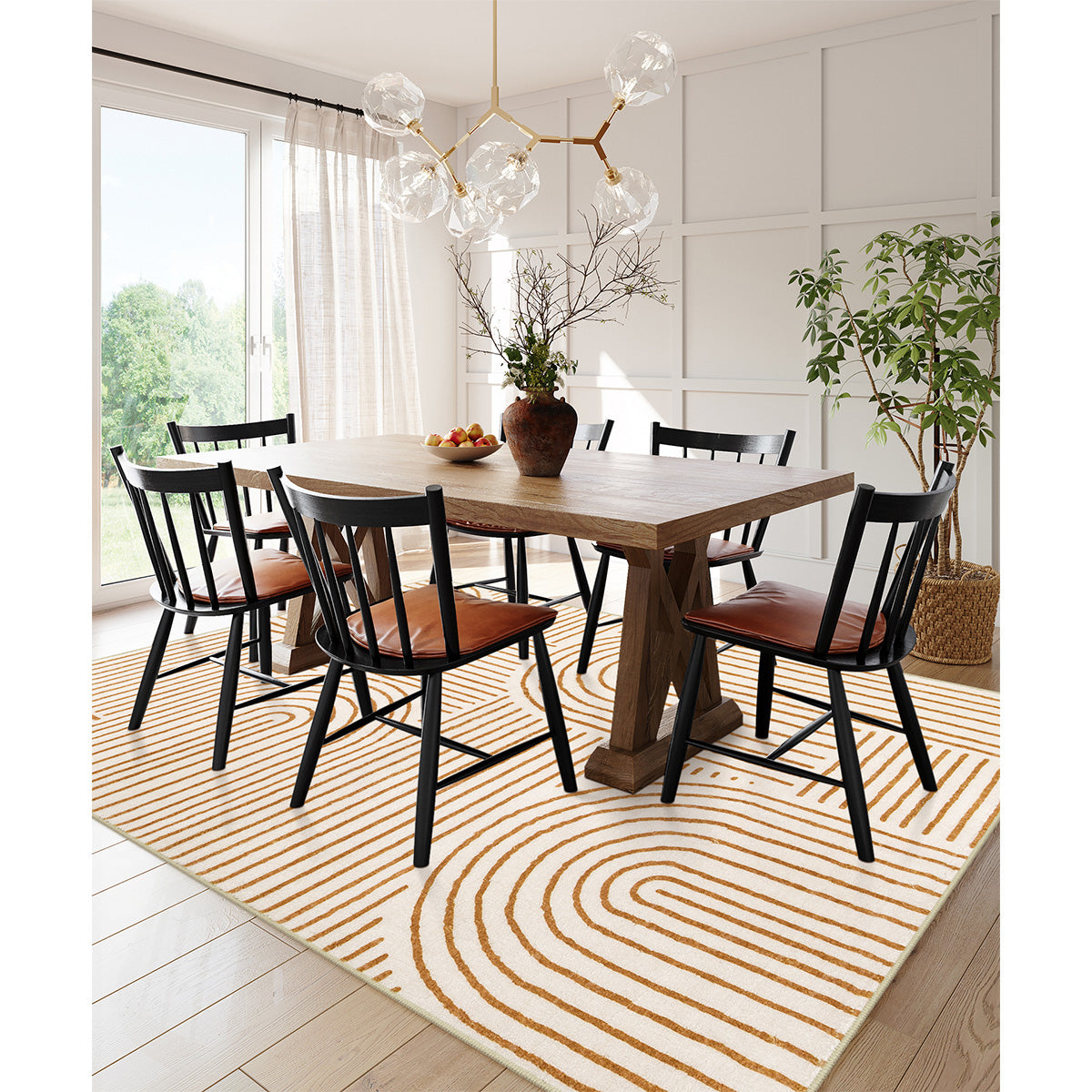
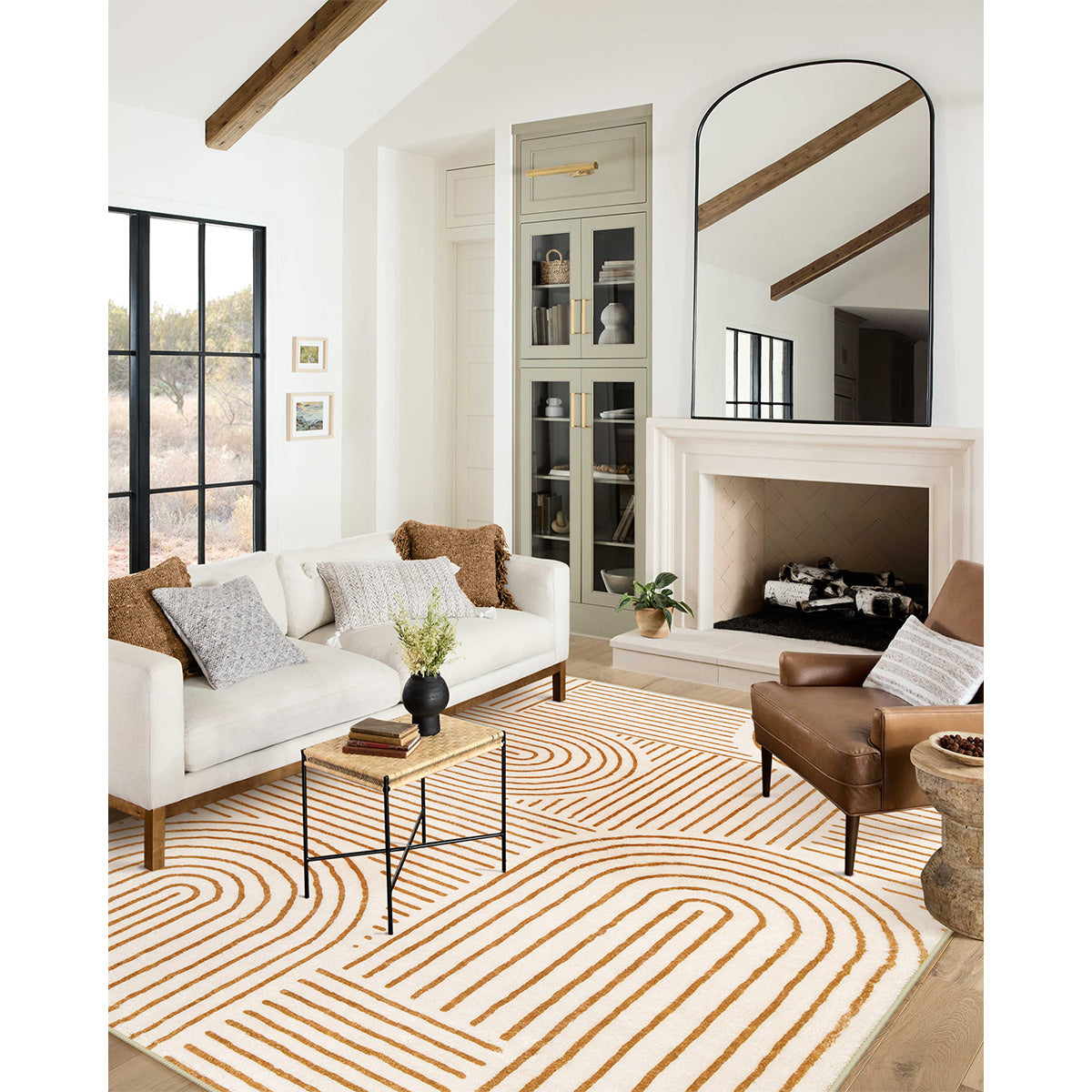
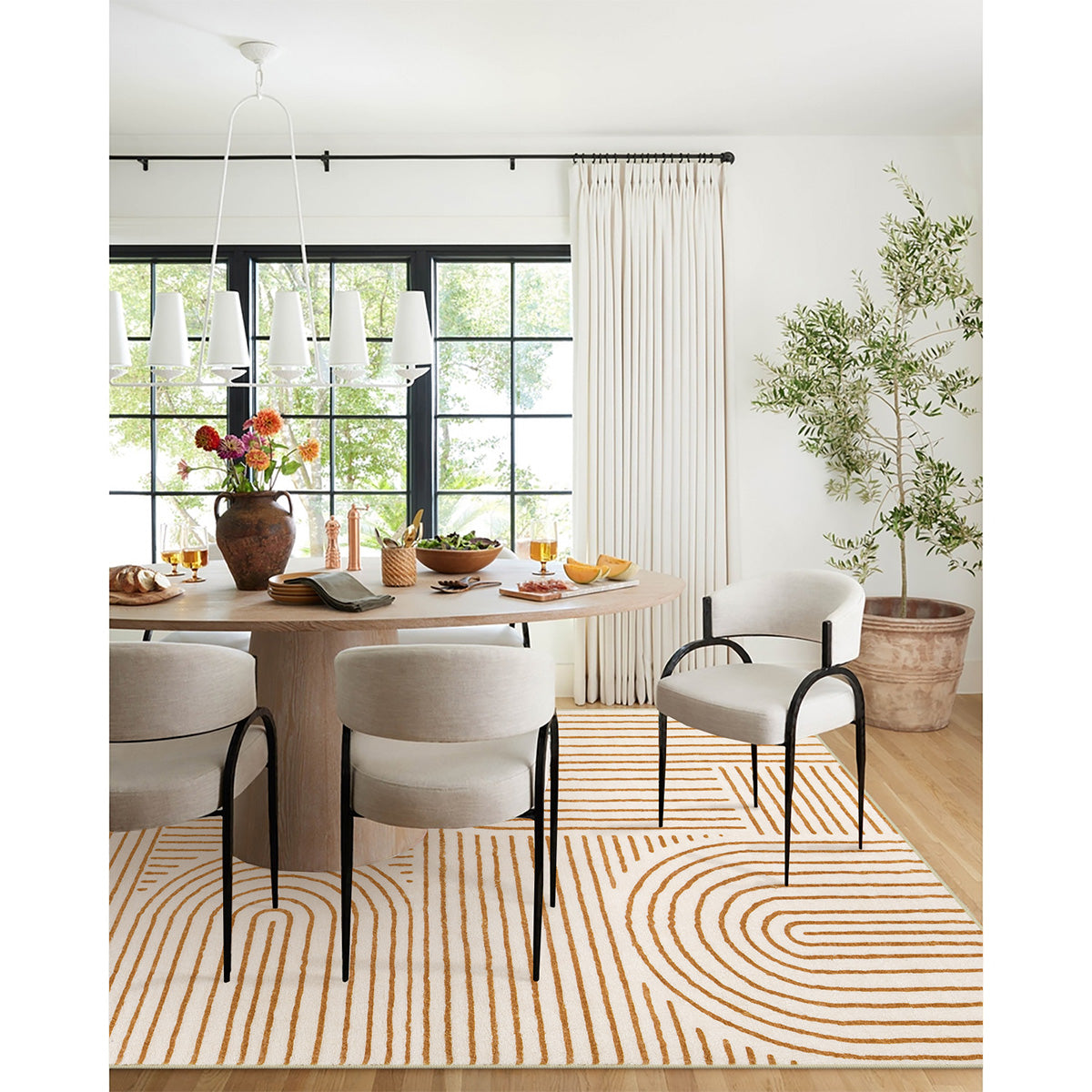
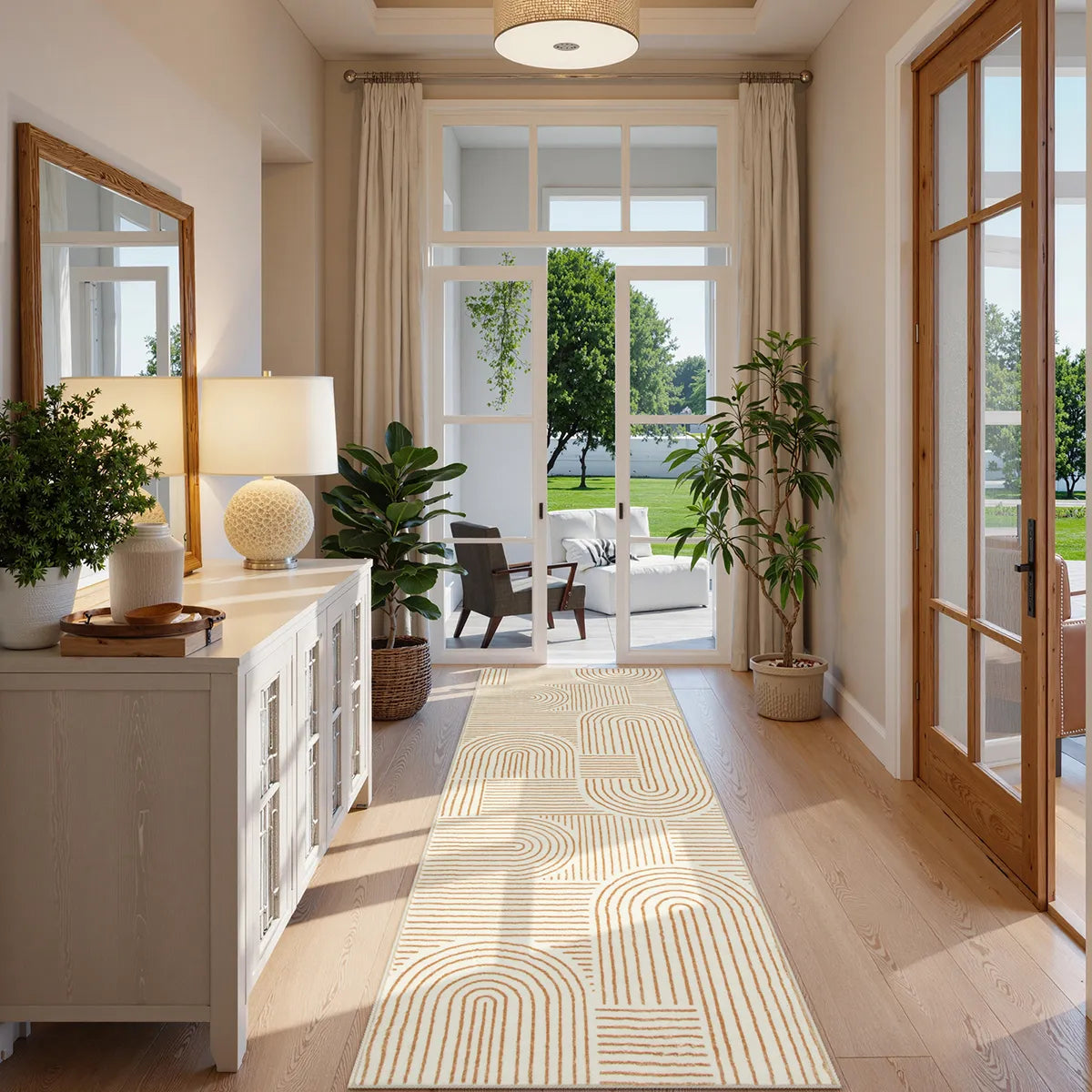
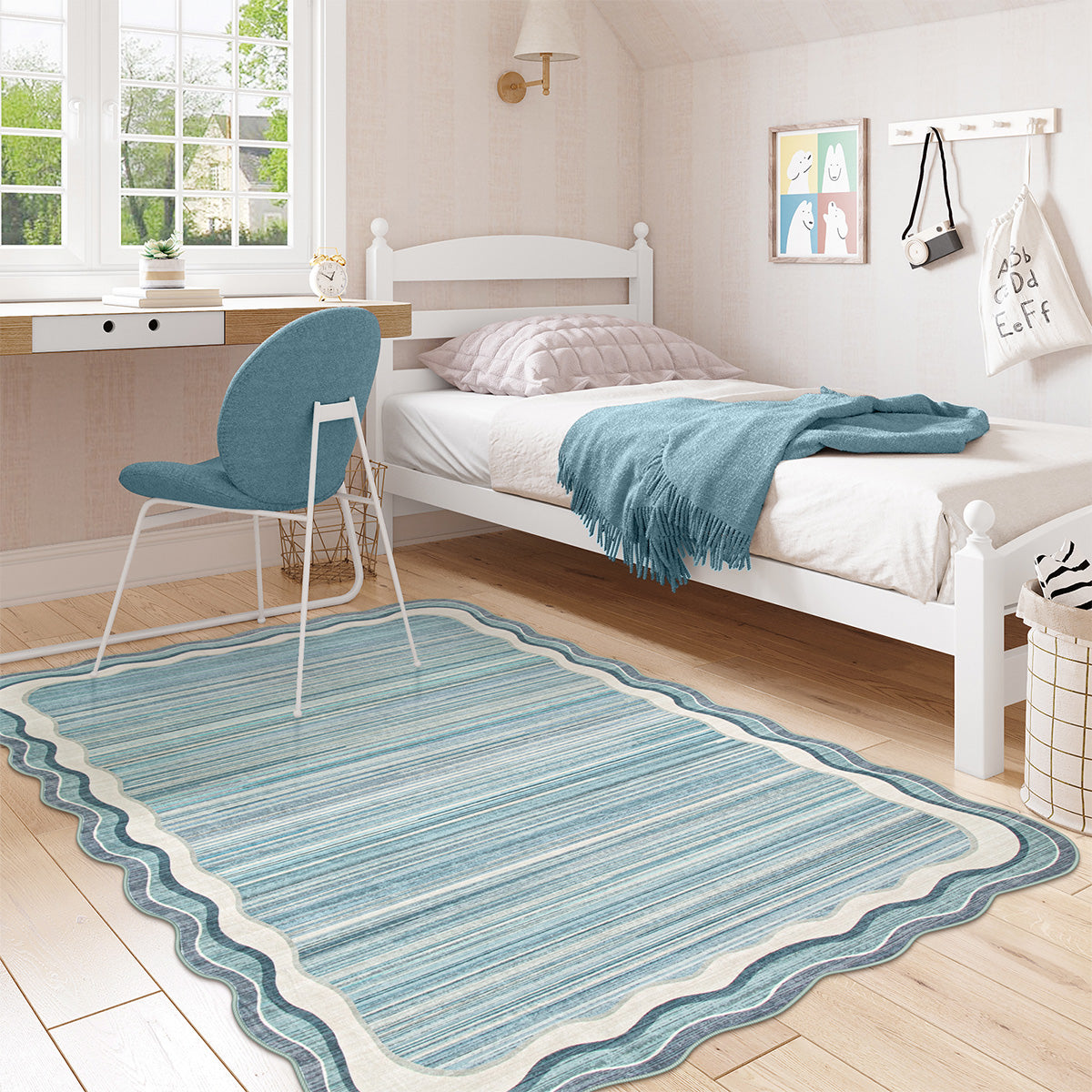
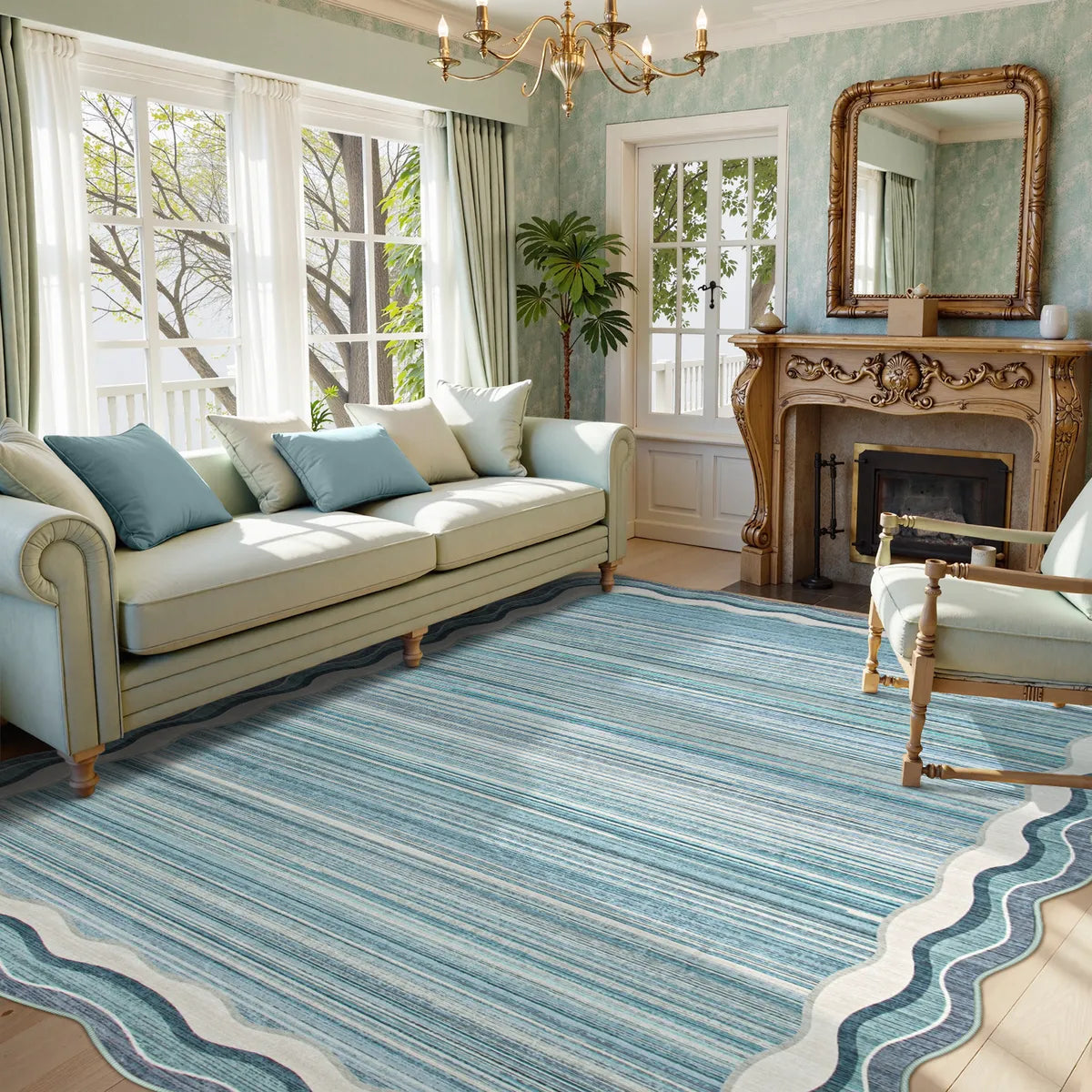
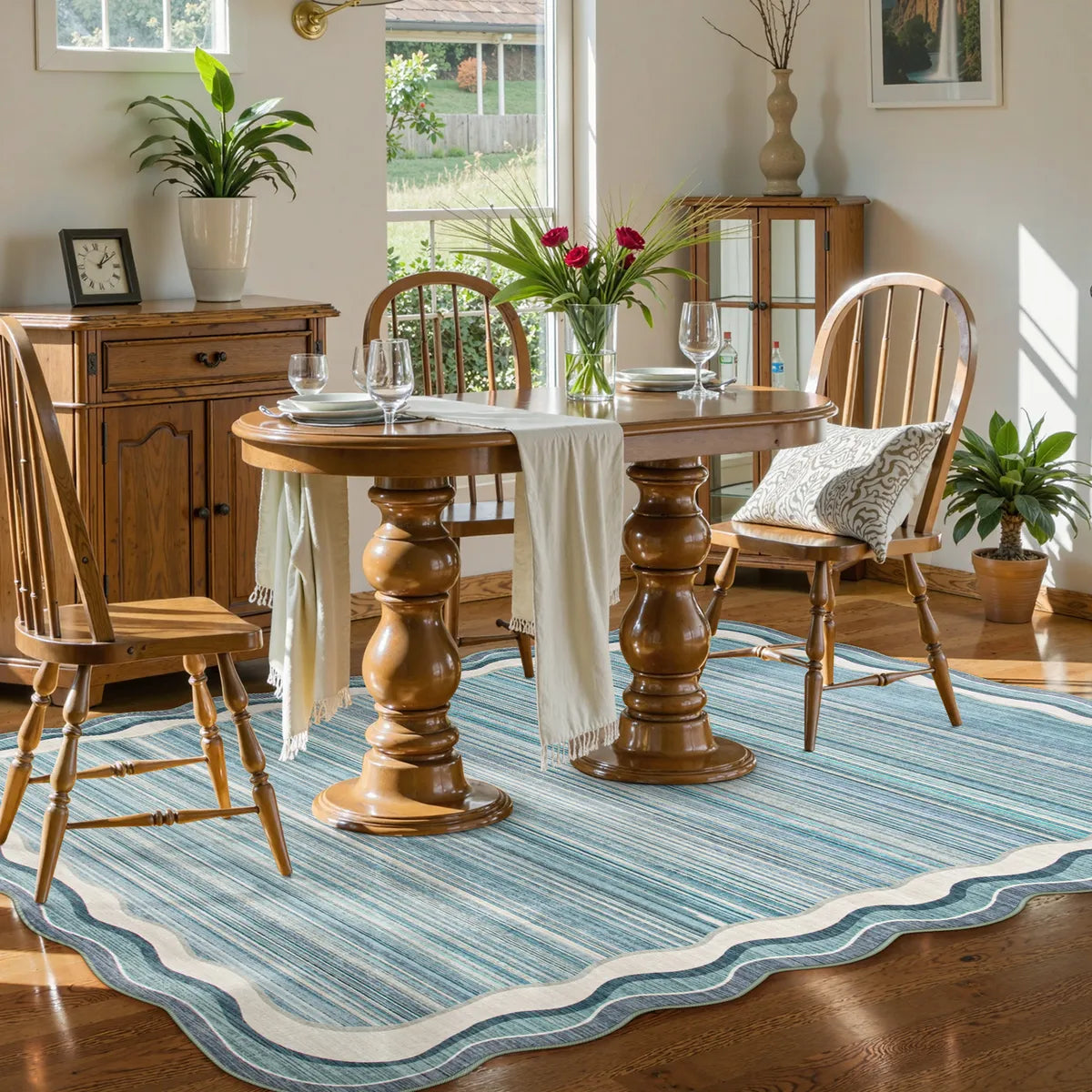
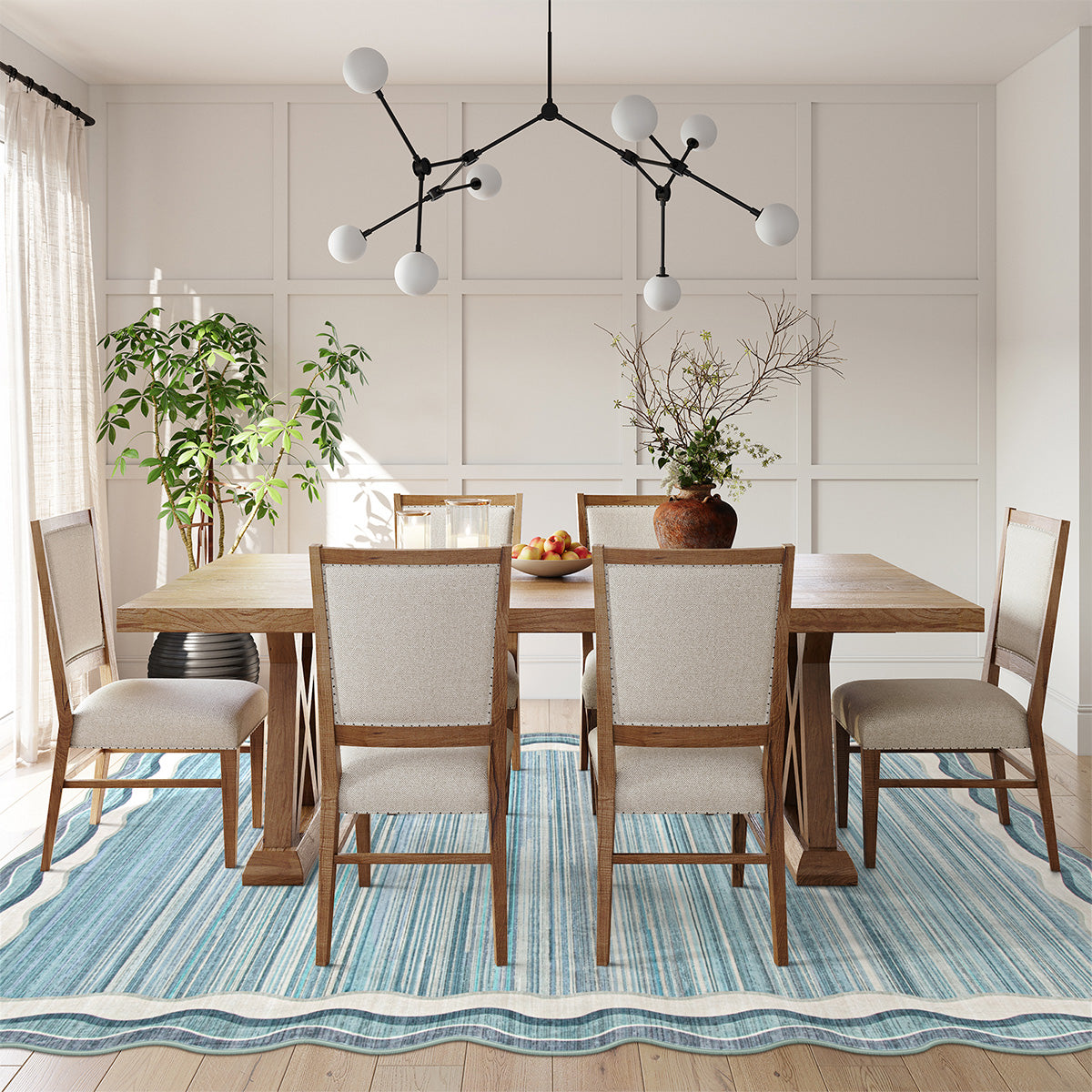
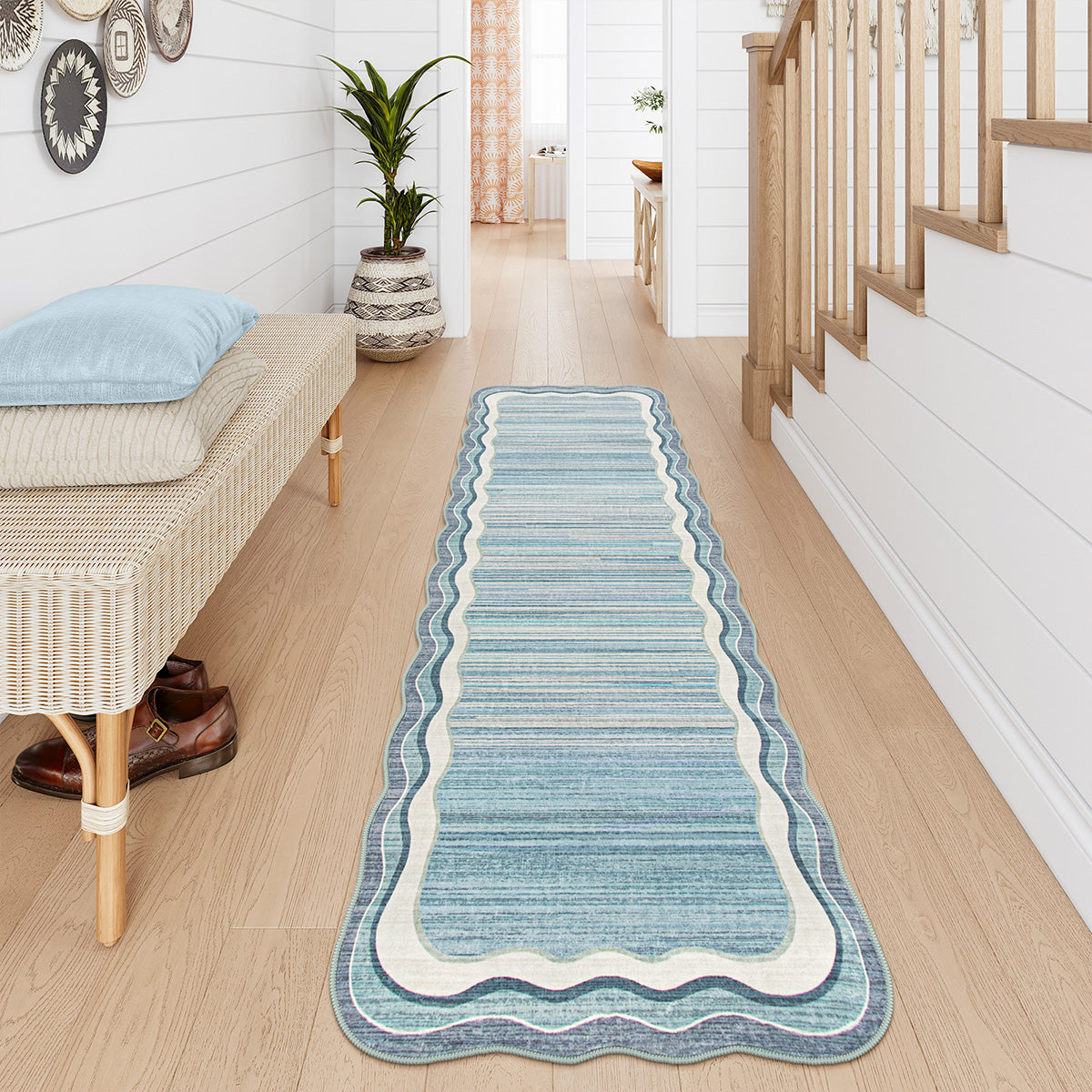
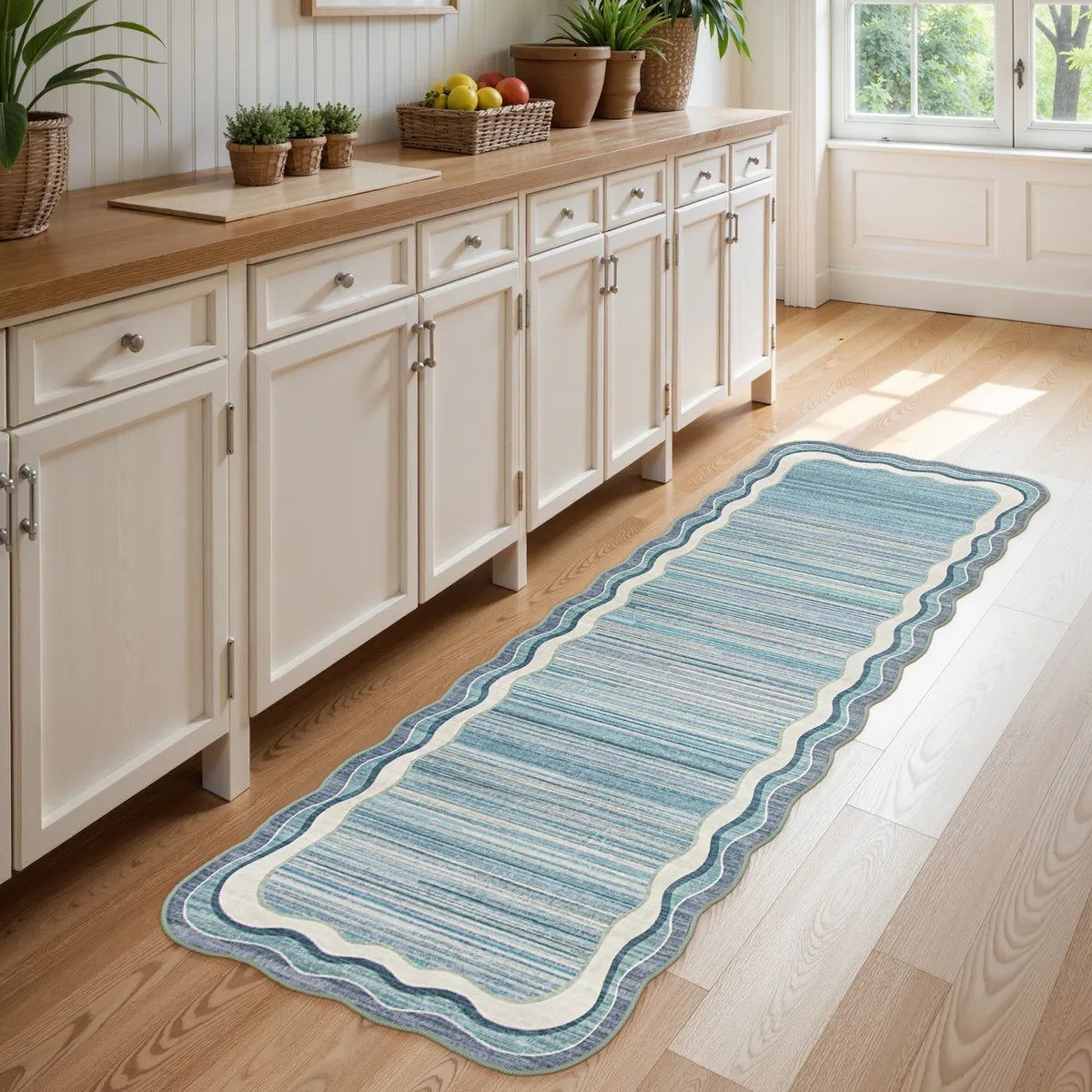
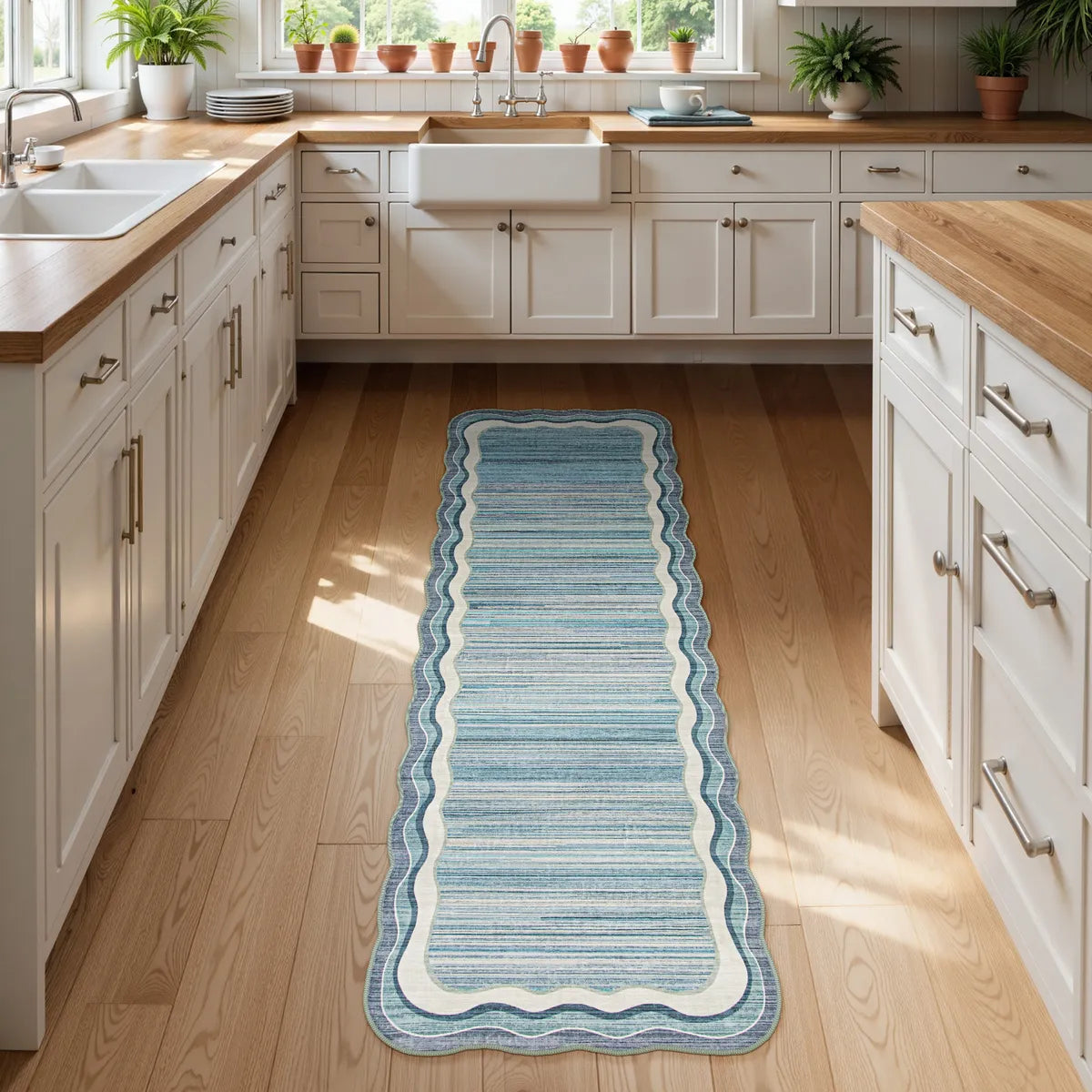
Geometric rug patterns use repeating shapes such as diamonds, grids, stripes, and checkered motifs. They work well in modern and minimalist interiors, where clean lines and structure are part of the overall aesthetic. Abstract patterns take a freer approach, using irregular shapes or color gradients that add visual interest without a defined motif.
Both styles are strong choices for living rooms with neutral-toned furniture, since they introduce visual complexity without competing with other elements in the room.
Floral, Botanical, Vintage, and Nature-Inspired Patterns
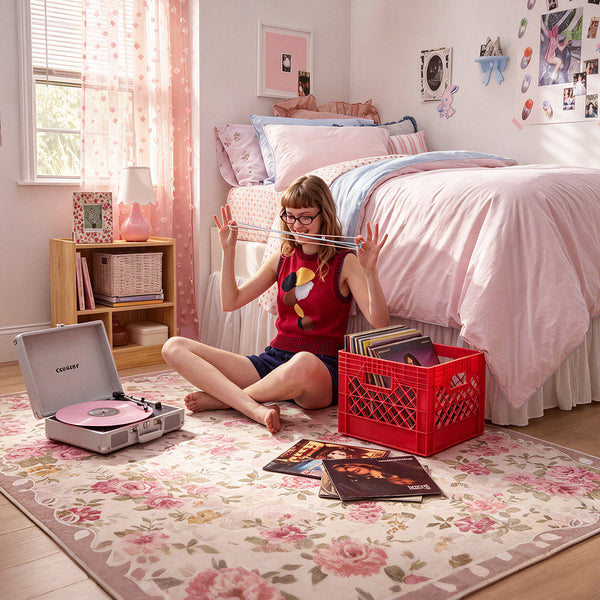
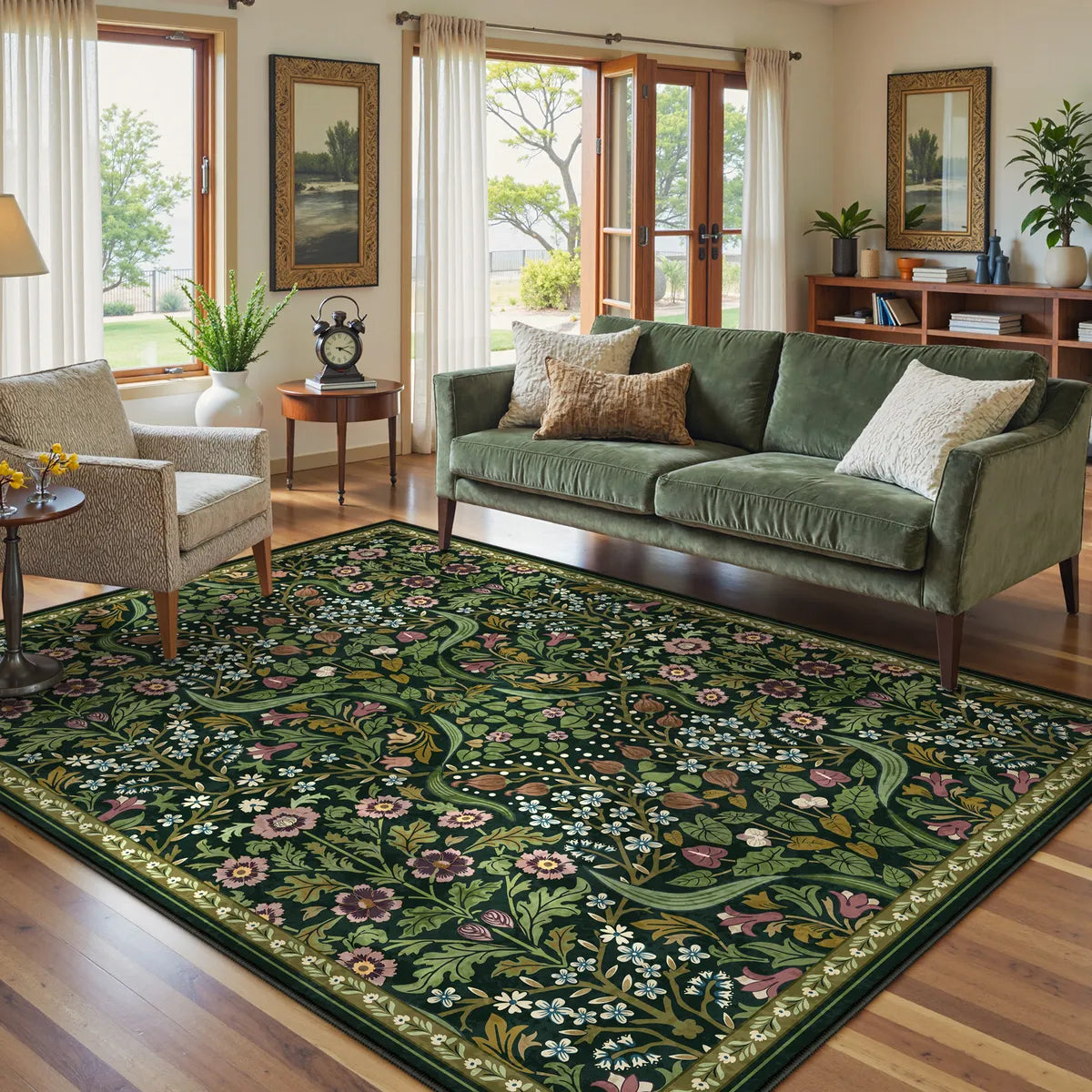
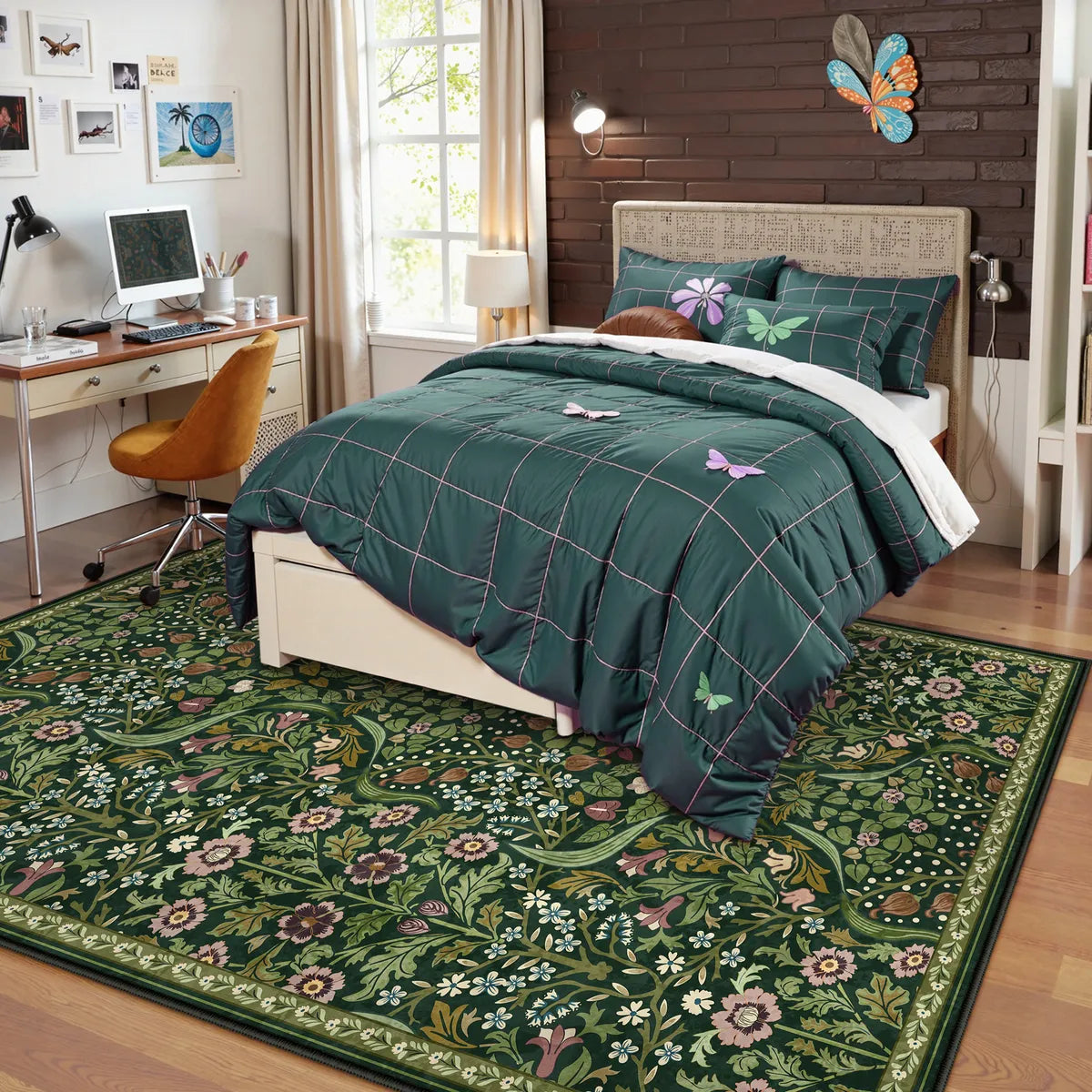
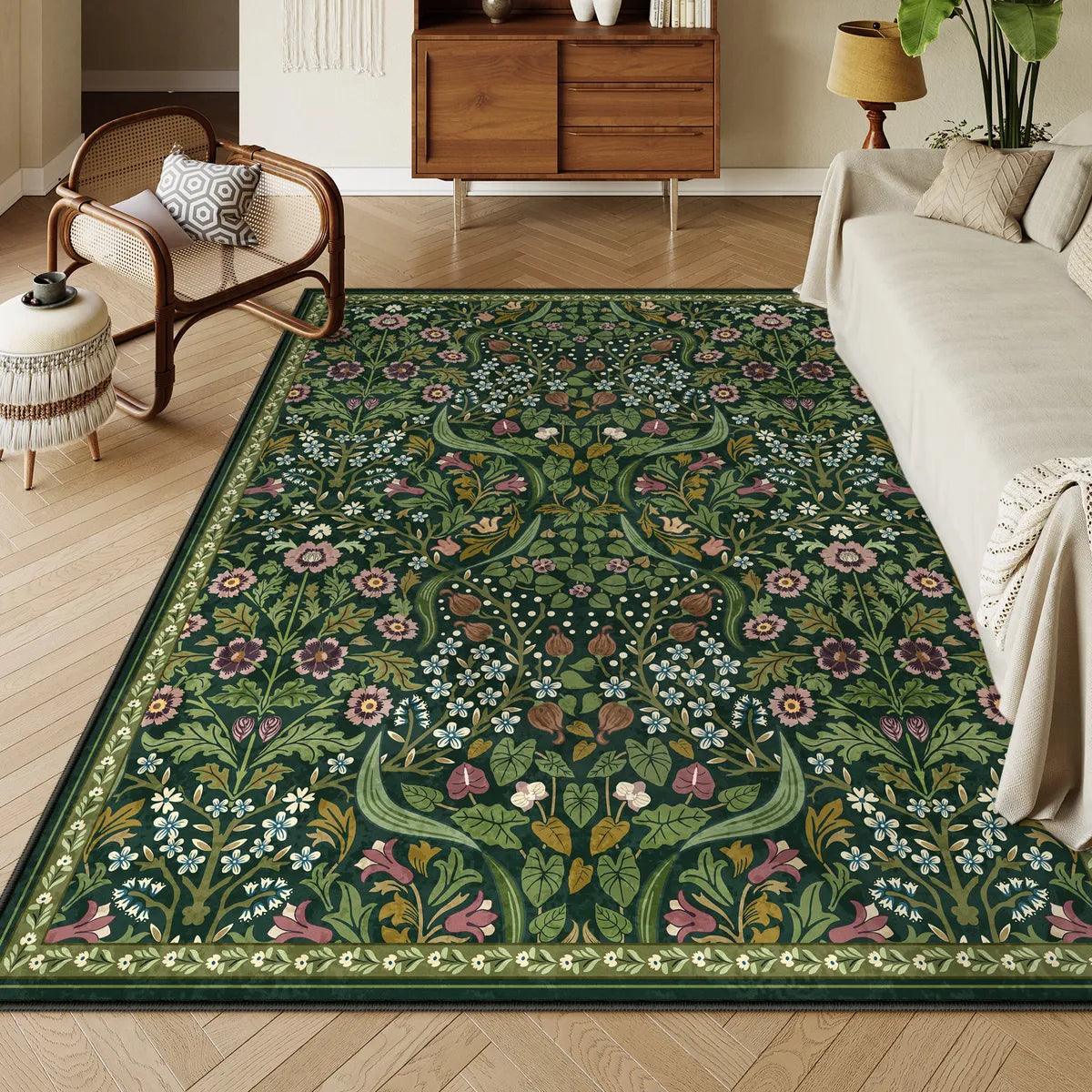
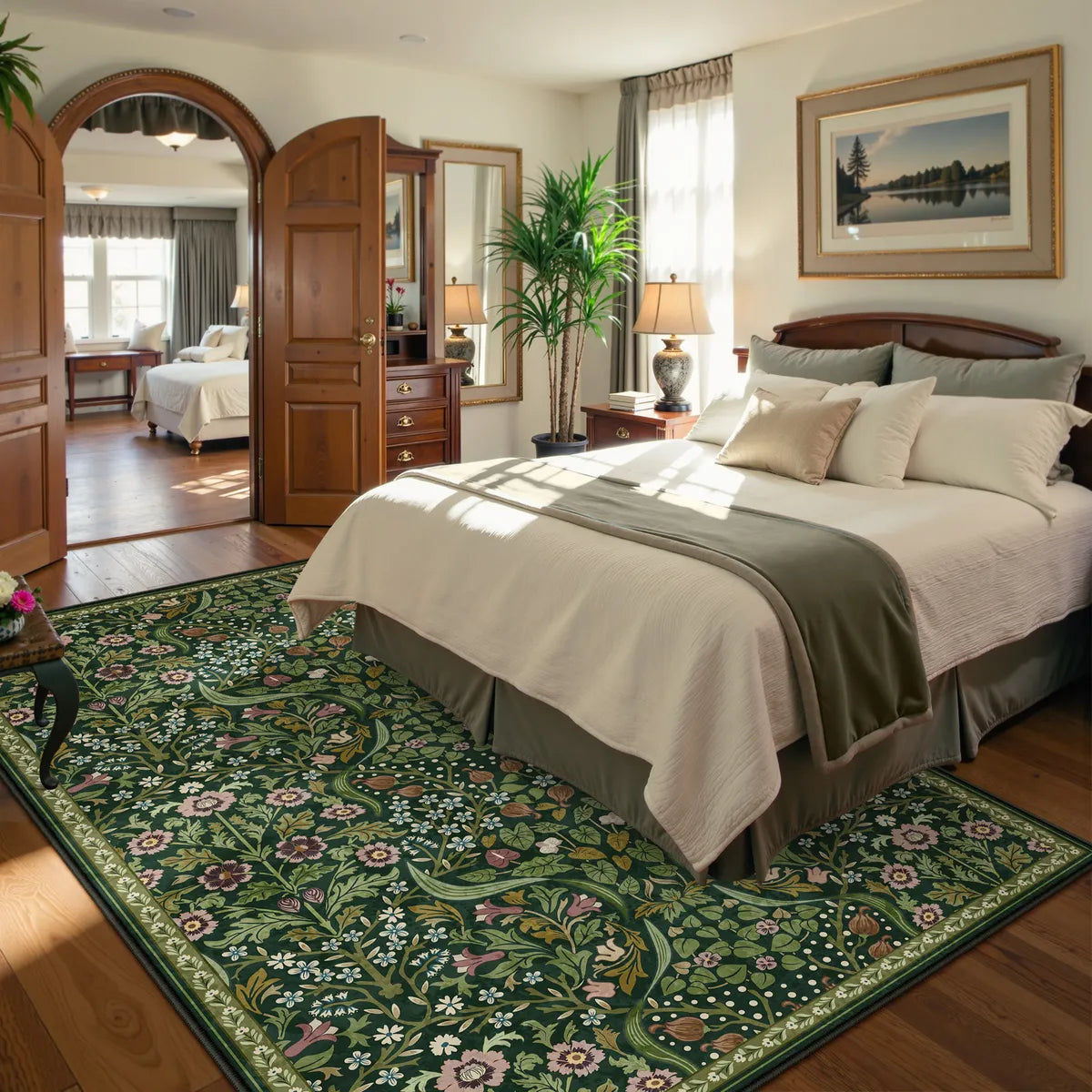
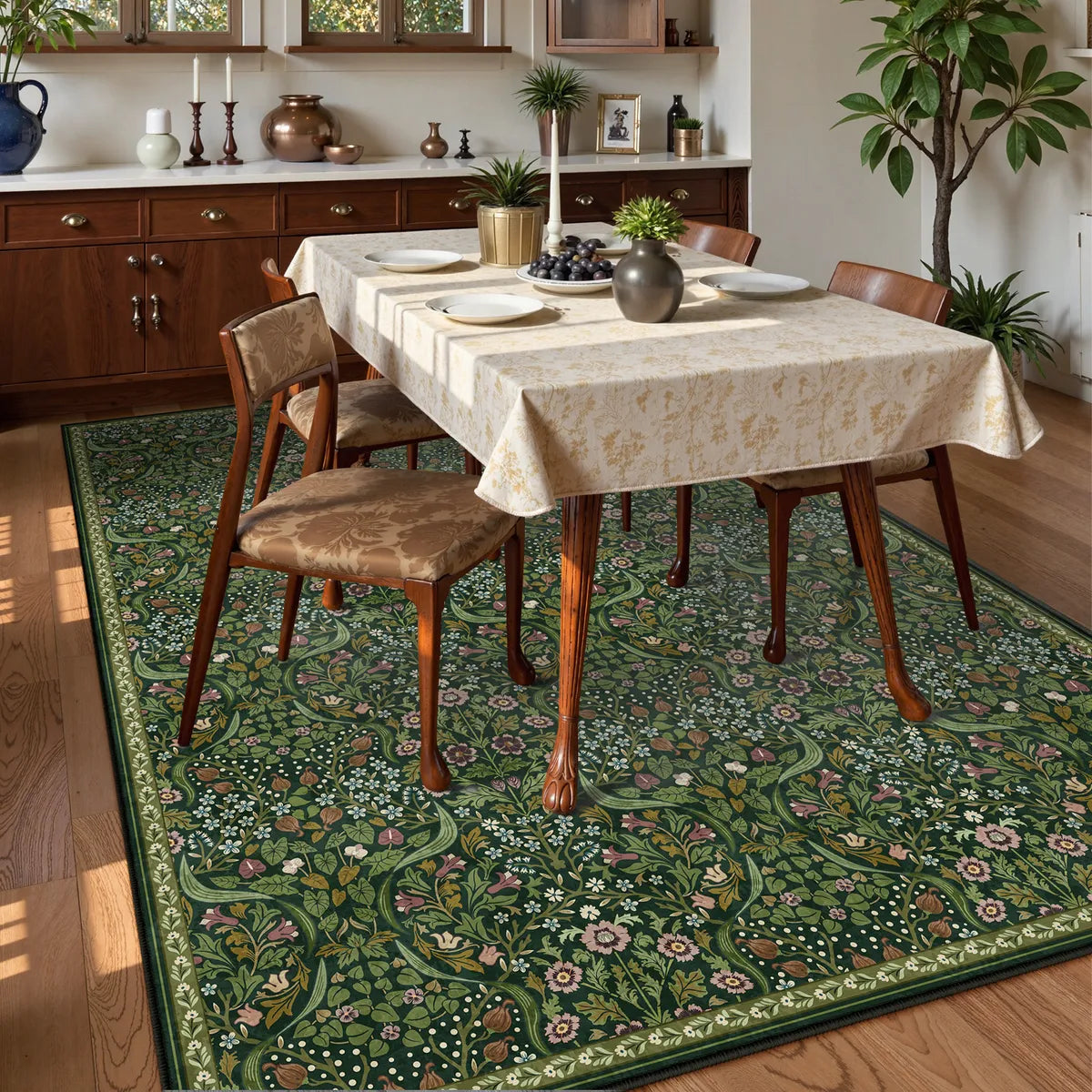
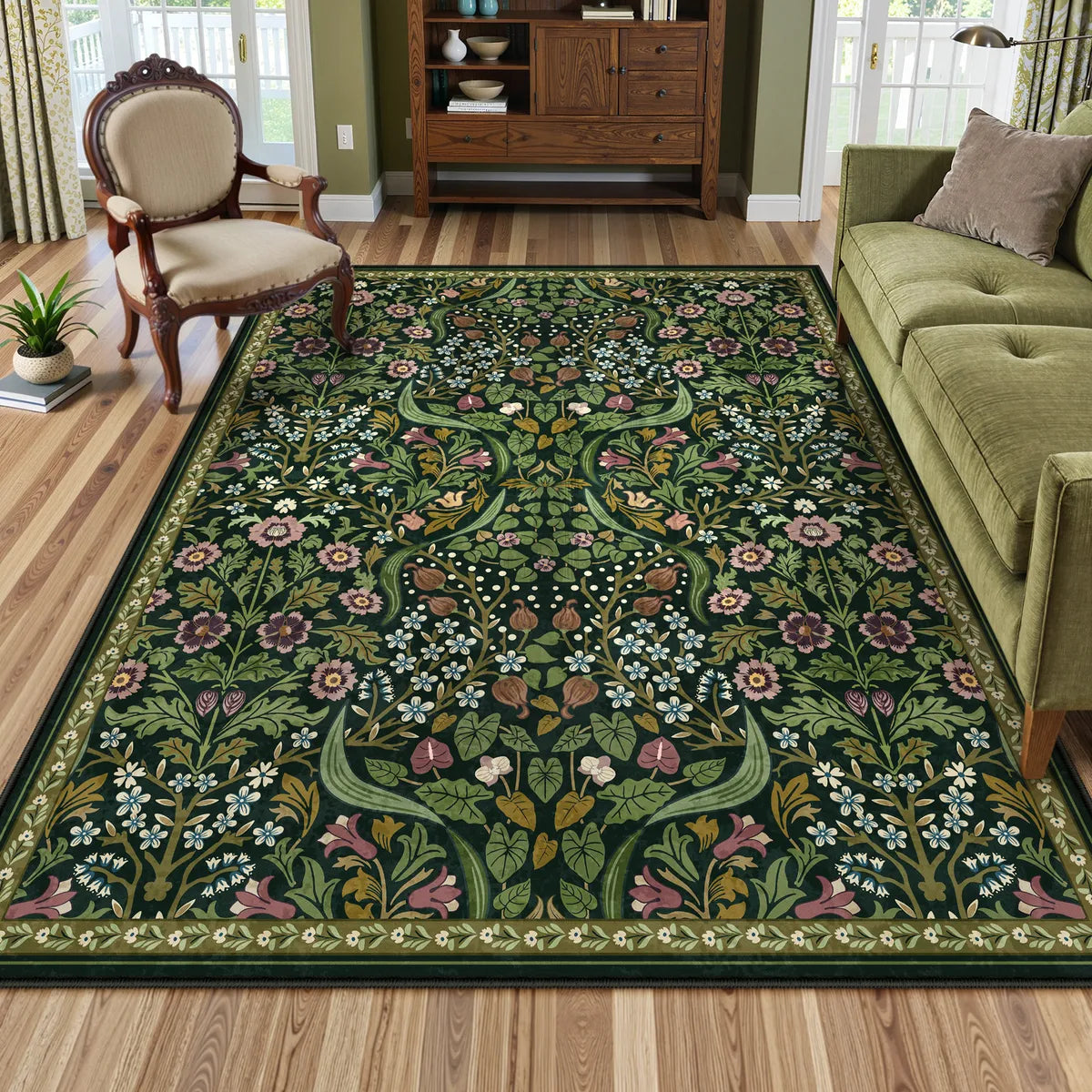
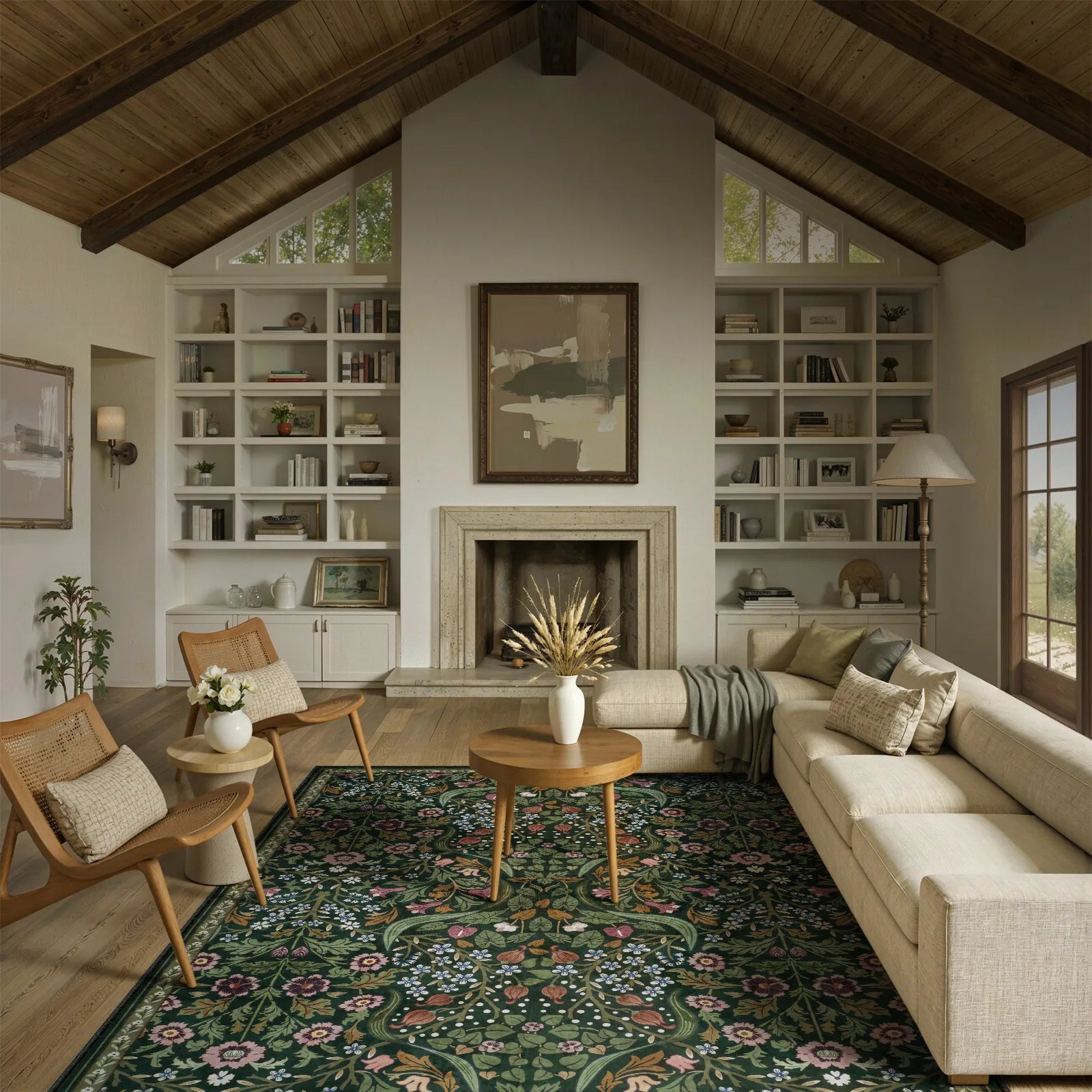
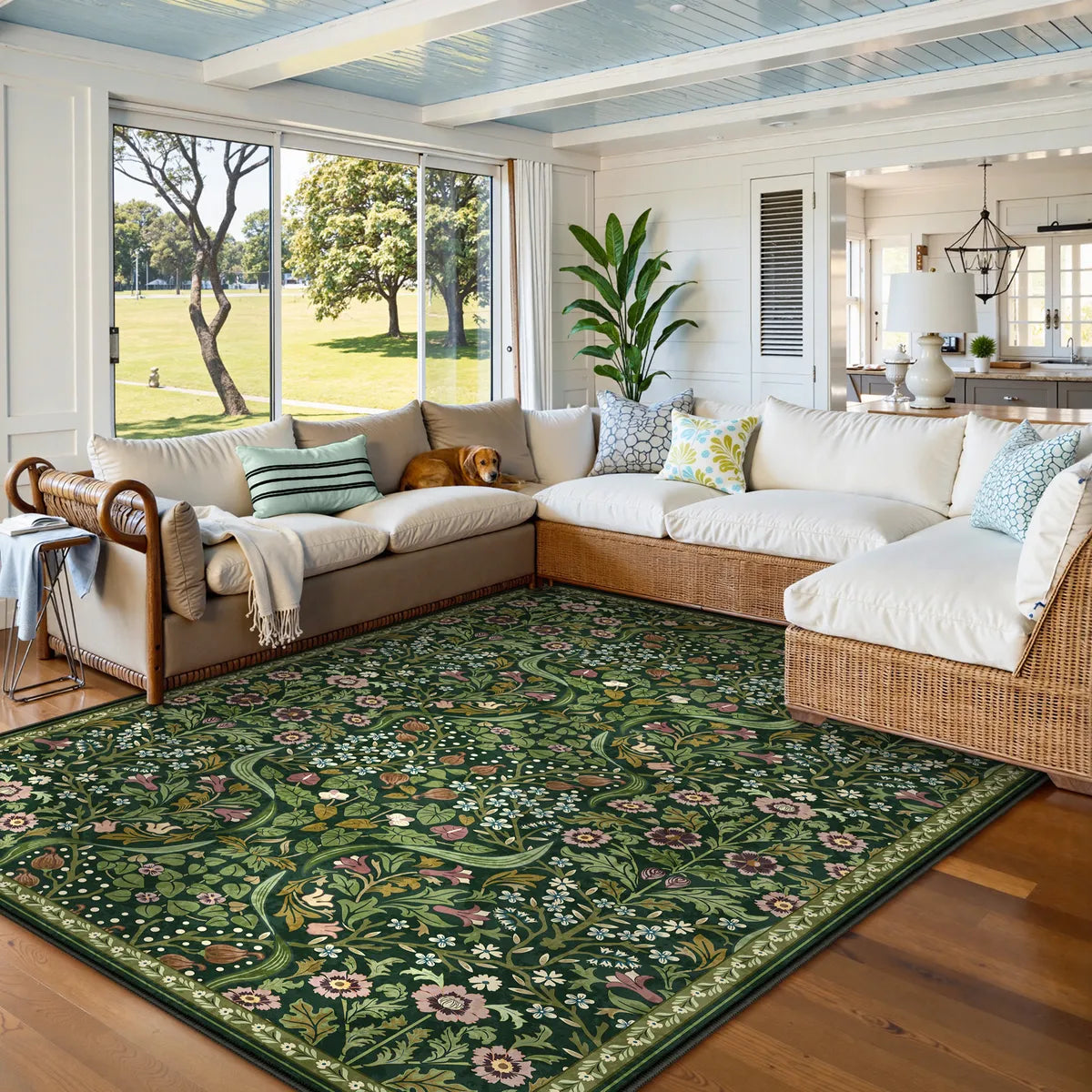
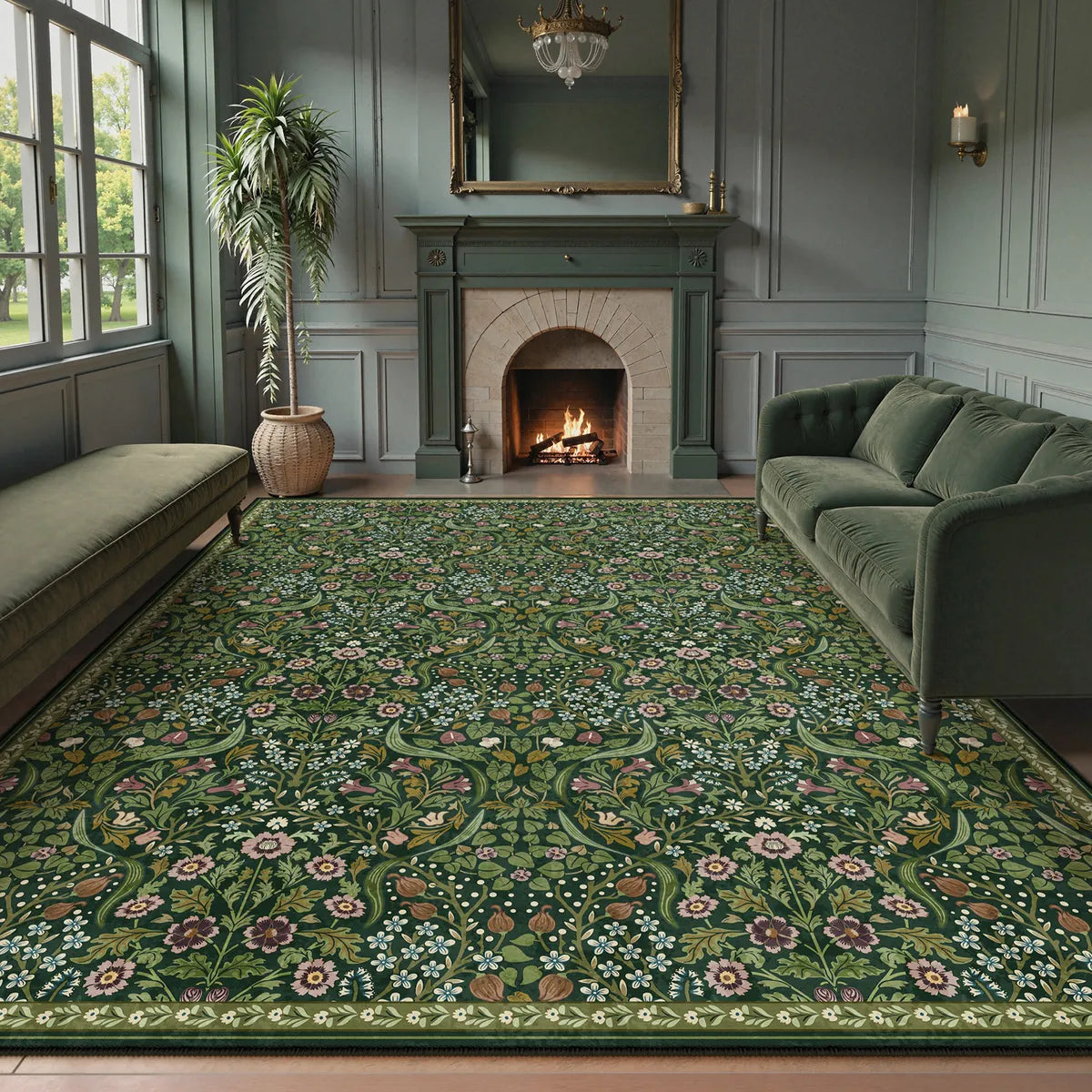
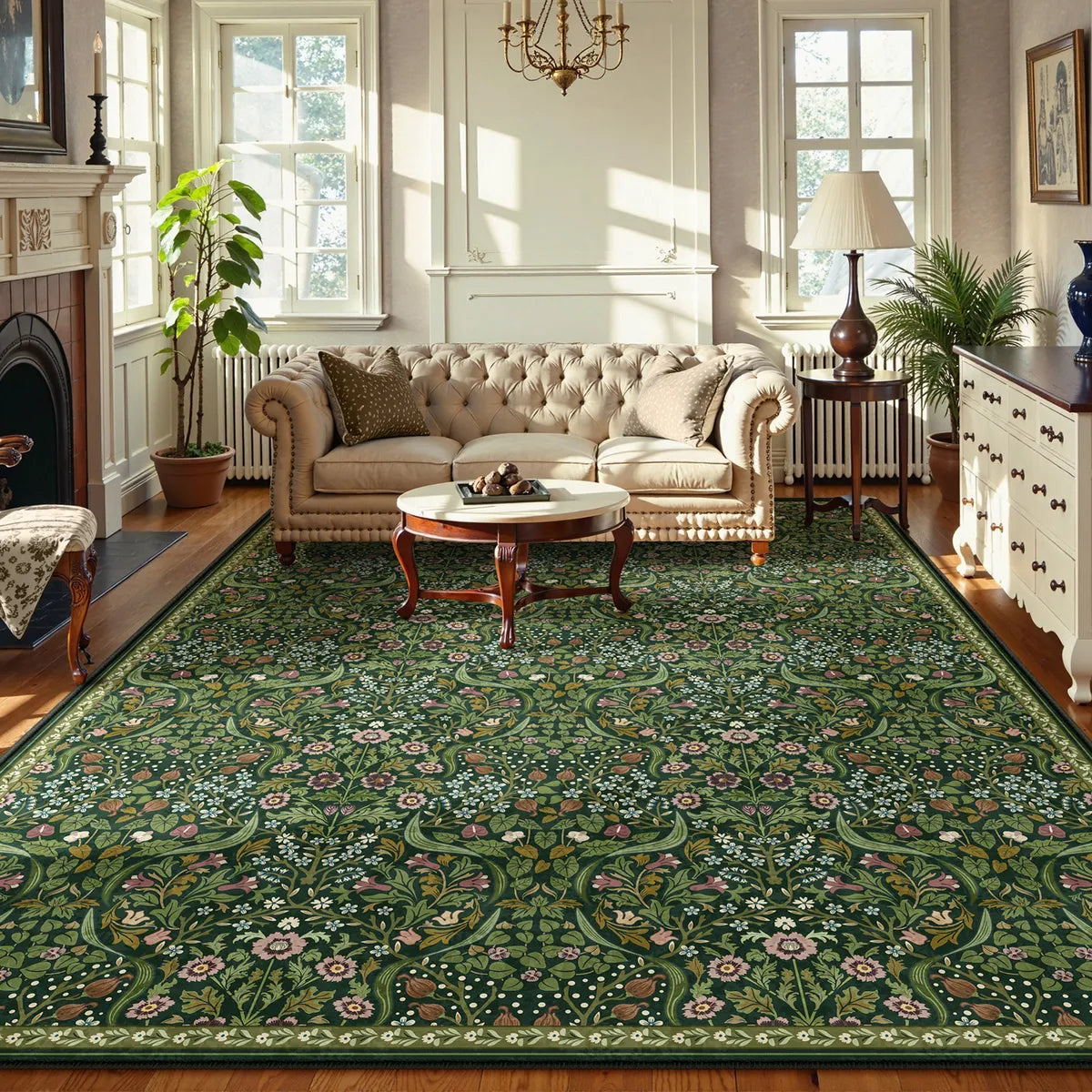
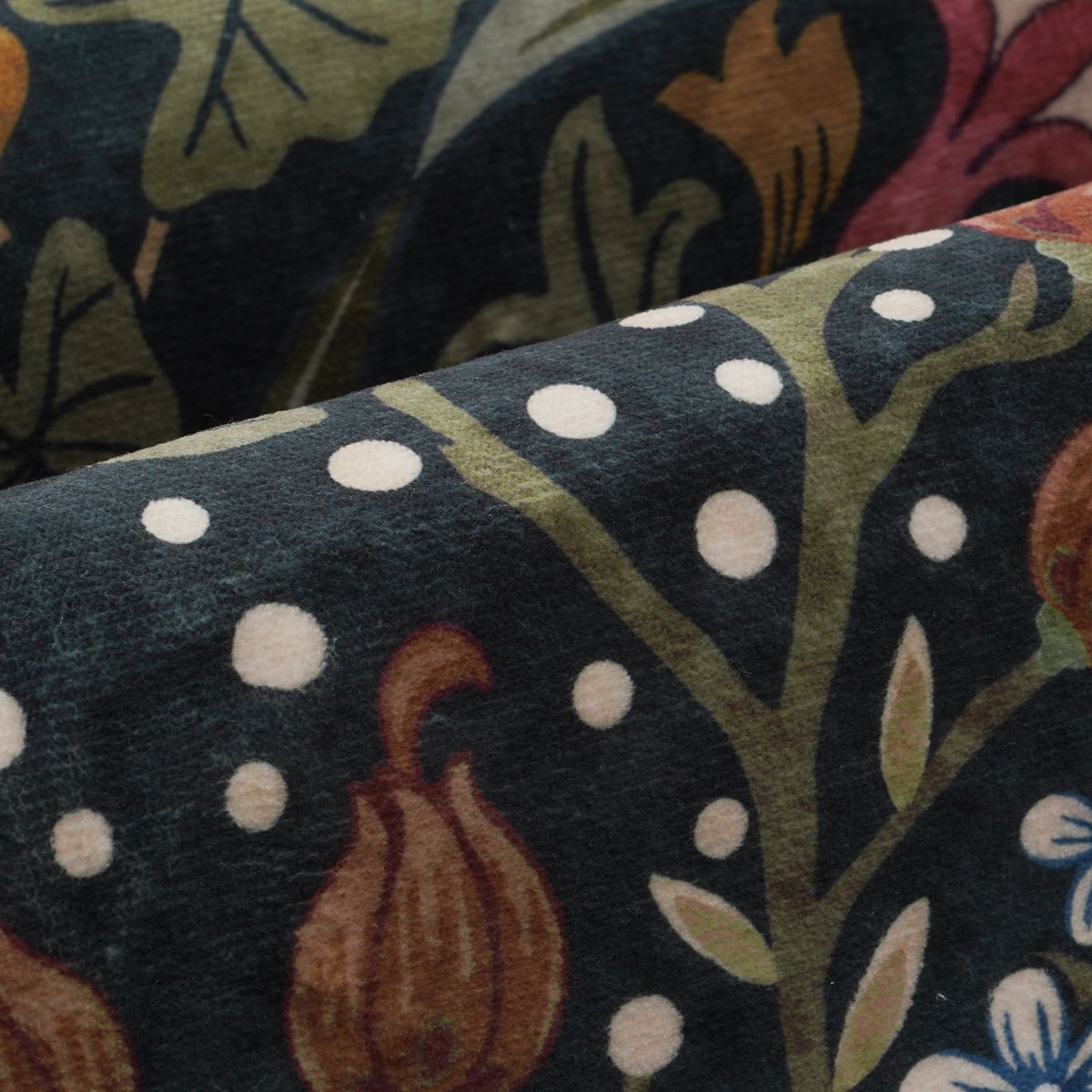
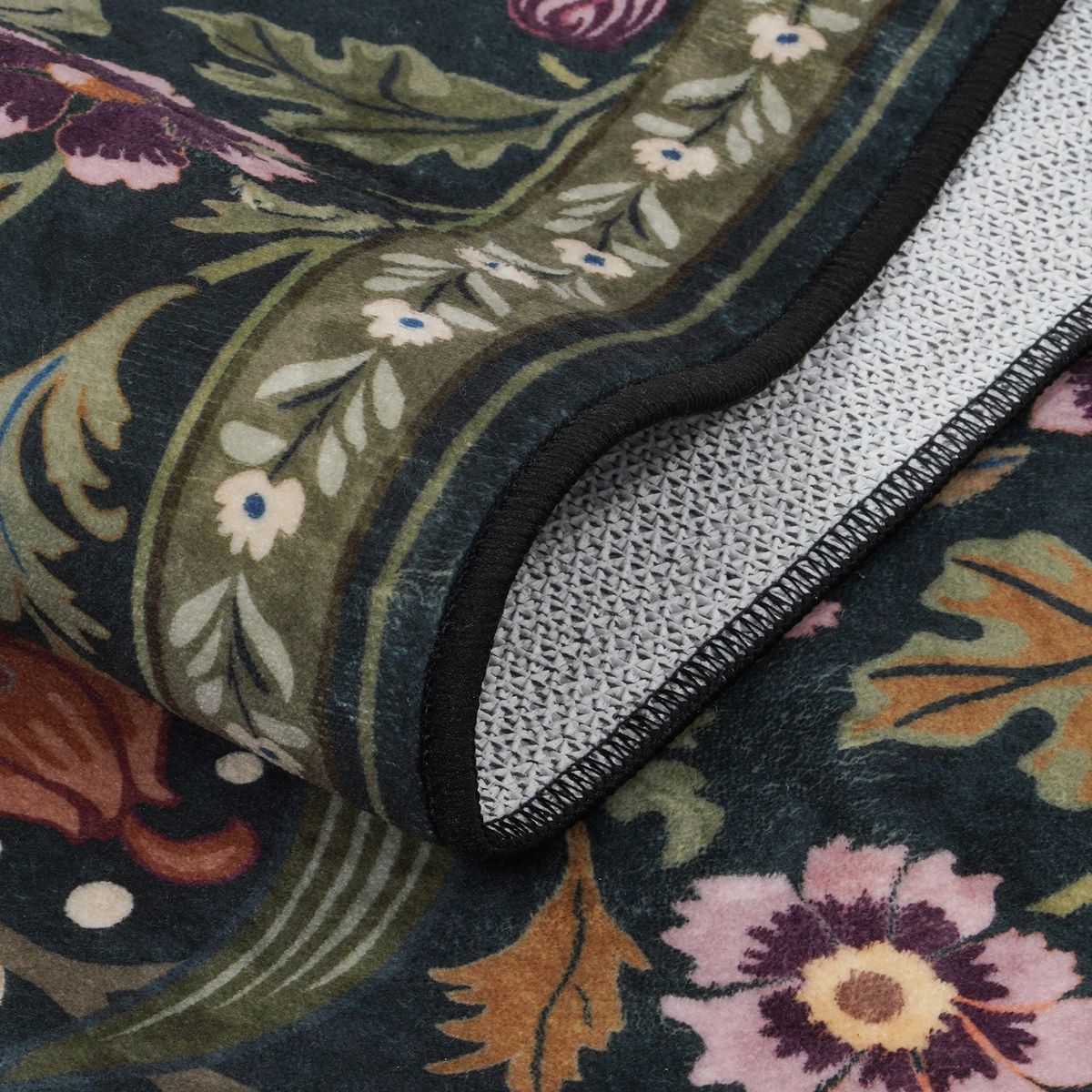
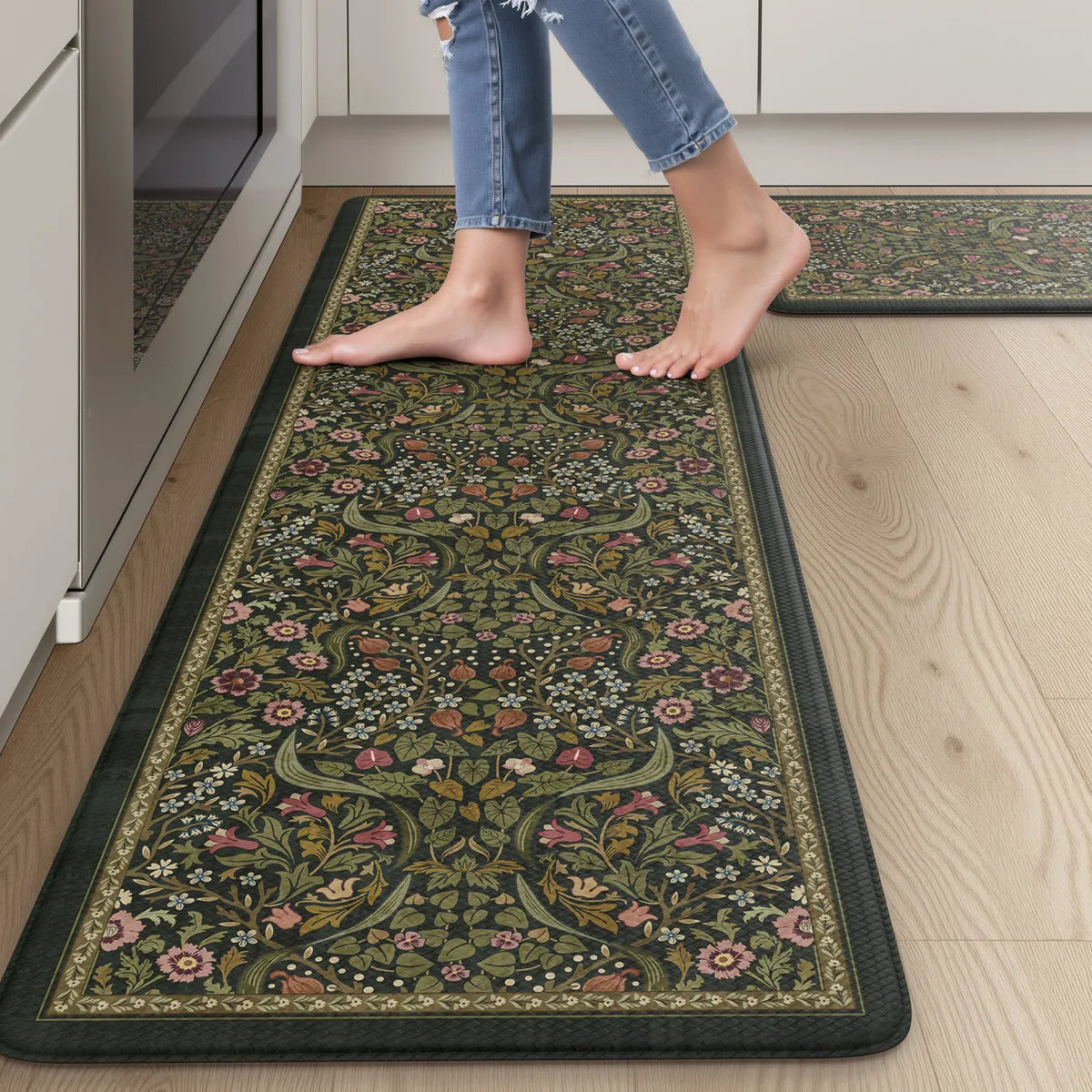
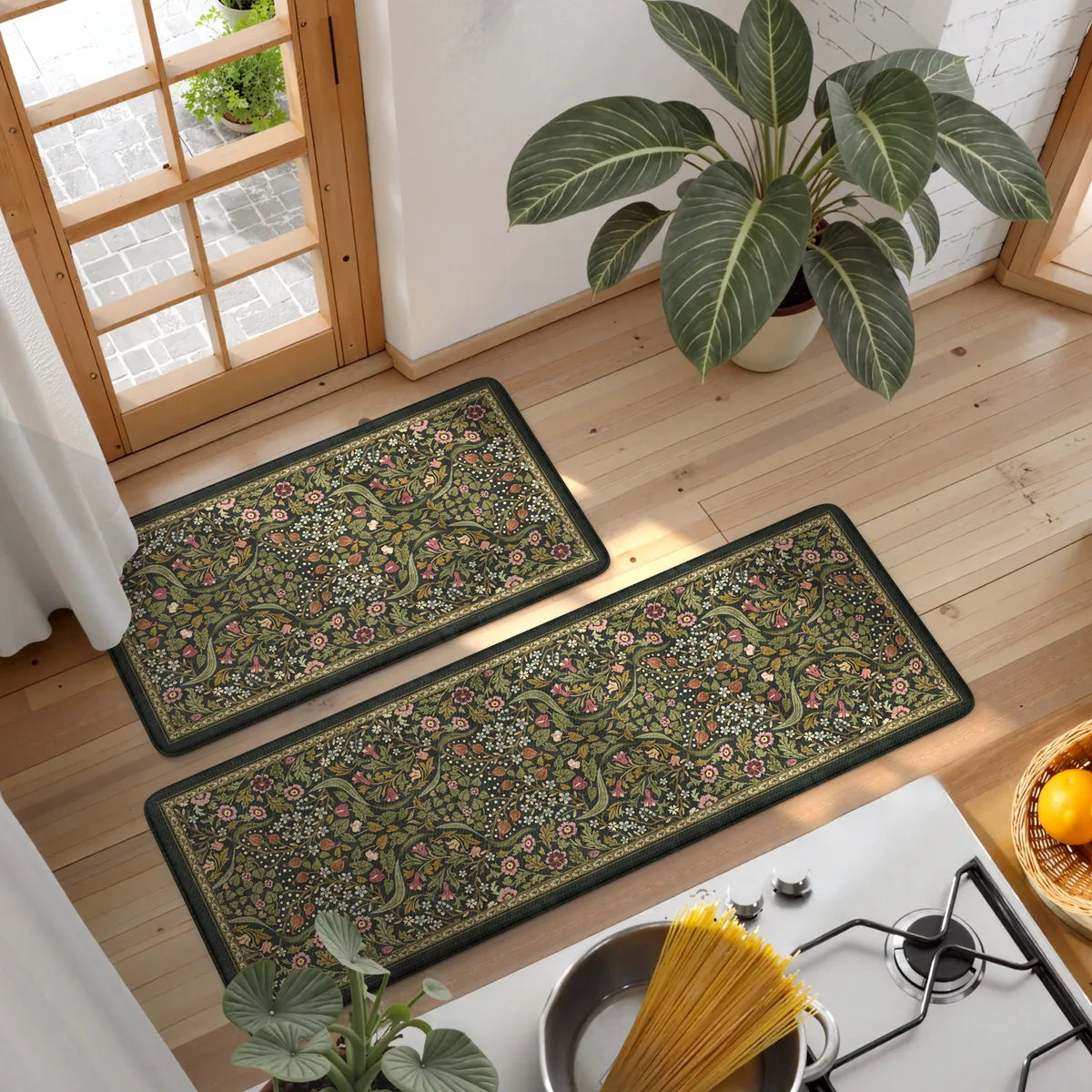
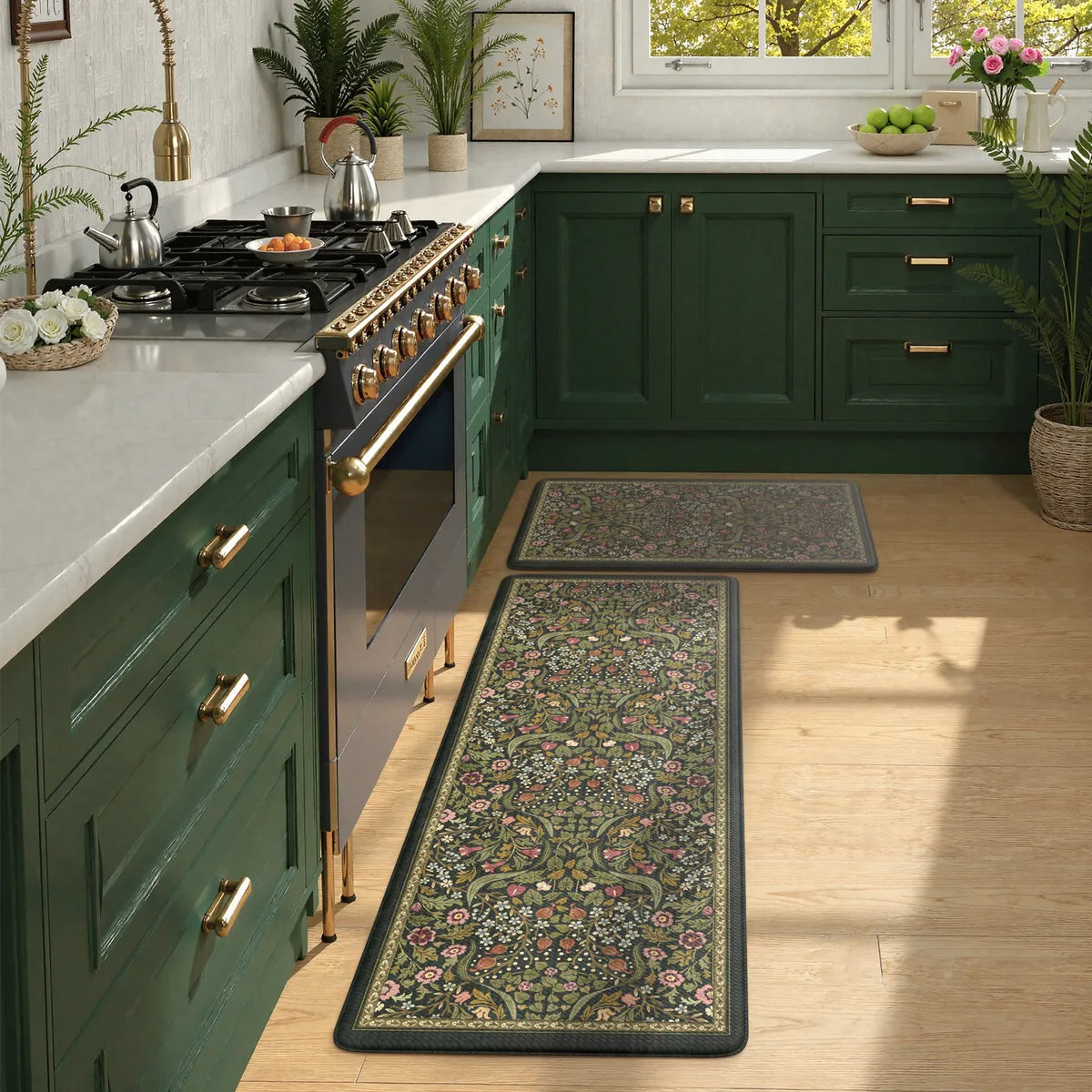
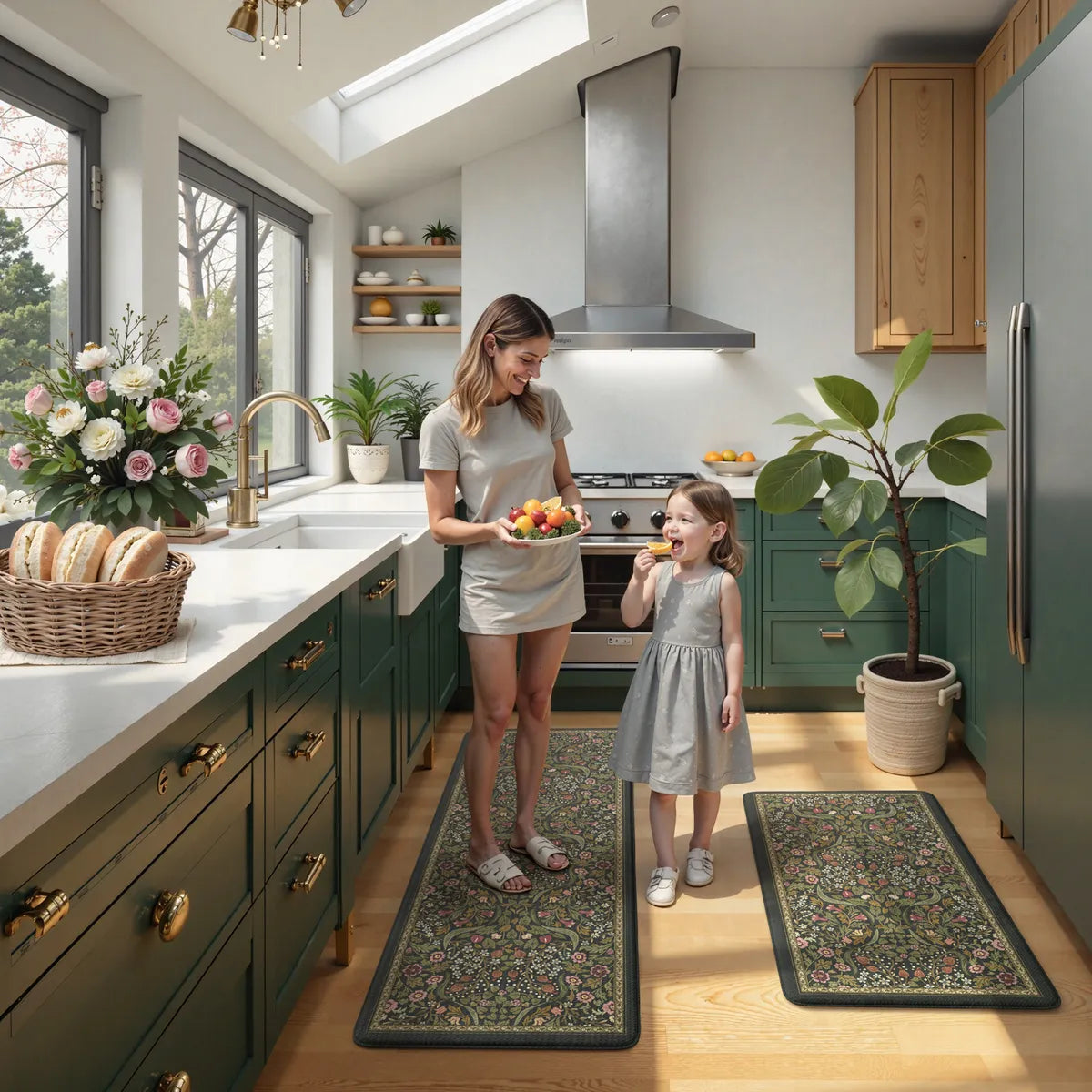
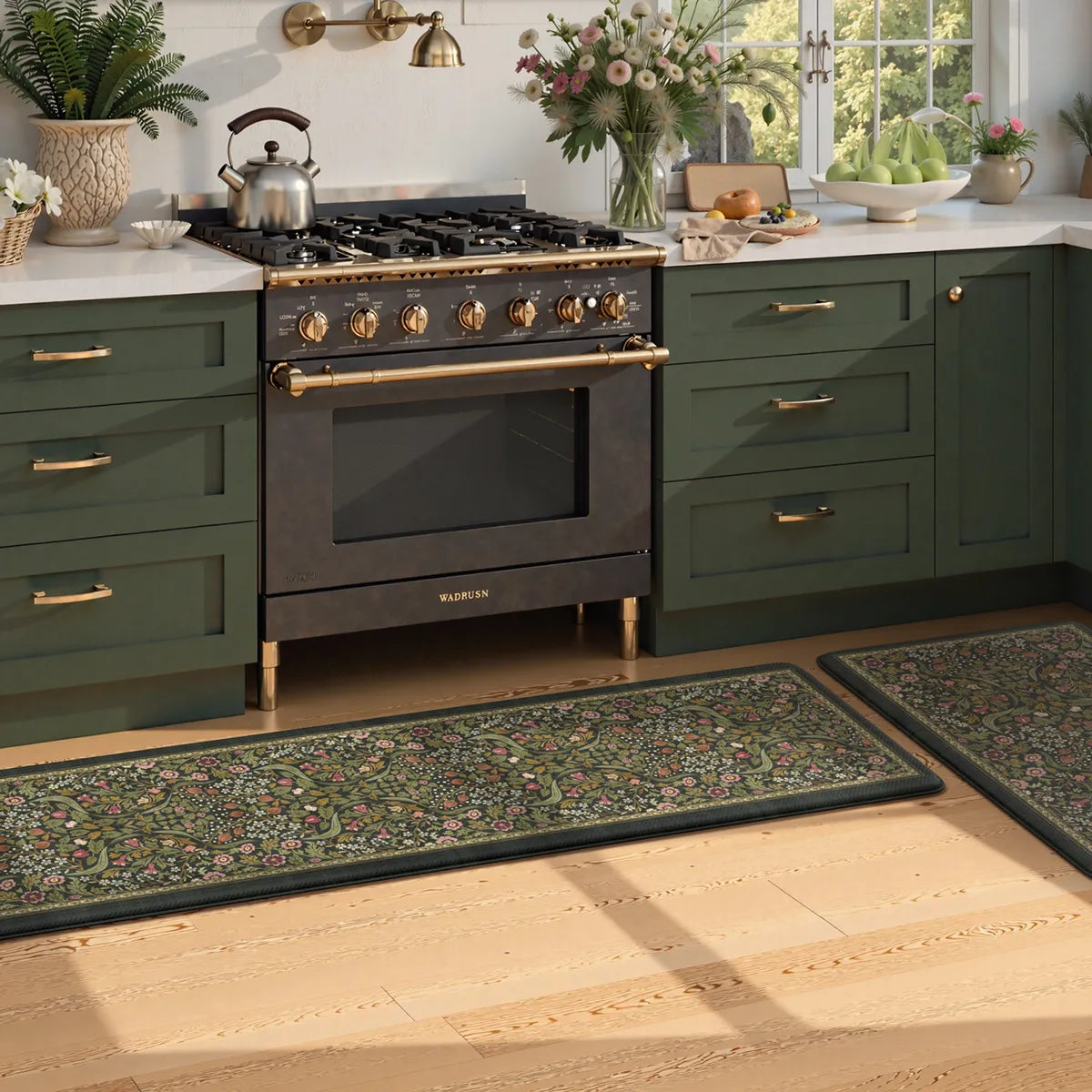
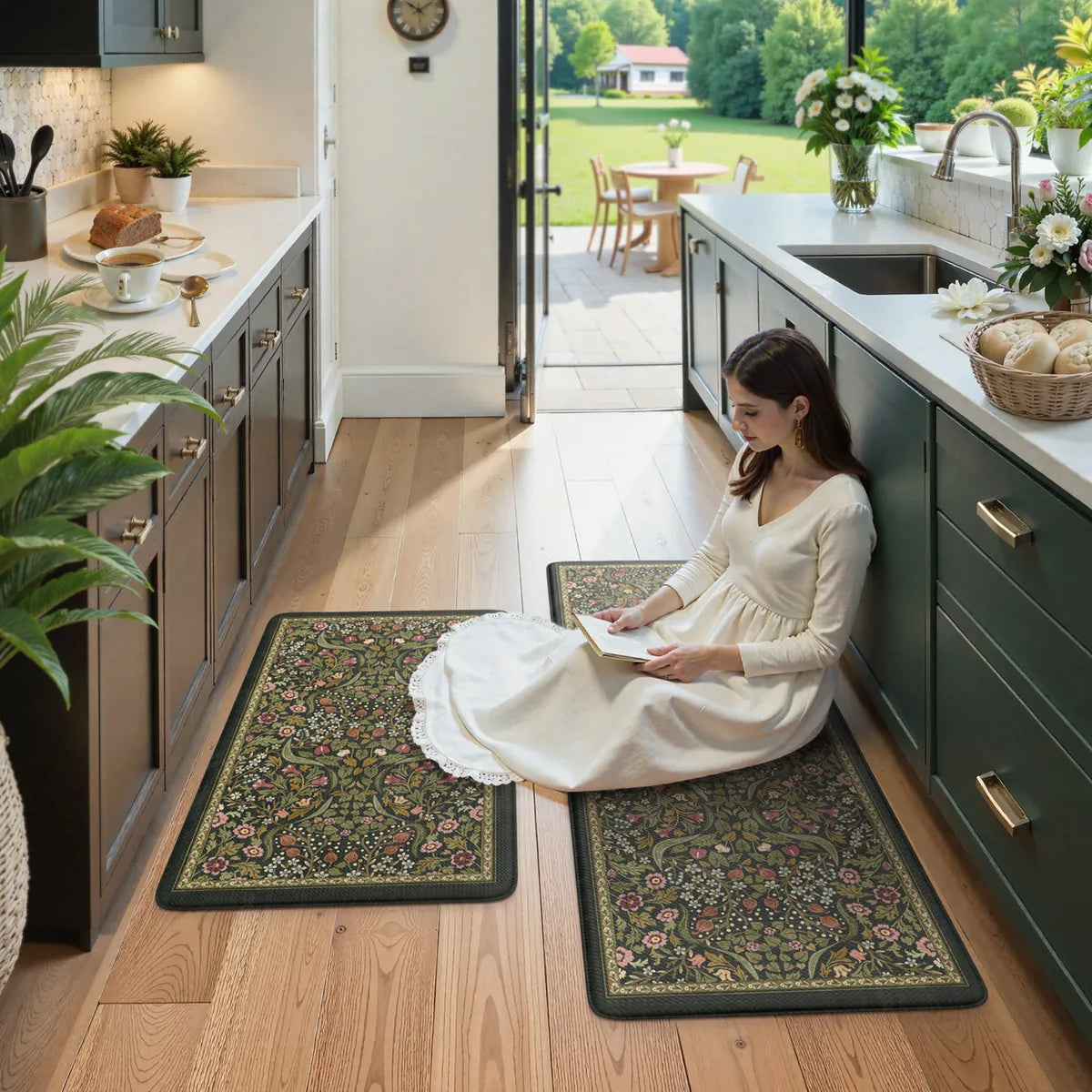
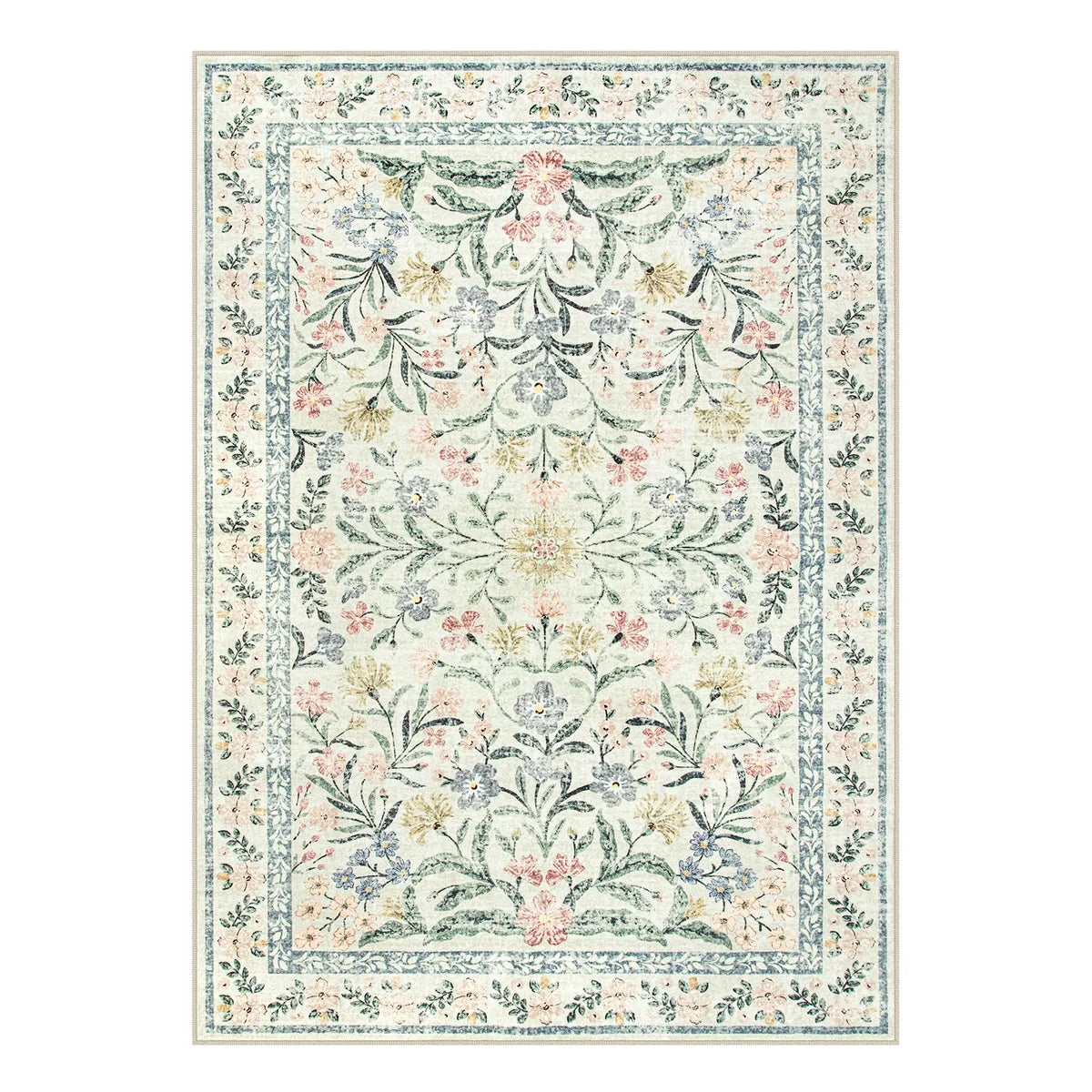
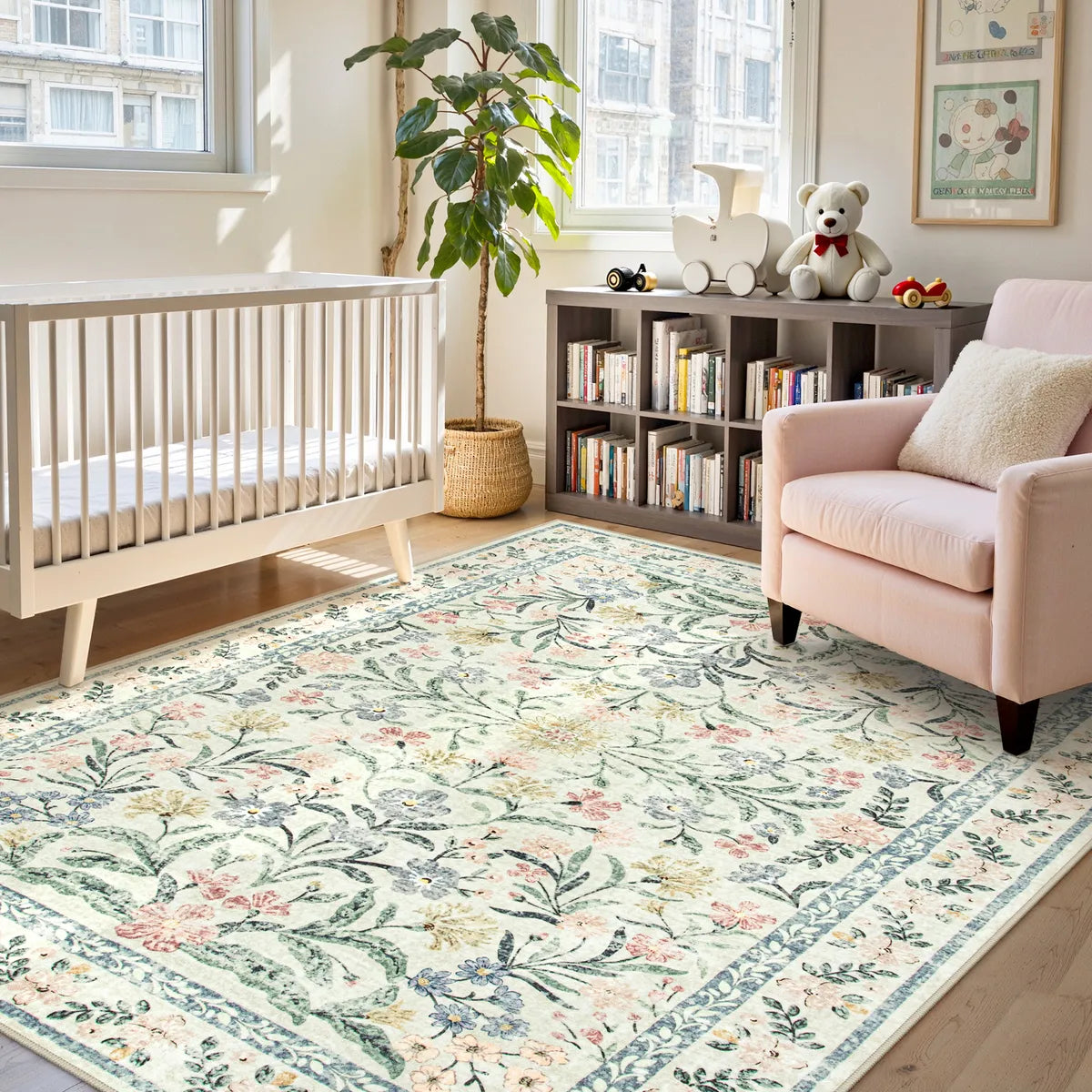
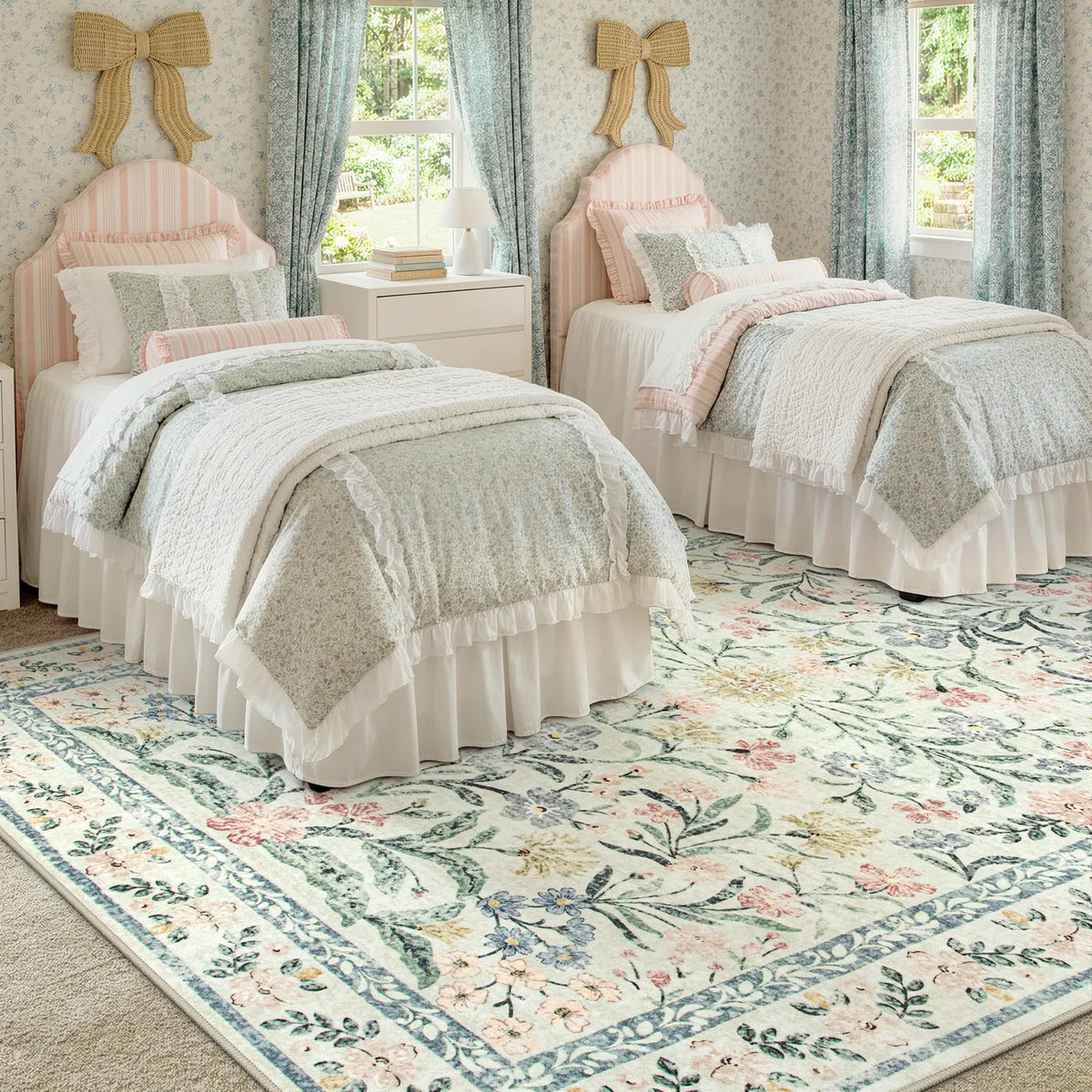
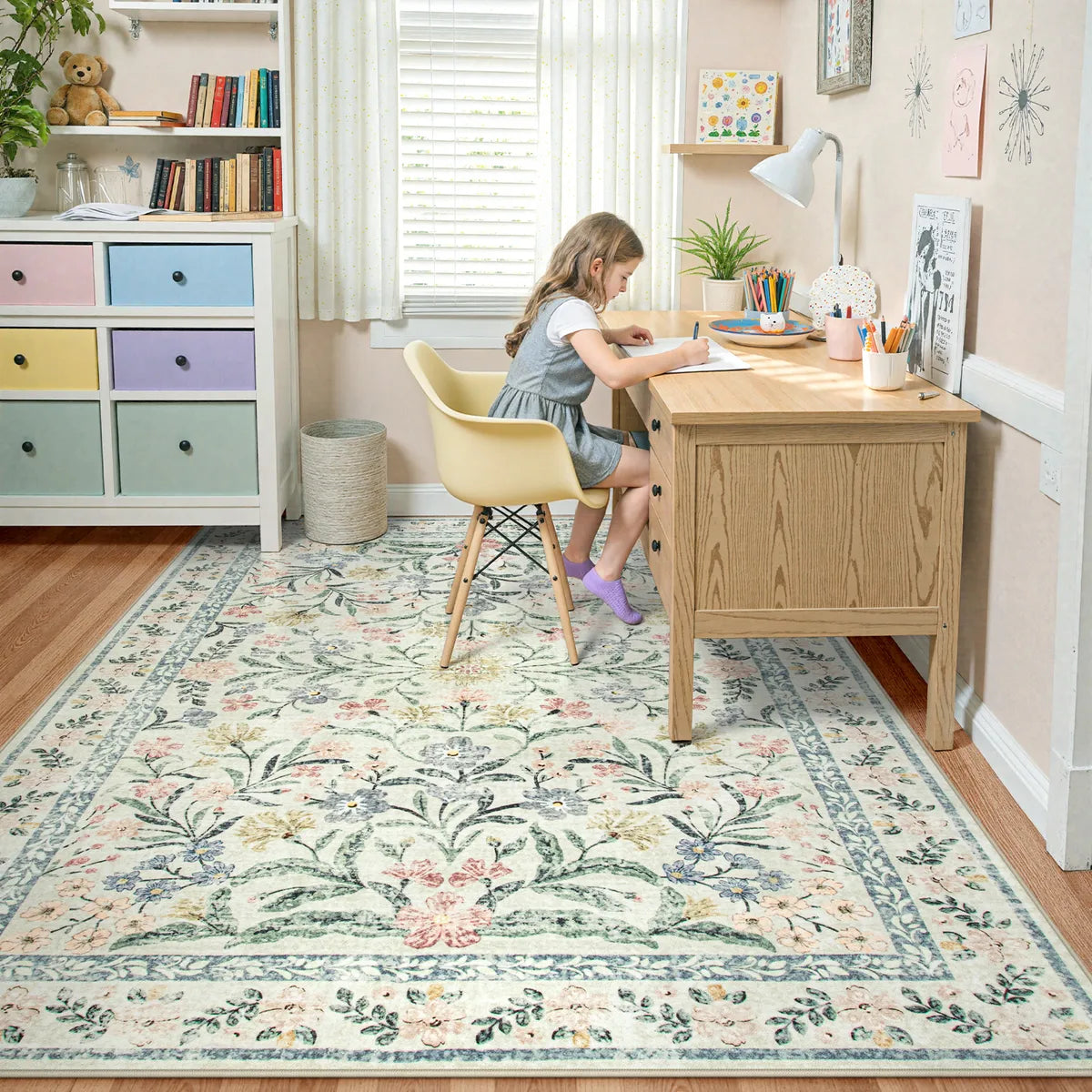
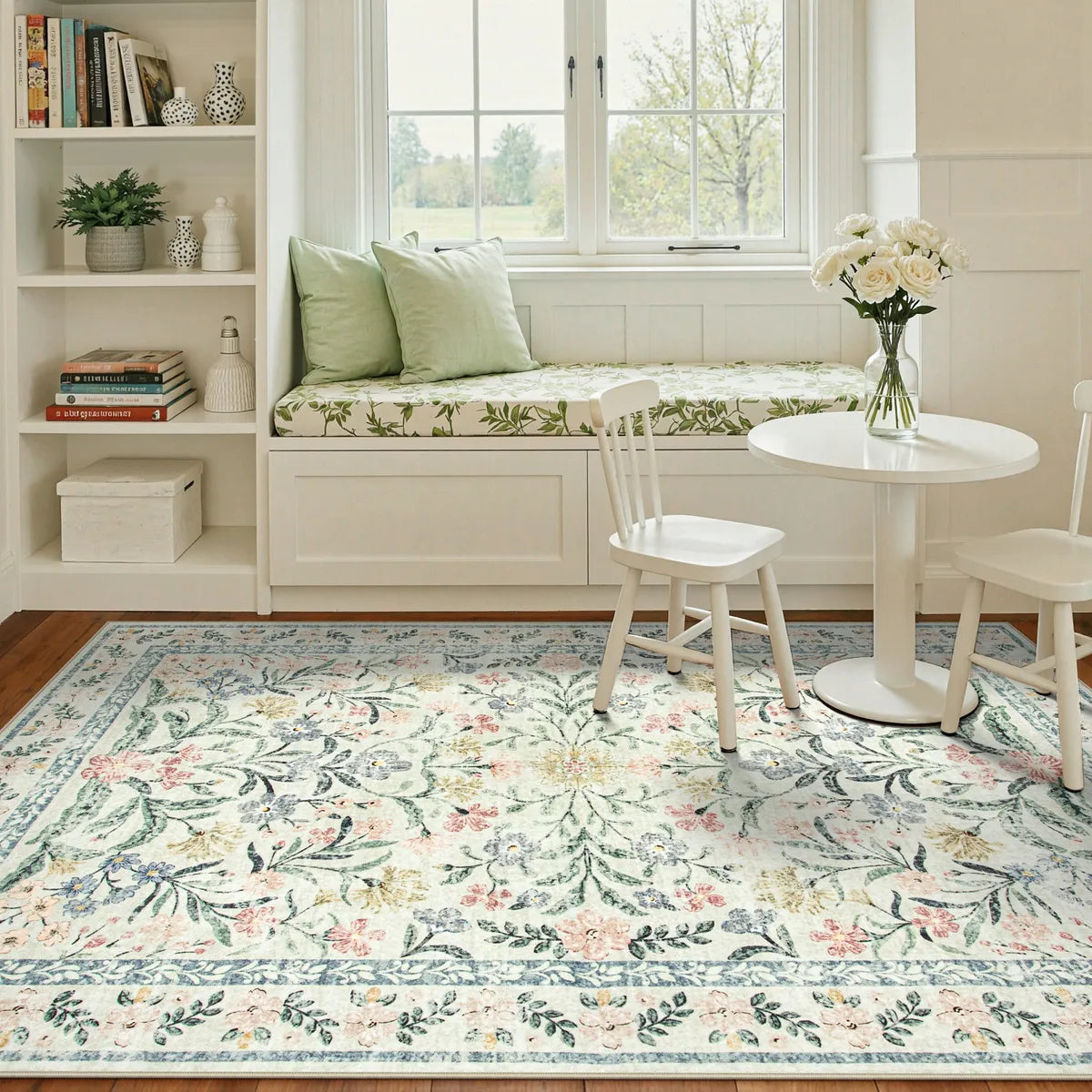
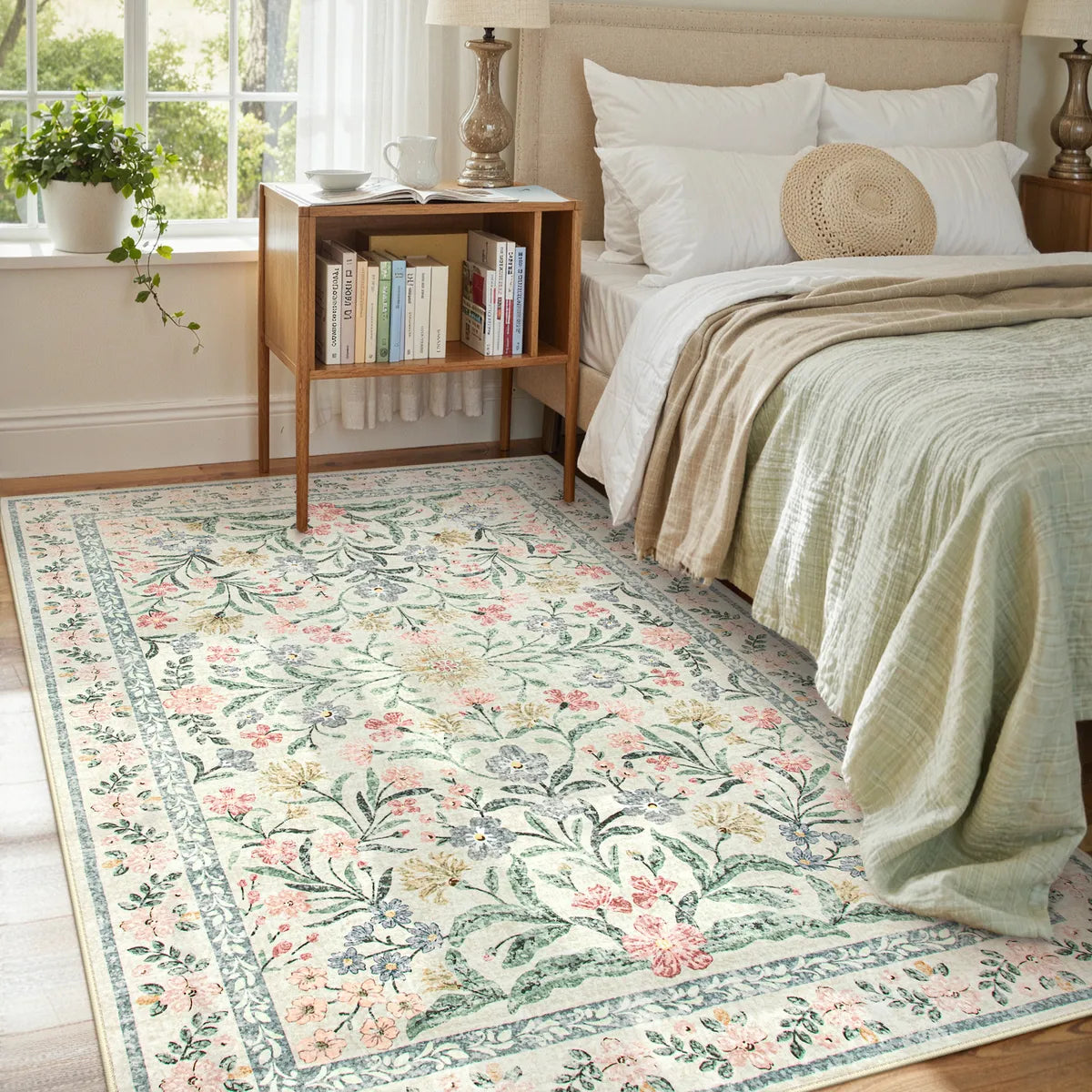
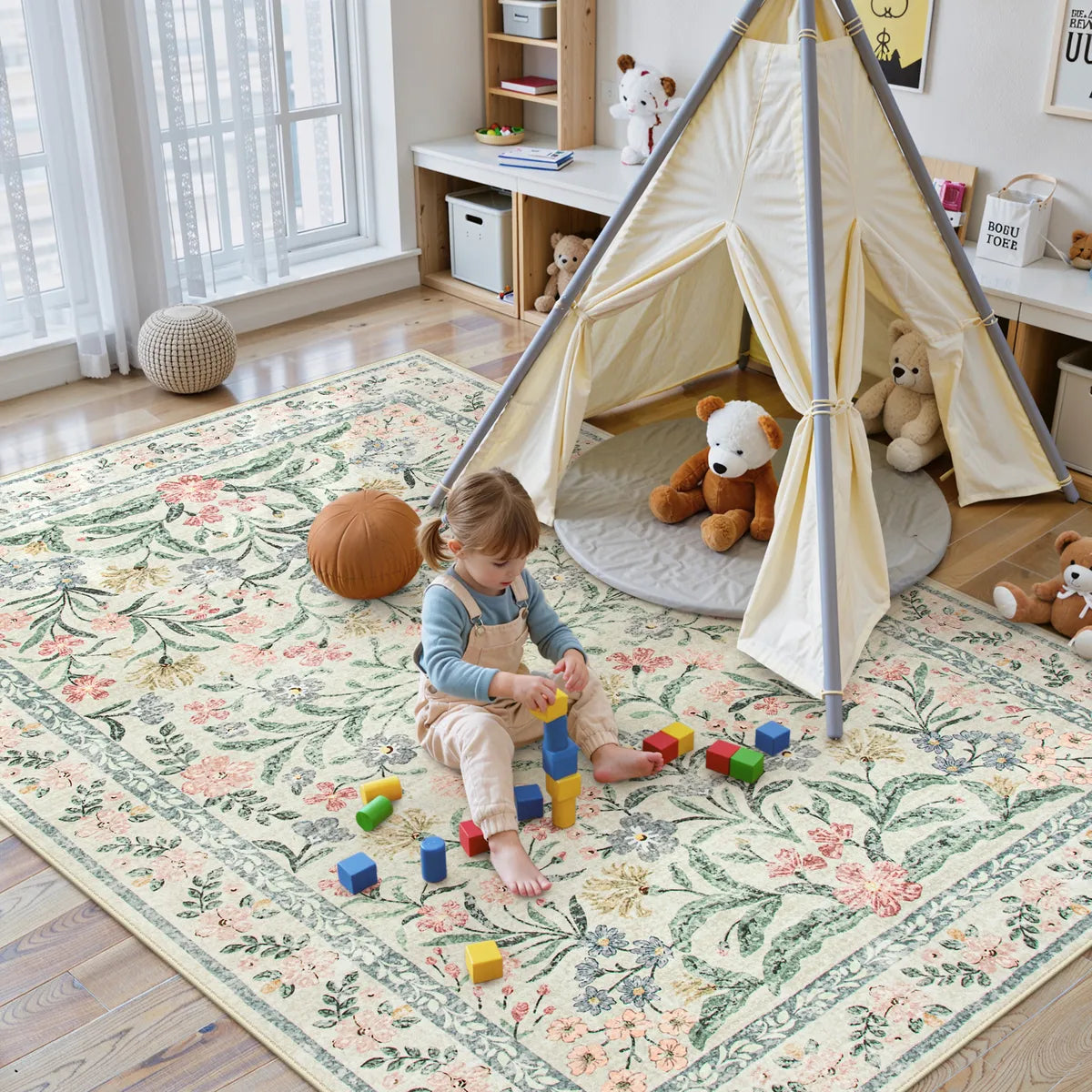
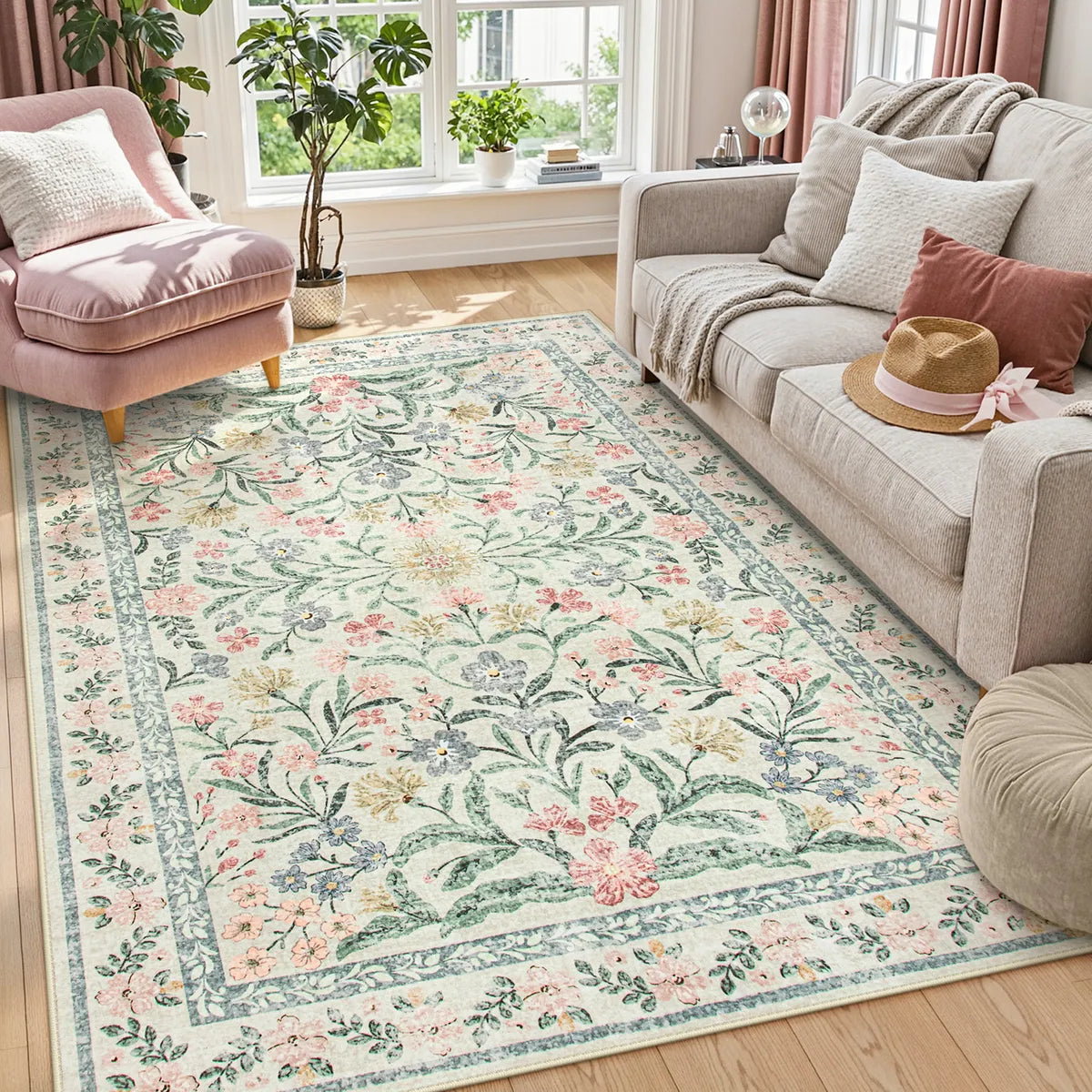
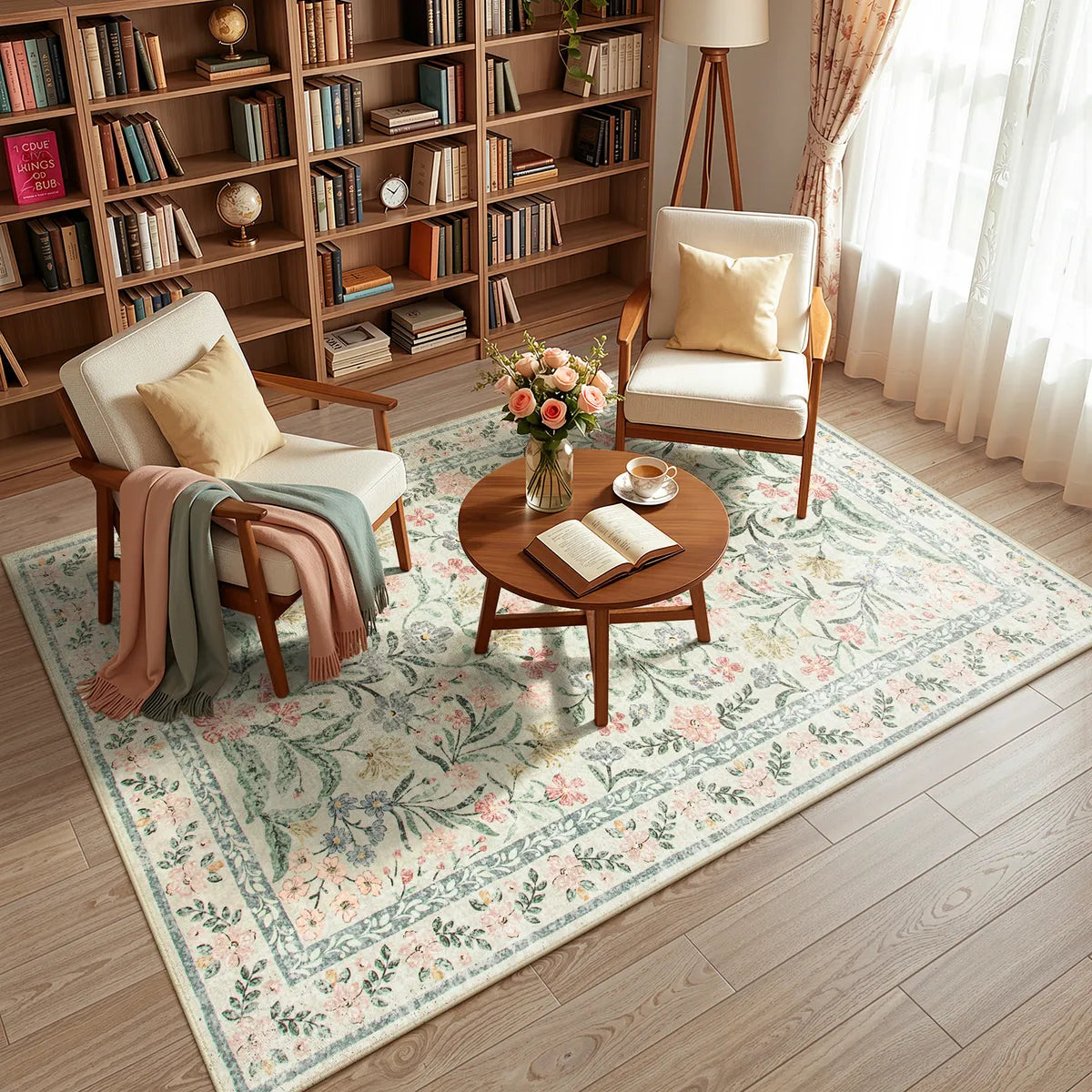
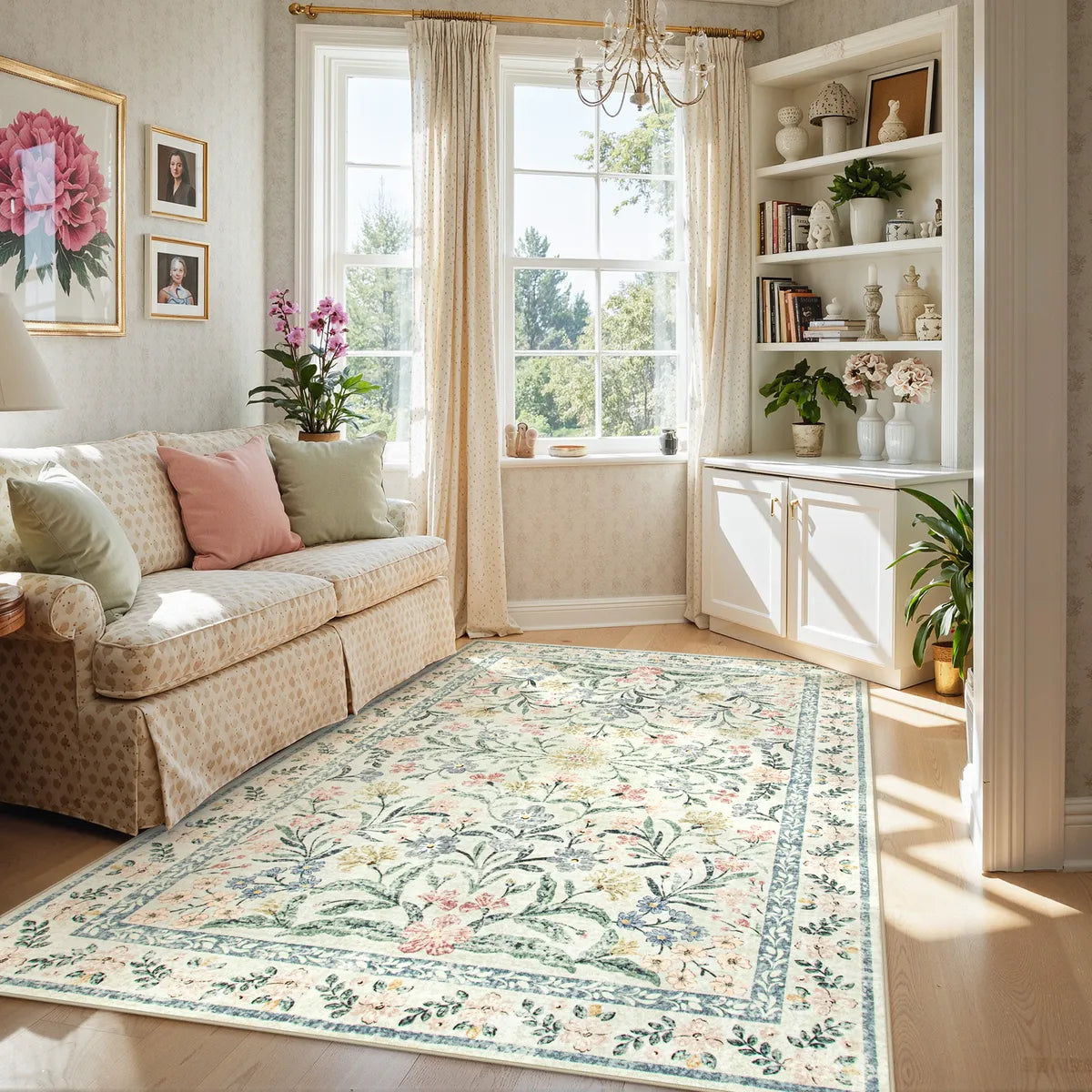
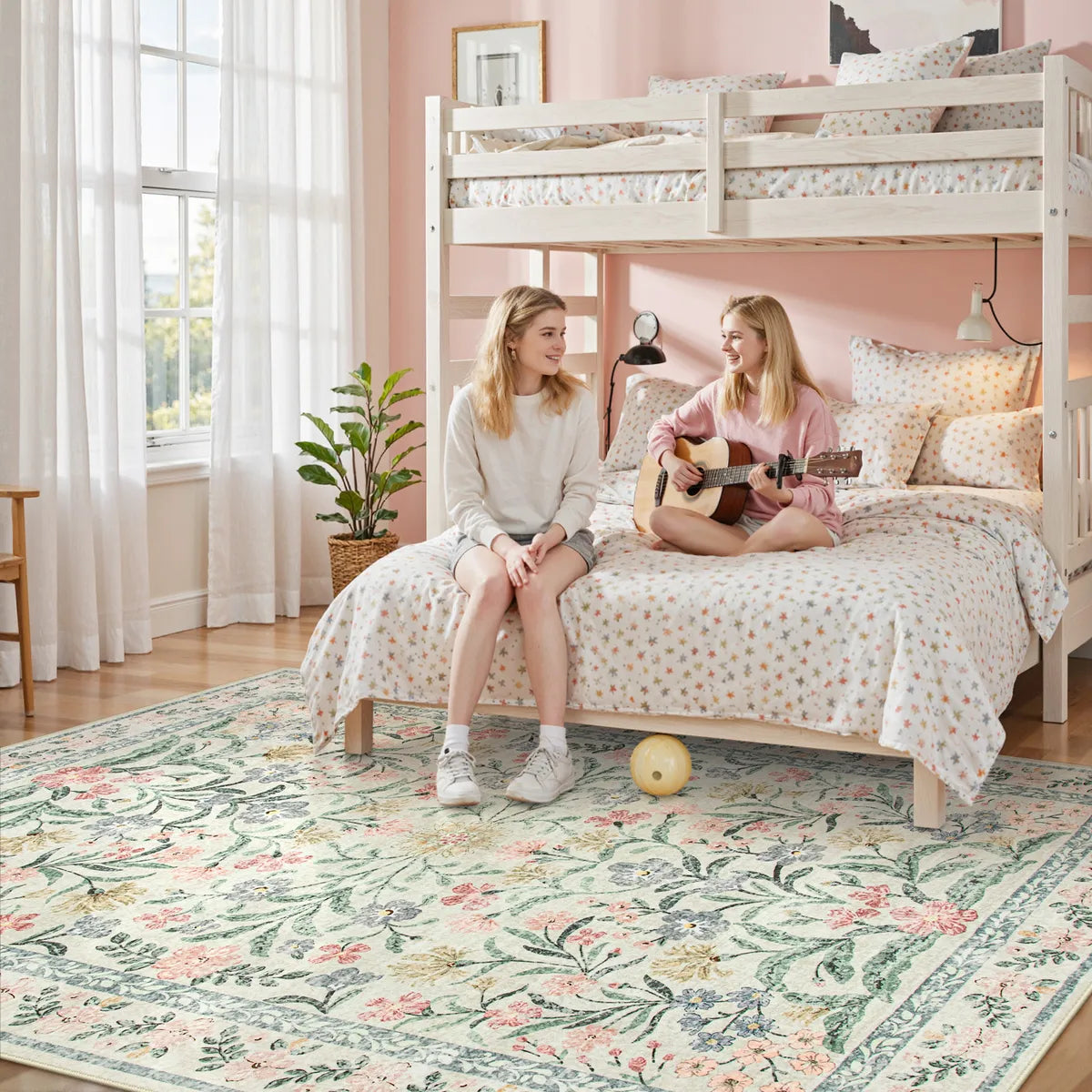
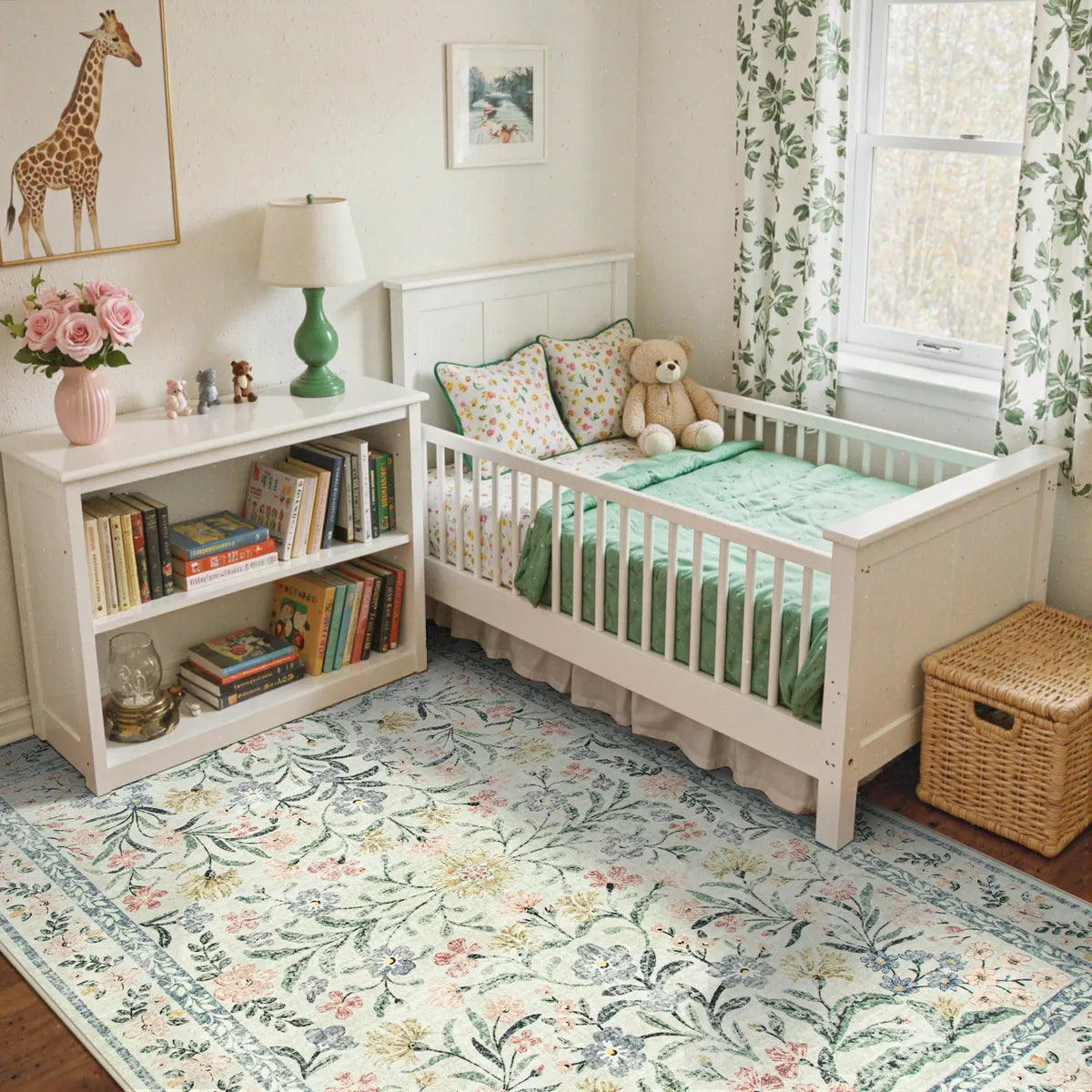
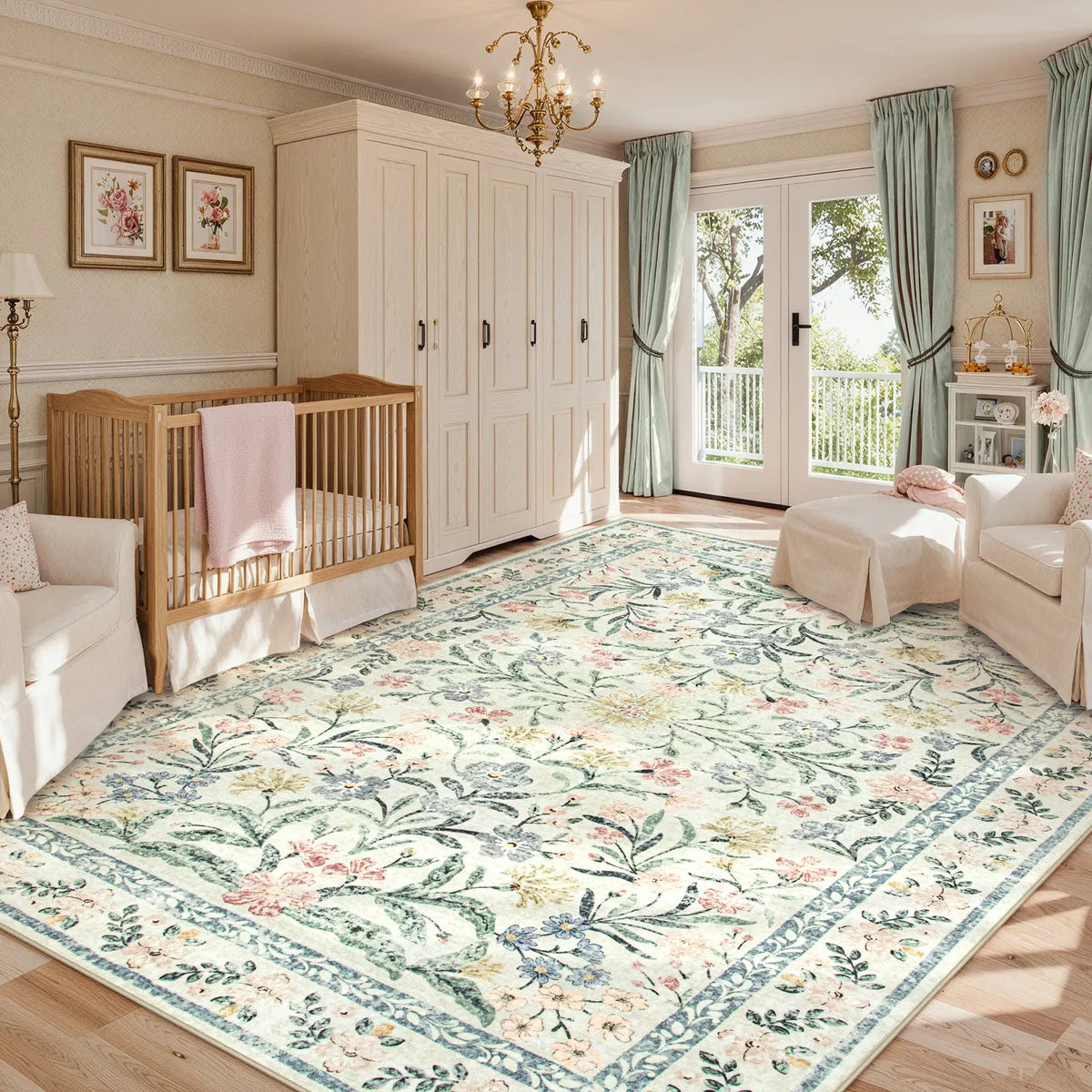
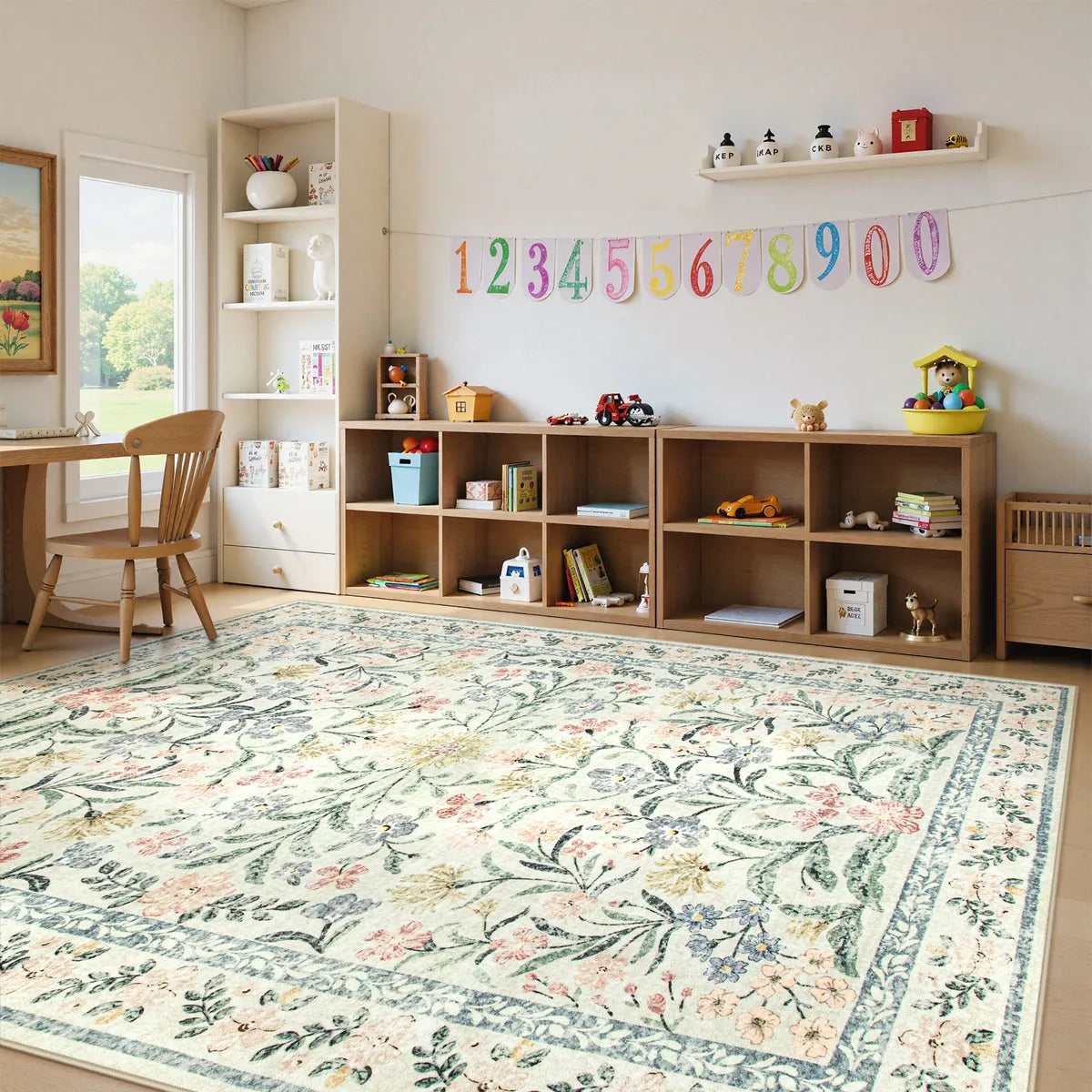
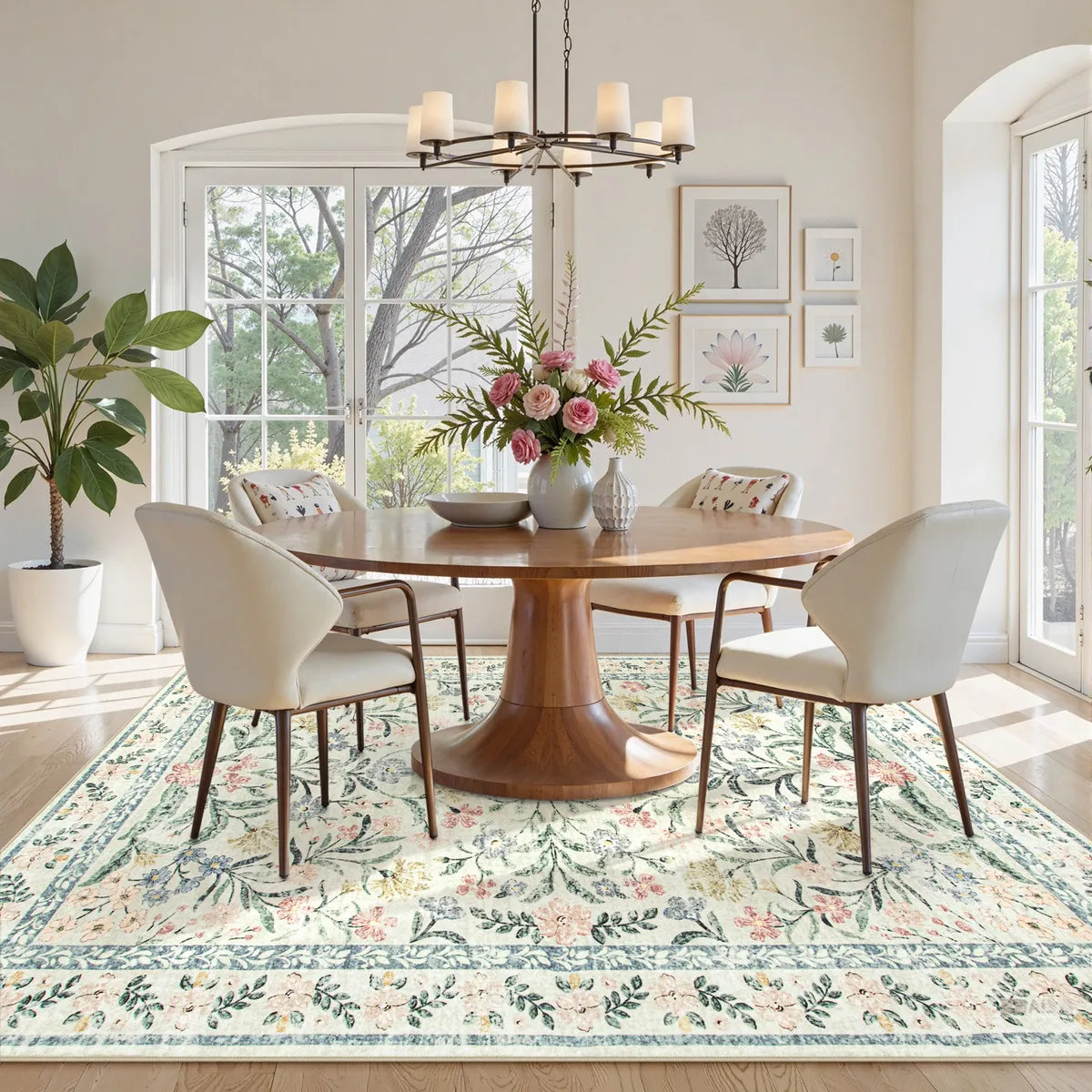
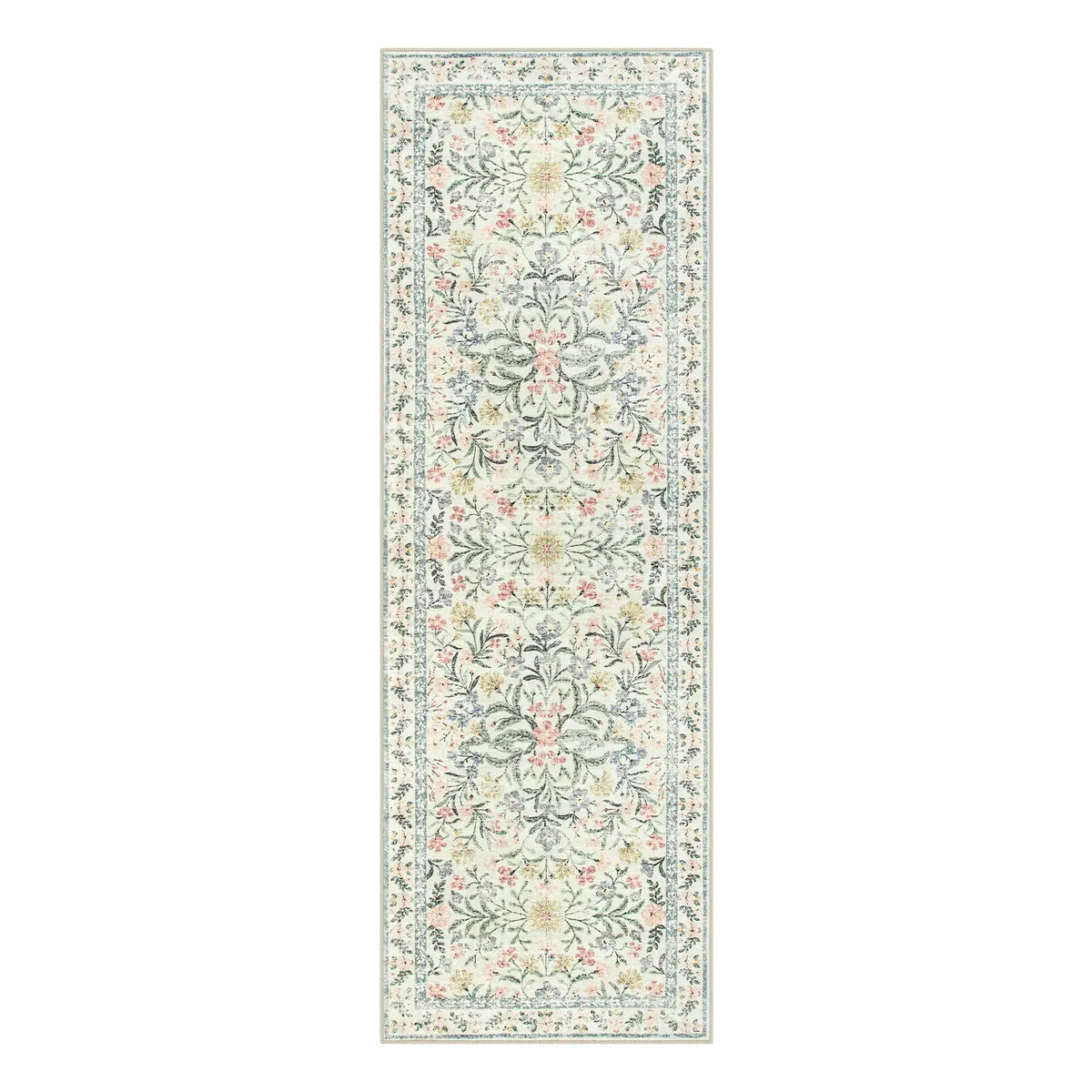
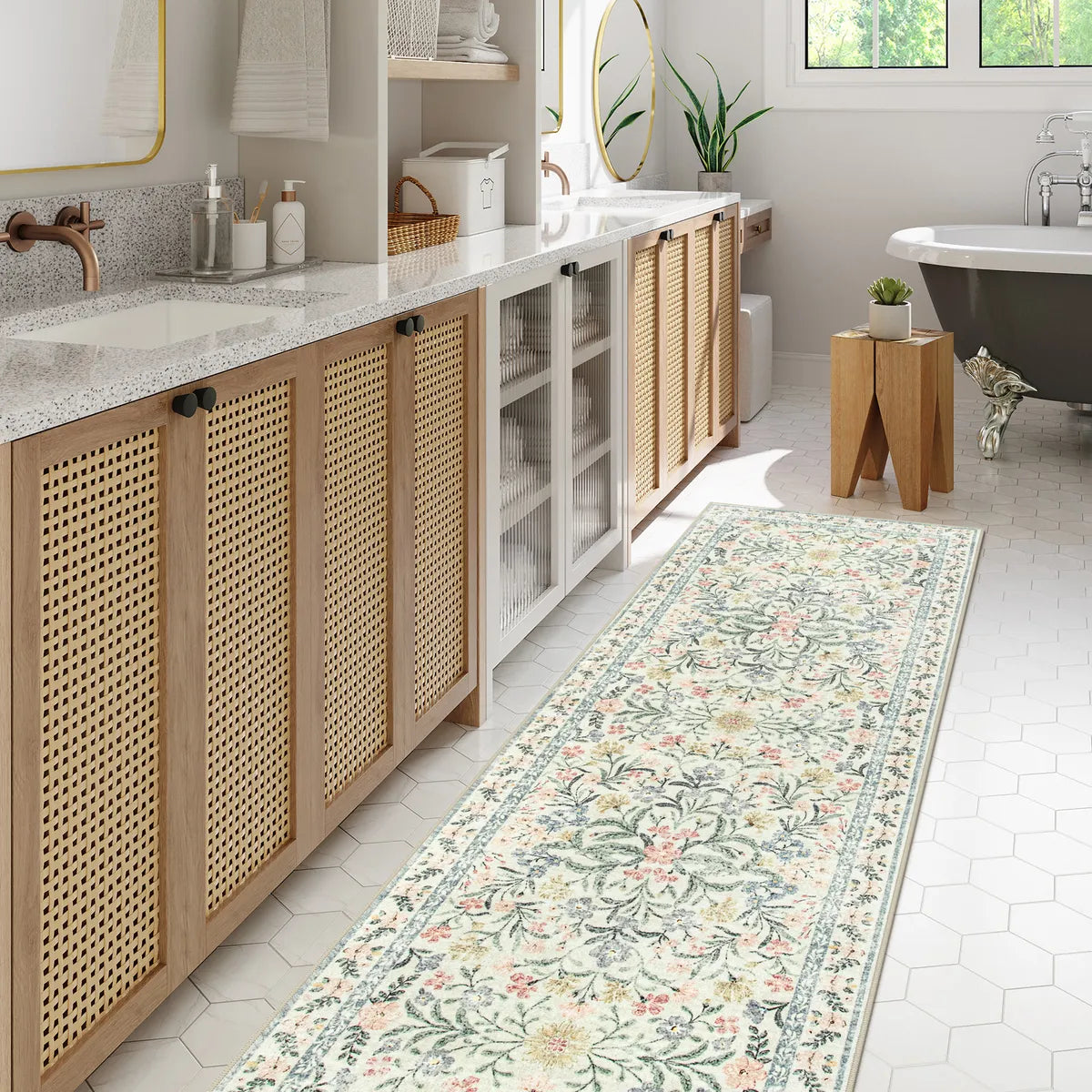
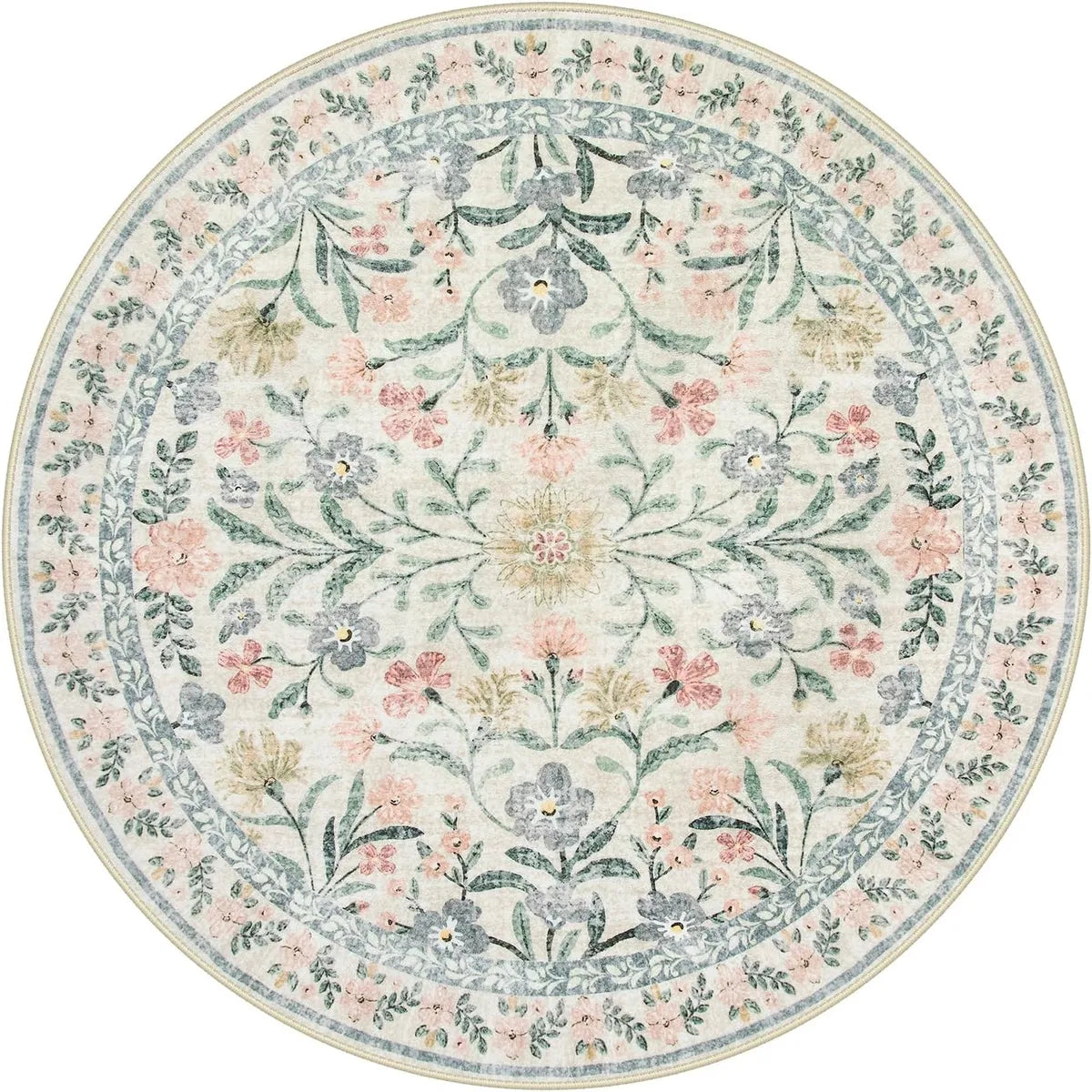
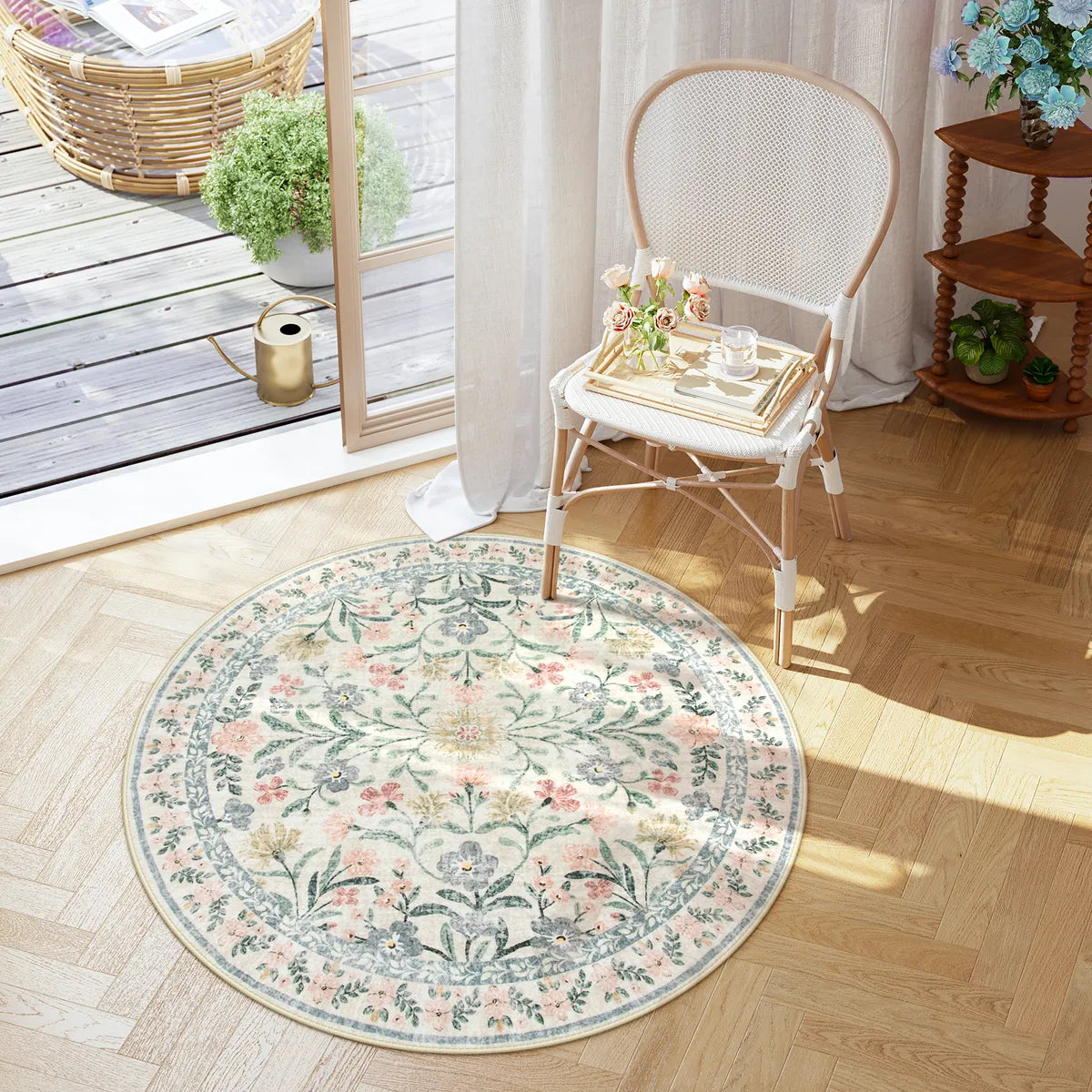
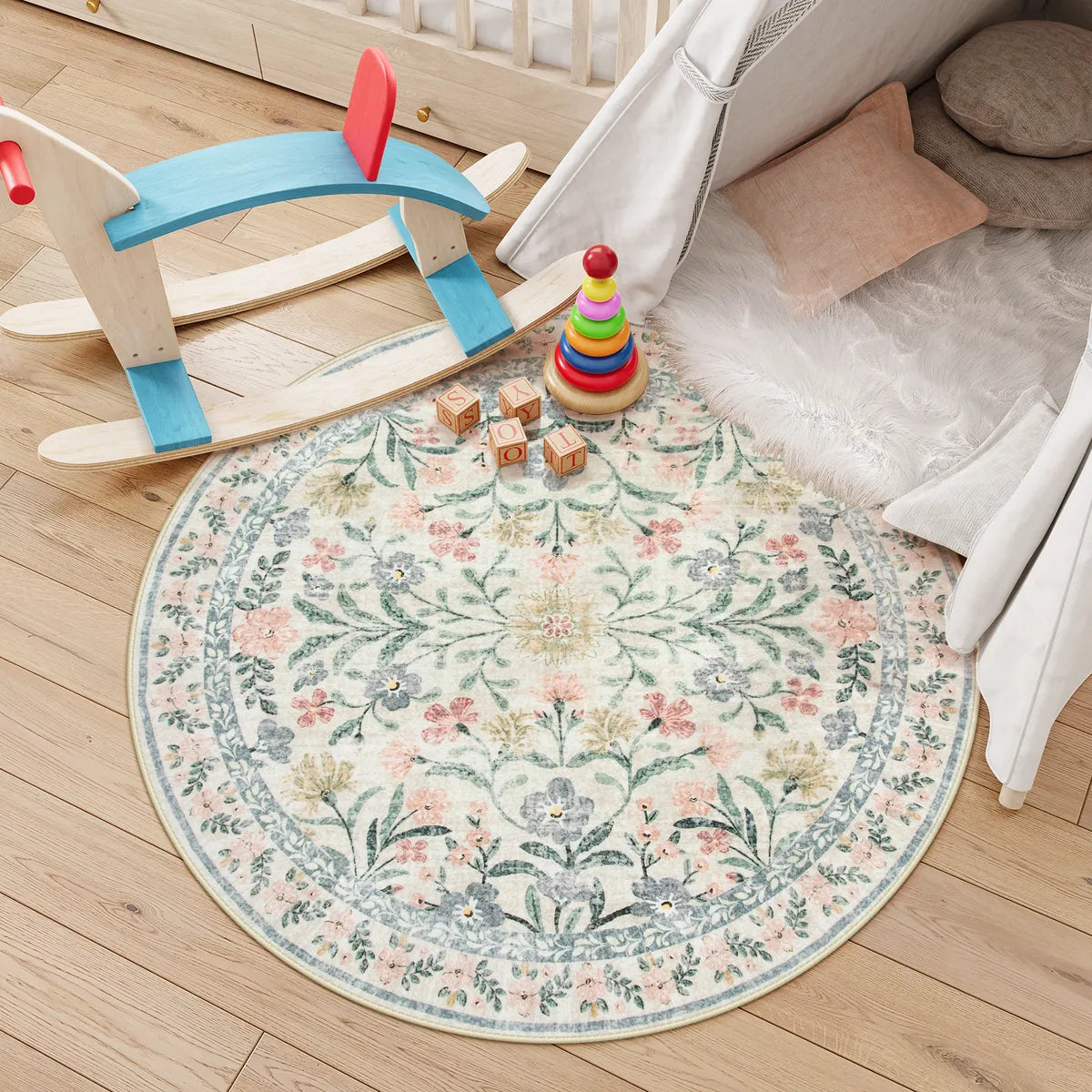
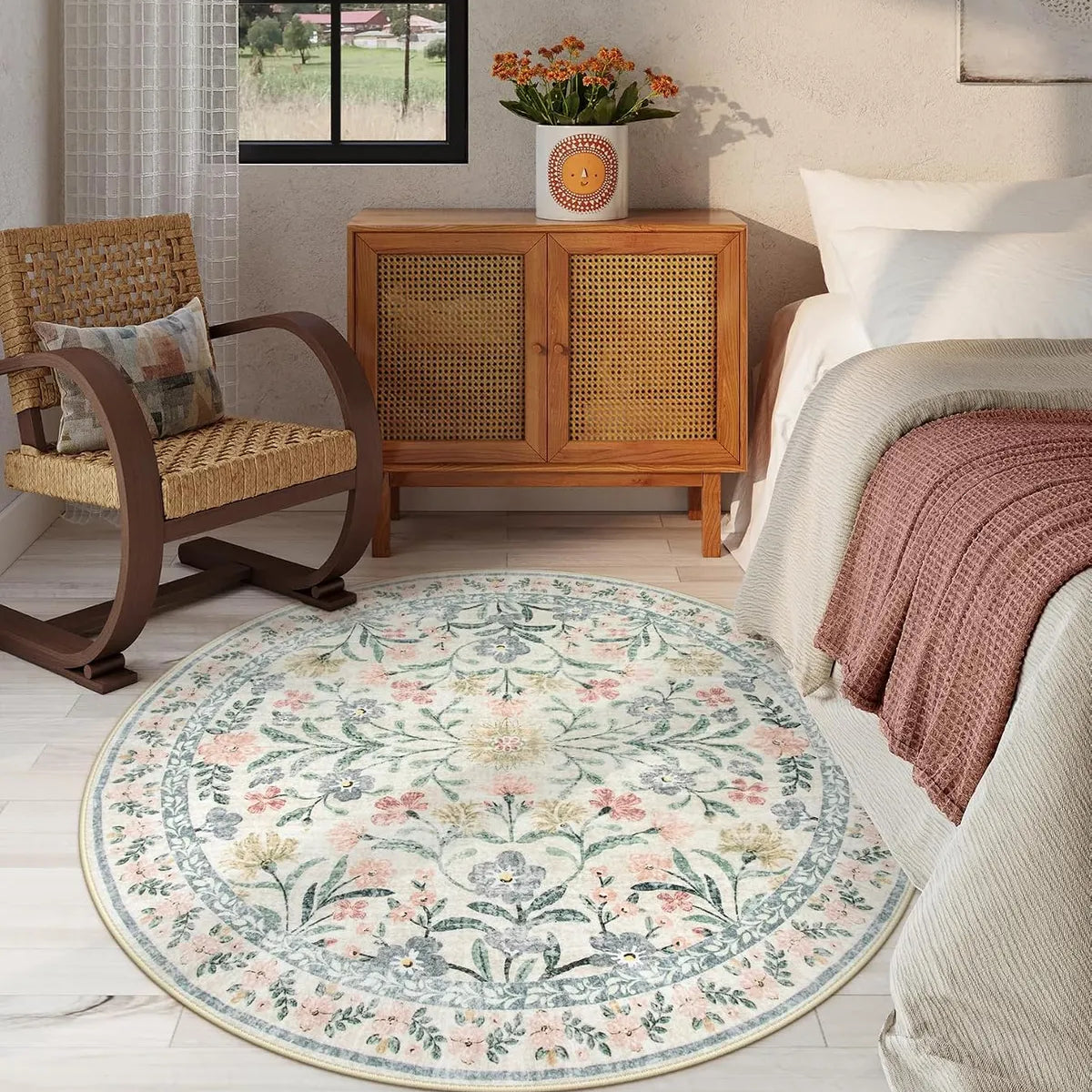
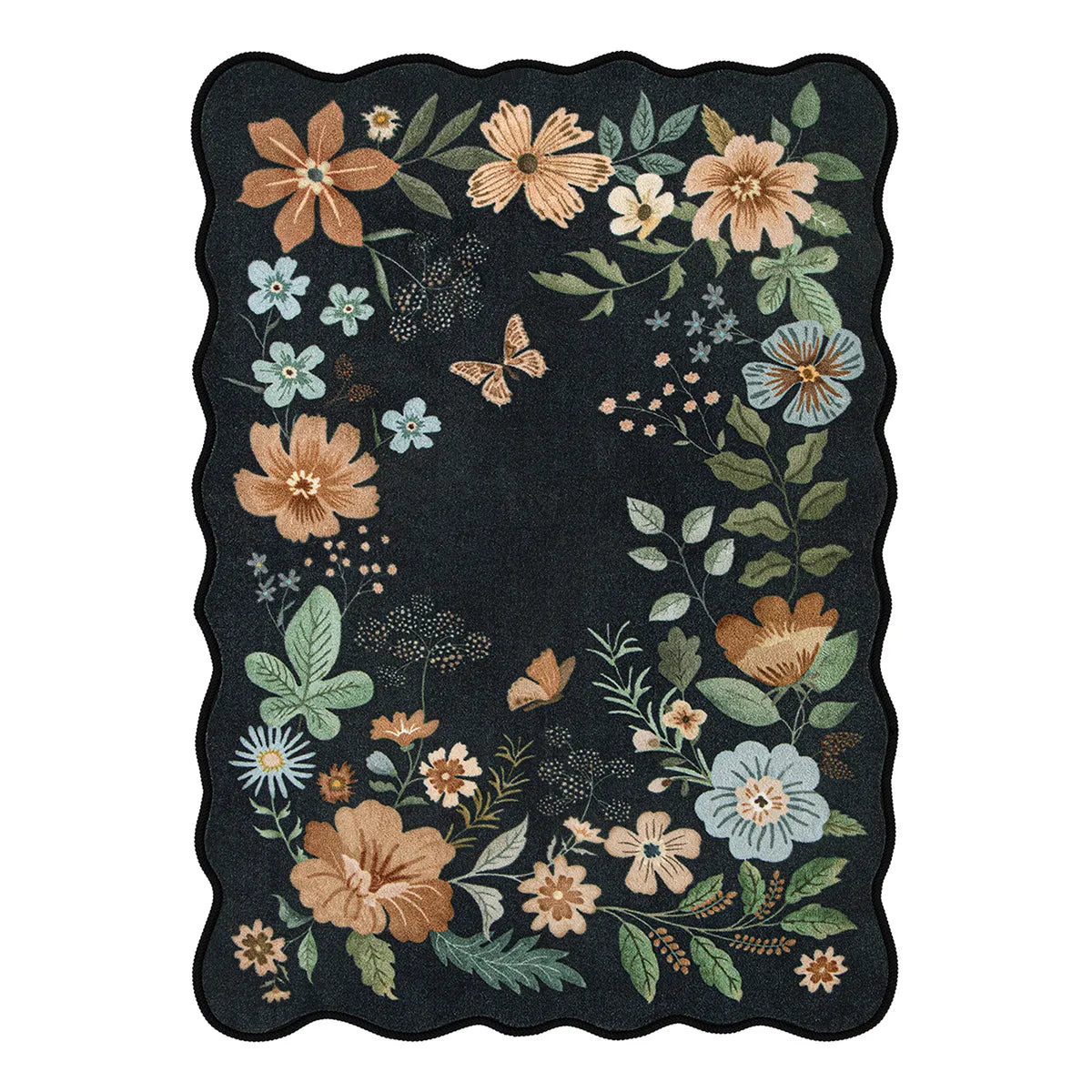
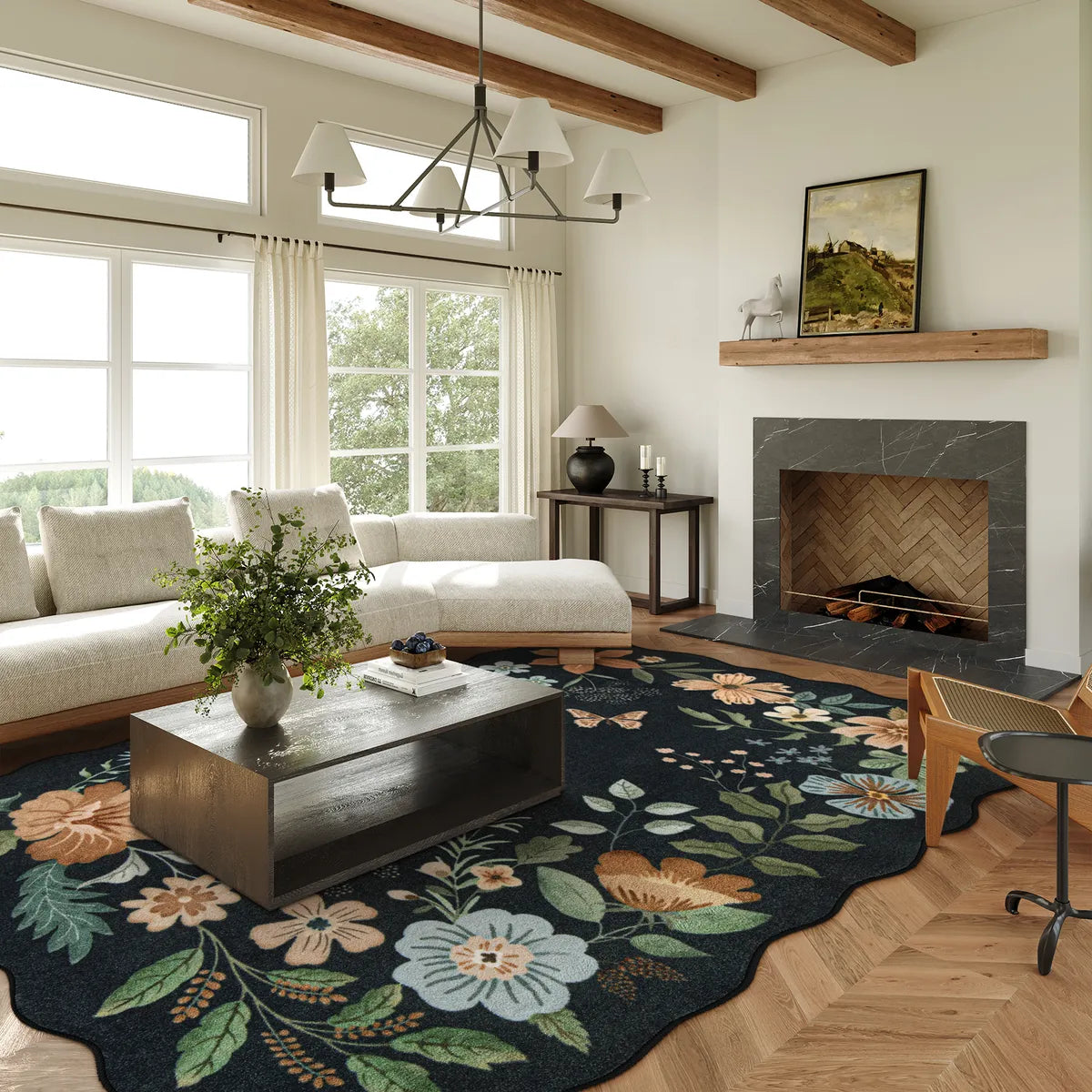
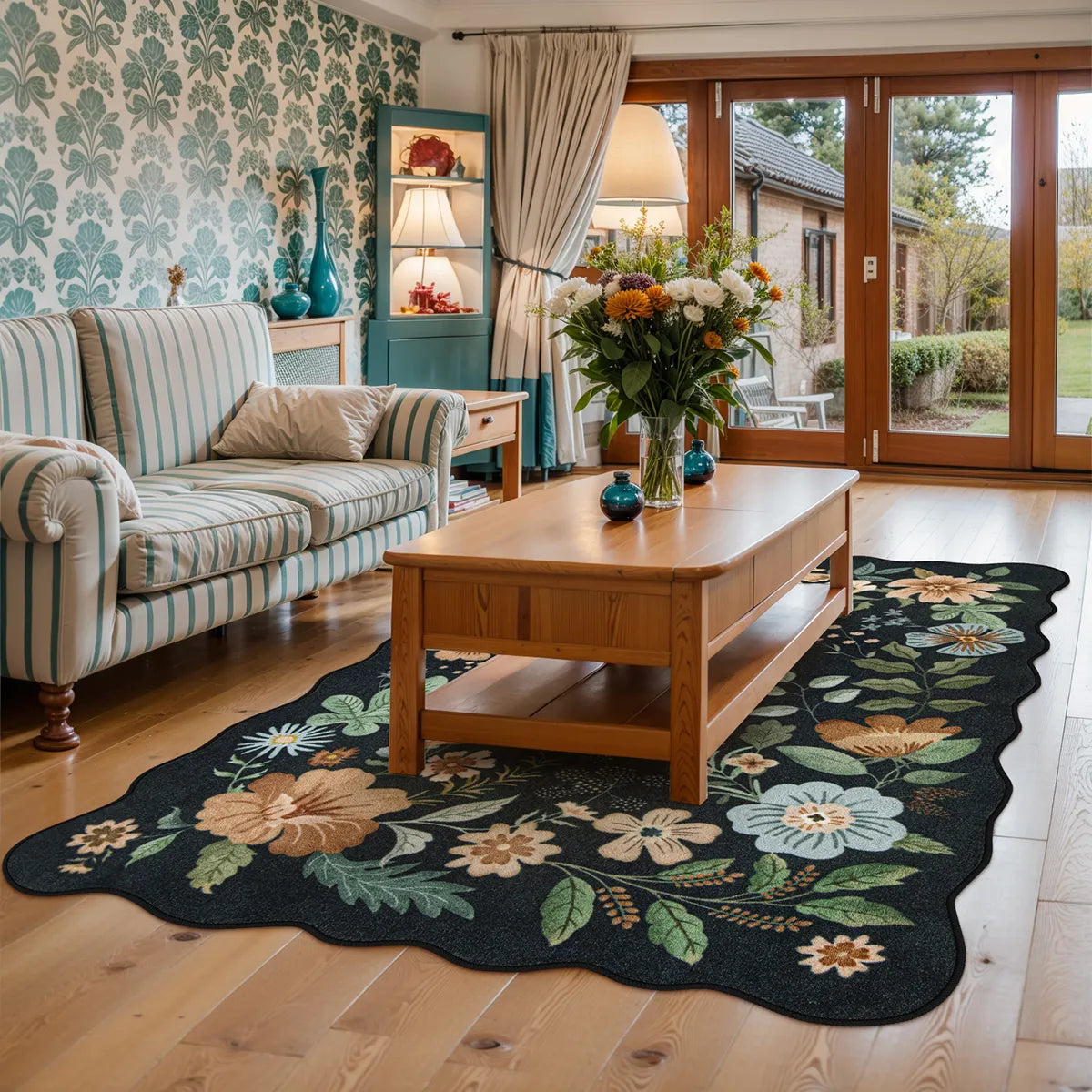
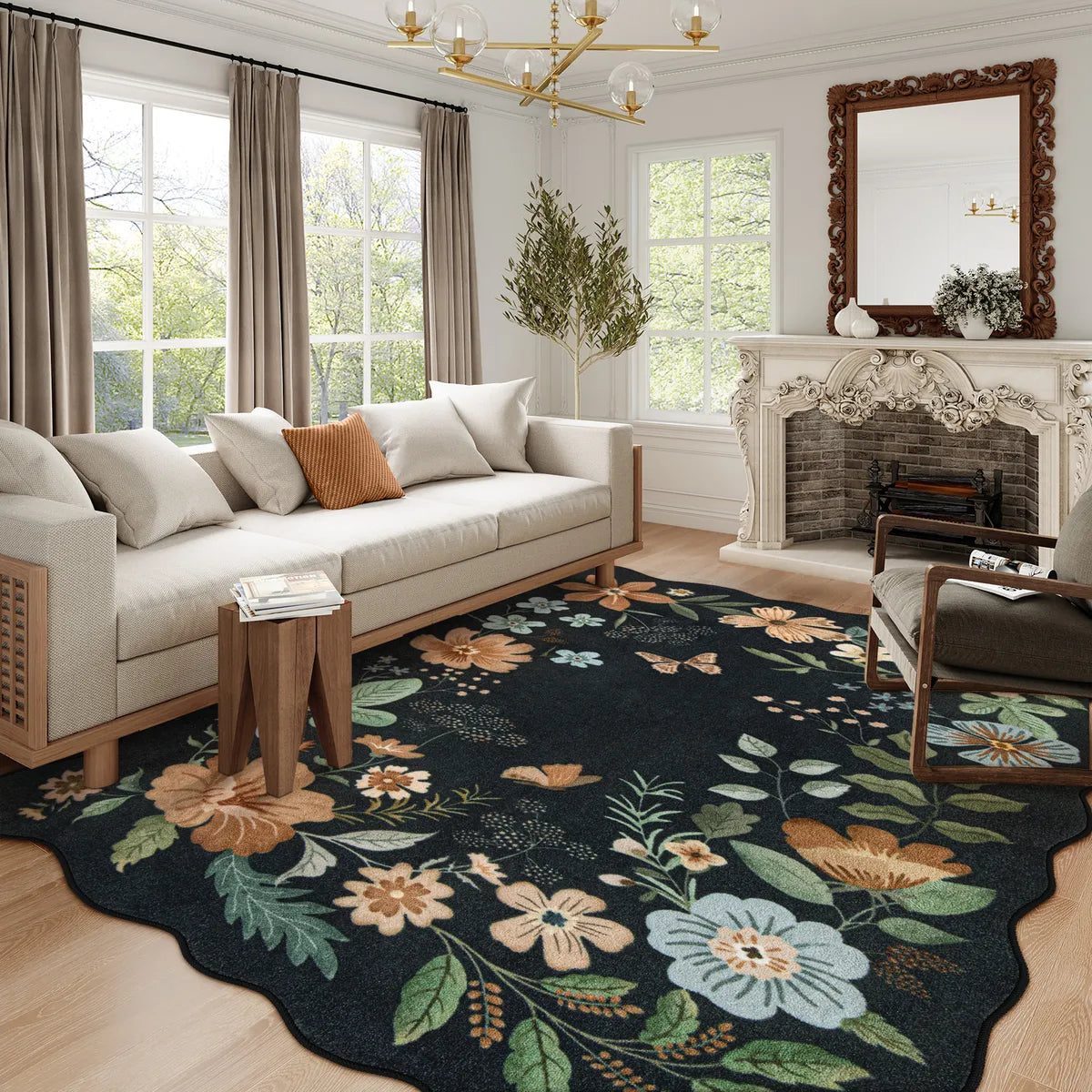
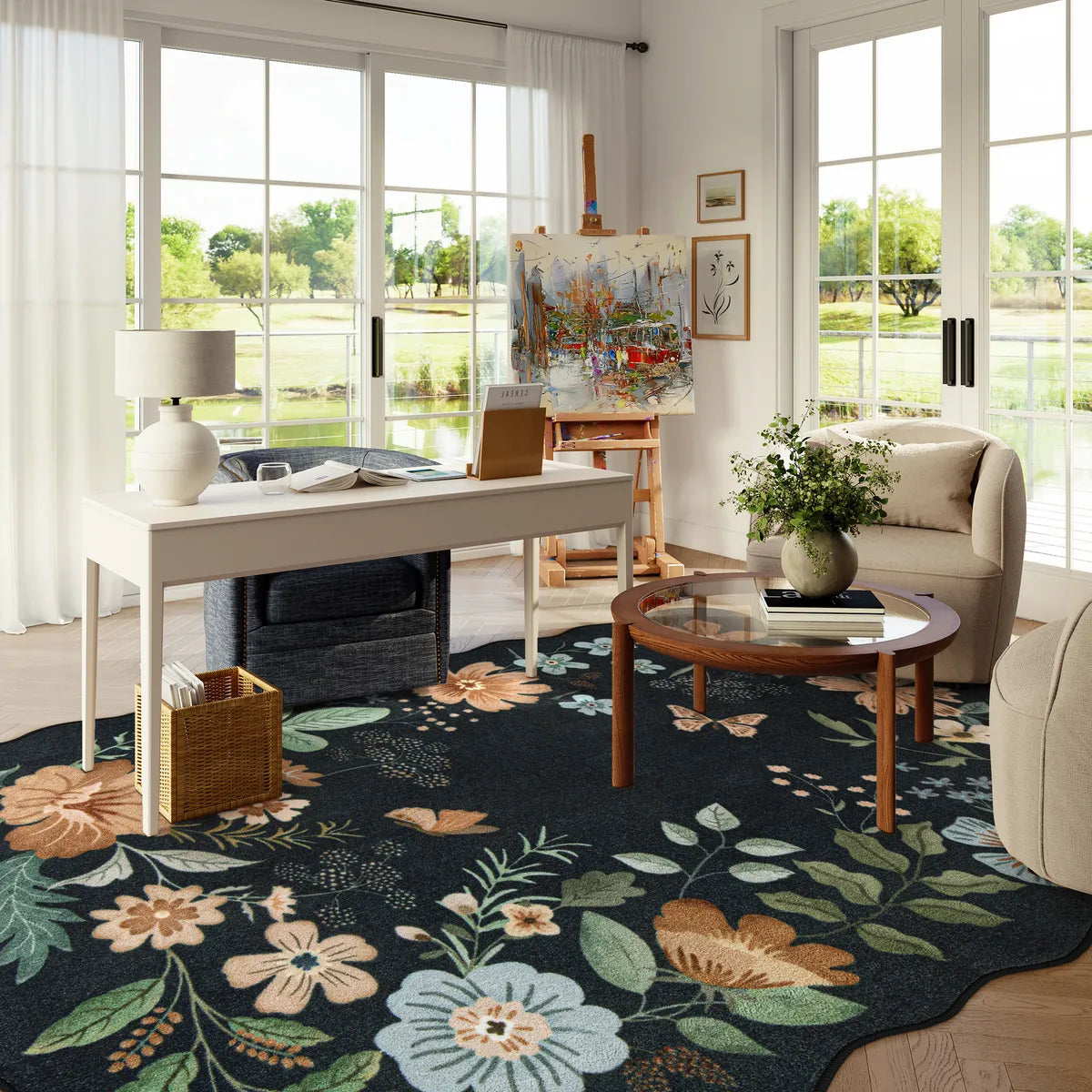
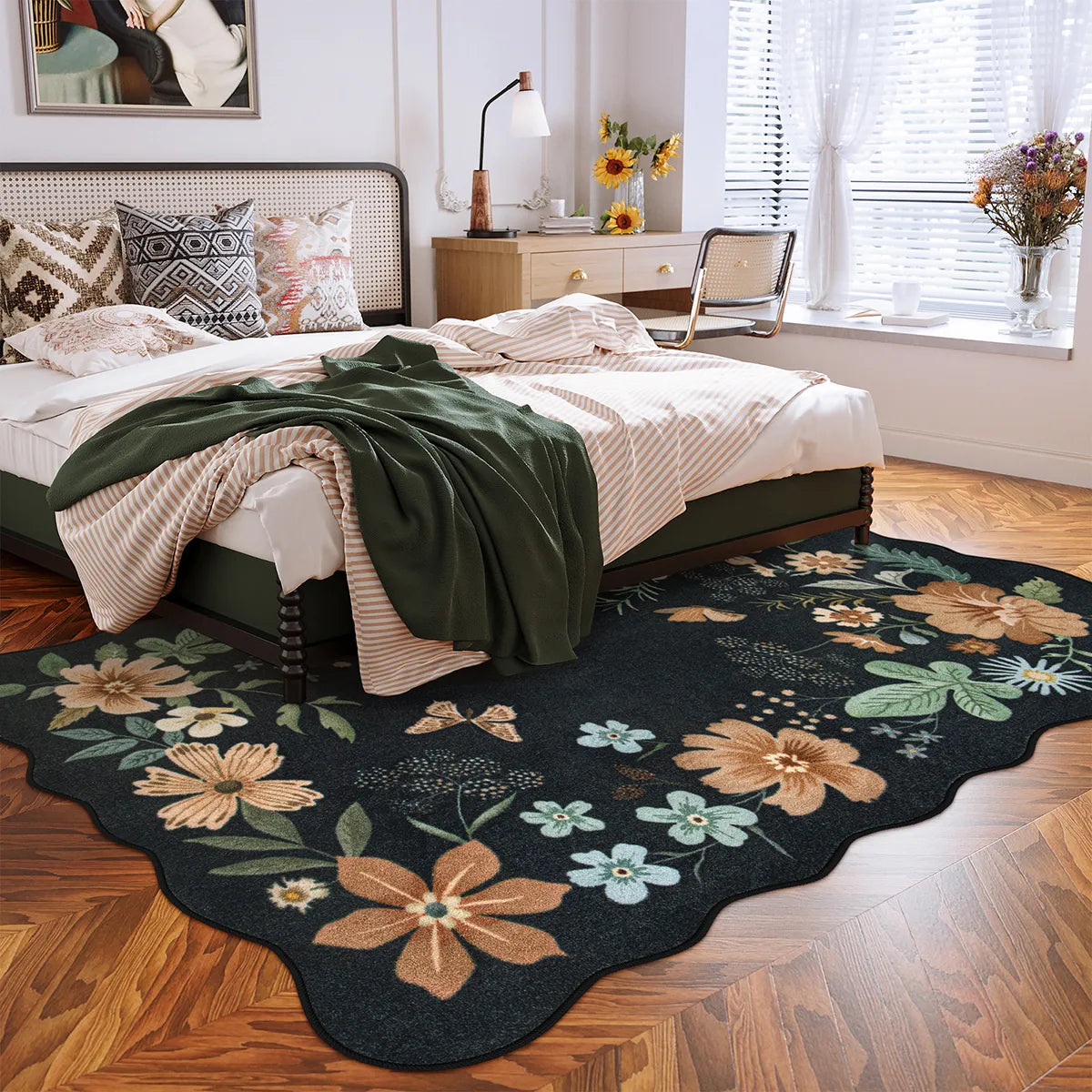
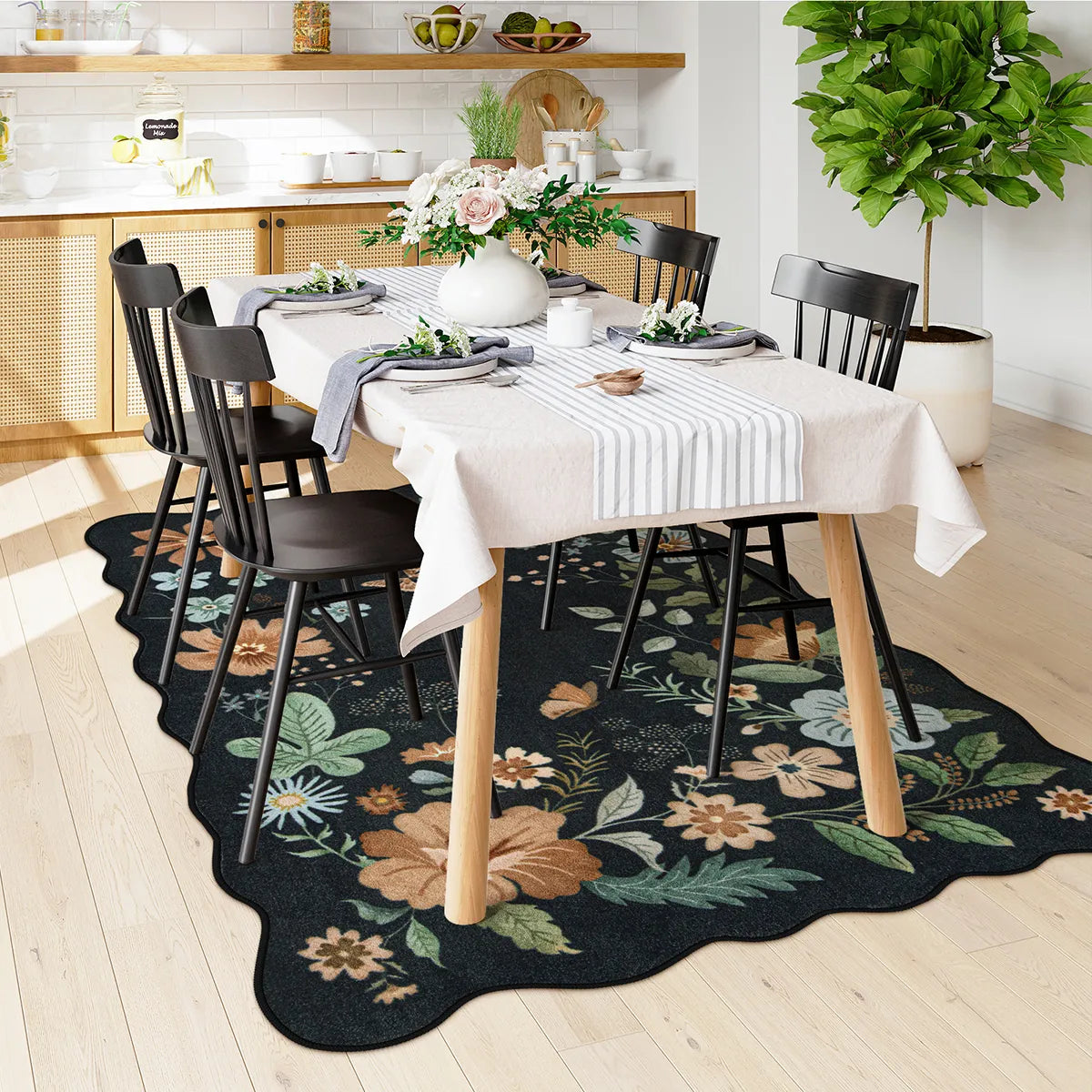
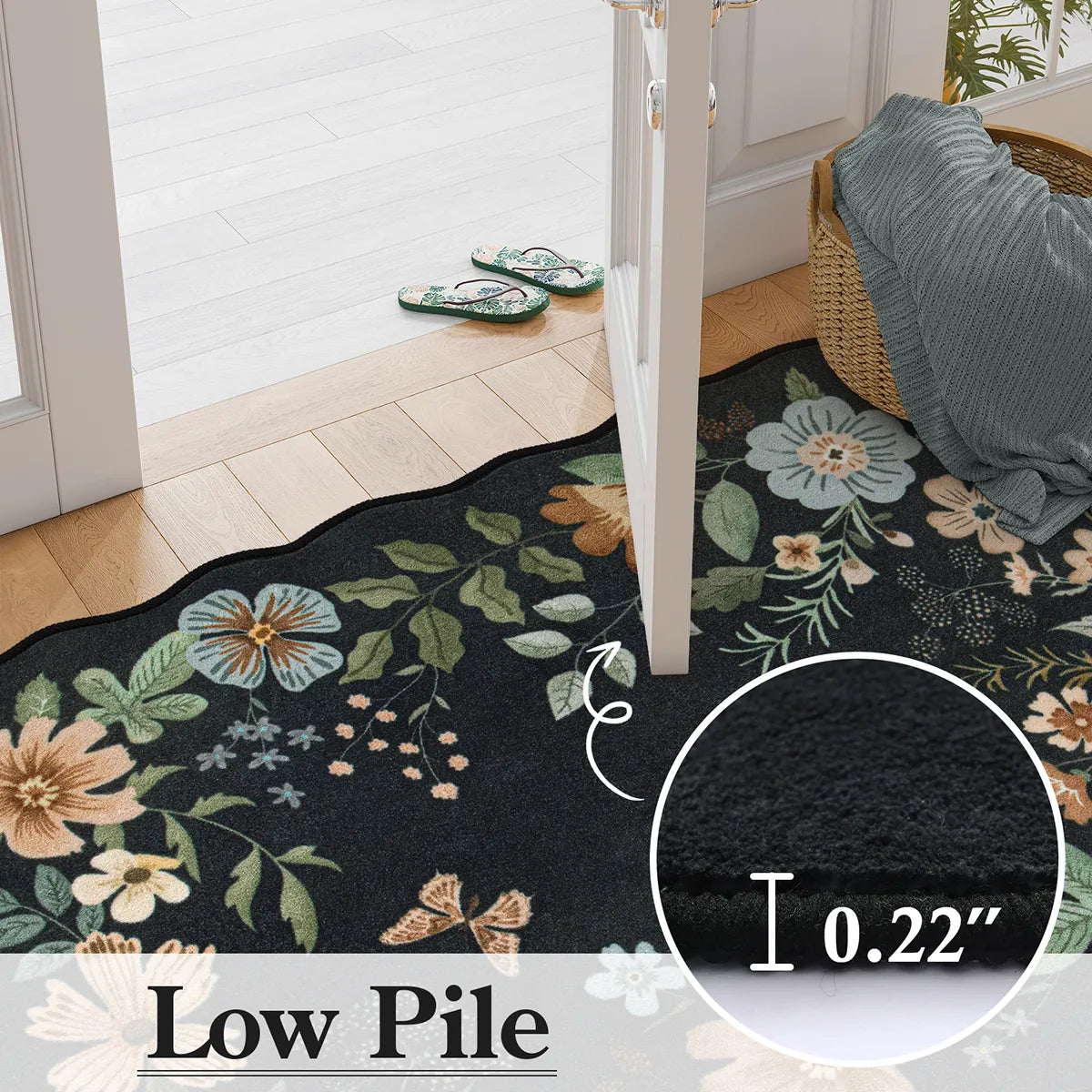
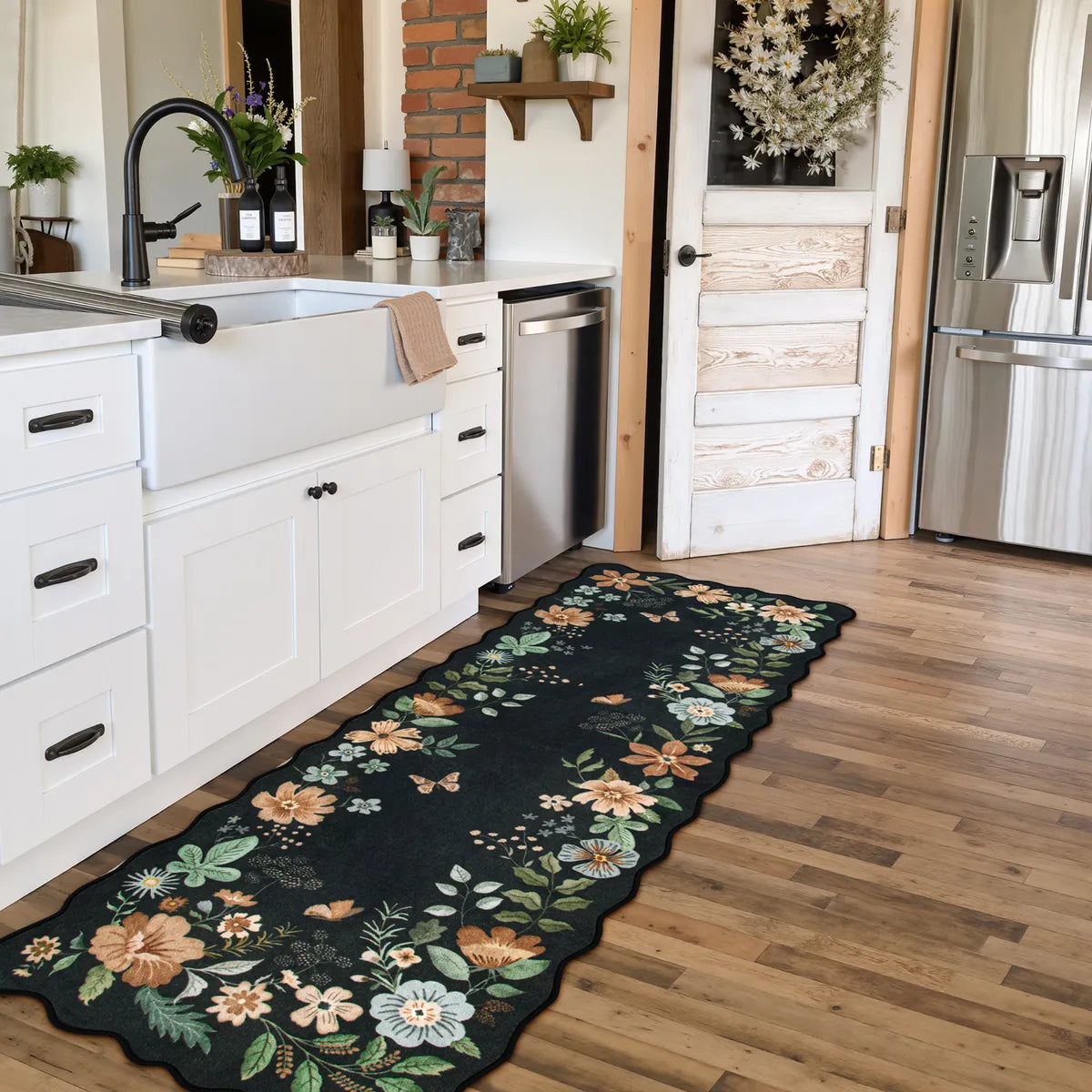
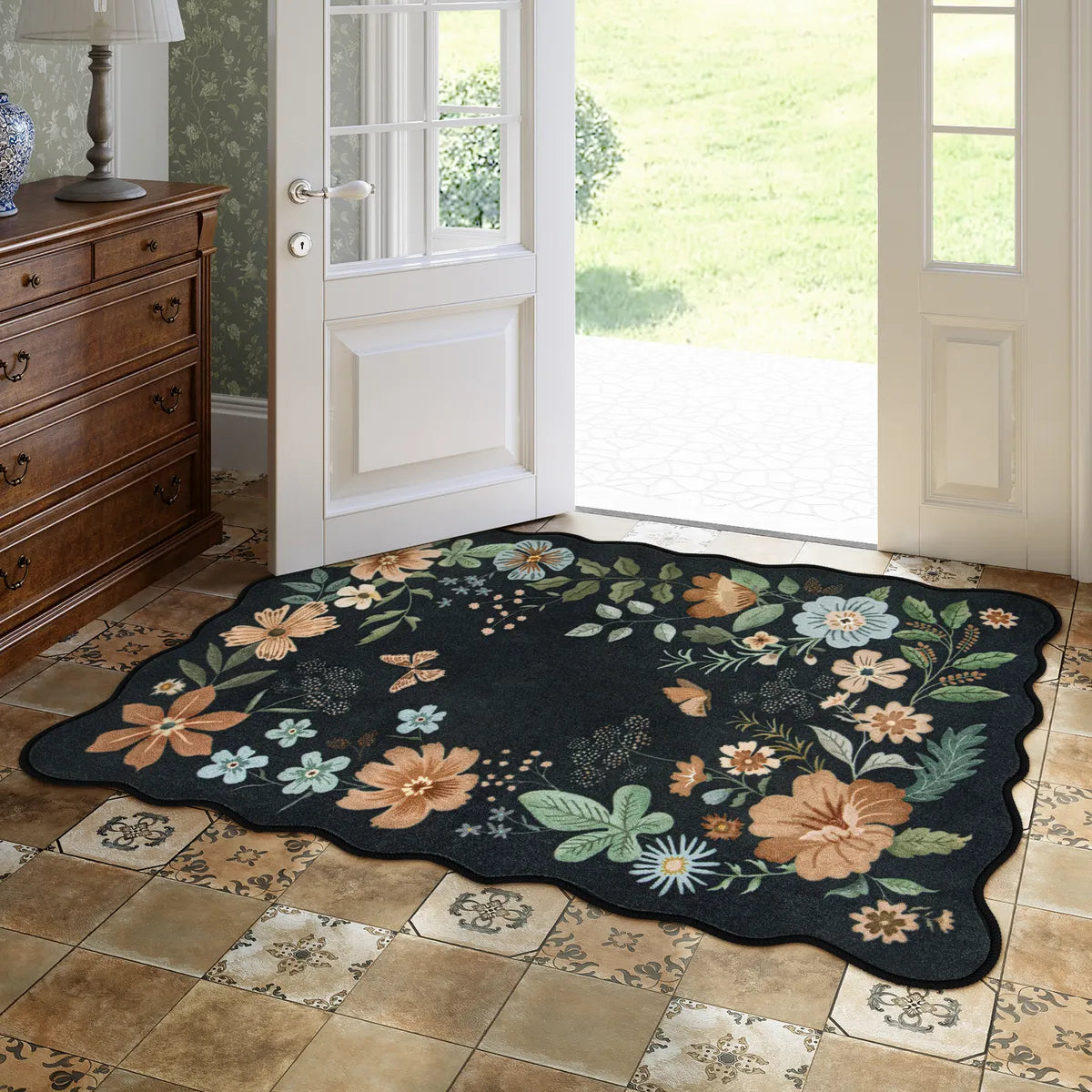
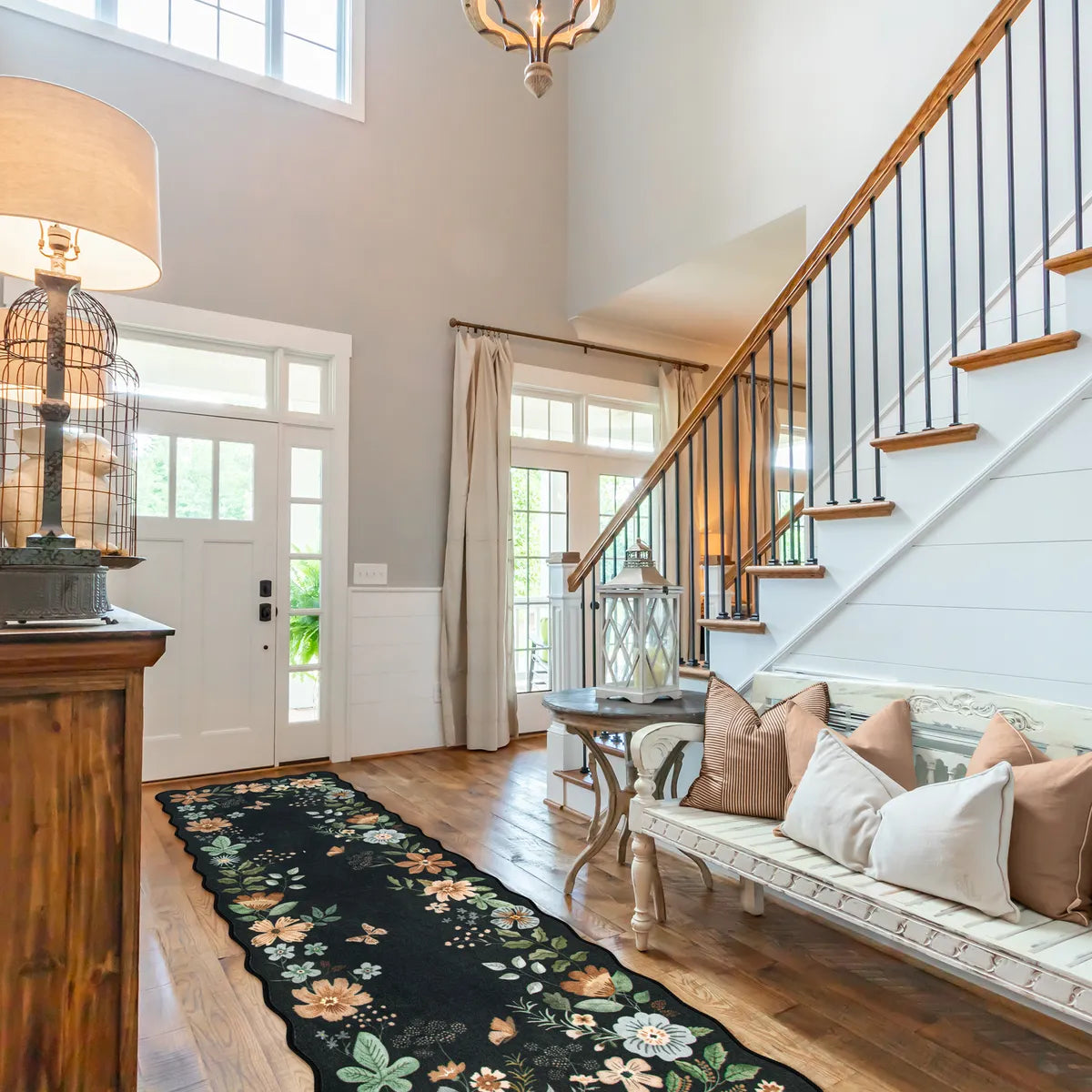
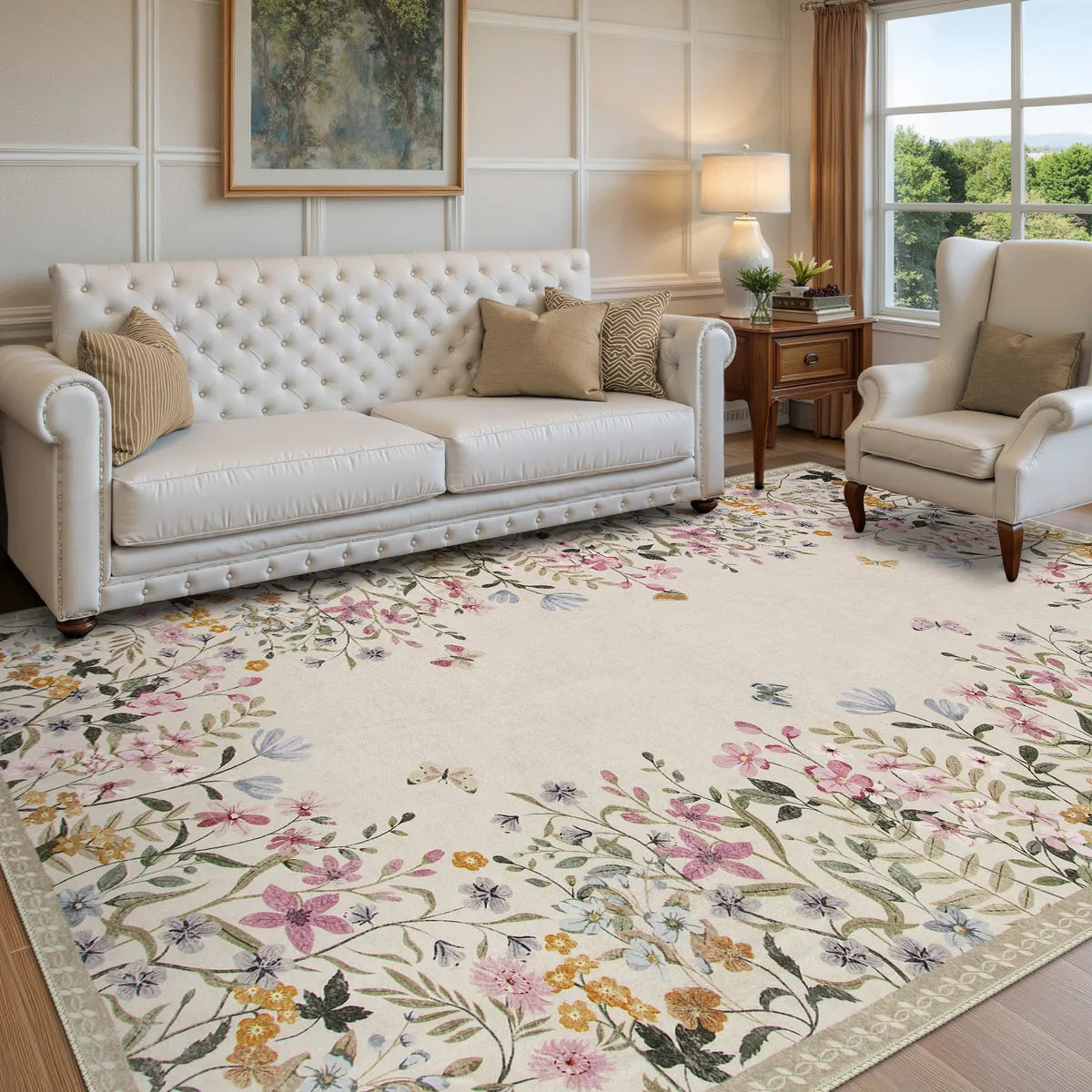
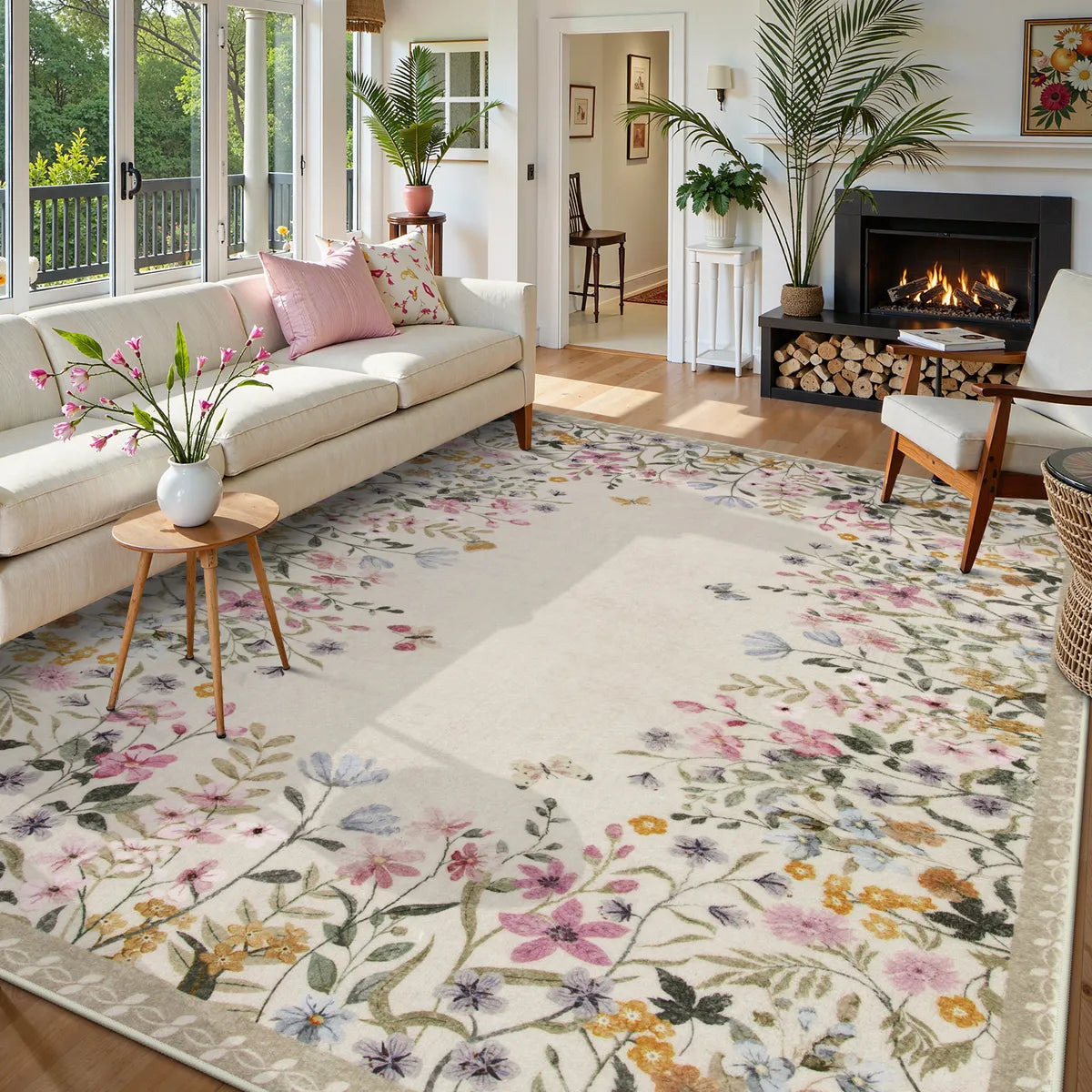
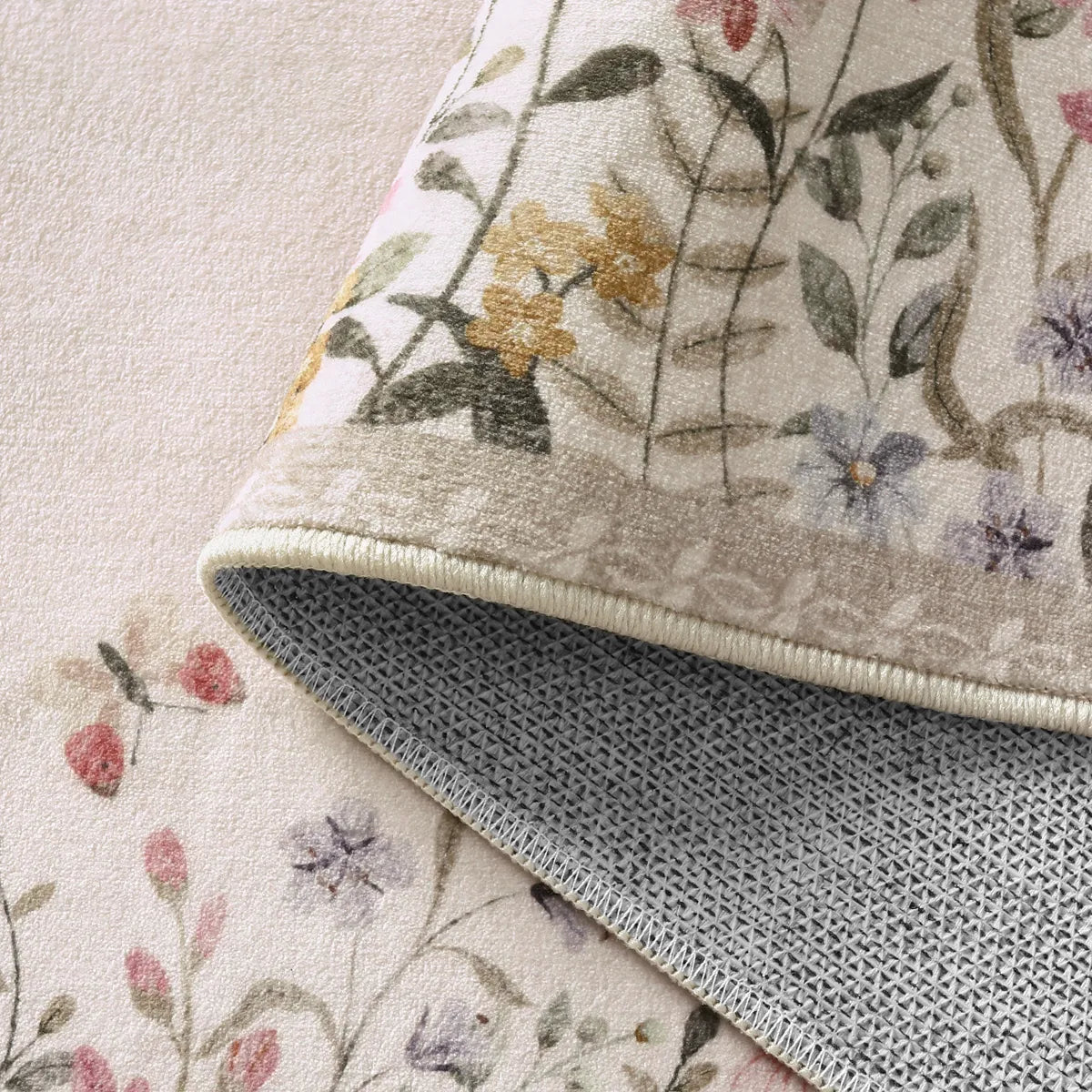
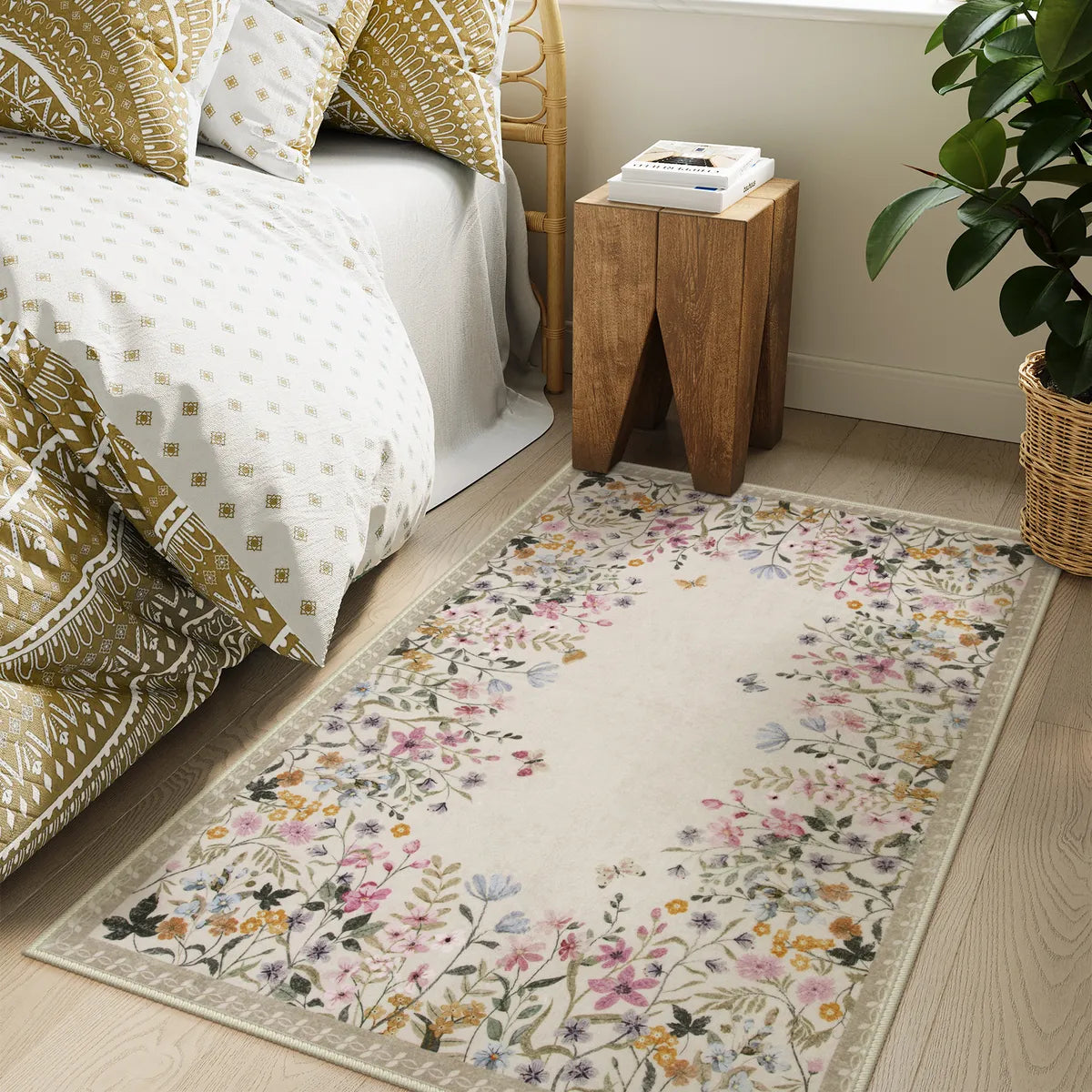
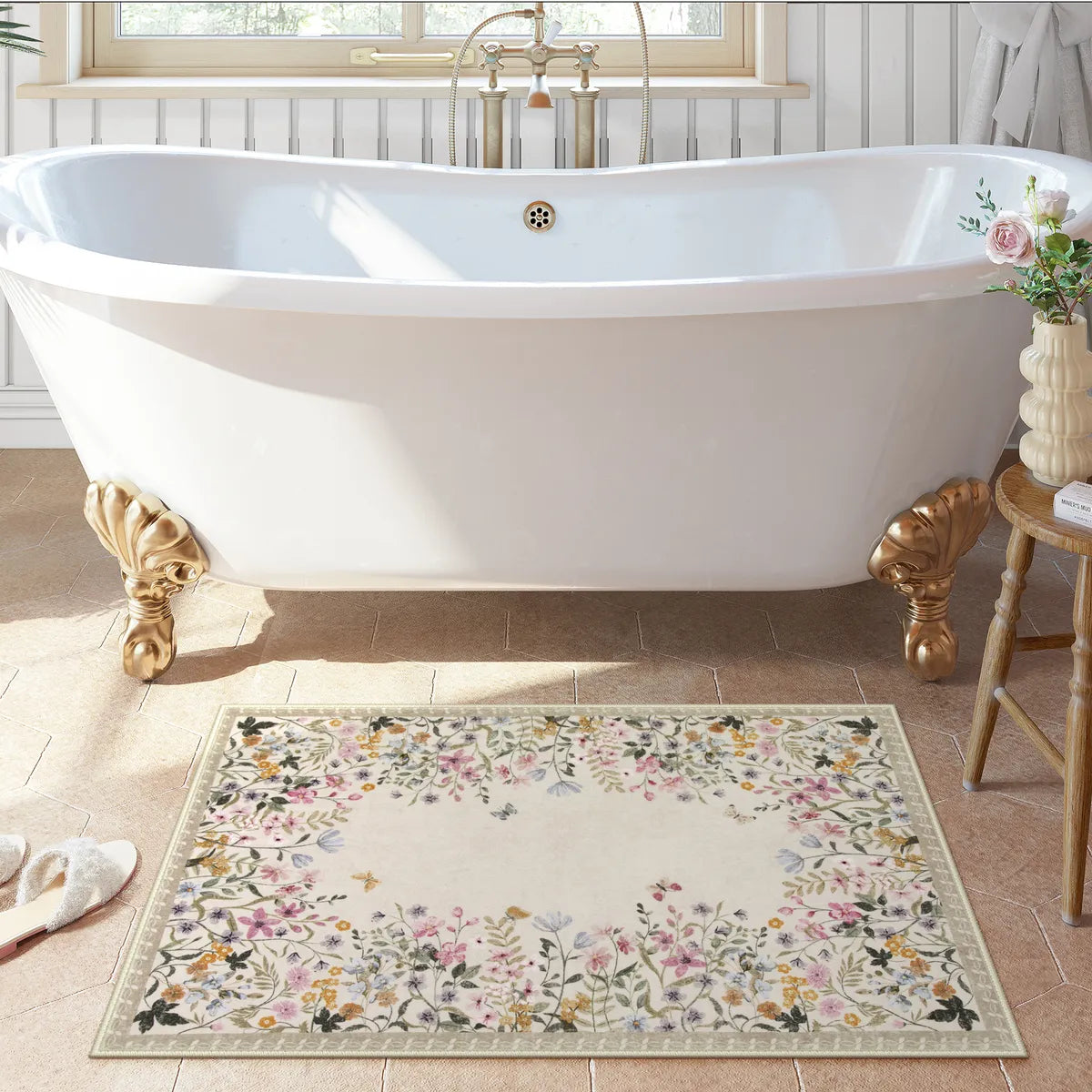
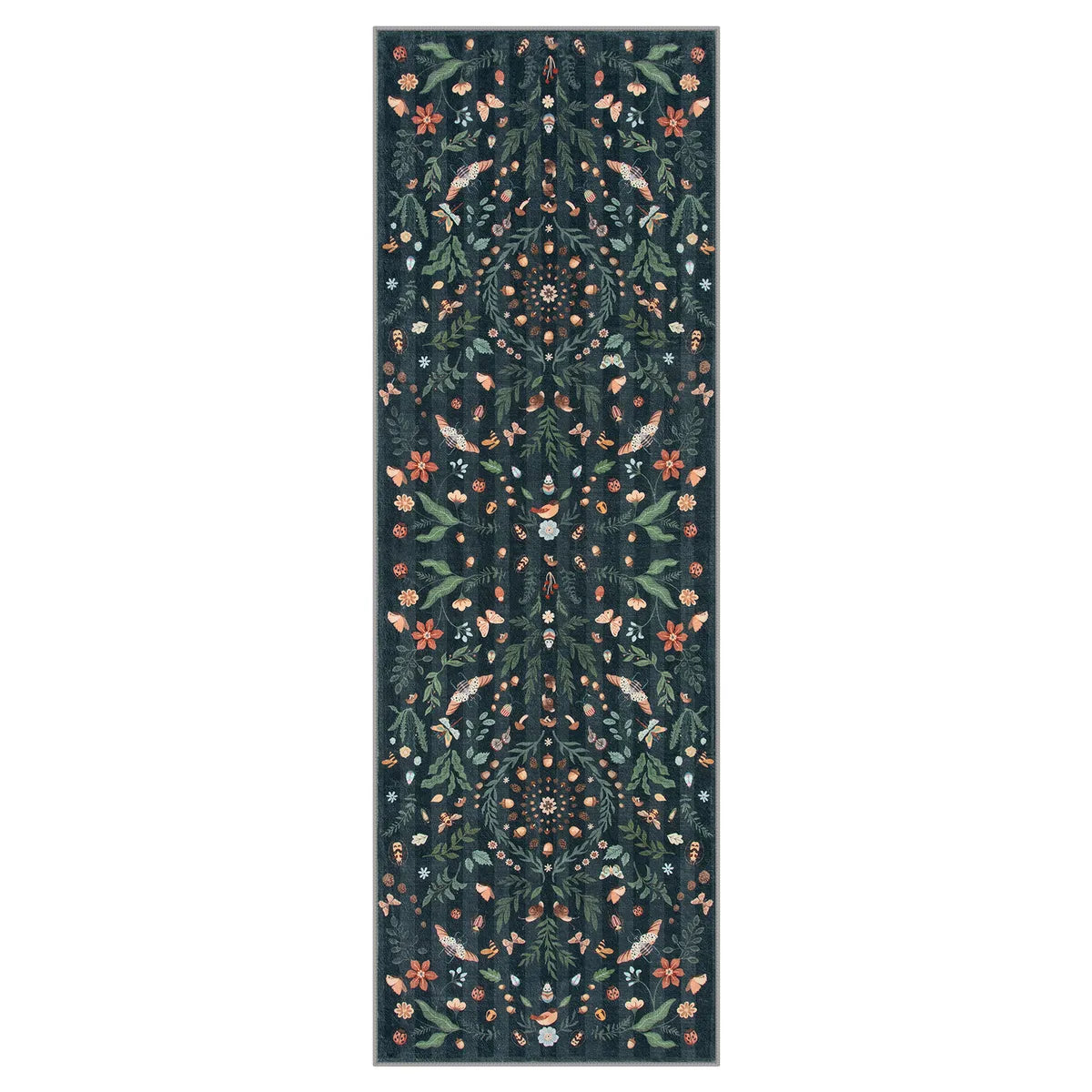
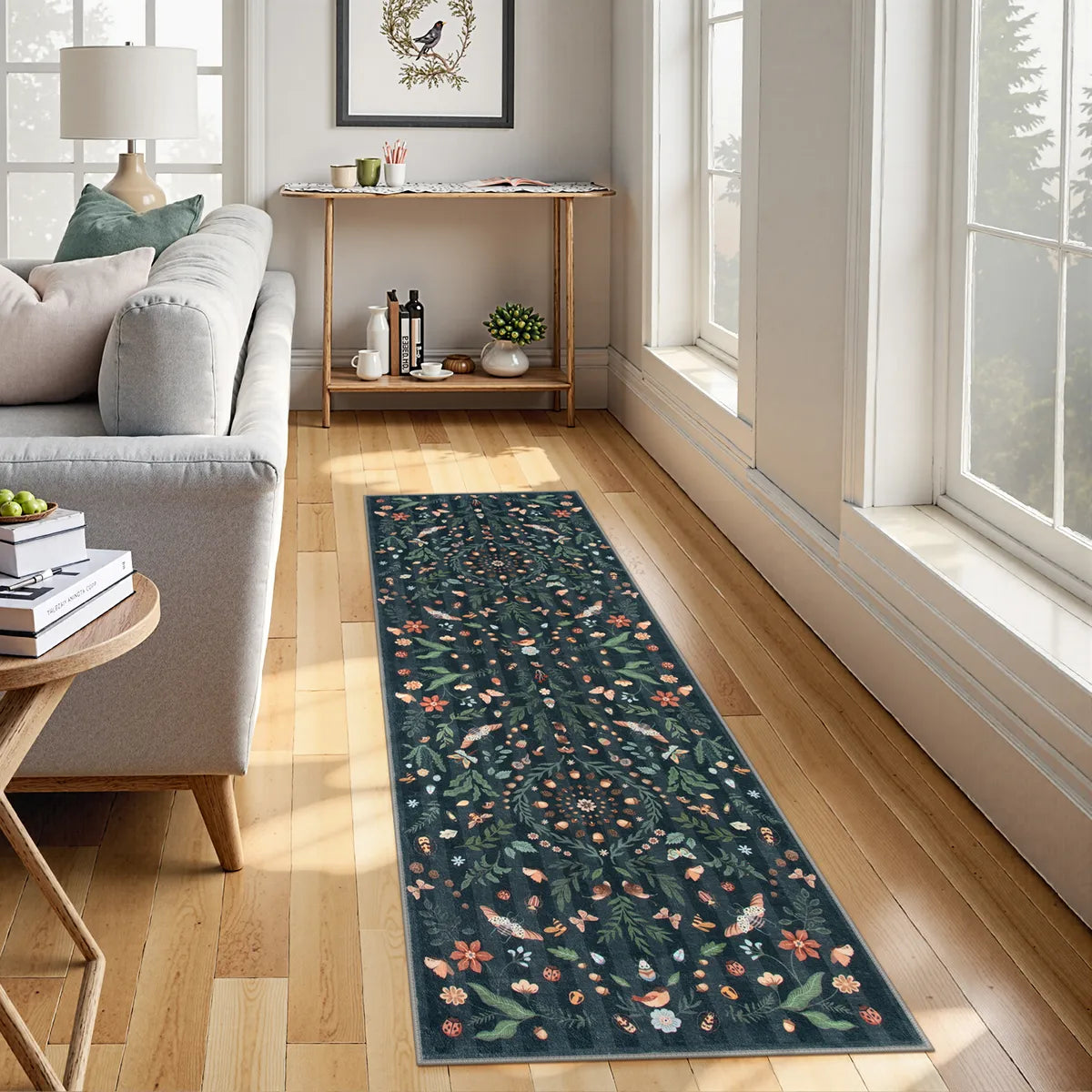
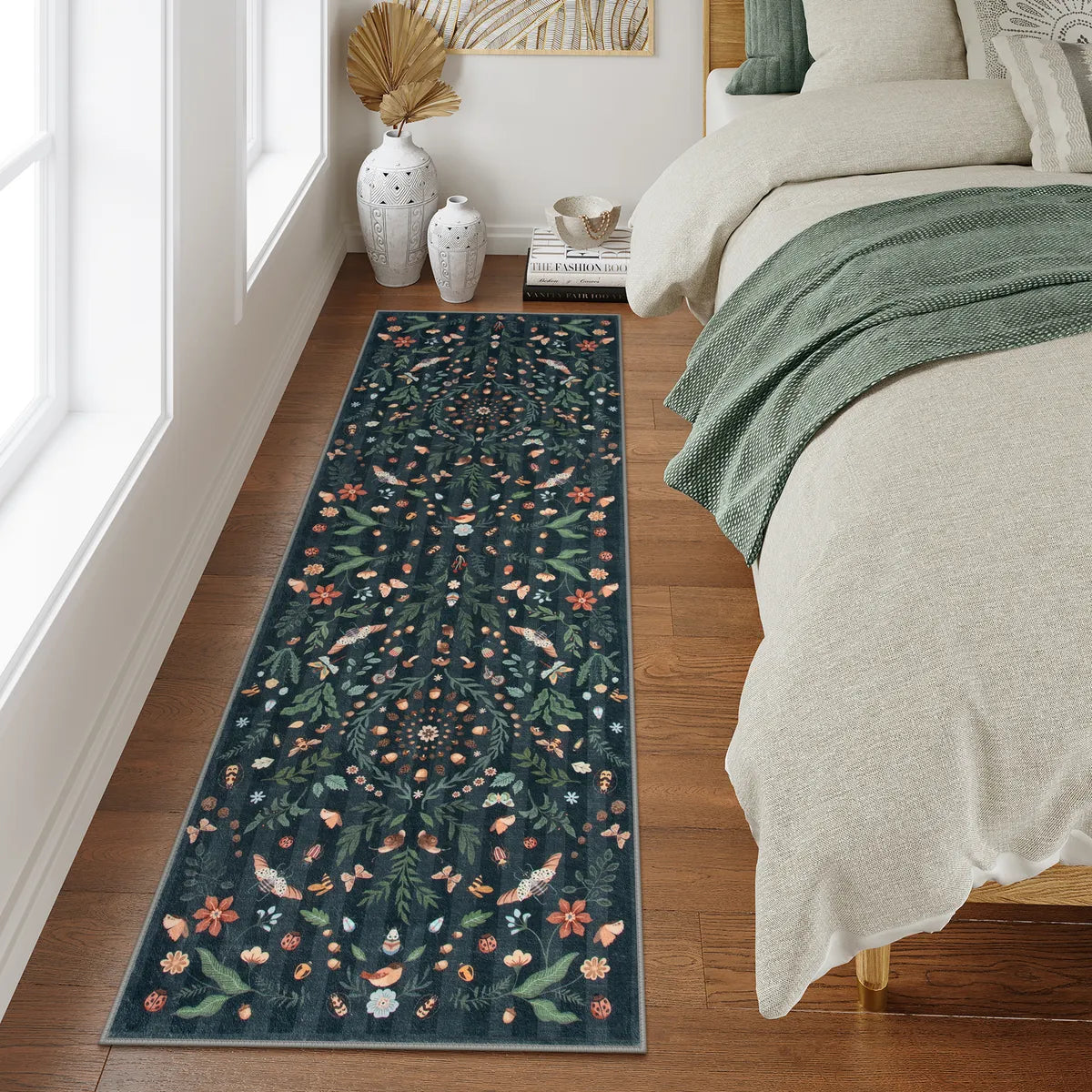
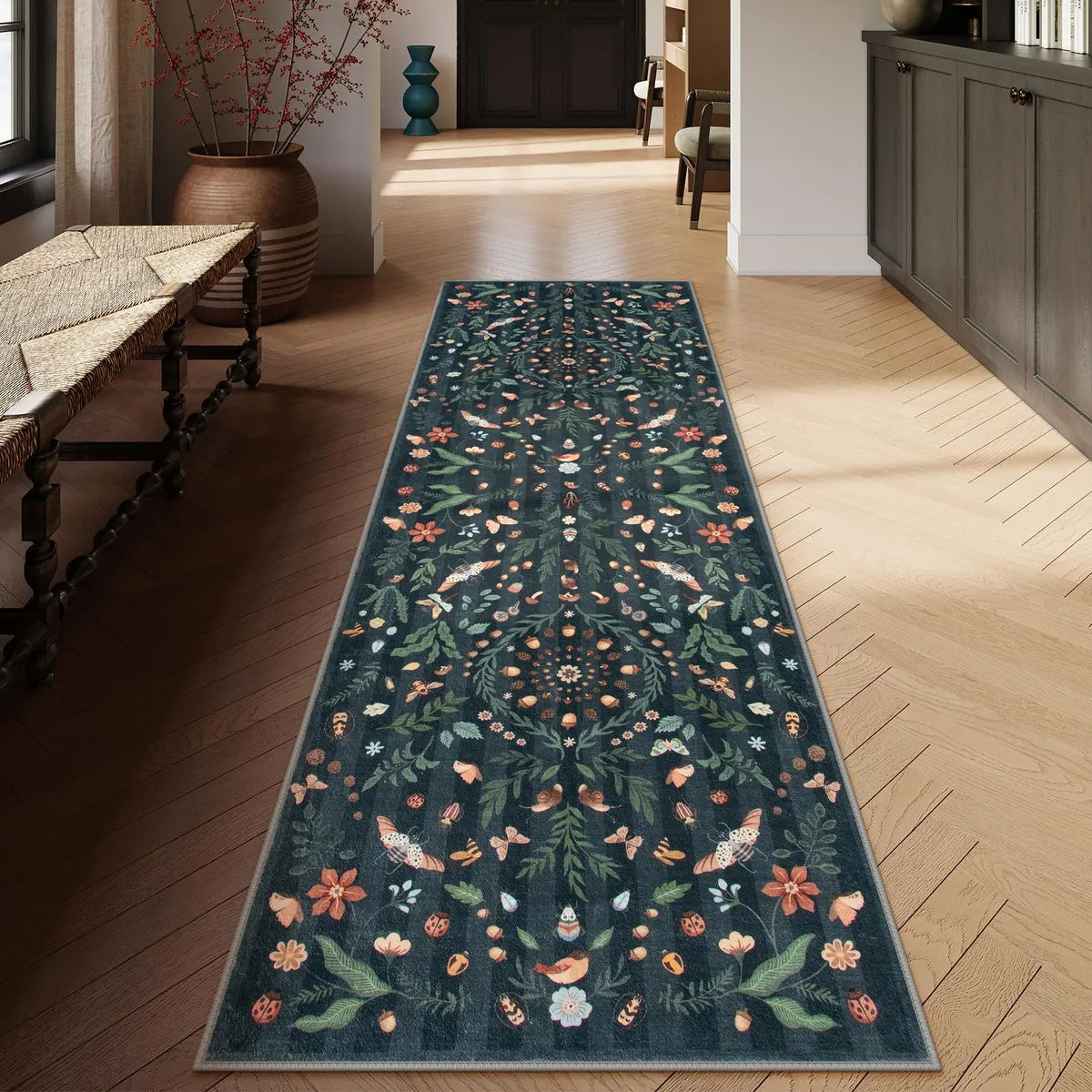
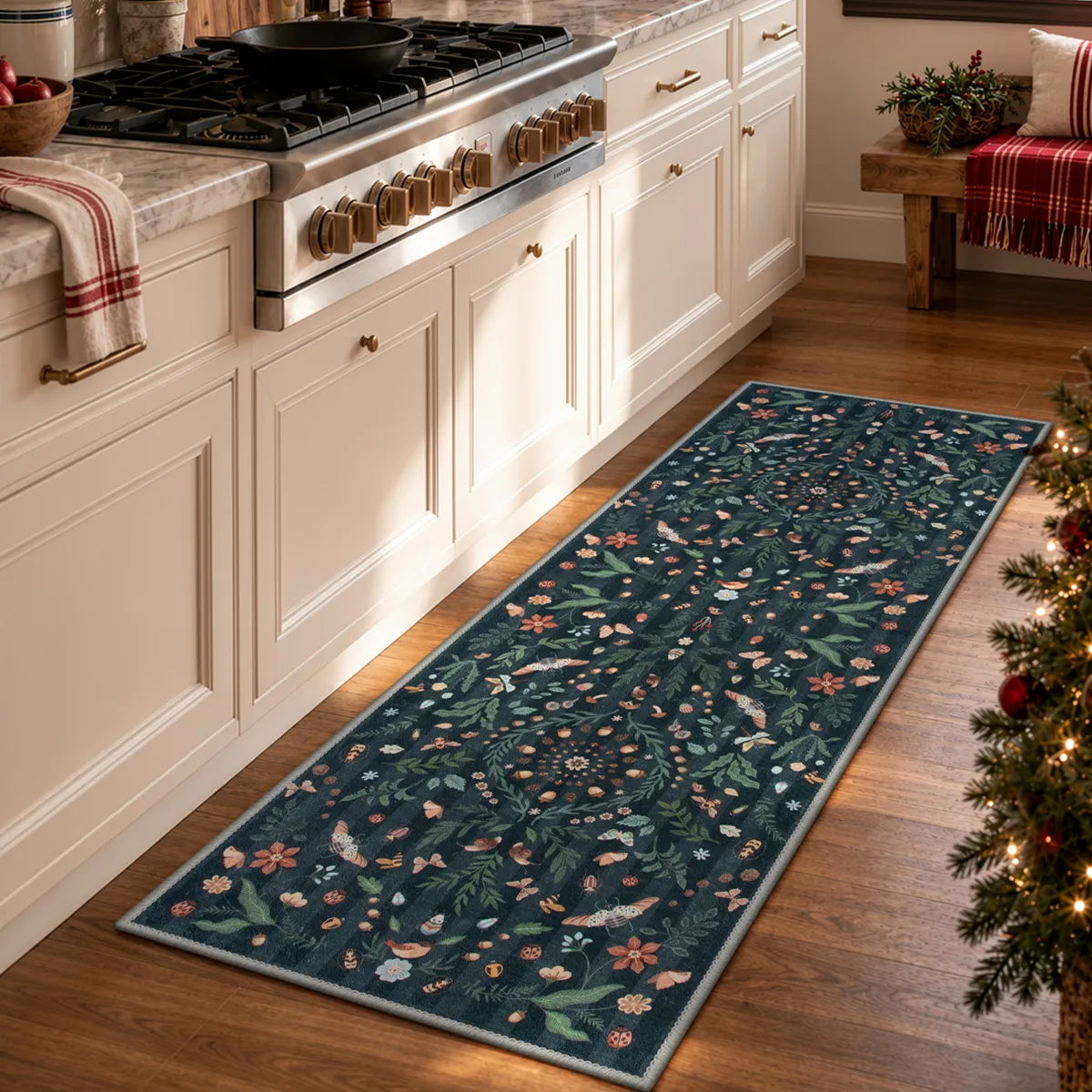
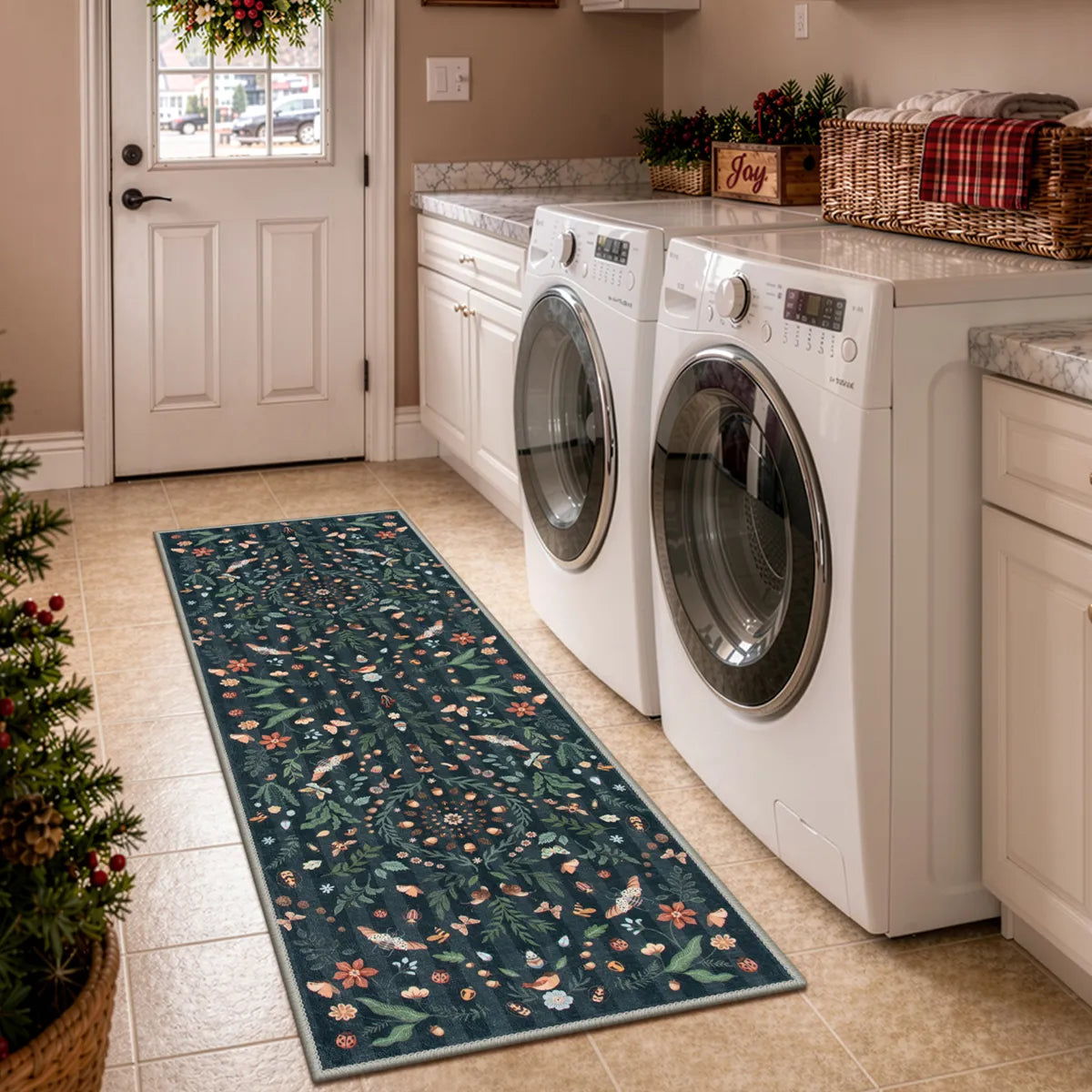
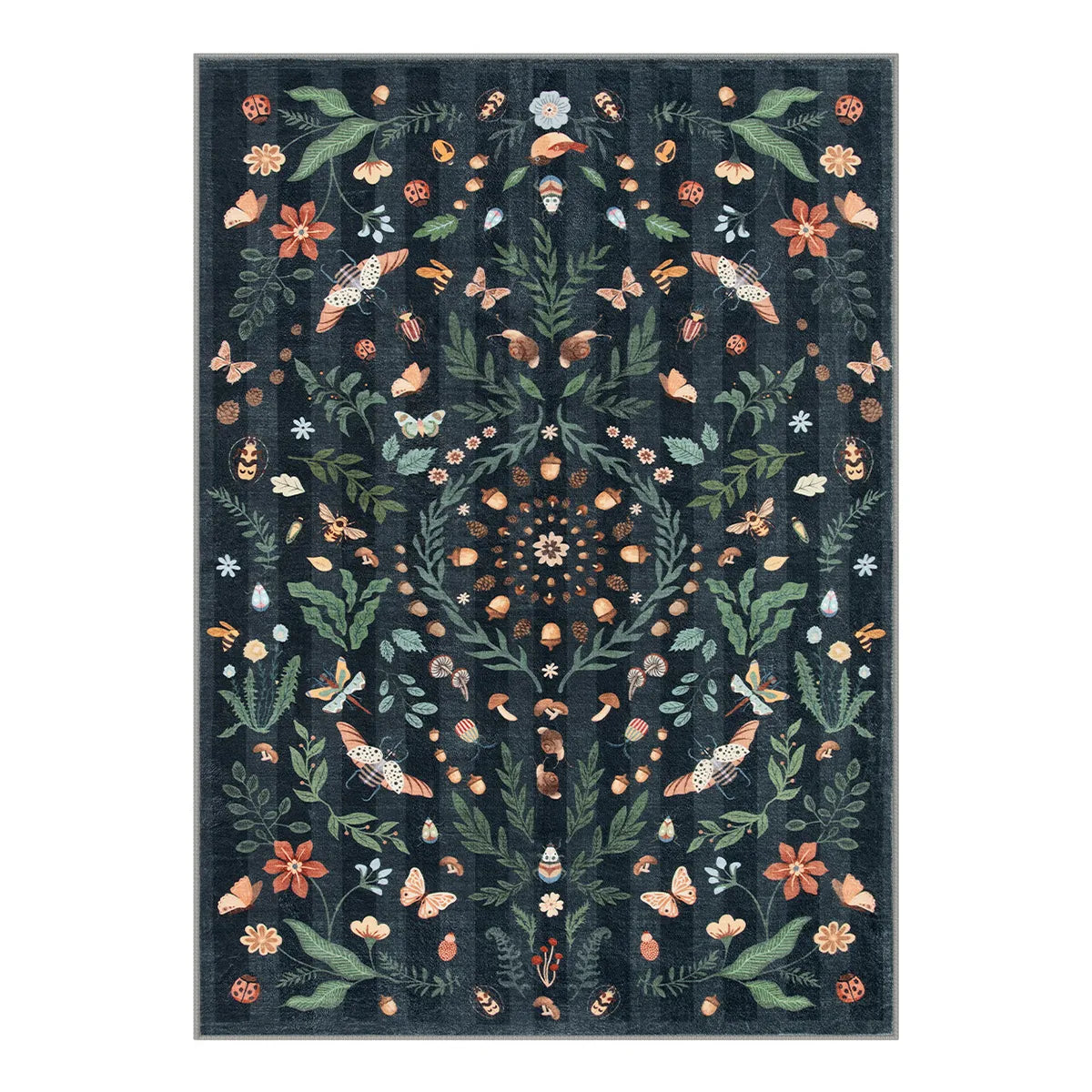
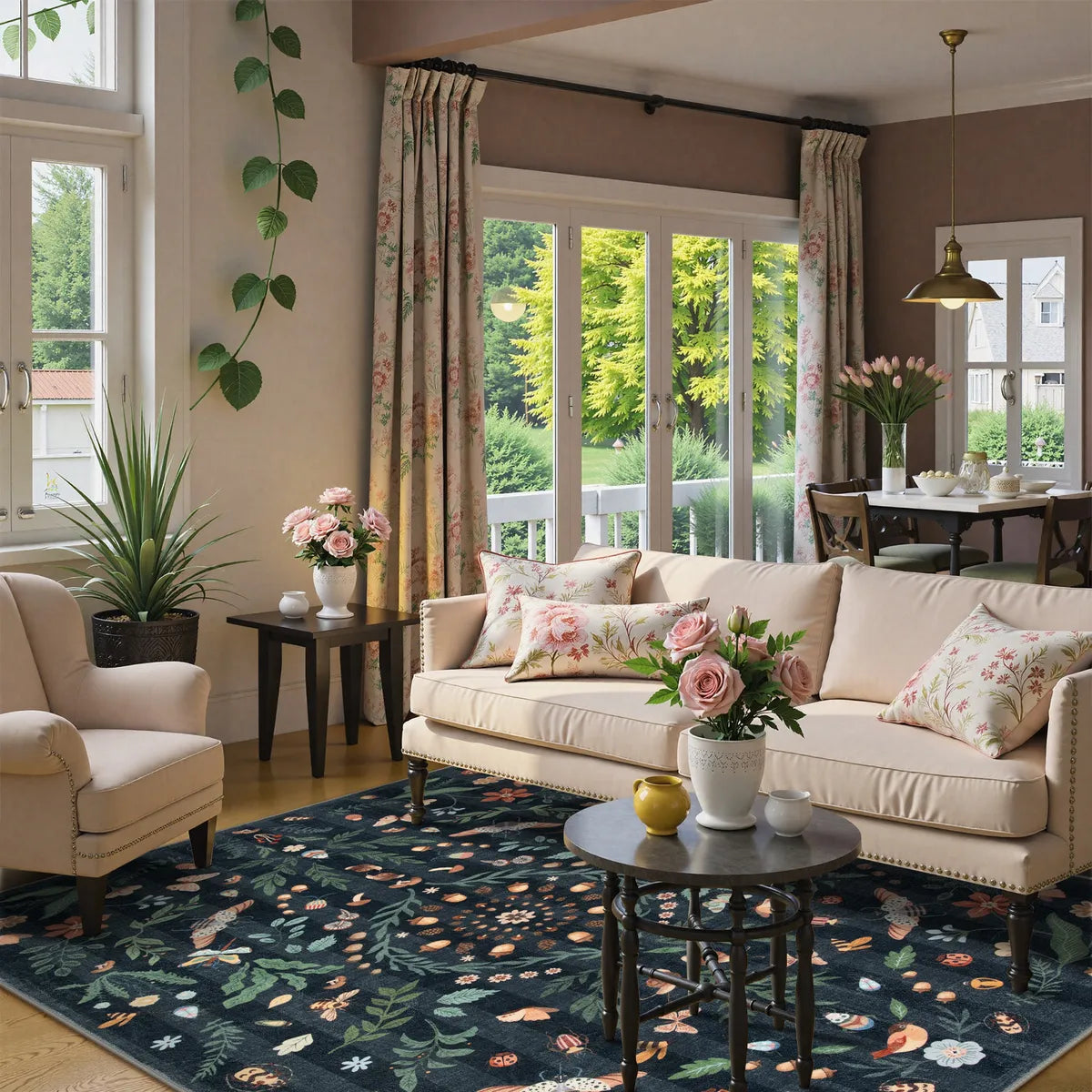
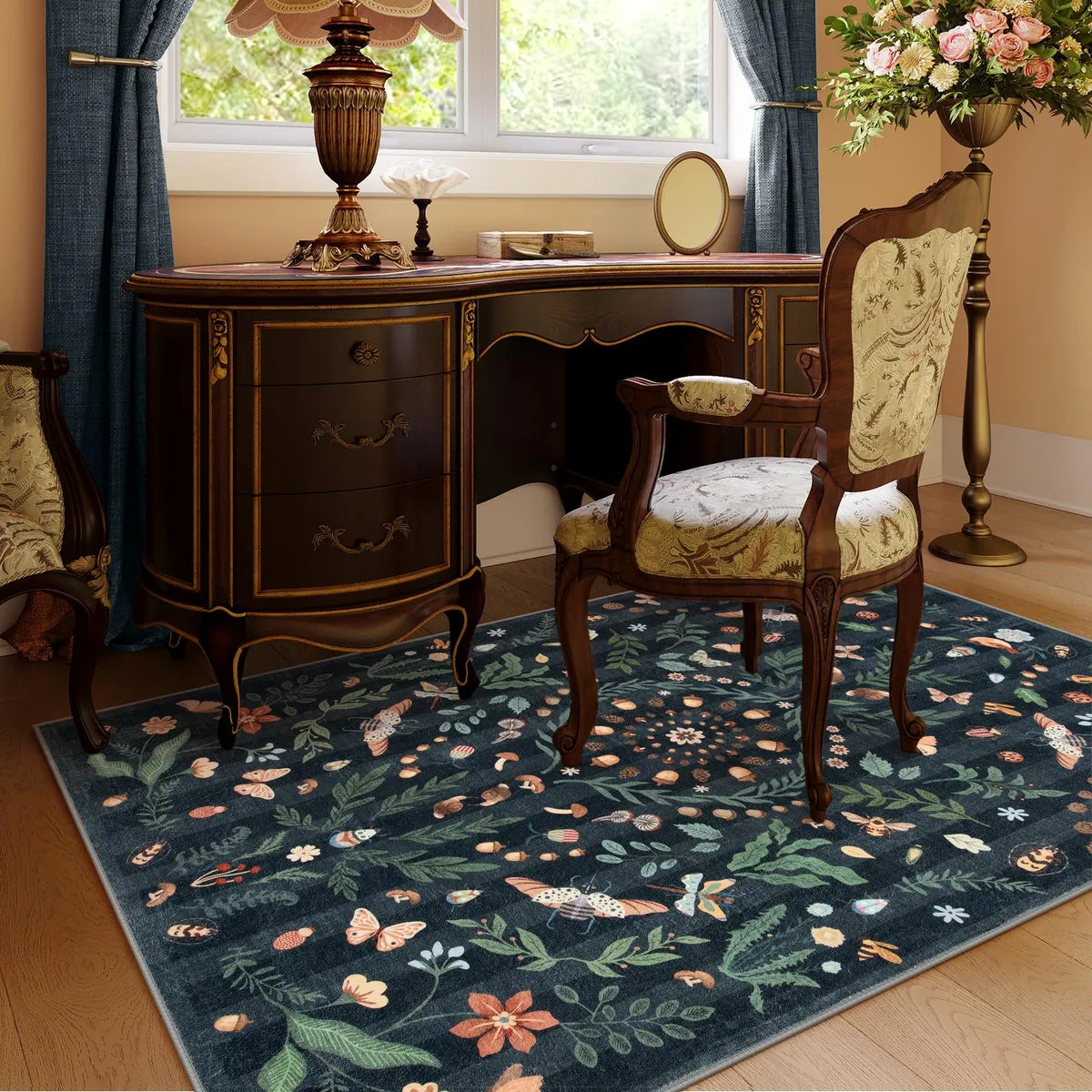
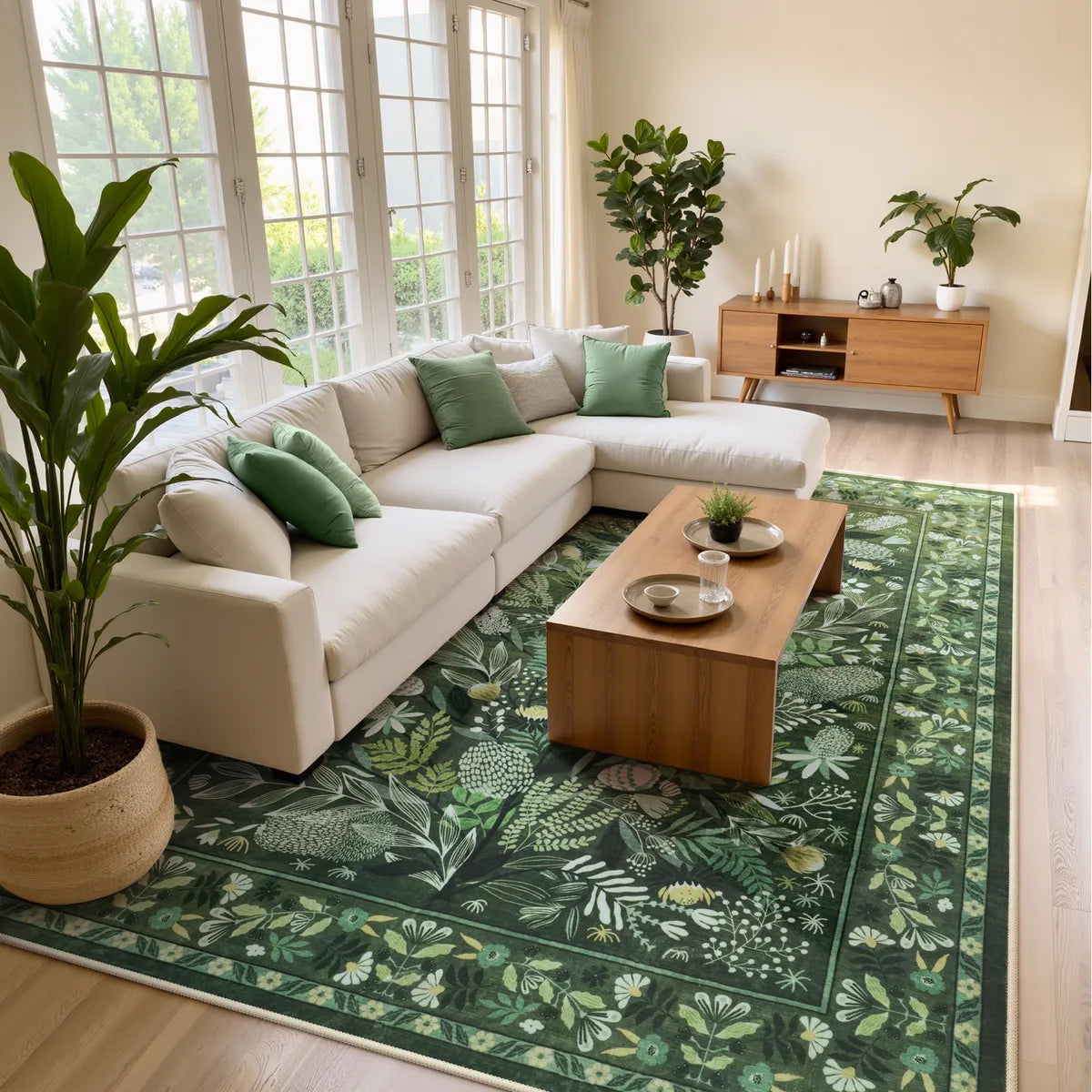
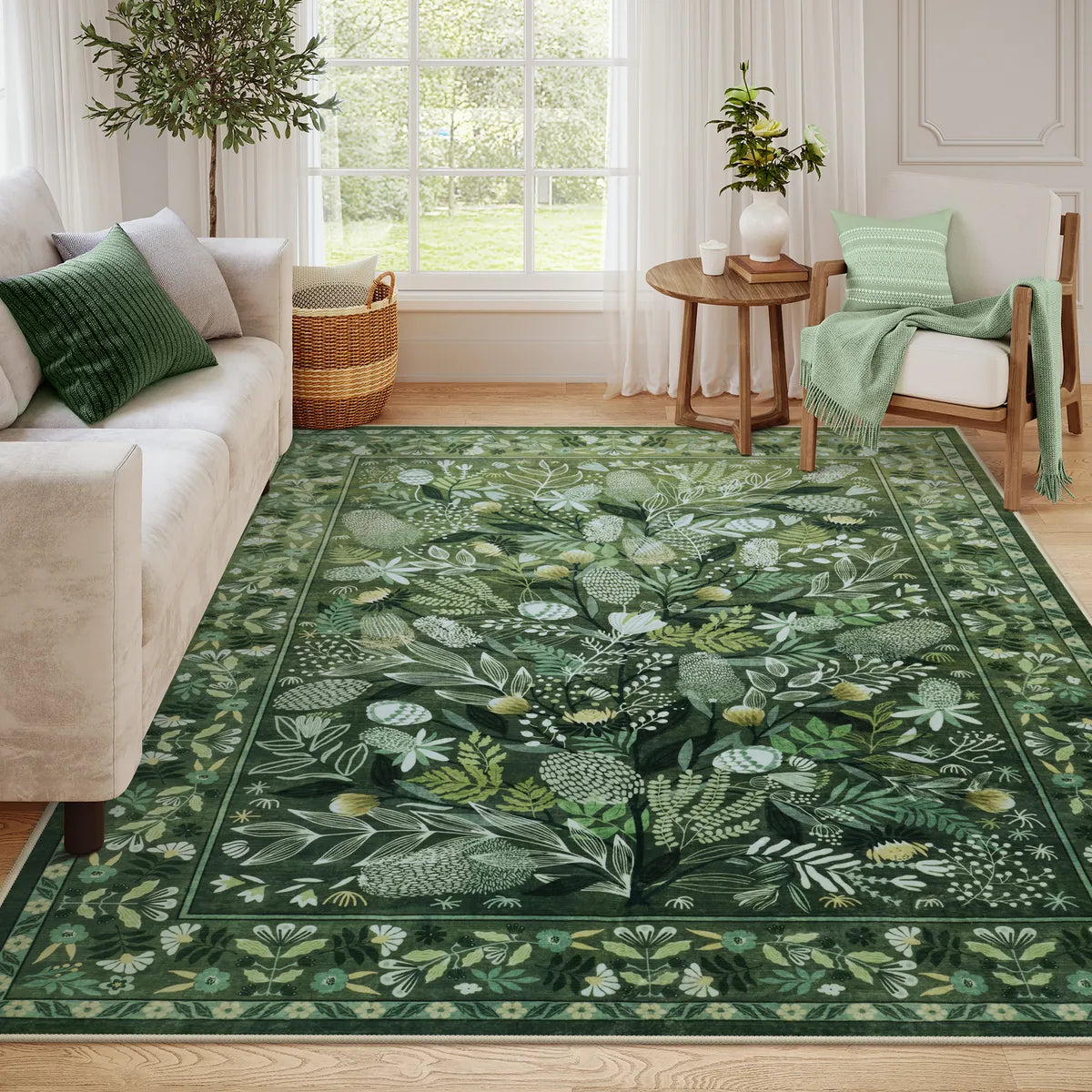
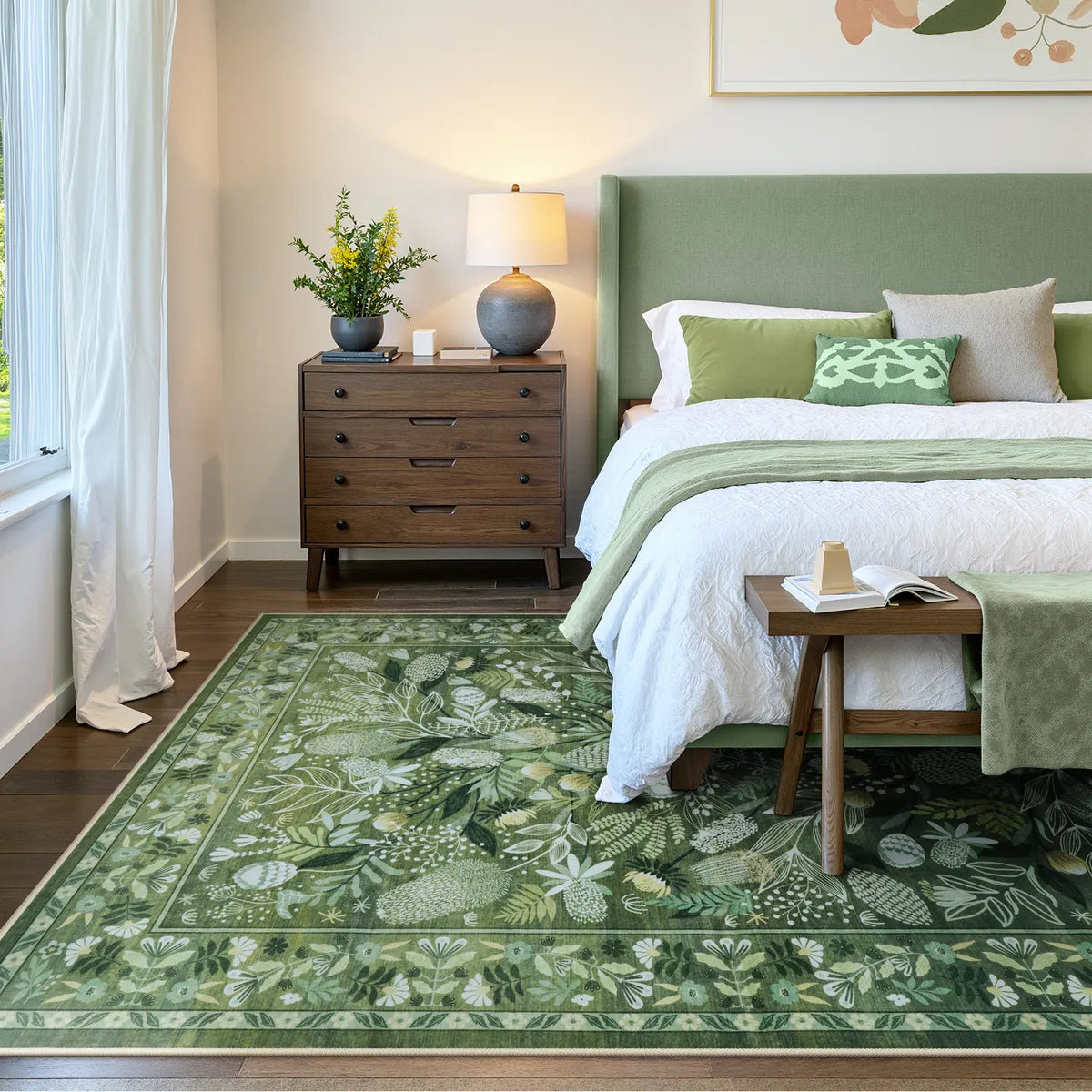
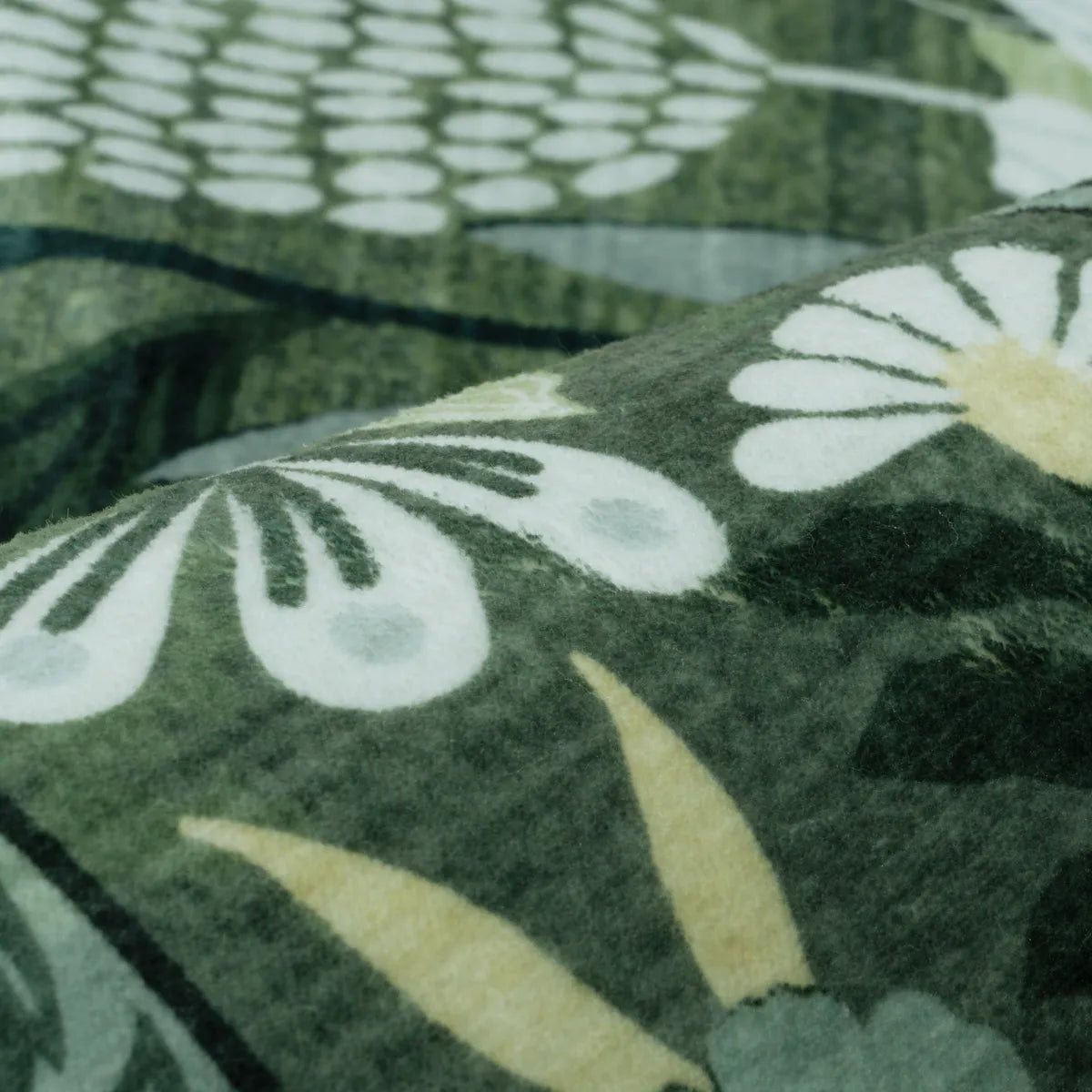
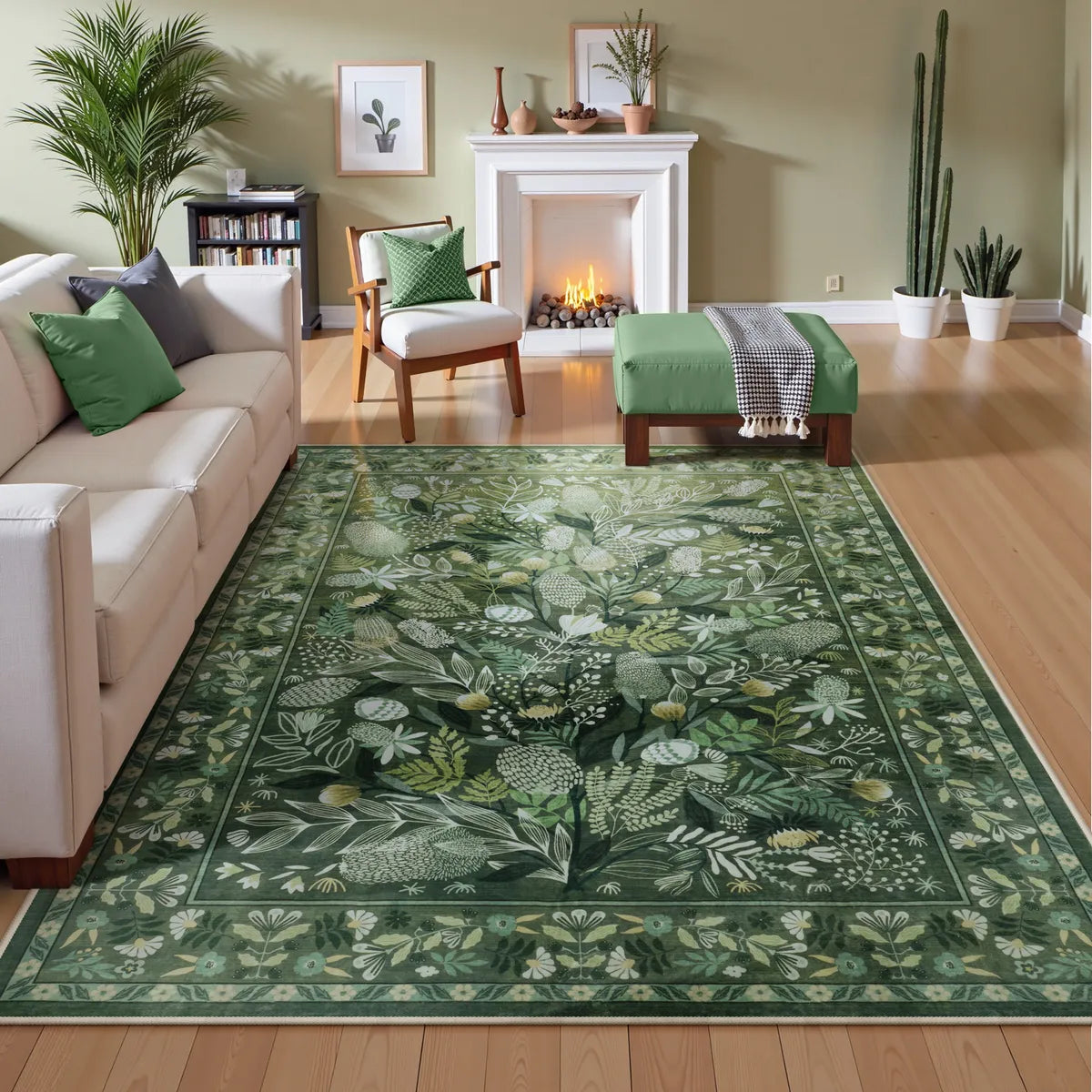
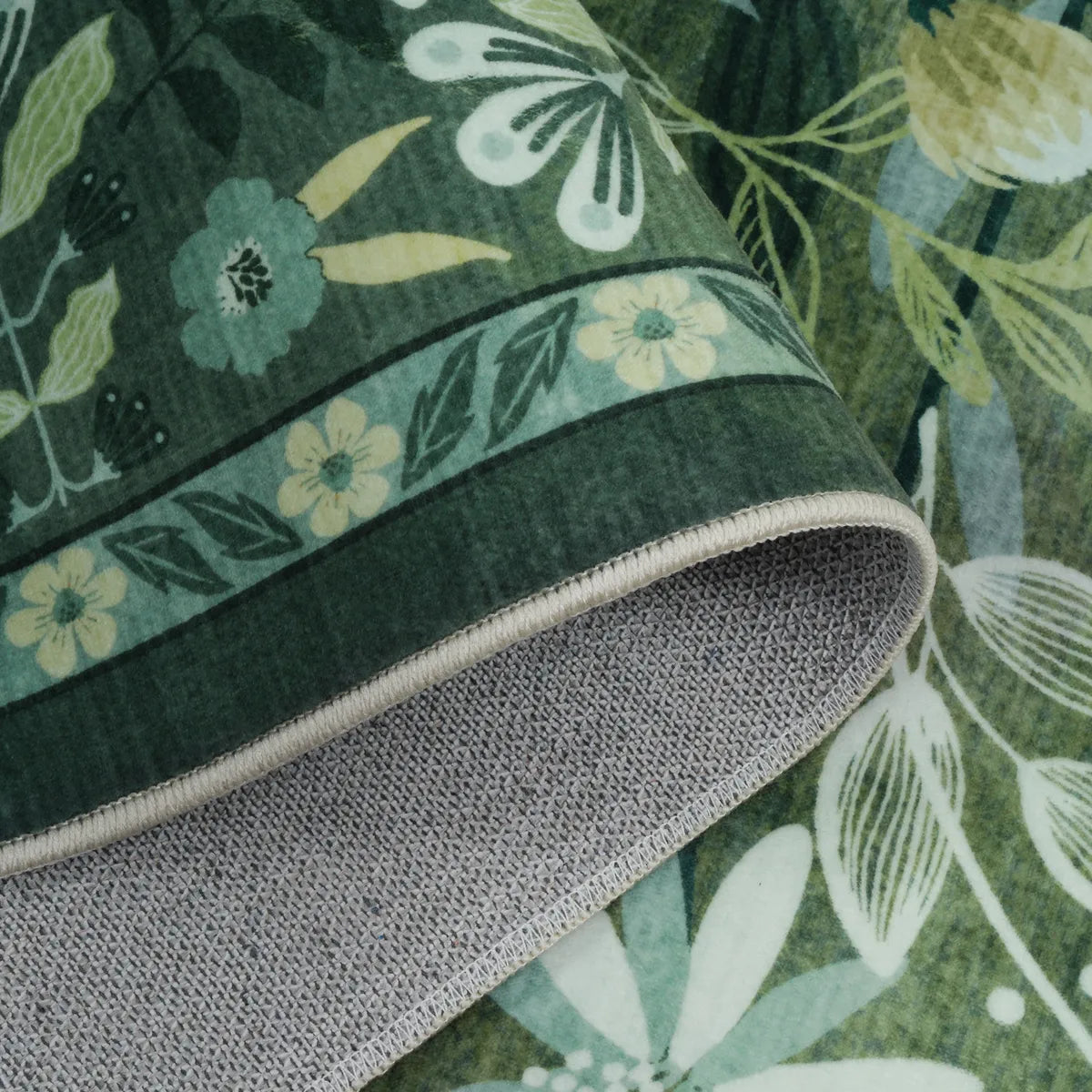
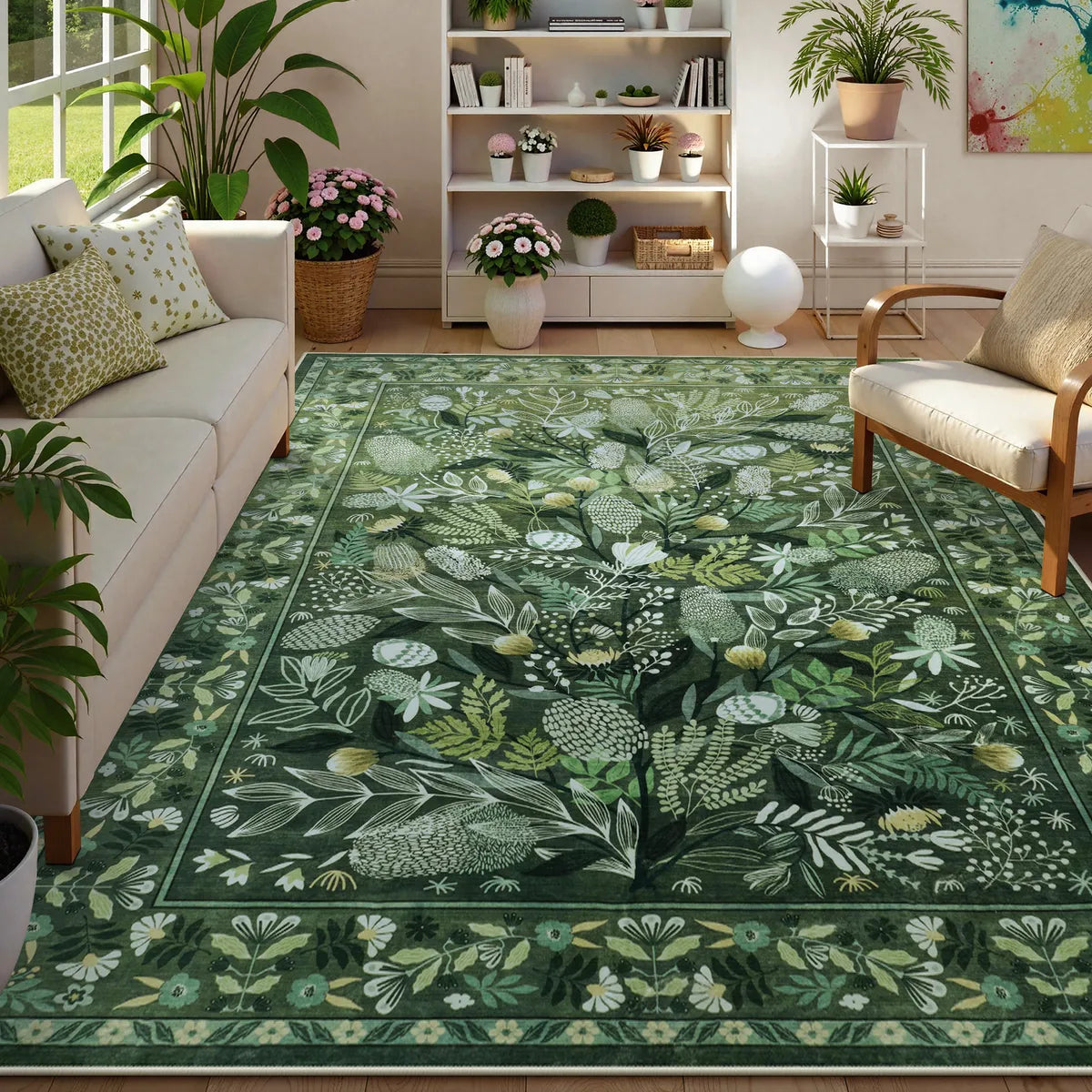
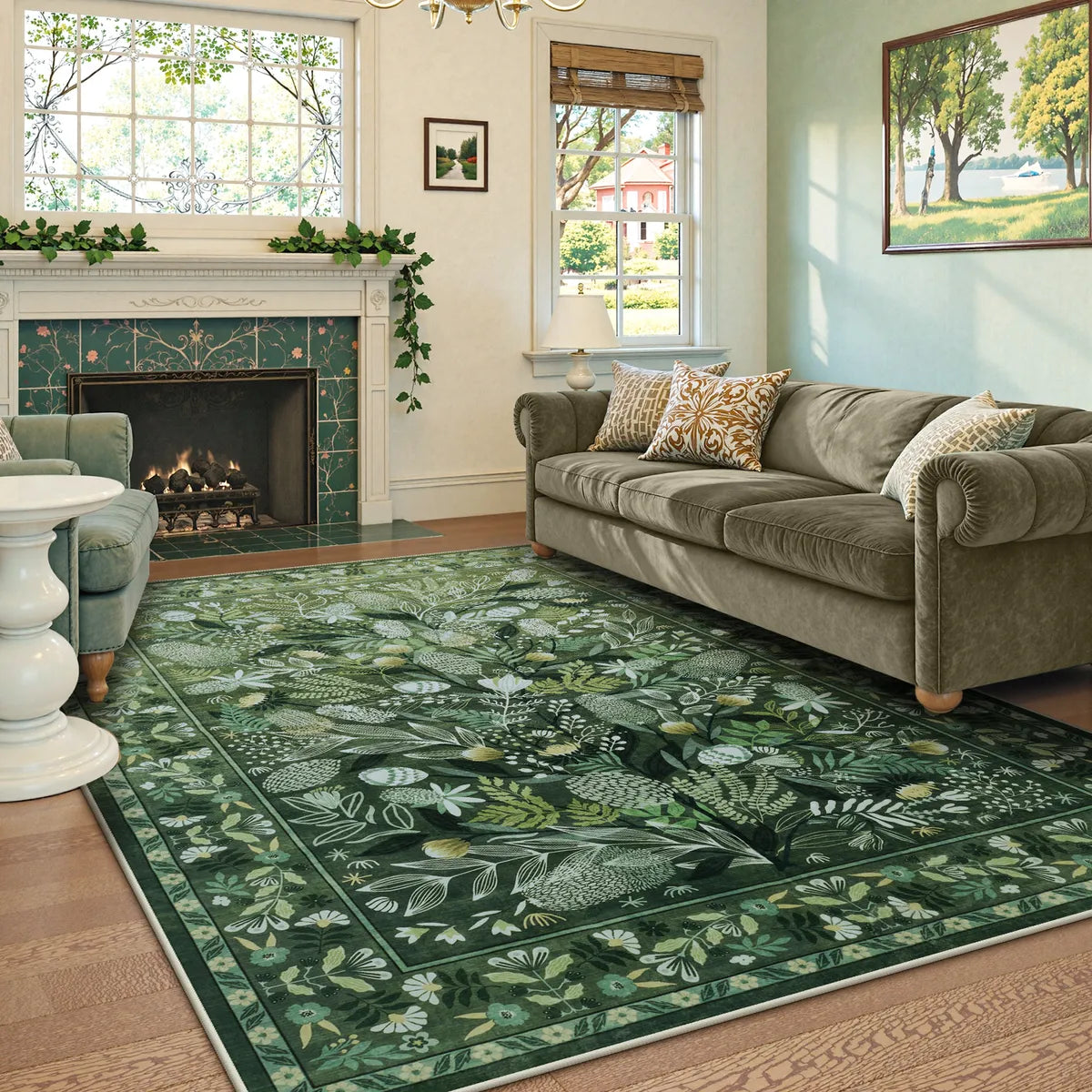
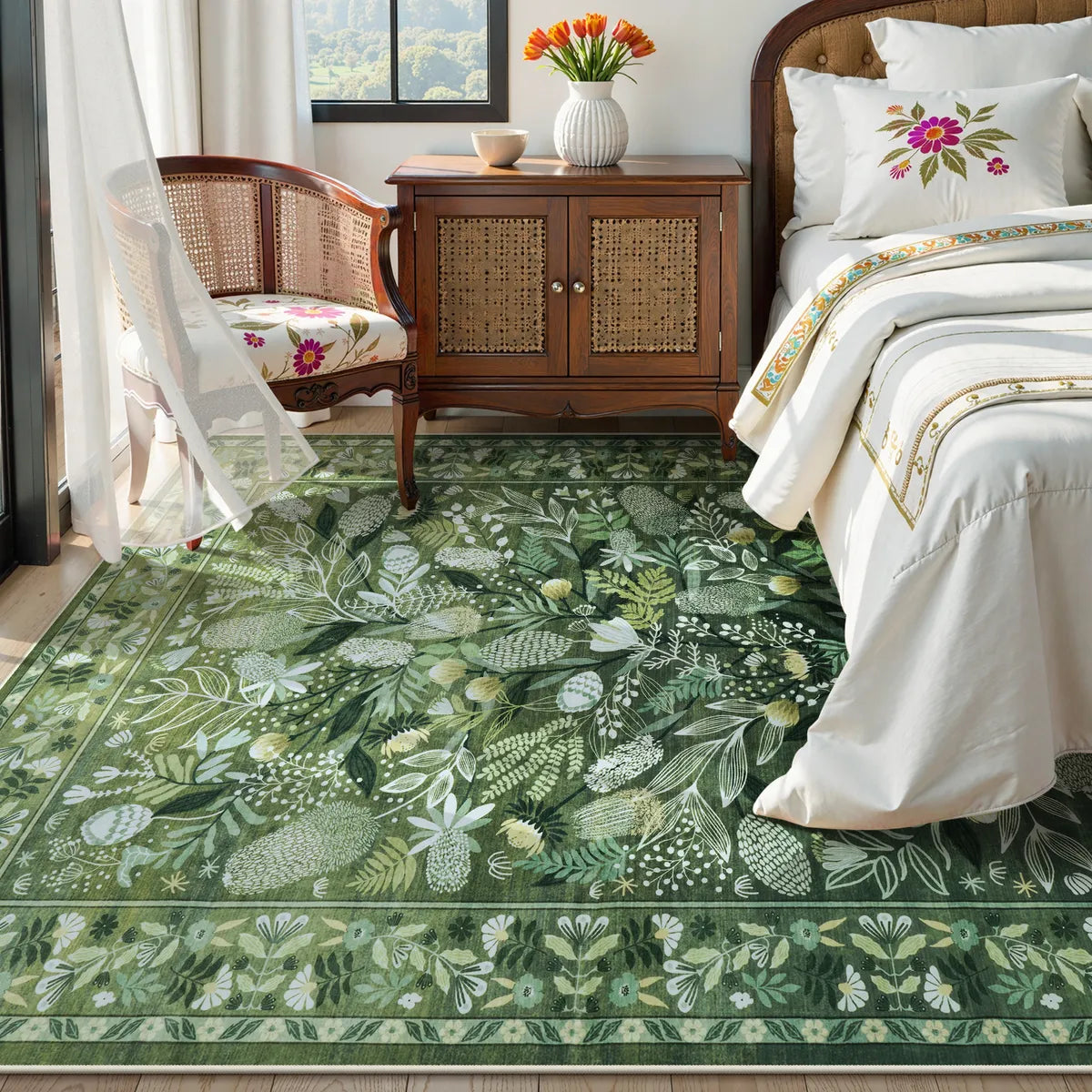
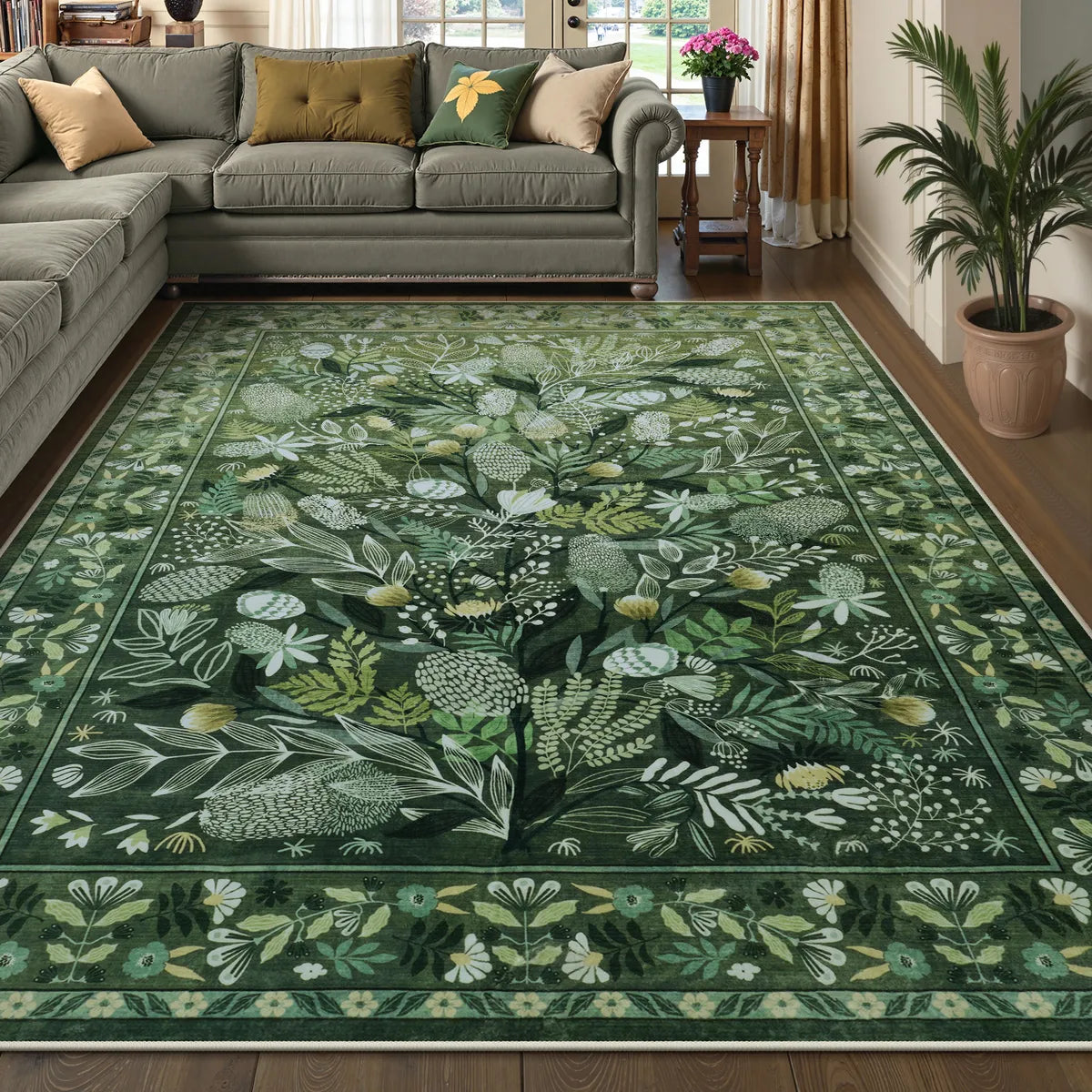
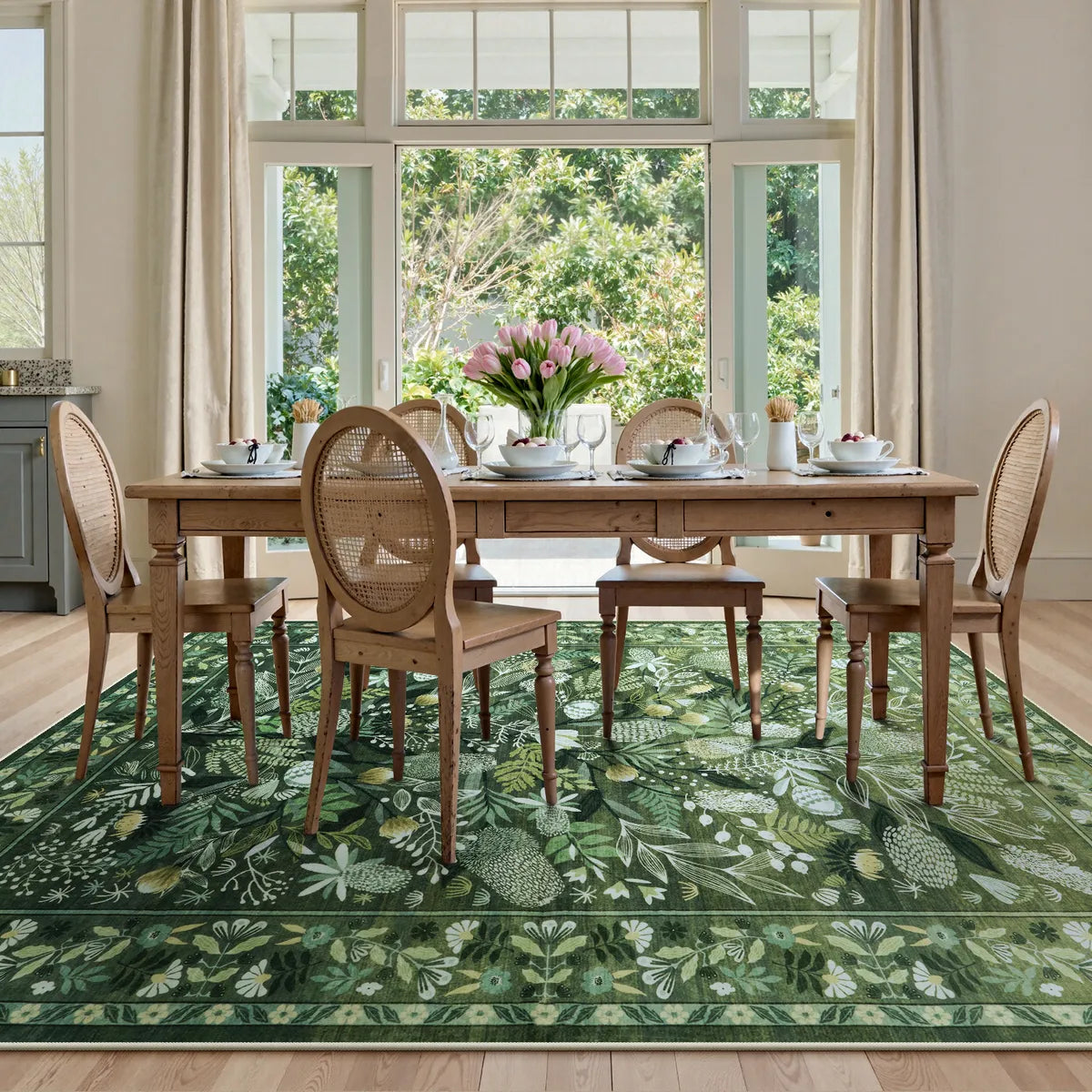
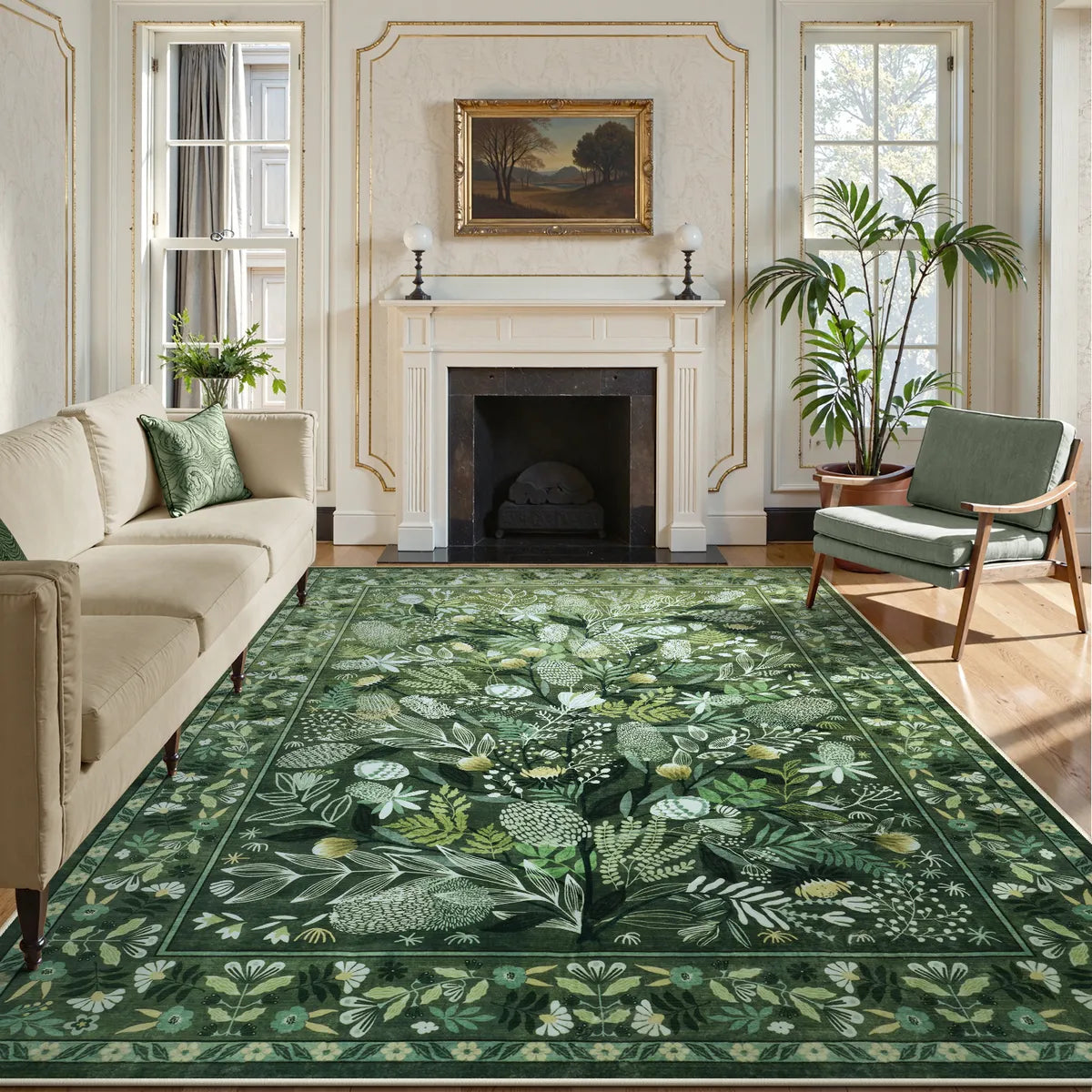
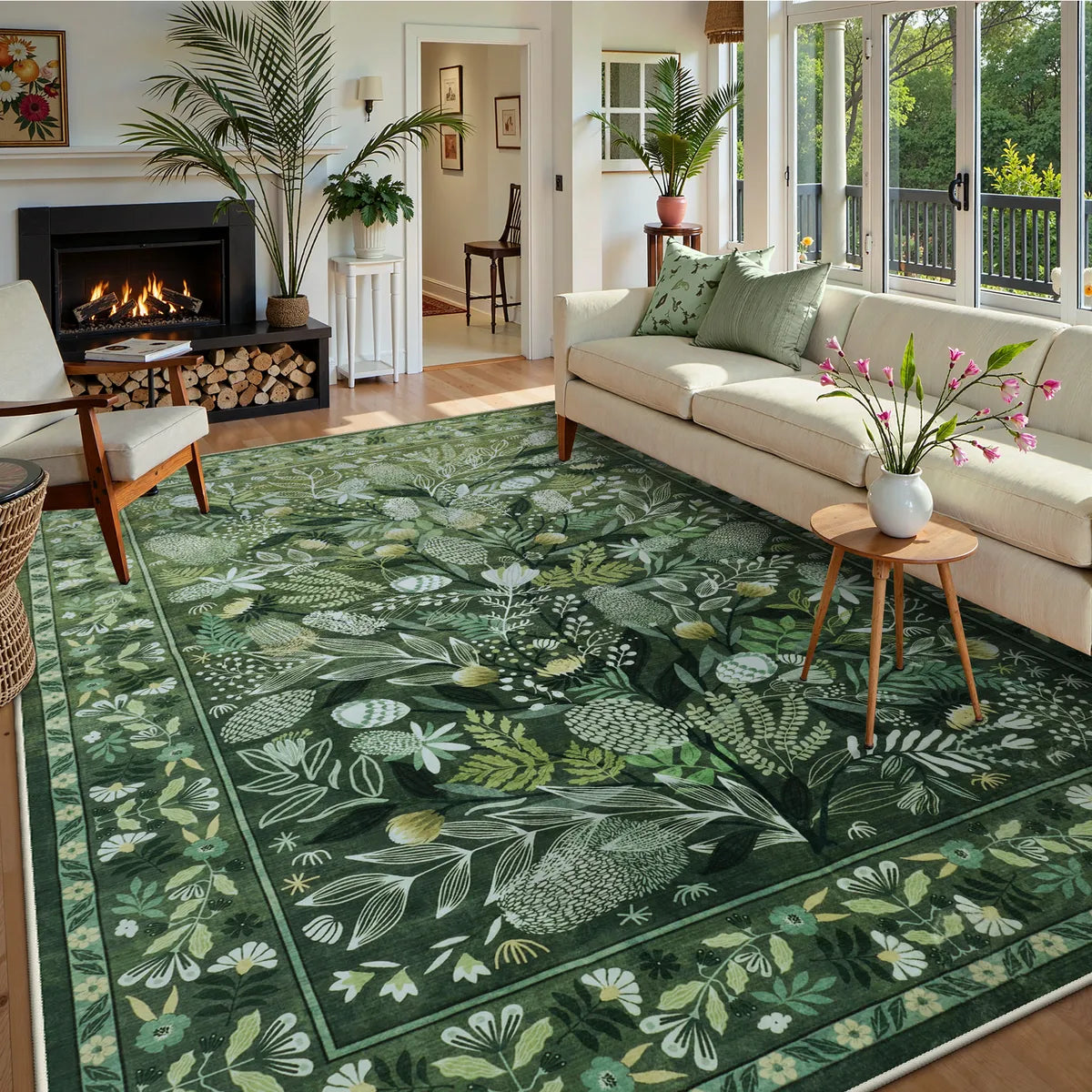
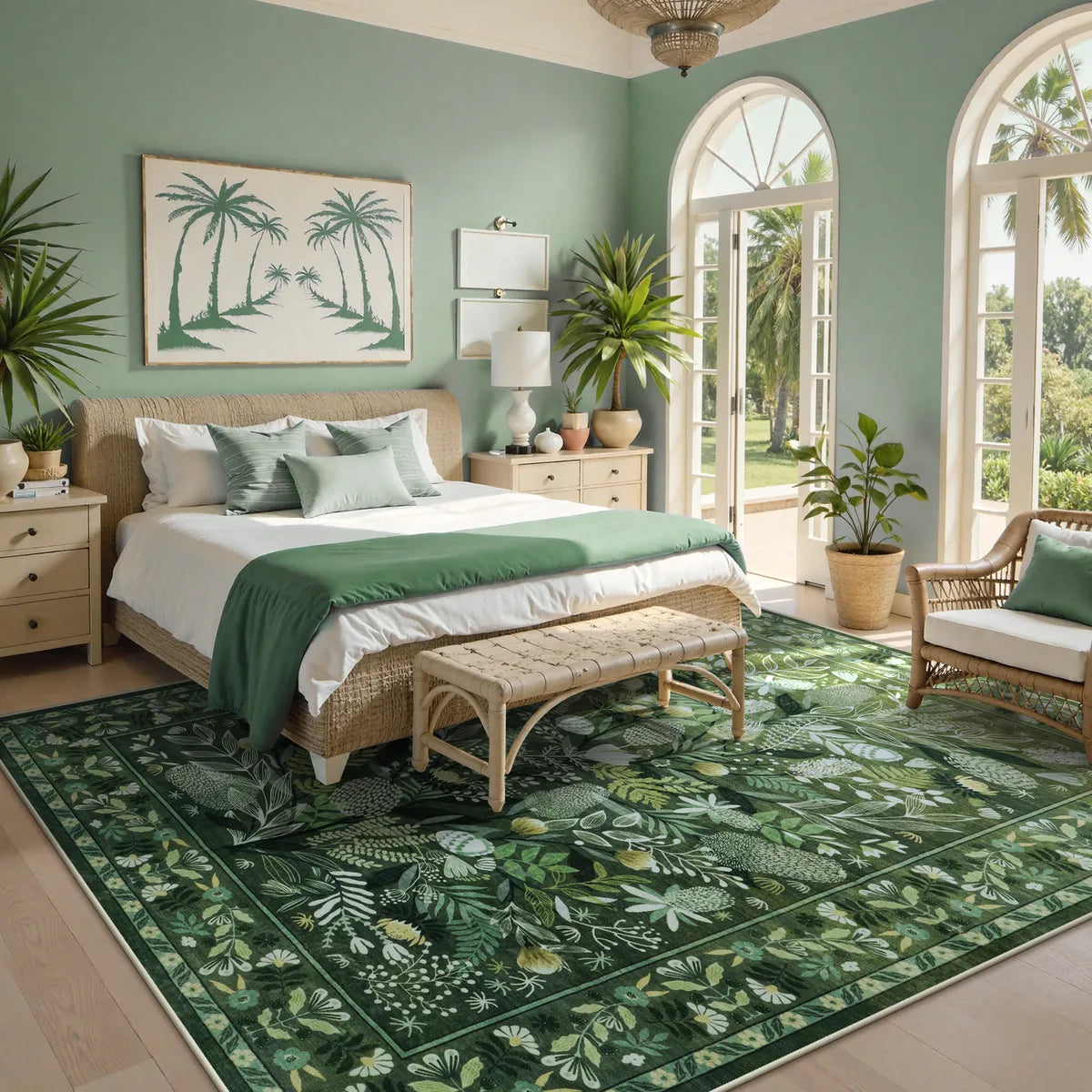
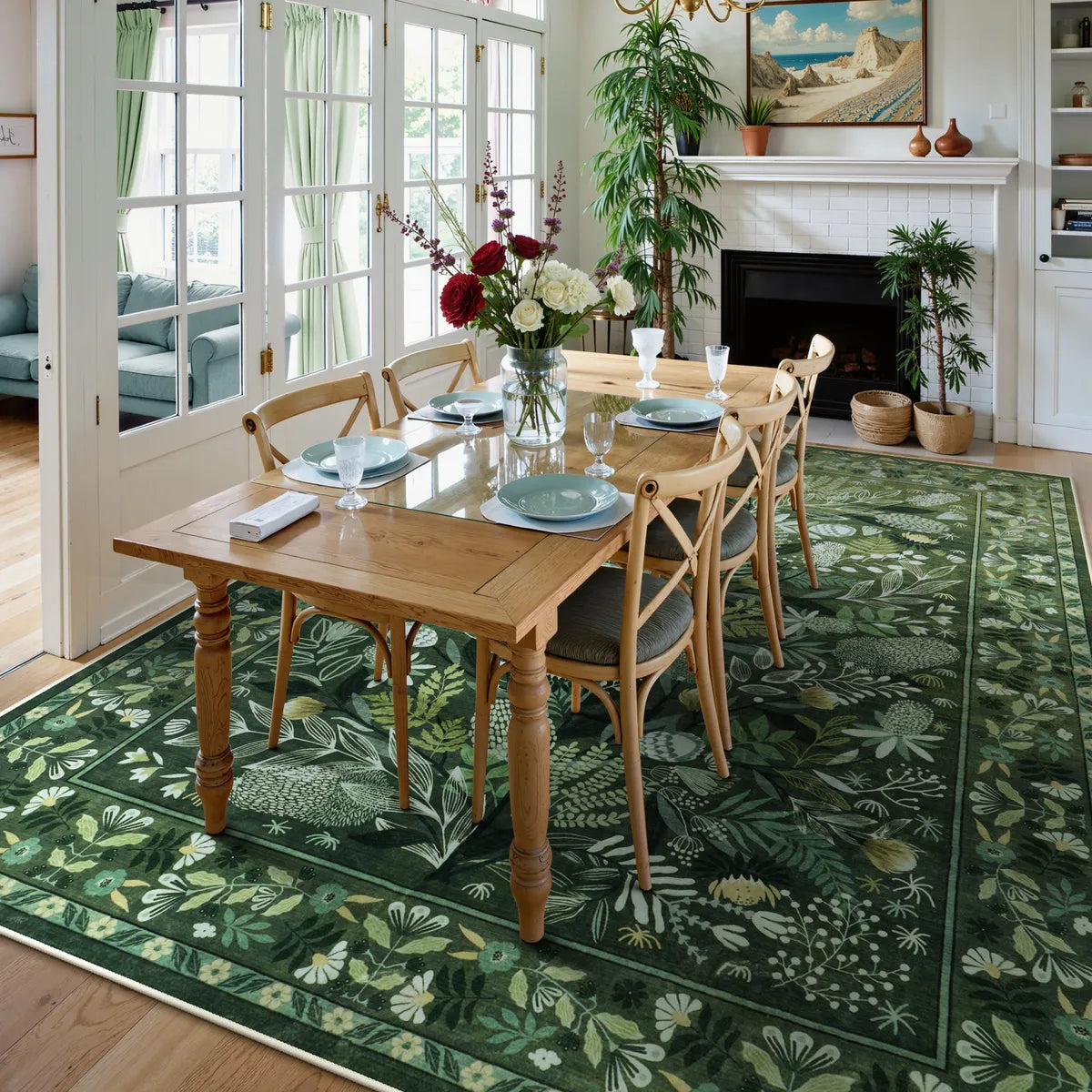
Floral and botanical rug patterns bring an organic, layered quality to a living room. They range from delicate single-stem designs to maximalist, garden-inspired prints that fill the entire rug surface. Vintage and traditional rug patterns, such as Persian-inspired medallions and tribal motifs, draw from rich craft traditions and add a sense of character to any space.
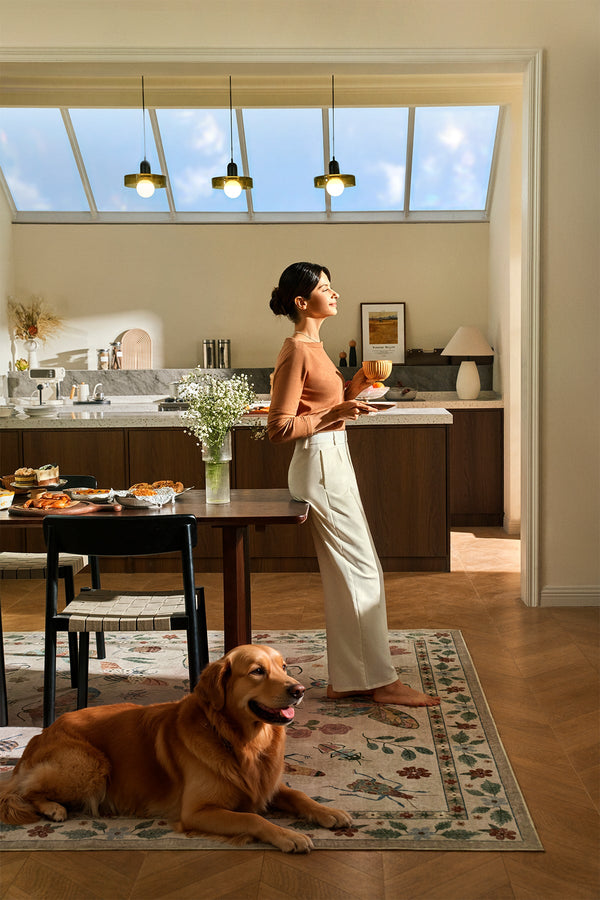
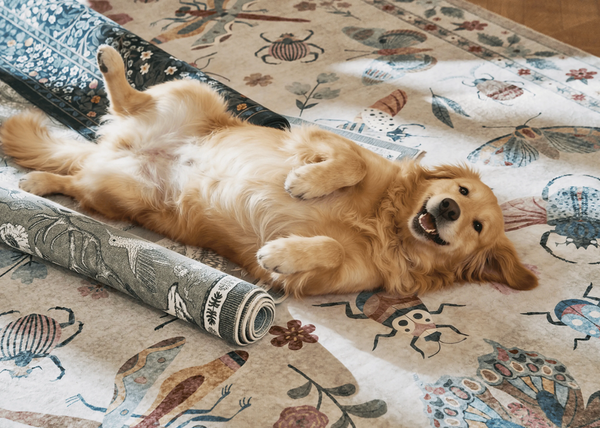
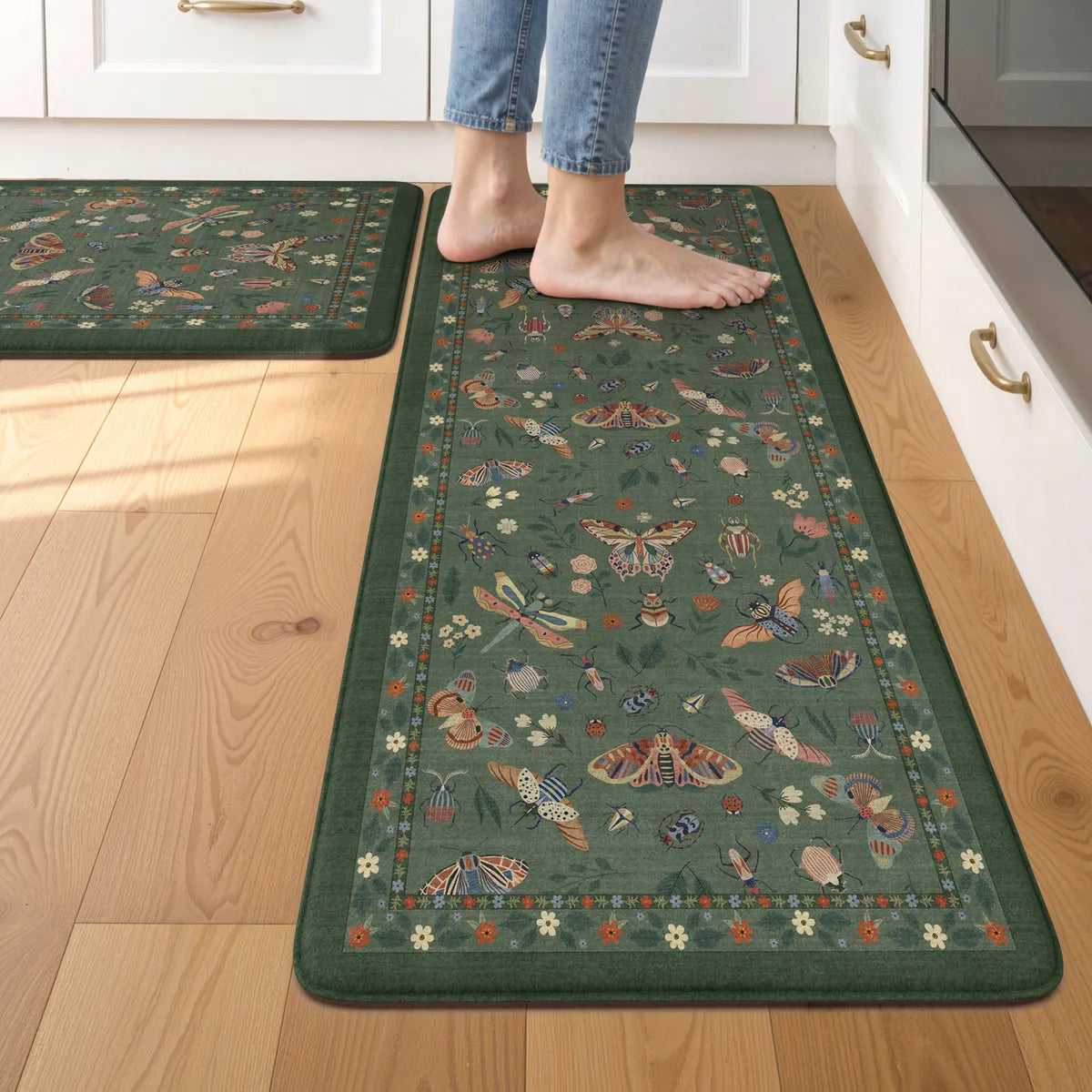
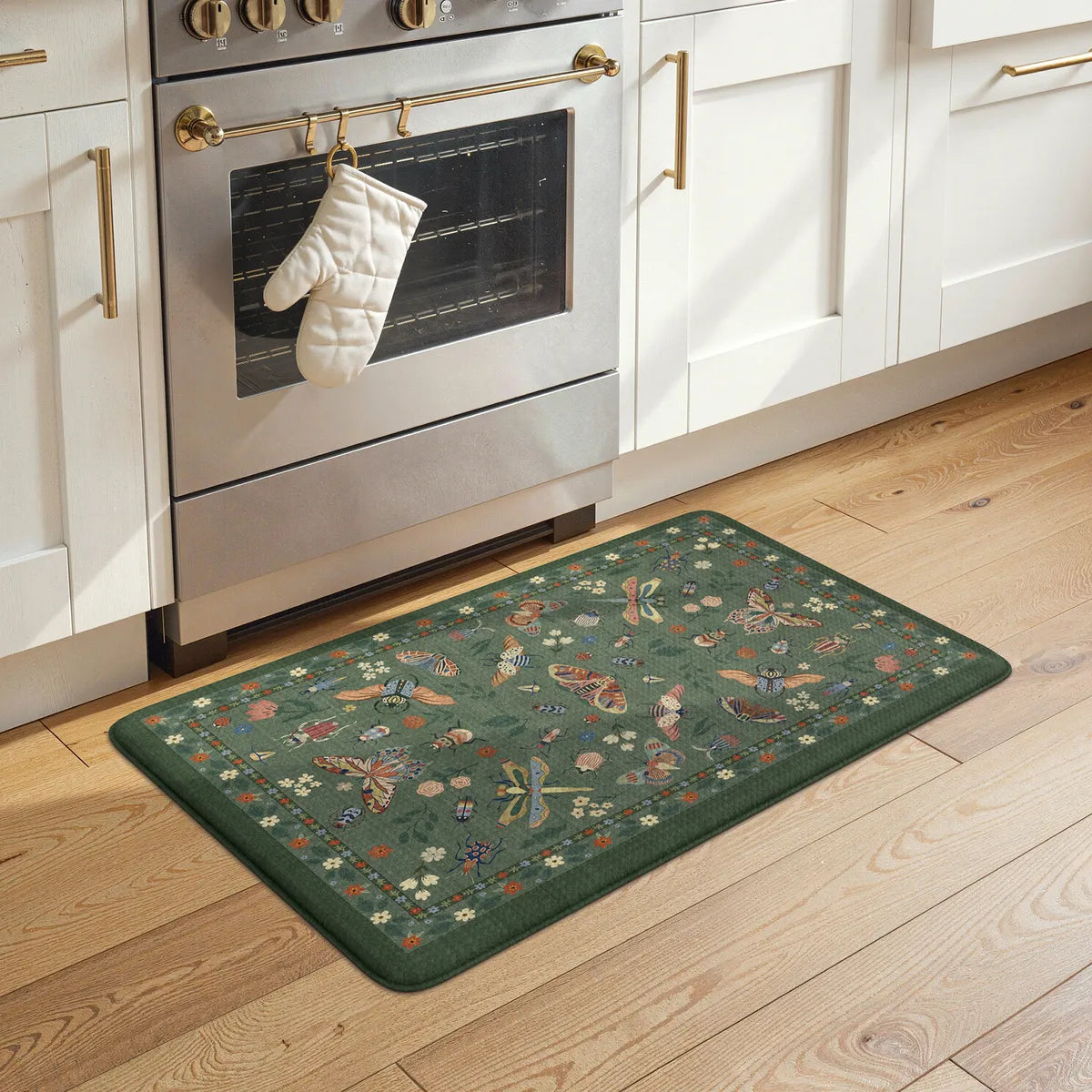
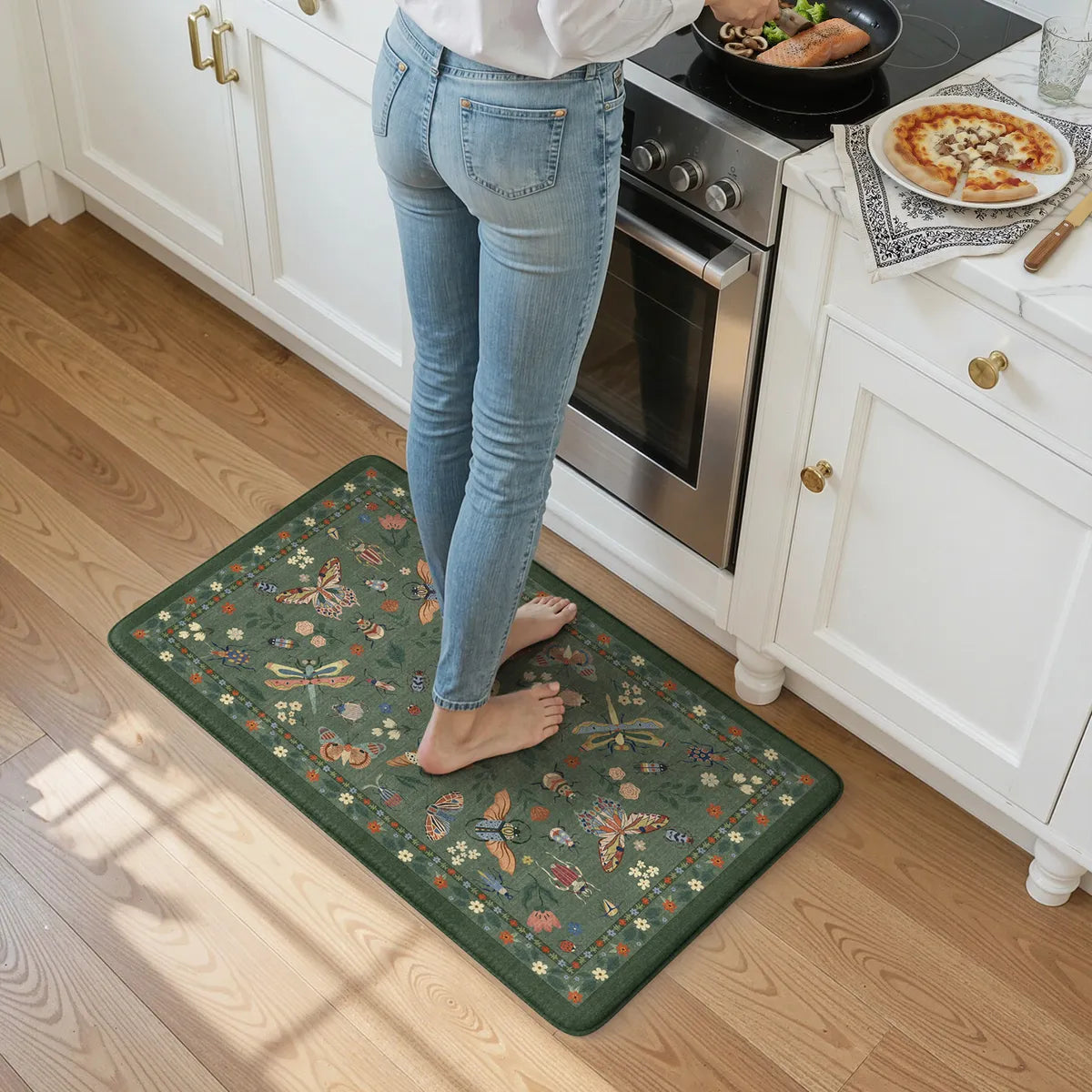
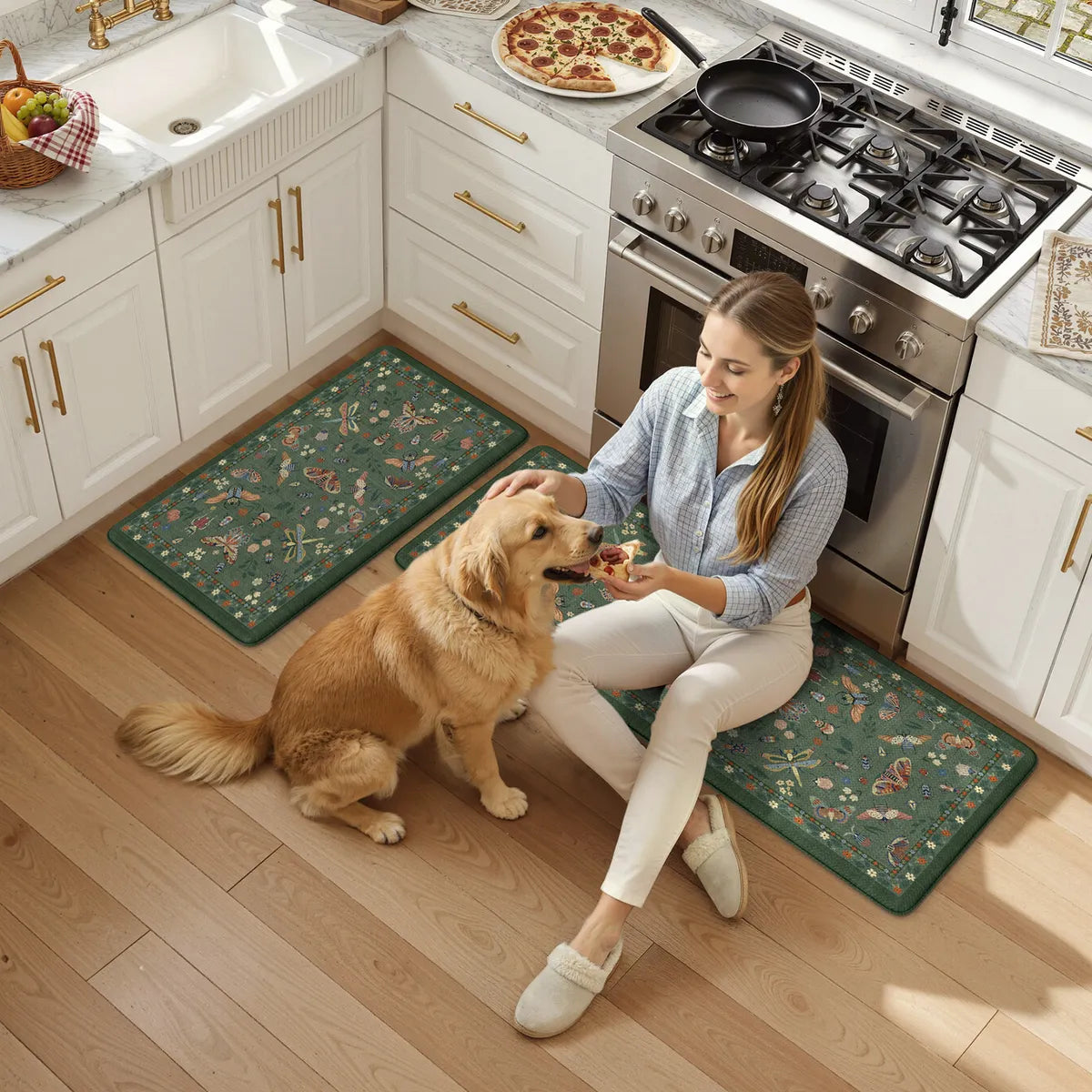
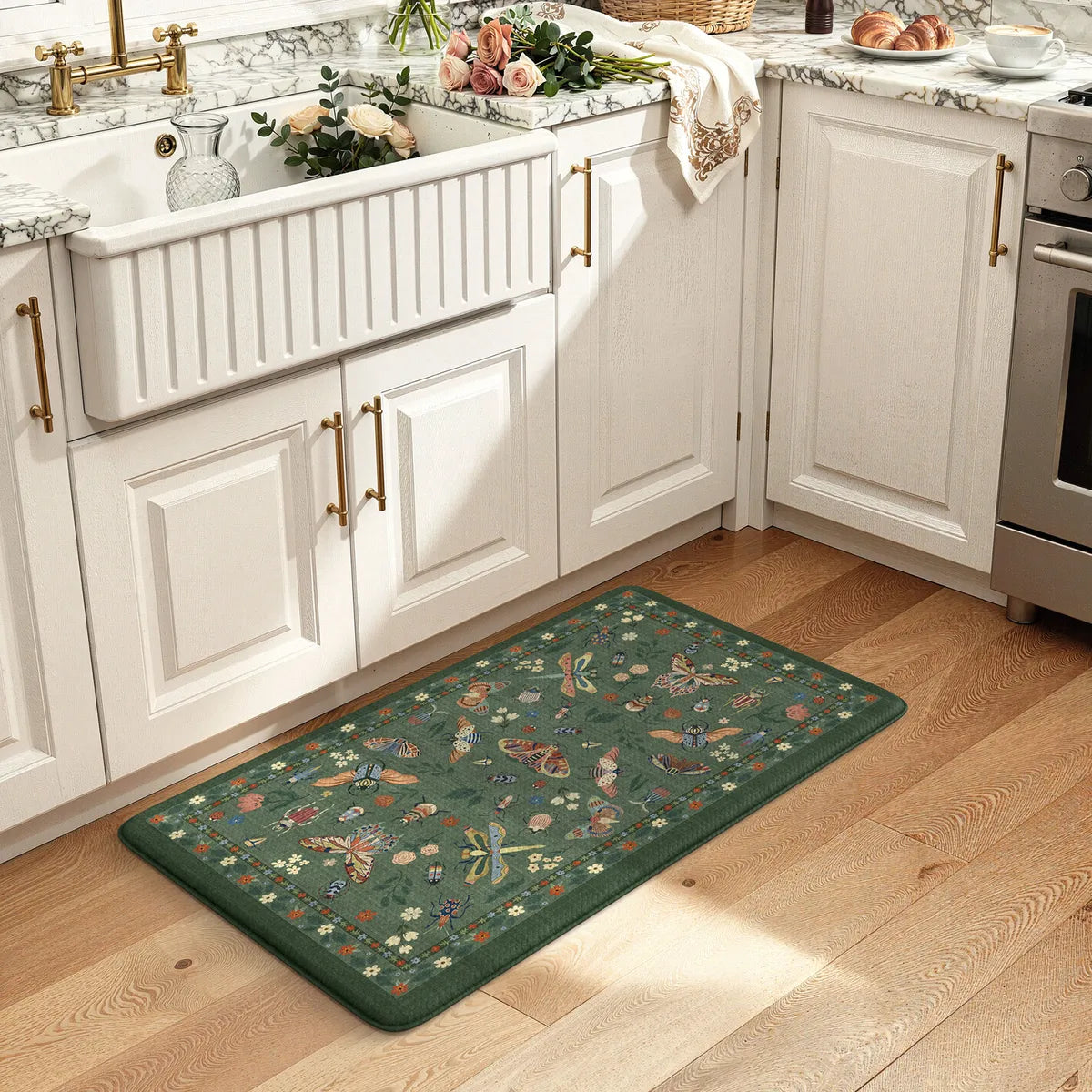
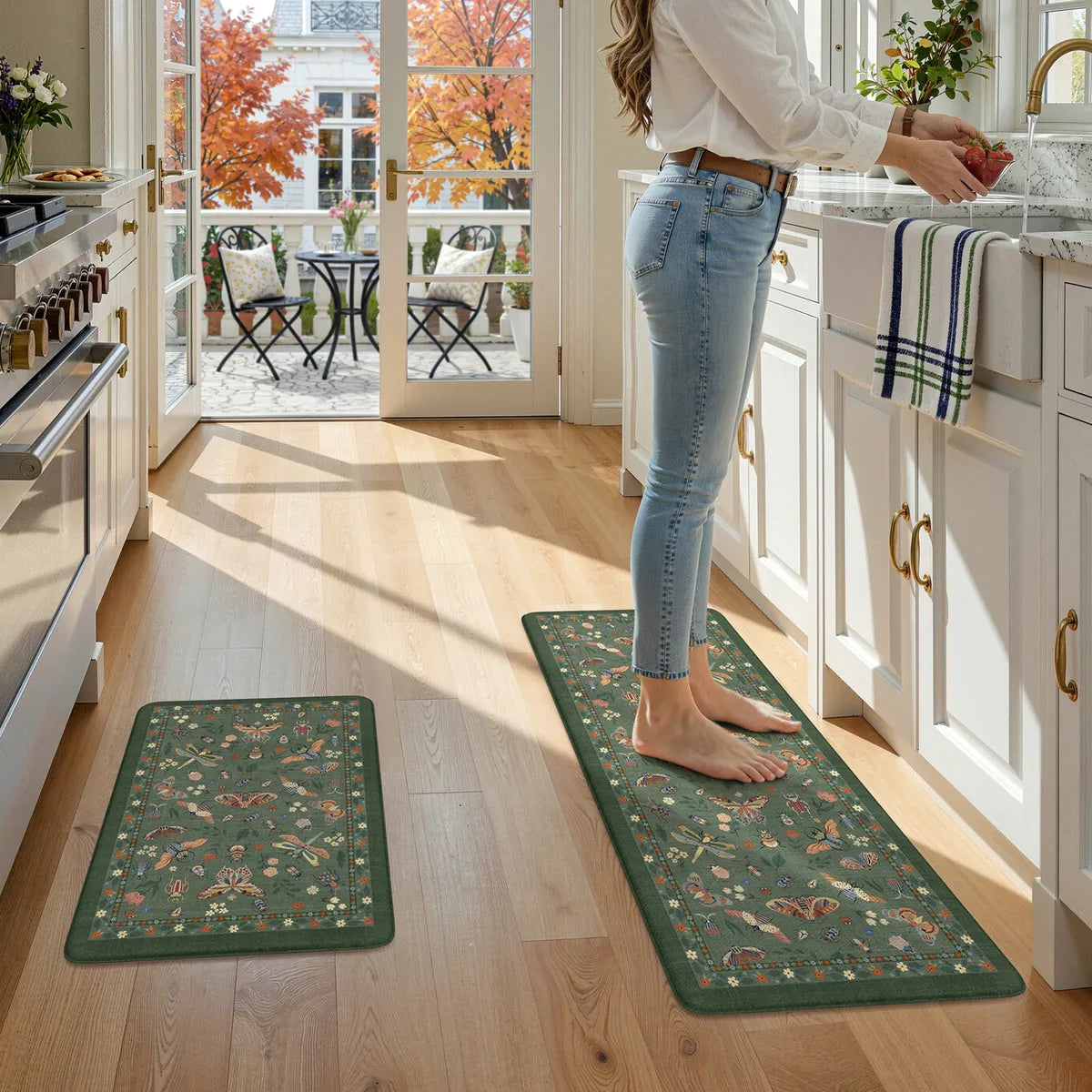
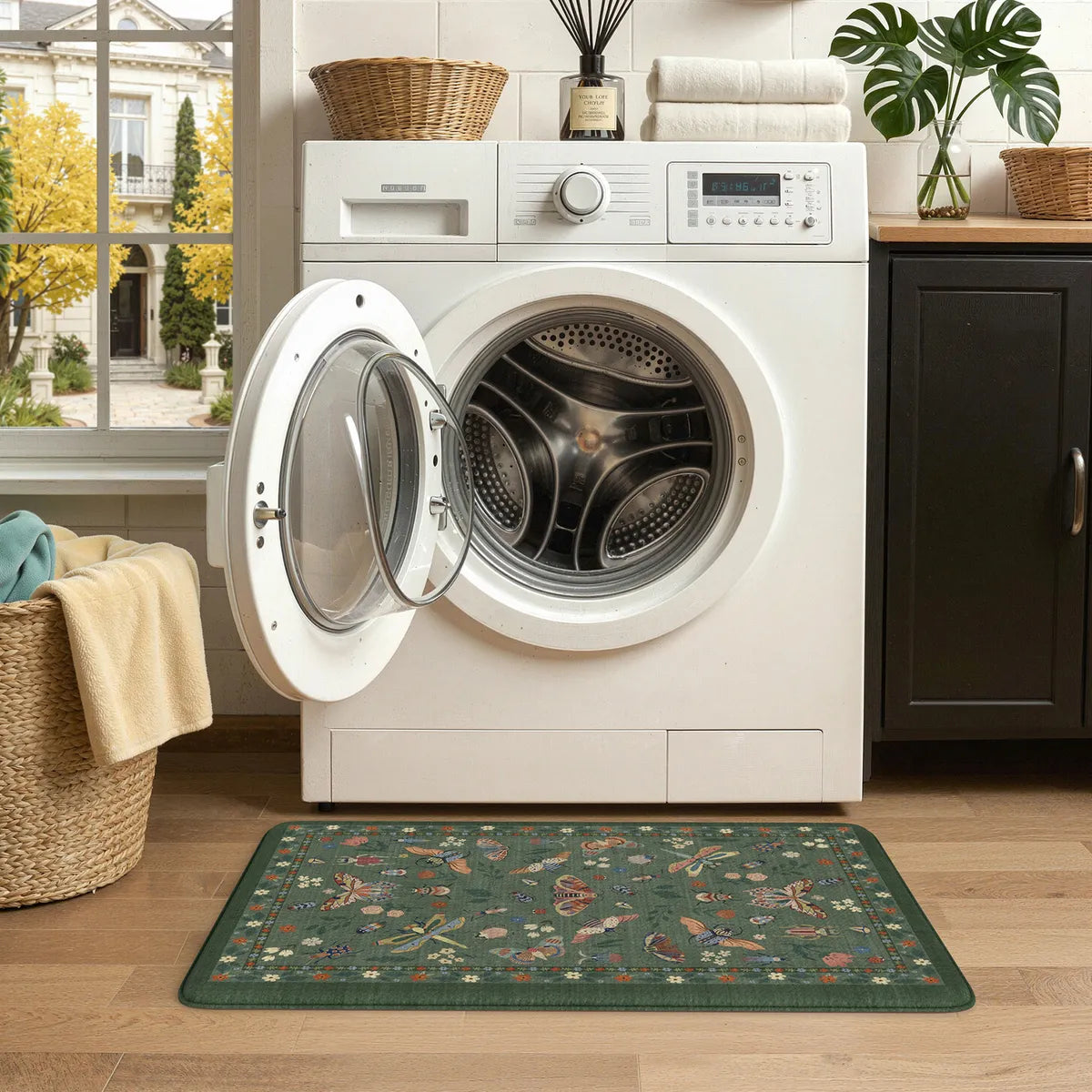
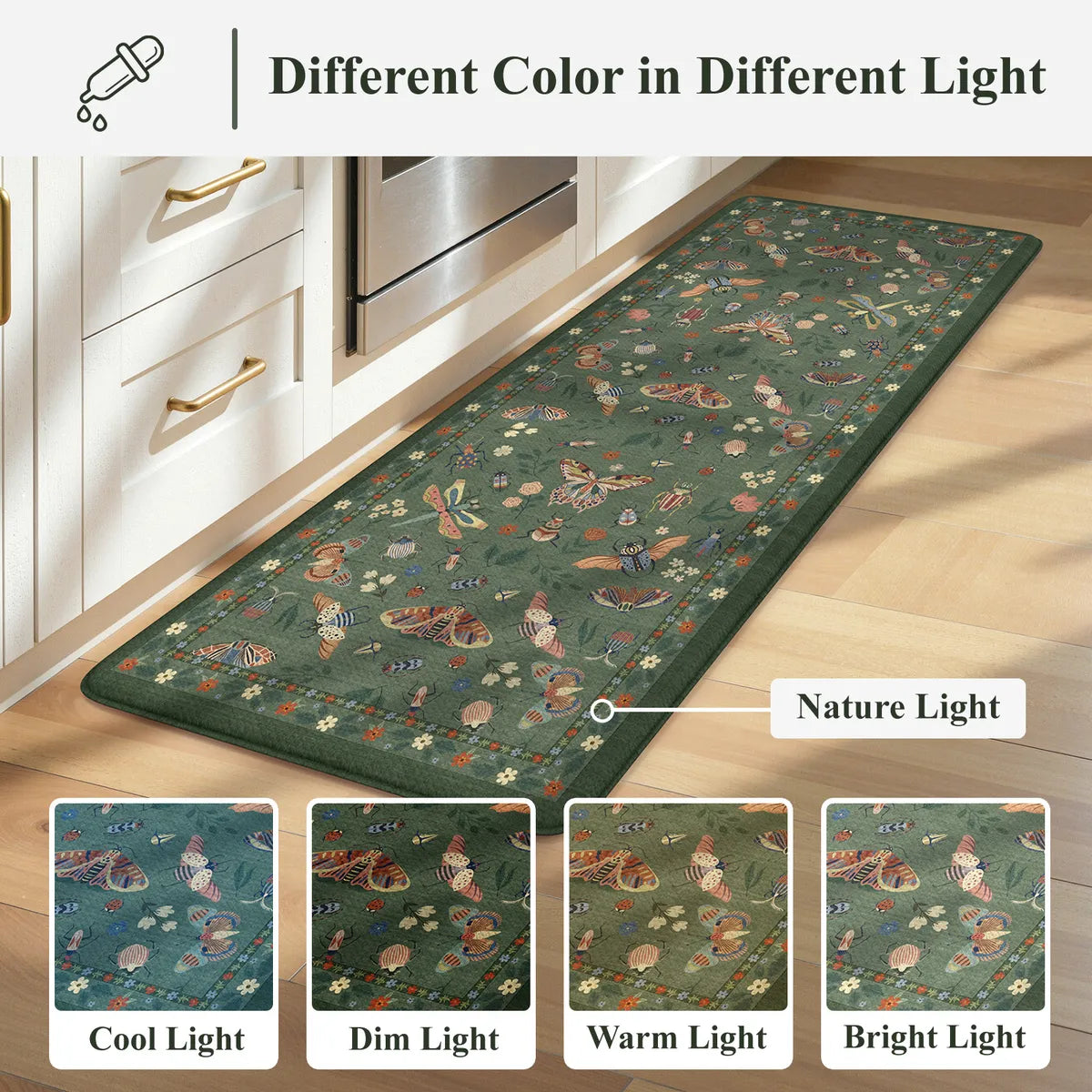
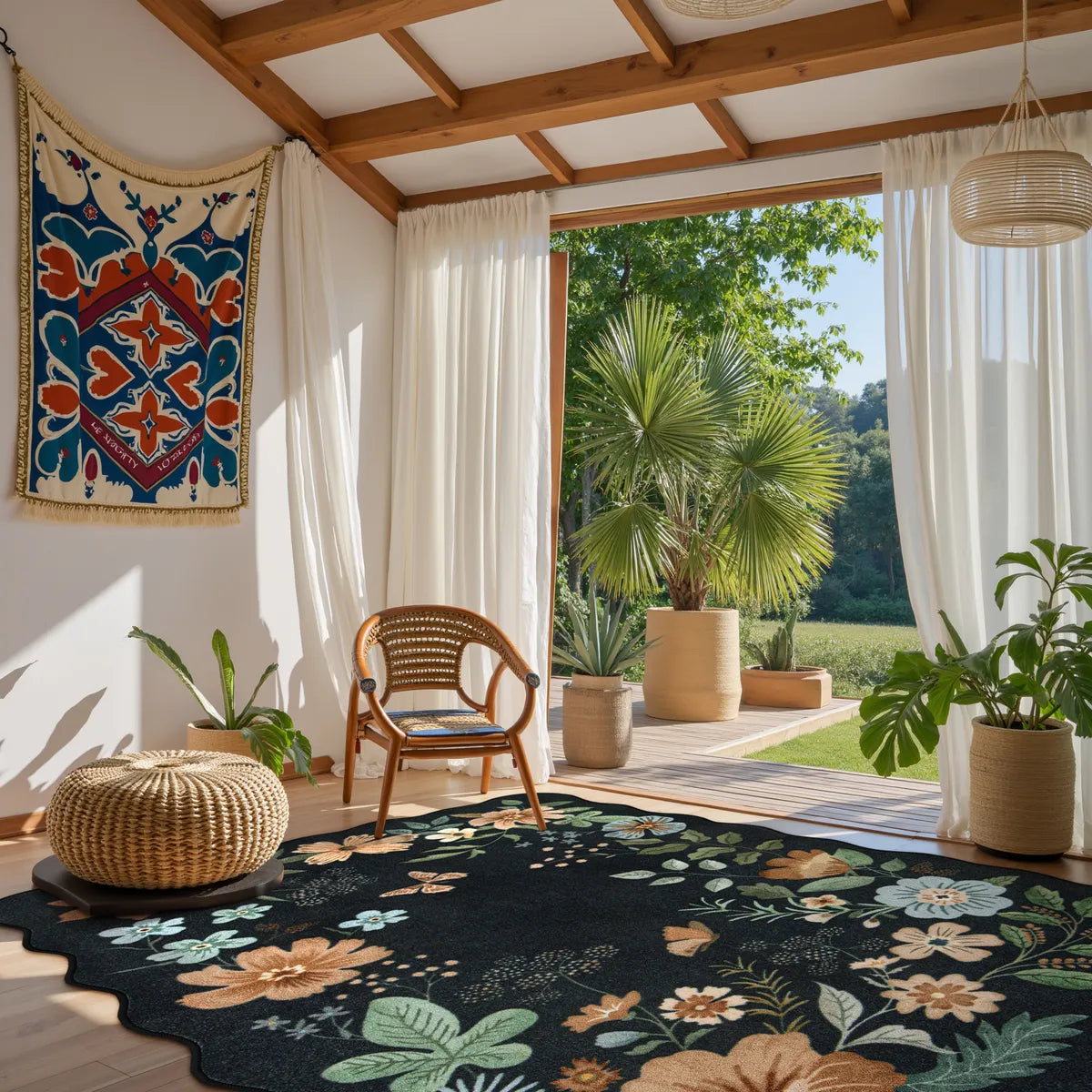
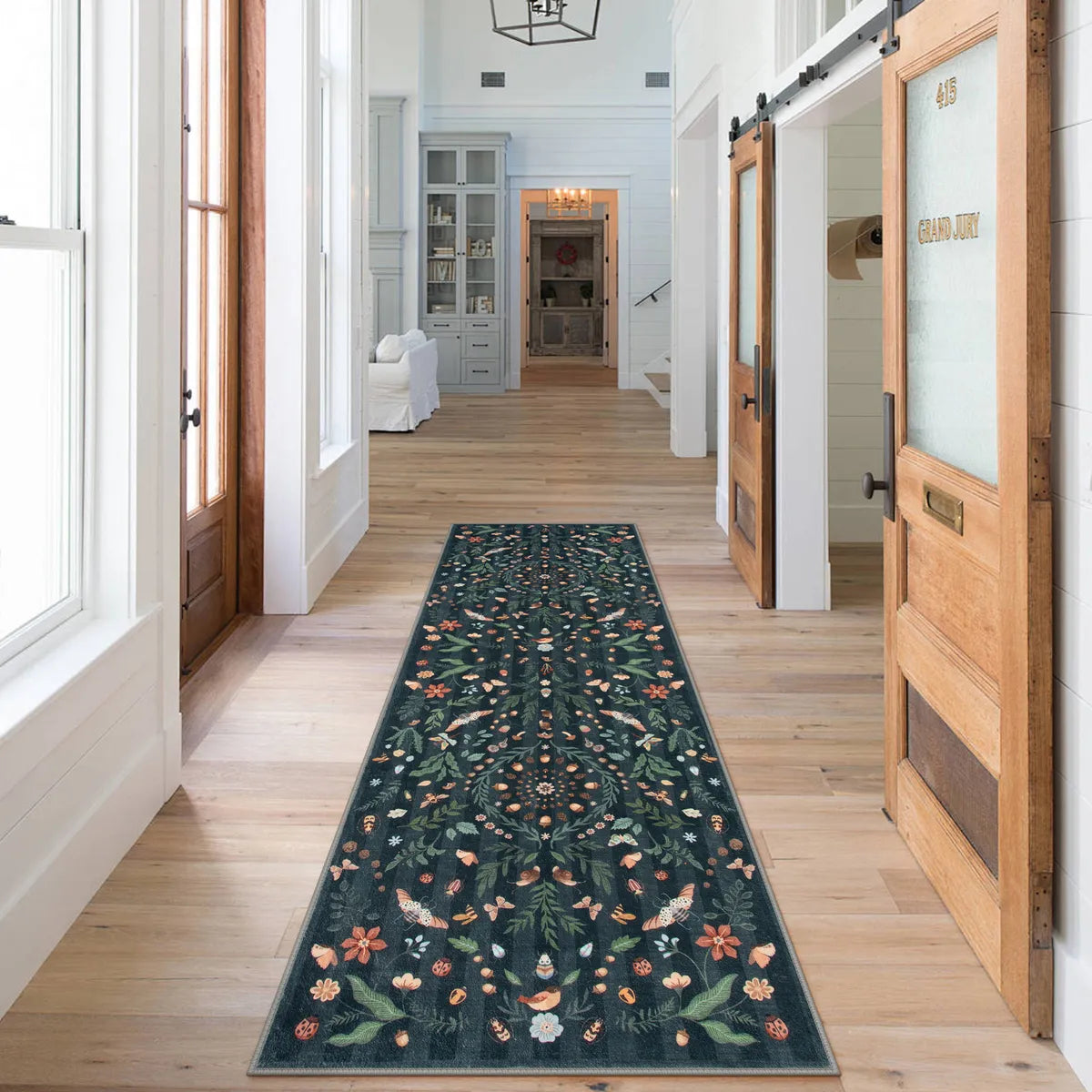
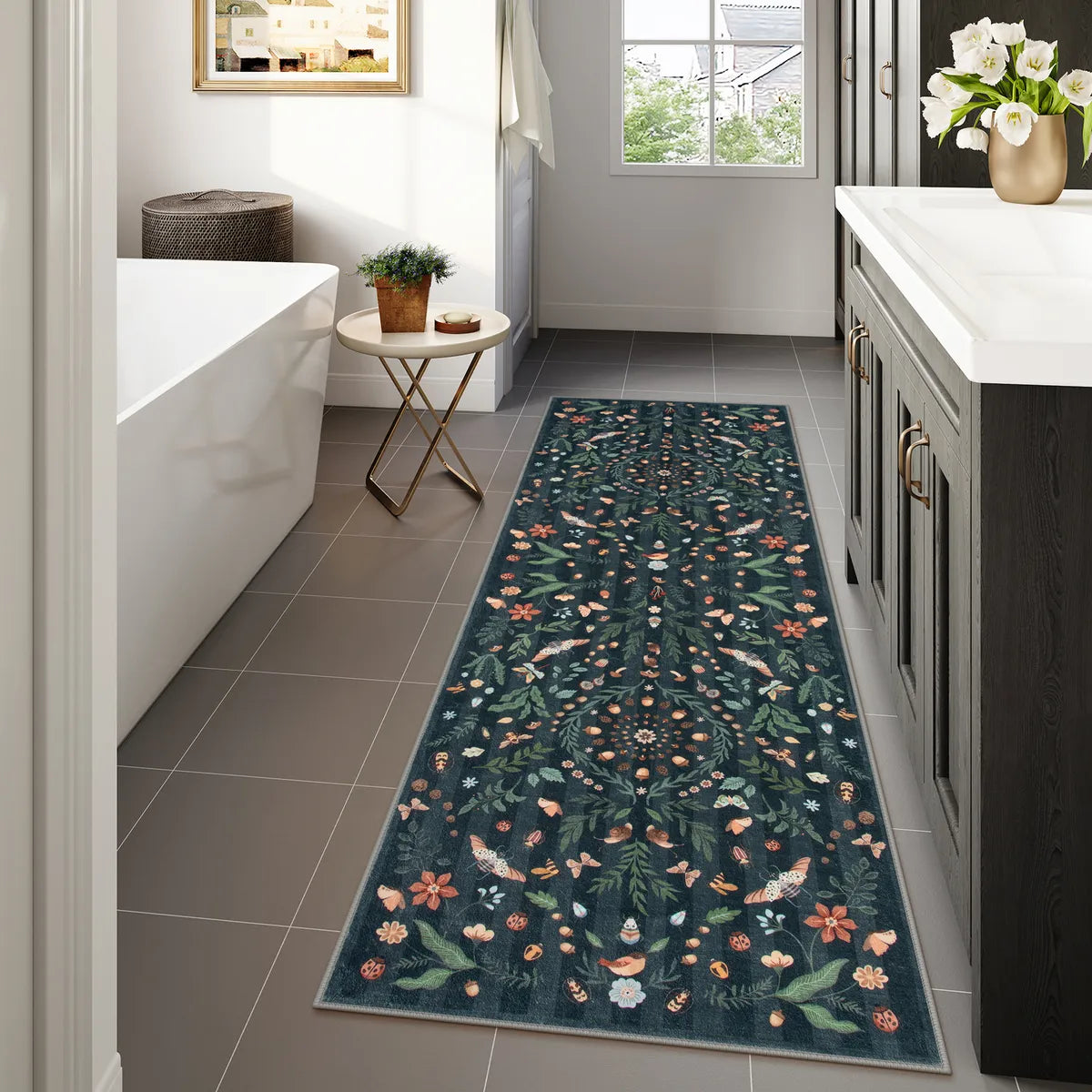
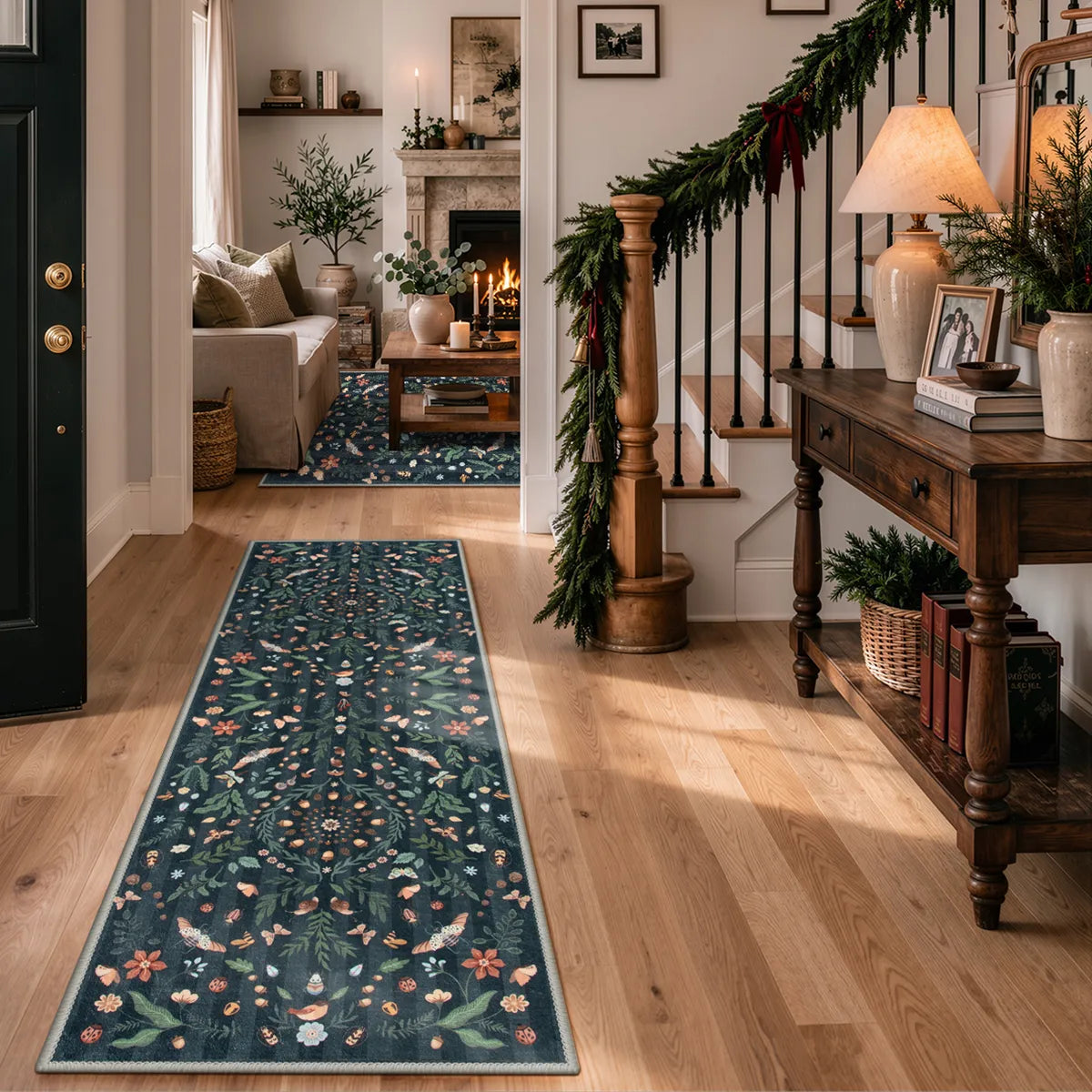
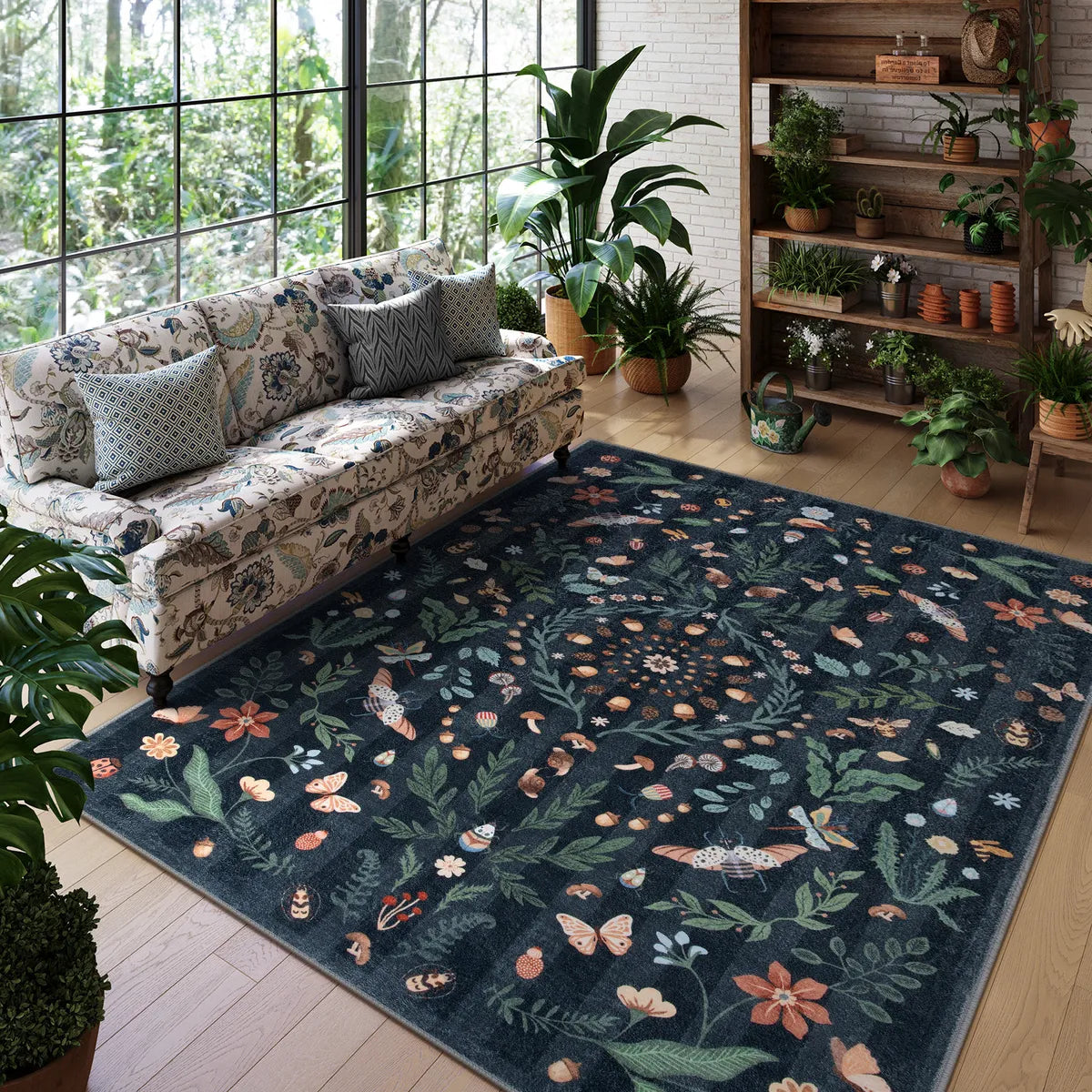
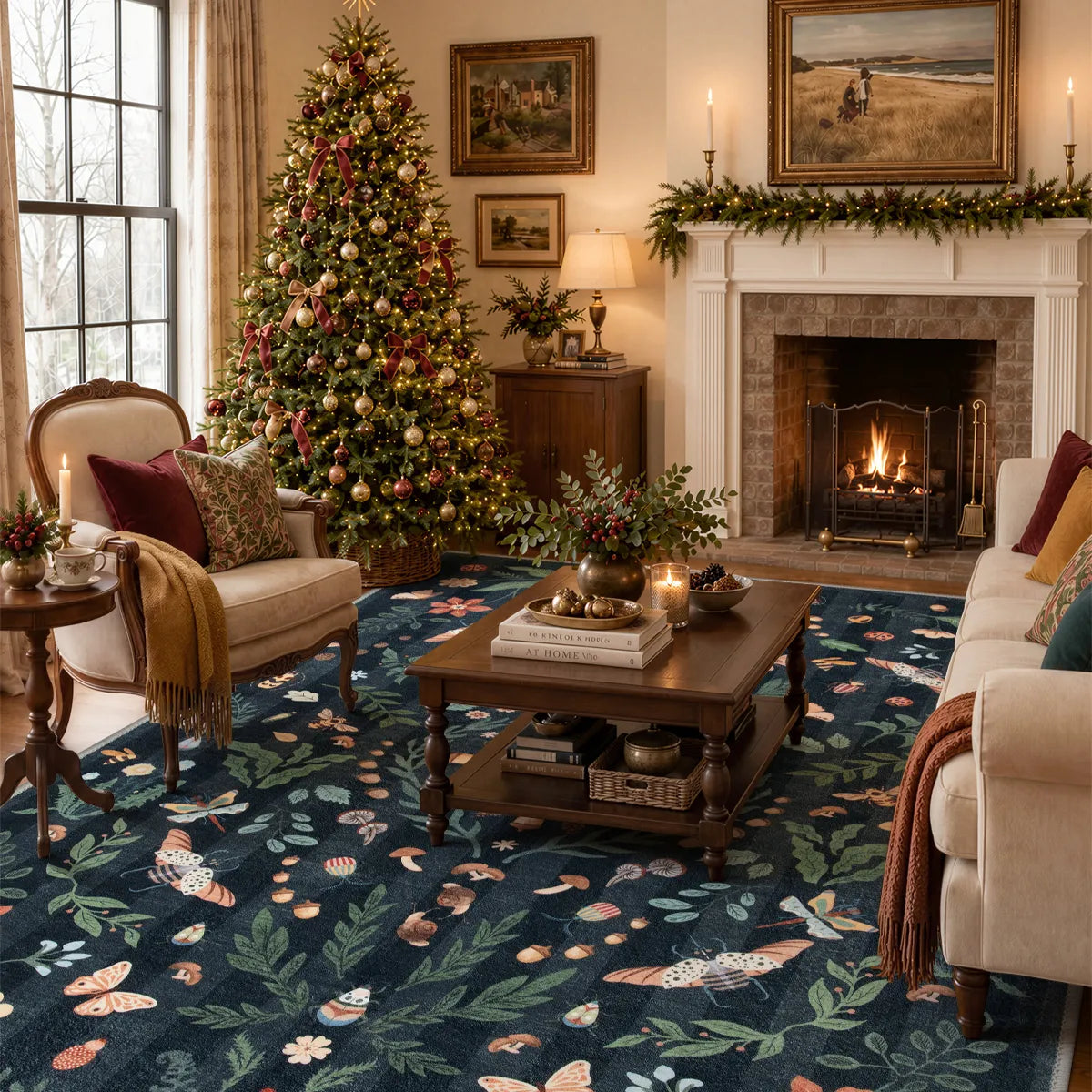
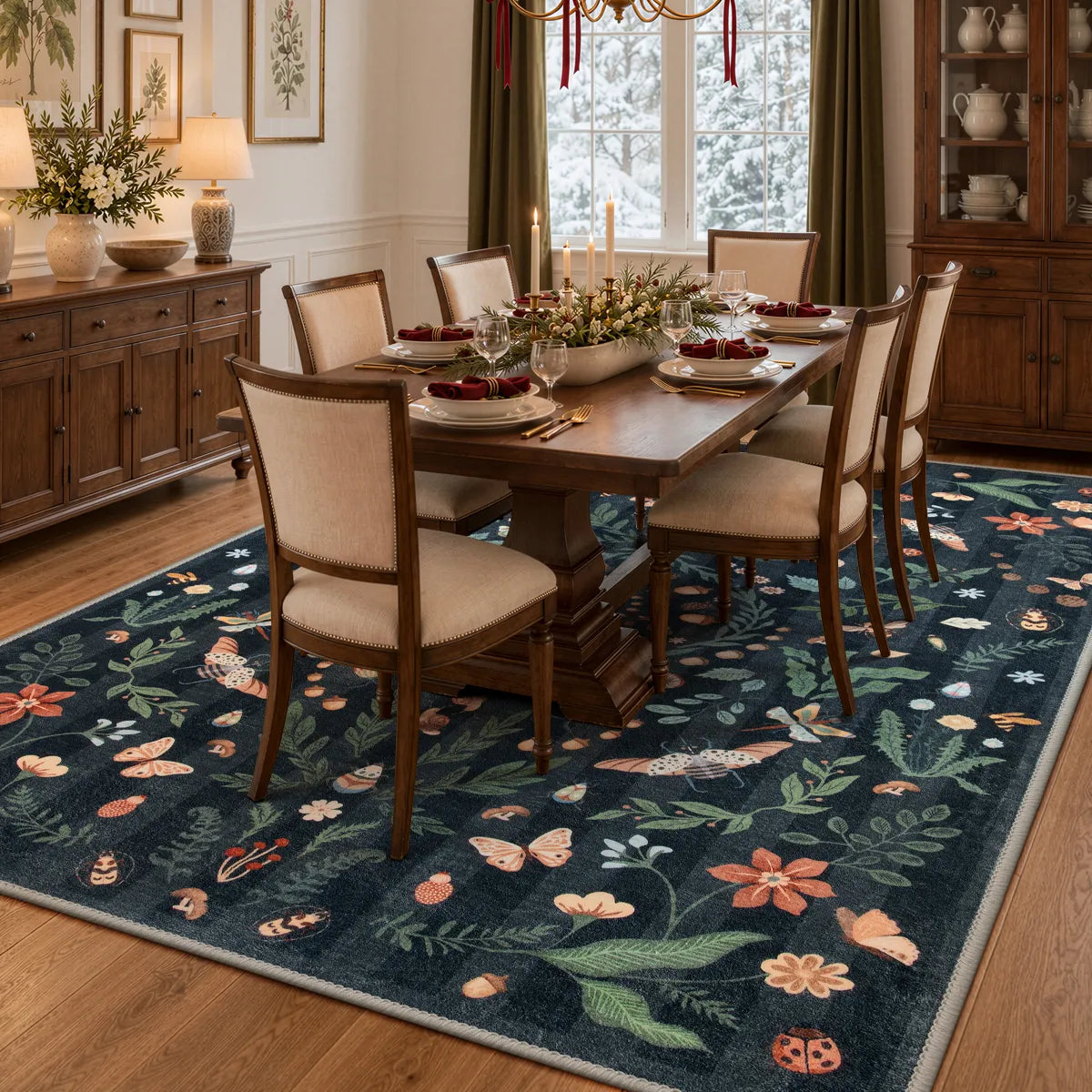
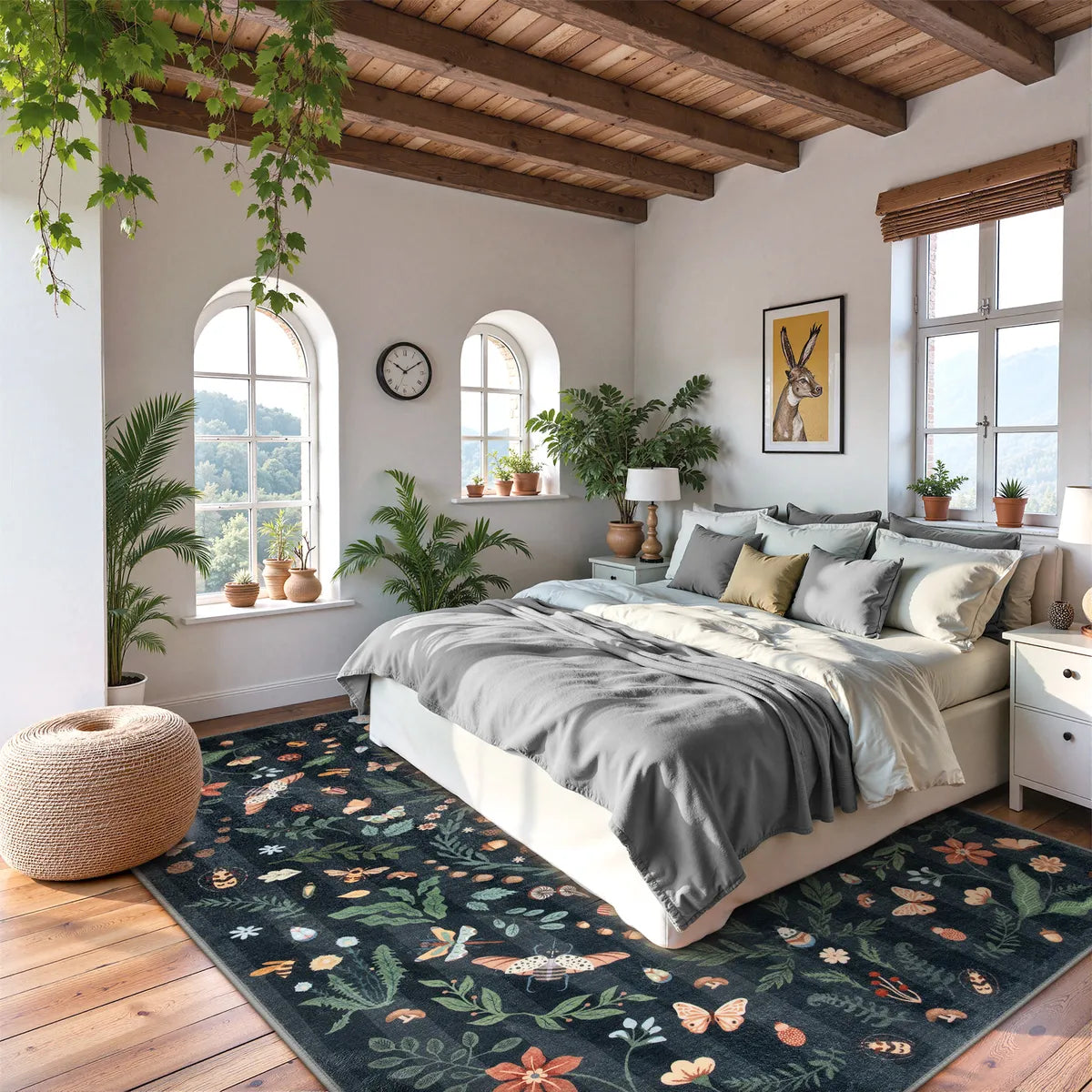
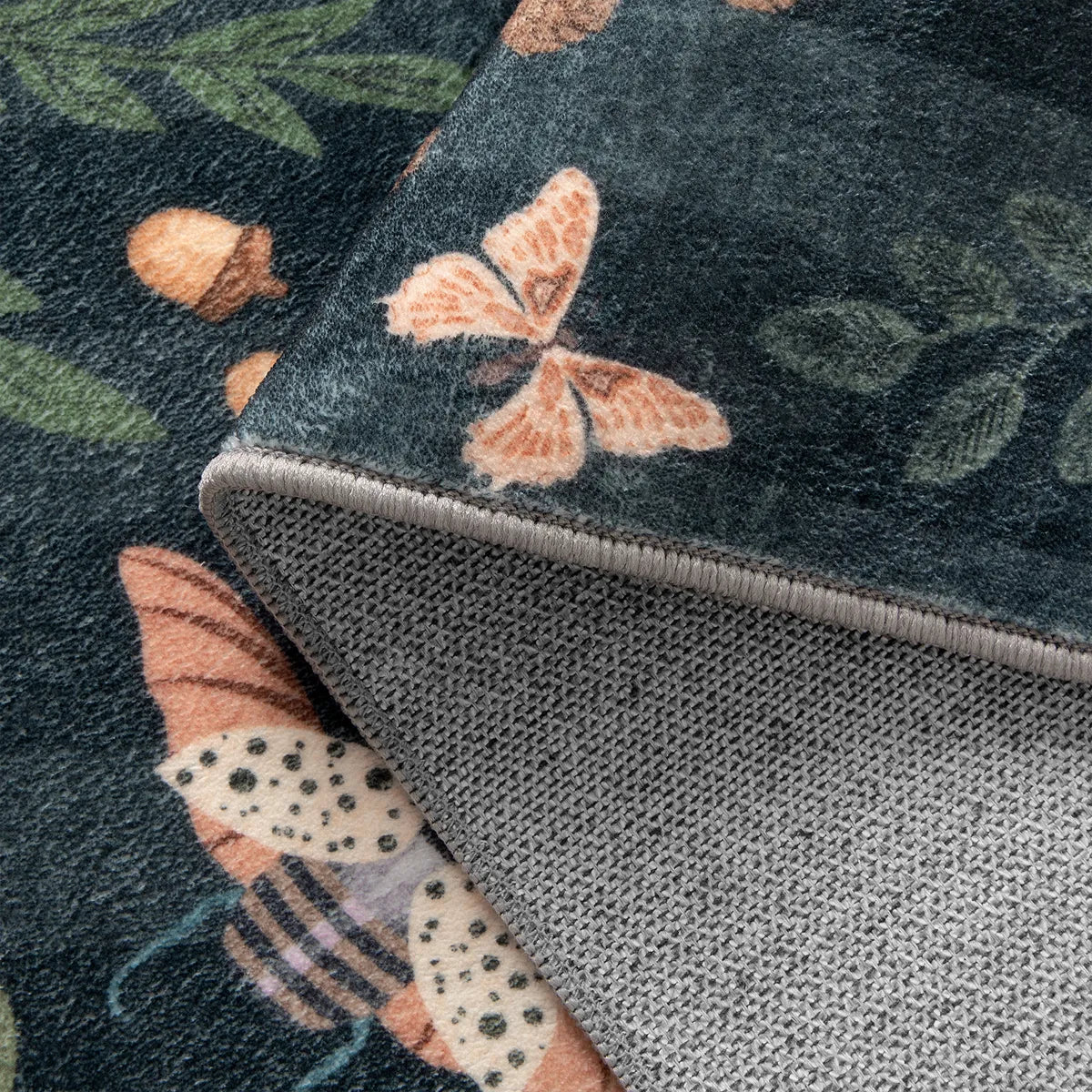
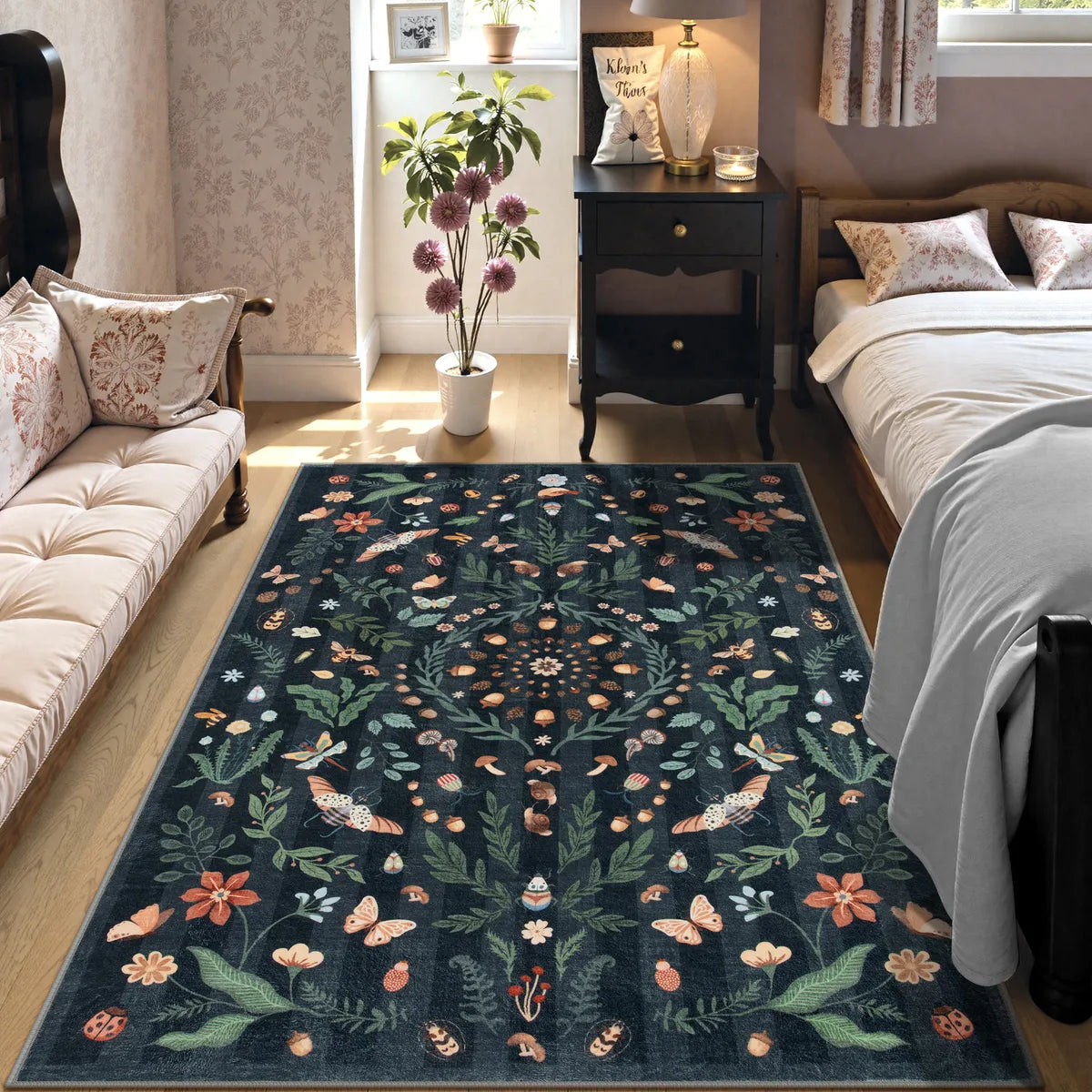
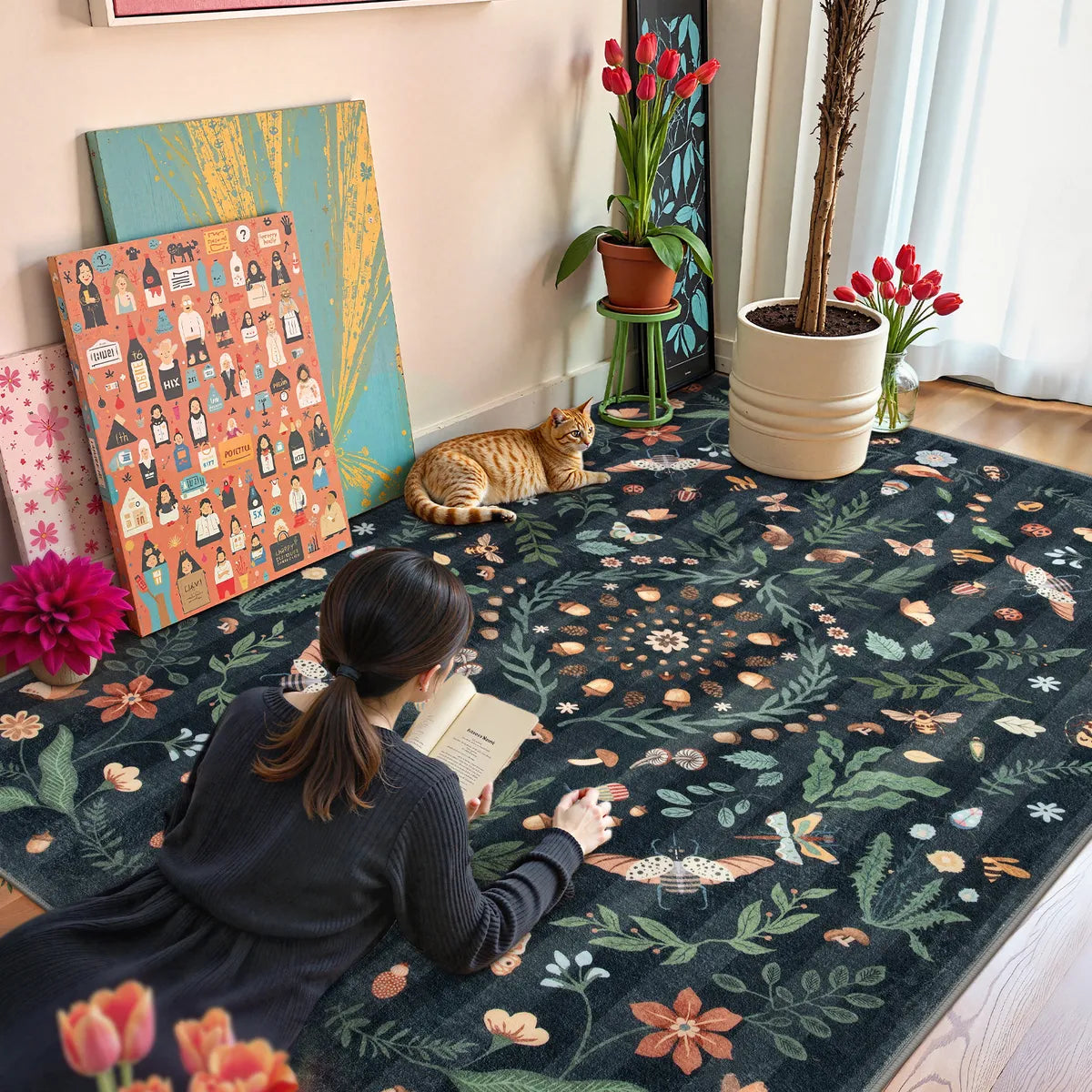
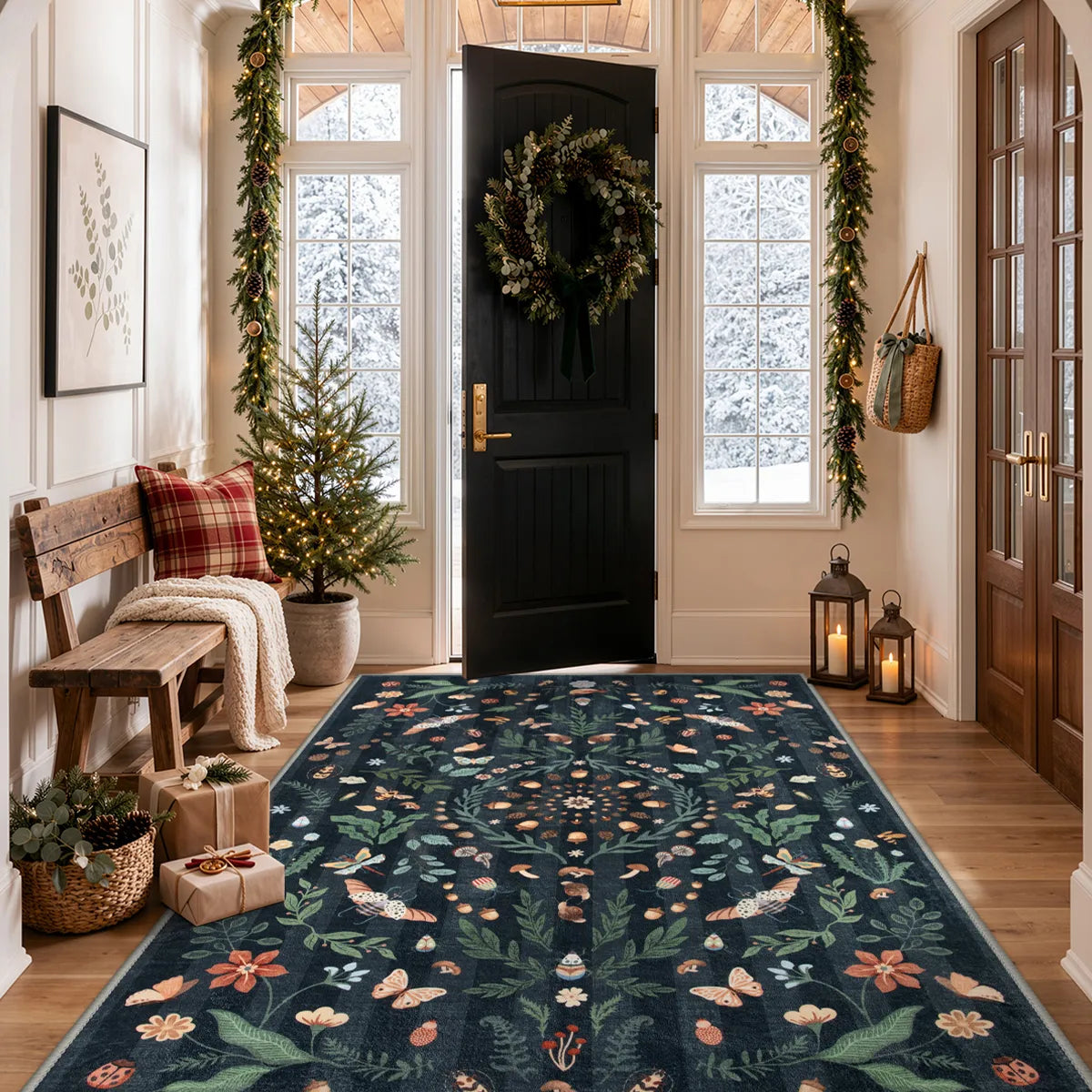
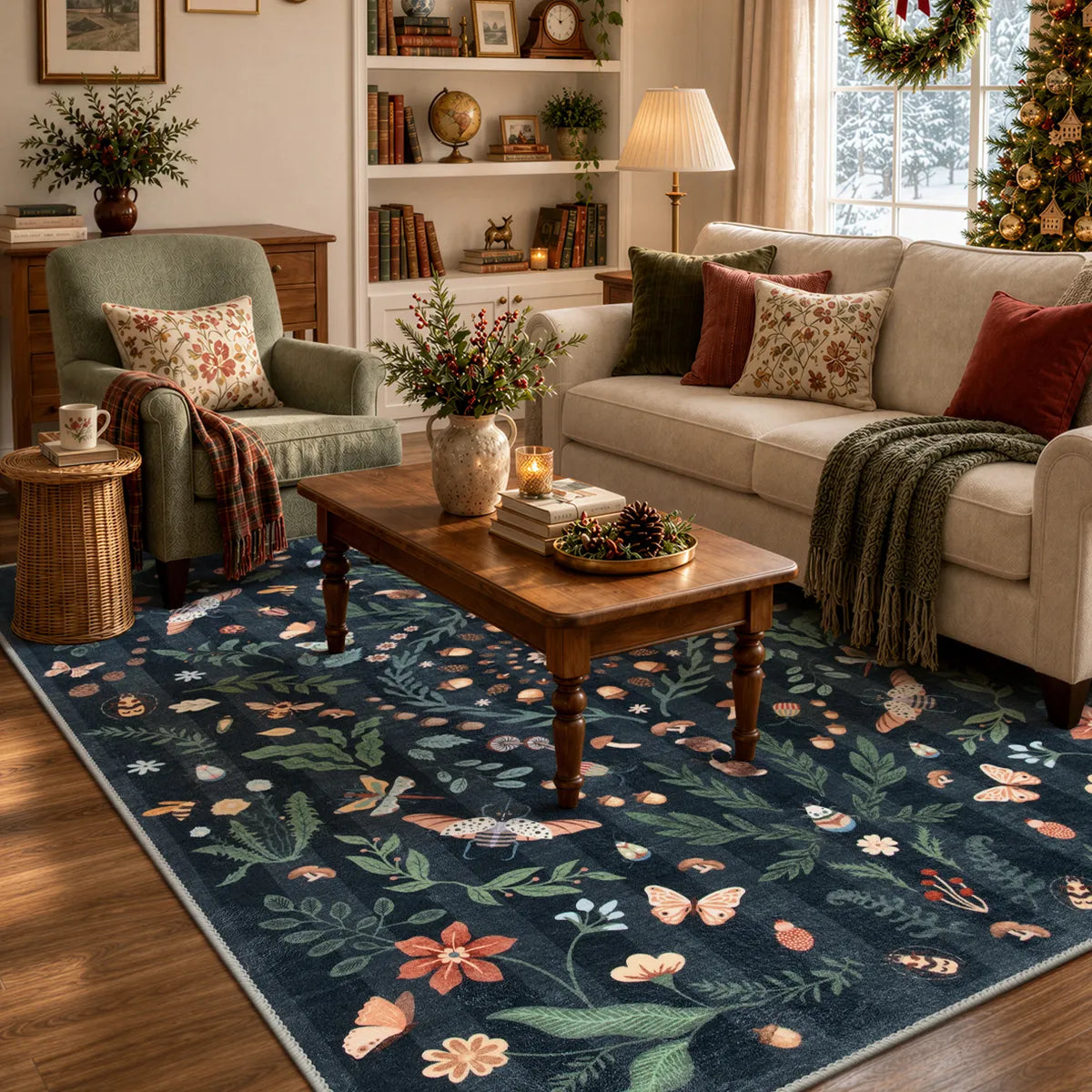
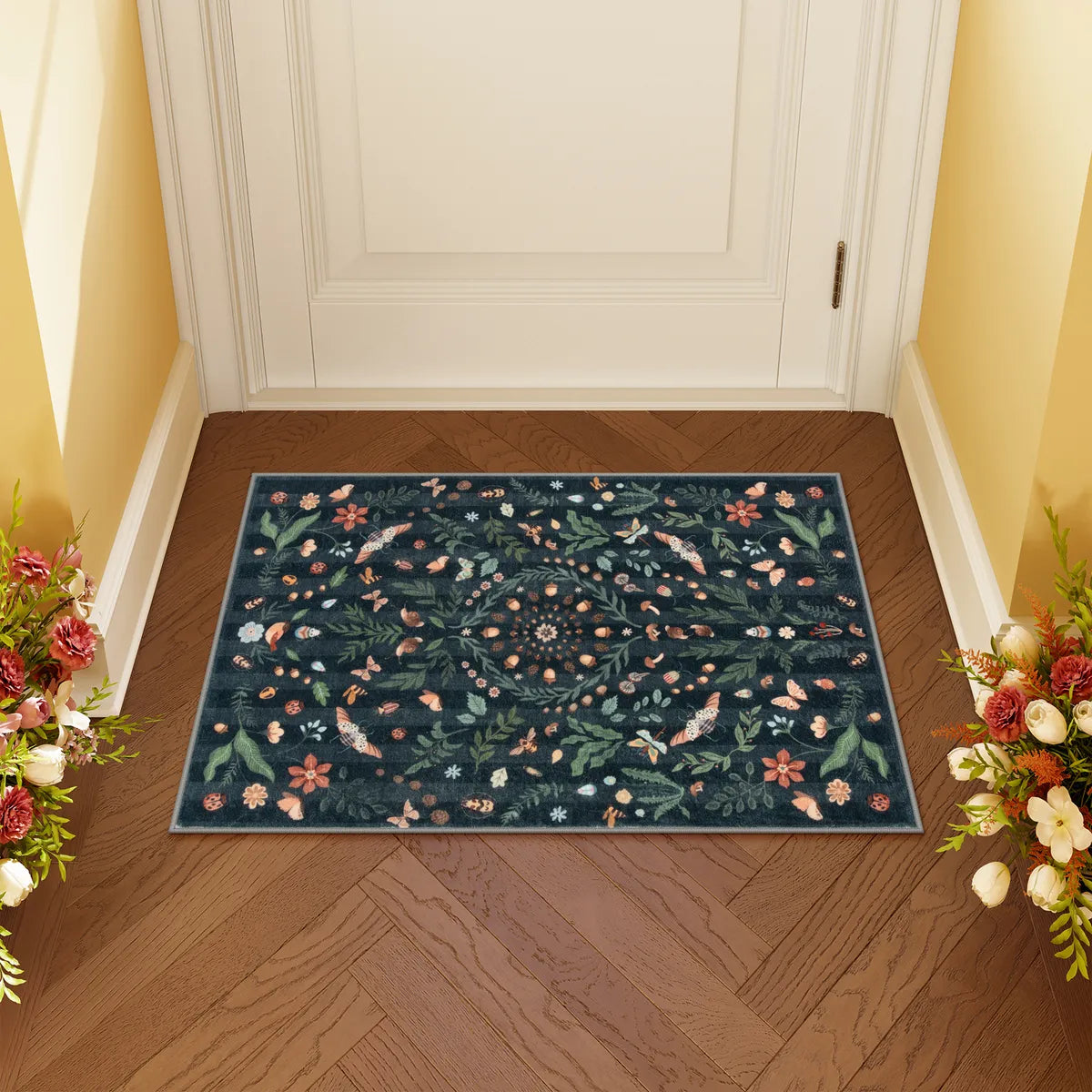
Nature-inspired patterns, including woodland scenes, animal prints, and insect or botanical illustrations, offer a more eclectic approach. They work especially well in bohemian, cottagecore, or maximalist living rooms where personal expression is central to the design.
Solid vs. Patterned Rugs for a Living Room
The choice between a solid and a patterned rug for the living room comes down to what your space already has going on.
If your furniture, throw pillows, or curtains already feature patterns, a solid rug acts as a grounding element that gives the eye a place to rest. It gives the other pieces room to stand out. If your living room has largely neutral or solid-colored furnishings, a patterned rug becomes the focal point that ties the whole space together.
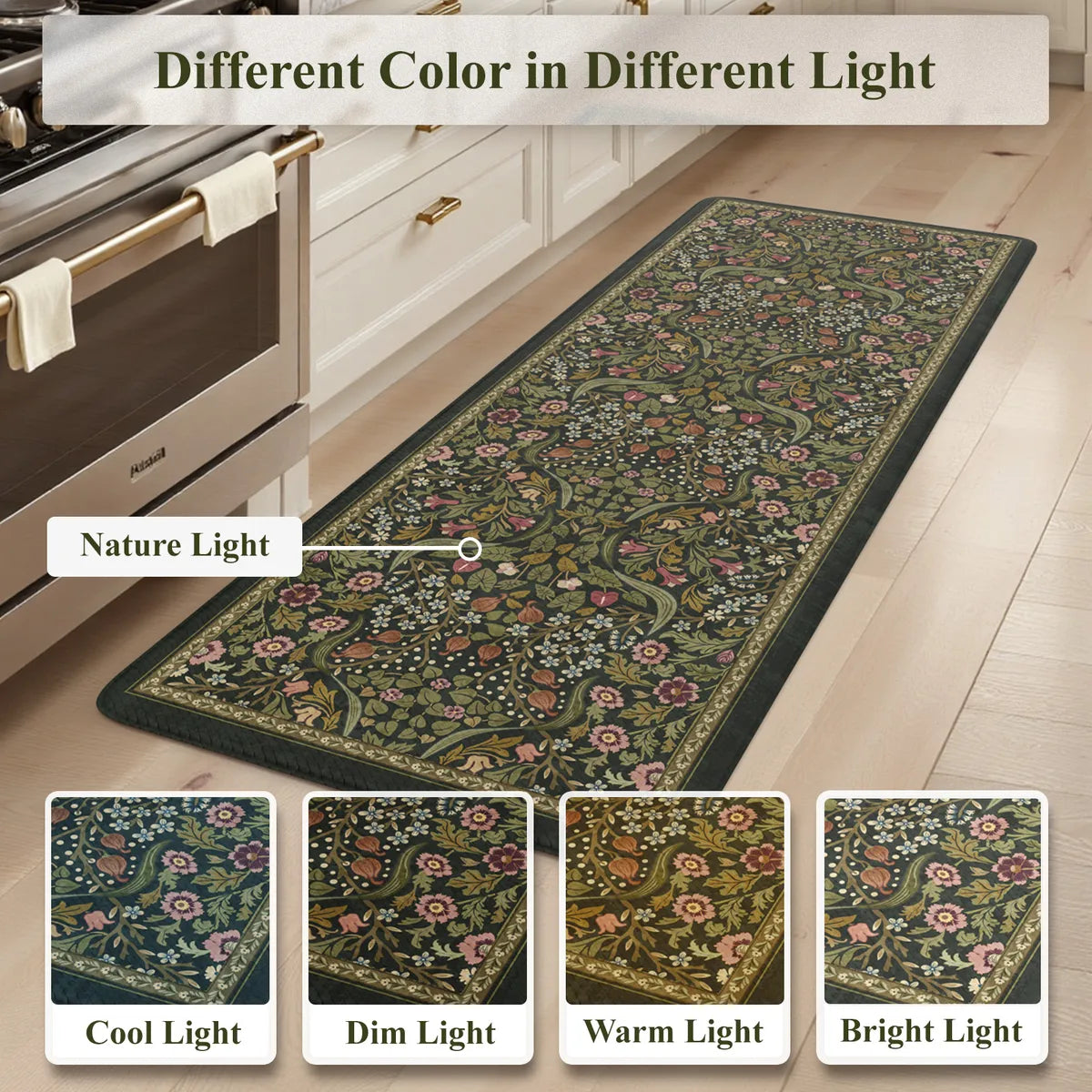
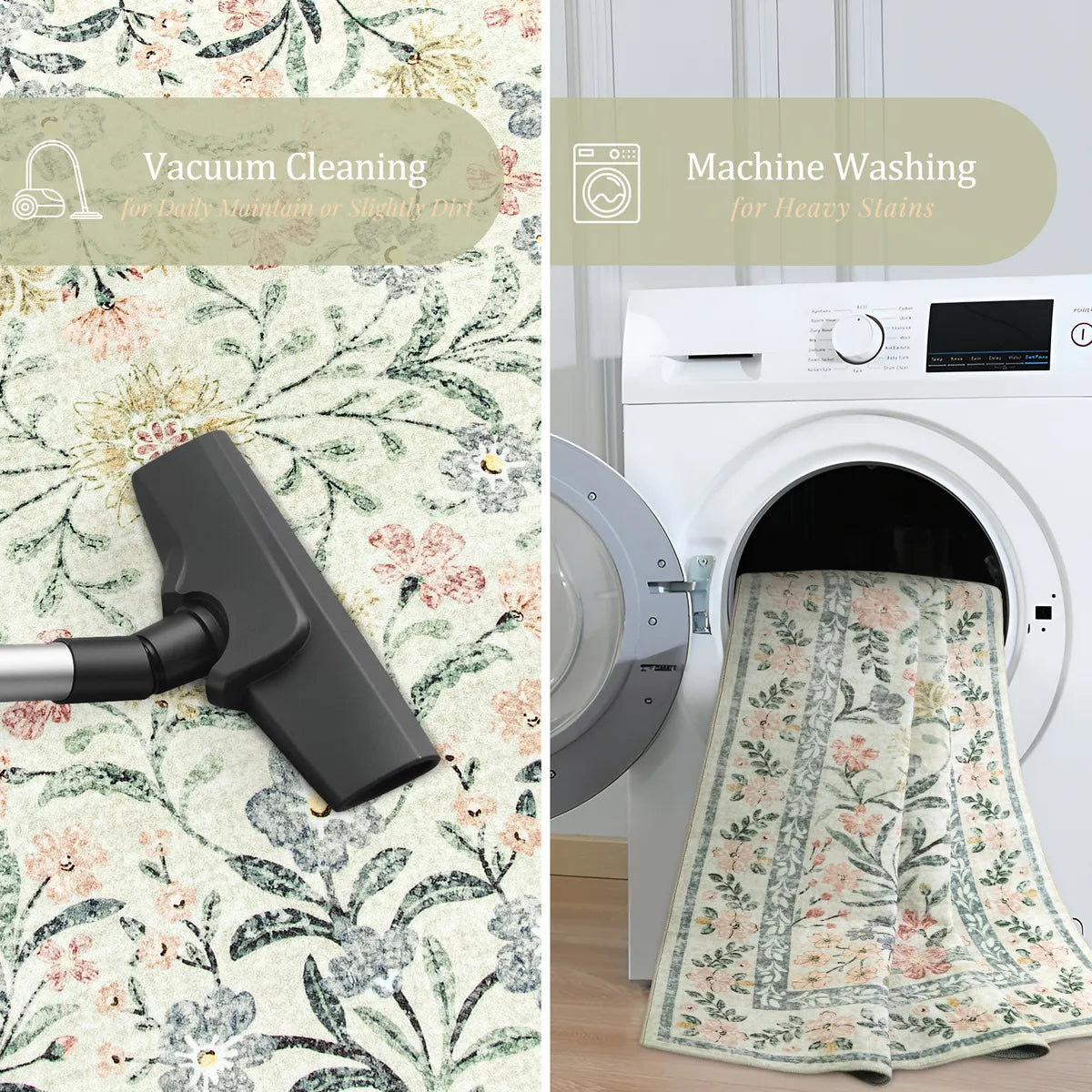
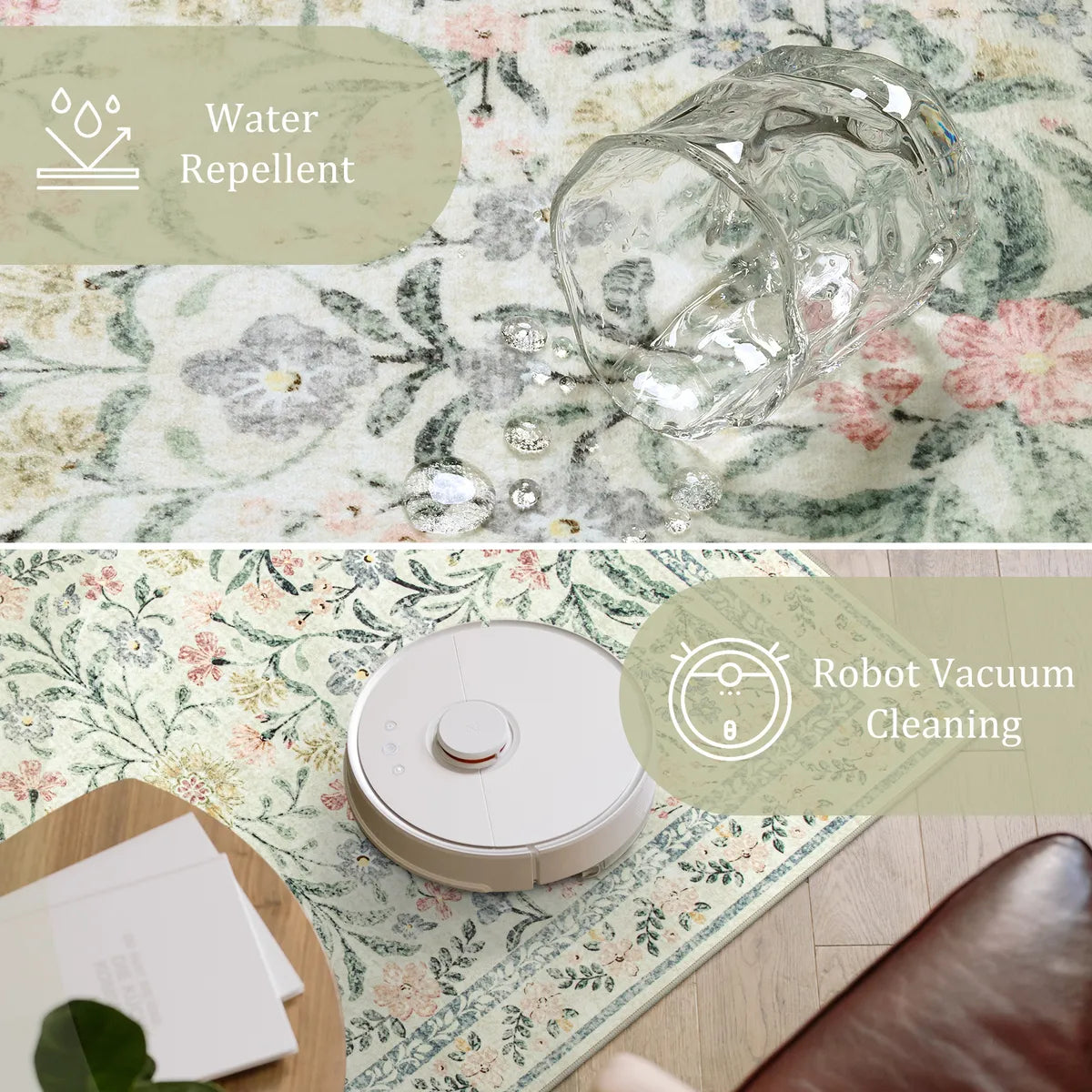
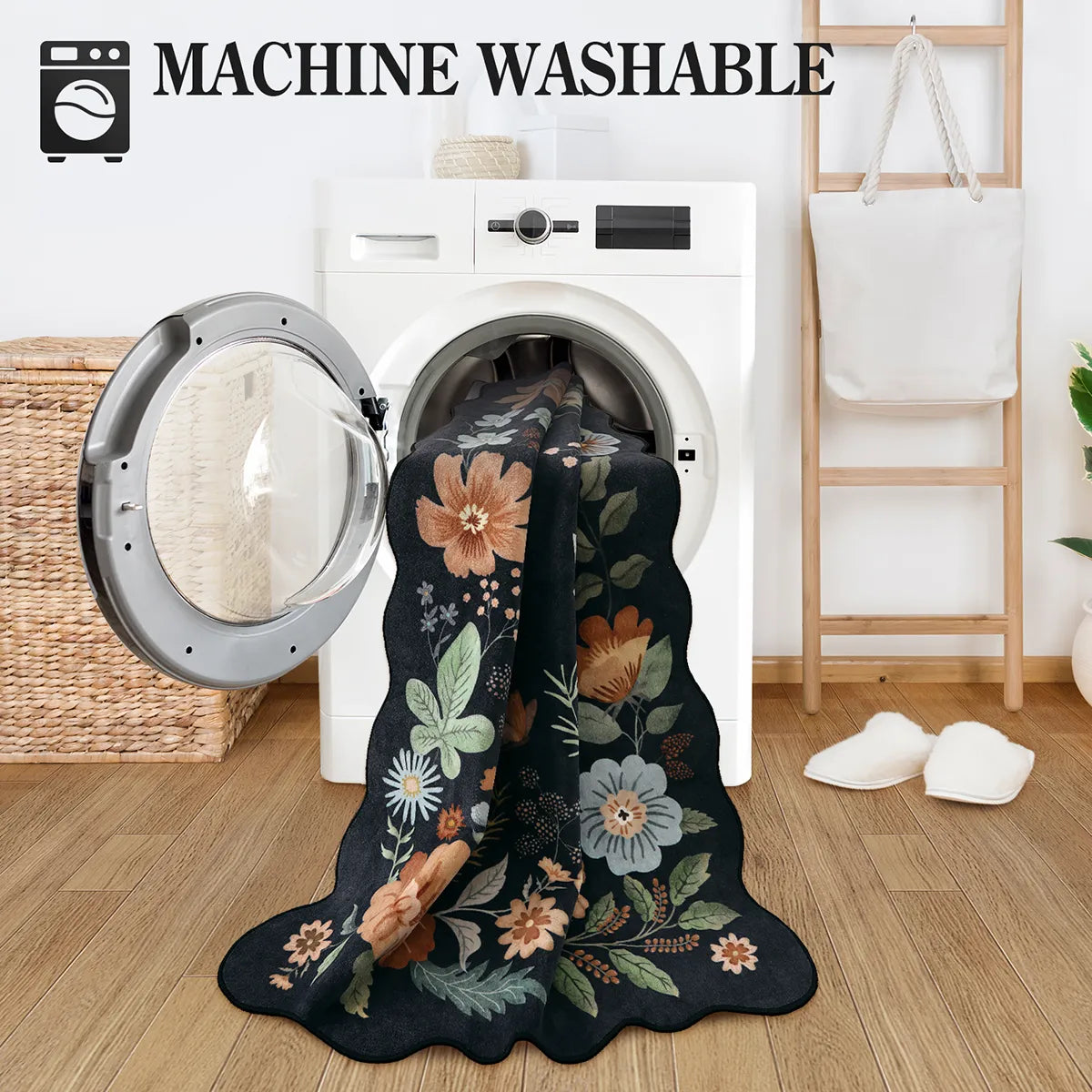
There is also a practical dimension. Patterned living room rugs naturally conceal light dirt and everyday wear between cleanings, making them a smart choice for high-traffic spaces. The more varied the design, the more forgiving the rug tends to be in daily use.
How to Match a Rug Pattern to Your Living Room
Once you have a pattern style in mind, matching it to the rest of your room is where the real decisions happen. Two factors matter most: furniture style and wall color.
Matching Rug Patterns to Furniture Style
Your furniture communicates a design language, and your rug pattern should speak the same one. The table below maps common furniture styles to the rug patterns that pair with them most naturally.
| Furniture Style | Best Rug Pattern Match | Why It Works |
| Modern / Minimalist | Geometric, Abstract | Adds visual interest while keeping clean lines |
| Bohemian / Eclectic | Floral, Botanical, Vintage tribal | Layers naturally with mixed textures and colors |
| Traditional / Classic | Persian-inspired, Vintage medallion | Shares the same historical design language |
| Farmhouse / Cottagecore | Floral, Nature-inspired, Woodland | Reinforces the organic, relaxed aesthetic |
| Contemporary | Abstract, Large-scale geometric | Feels current without being trend-dependent |
Matching your rug to your furniture style does not mean everything has to look identical. It means there is a consistent visual thread connecting the pieces in the room.
Working With Wall Colors and Existing Decor
Wall color has a strong influence on which rug patterns feel at home in a space. A few practical guidelines:
- In rooms with warm-toned walls such as creams, tans, and terracottas, rug patterns in earthy tones like rust, beige, olive, and gold create a cohesive warmth.
- In rooms with cool-toned walls such as grays, blues, and soft whites, geometric or abstract patterns in cooler palettes keep the room feeling fresh and balanced.
- In rooms with a bold accent wall, a simpler rug pattern in a complementary color lets the wall remain the focal point.
The safest starting point is to pull one or two colors from your walls and furnishings, then look for a rug pattern that includes those tones. That shared color connection is usually enough to make the whole room feel intentional and well considered.
Find the Pattern That Fits Your Living Room
The right rug pattern does not just fill floor space. It sets the tone for the entire room, anchors the furniture, and reflects the kind of space you want to live in. Whether you are drawn to bold geometric shapes, layered florals, or something vintage and storied, the best living room rugs are the ones that feel made for your space. Start with your furniture style, factor in your wall colors, and let the pattern bring the room together.
FAQs about patterned living room rugs
Q1. Can You Use More Than One Patterned Rug in a Living Room?
Yes, layering patterned rugs is a recognized interior styling technique. The key is varying the scale of the patterns: pair a large-scale rug with a smaller accent rug that has a finer, more detailed design. Keeping at least one color consistent between the two patterns helps the layered look feel intentional rather than busy.
Q2. Do Darker or Lighter Rug Patterns Work Better in Small Living Rooms?
Both can work, but pattern scale matters more than color depth. A large-scale pattern draws the eye across the rug's surface, which makes a small room feel more open regardless of the colorway. Medium to large rug patterns generally perform better in compact spaces than very small, densely repeating designs.
Q3. How Do I Know What Size Rug to Get for a Patterned Living Room?
The standard rule is to choose a rug large enough for the front legs of all the main seating pieces to rest on it. For most living rooms, this means at least an 8x10 foot rug. Sizing up is almost always better than sizing down, since a rug that is too small visually shrinks the seating area rather than anchoring it.
Q4. Are Vintage and Traditional Rug Patterns Only for Formal Living Rooms?
Not at all. Vintage and traditional rug patterns, including tribal motifs, Persian-inspired designs, and classic botanical prints, work just as well in casual and relaxed living rooms. Paired with softer furniture and natural textures like rattan or linen, these patterns add character and warmth rather than formality. The overall mood depends more on the surrounding furniture and styling than on the pattern itself.