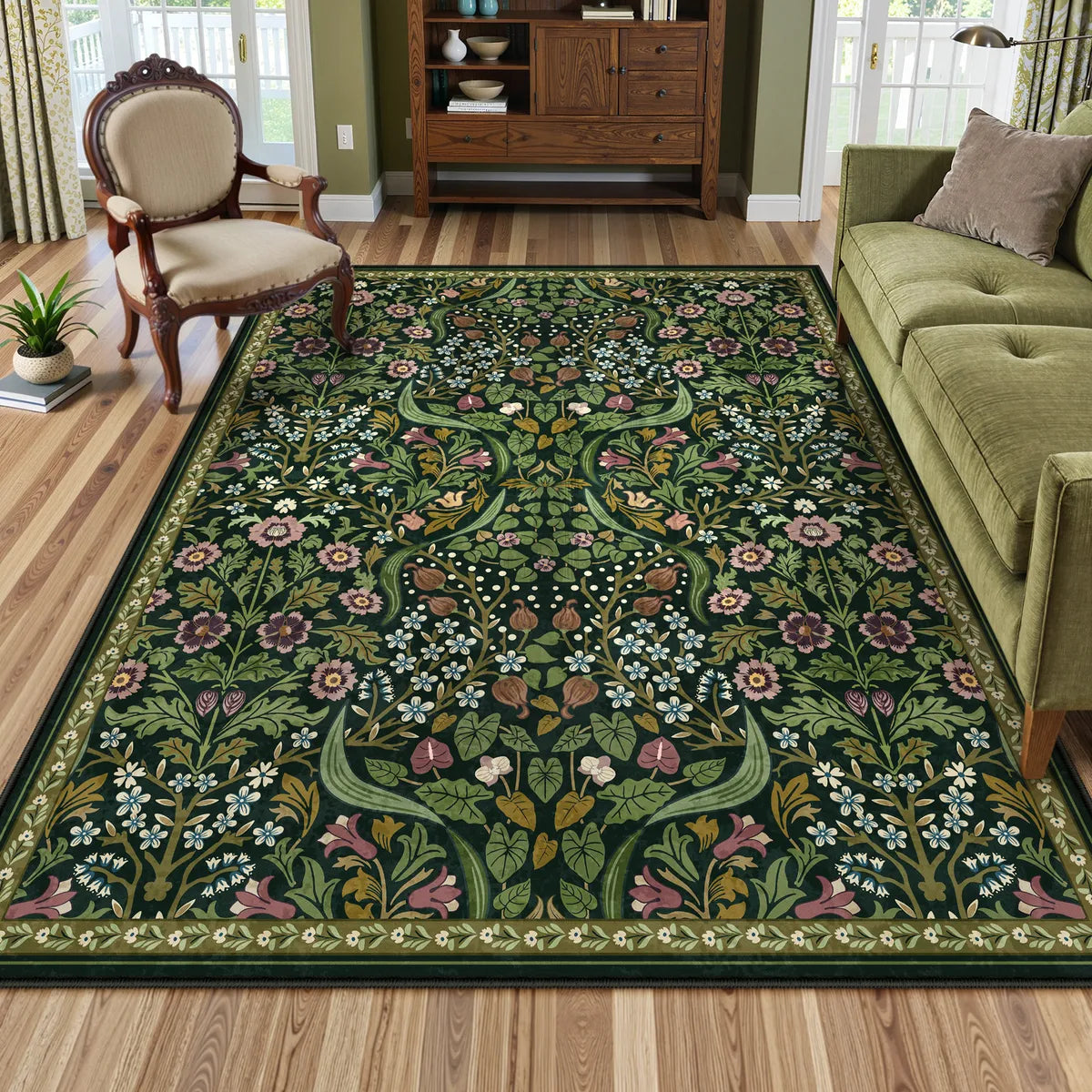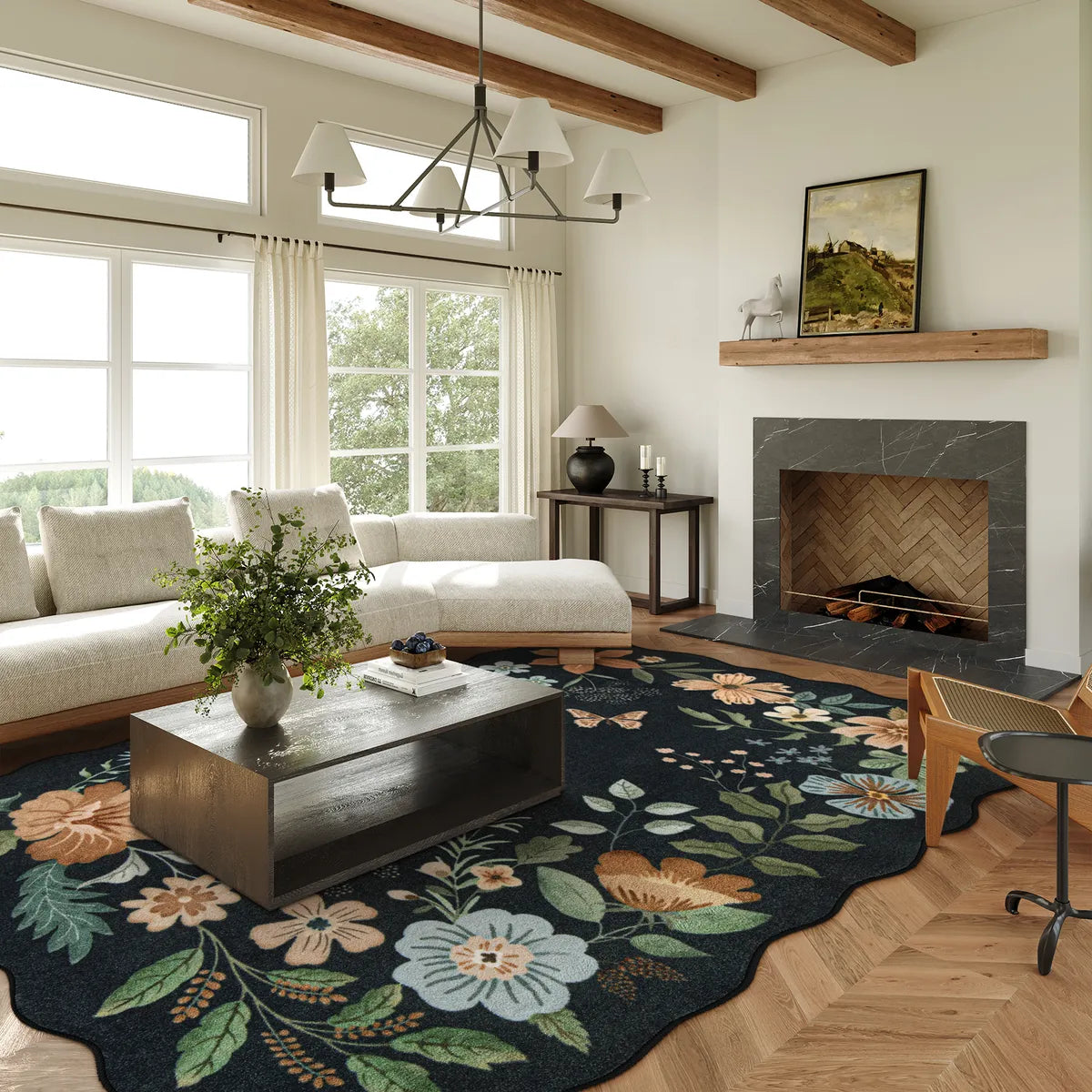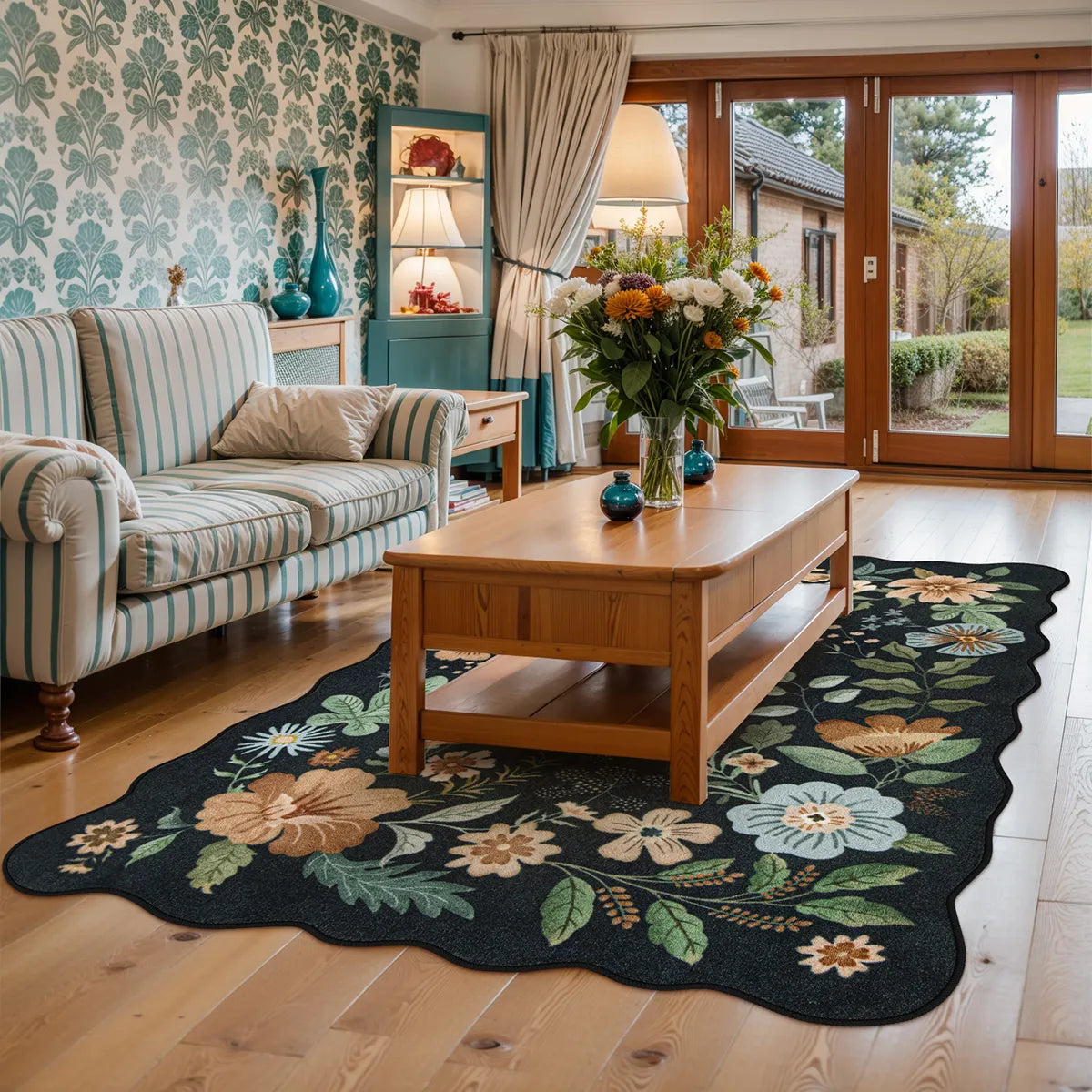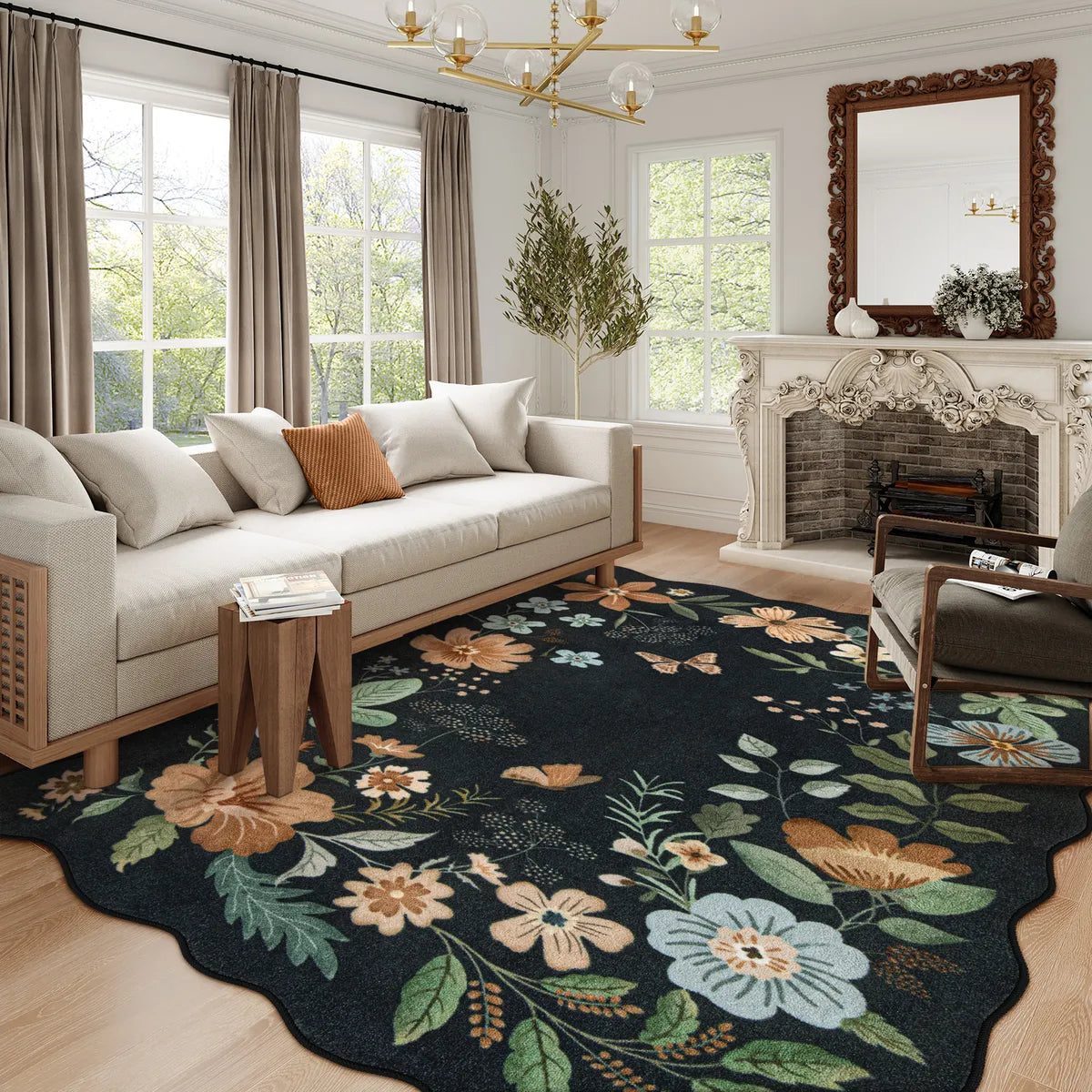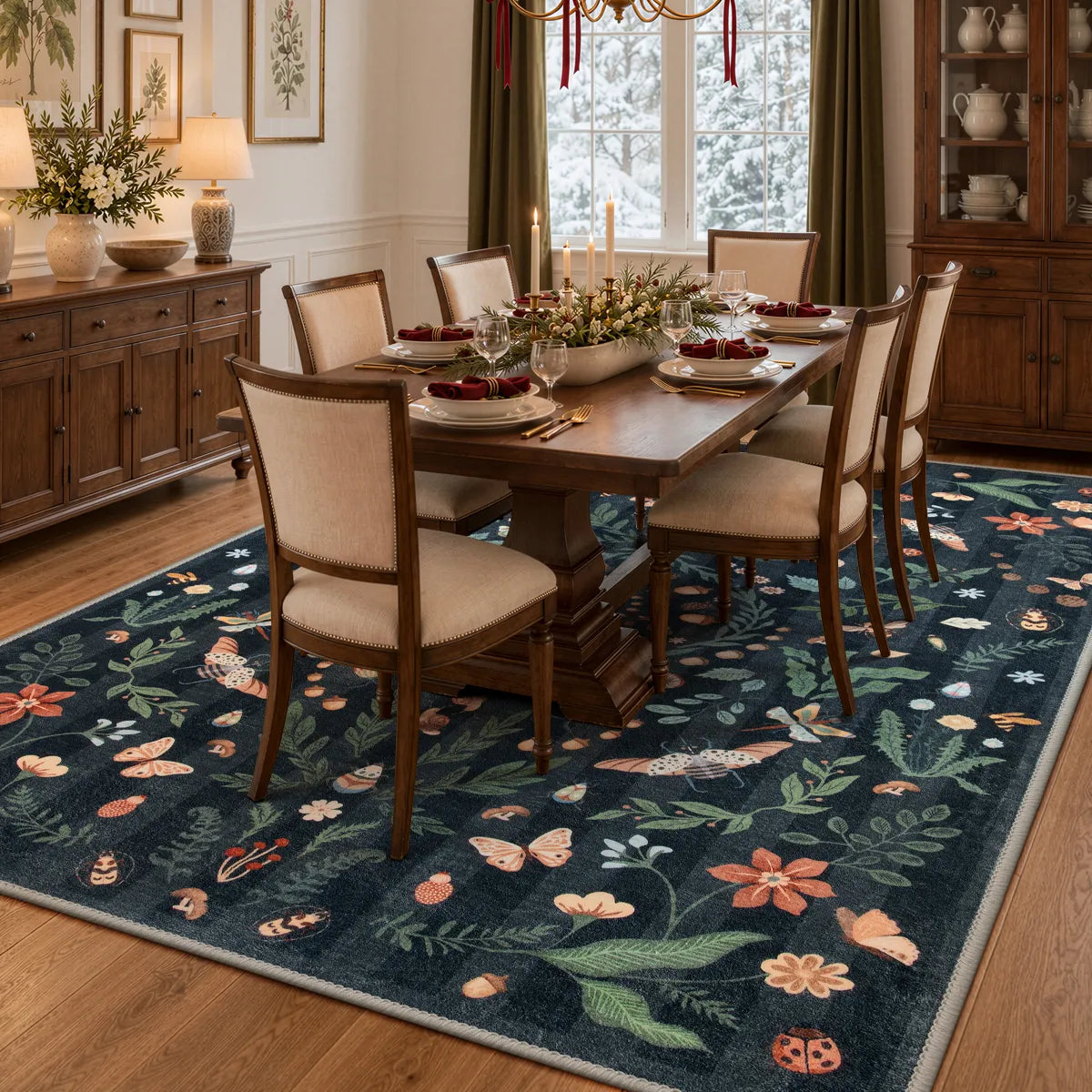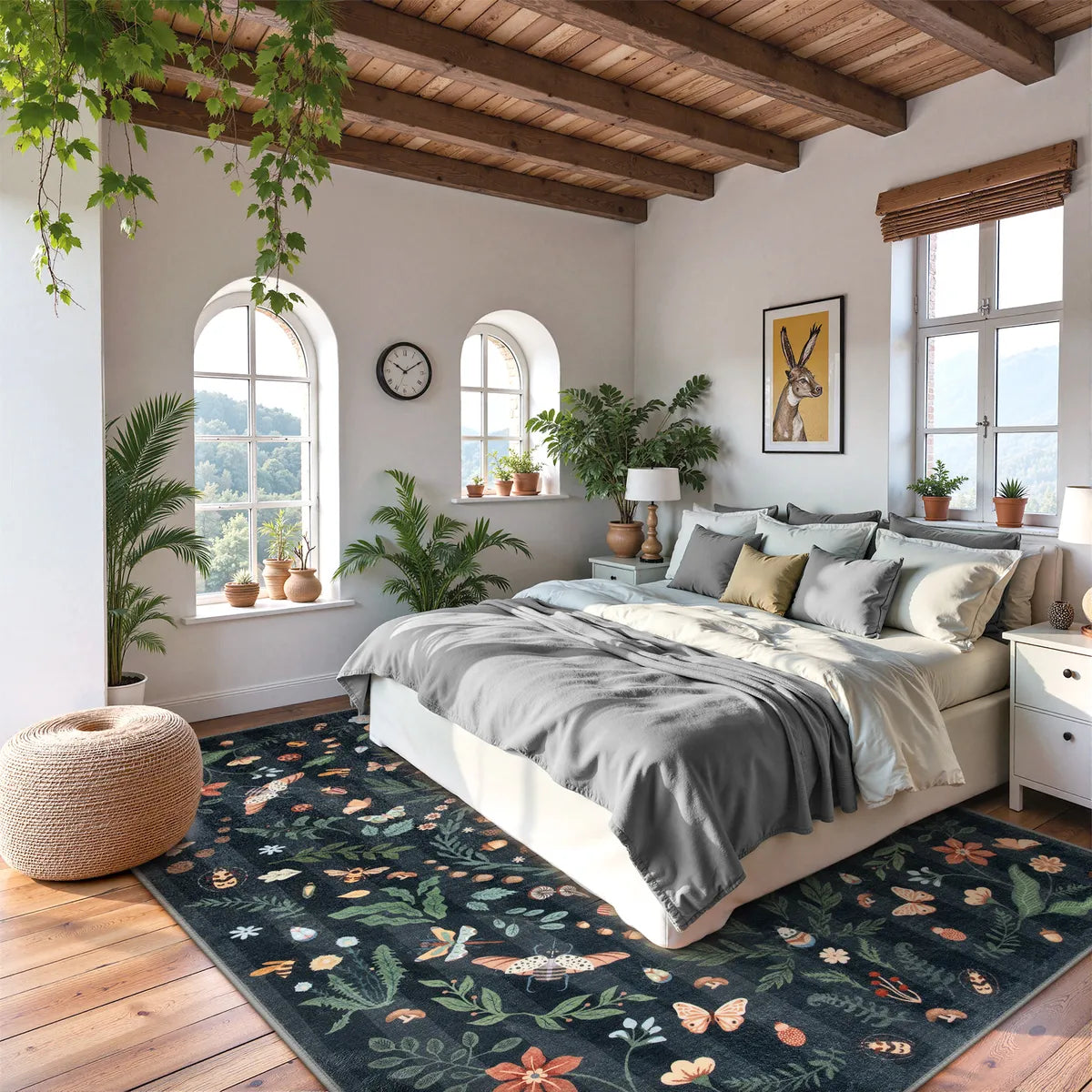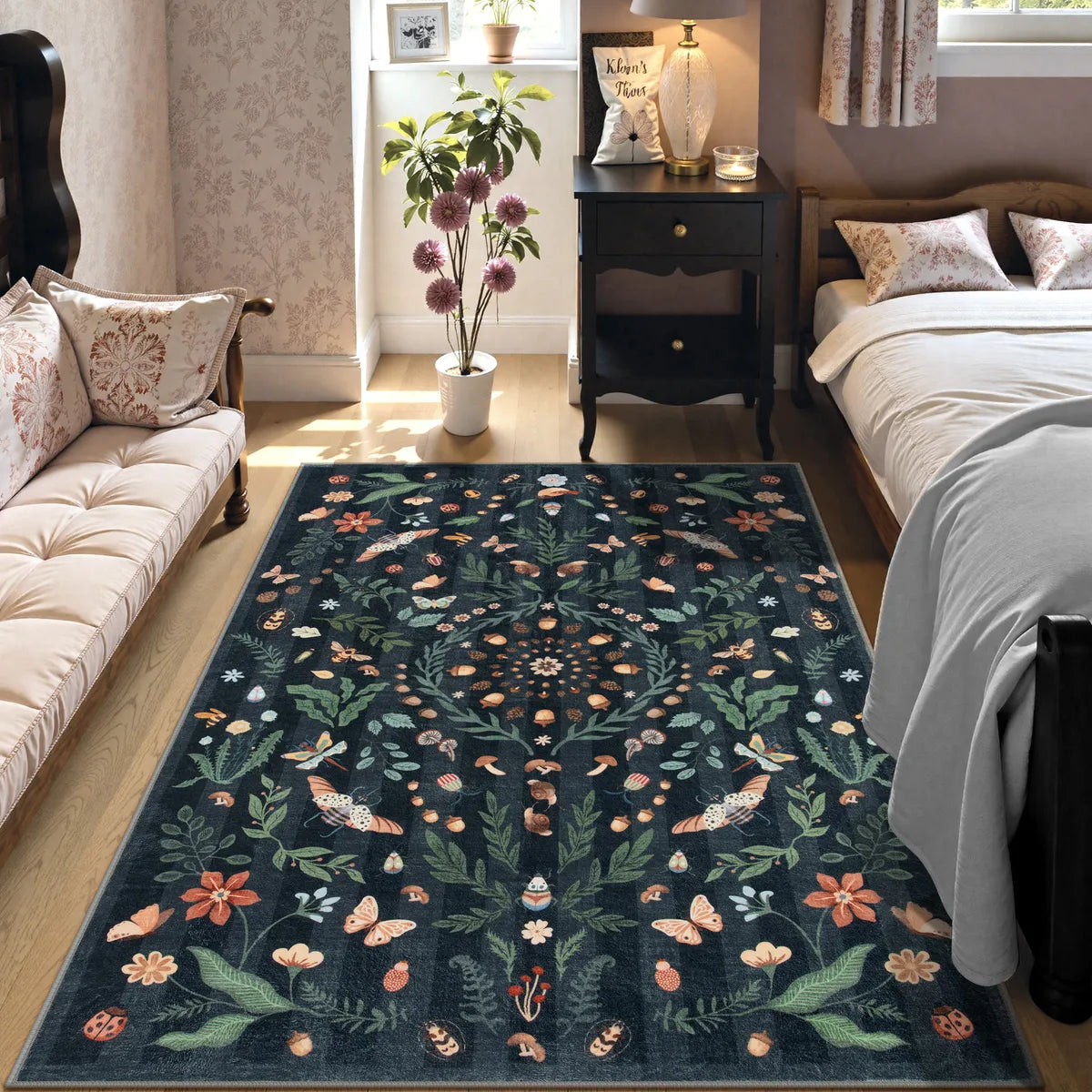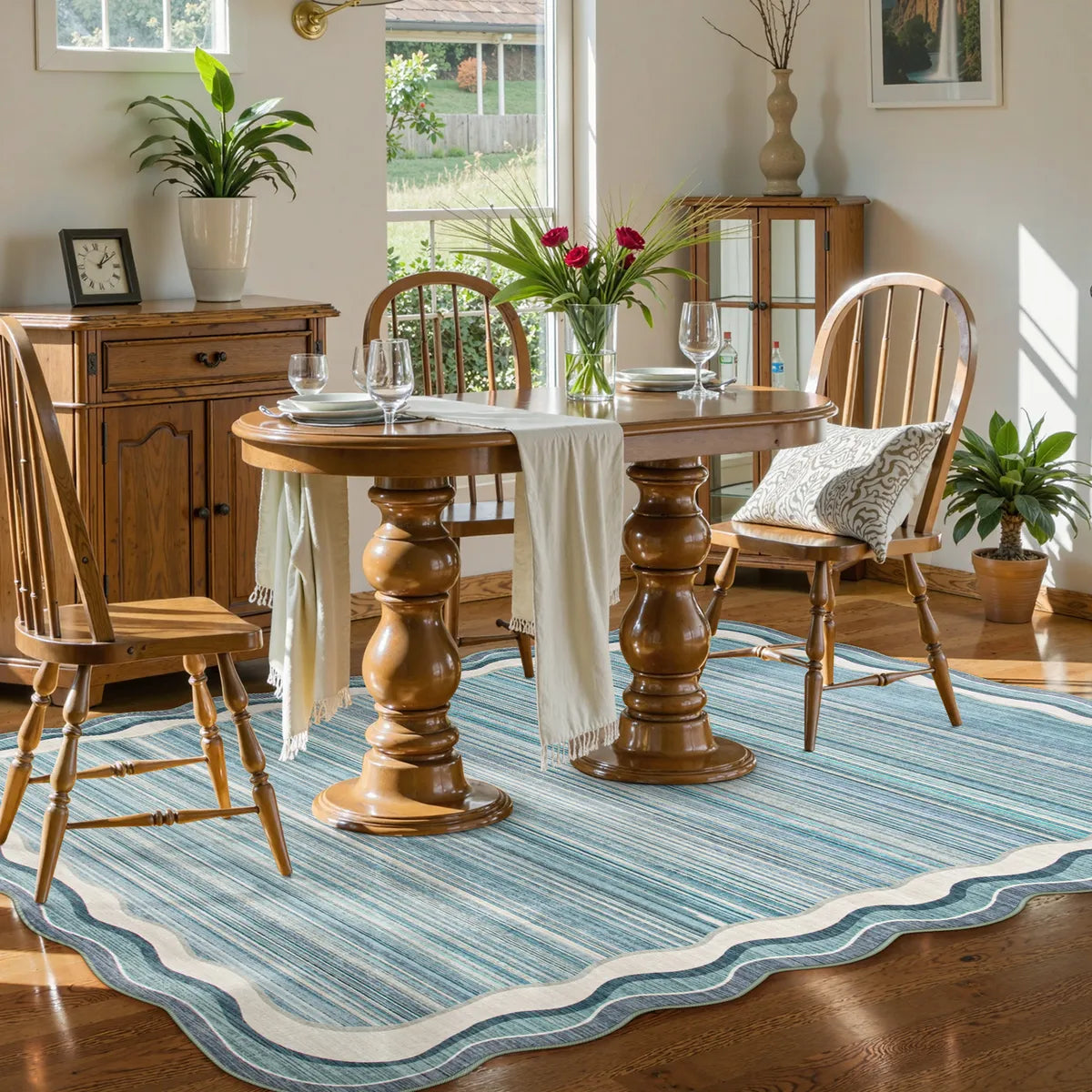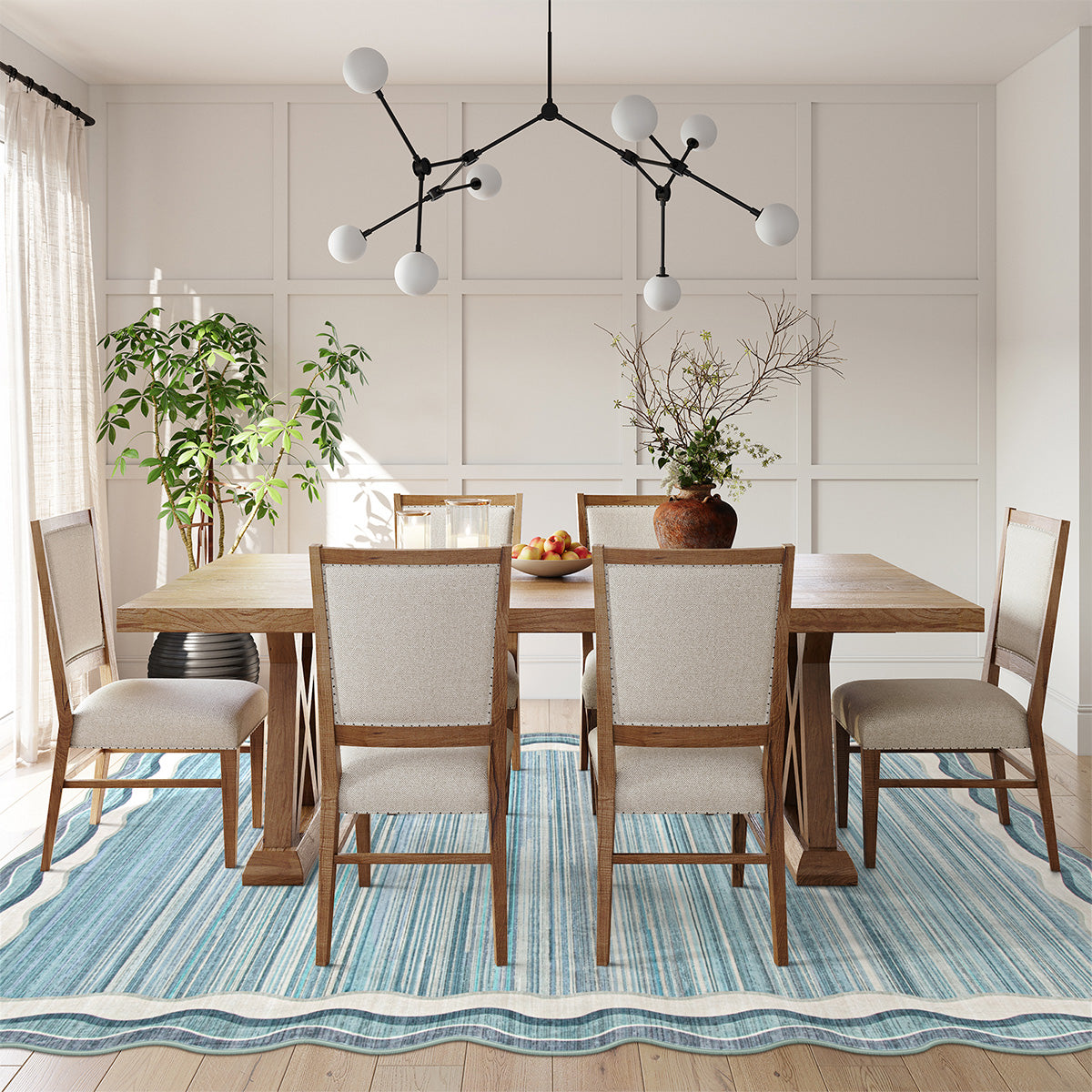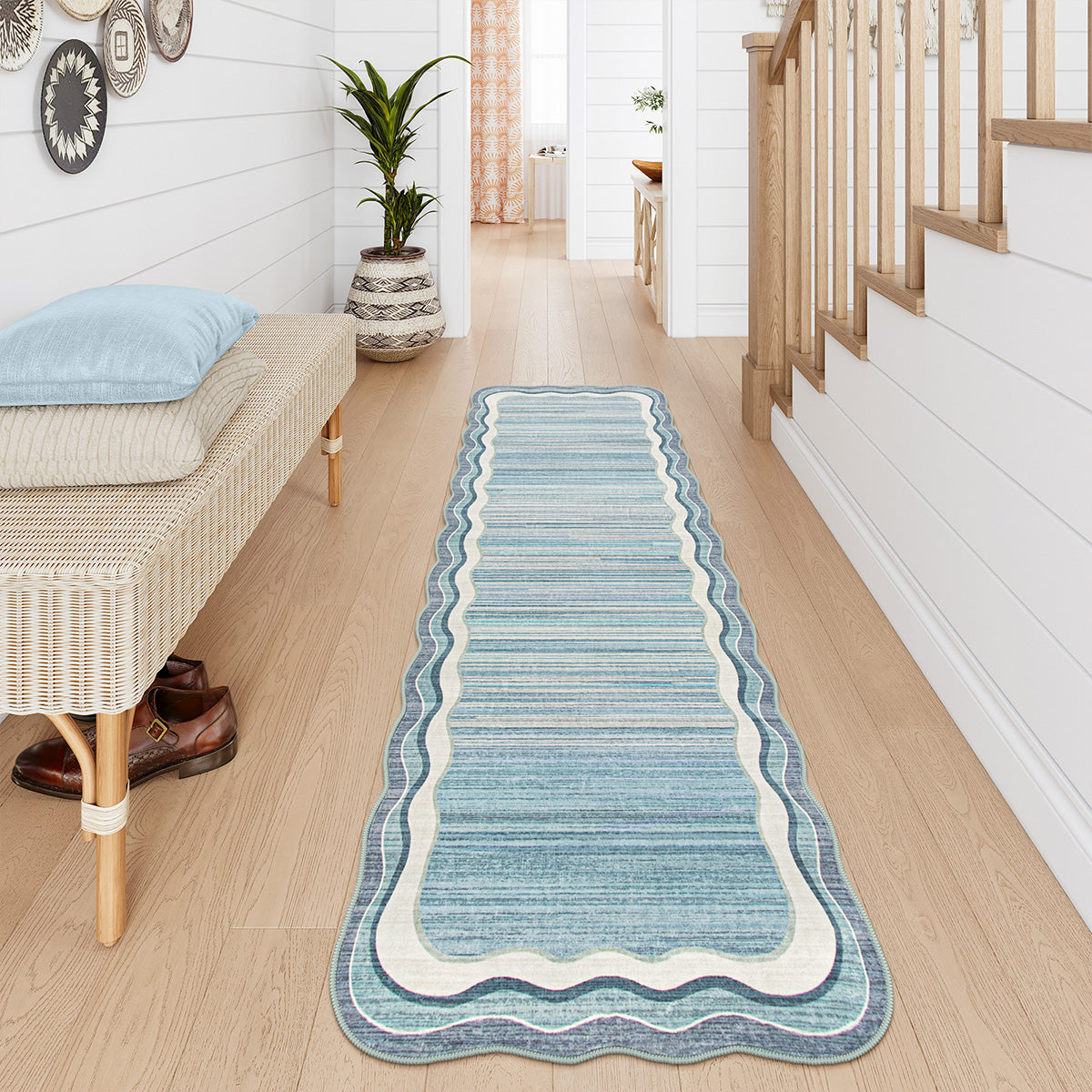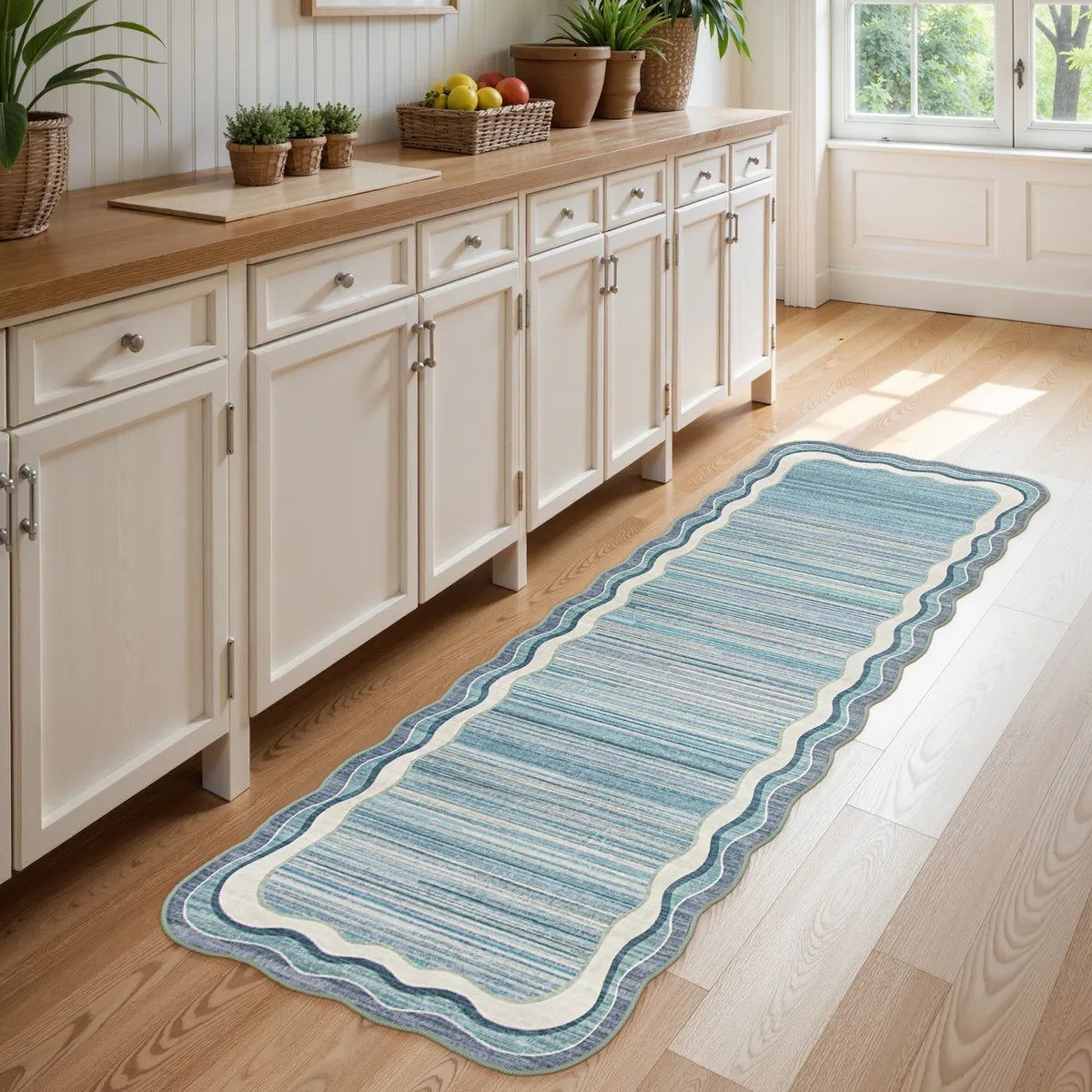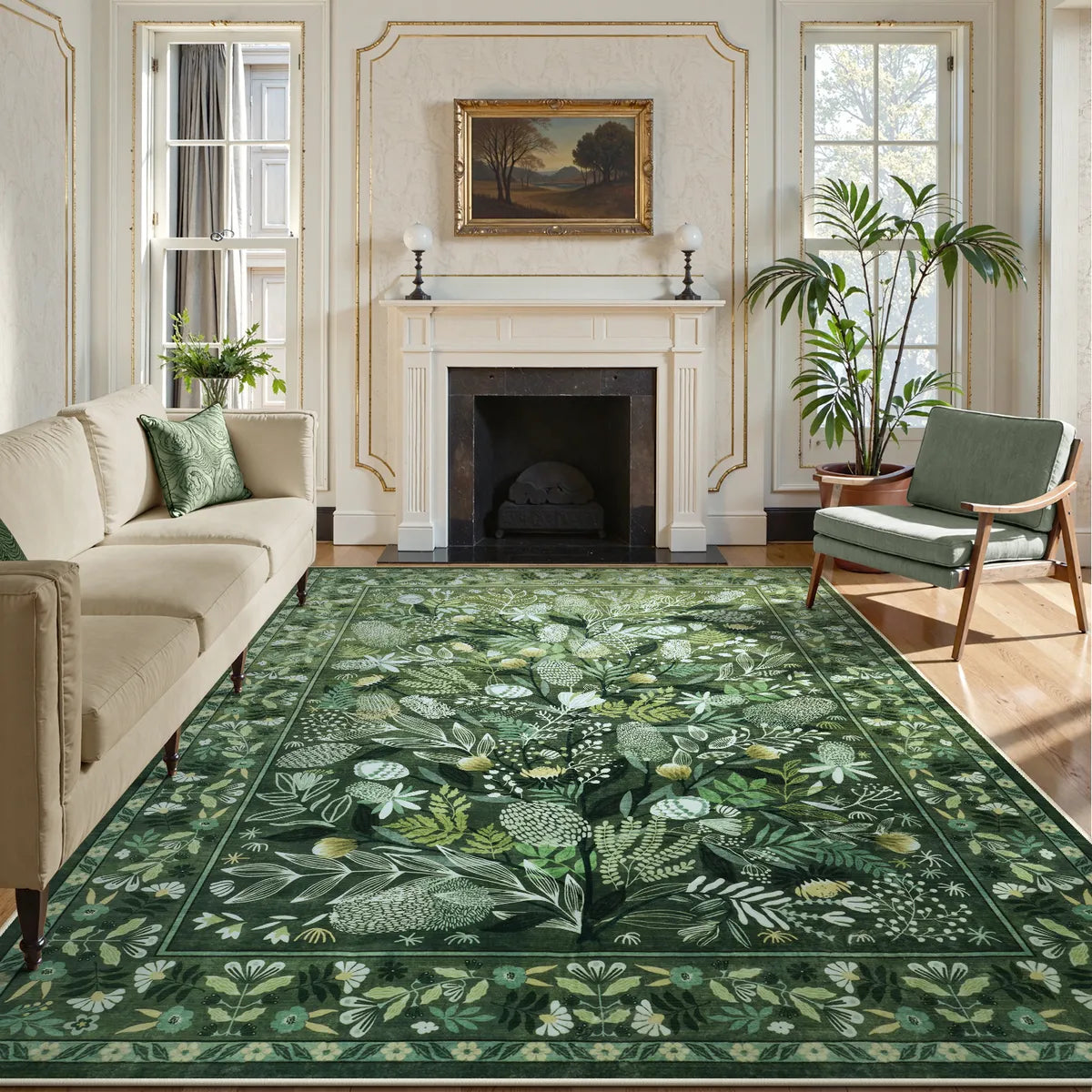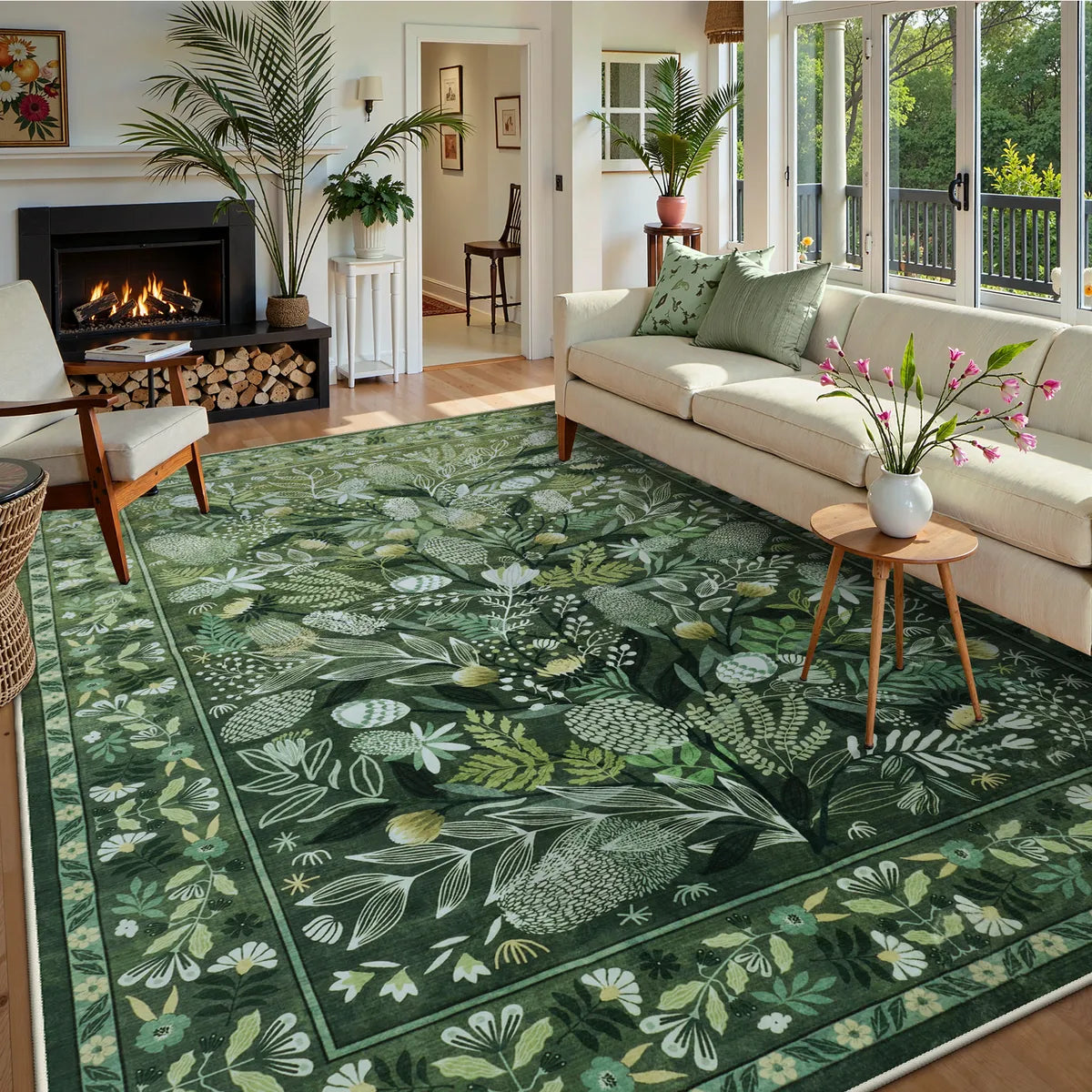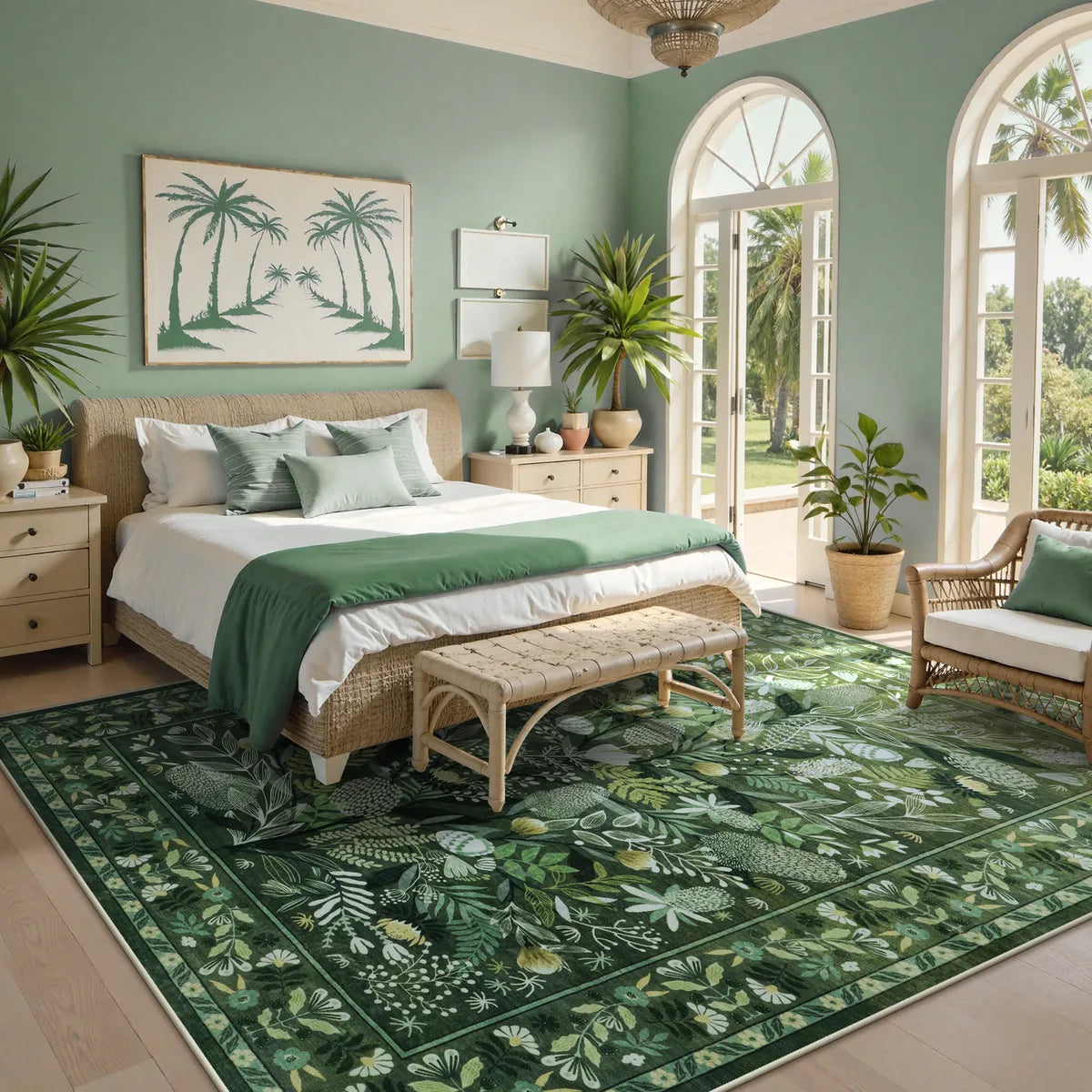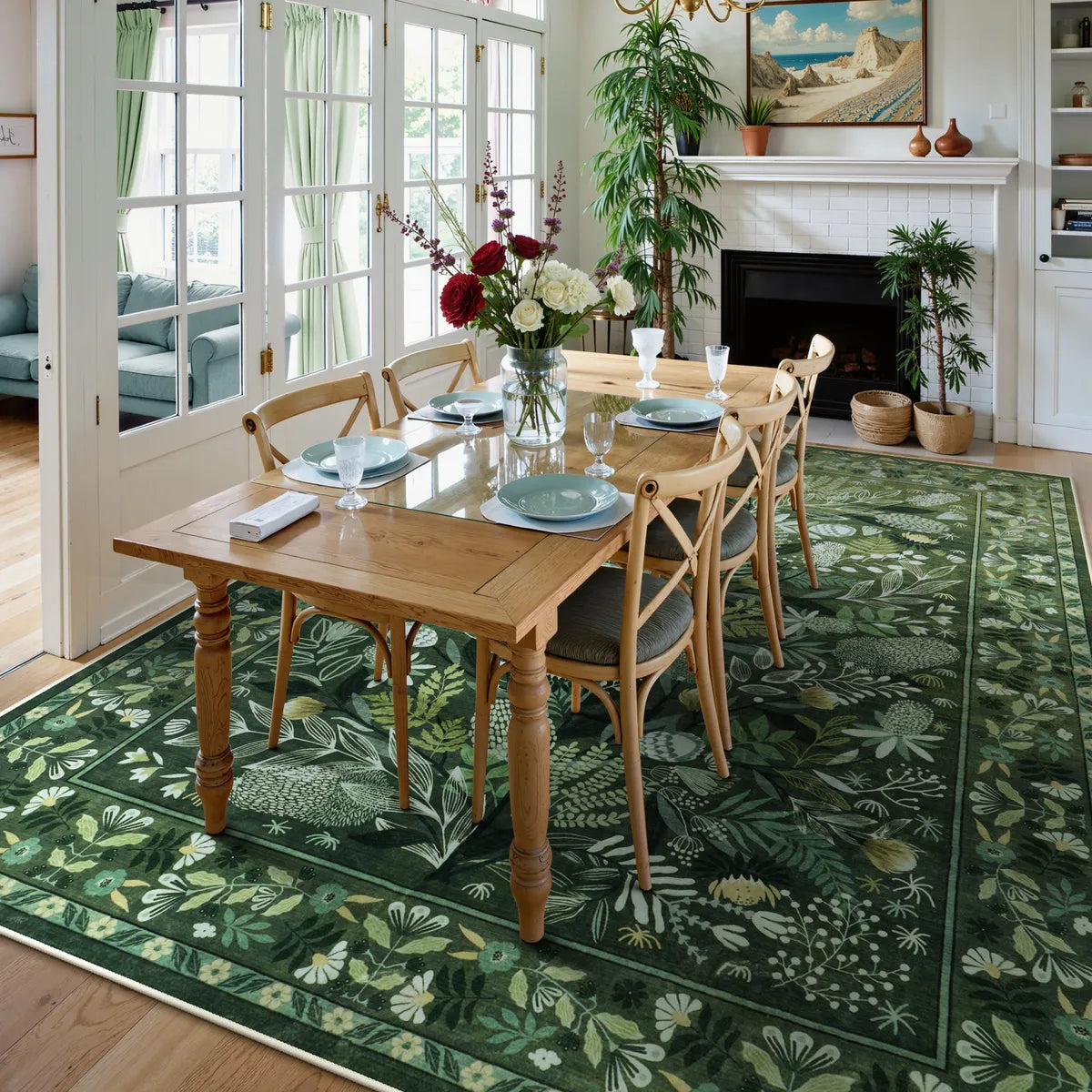


Learn how to size a dining table rug, measure for chairs, compare rug sizes for 4, 6, and 8 seats, and choose the right fit.

How much bigger should a rug be than your dining table? Is a 5×7 rug enough for four people, or would an 8×10 be a better fit? It depends on your table dimensions, how far the chairs need to move, and how much room you have around the dining area. Leaving about 24 inches beyond each table edge is a useful starting point. Here's how to measure your space, compare common rug sizes, and find a fit that works for everyday meals.
How Big Should a Rug Be Under a Dining Table?

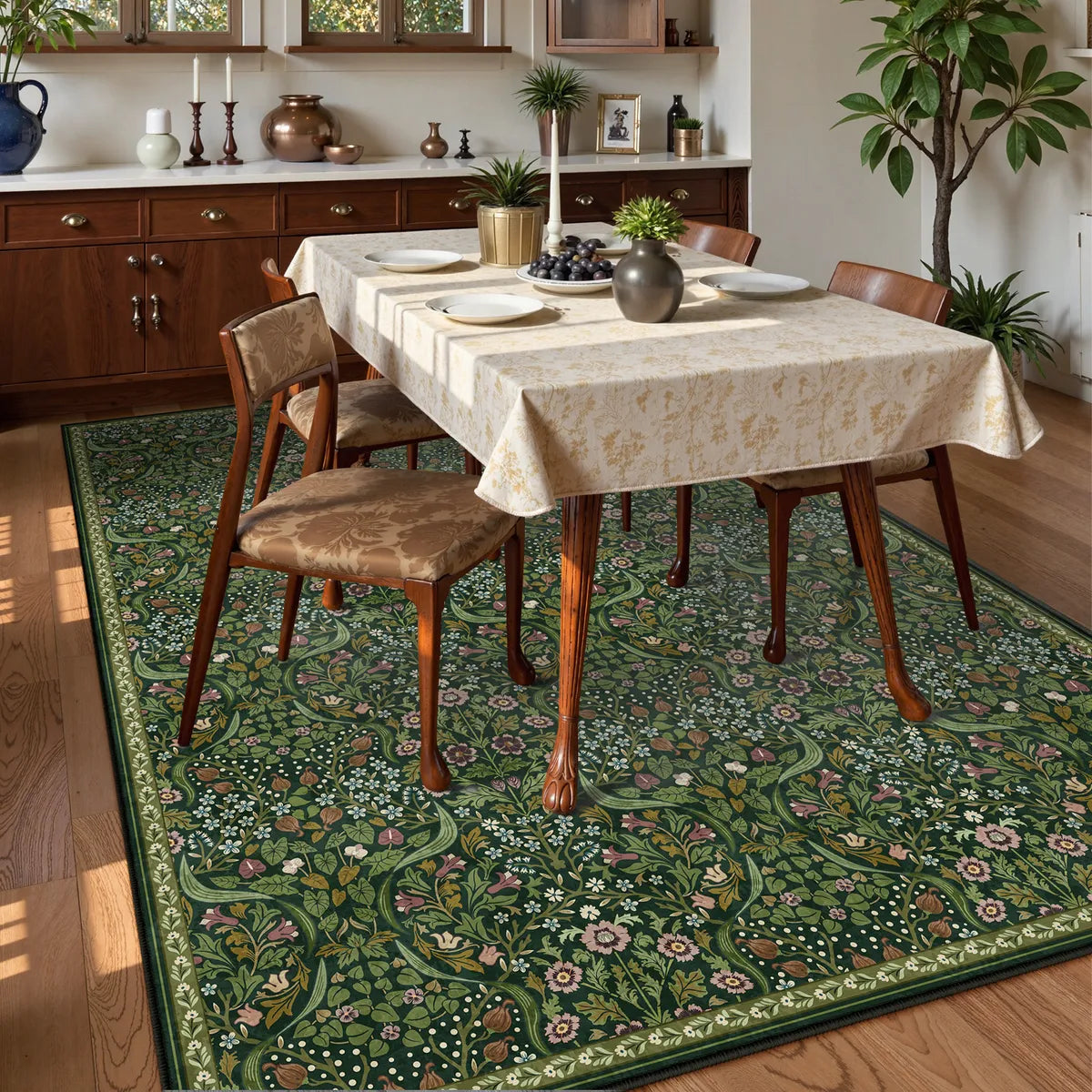
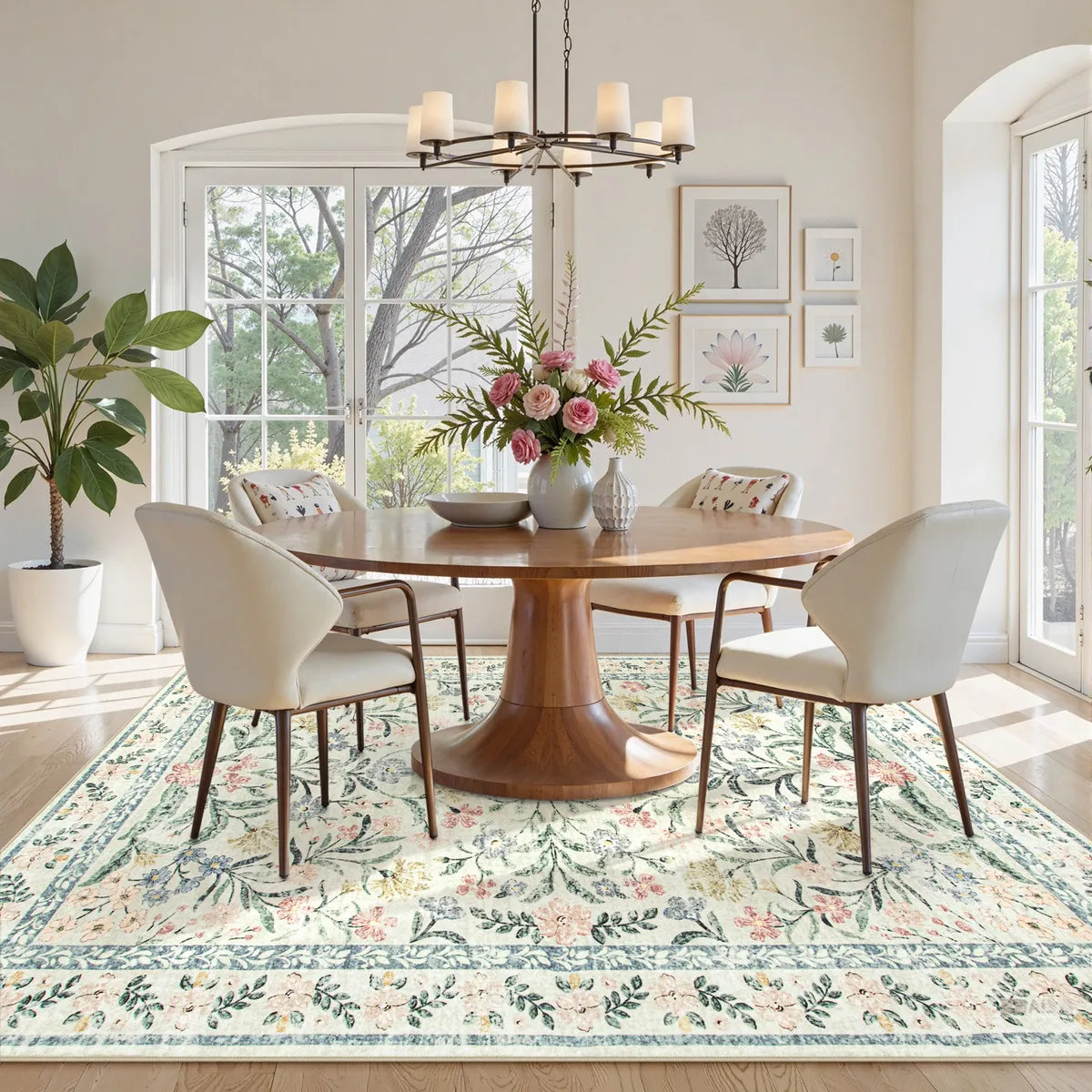
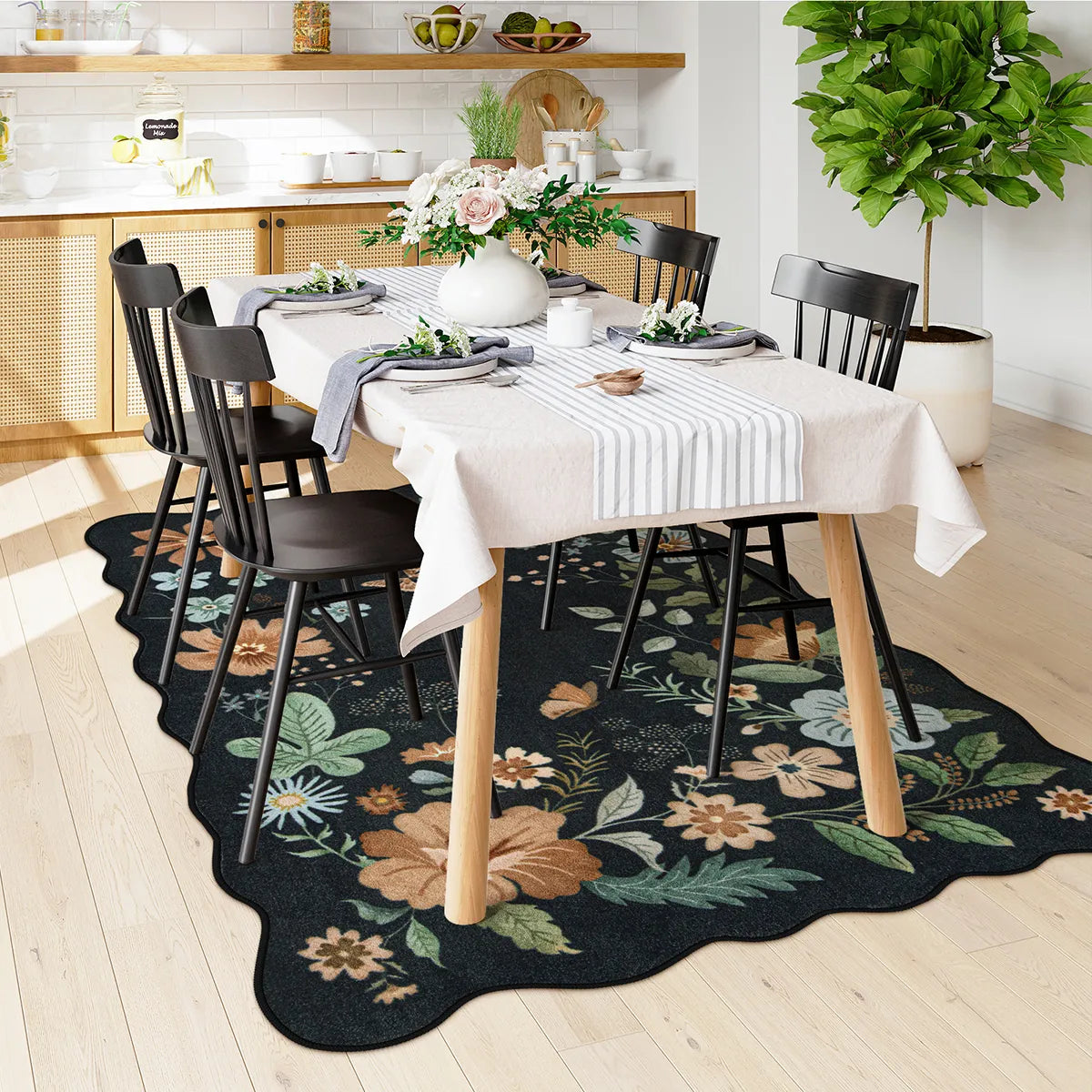
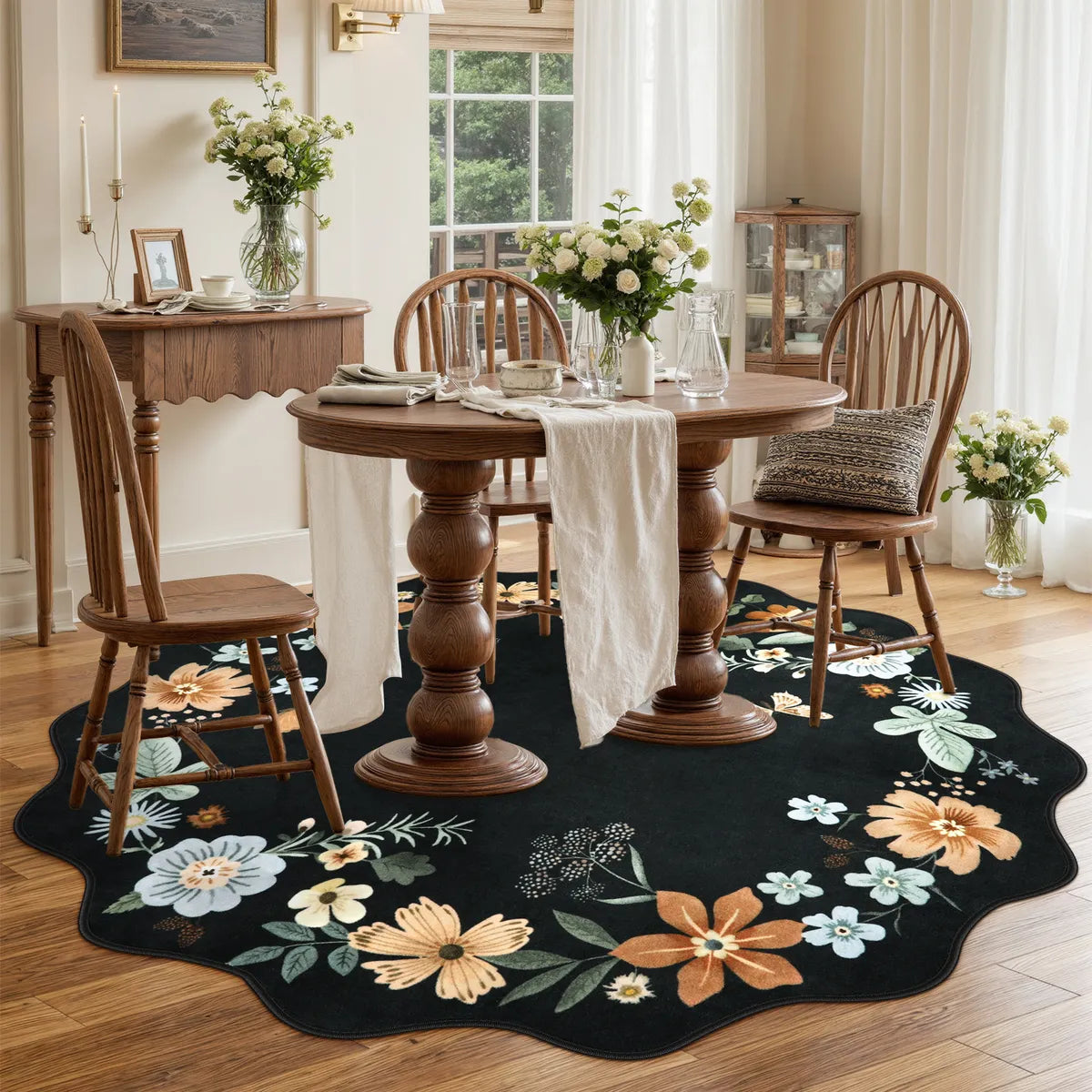
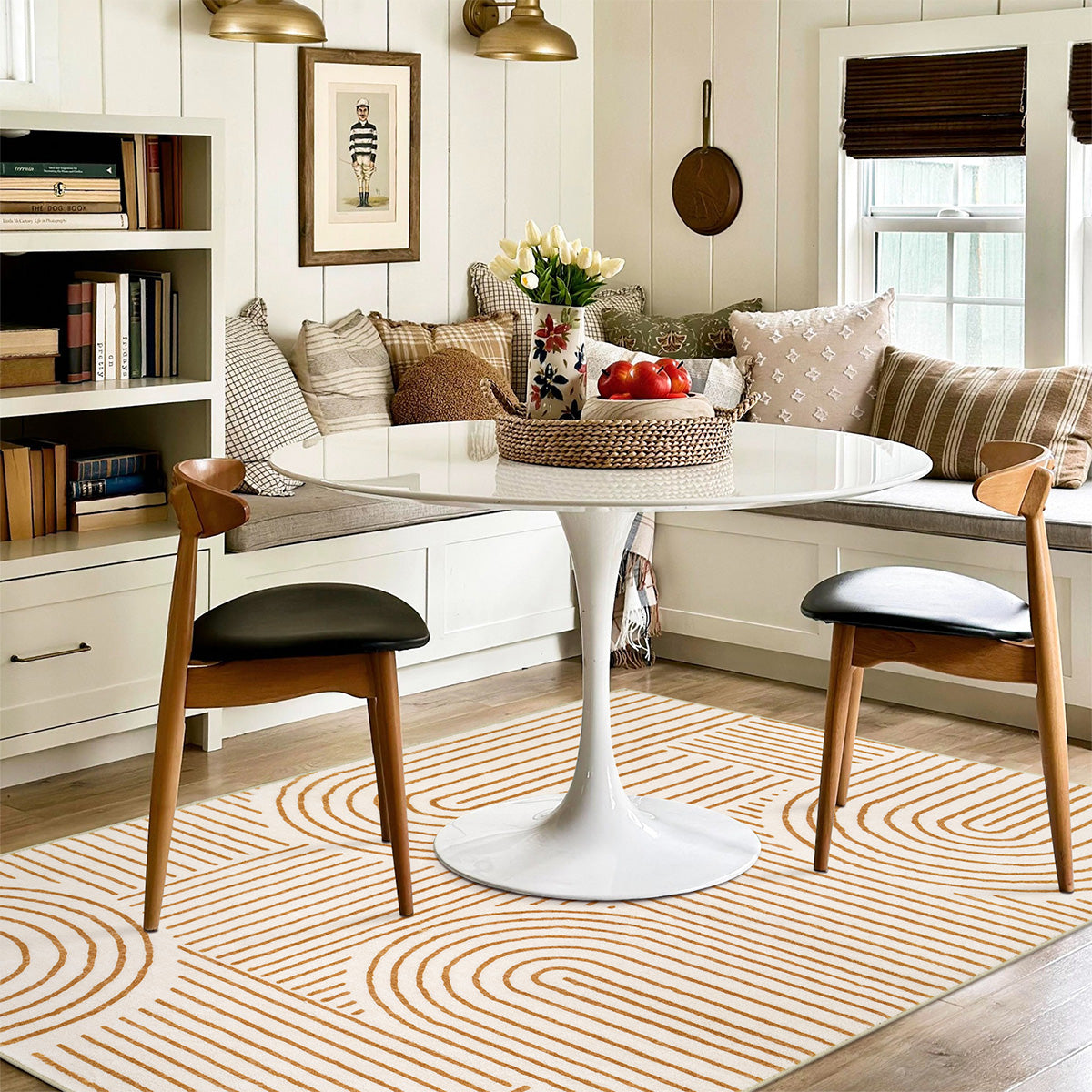
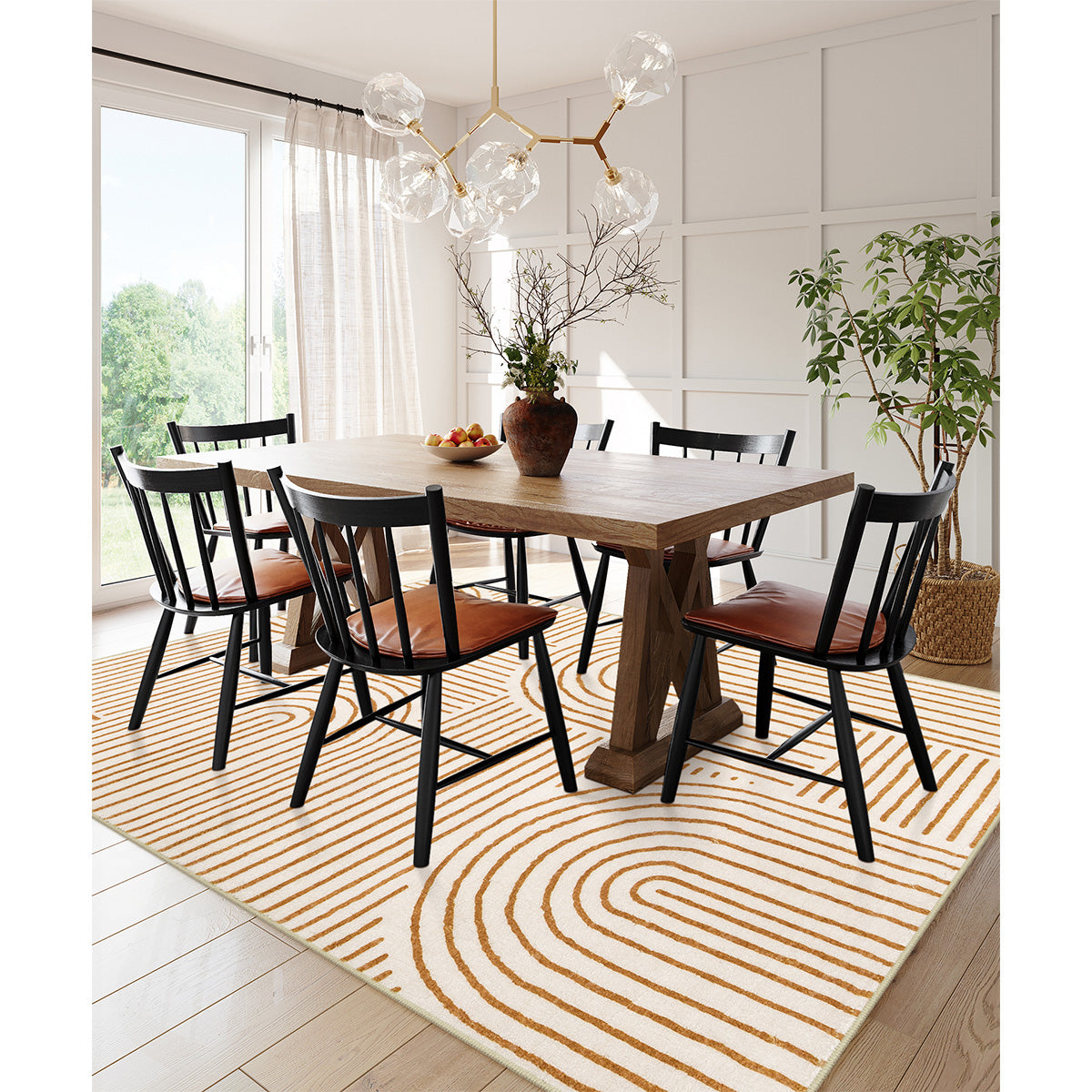
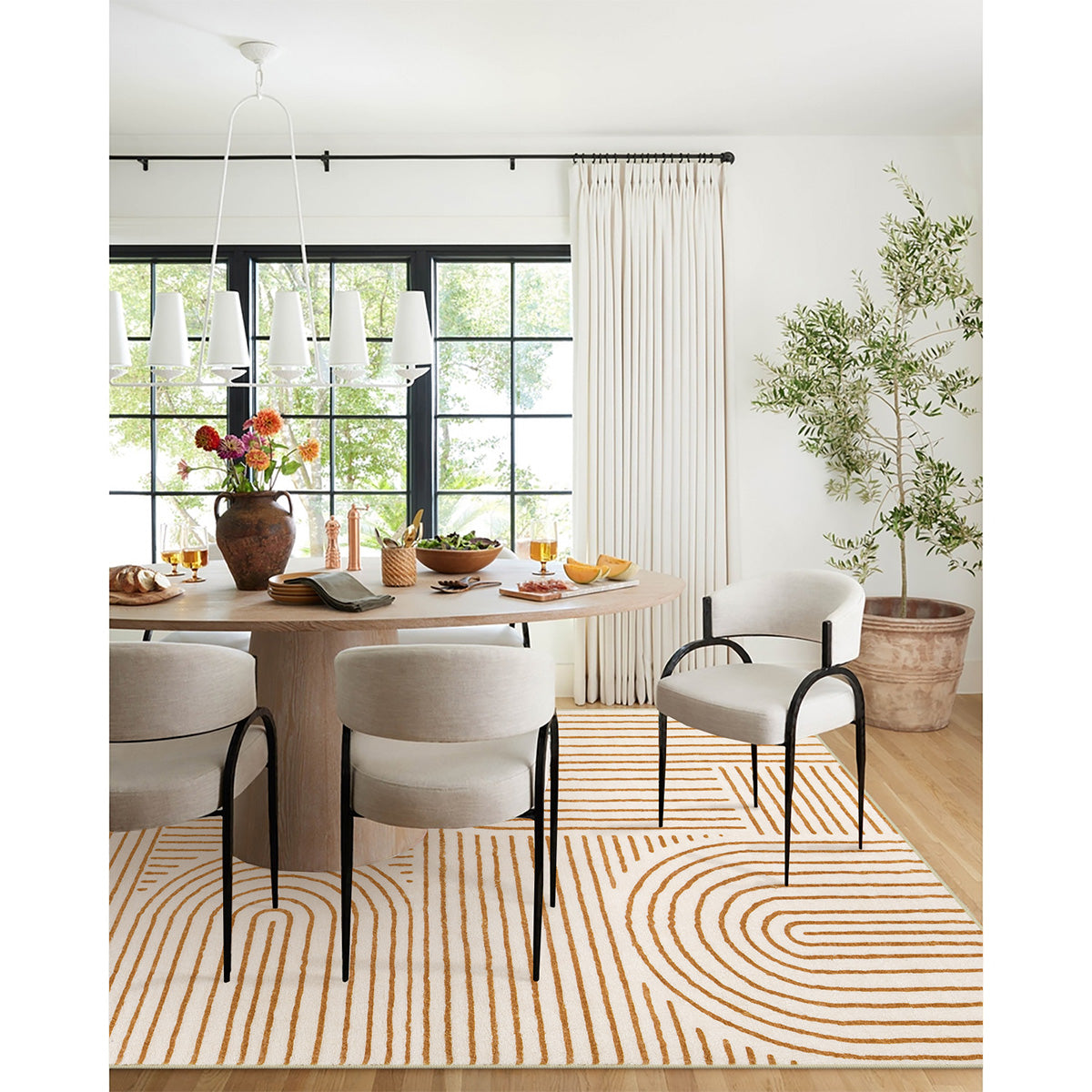
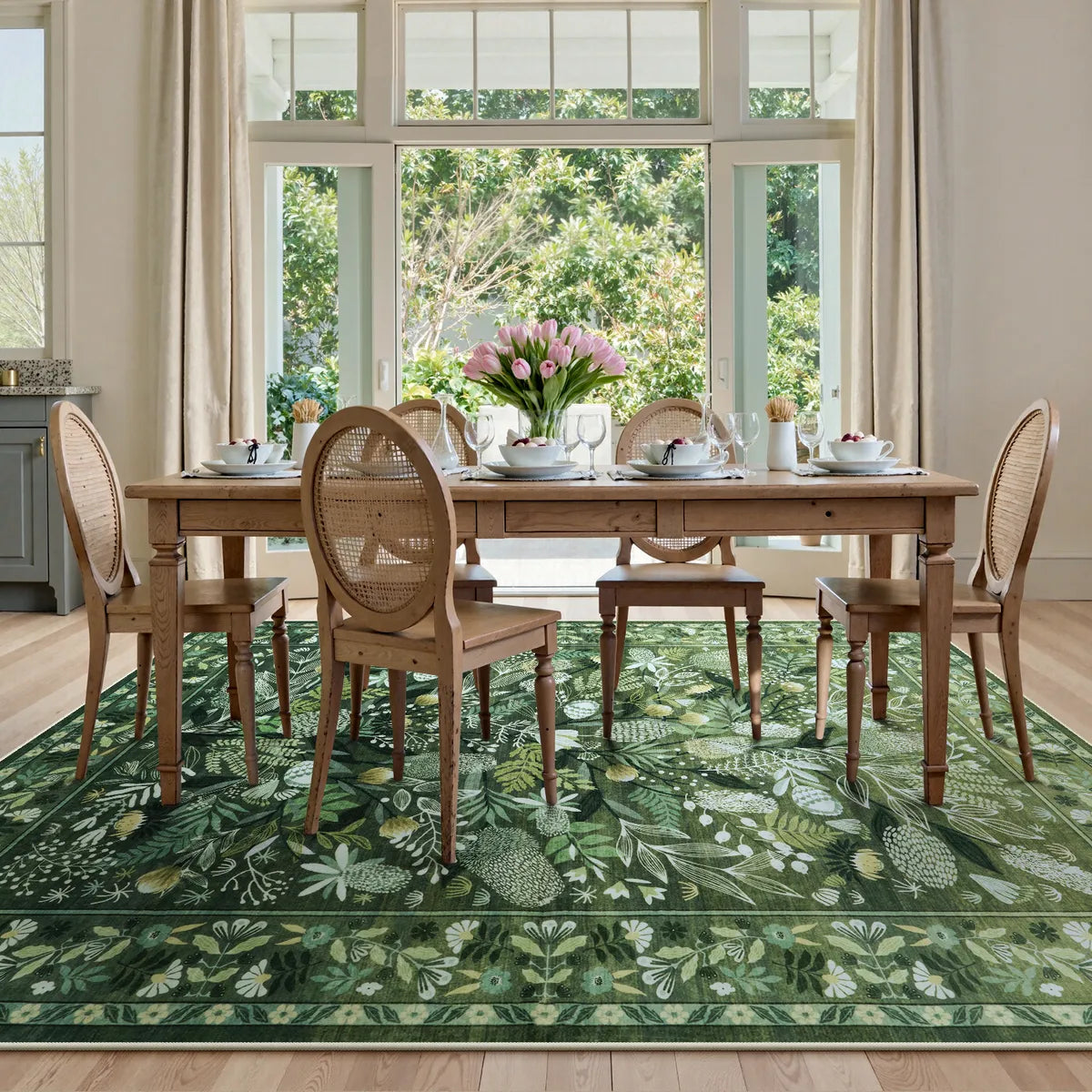
A dining room rug should generally extend about 24 inches beyond each edge of the table. That extra space helps chairs slide back without catching on the rug's edge. Treat this as a guideline rather than a strict rule, since chair size and room layout can affect the fit.
A rug that only covers the tabletop may look fine with the chairs tucked in, but it can become awkward once people sit down. Measure the full dining setup, including the space the chairs need when pulled out.
How to Calculate the Right Rug Size
Allow about 24 inches on every side as a starting point. Add 48 inches to both the table's length and width to estimate the rug dimensions you need.
Rug length
Table length + 48 inches
Rug width
Table width + 48 inches
For example, a 60 × 36-inch table needs a target rug footprint of 108 × 84 inches with 24 inches of clearance on each side. That's 9 × 7 feet. Since standard rugs come in set sizes, compare this result with available options and choose a rug that meets or exceeds both dimensions.
Measurement tip
Before buying, mark the proposed rug dimensions on the floor with painter's tape. Pull out the chairs and check whether they remain on the rug without blocking nearby walkways.
What to Check Before Buying
- Keep chairs on the rug. Ideally, the chair legs should remain on the rug when chairs are pulled out for normal use.
- Test chair movement. Make sure chairs can slide back without catching on the edge.
- Measure the table itself. Seat count helps narrow your options, but table dimensions determine the starting point.
- Check the room layout. Account for nearby walls, walkways, sideboards, and other furniture.
- Adjust for your space. About 24 inches of clearance is a useful guideline, but your room may call for a different compromise.
Dining Table Rug Size Chart for 4, 6, and 8 People
The number of seats can help you narrow down rug sizes, but it doesn't tell the whole story. Two four-person tables can need different rugs if one is compact and square while the other is longer and rectangular. The following chart uses common rectangular table dimensions as a starting point.
| Configuration | Table dimensions | Suggested rug size | What to check |
|---|---|---|---|
| 4 people | 36 × 48 in (91 × 122 cm) | 8 × 10 ft (244 × 305 cm) for generous clearance | Available floor space and chair movement |
| 6 people | 36 × 72 in (91 × 183 cm) | 8 × 10 ft (244 × 305 cm) | Space for side and end chairs |
| 8 people | 40 × 84–96 in (102 × 213–244 cm) | 9 × 12 ft (274 × 366 cm), or larger if needed | Table length, end chairs, and room layout |
Swipe to see more
These are practical starting points, not fixed rules. A smaller rug may work in a compact room, while a larger table or wide chairs may need more clearance. Always compare the rug's actual dimensions with the space your table and chairs need.
What Size Rug Do You Need for a Dining Table for 4?
For a rectangular table measuring around 36 × 48 inches, an 8 × 10-foot rug offers generous clearance for chairs. A 5 × 7 rug may fit under the table, but it usually won't provide the same room for chairs to slide back. A 6 × 9 may work in some layouts, though it can fall short of the 24-inch guideline on one side.
If you're furnishing a breakfast nook or a small dining room, check the surrounding floor space before choosing a larger rug. It should accommodate the chairs without crowding a doorway or nearby furniture.
What Size Rug Do You Need for a Dining Table for 6?
An 8 × 10-foot rug is a useful starting point for a rectangular table around 36 × 72 inches. With 24 inches of clearance on each side, the target footprint is 84 × 120 inches. An 8 × 10 rug measures 96 × 120 inches, so it meets both dimensions when the 10-foot side runs along the length of the table.
If your table is longer, your chairs are particularly wide, or you want more room around the dining set, compare a 9 × 12-foot rug as well.
What Size Rug Do You Need for a Dining Table for 8?
A 9 × 12-foot rug works for many rectangular dining tables around 40 × 84–96 inches. For a table near the longer end of that range, the rug's 12-foot side needs to run along the table's length to provide about 24 inches at each end.
If you regularly use extension leaves, measure the table when it's fully extended. That way, the rug can accommodate the end chairs during gatherings, not just everyday meals.
Dining Table Rug Sizes in Centimeters
If you shop using metric measurements, these common rug sizes may help.
| Rug size | Approximate dimensions |
|---|---|
| 6 × 9 ft | 183 × 274 cm |
| 8 × 10 ft | 244 × 305 cm |
| 9 × 12 ft | 274 × 366 cm |
| 10 × 14 ft | 305 × 427 cm |
Swipe to see more
Product dimensions can vary slightly, so check the listed measurements before ordering. Once you've narrowed down the size you need, compare rugs by size and shape to see which options fit your layout.
How to Measure for a Dining Table Rug
The easiest way to choose the right rug is to measure the table, check how far the chairs move, and calculate the space you need.
Measure the Dining Table
Measure the full length and width of the tabletop and write down both numbers. If your table has extension leaves, measure it in the extended position if you regularly use it that way.
For a round table, measure straight across the center to find its diameter. Use the dimensions of the setup you actually need to accommodate, rather than measuring only the smaller everyday configuration.
Measure the Space Needed for Dining Chairs
Pull the chairs back as you would when sitting down or getting up. Check how far they extend beyond the tabletop and where their legs land. About 24 inches of clearance beyond each table edge is a useful starting point, but larger chairs or busy walkways may call for a different layout.
Calculate the Minimum Rug Dimensions
Add twice your chosen clearance to each table dimension. This accounts for the extra room on both sides.
Rug length
Table length + (2 × clearance)
Rug width
Table width + (2 × clearance)
For a 60 × 36-inch table with 24 inches of clearance, the target dimensions are 108 × 84 inches. Compare this footprint with standard rug sizes, then check that the chosen rug leaves enough room around the dining area.
If the ideal size doesn't fit your room, check whether a smaller rug still allows the chairs to move comfortably. It's better to make an informed compromise than to choose a rug that repeatedly catches on chair legs.
What Rug Shape Works Best Under a Dining Table?
Matching the rug to your table's shape is a good place to start. A rectangular table usually works well with a rectangular rug, while a round table often looks balanced on a round one. The best choice also depends on chair clearance and the room's layout.
Rectangular Rugs for Rectangular Dining Tables

A rectangular rug follows the long lines of a rectangular dining table, giving the table and chairs a shared footprint. It's a versatile choice for tables that seat four, six, or eight people, as long as the rug is large enough.
For six- and eight-person setups, pay particular attention to the end chairs. They often determine how long the rug needs to be, especially when the table has extension leaves.
Round Rugs for Round Dining Tables

A round rug echoes the shape of a round table and works well in breakfast nooks or smaller dining areas. Measure the table across its center to find the diameter, then allow enough room for chairs to move back all the way around.
A rug that barely extends beyond the tabletop may look fine with the chairs tucked in but leave the back legs off the rug once people sit down.
Square Rugs for Square Dining Tables
A square rug suits a square dining table when you want the arrangement to feel balanced on all four sides. Check the clearance around the entire setup, especially if chairs sit close to a wall, doorway, or main walkway.
Can You Put a Rectangular Rug Under a Round Dining Table?
Yes. A rectangular rug can work under a round table if its proportions suit the room. It may be a practical choice in an open-plan layout or when a rectangular rug fits the available floor space better.
Focus on chair movement and overall proportions rather than matching the shapes exactly. The rug should give the chairs enough room to slide back without overwhelming the surrounding space.
How Much Space Should You Leave Around a Dining Rug?
A rug can be the right size for your dining table and still feel too big for the room. You need enough space for chairs to move, but you also need clear paths around the dining area.
Check the distance between the rug and nearby walls, sideboards, kitchen islands, and other furniture. Think about where people walk most often, especially in an open-plan kitchen or dining room.
Before you buy, mark the proposed rug dimensions on the floor with painter's tape. Pull out the chairs, walk around the table, and check nearby doors and drawers. This quick test can reveal a tight walkway or a rug that leaves too little room for other furniture.
The goal is to balance chair clearance with easy movement. A larger rug may keep chairs on its surface when they're pulled out, but a slightly smaller one may suit a compact dining area better. If you need to compromise, make sure chairs can still move comfortably and the main walkways remain clear.
What Is the Best Rug to Put Under a Dining Table?
The best dining room rug should let chairs move easily, hold up to everyday use, and suit the way you clean your home. Low-pile and flatweave rugs are practical options for chair movement, while washable rugs can make routine cleanup more manageable. The right choice depends on the rug's construction and your household's needs.
Is a Low-Pile Rug Better Under a Dining Table?

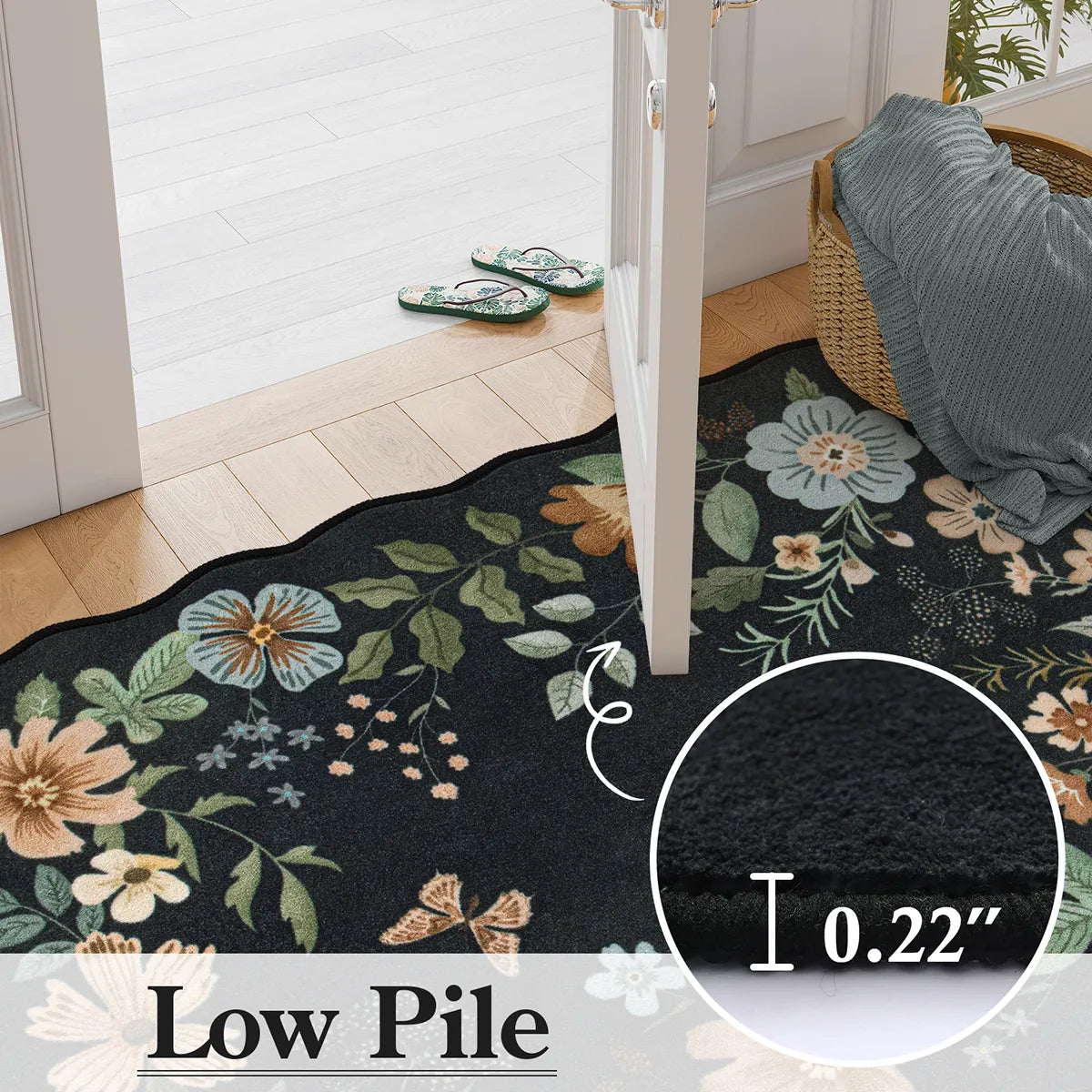
In most dining rooms, a low-pile rug is a practical choice because dining chairs can slide across it more easily than across a thick, plush rug. The shorter pile can also make crumbs easier to remove with regular vacuuming.
Flatweave rugs are another option, with little to no raised pile to catch chair legs. A low-pile rug offers a bit more texture underfoot, while a thick, shaggy rug can make chairs harder to pull in and out.
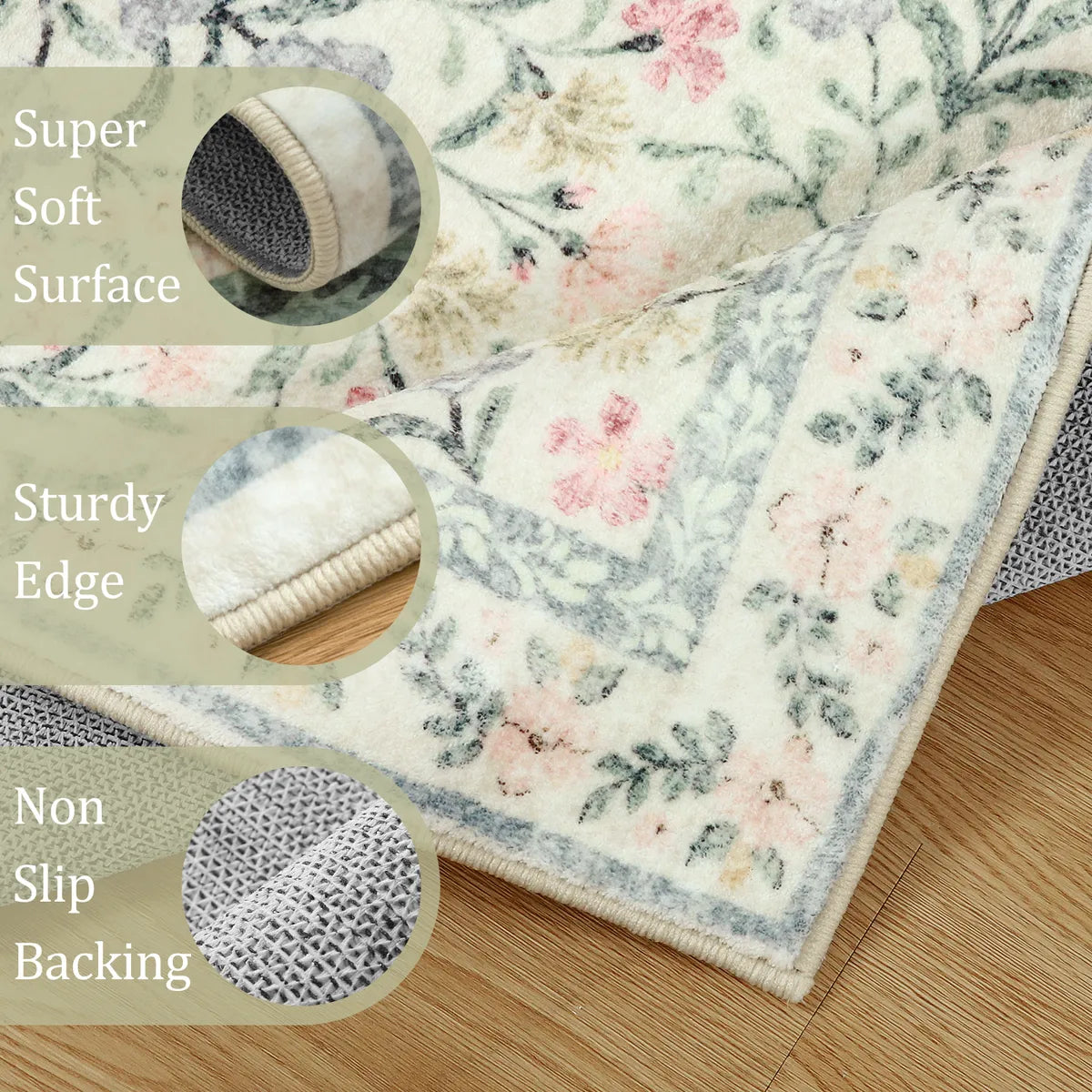
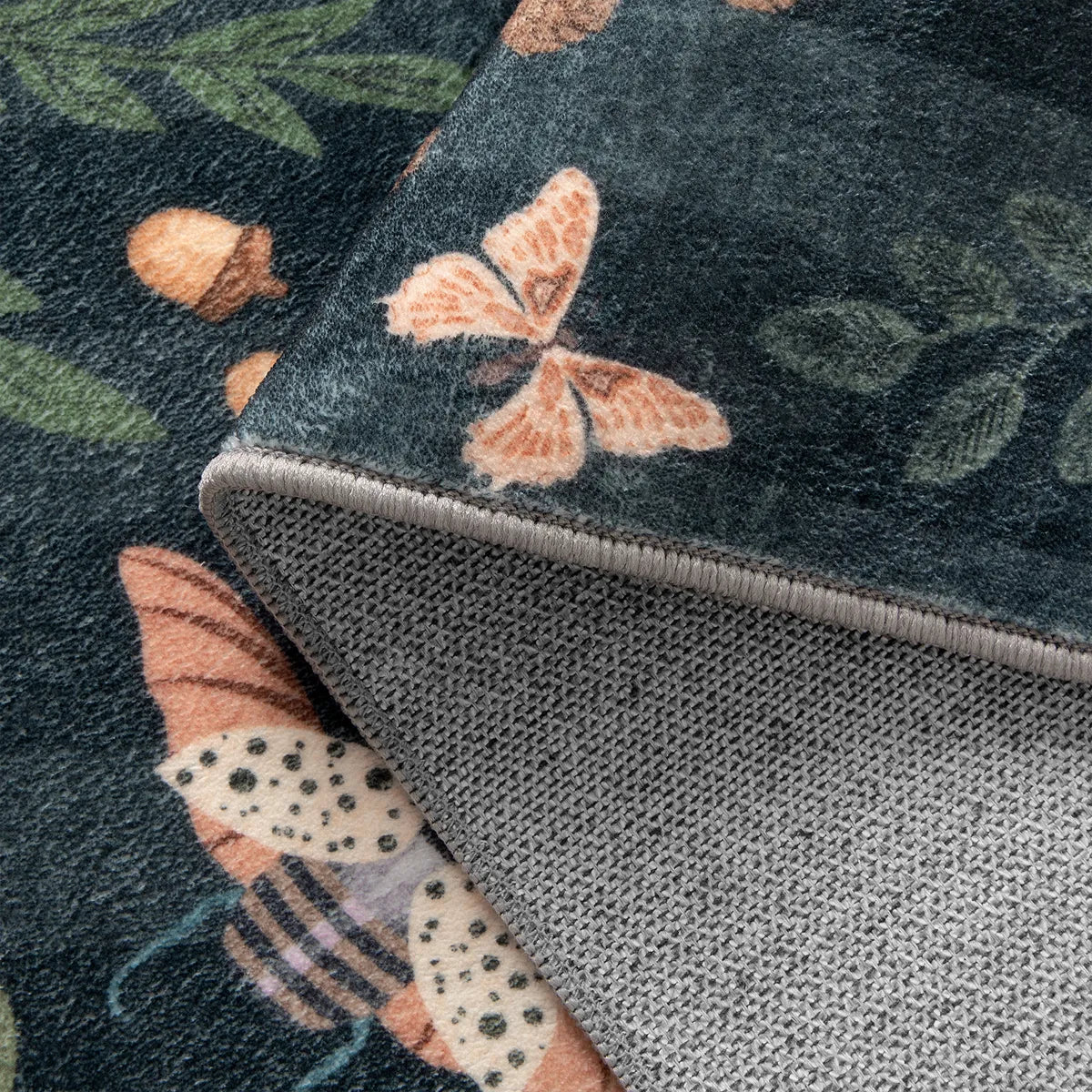
For a dining area that sees daily use, look for a rug with a low profile, a stable backing, and a construction suited to regular foot traffic. Lahome's washable rug collection includes low-pile styles designed for everyday living.
Pile height alone doesn't determine durability or stain resistance, so check the material, construction, and care instructions before choosing a rug.
Are Washable Rugs a Good Choice for Dining Rooms?

Washable rugs can be a practical choice for dining rooms, where food spills, crumbs, and everyday messes are part of daily life. A machine-washable style can make routine care more manageable when it fits your household's cleaning needs.
Lahome's washable rugs offer a range of designs and sizes, including options for larger living spaces. Many styles feature low-pile construction, which can make them easier to vacuum and more practical under dining chairs.
Before buying, check the care instructions for the specific rug, including its washing method, size limits, and drying requirements. A rug that is too large for your washing machine may need another cleaning approach, and washable does not automatically mean stain-proof.
Should Your Dining Rug Be Lighter or Darker Than Your Furniture?
Both can work. A lighter rug can brighten a dining area and create contrast with a dark wood table or chairs. A darker rug can ground a light-colored dining set and help define the space, particularly in an open-plan room.
Look at the table, chairs, flooring, and existing room colors together. If the floor and furniture are already dark, a lighter rug can break up the heavier tones. If the room has pale floors and light furniture, a deeper color or a stronger pattern can add definition.
You don't need to match the rug to every piece of furniture. Aim for a palette that feels connected, with enough contrast to keep the dining area from looking flat.
Should You Put a Rug Under a Dining Table?
A rug under a dining table can help define the dining area, add visual interest, and protect some types of flooring from everyday wear. But it's not essential for every home. The decision depends on your room layout, how often you use the dining area, and how much maintenance you're comfortable with.
Benefits of Putting a Rug Under a Dining Table
A dining rug can make the dining area feel more distinct, especially in an open-plan home where the table shares space with the kitchen or living room. It gives the dining set a defined footprint without the need for walls or additional furniture.
A rug also brings color, pattern, and texture into the room. It can add contrast beneath a simple wood table, tie together different furniture finishes, or introduce a pattern that complements the rest of your decor.
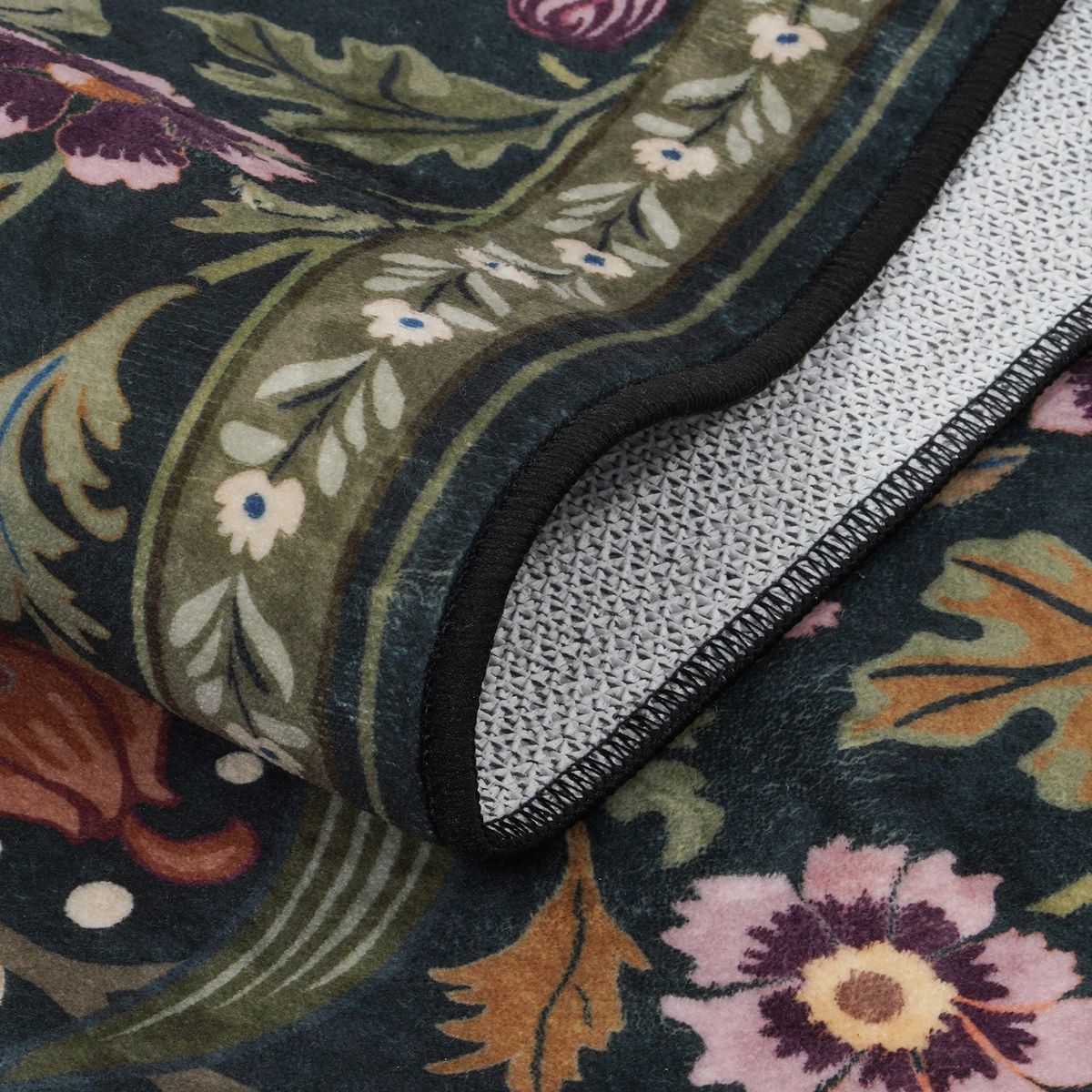
Depending on the rug and flooring material, it may also help protect the floor from minor scuffs and everyday wear caused by moving chairs. A suitable rug pad can help reduce slipping and friction, but check that it works with your floor type.
When a Dining Table Rug May Not Be Practical
A rug isn't always the best fit. In a tight dining area, there may not be enough room for chairs to slide back comfortably while staying on the rug. If chair legs repeatedly catch on its edge, leaving the floor bare may be more practical.
Maintenance is another consideration. Food crumbs, spills, and frequent chair movement can mean more regular cleaning. If you prefer a low-maintenance dining space, a bare floor may be easier to manage.
You should also reconsider a rug if its edges interfere with nearby walkways, doors, or furniture. The dining area needs to remain easy to move through, even when the chairs are pulled out.
Ultimately, a dining rug is optional. If you have enough room for comfortable chair movement and don't mind the upkeep, it can add definition and character to your dining area. If space is tight or easy cleaning matters more to you, leaving the floor bare is a perfectly reasonable choice.
If you're concerned about food spills, Lahome's guide on how to clean rug stains offers more detail on choosing a cleaning method for different rug materials.
Frequently Asked Questions
1. How Big Should a Rug Be Under a Dining Table?
A good starting point is to leave about 24 inches of rug beyond each side of the table. That extra space gives chairs room to slide back without catching on the edge. Your final size depends on the table, the chairs, and how much room you have in the dining area.
2. How Big of a Rug Do You Need Under a Dining Table for 6?
For many six-person rectangular dining tables, an 8 × 10-foot rug is a good place to start. A longer table or chairs that need more clearance may call for a 9 × 12-foot rug. Compare the rug dimensions with your own table and chair setup before choosing.
3. What Is the Best Rug Size for an 8-Seater Dining Table?
A 9 × 12-foot rug works well for many eight-person rectangular dining tables, but longer tables may need more space. Check the end chairs when they're pulled out, not just how the table looks with the chairs tucked in. If your table has extension leaves, measure it at its full length.
4. Can a Dining Table Rug Be Too Big?
Yes. A rug can crowd nearby walls, sideboards, or walkways and make the dining area feel cramped. Before settling on a size, mark its dimensions on the floor with painter's tape. Pull out the chairs and walk around the table to see whether the layout still feels comfortable.
5. Do You Need a Rug Pad Under a Dining Table?
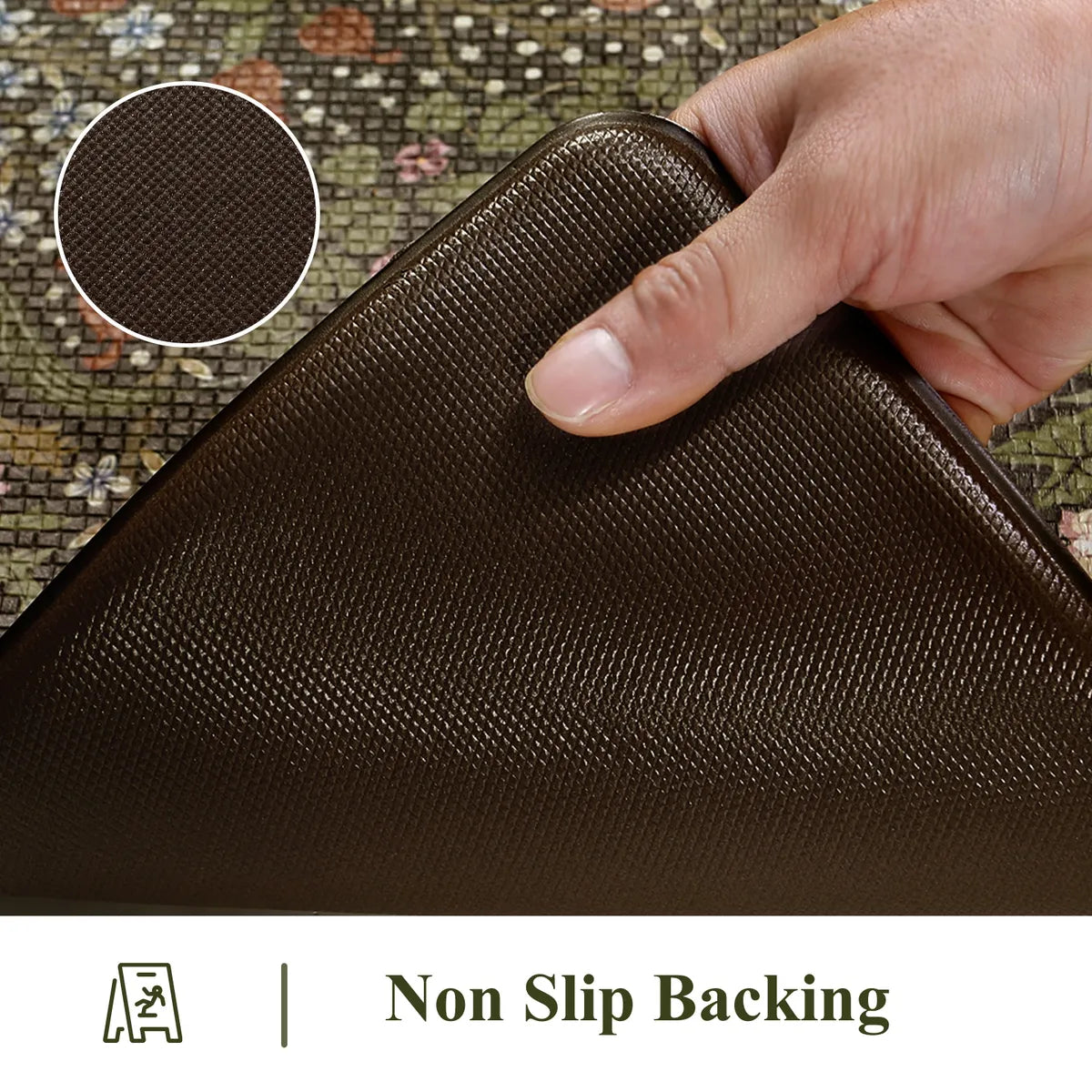
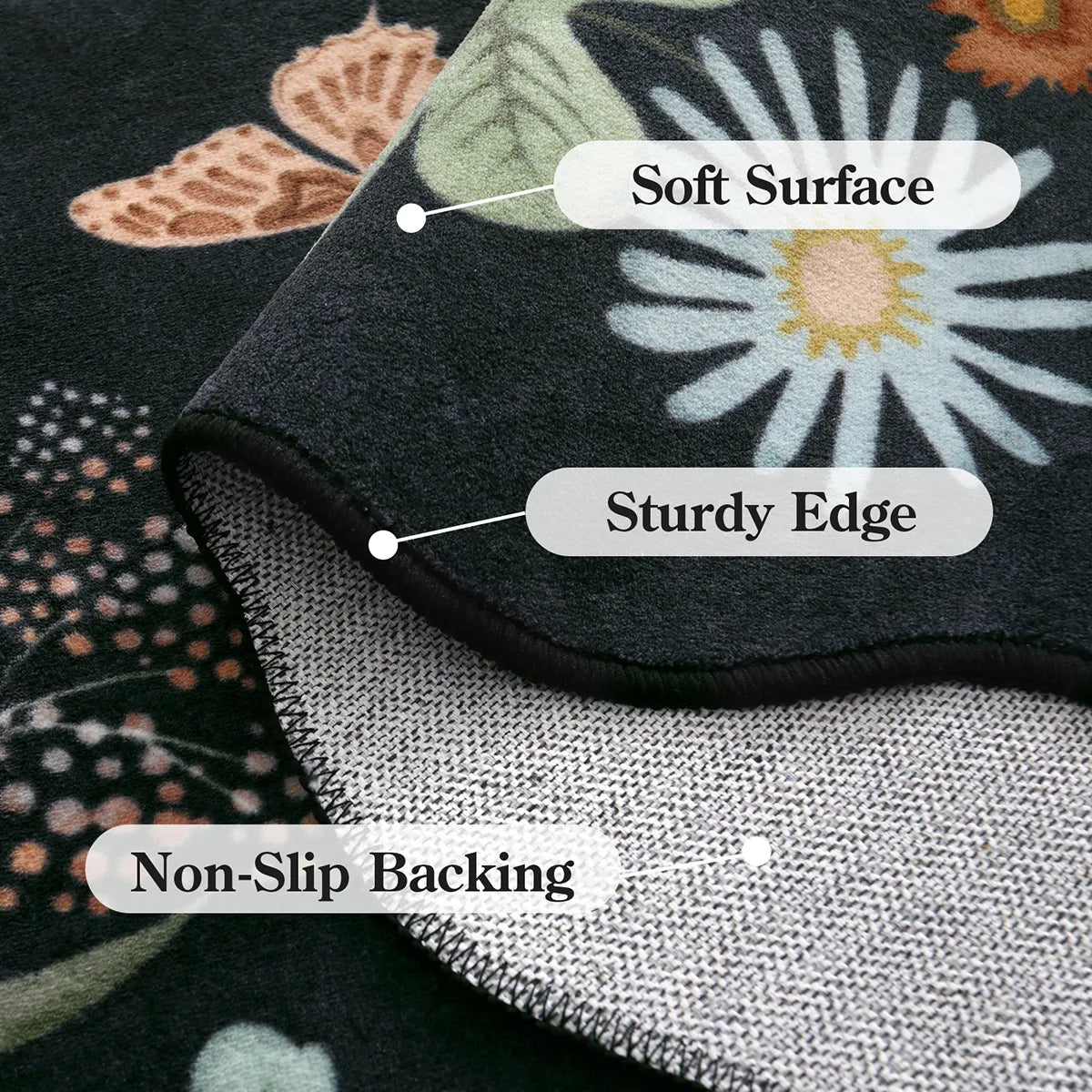
A rug pad can help keep a rug in place and reduce friction against the floor. Choose one that suits both the rug and your flooring material, particularly if you have hardwood or another delicate surface. Some rugs have built-in non-slip backing, so check the product details before buying a separate pad.
6. What Is the Best Pile Height for a Dining Table Rug?
Low-pile and flatweave rugs are usually practical under dining tables because chairs can slide across them more easily than across thick, plush rugs. They can also make crumbs easier to remove during routine cleaning. Check the rug's construction and care instructions rather than assuming pile height alone determines durability.
Conclusion
The right dining rug should give your chairs room to move without crowding the rest of the room. Measure your table, account for pulled-out chairs, and mark the rug's dimensions on the floor before you buy. If the ideal size feels too large for your space, look for a practical compromise. With your measurements in hand, you'll have a much clearer idea of which rug will work.

A Little Holiday Inspiration
Make Room for Holiday Gatherings
From festive reds to seasonal patterns, find a rug that brings a little extra warmth to your dining space this Christmas.
Shop Christmas Rugs