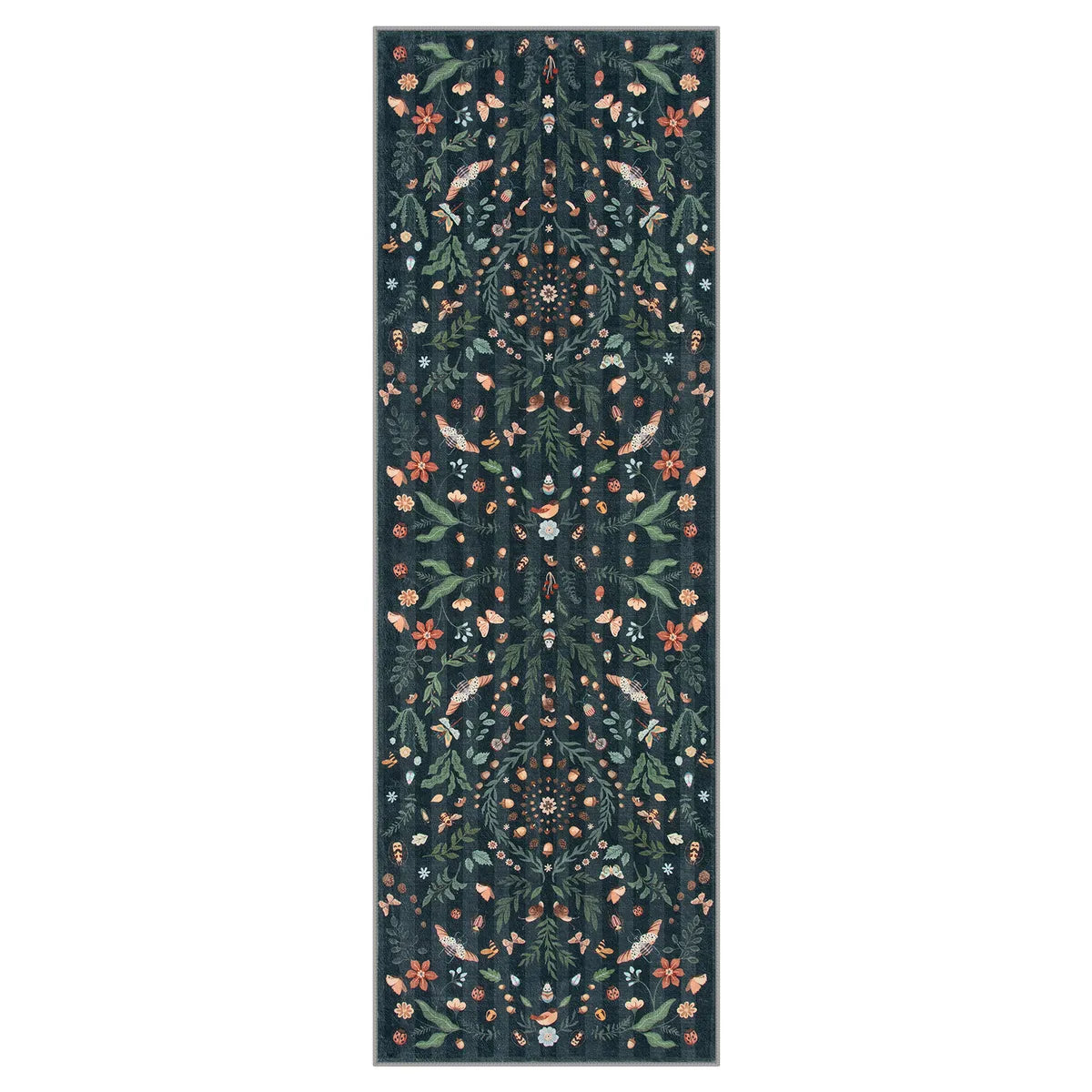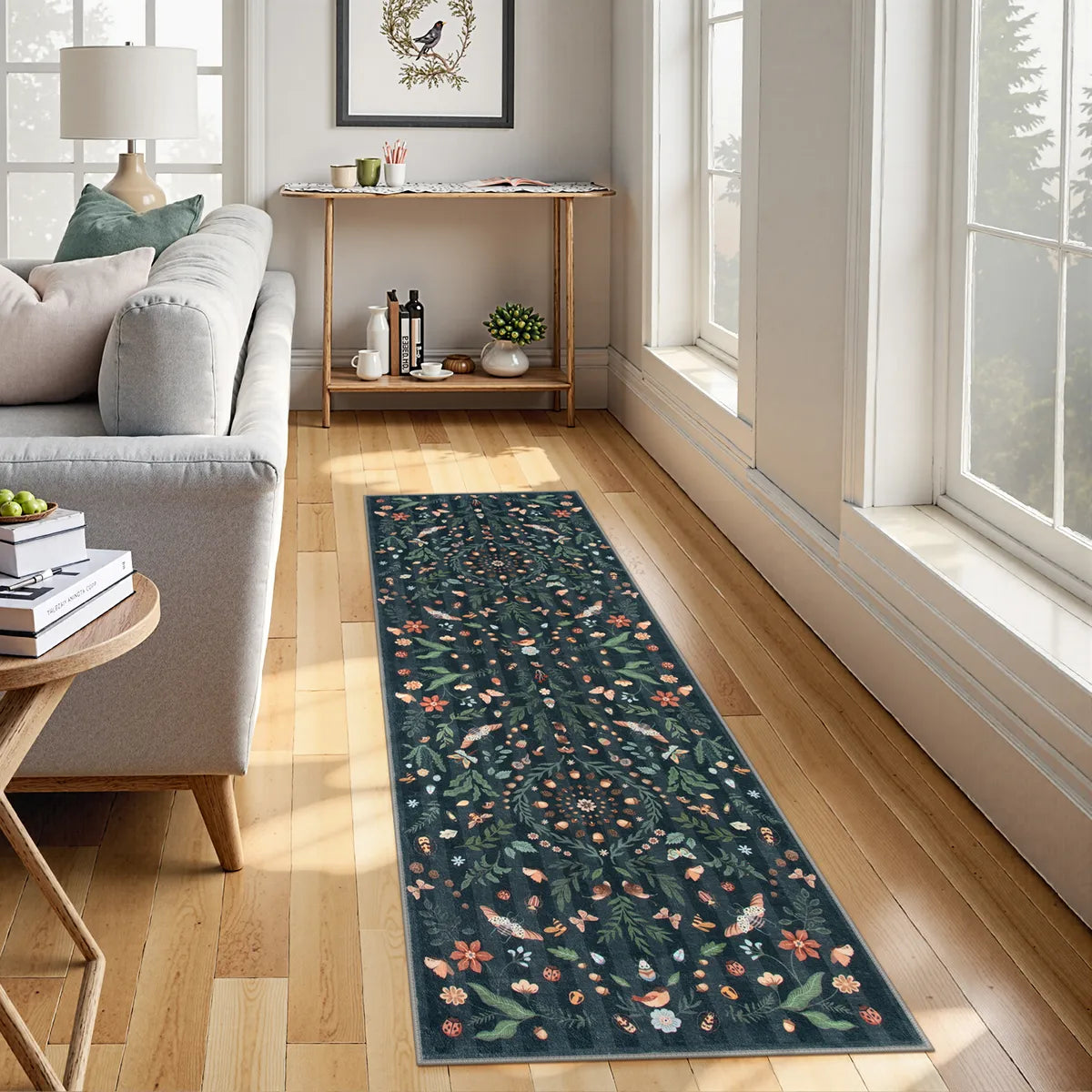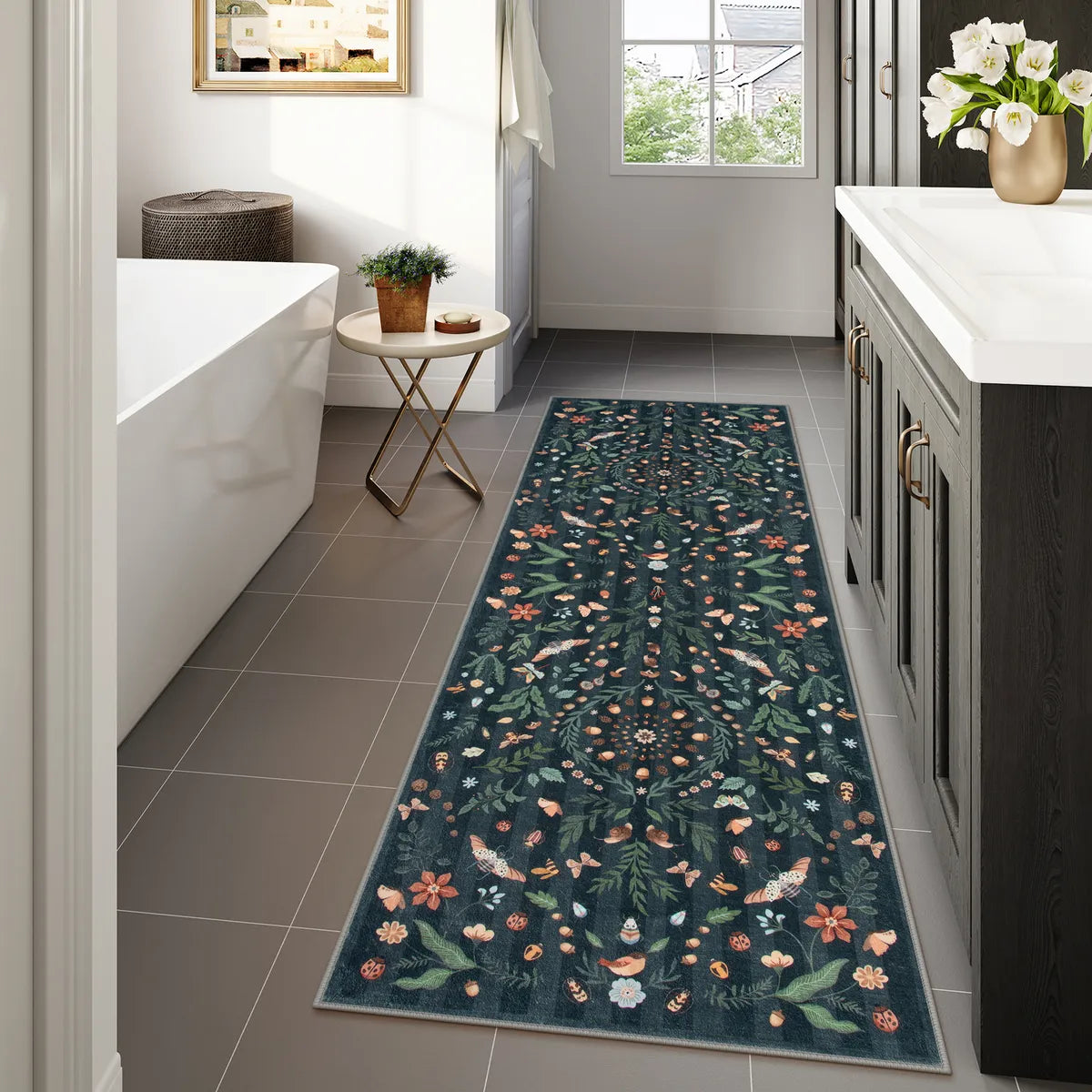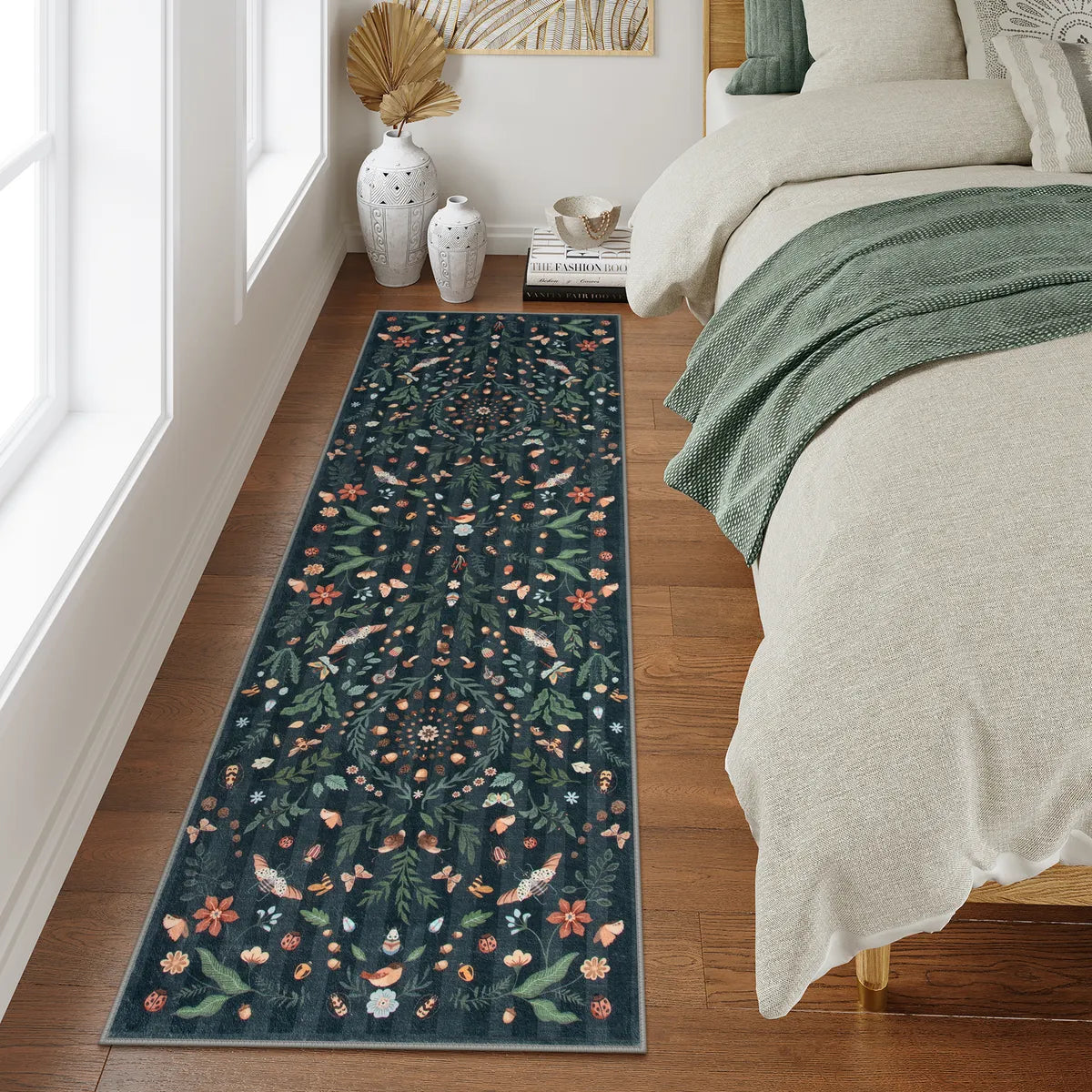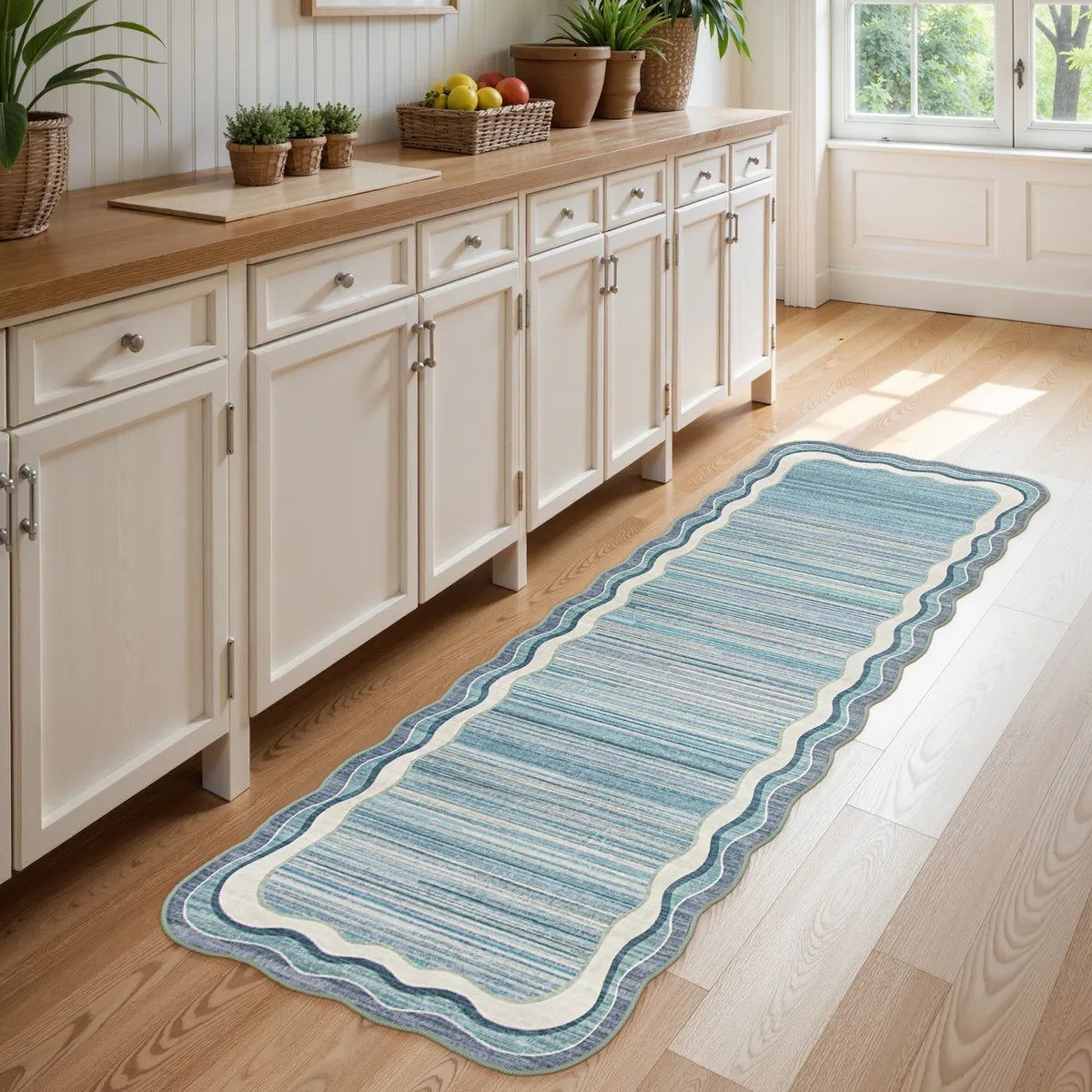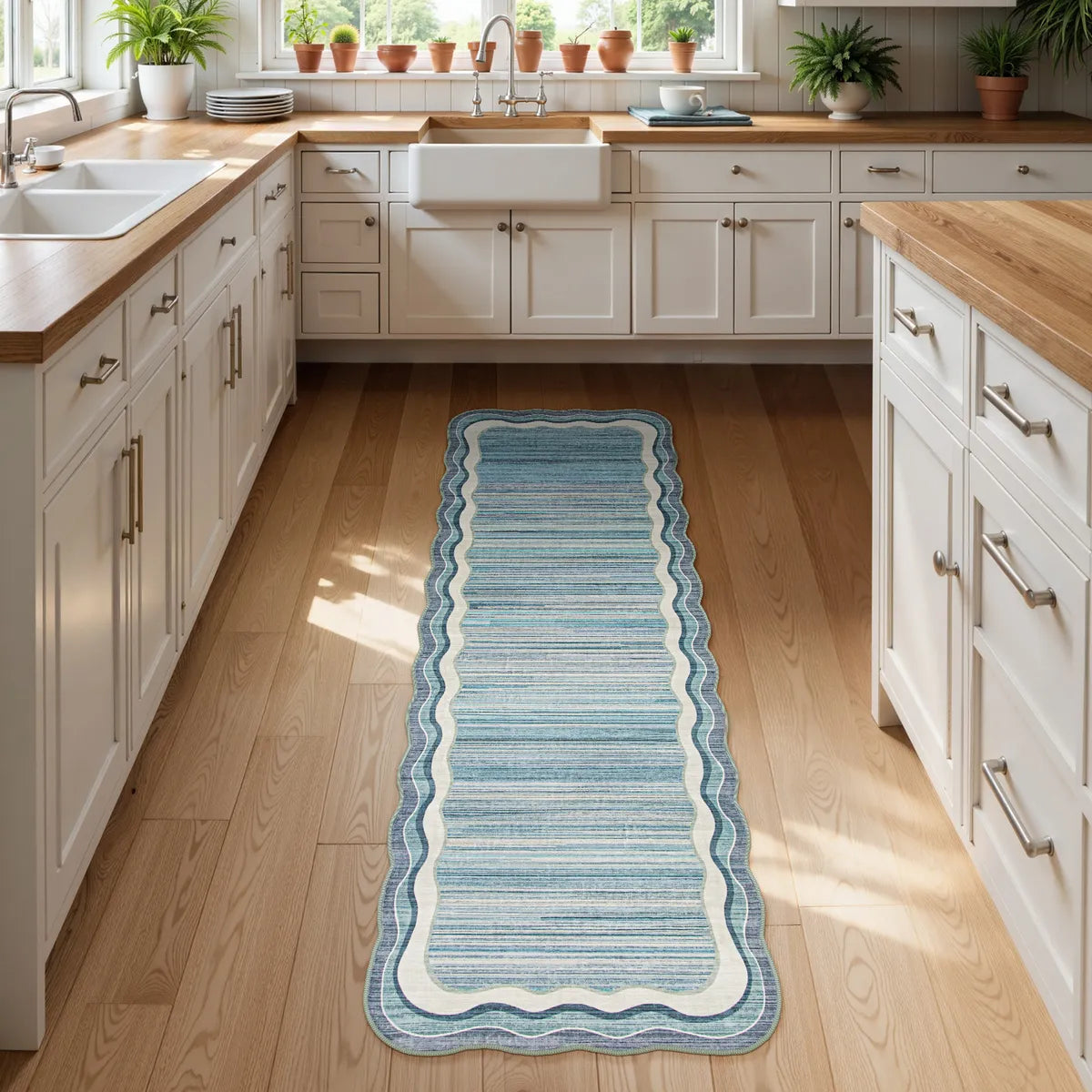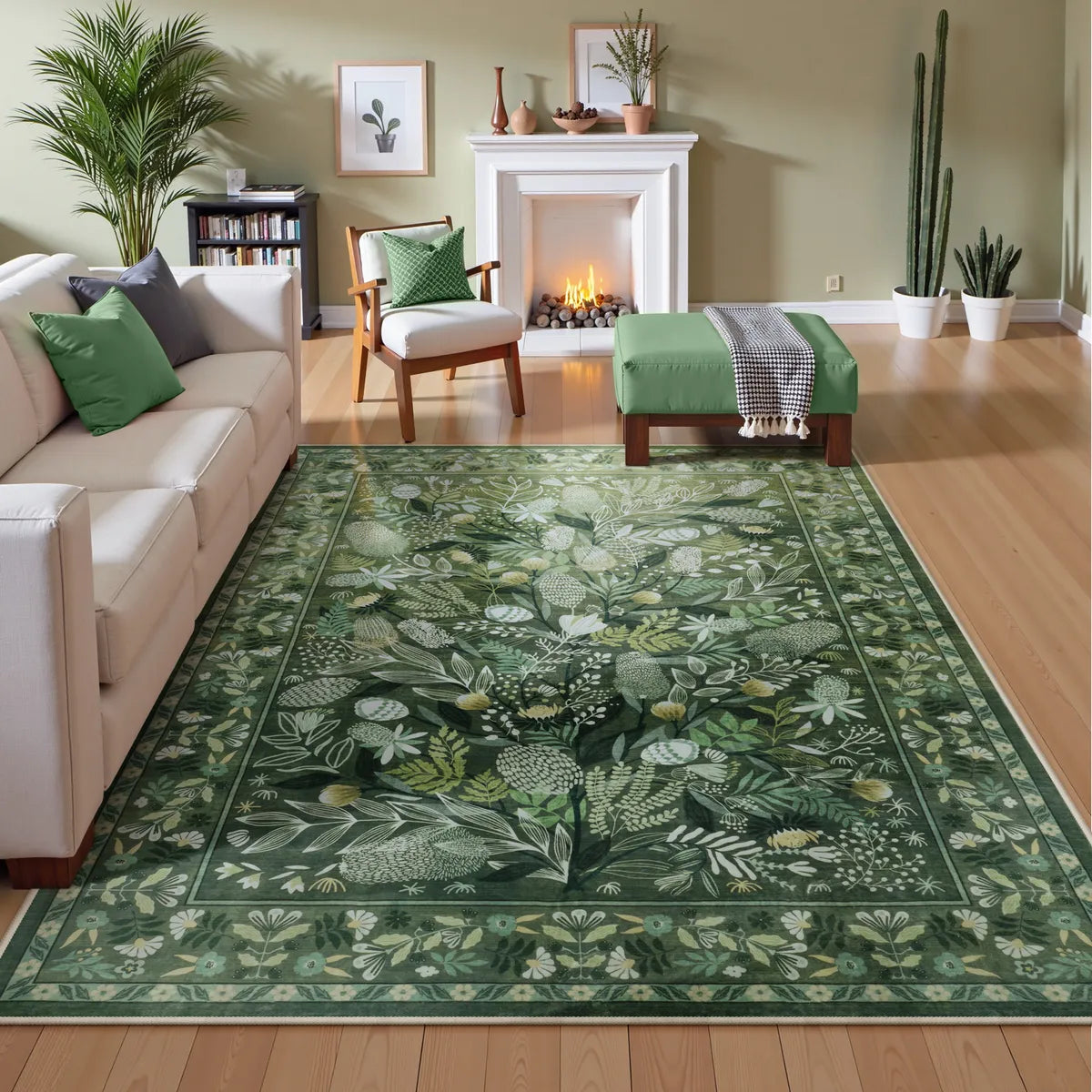


A stain on a favorite rug has a way of getting your attention. Maybe it’s a coffee ring near the sofa, a little muddy paw by the door, or a mark that has been sitting there longer than you’d like to admit. The temptation is to scrub it out and move on. That isn’t always the best move.
Before you start treating the spot, take a moment to check the rug’s material and care instructions. Once you know what you’re working with, the cleanup becomes much easier to approach.
How to Clean Rug Stains: Start With These Steps

When a stain happens, start simple. Get up as much of the spill as you can, figure out what kind of rug you’re dealing with, and work from there. You’re trying to remove the stain—not give the rest of the rug a bath.
Blot the Stain as Soon as Possible
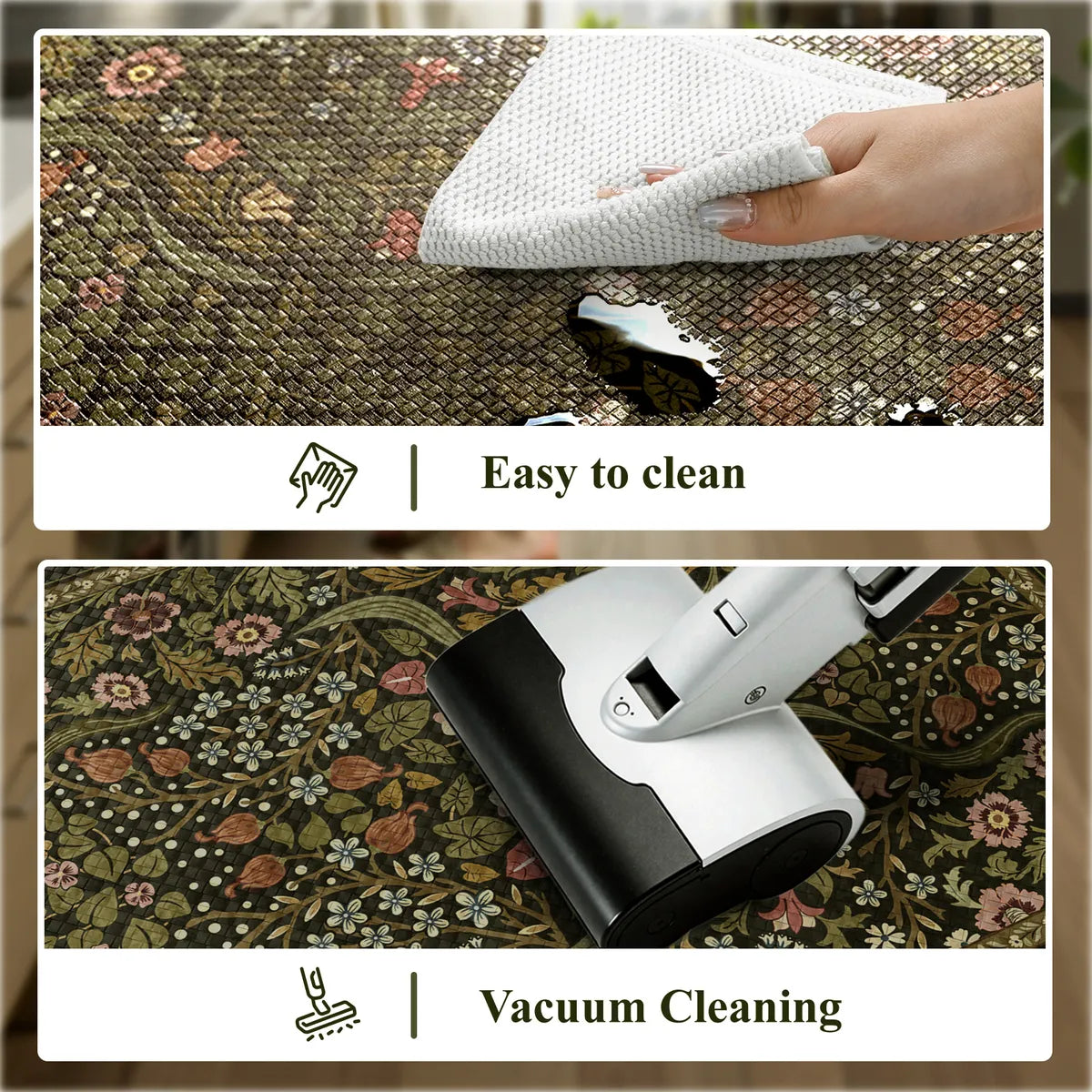
Grab a clean white cloth or paper towel and press it against the stain to absorb excess liquid. Start at the outside edge and work inward, moving to a clean part of the cloth as it becomes damp.
Blot rather than scrub. Rubbing can spread the stain and put unnecessary friction on the rug fibers.
Check Your Rug's Material and Care Label
Before treating the spot, check what the rug is made of and read its care instructions. A washable synthetic rug may handle moisture differently from wool, jute, or sisal.
If you are using a new cleaning product, test it somewhere inconspicuous first. The rug’s backing, finish, and construction can matter just as much as the surface fibers.
Choose a Gentle Cleaning Method
Start with the mildest cleaning method that fits both the stain and the rug. Depending on the care instructions, this may be a small amount of mild dish soap and water applied with a clean cloth, or another rug-compatible cleaning solution.
A soft brush may be suitable for some rugs, but it is not necessary for every stain.
Let the rug’s care instructions guide the method rather than choosing a cleaner based on the stain alone.
Treat the Stain Without Over-Wetting
Apply the cleaning solution gradually and work in small sections. Blot between applications instead of working the solution deeper into the fibers.
If the area is becoming heavily saturated, stop adding moisture. For moisture-sensitive materials, drying can become a problem of its own.
Remove Residue, Blot, and Dry Completely
When the cleaning method calls for rinsing, use clean water sparingly and remove as much moisture and cleaning residue as possible afterward. A clean, dry towel can help draw out remaining moisture.
Give the rug enough time to dry fully before putting it back into regular use.
Quick Decision Guide
What Should You Check First?
A quick check can help you choose the right starting point:
| If... | Start with... |
|---|---|
| The stain is fresh and wet | Blot up the excess moisture |
| You don't know the rug material | Check the care label |
| The rug is wool, jute, or sisal | Take extra care with moisture |
| The rug is machine washable | Follow its washing instructions |
| The stain is large, deep, or persistent | Consider professional cleaning |
What You Need to Clean a Rug Stain
You probably already have most of what you need at home. Keep the setup simple and have a few clean supplies within reach before you start.
Essential Rug Cleaning Supplies
- Clean white cloths or paper towels
- Mild dish soap
- Clean water
- Baking soda
- White vinegar, when appropriate
- Spray bottle
- Soft brush or sponge
- Vacuum
You won’t necessarily need everything on the list. The right supplies depend on the stain and what the rug can safely handle.
Test Your New Cleaner First
Before putting a new cleaner or household solution on a visible stain, try a small amount in an inconspicuous area. Look for color transfer, changes in the fibers, or a reaction from the rug’s backing or finish.
A familiar household ingredient isn’t automatically a safe choice for every rug. When in doubt, check the product’s care guidance before trying a new solution.
How to Remove Different Types of Rug Stains
Different stains call for different first steps. A fresh coffee spill, greasy food, muddy shoes, and pet urine can all behave differently once they reach the rug fibers.
Start by identifying what caused the stain, then choose a cleaning method that fits the situation.
1. How to Remove Pet Stains from a Rug

Pet accidents need quick attention, especially when urine, vomit, or lingering odor is involved. Start by blotting up as much moisture as possible with a clean white cloth or paper towel. Work from the outside toward the center and keep switching to a dry section of the cloth.
For pet urine, an enzyme-based cleaner may help break down organic residue and address odor. Make sure the product is suitable for the rug, and test it in an inconspicuous area before treating the visible stain.
Avoid soaking the rug. Excess moisture can be particularly troublesome for natural fibers and rugs with moisture-sensitive backings.
For a more detailed approach to urine accidents, see our guide on how to get dog pee out of a rug.
2. How to Clean Oil and Grease Stains from a Rug
Oil and grease are easy to spread when rubbed, so begin by removing any solid food or residue from the surface.
- Blot excess oil with a clean cloth.
- Absorb remaining grease with a suitable dry absorbent, such as baking soda, when the rug’s care instructions allow it.
- Vacuum thoroughly once the dry material has done its job.
- Spot-clean the remaining mark using a method suitable for the rug.
The goal is to lift the grease gradually rather than push it farther into the surrounding fibers.
3. How to Remove Coffee, Tea, and Food Stains
For fresh coffee, tea, or food spills, remove any solid residue first and blot up excess liquid. Avoid rubbing, which can spread the stain and work it farther into the fibers.
Treat the remaining discoloration with a cleaning method suitable for the rug. If rinsing is part of that method, use clean water sparingly and blot away the moisture afterward.
Let the area dry completely before deciding whether more treatment is needed.
4. How to Clean Mud and Dirt Stains
Wet mud is usually easier to make worse than to clean. If possible, allow the mud to dry before trying to remove it.
Once dry:
- Remove loose pieces from the surface.
- Vacuum thoroughly to lift embedded dirt.
- Treat remaining discoloration with a suitable spot-cleaning method.
- Allow the area to dry completely.
Avoid immediately scrubbing wet dirt, which can work it deeper into the rug.
5. How to Remove Other Common Rug Stains
Some stains need more specialized treatment, so start with what caused the mark rather than reaching for the same cleaner every time.
| Stain | First step | Main caution |
|---|---|---|
| Blood | Blot fresh stains and remove excess moisture | Avoid aggressive rubbing or heat |
| Ink | Blot carefully to limit spreading | Ink can spread quickly and may require specialized treatment |
| Candle wax | Let the wax harden, then gently remove surface residue | Avoid damaging the fibers while lifting hardened wax |
| Nail polish | Carefully remove excess from the surface | Solvents can affect dyes, fibers, or backing |
| Juice or colored drinks | Blot immediately to remove as much liquid as possible | Pigments can leave discoloration if allowed to set |
How Rug Material Changes the Cleaning Method
The stain alone doesn't determine the cleaning method. The rug material matters too.
Fiber type, backing, construction, and moisture tolerance can all affect how a rug responds to cleaning. A method that works well on one rug may be too aggressive for another.
Synthetic
How to Clean Stains on Synthetic Rugs
Synthetic rugs, including polyester, can be practical for routine spot cleaning, but “synthetic” is not a blanket cleaning instruction.
Start with the rug’s care guidance and choose a cleaning method that suits the specific fiber and construction. Avoid unnecessary moisture, particularly when the rug has a backing that should not be saturated.
If you are trying a product for the first time, test it in a hidden area and watch for changes in color or texture.
For everyday spaces where practical spot care is a priority, polyester rugs are one option to consider.
Wool
How to Clean a Wool Rug Stain
Wool calls for a gentler approach. Use as little moisture as practical, avoid aggressive scrubbing, and follow the rug’s care instructions before applying a cleaning product. Watch for color bleeding or changes in the fibers as you work.
Jute
How to Clean a Jute Rug Pet Stain
Jute is sensitive to moisture, which can make pet accidents more difficult to manage.
Blot the stain as soon as possible and avoid soaking the area. If spot cleaning is suitable for the rug, use minimal moisture and work carefully rather than repeatedly wetting the fibers.
Thorough drying matters. Lingering moisture can create additional problems for natural-fiber rugs.
If you like the look of natural fiber and are considering different rug options, jute rugs are worth exploring.
Sisal
How to Clean Sisal Rug Pet Stains
Sisal also requires particular care around moisture. Blot pet stains rather than scrubbing them, and avoid saturating the rug while trying to remove the accident.
Odor can be an additional concern with pet stains. Adding more cleaning solution is not necessarily the answer, especially if the rug cannot tolerate significant moisture.
Why You Shouldn't Use the Same Cleaner on Every Rug
A cleaning method should be chosen based on both the stain and the rug, not the stain alone.
Rugs differ in their fibers, dyes, backing, and construction, so the same product can produce different results from one rug to another.
When in doubt, check the care instructions, test an unfamiliar product in an inconspicuous area, and start with the least aggressive method that fits the rug.
If you want to compare how natural wool and synthetic polyester differ in everyday use and care, see our article on wool vs. polyester rugs.
Can Baking Soda or Vinegar Remove Rug Stains?
Baking soda and vinegar are common household cleaning solutions, but neither should be treated as a universal rug stain remover. Whether they are suitable depends on the stain, rug material, and care guidance.
When Baking Soda Can Help
Baking soda can be useful in certain situations, particularly for absorbing some oils or addressing certain odors.
It can also work as a dry treatment when the rug’s care instructions allow it. It is not a universal stain remover.
Can You Use Vinegar on a Rug?
Vinegar is another common household cleaning ingredient, but it isn't suitable for every rug.
Fibers, dyes, backings, and finishes can respond differently to acidic solutions. Check the care instructions and test first.
Should You Mix Baking Soda and Vinegar?
Baking soda and vinegar react when combined, creating the familiar bubbling effect.
More bubbling does not automatically mean better stain removal. The mixture is not a universal rug cleaner.
For rug stains, choosing a method that fits the stain + material is more important than creating a stronger-looking reaction.
What Not to Do When Cleaning Rug Stains
A few common cleaning habits can make a stain harder to remove—or cause damage to the rug itself.
How to Clean a Badly Stained or Very Dirty Rug
When a rug has several stains or has built up dirt over time, treating every spot at once can make the job harder. Start with the dry debris, then focus on the areas that need the most attention.
Start With Dry Cleaning Steps
Vacuum thoroughly, remove loose residue, and identify the areas that need the most attention before adding moisture.
Treat the Most Problematic Stains First
Work in manageable sections and prioritize the most visible or deeply set stains. Avoid saturating the entire rug.
Know When DIY Is No Longer Enough
Consider professional cleaning when staining is widespread or persistent, odors remain, the rug is delicate or valuable, or it has experienced significant water exposure.
How to Clean a Machine-Washable Rug
Machine-washable rugs can simplify routine care, but washable does not mean that every rug can go into a washing machine. The product’s care instructions should determine how the rug is washed and dried.
1. Check the Care Label Before Washing
Before putting a rug in the washing machine, confirm that it is specifically labeled as machine washable.
A rug may look lightweight or washable while still having fibers, backing, or construction that are not designed for machine washing.
Always follow the product’s care instructions rather than judging by appearance alone.
2. Remove Stains Before Machine Washing When Required
Machine washing does not necessarily replace spot treatment. Some stains may need to be addressed before the rug goes into the washer, particularly if they contain oil, heavy residue, or other material that may not come out during a regular wash cycle.
Check the product instructions and treat the stain separately when recommended.
3. Follow the Recommended Wash and Dry Settings
Follow the specific product’s instructions for water temperature, cycle, detergent, drying method, and other care requirements.
4. Make Sure the Rug Is Completely Dry Before Reusing It
Allow the rug to dry according to the product’s instructions and make sure it is fully dry before reuse or storage.
For more detail on when and how a rug can be machine washed, see our guide on how to wash a rug in the washing machine.

For busy homes with frequent spills, pets, kids, or high-traffic areas, washable rugs can make routine care more manageable.
How to Prevent Future Rug Stains
Cleaning a stain is only part of rug care. A few simple habits can reduce how often spills, dirt, and everyday messes turn into stubborn stains.
Remove loose dirt before it gets worked deeper into the rug.
Fresh spills are generally easier to manage than settled stains.
Help keep the rug in place and reduce shifting and friction.
Catch dirt and moisture before they reach the rug.
Have a few basics ready when spills happen.
When Should You Call a Professional Rug Cleaner?
Some stains are simply beyond what a careful spot treatment can handle. Professional cleaning is worth considering when the stain is extensive, the rug is delicate, or moisture has already caused damage.
Consider Professional Cleaning When
- Staining is large, widespread, or deeply set.
- Odor persists after appropriate cleaning.
- The rug has been heavily saturated.
- The rug is wool, silk, antique, handmade, or otherwise delicate.
- Color bleeding occurs during cleaning.
- There is water damage or a potential mold concern.
- The rug is valuable or difficult to replace.
For small, manageable stains on rugs that can safely be spot cleaned, DIY care can be reasonable. When the risk of damage becomes greater than the benefit of continued home treatment, professional care is the safer route.
Frequently Asked Questions
How Do I Remove Stains From My Rug?
Start by blotting up excess moisture, then identify the stain and check the rug’s material and care instructions. Use the mildest cleaning method suited to both the stain and the rug, and avoid over-wetting or scrubbing.
How Do You Clean a Badly Stained Rug?
Start by vacuuming and removing loose debris, then focus on the most visible or deeply set stains in manageable sections. If the staining is widespread, persistent, or involves a delicate rug, professional cleaning may be more appropriate.
What Is the Best Way to Clean a Very Dirty Rug?
Begin with dry cleaning steps such as thorough vacuuming and removing loose dirt before introducing moisture. Then work through the areas that need the most attention without saturating the entire rug.
Can Baking Soda Remove Rug Stains?
Baking soda can help absorb certain oils and may help with some odors, but it is not a universal rug stain remover. Whether it is suitable depends on the stain, rug material, and care instructions.
Does Baking Soda and Vinegar Remove Stains From Carpet?
Baking soda and vinegar react when combined, but the bubbling reaction does not automatically make them more effective at removing stains. Carpet and rug materials can respond differently to household cleaning solutions, so check the care instructions before using the mixture.
Can I Use Carpet Stain Remover on a Rug?
Not automatically. Carpet stain remover is not necessarily suitable for every rug because rugs can differ in fiber, dye, backing, and construction. Check the rug’s care instructions and test an unfamiliar product in an inconspicuous area first.