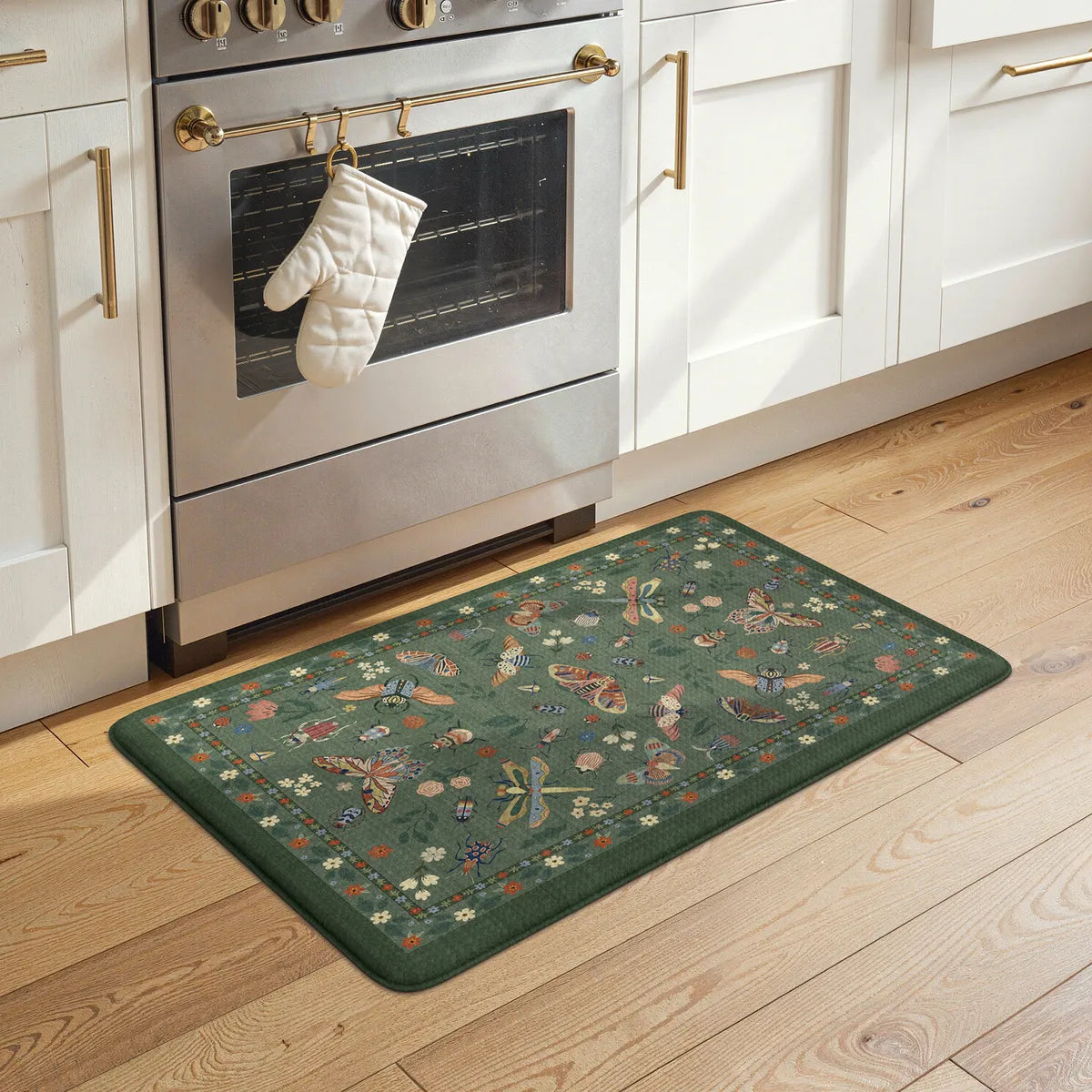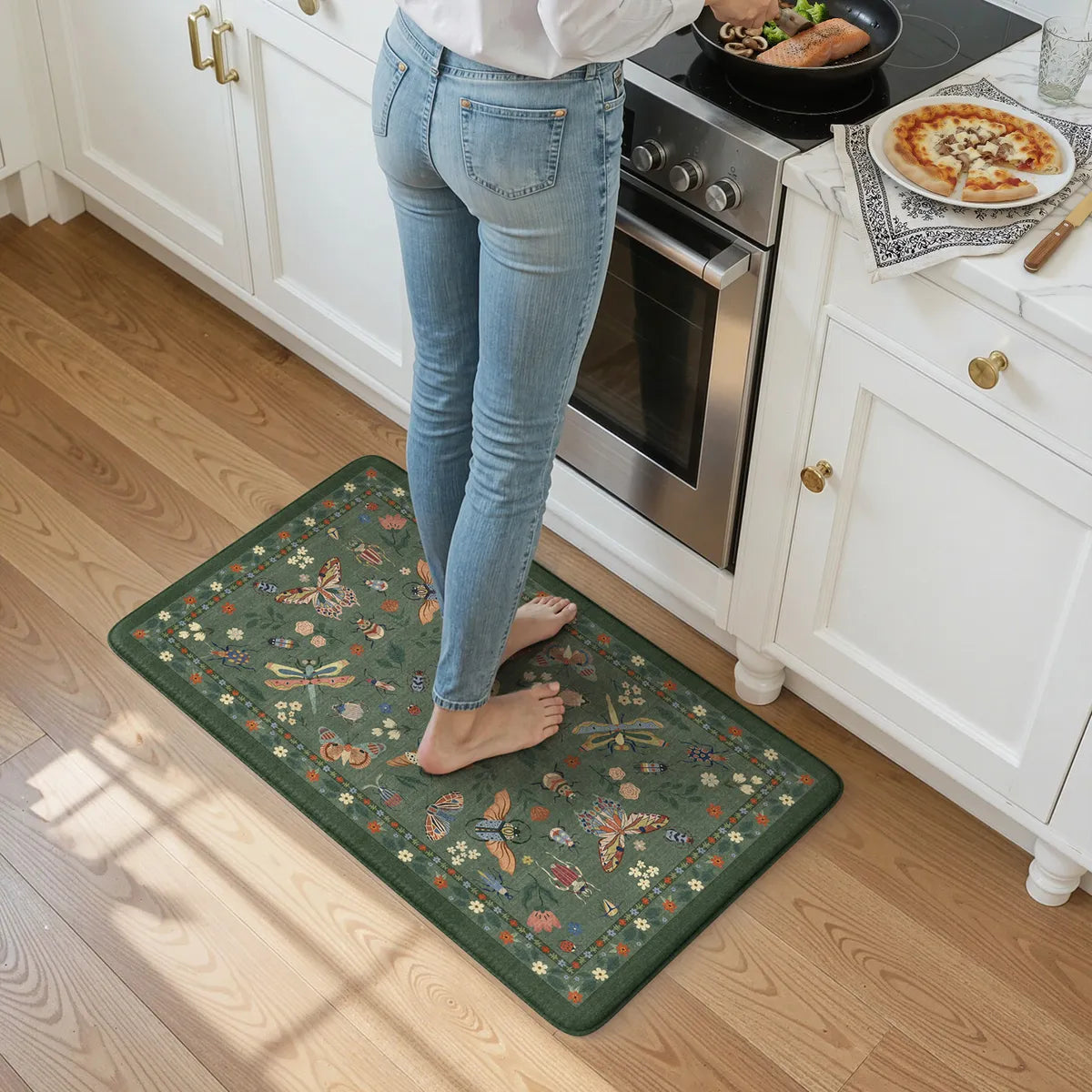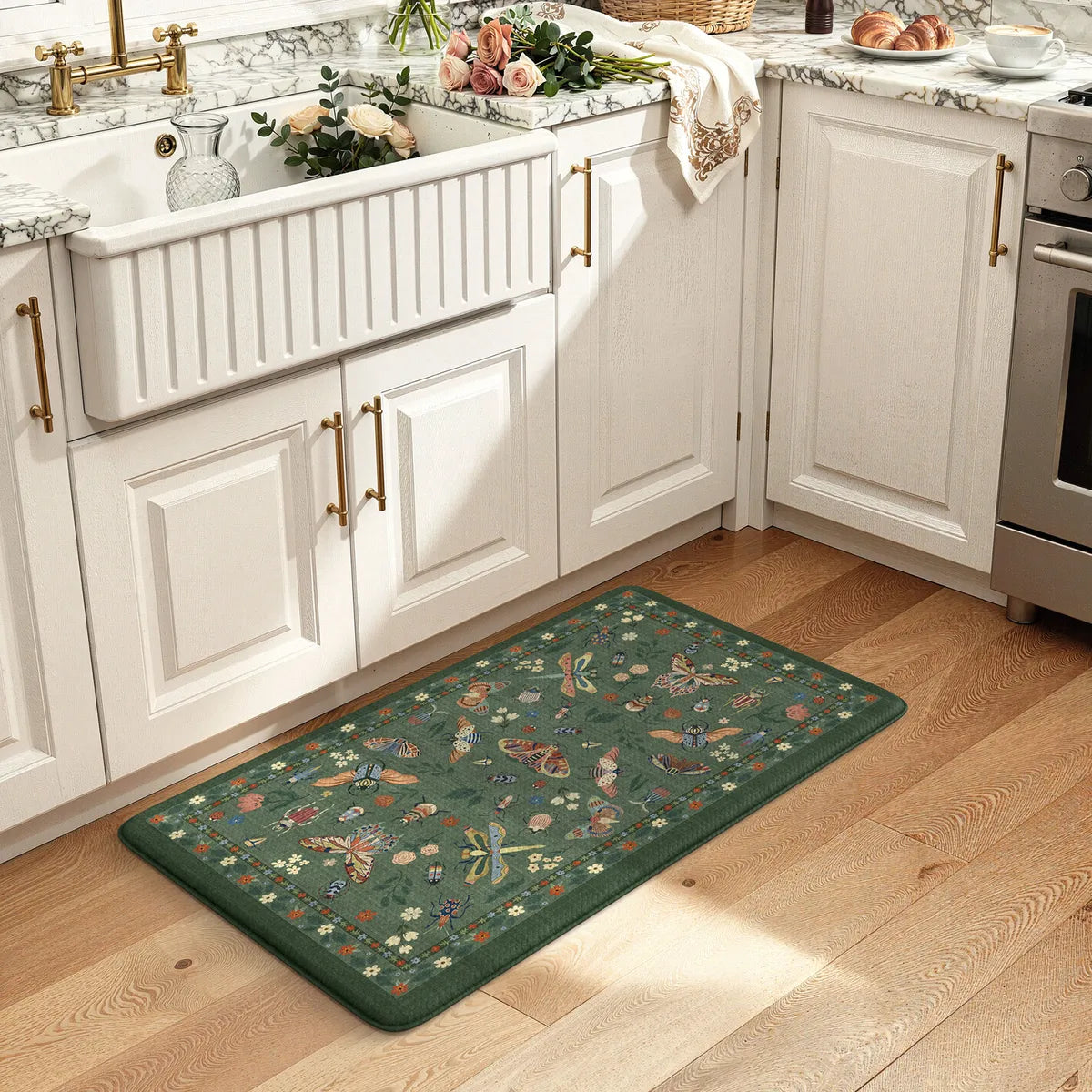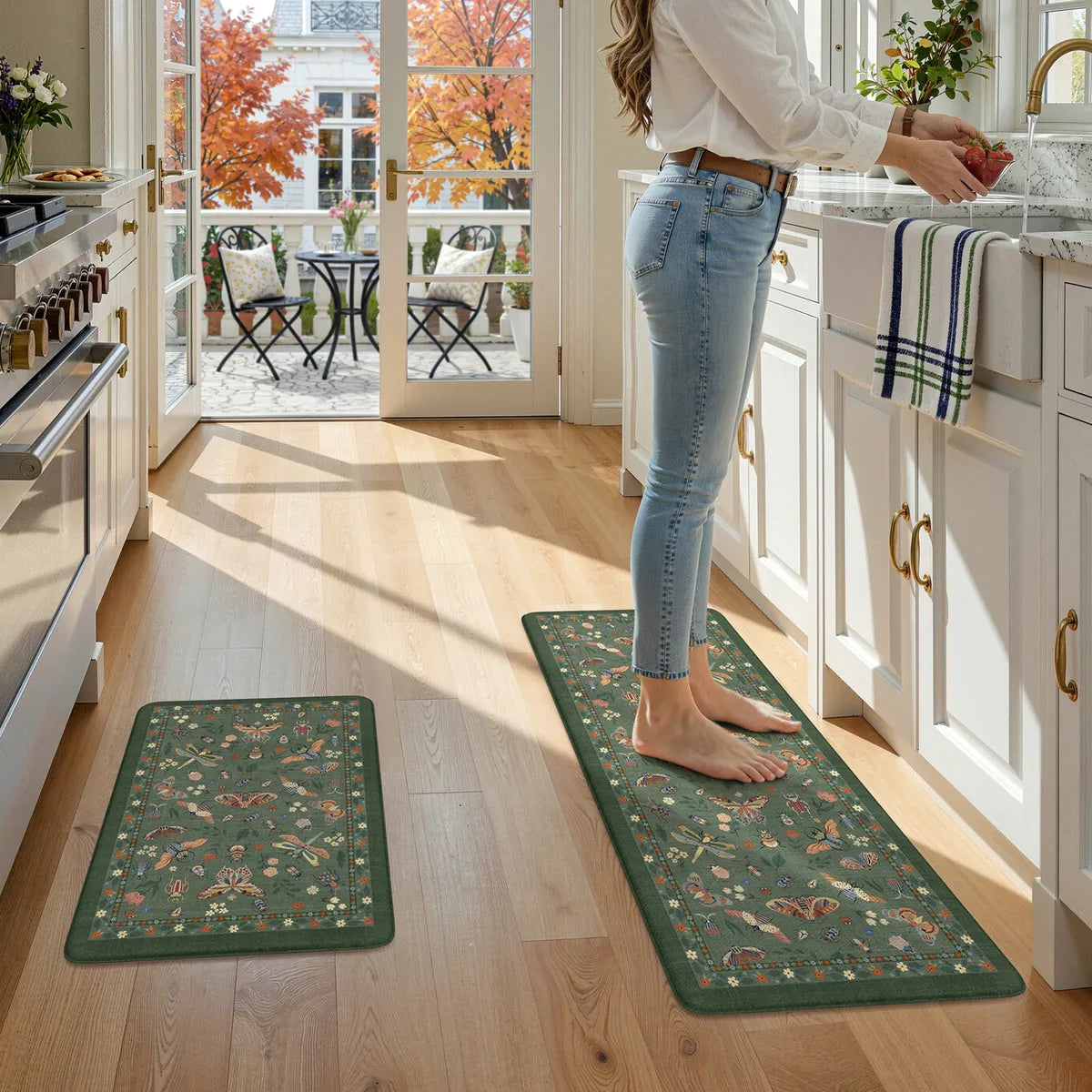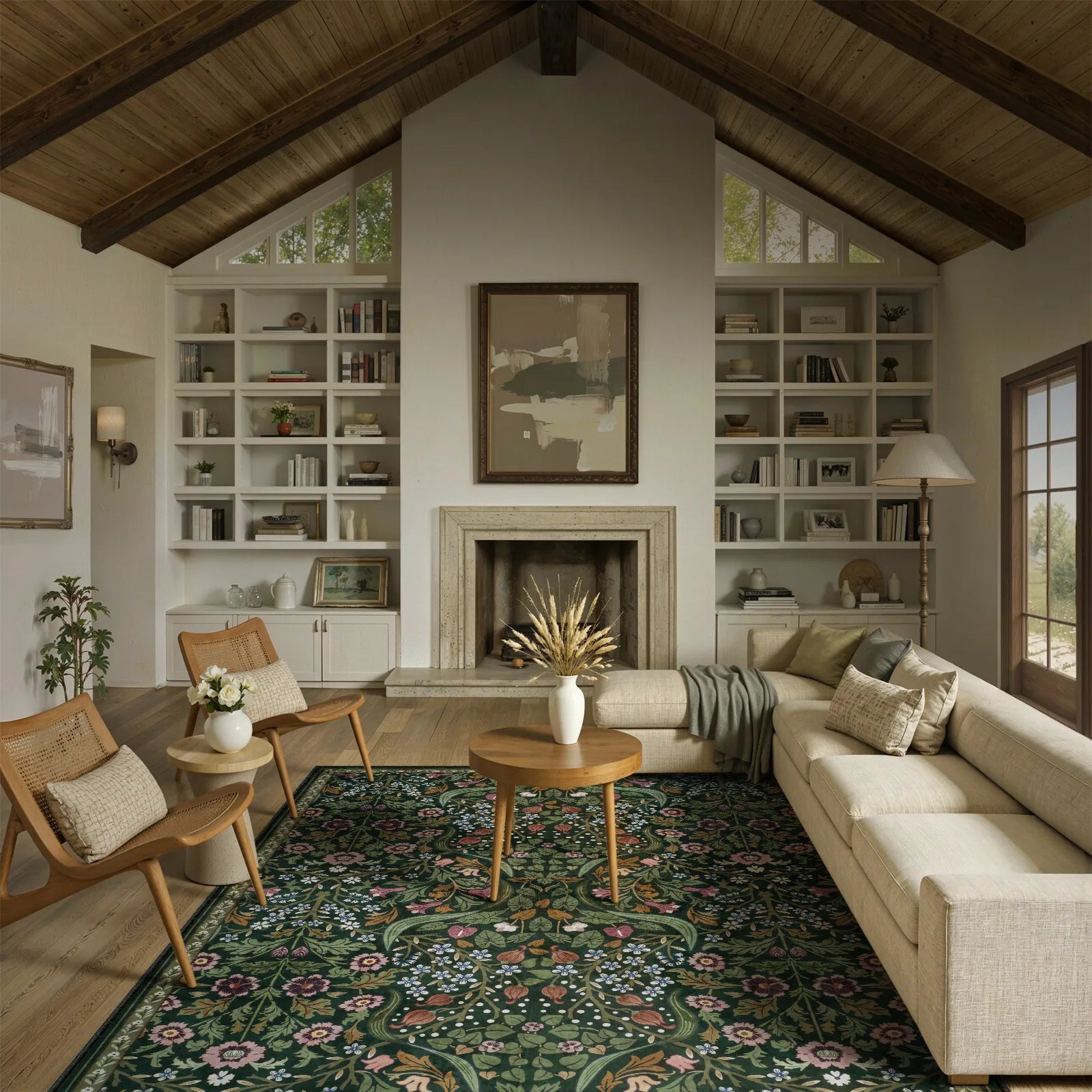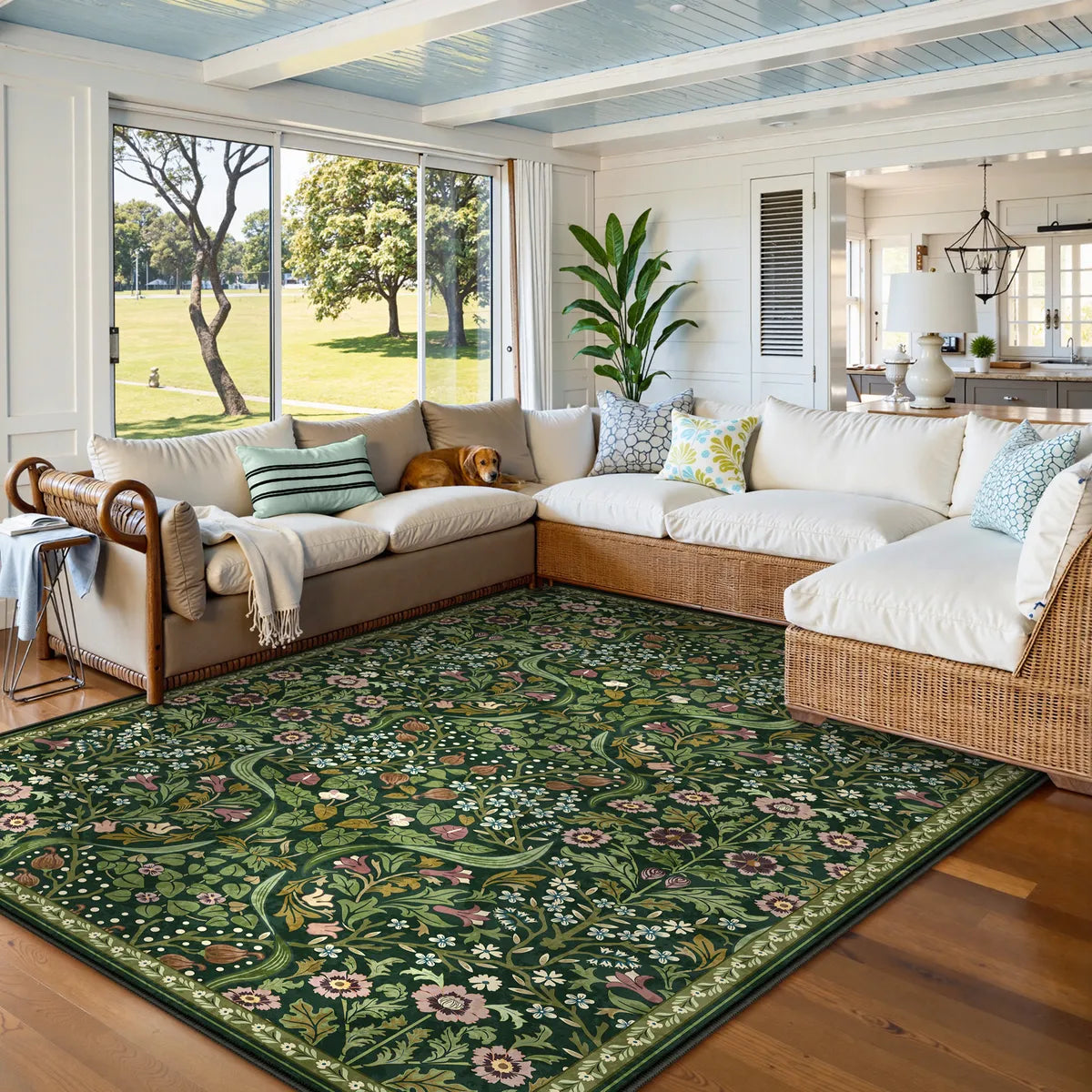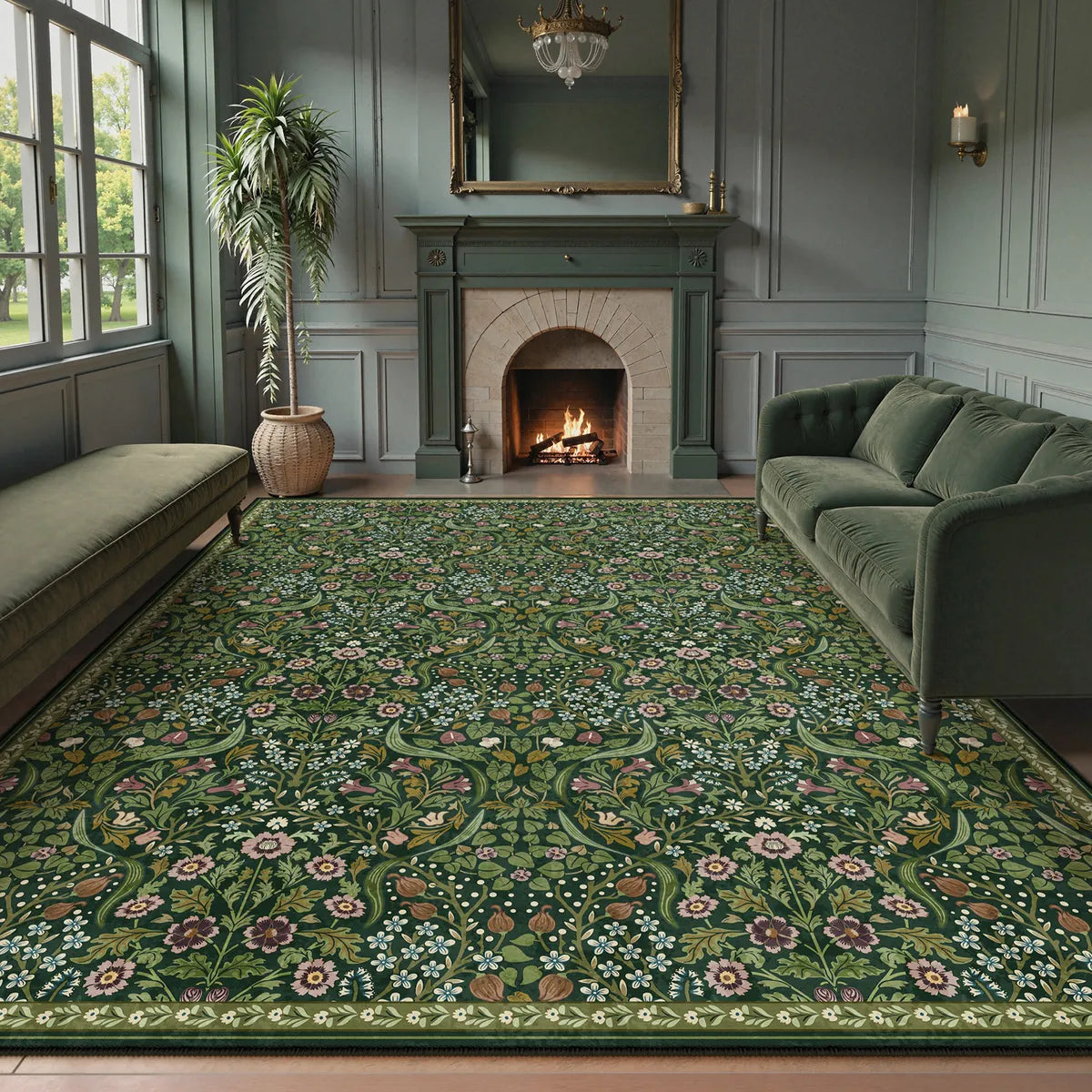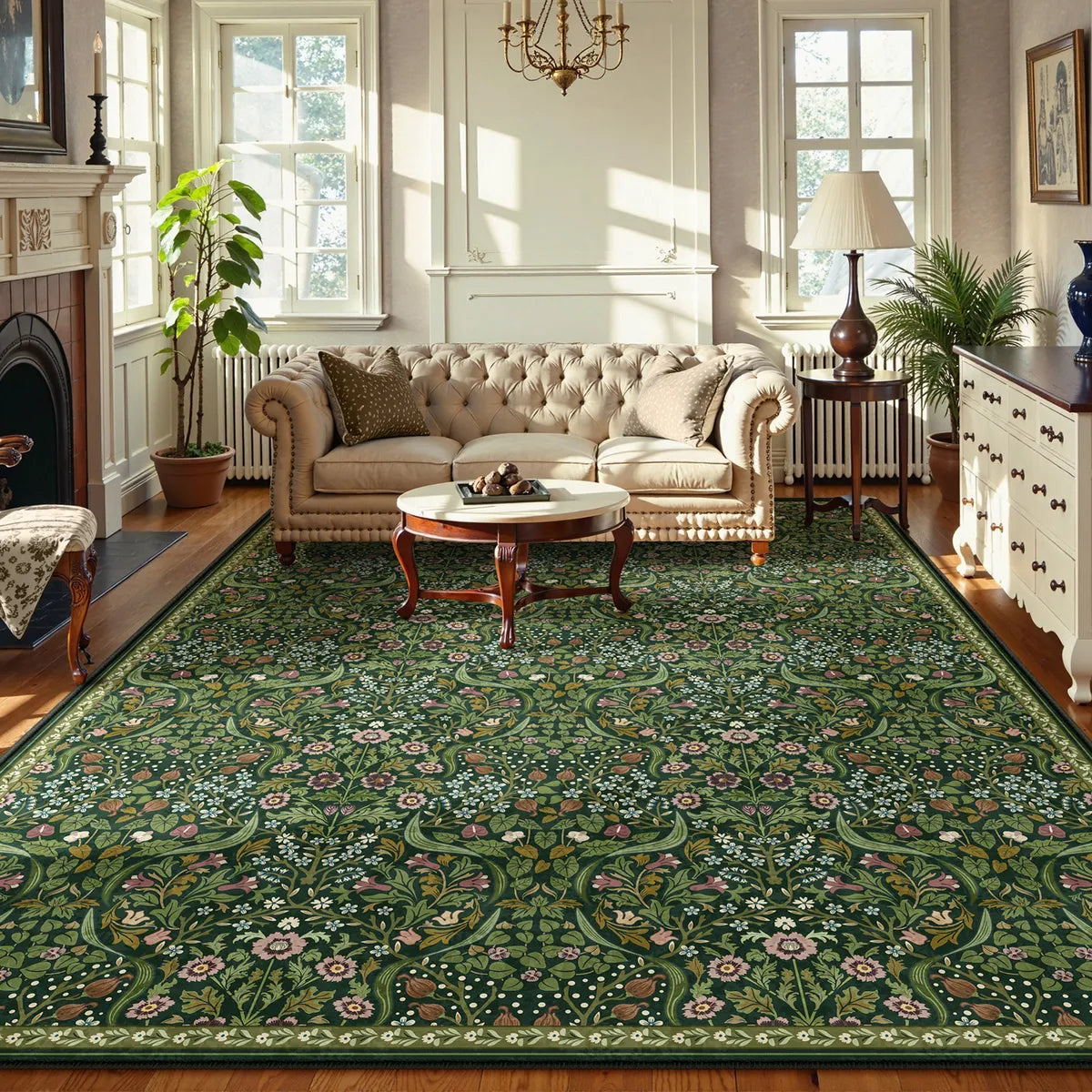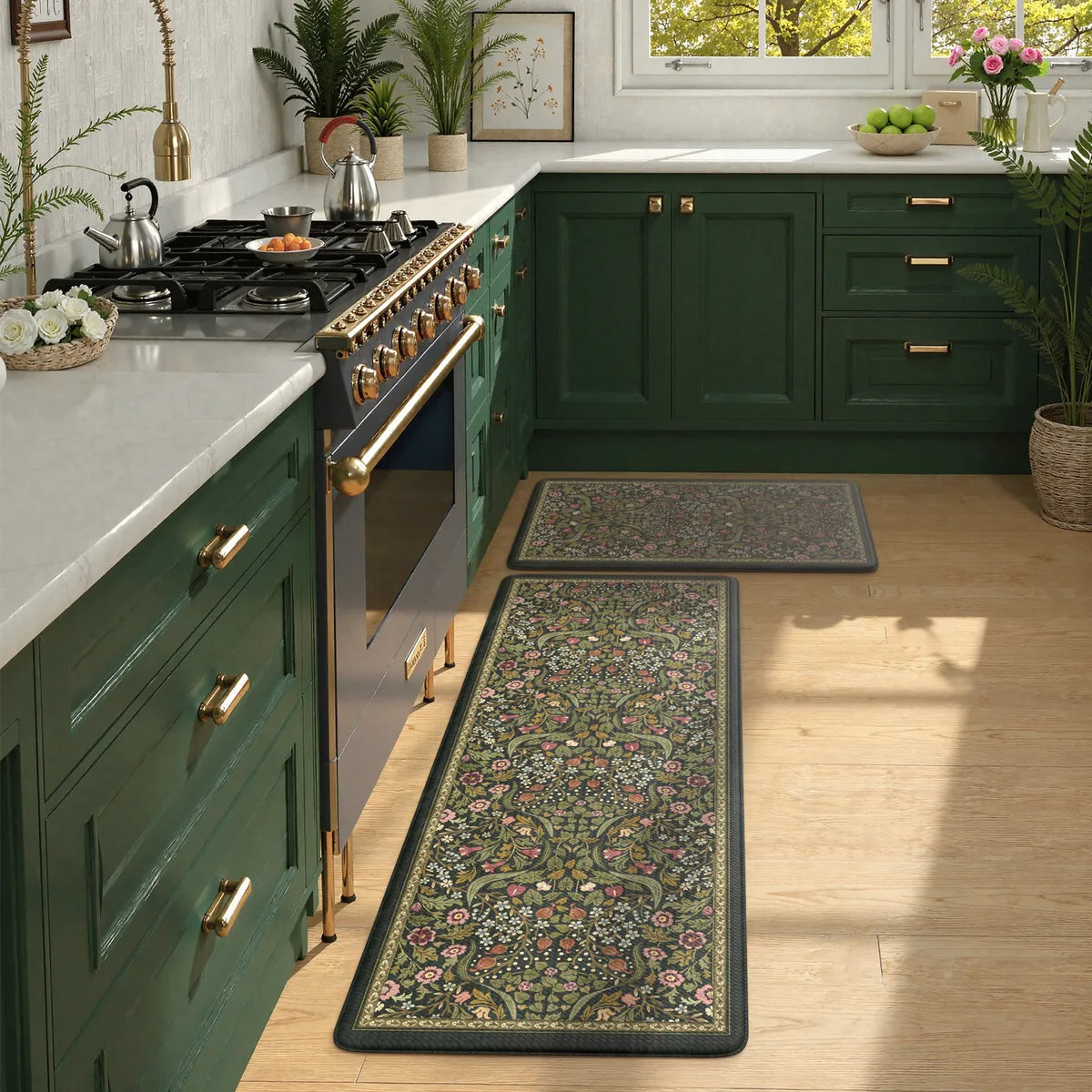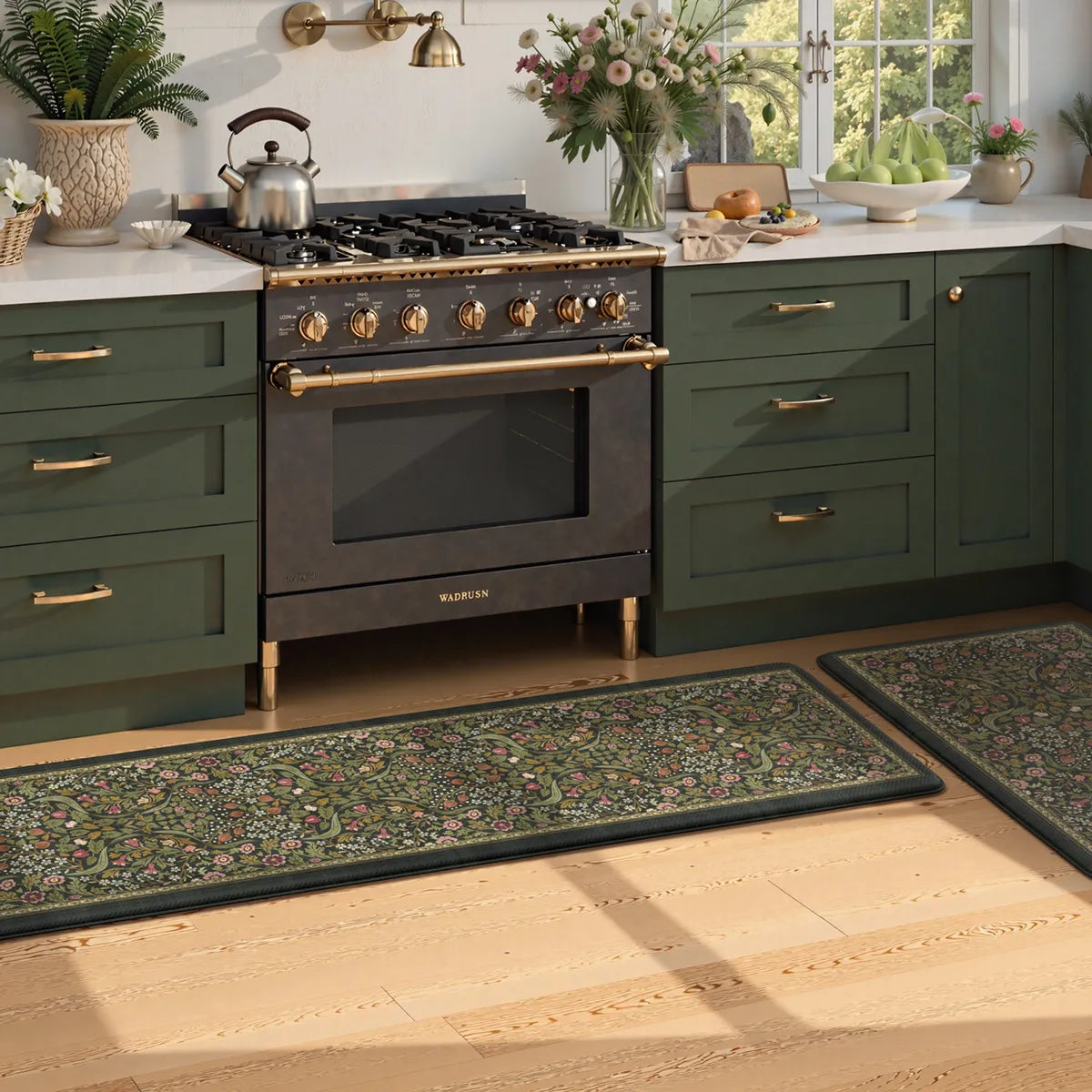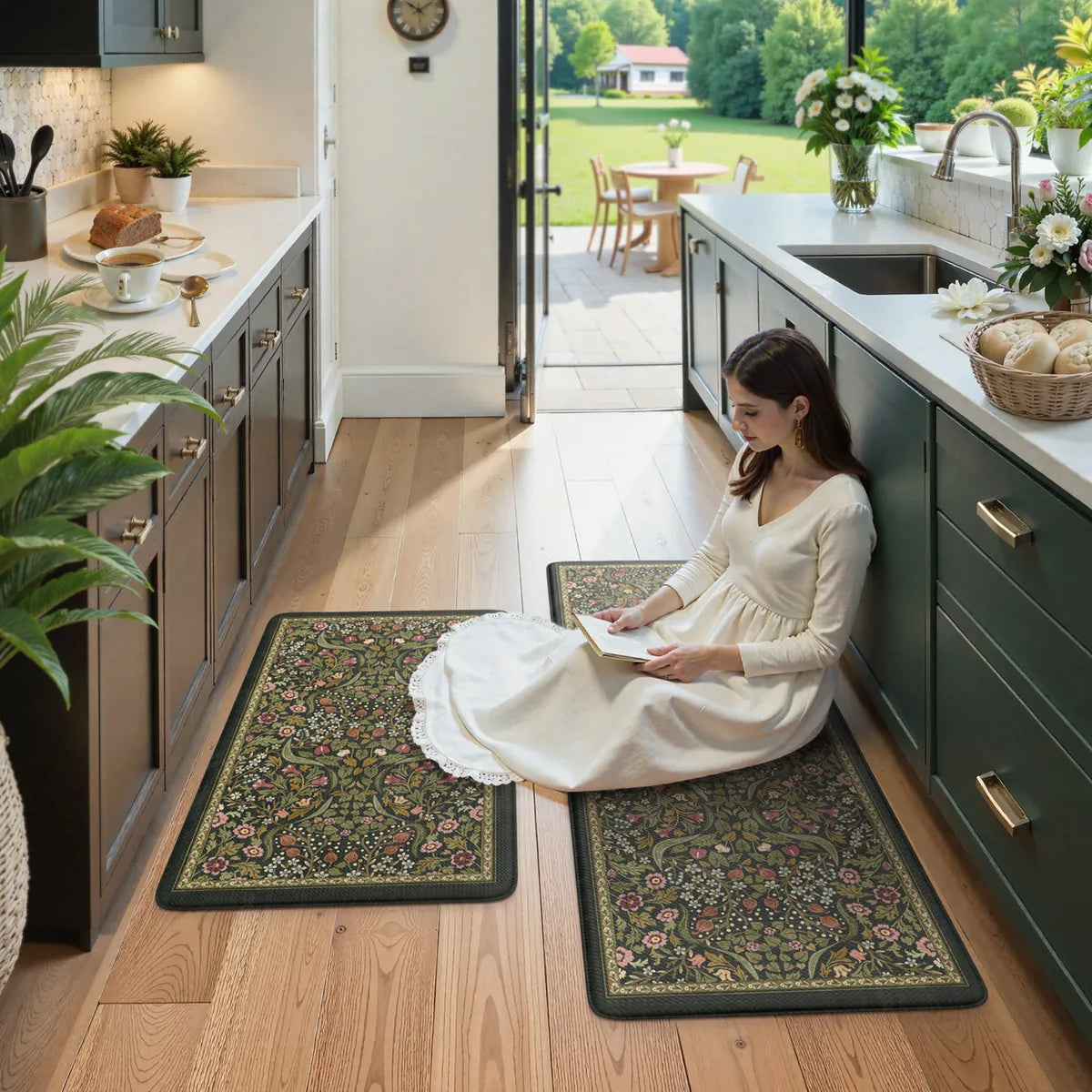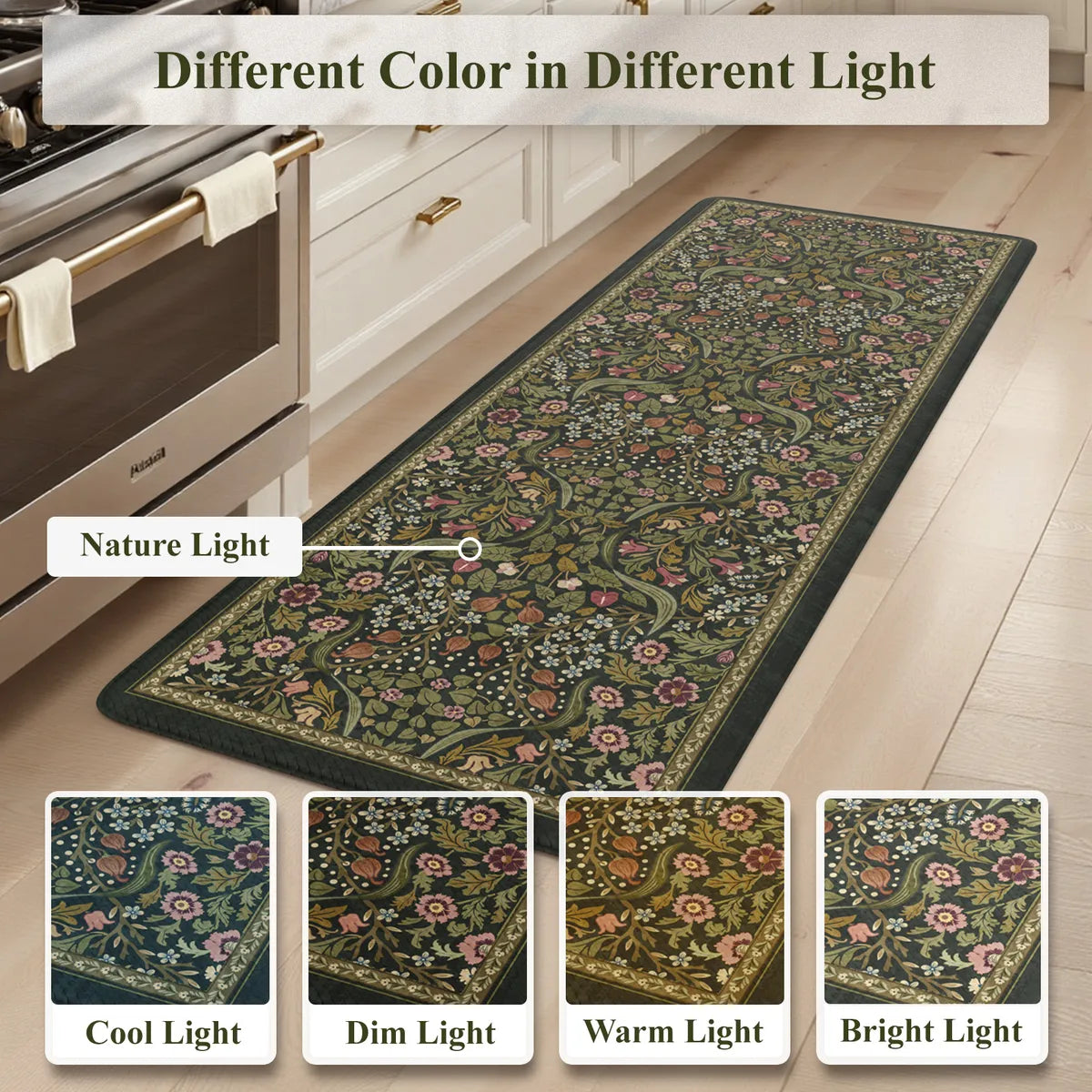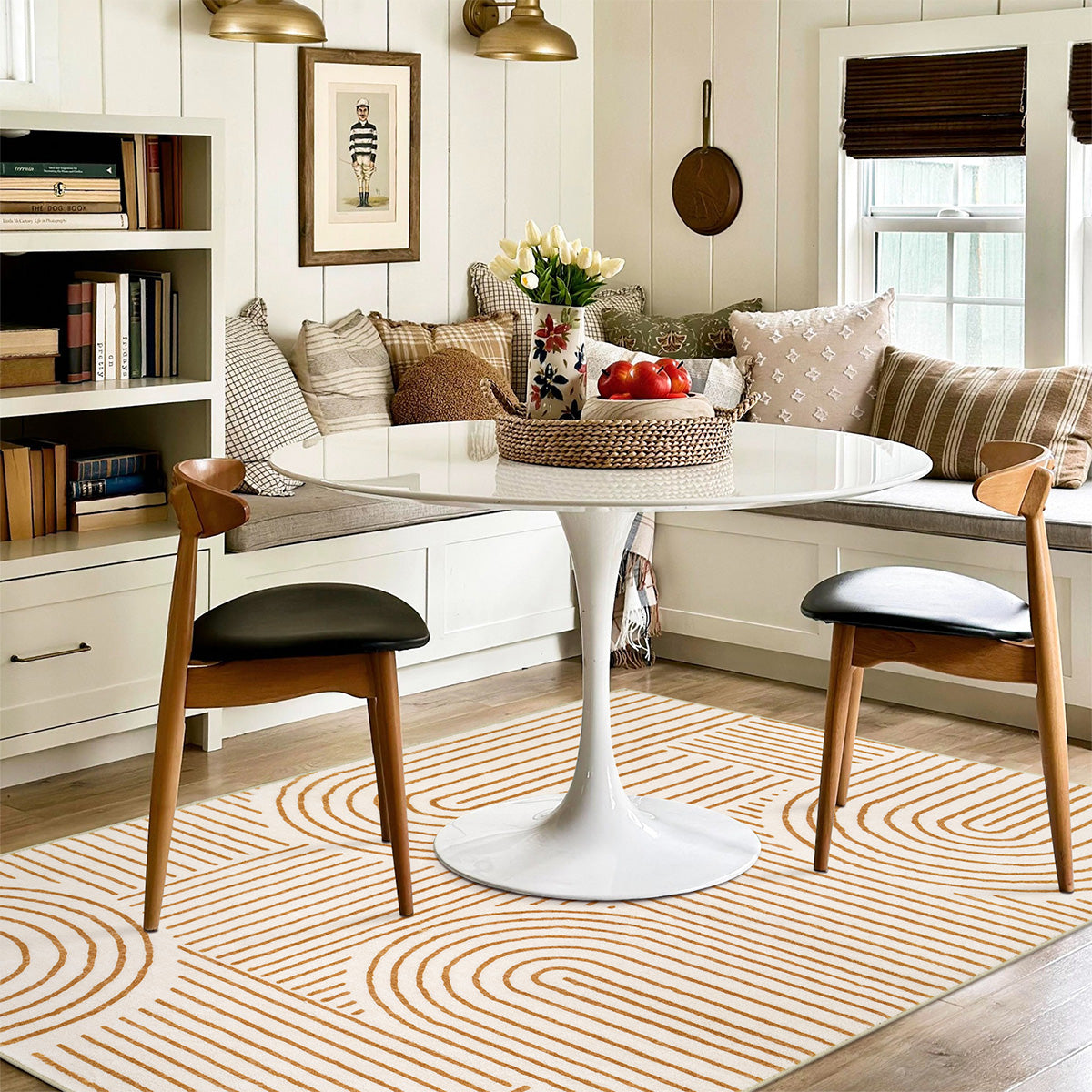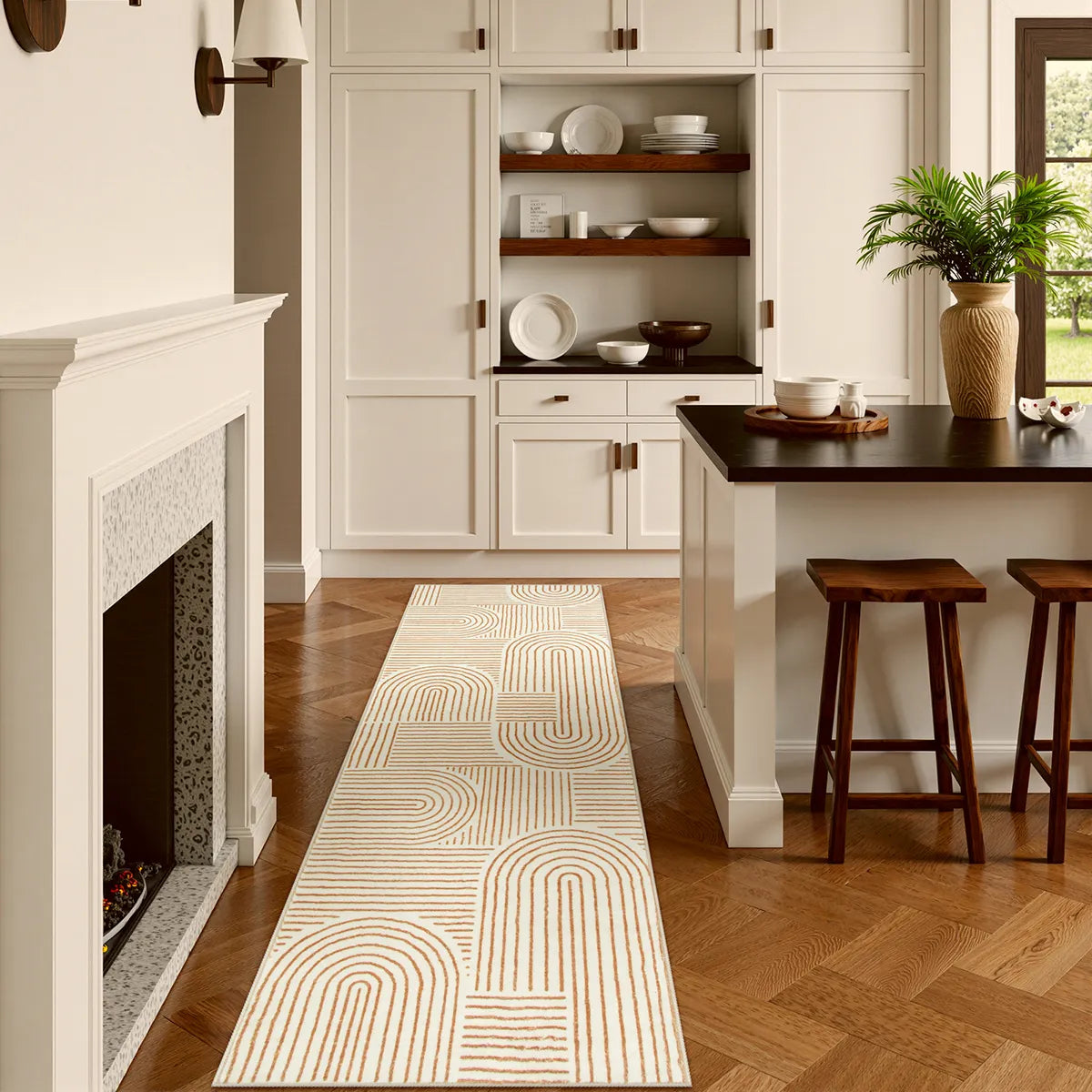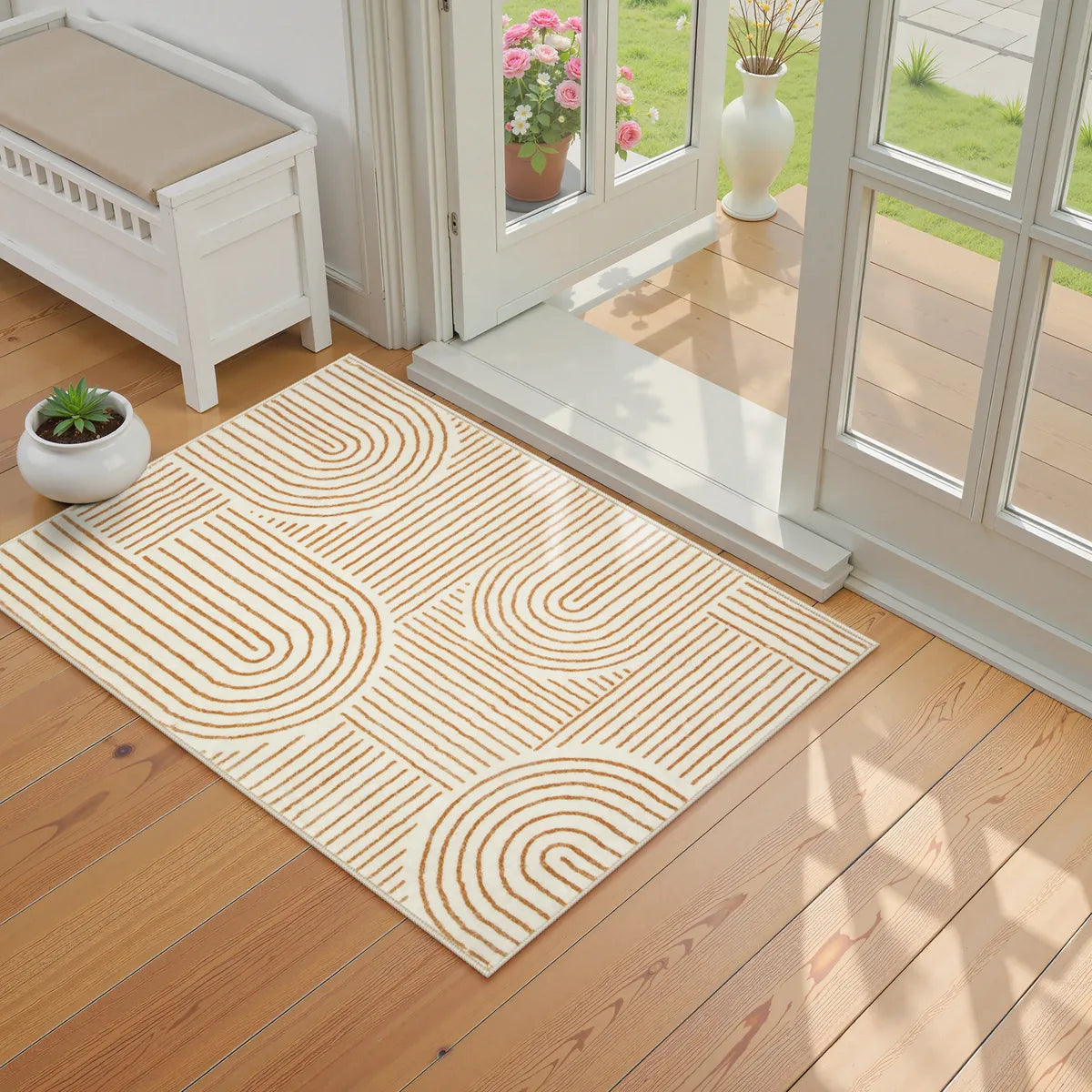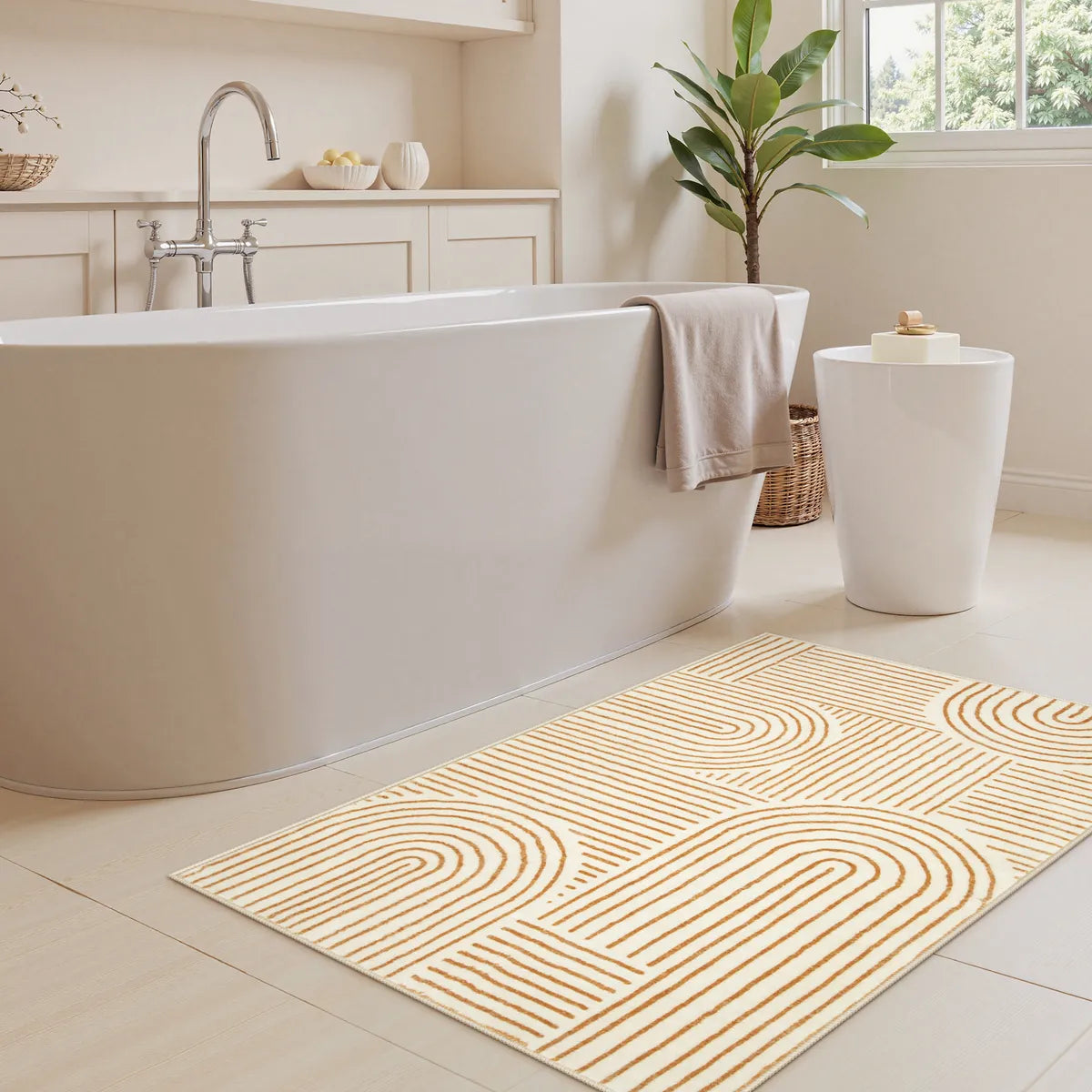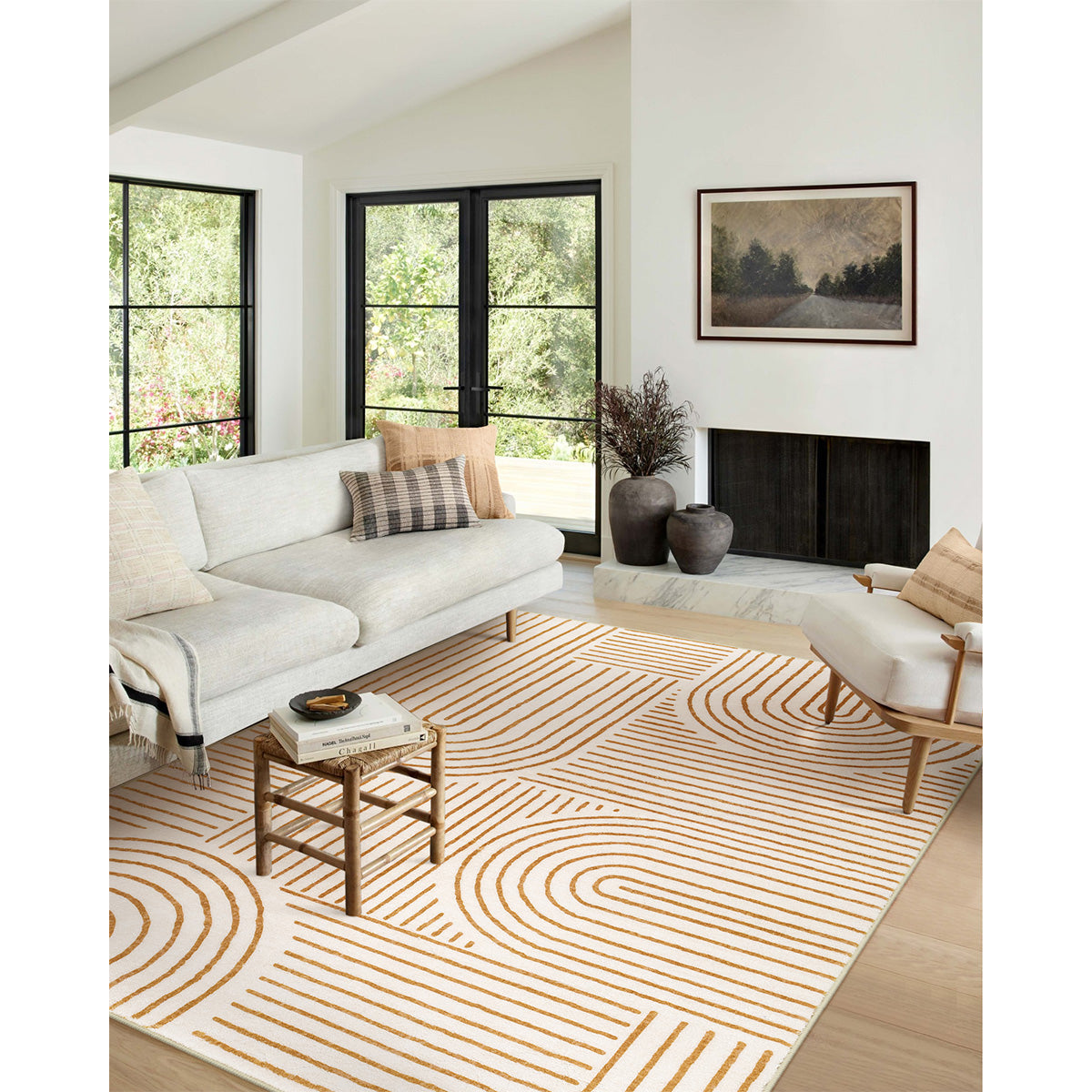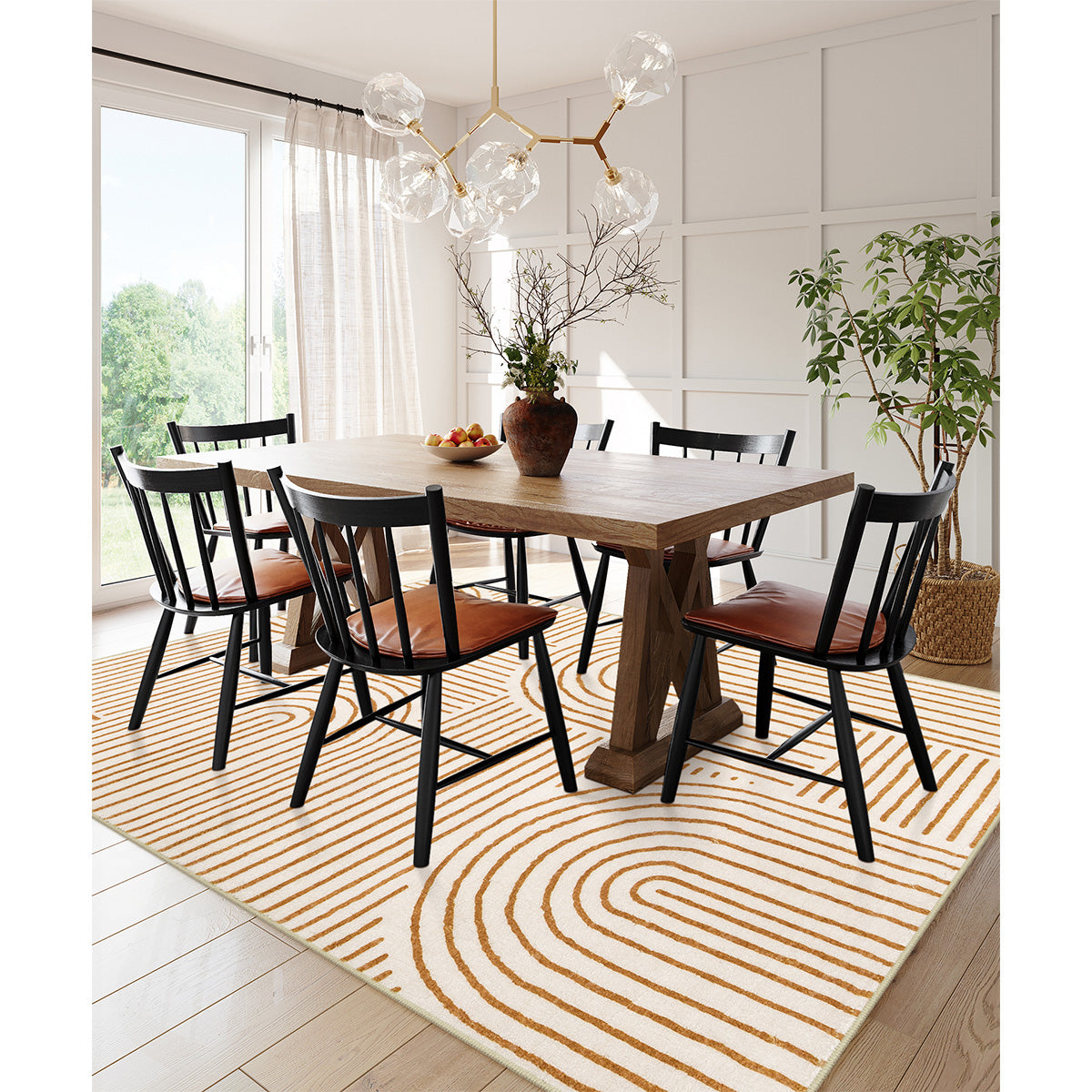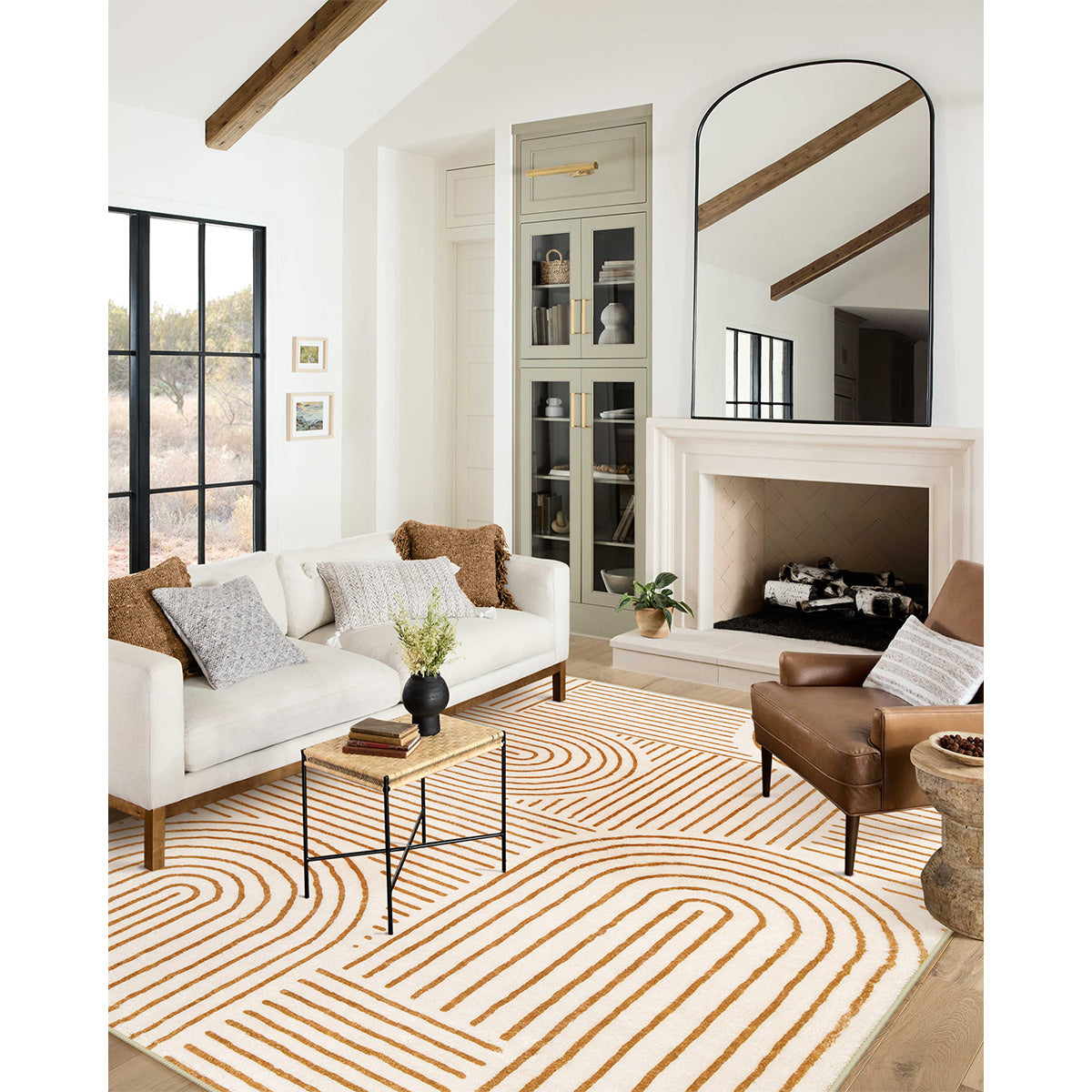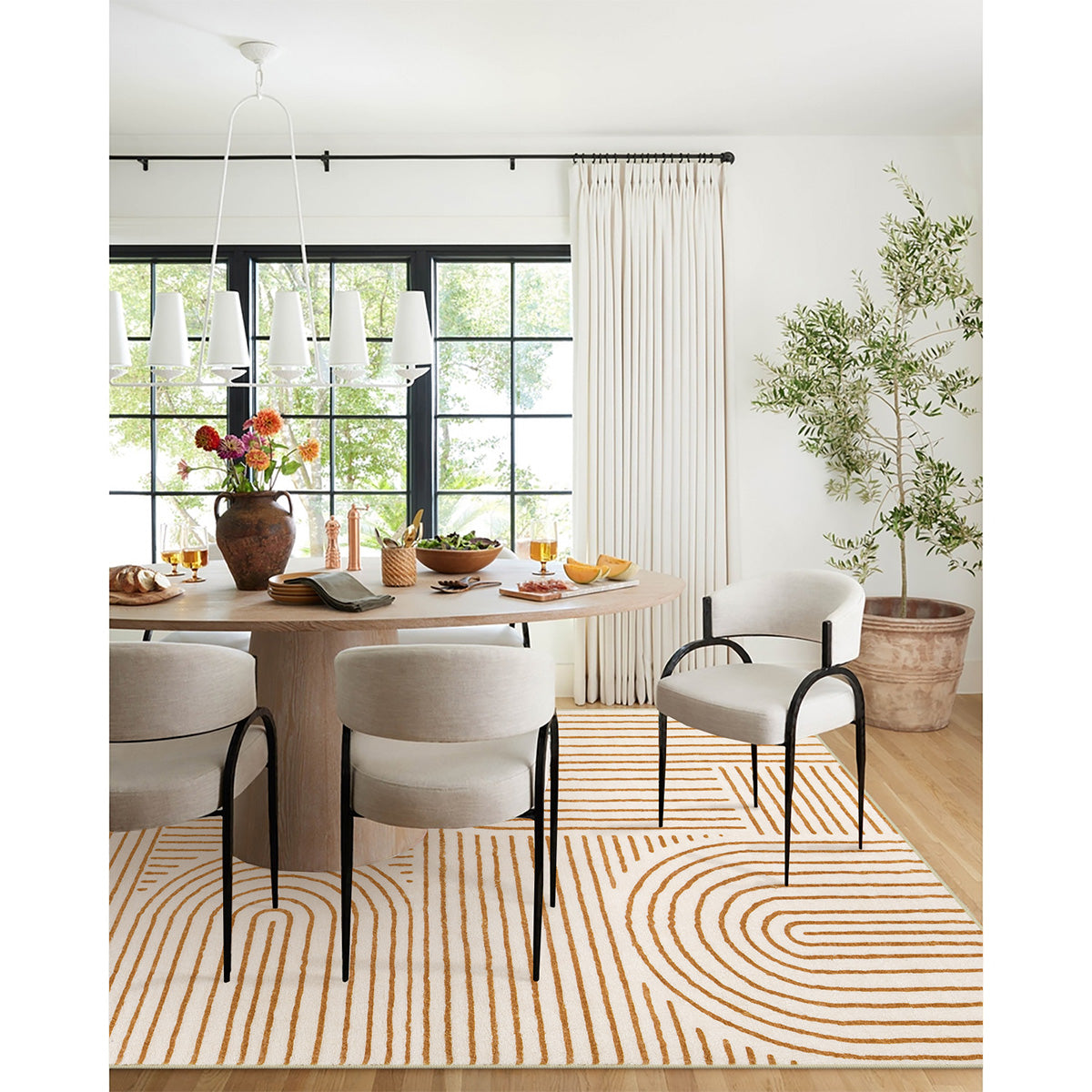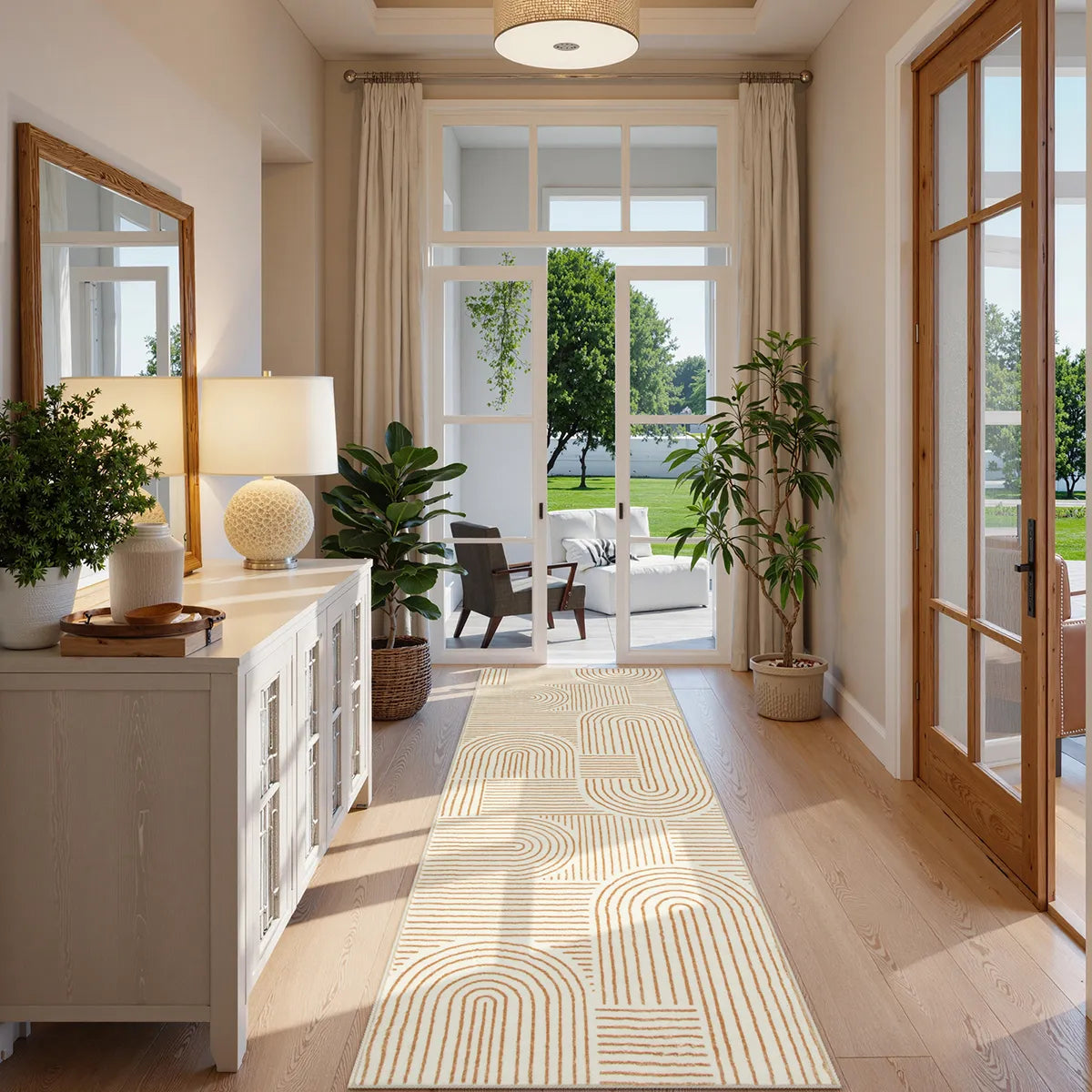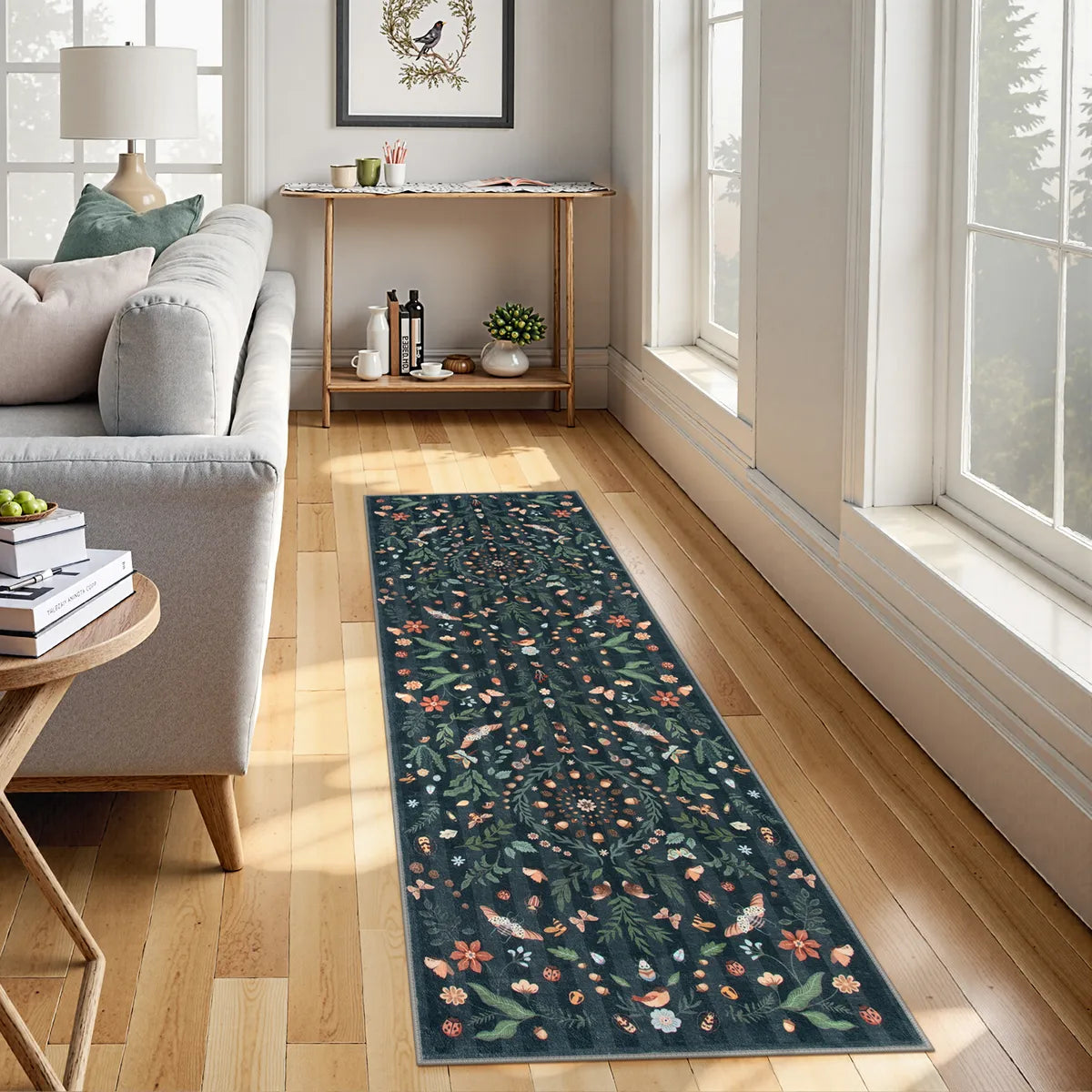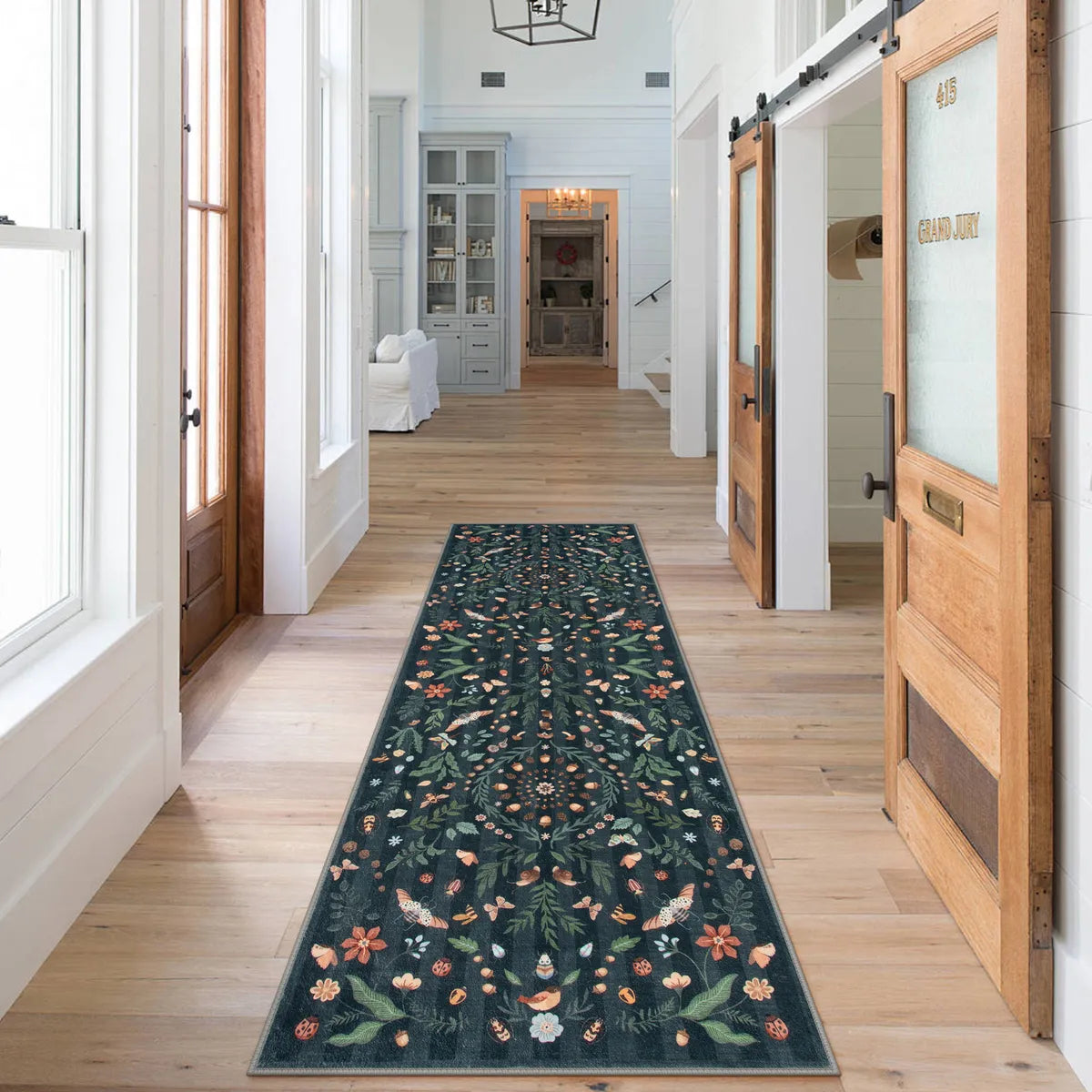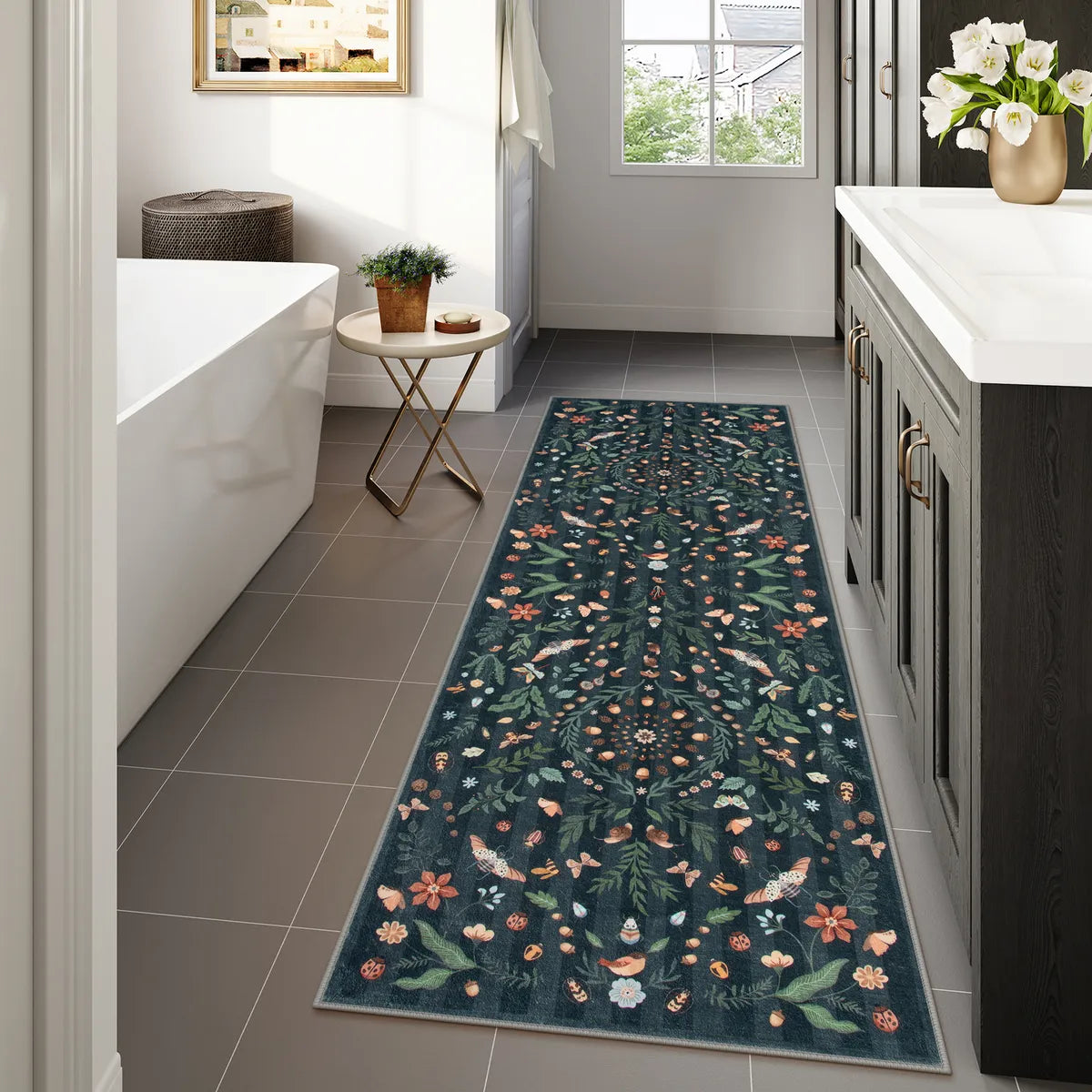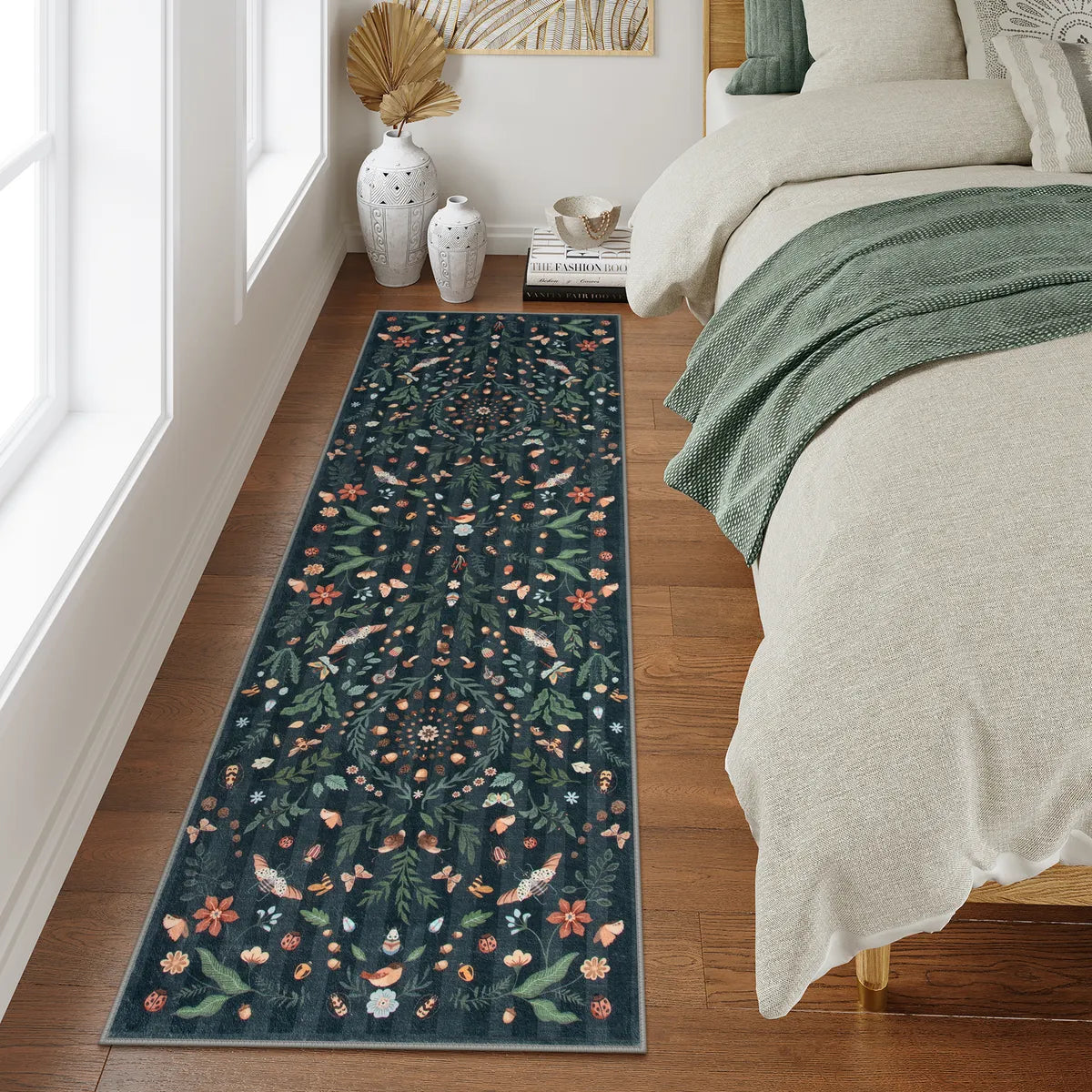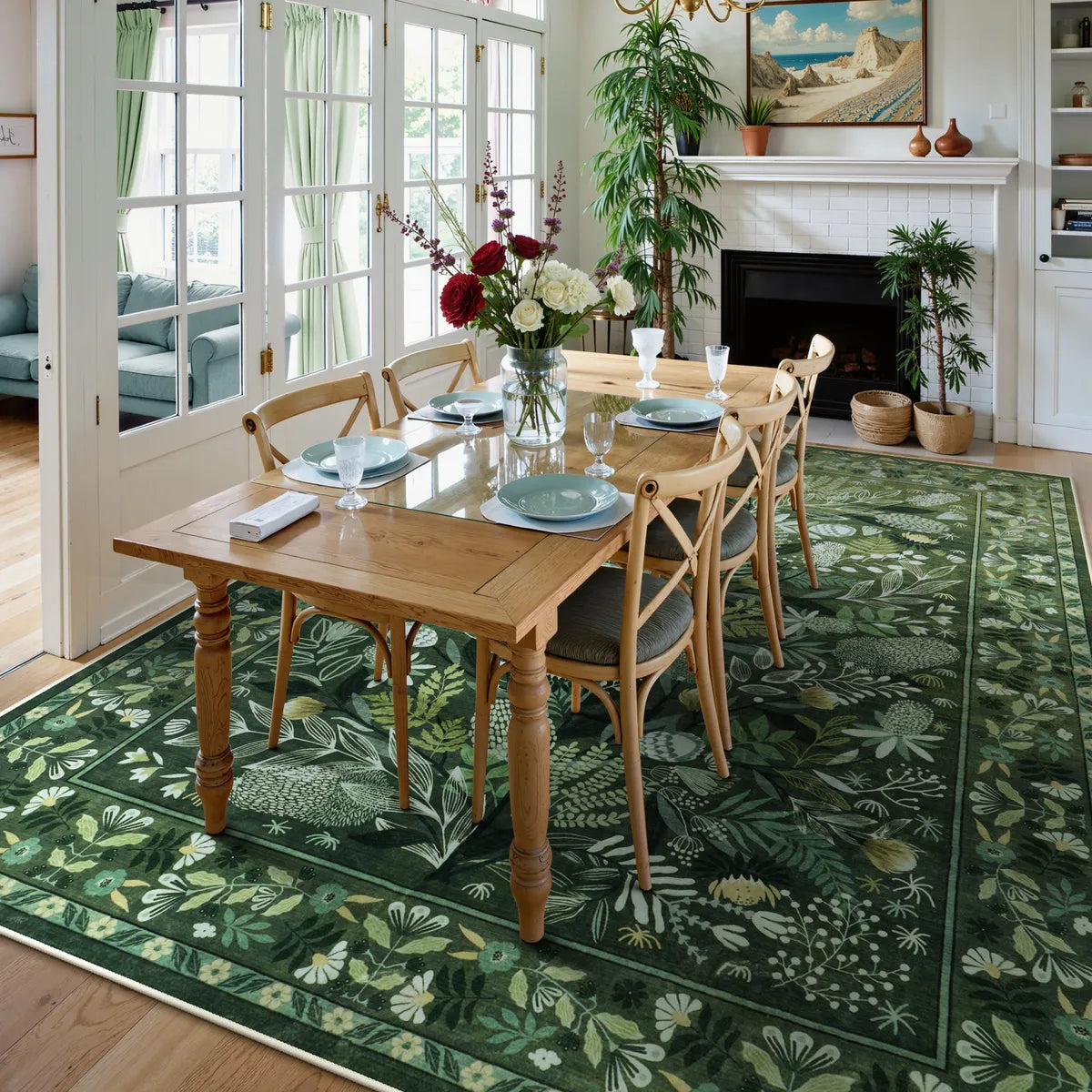


Spring is the season when most people feel the urge to reset their space. Swapping out heavy textiles, bringing in lighter colors, and adding something fresh to the floor can transform how a room feels without a full renovation. A new living room rug is one of the highest-impact changes you can make. Here's how to choose the right one for the season and beyond.
How Living Room Rugs Set the Tone for a Spring Refresh

The floor is the largest surface in any room, and what covers it shapes everything else. Furniture, wall color, and lighting all respond to the rug underneath. Change the rug, and the whole room shifts.
Spring refreshes tend to follow a predictable instinct: lighter, brighter, and more alive. A living room rug chosen with that direction in mind does more than update the floor. It becomes the visual anchor that makes the rest of the room's seasonal changes feel cohesive. A new cushion or throw reads as a small addition; a new rug reads as a new room.
The seasonal shift also makes practical sense. Winter rugs tend to be heavier and darker, suited to warmth and enclosure. Spring calls for the opposite: patterns that feel open, colors that reflect light, and textures that don't feel heavy underfoot. A living room rug that fits the season makes the space feel genuinely refreshed rather than just rearranged.
Spring Rug Styles: Floral Rugs, Green Area Rugs, and Aesthetic Picks

Style is where the spring refresh becomes personal. The right pattern and color don't just update the room visually; they set a mood that carries through the warmer months. Three directions work particularly well for living rooms in spring: floral, nature-inspired color, and considered aesthetic choices that balance personality with versatility.
Why Floral Rugs Work So Well in Spring Living Rooms
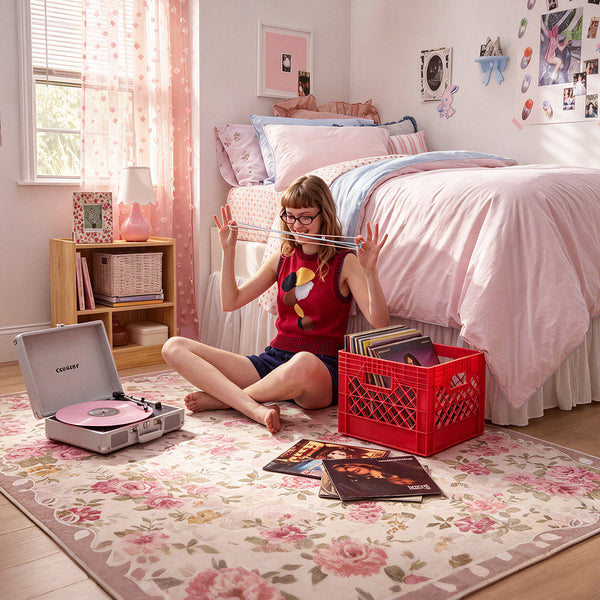
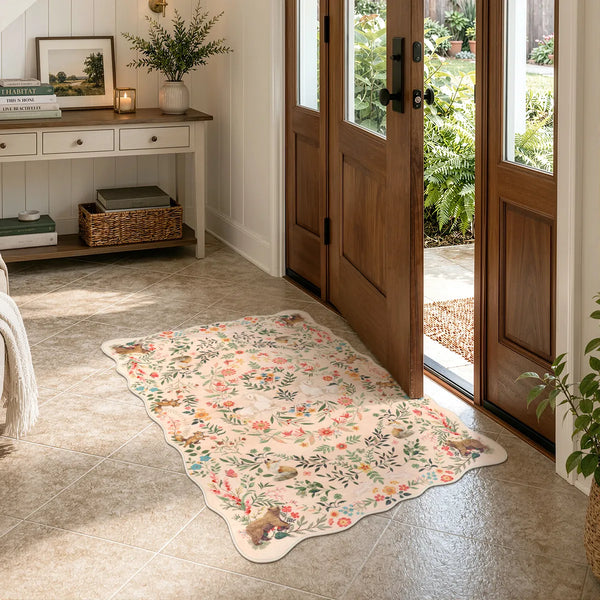
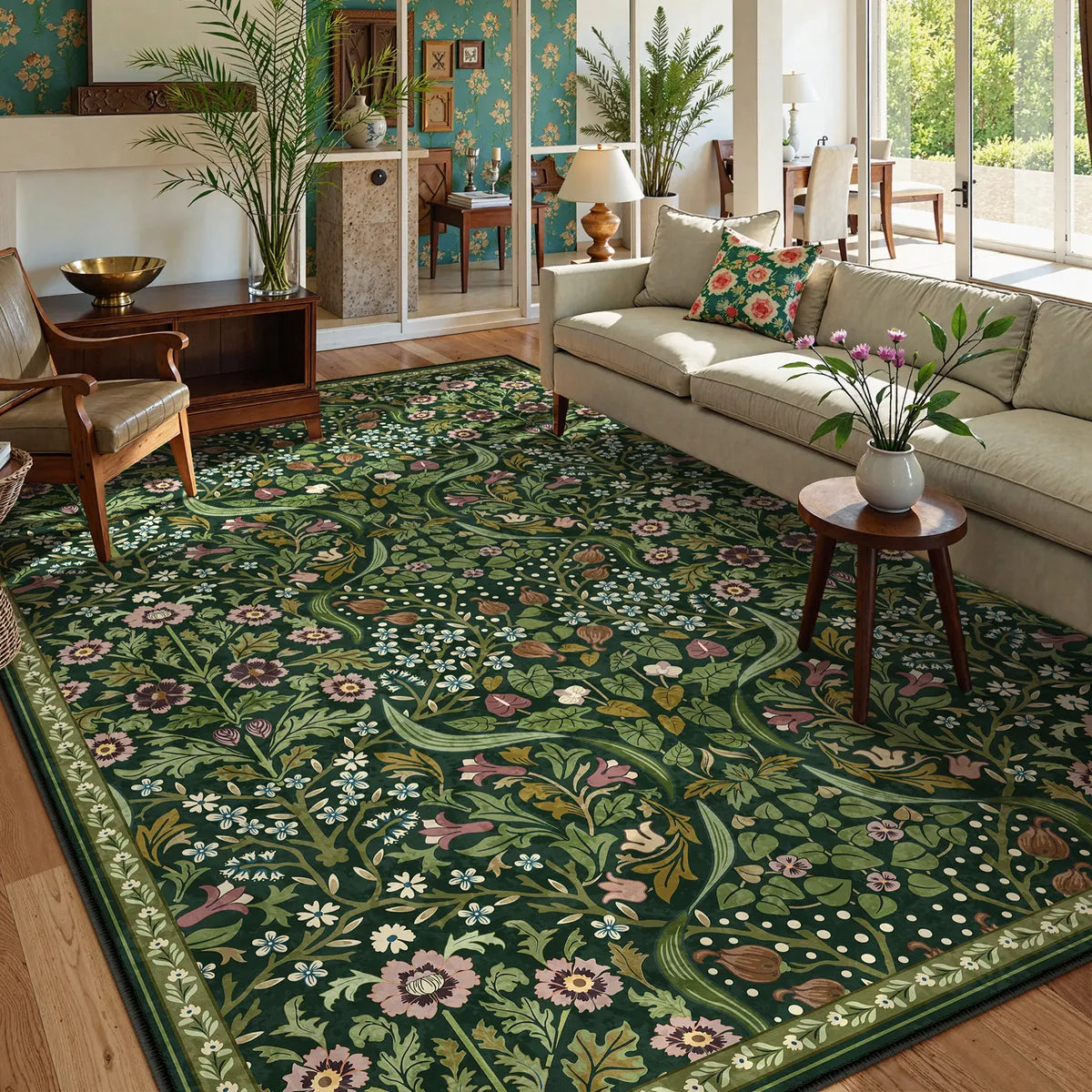
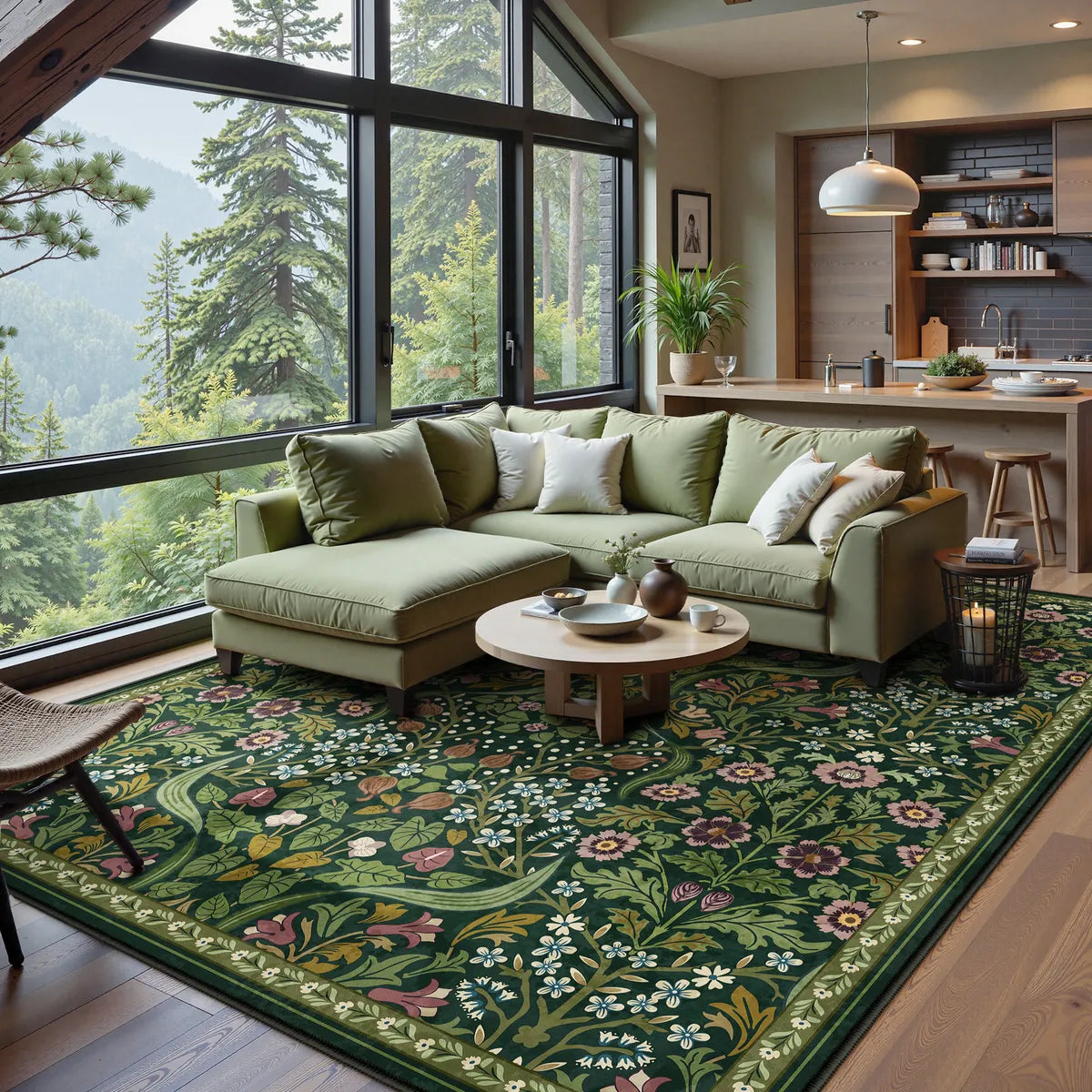
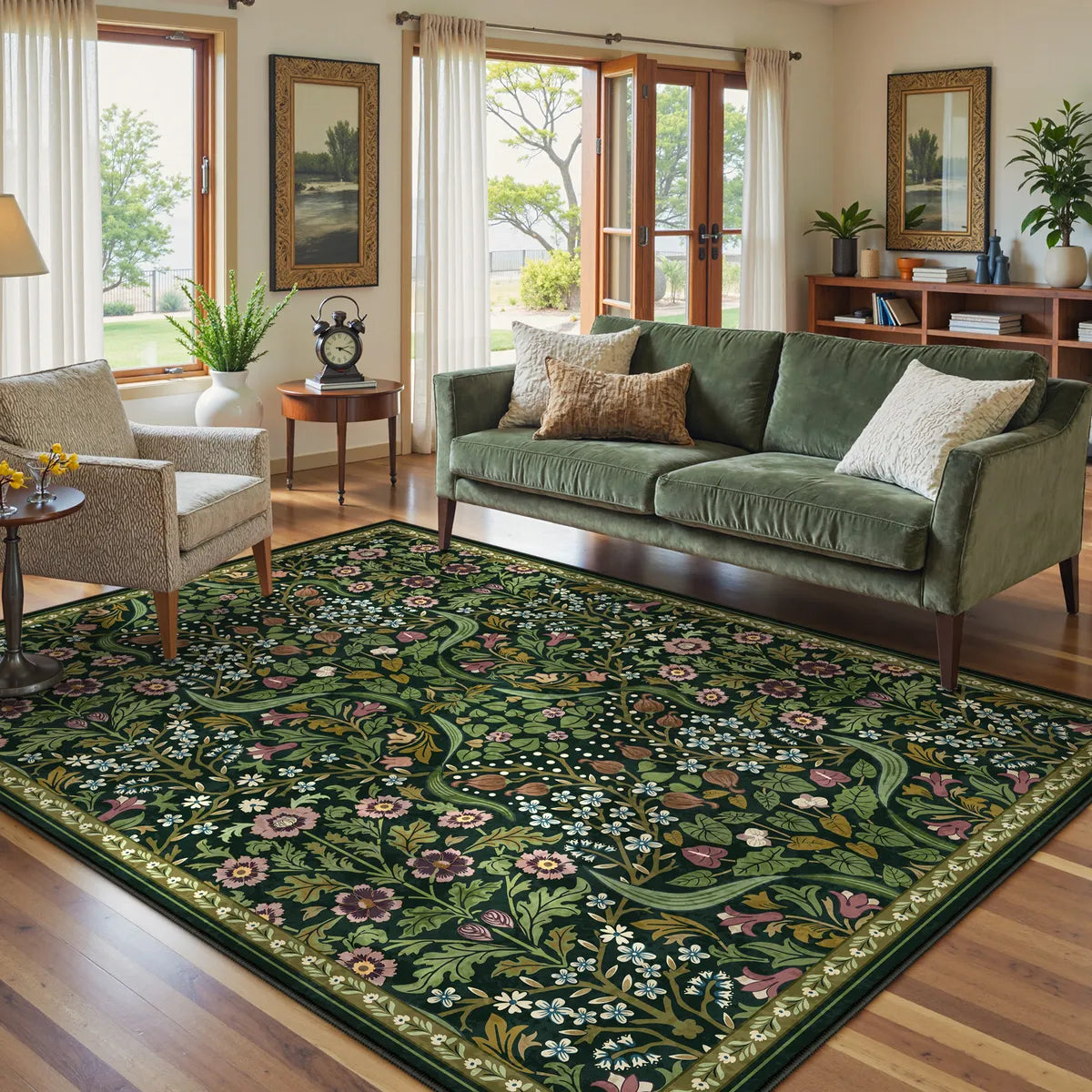
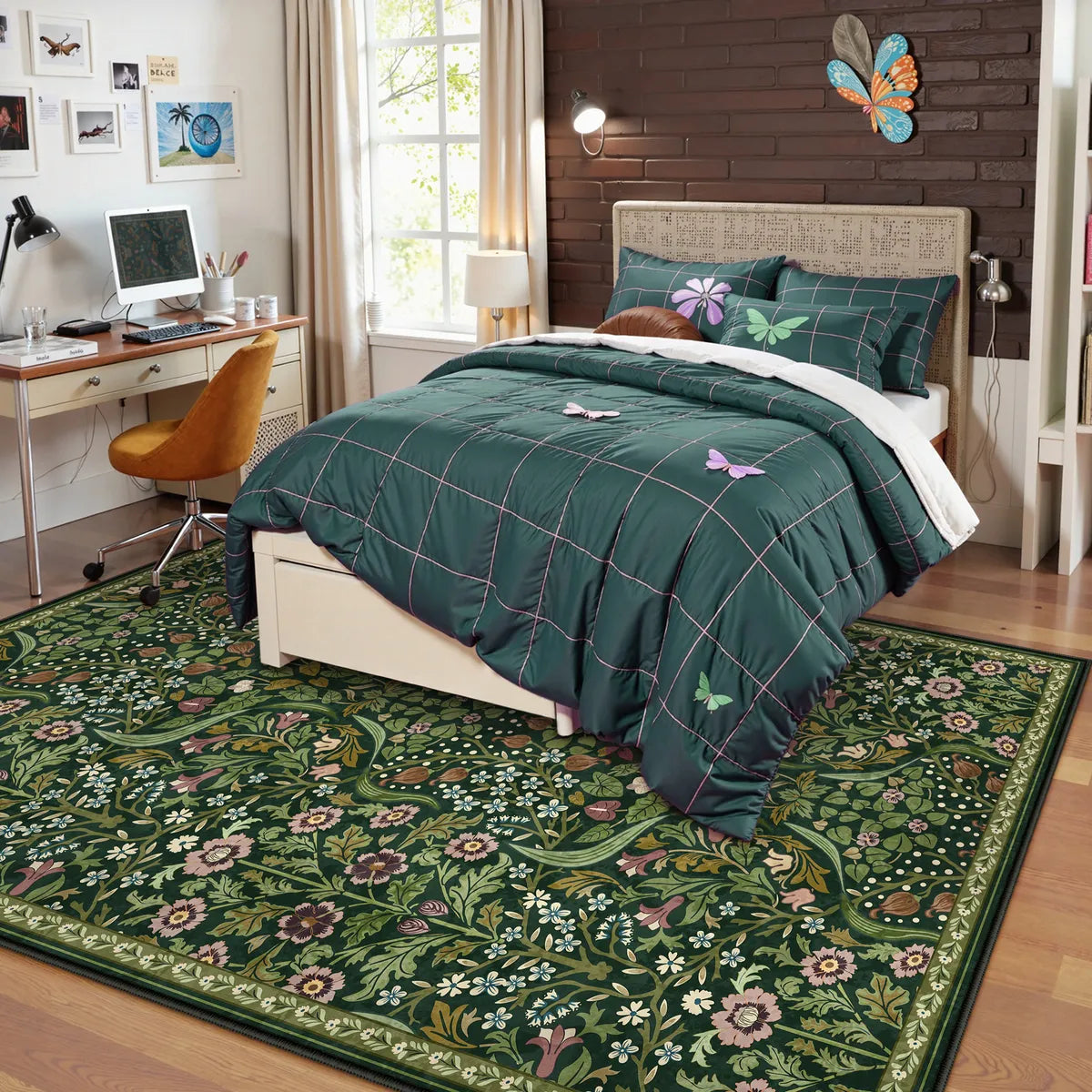
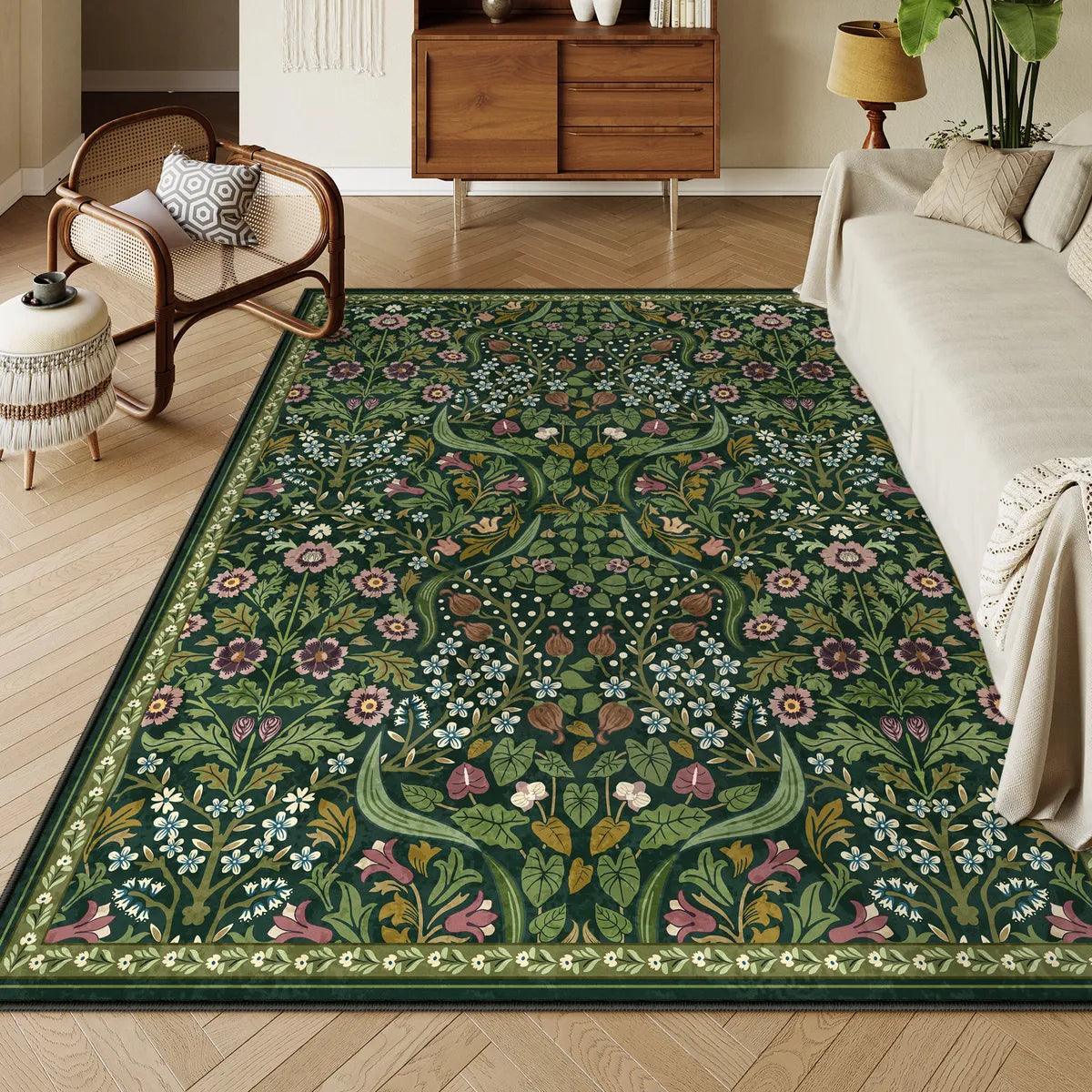
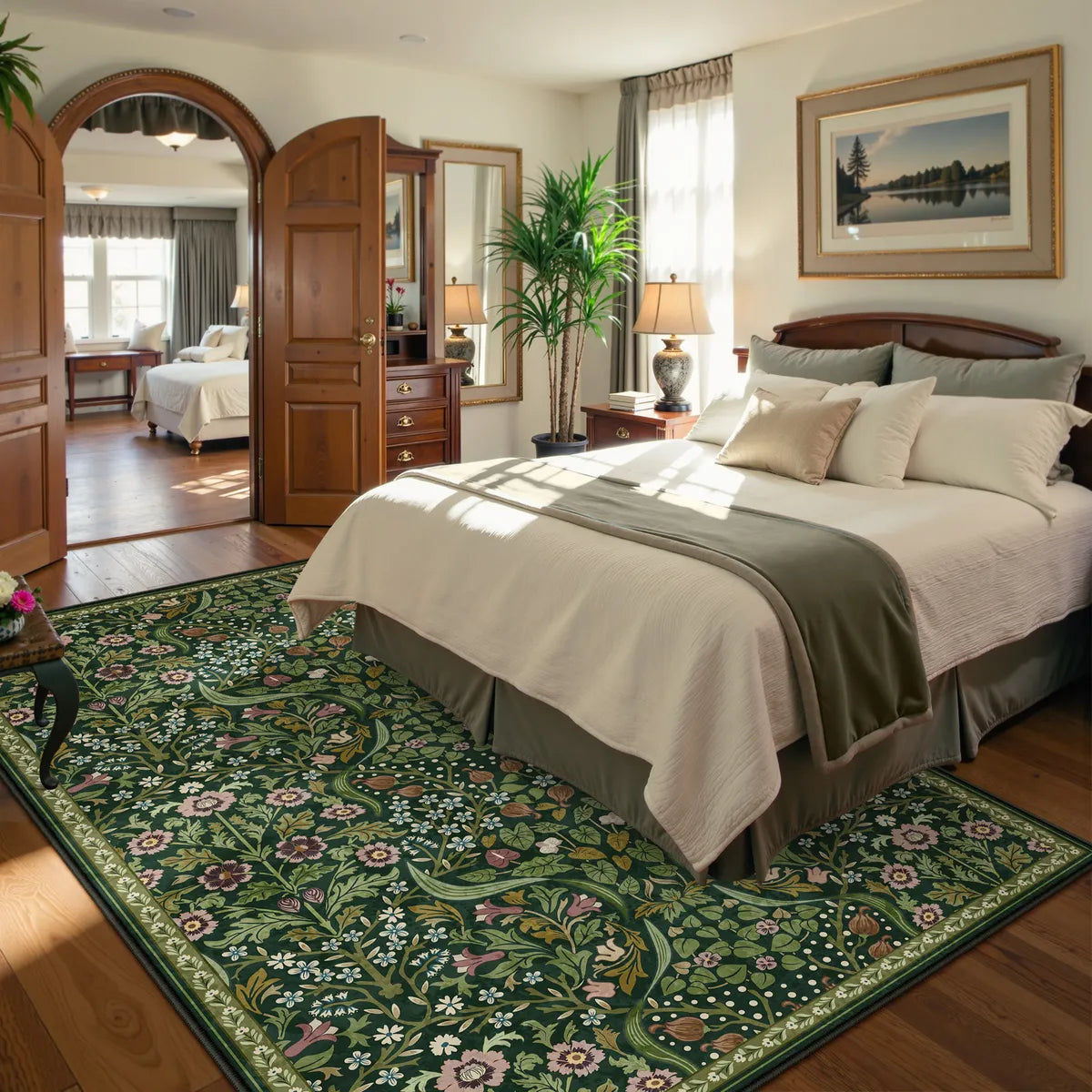
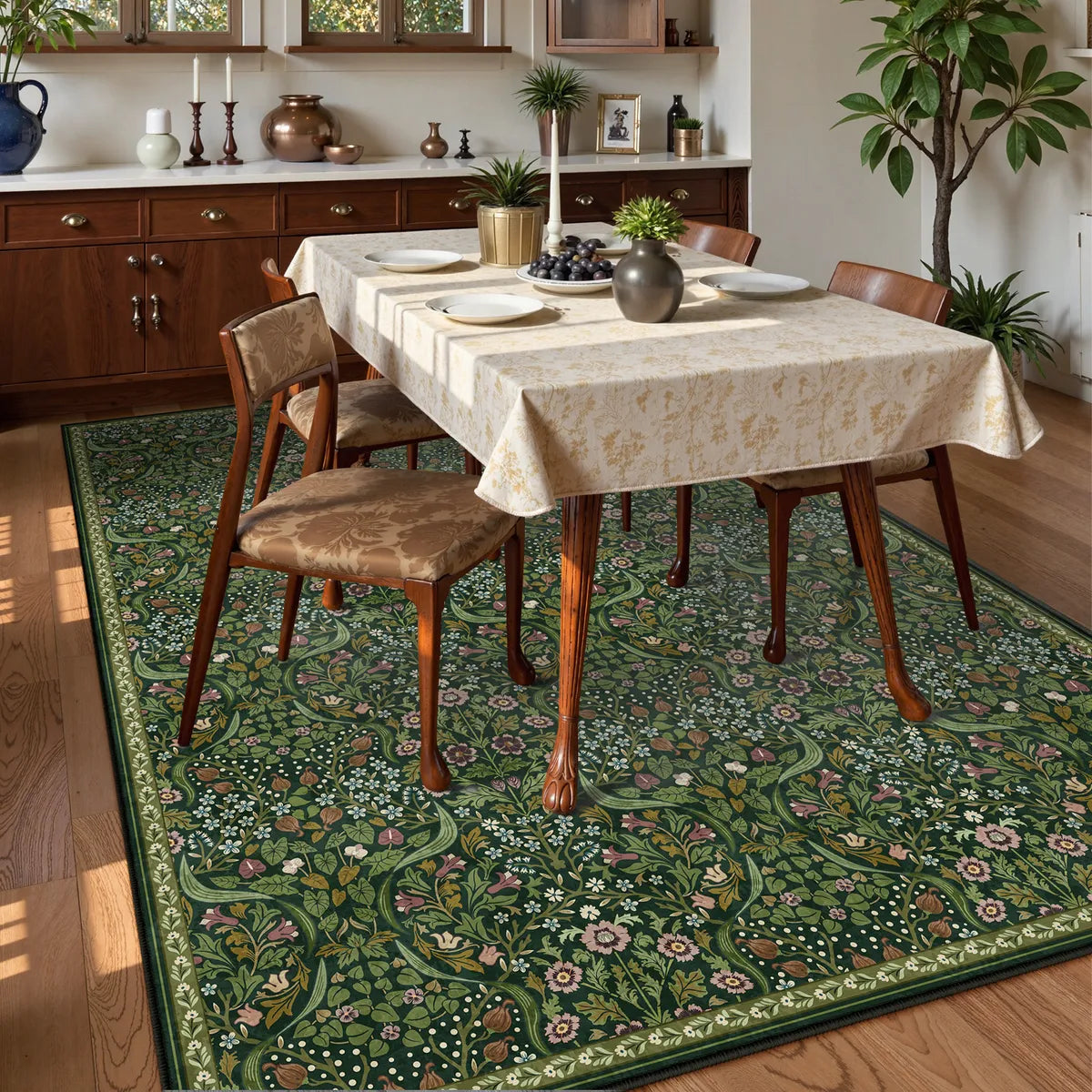
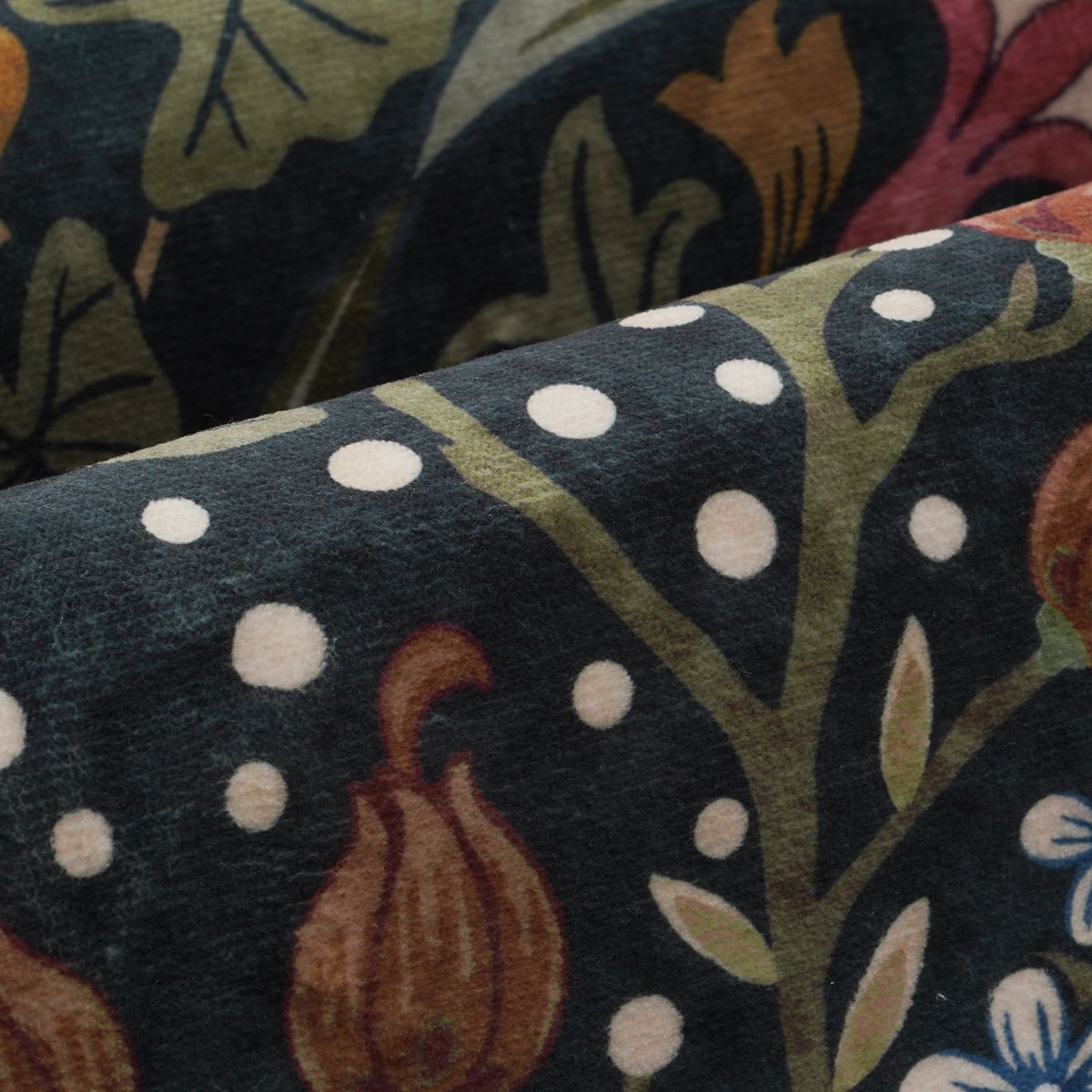
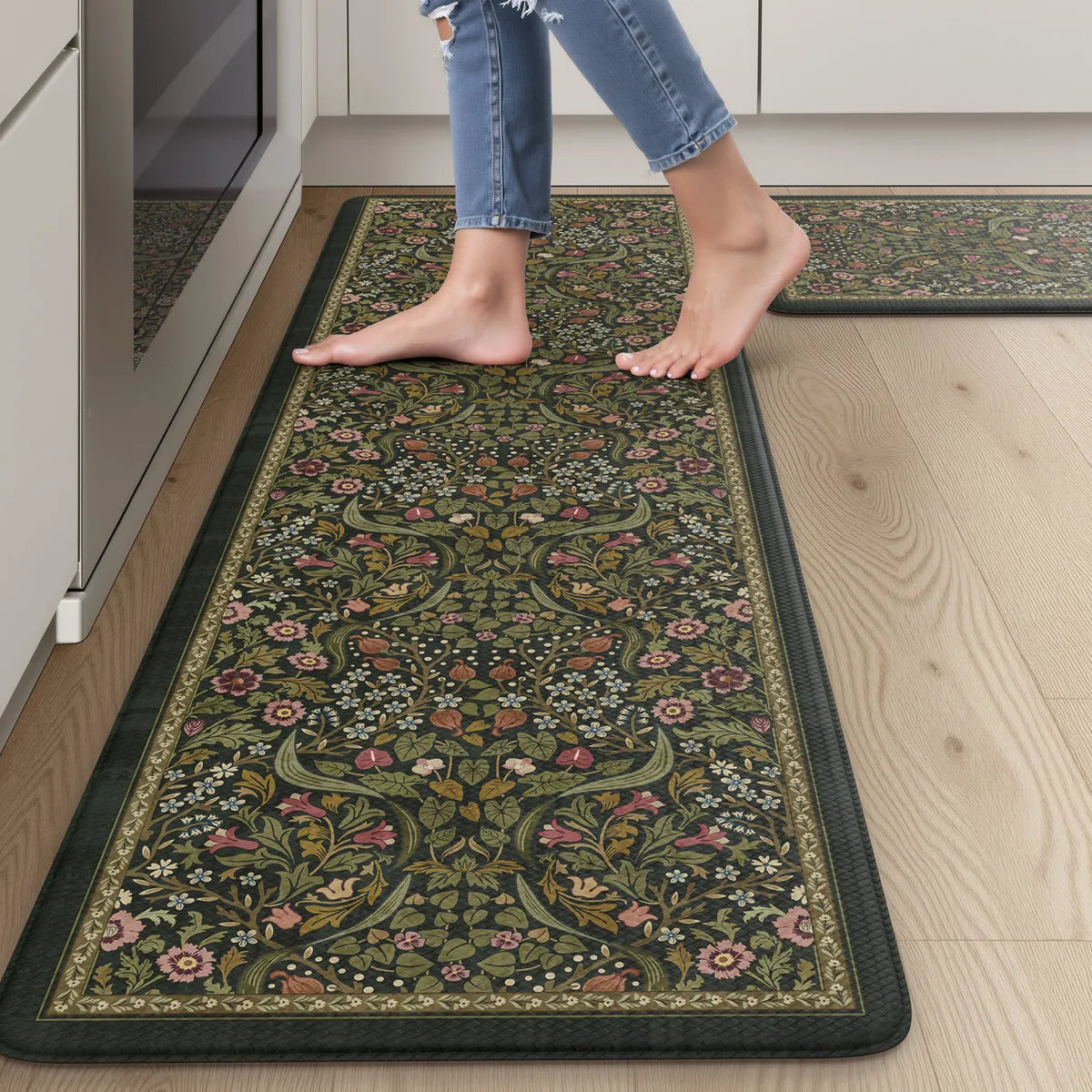
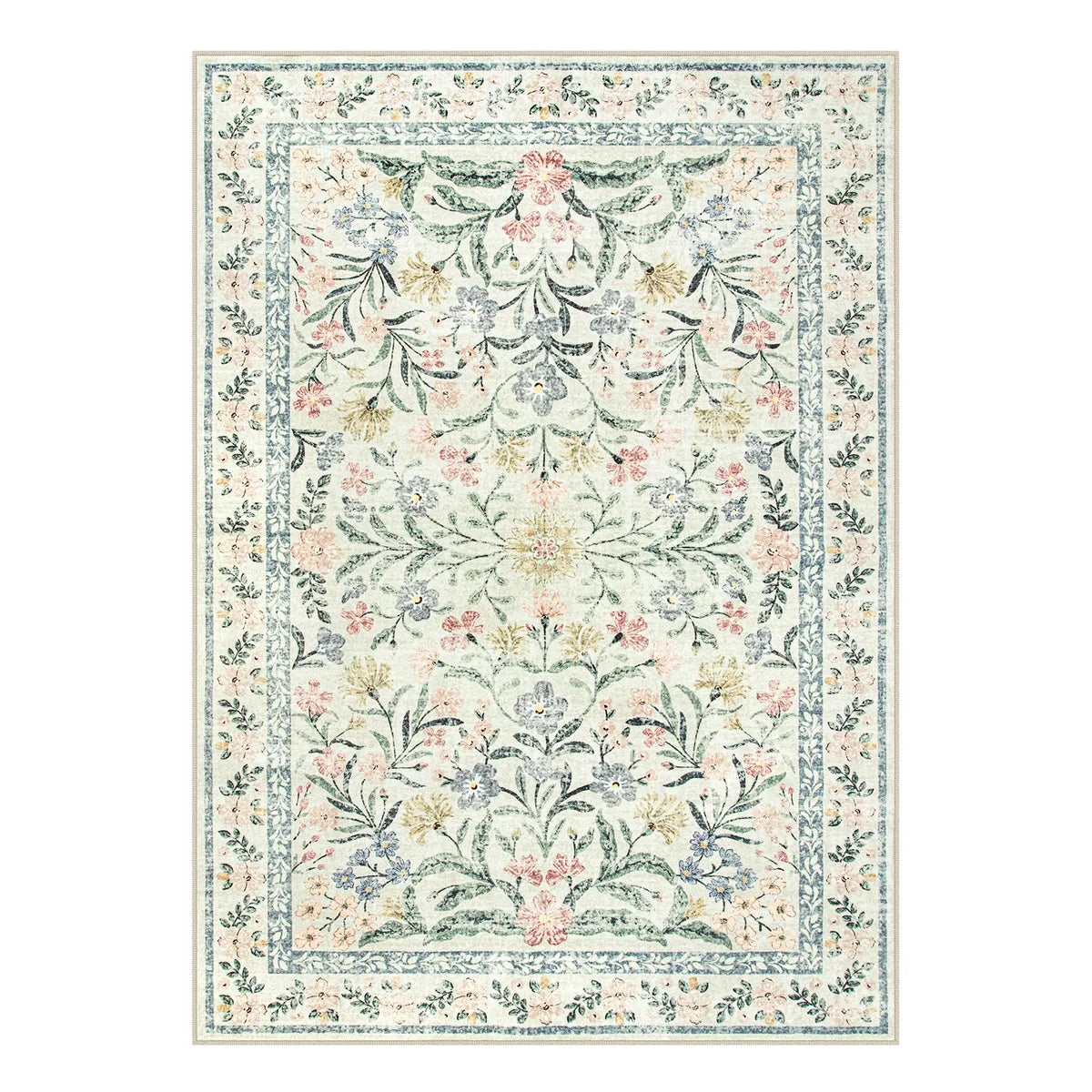
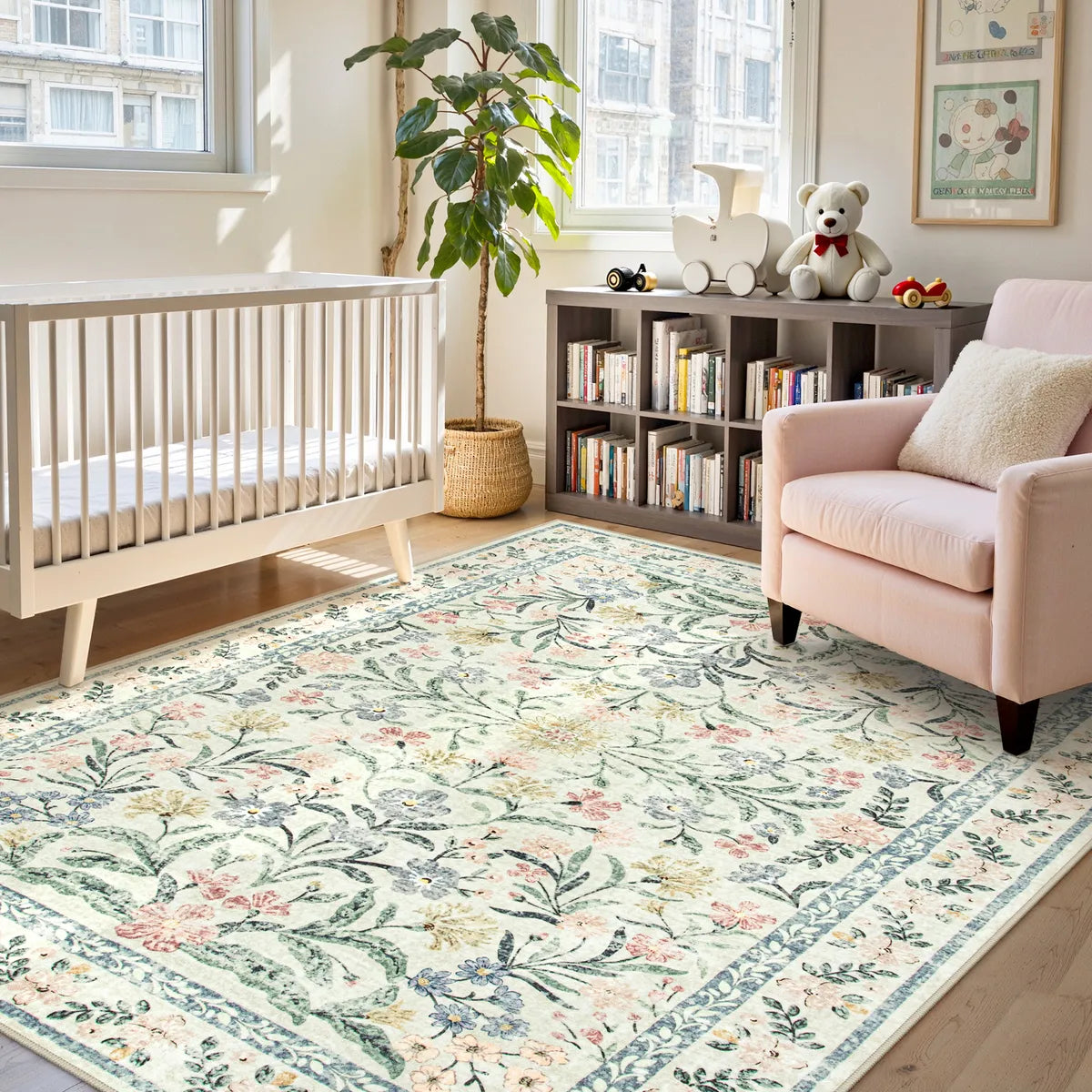
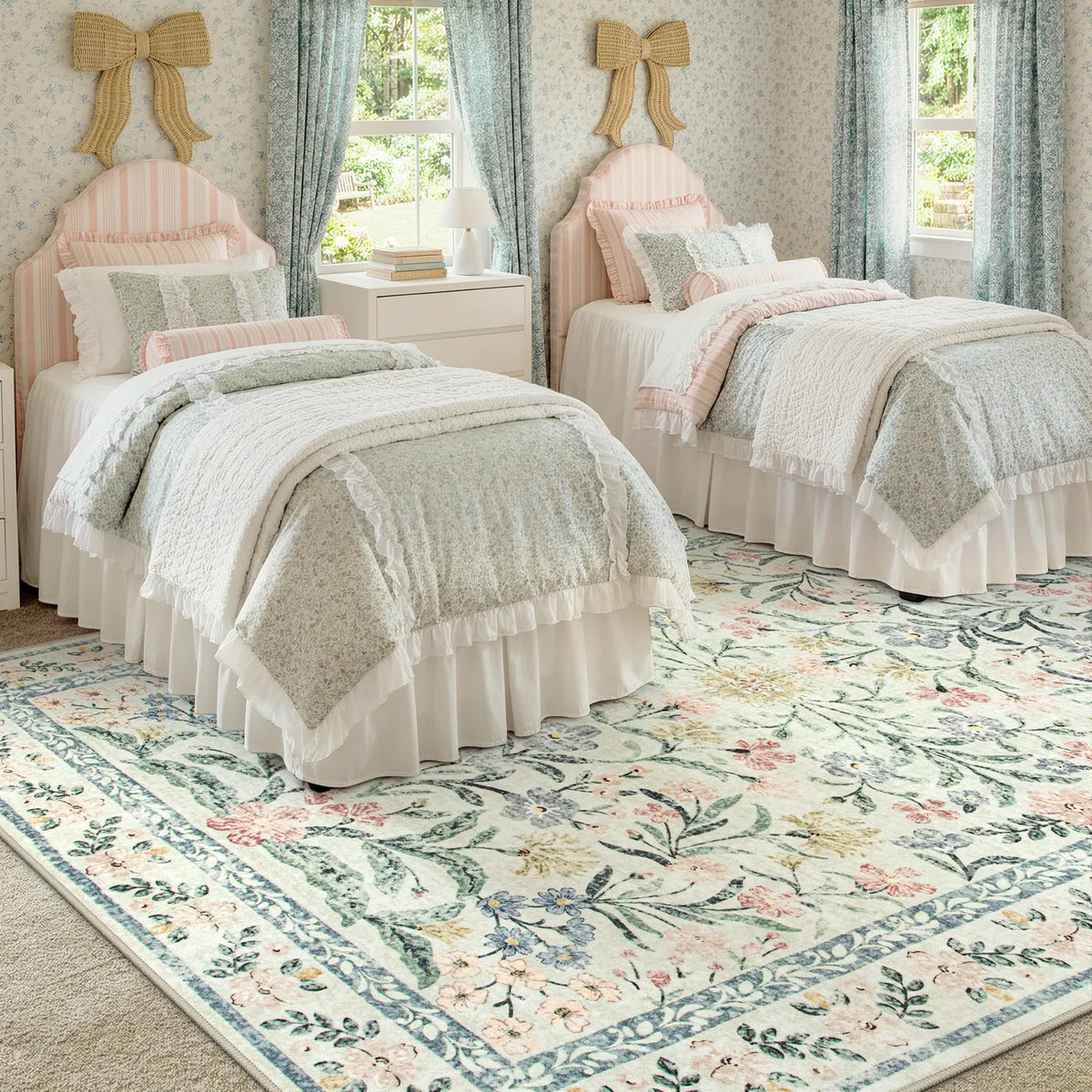
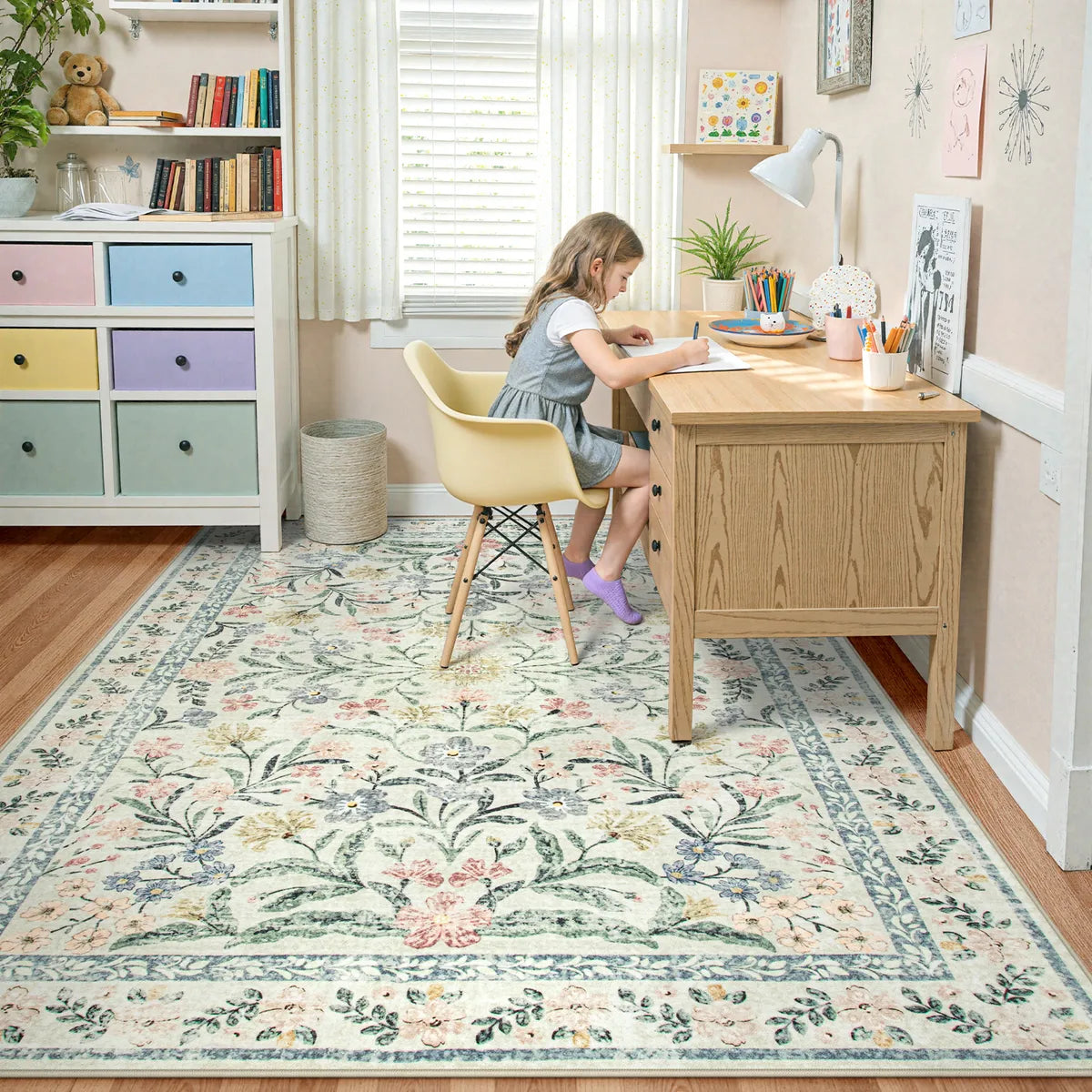
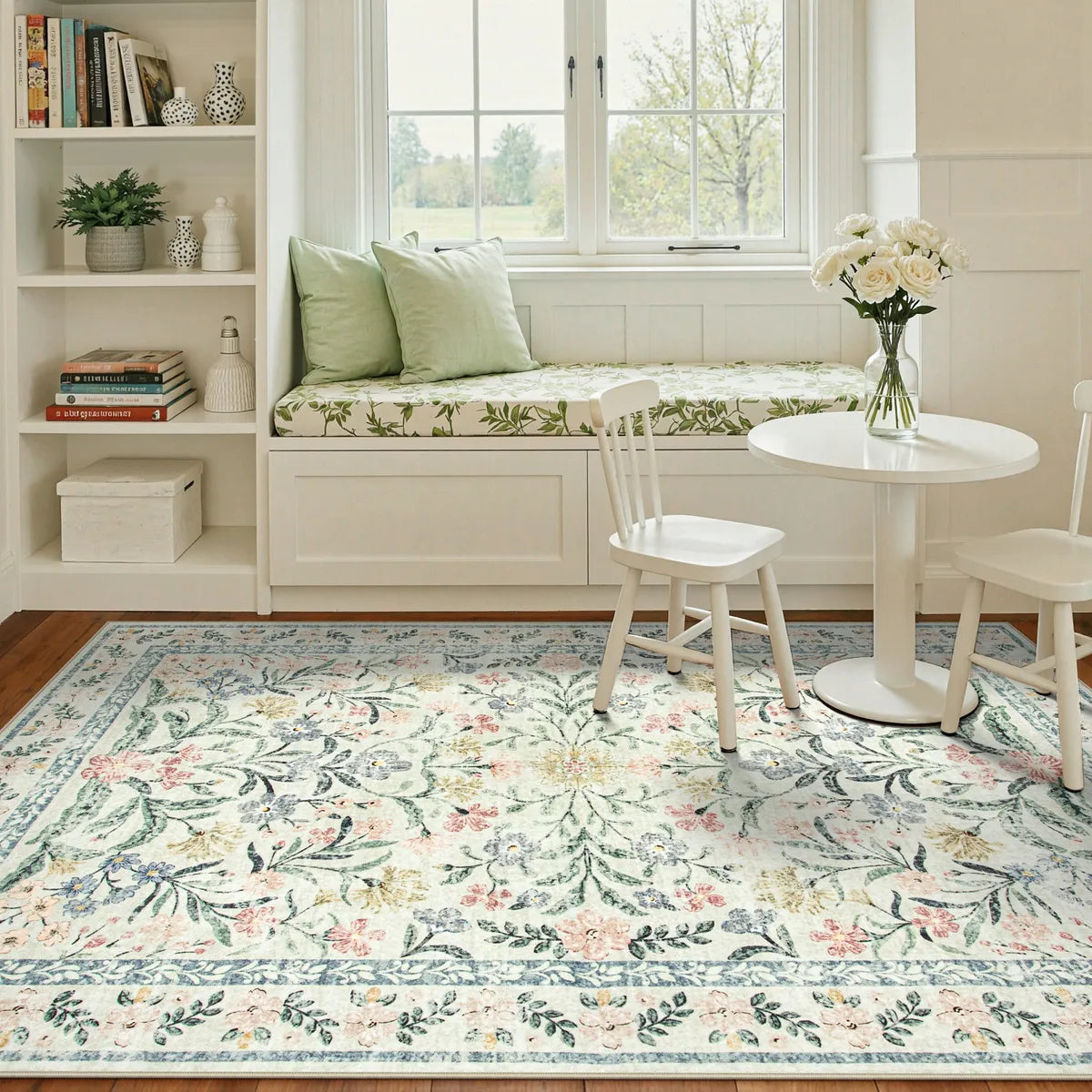
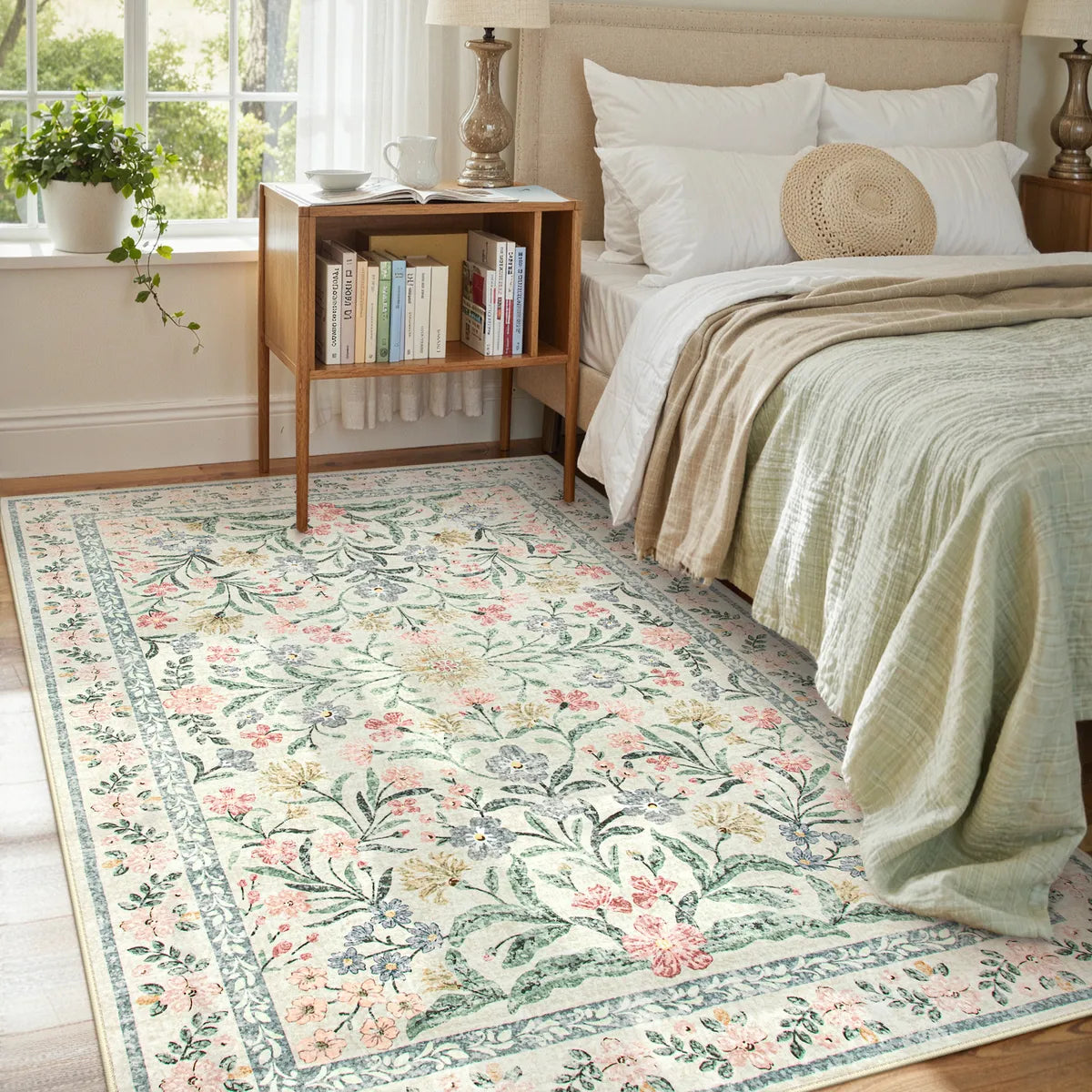
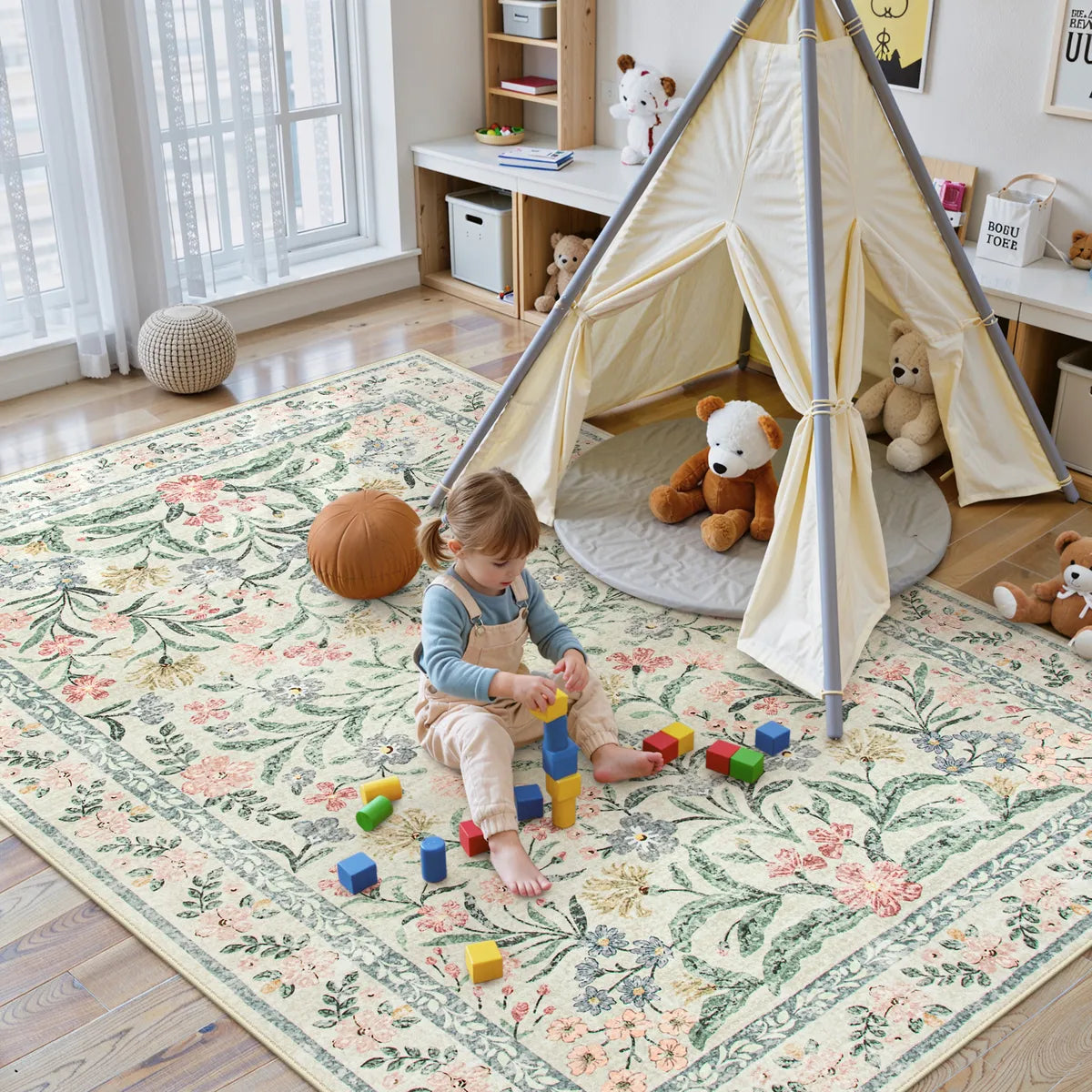
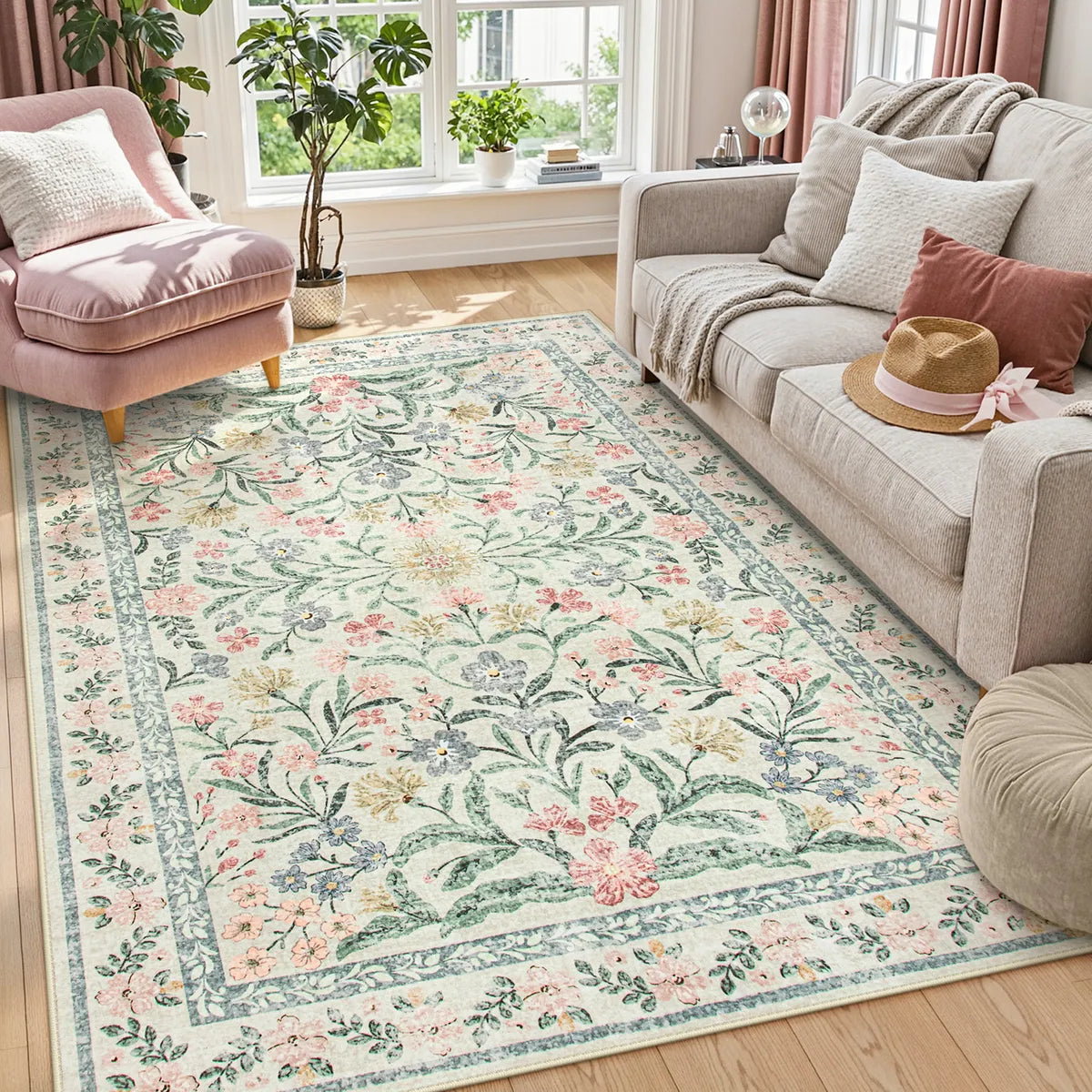
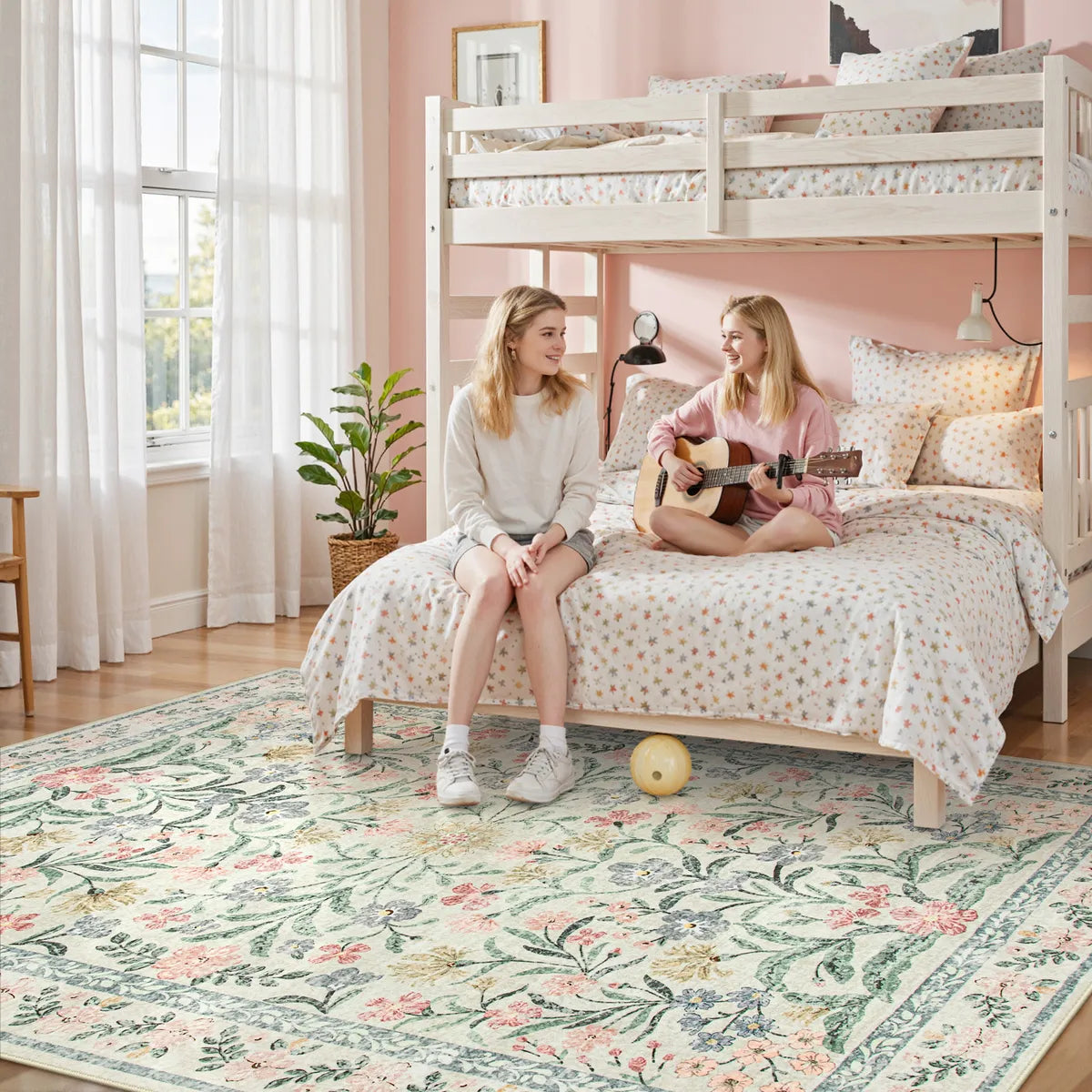
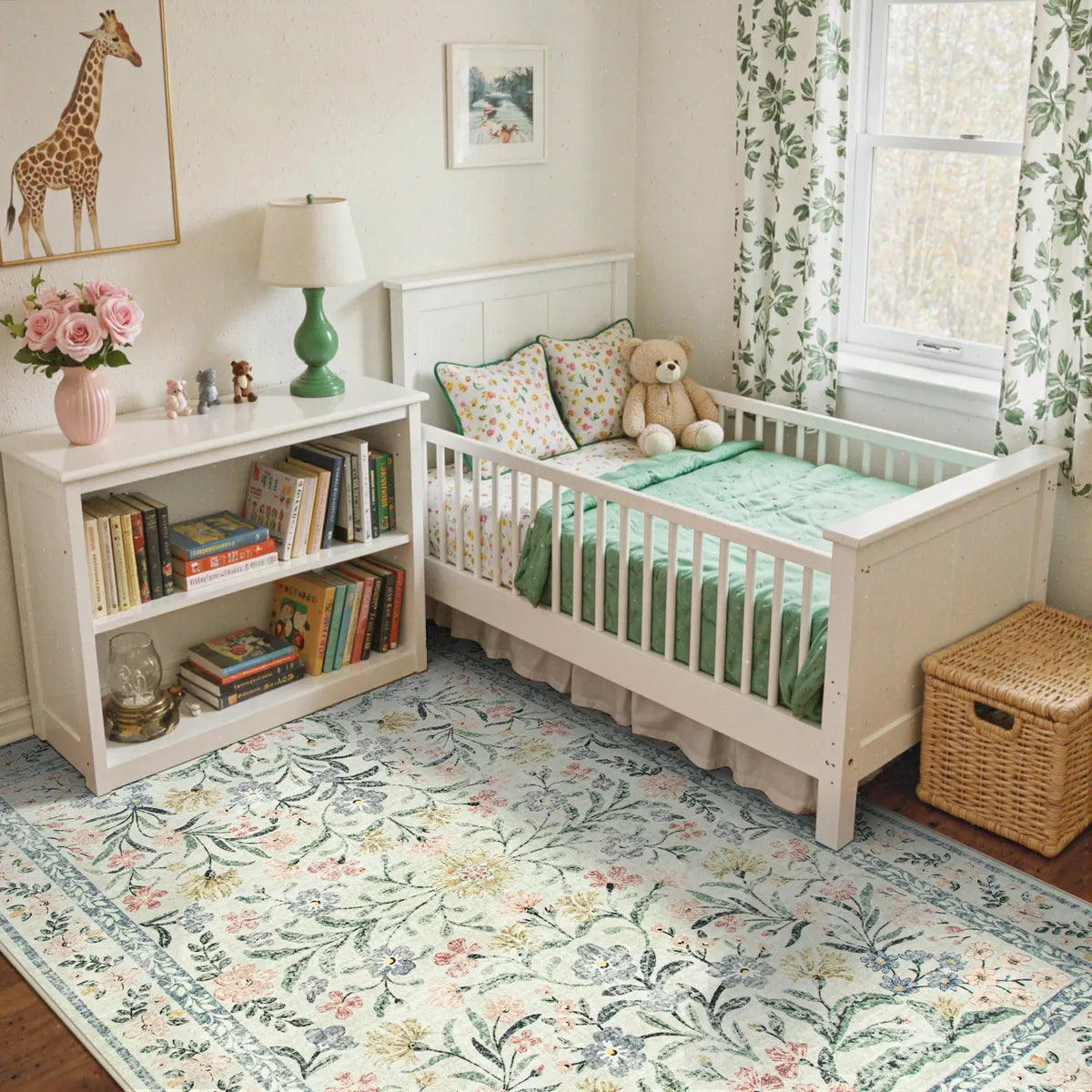
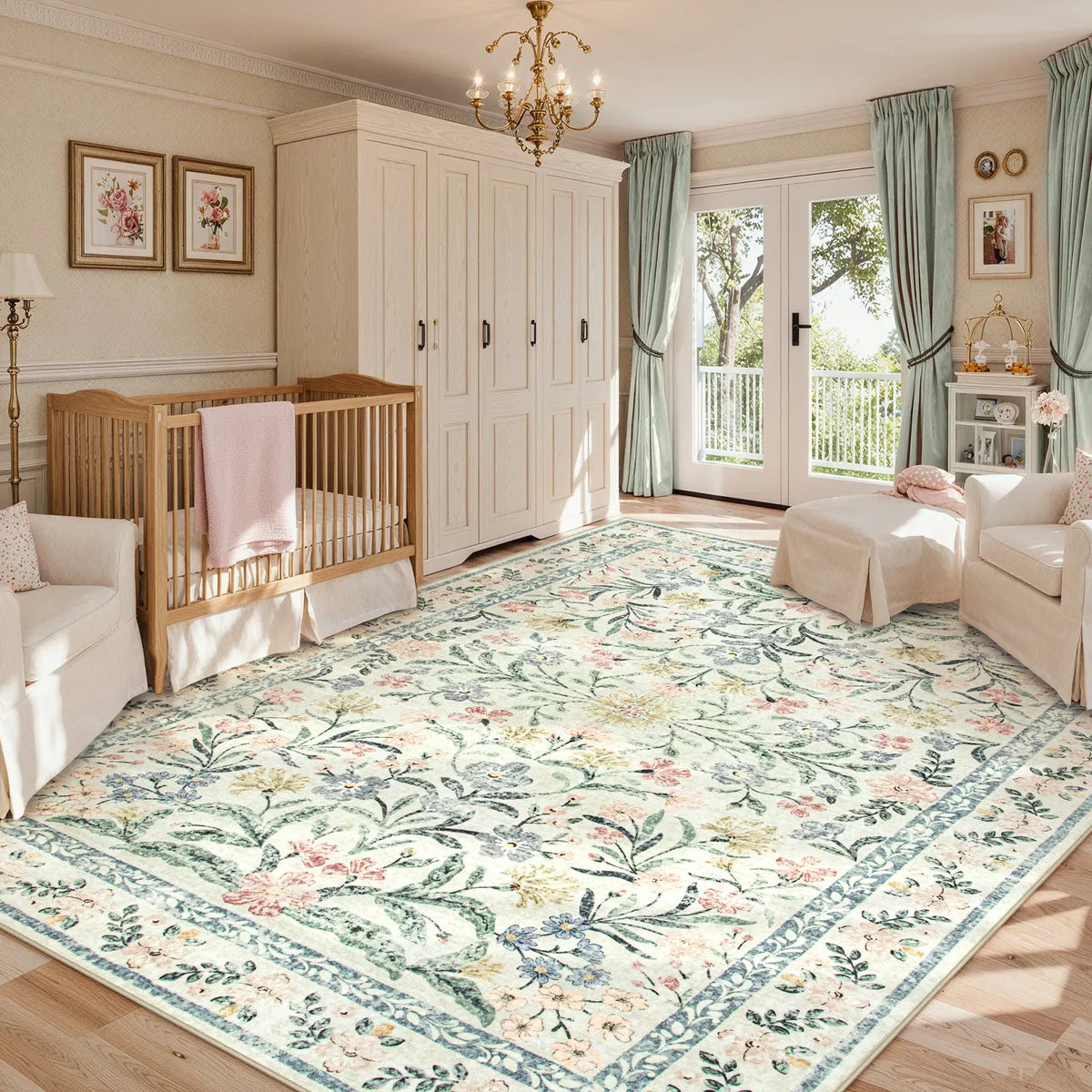
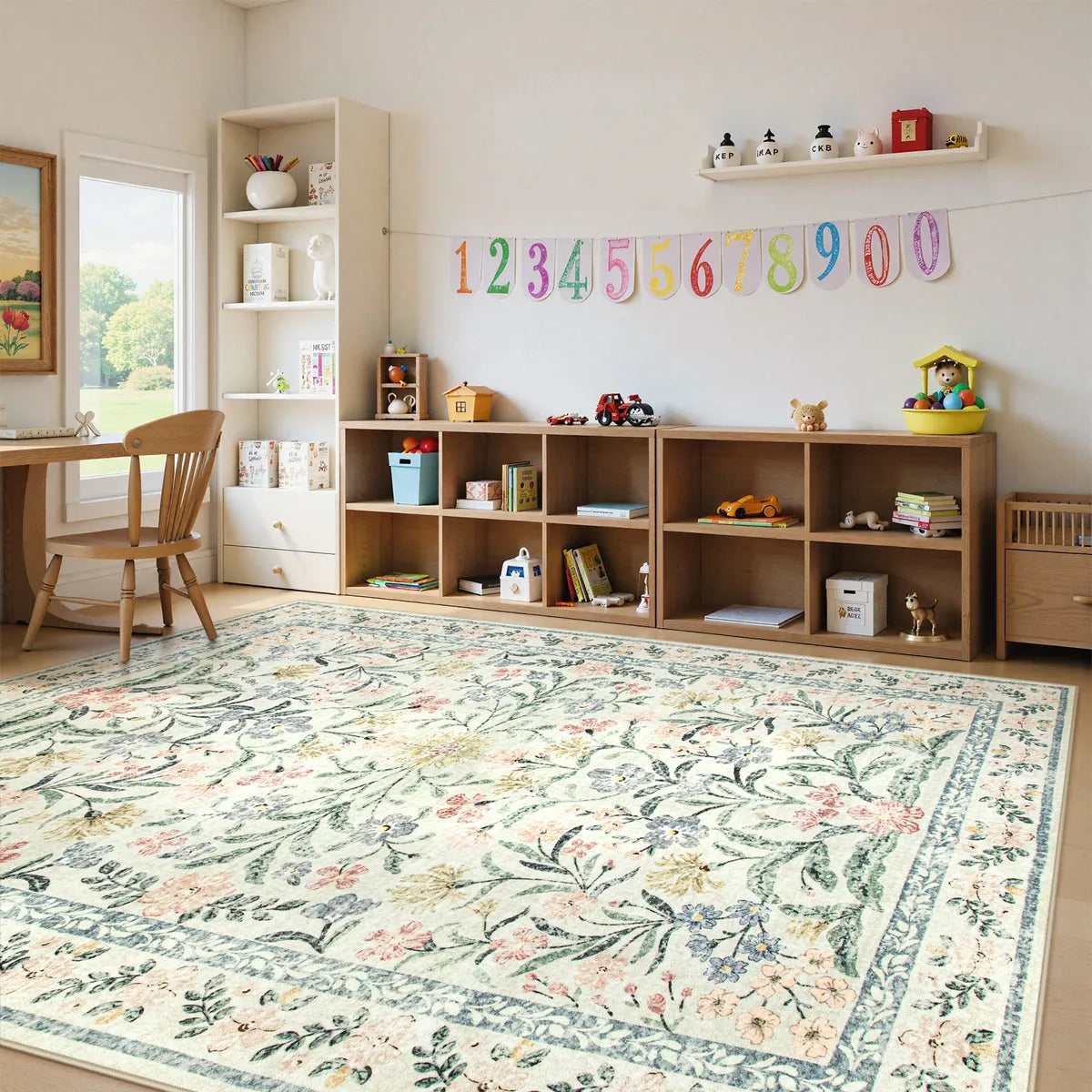
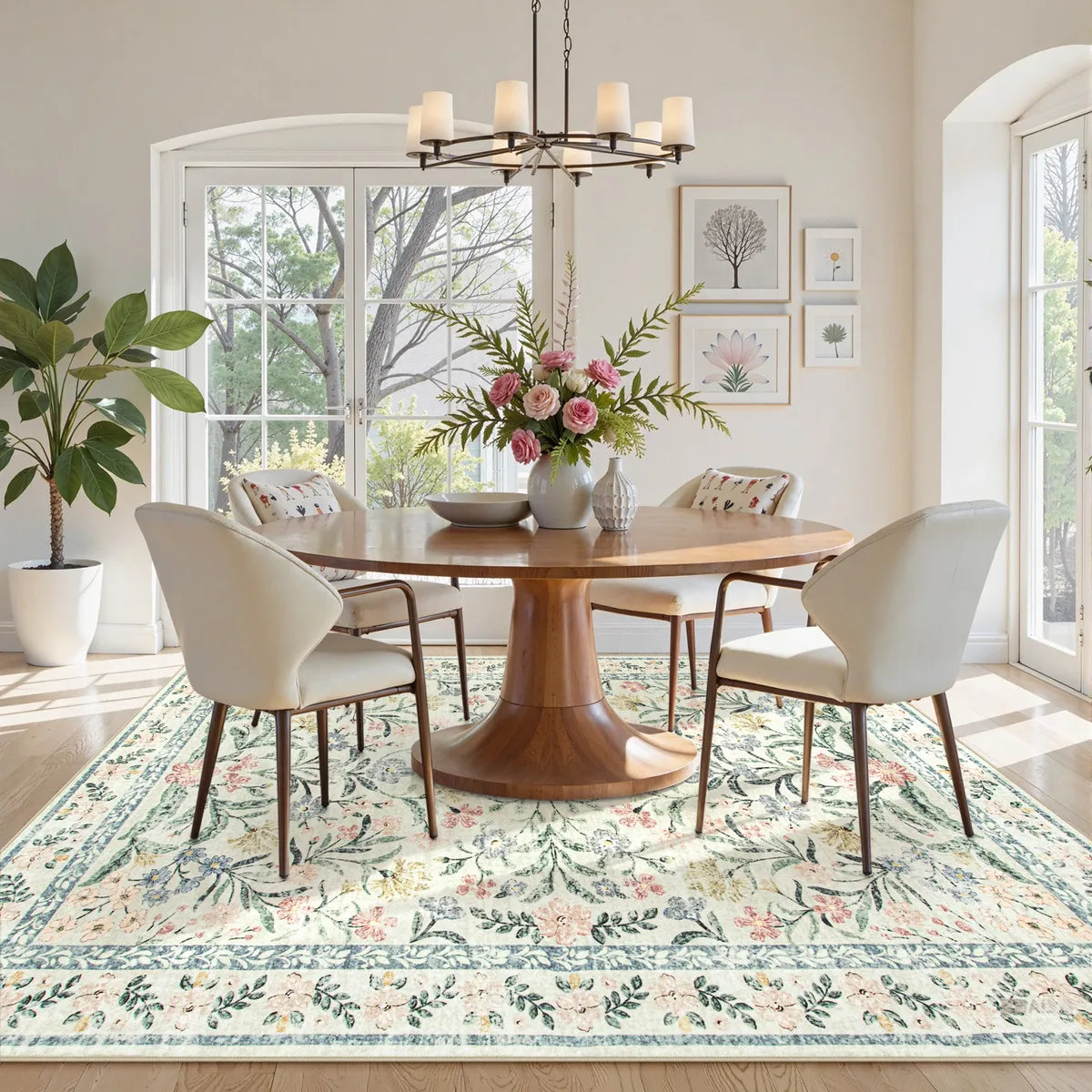
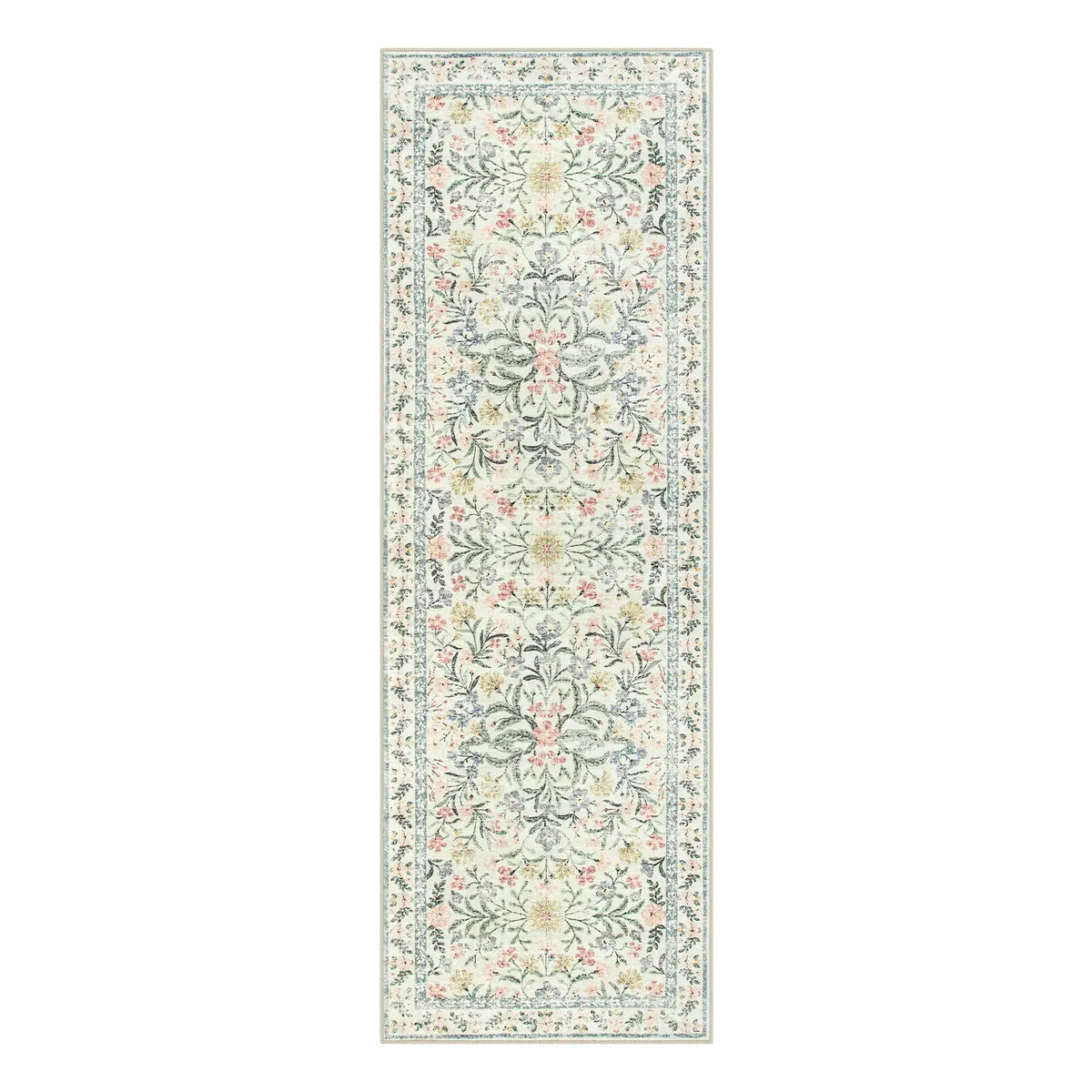
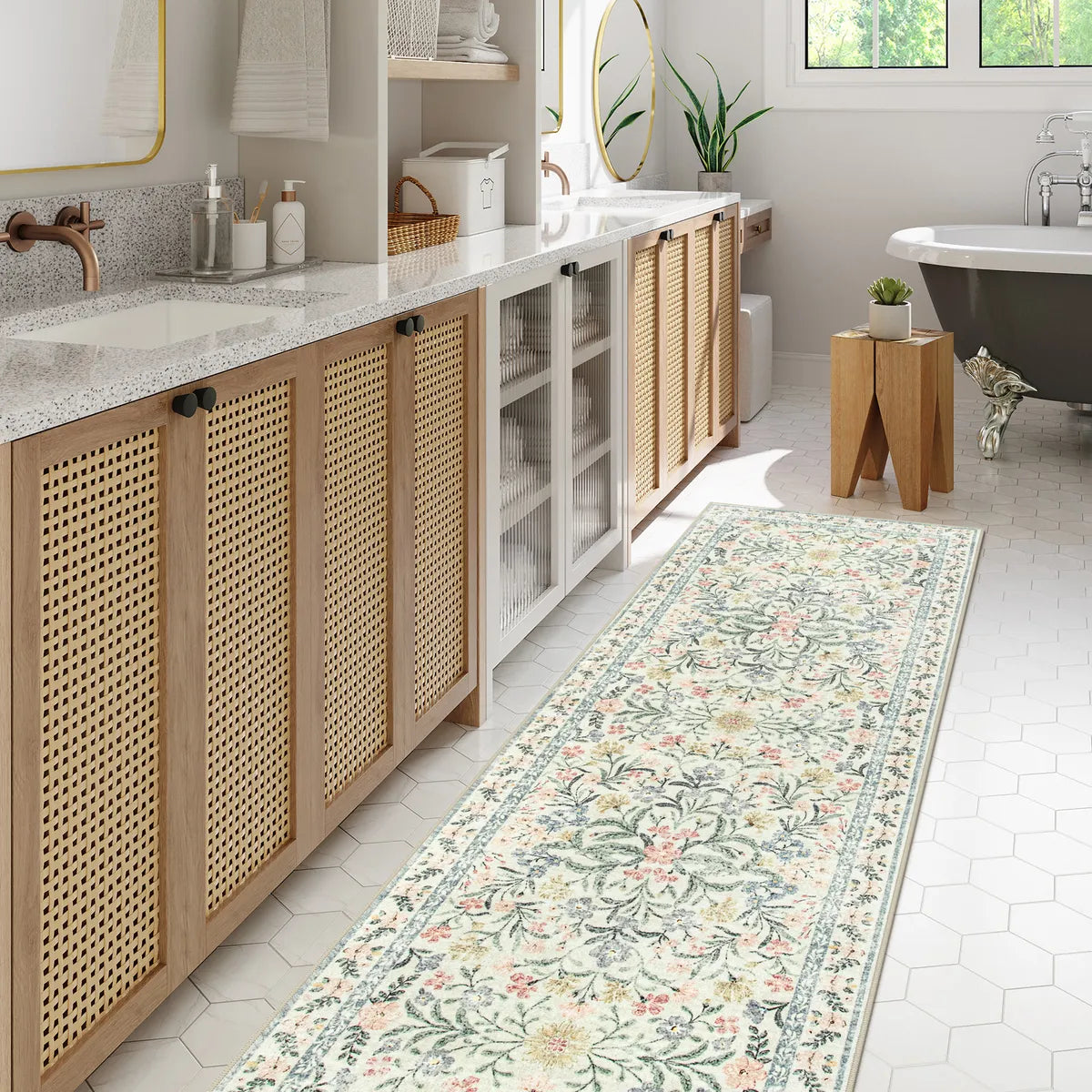
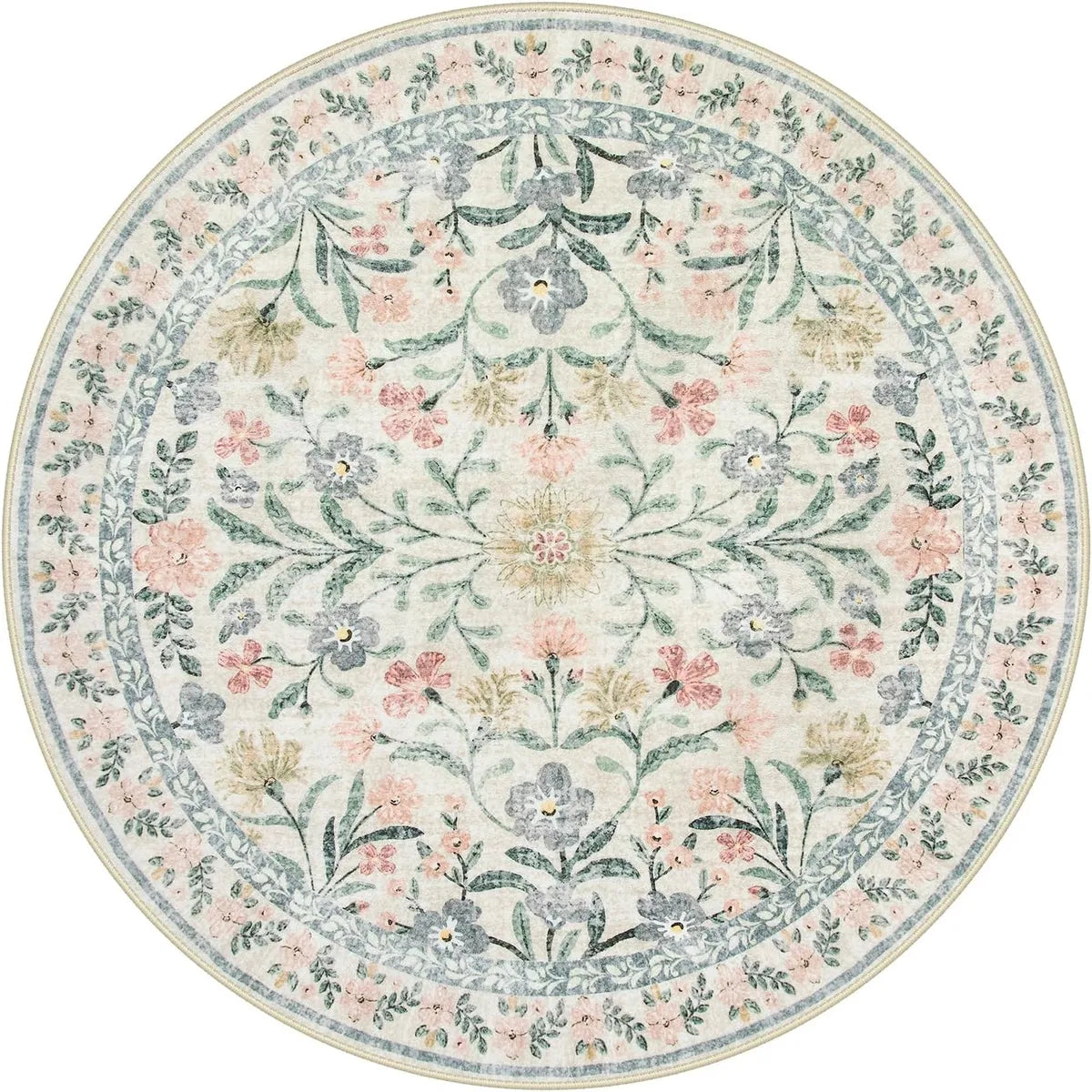
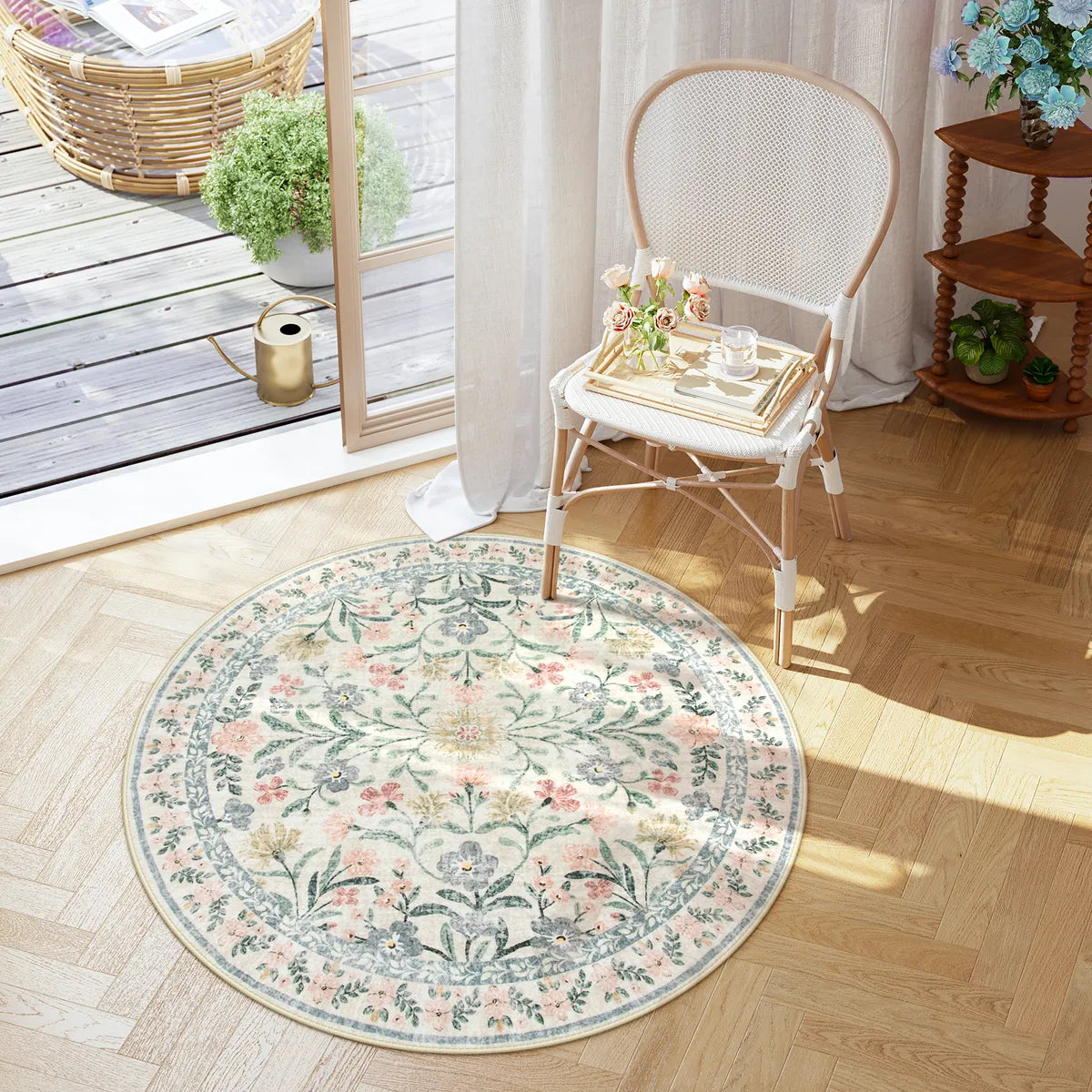
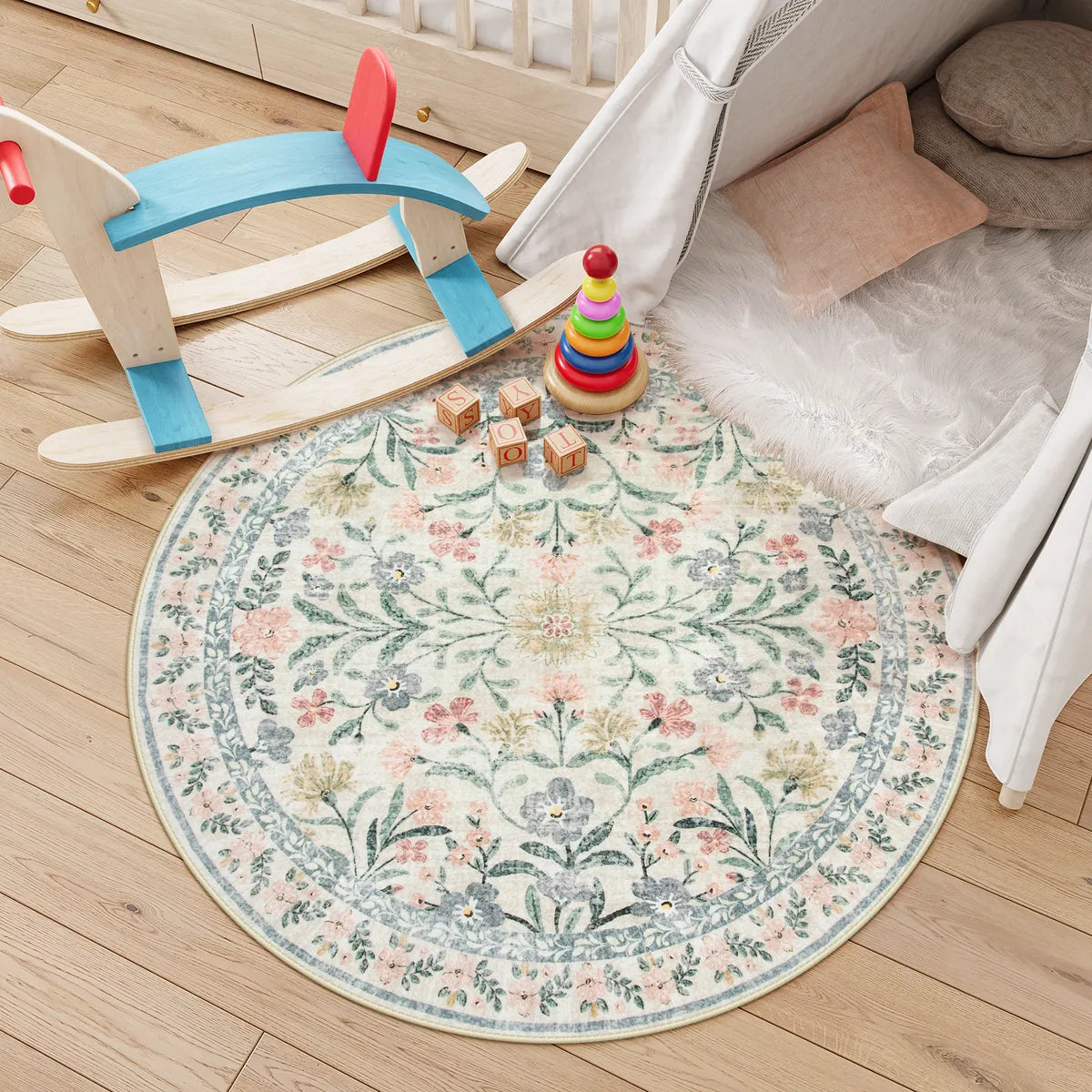
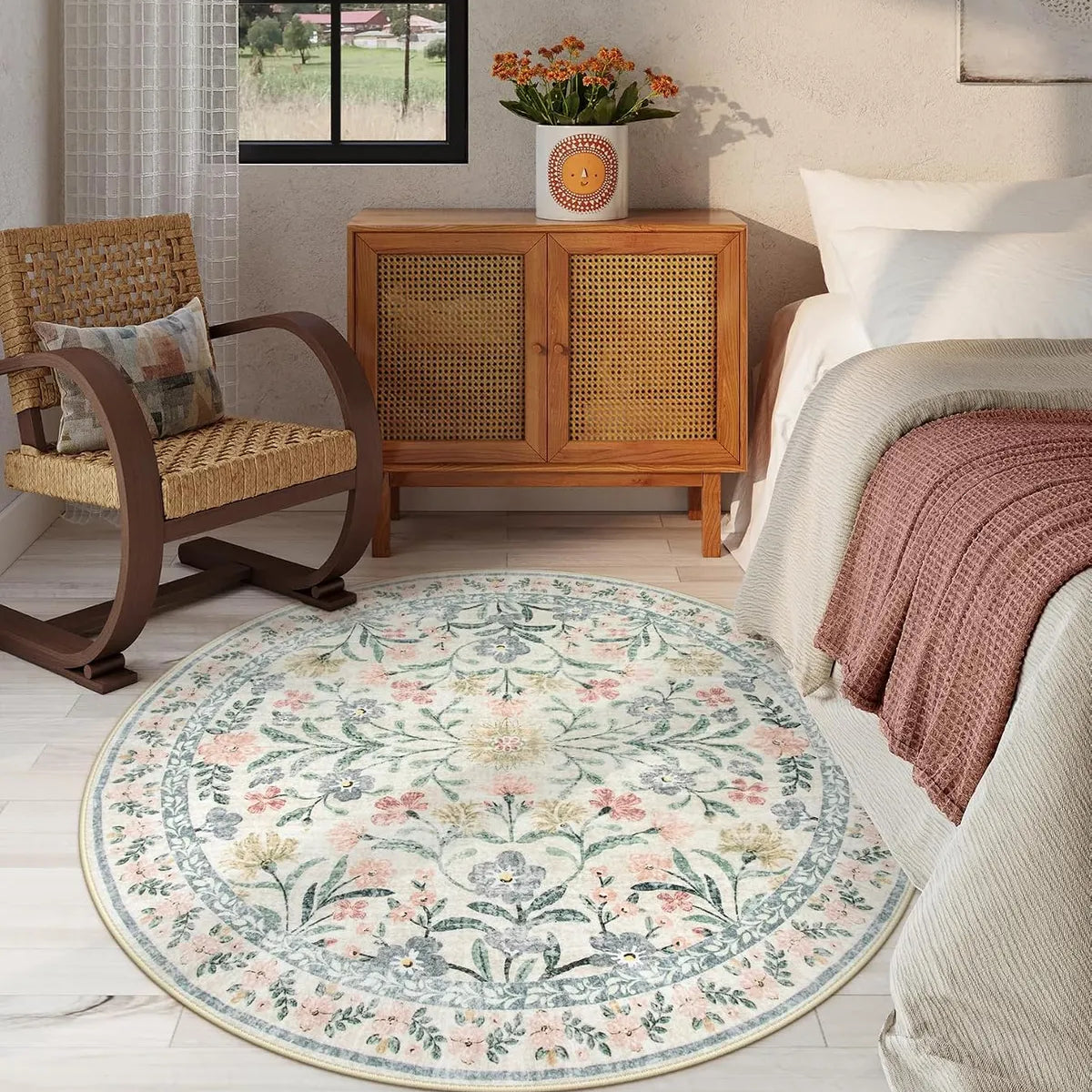
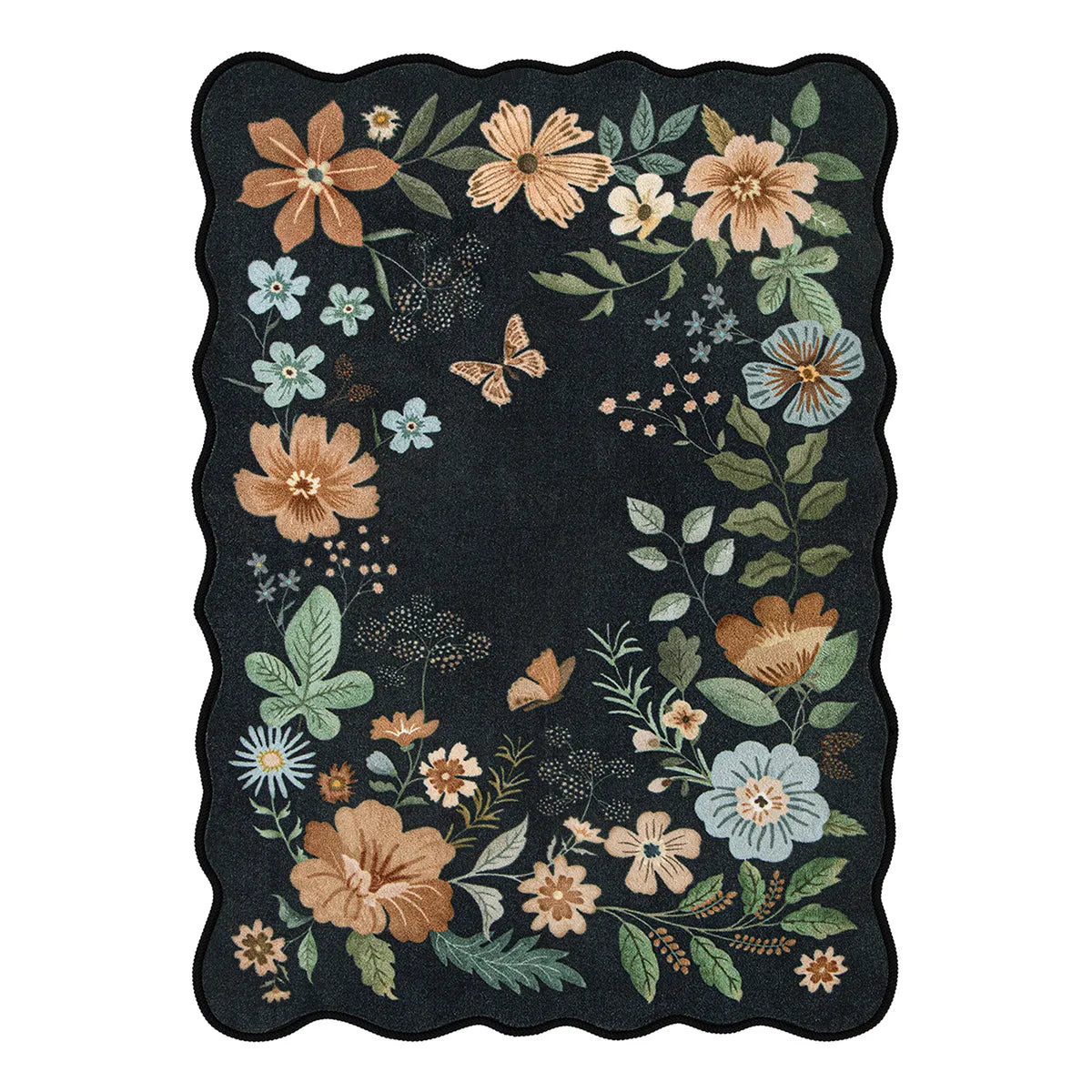
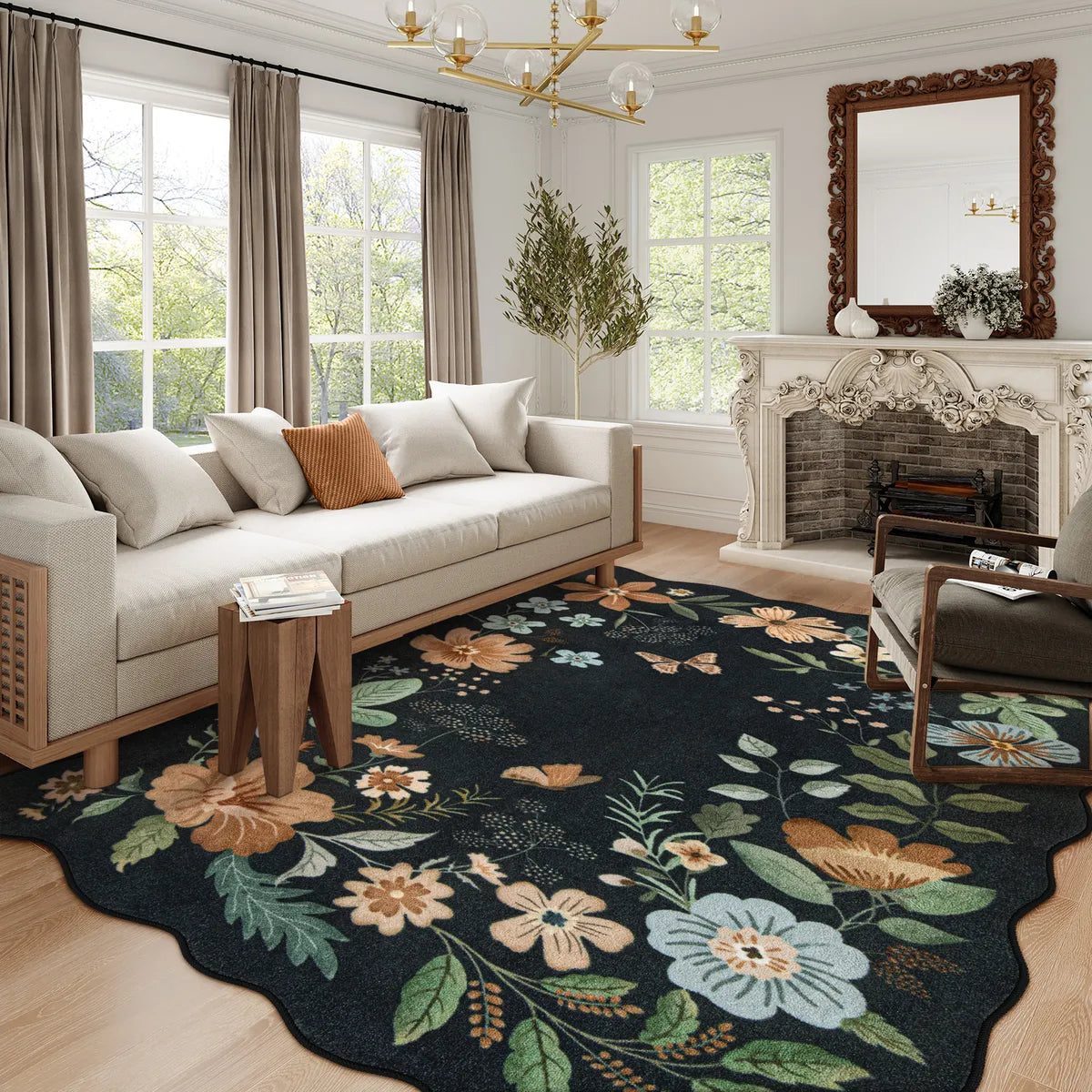
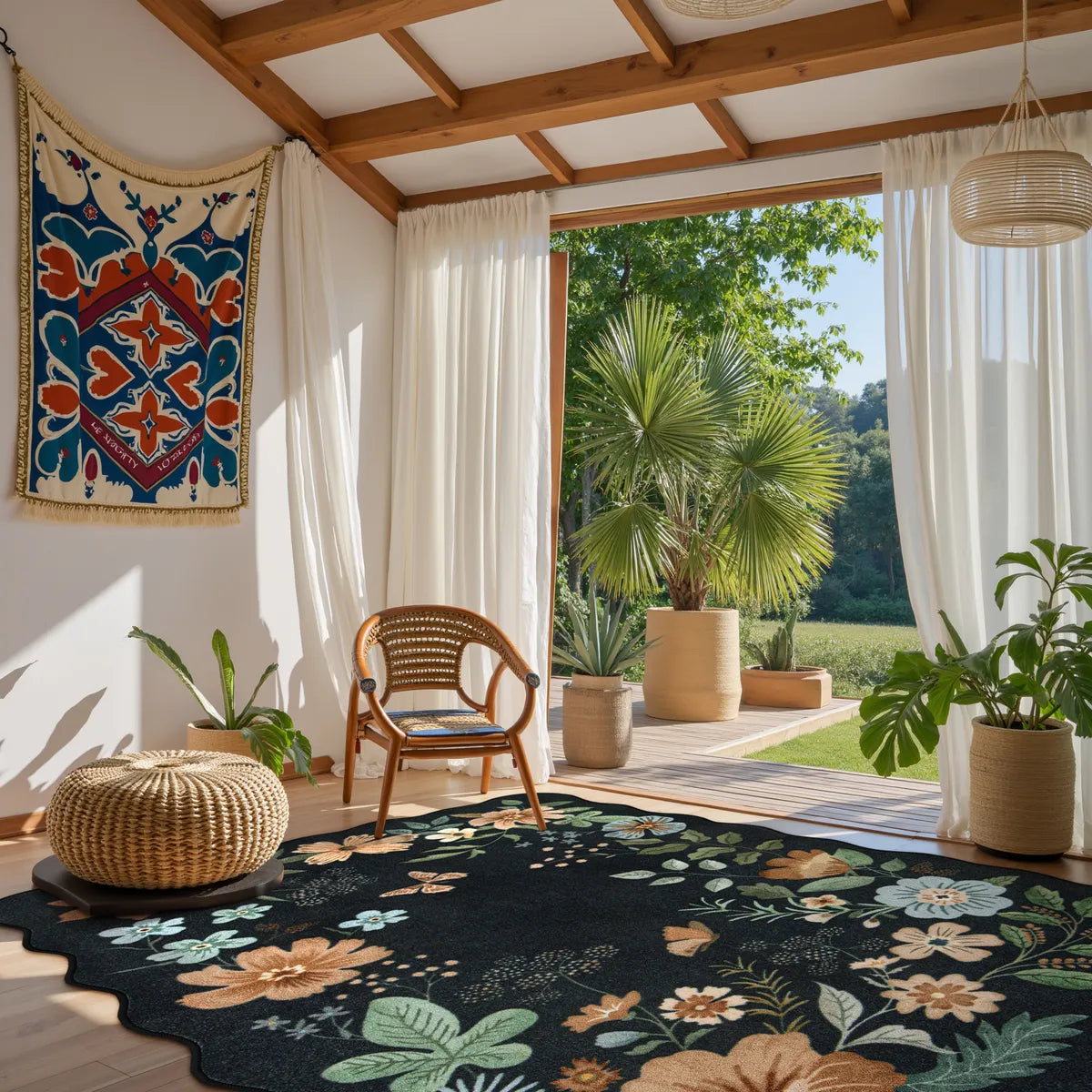
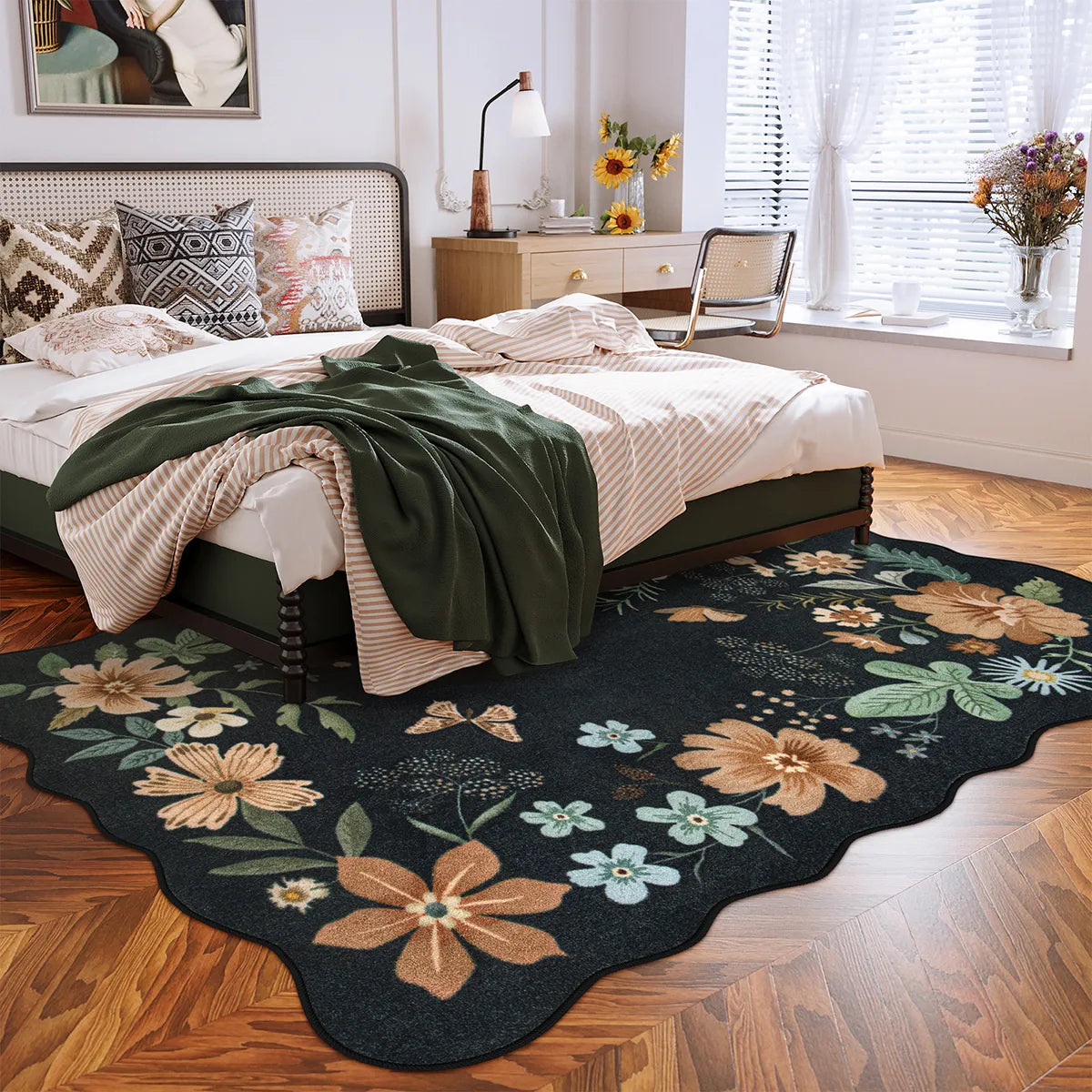
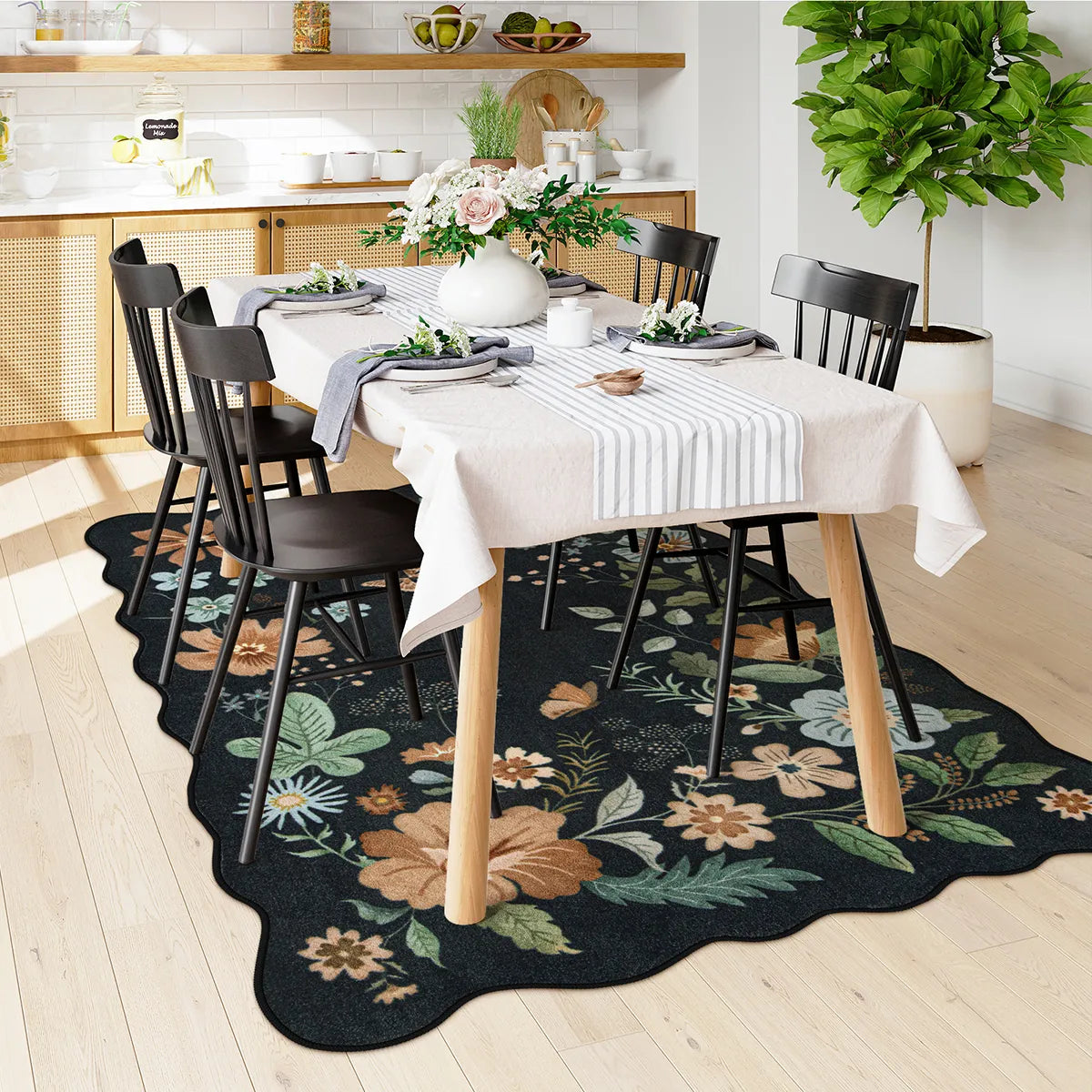
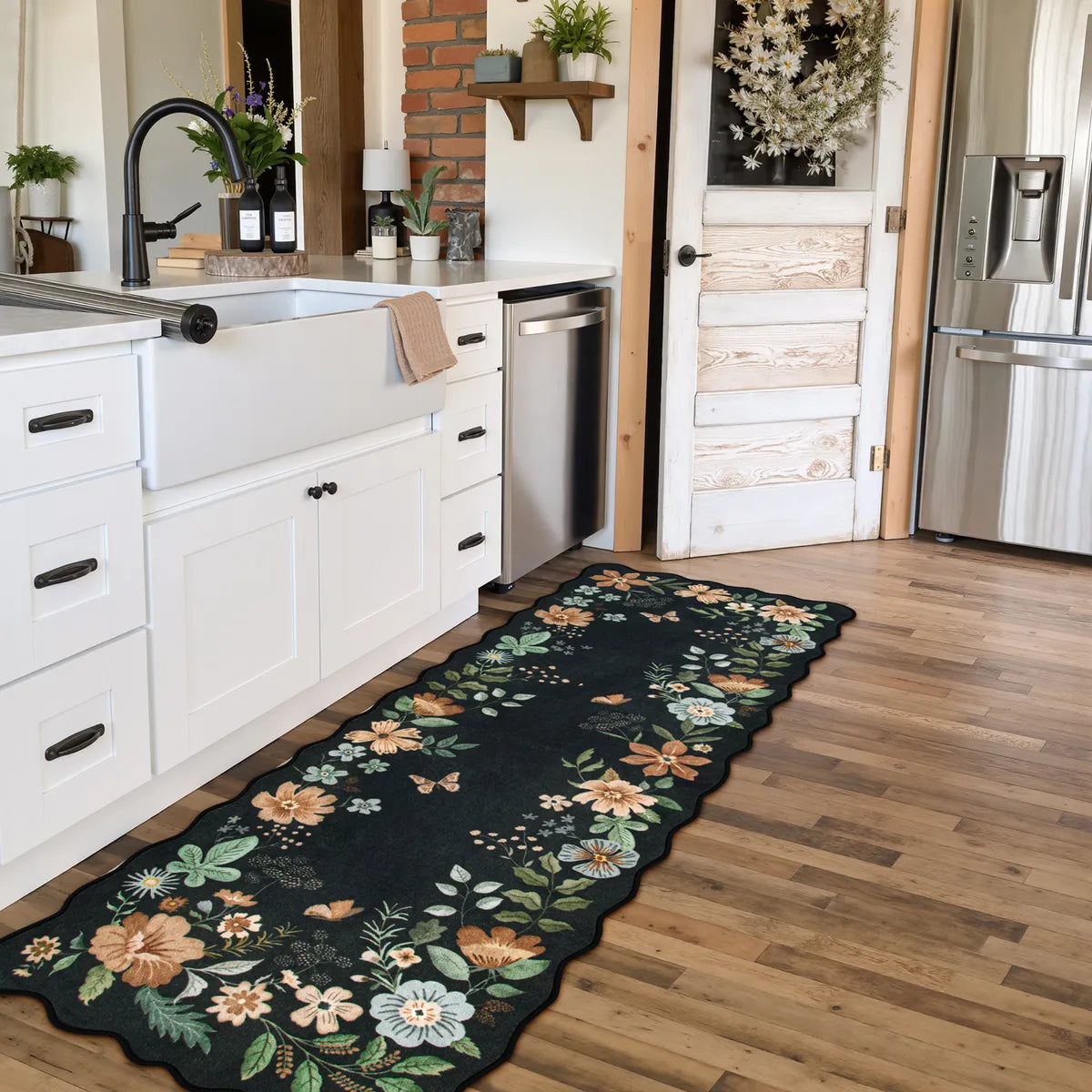
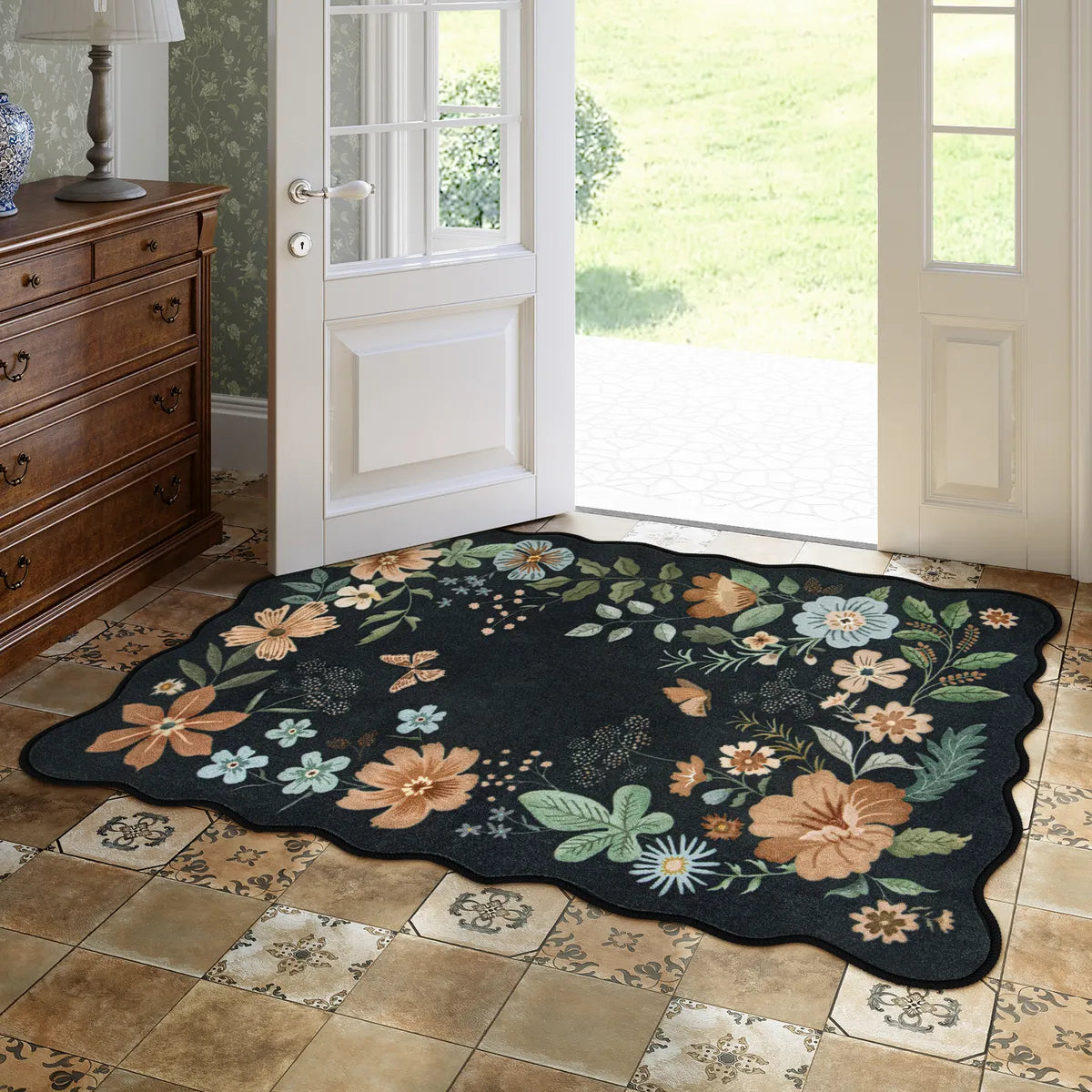
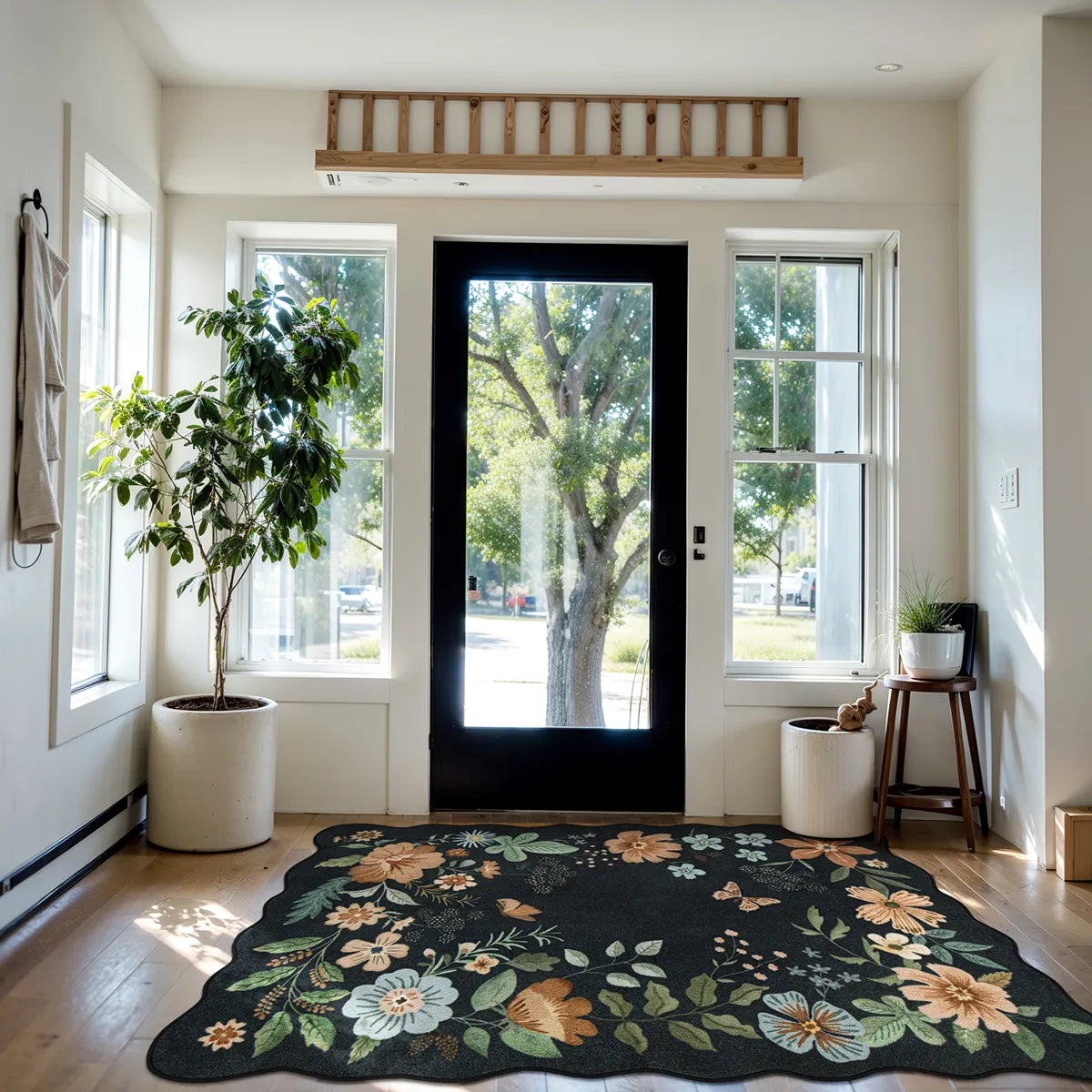
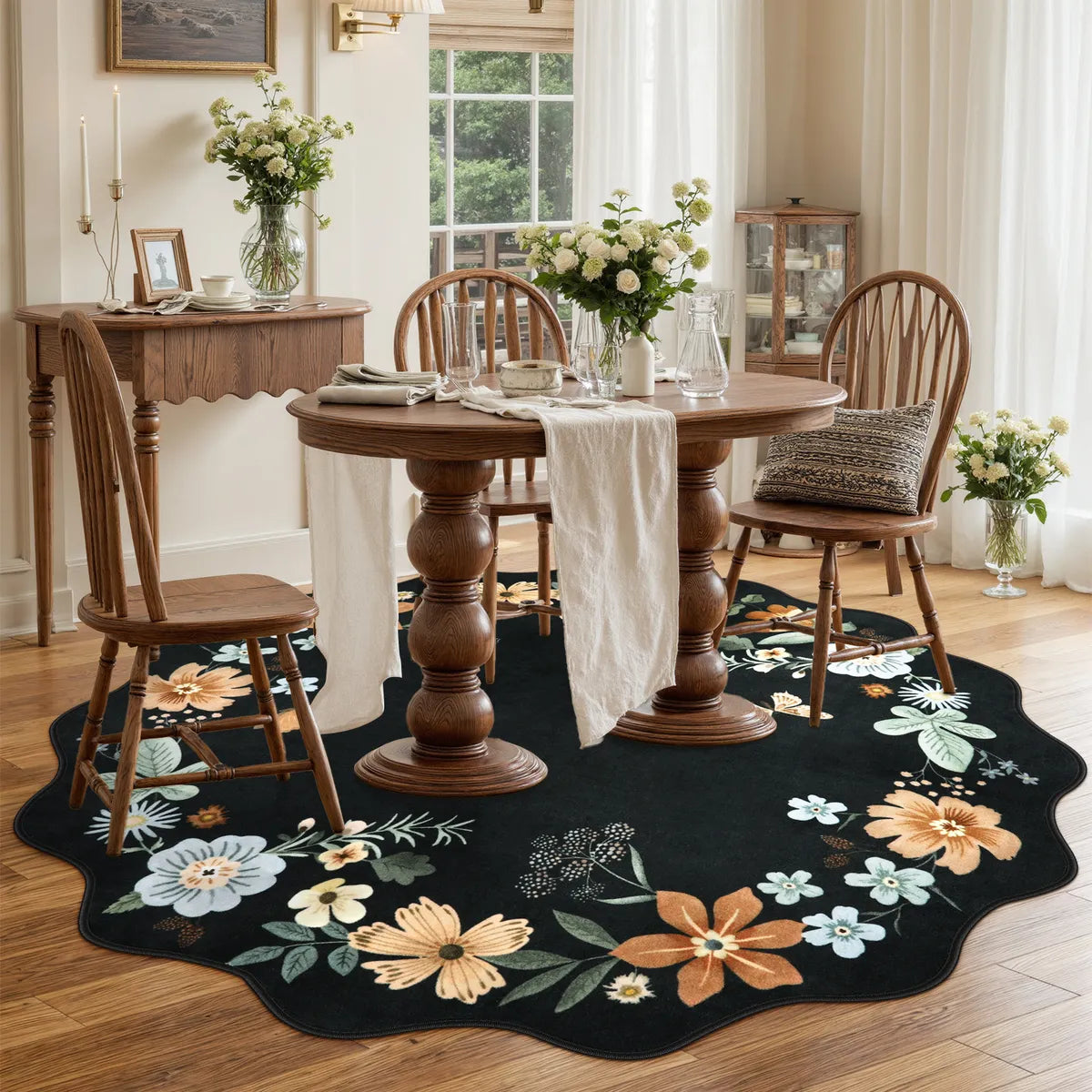
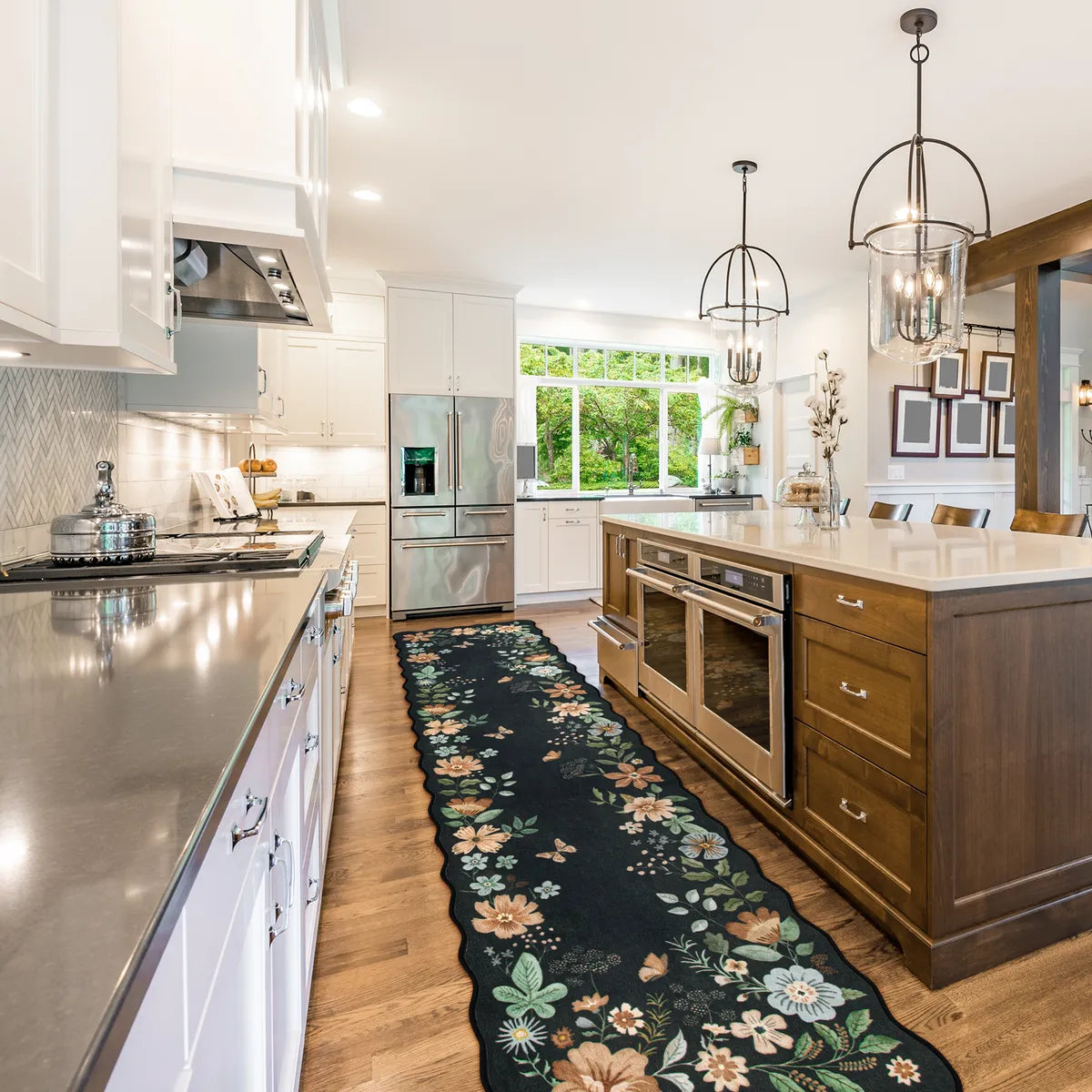
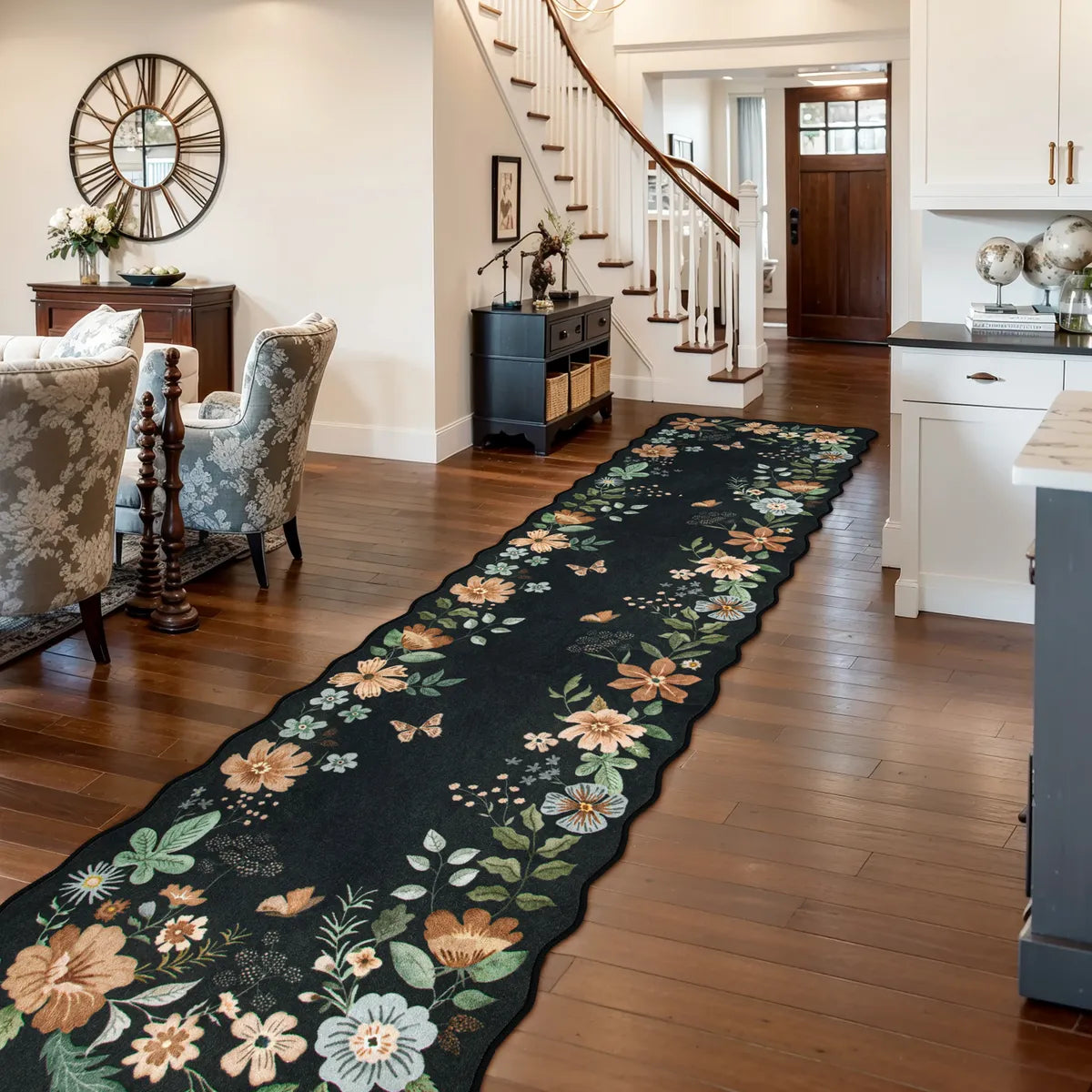
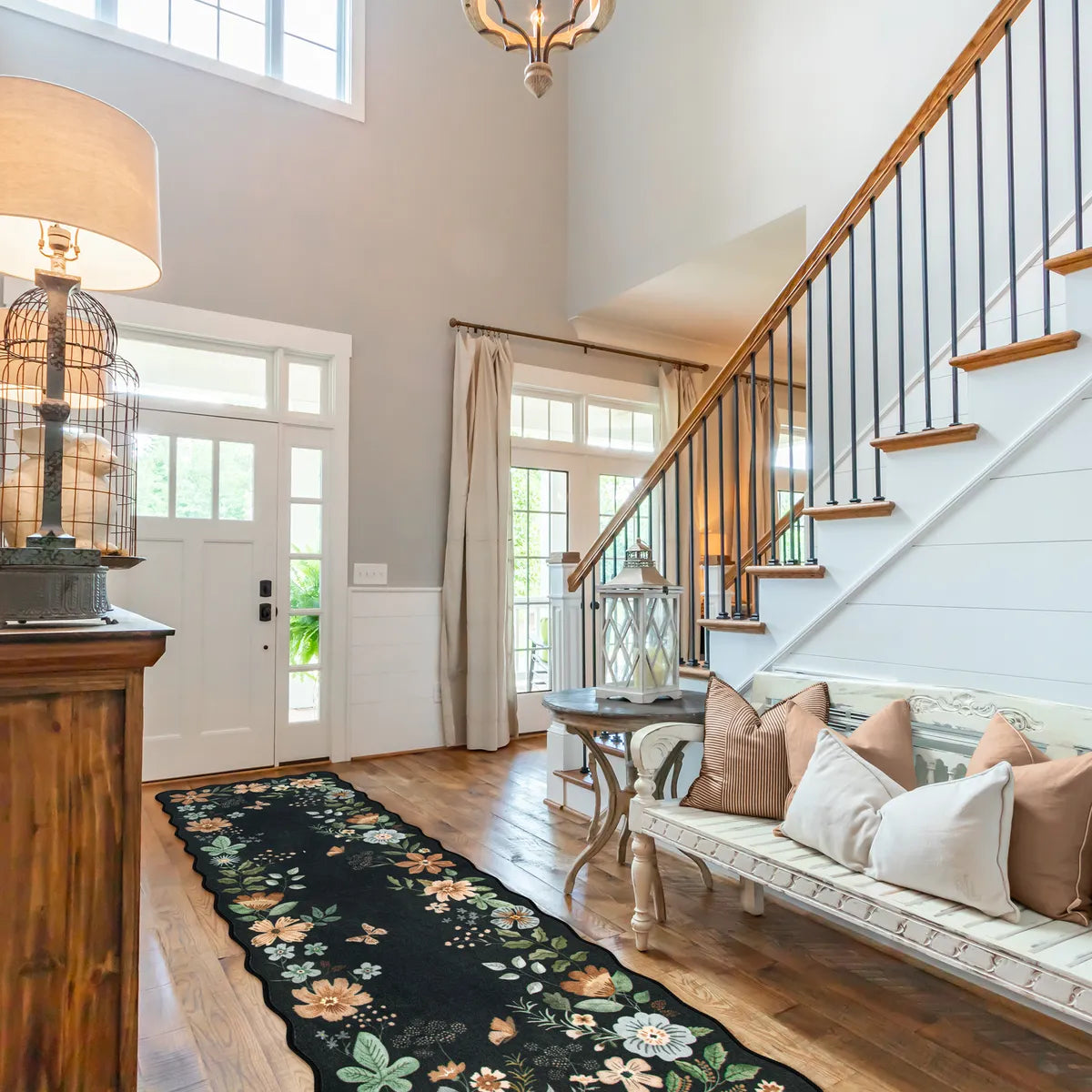
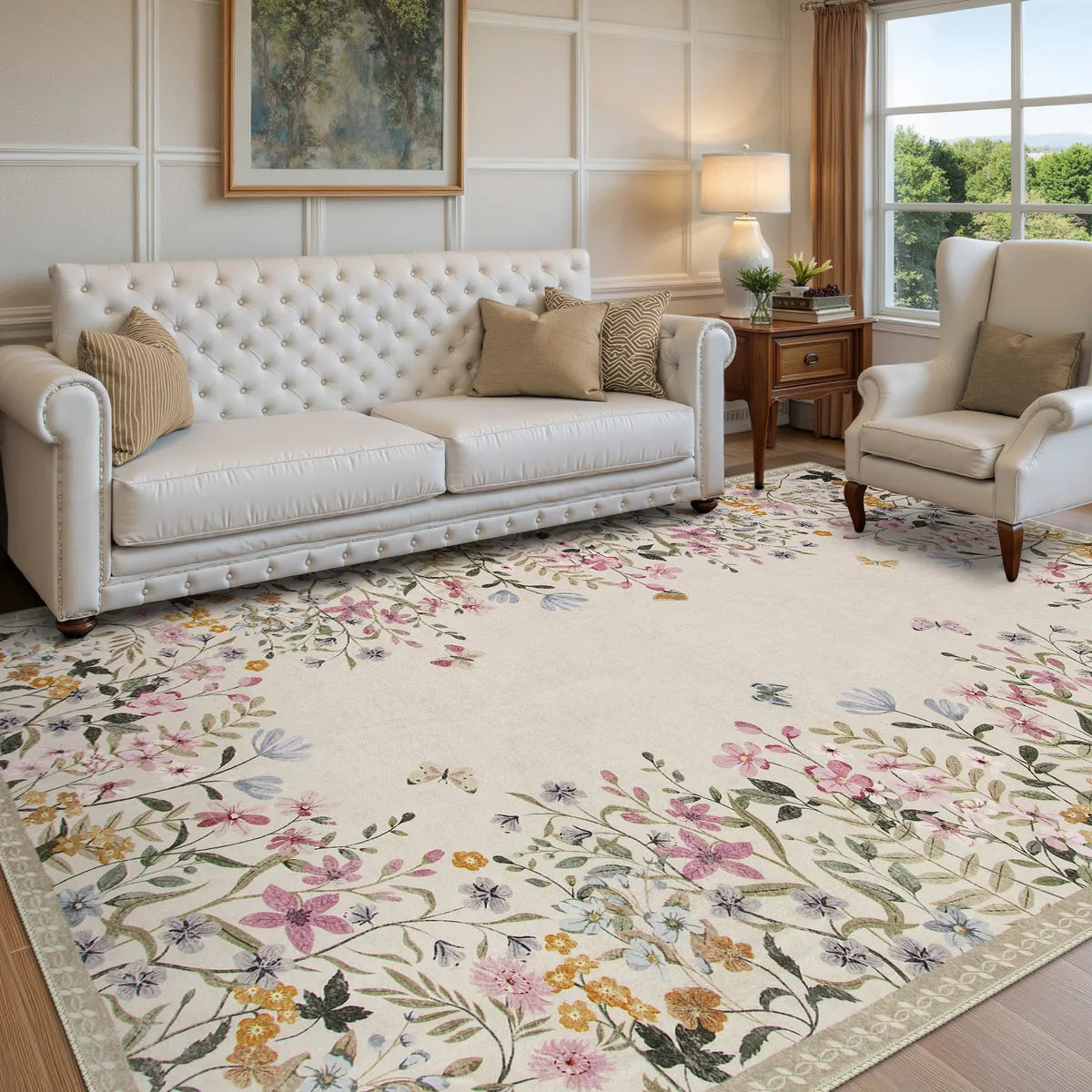
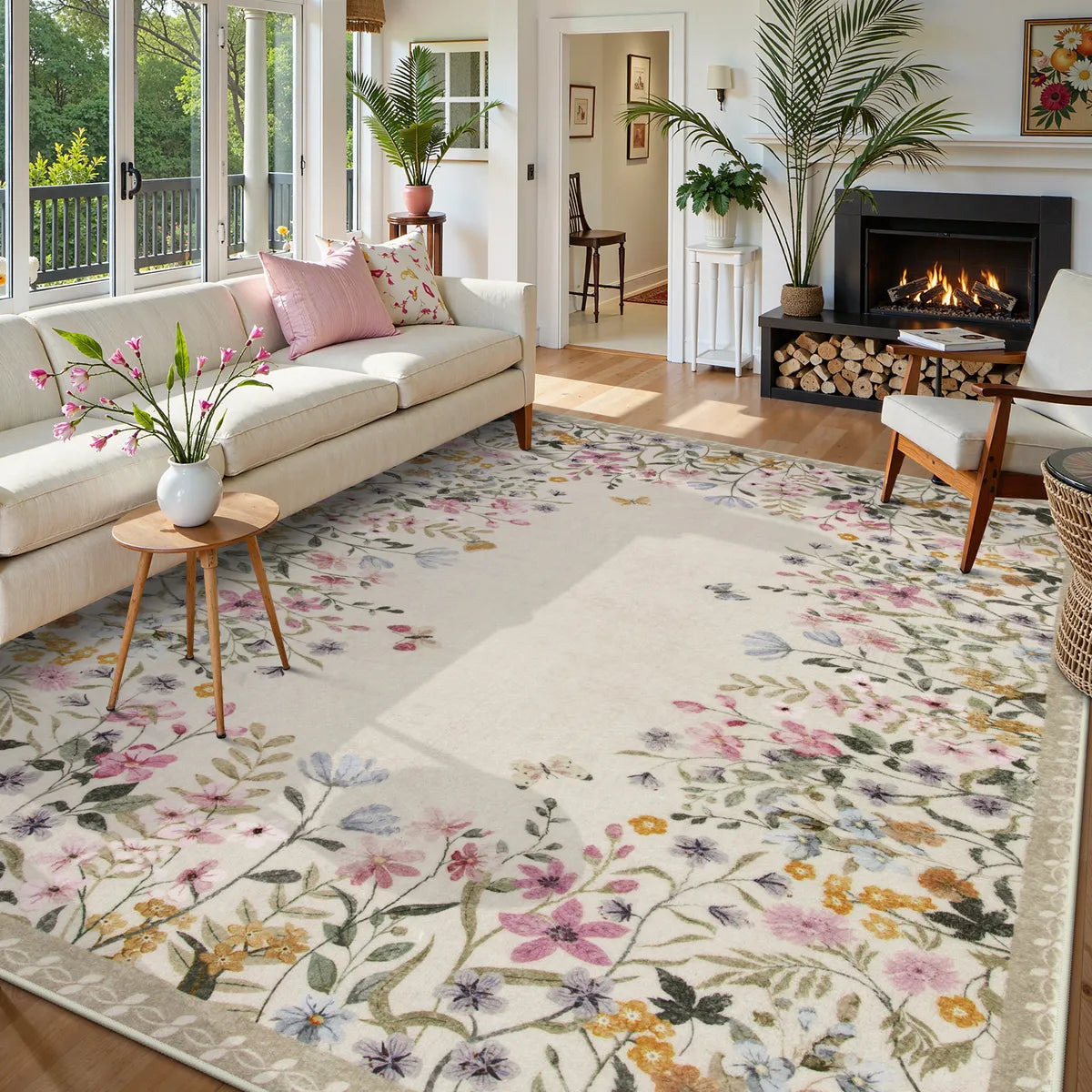
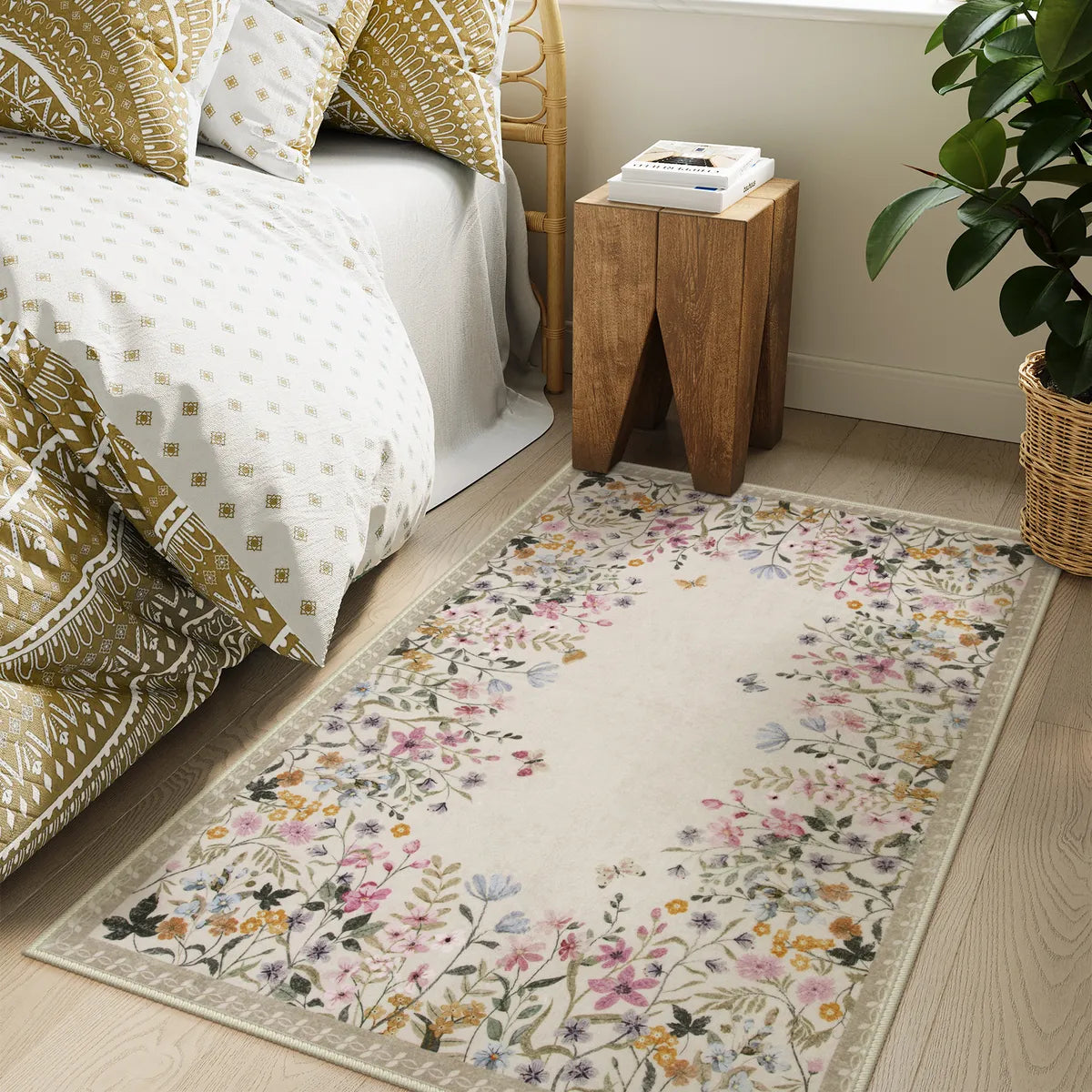
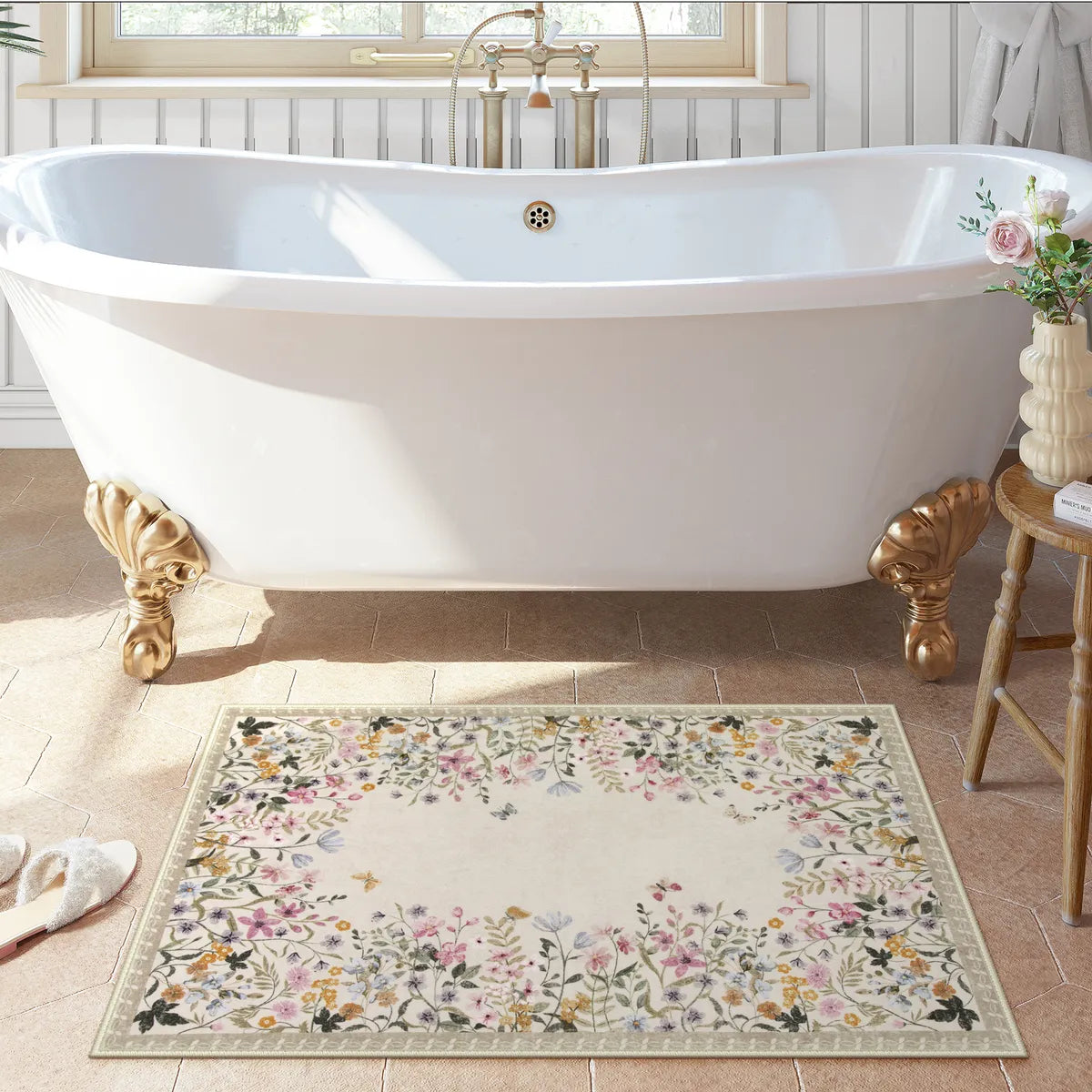
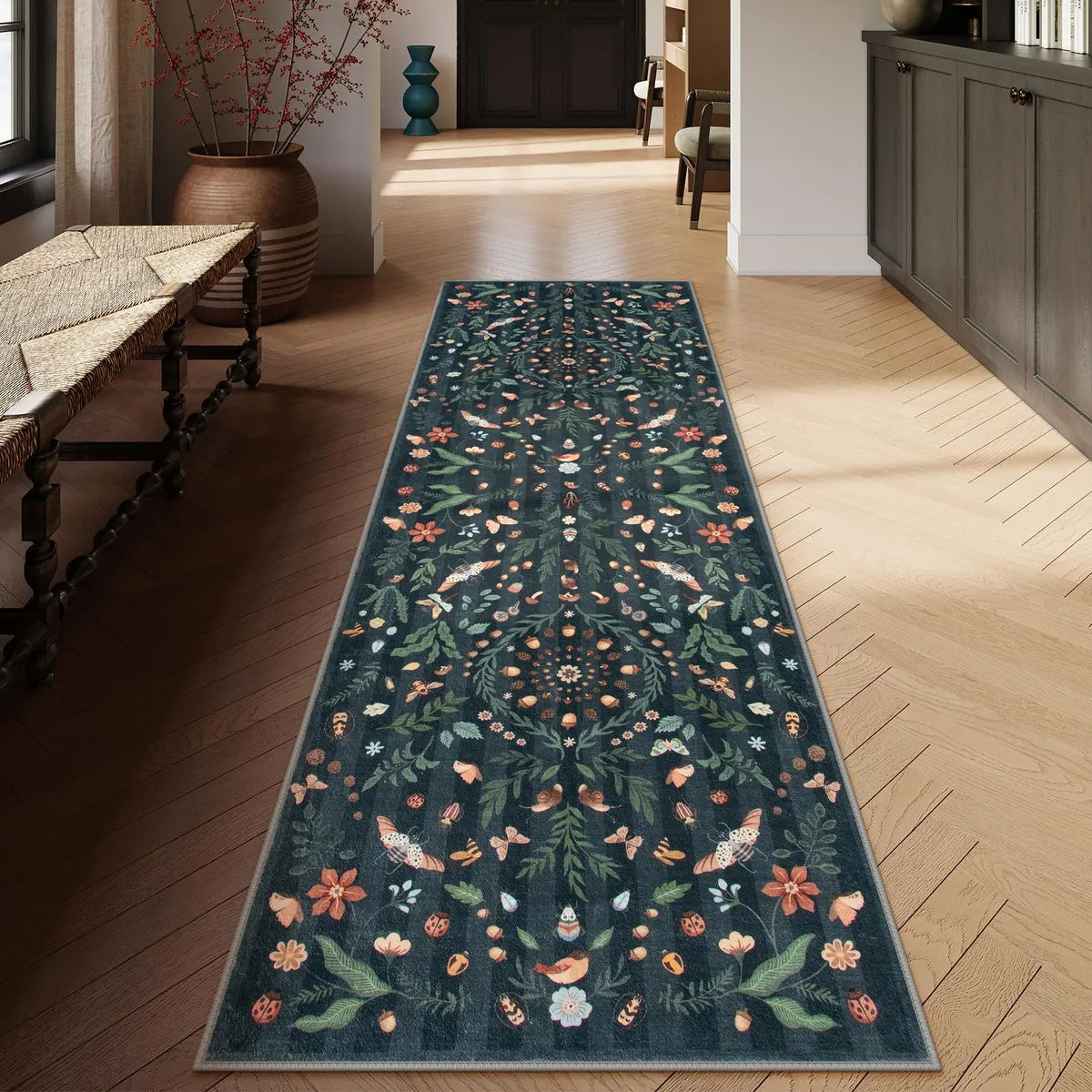
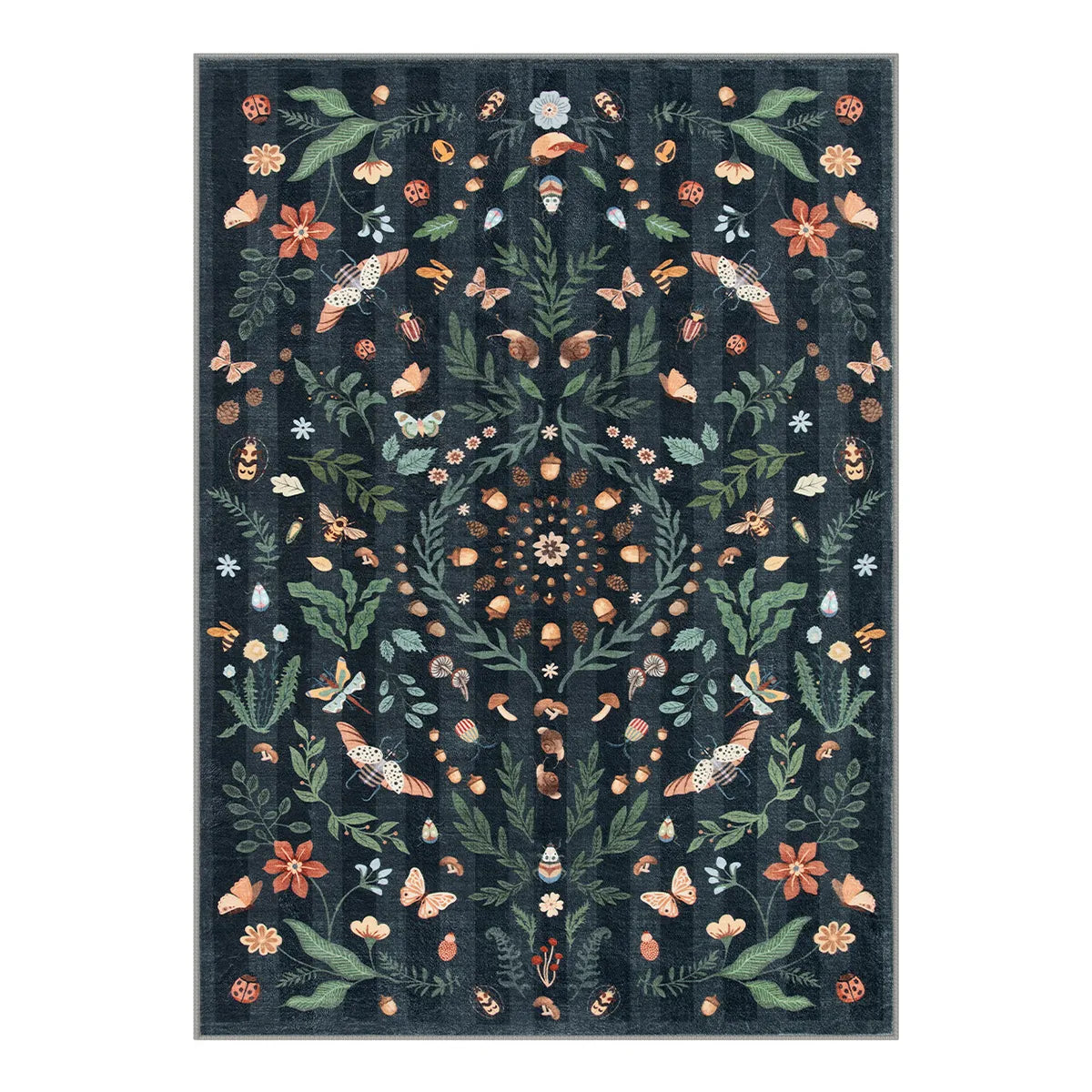
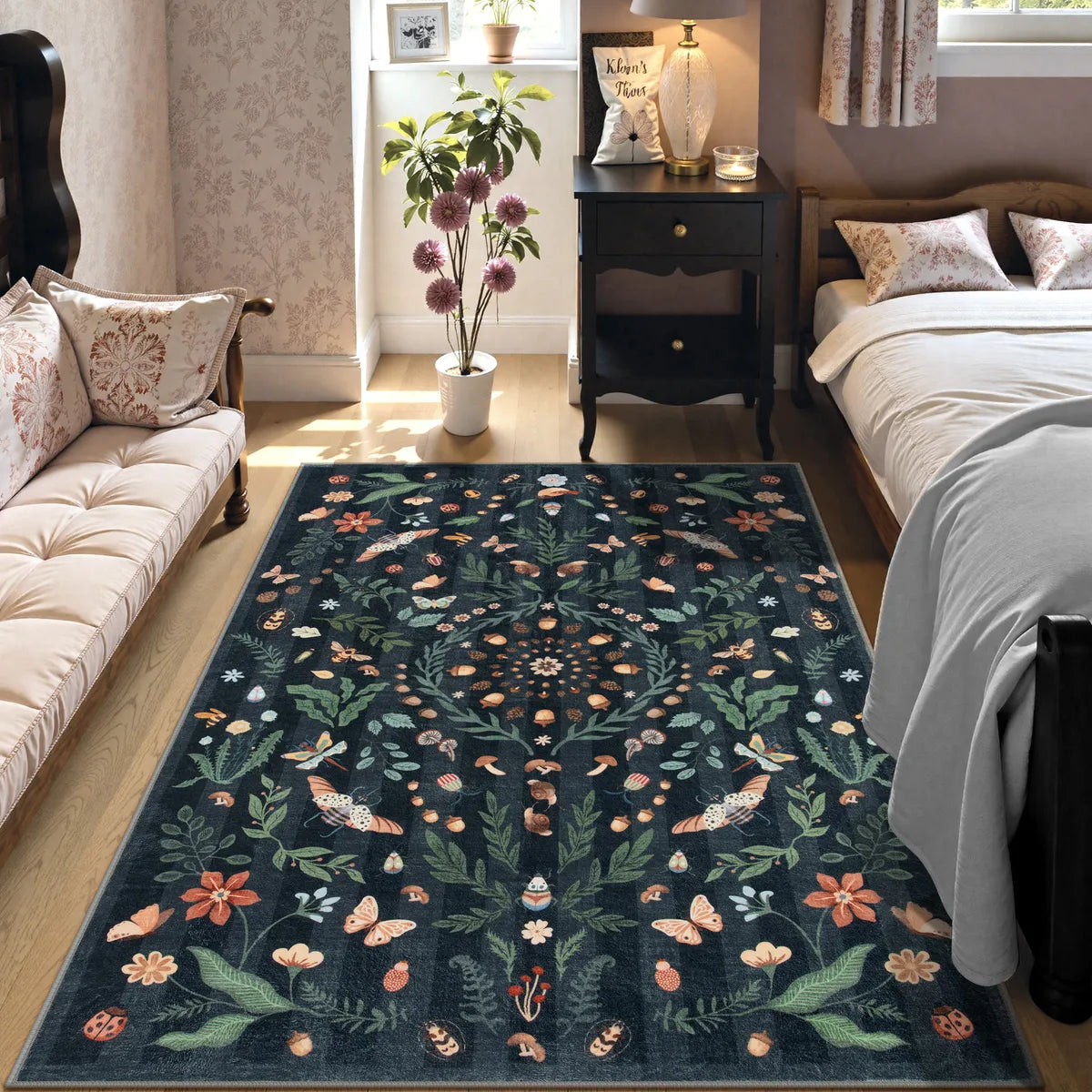
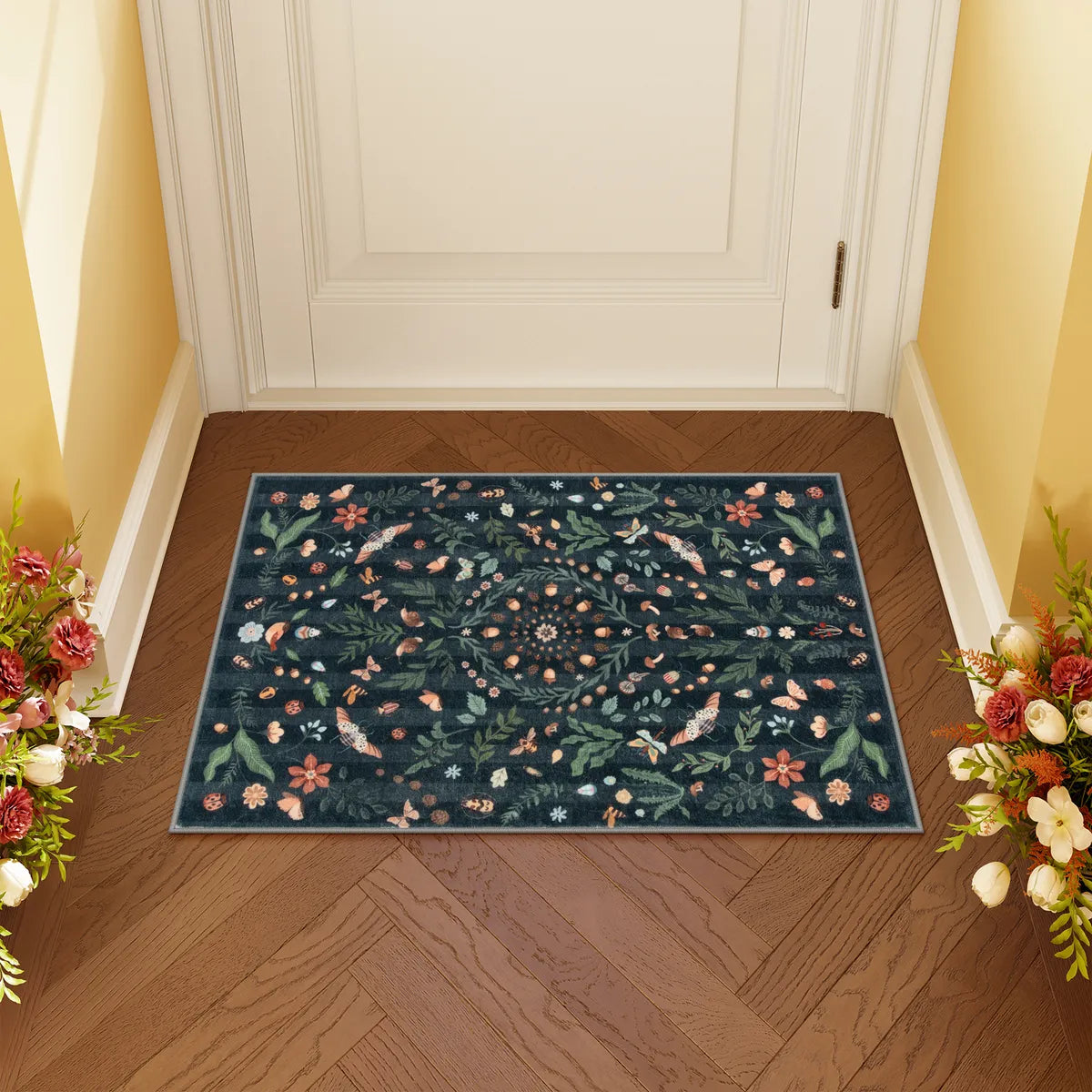
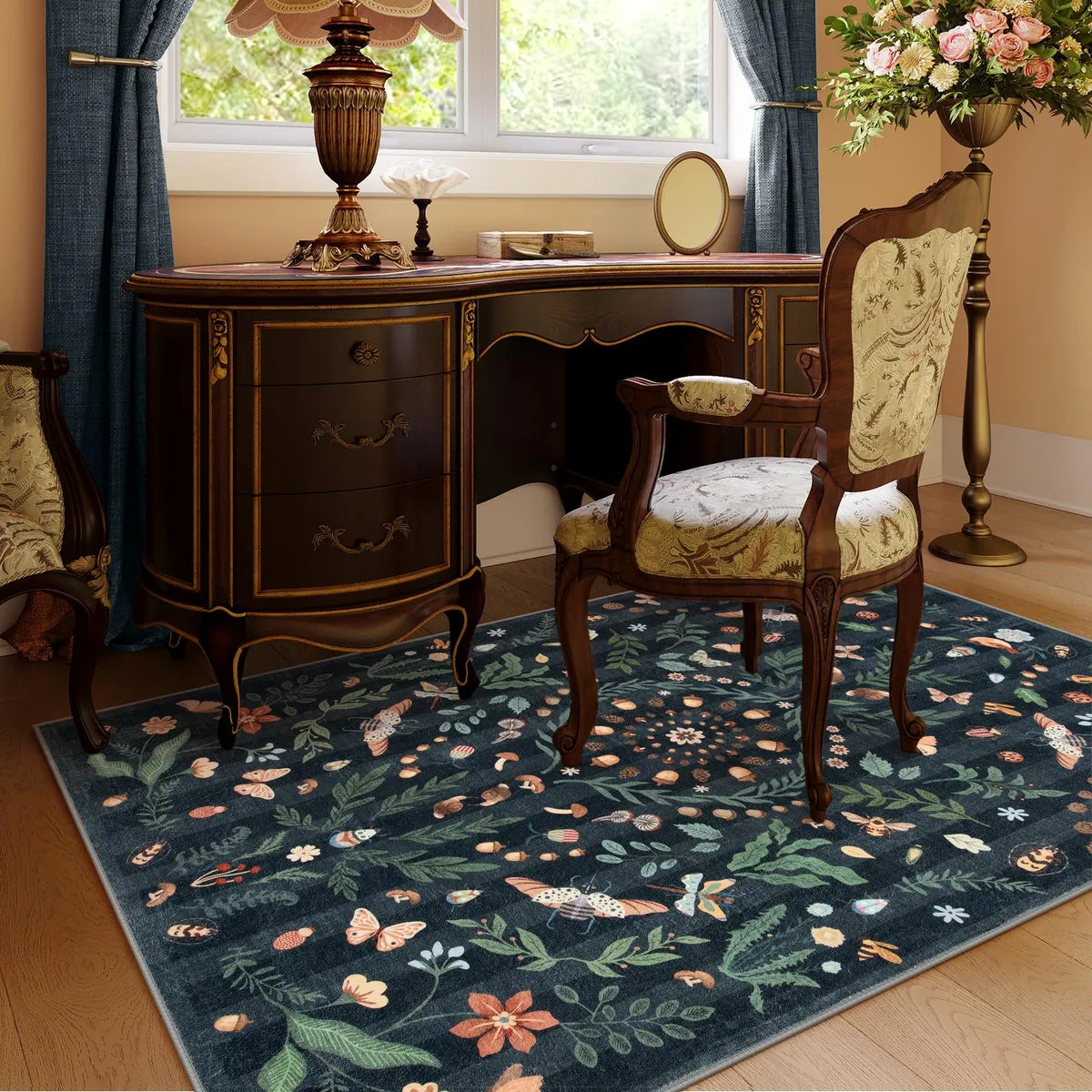
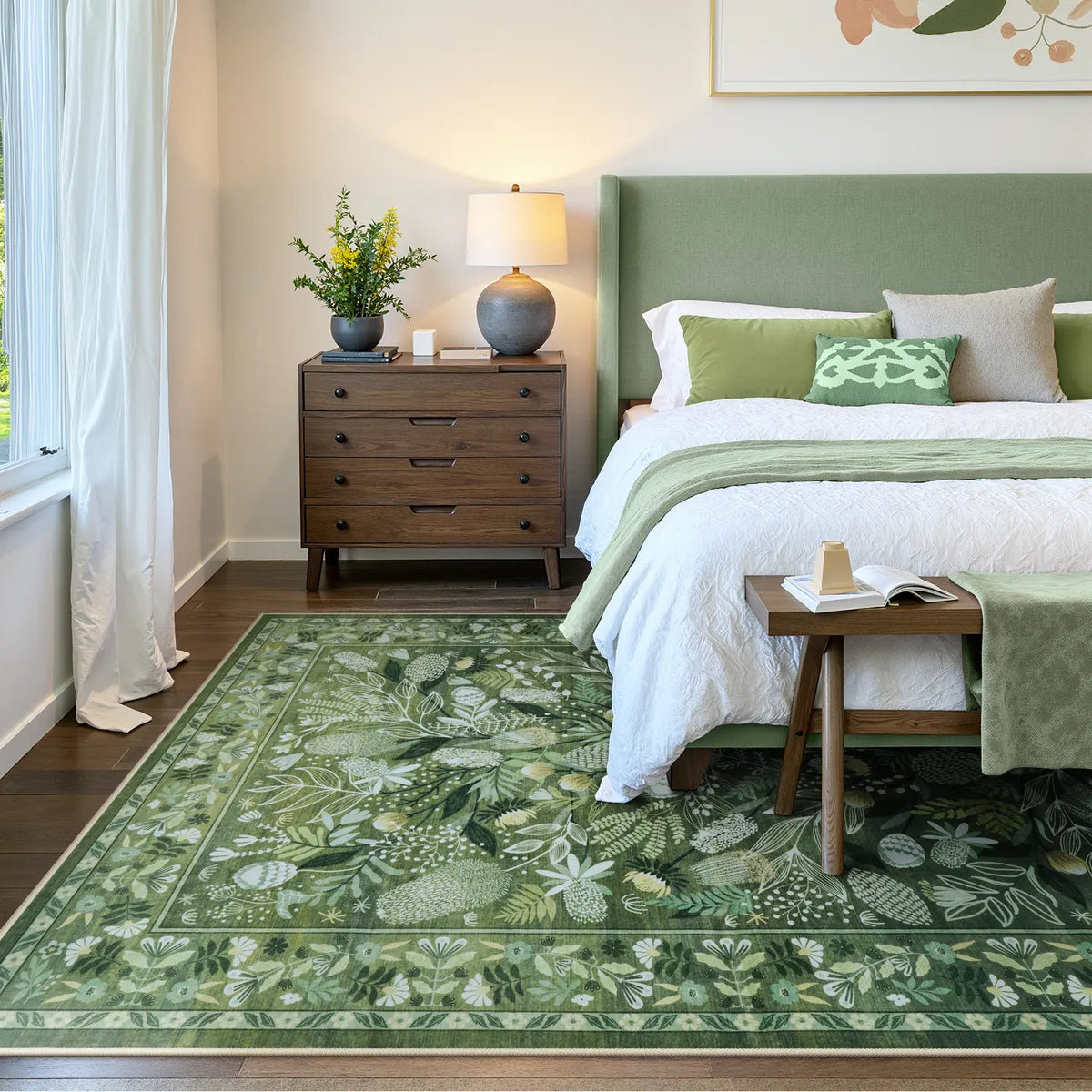
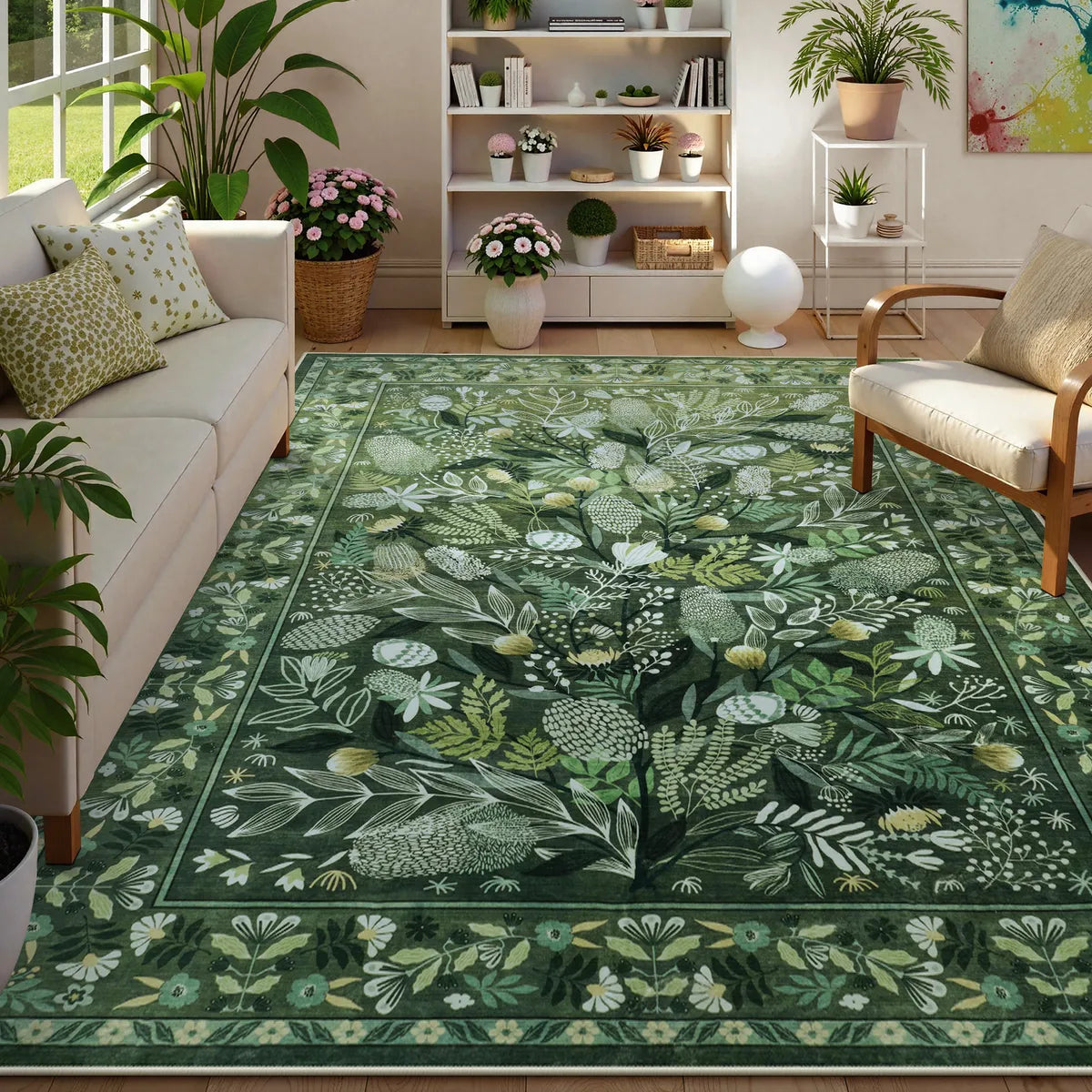
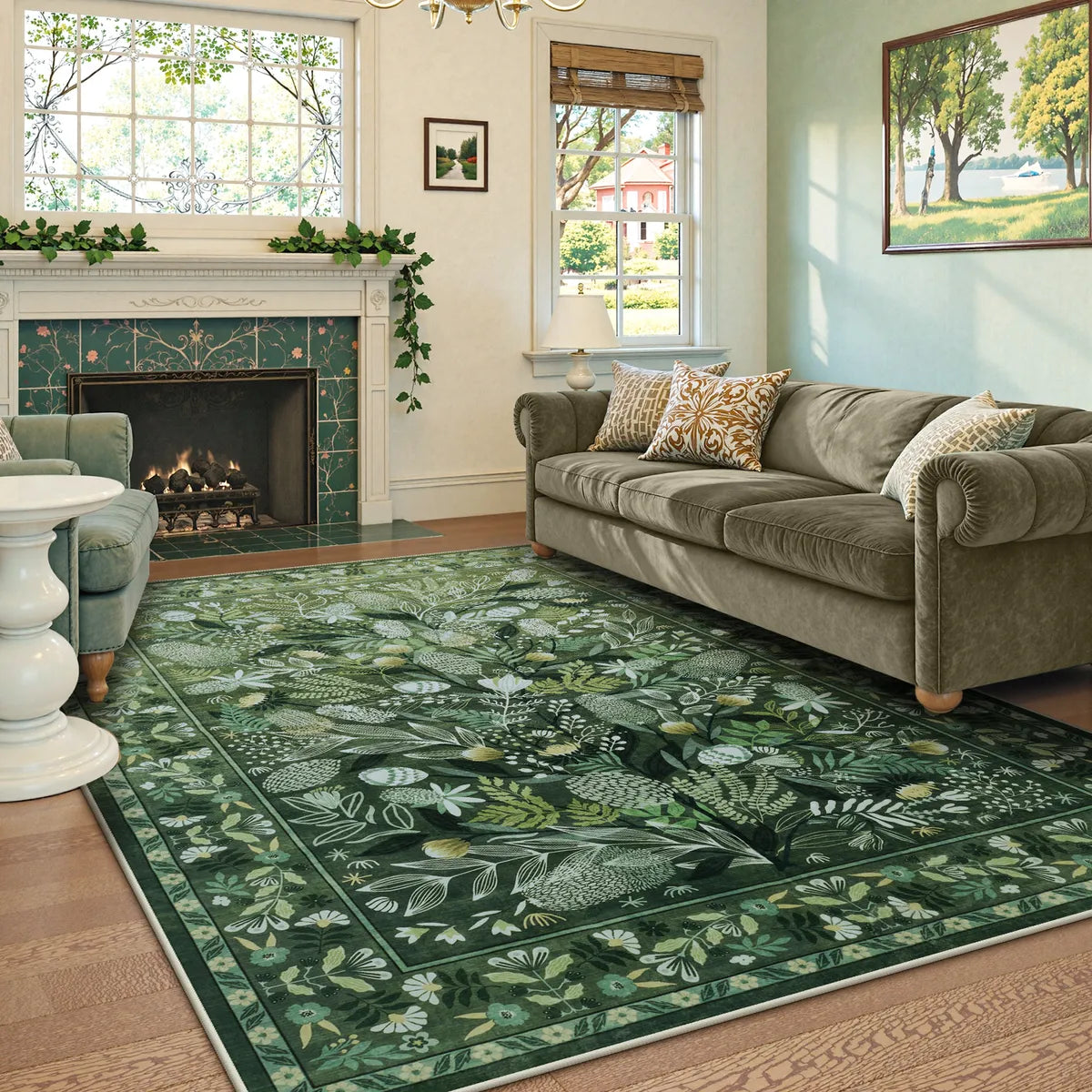
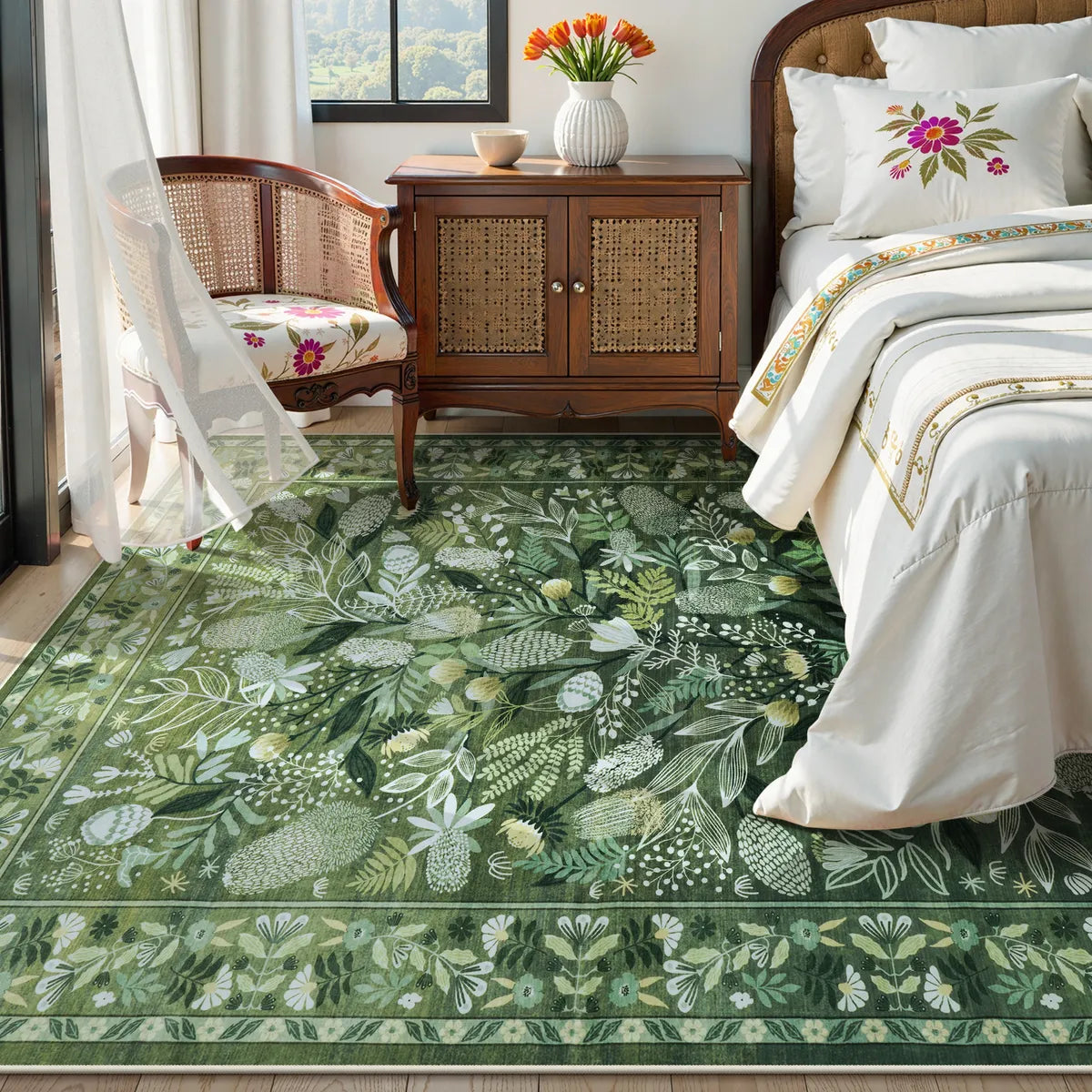
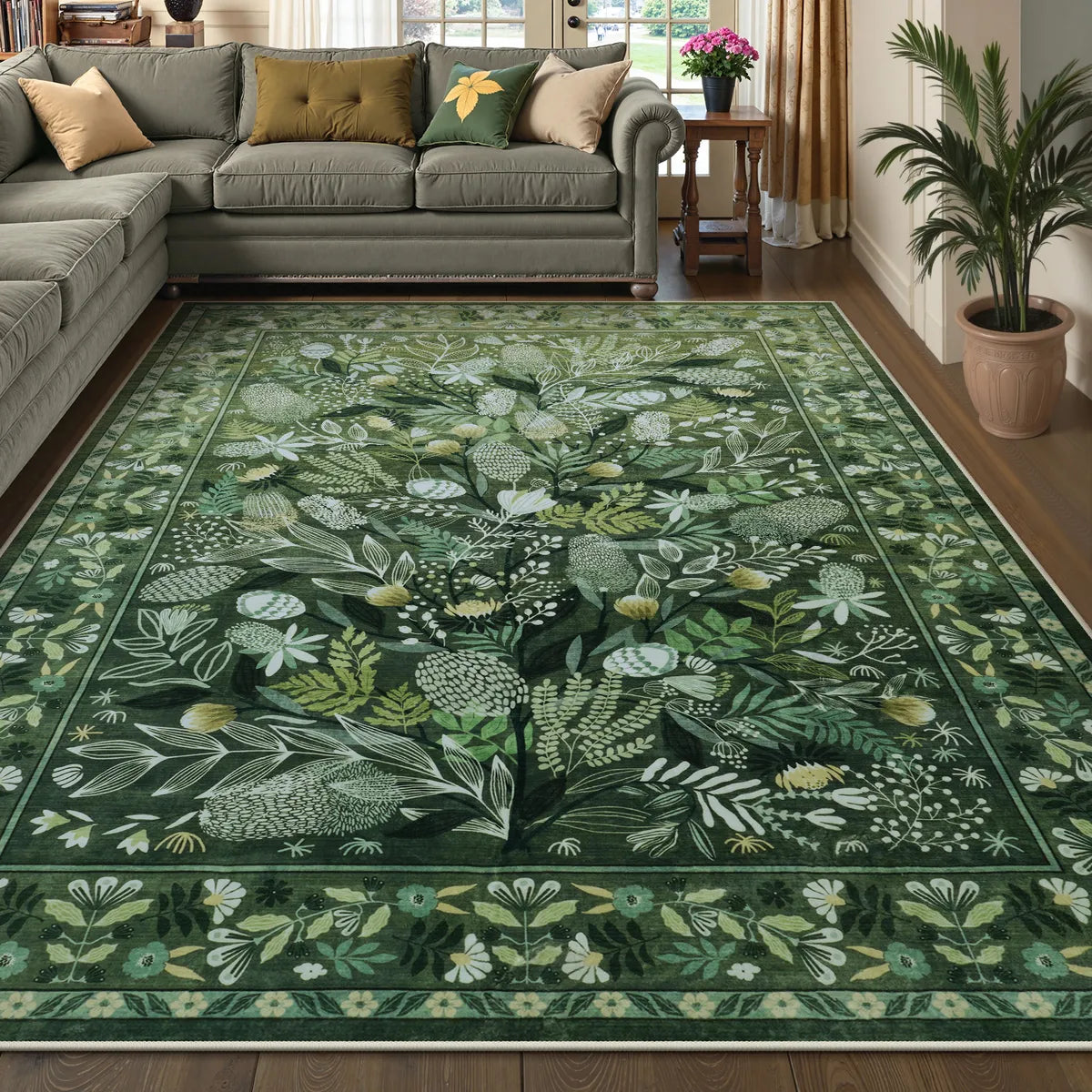
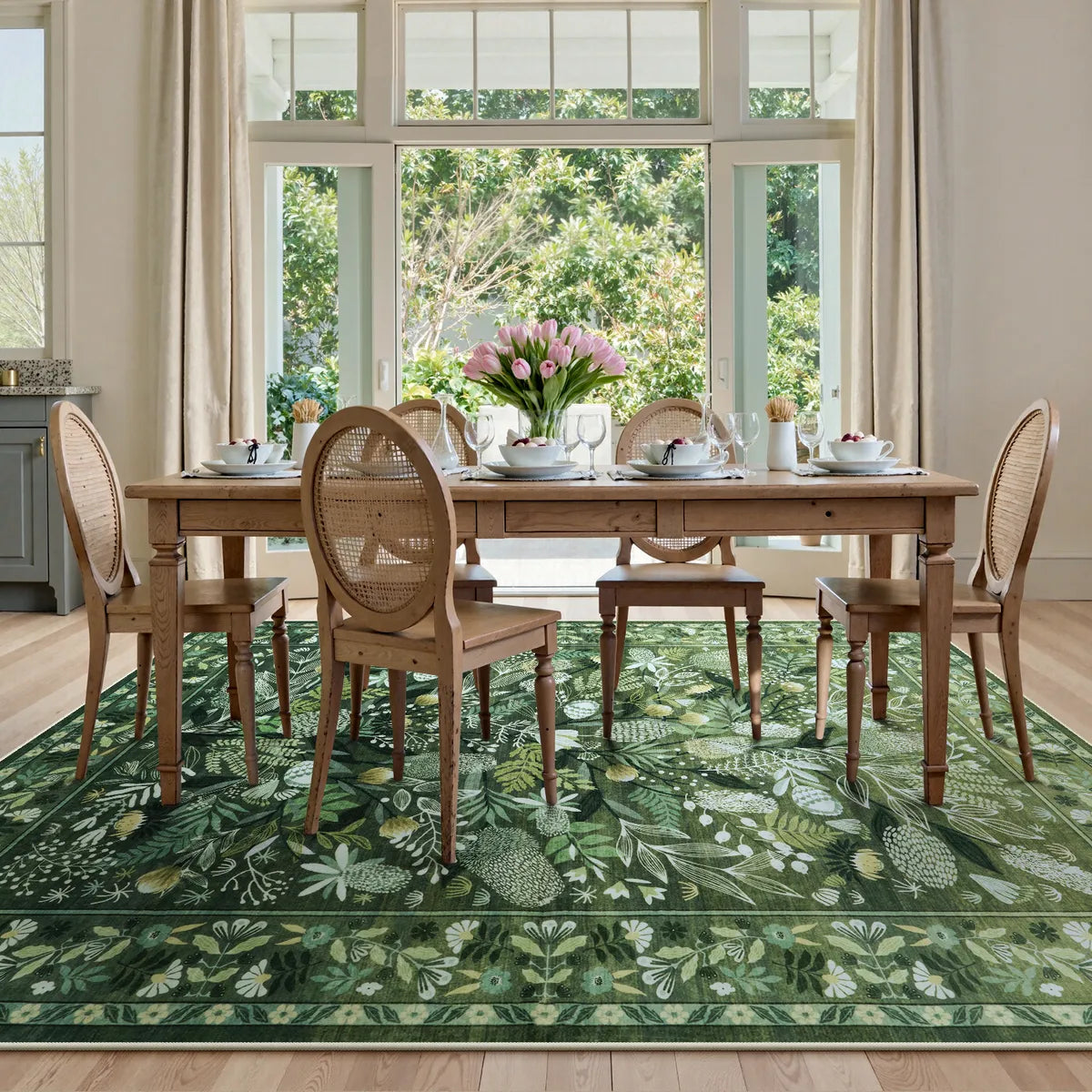
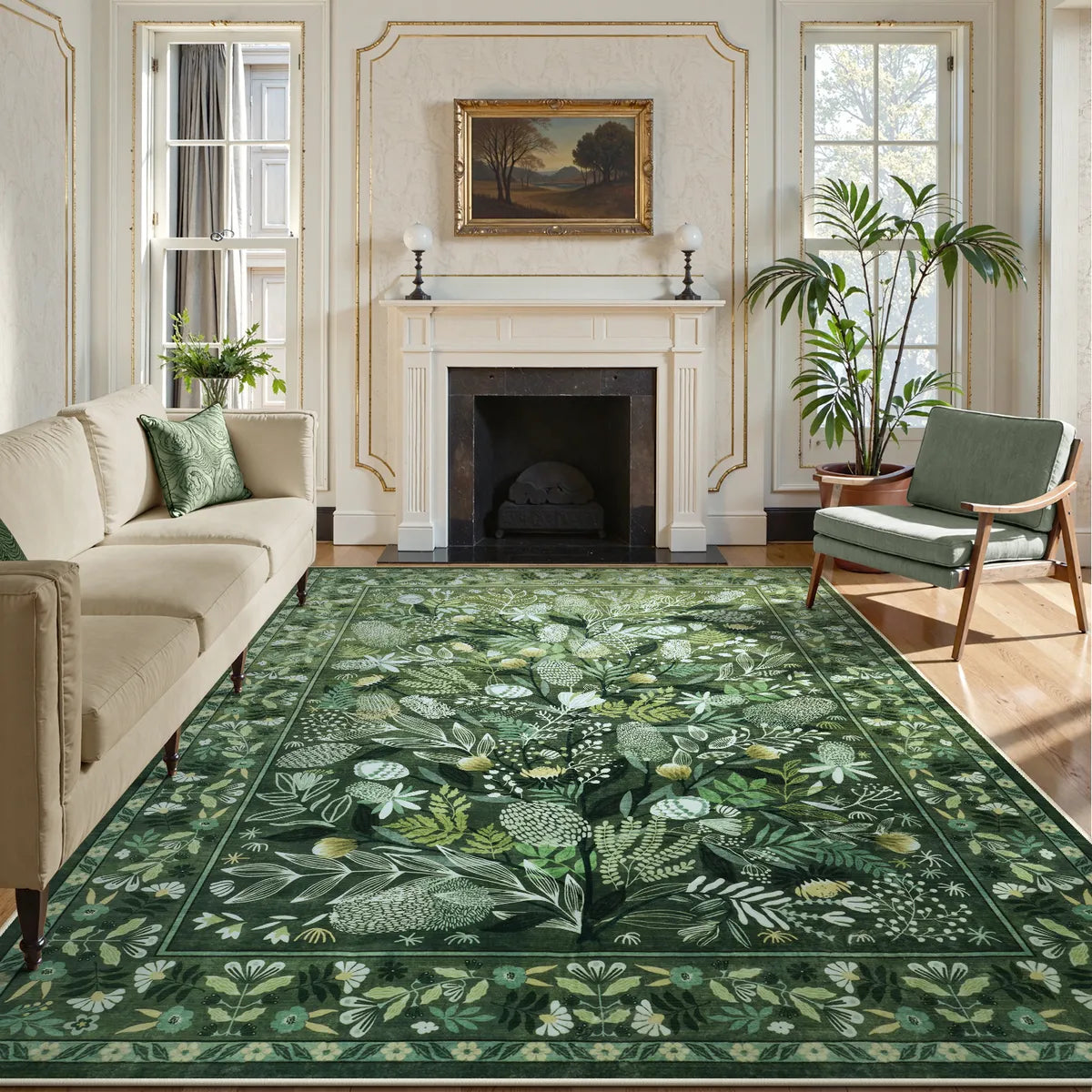
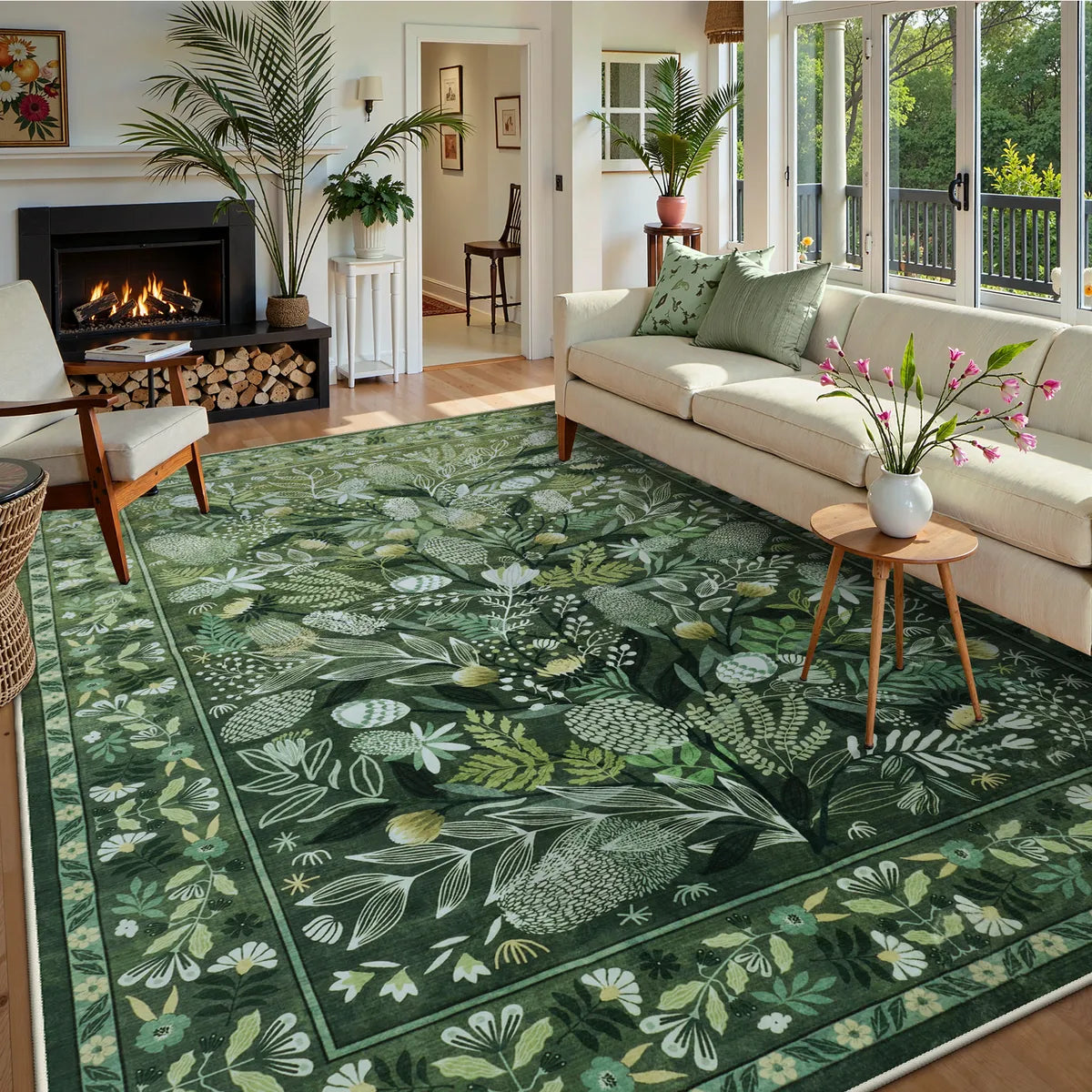
Floral rugs (rugs featuring botanical patterns, from loose painterly blooms to structured repeat motifs) are one of the most seasonally intuitive choices for a spring living room. The pattern language connects directly to the season without requiring any additional effort from the rest of the room's decor.
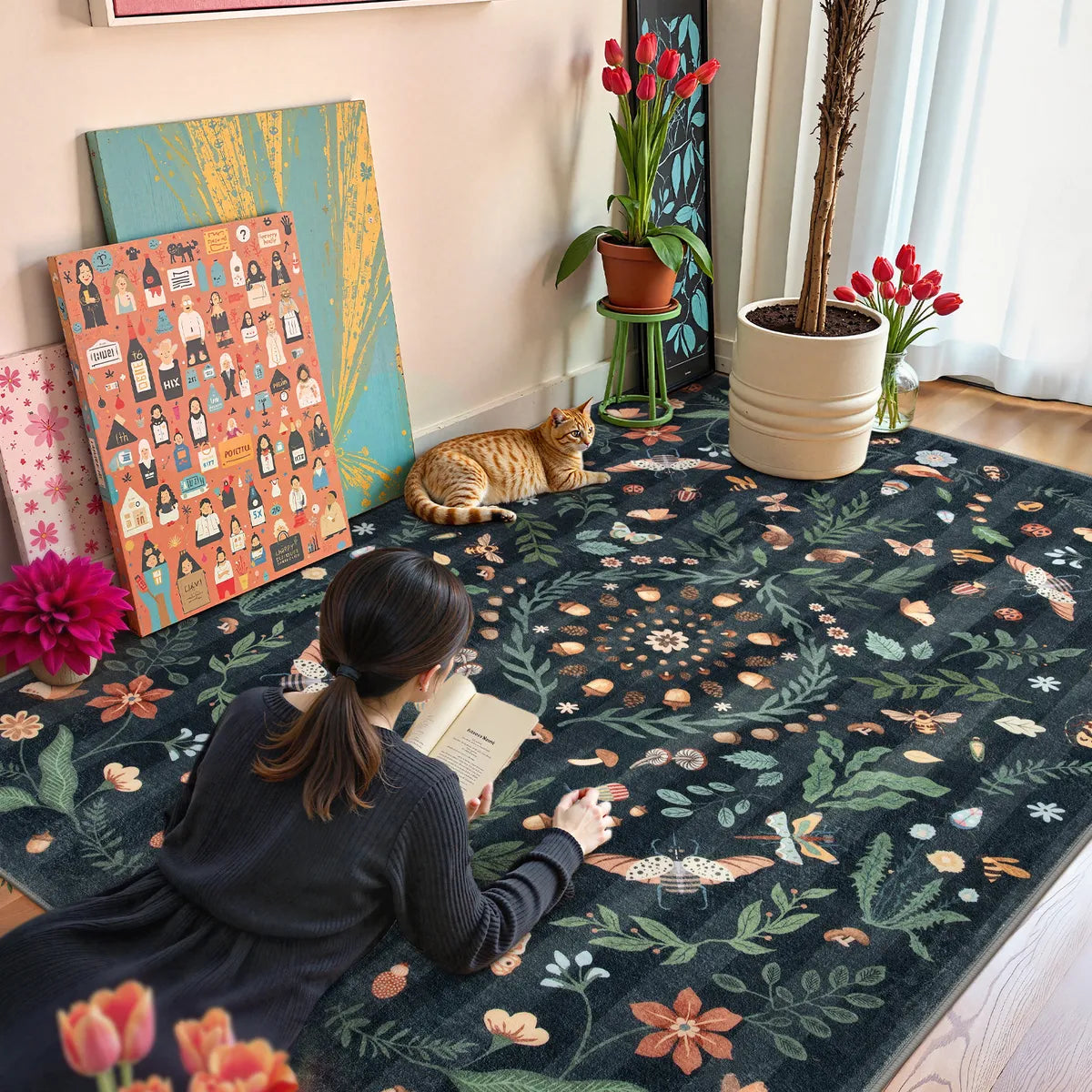
Floral patterns also have a practical advantage in living rooms: the visual complexity of a well-designed floral print conceals everyday marks and light soiling far better than a solid or minimal pattern. A busy household benefits from that built-in forgiveness.
What makes a floral rug work in a living room rather than overwhelm it:
- Scale relative to room size: A large-repeat floral reads best in a spacious room where the pattern has room to breathe. In a smaller living room, a smaller repeat or a more loosely drawn botanical motif is easier to live with.
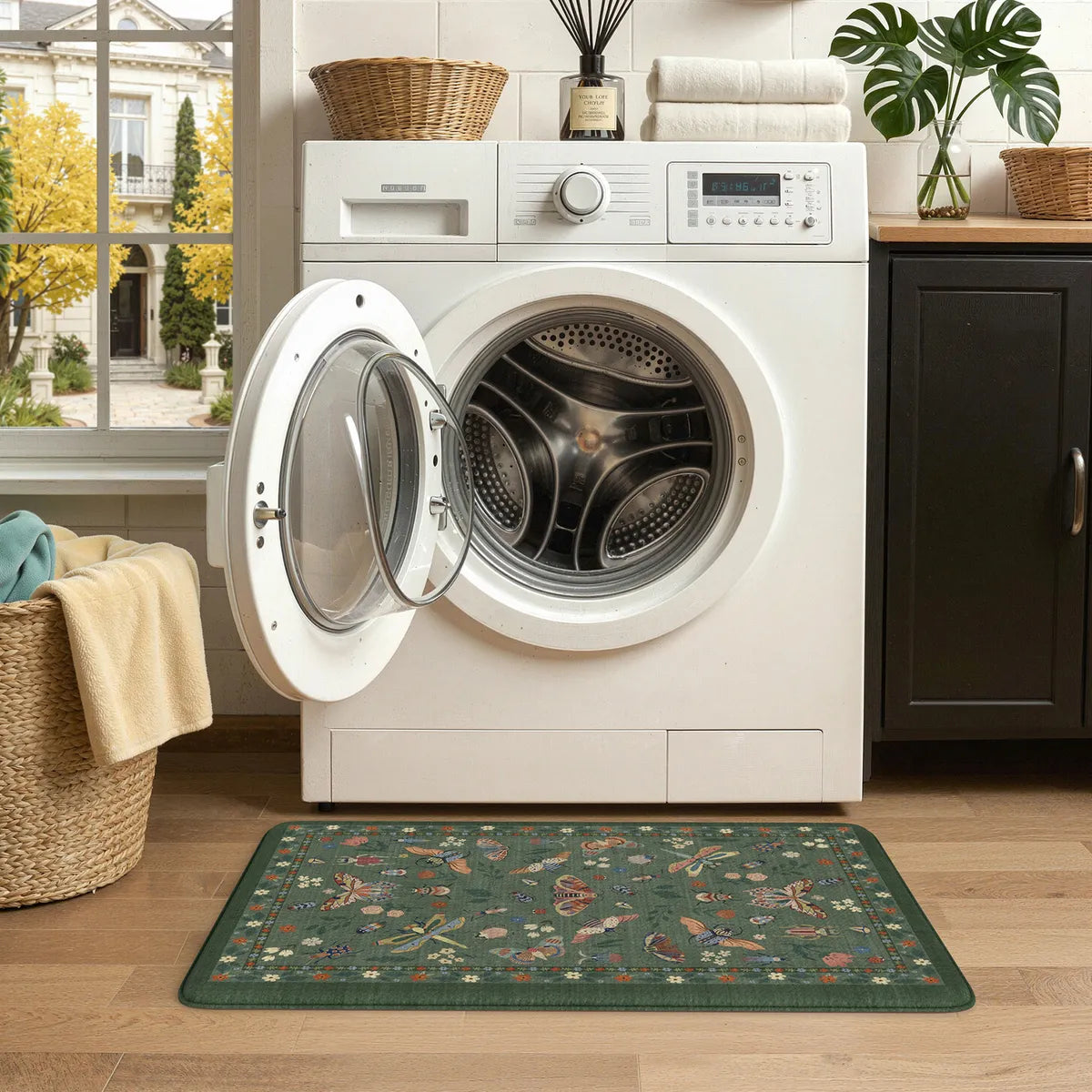
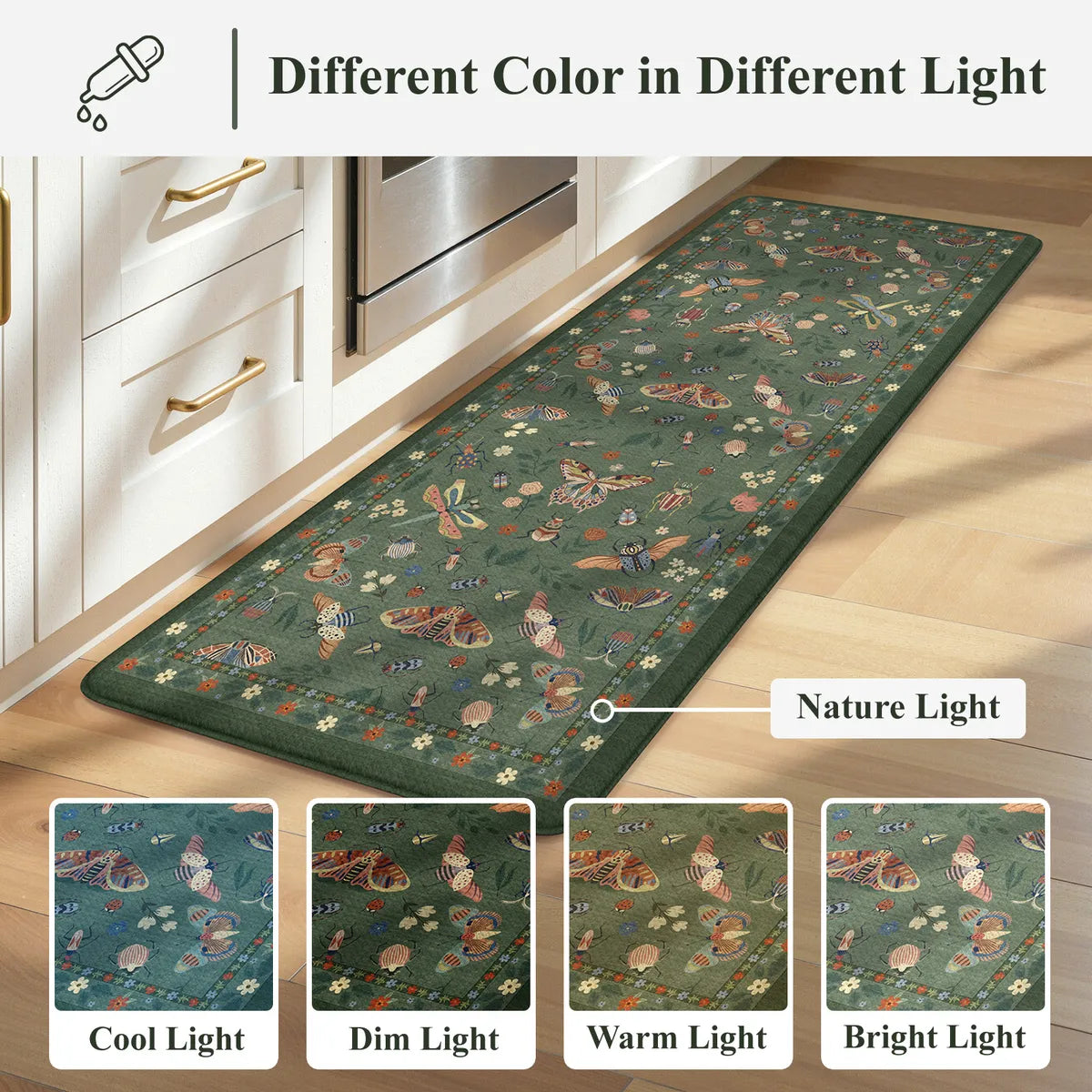
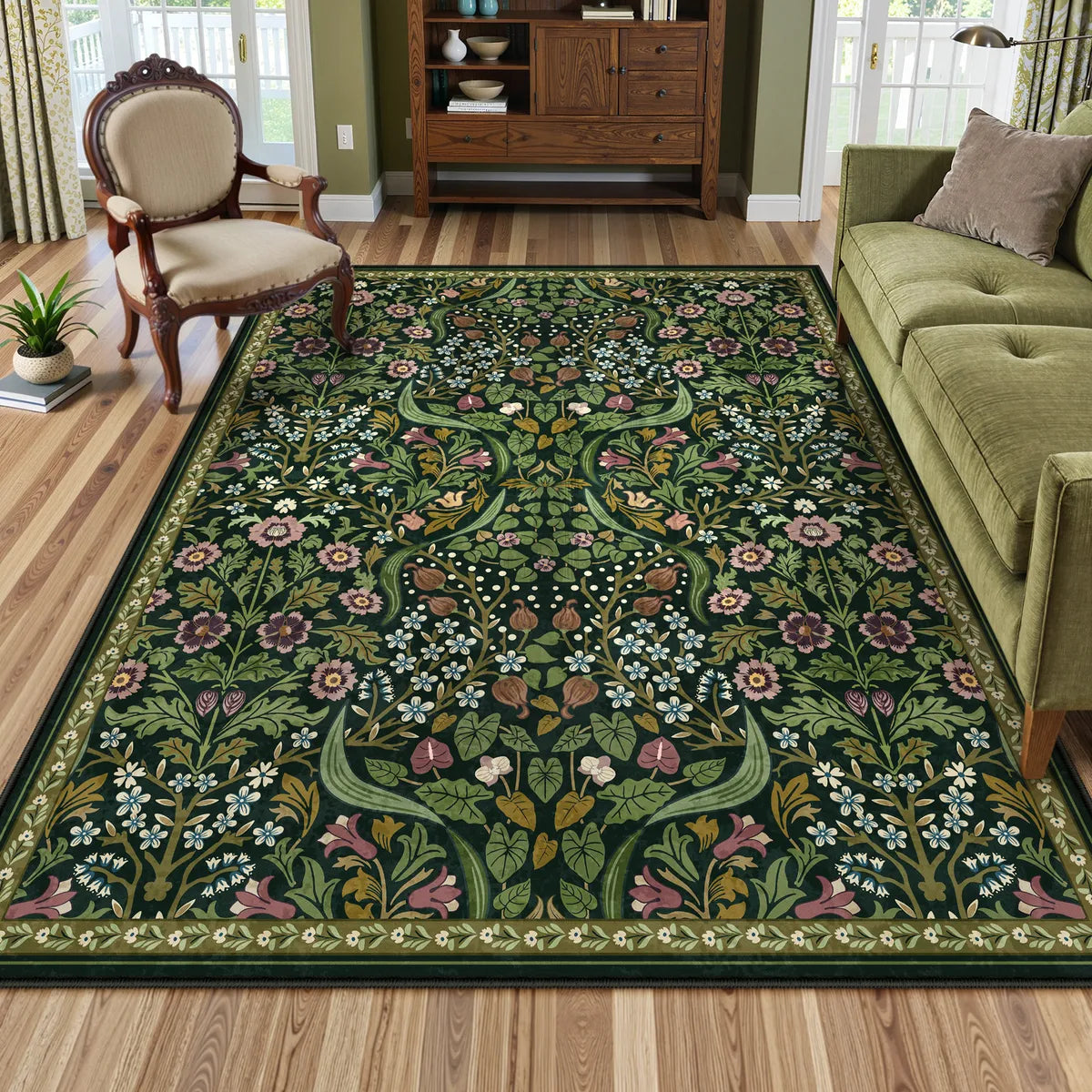
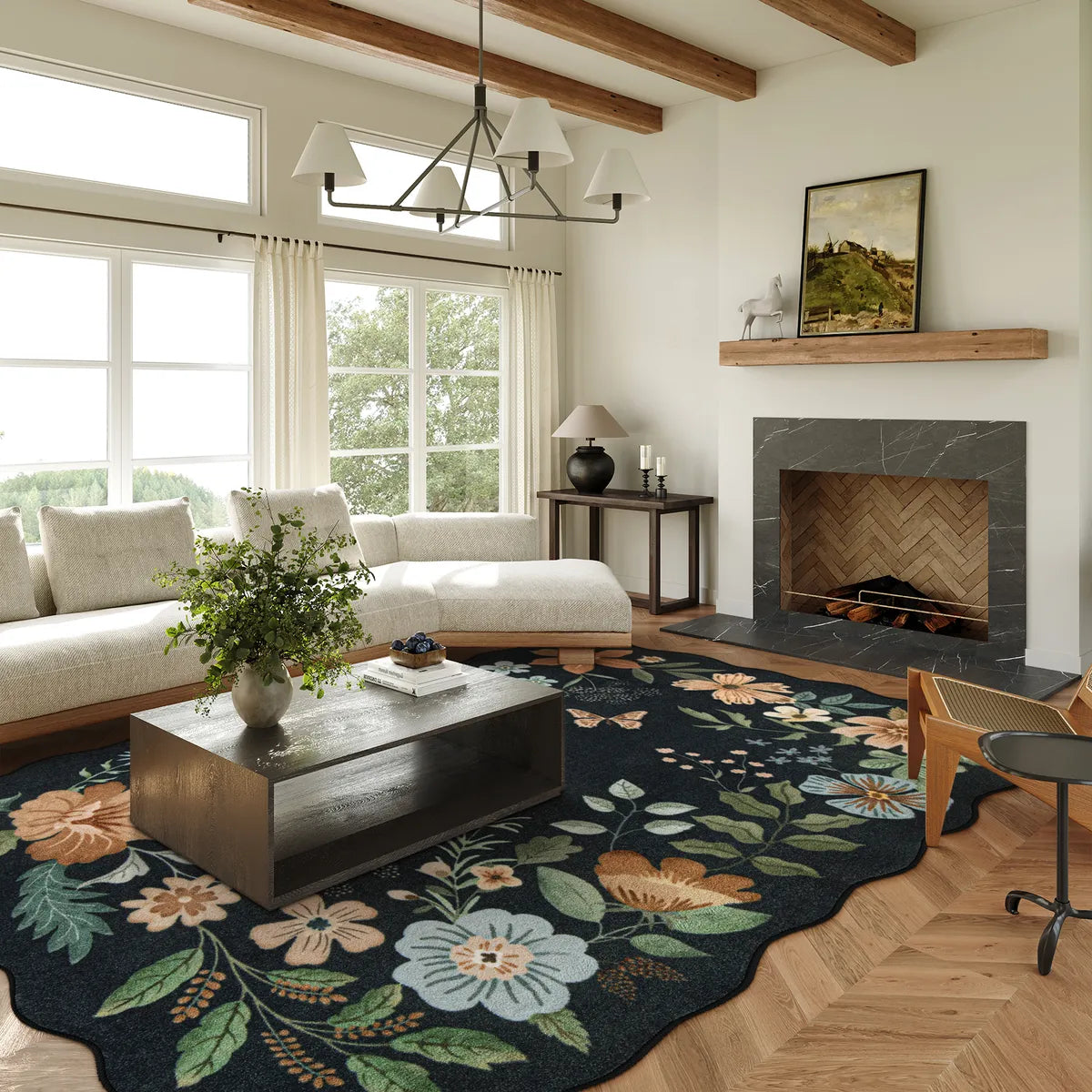
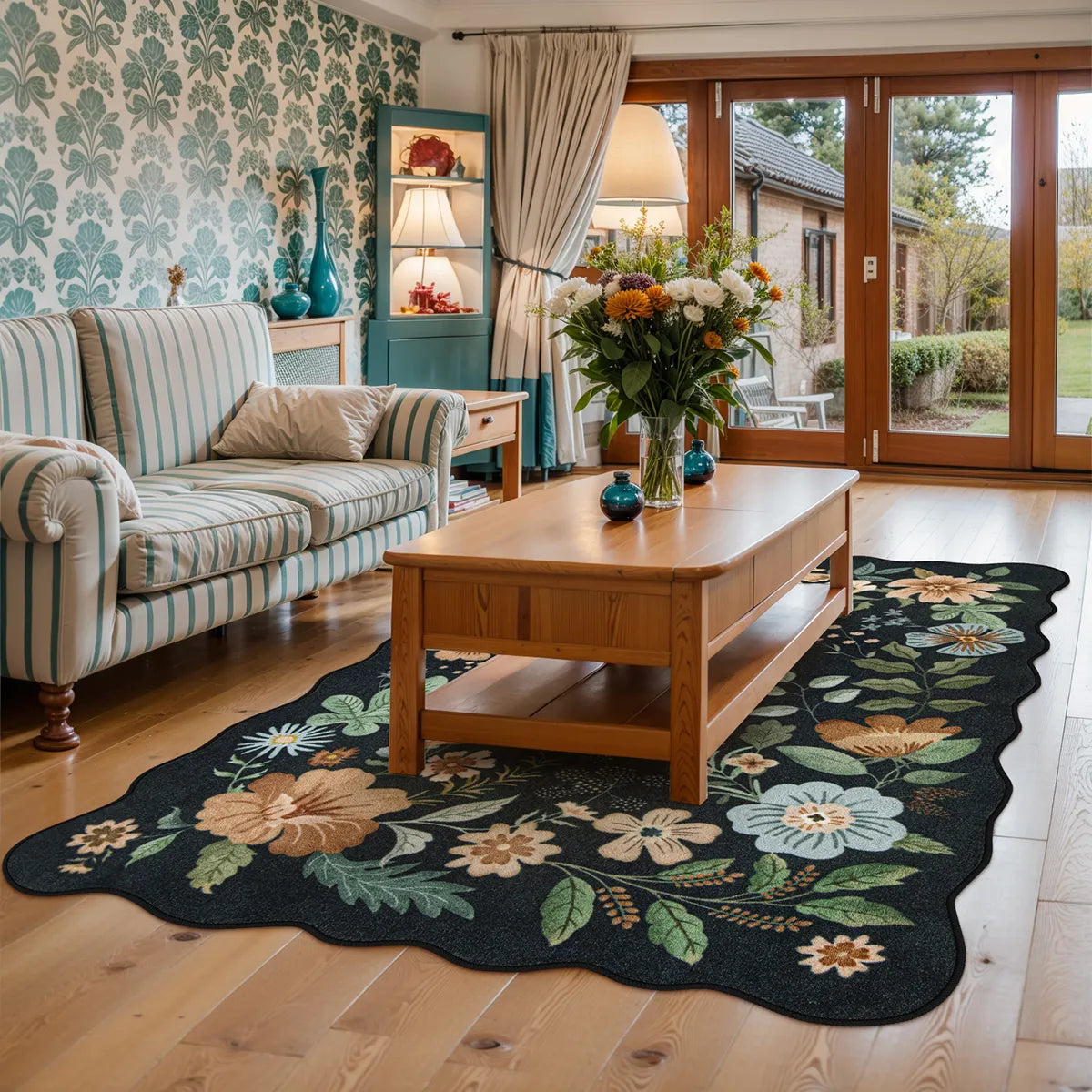
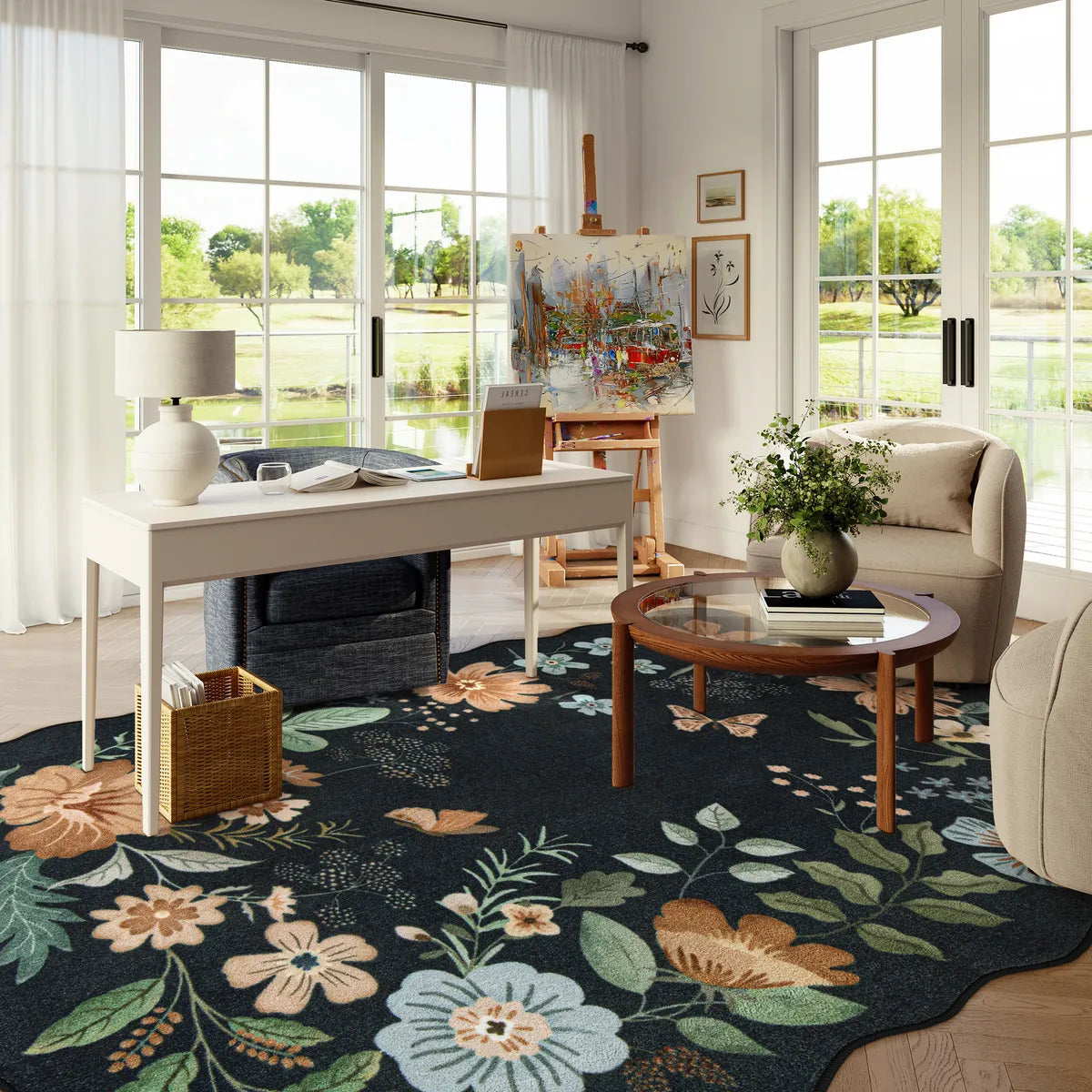
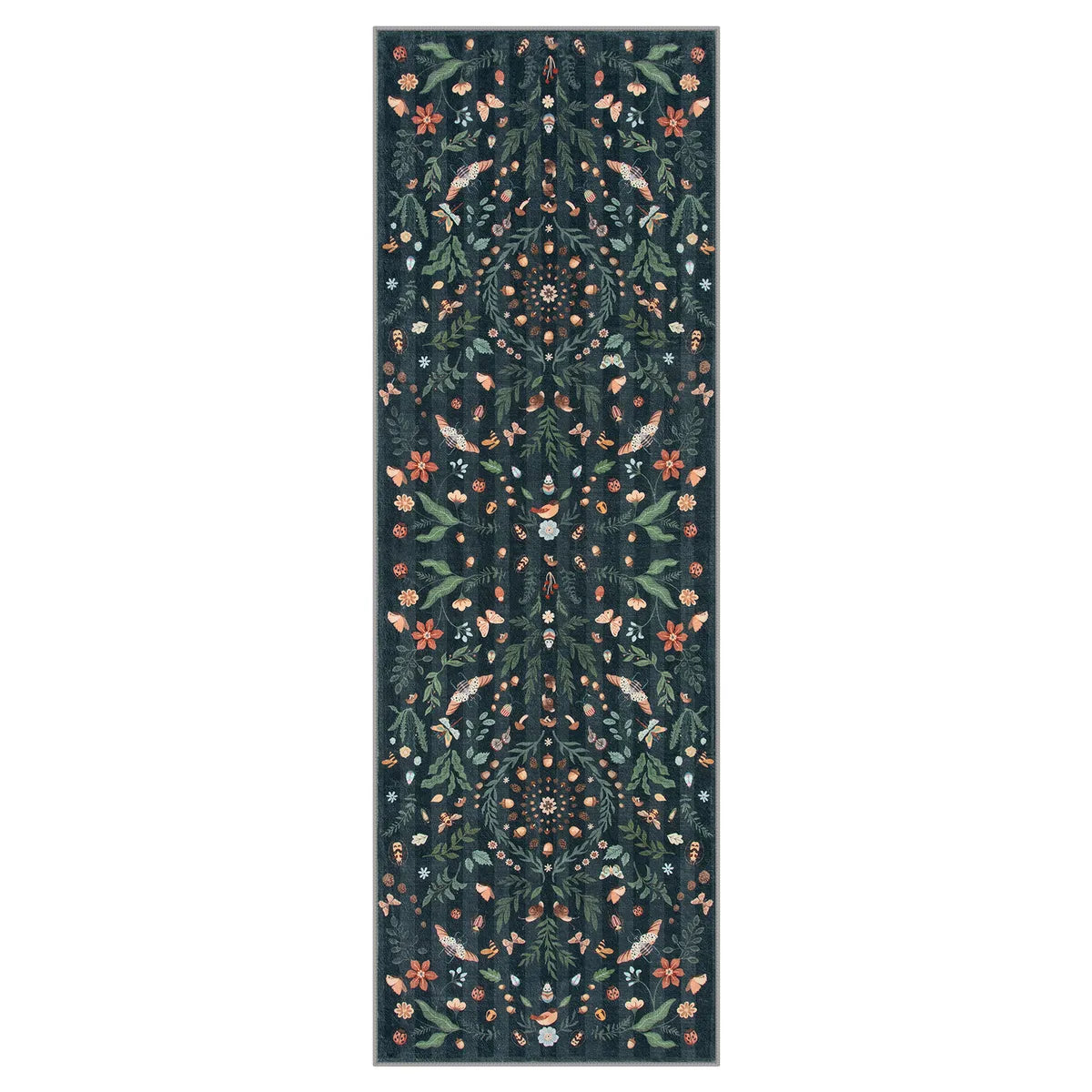
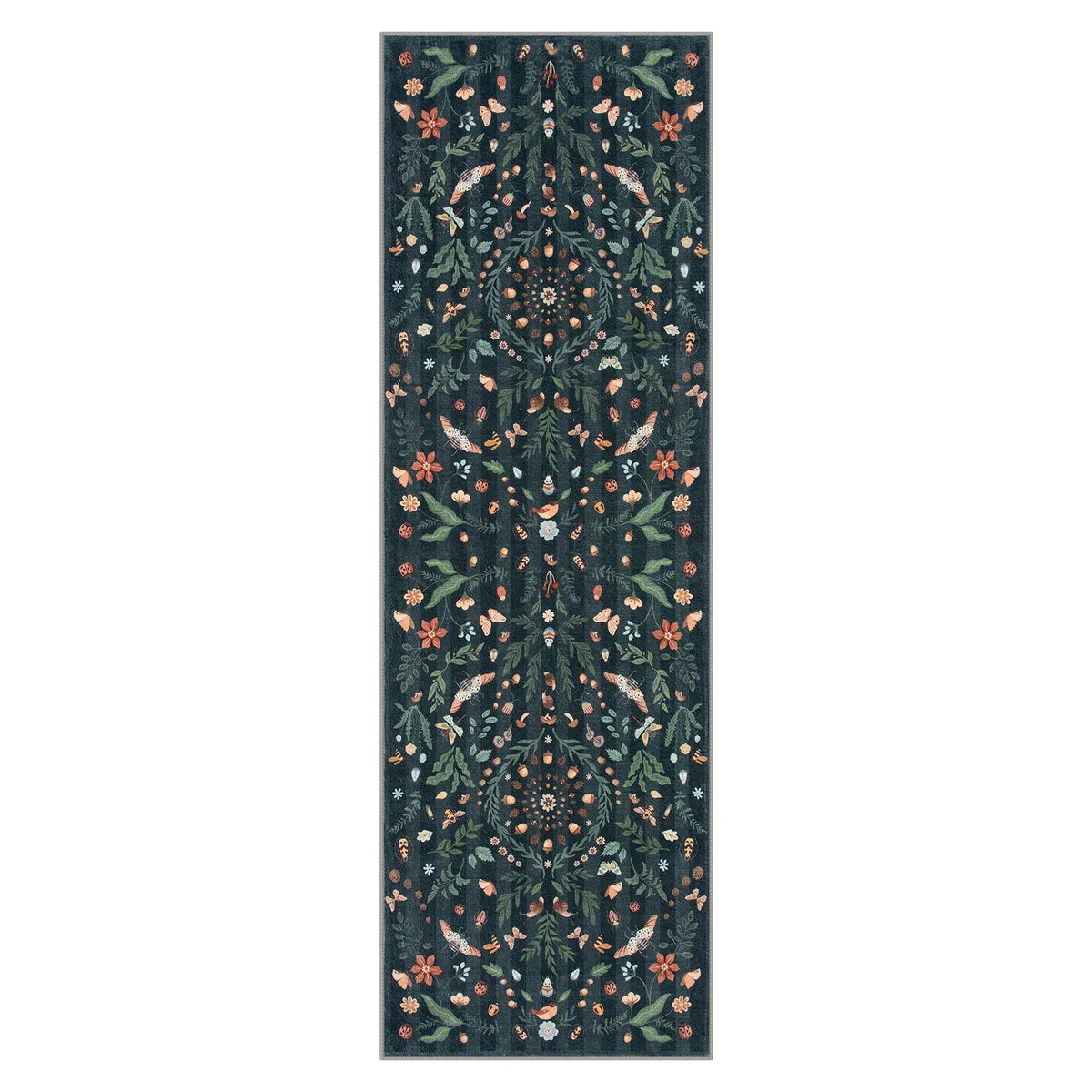
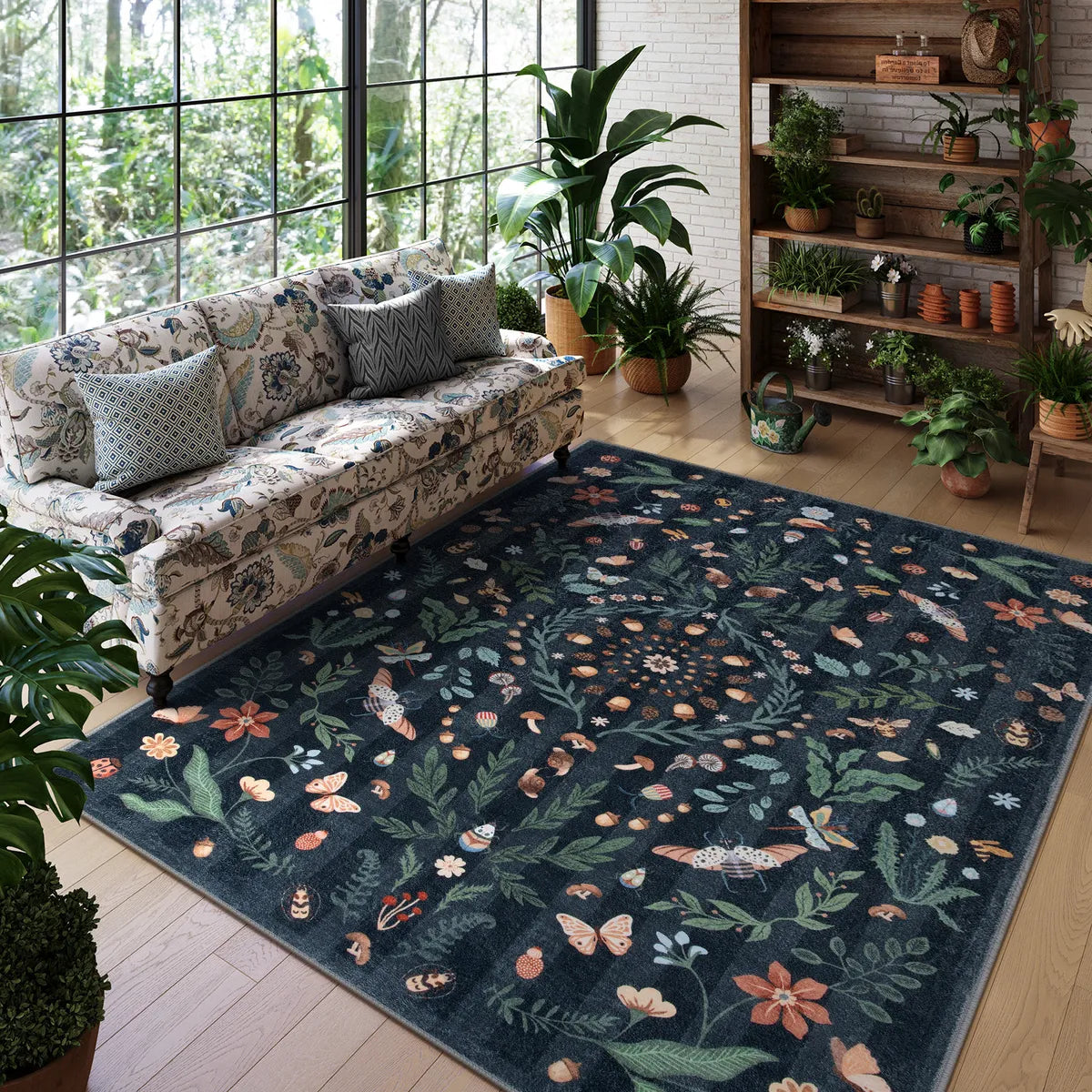
- Color ground: A floral on a warm neutral ground (cream, beige, soft taupe) integrates with almost any existing furniture palette. A floral on a dark ground (navy, forest green, charcoal) makes a stronger statement and works well as the room's focal point.
- Style of drawing: Loose, painterly florals read as relaxed and organic. Structured, symmetrical florals feel more formal. Choose based on the overall tone of the living room.
Green Area Rugs and Other Nature-Inspired Color Choices
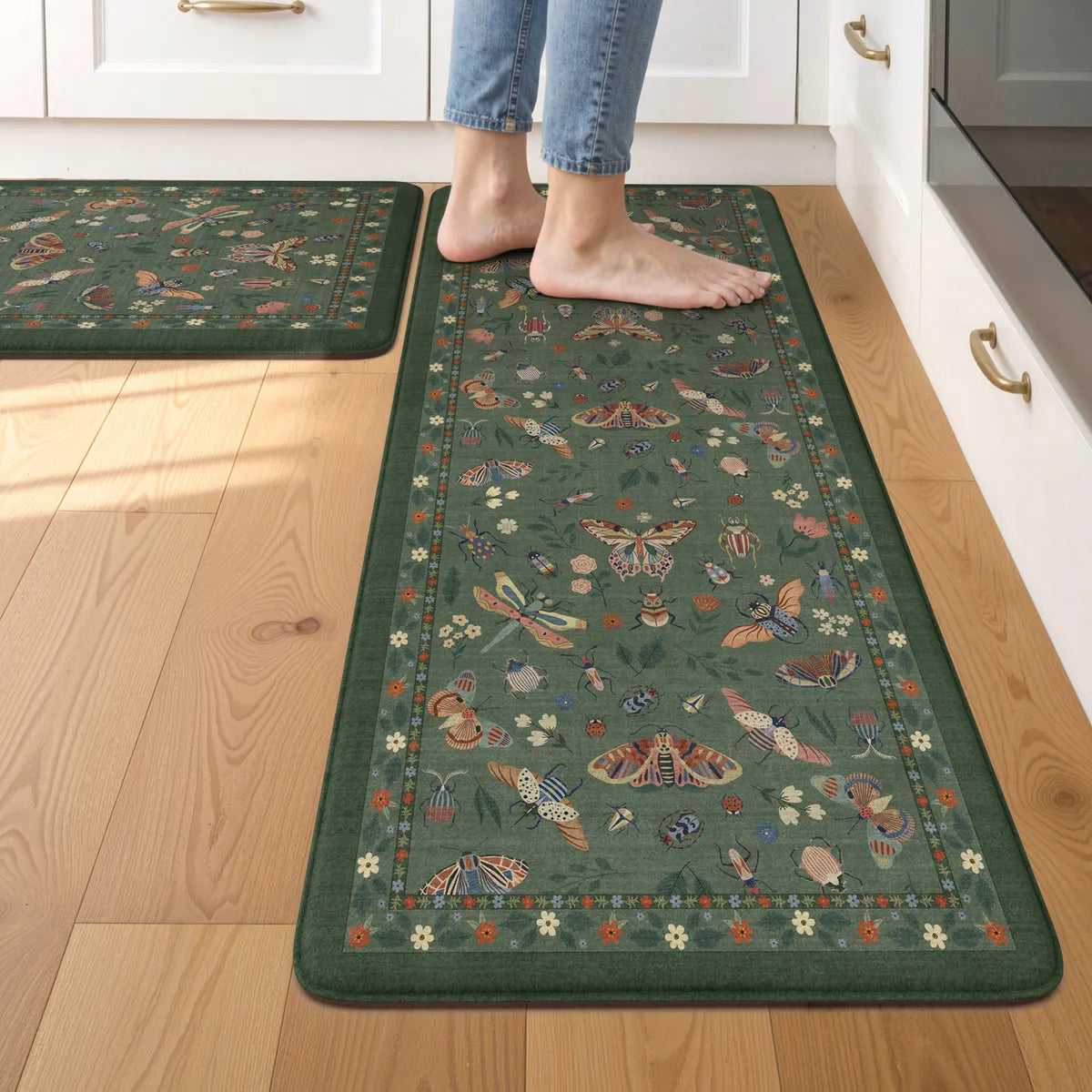
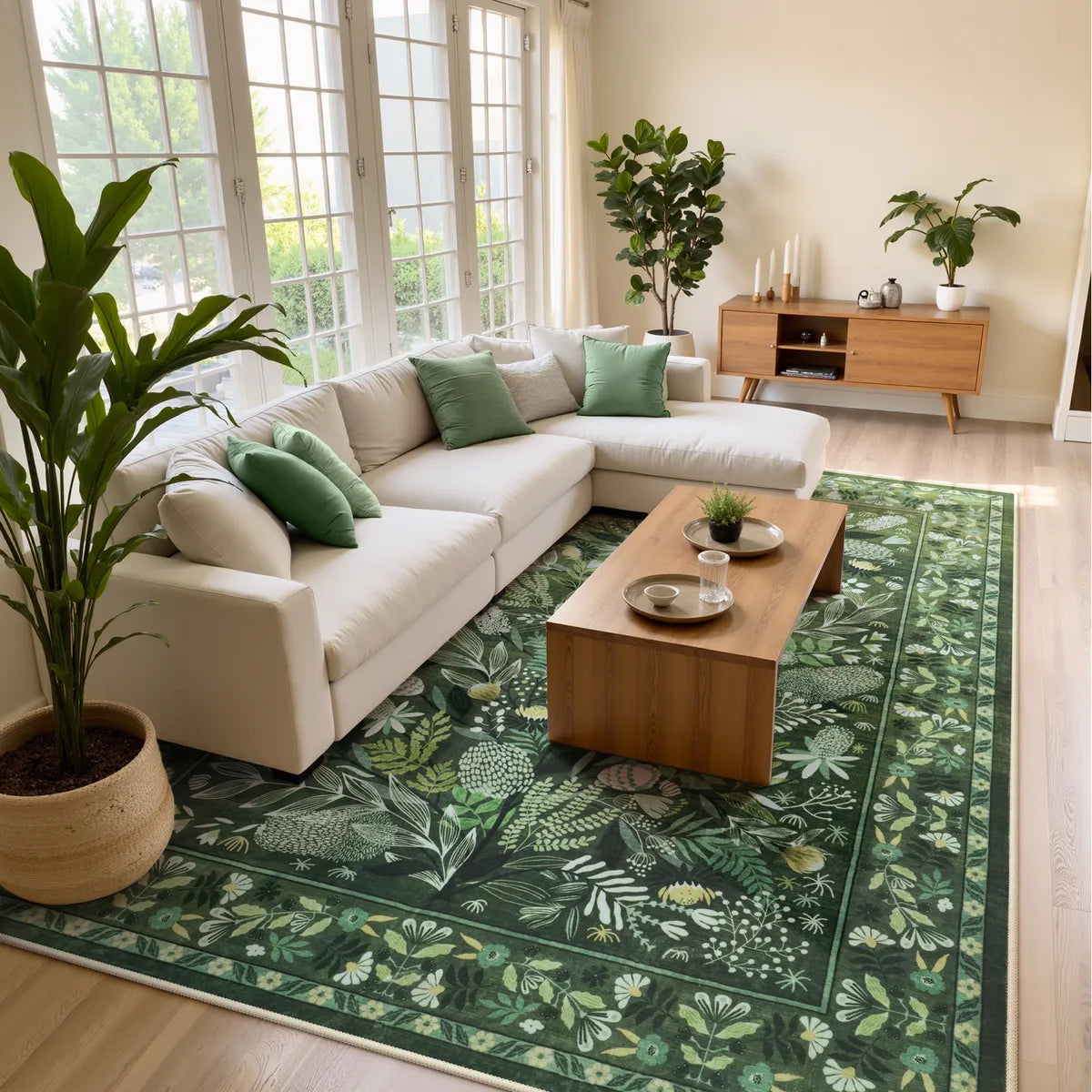
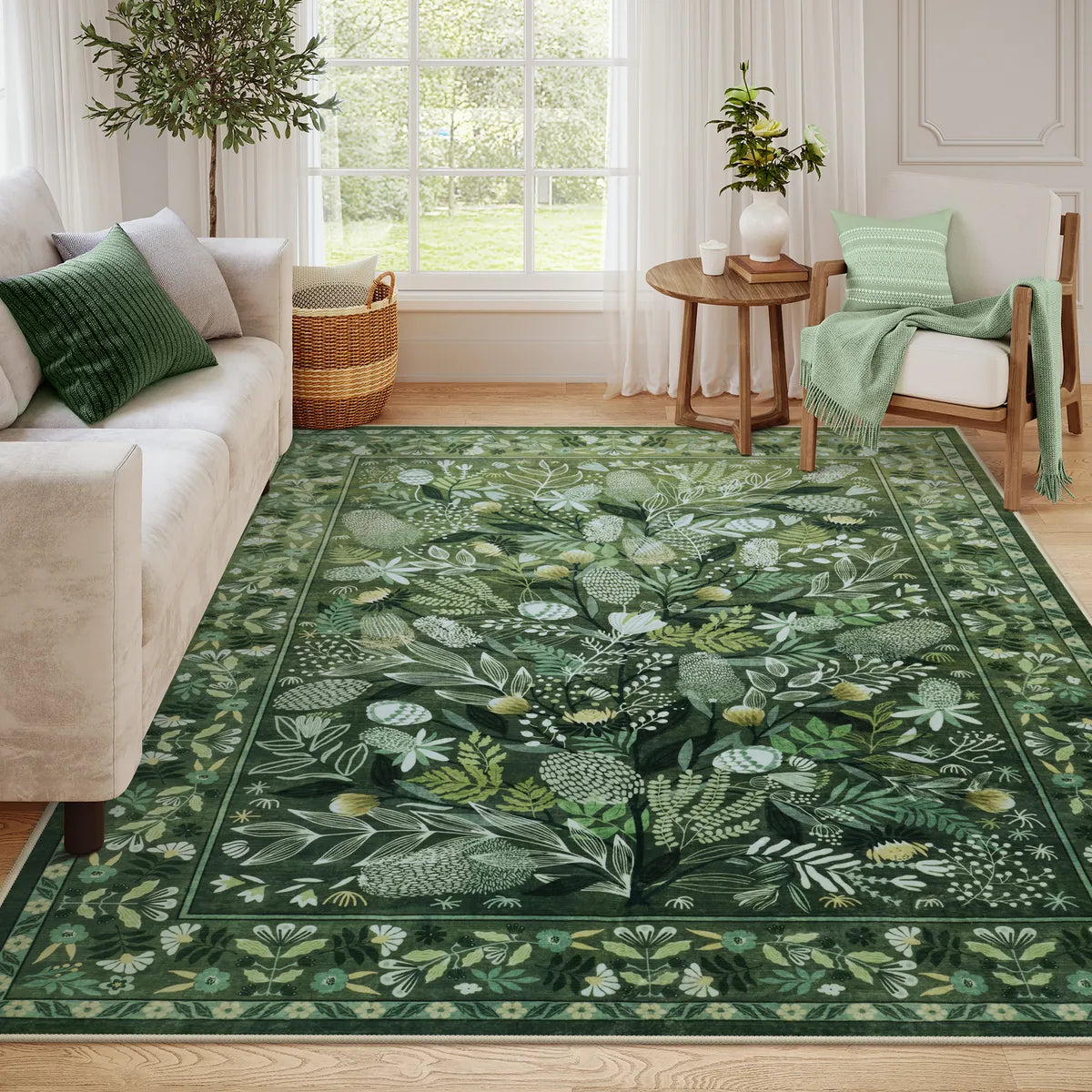
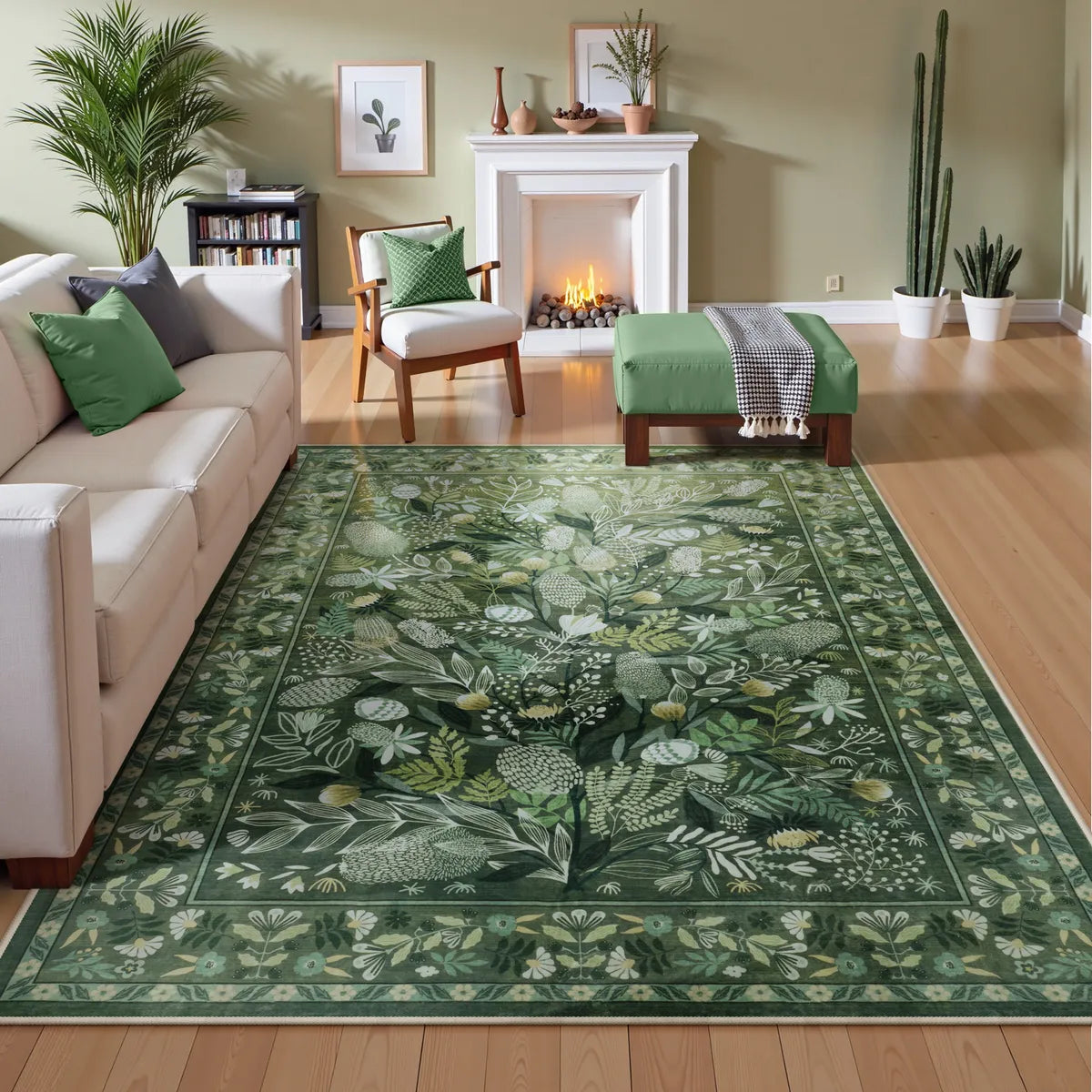
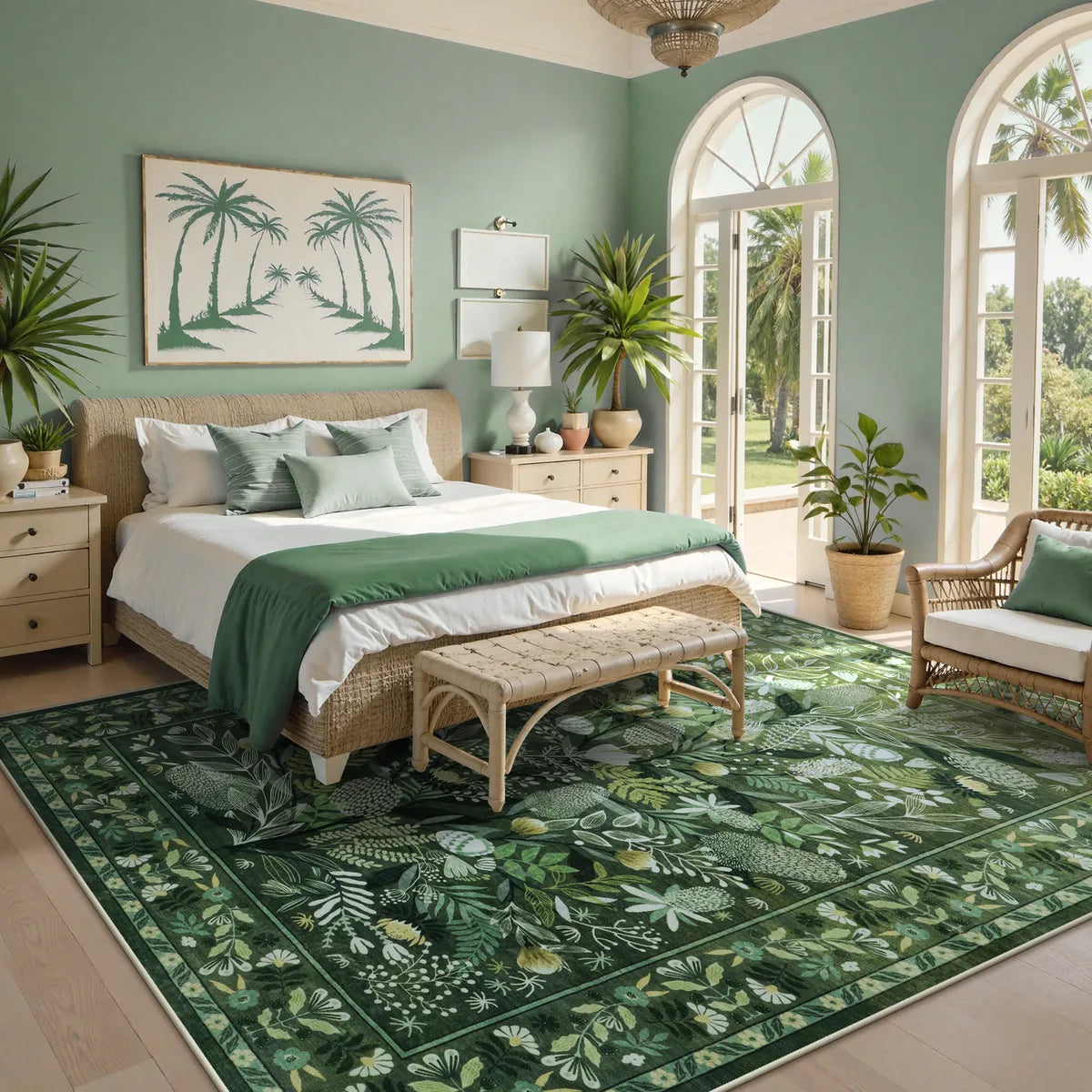
A green area rug is one of the most versatile spring choices for a living room. Green sits naturally with wood tones, warm neutrals, and earthy terracottas, which means it works across a wide range of existing furniture without clashing.
The range within green is worth considering carefully. Sage and dusty green read as quiet and grounding, well-suited to minimalist or Scandinavian-influenced spaces. Forest and emerald green make a richer, more confident statement and pair well with natural textures like rattan or linen. Olive and moss tones bridge the two, feeling both earthy and fresh at the same time.
Beyond green, other nature-inspired color directions that work well for spring living room rugs include soft terracotta, warm sand, and botanical blues. The common thread is that these tones reference the natural world rather than trending interior palettes, which gives them staying power well past the season.
Practical Features to Look for in Living Room Rugs

A living room rug that looks right but performs poorly will show its limitations quickly. Before committing to a style, check that the construction matches how the room is actually used.
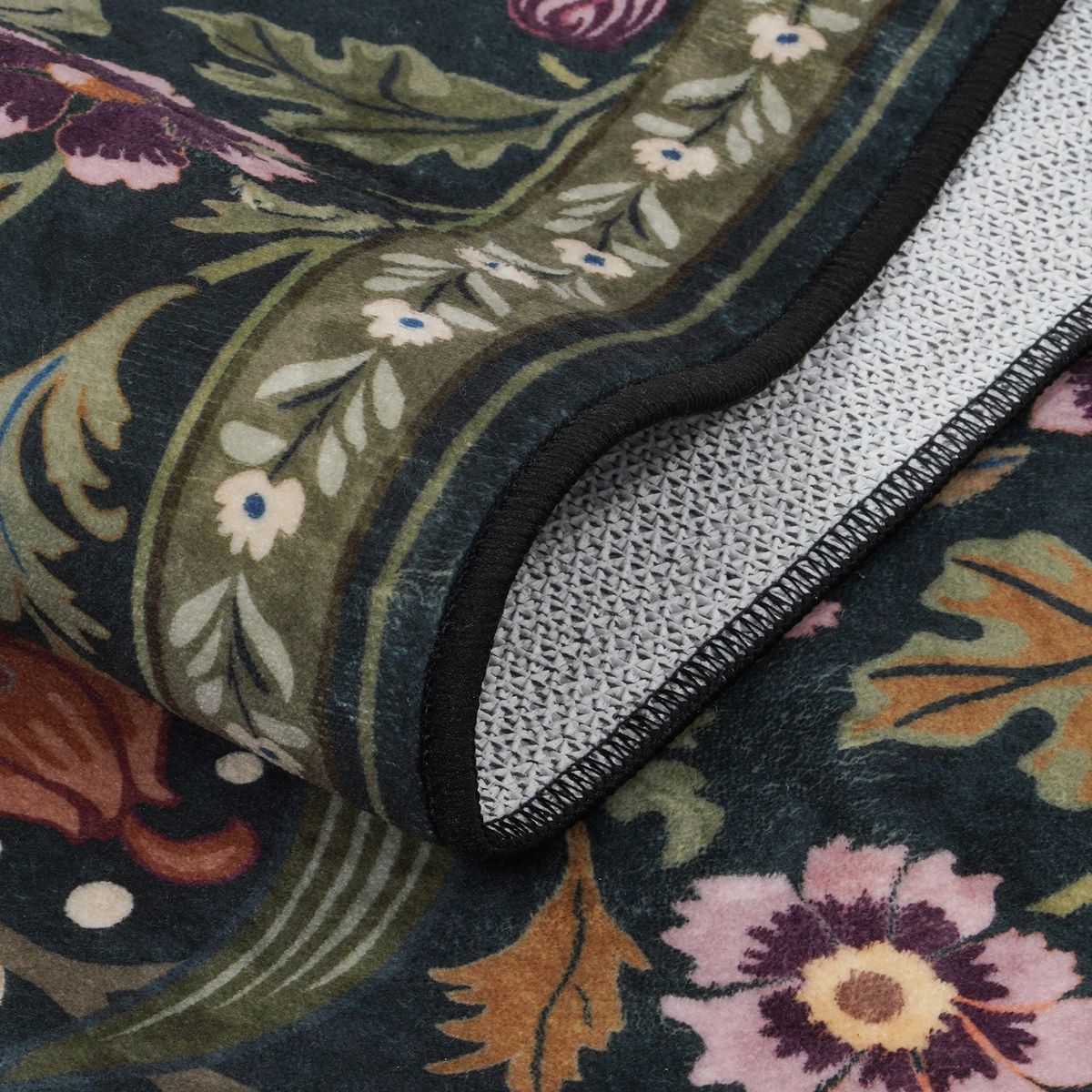
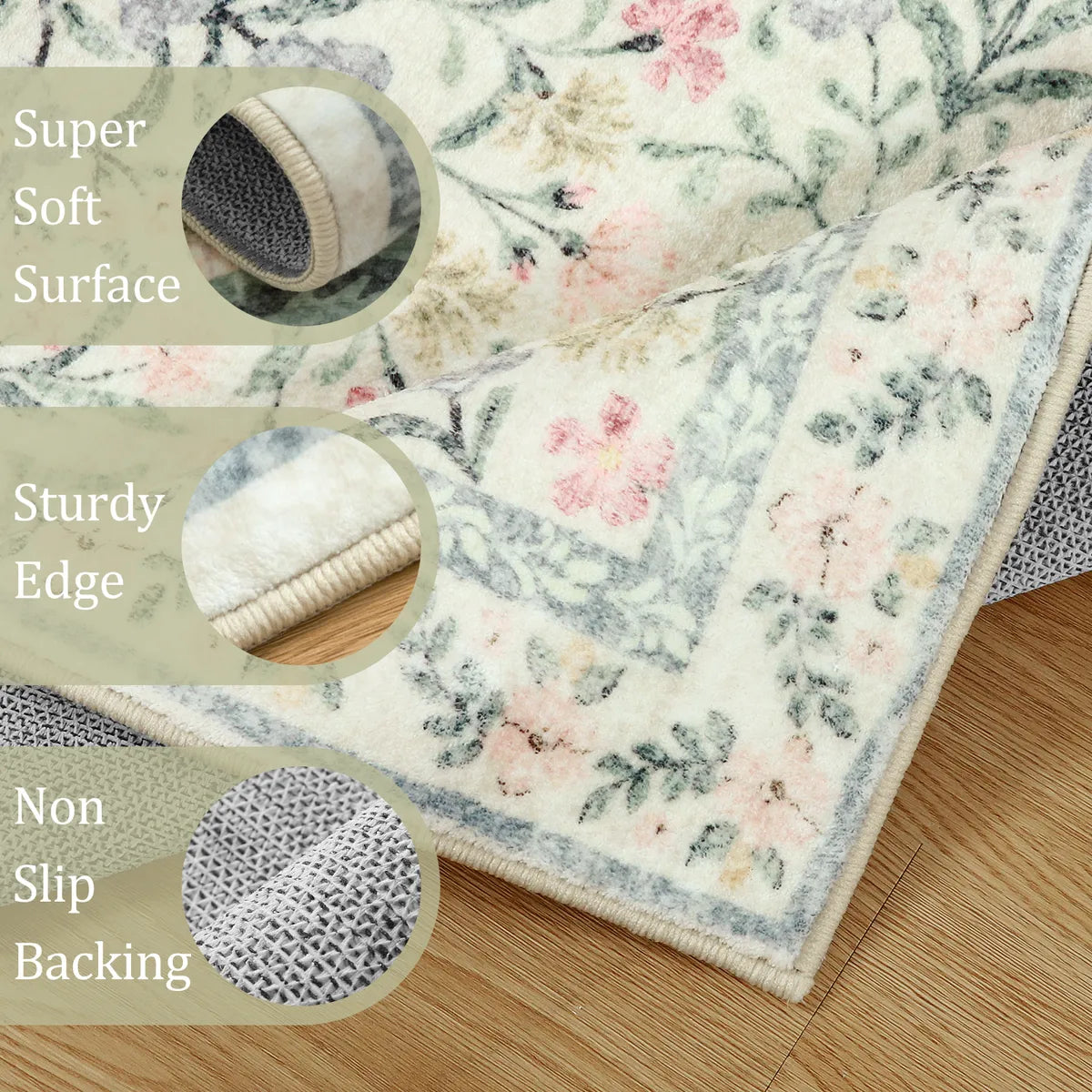
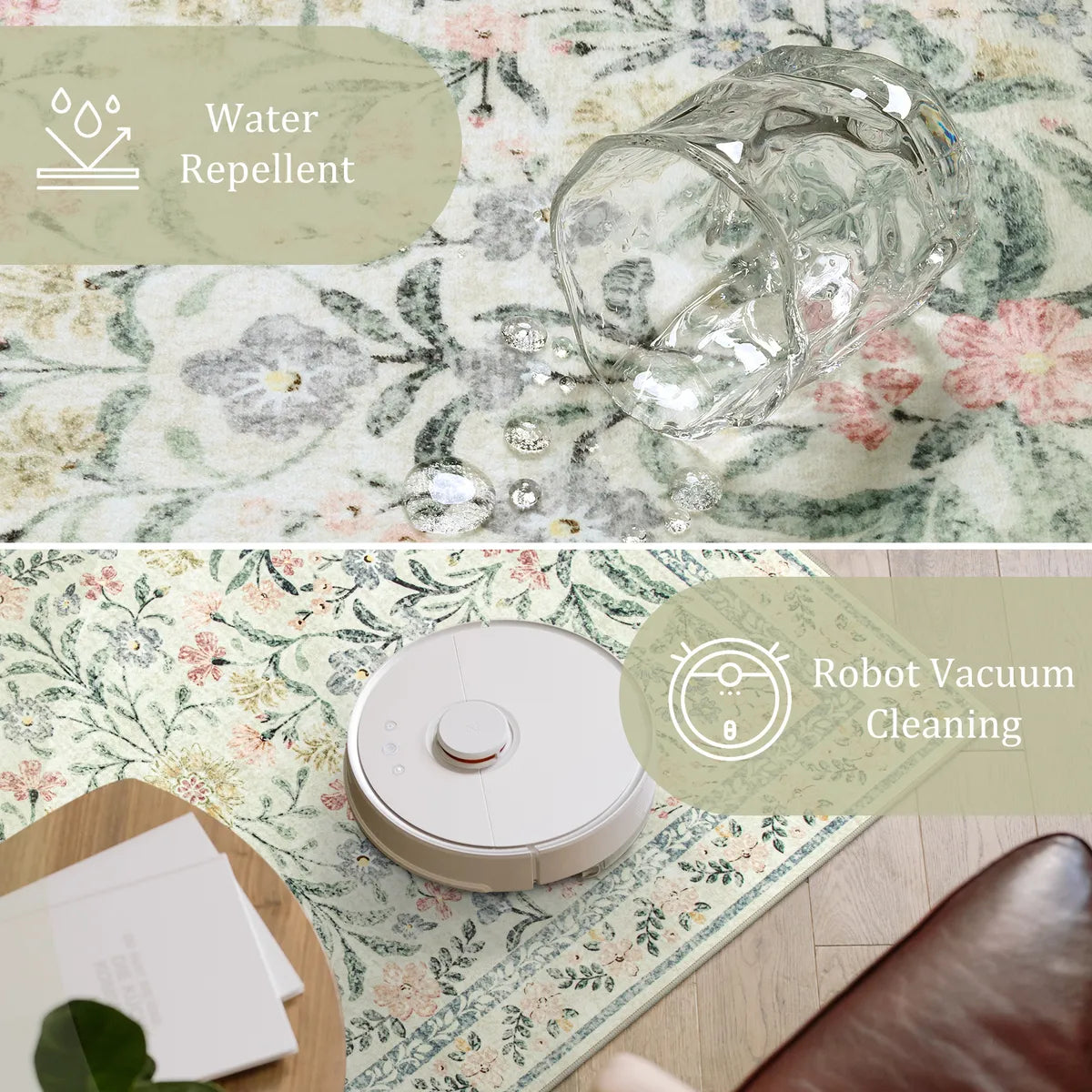
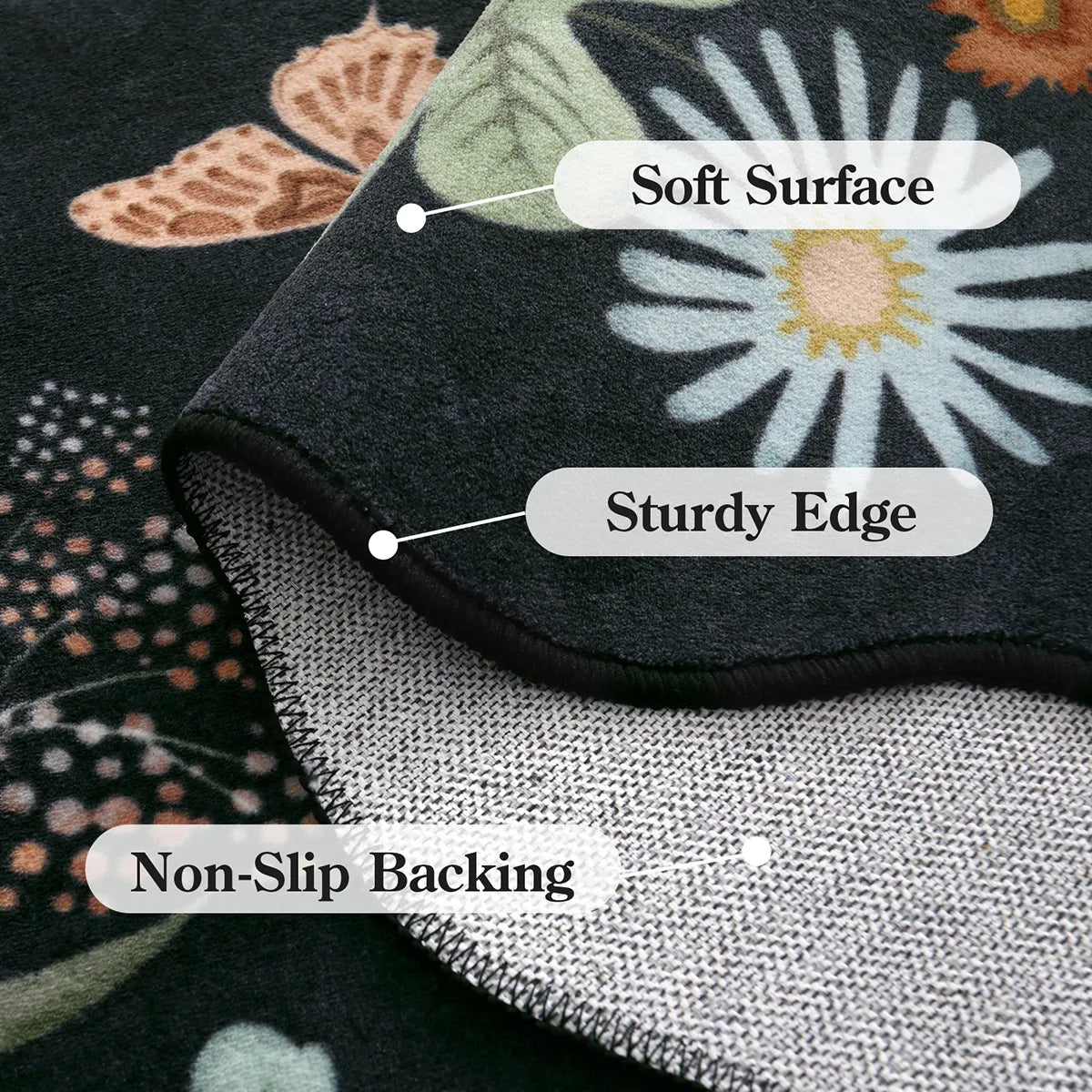
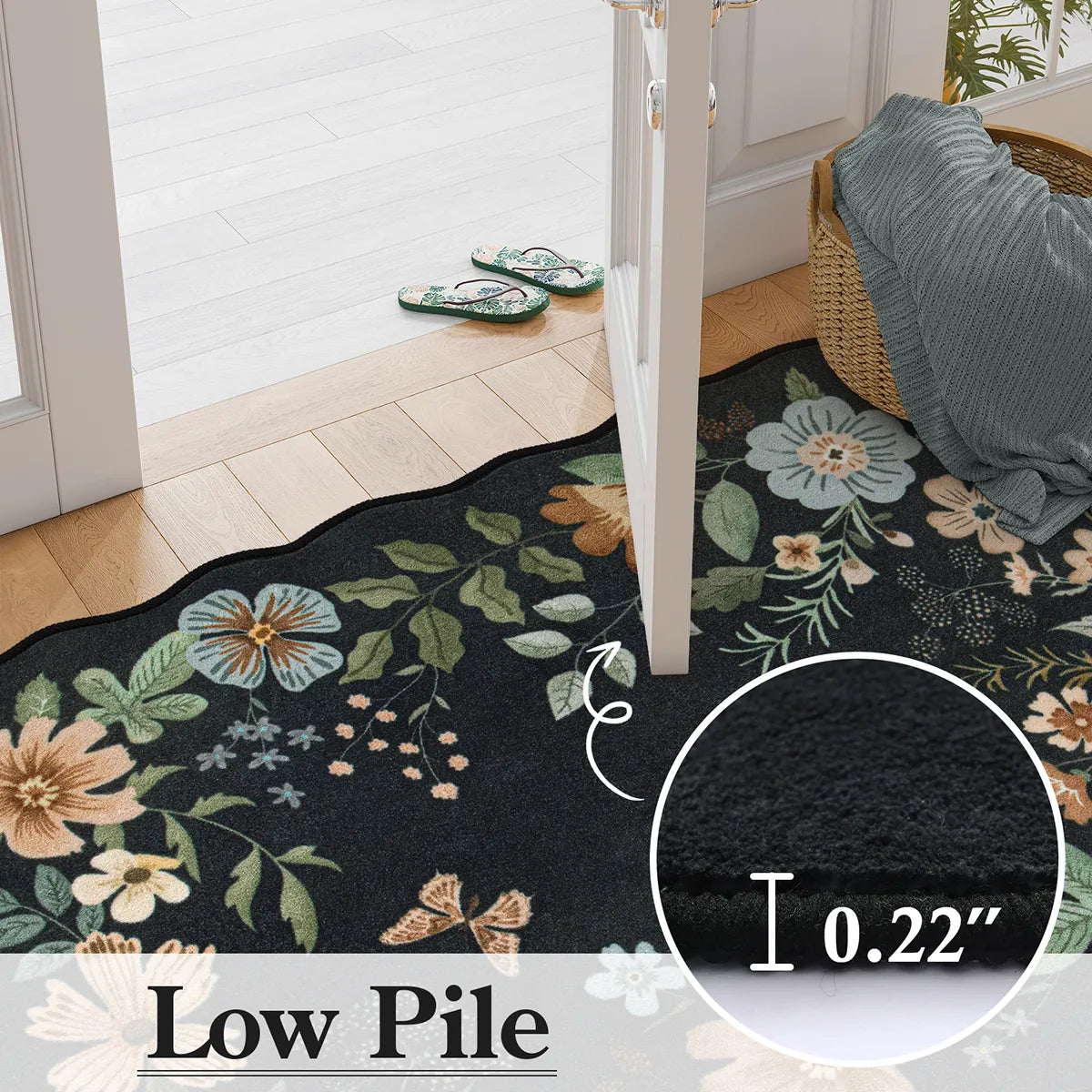
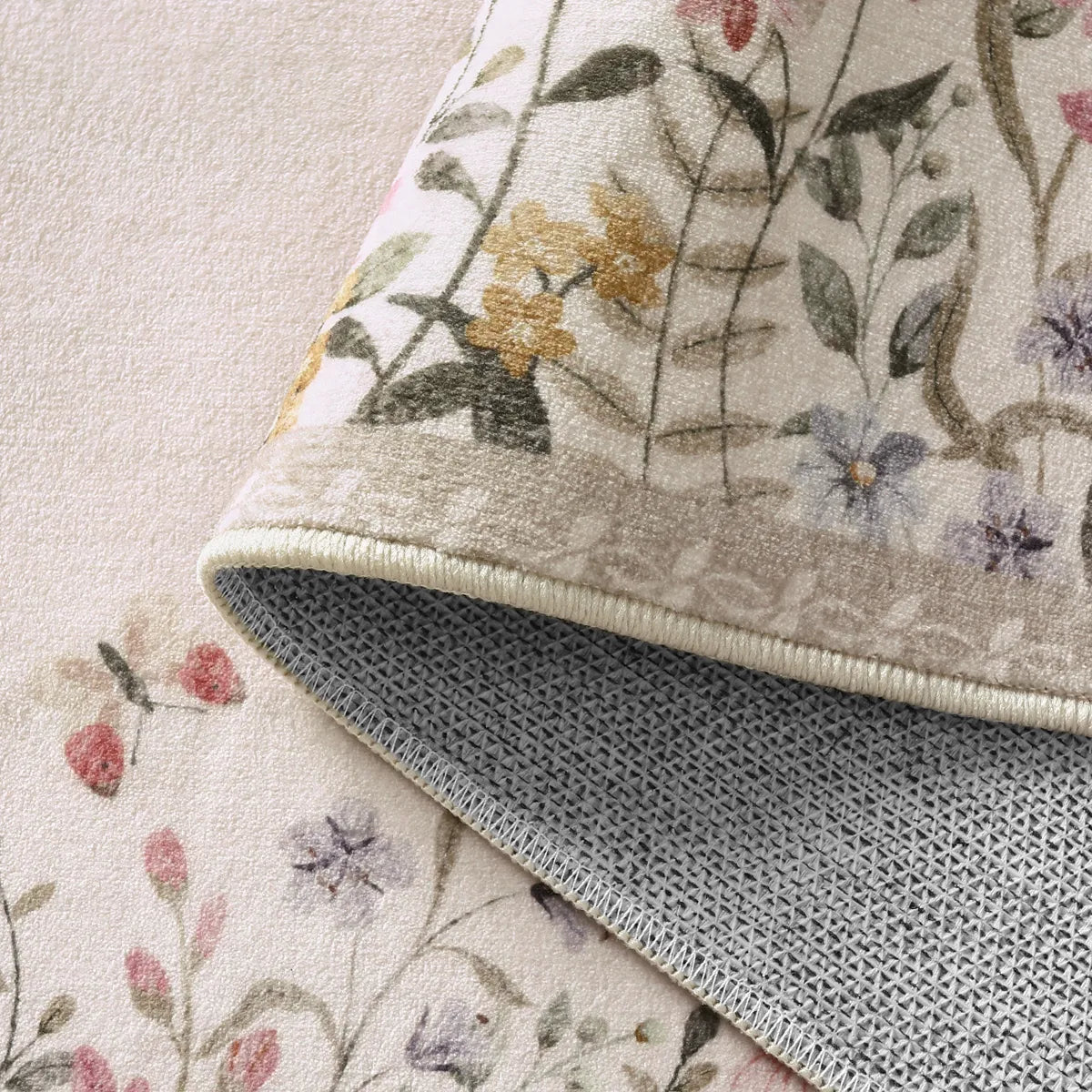
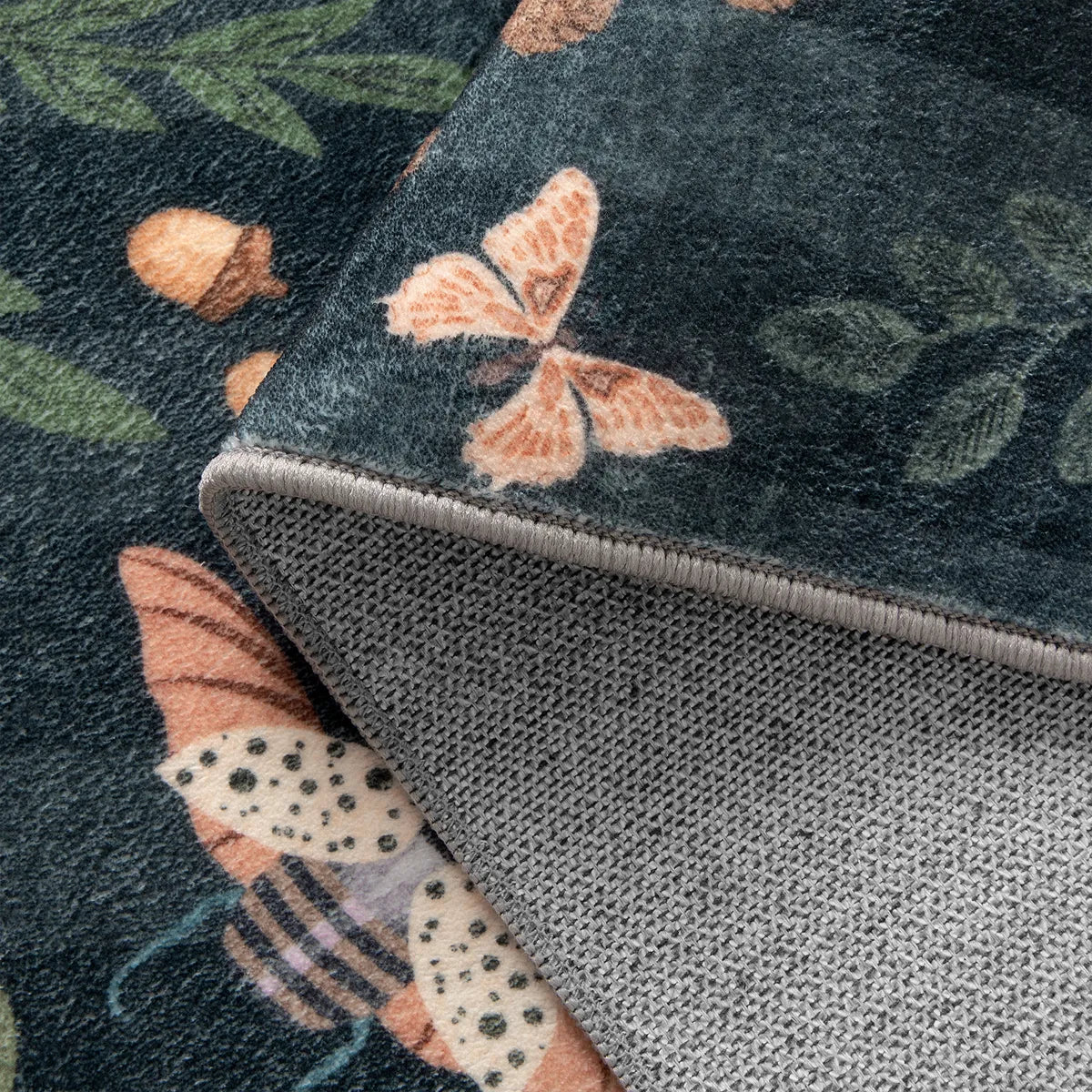
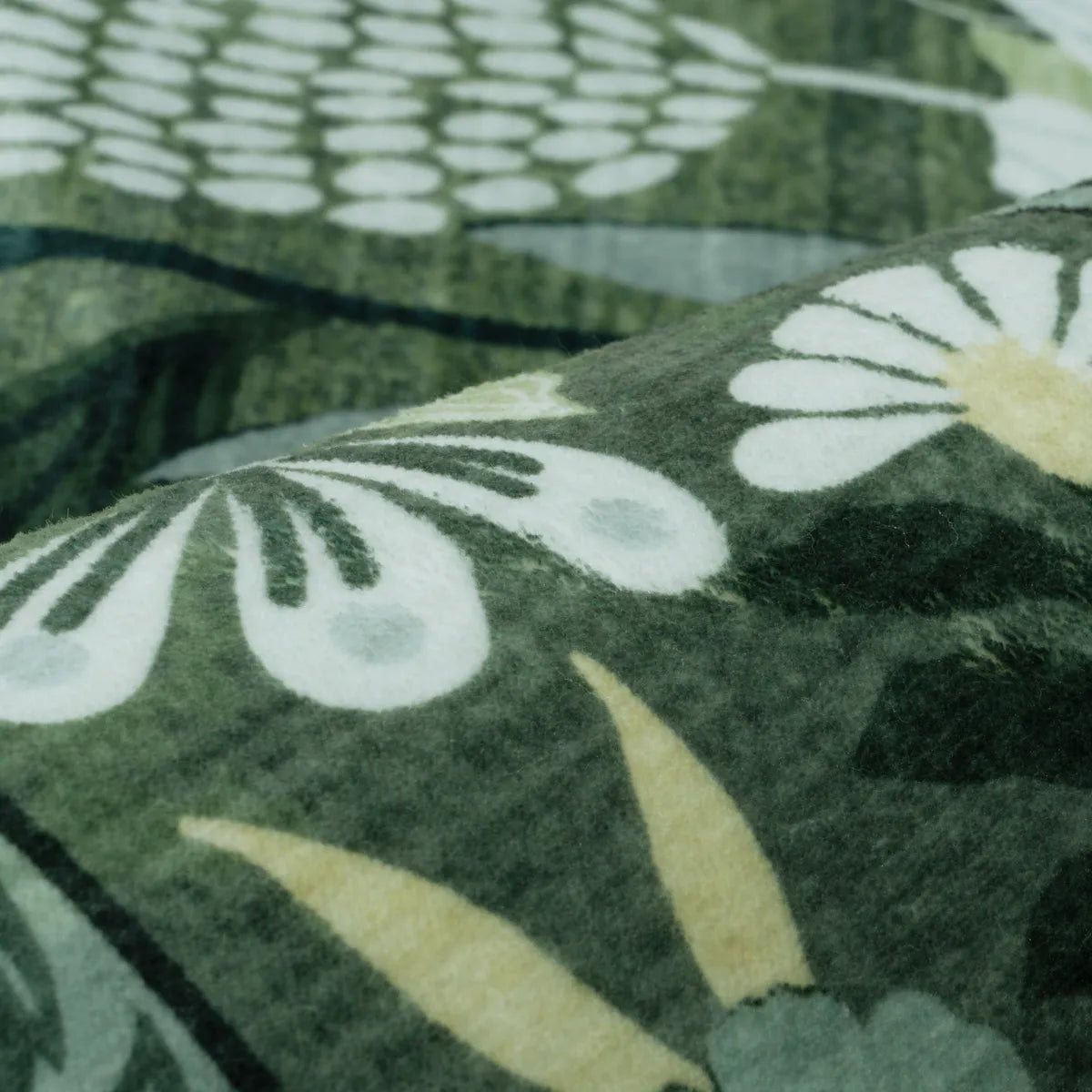
- Low-pile construction: Low-pile rugs (those with short, densely packed fibers close to the surface) are easier to vacuum, less likely to trap debris, and more stable under furniture legs. The surface stays flatter over time, and detailed floral or botanical patterns read more crisply on a low-pile surface than on a high-pile one.
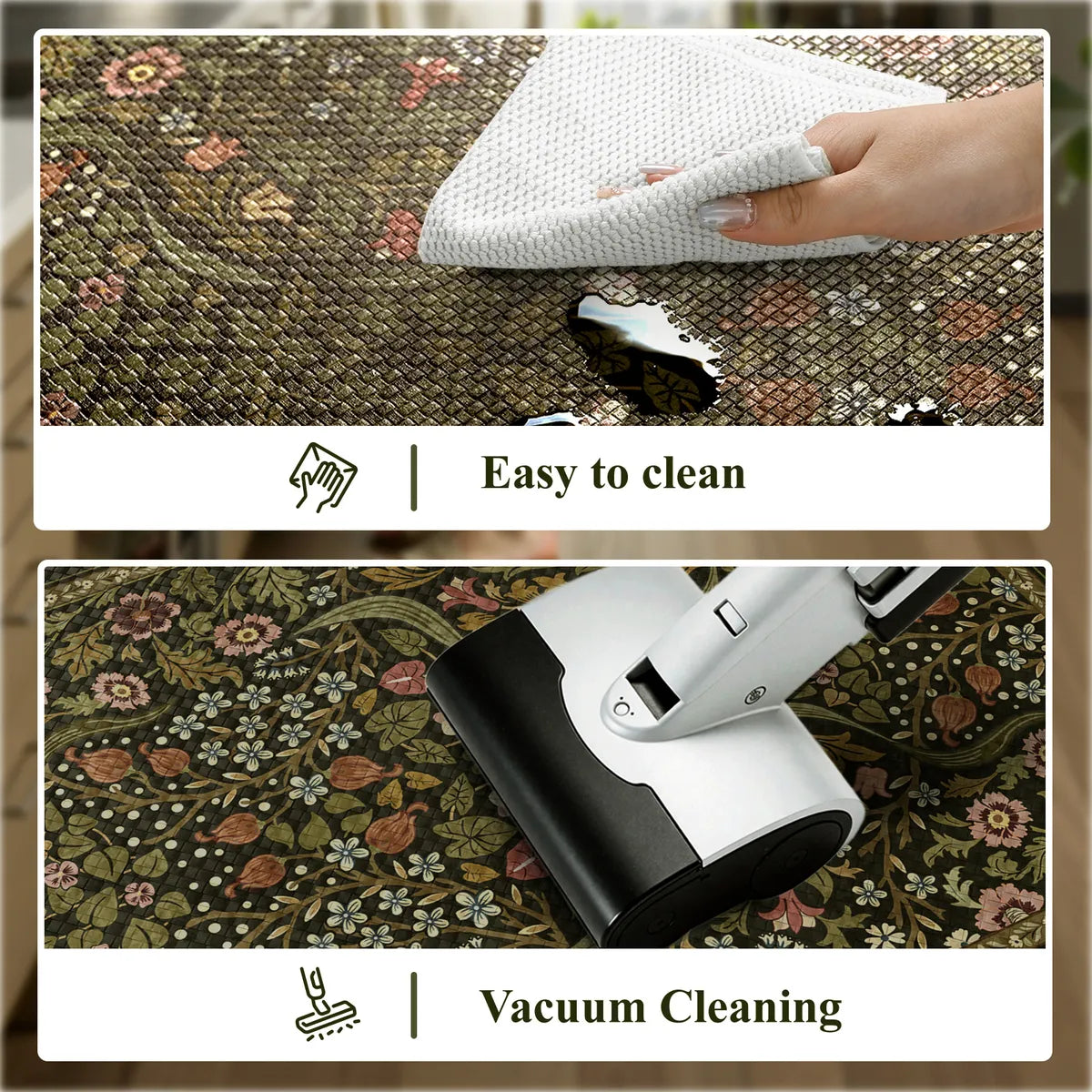
- Machine washability: Machine-washable living room rugs are specifically constructed to go through a home washing machine without losing shape, color, or backing integrity, removing the need for professional cleaning.
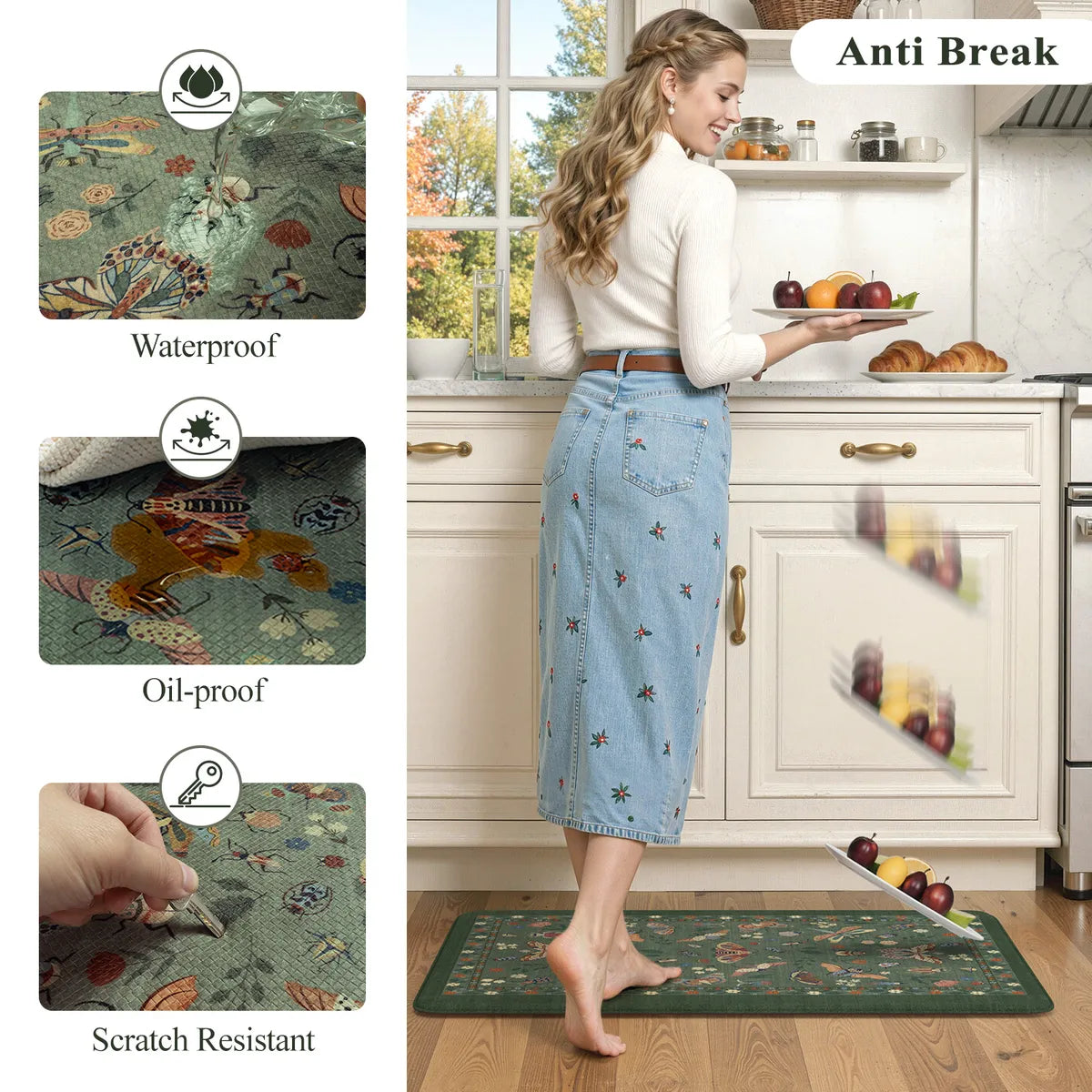
- Stain-resistant fibers: Synthetic fibers like polyester and faux wool blends resist liquid absorption better than natural fibers, giving more time to blot a spill before it sets.
- Colorfast construction: Spring palettes often include lighter grounds and brighter tones. Digitally printed rugs with colorfast dyes hold their vibrancy through repeated cleaning cycles.
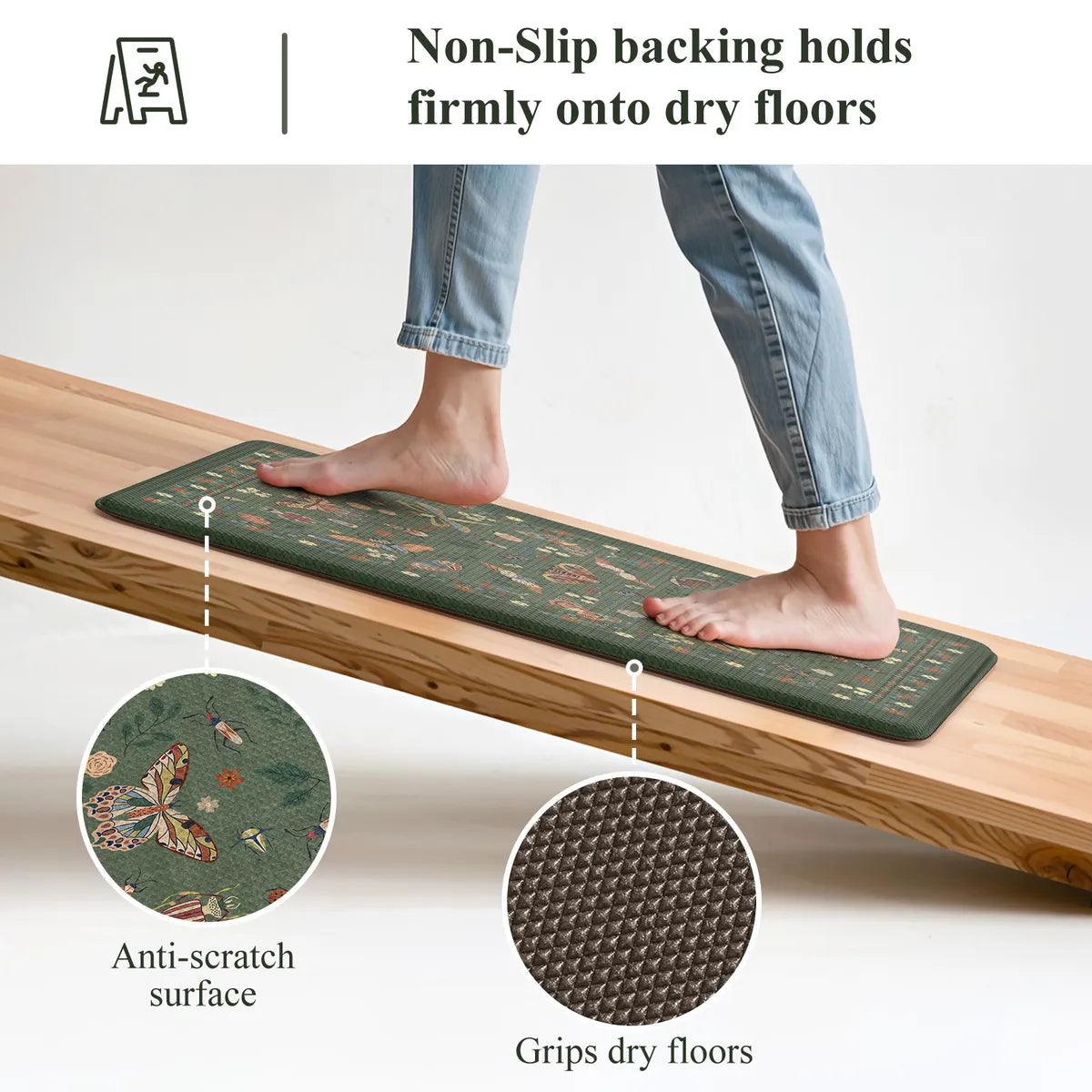
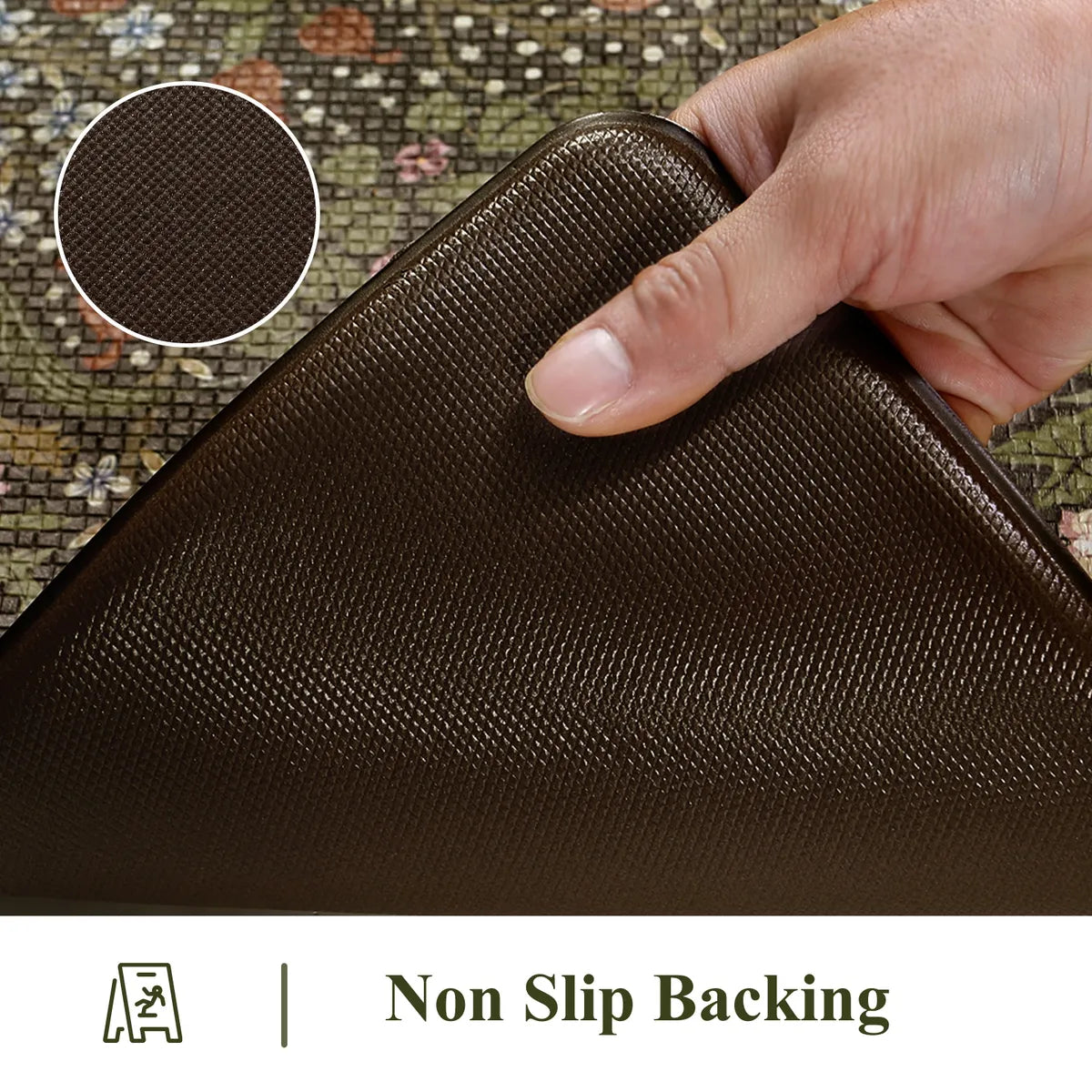
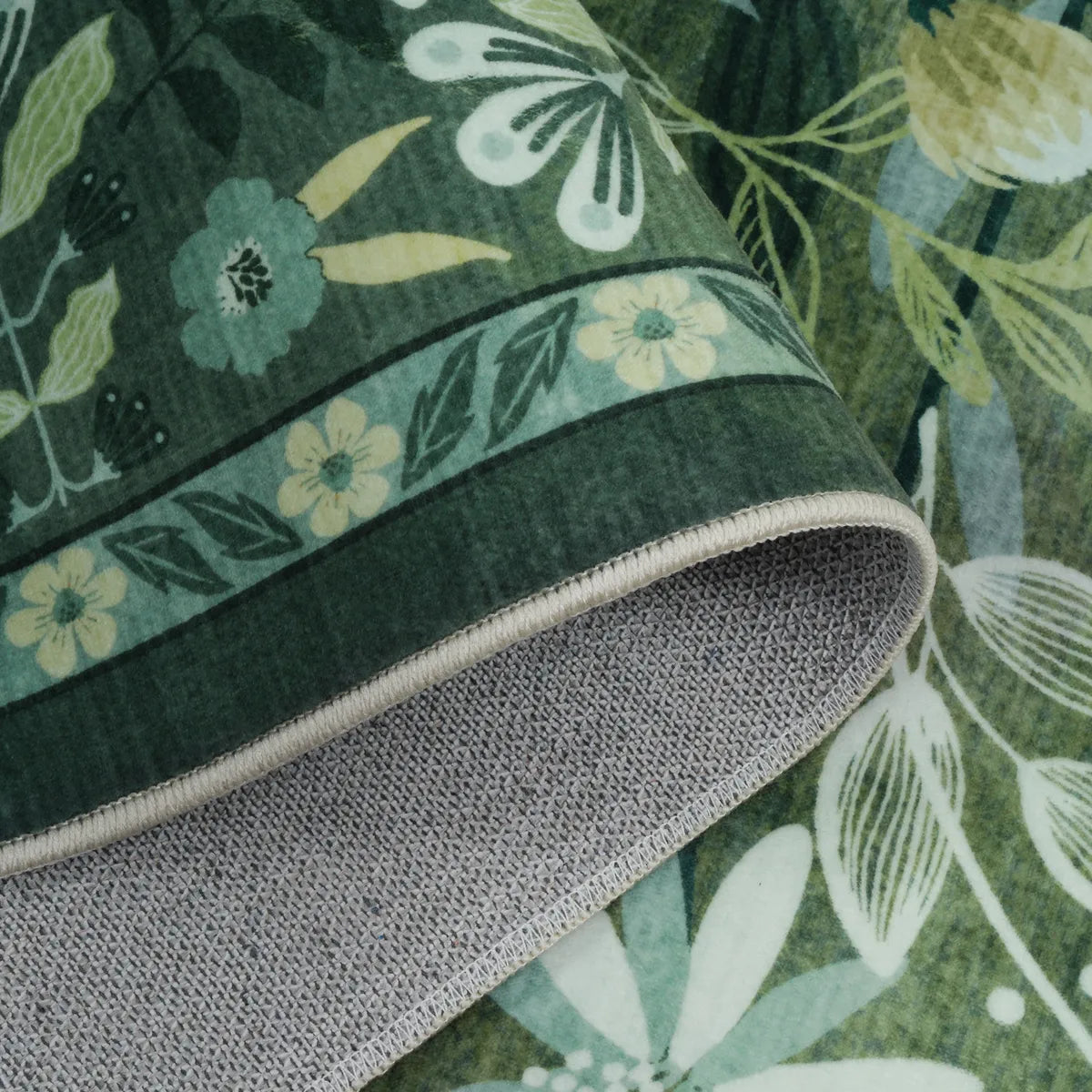
- Non-slip backing: A built-in non-slip backing (a textured or rubberized layer on the underside of the rug) keeps the rug anchored without requiring a separate pad, especially useful on hardwood and tile floors.
How to Place Living Room Rugs for the Best Visual Impact
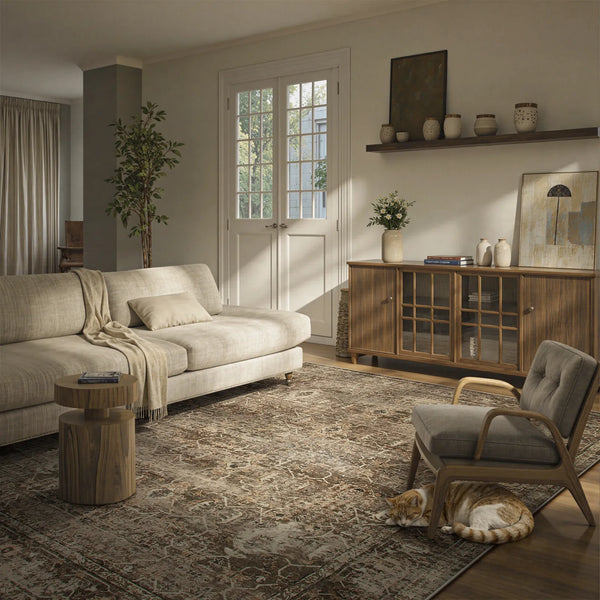
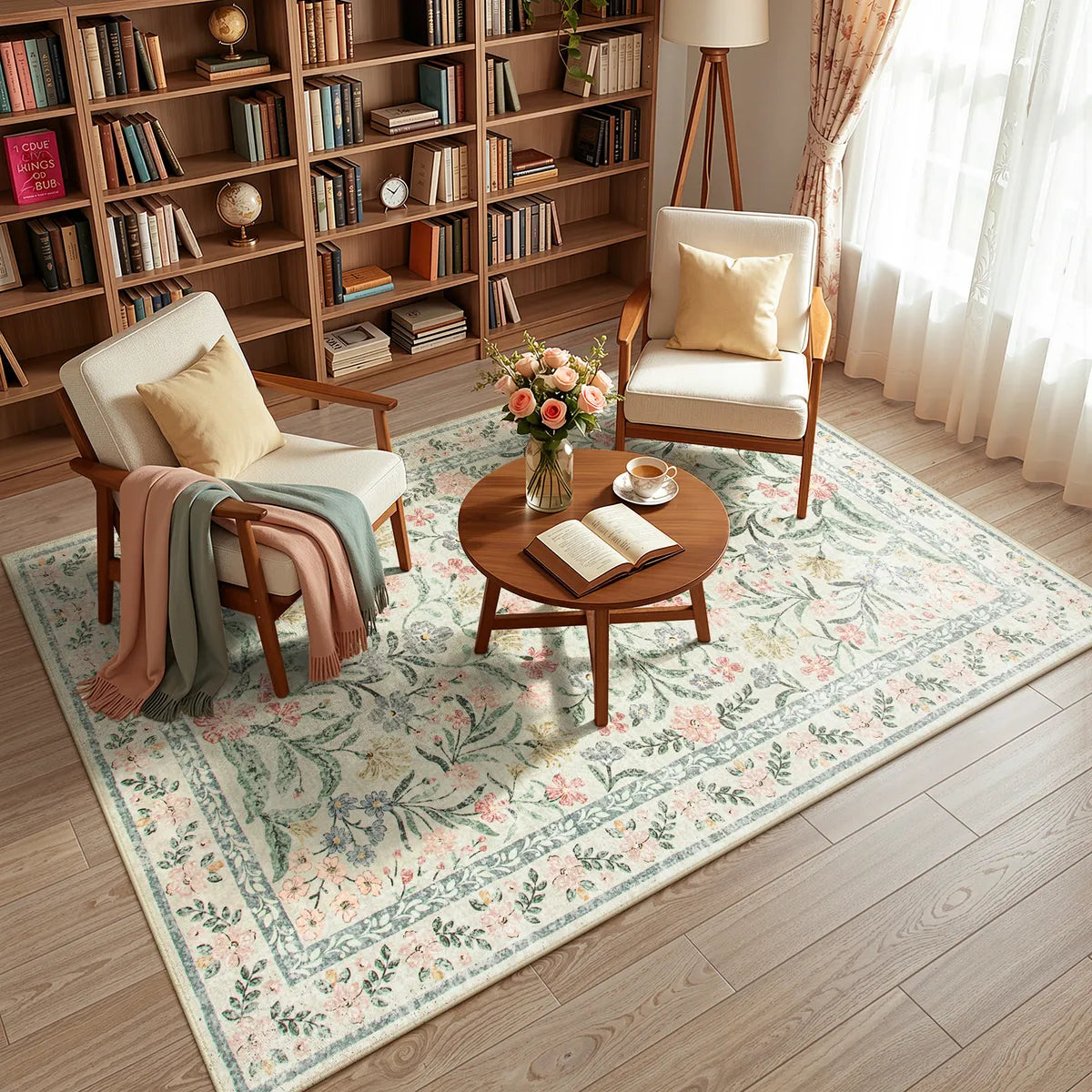
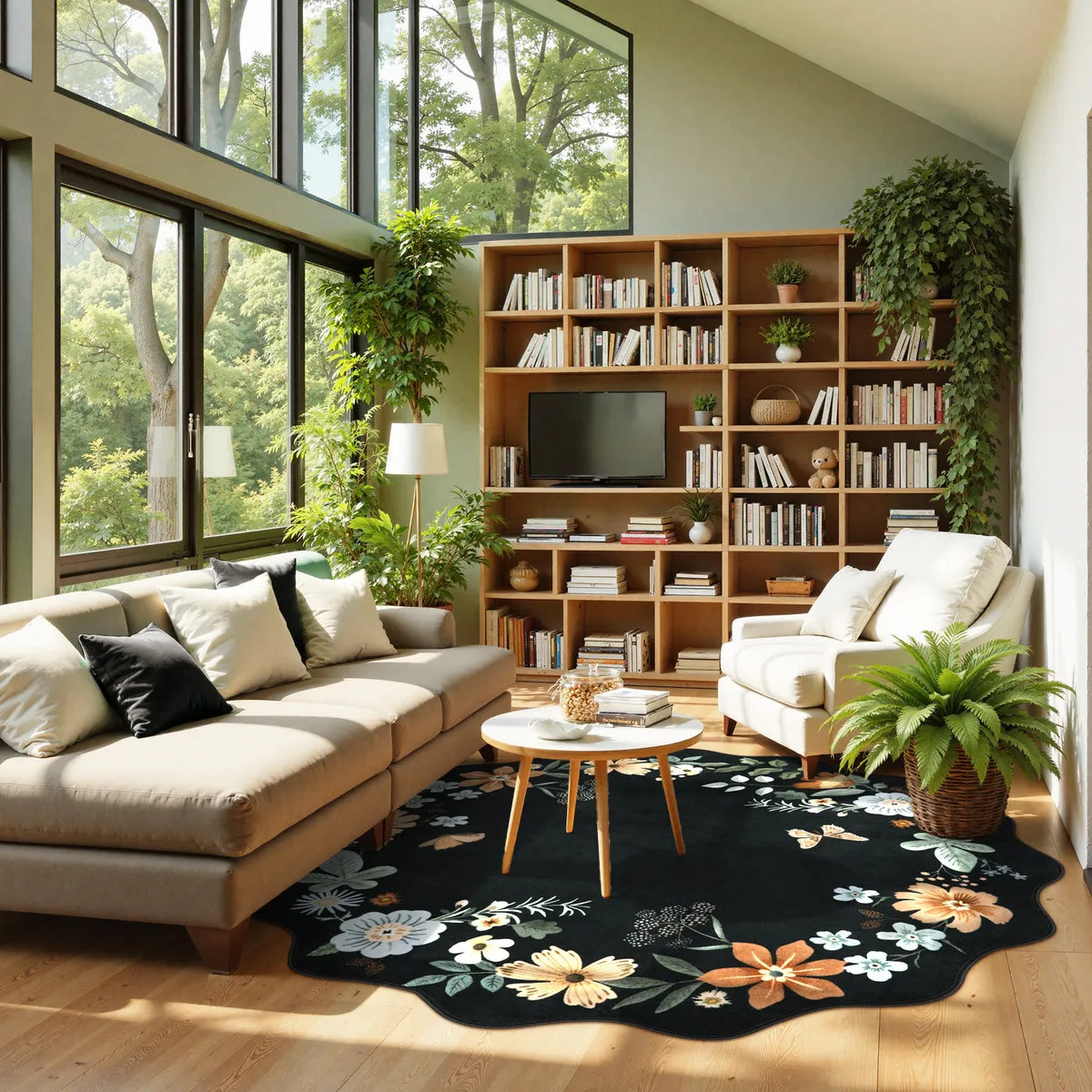
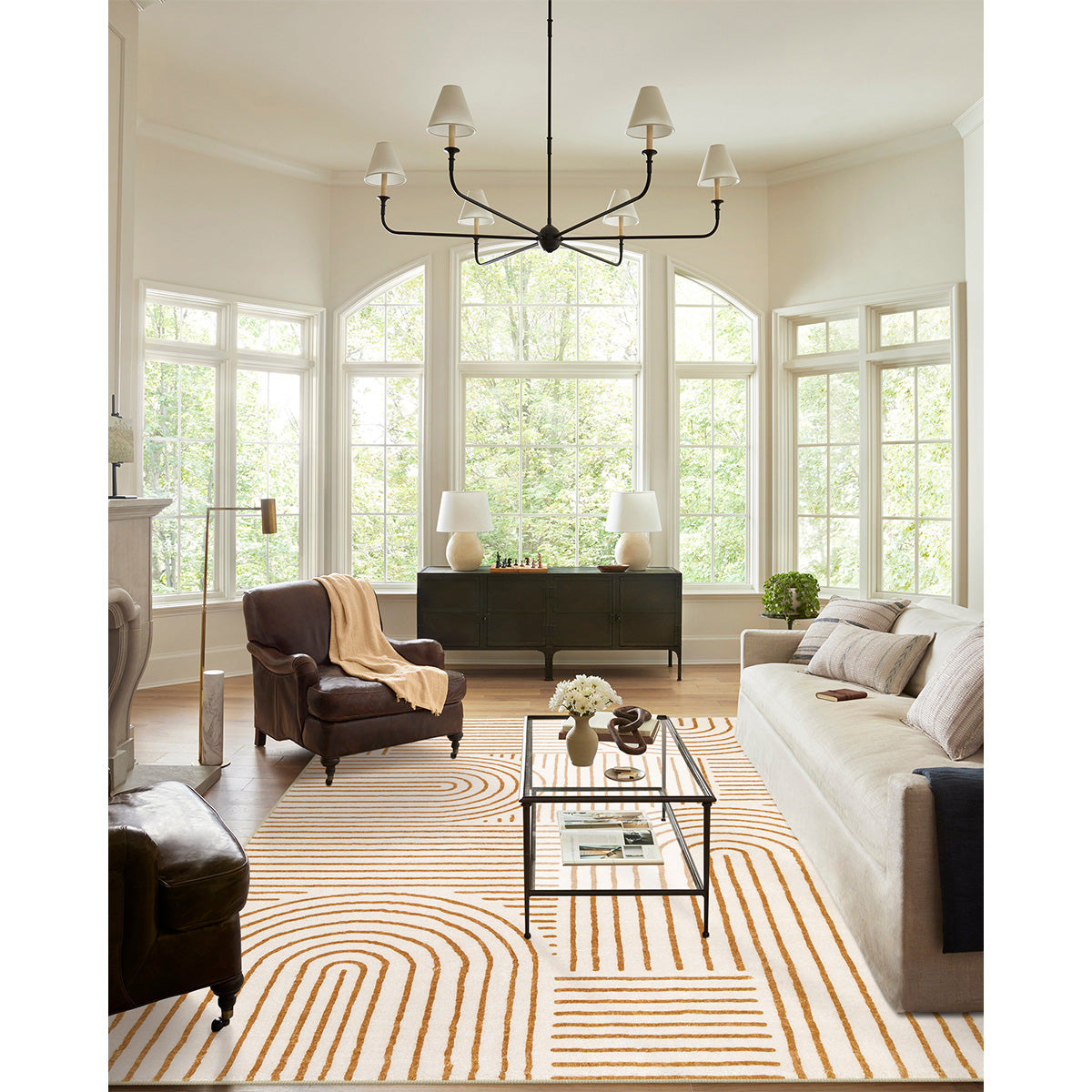
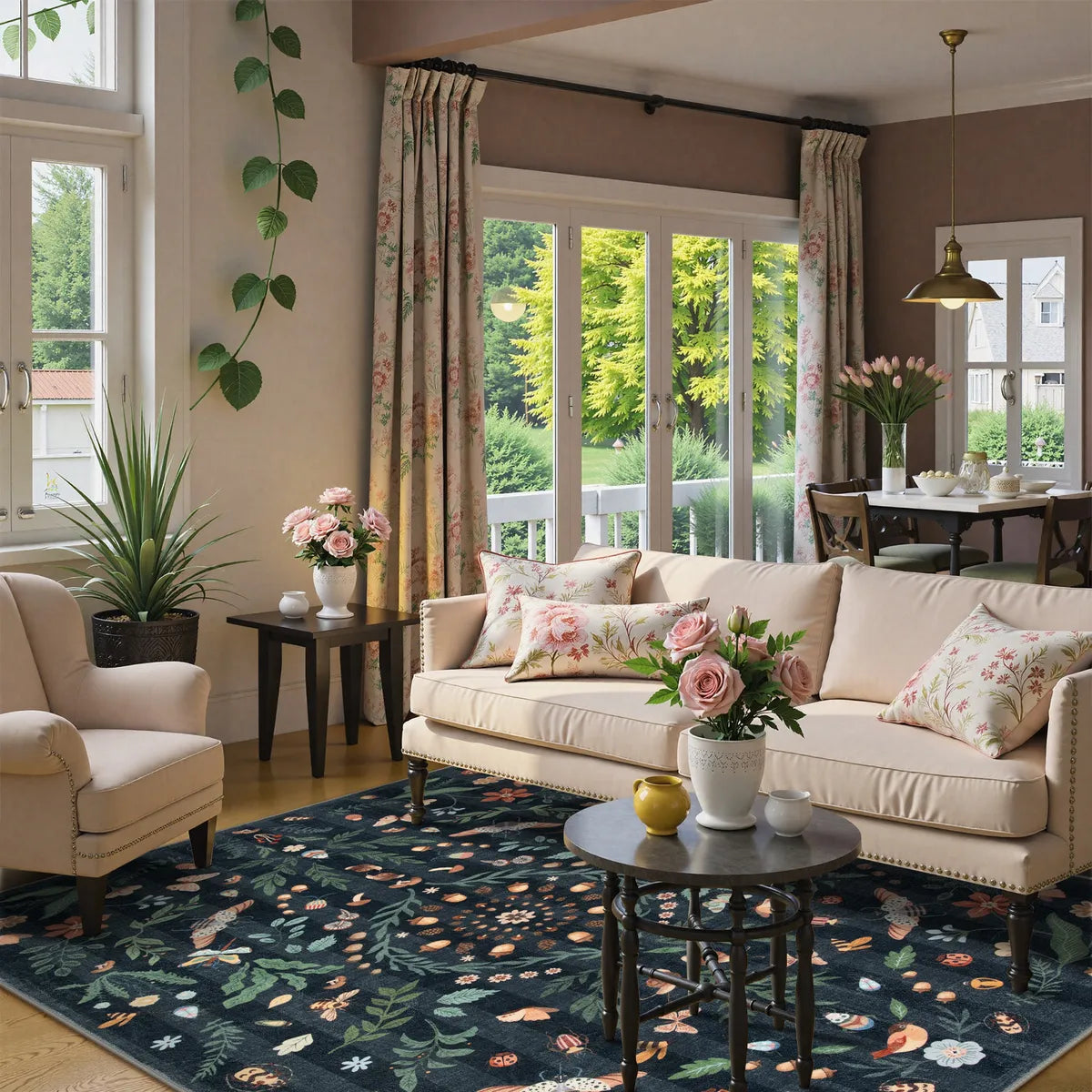
Size is the most common placement mistake. A living room rug should sit under the front legs of all major seating pieces at a minimum, with all legs fully on the rug as the ideal. A few placement principles worth following:
- Size up rather than down: A larger rug almost always looks more intentional than a smaller one. If the choice is between two sizes, the bigger option tends to work better in a living room context.
- Center under the coffee table: The coffee table should sit fully on the rug, with the rug extending evenly beyond it on all sides. This keeps the arrangement balanced from every angle.
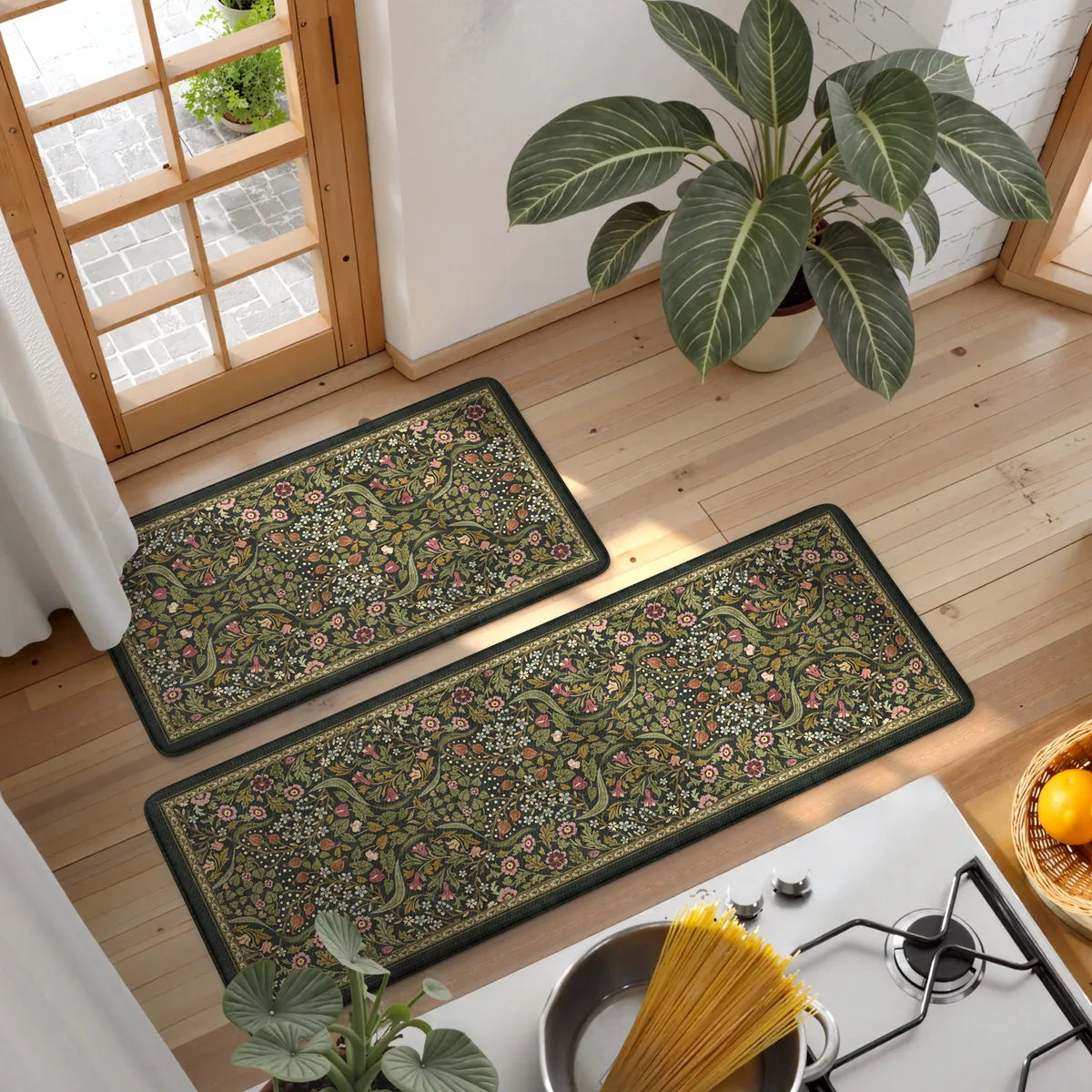
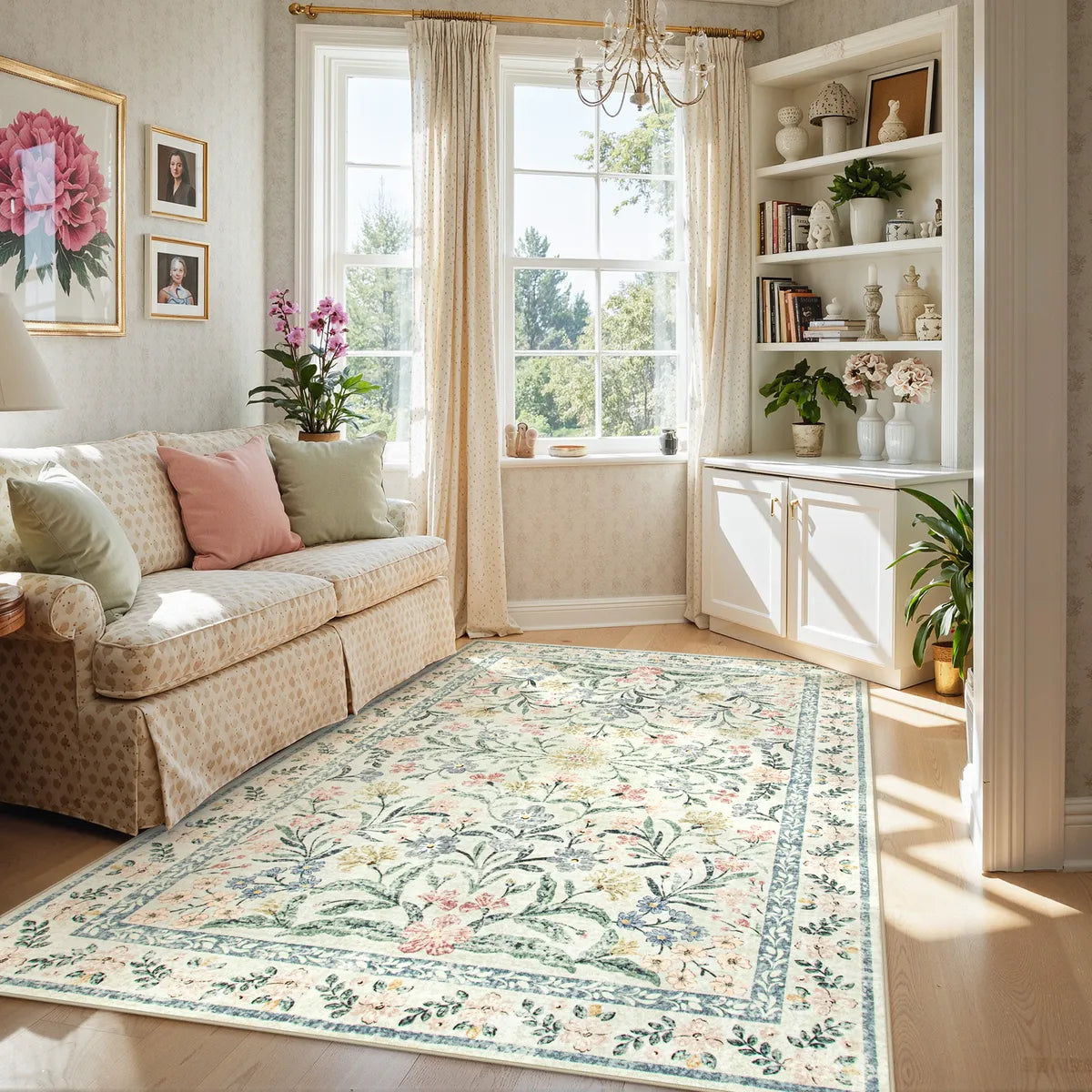
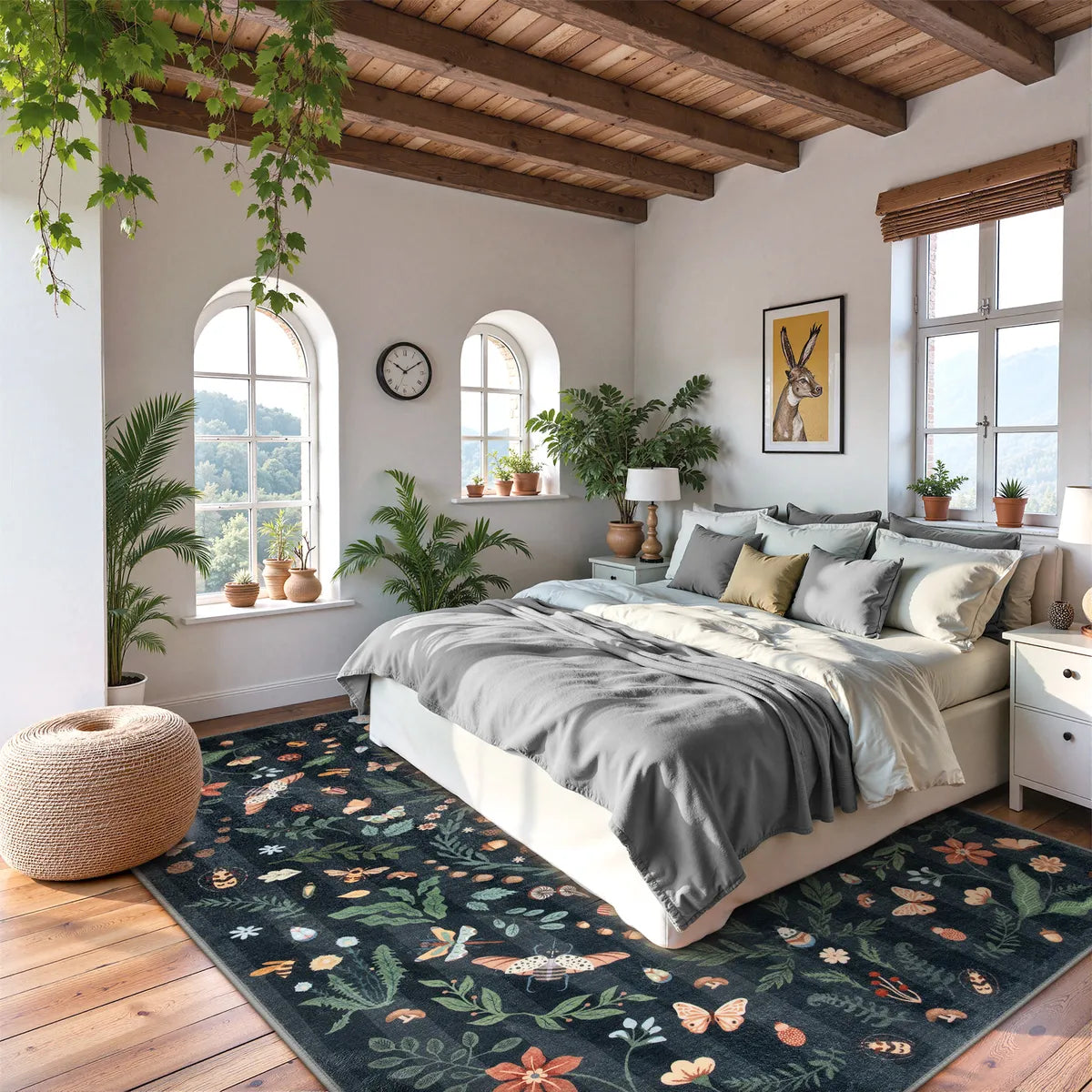
- Leave a border of floor visible: Leaving a consistent margin of floor around the rug's perimeter (typically a few inches to a foot, depending on room size) frames the rug and makes the space feel considered rather than covered wall to wall.
For spring specifically, a lighter or brighter rug placed in a well-lit area of the room will reflect more natural light and contribute to the airy, open feeling the season calls for.
Refresh Your Living Room From the Floor Up
A spring living room refresh starts with the right rug. The style sets the seasonal tone, whether that's a floral rug that brings the garden indoors, a green area rug that grounds the space in natural color, or an aesthetic rug that reflects a more personal design direction. Practical features like low-pile construction, machine washability, and a non-slip backing keep it performing as well as it looks. Choose the size that anchors the furniture properly, place it with intention, and the rest of the room will follow.
FAQs
Q1. What Color Living Room Rug Is Best for Spring?
Soft, nature-inspired tones work best for a spring living room refresh. Sage green, warm sand, dusty rose, and botanical blue all bring a seasonal freshness without clashing with existing furniture. If the room already has strong color in the walls or upholstery, a neutral-ground floral or botanical pattern gives visual interest without adding another competing color.
Q2. How Do I Choose Between a Floral Rug and a Solid Color Rug for My Living Room?
A floral rug works well when the rest of the room is relatively neutral, since the pattern does the decorative work without competing with other elements. A solid color rug is a better fit when the furniture or walls already carry a strong pattern or color. Either choice benefits from a consistent color palette that ties the rug to at least two other elements already in the room.
Q3. Can Aesthetic Rugs Work in a Practical Family Living Room?
Aesthetic rugs (rugs chosen primarily for their visual character and design sensibility) absolutely work in family living rooms when they are built on practical construction. A low-pile, machine-washable aesthetic rug with stain-resistant fibers and a non-slip backing delivers both the look and the durability a busy household needs. Pattern choice also plays a role: more complex designs in medium tones conceal everyday wear far better than pale solids.
Q4. How Often Should You Replace a Living Room Rug?
A well-maintained living room rug does not have a fixed replacement schedule. Regular vacuuming, prompt spill response, and periodic washing keep a quality rug looking and performing well for many years. Signs that a rug has reached the end of its useful life include permanent fiber flattening that doesn't recover, backing separation, or persistent odor that doesn't resolve after washing. Rotating the rug periodically extends its life by distributing wear more evenly across the surface.